
The smell was on my hands the next morning. Not the jar-kimchi funk you know from Korean restaurants, but something brighter and more alive. Gochugaru under the nails, fish sauce in the creases of your palm, garlic that won’t wash out for days. That’s the payoff of a kimchi making class in Seoul. You walk in thinking you’re going to learn a recipe. You walk out with a sealed silver bag of fresh kimchi, a new appreciation for Korean grandmothers, and a smell that follows you through three subway rides and a shower.
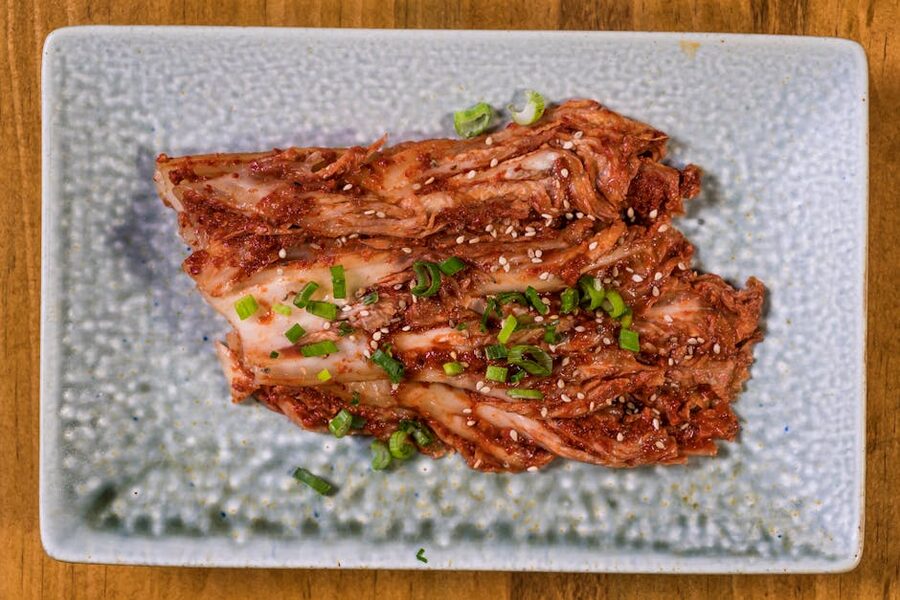
I’ve done kimchi classes in three different Seoul neighbourhoods now. Bukchon hanok, Myeongdong cooking studios, and one blurry Saturday in Mangwon that started in a market and ended in a kitchen above a convenience store. They’re all good. They’re all a little different. This guide is what I wish someone had told me before the first one.
- Short on time? My top picks
- What a kimchi making class actually is
- The best 3 kimchi classes I’d book in South Korea
- 1. Korean Kimchi Making Day Experience (Mangwon Market + 4 kimchi types) —
- 2. Korean Cultural Experience: Kimchi + Hanbok + Tea Ceremony —
- 3. Kkakdugi Radish Kimchi Class in Busan — 0
- How to choose between classes
- Where kimchi classes actually happen in Seoul
- Bukchon Hanok Village
- Insadong and Gwangjang
- Myeongdong
- Mangwon and Hongdae
- What you’ll actually make
- Baechu-kimchi (cabbage kimchi)
- Kkakdugi (radish kimchi)
- Oi-sobagi (cucumber kimchi)
- White kimchi (baek-kimchi)
- Gimjang — why the timing matters
- Taking your kimchi home
- What it costs and what’s included
- Dietary options and what to tell the booking
- A short history of kimchi (why there are 180 varieties)
- Pairing the class with the rest of Seoul
- Booking logistics and what to ask
- After the class — keeping the habit
- What to do on the day before and after
- The kimchi questions I get asked most
- Can I do a class without Korean language skills?
- Is it worth doing if I don’t cook at home?
- What if I’m travelling solo?
- Will there be a written recipe to take home?
- More Korea booking guides to read next
Short on time? My top picks
- The full-day Mangwon market + class — $89: Market shopping, four kimchi types, meal with pork and tofu, take-home bag. The complete kimchi day. Check availability
- Kimchi + hanbok + tea ceremony combo — $99: Three Korean culture staples in one go, hotel pickup included. Good if your Seoul days are short. Check availability
- Busan radish kimchi (kkakdugi) class — $100: The one recommendation outside Seoul. Small class, single focus, genuinely excellent teacher. Check availability
What a kimchi making class actually is
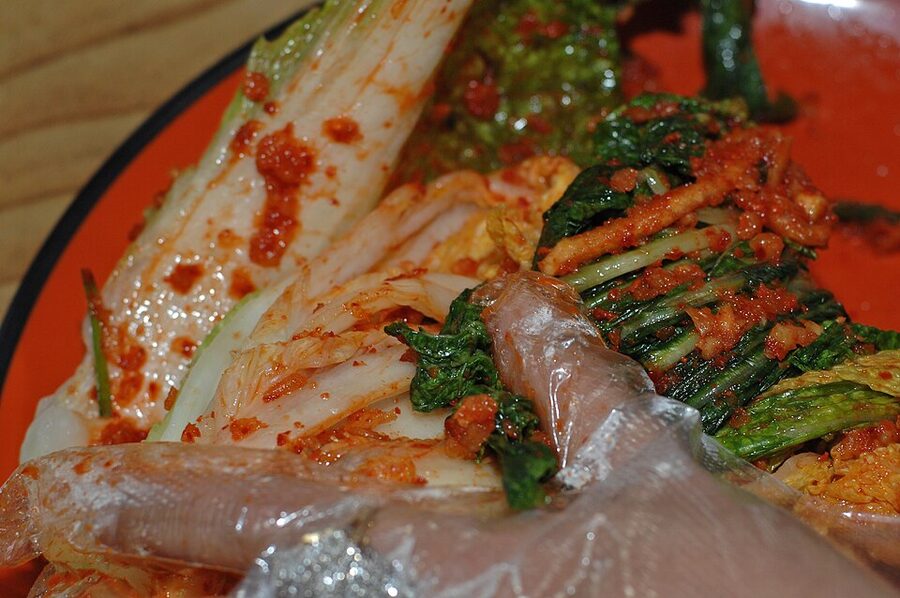
Most of the good classes in Seoul are two to three hours. You arrive at a hanok, a small cooking studio, or occasionally a market meeting point. Someone hands you an apron and a pair of food-safe gloves. The ingredients are already prepped in stainless bowls on the table: cabbage leaves that have been salt-brined overnight, a paste of gochugaru (Korean chilli flakes), garlic, ginger, fish sauce, and fermented shrimp. A pile of julienned daikon, spring onions, sometimes Asian pear or apple.
The teacher shows you how to smear the paste between every layer of the cabbage, leaf by leaf. You copy. You go slower than you think you should. You realise the grandmothers who did this in Gimjang season were coating hundreds of cabbages a day and you’ve done one and your shoulders ache. Then you eat what you made, usually with a kimchi pancake (kimchi-jeon) that the host cooks while you finish, and you take the rest home in a sealed bag.
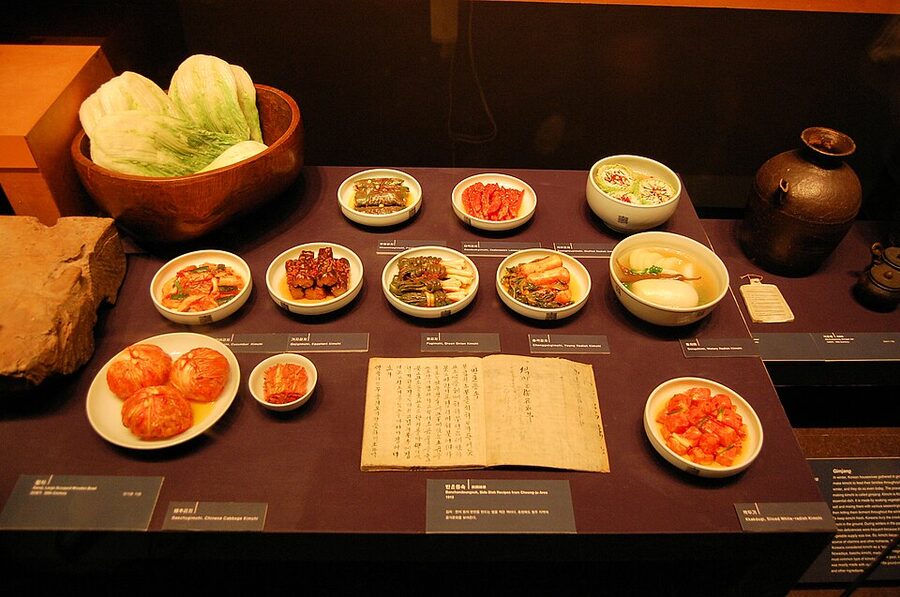
The thing nobody tells you is that there are two different kimchi experiences in Seoul, and they produce different things. A 30-minute “kimchi experience” (often bundled with hanbok rental and a tea ceremony) teaches you one dish in broad strokes. A proper cooking class is two to three hours, makes four varieties, and sends you home with enough kimchi to last a week. The difference in price is maybe $30. The difference in what you take away is enormous.
The best 3 kimchi classes I’d book in South Korea
These are the three I’d put my own money on today. Sorted by which one fits which kind of traveller, not by star ratings.
1. Korean Kimchi Making Day Experience (Mangwon Market + 4 kimchi types) — $89
This is the kimchi class I’d send my own friends to. You start with a market walk through Mangwon (real neighbourhood market, not the Instagram version), then make four kimchi varieties with a pro chef, and finish with a proper meal of boiled pork and fried tofu on the kimchi. Our full review walks through the four types (two cabbage variations, cucumber oi-sobagi, and radish kkakdugi) and what the market stop actually covers. Class size is kept small — the instructor actually watches what you’re doing rather than giving a cooking-show demo.
2. Korean Cultural Experience: Kimchi + Hanbok + Tea Ceremony — $99

If you have two days in Seoul and don’t want to pick between cultural experiences, this is the answer. You do a shorter kimchi-making session, then dress in hanbok, then sit through a traditional tea ceremony. Hotel pickup included, which matters if your Seoul jet lag hasn’t worn off. Our review is honest about what gets cut short — don’t expect to leave kimchi expert — but as a culture sampler in three hours this works.
3. Kkakdugi Radish Kimchi Class in Busan — $100
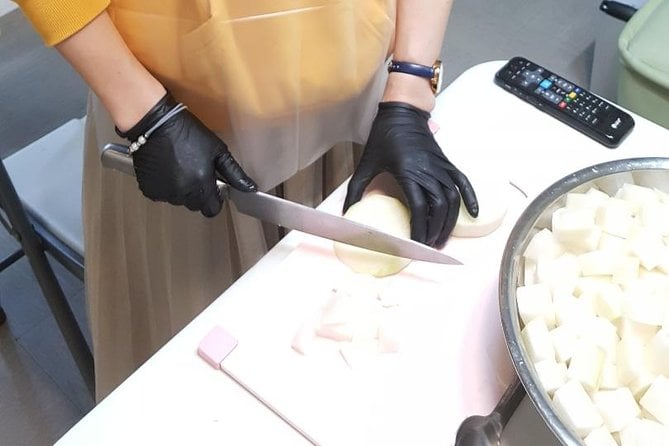
If Busan is on your itinerary, this class is worth an afternoon. It focuses on one thing — kkakdugi, the cubed radish kimchi — and that narrower scope means you actually learn. Our Busan review covers the instructor’s tendency to halve the chilli paste for first-timers, which you’ll thank him for (the full-strength version will, as one reviewer put it, blow your head off). Small group, long lunch, real teaching.
How to choose between classes
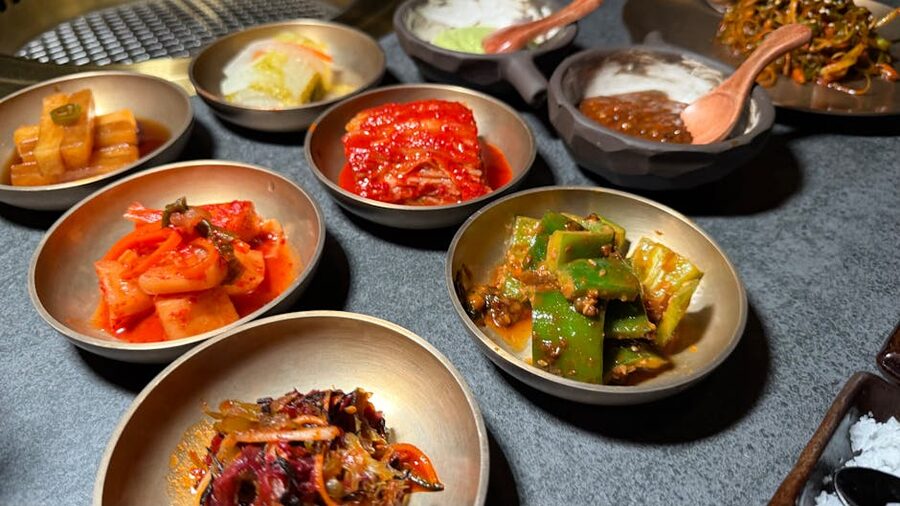
The question I get asked most: how do you pick when there are 20 classes on Viator alone? Three filters do the work.
Duration first. Anything under an hour is a cultural sampler. Anything over two hours is a real cooking class. If you’re serious about the food, filter out everything under 120 minutes.
Market or no market. A class that includes a market visit (Mangwon, Gwangjang, Tongin) is longer but teaches you something the pure cooking class can’t: how Korean home cooks choose ingredients, what a bundle of Korean spring onions should smell like, what real fish sauce looks like in a five-litre jug. A market-less class skips an hour and gives you more hands-on time at the table. Both have their place.
Group size. Four people max means the instructor sees your cabbage leaf. Twelve people means you’re mostly watching. The small-group premium is worth it.
Where kimchi classes actually happen in Seoul
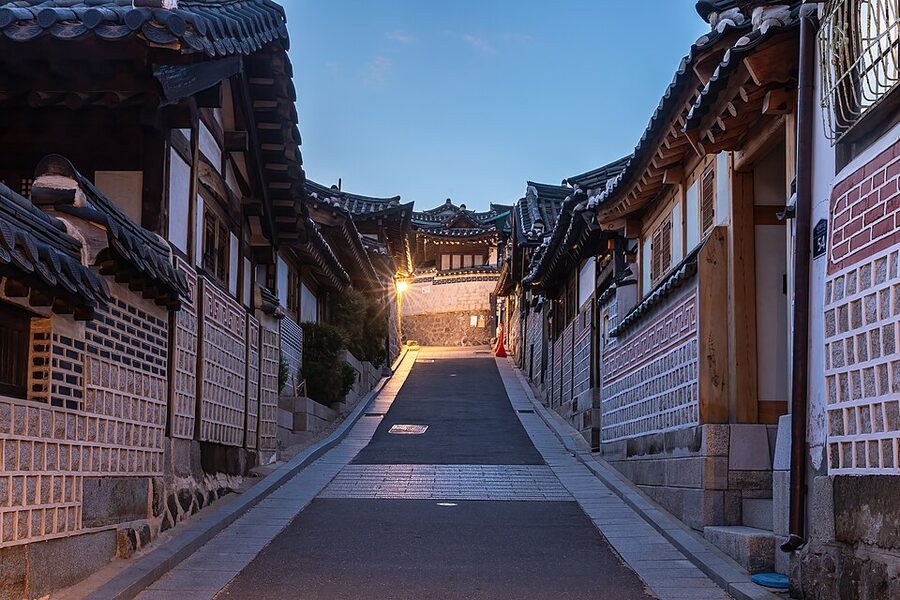
There are four neighbourhoods where most Seoul kimchi classes cluster, and each has a different feel.
Bukchon Hanok Village
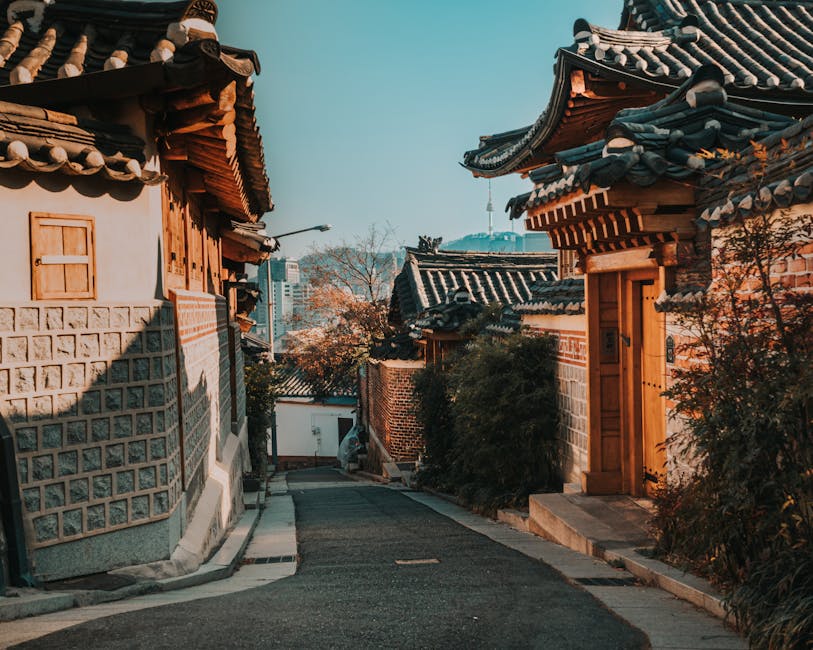
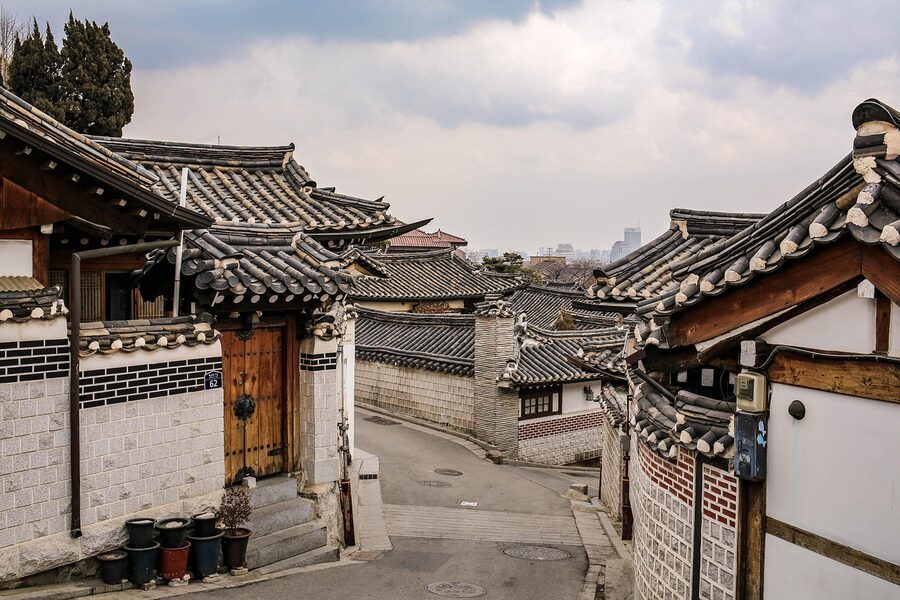
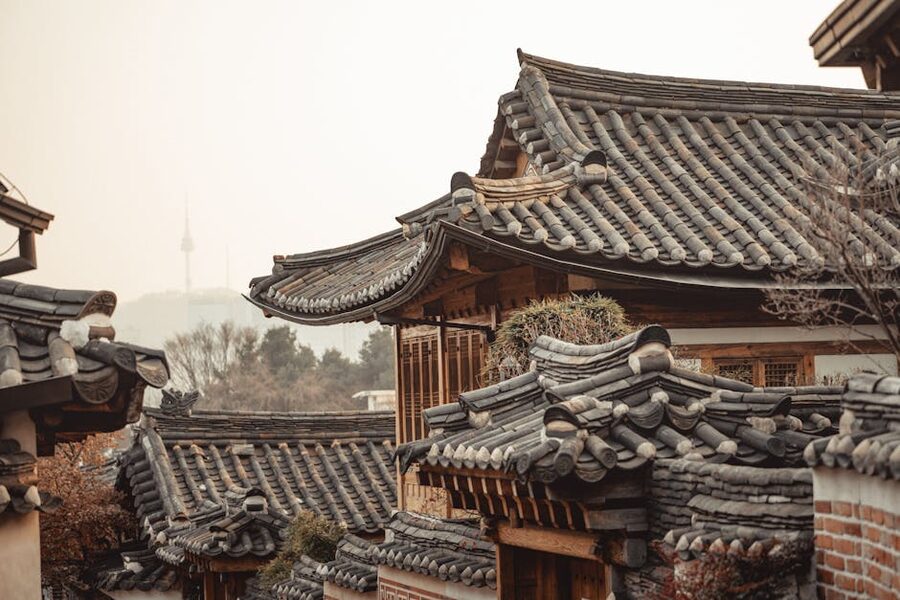
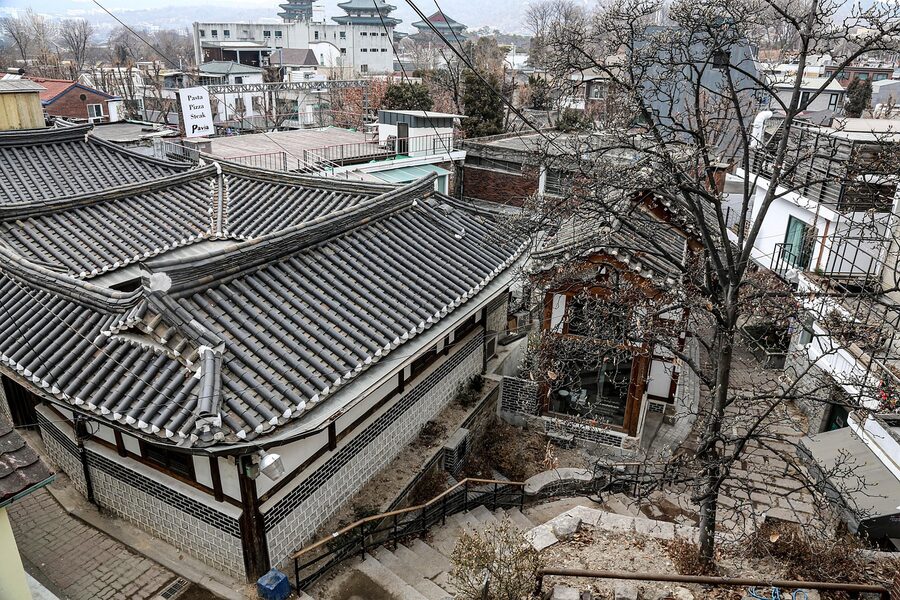
Bukchon is the image you have in your head. Hanok rooftops. Narrow stone alleys between Gyeongbokgung and Changdeokgung. Classes in restored hanok are genuinely atmospheric, and the area itself is worth a couple of extra hours before or after. Most Bukchon classes charge a small premium for the setting. If you’re already planning a Seoul palace day, add the kimchi class to the evening — Gyeongbokgung closes at 6pm and a 6pm hanok kimchi class is a perfect next step.
Insadong and Gwangjang
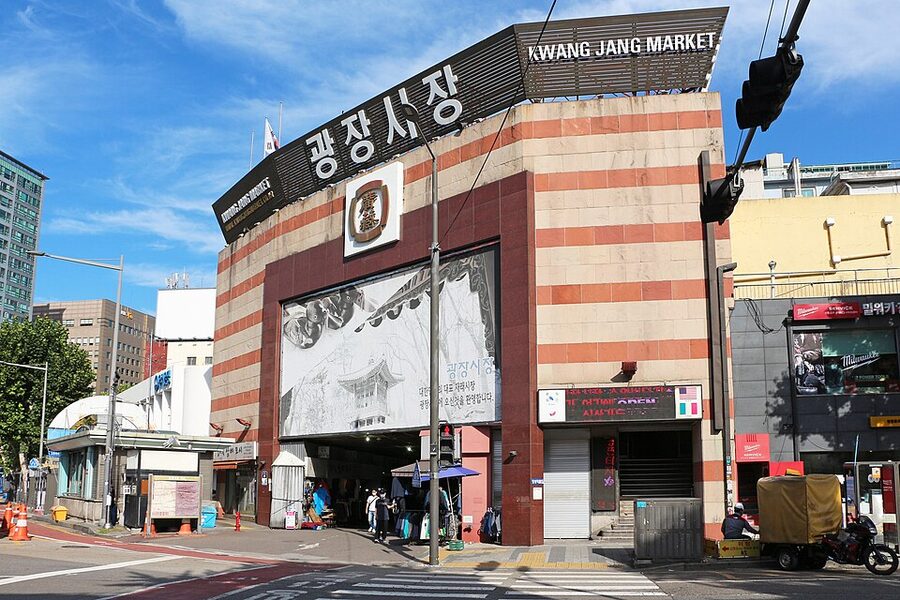
Insadong is the craft-shop-lined tourist corridor that runs south of Bukchon, and it’s where you’ll find the Kimchi Museum (Museum Kimchikan) and a few classes that run out of cultural centres. Gwangjang Market, twenty minutes east, is where you’ll end up if you book a “market tour + kimchi class.” It’s Seoul’s most touristed market and the one with the most Instagram presence — you’ve seen the mayak gimbap and bindaetteok pancakes. The class itself usually happens in a studio kitchen a block or two away.
Myeongdong
Myeongdong is the big shopping district between Seoul Station and City Hall. Several kimchi studios have set up here because the logistics are easy — you can book, shop, and eat all within a ten-minute walk. The trade-off is that a Myeongdong class is a commercial cooking studio, not a hanok or a local home. If you’re short on time and staying in Myeongdong or Euljiro, it’s a perfect choice. If you came to Seoul for atmosphere, Bukchon is better.
Mangwon and Hongdae
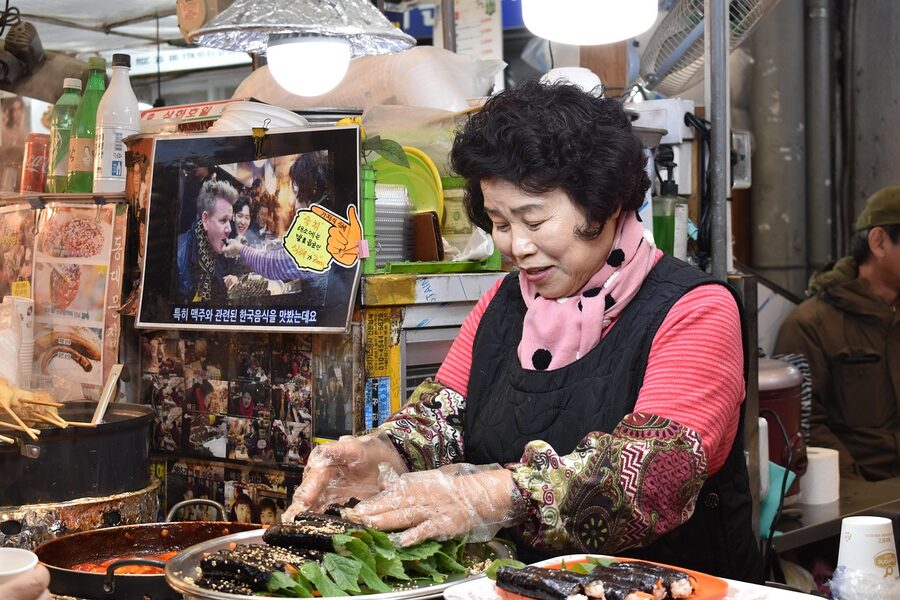
Mangwon is the sleeper neighbourhood. It’s west of Hongdae, a couple of subway stops past Hapjeong. The market here is what Gwangjang was fifteen years ago — mostly locals, mostly weekly shopping, with just enough restaurants to eat your way through. The top Viator kimchi class (the $89 one in our picks) starts at Mangwon Market and that’s not an accident. If you pick a Mangwon class, budget an extra hour afterwards to eat your way back to the subway.
What you’ll actually make
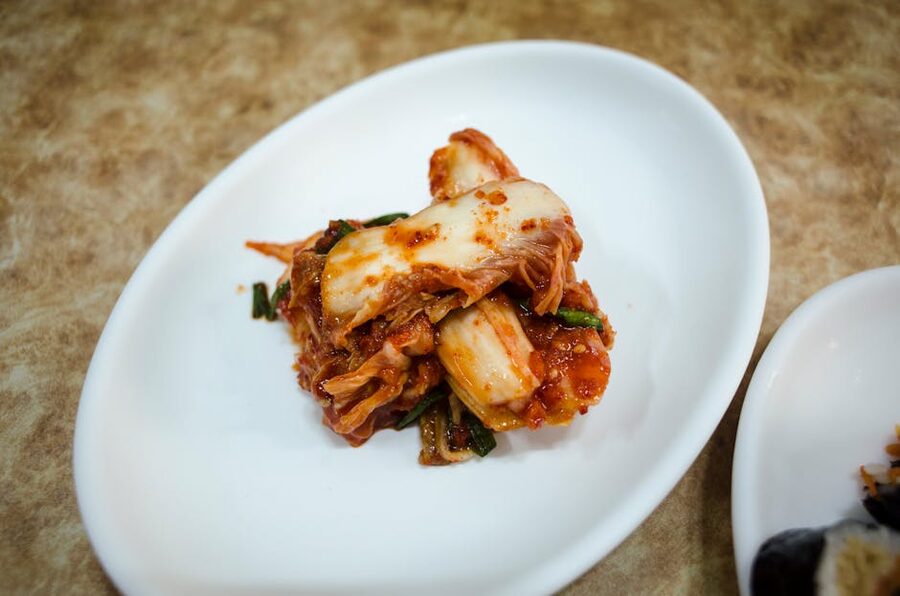
A full class typically covers four kimchi varieties. The big one is cabbage kimchi (baechu-kimchi), which is what most people think of when they hear “kimchi.” The rest rotate through the other staples.
Baechu-kimchi (cabbage kimchi)
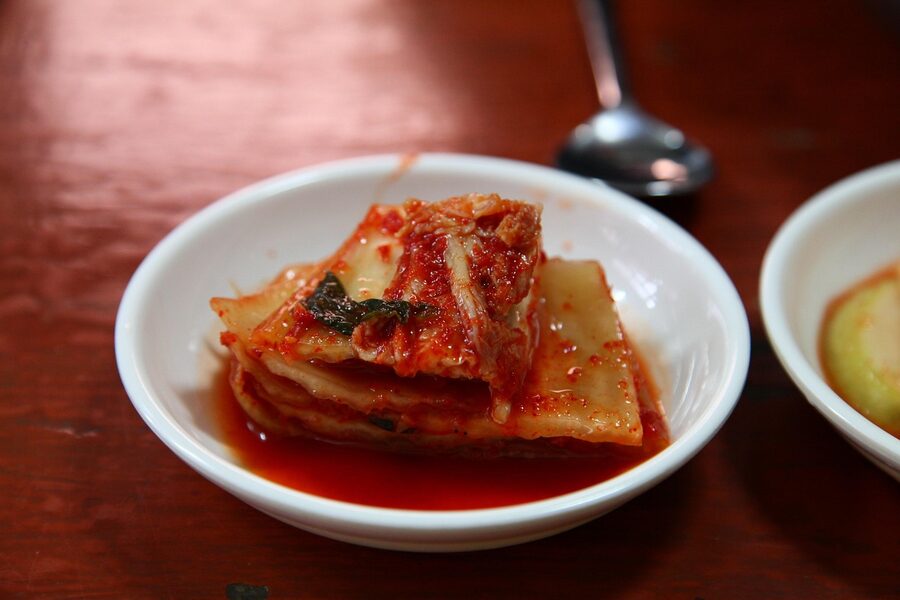
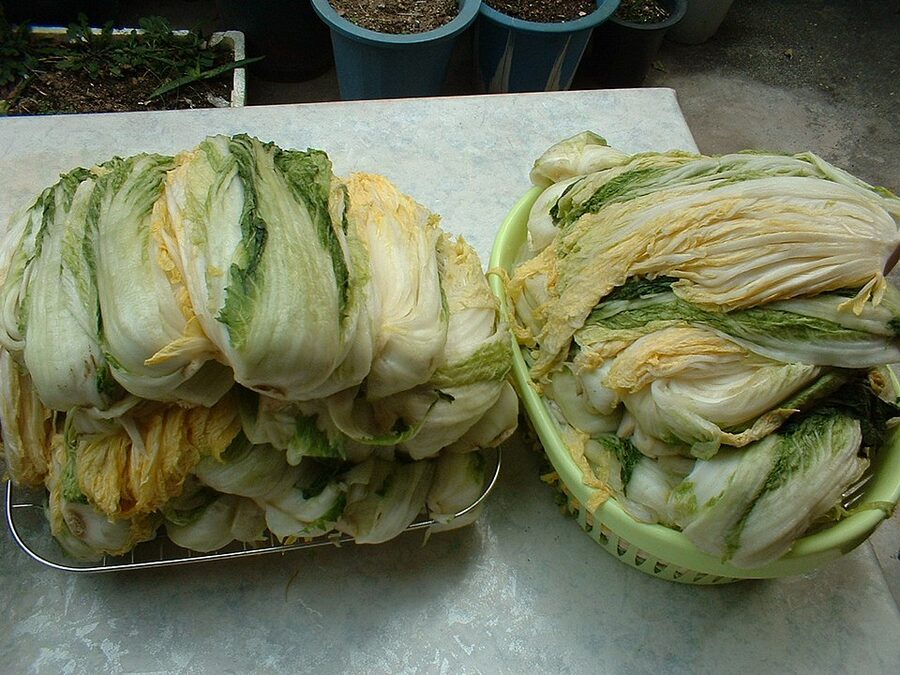
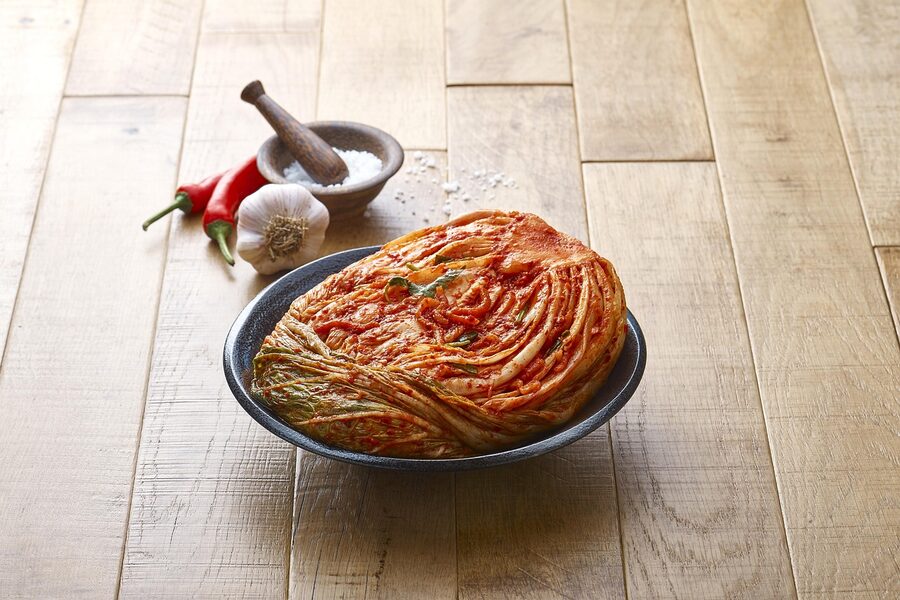
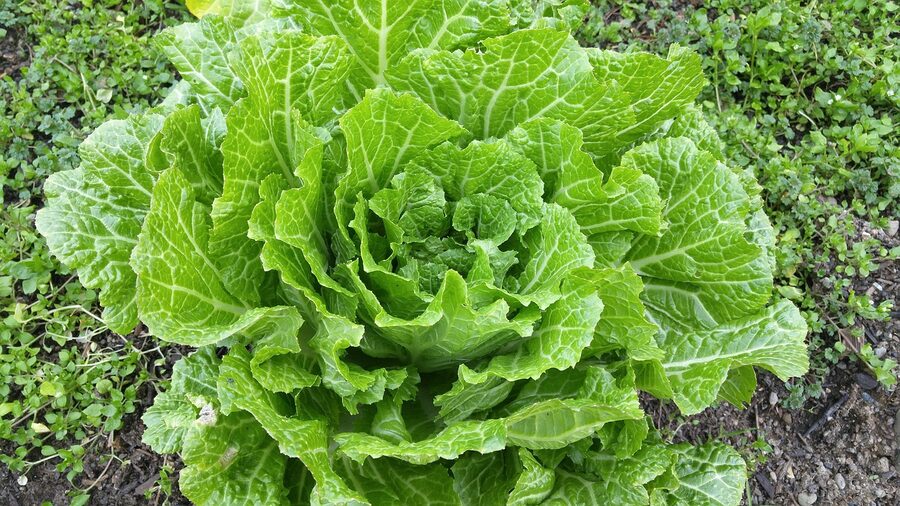
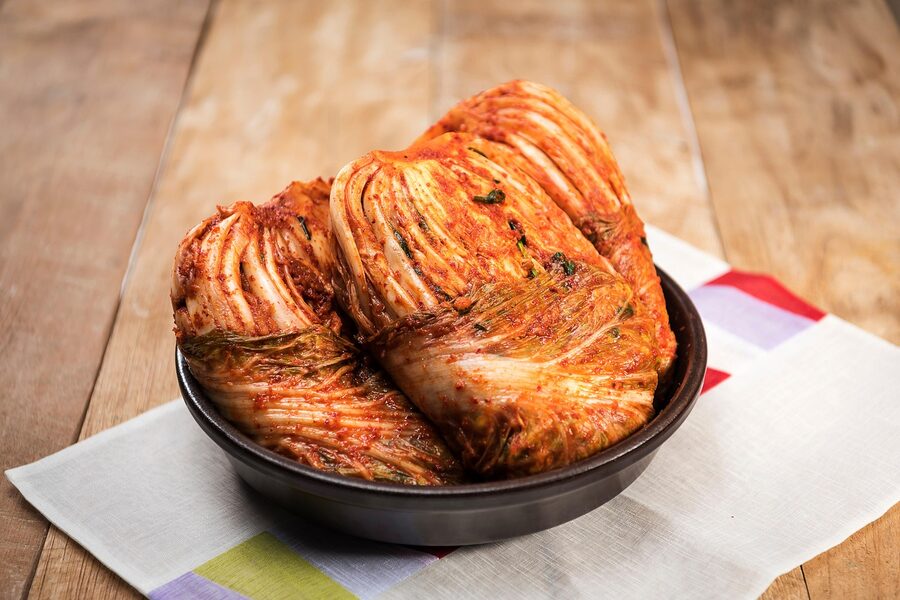
This is the centrepiece. You’ll start with a cabbage that’s already been brined — this step takes 6-8 hours so classes never include it. Your job is the paste and the layering. Gochugaru goes in the paste. So does garlic, ginger, spring onion, and usually a thickener made from glutinous rice flour cooked into a porridge. Fish sauce and fermented shrimp (saeujeot) provide the umami. You smear the paste between every cabbage leaf, working from the core outwards.
Kkakdugi (radish kimchi)
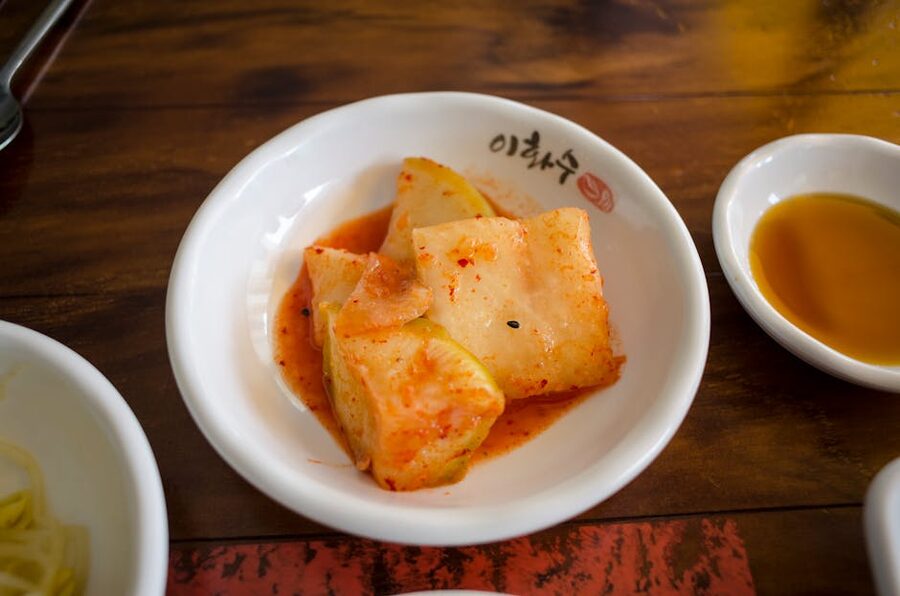
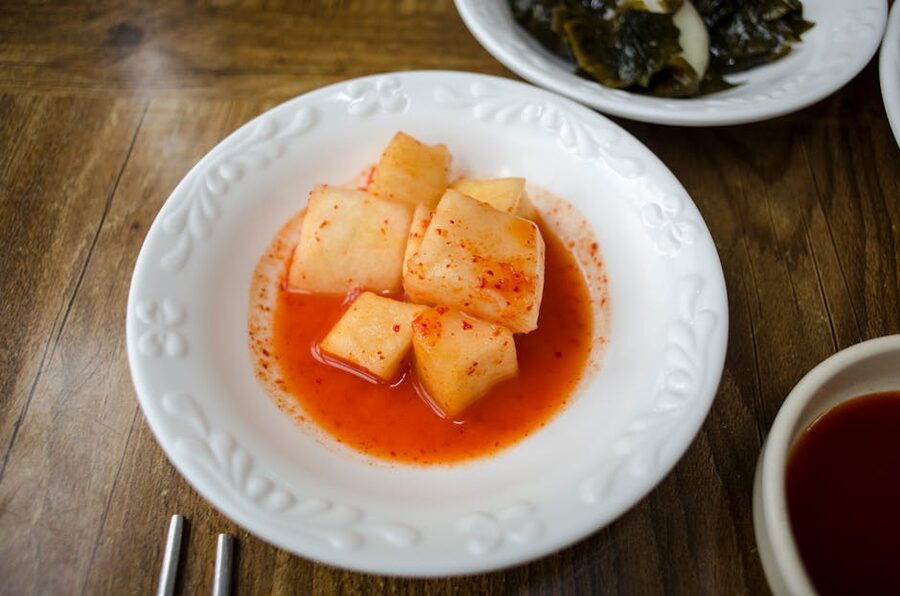
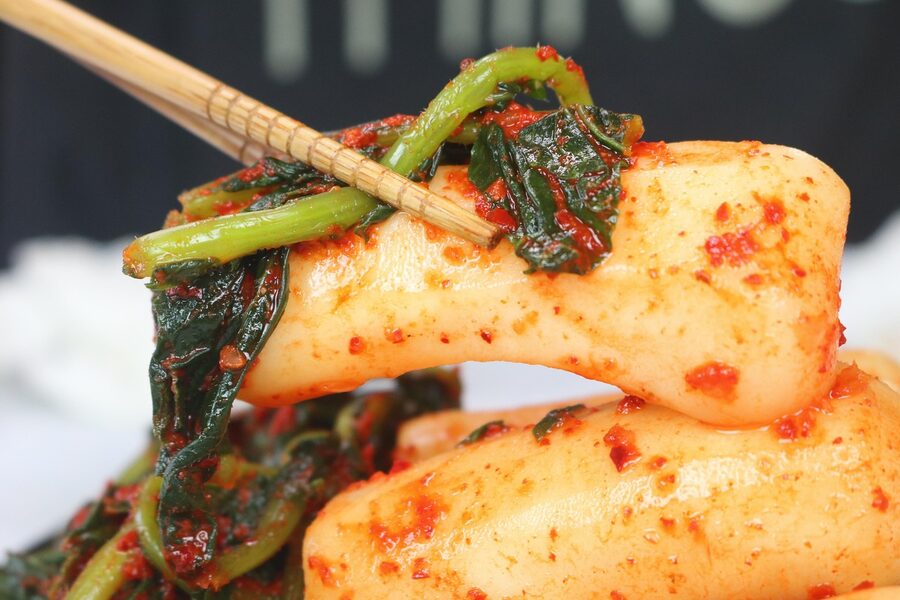
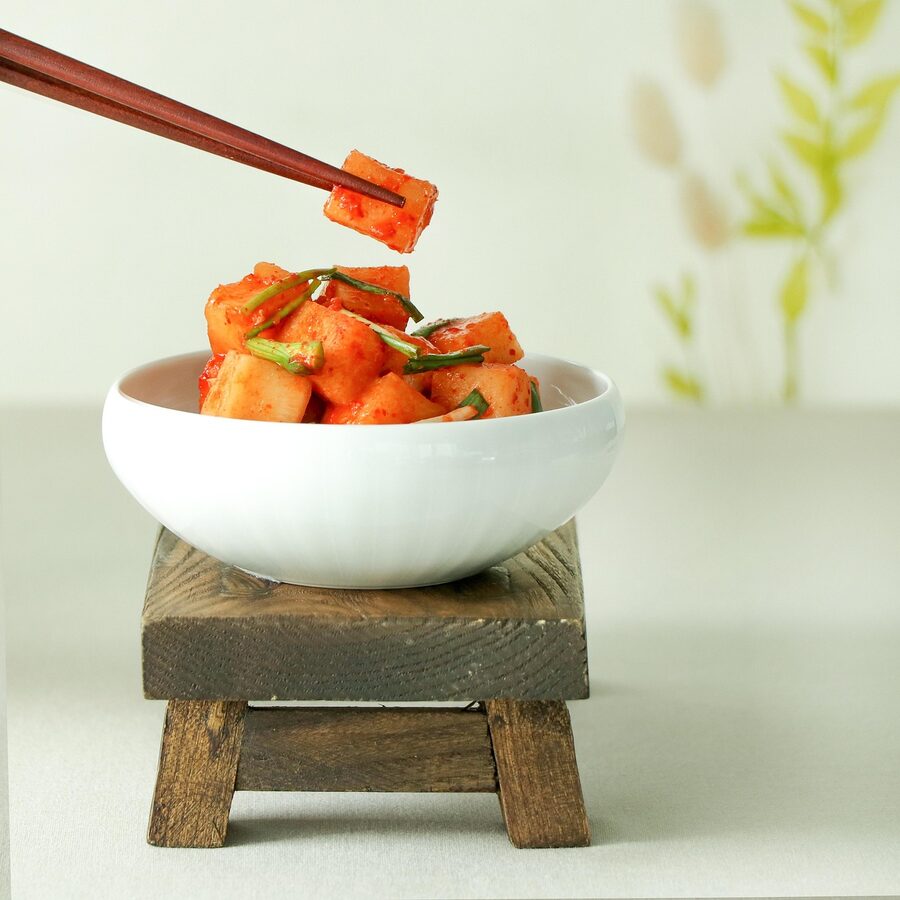
Kkakdugi is the cubed white radish kimchi. It’s simpler than cabbage — you don’t layer anything, you just toss the cubes with the paste and pack them. It also ferments faster because the cut surfaces are exposed. Good for home fermentation because the mistakes are smaller.
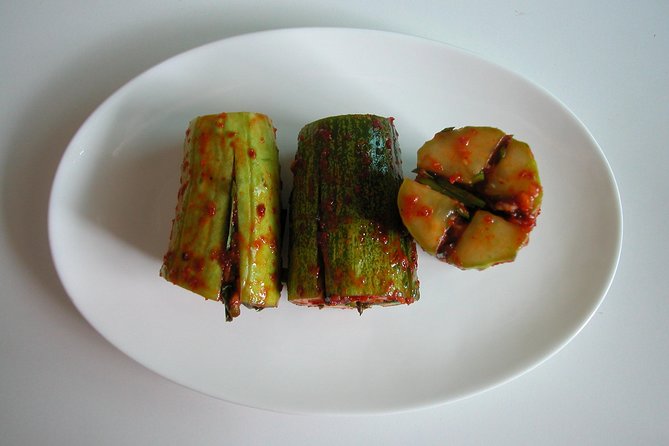
Oi-sobagi (cucumber kimchi)
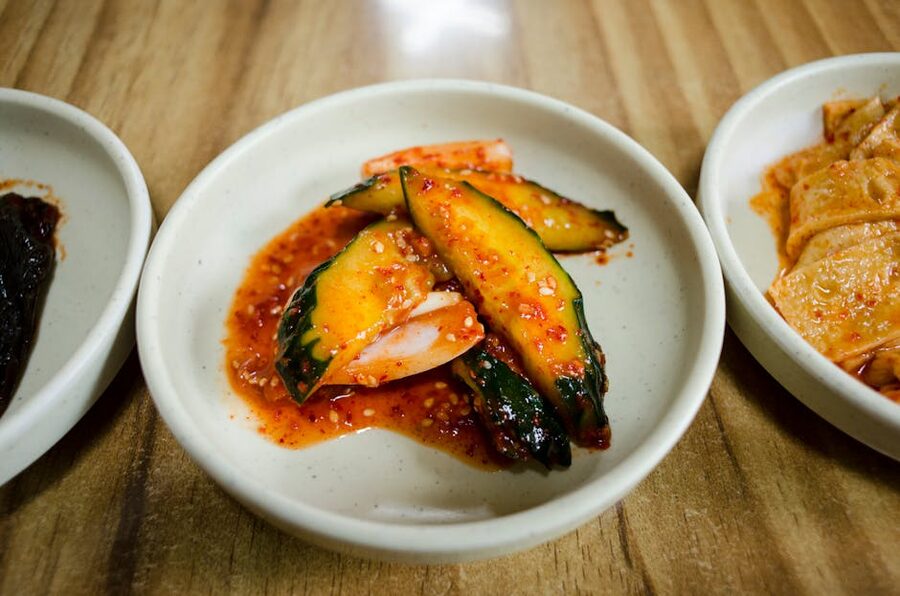
This is the summer kimchi. Cucumbers are cut into sections, slit lengthways but not all the way through, and stuffed with a quick paste that’s usually lighter on the gochugaru. It’s meant to be eaten fresh, within a few days. If your class includes oi-sobagi, eat it first when you get home — it doesn’t travel well to a second week.
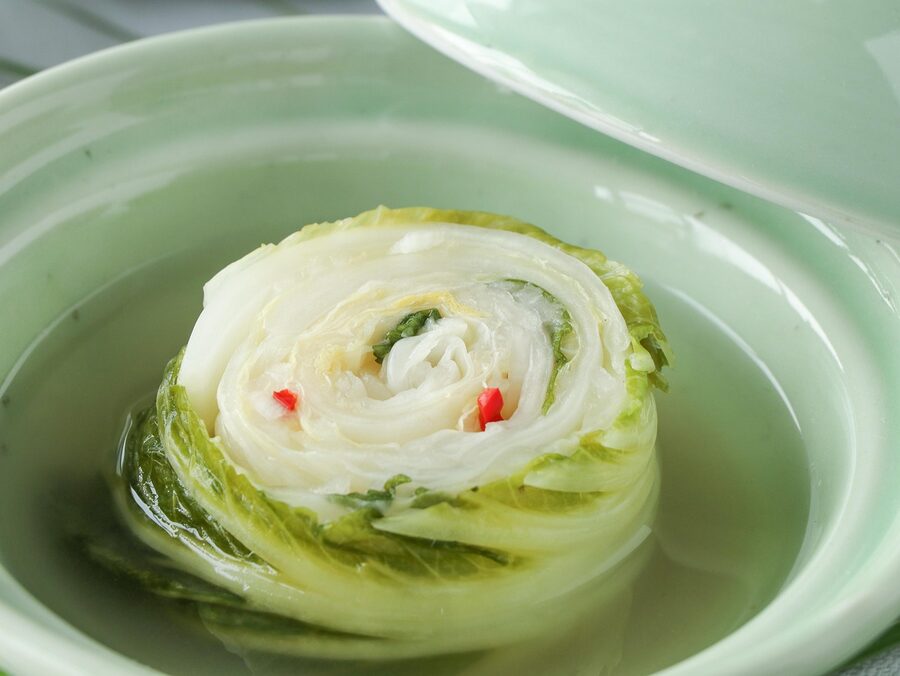
White kimchi (baek-kimchi)
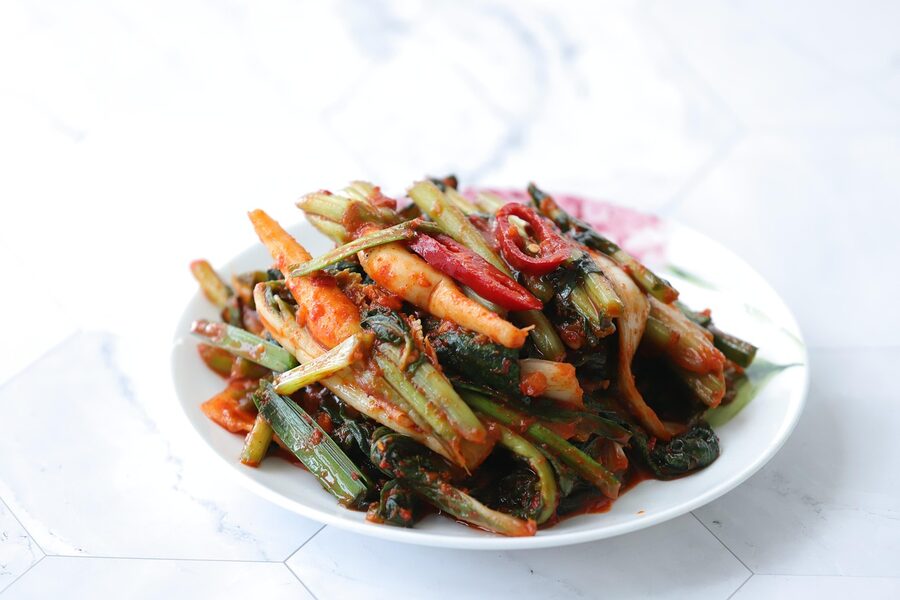
Baek-kimchi is kimchi without gochugaru. No chilli, no red, milder. Common during Korean state dinners and often on the palace-court menu. If you’ve got a low spice tolerance or you’re bringing kids, ask if the class offers baek-kimchi — not all do.
Gimjang — why the timing matters
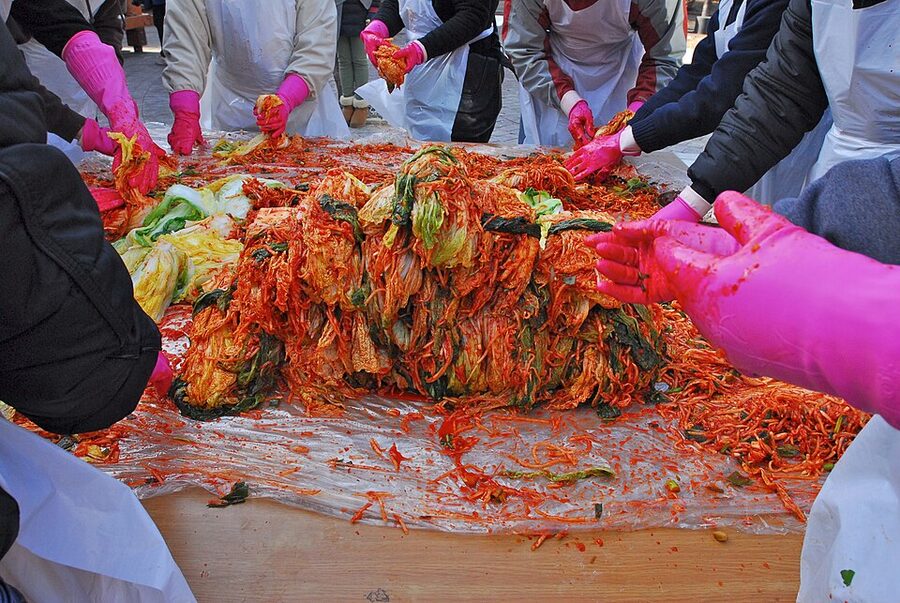
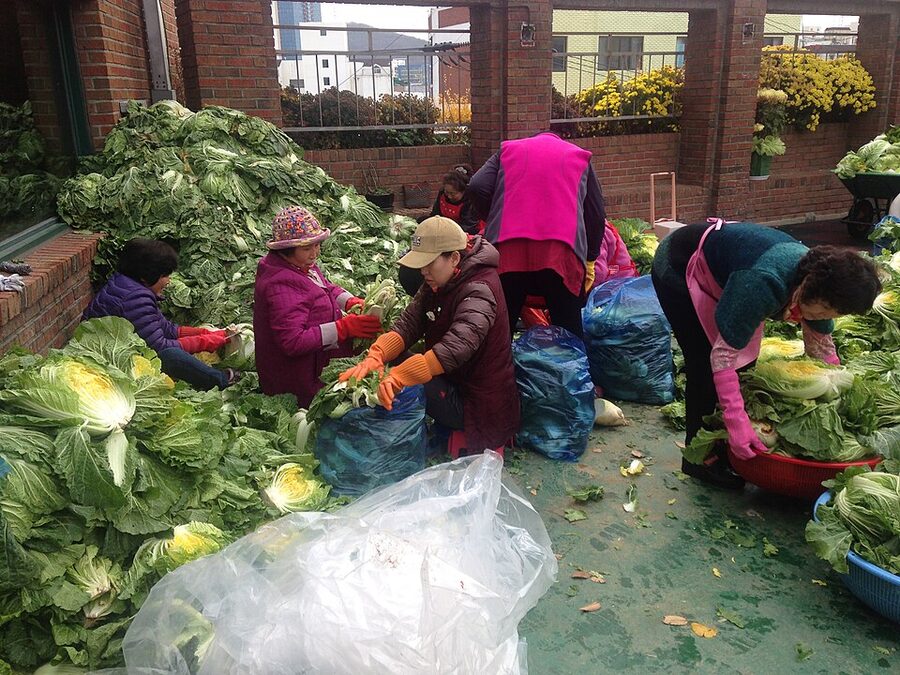
The word to know is gimjang. It’s the seasonal kimchi-making that Korean families do in November and December, when the autumn cabbages are ready and the weather is cold enough to ferment slowly. A family might make hundreds of heads of cabbage worth, enough to last through winter. UNESCO added gimjang to its list of intangible cultural heritage in 2013 for the community aspect — extended families and neighbours gather, the work is shared, the kimchi is distributed.
This matters for booking. If you’re in Seoul in late November or December, ask your class if they time it with gimjang season. Some classes shift to a community format in these months — more people, more cabbages, longer sessions, deeper cultural context. The Kimchi Museum sometimes runs these. It’s a different experience from the year-round class, and better.
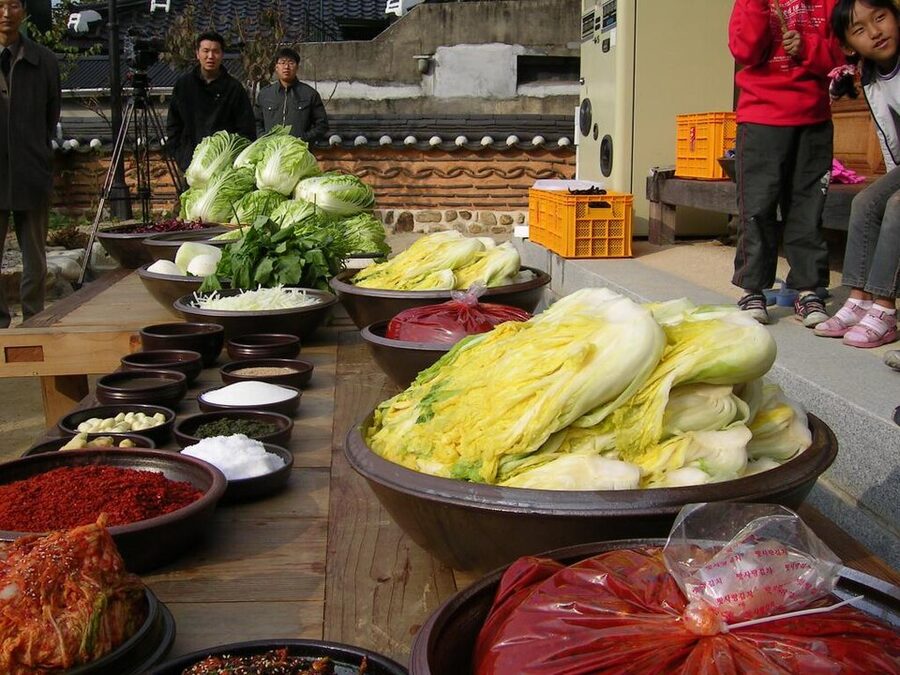
Outside gimjang season, classes run year-round. I’d actually recommend booking in early autumn (September-October) when the new radishes and cabbages start to appear — the raw material is fresh and the classes haven’t yet hit the gimjang rush.
Taking your kimchi home
This is the question everyone asks and nobody writes about clearly. Yes, you can take your kimchi home. Yes, even on a long-haul flight. Here’s what actually works.
The bag is sealed but not vacuum-packed. Most classes pack your kimchi in a silver foil bag that’s heat-sealed at the top. It’s airtight enough for a return flight. It’s not a pressure-rated vacuum bag, so don’t put it in the bottom of a stuffed suitcase or you’ll find out what happens when a litre of fermenting cabbage meets a checked-bag roll cage.
It needs to go in checked baggage. You cannot carry kimchi through airport security in your carry-on. The liquid content is too high. Pack it in the middle of your checked bag, wrapped in a plastic bag and then a soft layer, and flat if possible.
Fresh (geotjeori) kimchi needs to be eaten within a week. Fermented kimchi will keep for weeks. If you’re flying more than 24 hours after the class, ask for the fermenting version (called gimjang-style) rather than the fresh version (geotjeori). They taste different — fresh is crunchier and milder, fermented is softer and sourer — but the fermented one travels.
Customs: The US, UK, and EU all allow fermented vegetables for personal use. Australia and New Zealand will confiscate anything unsealed, and may restrict even sealed fermented products — check your country’s biosecurity rules specifically if you’re flying that direction. For most western travellers, declare food, show the sealed bag, walk through.
What it costs and what’s included
Seoul kimchi class prices cluster at three bands.
$30-50: Short “experience” (30-60 minutes). One kimchi, often bundled with something else like hanbok rental. Good for introducing kids, not great for learning.
$60-90: Full cooking class (2-3 hours). Two to four kimchi varieties, lunch included, take-home bag. This is the sweet spot.
$90-150: Market + cooking class (3-4 hours), or culture combo (kimchi + tea ceremony + hanbok photo session). Hotel pickup, longer meal, more varieties.
Included in almost all classes: apron, gloves, ingredients, take-home container, and a meal. Usually included: drinks (tea, barley water, sometimes soju). Usually not included: transport to the venue, unless the class says “hotel pickup.” Tips are not expected — this is Korea.
Dietary options and what to tell the booking
Korean fermentation traditionally uses fish sauce and jeotgal (fermented shellfish). That matters for vegetarians and vegans. A few classes offer a vegan paste (soy sauce or kelp-based umami) but you have to request it at booking, not on the day. When you book, write “vegetarian” or “vegan” in the comments field, then email the provider to confirm.
Same for gluten-free. The paste in most classes includes glutinous rice flour (which is naturally gluten-free — confusing name), but the soy sauce they use may contain wheat. Ask for tamari substitution if you’re coeliac.
Spice level: most teachers will halve or quarter the gochugaru for you on request. If you’ve got kids along, or low spice tolerance, just tell them at the start. They’ve done this before.
A short history of kimchi (why there are 180 varieties)
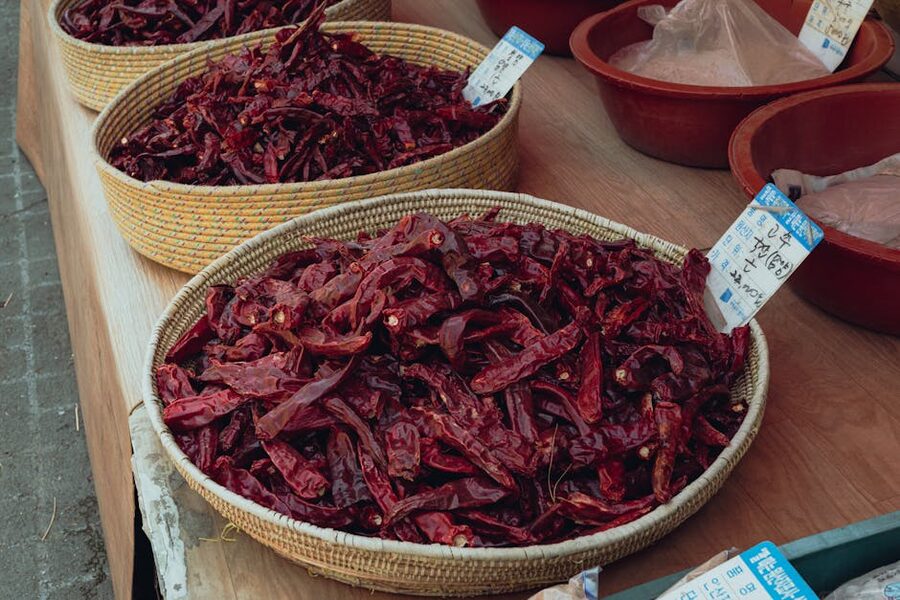
Kimchi is older than you think. The earliest references to fermented vegetable preservation in Korea date to the Three Kingdoms period (roughly the 1st-7th century CE). Back then it was salt-preserved, not spiced. No chilli — chilli peppers didn’t reach the Korean peninsula until the 16th-17th century, brought from the Americas via Japanese traders.
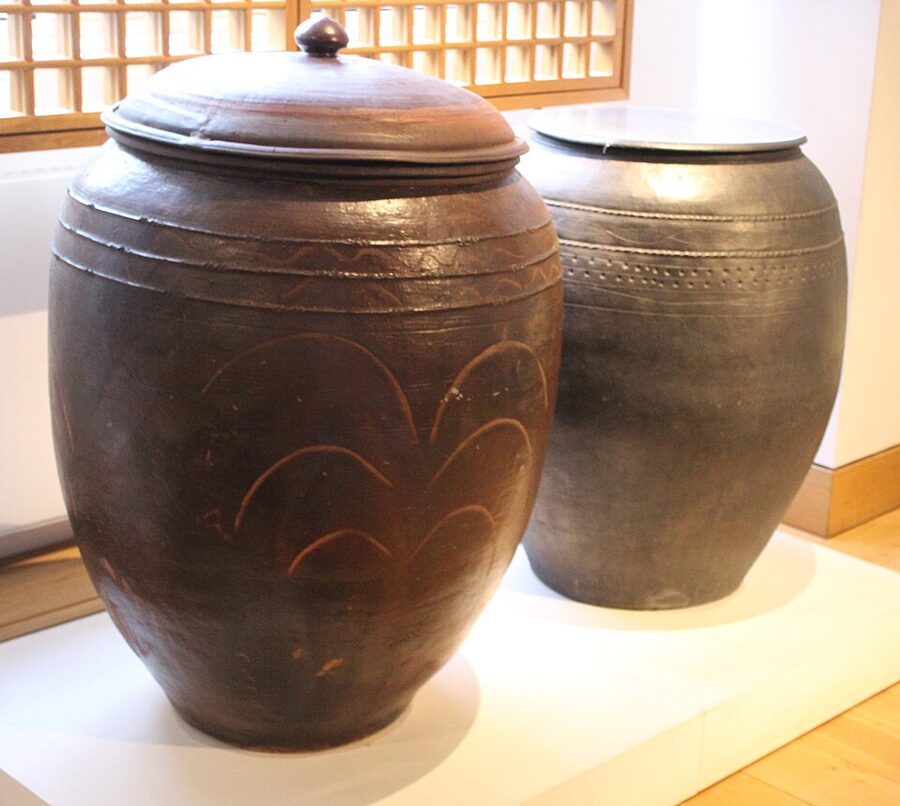
The red kimchi we know today is a 17th-18th century invention. Before that, Korean kimchi was closer to Chinese suan cai or sauerkraut. The switch to gochugaru transformed the dish — and the colour. The onggi jars (earthenware fermenters) you’ll see at museums and in hanok courtyards were the storage containers for winter supply. A family might have ten to twenty jars, half-buried in the ground in the yard to keep a steady temperature.
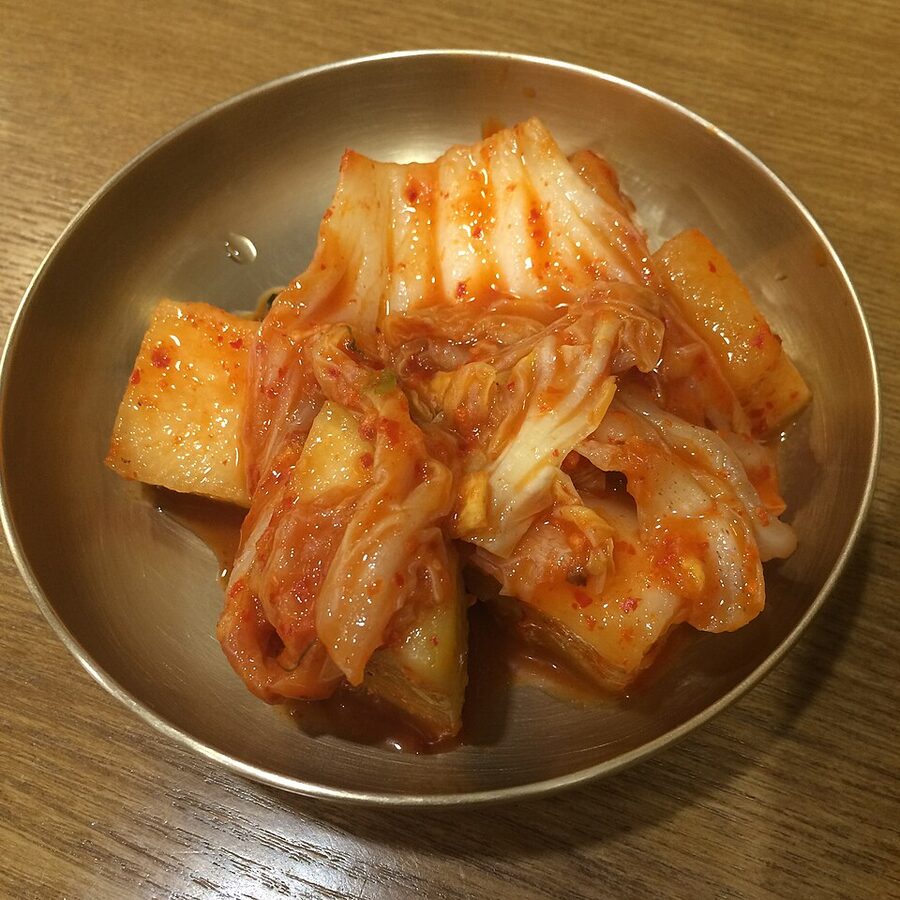
Today there are officially over 180 named varieties of kimchi. Regional differences are real. Seoul and Gyeonggi (the capital region) tend toward milder, cleaner-tasting kimchi. Jeolla province in the southwest uses more fish sauce and makes a saltier, more pungent version. Busan and Gyeongsang lean even fishier. If you do a Busan class after a Seoul class, you’ll taste the difference.
Pairing the class with the rest of Seoul
The best way to book a kimchi class is as part of a day with other food. Here’s the shape I use.
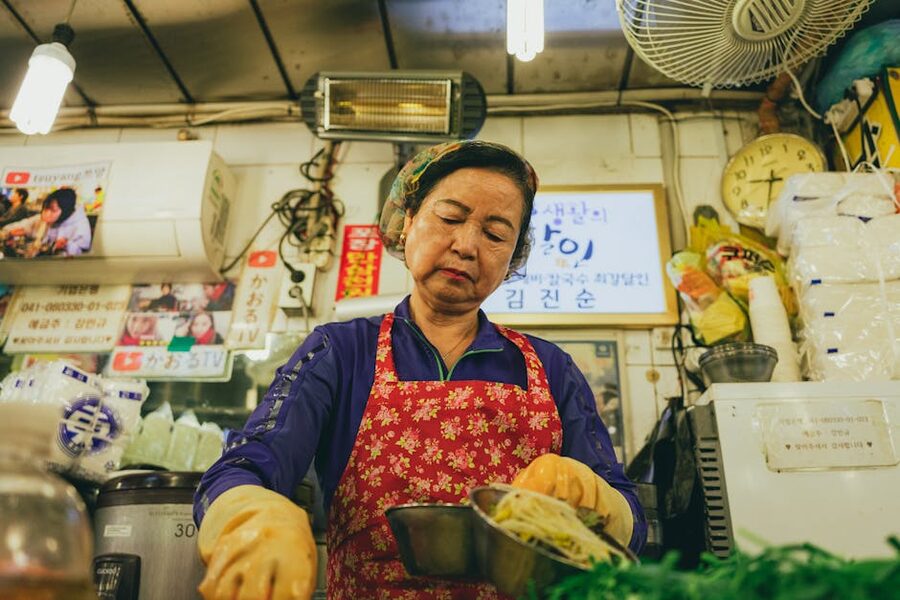
Morning: Gwangjang Market for breakfast — mayak gimbap, bindaetteok pancakes, sundae. Don’t overfill; you’ll be eating again at the class.
Late morning / early afternoon: The kimchi class itself. Aim for a 11am or 12pm start so you finish by 3pm.
Afternoon: Bukchon walking tour if your class wasn’t already in Bukchon, or Insadong for tea and traditional crafts. If you were in Mangwon, walk back through Hongdae and stop at the bookshops.
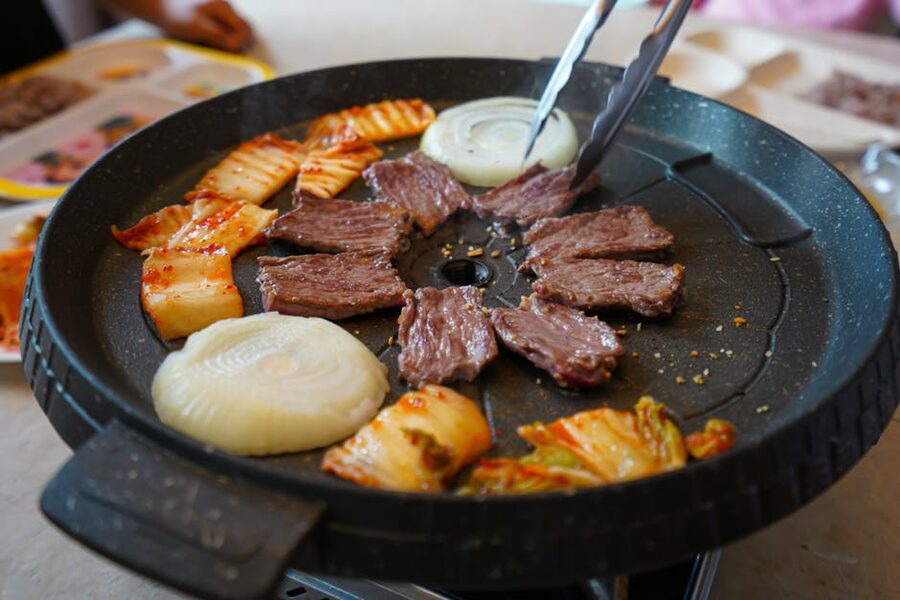
Evening: KBBQ. Bring out your own fresh kimchi from the class (some classes will let you taste yours at dinner; otherwise save it for the hotel room).
For a longer Seoul food day, pair the kimchi class with a Korean cooking class in Seoul the next day covering bibimbap, japchae, or bulgogi. You get both the fermentation fundamentals and the full dish vocabulary. Or add a Seoul night market food tour to cover pojangmacha and street-food specialties the class won’t touch.
Booking logistics and what to ask
Book 2-3 weeks ahead for the popular classes, longer if you’re coming in high season (October-November) or during gimjang months. Small-group classes (4-8 people) sell out fast, especially the Viator and GetYourGuide top results. The market-plus-class options are the first to fill.
Questions to send the provider before you pay:
- How long is the actual hands-on cooking time (not the total class length)?
- How many kimchi varieties will I make?
- Is the take-home kimchi fresh or fermenting-style? (This determines how long you can keep it.)
- Is the meal at the end substantial, or just a tasting? (For timing your other meals.)
- If you have dietary requirements: can they substitute?
On the day, show up ten minutes early, wear short sleeves or a shirt you don’t love (the paste stains), and take cash for tip jars at the markets even though Korea is mostly cashless now. The hanok-based classes sometimes ask you to remove shoes at the entrance — ordinary socks are fine.
After the class — keeping the habit
Most people who take a class in Seoul try to make kimchi once at home and stop. The reason isn’t the technique — you’ve got that. It’s the ingredients. Proper gochugaru is hard to find outside Korean and Japanese specialty shops. Saeujeot (fermented shrimp) is even harder. Fish sauce is easy.
If you’re serious about keeping the habit, buy your gochugaru in Seoul before you fly home. A 500g bag at Gwangjang or Namdaemun will last a year of home kimchi and costs a third of what Western online shops charge. It vacuum-seals well for checked baggage. Saeujeot you can skip — anchovy sauce (myeolchi aekjeot) is an acceptable substitute and ships easier.
Buy a dedicated glass or plastic container with a loose lid — the fermenting gases need somewhere to go. A mason jar with the lid cracked open works fine. Store at room temperature for two days to start the ferment, then move to the fridge. It keeps getting better for about three weeks and is edible for six.
What to do on the day before and after
A kimchi class rewards some deliberate food planning around it. Here’s what I’d do.
Night before: Keep dinner light. KBBQ is tempting but you’ll want your palate fresh for tasting differences between the four kimchi types tomorrow. A late-night pojangmacha tent for tteokbokki and a single bottle of soju is perfect.
Day of: Morning coffee in a hanok cafe if you’re in Bukchon, or a quick kimbap from a convenience store if you’re in Myeongdong. Skip breakfast proper — the lunch at the class is substantial.
Day after: Eat the fresh kimchi you made with a home-cooked Korean breakfast at your accommodation. A rice bowl, a soft-boiled egg, and a small dish of your own fresh geotjeori is the kind of meal that tells you the class worked.
The kimchi questions I get asked most
Can I do a class without Korean language skills?
Yes. Almost every Seoul class aimed at tourists runs in English, and many have Japanese or Chinese options. The Bukchon classes sometimes have only one English speaker so ask when you book. Market tours can be trickier — the vendors don’t speak English — but the class instructor acts as translator.
Is it worth doing if I don’t cook at home?
Honestly, yes. Kimchi-making is hand-work, not cooking, so the learning transfers even if you never pick up a pan again. The cultural context — why fermentation, why the spice, why the community gimjang — is what you take away. The recipe is secondary.
What if I’m travelling solo?
Most classes are small-group and very solo-friendly. You’ll end up sharing a prep station with one or two strangers, eating lunch with them, and swapping kimchi tastings. Some of the best class experiences I’ve had were solo.
Will there be a written recipe to take home?
Some classes give you a printed recipe. Some email it after. Some (like the Kimchi Academy I went to first) don’t — they treat it as home cooking, where you learn by watching. Ask up front if the recipe matters to you.
More Korea booking guides to read next
If the kimchi class is going to be the cultural core of your Seoul food trip, pair it with a Korean cooking class in Seoul for the savoury dishes — bulgogi, japchae, bibimbap — that are too big to fit into a kimchi session. Both work as half-day commitments and both send you home with real technique. For the Korean drink half of the equation, our Korean soju tasting guide walks through the craft distilleries worth visiting and what to pair with the kimchi you’ll be making.
If you’re the kind of traveller who earns the meal, the Bukhansan hiking guide covers the closest proper mountain to Seoul — do the granite peaks in the morning and the kimchi class in the afternoon, and you’ve got Korea’s two extremes in a single day. For the cultural hits, a Seoul hanbok rental is what you’ll want for Bukchon photos right after class, and a Gyeongbokgung and Bukchon walking tour pairs naturally with a morning kimchi session.
For food-tour completists, the Seoul night market food tour covers pojangmacha and late-night street food that no class can teach, and the Busan city tour pairs perfectly with the Busan kkakdugi class for anyone heading south. Out of Seoul, Jeju Island day tours get you to the birthplace of ham-heavy black pork kimchi, and a DMZ day tour is the contrast of a lifetime after a gentle hanok cooking afternoon. For serious food travellers, our Seoul private tour guide covers how to weave a kimchi class, market crawl, and palace visit into a single bespoke day.
The smell on your hands the next morning is the thing nobody tells you about. The rest of it — the crunch, the heat, the silver bag in your suitcase — is everything you came for.