
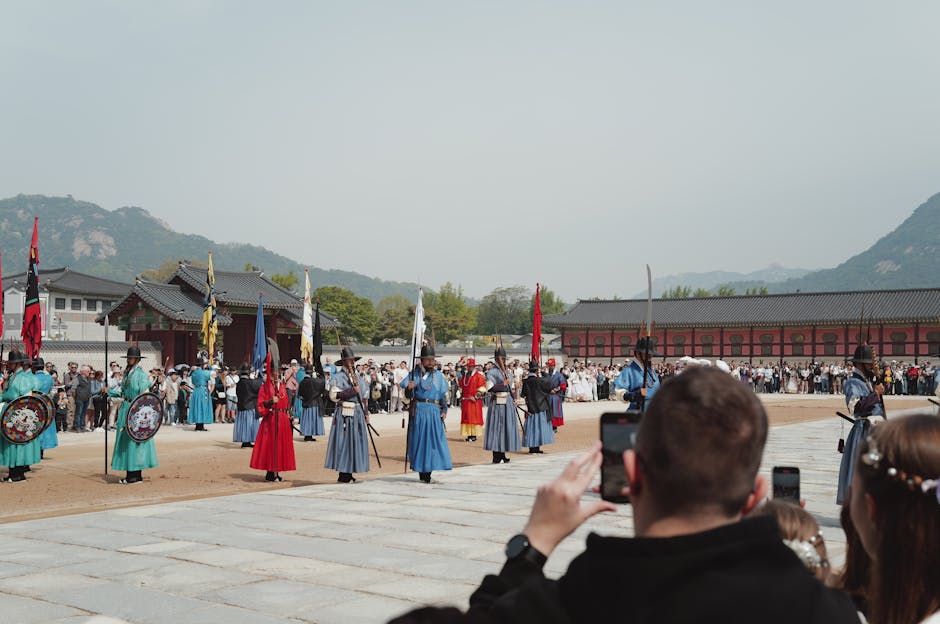
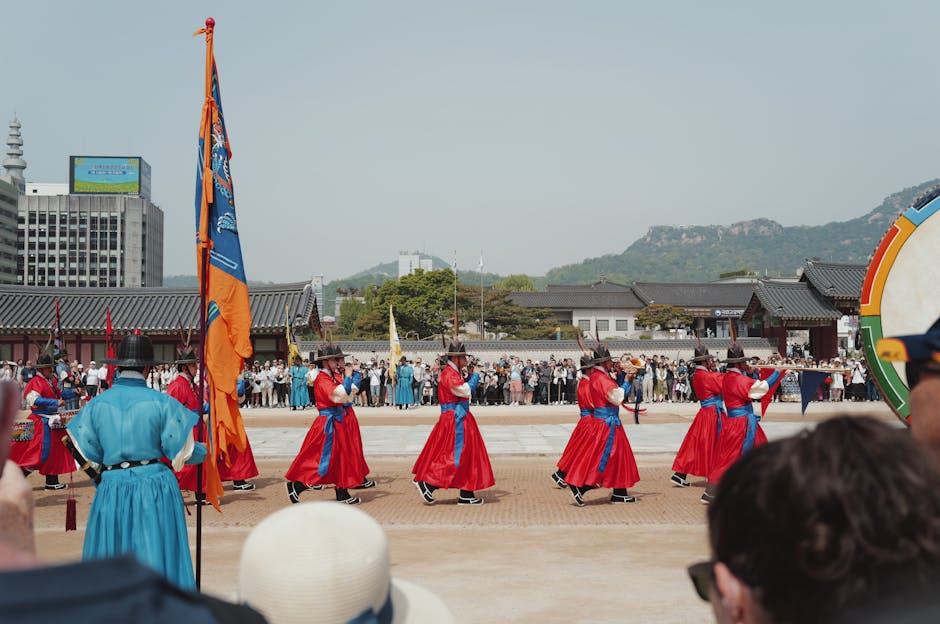
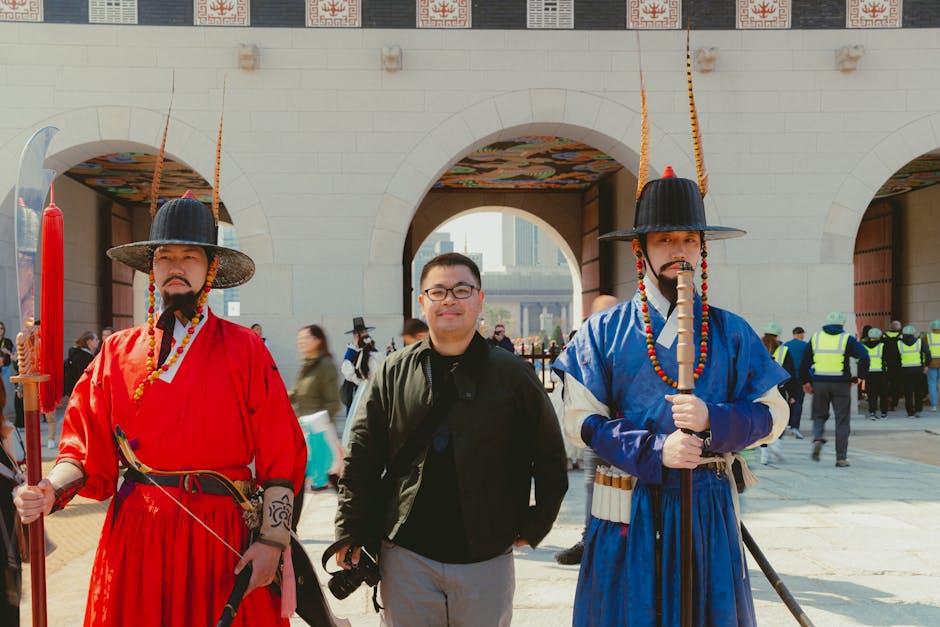
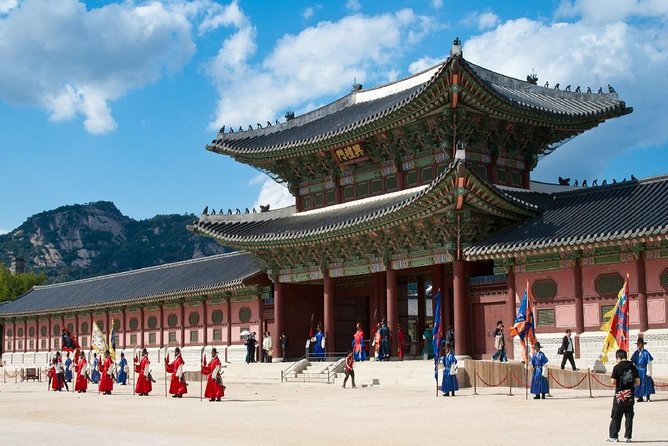
The drums hit first. Then the horns. Then a wall of men in blue, red, and yellow robes came marching through Gwanghwamun gate in slow, deliberate steps, their boots landing in perfect time on the cobblestones. The Gyeongbokgung royal guard changing ceremony is one of those moments that freezes a whole city block in place. Phones come out. Kids stop crying.
A Korean grandmother next to me started explaining the ranks to her granddaughter in a whisper, like the ceremony was happening in the 1400s and we’d been allowed to watch.
That’s your opening act at Gyeongbokgung Palace, and it’s free. You don’t even need a ticket to see it.
Getting the rest of the palace right — plus Bukchon Hanok Village twenty minutes uphill, plus Gwangjang Market for lunch — is what this guide is about. I’ll walk you through how to book the tours that actually do this circuit well, the ones I’d send a friend on, and the logistics of doing it yourself if you’d rather go it alone.
Short on time? Here are my top 3 picks:
Best overall: Seoul Northern Sides with Gwangjang Market — $32. Palace, Bukchon, and market food all in one half-day loop, small group, the one I’d book first.
Best full-day: Seoul City Full Day Tour — $58.65. Adds Seoul Tower and Insadong on top of the palace and hanok village, good if you only have one sightseeing day.
Best small group: Small-Group Royal Palace Tour with Lunch & Hotel Pickup — $56.44. Caps the group, includes lunch, and comes with hotel pickup — the low-stress option.
- How Gyeongbokgung Palace Tickets Actually Work
- The Changing of the Guard Ceremony — Free, and Worth Planning Around
- Going It Alone vs Booking a Tour — My Honest Take
- The Best Seoul Palace & Bukchon Tours to Book
- 1. Seoul Northern Sides with Gwangjang Market —
- 2. Seoul City Full Day Tour — Gyeongbok Palace, Seoul Tower & Insadong — .65
- 3. Small-Group Royal Palace & Seoul City Tour with Lunch & Hotel Pickup — .44
- When to Visit — Hour by Hour
- How to Get There
- Tips That Will Save You Time
- What You’ll Actually See Inside — A Quick Orientation
- Bukchon Hanok Village — What to Expect
- Gwangjang Market — Where the Food Lives
- Should You Wear Hanbok?
- Insadong and What to Do After
- Practical Questions People Always Ask
- Planning the Rest of Your Seoul Trip
How Gyeongbokgung Palace Tickets Actually Work
Let’s clear the biggest question up first. You don’t need to book Gyeongbokgung Palace tickets in advance. You walk up to the ticket booth at the Heungnyemun gate, hand over 3,000 won (about $2.20), and you’re in. It’s that cheap and that easy.
What you pay for:
- Adult ticket: 3,000 KRW
- Youth (7–18): 1,500 KRW
- Children under 7 and seniors over 65: Free
- Integrated palace pass (4 palaces + Jongmyo): 10,000 KRW, good for 3 months
If you’re going to hit Changdeokgung and one or two of the smaller palaces on this trip, the integrated pass pays for itself within two visits. Buy it at the first palace you visit.
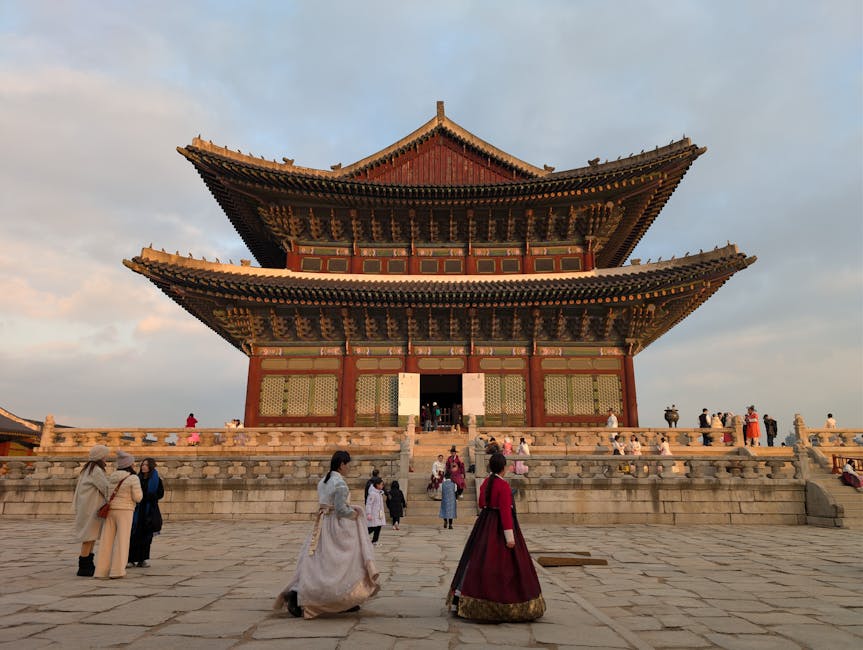
The hanbok trick. Here’s a detail most first-timers miss: if you show up in hanbok (traditional Korean dress), you get in free. Not a discount — completely free. There are dozens of hanbok rental shops in the alleys right next to the palace, from cheap 10,000 KRW two-hour rentals to full-day premium ones around 30,000 KRW.
You save the entrance fee, you get better photos, and you get to do the thing everyone posts on Instagram without looking like you wandered in by accident. It’s the best deal in Seoul sightseeing.
Hours: Gyeongbokgung is open 9:00 AM to 6:00 PM most of the year (until 6:30 in summer, 5:00 in winter). Closed Tuesdays. Last entry is one hour before closing, and that rule is enforced.
The Changing of the Guard Ceremony — Free, and Worth Planning Around
Two ceremonies per day: 10:00 AM and 2:00 PM. Each runs about 20 minutes. You want the 10 AM one — cooler, less crowded, better light for photos, and you get the whole rest of the morning to actually explore the palace while tour buses are still crawling across town.
Position yourself in the large plaza outside Gwanghwamun (the main gate, the one facing the big boulevard) by 9:50. The guards assemble along the eastern side of the plaza and march across in formation. If you stand dead-center in front of the gate, you’ll get the classic head-on shot. If you stand to the side near the drummers, you’ll get the ceremony details up close — the banners, the weapons, the face paint.
It’s cancelled in heavy rain and on Tuesdays when the palace is closed. Double-check before you build your whole morning around it.
Going It Alone vs Booking a Tour — My Honest Take
Gyeongbokgung is one of the easier royal palaces in the world to DIY. Tickets are cheap, signage is good, there are free English-language guided walks at set times daily (11 AM, 1:30 PM, and 3:30 PM at the information center), and subway Line 3 drops you at Gyeongbokgung Station exit 5, which is literally inside the palace grounds. You cannot get lost.
So why would you book a tour? Three reasons, in order of importance:
1. You’re combining the palace with Bukchon and a market. The real time-suck of doing this circuit alone isn’t the palace — it’s figuring out the walk uphill to Bukchon, which alleys to turn into, which of the hanok houses are actually worth stopping at, which are private residences you should walk past quietly, and then getting down to Gwangjang Market without losing half an hour to map apps. A guide shortcuts all of that.
2. You want the history to stick. The English signs at Gyeongbokgung are fine, but they’re brief. The difference between reading "King Sejong designed Hangul here" and hearing a guide explain why the Joseon dynasty decided literacy was a political weapon is the difference between a nice morning and a visit you’ll still remember in three years.
3. You only have one day in Seoul. If Gyeongbokgung is your only shot at traditional Seoul — because you’re on a cruise, or a layover, or a one-week Asia blitz — a tour removes all the friction and gives you the efficient version. You’ll see more in half a day than most DIY visitors see in a full one.
If none of those three things apply — if you’re a confident independent traveler with a few days in Seoul, decent Seoul subway experience, and you like wandering — skip the tour, save the $32–$58, and do it yourself. It’s genuinely doable.
The Best Seoul Palace & Bukchon Tours to Book
These are the three I’d actually recommend, ranked by how they match up to different travel styles. All three are on-site with real visitor data behind them, and I’ve pulled each one from our review database to check that the numbers hold up before writing about it.
1. Seoul Northern Sides with Gwangjang Market — $32
This is the tour I’d book first, and it’s not close. For $32 you get Gyeongbokgung Palace, Bukchon Hanok Village, and Gwangjang Market in a single guided half-day walk. That’s three of the top five things anyone should do on a first visit to Seoul, bundled for the price of a decent dinner.
The GetYourGuide Seoul Northern Sides walking tour runs small-group, has a 4.9-star track record across thousands of past guests, and covers the duration flexibly (4 to 9 hours depending on how deep you want to go at the market). The guide I’d want is Grace — she gets name-checked over and over in the review data for energy and depth of knowledge, and it shows in how the tour runs.
What makes this tour work is that the walking distances between the three stops are genuinely small. You’re not spending an hour on a bus to save time. You’re spending the whole morning in one compact, pedestrian-friendly chunk of old Seoul, which is exactly how this neighborhood was meant to be experienced.
Book this if: You want a high-value half-day, you’re willing to walk, and you want the cultural loop without the full-day price tag.
2. Seoul City Full Day Tour — Gyeongbok Palace, Seoul Tower & Insadong — $58.65

If you only have one sightseeing day in Seoul, this is the full day Seoul city tour to book. You get Gyeongbokgung in the morning, a lunch stop (usually in Insadong or near it), then an afternoon at N Seoul Tower for the city-wide view, and Insadong’s antique streets at the end. It’s a sampler platter of the must-do stuff, and the pacing is built so you never feel rushed at any single stop.
At $58.65 it’s nearly double the first tour, but you’re getting a full day and two extra stops, and the 5-star rating across 1,647 past bookings suggests the guides are actually delivering. One review I pulled put it plainly: "I booked the whole day tour since I only have 3 days in Korea. I felt like I saw most of Seoul." That’s the right expectation — it’s a see-everything tour, not a go-deep tour.
My only small gripe: when you try to do four things in one day, you don’t get to linger anywhere. If you’re the kind of traveler who likes to sit in a cafe and watch the world go by, this one will feel busy.
Book this if: You’ve got one day, you want maximum sightseeing efficiency, and the Seoul Tower view is a priority.
3. Small-Group Royal Palace & Seoul City Tour with Lunch & Hotel Pickup — $56.44
This is the premium small-group option if you want a full-day palace and city tour with the group size capped, lunch included, and hotel pickup so you don’t spend the start of your day figuring out subway exits. Priced at $56.44, it’s actually slightly cheaper than the first full-day option, and for most travellers that’s the better trade.
The standout review from our database came from a guest named Susan who called her guide "phenomenal" and "an expert on the history and culture of South Korea." That kind of language is what you want to see in a tour you’re paying real money for — not "fun," not "nice," but expert. Cultural depth is where small-group tours earn their price.
The tradeoff: because the group is small, you’re locked to the guide’s pace and the other guests’ interests. If two of your four tour-mates want to spend 20 minutes at a gift shop, that’s your reality. But the 5-star rating across 1,474 bookings suggests most people come off this one happy.
Book this if: You want a premium, low-hassle full day with food included and a capped group size, and you don’t mind paying a touch more for the pickup convenience.
When to Visit — Hour by Hour
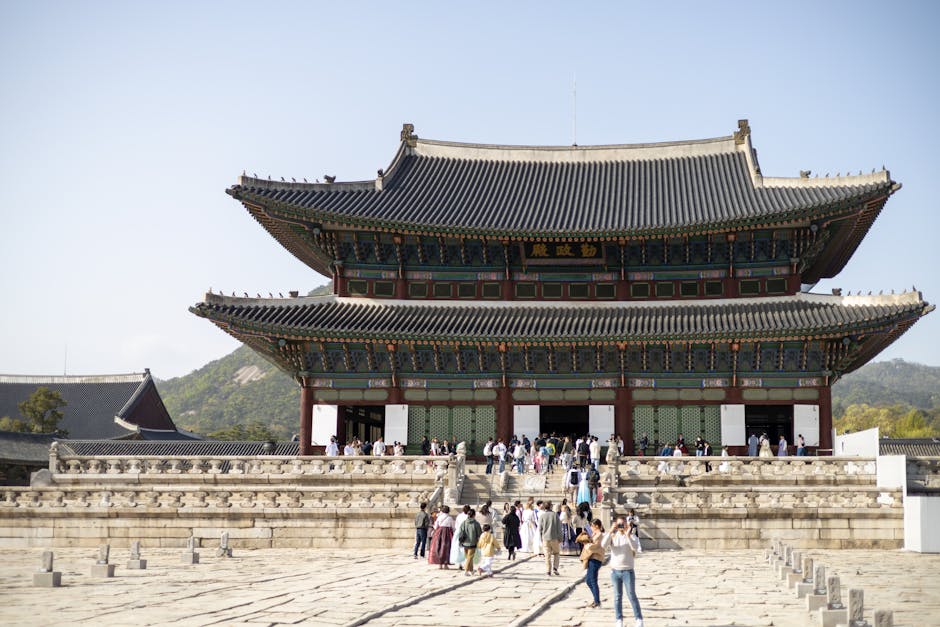
The best window for Gyeongbokgung is a narrow one: arrive at 9:00 AM when the gates open, catch the 10 AM ceremony, and be out by 11:30 before the tour-bus groups arrive en masse. That gives you a two-and-a-half-hour head start on the main crowd wave.
Second-best window: 4:00 to 5:30 PM. The tour buses have cleared out, the afternoon light on the wooden eaves is the best of the day, and you can finish inside the palace right around closing without feeling rushed. The downside is the 2 PM changing ceremony, if that matters to you — it’s in harsher light with more crowds.
The worst time is any weekend between 11 AM and 2 PM year-round. Add in cherry blossom season (late March to mid-April) and fall foliage (mid-October to early November) and you’ll be shoulder-to-shoulder for every major photo spot. If you must go on a weekend, go at 9 AM sharp.
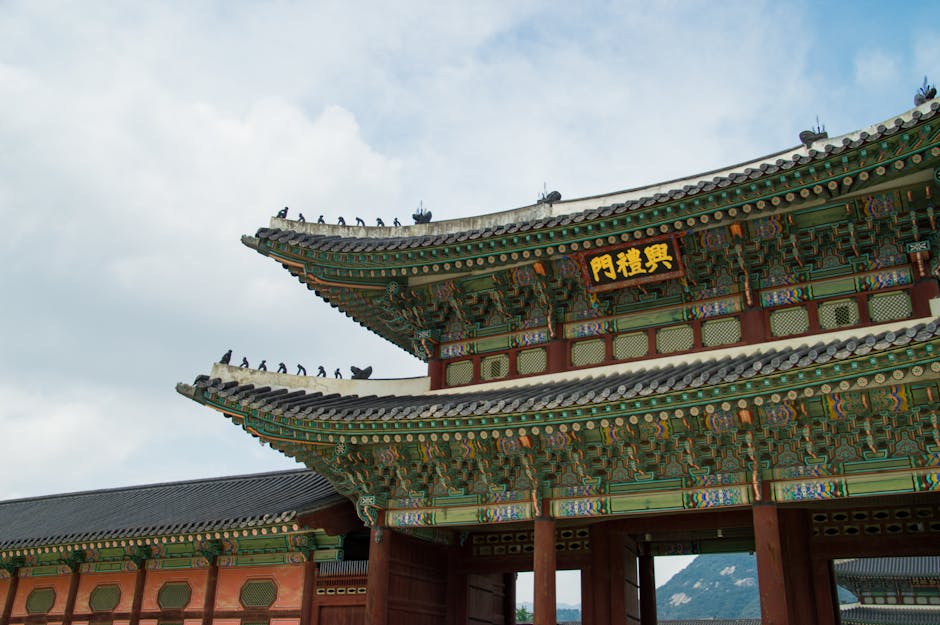
Night tours of Gyeongbokgung run a few times a year — spring and fall — and sell out almost instantly. They’re booked through the Korea Cultural Heritage Administration website and are a separate ticket. If you happen to be in Seoul during one of these windows, check the dates. The palace at night with every lantern lit is one of the best photo experiences in Korea, and the ones I’ve seen people come back with justify the hype.
How to Get There
Transit to Gyeongbokgung is the easiest part of the whole day. Subway Line 3, Gyeongbokgung Station, Exit 5. The exit surfaces inside the palace grounds — you don’t cross a single road. Exit 5 leads straight to the ticket office. It’s the kind of subway stop where you check a map and then laugh because there’s nothing to figure out.
From Bukchon, you walk. Bukchon Hanok Village starts just east of Anguk Station (Line 3, one stop from Gyeongbokgung) and sprawls uphill toward Samcheongdong. From the east gate of Gyeongbokgung, it’s a 5–10 minute walk into the lowest Bukchon alleys, then another 10 minutes to the hillside photo spots. You’re walking the whole morning, and that’s actually the pleasure of the area.
Gwangjang Market sits further south, near Jongno 5-ga Station on Line 1 or Euljiro 4-ga Station on Lines 2 and 5. From Bukchon you can walk it in about 20 minutes downhill through the Insadong area, which is honestly one of the better walks in central Seoul. Or take a 3,000 won taxi if your feet are done.
Tips That Will Save You Time
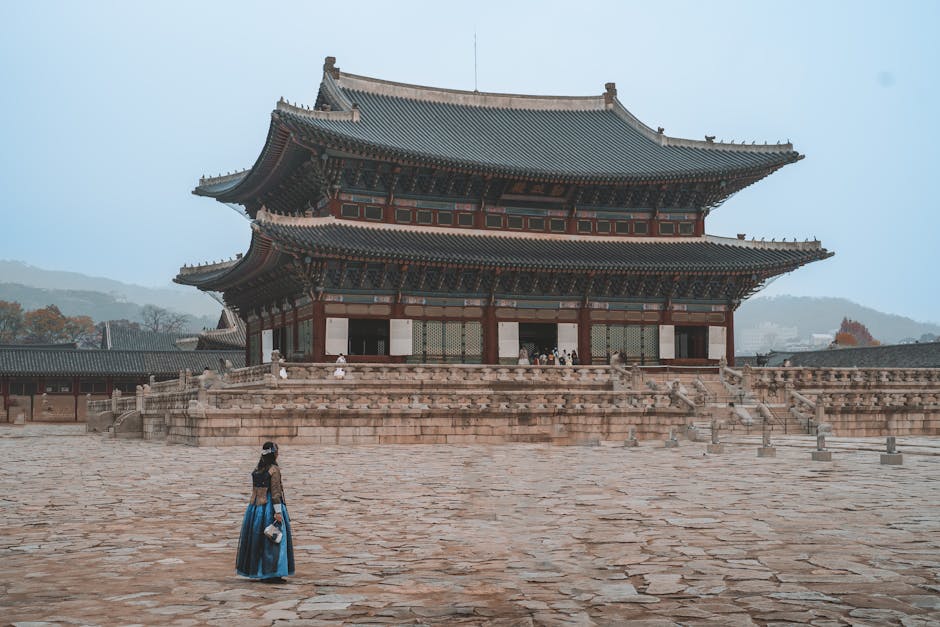
- Rent hanbok before you buy a palace ticket. Free entry to all four royal palaces if you’re wearing traditional dress. The math is always in favor of the rental.
- Use the free English guided walks at 11 AM, 1:30 PM, and 3:30 PM. They meet at the information center near the entrance and run about 60–90 minutes. Zero cost, decent substance.
- Hit the National Folk Museum inside Gyeongbokgung — it’s free with your palace ticket, and it has the single best introduction to Joseon-era daily life in the country. Most visitors skip it. Don’t.
- Bring water, wear real shoes. The palace grounds are bigger than they look on the map (410,000 square meters) and most of it is gravel. Flip-flops will kill you.
- Closed Tuesdays. I cannot emphasize this enough. People fly into Seoul, pick Tuesday for Gyeongbokgung because they assume museums are the closed-Monday places, and arrive to locked gates. Don’t be that person.
- Gwangjang Market is busiest from 12–2 PM and 6–9 PM. If you want to actually see the vendors, go at 11:00 AM or 3:00 PM. If you want the full chaos experience, show up for dinner.
- Don’t skip Hyangwonjeong Pavilion. It’s the small pavilion on the lotus pond in the north of the palace complex. Most tours end before they get that far. It’s the most peaceful corner of the whole site.
What You’ll Actually See Inside — A Quick Orientation
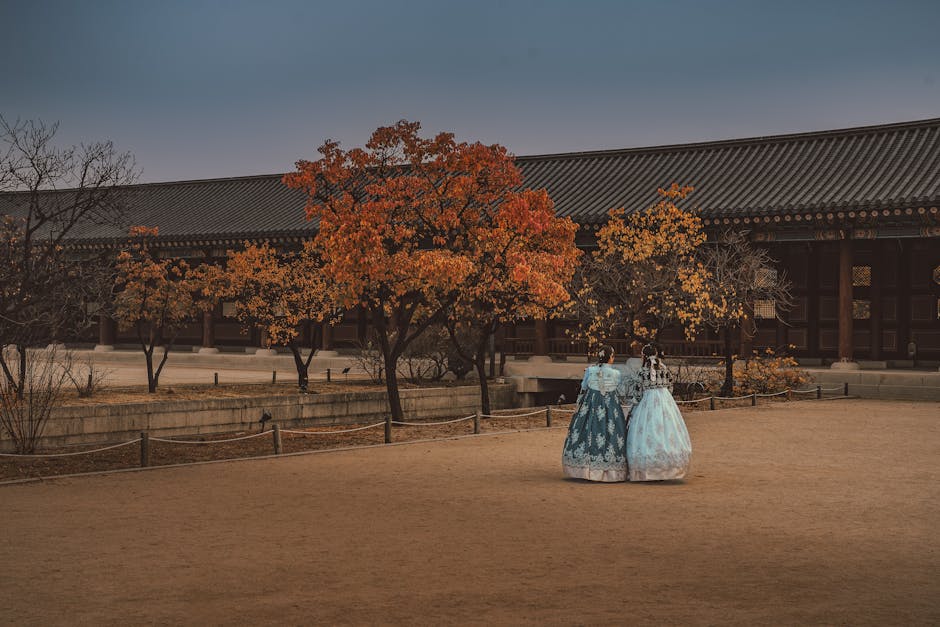
Gyeongbokgung means "Palace Greatly Blessed by Heaven." It was the main royal palace of the Joseon dynasty from 1395 until it was destroyed during the Imjin War in 1592, left in ruins for almost 300 years, rebuilt in 1867, then partially demolished again during the Japanese occupation in the early 1900s. The version you see today is a long, ongoing restoration project that’s been adding buildings back since 1990.
The layout, from south to north, is a straight shot of ceremonial gates and throne halls:
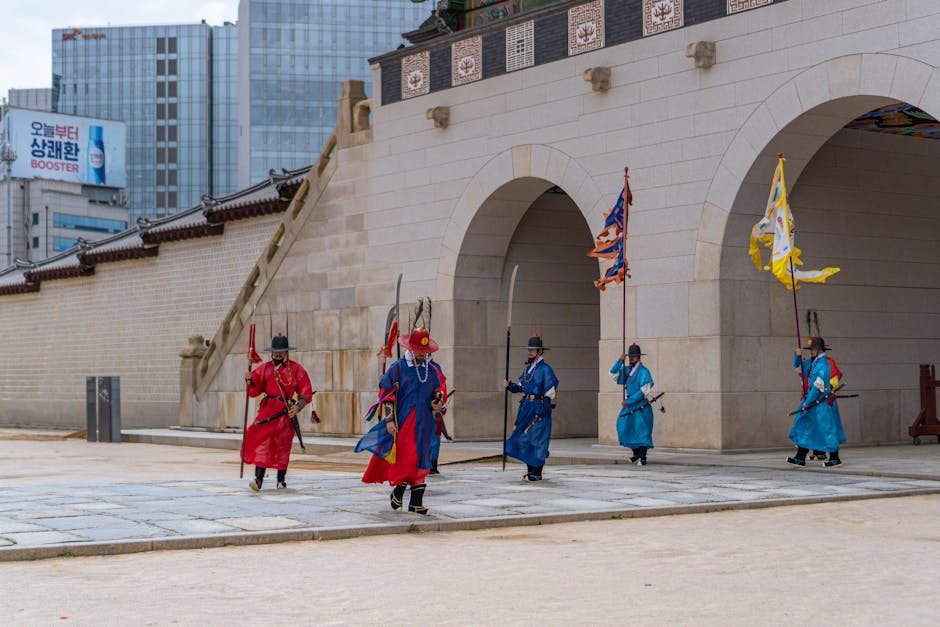
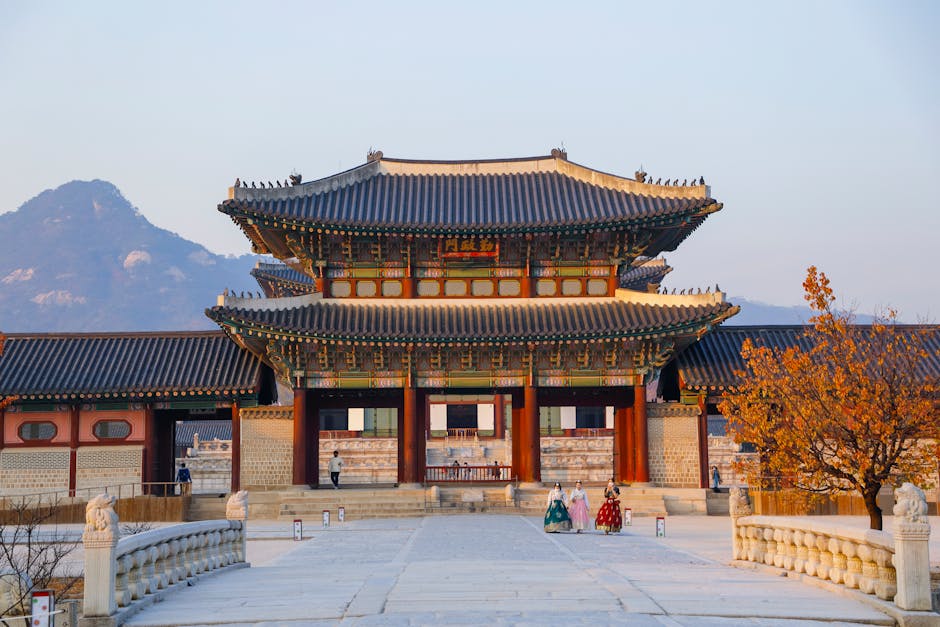
Gwanghwamun is the main southern gate, the one with the guards and the giant plaza in front of it. This is where the changing ceremony happens and where every Korean tour group assembles for their first photo.
Heungnyemun is the second gate. Ticket checkpoint.
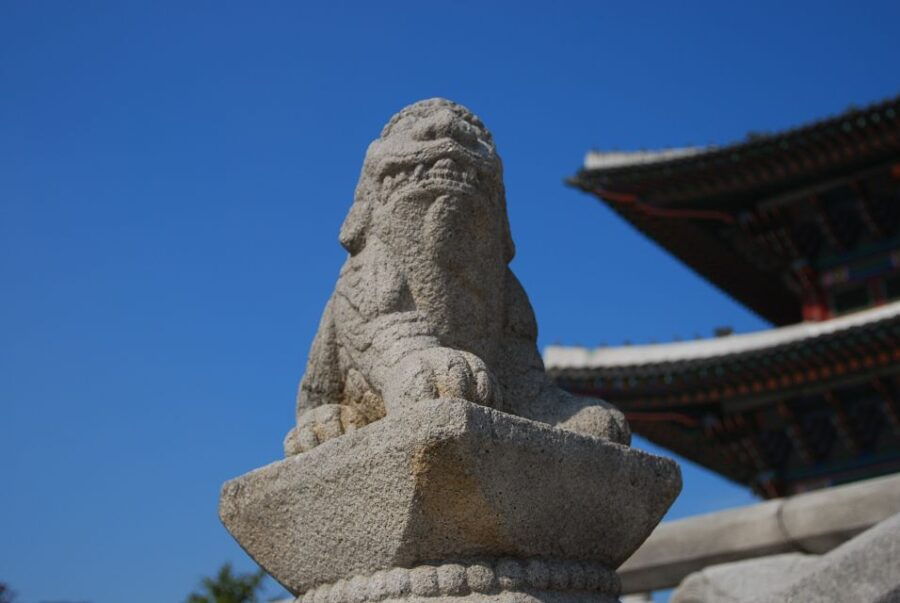
Geunjeongjeon is the throne hall — the massive two-tiered wooden building on a stone platform where coronations happened and foreign ambassadors were received. Stand in the center of the courtyard in front of it. This is the photo.
Gyeonghoeru Pavilion is the big ceremonial building sitting on an artificial pond to the west. Built on 48 stone columns. You can’t go inside without a special reservation, but you don’t need to — the view from the walkway is the point.
Hyangwonjeong is the smaller pavilion further north on a smaller pond. This is where tour groups run out of time. Go here.
The National Folk Museum is attached on the east side, free with your ticket, and worth the extra 30–45 minutes.
Bukchon Hanok Village — What to Expect
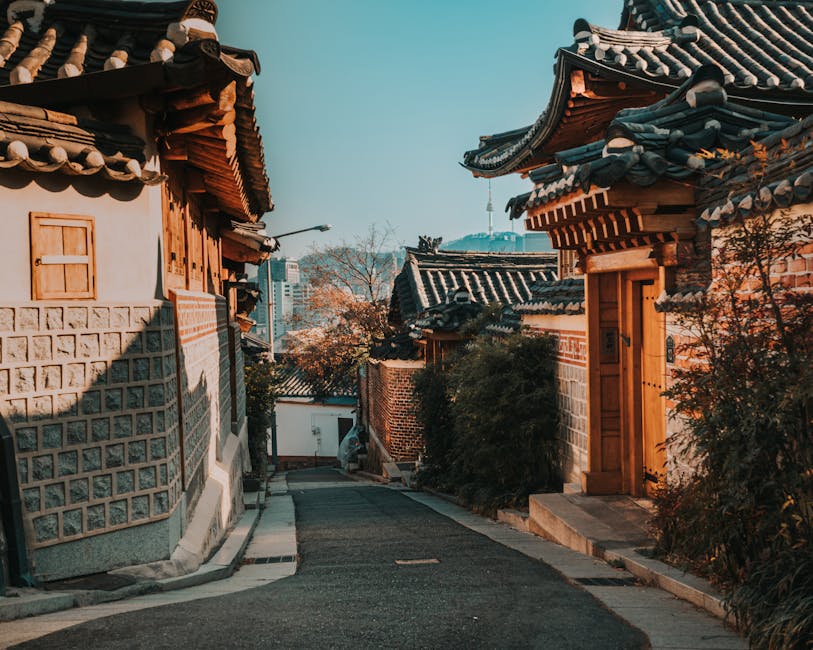
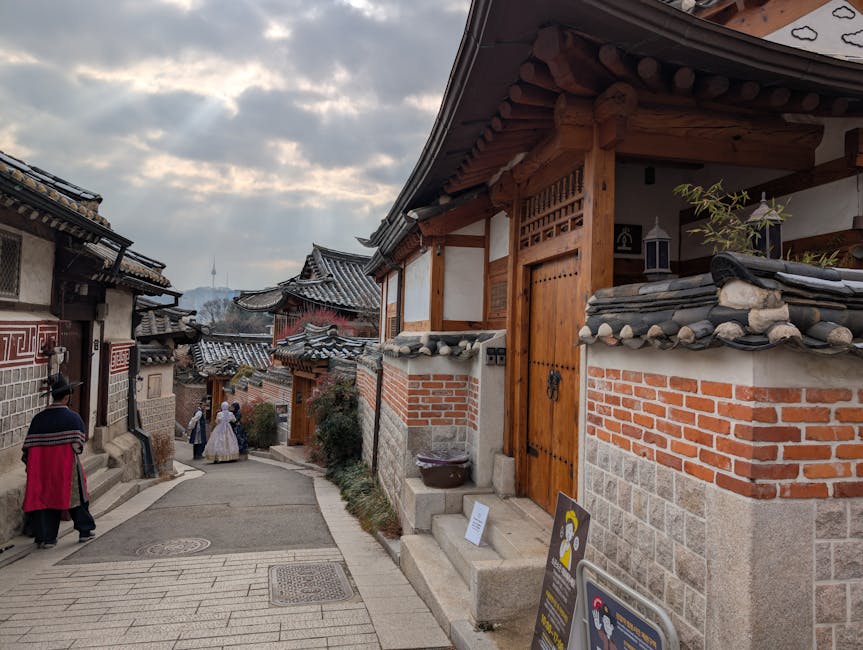
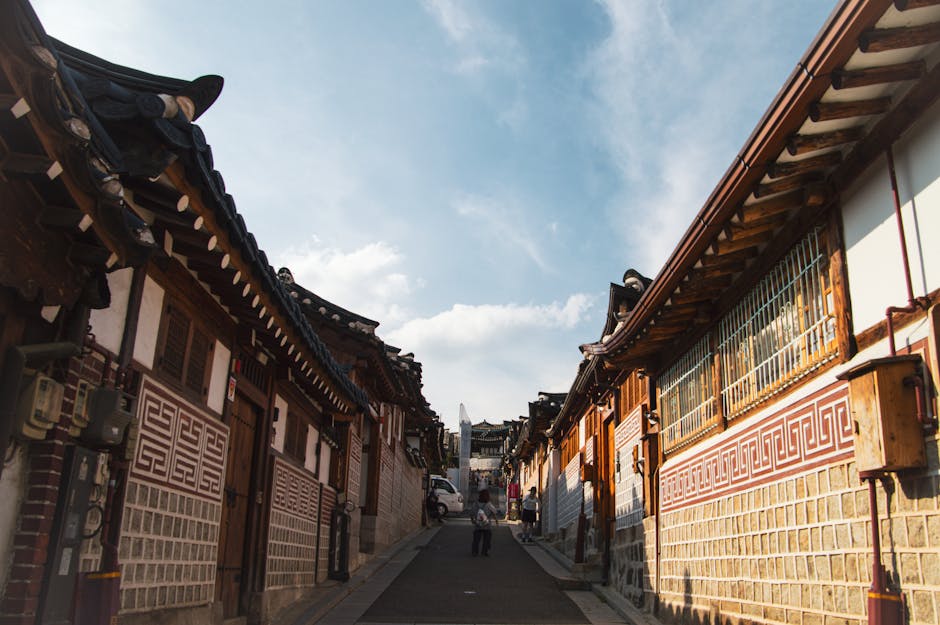
Bukchon is the second stop on any good Seoul sightseeing day, and it’s about 15 minutes on foot uphill from the east gate of Gyeongbokgung. "Hanok" means traditional Korean house — single-story, wooden frame, curved tile roof, courtyard in the middle. Bukchon has around 900 of them, which makes it the largest concentration of traditional houses in Seoul by a wide margin.
Here’s the thing most guidebooks don’t explain well: Bukchon is not a museum. It’s a living, residential neighborhood. People actually live in about 70% of those houses. When you walk the alleys, you’re walking past people’s front doors, not exhibit gates.
The village authorities have put polite signs up asking visitors to be quiet, and they mean it — fines start at 100,000 KRW ($75) if you’re caught being disruptive during the morning "quiet hours" that now apply in certain lanes.
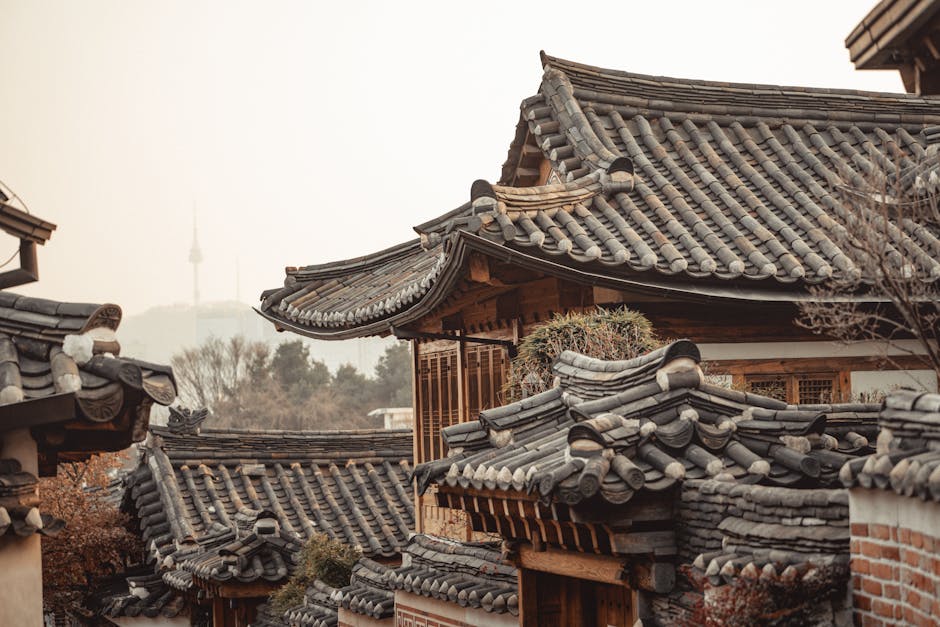
The famous photo spot — the steep uphill lane with hanok roofs spilling down toward the modern city — is on Gahoe-dong 31-Gil. Go early (before 9:30 AM) or late (after 5 PM) and you’ll have it mostly to yourself. In the middle of the day it’s elbow-to-elbow.
There are a handful of actual attractions scattered through Bukchon if you want to spend more than just a photo walk here:
- Bukchon Traditional Culture Center — Free hanok you can walk inside, good for seeing the layout.
- Gahoe Minhwa Museum — Traditional folk painting, small, fun, cheap.
- Dong-Lim Knot Workshop — Where they still make traditional Korean decorative knotwork by hand.
- Simsimheon — A hanok guesthouse that sometimes runs tea ceremonies for walk-ins.
If you’re rushing, the honest answer is: you don’t need to go inside anything. Walking the alleys, seeing the roofs, poking into the Gahoe-dong 31 viewpoint, and having a coffee in one of the hanok cafes is the experience. The village is the attraction.
Gwangjang Market — Where the Food Lives
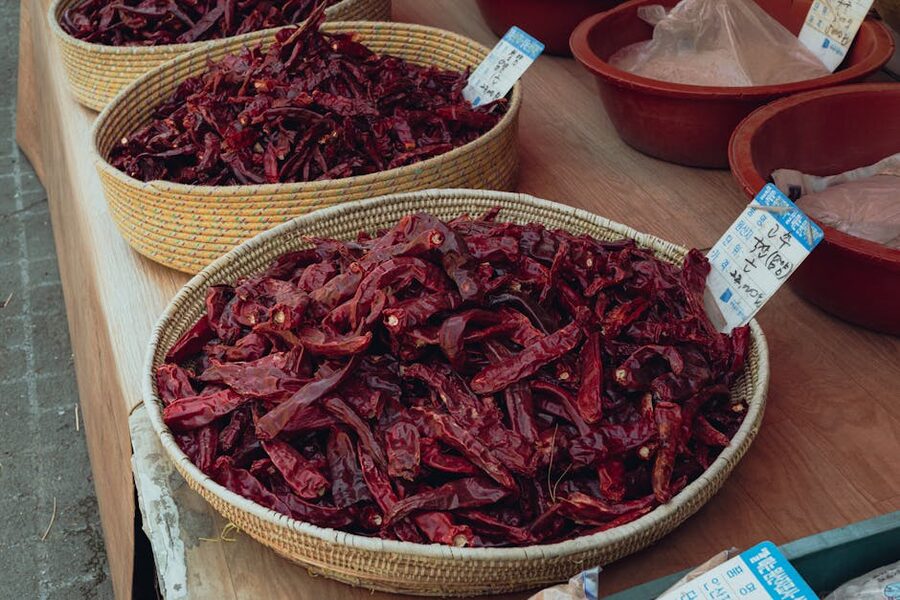
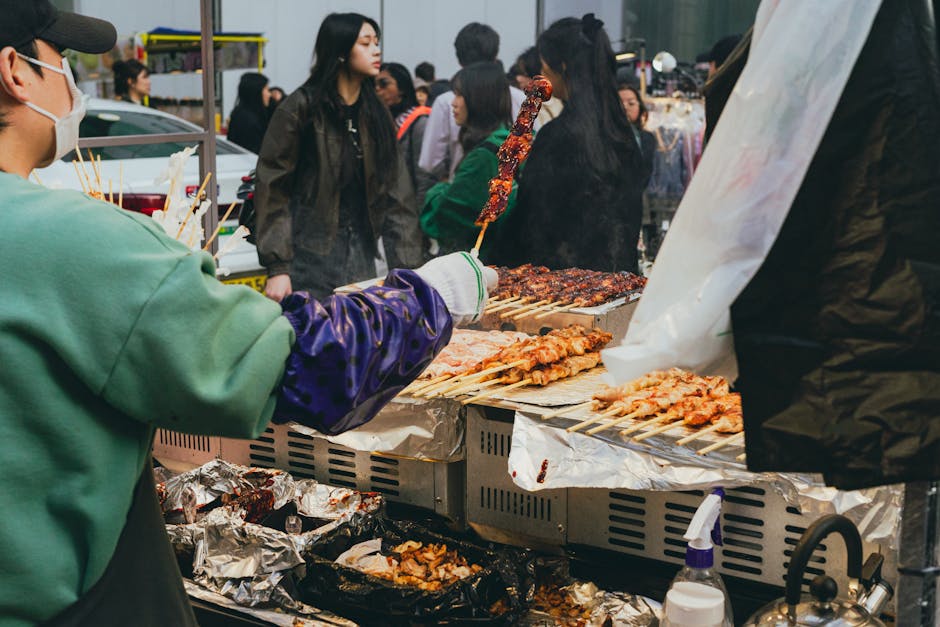
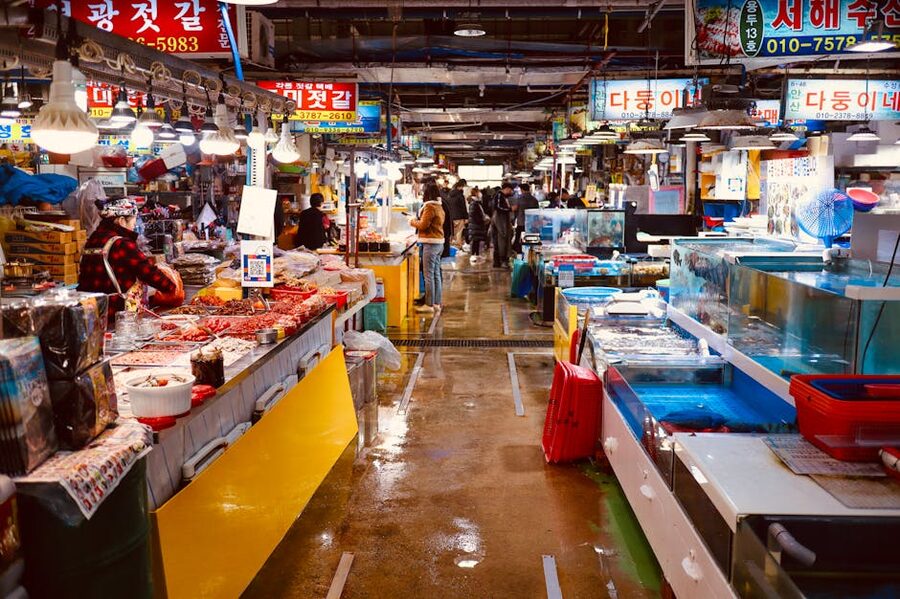
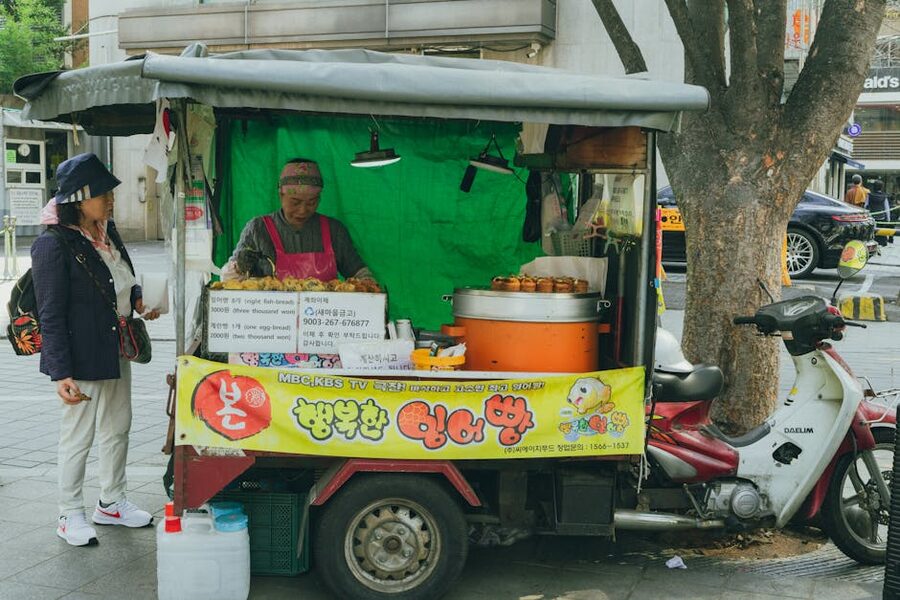
Gwangjang is the oldest traditional market in Seoul. Opened 1905. Still family-run in parts. The reason it’s on every tour (and the reason it was in the first season of Street Food: Asia on Netflix) is the food alley: two parallel rows of vendor stalls making bindaetteok (mung bean pancakes), mayak gimbap ("addictive" little seaweed rice rolls), yukhoe (Korean beef tartare), sundae (blood sausage), and a dozen other things that are very much worth trying.
Food alley tips:
- Most stalls don’t take card. Bring cash — 20,000 to 30,000 KRW per person is plenty for a full lunch with everything.
- Bindaetteok is the signature dish. Order it fresh off the griddle, not from a pre-made pile. The fresh ones are crunchier on the outside.
- If a stall has a line of locals, join the line. Korean food culture is that the lines move fast and the ratings are honest.
- Mayak gimbap (literally "drug gimbap" because it’s addictive) is the perfect grab-and-go snack. 2,000 KRW a roll and you can take it with you.
- Seated stalls are separate from standing ones. If you want to sit, the standing bar stools at the center of the food alley are your best bet — you perch, you eat, you leave.
Gwangjang also has a massive textile section (upstairs) where Seoul grandmothers buy their hanboks and silk. If you’re not shopping, skip it. If you have time, wandering through is a glimpse of the non-touristy side of the market.
Should You Wear Hanbok?
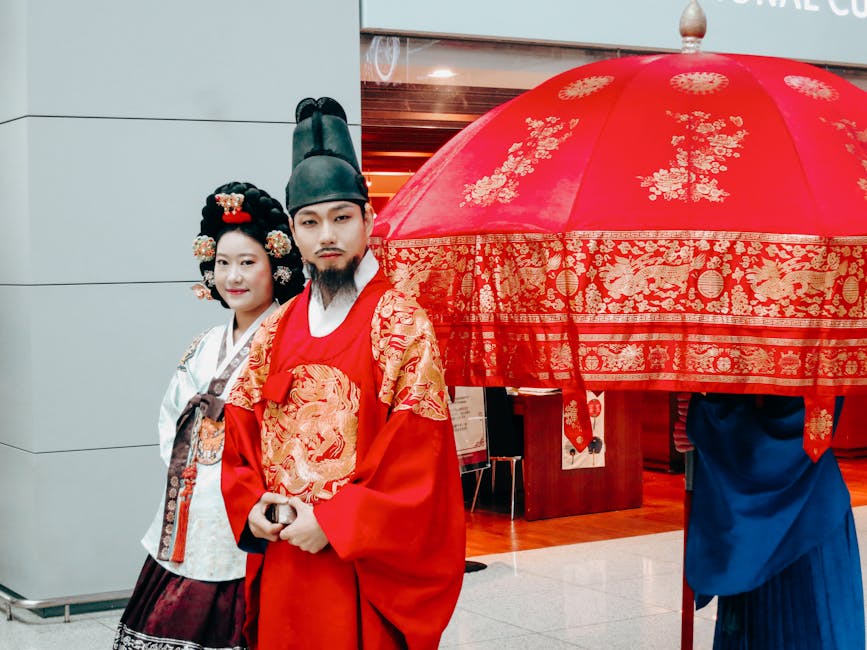
Short answer: yes, at least for the palace. It genuinely does get you free entry, it’s only 10,000–20,000 KRW for a couple of hours, and the photos come out better than anything you could stage yourself. Almost every first-time Seoul visitor does it, and if you’re worried about feeling silly, just look around — half the people in the palace courtyard will be dressed up too. It’s the norm, not the exception.
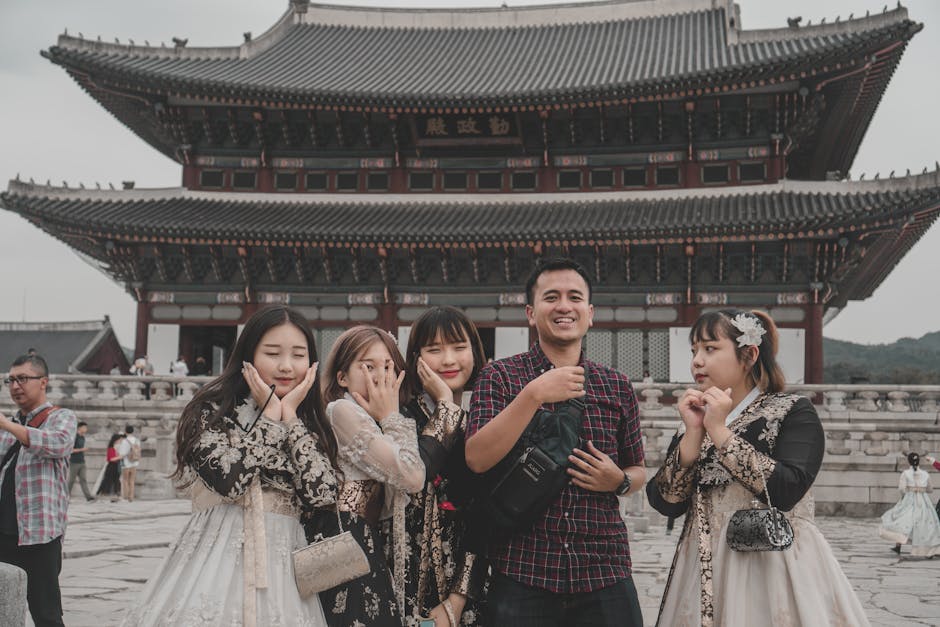
The good rental shops are clustered in the alleys on the west side of Gyeongbokgung Station and along the road heading east toward Samcheongdong. Ones I’ve heard good things about repeatedly: Oneday Hanbok, Hanboknam, and Gyeongbokgung Hanbok. They all have English-speaking staff and racks of foreign-sized outfits.
Pro tip: if you’re going to do Bukchon in the same outfit, stick to a simpler hanbok rather than the full princess/queen one with the elaborate headdress. Those look great in photos but they’re hot, heavy, and harder to walk uphill in. A simpler hanbok lets you actually enjoy the day.
Insadong and What to Do After
Most tours that include Gyeongbokgung and Bukchon also throw in Insadong at the end, and for good reason — it’s a 10-minute walk south of Bukchon and it’s the antique/craft/traditional-tea street of Seoul. The main drag is Insadong-gil, which runs pedestrian-only most afternoons and is lined with galleries, calligraphy shops, ceramic stores, and more traditional tea houses than you’ll have time to visit.
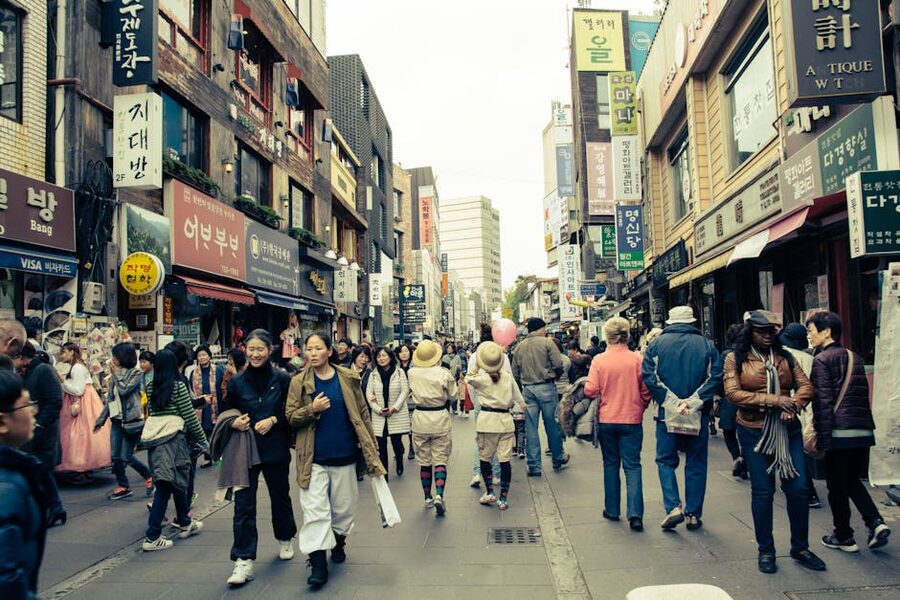
If you’re on a half-day walking tour, you’ll probably stop here for about an hour. That’s enough time to have one traditional tea (the Dawon teahouse in the Kyungin Museum courtyard is the classic pick) and to browse for a souvenir. If you’re DIY, you can spend longer here — there are enough interesting shops and tea houses to fill a full afternoon if you’re into that.
The Ssamziegil building in the middle of Insadong-gil is worth a stop. It’s a spiraling multi-level shopping complex designed so you walk up an outdoor ramp around a central courtyard, passing crafts and design shops as you go. Some of it is touristy junk, but there are real working artisans mixed in if you look.
Practical Questions People Always Ask
Is there a dress code for Gyeongbokgung? No. Wear whatever’s comfortable. Hanbok is optional but recommended. The only spaces with dress restrictions are a couple of specific pavilions with guided access, and those will tell you.
Can I bring food or drinks inside? Water yes. Food no. There are small cafes inside the palace grounds if you need a snack.
Are there bathrooms? Several, clean, clearly signposted.
Is Gyeongbokgung wheelchair accessible? Mostly yes — the main courtyards and the throne hall area are paved and navigable. Some of the side buildings on raised stone platforms are not.
How long should I plan for the palace itself? Two hours minimum if you want to catch the ceremony, walk the main axis, and see Hyangwonjeong. Three hours if you also want to do the Folk Museum properly.
How long for Bukchon? 60–90 minutes at a relaxed pace if you’re not going inside any attractions. Two hours if you want to stop for coffee and poke into a cultural center or two.
How long for Gwangjang? 45 minutes if you’re just eating. 90 minutes if you want to wander the non-food sections.
Add transit time between each. That’s roughly a 4.5 to 6-hour day, which lines up with every tour option above.
Planning the Rest of Your Seoul Trip
If you’re in Seoul for more than a day or two, the natural pairing with the Gyeongbokgung-Bukchon-Gwangjang loop is getting out of the city to see the DMZ — it’s the single other must-do experience in Korea, and I’ve written about how to book a DMZ tour from Seoul in its own dedicated guide.
The DMZ is a half-day trip that works perfectly as your second-day activity after spending day one on the palace circuit covered in this article. Between those two guides you’ve got the bones of a solid two-day Seoul itinerary without overthinking it.
There’s plenty more I want to write about for South Korea — the temples of Gyeongju, the markets and beaches of Busan, the hiking at Seoraksan, the hanok villages outside Seoul where you can actually stay the night — but for a first visit, nail the palace day and the DMZ day first. Everything else is a bonus.
The Gyeongbokgung circuit is one of those rare sightseeing days where the do-it-yourself option and the guided option are both genuinely good. If money is tight or you’re a confident independent traveler, save your $32 and walk it yourself — the logistics are forgiving and the free English walks fill most of the history gap.
If you want the efficient, no-friction version with context and a guide who knows which alleys in Bukchon are actually worth turning into, book one of the three tours above and make the morning easy.
Either way: go at 9 AM, catch the ceremony, take the photos, eat at Gwangjang, and give yourself permission to skip anything that’s not working for you. Seoul rewards slow mornings and full stomachs more than it rewards checking off every bullet on a list.