
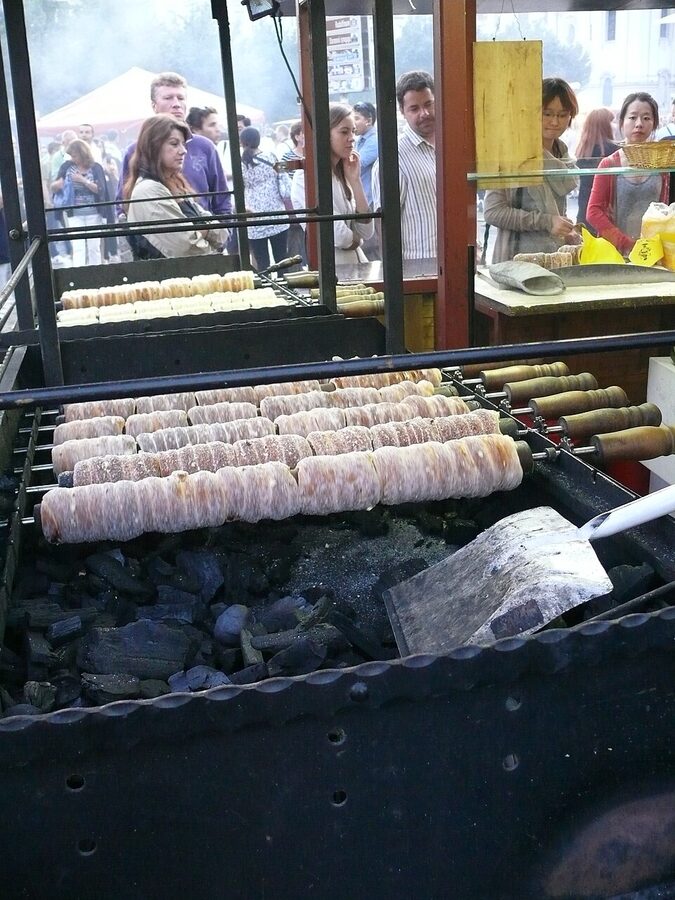
The first thing that hits you on a Prague food tour is the smell drifting from a metal trough on the cobblestones: hot dough wrapped on a stick, cinnamon and sugar caramelising on coals, somebody dragging the trdelník off the rack just as you walk past. Ten minutes later you are sitting in a basement under a 14th-century arch with a half-litre of unfiltered pilsner and a slice of svíčková so dense it bends the spoon. That gap between street snack and sit-down feast is the whole reason these tours exist, and the trick is picking the one that matches what you actually want to eat.
I have done all three shapes of Prague culinary booking now: a dedicated tasting walk, a half-day combo that bolts food onto sightseeing, and a pub crawl built around drinks rather than dishes. They are not the same product. Below I lay out which one works for which kind of traveller, plus the booking details I wish I had known before I clicked.
- In a Hurry? Here Are the Three Shapes
- Why Pick a Tour at All
- The Three Shapes Explained
- Shape 1: The Pure Tasting Walk
- Shape 2: Sightseeing With a Lunch Bolted On
- Shape 3: The Pub Crawl
- The Three Tours I Would Actually Book
- 1. Prague Foodie Tour: 9
- 2. Best of Prague Walking Tour and Cruise With Czech Lunch: 3
- 3. Prague Pub Crawl With Unlimited Drinks:
- What You Will Actually Eat
- Chlebíčky (the warm-up)
- Polévka (soup, almost always)
- Svíčková (the centrepiece)
- Guláš (the supporting act)
- Vepřové koleno (only on the heavier tours)
- Trdelník (the photo, not the dessert)
- Real Czech dessert (when you get it)
- The Beer Question
- Booking Logistics
- Where the Tours Actually Go
- Old Town (Staré Město)
- New Town (Nové Město)
- Karlín and Žižkov
- Food Tour vs Pairing With Other Activities
- Doing Prague Food on Your Own
- What Goes Wrong on a Prague Food Tour
- Combining Prague Food With a Wider Trip
- The Short Version
- Other Prague Reading
In a Hurry? Here Are the Three Shapes
- Pure tasting walk: Prague Foodie Tour ($179). Four hours, multiple venues, a guide who actually orders for you.
- Sightseeing plus food: Best of Prague Walking Tour and Cruise with Czech Lunch ($103). Six hours covering Castle, Vltava, and one proper sit-down lunch.
- Drinks-led night out: Pub Crawl with Unlimited Drinks ($40). Four to six hours across multiple bars with a club entry at the end.
Why Pick a Tour at All
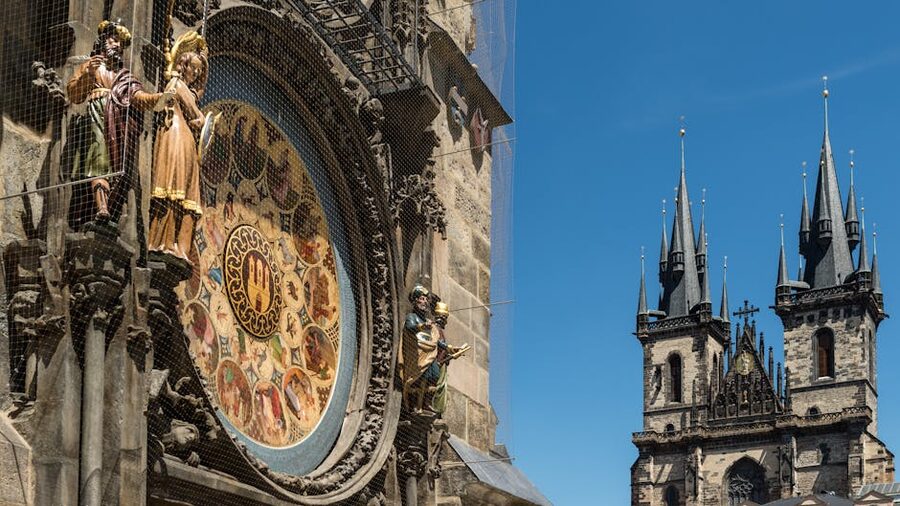
Prague is small enough to wander on your own. So why pay for a guide to walk you to a beer? Because the menu in most Old Town restaurants near the Astronomical Clock is the menu written for tourists, and the prices match. A good food tour gets you out of that ring and into places where Czechs eat. It also saves you the part of the trip where you stand in front of a Czech menu, refuse to order something called “tlačenka”, and end up with goulash for the third time in two days.
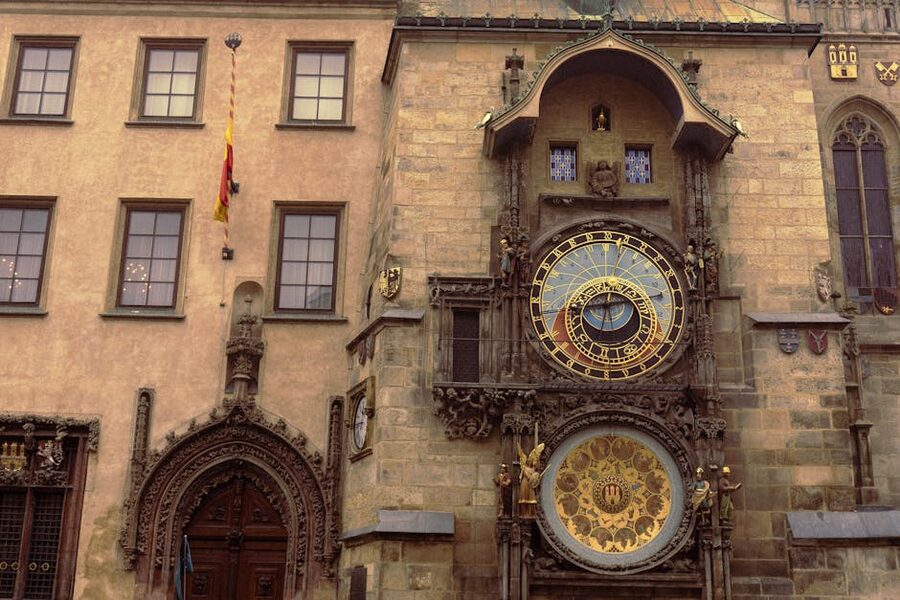
The other thing a guide gives you is order. Czech cuisine is heavy. Two starters and a main and a beer and you are done for the day. A guide paces it: a small bite of chlebíček here, a half-portion of svíčková there, then a pivo, then a walk to the next stop. You eat more, taste more, and still walk out upright. If you have already tackled an Old Town walking tour for the history side, the food walk fills in the rest of the city you actually came for.
The Three Shapes Explained
“Prague food tour” covers three different products. They overlap at the edges, but choosing the wrong shape is the most common booking mistake I see. Here is what each one actually is.
Shape 1: The Pure Tasting Walk
This is what most people picture: a small group, a guide who is part chef and part historian, four hours moving between five or six venues, multiple courses split across the route. The Prague Foodie Tour is the headline example. You eat far more than you would order yourself, you try things you would not have ordered yourself, and the guide handles the negotiating with each kitchen. Group size is usually capped around 12. Walks tend to start mid-morning or early afternoon, which means you arrive at the last venue genuinely hungry for the dessert. Allergies and dietary restrictions need to be flagged at booking, not on the day, because the kitchens prep portions in advance.
Shape 2: Sightseeing With a Lunch Bolted On
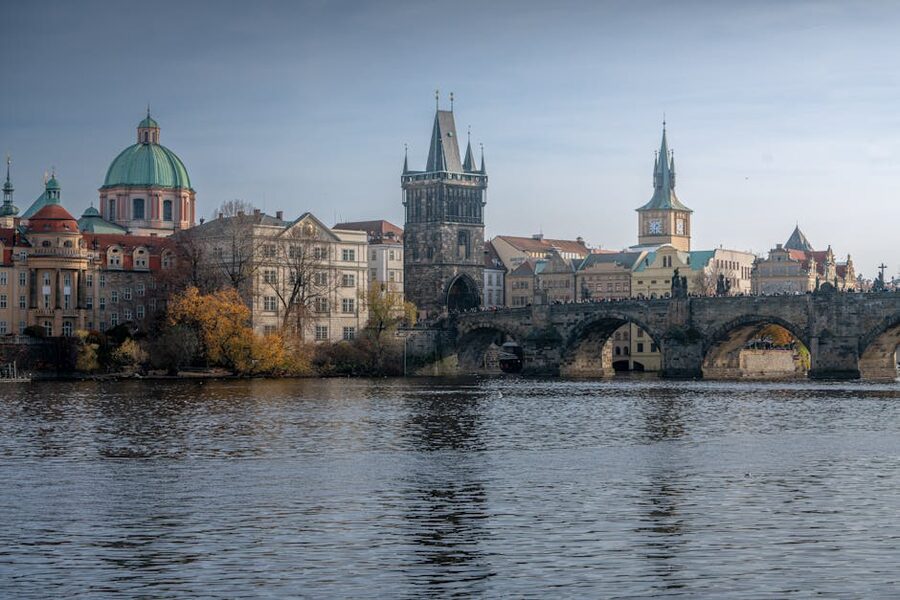
The Best of Prague Walking Tour and Cruise with Czech Lunch is the cleanest example. You are not paying primarily for the food. You are paying for a six-hour day that starts at Prague Castle, walks through Old Town, drops you on a Vltava cruise boat, and parks you at a restaurant for a sit-down two-course Czech lunch in the middle. The food is fine. The food is not the point. The point is that one ticket covers your sightseeing, your river view, and the one meal of the day you have to think about least. Pair this with a separate evening Vltava cruise and you have done the river twice in two different lights.
Shape 3: The Pub Crawl
Different beast entirely. Four to six hours, but the structure is venue → drink → venue → drink, ending in a club. There is food along the way at most stops, but it is the secondary attraction. Group sizes are larger, the energy is louder, and the demographic skews mid-twenties. If you want to actually understand pilsner the way the Czechs drink it, this is the wrong tour. If you want to stop pretending you came to Prague for the architecture, this is the right one. The unlimited-drinks structure means the per-hour price is genuinely low.
The Three Tours I Would Actually Book
These are the three I keep recommending, one per shape. Pick the shape, then book the tour.
1. Prague Foodie Tour: $179

This is the dedicated culinary walk and the only one of the three where the food is unambiguously the headline. Four hours, multiple sit-down tastings, soups and mains and sweets in proportions that add up to a full meal across the route. Our full review has the breakdown of what you actually eat at each stop. It is the priciest of the three, but you are paying for the smallest group and the most courses.
2. Best of Prague Walking Tour and Cruise With Czech Lunch: $103

This is the tour for travellers who want to eat well but cannot justify a four-hour booking just for food. The lunch in the middle is a proper Czech sit-down course, and the rest of the day is the Castle and the Vltava. Our review walks through the lunch venue and what is included. Pair-friendly and the best value of the three.
3. Prague Pub Crawl With Unlimited Drinks: $40
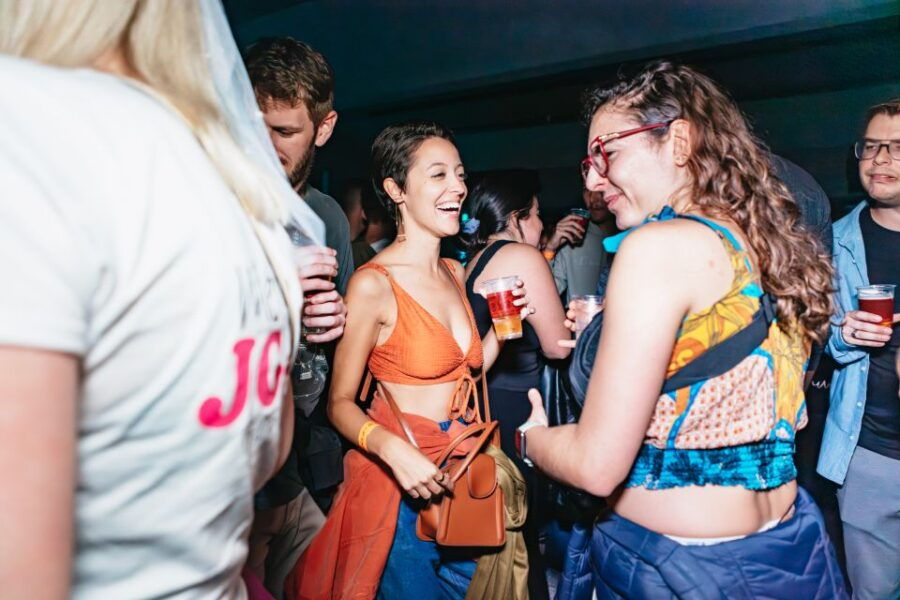
The cheapest of the three by a wide margin and the only one that is genuinely a night-out product. Food is incidental. Our review covers what the drink structure actually looks like in practice and which nights run the loudest. If you came to Prague for the beer reputation rather than the food reputation, book this and skip the foodie walk.
What You Will Actually Eat
The food on a Prague tasting tour is not the food on a Prague restaurant menu. The menu is full of safe goulash and schnitzel. The tour is built to surface the dishes you would not order on your own. Here is the rough lineup, in the order most tasting walks present them.
Chlebíčky (the warm-up)
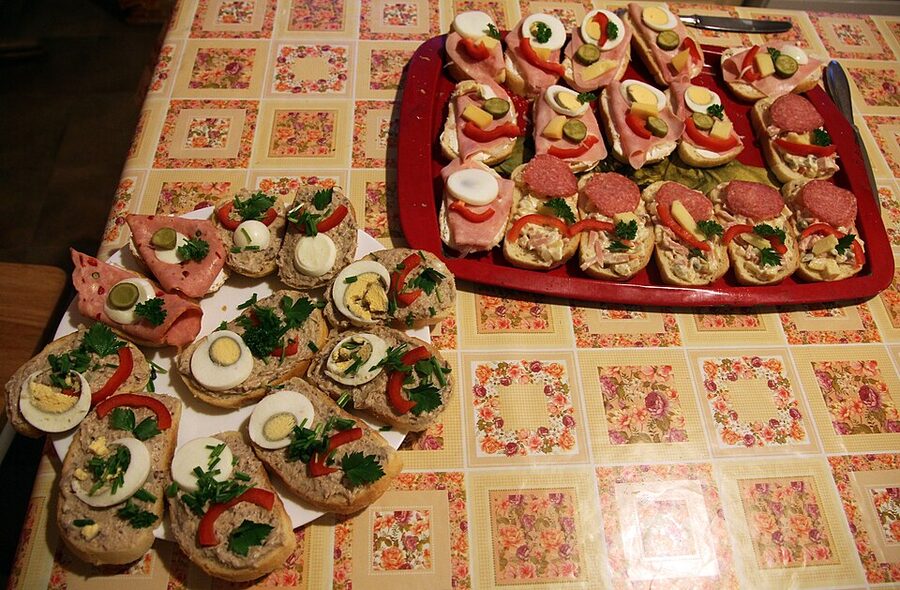
Open-faced sandwiches, palm-sized, on a slice of dense white bread. The classic toppings are potato-and-mayo salad, slices of ham or salami, a hard-boiled egg, capers. Some delis stack them six deep behind glass. They are designed to eat standing up at a counter with a small beer, and that is exactly what a tour will do with them.
Polévka (soup, almost always)
Czech meals start with soup. Garlic soup served in a hollowed-out bread bowl, beef broth with semolina dumplings, sauerkraut soup with sausage. The bread bowl version is the photogenic one and the one most tours include because the visual carries.
Svíčková (the centrepiece)
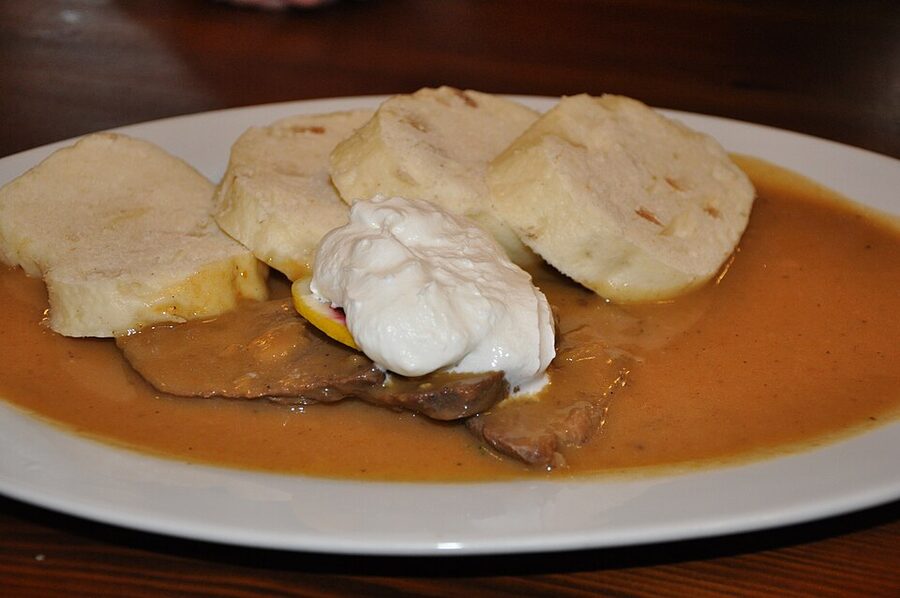
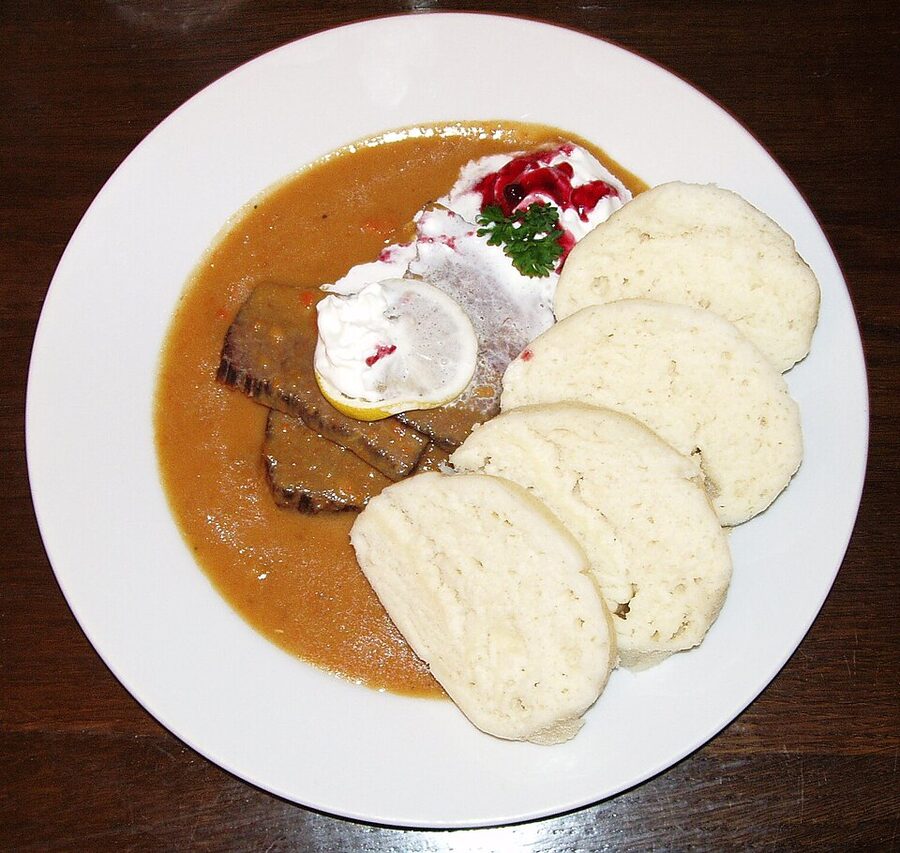
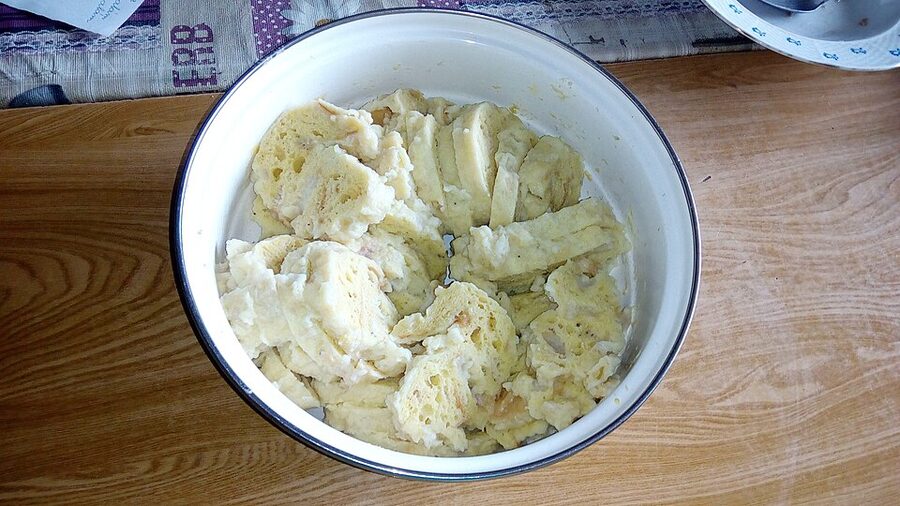
Beef sirloin braised low and slow in a sauce of root vegetables, cream, and lemon, served with bread dumplings, a quenelle of whipped cream on top, and a spoon of cranberry compote on the side. It is the Czech national dish. It is also the dish most foreigners describe as “weird until you actually eat it”. The cream and cranberry sound wrong. They work. The portion is small on a tour, which is the right call: a full plate of svíčková ends most appetites for the rest of the day.
Guláš (the supporting act)
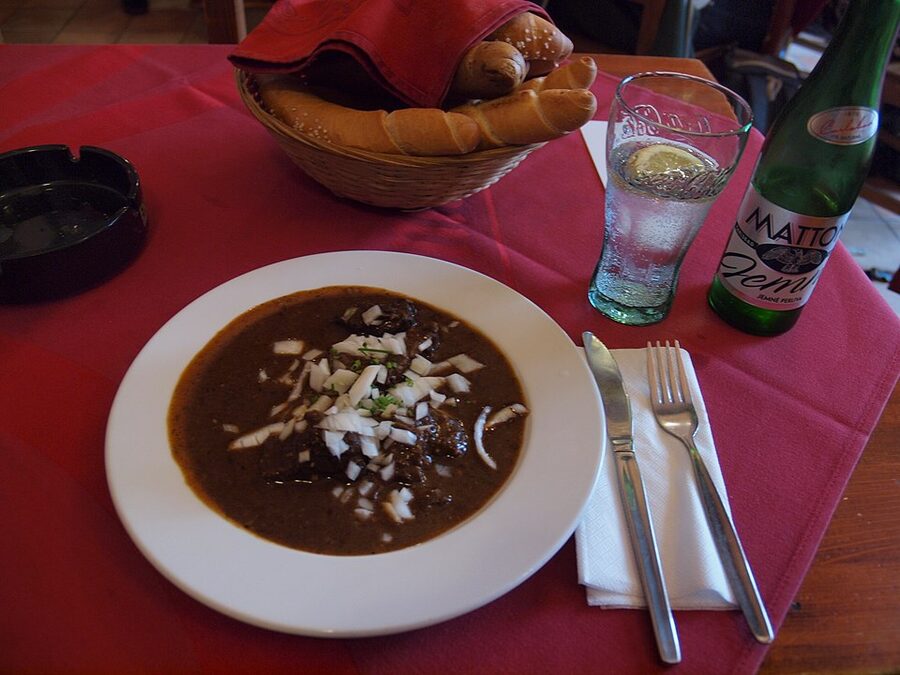
Czech goulash is heavier and darker than the Hungarian version. Beef in a thick paprika-onion sauce, served with bread dumplings or sometimes inside a hollowed-out bread bowl. Tours that skip svíčková usually substitute guláš.
Vepřové koleno (only on the heavier tours)
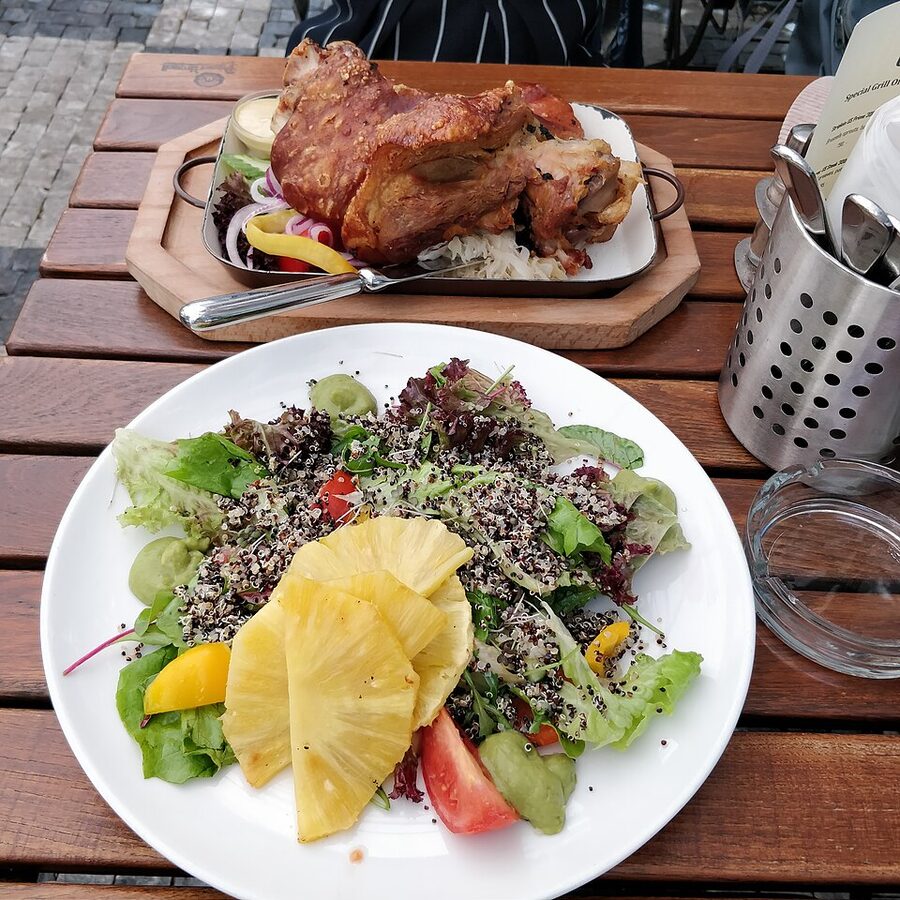
Roasted pork knuckle, scored, basted, served whole on a wooden board with mustard and grated horseradish. It is the dish you book a beer hall for, not a tasting walk. If you spot it on a tour itinerary, that tour is leaning on the heavier traditional venues rather than the modern bistro circuit.
Trdelník (the photo, not the dessert)
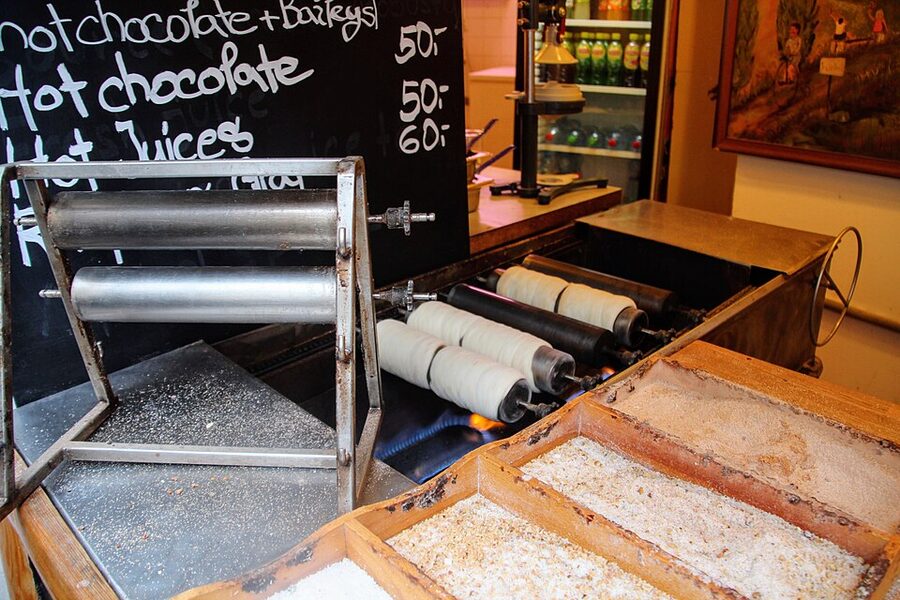
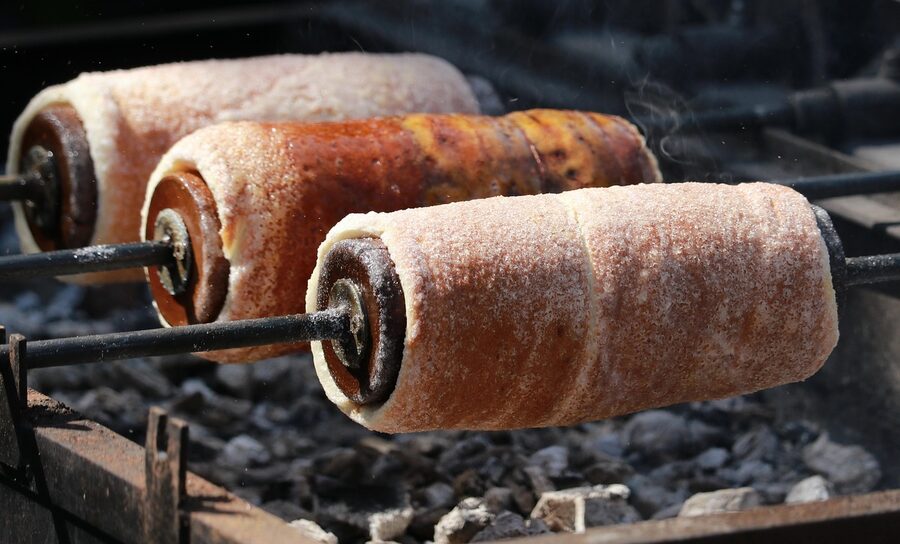
Spit-roasted dough wrapped on a stick, rolled in cinnamon sugar, often filled with ice cream or chocolate. Marketing calls it a Czech tradition. It is not. It is a Slovak-Hungarian import that arrived in Prague’s tourist core sometime in the early 2000s and now occupies a stand on every Old Town corner. Most serious tasting tours skip it. Most mixed-format tours include one because the photo is good.
Real Czech dessert (when you get it)
The proper desserts are ovocné knedlíky (fruit dumplings, usually plum or strawberry, dusted with quark and powdered sugar), medovník (honey cake, layers of soft caramel-honey sponge), and palačinky (thin pancakes). A good tour finishes with one of these and skips the trdelník entirely.
The Beer Question
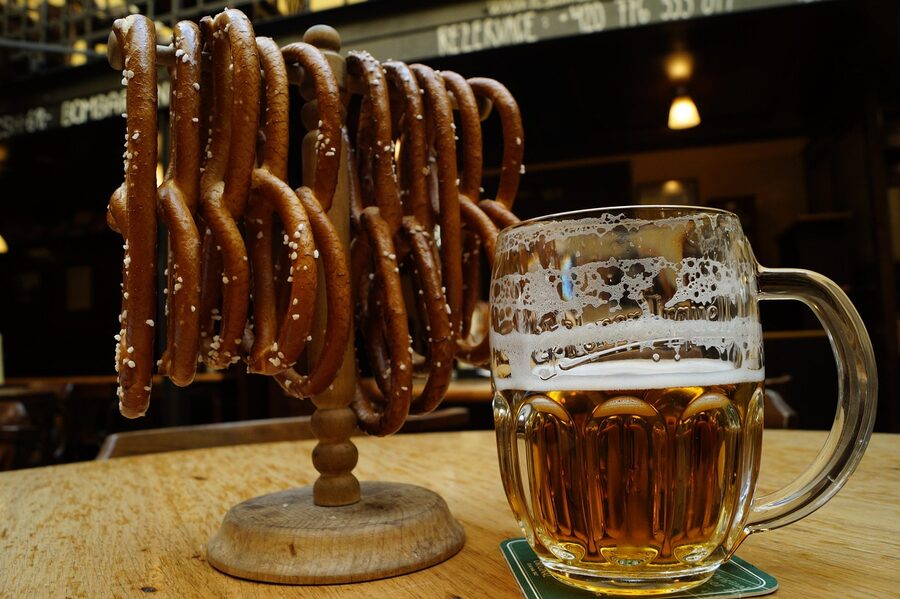
You cannot do a Prague food tour without beer being central to the conversation. Pilsner Urquell was invented 90 minutes from here in 1842 and changed the way the world drinks lager. The Czechs are the highest per-capita beer consumers on the planet, and they treat lager the way the French treat wine: with detail, ceremony, and strong opinions about how it should be poured.
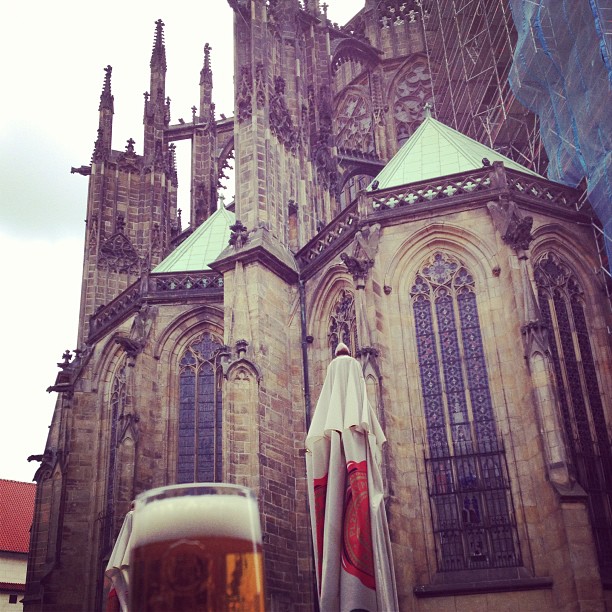
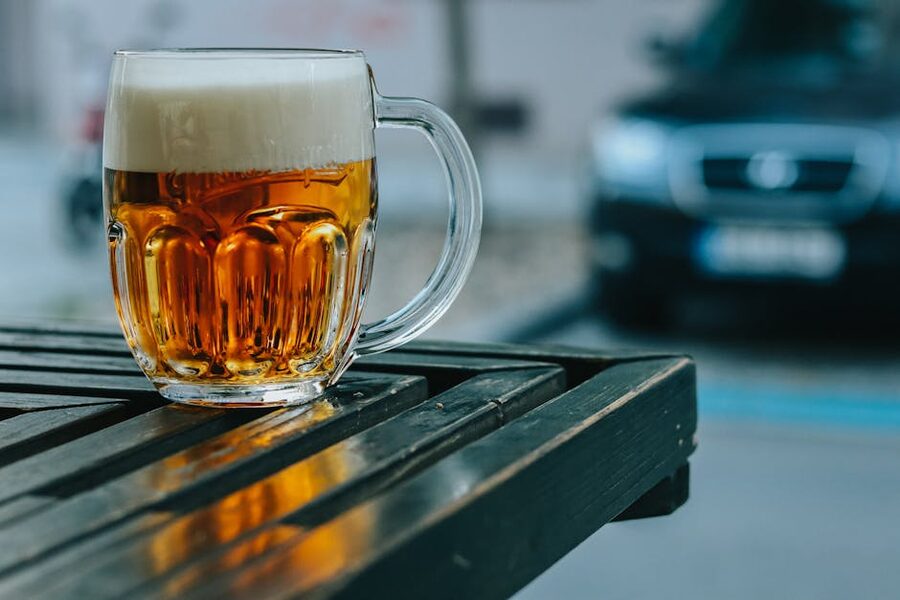
Three things to know if you take the beer side of the food tour seriously. First, ask about hladinka, šnyt, and mlíko. These are three different pours of the same beer, with different foam-to-liquid ratios, and they actually taste different. Second, the half-litre is the default measure. A 0.3L is a sign you are in a tourist trap. Third, the Czech word for “tap” lager from a specific brewery is “tankové”, and it is fresher than bottled by a measurable margin. If you want to go deeper on the brewery side specifically, the Pilsner Urquell experience guide covers the dedicated tasting routes.
Booking Logistics
A few things I have learned the hard way over multiple Prague trips.
Book a day in advance, not on the morning of. The good food tours sell out, especially on weekends. The pub crawl can usually be walked into on the day, but the Foodie Tour and the Best of Prague combo regularly cap out 24 to 48 hours ahead in summer.
Flag dietary restrictions at booking. Czech food is meat-and-bread heavy. Vegetarian options exist on most tours but the kitchen needs notice to prep them. Vegan is harder. Gluten-free is hardest, because the dumplings are the backbone of the cuisine. If you are coeliac, skip the tasting walks and book the Best of Prague combo with a single sit-down lunch you can adjust on the day.
Tours start where they say they start. Prague meeting points are usually a specific statue or café address, not “Old Town Square”. Read the confirmation email twice. The Old Town is small but it is also the densest tourist patch in Central Europe and “near the clock” can mean three different corners depending on which guide is meeting you.
Tipping is expected but small. Round up the price by 10 percent for a standard tour, 15 if the guide was excellent. Cash, in koruna or euros, handed at the end. The tour price you booked online does not include the tip.
Wear stretchy trousers. Not a joke. The walks are 3 to 6 hours, the food is dense, and Prague is built on cobblestones with a 30-metre elevation change between the river and the Castle area. Comfortable shoes alone are not enough. Your waistband matters.
Where the Tours Actually Go
Most Prague food tours stay in three neighbourhoods, and which neighbourhood matters more than which company.
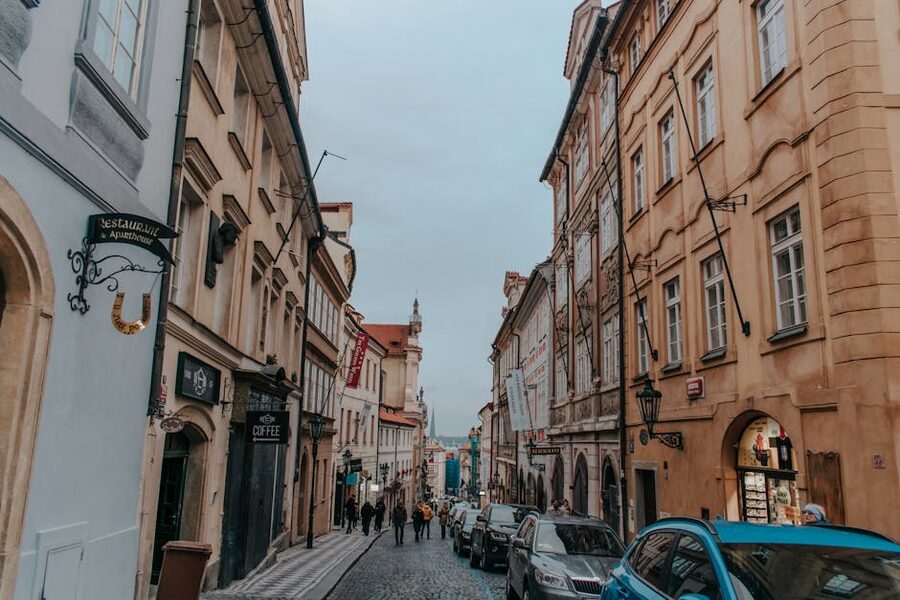
Old Town (Staré Město)
The most common starting area. Tours that begin here cover the dense food-history stops within a 10-minute walk of the Astronomical Clock: butchers that have been in the same family since the 1880s, a deli with chlebíčky stacked behind glass, a basement pub with hand-pulled lager. The downside: parts of this route overlap with the standard Old Town walking tour circuit. If you are doing both, book them on different days.
New Town (Nové Město)
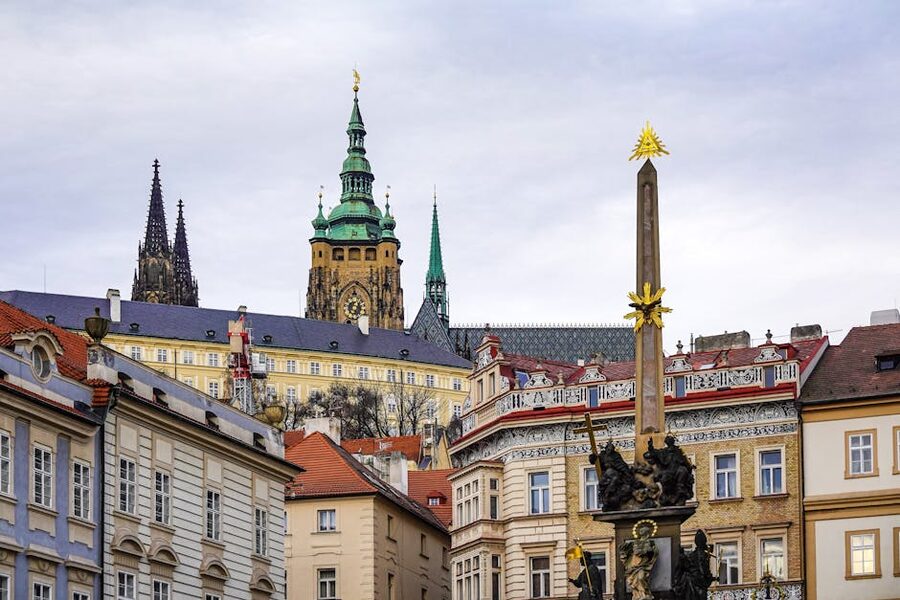
Confusingly named, since it is 700 years old. New Town tours skew slightly more modern. The dishes are the same, but the venues are bistro-style or wine-bar-style rather than vaulted-cellar pubs. This is where you find Prague’s modern Czech-cuisine renaissance: classic recipes, lighter portions, plating that does not look like 1985.
Karlín and Žižkov
The neighbourhoods most travellers do not know exist. A 15-minute tram from the centre and the food culture changes completely: small breweries, Vietnamese-Czech fusion (Prague has a large Vietnamese diaspora and the pho is excellent), modern Czech kitchens that nobody outside the city has heard of. Tours here are smaller in number but stronger on actual culinary discovery. If you have already done a central-Prague trip and want a second, more interesting food day, this is the area.
Food Tour vs Pairing With Other Activities
If you only have two or three days in Prague, the food tour does not stand alone. It is one stop on a tighter itinerary. Here is how it pairs.
With a Castle visit. Do the Castle in the morning, food tour in the afternoon. The Castle hill is a workout and the descent into Malá Strana lines up neatly with where most tasting walks start. Avoid doing both back-to-back if you bruise easily on cobbles.
With a river cruise. A Vltava cruise is the easiest digestion break. Eat heavy at lunch, sit on a boat for an hour, walk it off in Old Town. The Best of Prague combo bakes this in. If you book separately, leave 90 minutes between the lunch venue and the cruise dock.
With history-focused walks. The food tour is light on dates. If you also want the layered history of the city, pair with the Jewish Quarter walking tour or the Medieval Underground guides. Different mood, no thematic overlap, no double-payment for the same ground.
With a Prague ghost tour. Counter-intuitively, the food tour and the ghost walking tour work well in the same evening. Eat at 6, walk the dark streets at 9. The dumplings settle on the way.
Doing Prague Food on Your Own
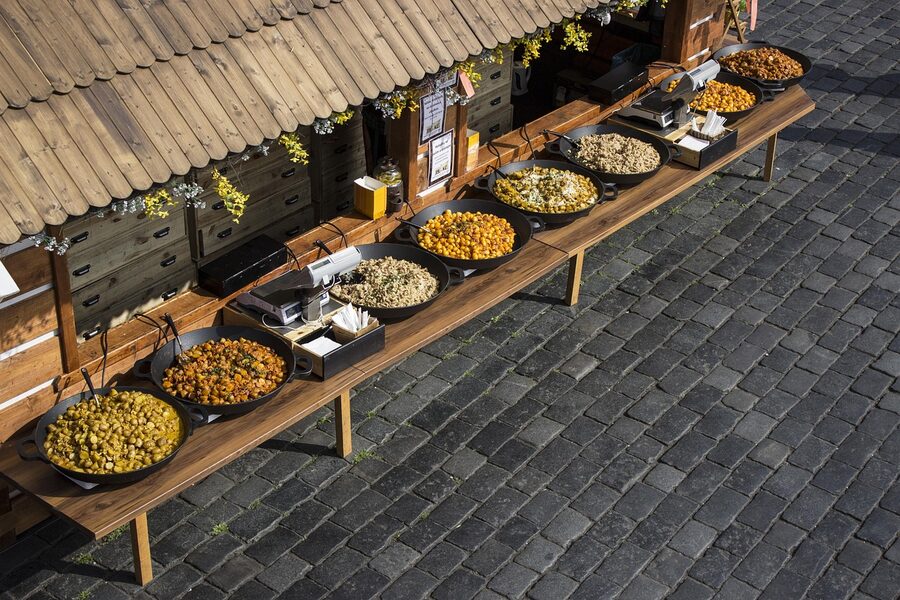
If a guided tour does not fit your trip, the next-best version is a self-built food crawl. The shortcut: pick three neighbourhoods, pick one dish per neighbourhood, walk between them. My standard self-guided route is chlebíčky at a deli in Old Town, svíčková in a Malá Strana pub, dessert at a Žižkov bistro. About four hours, half the cost of a tour, none of the explanation.
The risk with self-guided is the menu trap. Restaurants on the tourist track in Old Town serve goulash that is fine but never great, in portions sized for tourists at prices sized for tourists. Look for menus where the prices are written in koruna only, not “CZK / EUR”. Look for daily lunch specials (“denní menu”) which are the cheapest way Czechs eat well at noon. Look for places where the average customer is over 50 and looks bored. That is where the food is.
What Goes Wrong on a Prague Food Tour
I have done enough of these to have collected the failure modes. None of them are dealbreakers, but they are worth knowing.
You arrive too full. Eat a small breakfast on the day of a tasting tour. I have seen people skip the first three courses because they had a hotel buffet two hours before the start. The tour does not refund the unused tastings.
You drink too much at the second stop. The pubs pour generously and the half-litre is the default. By stop four you are five beers in. Sip the early ones; you have hours to go.
Your group is unbalanced. Most tours mix solo travellers, couples, and the occasional small family. If you are a vegetarian and the rest of the group is meat-eating, the kitchen sometimes brings out yours late. Speak up at stop one, not stop four.
The weather is bad. Most tours run rain or shine. Prague rain in autumn is grim and the cobbles are slippery. None of this affects the food but it does affect your enjoyment of it. Bring a waterproof and accept that the photos will be different.
You expected fine dining. Czech food is honest, dense, and unfussy. It is not Michelin tasting menus with tweezered garnishes. If you turn up expecting molecular gastronomy you are in the wrong city for that style.
Combining Prague Food With a Wider Trip
Prague is two and a half hours by train from Dresden, four hours from Berlin, six from Vienna. If you are doing a Central European loop, the food tour is one half-day inside a longer route. Some pairings that genuinely work.
Out of Dresden, the Saxon Switzerland day trip drops you within a tram ride of central Prague: do Dresden’s Frauenkirche, take the train south, eat in Prague that night. The opposite direction works too. From Berlin, the four-hour direct train means you can leave at breakfast and be at a Prague tasting tour by 2pm. Travellers coming through the German cluster after the Berlin walking tour circuit usually arrive in Prague hungry for something genuinely different from German food, and Czech cuisine delivers that in the first bite.
The Short Version
Three Prague food tour shapes, three different kinds of traveller.
If food is the headline, book the Foodie Tour. Four hours, six stops, the most actual eating per dollar. If you want food and sightseeing in one package, book the Best of Prague combo: lunch, Castle, cruise, done in a day. If you came for the beer scene more than the food scene, book the pub crawl and skip the rest.
Whichever you pick, eat a light breakfast, wear stretchy trousers, and flag your dietary restrictions at booking. Then turn up hungry. Prague will handle the rest.
Other Prague Reading
If you are still building the trip, the rest of the Prague guides on the site cover the pieces a food tour leaves untouched. The Castle ticket guide handles the morning before the food walk. The Vltava cruise piece is the gentlest possible afternoon after a heavy lunch. The Jewish Quarter and Medieval Underground walking tours are the history-side counterparts to the food walk, and the Pilsner Urquell experience is the dedicated brewery deep-dive for travellers who want to take the beer angle further than a single tasting stop. If your trip extends north, the Dresden Elbe cruise guide covers the easy day-trip into Saxony, which is by far Prague’s most natural neighbouring add-on.