
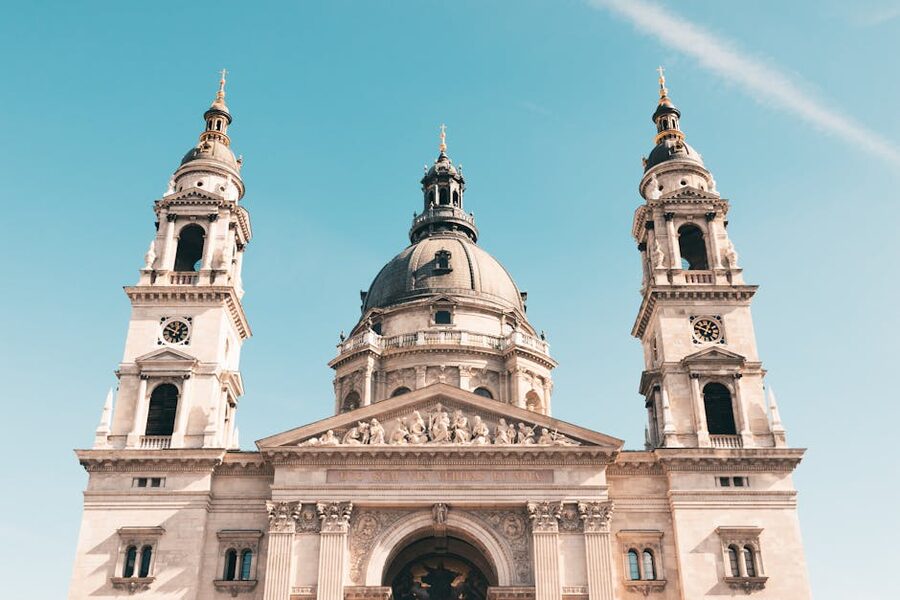
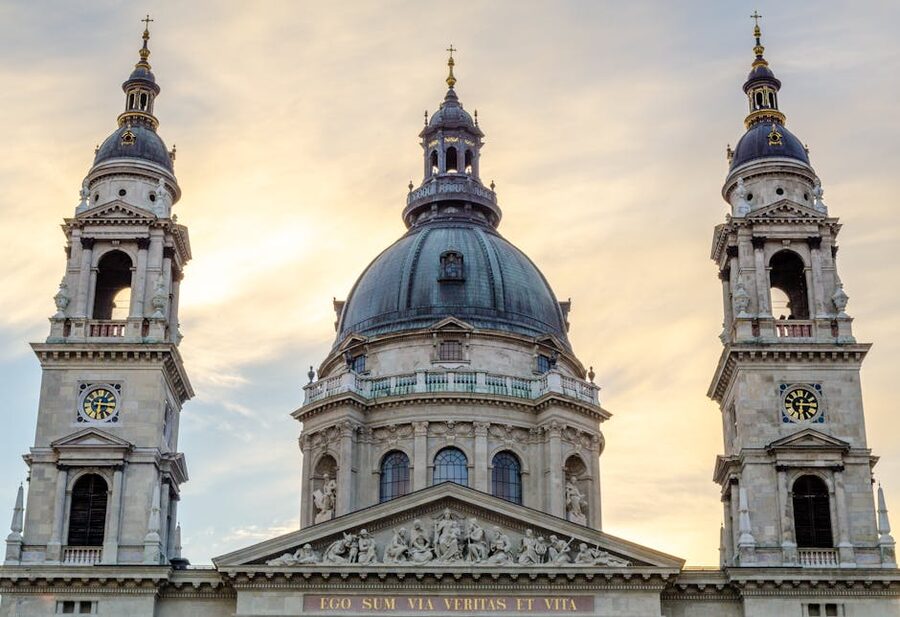
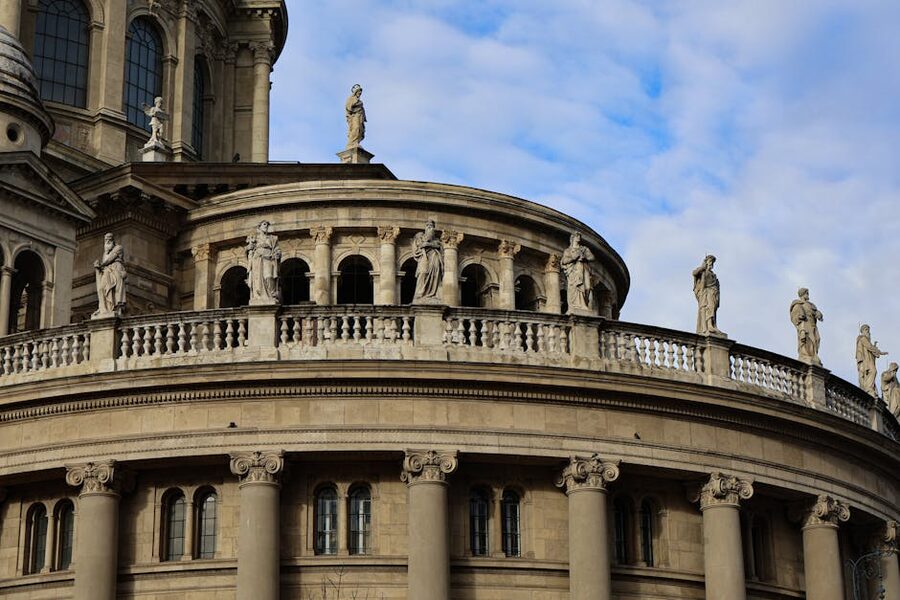
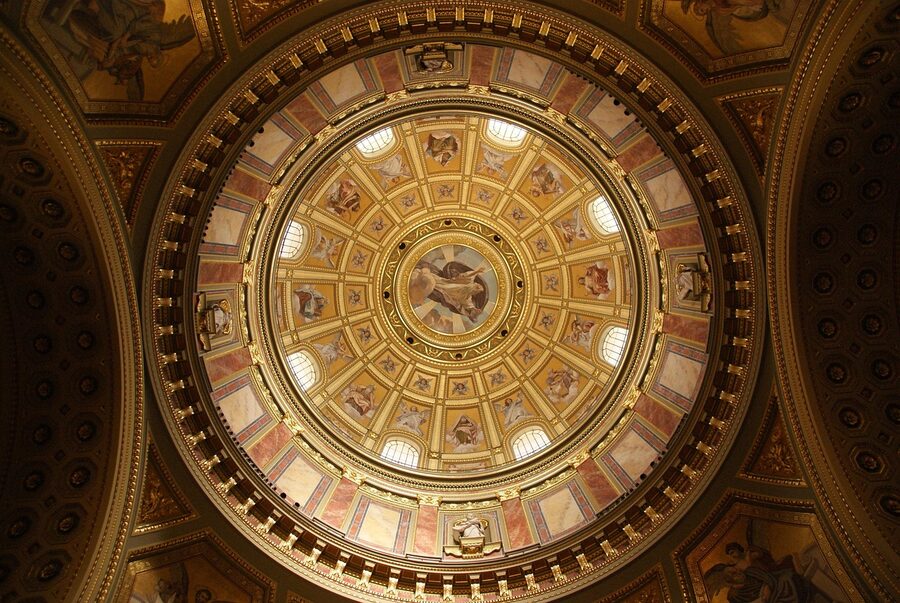
Here is a Budapest fact most visitors never learn until they are inside the Basilica looking up: the building is 96 metres tall, exactly the same as the Hungarian Parliament across the river. That match is not a coincidence. When the law was written, no Budapest building was allowed to rise above either, signalling that church and state stood as equals. So the dome you are about to climb is doing political work as well as religious work.
The Basilica is also where the mummified right hand of King Stephen I sits in a glass reliquary, a thousand years after he died. Most visitors come for the dome view. They leave talking about the hand.
- In a Hurry
- What Kind of Visit Do You Want
- Three Ways to Visit
- 1. Entry with Options: from
- 2. Entry with Terrace Option: from
- 3. Classical Music Concert: from
- The Dome Terrace, in Practice
- The Holy Right Hand
- How the Tickets Actually Work
- Best Times to Go
- How to Get There
- What to Pair It With
- If You Have Already Done Prague or Berlin
- What Most Visitors Get Wrong
- Practical Notes
- Other Budapest Bookings to Build Around This
In a Hurry
Best basic entry: St Stephen’s Basilica Entry with Options from $4. Walk-in flexibility, you choose terrace or treasury at the gate.
Best for the view: Entry with Terrace Option from $9. Lift to the panoramic terrace, the cleanest 360 of central Pest.
Best evening: Classical Music Concert from $32. An hour of organ and orchestra in the nave, candlelit.
What Kind of Visit Do You Want
This is not really a “should I go in” decision. The Basilica is free to enter for prayer, and a token contribution of around 2,200 forint is requested for tourist visits. The real question is which version of the building you want.
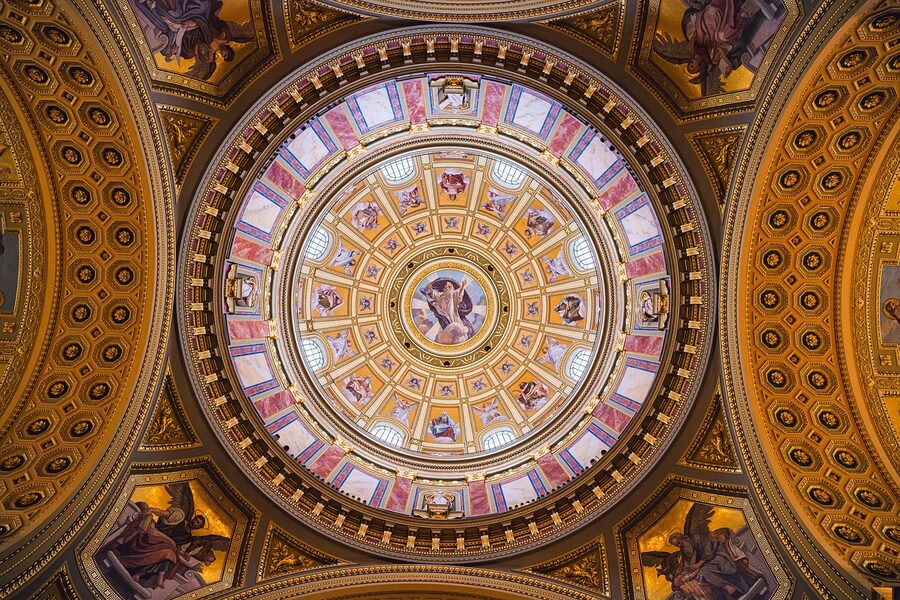
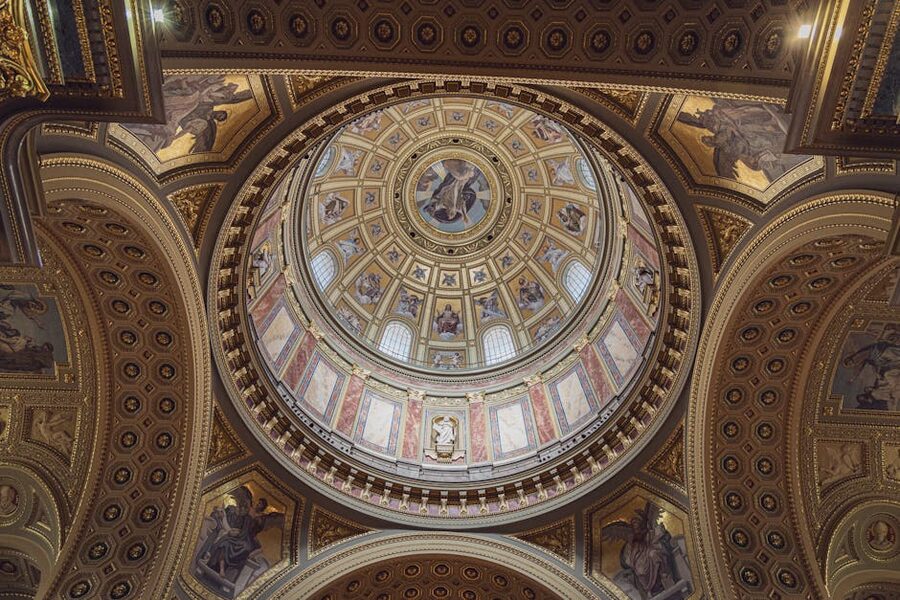
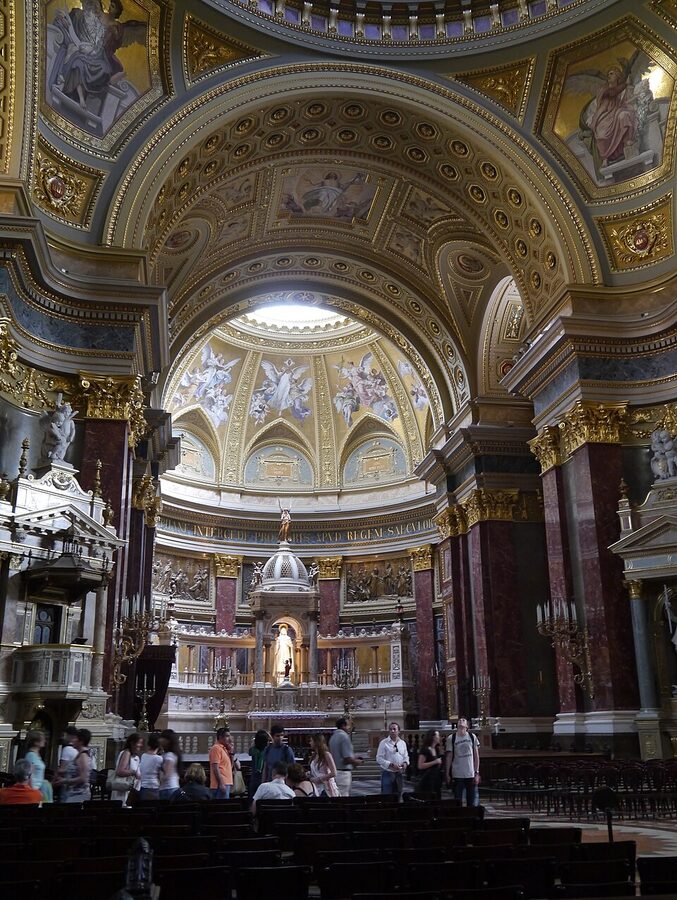
Three things happen in here that are worth booking for. The first is the church itself, with the relic chapel tucked off the right transept. The second is the dome terrace, reached by lift, with one of the best panoramic views in Pest. The third is the evening concerts, when the nave is lit by candles and the great organ takes over the room. The three tickets below correspond to those three reasons. Pick the one that matches what you actually want, not what feels comprehensive.
Three Ways to Visit
1. Entry with Options: from $4
This is the most-booked Basilica ticket on the market, and it earns the spot by being the most flexible. You pick your tier at the gate: church-only entry, church plus dome terrace, or the full church-dome-treasury combo. Our full review walks through what each tier actually gets you and where the $4 starting price ends up at checkout. If you only want the church interior and the frescoes, this is the cheapest way in. If you decide on the day you also want the dome, you upgrade in person.
2. Entry with Terrace Option: from $9
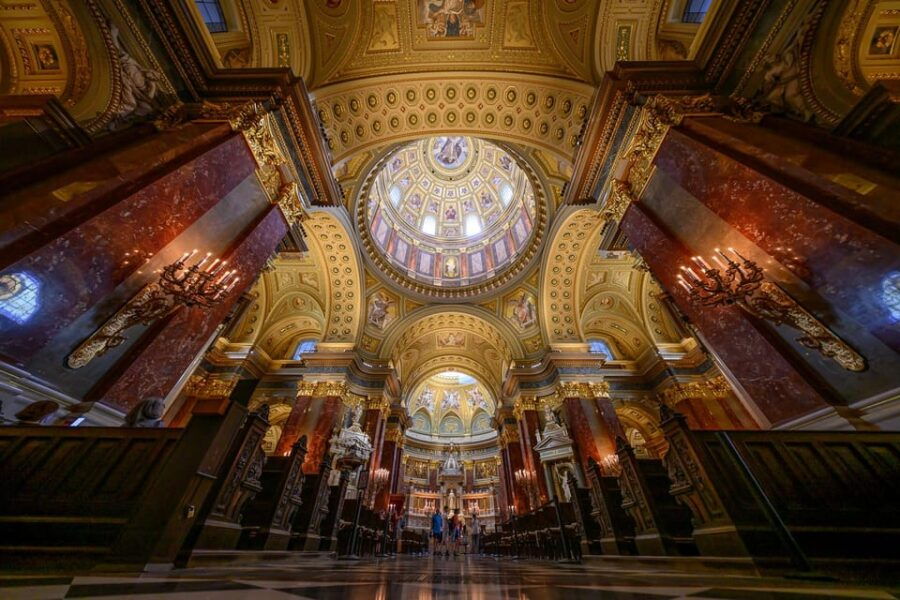
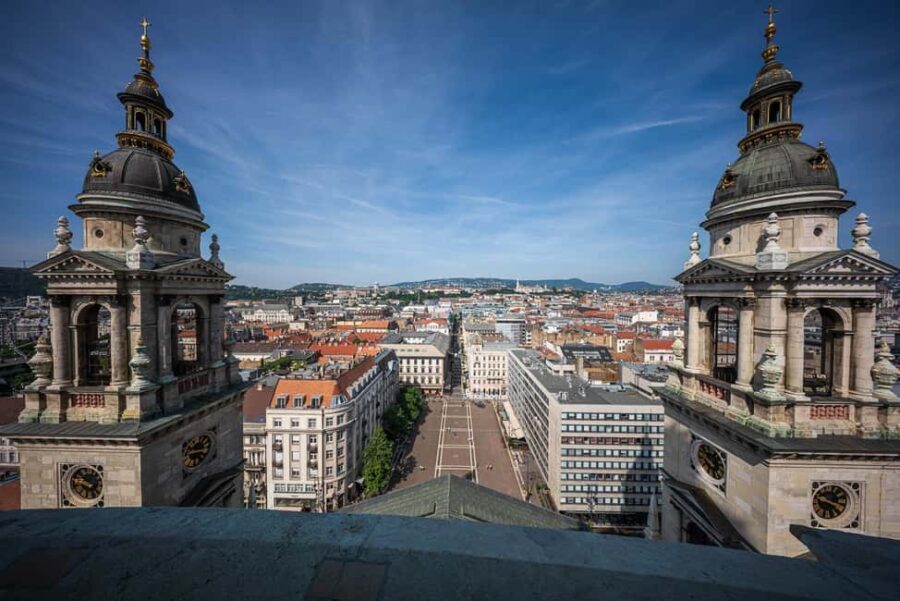
If the dome is the part you actually came for, book this rather than the open option. Our review covers the lift versus stairs question, which matters more than the booking pages let on. There is a lift most of the way, then a final short flight of steps onto the terrace itself. From the top, the Parliament reads in profile and the bend in the Danube unfolds beneath you. Sunset is fine but not the secret time. Mid-morning, with the light falling east-to-west across the river, beats it.
3. Classical Music Concert: from $32

The evening concerts are a different building from the daytime one. Lights dimmed, candles up, and an hour of Bach, Vivaldi, or Albinoni played by a small orchestra and the great organ. Our review breaks down which programme runs on which night and where to sit so the organ does not swallow the violins. Not every Budapest visitor needs this, but if you have already done a Danube cruise and a spa day, this is the cultural beat that ties the trip together.
The Dome Terrace, in Practice
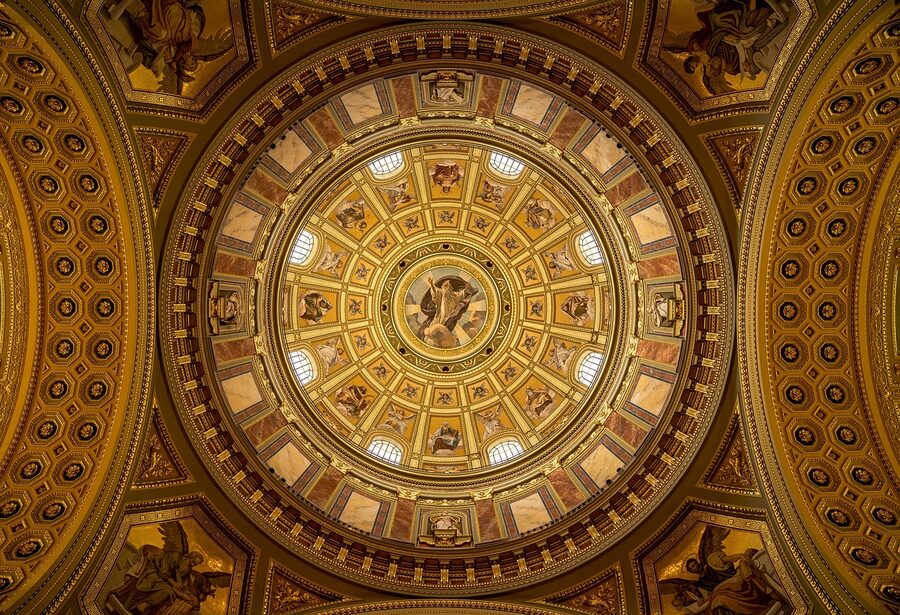
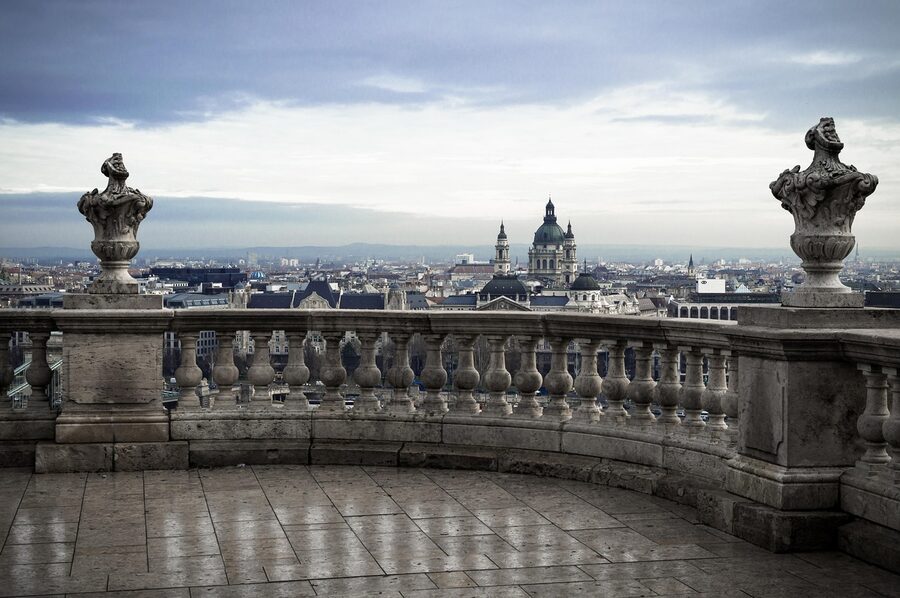
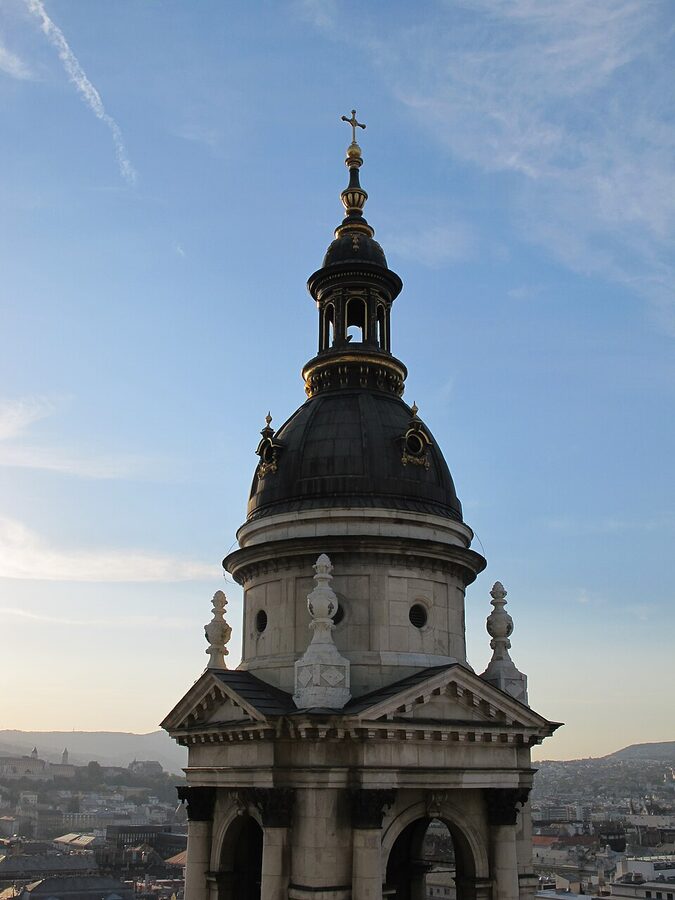
The terrace is a 360-degree walkway around the dome’s exterior, sat at about 87 metres. There are railings, generous standing room, and signs identifying what you are looking at on the horizon. To the west you have the Buda Hills and the Castle District. North-east, the Parliament. South-east, the line of Andrássy út heading toward Heroes’ Square. It is one of only a handful of central Pest viewpoints, and the only one that lets you see the Parliament from outside, in profile, across the river. The lift fits roughly six adults at a time. There is a queue at peak hours. Outside June through August it is rarely a long one.
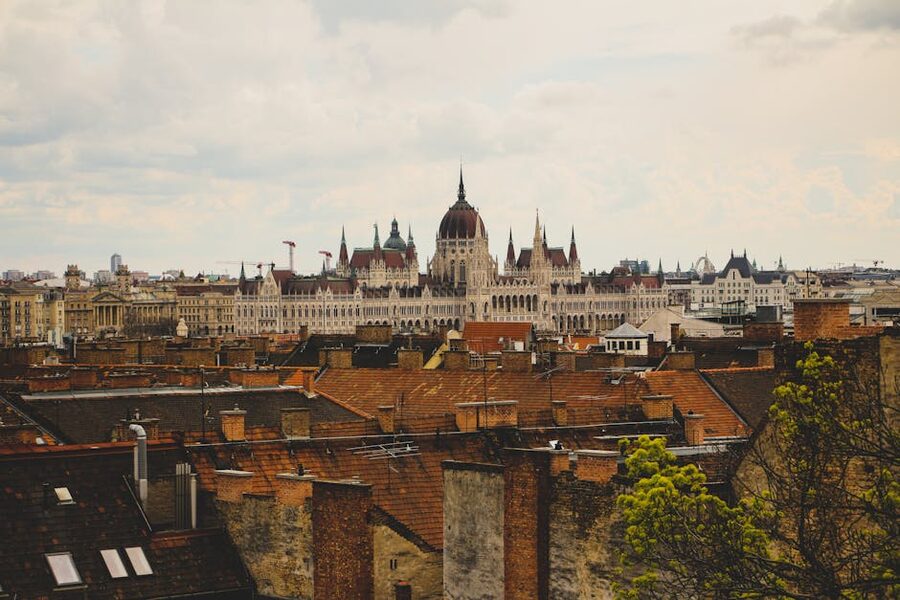
One thing the booking pages do not warn you about: the platform is exposed. There is no roof and no wind shelter. On a cold spring afternoon you want a jacket. In July the metal handrails are warm to the touch and there is no shade for ten minutes, so a hat helps. If a thunderstorm rolls in they close the terrace fast, so check the sky before you commit.
The Holy Right Hand
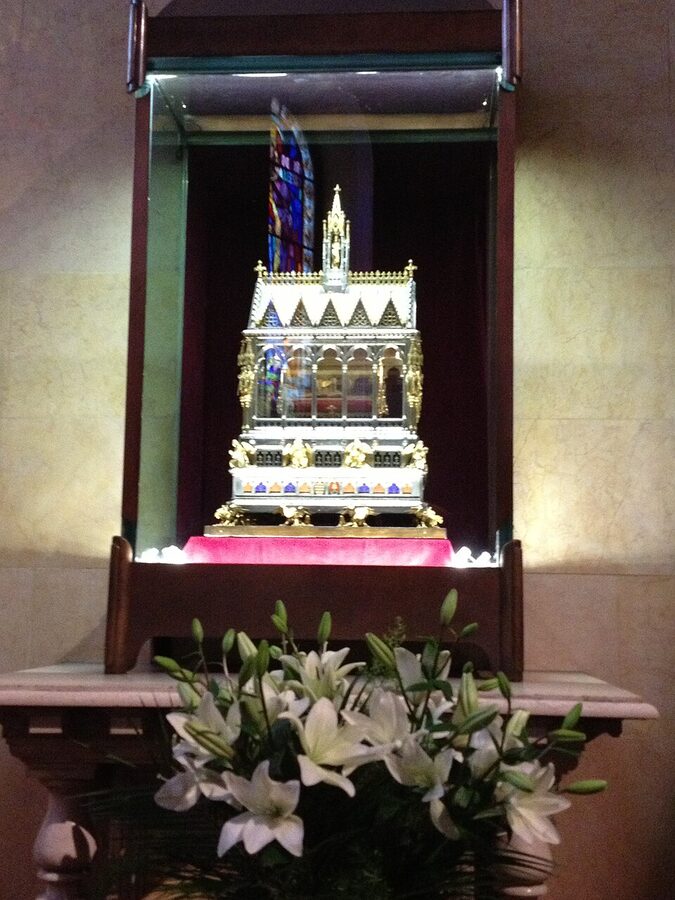
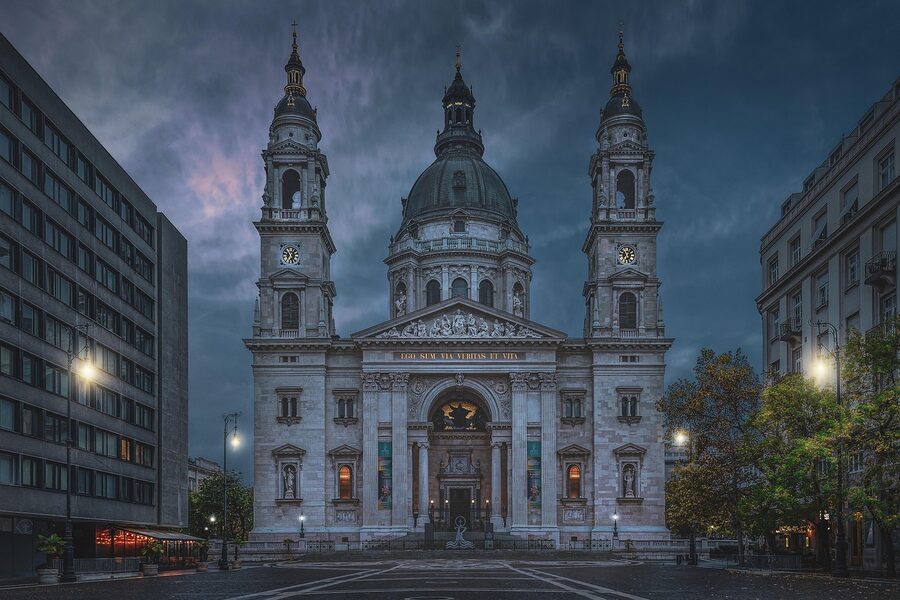
The chapel is on the right as you walk down the nave. It is small, easy to miss, and almost always quieter than the main church. Inside is a glass case containing what tradition holds is the mummified right hand of King Stephen I, who founded the Hungarian state in the year 1000 and died in 1038. The hand is wrapped, dark, and unmistakably a hand. It has been moved across the country and out of it over a thousand years of Hungarian history, including a stint hidden during the Communist era.
Every August 20th, on the feast of St Stephen, the relic leaves the Basilica and is carried in procession around the square. The crowds are enormous. The rest of the year you can see it any time the church is open, for the price of a 200-forint coin to light up the case.
This is the part of the visit that nobody warns you about and nobody forgets. The dome terrace is the photo. The hand is the story you tell at home.
How the Tickets Actually Work
There are three live ticket categories you will see at the door:
- Church only: around 2,200 HUF, roughly $4 USD. This is the standard tourist contribution.
- Church plus dome terrace: around 4,500 HUF, roughly $9 USD. The terrace is the upgrade most people want.
- Church plus dome plus treasury: around 5,500 HUF, roughly $11 USD. The treasury is small, twenty minutes maximum, but contains medieval chalices and bishop’s regalia worth seeing.
The pre-booked GetYourGuide tickets above are sold at the same prices the Basilica charges at the door, plus the small platform fee. What you are paying for is queue avoidance and date locking. In high summer or around Christmas markets, that matters. In a quiet October mid-morning, it really does not. Buying at the door at 9 in the morning on a Tuesday is fine.
The treasury is only worth booking if you genuinely care about ecclesiastical history. If you are short on time, skip it and add the difference to a coffee on the square.
Best Times to Go
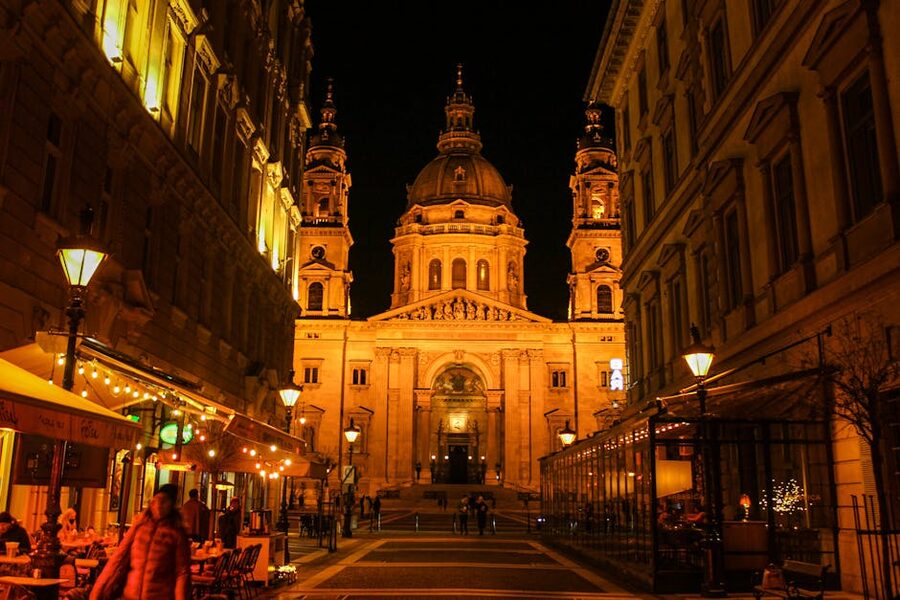
Mass times block tourist visits. Sunday morning until about noon, the church is closed for services. Daily 8am mass takes maybe forty minutes. Saturday evening anticipated mass clears out by 6:30. Outside those windows, the church is open most days from 9 to 6, the dome terrace from 10 to about 5:30 in winter and 6:30 in summer, and the treasury runs the same hours as the church.
The cleanest visit is a Tuesday or Wednesday morning around 10 am. The day-trip coach groups do not arrive until 11. The light in the church is best then. The terrace queue is non-existent. By noon you are out and the rest of Pest opens up to you.
Avoid the period from December 1 to January 6. The square outside hosts the Advent Bazilika Christmas market, which is gorgeous but turns the whole approach into a slow-moving crowd. The market is one of Budapest’s better ones, but if seeing the church interior is your priority, the market makes that harder.
How to Get There
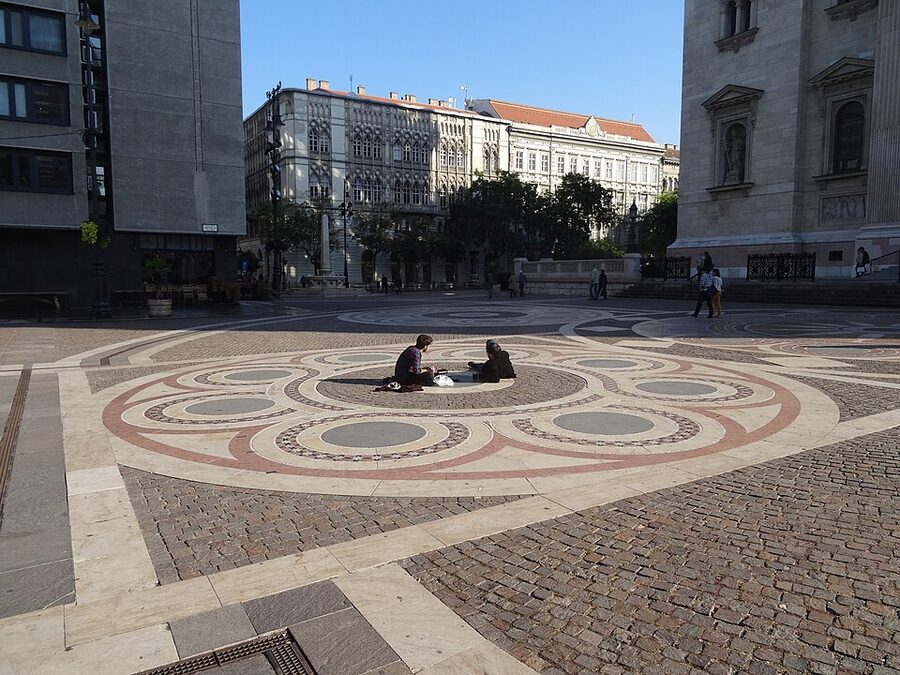
The Basilica sits on Szent István tér, two blocks inland from the river in central Pest. The closest metro is Bajcsy-Zsilinszky út on the M1 yellow line, two minutes’ walk from the front steps. Arany János utca on the M3 blue line is also two minutes away on the other side. From Deák Ferenc tér, the central interchange where M1, M2 and M3 meet, you can walk in about seven minutes.
If you are using the Budapest hop-on hop-off bus, the closest stop is St Stephen’s Basilica or Deák Ferenc tér depending on which loop you are on. Both are signposted clearly. From the river, walking from a Danube boat dock takes about ten to twelve minutes, which makes pairing the Basilica with a Danube sightseeing cruise very natural. Boats dock about three blocks south, near Vigadó tér.
What to Pair It With
The Basilica is a 30 to 60-minute stop, including the dome terrace. It pairs naturally with whatever you are doing in central Pest that day. The most common combinations work like this.
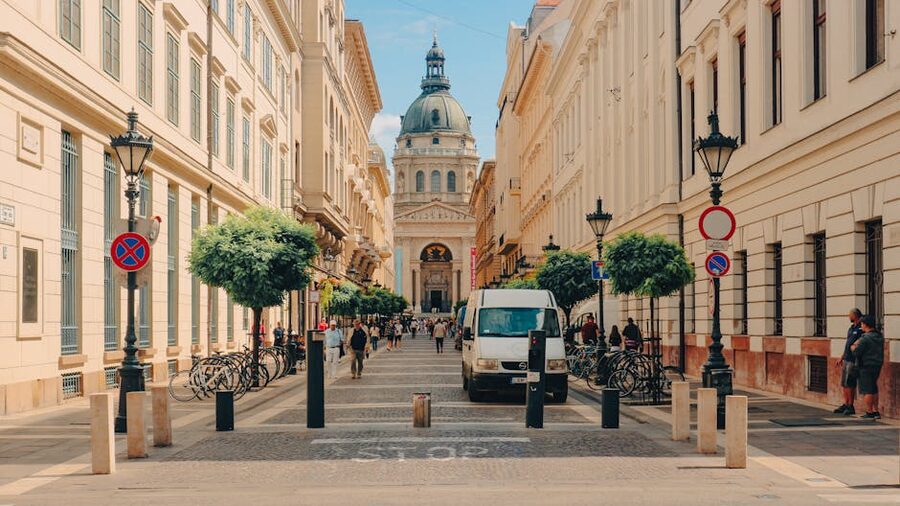
If you are coming for the morning, do the Basilica first and then walk five minutes south to the Parliament, which the dome terrace will already have shown you in profile. Parliament tours run on the hour and need pre-booking. Lunch on Október 6 utca, the pedestrianised street that runs from the Basilica down to the river, fits between them.
If you are doing this as part of an afternoon, follow the Basilica with a Széchenyi or Gellért thermal bath visit. They are the right kind of contrast: the Basilica is upright, vertical, demanding attention from above. The baths are horizontal, relaxed, demanding nothing. You feel the difference immediately.
The evening pairing is the obvious one. Concert at the Basilica from 7 or 8 pm, dinner before or after on Október 6 utca, then a night cruise on the Danube if you want to end with the city lit up. That is a long evening, but a good one.
If You Have Already Done Prague or Berlin
Budapest’s central-Europe peers each have a comparable landmark, and how you feel about those will tell you whether the Basilica works for you. The Basilica is closer in spirit to Dresden’s Frauenkirche than to anything in Prague: a 19th-century reconstruction project that came to symbolise national identity, with a dome you can climb for the city view. If you loved that, you will like this. Prague Castle is a different kind of visit, larger and more sprawling, where the Basilica concentrates everything into one building. And if you have stood in the dome at Berlin’s Reichstag, the comparison is interesting: same architectural ambition, different politics, different acoustics.
What Most Visitors Get Wrong
Three things, in order of how often I see them.
First, people skip the relic chapel. They stand in the nave, take a photo of the altar, head straight up to the dome. The chapel takes four minutes and changes how the rest of the building reads. Do not skip it.
Second, people book the all-inclusive treasury ticket, then get there and realise the treasury is twenty minutes of medieval chalices that they do not actually want to look at. Buy church-plus-dome and add the treasury at the gate only if you have time and curiosity left.
Third, people queue for the lift in summer and miss that there is a stairs option that is genuinely faster when the lift is busy. The stairs are the original 19th-century steps, partway up to the terrace. Twelve minutes of climbing. If you are mobile and the lift queue looks long, stairs are the move.
Practical Notes
- Dress code: shoulders and knees covered for the church interior. Outside on the terrace there is no rule, but the church staff will turn you back at the door if you are visibly under-dressed.
- Photography: allowed throughout, including the relic chapel. No flash. No tripod inside. The terrace allows everything.
- Accessibility: the lift to the terrace is wheelchair accessible until the final short flight of stairs. The church itself has step-free entry through the side door on the right.
- Bags: small bags fine. Big rucksacks have to go in the cloakroom inside the entrance, which costs nothing but takes an extra five minutes.
- Mass: if you are visiting during a service, sit at the back. Photography is paused. The church is genuinely active and the morning Mass crowd is mostly local Catholics.
- Cash: useful but not required. The 200-forint coin to light the relic case is the one place cash actually matters. The ticket booths take card.
Other Budapest Bookings to Build Around This
The Basilica works as the cultural anchor of a Budapest day. From here, the natural next bookings are a Buda Castle walking tour if you want to cross the river and tackle the other big landmark cluster, and a daytime Danube cruise if you want to give your legs a rest after the dome stairs. For evenings, the concert at the Basilica is the obvious starting point, but if you have already booked it, a Danube dinner cruise finishes a Pest day cleanly. If you are travelling on after Budapest, Český Krumlov as a Prague day trip is the kind of small-town counterpoint that pairs well with a Budapest-then-Prague trip, and Munich Old Town if your route is heading west into Germany. Plan the Basilica as the first thing you book, and the rest of central Pest unfolds around it.