
Vienna gave you Mozart concerts in gilded halls, Schönbrunn’s 1,400 rooms, and the Spanish Riding School’s white stallions. Hallstatt gives you a single lakeside lane, a thousand wooden houses, and a Bone House full of painted skulls. The trip from Vienna runs about four hours each way. From Salzburg it’s ninety minutes. That gap is the whole story of how to plan this day.
I’ve done both shapes of this trip. Below is what to book, what to expect, and which origin makes sense for which traveller.
- In a Hurry?
- Vienna or Salzburg: Pick Your Origin First
- What You Actually See in Hallstatt
- The Boat Ride and Why Most Vienna Tours Offer It
- The Skywalk Question
- The Stop at Schloss Ort and Traunsee
- Tour Options From Vienna and Salzburg
- 1. Vienna: Hallstatt Day Trip with Boat Ride Option, 8
- 2. Hallstatt Day Trip From Vienna With Skywalk, 9
- 3. From Salzburg: Half-Day Tour to Hallstatt, 0
- What to Bring and What to Skip
- Best Time of Day, Best Time of Year
- Doing It Yourself by Train
- How Hallstatt Fits Into a Bigger Trip
- The Bigger Vienna Picture
- What to Pair With Hallstatt
- Common Booking Mistakes
- Worth the Day?
In a Hurry?
- Vienna Hallstatt Day Trip with Boat Ride Option at $108. The headline pick from Vienna. 13-hour day, optional lake boat, the most-booked Hallstatt tour on the market.
- Hallstatt Day Trip From Vienna With Skywalk at $139. Adds the Skywalk viewing platform and Admont Abbey. Note the Skywalk lift is closed for renovation through June 2026.
- Salzburg Half-Day Tour to Hallstatt at $100. 5.5 hours total. The right pick if you’re already in Salzburg and don’t want to lose a whole day.
Vienna or Salzburg: Pick Your Origin First
This is the call that matters. Hallstatt sits in the Salzkammergut lake district, roughly equidistant from Salzburg and Linz, and a long way from anywhere else. The math is simple.
From Vienna it’s about 285 km on the autobahn. Tour buses run roughly four hours each way, sometimes a bit more with traffic and a comfort stop. You leave around 7am, you’re back around 8pm. The day is 13 hours.
From Salzburg it’s 75 km. You’re there in 90 minutes. Half-day tours leave mid-morning and have you back for dinner.
If you’re city-hopping Central Europe and Vienna is your base, the Vienna day trip is the realistic option. You’re trading eight hours on a bus for one of the most photographed villages in the Alps. That’s the deal.
If you’ve already routed Salzburg into your trip, and you should, because Salzburg pairs well with both Munich and Vienna, do Hallstatt from there. Half a day instead of a whole day. More time in the village. Less time on the bus.
If you’re flexible, the cleanest itinerary is: Vienna for two or three days, train to Salzburg, do Hallstatt as a Salzburg half-day, then continue west to Munich or south to Innsbruck. Hallstatt rewards you with more village time when you come from Salzburg, and the train ride between Vienna and Salzburg is a lovely stretch in its own right.
What You Actually See in Hallstatt
The village is small. The whole walkable centre is maybe 800 metres long. Most Vienna tours give you two and a half to three hours of free time on the ground. Salzburg tours give you about the same. That’s enough.
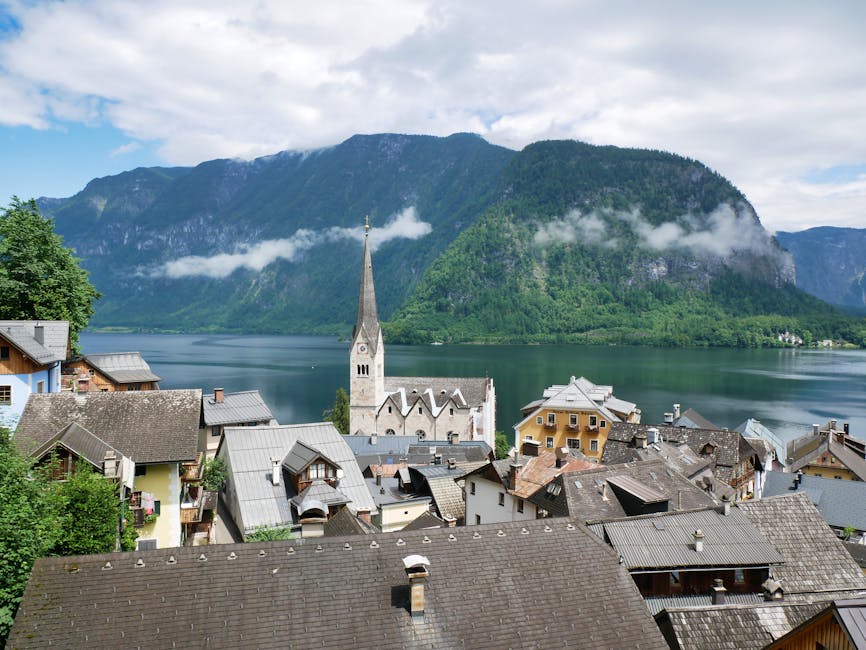
Here’s what you can realistically fit in three hours.
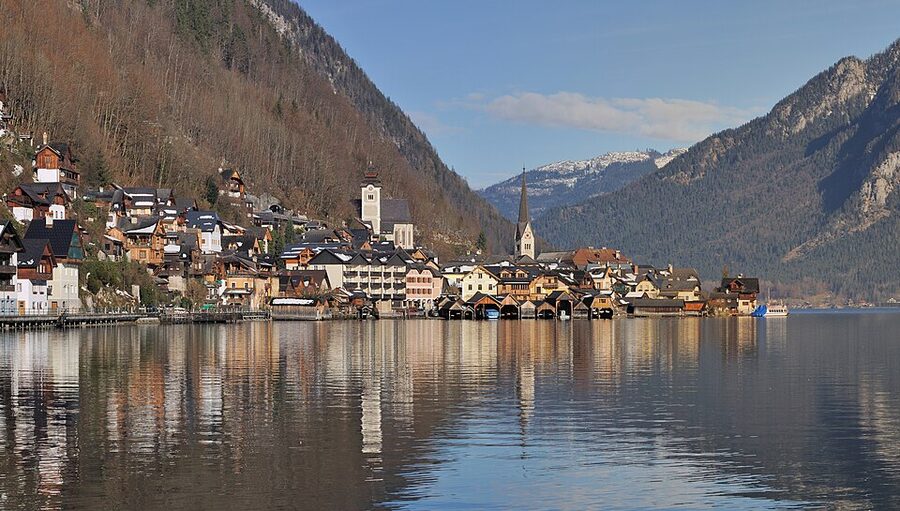
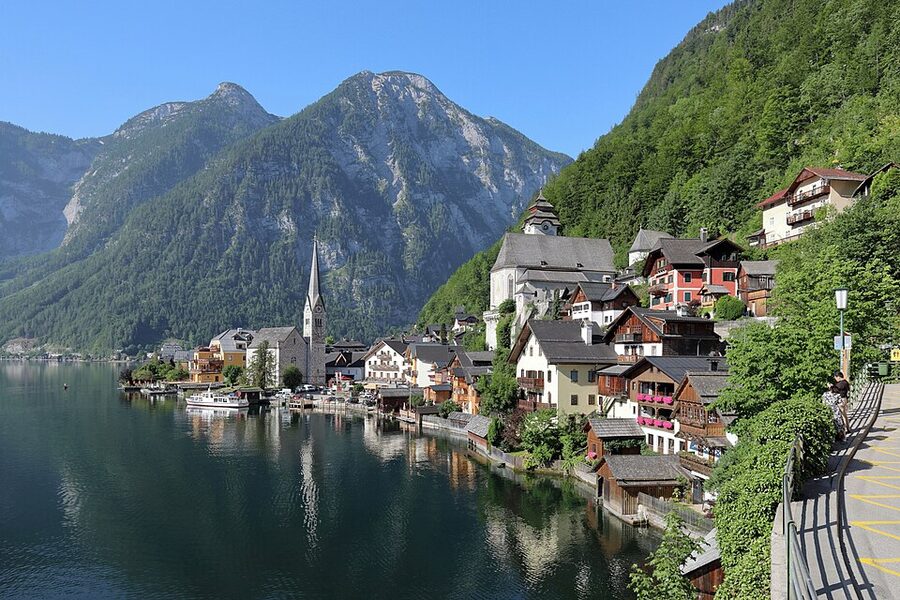
The classic photo viewpoint is at the north end of the village, near the boat dock and the path that runs along the water. Ten minutes from where most buses park. This is the Instagram shot. Get it early.
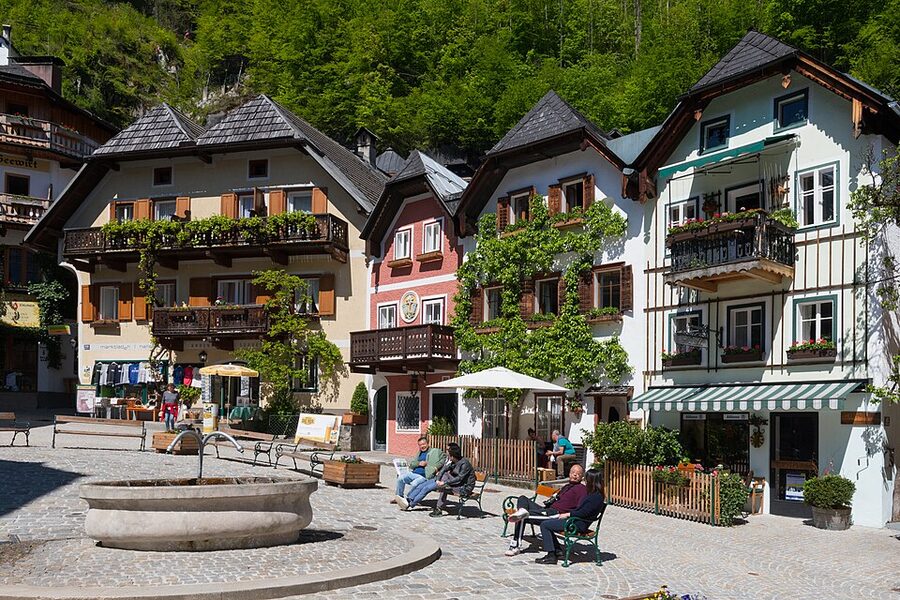
The Marktplatz is the small market square with the painted houses. Coffee, strudel, salt-themed souvenirs. It’s tight and gets crowded by 11am, but it’s genuinely pretty and worth twenty minutes.
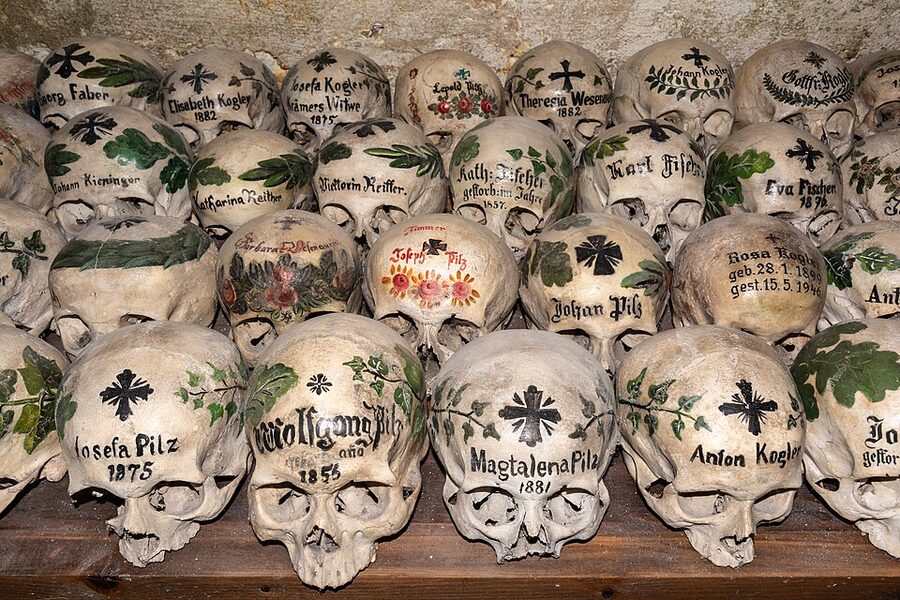
The Bone House (Beinhaus), also called the Karner, is the small ossuary next to the Catholic parish church. Around 600 painted skulls dating back to the 12th century, when the local cemetery ran out of space and the practice became to exhume bones after a decade and decorate the skulls with the deceased’s name and a flower or cross. It costs €2, takes ten minutes, and is the most distinctive thing in the village. Most guided tours skip it because it’s too small for groups, so you do it on your own.
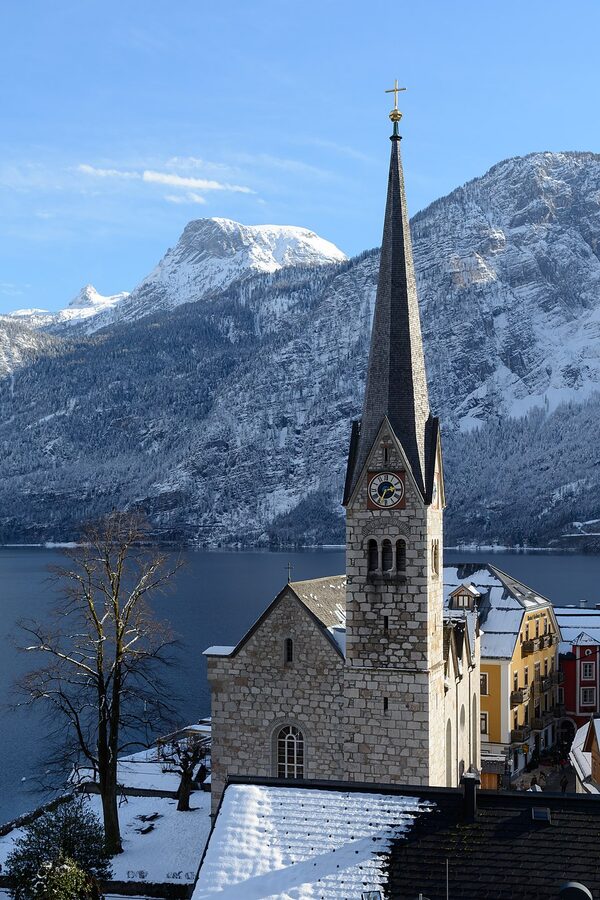
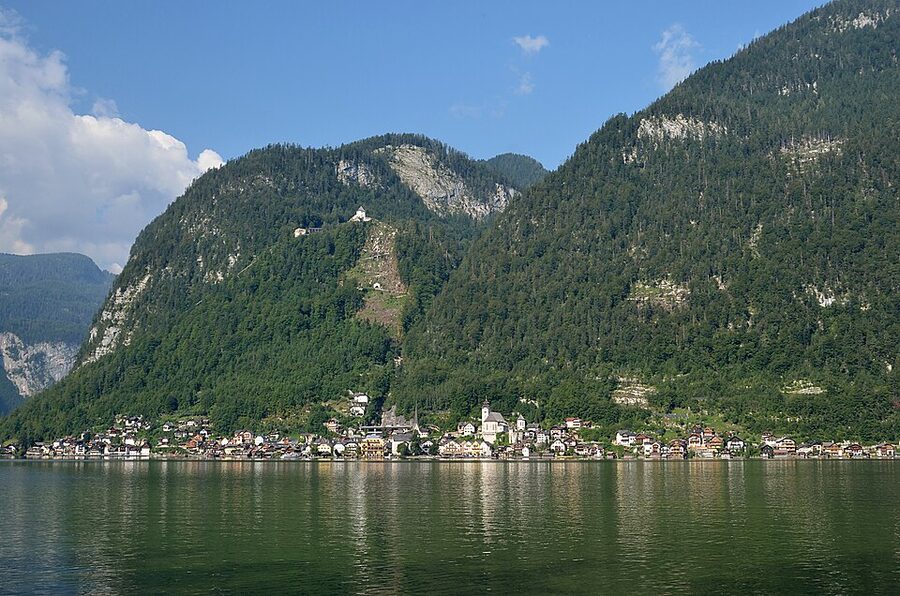
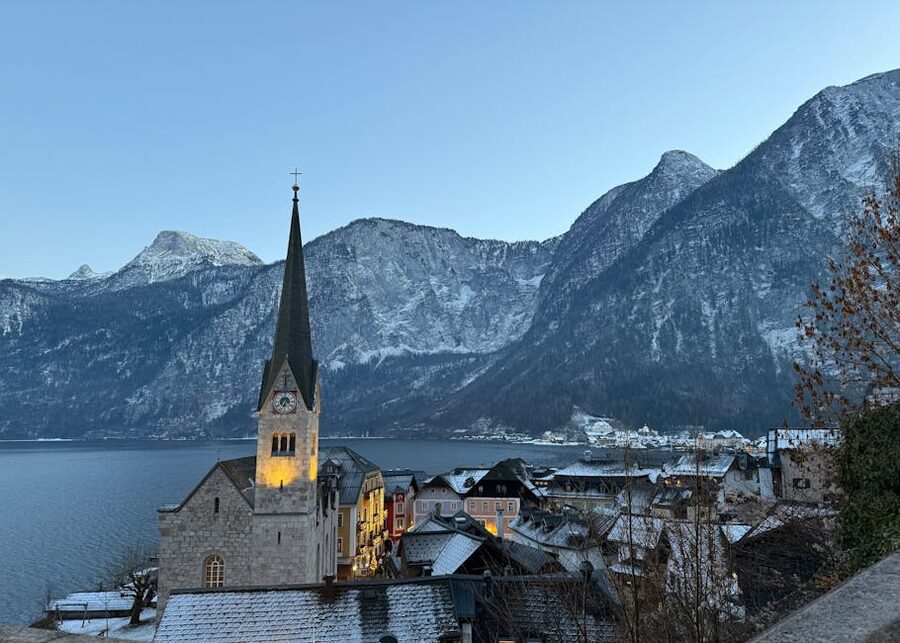
The lakefront walk south of the Marktplatz takes you past the slim white evangelical church (the one in every photo) and out toward the boat dock where the village stretches along the water. Twenty minutes there and back, no admission, the prettiest stretch.
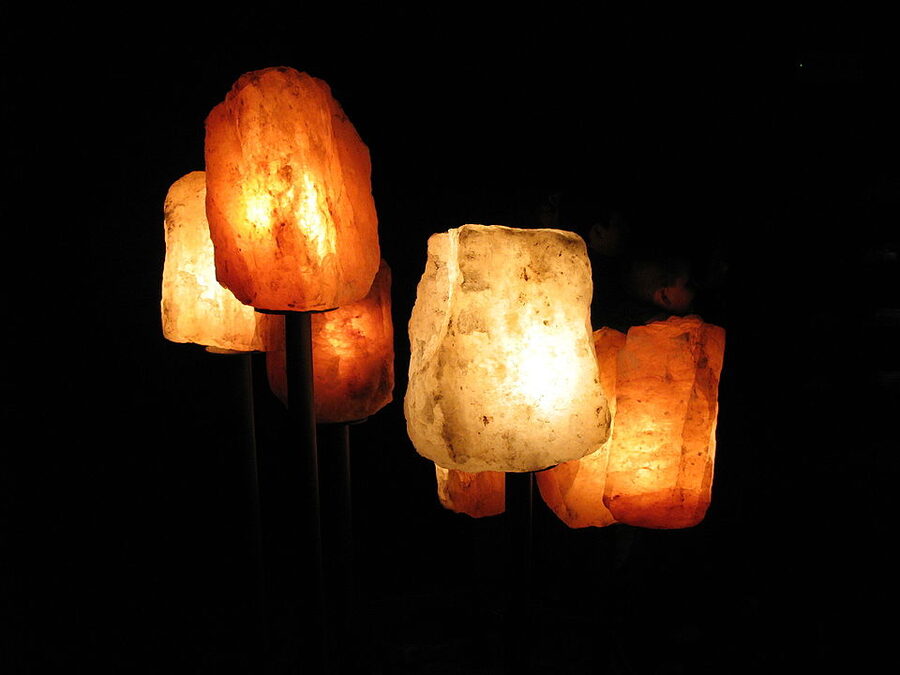
What you can’t fit in three hours: the salt mine. It’s up the funicular, takes about two hours including the ride up, and most day tours don’t include time for it. If the salt mine is the reason you’re going, you need a longer trip or an overnight.
The Boat Ride and Why Most Vienna Tours Offer It
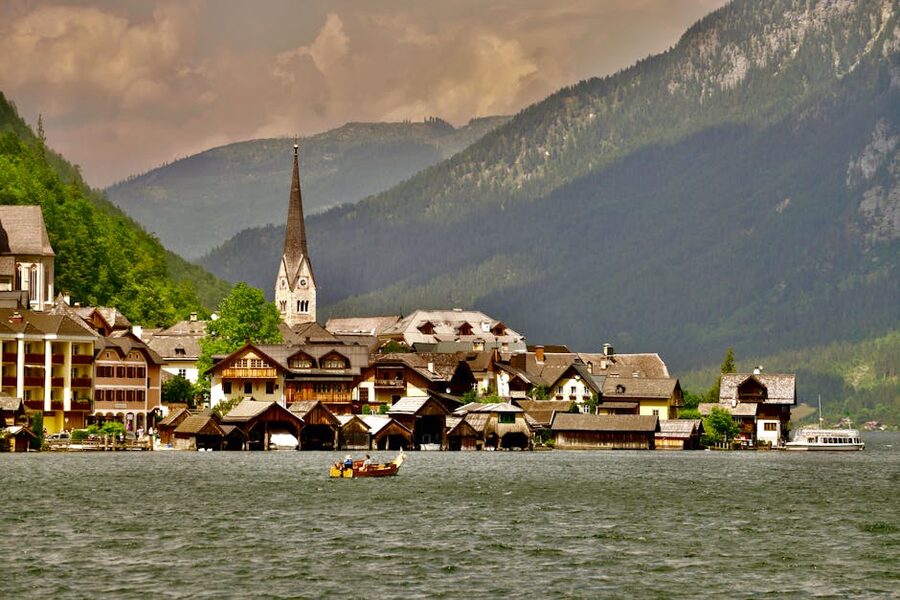
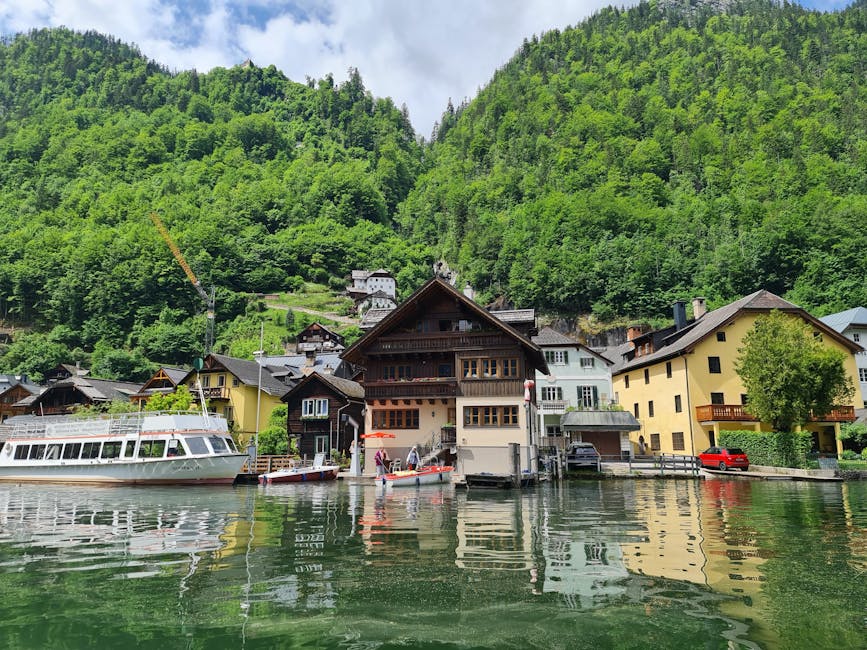
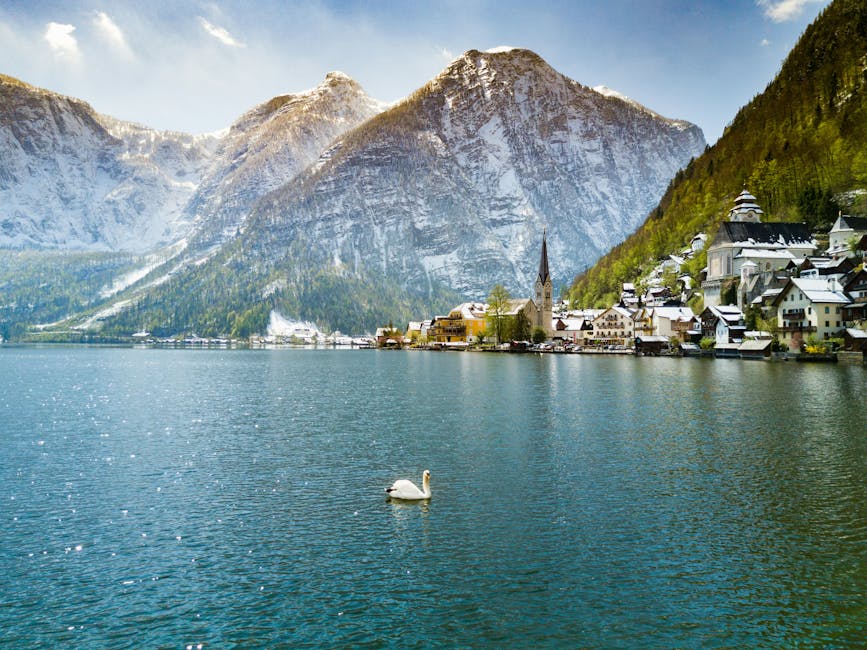
Vienna’s headline tour is built around an optional 25-minute boat ride across Hallstätter See. You pay €5-€8 extra on the day. It’s the original way to arrive in Hallstatt. Until 1875 there was no road at all, and the village was reached only by boat.
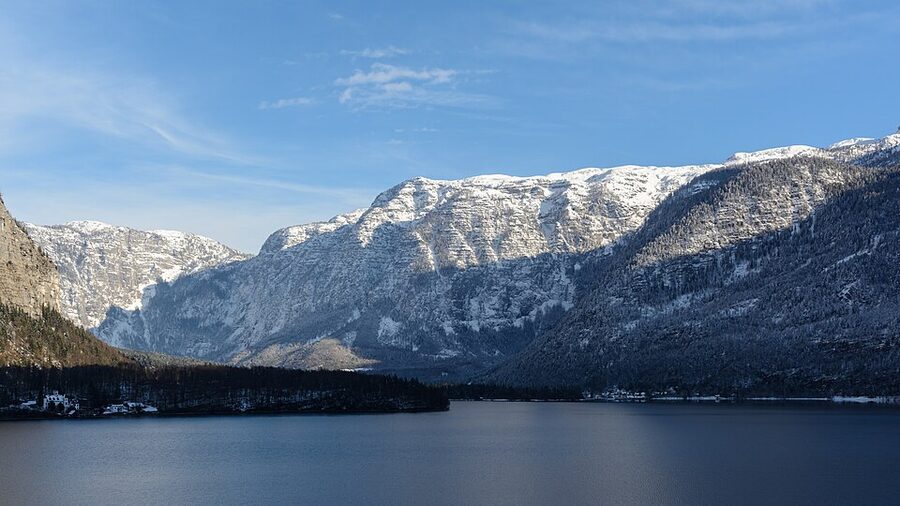
I’d take the boat. It’s the best view of the village you’ll get all day, the light on the lake is always good in the late morning, and twenty-five minutes off your feet after a four-hour bus ride is welcome. The boat ride is the difference between a Hallstatt day trip and a Hallstatt photo stop.
If you’re booking the standard Vienna tour, the boat is offered on the day. Bring small cash. The Skywalk variant doesn’t include the boat. It routes you up the funicular instead.
The Skywalk Question
The Skywalk Welterbeblick is the cantilevered viewing platform 360 metres above the village, accessed by the funicular at the south end of town. The view is the famous one: straight down at the wooden houses, the lake stretching south, the mountains closing in.
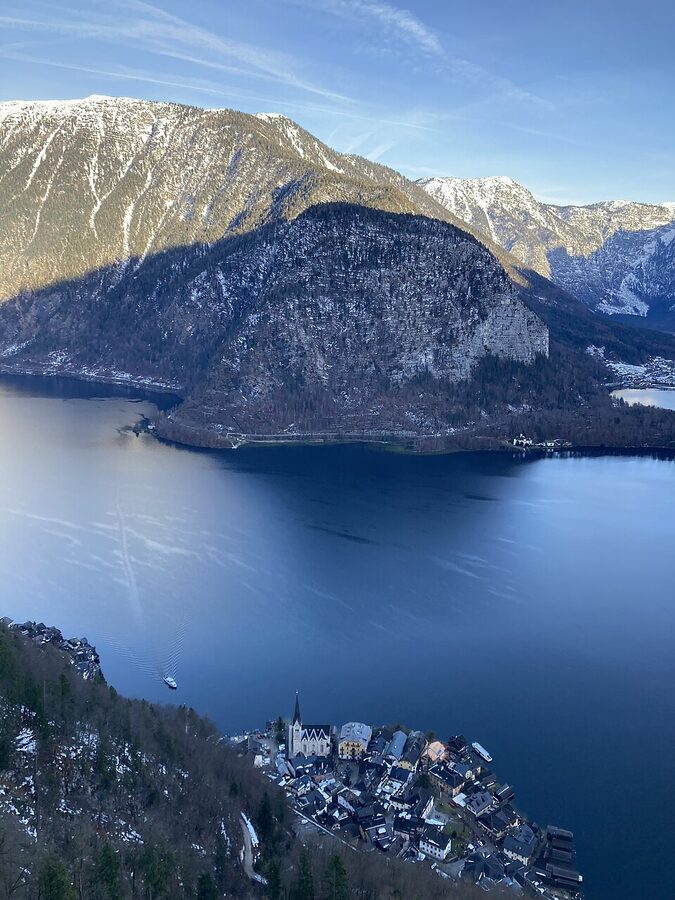
Important booking note: the Skywalk lift (the funicular) is closed for renovation from August 2025 through June 2026. If you’re reading this in that window, the Skywalk variant of the Vienna tour will tell you the platform isn’t accessible. The tour usually swaps in Admont Abbey or extra time at the lake. Worth asking the operator before you book.
When the lift is open, the Skywalk add-on is the best version of the tour for first-timers who want every classic view. When it’s not, the boat-ride version of the standard Vienna tour is the better pick.
The Stop at Schloss Ort and Traunsee
Almost every Vienna tour stops at Gmunden on the way to Hallstatt. The reason is Schloss Ort, the small castle on its own island in Traunsee, connected to shore by a wooden bridge. It’s a fifteen-minute photo stop, the kind of stretch-your-legs break that breaks up the four-hour drive nicely.
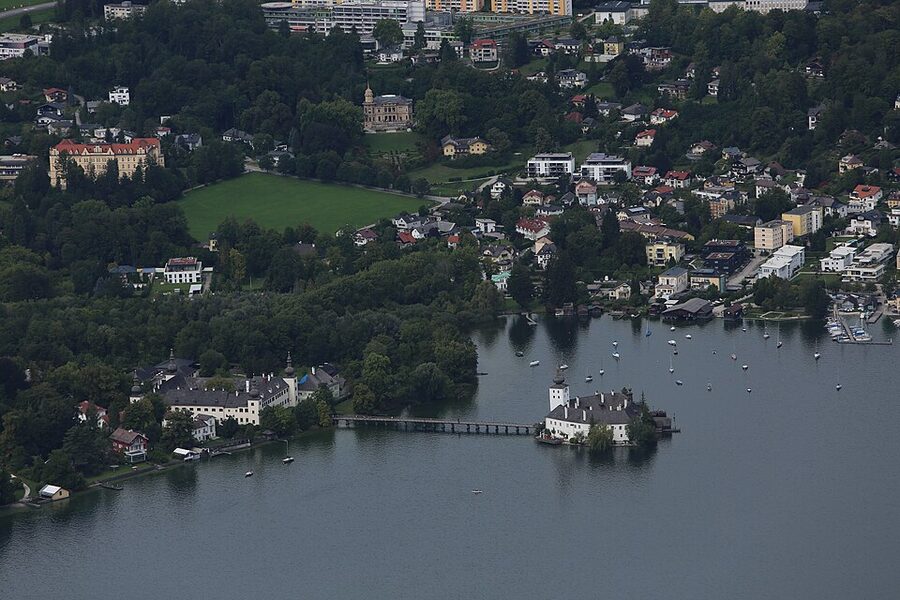
Salzburg tours don’t do this stop. They go straight in and straight out. That’s why the Salzburg version is half a day rather than a whole one. There’s no scenic stretching of the route, because the route is short to begin with.
Tour Options From Vienna and Salzburg
1. Vienna: Hallstatt Day Trip with Boat Ride Option, $108
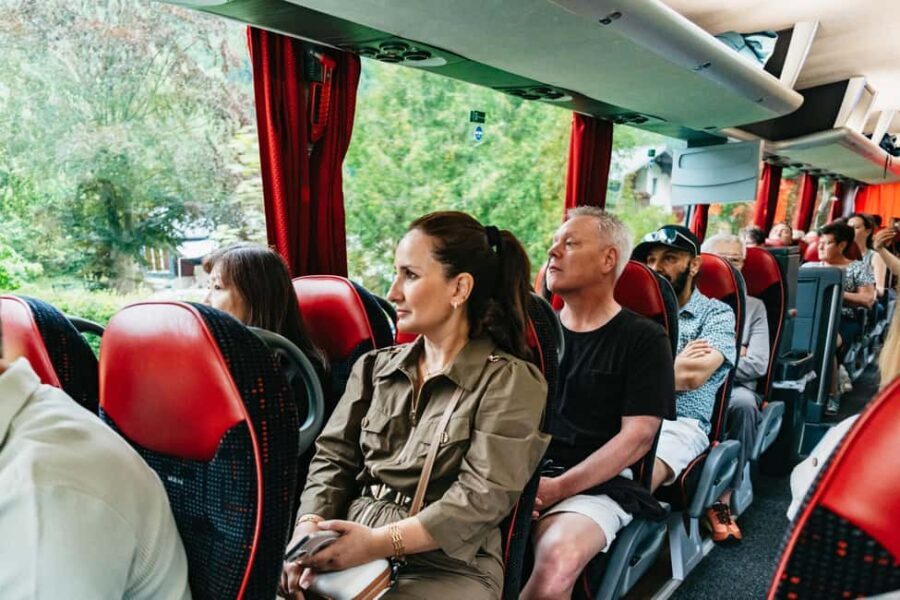
This is the headline pick. 13 hours total, departure around 7am from central Vienna, photo stop at Schloss Ort en route, three hours of free time in Hallstatt, optional boat ride add-on you pay for on the day. Our full review covers what the on-the-day boat upgrade actually gets you and how to spend the three hours of free time. The 4.7 average across 6,000+ reviews is doing a lot of work here. Operators with this volume tend to run reliably.
2. Hallstatt Day Trip From Vienna With Skywalk, $139
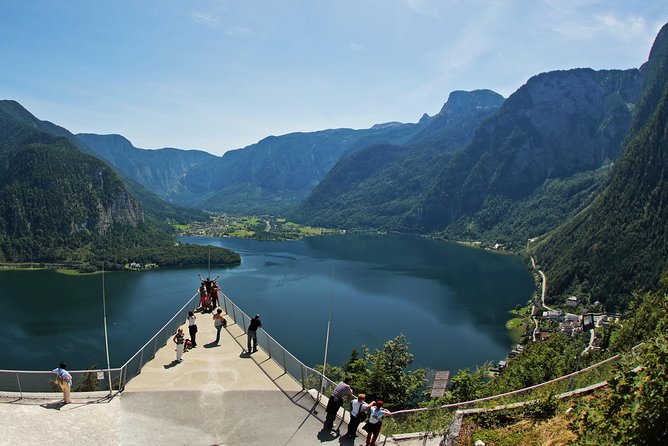
The Vienna day trip with the Alpine angle. Same 13-hour shape but routes you up the Hallstatt funicular for the Skywalk view and adds Admont Abbey, Europe’s largest monastic library. Our review covers the Skywalk timing and what to expect at Admont. About $30 more than the standard tour, and worth it when the Skywalk is open. With the lift in renovation through June 2026, ask the operator before you book. The standard boat-ride version is the better pick during the closure.
3. From Salzburg: Half-Day Tour to Hallstatt, $100

If you’re based in Salzburg, this is the obvious choice. 5.5 hours total, 90-minute drive each way, around 2.5 hours of free time in Hallstatt, optional Skywalk and boat add-ons sold on the day. Our review walks through the Bone House and Mullbach Waterfall stops the guide builds in. At $100, the per-hour value is genuinely better than either Vienna option. You’re not paying for eight hours of bus time.
What to Bring and What to Skip
Layers always. The lake sits at 510 metres and the air drops fast even in August once the sun goes behind the mountains. A jacket you can stash in a daypack is the move.
Bring small cash for the boat ride add-on (€5-€8), the Bone House admission (€2), and lunch. Most places on the Marktplatz take cards, but the Bone House and the boat are easier with coins.
Comfortable shoes that handle cobbles. Hallstatt’s lanes are old, narrow, and slick when wet, which they are about a third of the year.
Skip the umbrella, bring a packable rain jacket. The valley microclimate flips fast.
Skip lunch on the Vienna tour. Most operators stop at a roadside restaurant on the way back which is a hard pass. Overpriced schnitzel served to a captive audience. Eat in Hallstatt instead. Lake fish (Reinanke or Saibling) at one of the Marktplatz restaurants is the local move and the best food you’ll have all day.
Best Time of Day, Best Time of Year
The village is busiest from about 11am to 2pm. That’s when the Vienna buses, Salzburg buses, and the Chinese tour-group buses converge. If you’re on a Vienna tour you can’t avoid this. Your bus pulls in around 11:30. If you’re on a Salzburg tour, you have a choice of morning or afternoon departure. Take morning.
Season-wise, May and late September into early October are the best windows. Lake is open, weather is reasonable, crowds noticeably thinner mid-week than peak summer. July and August are the most crowded but warmest. If you want to swim in the lake (it’s cold but doable), this is the only window.
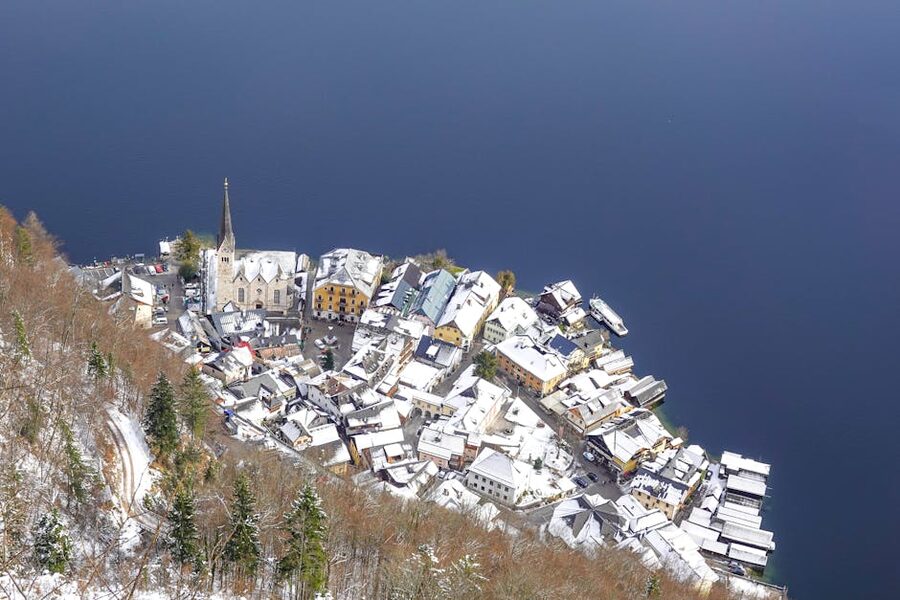
Winter is its own thing. Hallstatt under snow is the postcard people actually have on their wall. December and January, the village is genuinely quieter, the Christmas market on Marktplatz is small but real, and the lake mist sits low. Vienna tours run year-round; the Skywalk variant gets restricted in heavy snow.
Doing It Yourself by Train
You can skip the tour and do Hallstatt independently from either city. The math:
From Vienna: ÖBB Railjet Vienna to Attnang-Puchheim, change for the Salzkammergut local to Hallstatt station, then the boat ferry across the lake. About 3.5 hours one way, around €19-€39 each way depending on advance booking. Doable as a day trip but tight. You’d have around 2-3 hours in the village before needing to start back.
From Salzburg: Bus 150 from Salzburg main station to Bad Ischl, then train to Hallstatt station, then boat ferry. About 2.5 hours, around €15-€20 each way. Comfortable as a day trip and cheaper than the tour, but you lose the guide and the Schloss Ort stop.
The independent option works well from Salzburg, less well from Vienna. The four hours each way is hard to sell yourself if you’re also doing the train transfers and the boat. The tour exists for a reason.
How Hallstatt Fits Into a Bigger Trip
Most people doing Hallstatt are also doing Vienna and Salzburg. If you’re early in your Austria itinerary, do Hallstatt from Salzburg as a half-day and free up the rest of the day for Salzburg’s Sound of Music sights or the Hohensalzburg fortress. If you’re only in Vienna and don’t have a Salzburg leg, the Vienna day trip is the only realistic option short of an overnight.
If you’re building a Central European loop, Vienna pairs naturally with Budapest and Prague. Hallstatt fits cleanly between Vienna and Salzburg, which then continues to Munich. I’ve written about Buda Castle and the Budapest Danube cruise for the Hungarian leg, and Prague Castle and Prague Old Town for the Czech one. Same scale of day trip, very different feel.
For the Austrian and German neighbours, Salzburg from Munich is a real-day-trip option that overlaps with how Salzburg-origin Hallstatt tours work, and Neuschwanstein from Munich is the Bavarian fairy-tale equivalent. Same kind of three-hour bus, same kind of one-photogenic-village payoff.
The Bigger Vienna Picture
If you’re doing Hallstatt from Vienna, you’re probably also doing the city itself. The day-trip pace is unforgiving (long bus, short village stop, long bus back) so I’d weight the rest of your Vienna time toward shorter, denser experiences. A classical concert in one of the smaller churches is a good evening counterweight to a long bus day. The Vienna city-centre walking tour covers ground efficiently if you’re short on time, and a Mozart concert at one of the period venues rounds out the Vienna side without asking much of your legs.
For the palaces, the AT-B1 cluster covers the four big-ticket Vienna stops: Schönbrunn, the Hofburg with the Sisi Museum, the Belvedere, and the Spanish Riding School. Two of those is a comfortable Vienna afternoon. Three is ambitious. Don’t try four in a single day. Vienna’s palaces reward time, not collection.
What to Pair With Hallstatt
If you’re building Austria into a longer Alpine trip, the obvious pairings are Salzburg (which the Vienna day trip can also include as a longer combined tour at higher price) and the Salzkammergut lake district more broadly: Bad Ischl, St Wolfgang, Mondsee. If you have an extra day in Salzburg, a Sound of Music tour and Hallstatt as separate half-days is a better use of time than a single combined long tour.
If your trip ends at Hallstatt and you’re heading west, Munich is three hours by train from Salzburg and gives you Bavarian Alps day trips of a similar shape: same village-in-the-mountains payoff, different cultural register. The Salzburg-Munich rail leg is one of the prettiest in Europe and worth not overlooking.
Common Booking Mistakes
Booking the longest combined tour. The Vienna-Hallstatt-Salzburg-Melk multi-stop is tempting on paper because it looks like more value. In practice it’s 14-15 hours, you’re hurried at every stop, and the photo windows are short. If you want both Hallstatt and Salzburg, do them as separate days. The combined tour is the wrong shape.
Booking the Skywalk variant during the renovation closure. August 2025 to June 2026 the lift is closed. Operators are still selling these tours; they substitute Admont Abbey or extra free time. Confirm what you’re getting before paying the $30 premium.
Going on a weekend in summer. Saturday and Sunday in July and August are when Hallstatt’s Marktplatz hits actual gridlock. If you have any flexibility, go midweek. Tour pricing is usually identical.
Skipping the boat. The five-euro boat add-on on the Vienna standard tour is the single best upgrade on the day. The view from the lake is the view of Hallstatt. Take it.
Worth the Day?
From Salzburg, easily. Half a day, ninety minutes each way, the most photogenic village in Austria for two and a half hours. There’s nothing not to like.
From Vienna, it depends on what else you’re doing. Eight hours of bus time is real. If your Vienna trip is three or four days, sacrificing one of them to Hallstatt is a steep ask. Vienna itself rewards depth, and a day on a bus is a day not spent in the Kunsthistorisches or at a Mozart concert. If your Vienna trip is a week and you’ve already covered the palaces, the Hallstatt day is genuinely worth it. Just go in knowing what the day is: a long bus, a short village, a long bus back, and one of the best photos you’ll take all year.