
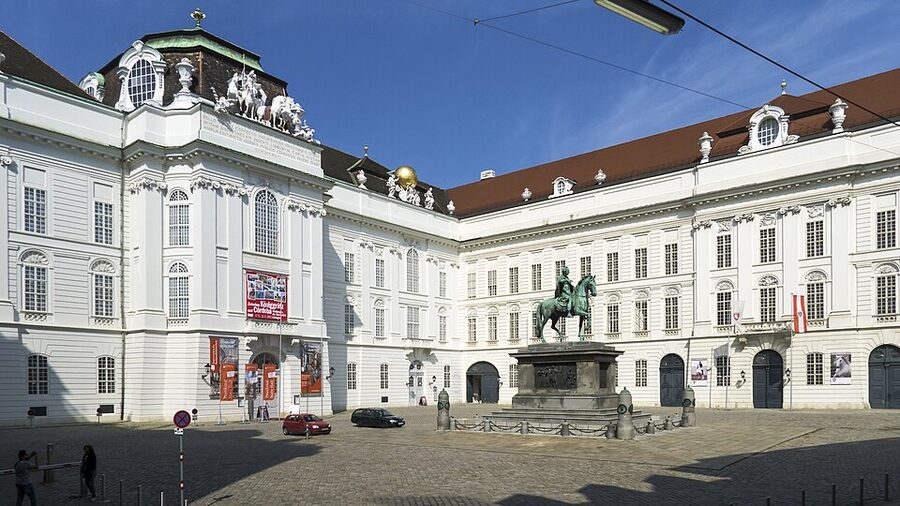
The guide stops mid-sentence in the middle of Josefsplatz, points up at the equestrian statue of Joseph II, and asks the group to spot the misspelled inscription on the plinth. Half of us laugh. The other half is still squinting. This is hour one of a Vienna walking tour, and it’s already doing the thing a good one is supposed to do: making me look at a square I’d have walked straight through.
Vienna’s Innere Stadt is small. You can walk it in a morning. The trouble is that without somebody filling in the gaps, half of what you’re looking at is just a pretty facade with a name you can’t pronounce. The right walking tour fixes that. The wrong one leaves you trailing behind a bored guide who keeps saying “famous” while pointing at things.
- In a Hurry?
- The Three Walking Tour Shapes Worth Knowing
- How Long, How Much, and What You’re Actually Paying For
- Visit Options
- 1. City Center Highlights Walking Tour:
- 2. Highlights and Hidden Gems Walk:
- 3. Time Travel Magic Vienna History Tour:
- The Route Most Tours Actually Walk
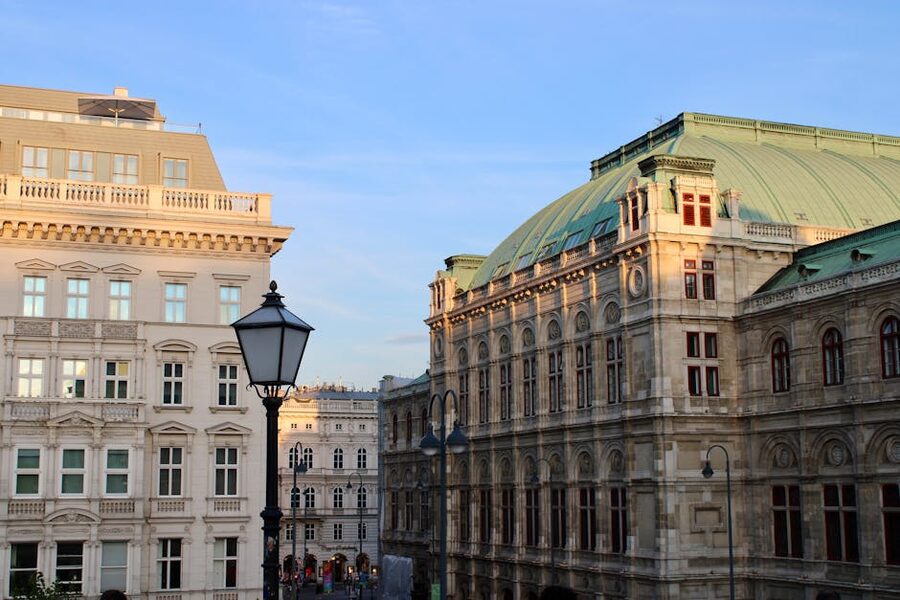
- Staatsoper to Albertina
- Augustinerkirche and Josefsplatz
- Stallburg and the Hofburg
- Graben and the Plague Column
- Stephansplatz and the cathedral
- Free Walking Tour or Paid? An Honest Take
- When to Book and What Time of Day to Pick
- What a Guide Actually Adds
- Two Stops the Standard Tours Skip (Worth Adding On)
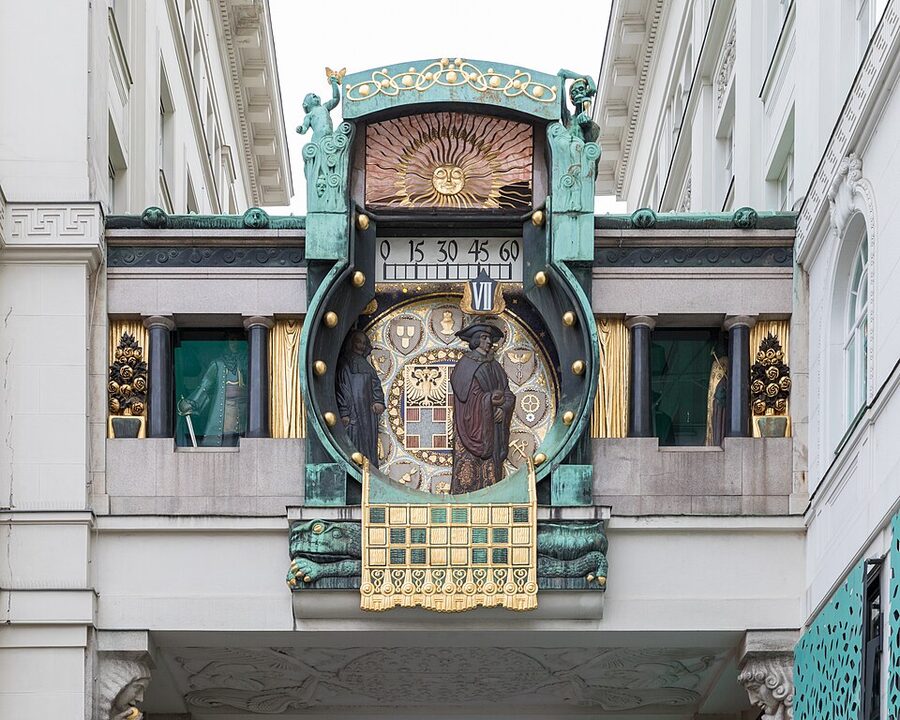
- The Anker Clock at Hoher Markt
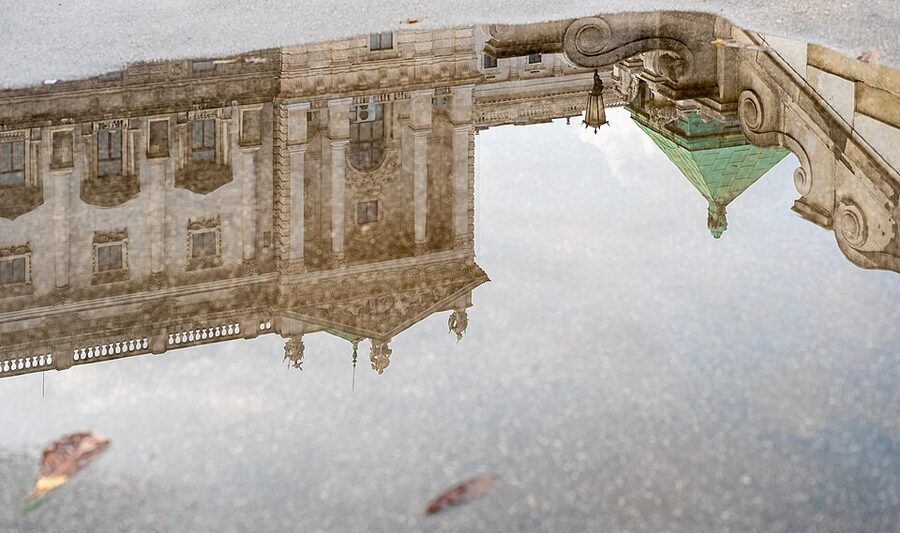
- Hofburg’s southeast facade reflection
- What to Wear and How Tough the Walking Actually Is
- If You Already Know Vienna
- Mistakes I See People Make
- Pairing the Walk With the Rest of Vienna
In a Hurry?
- Best for first-timers ($25): the City Center Highlights walking tour. Two hours, all the main names, biggest review pile in town.
- Best for repeat visitors ($27): the Highlights and Hidden Gems walk. Same two hours, smaller crowd, more of the side streets nobody else shows you.
- Best if classic walking tours bore you ($27): the Time Travel Magic Vienna History Tour. VR headsets, 5D cinema, less walking and more storytelling.
The Three Walking Tour Shapes Worth Knowing
If you spend ten minutes on GetYourGuide or Viator looking at Vienna walking tours, you’ll find about thirty options and lose the will to book any of them. The trick is realising they’re not really thirty options. They’re three shapes, and almost every tour fits into one of them.
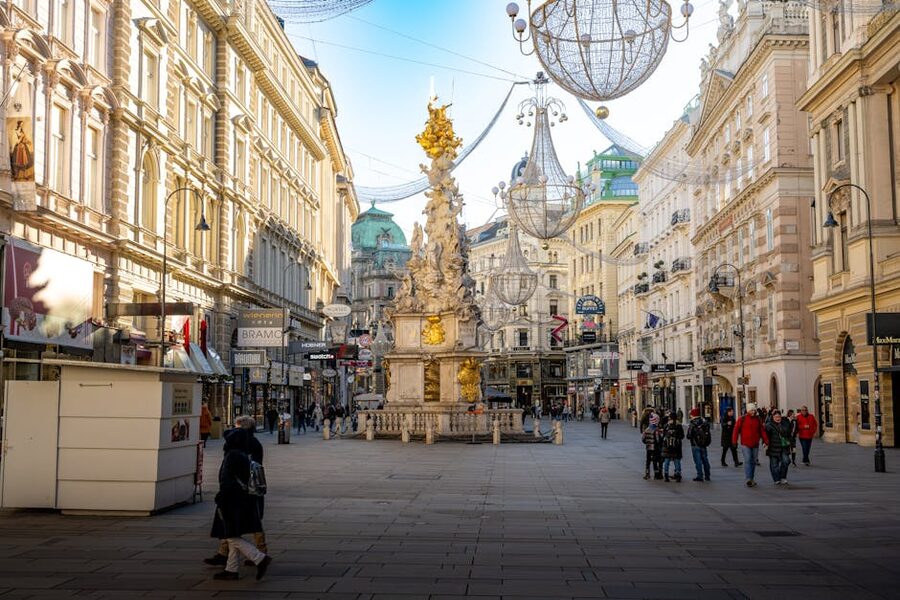
The first shape is the standard highlights walk. Two hours, English, starts somewhere obvious like the Staatsoper or in front of St Stephen’s. You hit Hofburg, Graben, Stephansplatz, the Plague Column, the State Opera, and you finish near where you started. This is the tour you want if it’s your first day in Vienna and you don’t yet know which of those words refers to what. It’s also the cheapest.
The second shape is highlights plus hidden gems. Same two hours, same starting point, similar landmarks, but the guide takes you down a few side streets between them. You’ll see things like the Pasqualatihaus where Beethoven lived, the medieval Schönlaterngasse alley, or the courtyard at Heiligenkreuzerhof. You don’t get more time, you get different time. This works if you’ve already done a free walking tour somewhere, or if a checklist of names you can’t pronounce sounds boring.
The third shape is the themed history tour. Less walking, more storytelling. The Time Travel and Magic Vienna History Tour is the headline product here. It uses VR headsets and a 5D cinema room to skip you through the plague, the Turkish siege, the Habsburgs, the war. You move between rooms inside one building rather than across the city. This is the one you book on day three, when your feet are wrecked and you still want context.
How Long, How Much, and What You’re Actually Paying For
The standard guided walks run about two hours and sit in a tight $25 to $30 range per person. That’s cheap for a guided experience in a major European capital. It’s also the price of two coffees and a slice of Sachertorte at any cafe within fifty metres of Stephansplatz, which puts the value in perspective.
What you’re paying for is the guide. Not the route. The route is public. Anyone with Google Maps can walk from the Staatsoper to Stephansplatz. You’re paying for the person who knows that the equestrian statue at Josefsplatz mimics the Marcus Aurelius one in Rome, that Beethoven premiered his 3rd Symphony in the Palais Lobkowitz across the square, and that the Augustinerkirche hosted Sisi’s wedding to Franz Joseph in 1854. None of that is on the buildings. None of it shows up in a guidebook caption. It’s all in the head of the licensed guide walking next to you.
A few practical bits worth knowing before you book:
- “From the outside” usually means it. Most walking tours don’t go inside Stephansdom, the Hofburg apartments, or the National Library. You walk past them, hear the story, take a photo, move on. If you want to step inside the Imperial Apartments or the Sisi Museum, look at our Hofburg and Sisi Museum guide. That’s a separate ticket entirely.
- Free walking tours are real but tipping isn’t optional. Sandemans and a few others run “free” tours where the price is a tip at the end. The going rate is €10 to €15 per person if the guide was good. If you tip €5 thinking you’ve gamed the system, you’ve just walked the same route as the paying group for slightly less.
- Group sizes vary a lot. The cheapest tours run with 25-30 people. Smaller-group versions (10-15 people max) cost a bit more and you can actually hear the guide. Worth checking the listing.
Visit Options
Three picks below, each one a different shape of walk. They’re sorted by the number of reviews on the booking platforms, which roughly tracks “how many people have actually shown up and given feedback.”
1. City Center Highlights Walking Tour: $25

The biggest, cheapest, most reviewed walking tour in Vienna. Two hours, $25, hotel pickup available, runs daily. Our full review covers what’s actually included versus what tour pages imply. Pick this one if Vienna is new to you and you want every famous landmark name attached to a face.
2. Highlights and Hidden Gems Walk: $27
Run by Vas Tours Vienna, with a 4.9 rating across more than two thousand reviews. My review notes the smaller group sizes and the noticeably more knowledgeable guides. Pick this one if you’ve done a generic walking tour somewhere before and want the level above.
3. Time Travel Magic Vienna History Tour: $27

This isn’t really a walking tour. It’s a history experience inside one building, an hour long, $27. Our review walks through the room sequence and what the VR actually shows. Pick this if you’ve already done a standard walk and want the same stories with effects on top, or if you’re travelling with kids who lose interest the second a guide says “in 1683.”
The Route Most Tours Actually Walk
Knowing the route in advance doesn’t ruin a tour. It helps you pick a guide. Almost every standard walking tour in the Innere Stadt covers some version of the loop below. If a tour description doesn’t list at least four or five of these, ask why.
Staatsoper to Albertina
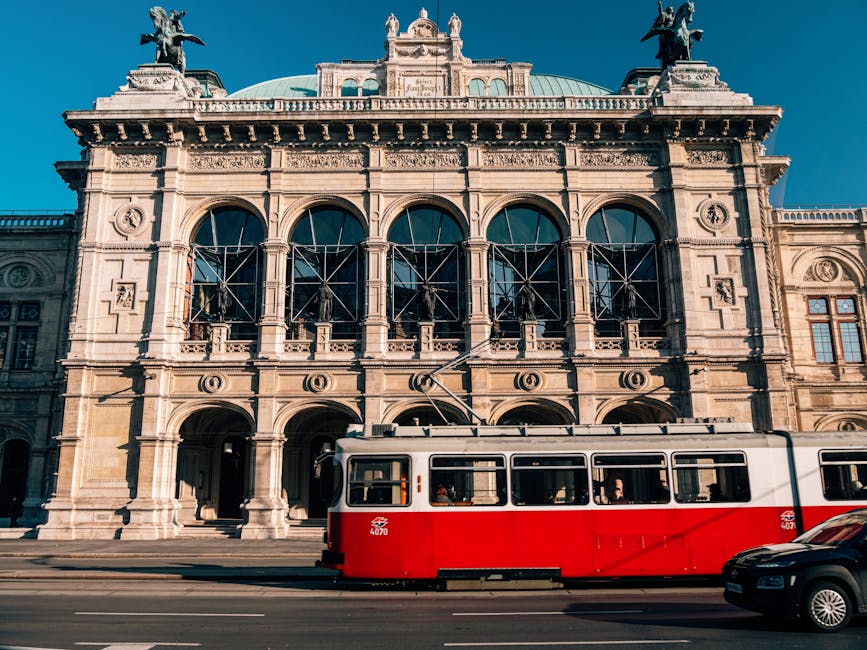
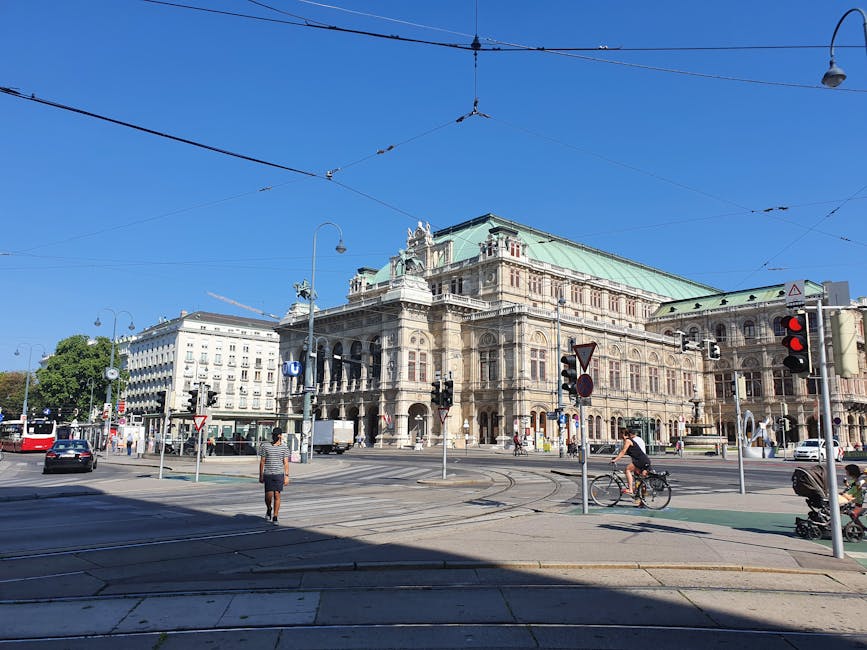
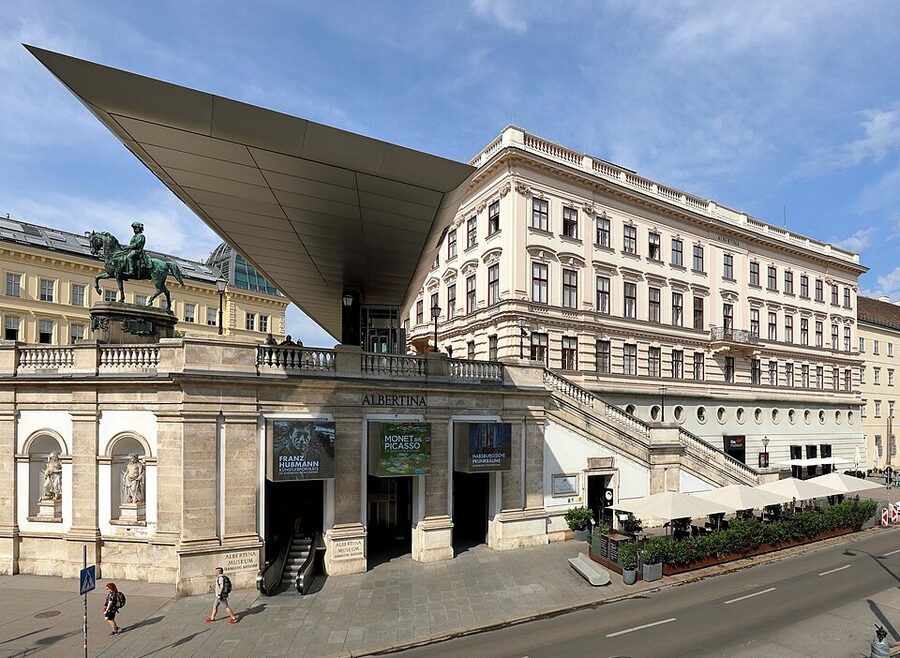
You start at the State Opera House and walk the colonnade past the stage door. The Albertina is the next stop, sitting on a raised terrace above the road. Most guides won’t take you inside, since that’s a separate ticket, but they’ll point up to the equestrian statue of Archduke Albrecht and the wall fountain underneath. The fountain is themed around the Danube and her tributaries. The terrace at the front of the Albertina has the best free view back at the opera house.
Augustinerkirche and Josefsplatz
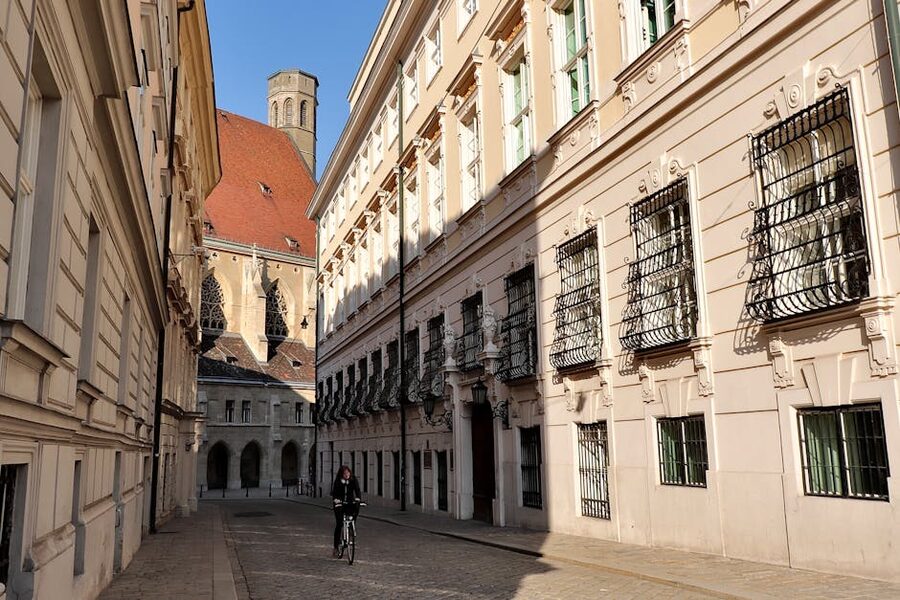
You’ll walk down Augustinerstraße past the side of the Augustinerkirche. This is the church where Sisi married Franz Joseph in 1854, where Maria Theresa got married, and where Napoleon’s wedding to Marie Louise of Austria happened in 1810 with Napoleon himself absent. A good guide will tell you that proxy weddings were apparently a thing for emperors and saved a lot of dry cleaning. A bad guide will just say “another famous church.”
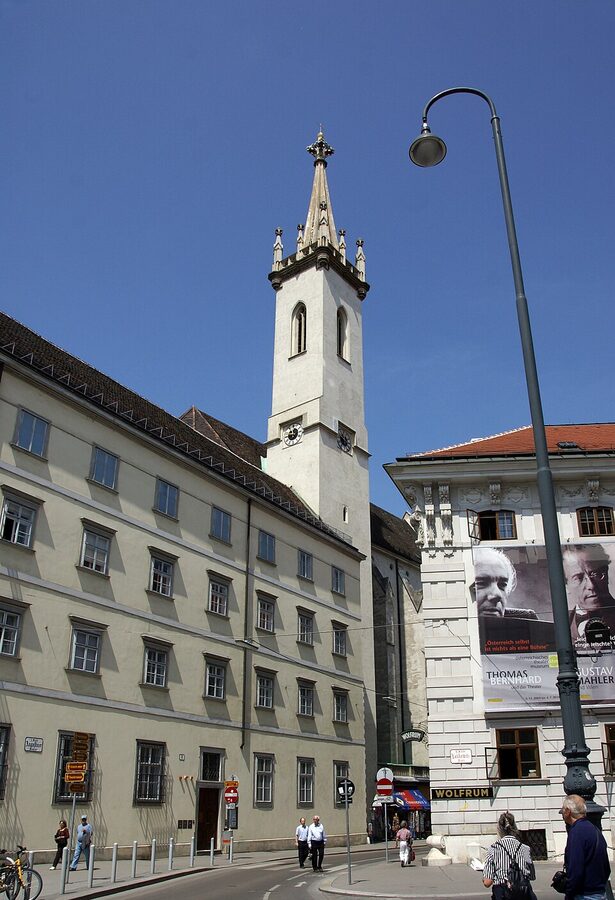
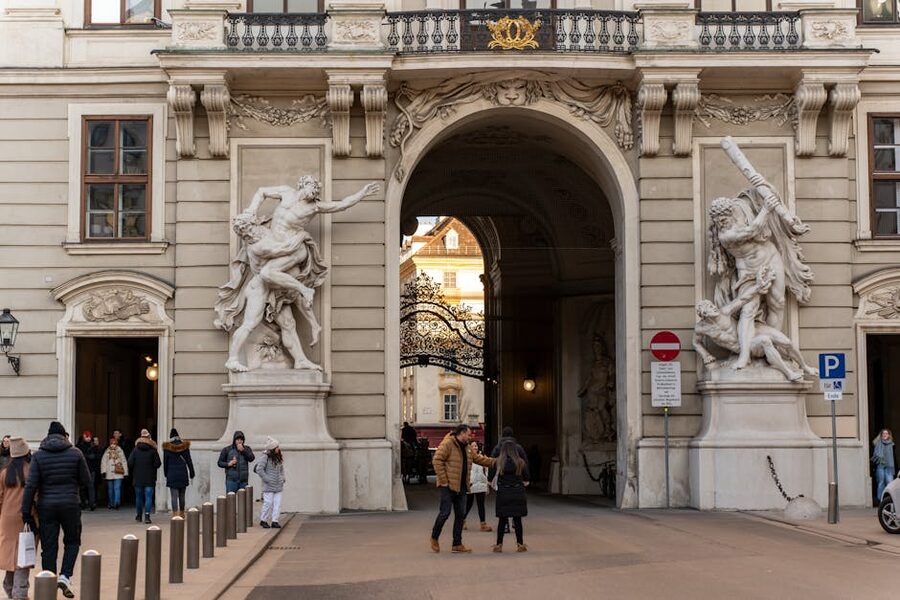
Josefsplatz comes right after. The square hasn’t changed shape in over two centuries. National Library is on one side, Palais Pallavicini on the other (the building Harry Lime “died” outside in The Third Man), and Joseph II on horseback in the middle. If your guide doesn’t mention the Third Man connection, they’re missing a beat.
Stallburg and the Hofburg
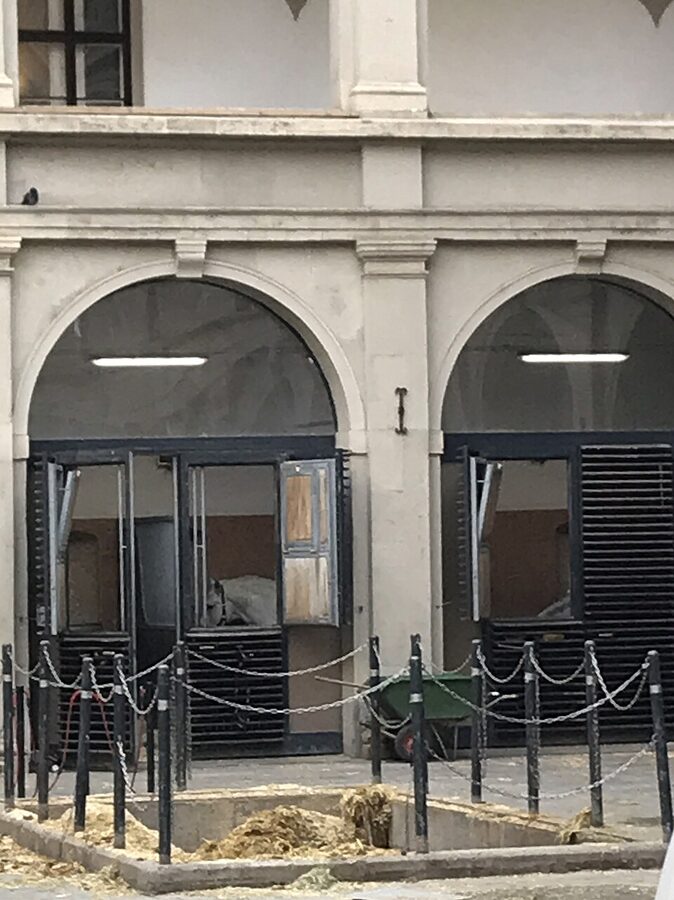
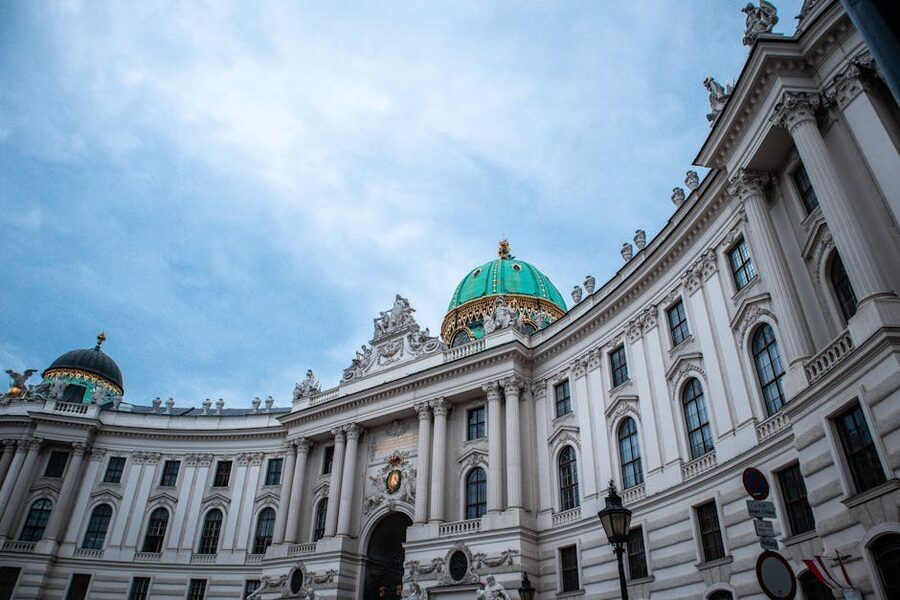
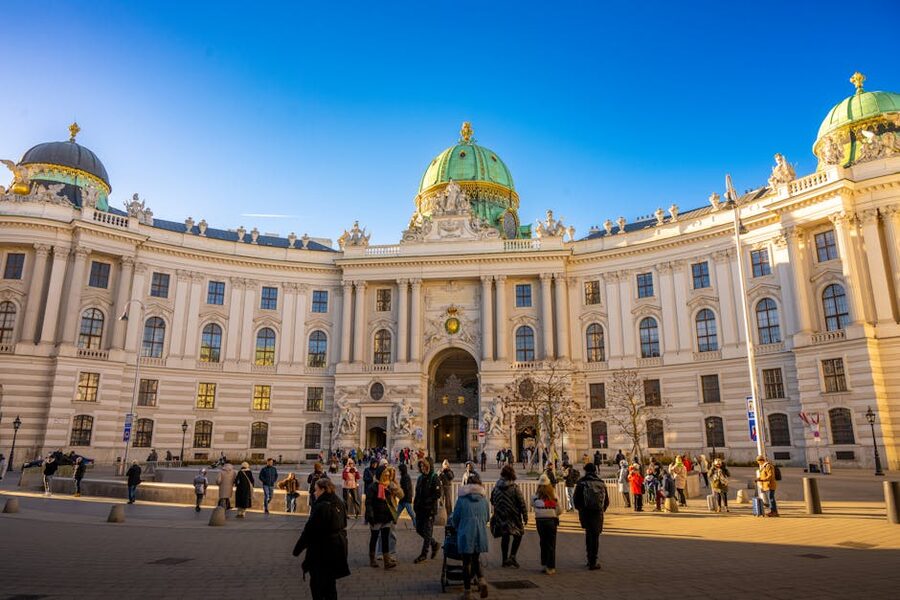
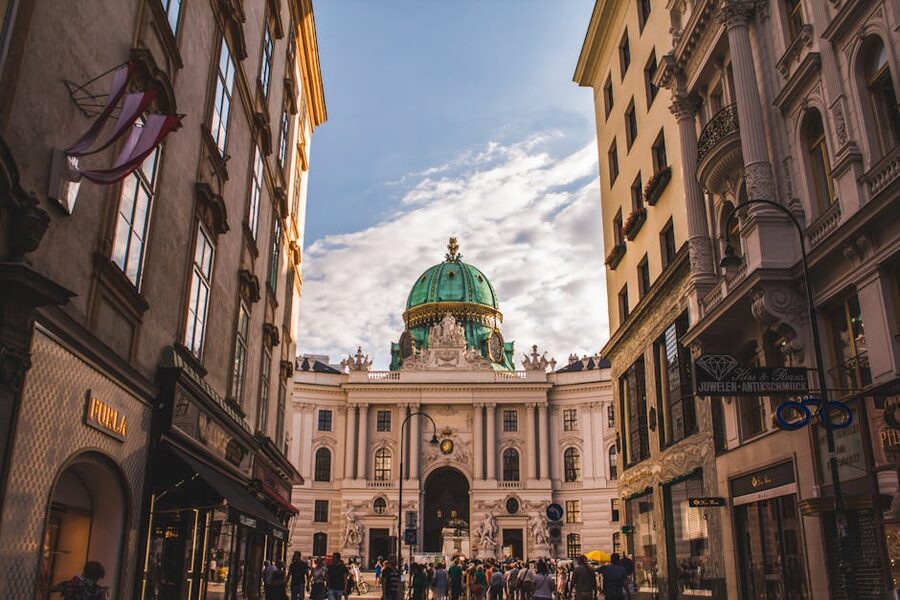
From Josefsplatz you go through the archways to the Stallburg stables, which still house the Lipizzan horses of the Spanish Riding School. If you can hear hoofbeats coming from the courtyard, you’re walking past at training time. From there it’s into the main Hofburg complex. The whole thing adds up to a small town’s worth of palace, built over six hundred years by emperors who all wanted to add a wing.
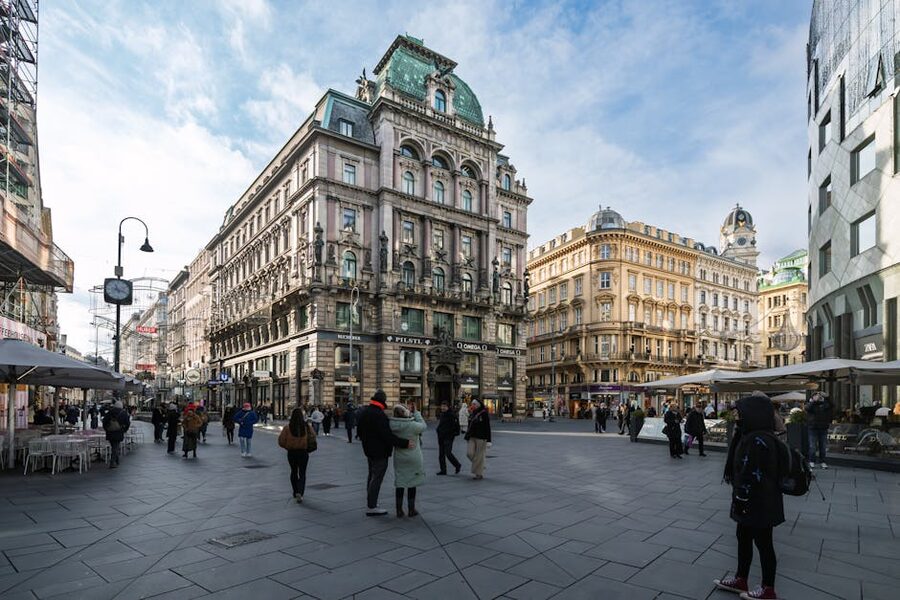
Graben and the Plague Column
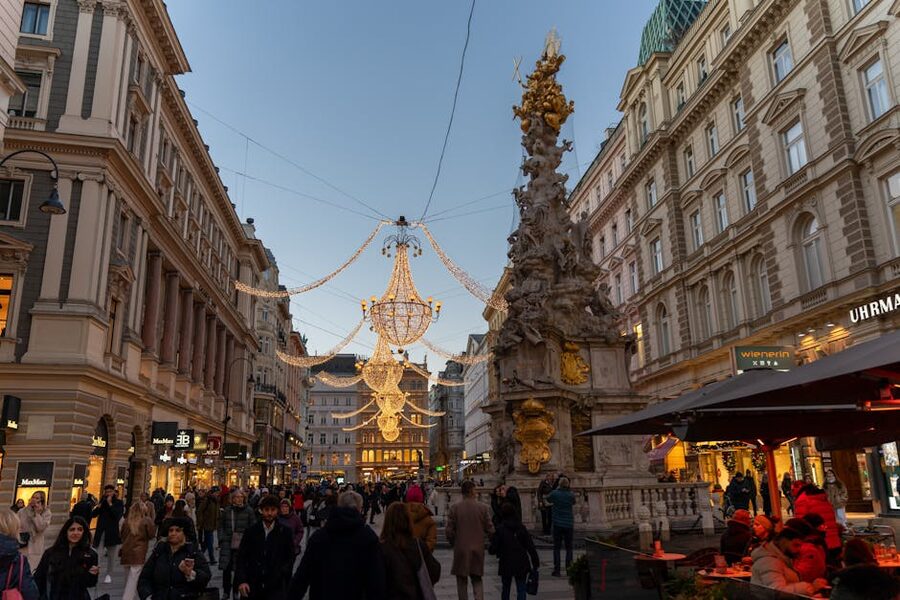
You exit the Hofburg through Michaelerplatz, where the Roman ruins are visible through a glass floor (your guide will probably point at them). Then it’s onto Kohlmarkt and Graben, the city’s main pedestrian shopping street. The Pestsäule is the gold-and-white plague column near the middle of Graben. Built in the 1690s by Emperor Leopold I as thanks for the plague ending, which he’d promised God if it would kindly stop killing his subjects.
Stephansplatz and the cathedral
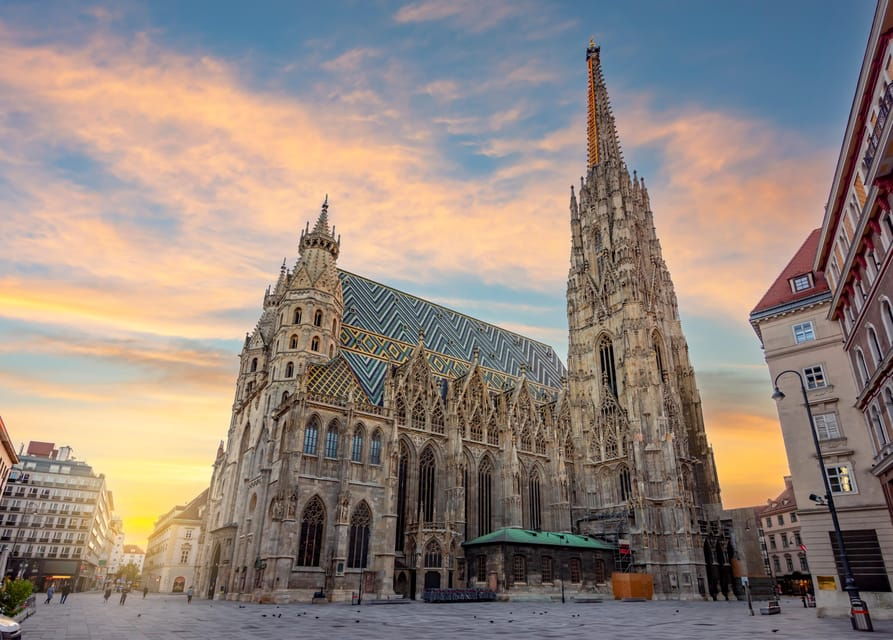
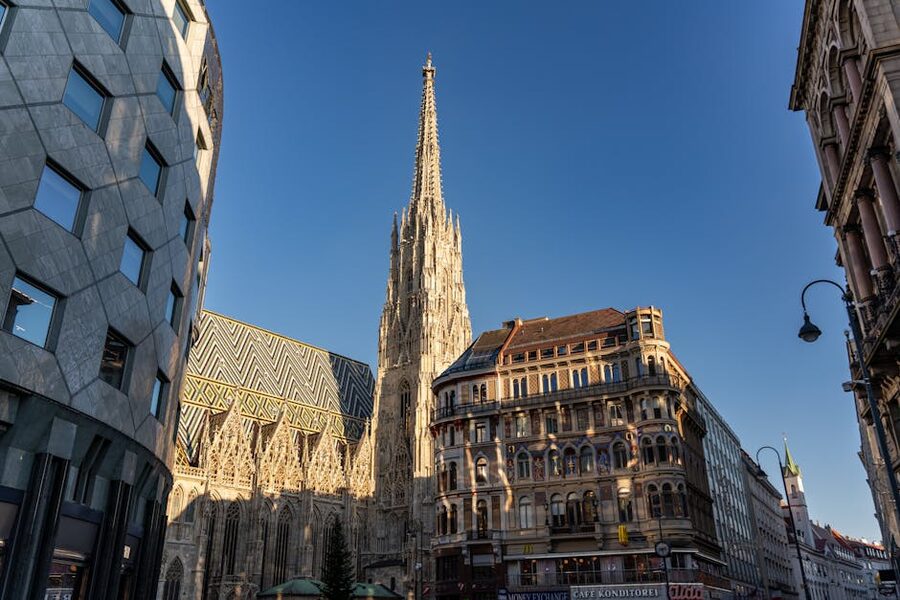
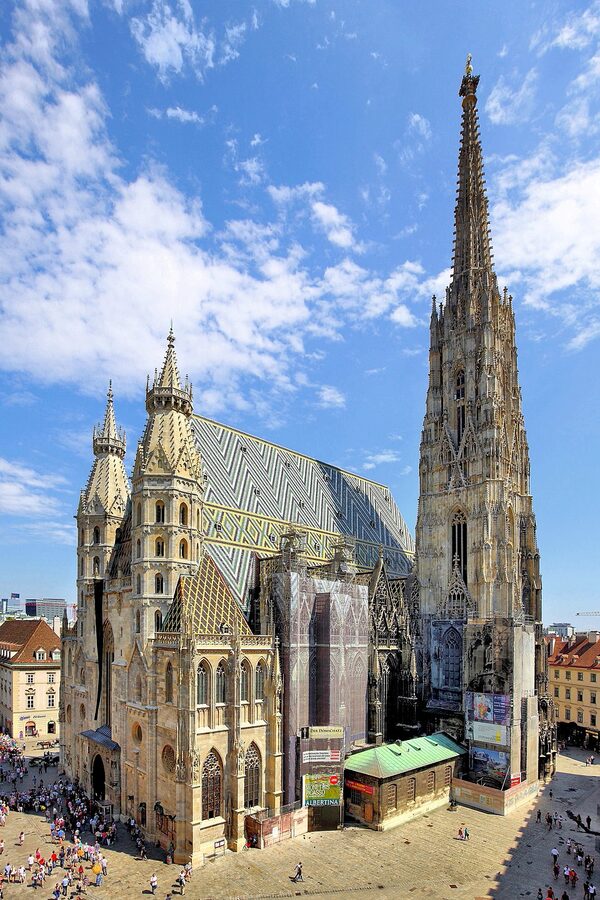
The walk usually finishes at Stephansplatz, in front of the cathedral. Most tours stop here because it’s easy to find your way back from. Stephansdom itself is the most ornate Gothic building in Austria, but you can’t really see the roof from the square. The patterned ceramic tiles are hidden by the building itself. Your guide will know the trick: walk back twenty steps to the Haas Haus glass cube and look at the cathedral’s reflection in the windows. That’s the angle that shows the roof.
Free Walking Tour or Paid? An Honest Take
The Sandemans free walking tour and similar tip-based options have a real argument going for them. They’re free at the point of joining, the guides are usually energetic (they live on tips, so they perform), and the routes are roughly the same.
The downsides are also real. Group sizes are huge, sometimes 30-40 people, which means you’re chasing a guide through narrow streets and missing half of what’s said. The guides are often not licensed Austrian tour guides, which matters less for vibe and more for accuracy on dates and names. And you’ll feel real pressure to tip €15 at the end, so the “free” part isn’t quite free.
For my money the paid two-hour at $25 is the better deal. Smaller group, licensed guide, no awkward tip ritual. If you’re on a tight budget though, the free tour is genuinely fine for a first overview.
When to Book and What Time of Day to Pick
The standard tours run multiple times a day in summer (April through October) and once or twice a day in winter. Off-peak you can usually book the day before. In high season (June, July, August, plus the December Christmas market window) book three or four days ahead. The good guides fill up first.
Time of day matters more than people realise. The 9 AM and 9:30 AM slots are the best in summer because you walk before the heat and the tourist crowds peak. In winter the late morning (10:30-11 AM) is more pleasant because the temperature has come up. Late afternoon tours in summer are the worst. Sun glare on the limestone facades, hot pavements, and Stephansplatz heaving with tour groups.
What a Guide Actually Adds
The free version of any Vienna walk is to print a self-guided route from a blog and follow it. Plenty of solid ones exist. So why pay?
You pay because of the small things you can’t read off a building. The fact that Empress Maria Theresa kept track of her sixteen children on a daily report card and graded their behaviour. The story of Beethoven living in eighty different apartments around the city centre because he kept getting evicted. The reason the Pestsäule has a kneeling figure in front of it (Leopold I, paying off his bargain with God). The Italian-sounding name “Augarten” meaning “old garden” in Viennese dialect. None of this is particularly important. All of it is what you pay for.
A bad guide reads facts off a card. A good guide tells you why those facts mattered to the people who lived through them. The difference between the $25 tour with the tired guide and the $27 tour with the small-group operator is usually exactly that.
Two Stops the Standard Tours Skip (Worth Adding On)
Two short detours that most two-hour tours leave out, but you can do solo before or after.
The Anker Clock at Hoher Markt
The Ankeruhr is a 1914 art nouveau clock spanning two buildings on Hoher Markt. Twelve historical figures rotate across the face on the hour, one per hour, accompanied by appropriate music. At noon all twelve do a parade together. It’s worth ten minutes if you’re already in the area.
Hofburg’s southeast facade reflection
Most groups walk the front of the Hofburg and never circle round to the southeast side, where the facade reflects in the long pool of the Burggarten. Five-minute walk from Heldenplatz. One of the better photos in the city and there’s almost never anyone there.
What to Wear and How Tough the Walking Actually Is
The Innere Stadt is flat. There are no hills. The total distance on a standard two-hour tour is roughly three kilometres, but you stop a lot, so it doesn’t feel like that.
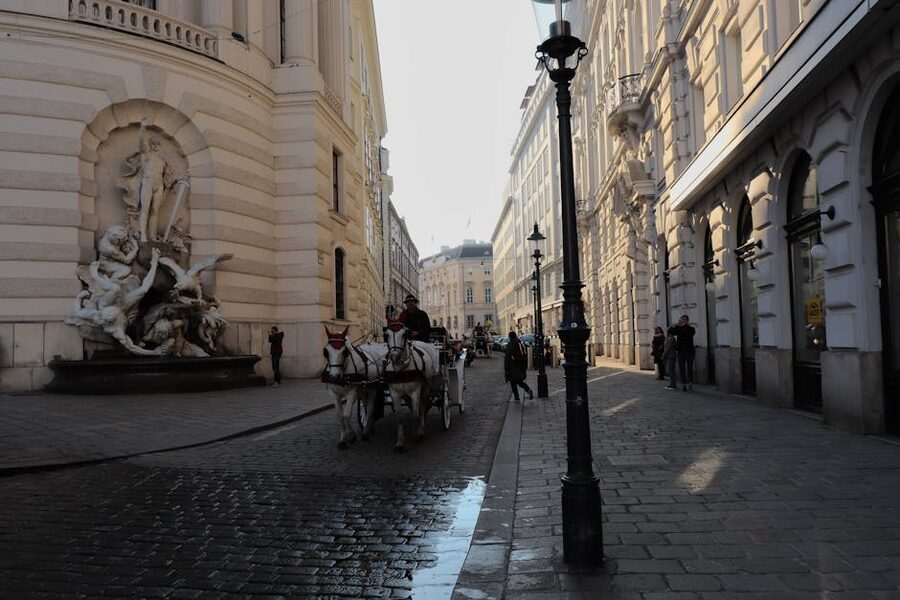
The pavement is a mix of smooth cobble (most squares), uneven cobble (some side streets), and modern paving. Old cobble after rain is genuinely slippery, so flat shoes with grip matter more than how comfortable they look. Leather-soled boots are a bad idea on wet stone.
Layers in spring and autumn. The wind funnels through the narrow streets and it can be ten degrees colder in shadow than in sun. Bring water in summer. There are public fountains marked on the city map, free to refill, and the water is famously clean (it comes from Alpine springs and Vienna is proud of that).
If You Already Know Vienna
If this is your second or third visit and you’ve done the standard highlights walk already, three different angles work better than another orbit of the Innere Stadt.
One: a thematic walk. Vienna does Jewish-history walking tours, Sigmund Freud walks, Third Reich walks (less developed than Berlin’s, but they exist), and Beethoven walks. Smaller operators on Viator and Airbnb Experiences run these.
Two: pair the walk with something inside a building you’ve only ever seen the outside of. The Sisi-museum-and-Hofburg combination is the obvious one. See our Hofburg and Sisi guide for tickets. Or the Belvedere for the Klimt rooms. Or a Spanish Riding School morning training session, which is the opposite of a walking tour but covers ground emotionally.
Three: take the same time you’d spend on a Vienna walk and put it on a day trip instead. The Hallstatt day trip is the classic move. It’s a full day, but you’ve already seen Vienna so the trade is sound. Closer to home, Schönbrunn deserves its own half day if you haven’t done it (our full guide is here).
Mistakes I See People Make
Booking the wrong day. Many tour pages show “available daily” but mean “we’ll run if four people sign up.” Off-season Mondays and Tuesdays sometimes get cancelled. Book mid-week or weekend in winter to avoid the disappointment email at 8 PM the night before.
Doing a walk on arrival day. You’re tired, you’re carrying a daypack you didn’t need to bring, and your concentration is half-gone. Save the walking tour for day two when you’ve slept and you’ve eaten. The information sticks better.
Booking the longest tour. Three- and four-hour tours exist. They’re usually cheaper per hour and they cover more ground. Most people are exhausted by hour two regardless. The two-hour standard is two hours for a reason.
Treating the tour as the whole experience. A walking tour is the orientation. The actual experience is going back to half the places afterwards on your own time, in better light, at your own pace. Free tours work especially well here because you can come back to anything that interested you.
Pairing the Walk With the Rest of Vienna
The walking tour is usually day-one activity. The right day-two depends on what you liked. If the Habsburg story grabbed you, go inside the Hofburg next. Our Sisi Museum guide is the place to start, and the Belvedere closes the loop with Klimt’s Kiss. If the Augustinerkirche made you want to hear what the music sounds like in a Vienna church, our classical concerts roundup picks the venues that aren’t tourist-trap blockbusters, and the Mozart-themed concerts guide tells you which ones are worth the costumes and which aren’t.
Schönbrunn deserves its own half-day. See the Schönbrunn guide for ticket types and timing. The Spanish Riding School is harder to slot in because the morning training is mid-morning weekdays only, but if your Innere Stadt walk took you past the Stallburg, you’ve already glimpsed the building.
If you’re doing the Central European triangle, Prague and Budapest are both four-hour train rides from Vienna. The Prague Old Town walking guide is the closest equivalent there. Different city, similar shape of tour, and your Vienna instinct for spotting the right one will transfer. Budapest’s Buda Castle walking tour sits on a hilltop instead of a flat old-town grid, so the muscle requirements are different. Worth knowing before you book back-to-back walks across three cities.
For a clean break from cities and palaces, the Hallstatt day trip takes most of a day but gets you a proper Alpine reset. Day three is usually about right for it.