
Eight in the morning you’re walking past Wenceslas Square with a coffee, surrounded by trams and tour groups and Art Nouveau facades. By eleven you’re standing on a sandstone bridge a hundred and fifty metres above the Elbe, with no city in sight in any direction. That gear-change is the whole point of this day.
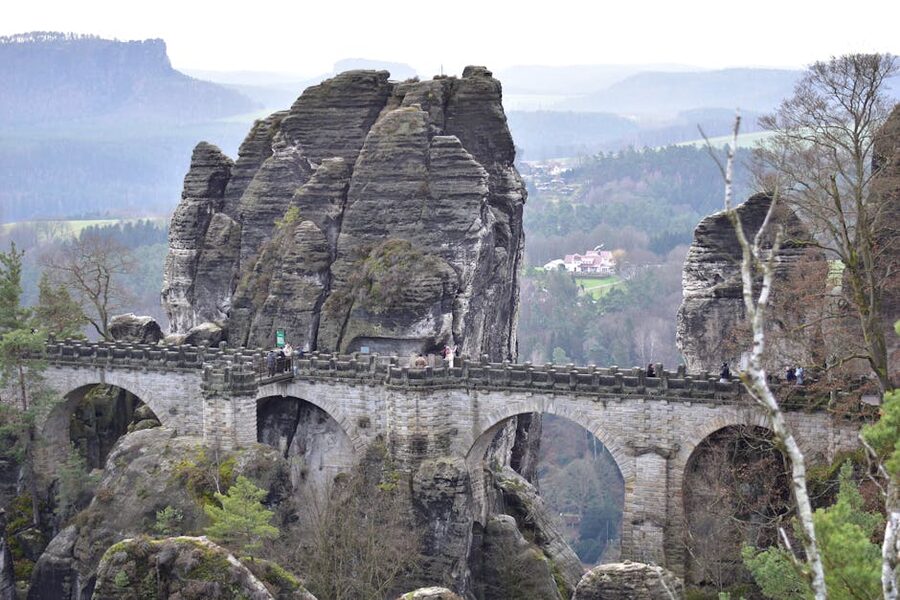
This is the day trip Prague visitors keep coming back to talk about. One day, two countries, the biggest sandstone area in Europe. Below is how the booking actually works, which tour shape fits which traveller, and the parts the marketing pages skip.
- In a Hurry?
- What You’re Actually Going to See
- How the Booking Works
- The Three Tours Worth Booking
- 1. Northern Hikes Small Group Day Trip: 9
- 2. Best of 2 Countries in 1 Day by Bohemia Adventures: 5
- 3. From Prague: Bohemian and Saxon Switzerland Full-Day Tour: 0
- Doing It On Your Own
- What to Bring
- Best Time of Year
- The Pravčická Gate Climb
- The Bastei in Practice
- How This Day Compares to the Other Prague Day Trips
- The Photographs Everyone Takes
- Saxon Switzerland in Winter
- The Climbing Scene
- What I’d Do Differently Next Time
- Pairing This With the Rest of Your Prague Trip
In a Hurry?
If you only have a minute, these are the three I would actually book.
- Northern Hikes Bohemian and Saxon Switzerland small group: $149. The most-reviewed of the lot and the one I’d pick first if hiking is the point. Check availability.
- Bohemia Adventures Best of 2 Countries in 1 Day: $145. The classic itinerary with the boat ride, slightly bigger groups, slightly cheaper. Check availability.
- Cayman Travel full-day on GetYourGuide: $150. Same headline stops, runs on GYG with free cancellation up to 24 hours. Check availability.
What You’re Actually Going to See
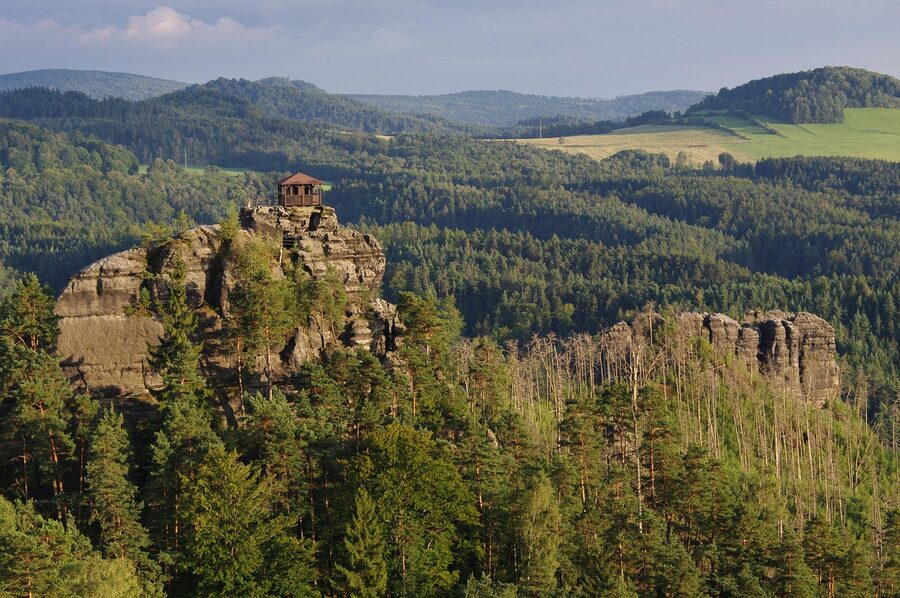
The day is built around four set-piece moments and the walk that links them. Three are on the Czech side (Bohemian Switzerland), one is over the border in Germany (Saxon Switzerland). The drive from Prague is roughly two hours each way.
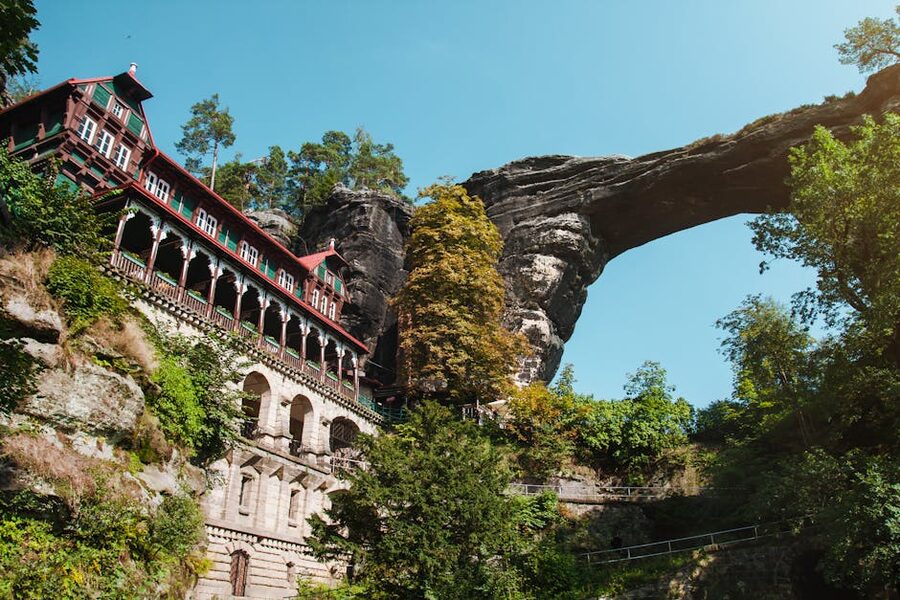
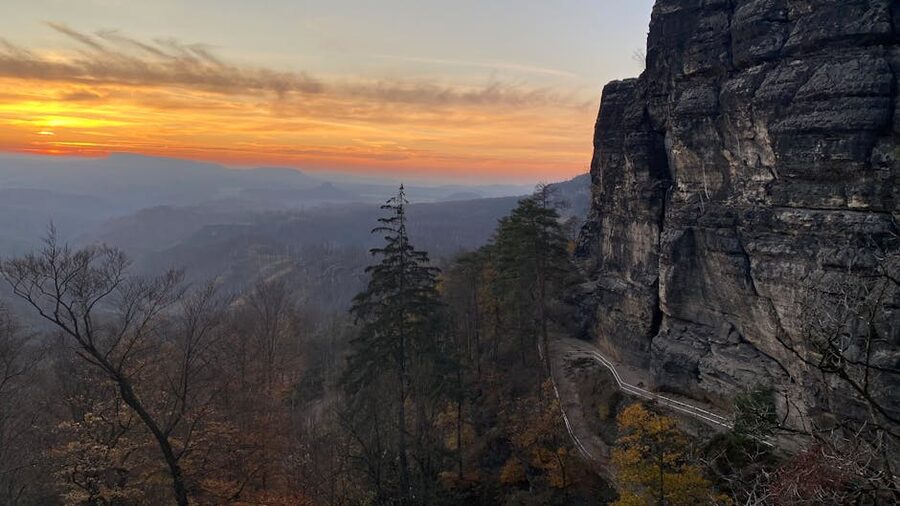
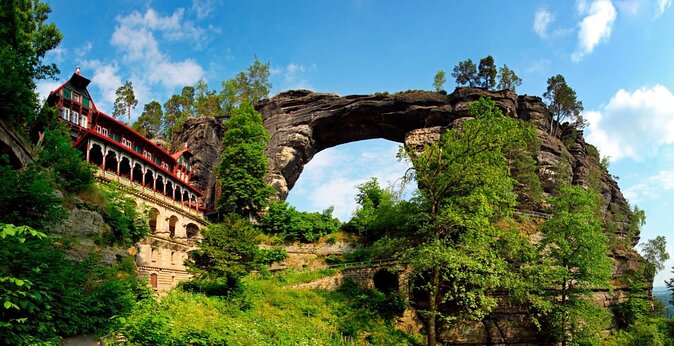
The first stop is Pravčická Brána, the largest natural sandstone arch in Europe. It’s a thirty-minute uphill walk from the trailhead at Hřensko. Yes, the Chronicles of Narnia film crew used it. No, you can’t walk on the arch itself any more, but the lookout terraces around it are the best photograph of the day.
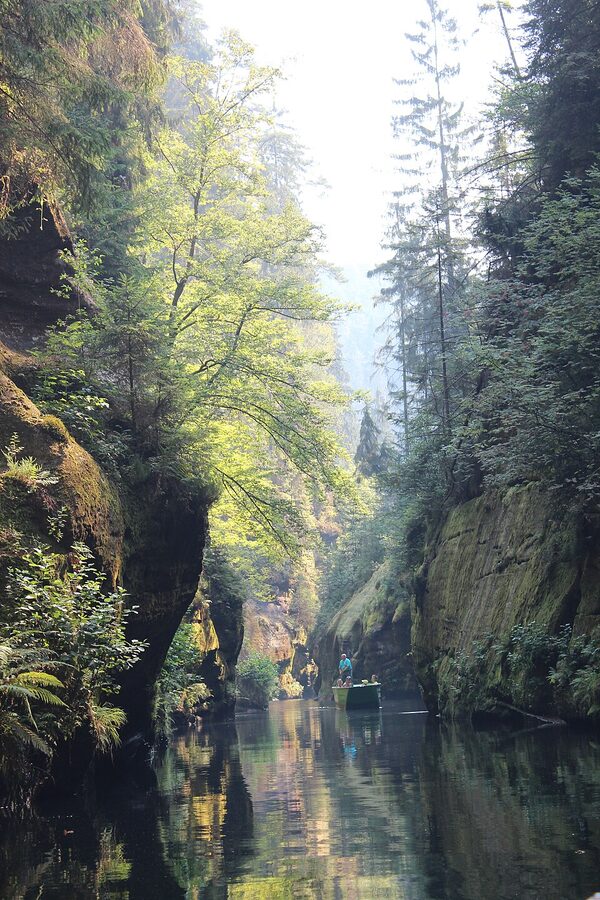
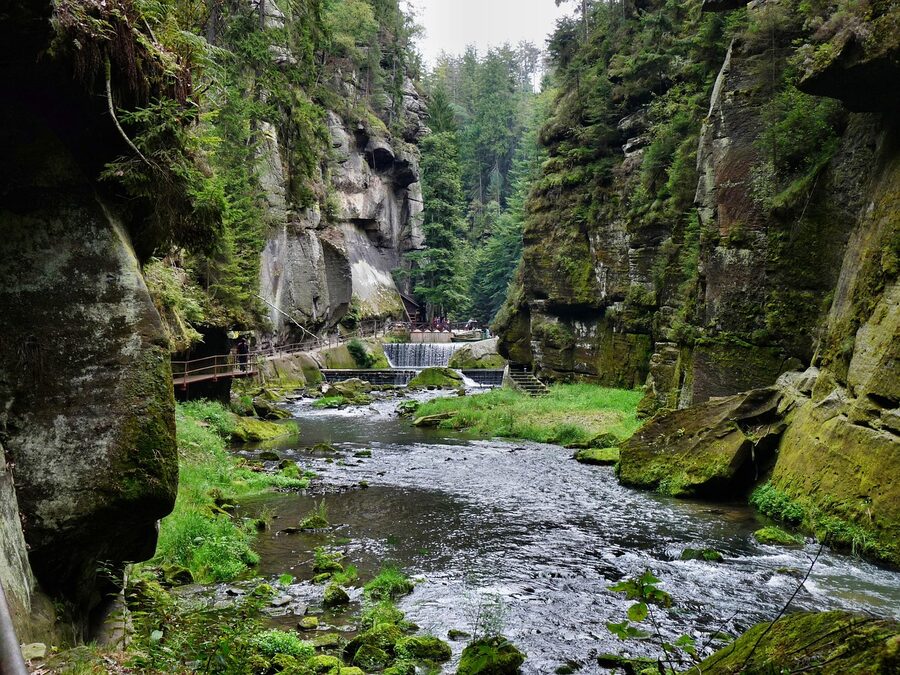
From there the tour drops you into the Kamenice Gorge for a boat ride. This is the bit that catches everyone off guard. The river runs through a slot canyon so narrow the trail just stops at the water. A ferryman in a flat-bottom punt poles you through, the way it’s been done for two hundred years. The water is glass, the walls are vertical, the boatman tells the same jokes he tells every group, and it’s still one of the best half-hours of the day.
Then lunch, usually at a riverside spot in Mezní Louka or Hřensko. Then the bus crosses into Germany. Forty minutes later you’re at the Bastei.
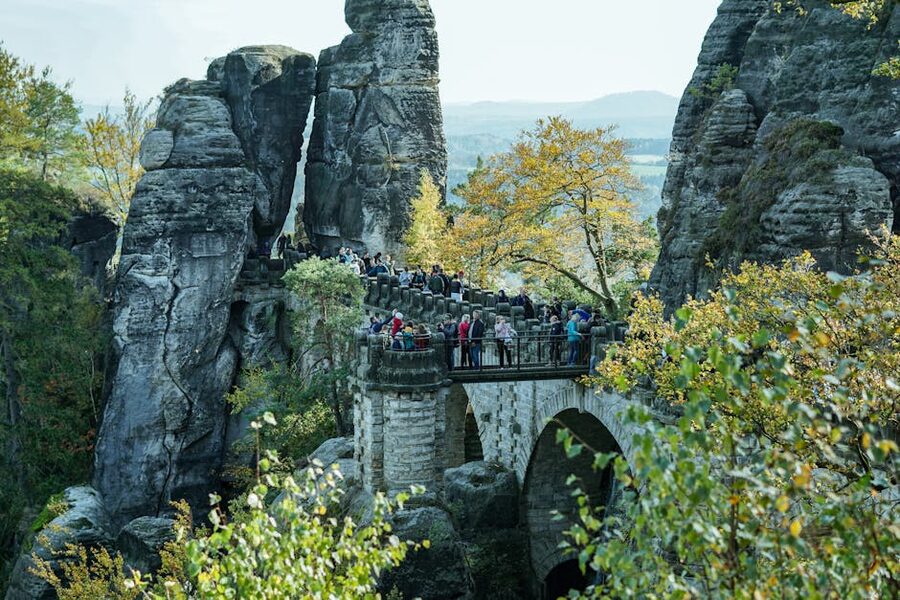
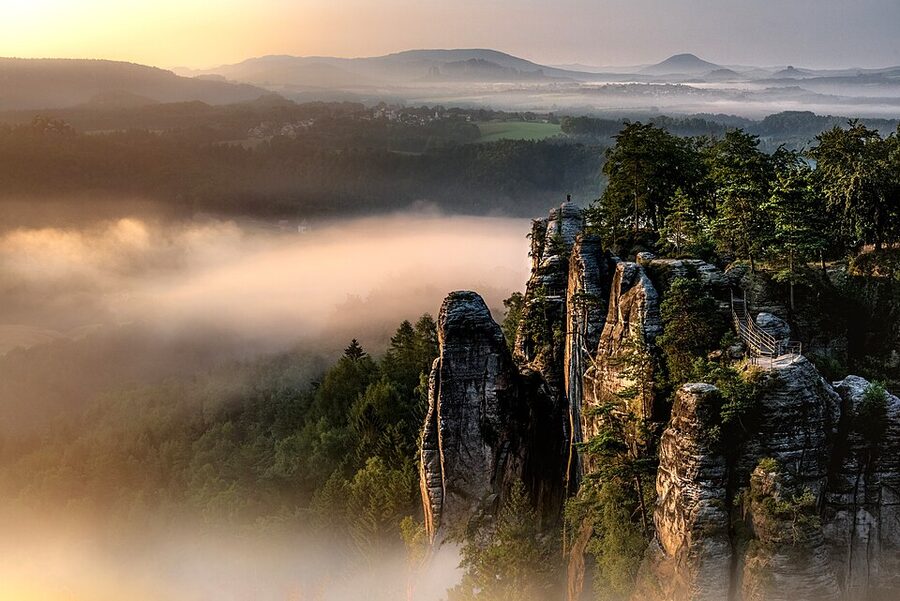
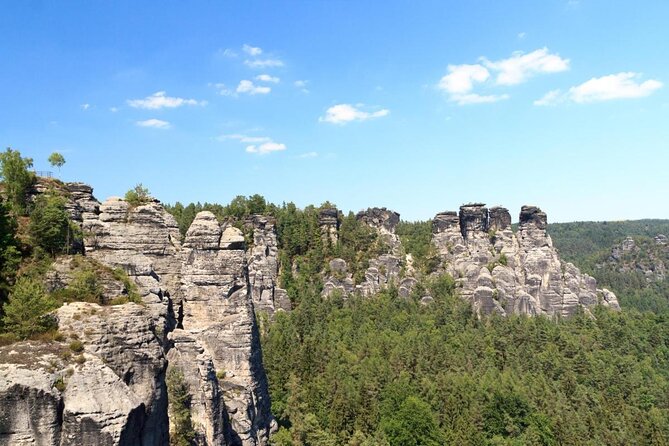
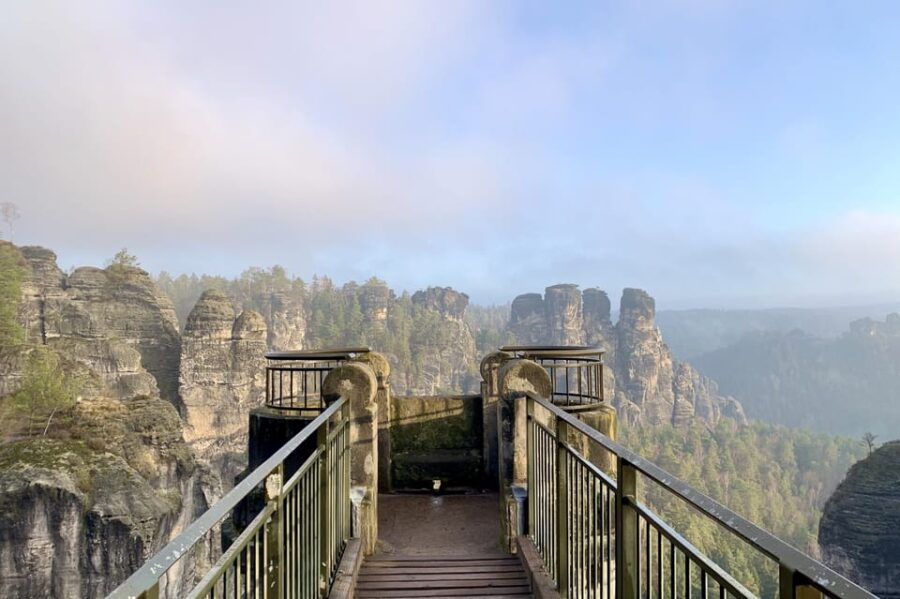
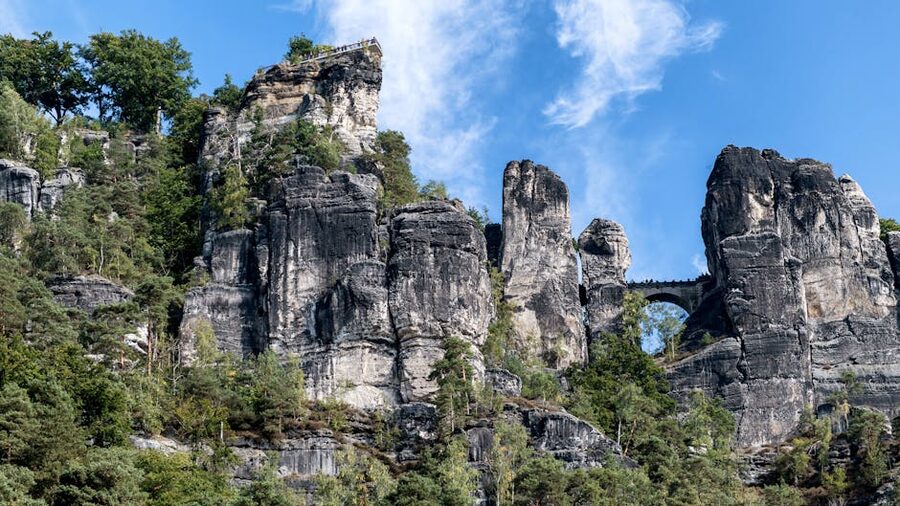
The Bastei is the headline image for the whole region. It’s a stone bridge built in 1851, replacing an earlier wooden one, that connects a string of sandstone pinnacles on the German side. The lookout platforms across it stare straight down a hundred and ninety-four metres into the Elbe valley. There’s also a medieval rock fortress, Felsenburg Neurathen, tucked into the cliffs next to it. Most tours give you about ninety minutes here, which is enough to walk the bridge, hit the two best viewpoints, and poke around the fortress ruins.
How the Booking Works
You’re not buying tickets to a venue. You’re buying a seat on a small bus with a guide for the day. There’s no entry ticket to either national park. The boat ride and the Neurathen fortress have small fees included in the tour price.
Most tours run year-round, daily in summer, three or four days a week in winter. Pickup is from a central Prague meeting point, usually around 7:45am, and you’re back in Prague between 7:30 and 8:45 in the evening. Plan the next morning soft.
Three things to settle before you book:
- Group size. The cheaper big-bus tours go up to thirty people. Small-group operators cap at eight to twelve. The difference shows up in how often you stop and how long you wait at the boat queue.
- Lunch policy. Some tours include a sit-down lunch at a Czech restaurant in the price. Others stop at a place where you order off the menu and pay yourself. Read the fine print; “lunch stop” and “lunch included” are not the same thing.
- Hiking distance. The standard itinerary is around 8 km of walking, mostly on good paths with one steady climb to the Pravčická arch. There are easier and harder versions. If anyone in your group has knee issues, ask before you book.
Cancellation policy is the single biggest reason to book through GetYourGuide or Viator rather than a local site. Both give you free cancellation up to 24 hours out as standard. Czech weather in spring and autumn changes inside an hour, and you want the option to bail without losing $150.
The Three Tours Worth Booking
I’ve sorted these by review count, which is the truest signal of how a tour actually runs. Anyone can buy a top-five listicle slot. Three thousand reviews you have to earn.
1. Northern Hikes Small Group Day Trip: $149
This is the operator with the longest track record on this route and the one whose full review I keep sending people. Small groups, Czech guides who actually live in the area, and a sit-down lunch with vegetarian and vegan options included. If the whole reason you’re doing this is to get out of the city with someone who knows the place, this is the one.
2. Best of 2 Countries in 1 Day by Bohemia Adventures: $145
The classic itinerary, run by a Prague operator with twenty-five hundred reviews behind it. Pravčická Brána, the gorge boat, lunch, the Bastei. Our full review goes through what’s included and what’s an upsell. Pick this one if you want the standard route at a slightly lower price and don’t mind sharing the bus with twenty-odd people.
3. From Prague: Bohemian and Saxon Switzerland Full-Day Tour: $150
Run by Cayman Travel and the only one of the three on GetYourGuide rather than Viator. Same stops, same hike, same boat. The 4.7-star rating is a hair below the others, but the review reads clean and the pickup logistics are well handled. Book this one if you’re already inside the GYG ecosystem or want their cancellation flexibility.
Doing It On Your Own
You can absolutely do this without a tour. The public transport from Prague to Hřensko or Mezní Louka is good and cheap. Train to Děčín, then bus 434 along the Elbe to Hřensko, total around two hours and roughly $15-20 each way. From Hřensko you walk up to the Pravčická arch, do the gorge boats, and either turn around or push on across the border to the Bastei via local transport on the German side.
The catch is the Saxon side. To do both Bohemian and Saxon Switzerland in a single day on public transport, you really need to start before 7am, know the bus schedules in two countries, and accept that you’ll see the Bastei in late afternoon light when the platforms are at their most crowded. Doable, exhausting, mildly stressful, and not noticeably cheaper than the tour once you add lunch and the cross-border transit.
If you’re confident with European public transport and want a quieter day, do just the Bohemian side independently and skip Saxon entirely. Spend the saved hours on the Tichá and Divoká soutěska gorges back-to-back, eat lunch in Hřensko, and you’ll see more of the Czech park than the tours show you.
What to Bring
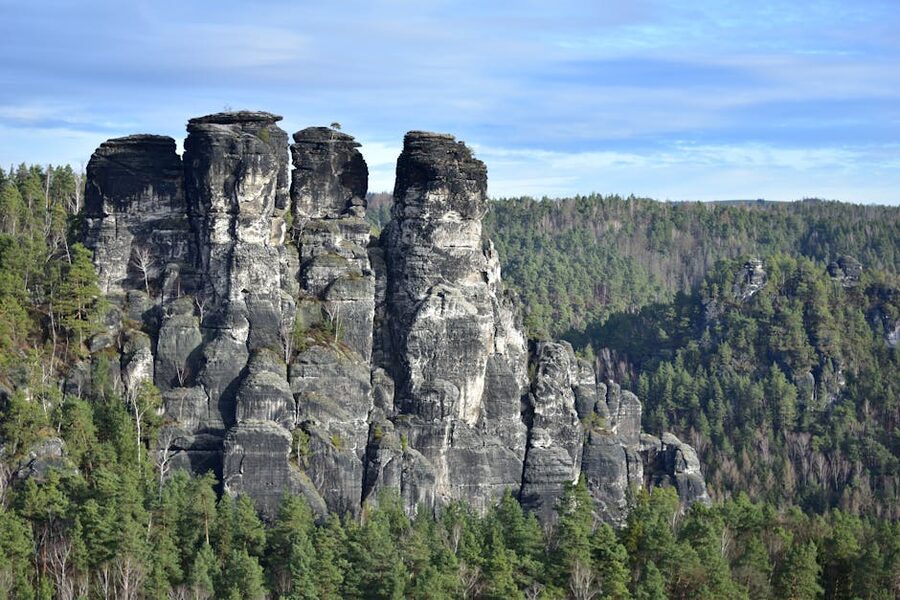
Three things people forget. A passport, because you’re crossing into Germany and the bus driver might be asked for them at random; in practice they almost never check, but bring it anyway. Cash in koruna and euro, because the boat ferrymen and a few of the kiosks at the Bastei don’t take cards. And waterproof shoes with grip, because the gorge floor is damp year-round and the rocks are polished smooth where ten thousand boots a day have been over them.
Skip the hiking poles. The trails don’t need them and they’re a pain on the boat.
Best Time of Year
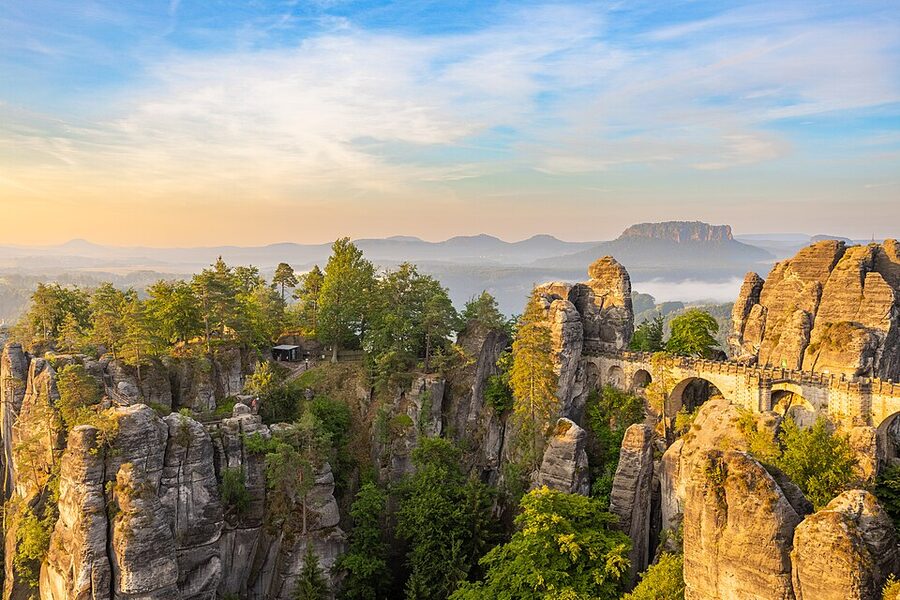
May, June, September and early October are the sweet spot. The boats run, the trails are dry, the leaves are doing something interesting, and you’re not melting on the climb up to the arch.
July and August are the busiest. The Bastei platforms get genuinely packed and you’ll queue for the gorge boats. The light’s still good, the waterfalls are at their lowest, and the operators all run double trips. Book a small-group tour or accept that you’re sharing the photos.
November to March, the boats stop running. Some operators still go for a hiking-only version that swaps the gorge for a longer forest walk. Snow on the sandstone is genuinely beautiful and you’ll have viewpoints to yourself, but check the forecast and confirm with your operator that the tour is still running and that it is the winter variant rather than the standard summer route.
The Pravčická Gate Climb
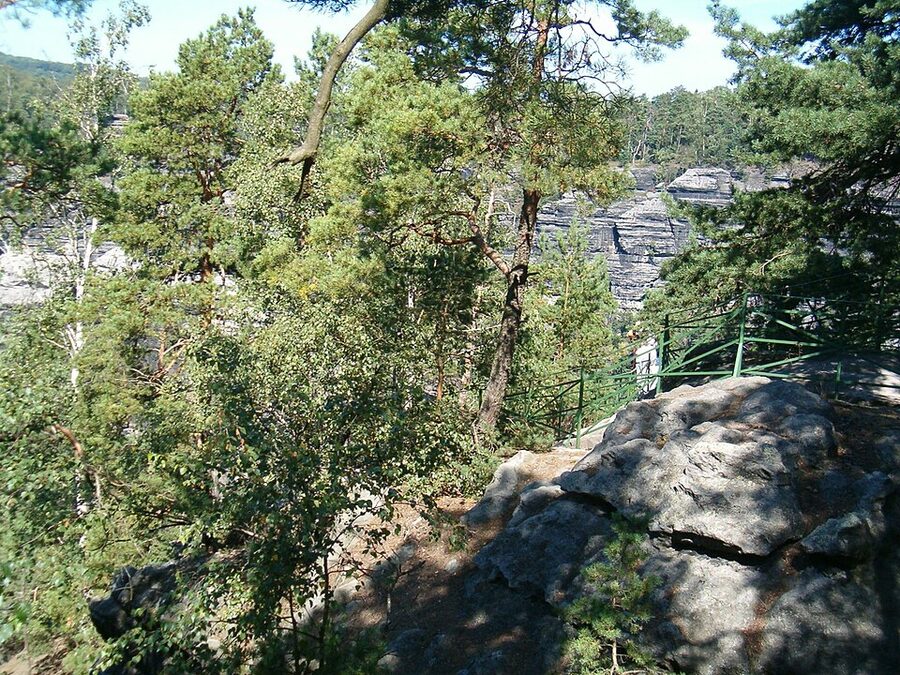
The walk from the Hřensko trailhead to the arch is about 1.5 km uphill, with around 250 m of elevation gain on a stepped forest path. Most groups take 35-45 minutes up. There’s a small entrance fee (about €4 in 2025 prices, included in tour bookings) and a 19th-century guesthouse called the Falcon’s Nest tucked underneath the arch that serves coffee and beer.
You can no longer walk on the arch itself. They closed it decades ago to stop further erosion of the soft sandstone. The viewing terraces around it more than make up for it. There’s a side trail that loops behind the arch and back down a different way; ask your guide if there’s time.
The Bastei in Practice
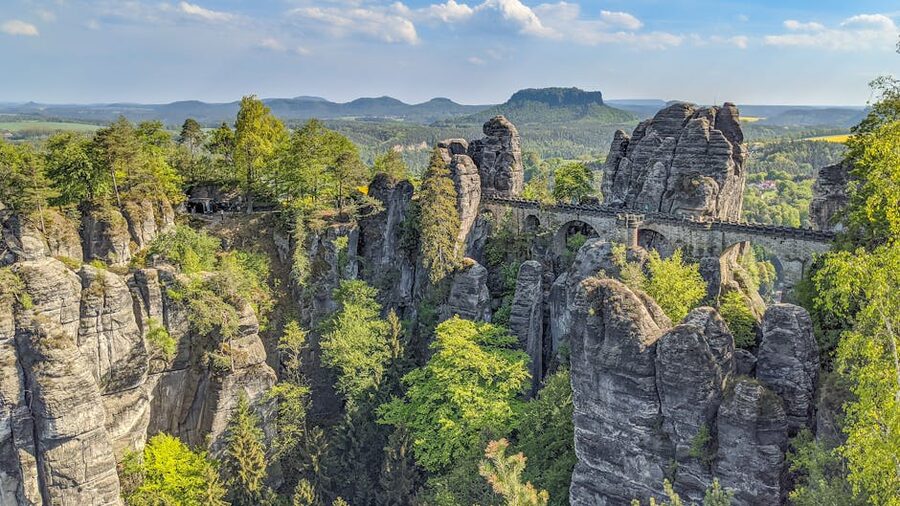
The Bastei is free to walk on. There’s a small parking and shuttle bus operation up from the village of Rathen on the Elbe, and a separate fee (a few euros) to enter Felsenburg Neurathen, the rock fortress next door. Both are usually included in tour packages.
The viewpoint people remember most is the Ferdinandstein, a small rock tower past the bridge with an iron railing on top. From there you see the bridge with the Elbe behind it. The other angle worth chasing is from the bridge itself looking down at the Lokomotive rock, a free-standing pillar that genuinely does look like a steam train if you tilt your head.
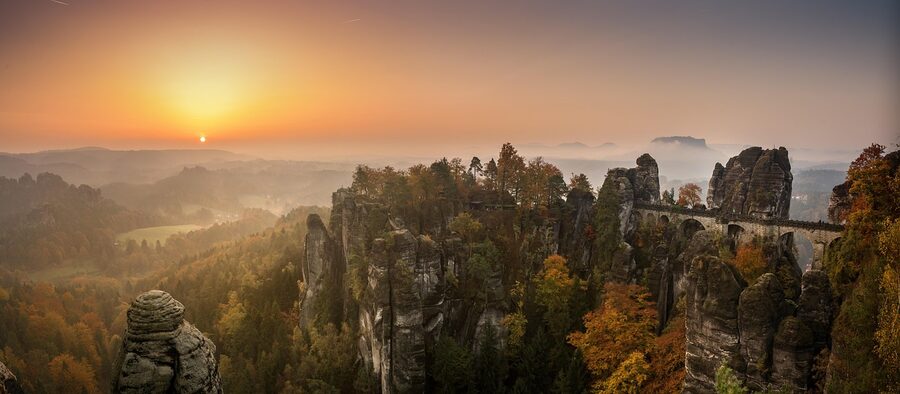
The crowds peak between 11am and 3pm. Tour groups from Prague typically arrive around 2pm, which is the worst possible window. The better operators time their day to hit the Bastei after 4pm when the day-trip coaches from Dresden have already gone.
How This Day Compares to the Other Prague Day Trips
People doing a longer Czech trip usually pair this day with one of three others, and the three feel completely different. Český Krumlov is a fairy-tale Bohemian town, mostly cobblestones and a castle and a river loop, full day, very photogenic, no hiking. Kutná Hora is the bone chapel and silver-mining town, half day, all indoors, Gothic and gloomy in the best way. Terezín is the WWII concentration-camp memorial, half day, heavy and not the kind of trip you skip if you’ve engaged at all with the period.
If I had to rank the four for a first-time Czech traveller, this Saxon Switzerland day is the hardest physically and the highest payoff for nature. Český Krumlov is the prettiest. Terezín is the most affecting. Kutná Hora is the easiest add-on if you only have a half day spare.
If you’re combining this with the German side of the border for a longer trip, the Saxon Switzerland day is also the natural bridge to a Dresden visit. A handful of operators (including Northern Hikes) will pick up from Dresden, which means you can do this as a transition day and finish your evening at a Dresden Elbe cruise or a Night Watchman walking tour instead of the bus back to Prague.
The Photographs Everyone Takes
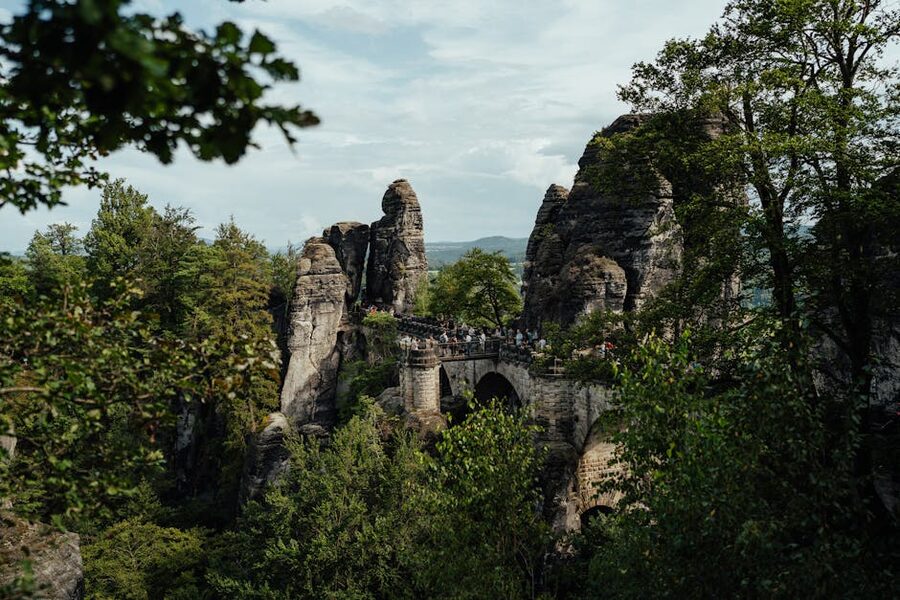
If you only get three photos out of this day, make them: the Bastei from the Ferdinandstein platform, the Pravčická Brána arch from the lookout terraces (not from underneath; the angle’s worse), and the gorge boat from the riverbank just before you board. Phone cameras handle all three fine. The light in the gorge is low so steady your hands.
The shots that don’t come out are the ones from the bridge itself looking down. There’s too much railing, too much glare off the stone, and the scale gets lost. Stand on the rocks beside the bridge and shoot from the side instead.
Saxon Switzerland in Winter
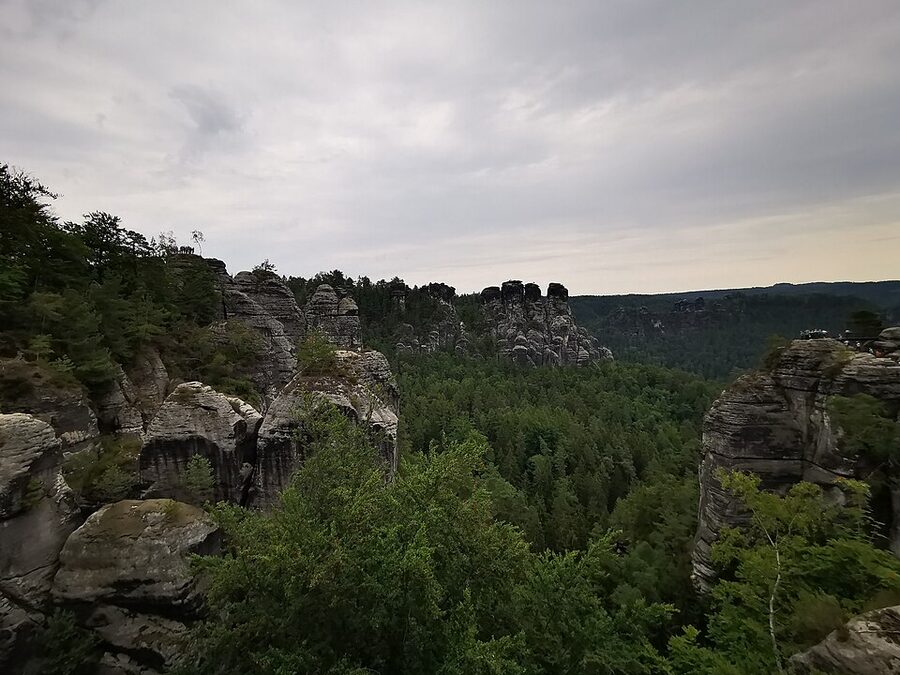
If you’re in Prague between December and February and you still want to do this, it’s possible but it’s a different day. The boats don’t run. The Pravčická arch climb is icy and they sometimes close it after heavy snow. The Bastei is open and free of crowds, and the sandstone with snow caps is genuinely otherworldly.
The winter version is shorter, hike-only, and cheaper. You’ll see fewer set pieces but you’ll have them more or less to yourself. Most operators run a winter variant or pause completely; the small-group operators run more reliably than the big bus companies.
The Climbing Scene
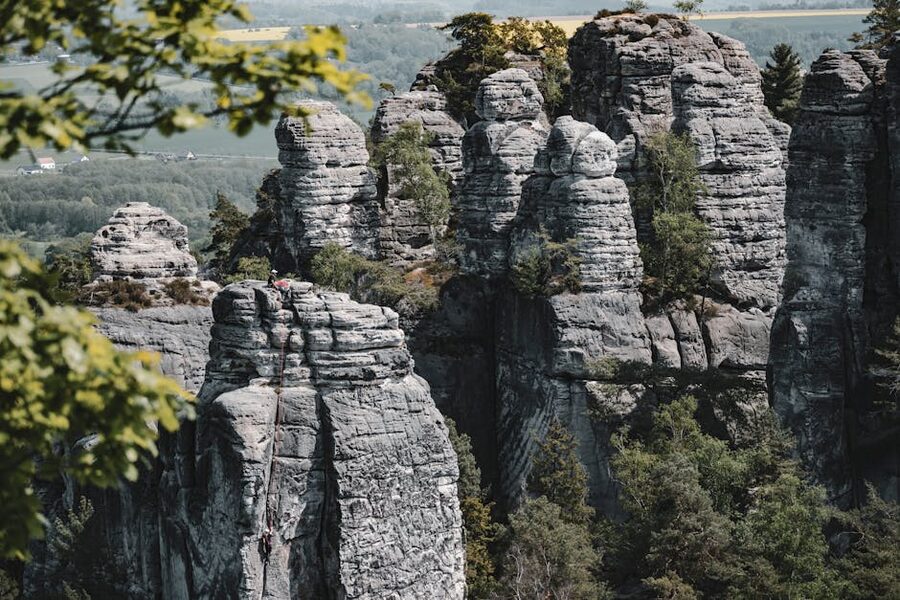
Worth knowing as background: this is one of the great traditional climbing areas in the world. The Saxon climbing rules forbid metal protection and chalk, both for ethics and because the sandstone is too soft for them. If you spot rope teams on the pillars during your day, that’s why their gear looks weird.
You’re not climbing on this tour. But the fact that the locals climb here this way, with hand-tied knot loops and no chalk, tells you something about the relationship people in this region have with their rock. It’s not an attraction to them. It’s a working landscape.
What I’d Do Differently Next Time
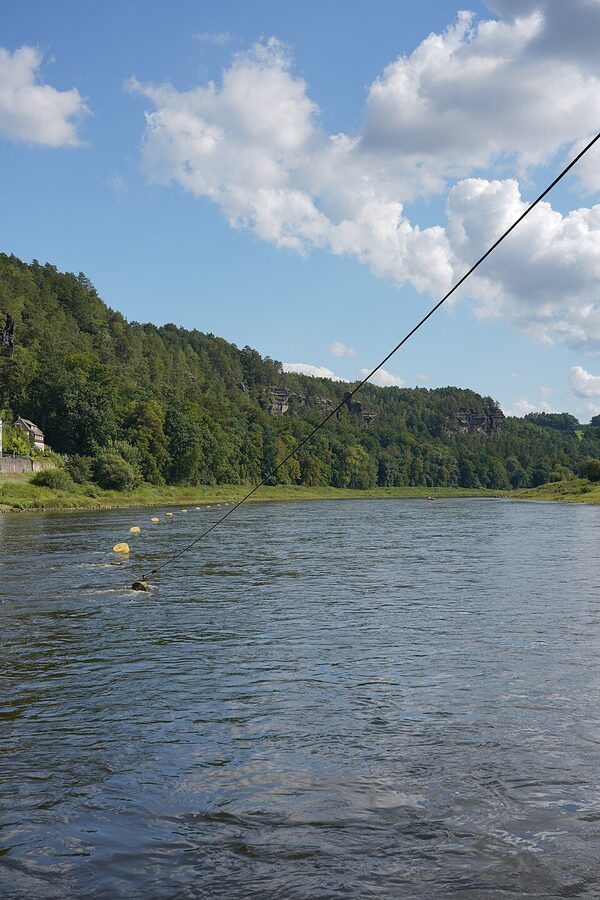
If I was redoing this from scratch with two free days instead of one, I’d skip the day trip and split it. One day for the Bohemian side from Prague, one day for the Saxon side from Dresden, with a hotel night in Rathen or Bad Schandau in between. You’d see more, walk less in a hurry, and get the Bastei at sunrise instead of mid-afternoon.
That said, with one day from Prague, the tour is the right call. You’d spend more on transport doing it independently than you save, you’d miss the gorge boat queue logic, and you’d be navigating two timetables in two countries while tired.
Pairing This With the Rest of Your Prague Trip
This day is best dropped into the middle of a longer Prague stay, not at the start or the end. Day one in Prague should be on foot in the Old Town with a castle visit and a river cruise in the evening. By day three or four, you’ve earned a day out of the city and your legs are warmed up. Save the harder Prague experiences (the longer Old Town walking routes, the late-night ghost tour if you’re into that, the Pilsen brewery half-day) for after this one. The hike will leave you happily wrecked.
If you’ve got an evening to fill on the day you get back, keep it light. A food tour through the New Town with someone else doing the walking is a perfect post-hike unwind. Or skip the tour entirely and find a beer cellar near your hotel; you’ve done enough for one day.