
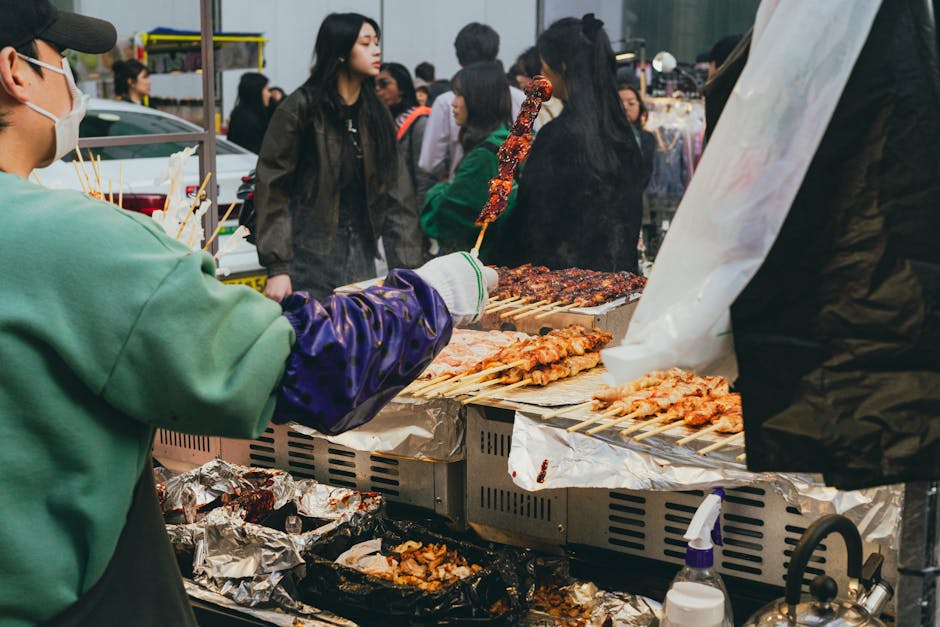
The smell of grilling pork belly hits you first, then the sizzle of batter dropping into hot oil at a bindaetteok stall, and somewhere behind you a table of office workers is clinking tin cups of makgeolli and laughing too loud. Gwangjang Market at 7pm on a Wednesday is, hands down, one of the most sensory dense places I’ve ever eaten in.
I’ve done food tours in Bangkok, Hanoi, Mexico City, and Istanbul, and Seoul still surprised me. Not because the food is better — it’s apples to oranges — but because nowhere else can you go from grilled eel to raw beef tartare to a spicy rice cake hand pie in the space of 200 metres without once feeling like a tourist.
This is my guide to booking a night market food tour in Seoul: which one to pick, what it’ll actually cost, what you’ll eat, and how to do it on your own if you’d rather wing it. I’ve ranked the three tours worth booking based on the real ratings, review volume, and what past guests keep mentioning.
Short on time? Here are my top 3 picks:
Best overall: Seoul Night Market Food Tour (Goodmate Travel, Viator) — $73. The highest-rated pick with 1,226 reviews averaging a perfect 5.0. Covers Gwangjang plus two smaller side markets most travellers never find.
Best GetYourGuide option: Seoul Night Market Food Tour with Local Guide — $73. Same operator, nearly identical itinerary — book this if you already have a GetYourGuide account and want everything on one platform.
Best budget / hidden gems: Seoul Nighttime Hidden Gems Walking Tour — $33. Skips the tourist markets entirely and takes you through Ikseon-dong and the Cheonggyecheon alleys where locals actually drink.
- What a Seoul Night Market Food Tour Actually Covers
- How to Book: Step by Step
- Guided Tour vs DIY: Which Should You Pick
- The Best Seoul Night Market Food Tours to Book
- 1. Seoul Night Market Food Tour (Goodmate Travel, Viator) —
- 2. Seoul Night Market Food Tour with Local Guide (GetYourGuide) —
- 3. Seoul Nighttime Hidden Gems Walking Tour —
- What You’ll Actually Eat
- What It Costs and What’s Included
- When to Go: Timing, Seasons, and Crowds
- How to Get to Gwangjang Market
- Tips That Will Save You Time (and Money)
- Gwangjang vs Namdaemun vs Myeongdong: Which Market Is Right
- What to Drink on a Seoul Food Tour
- Dietary Restrictions: Can You Do a Seoul Food Tour Vegetarian?
- Is a Seoul Night Market Food Tour Worth It?
- Planning the Rest of Your Seoul Trip
What a Seoul Night Market Food Tour Actually Covers
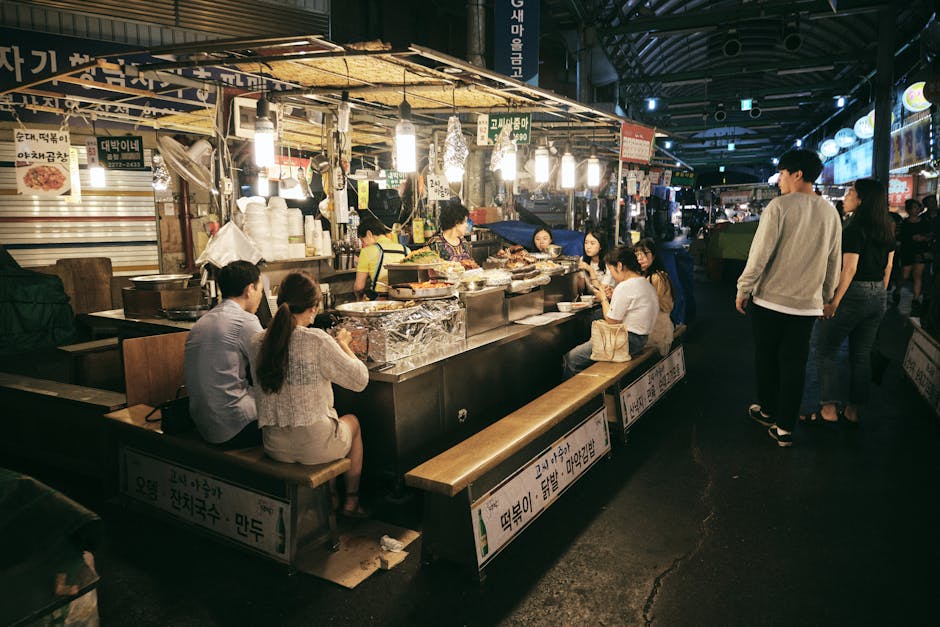
When people say “night market food tour” in Seoul, they almost always mean Gwangjang Market in the Jongno district. It’s the oldest traditional market in Korea, running since 1905, and it’s the one that shows up in every Netflix food show, every travel blog, and every Korean Air in-flight magazine.
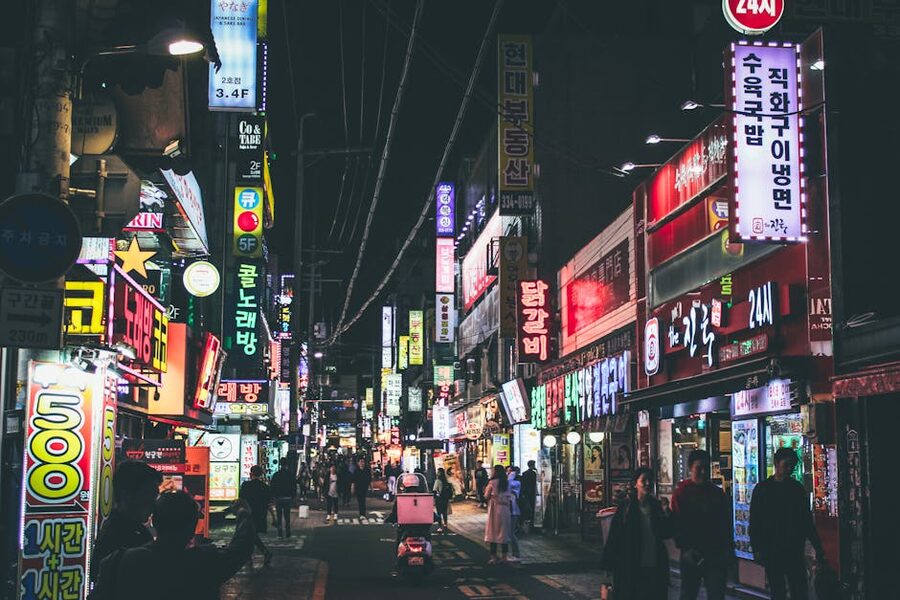
The market is open all day, but it transforms around 5-6pm when the food alleys fire up. By 7pm the benches are full. By 9pm you’ll be fighting for a plastic stool. The tours I recommend all start between 5:30pm and 6:30pm specifically to catch the switch from market-as-grocery-store to market-as-outdoor-restaurant.
A standard tour lasts about two hours and includes 8 to 10 tastings. You’re not sitting down for a meal — you’re walking, standing, leaning against walls, squeezing past grandmothers with shopping bags. The food comes in small portions, one dish at a time, and by the end you’ve had enough to be full and enough variety to feel like you actually learned something about Korean food.
How to Book: Step by Step
Booking is straightforward if you use Viator or GetYourGuide — both are reliable, both have free cancellation up to 24 hours before, and both send you a PDF voucher with the exact meeting point.
- Pick your date and tour. The top tours sell out 3-5 days in advance in spring and autumn, and 1-2 weeks out in summer and during K-pop concert weekends. Don’t leave it until the day of.
- Book through the platform, not directly with the operator. Platform booking gives you consumer protections and easier refunds if something goes sideways.
- Save the voucher offline. Cell signal at Gwangjang is patchy when the market is packed — screenshot your PDF or print it.
- Check the meeting point carefully. Gwangjang has eight gates. Tours usually meet at the North Gate (Jongno 5-ga exit 8) or outside a specific landmark like the Gwangjang Hanbok Street entrance.
- Arrive 10 minutes early. Guides can’t wait for stragglers when the group is 12 people deep — you’ll miss the start.
Every tour I’ve listed below allows free cancellation up to 24 hours before. I always book early and cancel if I change my mind — the risk is zero.
Guided Tour vs DIY: Which Should You Pick
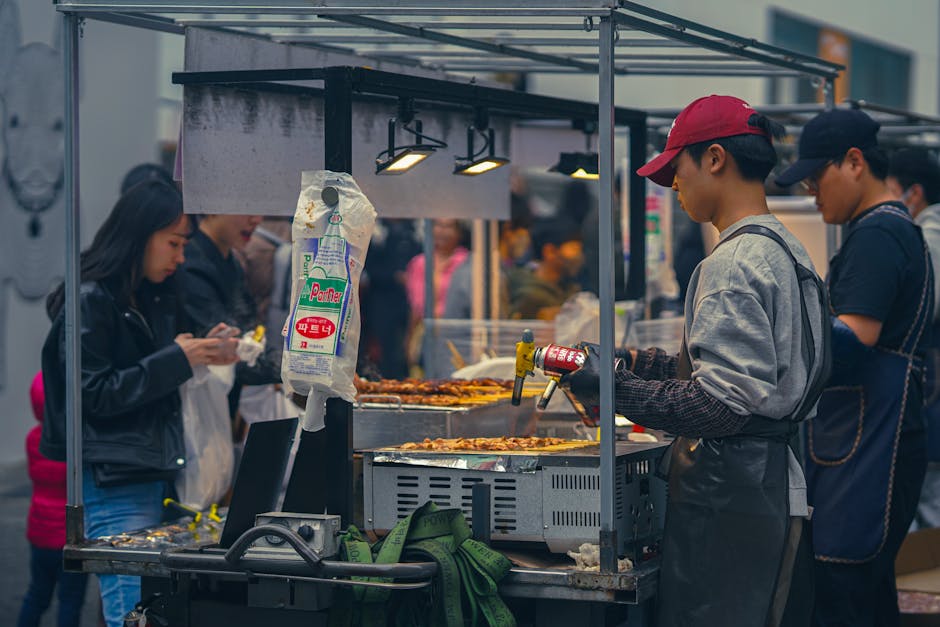
Honest answer: it depends how comfortable you are pointing at food you can’t name. Seoul is one of the easiest cities in Asia to eat solo — stalls are numbered, most have pictures, and cash or card both work. If you can read numbers and smile, you can eat at Gwangjang on your own for maybe $20 and have a great time.
But you’ll miss things. You won’t know which bindaetteok stall has the crispiest mung bean pancake (it’s the one on the left at the north end, the one with the grandmother who’s been there 43 years). You won’t know that yukhoe — raw beef tartare — is the market’s hidden signature dish and where to try it without getting a stomachache. You won’t know that the makgeolli cart by the bindaetteok alley is the one locals use, not the tourist-priced place 20 metres away.
A guided tour gets you the curated best-of, the context behind each dish, the Korean vocabulary you need to order food later in your trip, and the drinking etiquette that will save you embarrassment at future meals. For $33 to $73 it’s cheap insurance against mediocre food.
I tell friends visiting Seoul for the first time to book a guided food tour on night one or two. After that, you’ll have the confidence to do your own eating for the rest of the trip. It’s the same logic as booking a Gyeongbokgung and Bukchon walking tour for your first morning — get the orientation, then explore solo.
The Best Seoul Night Market Food Tours to Book
1. Seoul Night Market Food Tour (Goodmate Travel, Viator) — $73

This is the pick. A perfect 5.0 rating across 1,226 reviews is almost unheard of in the tour world — usually the averages settle at 4.7 to 4.8 once review volume passes a thousand. The fact this one sits at a clean 5.0 tells you the guides are consistent, the food is good, and the experience is essentially impossible to mess up.
The itinerary covers Gwangjang Market as the anchor, then branches into two smaller adjacent markets most travellers never see. You’ll try 8-10 dishes including bindaetteok (mung bean pancake), mayak gimbap (“drug rice rolls” — they’re addictive, hence the name), yukhoe, hotteok, and tteokbokki. The Goodmate guides are local Koreans who spent years eating at Gwangjang before they started guiding, and it shows in the running commentary about which stalls changed hands and why.
One thing I like: Goodmate doesn’t herd groups through like cattle. They take 12 people max and the guide actually talks to you. travellers consistently name specific guides — Taehaeng, Juno, Jacob — which is the clearest sign of a well-run operation.
2. Seoul Night Market Food Tour with Local Guide (GetYourGuide) — $73
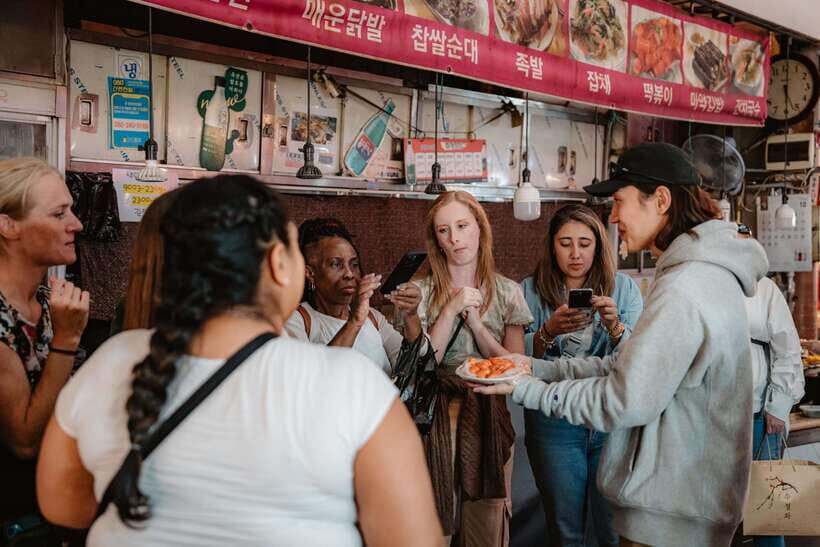
This is the GetYourGuide listing for what is essentially the same tour as my #1 pick. Same operator (Goodmate), same two-hour format, same 8-10 tastings, same Gwangjang-centred route. The 4.9 rating across 943 reviews puts it just a notch below the Viator listing — probably because GetYourGuide customers are slightly stricter on average.
Why book this instead of the Viator version? Three reasons: you already have a GetYourGuide account and want everything in one place, you’re collecting their loyalty points, or the Viator version is sold out for your date. Price is identical at $73. Experience is identical. The only real difference is which app the voucher lives in.
One thing worth noting — the GYG listing explicitly mentions drinks and games, which the Viator version doesn’t highlight as heavily. travellers confirm the guides bring out makgeolli for a toast at one of the stops, and there’s usually a silly drinking game involved. If you’re travelling with a group and want the social element played up, GYG is the slightly better book.
3. Seoul Nighttime Hidden Gems Walking Tour — $33
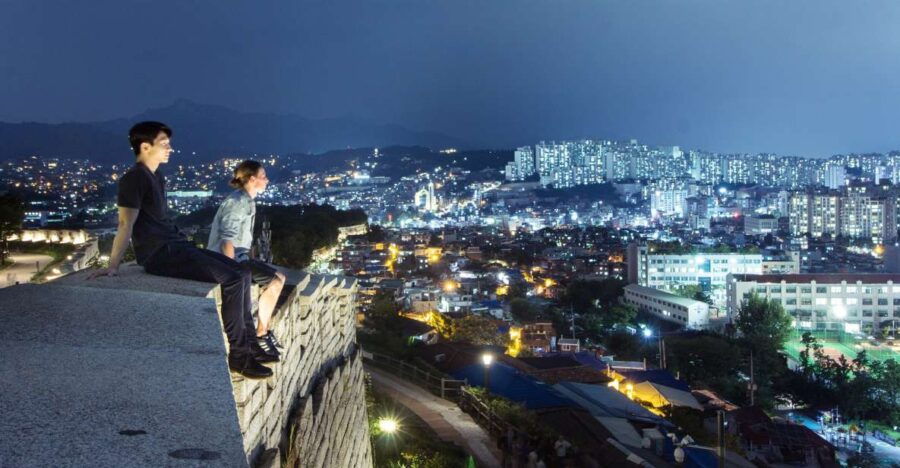
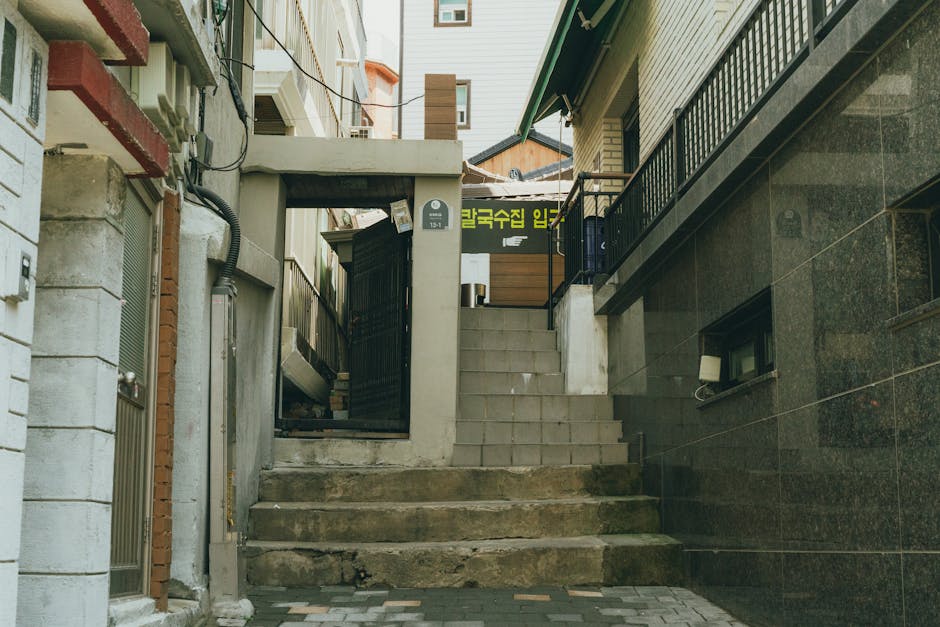
The budget pick, and the one I’d book on a second visit to Seoul. At $33 for two hours it’s under half the price of the food-focused tours, and the trade-off is that it’s a walking tour with food tastings included rather than a pure eating marathon. You’ll still eat 5-6 things, but the focus is more on the neighbourhoods — Ikseon-dong’s hanok alleys, Cheonggyecheon stream, and the backstreets of Jongno that barely existed as a tourist area five years ago.
It runs on a 5-star rating across 775 reviews and the guide everyone names is Leah — she’s the one turning this into a consistent top pick. travellers call out her history knowledge, her patience with questions, and the fact she takes the group to places that feel genuinely local rather than pre-vetted for foreigners.
One warning from the reviews: it’s a walking tour, and most of it is uphill and up stairs. If mobility is a concern or you’re travelling with kids, pick one of the Gwangjang-based tours instead. If you can handle a couple of flights of stairs in exchange for seeing Seoul the way Seoulites see it, this is the best-value booking on the list.
What You’ll Actually Eat
Every tour has slight variations, but the core lineup at a Seoul night market food tour almost always includes these dishes. If you’re booking, here’s what to expect on your plate:
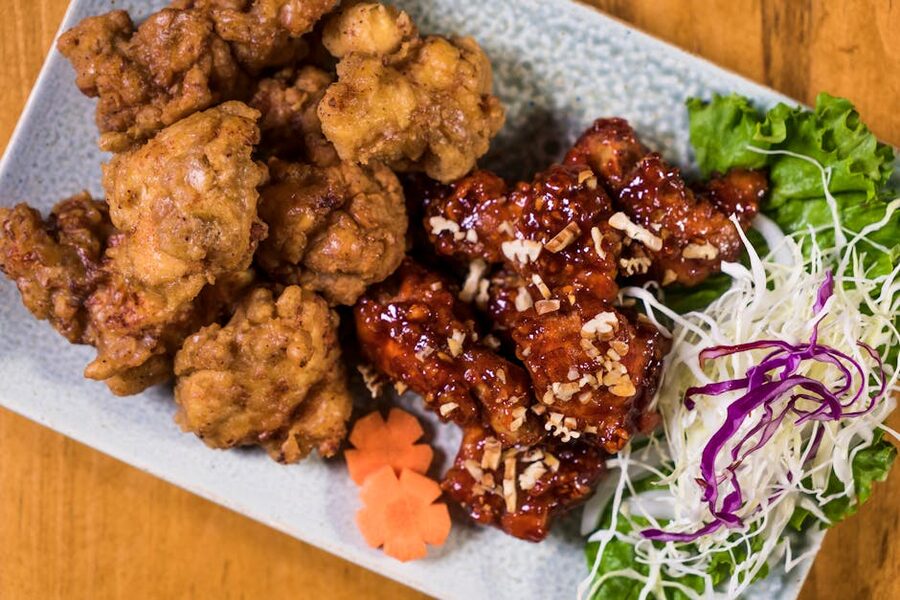
Bindaetteok (mung bean pancake). Ground mung beans, pork, kimchi, and vegetables fried in oil until the edges are lacy-crisp. Gwangjang is famous for this specifically — one stall grinds the beans fresh every morning using a stone mill, and the line for that stall stretches to the market entrance. Pairs with makgeolli, the unfiltered rice wine that looks like thin yogurt and tastes like a tart, fizzy milkshake.
Mayak gimbap (“drug kimbap”). Finger-sized rice rolls with pickled radish and mustard sauce. They got the name because people can’t stop eating them. Cheap, fast, and you’ll probably order seconds.
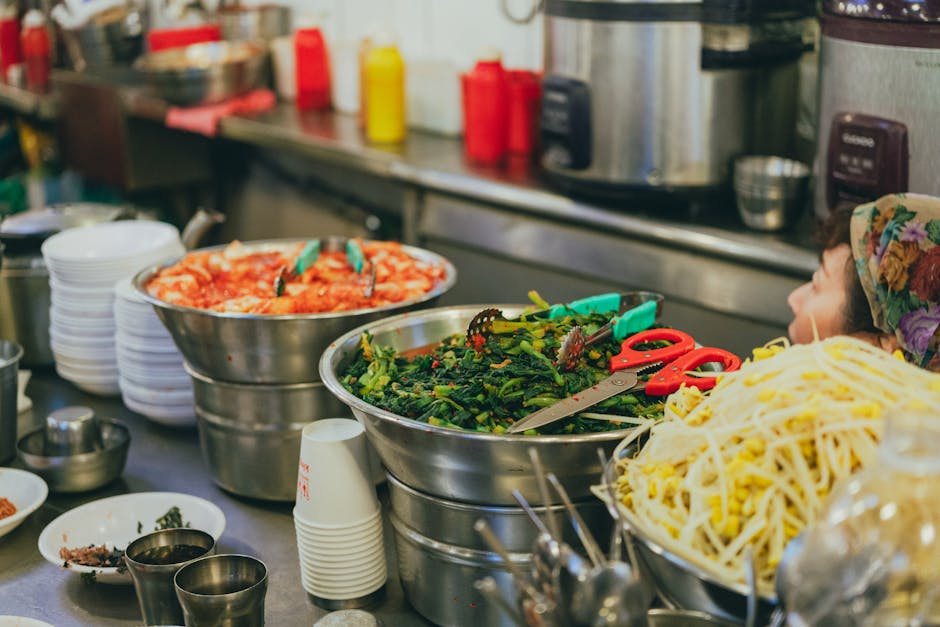
Yukhoe (raw beef tartare). Thin strips of raw beef mixed with sesame oil, pear, garlic, and a raw egg yolk on top. Sounds wild, tastes incredible. The Gwangjang yukhoe alley has four or five vendors in a row all serving the same dish — your guide will pick the one that actually sources good meat.
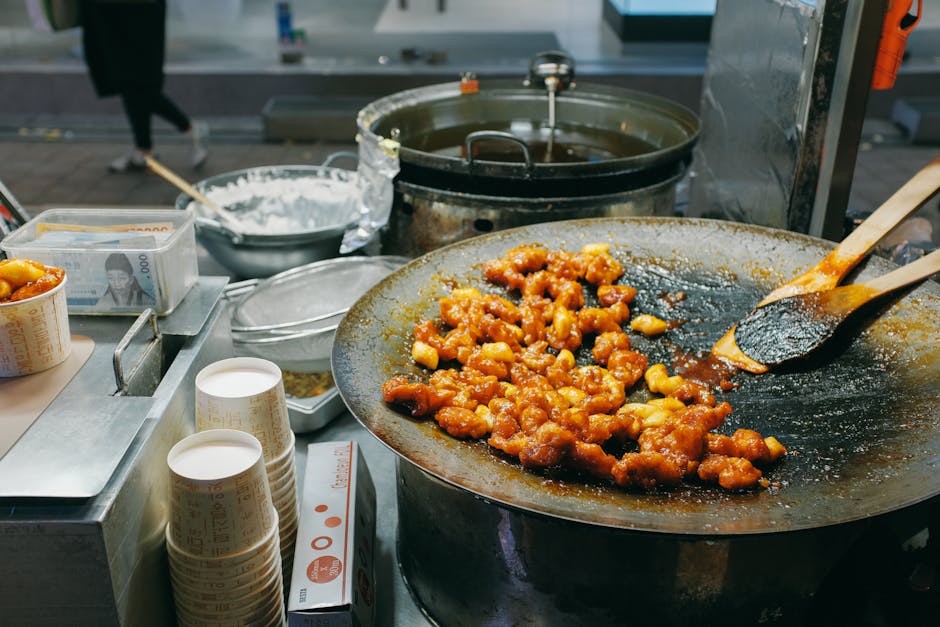
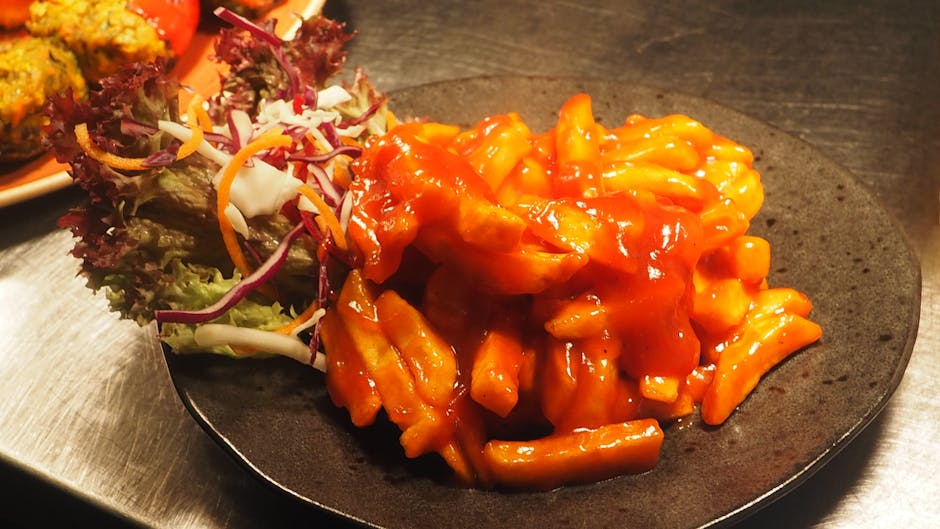
Tteokbokki (spicy rice cakes). Chewy cylindrical rice cakes in a gochujang-based red sauce with fish cakes and boiled egg. The gateway drug of Korean street food. Not as spicy as it looks — more sweet-spicy than chili-burn — and it’s everywhere.
Hotteok (sweet pancake). Deep-fried dough stuffed with brown sugar, cinnamon, and crushed nuts. Usually the last stop on a food tour because it’s dessert. You get it in a paper cup and the sugar inside is molten when you bite in — wait 30 seconds or you’ll burn your mouth.
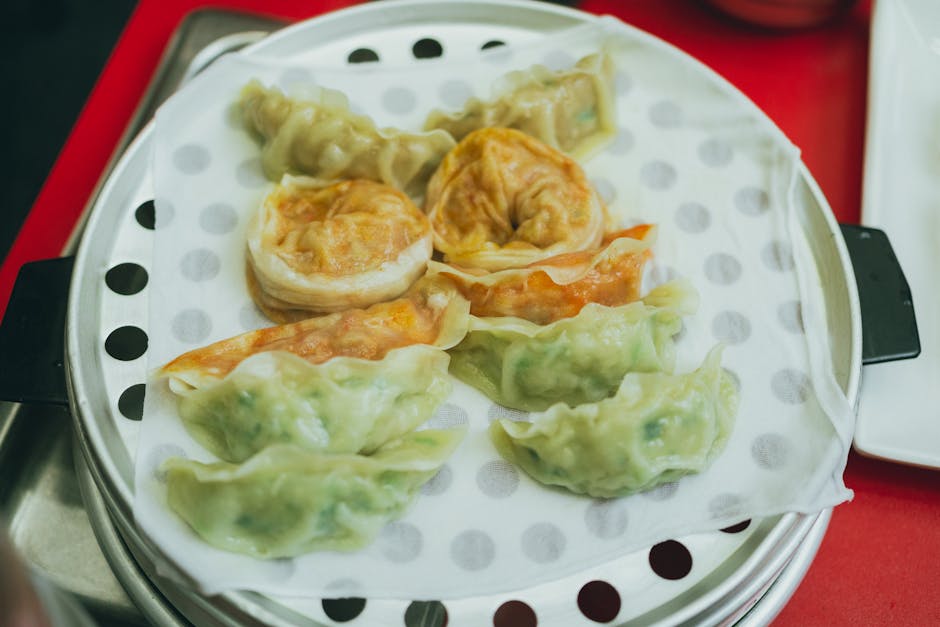
Mandu (dumplings). Steamed or pan-fried dumplings stuffed with pork and vegetables. Gwangjang has several stalls but one specific one — the guides will take you there — is known for making them by hand in front of you.
Soondae (Korean blood sausage). This is the love-it-or-hate-it dish. Pork blood, glass noodles, and herbs stuffed into a sausage casing and steamed. Served with pig’s liver and a salt-and-pepper dipping sauce. Try it once — it’s genuinely good even if the description puts you off.
What It Costs and What’s Included
The Viator and GetYourGuide tours at $73 per person include all food and drinks during the tour — roughly 8-10 tastings plus at least one drink (makgeolli, Korean beer, or a non-alcoholic option). That works out to about $7 to $9 per tasting including the guide’s time, which is cheaper than doing it yourself for the portion size you’d actually buy at each stall.
The $33 hidden gems tour includes fewer tastings (usually 5-6) but the price reflects that — it’s essentially a neighbourhood walking tour with food included rather than a food-focused tour. You’ll still leave full, but if you came to Seoul specifically to eat, spring for one of the $73 tours.
What’s NOT included on any of them: hotel pickup (you meet at the market), tips (not expected in Korea but guides appreciate a 5,000-10,000 won note if you had a good time), and extra food or drinks you order on your own. If you spot something the guide didn’t cover and want to try it, budget an extra $10-15 cash.
When to Go: Timing, Seasons, and Crowds
The best time for a Seoul night market food tour is spring (April-May) or autumn (September-October). The weather is mild, you can stand outside eating without freezing or sweating, and the markets aren’t full of the humidity-drenched crowds you get in July and August.
Summer (June-August) works but brings monsoon rain and the kind of humidity that makes standing over a hot grill unpleasant. Tours still run, but pick an indoor-heavy itinerary if possible. Winter (December-February) is actually underrated — the markets stay open, the vendors light small heaters, and standing outside eating hot hotteok in 30-degree-Fahrenheit weather with snow on the ground is one of Seoul’s best experiences. Just dress properly.
Day of the week matters. Avoid Monday — many smaller stalls inside Gwangjang close, and the tour routes get thinner. Tuesday through Thursday is ideal: everything open, fewer travellers, locals out eating after work. Friday and Saturday nights are the busiest — Gwangjang is mobbed and you’ll be shoulder-to-shoulder. Sunday is quieter but many stalls close early.
Start time matters too. The tours start between 5:30pm and 6:30pm because that’s when the market shifts from daytime shopping mode to nighttime eating mode. If you arrive at 4pm on your own, half the food stalls aren’t open yet. If you arrive at 10pm, some of the best stalls have sold out and closed. The 6pm to 8pm window is the sweet spot.
How to Get to Gwangjang Market
Gwangjang is dead centre in Seoul’s old town and the easiest place to reach by subway. The closest station is Jongno 5-ga (Line 1, exit 8). Walk straight out the exit, the market’s north gate is 50 metres on your left. You can’t miss it — look for the red and white arch and the smell.
Alternative stations: Euljiro 4-ga (Lines 2 and 5) is a 7-minute walk to the south entrance, and Jongno 3-ga (Lines 1, 3, 5) is an 8-minute walk to the west entrance. All three work if you’re already on a different line.
Taxis are cheap in Seoul compared to other world capitals. A ride from Myeongdong or Hongdae to Gwangjang runs 6,000-10,000 won (about $5-8) and takes 10-15 minutes depending on traffic. Use the KakaoTaxi or Uber app — hailing on the street works but the apps are easier if you don’t speak Korean.
If you’re staying in Gangnam, allow 25-30 minutes on the subway (Line 2 or 3 transfer) or 15-20 minutes in a taxi with light traffic.
Tips That Will Save You Time (and Money)
- Come hungry. I mean genuinely hungry. Don’t eat lunch after 1pm. You’ll be tasting 8-10 dishes and guides don’t slow down for slow eaters.
- Bring cash. A few stalls inside Gwangjang still only take Korean won, not cards. 30,000-50,000 won in small bills is plenty for the tour plus any extras you want.
- Wear closed-toe shoes. The market floors get slippery from kimchi juice, spilled soup, and fish market runoff by evening. Sandals are a bad call.
- Have Google Translate downloaded offline. For reading menus and labels after the tour when you’re exploring on your own.
- Use Naver Maps, not Google Maps. Google Maps doesn’t work properly in South Korea — you can’t get walking or transit directions. Naver or KakaoMap both work and are free.
- Don’t over-tip. Tipping isn’t customary in Korea. If your guide was excellent, 5,000-10,000 won (about $4-8) handed directly with two hands at the end is generous and culturally appropriate.
- Skip the tour if it’s raining hard. Rebook for another night. Most of the eating is standing under tarps or canopies and a heavy downpour kills the experience.
- Pair it with a second cultural tour. A food tour on night one pairs well with a day-trip the next day — lots of people combine it with a DMZ tour from Seoul or a Gyeongju day trip from Busan if you’re heading south.
Gwangjang vs Namdaemun vs Myeongdong: Which Market Is Right
Seoul has several big markets that all get lumped together as “night markets” but they’re actually different experiences. The night market food tours almost all go to Gwangjang, but it’s worth knowing the alternatives in case you’re trying to DIY.
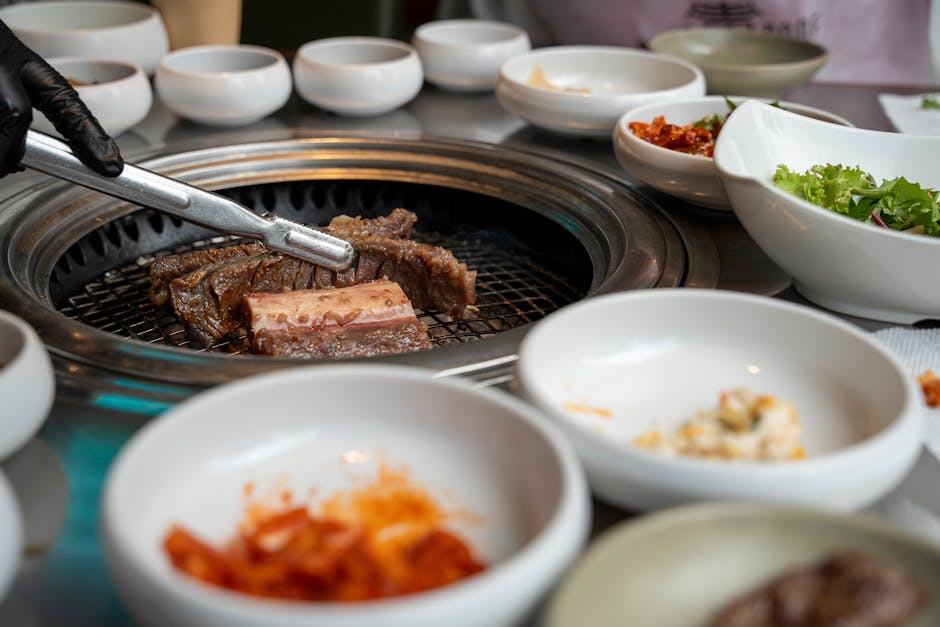
Gwangjang Market (Jongno). The oldest, the most famous, and the best for a first food tour. Focus: traditional Korean dishes, bindaetteok, yukhoe, mandu, mayak gimbap. Atmosphere: traditional, loud, slightly chaotic in the best way. Best for: first-time visitors, serious food travellers, anyone who wants the classic Korean market experience.
Namdaemun Market (Central Seoul). Bigger and more varied than Gwangjang but less focused on food — it’s mostly a goods market with food alleys scattered through. The galchi (hairtail fish) alley here is incredible if you like grilled fish. Tours sometimes include it as a second stop but it’s rarely the main event.
Myeongdong Street Food Stalls. This is the one to skip if you want authenticity. Myeongdong is a shopping district and the street food stalls there are aimed squarely at travellers — prices are double what you’d pay at Gwangjang, portions are smaller, and the food is the most Instagram-friendly rather than the most authentic. That said, if you’re already in Myeongdong shopping, the cheese corn dogs and the lobster rolls are fun as a snack, just not a meal.
Dongdaemun Night Market. Open very late (midnight to 5am), mostly a clothing wholesale market with food stalls serving the shoppers. It’s a cool experience if you’re already awake at 2am looking for tteokbokki, but it’s not a dedicated food destination and the tours don’t really go here.
Bottom line: for a night market food tour, you want Gwangjang. All three of my recommended tours above centre on it for a reason.
What to Drink on a Seoul Food Tour
Korean drinking is its own topic, but here’s the crash course you need for a food tour:
Makgeolli is unfiltered rice wine, about 6 percent ABV, slightly sweet and fizzy. It’s the traditional pairing with bindaetteok — there’s an old Korean saying that eating mung bean pancake without makgeolli is like eating steak without wine. Every tour will include a round.
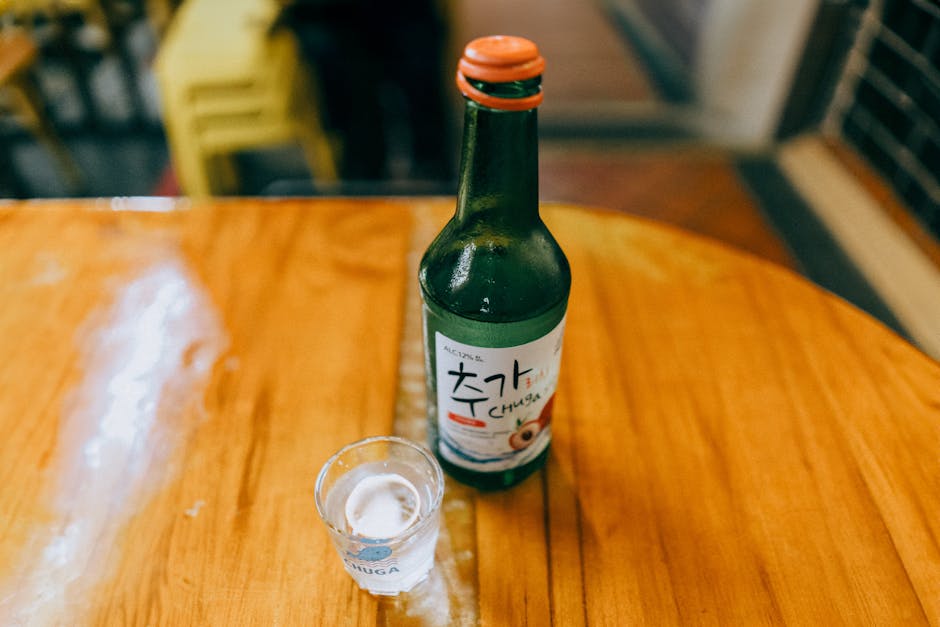
Soju is the harder stuff — 16-20 percent ABV, neutral-tasting, Korea’s national spirit. Usually not served on food tours because it’s a bit much for a 2-hour eating marathon, but if you want to order some yourself it’s 3,000-5,000 won a bottle. The flavoured ones (green grape, yuzu, strawberry) are easier for beginners.
Korean beer (maekju) — Cass, Hite, or Terra are the three main domestic brands. Light, easy, pairs with everything. Most tours include it as an alternative to makgeolli.
The two-handed pour rule. When someone older or higher-status pours you a drink, receive it with two hands — one hand holding the glass, the other lightly touching your pouring forearm. When you pour for them, use two hands on the bottle. Your guide will explain this on the tour. It’s a small thing but Koreans notice, and they love when foreigners get it right.
Don’t refuse the first shot. Korean drinking etiquette says turning down the first drink from your host is rude. If you genuinely don’t drink, tell your guide at the start and they’ll smooth it over — but if you’re just nervous about the taste, take the shot.
Dietary Restrictions: Can You Do a Seoul Food Tour Vegetarian?
Yes, but tell the operator ahead of time. Korean cuisine is not inherently vegetarian-friendly — meat, fish stock, and anchovy base are in almost everything — but the tour operators are used to accommodating dietary restrictions and will swap out dishes.
The Goodmate tours (both Viator and GYG listings) explicitly mention they can accommodate vegetarians. travellers specifically call this out — one recent review from Erik, a vegetarian traveller, mentioned having “plenty of options” and learning a lot about Korean food despite the default menu being meat-heavy.
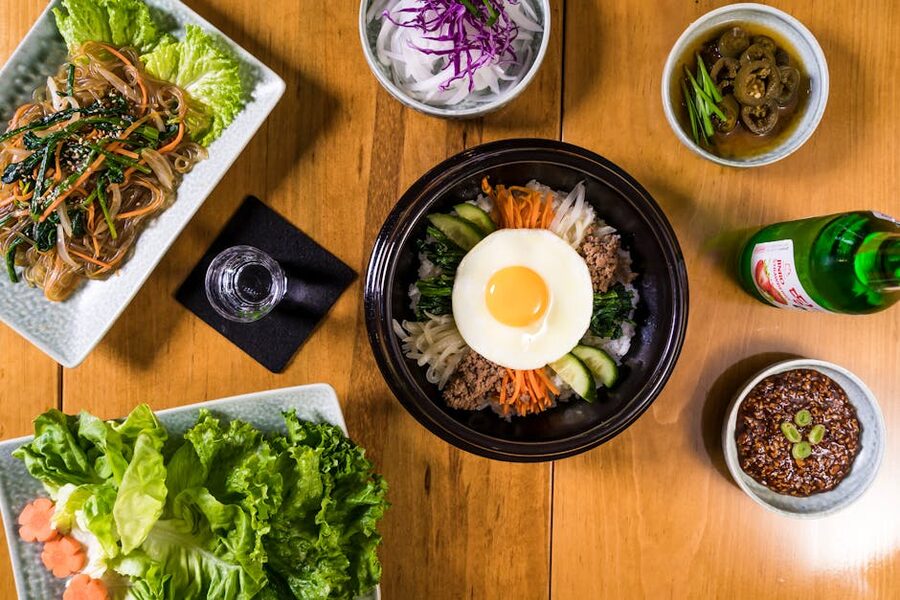
Vegans are harder. The swaps available are generally tteokbokki without fish cakes, bibimbap without egg, vegetable mandu, and a few banchan — it works but your selection is more limited. Book the tour and email the operator in advance so they can coordinate with the vendors.
Gluten-free is tough because soy sauce, batter, and wheat-based side dishes are everywhere. Possible but not really worth paying full price — you’d be eating maybe 3-4 dishes while the rest of the group eats 10. If you’re strictly gluten-free, consider a cultural walking tour of Gyeongbokgung instead and handle your food separately.
Is a Seoul Night Market Food Tour Worth It?
Short answer: yes, on your first visit. For $33-$73 you’re getting 2 hours of local expertise, 8-10 curated tastings, drinks, the cultural context behind the food, and a stress-free introduction to the dish vocabulary you’ll use for the rest of your trip. I’ve done food tours in cities where I immediately regretted the money — this isn’t one of them.
The value is not in the food itself. You can eat at Gwangjang for $20 on your own if you know where to point. The value is in the curation, the context, and the time you save by not wandering between 200 stalls trying to figure out which bindaetteok is the real deal. A good food tour compresses two to three trips’ worth of trial and error into one well-planned evening.
If I had to pick one, I’d book the Viator-listed Goodmate tour at $73 with its perfect 5.0 rating. If budget is the concern, the hidden gems tour at $33 is a genuinely different and very good experience — just understand you’re getting a neighbourhood tour with food included rather than a food-first tour.
Planning the Rest of Your Seoul Trip
A food tour on night one or two is the best way to start a Seoul visit — but the city has three or four other things you absolutely shouldn’t leave out. For your first morning, book a Gyeongbokgung Palace and Bukchon village walking tour — it gives you the historical counterweight to the food-and-neon side of Seoul, and you get to see the guard changing ceremony.
If you have a spare day, a DMZ tour from Seoul is the one excursion everyone who visits Korea ends up remembering most — it’s surreal, political, and unlike anything else you’ll do on the trip. And if you’re heading south afterwards, the Gyeongju day trip from Busan covers Korea’s ancient capital and pairs naturally with a few days on the coast.
Between those four bookings you’ve got a full week of Seoul and Korea dialled in.