
Here’s the thing almost nobody tells you before you fly to South Korea: Jeju isn’t really Korean in the way you’re picturing. The island sits 280 miles south of Seoul, closer to Kyushu than to the DMZ, and it was pushed out of the ocean by the same volcanic muscle that built Hawaii.
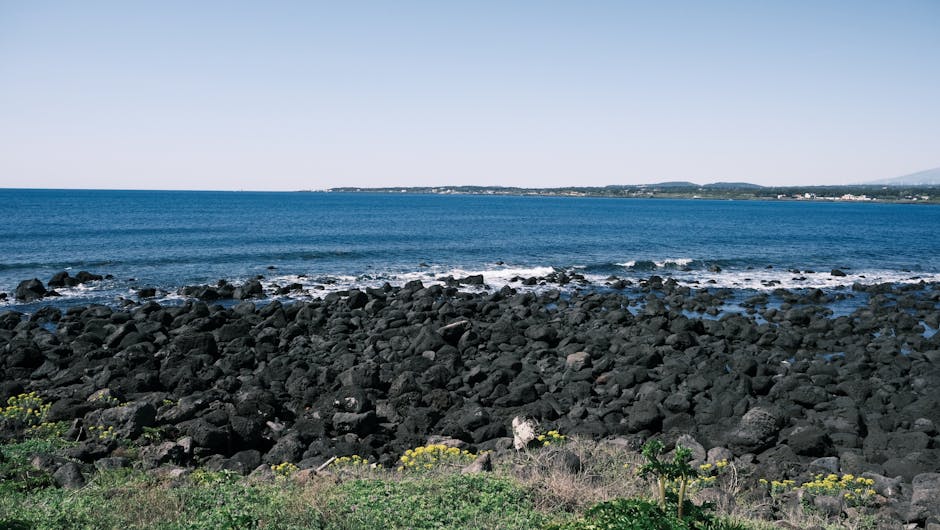
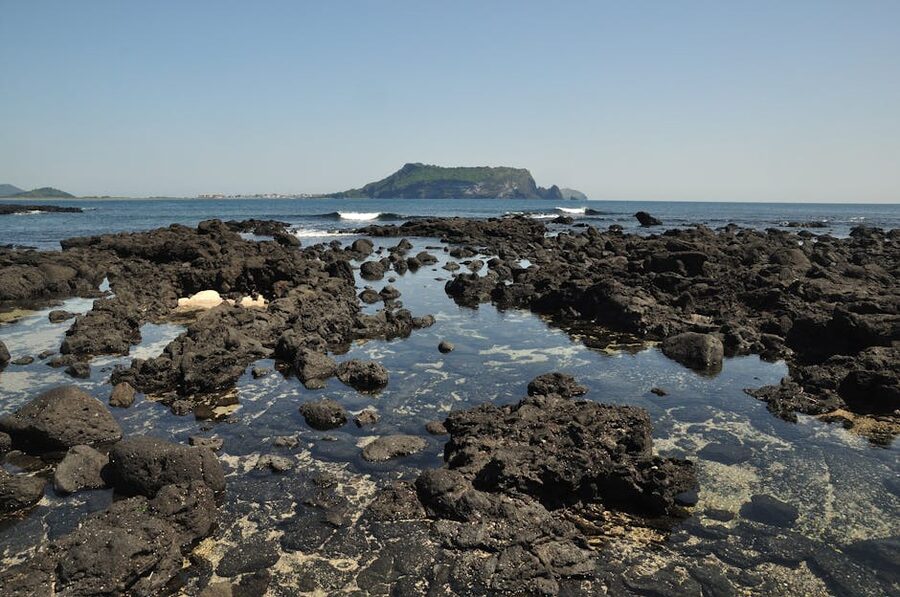
The locals speak a dialect that mainland Koreans can barely follow, the women dive for abalone in wetsuits in their seventies, and the whole landscape is built out of jagged black lava rock that looks like someone poured a frying pan of ink into the Pacific and let it set.
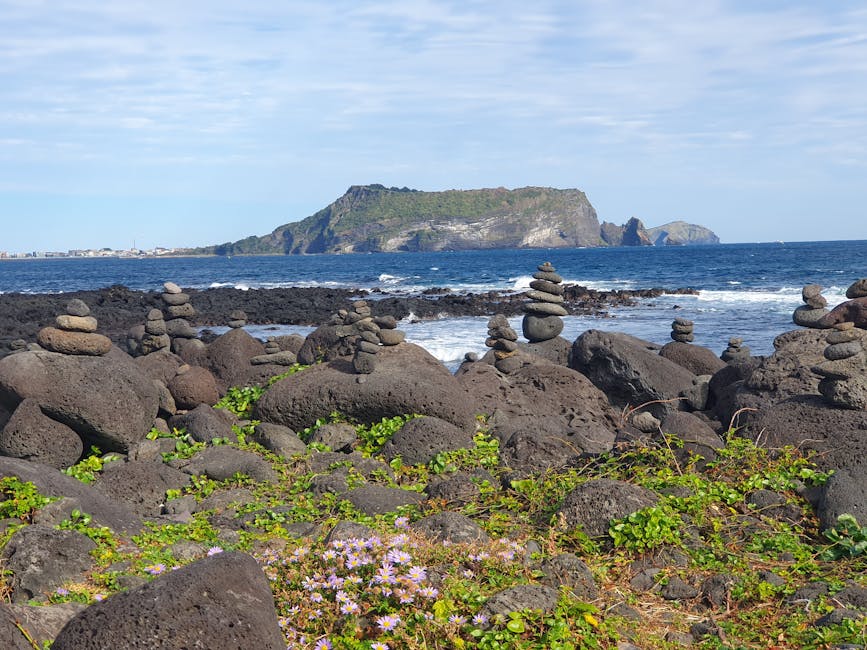
If you land at Jeju International expecting neon, skyscrapers and kimchi stalls on every corner you will be quietly, beautifully disappointed. What you get instead is a UNESCO-listed volcanic island with tangerine groves, a dormant shield volcano big enough to have its own weather, black-sand beaches and one of the longest lava tube systems on earth.
I planned exactly one day on Jeju during my first Korea trip and ended up adding three more. That first day was a scramble — rental car I couldn’t drive on the left-mirror highways, a missed turn-off to Seongsan, and a slightly panicked realisation at 4pm that I had seen maybe 20% of what I wanted to see. So the next morning I did what I should have done from the start: I booked a day tour.
One minivan, one bilingual driver-guide, and a fixed loop that hit every headline spot on the eastern side of the island. By 6pm I had climbed a tuff cone, crawled through a lava tube, eaten grilled black pork and watched haenyeo divers surface with sea urchin, and the only stress I’d had all day was choosing between two types of tangerine juice at a roadside stall.
This guide is for anyone who’s about to do the same thing — land on Jeju with one, two or three days, and wants to see the best of it without renting a car.
I’ve pulled the top three Jeju day tours from our database (filtered by real booking reviews, not just marketing fluff), crunched the numbers, and laid out which one to pick depending on whether you want the eastern UNESCO loop, the western-and-southern coastal drive, or the southern waterfalls circuit.
If you’ve already read our DMZ tour from Seoul guide or our Seoul sightseeing walkthrough, you already know the format: tour cards up top, honest comparison, then the logistics you actually need.
- Why Jeju Needs A Day Tour (Even If You Usually Hate Them)
- The 3 Best Jeju Day Tours (Based On Real Review Data)
- 1. Jeju Eastern UNESCO Spots Day Tour — Best Overall
- 2. Jeju Western & Southern Sightseeing Day Tour — Best For Coastline & Cliffs
- 3. Jeju Southern Top UNESCO Spots Tour — Best For Waterfalls
- Which Tour Should You Pick?
- What’s Actually On A Jeju Day Tour (The Real Itinerary)
- Getting To Jeju In The First Place
- Where To Stay On Jeju
- When To Go
- How Much Does A Jeju Day Tour Actually Cost?
- Things To Know Before You Book
- How Jeju Fits Into A Wider Korea Trip
- One Last Thing About The Haenyeo
Why Jeju Needs A Day Tour (Even If You Usually Hate Them)
I’m generally allergic to coach tours. I’d rather navigate a foreign metro system with a broken phone than sit on a bus with a microphone guide pointing out “the famous tree on your left.” Jeju changed my mind for three reasons, and I think they’ll change yours too.
First, the island is bigger than it looks on a map. Jeju is 73 kilometres east-to-west, and the main attractions are scattered around the coastline like beads on a necklace. Without a car you’re looking at public buses that run every 40 minutes if you’re lucky, don’t always stop where the trailheads are, and involve a lot of walking along shoulderless roads under the Korean sun.
With a car you still need to deal with Korean-only GPS, narrow coastal lanes and the fact that most of the “scenic viewpoints” have zero English signage.
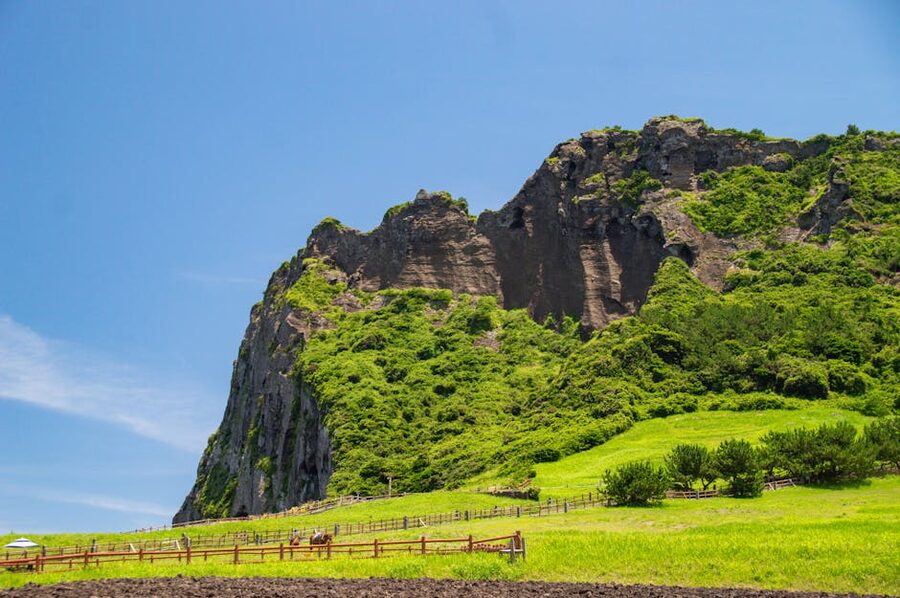
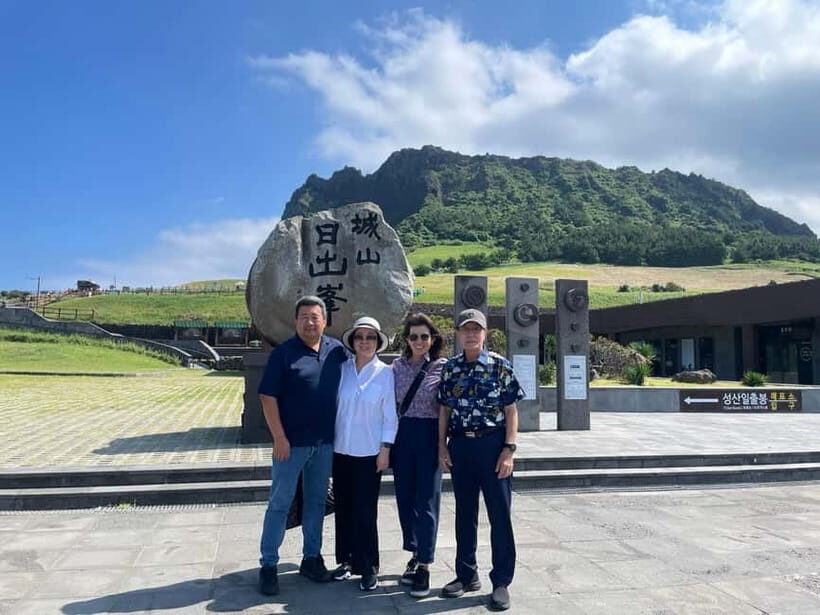
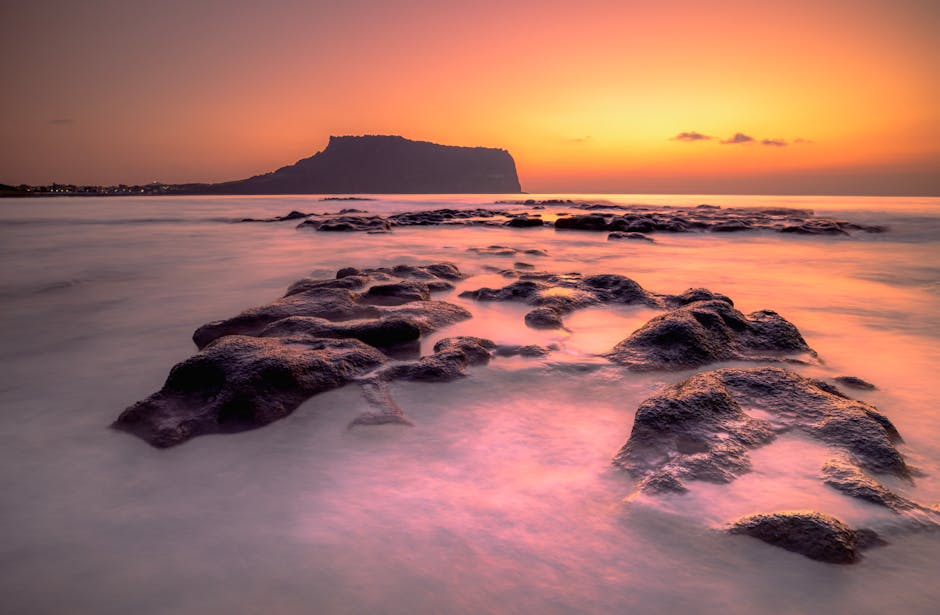
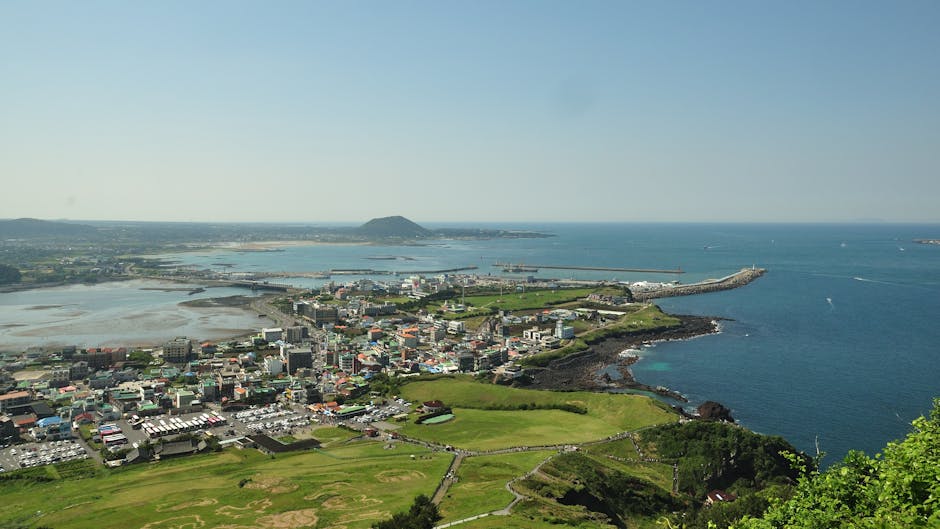
Second, the context is everything here. Seongsan Ilchulbong looks like a green lump of broccoli from the car park. It’s only when a guide explains that it erupted through shallow seawater about 5,000 years ago, built itself out of hydromagmatic ash, and is now one of only two tuff cones in the world visible like this, that you start to see what you’re actually looking at.
Same with the Manjanggul lava tube: without someone explaining the lava-toe formations and the million-year-old drip patterns, it’s just a cool dark tunnel. With context, it’s a crash course in how volcanoes build islands.
Third — and this is the honest one — food. Jeju has black pork, abalone porridge, hairtail fish and tangerine everything, and the best versions are at family-run places that don’t speak English and don’t take Naver Pay. A day tour parks you at a curated lunch spot, orders for you and usually includes it in the price. You eat better than you would on your own.
The 3 Best Jeju Day Tours (Based On Real Review Data)
Instead of guessing, I pulled every Jeju day tour from our database and ranked them by verified review count and rating. These three came out on top — one for the eastern UNESCO loop, one for the western-and-southern coastal sights, and one for the southern waterfalls circuit. All three are minibus-format small-group tours with an English-speaking guide, and all three cost roughly the same ($55). The only real decision is which side of the island you want to see.
1. Jeju Eastern UNESCO Spots Day Tour — Best Overall
Check availability and book the Eastern UNESCO tour →
This is the one I’d book if I only had a single day on Jeju. It hits three of the island’s UNESCO-listed sites in one loop: Seongsan Ilchulbong (the tuff cone), Manjanggul Lava Tube, and usually Seopjikoji or the Haenyeo Museum depending on the season. Pickup is from central Jeju City hotels between 8:30 and 9:00am, and the tour runs east along the coast road, which is the prettier of the two main routes.
What surprised me about the format is how much walking it actually involves — Seongsan is a 20-minute hike up stairs to the crater rim, Manjanggul is a 1km walk inside the tube on uneven basalt, and most stops have a loop path. Wear real shoes. The minibus seats around 12 people, the guide speaks clear conversational English (mine was a marine biology grad who went deep on the geology), and lunch is a sit-down black pork meal included in the price.
Pros:
- Hits all three must-see eastern Jeju UNESCO sites in one trip
- Small-group minibus (not a coach) so you actually get guide attention
- Lunch included, usually Jeju black pork or abalone porridge
- Hotel pickup from Jeju City — zero logistics on your end
- Guides are almost always Jeju-born and know the non-obvious stories
Cons:
- The 10-hour day is long and you’re on your feet a lot
- Doesn’t cover the southern waterfalls or Cheonjiyeon (you’d need a second day)
- Seongsan is crowded mid-morning — go early if you hate queues
- Book 48+ hours ahead in peak season (Apr-May, Sep-Oct) or risk it selling out
Who should book this: First-timers with one day on the island, anyone interested in volcanology or geology, and honestly anyone who likes their sightseeing to come with good food.
2. Jeju Western & Southern Sightseeing Day Tour — Best For Coastline & Cliffs
Check availability and book the Western & Southern tour →
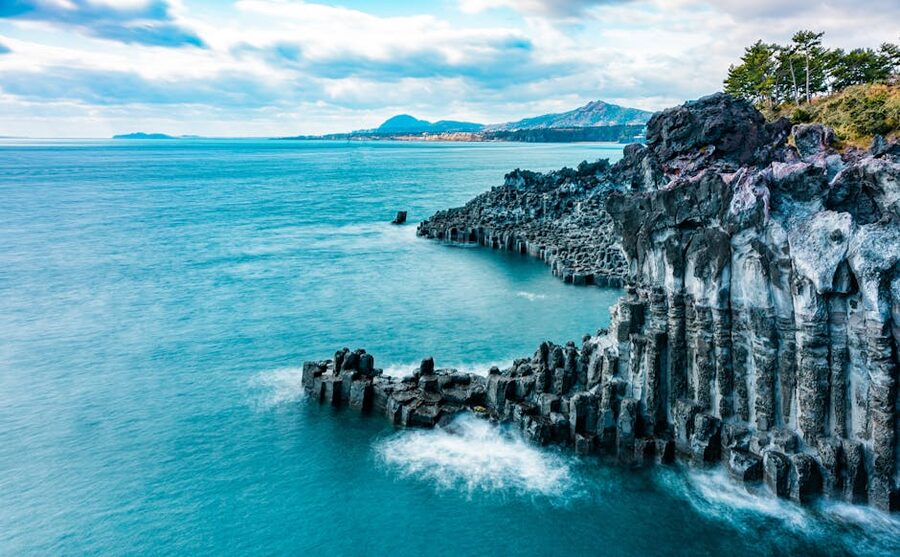
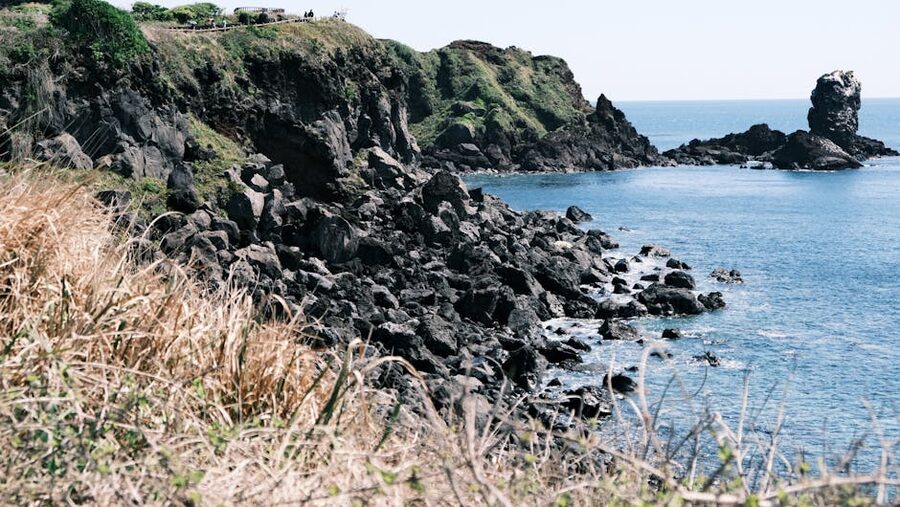
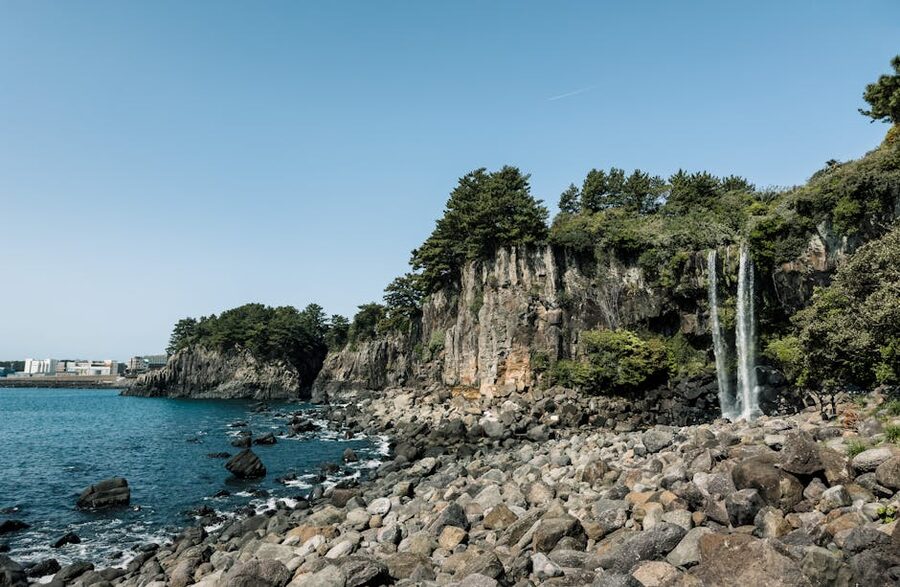
If the east is the volcano side, the west is the cliff side. This tour runs the opposite loop — out through Hallim Park (with its sub-tropical gardens and lava caves), down past Songaksan headland, along to the Jusangjeolli Cliffs where the basalt has cracked into perfect hexagonal columns like the Giant’s Causeway in Ireland, and usually on to O’Sulloc Tea Museum or Cheonjeyeon Waterfall depending on the day’s schedule.
The Jusangjeolli Cliffs are the single most underrated sight on Jeju. They’re free to visit, almost never crowded outside of summer weekends, and the columnar basalt columns drop straight into a turquoise sea with waves crashing between them. Photos don’t do it justice. The guide on this tour usually gives you 40-50 minutes to walk the cliff-top path, which is enough to properly wander and not feel rushed.
Pros:
- Covers completely different scenery from the Eastern tour — worth doing both if you have two days
- Jusangjeolli is spectacular and a lot quieter than the eastern UNESCO sites
- Hallim Park works for all ages including kids
- Good mix of nature, culture (tea museum) and coastline
- Same small-group minibus format as the Eastern tour
Cons:
- Doesn’t include Seongsan Ilchulbong — don’t pick this if it’s your only Jeju day
- Tea museum stop is a bit commercial (it’s run by Innisfree)
- Longer drive segments than the Eastern tour because the west side is more spread out
Who should book this: Anyone on their second day of Jeju, photographers who want the dramatic cliff shots, families with kids who’d prefer Hallim Park over a lava tube.
3. Jeju Southern Top UNESCO Spots Tour — Best For Waterfalls
Check availability and book the Southern UNESCO tour →
This is the third option and the one I’d book as a “day three” add-on rather than a primary pick. It runs south from Jeju City through the middle of the island, past Hallasan’s lower flanks, and down to Seogwipo on the south coast — where most of Jeju’s waterfalls actually are.
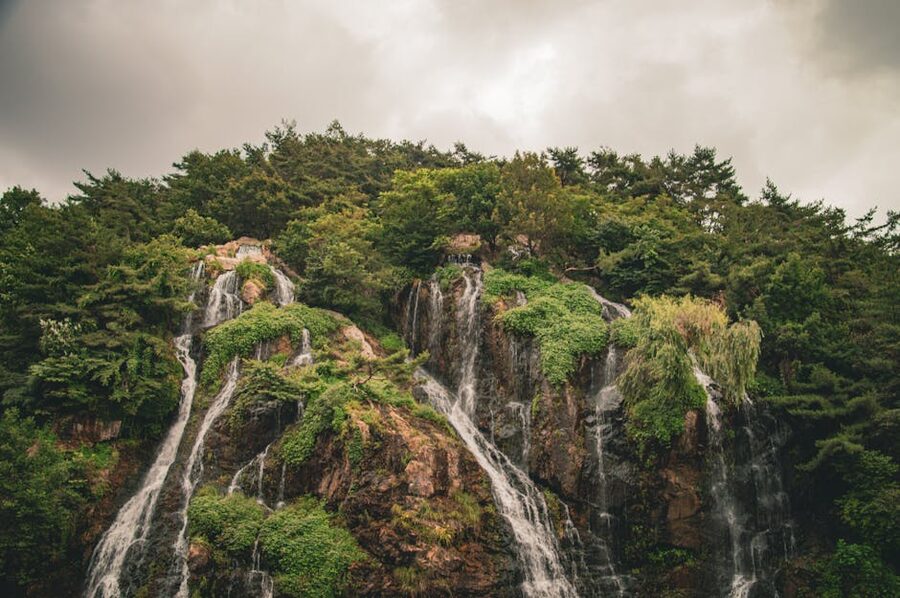
Stops usually include Cheonjiyeon Waterfall (which translates as “heaven-meets-earth pond”), Jeongbang Waterfall (one of only a handful in Asia that empties directly into the sea), and sometimes the Jungmun Daepo Coast columnar joint or Oedolgae Rock.
What makes the southern loop different is the jungle — Seogwipo sits in a micro-climate that’s much warmer and wetter than the north of the island, so you get sub-tropical vegetation, palms and cycads growing wild next to the waterfall paths. It feels more like Okinawa or Taiwan than Korea.
Pros:
- Best waterfall coverage on Jeju — Cheonjiyeon and Jeongbang in one day
- Jeongbang emptying into the sea is one of the most photogenic spots on the island
- Seogwipo south coast has a completely different vibe from the north
- 4.9-star rating is the highest of all Jeju tours we tracked
- Smaller review count but consistently high satisfaction
Cons:
- Overlaps partially with the Western & Southern tour (some stops like Jungmun can appear on both)
- Drive from Jeju City to Seogwipo is ~50 minutes each way
- Waterfalls have entrance fees not included in the tour price (usually ₩2,000-2,500 each)
Who should book this: Waterfall hunters, photographers, and anyone who’s already done the Eastern tour and wants something geographically different on day two.
Which Tour Should You Pick?
If you’re skimming, here’s the one-line answer: book the Eastern UNESCO tour if you have one day, add the Western & Southern tour on day two, and keep the Southern Waterfalls tour in your pocket for day three. That’s the exact order I’d do it in and the one most readers who email us after their trip say worked best.
If you’re the kind of traveller who likes a table, here’s how they stack up:
- Best first-day pick: Eastern UNESCO (covers the most iconic sites)
- Best photography: Western & Southern (Jusangjeolli cliffs are unbeatable)
- Best for families: Western & Southern (Hallim Park is kid-friendly)
- Best for foodies: Eastern UNESCO (black pork lunch is the best included meal)
- Best for waterfalls: Southern Top UNESCO (obvious)
- Best for a rainy day: Eastern UNESCO (Manjanggul Lava Tube is underground, so weather-proof)
What’s Actually On A Jeju Day Tour (The Real Itinerary)
Every booking platform writes these itineraries in the same vague tour-brochure language, so here’s what the Eastern UNESCO tour actually looks like, hour by hour, based on the version I did and what readers have reported back.
8:30am: Hotel pickup from central Jeju City. The minibus does a loop of 4-6 hotels and picks up other guests. Plan for the tour to actually start moving around 9:00am once everyone is on board.
9:45am: First stop is usually the Haenyeo Museum or a coastal viewpoint where you can see women divers working if the tide is right. This is genuinely interesting — the haenyeo are a UNESCO Intangible Cultural Heritage in their own right, some of them are in their 80s, and they free-dive for shellfish without oxygen tanks.
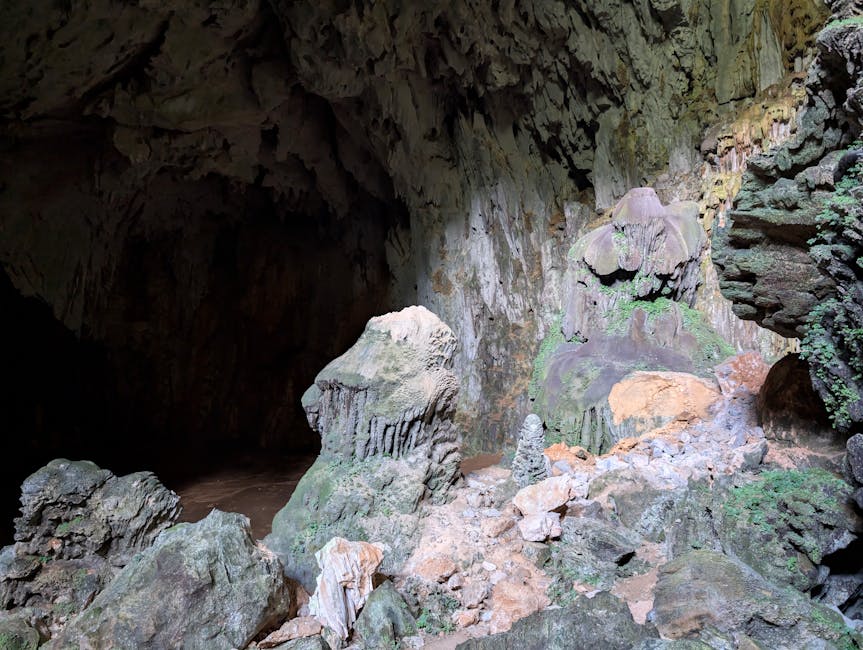
10:30am: Manjanggul Lava Tube. About an hour here — you walk 1km down into the tube and 1km back. The tube is 7.4 million years old, 23-ish metres wide at its biggest, and ends in a 7.6m lava column that’s the tallest in the world. Bring a light jacket because it’s a constant 11°C inside.
12:00pm: Lunch. Usually Jeju black pork BBQ at a family-run restaurant. The black pork is a heritage breed that lives longer and eats a different diet than mainland pigs, and it genuinely tastes different — richer, with more collagen. Vegetarian options exist but they’re limited, so if you don’t eat pork give the tour operator 48 hours notice.
1:30pm: Seongsan Ilchulbong. This is the “sunrise peak” and the icon of Jeju. Climbing time is 20-25 minutes up stone steps to the crater rim, where you get a panoramic view of the green crater bowl and the east coast stretching away. The climb is moderate — most people of reasonable fitness can do it. Give yourself 60-75 minutes including the descent and the walk back.
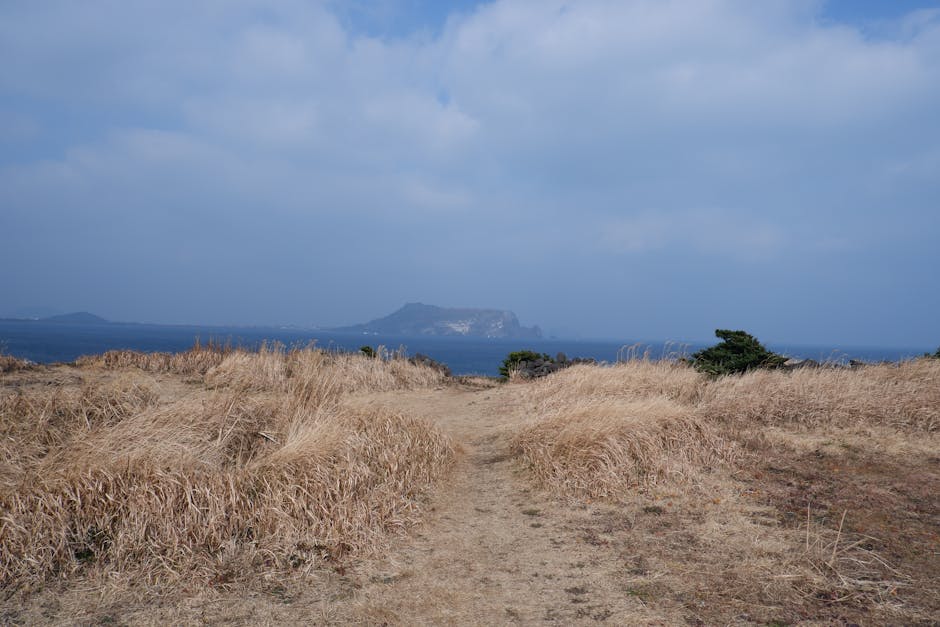
3:30pm: Seopjikoji headland or the Light & Art Museum (seasonal). Seopjikoji is a grassy clifftop where they filmed the K-drama “All In” and you can see Seongsan Ilchulbong from a different angle across the water. Good for 45 minutes of wandering.
5:00pm: Final stop is usually a tangerine farm or a sunset viewpoint depending on the season. Jeju tangerines are a thing — the island grows 90%+ of Korea’s citrus and it’s weirdly good.
6:30pm: Drop-off back at central Jeju City hotels. You’ll be hungry, tired and surprisingly well-informed about shield volcanoes.
Getting To Jeju In The First Place
Jeju is an island, so you’re flying. There are no ferries worth your time unless you specifically want to take one from Wando or Mokpo (they’re slow, often cancelled for weather, and not cheaper than the flight).
The route from Seoul Gimpo to Jeju is the busiest air route on earth — more than 14 million passengers a year — so flights are frequent (every 15-20 minutes in peak season), cheap (₩40,000-80,000 one-way if you book ahead on Jin Air, Jeju Air or T’way), and take about 65 minutes. Incheon to Jeju also exists but Gimpo is the preferred airport because it’s closer to central Seoul.
From Busan, the flight is 55 minutes on the same airlines, usually ₩50,000-90,000. Book directly on the airline websites rather than through an aggregator — the aggregators add fees and sometimes can’t handle Korean mobile verification.
Jeju International Airport is on the north side of the island, a 15-minute taxi ride (₩6,000-8,000) from central Jeju City where most of the hotels and tour pickup points are.
Where To Stay On Jeju
Pick a base in either Jeju City (north) or Seogwipo (south) depending on which tours you’re taking. For the Eastern and Western tours, Jeju City is better — all the minibus pickups happen there. For the Southern Waterfalls tour, either base works because the tour loops through both.
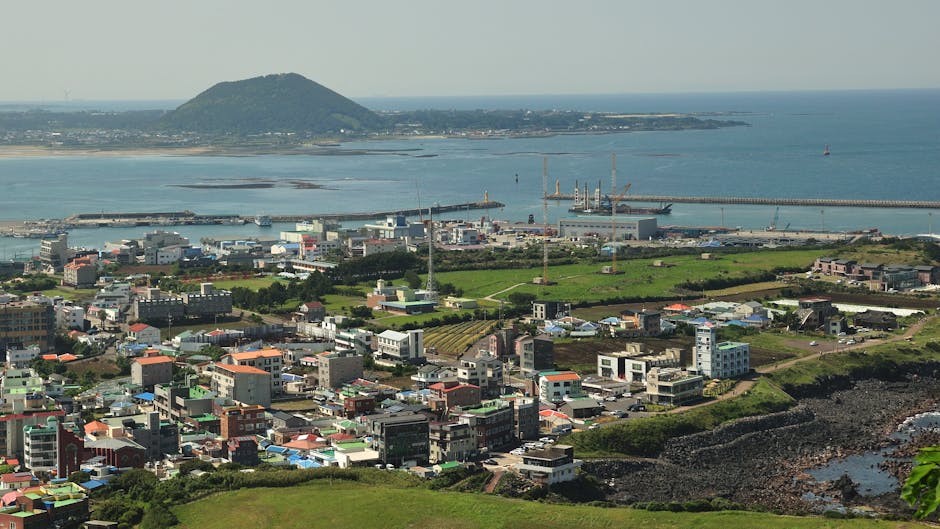
I stayed in Jeju City near the Dongmun Traditional Market, which turned out to be a great call — the market comes alive at night with street food stalls serving hairtail fish tempura, black pork skewers and abalone rice balls, and you can walk off the minibus straight into dinner. Most of the mid-range hotels in the area are in the ₩80,000-150,000 range (US$60-115) and include breakfast.
If you want waterfall and cliff access without the morning drive south, Seogwipo is prettier — it sits right on the south coast with Jeongbang Waterfall a 10-minute walk from the town centre. Hotel prices are similar to Jeju City.
When To Go
Jeju has four proper seasons and they’re all pretty different. Here’s the honest breakdown:
Spring (March-May): The best window. Cherry blossoms in late March, canola fields blooming yellow in April, rapeseed flowers everywhere by May. Temperatures are 15-22°C, rain is minimal and the hiking is perfect. Book tours 5-7 days ahead because locals also know this is peak season.
Summer (June-August): Hot, humid and rainy. June is monsoon (jangma) season with almost-daily downpours. July and August are swim-and-beach weather (Jeju has the only proper swimming beaches in Korea) but also peak Korean domestic holidays, so prices spike and everything is crowded. Typhoons are a real risk in August.
Autumn (September-November): My personal favourite. September can still be warm (22-25°C), October is crisp and clear, and November brings autumn colours to Hallasan. Tangerines are harvested in October-November and that’s when you’ll see roadside stalls everywhere selling them for ₩3,000 a bag.
Winter (December-February): Cold (5-10°C during the day, sometimes below zero at night), windy, and Hallasan is often capped with snow. The upside is zero crowds, cheaper flights, and camellia flowers blooming in Udo and the southern parks. The downside is that some ferries to Udo and Mara Island get cancelled for weather.
How Much Does A Jeju Day Tour Actually Cost?
The three tours I listed are all $55 per person, which is priced in USD on GetYourGuide but works out to about ₩73,000-75,000 depending on the exchange rate on the day. That includes the 10-hour minibus tour, English-speaking guide, hotel pickup and drop-off, and lunch. It does not always include:
- Entrance fees to Seongsan Ilchulbong (₩5,000 adults)
- Entrance to Manjanggul (₩4,000 adults)
- Entrance to the waterfalls on the southern tour (₩2,000-2,500 each)
- Drinks or snacks bought during stops
Budget an extra ₩15,000-20,000 per person for entrance fees on top of the tour price. Even with those added, you’re looking at $70ish total for a full day of transport, guiding and lunch, which is cheaper than renting a car and a whole lot less stressful than driving yourself.
If you’re travelling as a group of 3-4, a private day tour (not one of the three above) can sometimes work out similar per-person and gives you full schedule flexibility. Those run about ₩250,000-300,000 for the vehicle regardless of group size.
Things To Know Before You Book
A few honest notes based on what people email us about after their trip.
1. Confirm pickup the night before. GetYourGuide will send you a voucher with the operator’s phone number. Message them on KakaoTalk the evening before with your hotel name in both English and Korean characters — most Jeju hotels have two names and the guide needs the Korean one to find it in GPS.
2. Bring cash for entrance fees. Not all of the Jeju attractions take cards (especially the smaller waterfalls and Udo ferry), and ATMs outside central Jeju City can be patchy. Pull ₩50,000-100,000 at the airport.
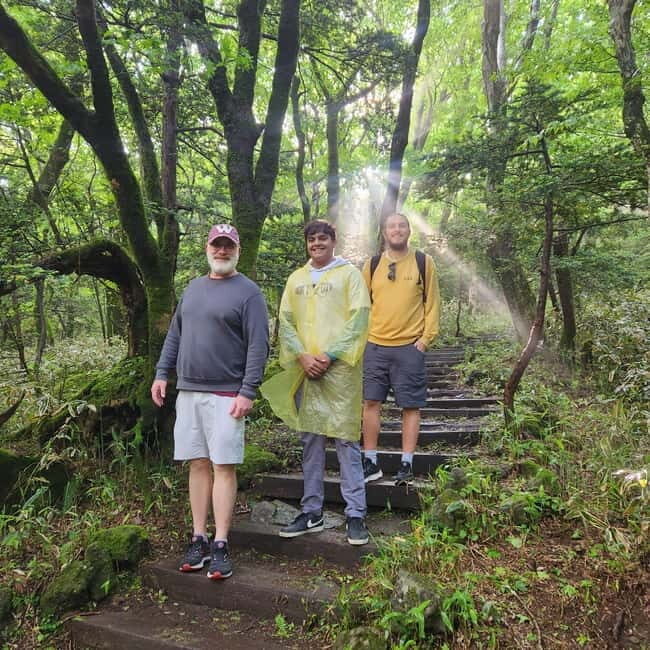
3. The weather changes fast. Hallasan makes its own micro-climate. Bring a light rain jacket even in summer, and a warm layer in winter. Manjanggul is always cold.
4. Real shoes, not sandals. Seongsan has stone steps, Manjanggul has wet uneven basalt and you’ll be walking 3-5km across the day.
5. Vegetarians should request a substitute meal 48 hours ahead. The default lunch is black pork. Tour operators can swap it for bibimbap or abalone porridge if you give notice.
6. Peak season books out. In April-May and September-October, the top-rated tours can sell out 4-5 days ahead. Book as soon as your flight is confirmed.
How Jeju Fits Into A Wider Korea Trip
Most people doing Jeju are doing it as a 2-3 day addition to a bigger Korea trip that includes Seoul and maybe Busan. That’s the right approach. Jeju is wonderful but a week on the island is too much unless you’re specifically there to hike Hallasan, surf, or scuba dive.
The clean way to structure it: 4-5 days in Seoul (where you’d do the classic Gyeongbokgung and Bukchon sightseeing loop, a DMZ day tour, a Seoul night market food tour, and maybe a K-drama or BTS-themed day trip), then 2-3 days in Busan including a day trip to Gyeongju, and finally fly to Jeju for 2-3 nights to do the tours above. Total trip: 9-12 days, which is the sweet spot for a first-time Korea visit.
If you’re extending further into Asia afterwards, Jeju is actually closer to Japan than to most of Korea, and there are direct flights to Fukuoka, Osaka, and Tokyo that hook you neatly into a Kyoto bus tour, Mt Fuji day trip, or wider Japan itinerary. Something to think about if you’re a points-and-miles planner.
One Last Thing About The Haenyeo
I mentioned the haenyeo divers twice already and I want to come back to them, because they’re the thing that stuck with me most from the island. These are women — mostly in their 60s, 70s and 80s — who free-dive without scuba gear to harvest abalone, sea urchin, octopus and seaweed. They can hold their breath for two minutes and dive to 10-20 metres.
They’ve been doing this on Jeju for at least 1,500 years, and in the 1960s they were the primary breadwinners for most of the island’s coastal households.
Today there are fewer than 4,000 of them left, almost all over 60, and UNESCO lists the practice as Intangible Cultural Heritage. The Eastern UNESCO tour usually stops at the Haenyeo Museum or a lookout where you can watch a group working.
If you can arrange it, try the live-caught seafood at one of the haenyeo-run restaurants near Seongsan — the abalone porridge is about ₩15,000 and comes from shellfish that was underwater 40 minutes earlier. It’s the closest thing I’ve had in my travel life to a genuinely unbroken 1,000-year-old food culture.
Book the Eastern UNESCO tour, wear real shoes, bring ₩20,000 in cash for entrance fees, and don’t fly out of Jeju without trying the black pork and the tangerine juice. That’s the whole guide in one sentence. If you want the detailed version you just read all 4,000 words of it. Have fun out there — Jeju is one of those places that sticks.