
The Korean Demilitarized Zone is, technically, still an active war zone. The Korean War ended in 1953 with an armistice — a ceasefire — and never a peace treaty, which means the two sides are legally still at war more than seventy years later. You are crossing into a buffer that is four kilometers wide, 250 kilometers long, and contains roughly two million landmines.
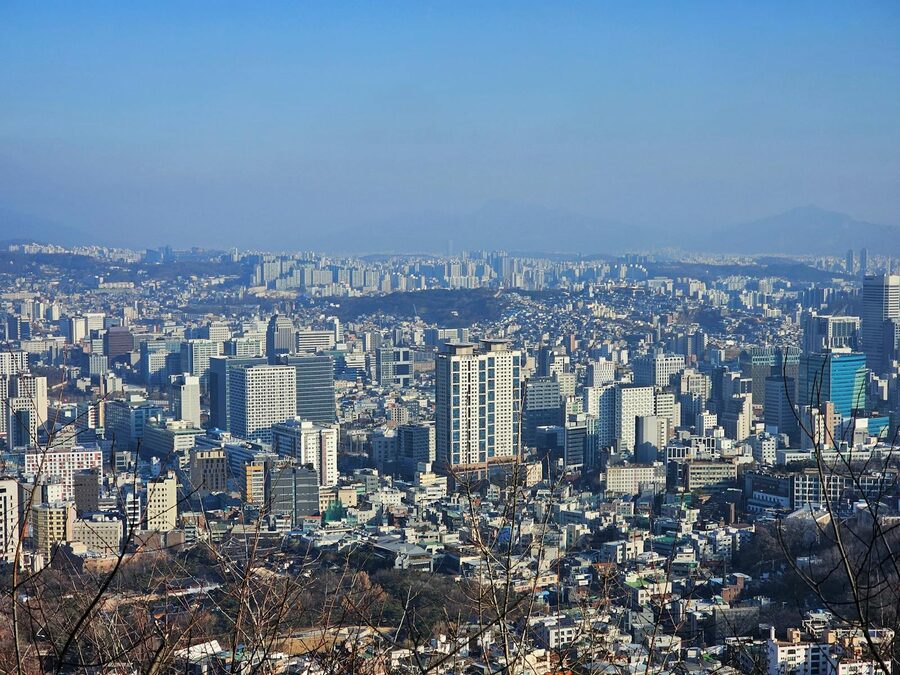
And yet thousands of travellers do it from Seoul every single day. A DMZ tour from the capital is one of the most booked activities in the country, and for good reason. It is an hour and a bit on a coach, a handful of checkpoints, and then you are standing in a place where the 20th century just froze and forgot to thaw.
I have done the tour twice, once in winter when the Imjin River was frozen solid and once in high summer when the binoculars at Dora Observatory fogged up every ten seconds. This guide walks through what you actually get, what the stops are, how to book the right operator, and which three tours are worth your money right now.
Short on time? Here are my top 3 picks:
Best overall: No-Shopping DMZ Morning Half-Day Tour — $29.75. Five-star rated, no amethyst shop detour, back in Seoul by lunch.
Best full-day: DMZ, 3rd Tunnel and Suspension Bridge Tour — $50. Seven to nine hours, adds Gamaksan if you want a proper day out.
Best group experience: DMZ Group Tour with Suspension Bridge — $35. Includes the Gamaksan suspension bridge walk for not much more than the basic half-day.
- How DMZ Tours from Seoul Actually Work
- The Stops Explained — What You Actually See
- Imjingak Peace Park
- Third Infiltration Tunnel
- Dora Observatory
- Dorasan Station
- Gamaksan Suspension Bridge (optional)
- Half-Day vs Full-Day vs JSA — Which Tour to Book
- The Best DMZ Tours from Seoul to Book Right Now
- 1. No-Shopping DMZ Morning Half-Day Tour — .75
- 2. DMZ Group Tour with 3rd Tunnel & Suspension Bridge —
- 3. Seoul DMZ 3rd Tunnel & Optional Suspension Bridge Tour —
- When to Visit — Weather, Season, and Bookings
- How to Get There from Seoul (Short Version: The Tour Picks You Up)
- Tips That Will Save You Time and Hassle
- What You’ll Actually See (and Feel) Inside
- While You’re in the Region
How DMZ Tours from Seoul Actually Work
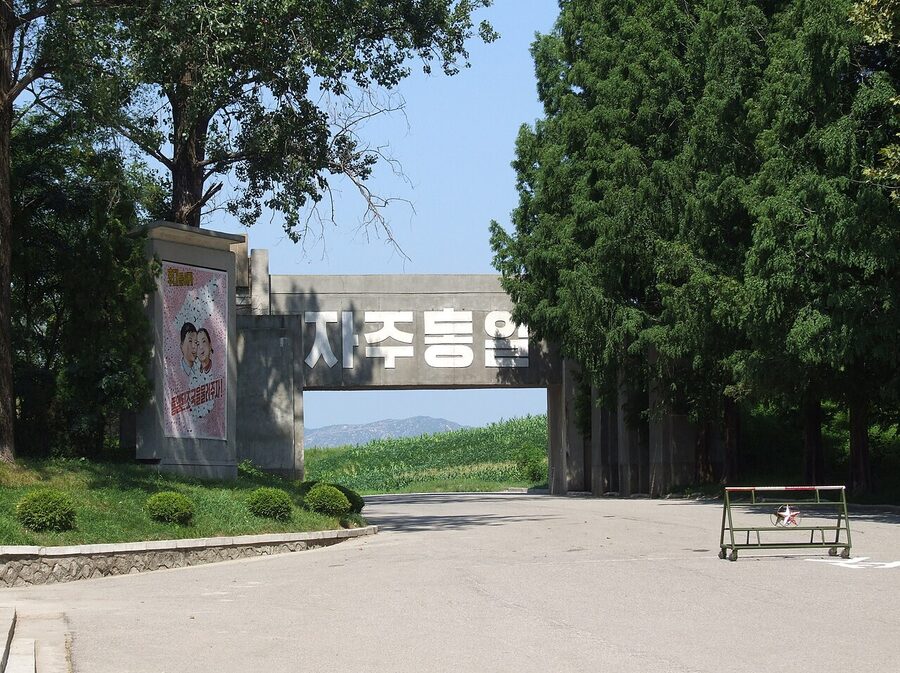
You cannot drive yourself to the DMZ. The civilian control line starts well before Imjingak and you need a permit to cross it, which is only issued to registered tour operators. That is why every single DMZ visitor from Seoul — backpacker, honeymooner, grandad — is on some version of a packaged tour.
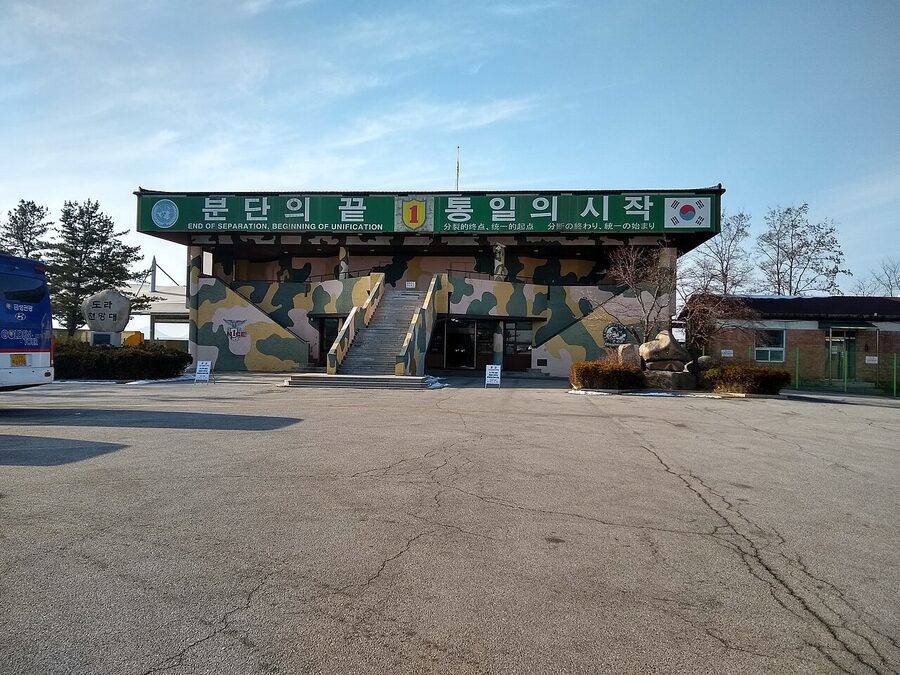
The standard half-day itinerary is: pick-up from central Seoul between 7am and 8am, coach to Imjingak Peace Park, quick stop at the Bridge of Freedom, drive through the first checkpoint, Dora Observatory, Third Infiltration Tunnel, Dorasan Station, then back to Seoul by roughly 2pm. Full-day tours add a lunch stop, the Gamaksan Suspension Bridge, or the Unification Village.
What to bring: your actual passport, not a photocopy. They check it at the checkpoint and they will refuse you entry if you forgot it at the hotel. I watched it happen to a guy from Toronto in 2024 and he spent the whole morning on a bench at Imjingak drinking vending-machine coffee while the rest of us went in.
Dress code: no sleeveless tops, no ripped jeans, no flip-flops, no slogan t-shirts. The Korean military takes this surprisingly seriously. I have been told off for shorts on a JSA trip, though standard DMZ tours are a bit more relaxed.
The Stops Explained — What You Actually See
Imjingak Peace Park
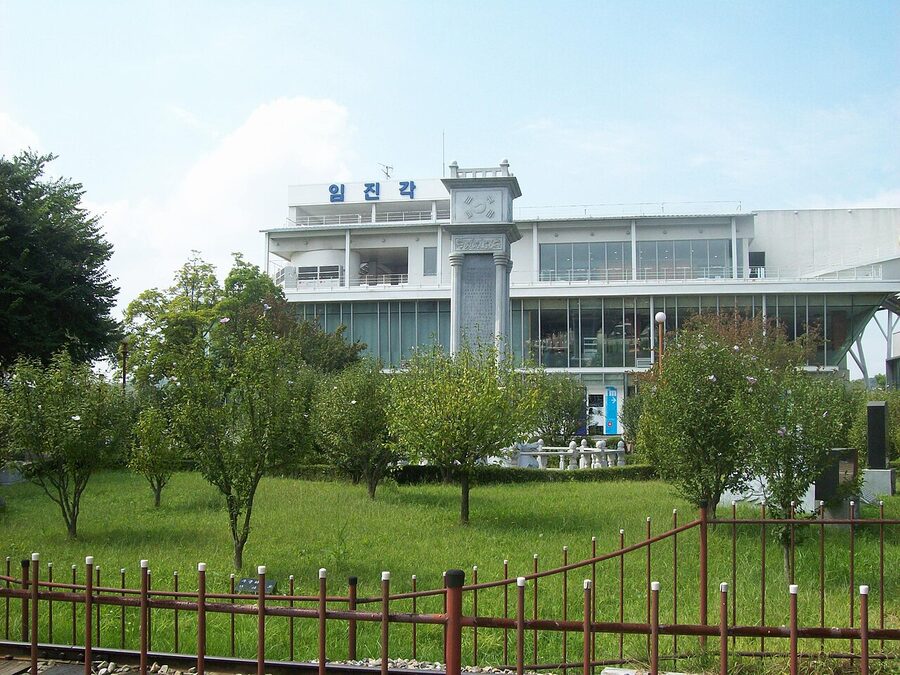
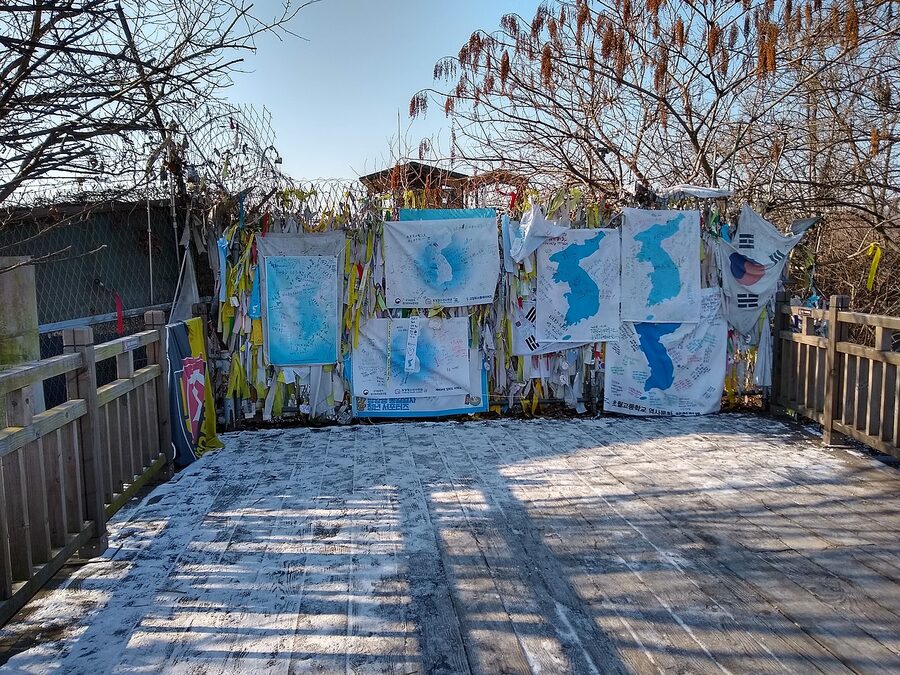
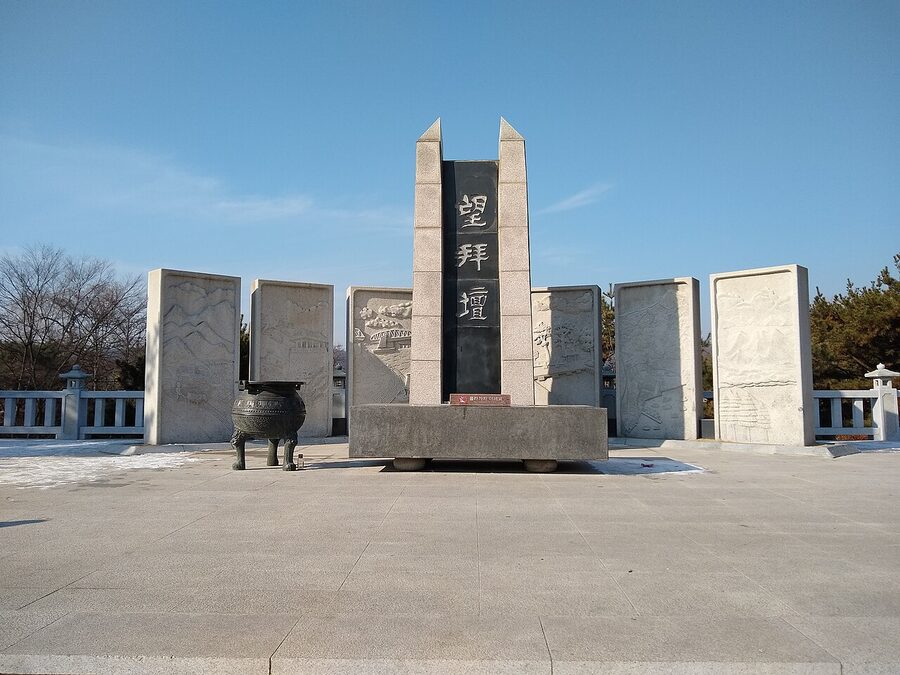
First stop on almost every tour. Imjingak is on the southern side of the Imjin River and is technically outside the DMZ itself, but it is where the packaged experience starts. The park has the Bridge of Freedom (where 12,000 prisoners of war were exchanged in 1953), a wall of coloured ribbons left by separated families, a small museum, and — bizarrely — a mini amusement park with a viking-ship ride.
You get about 20 to 30 minutes here. Use it to grab a coffee and a snack because the next stretch is long and the tunnel has no food nearby.
Third Infiltration Tunnel
This is the headline stop and the reason most people book the tour. The tunnel was discovered in 1978, 44 kilometers from Seoul, carved by the North Koreans through solid granite with the apparent intention of sending up to 30,000 troops per hour toward the capital. Four tunnels have been found. Three are open to travellers and this one is the closest to Seoul.
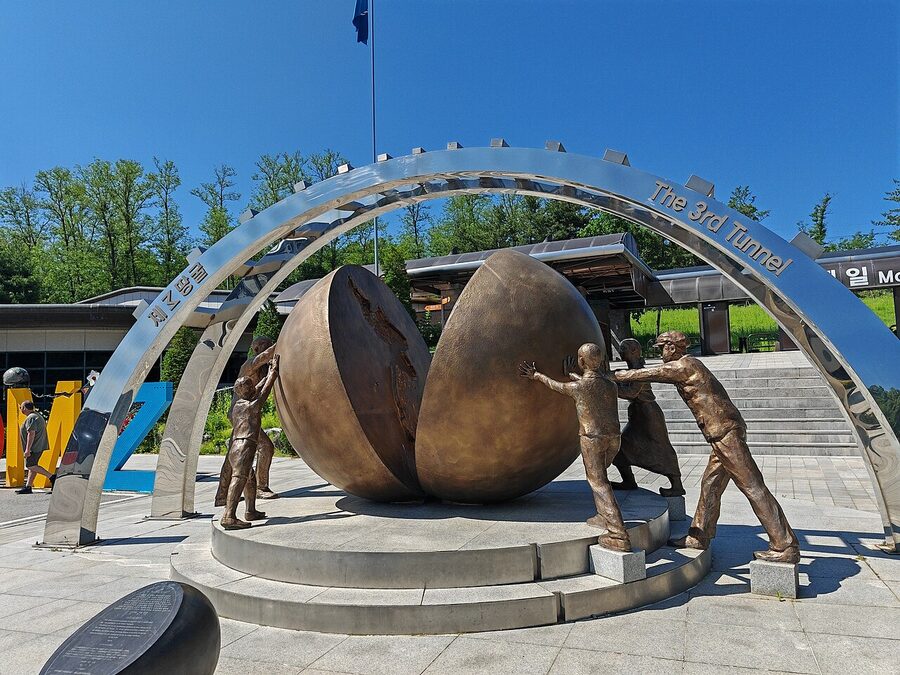
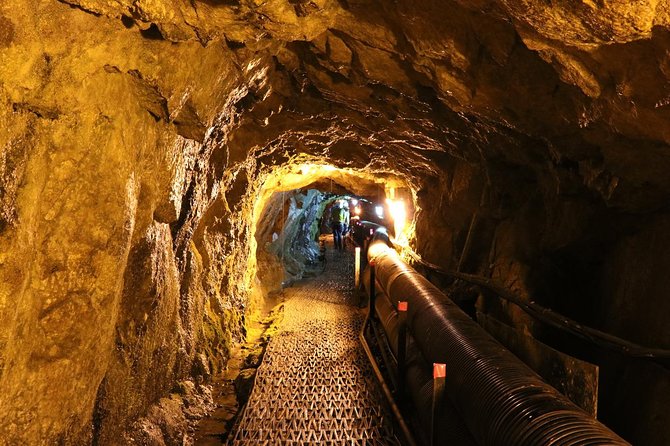
You descend 73 meters underground through a long, steep access ramp that some tours let you walk and some force everyone onto a little monorail. Walking is free, the monorail is usually an optional upgrade for about $3 to $5. Honestly, take the walk down — you will feel the slope and it makes the experience.
Once you reach the bottom, you are in the actual infiltration tunnel. It is about two meters high, and I am five foot eleven, and I was crouching hard-hat-first for the entire walk. You can go about 265 meters along it until you hit the third concrete blockade that South Korea built to seal it. North Korea is about 170 meters beyond that.
No photos past the locker room. Phones, cameras, and bags all have to be left in lockers at the top. This is enforced hard. Do not try to sneak a shot; the guides are watching and they will make you delete it or remove the memory card.
Dora Observatory
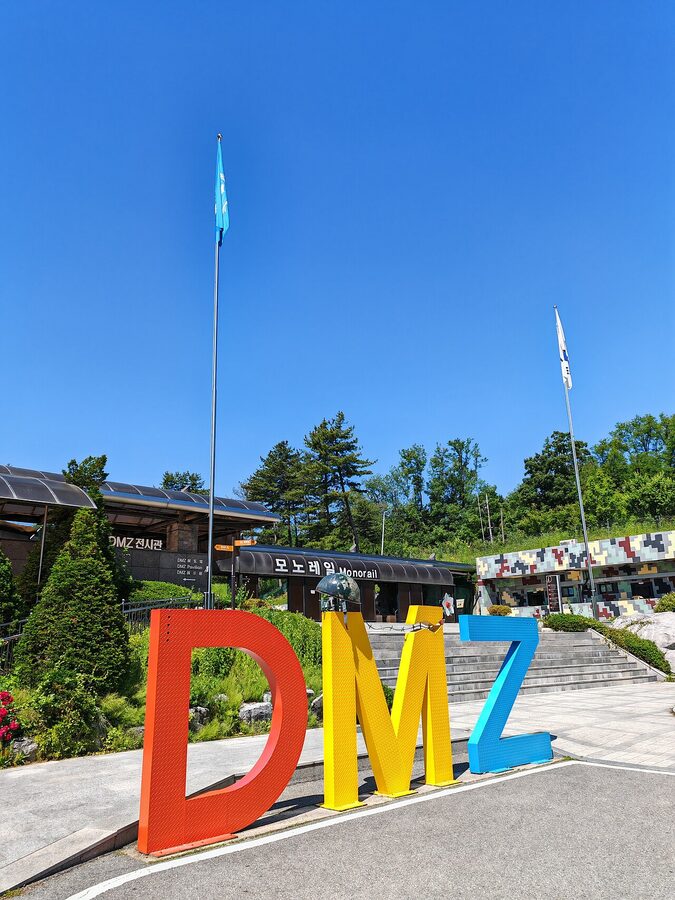
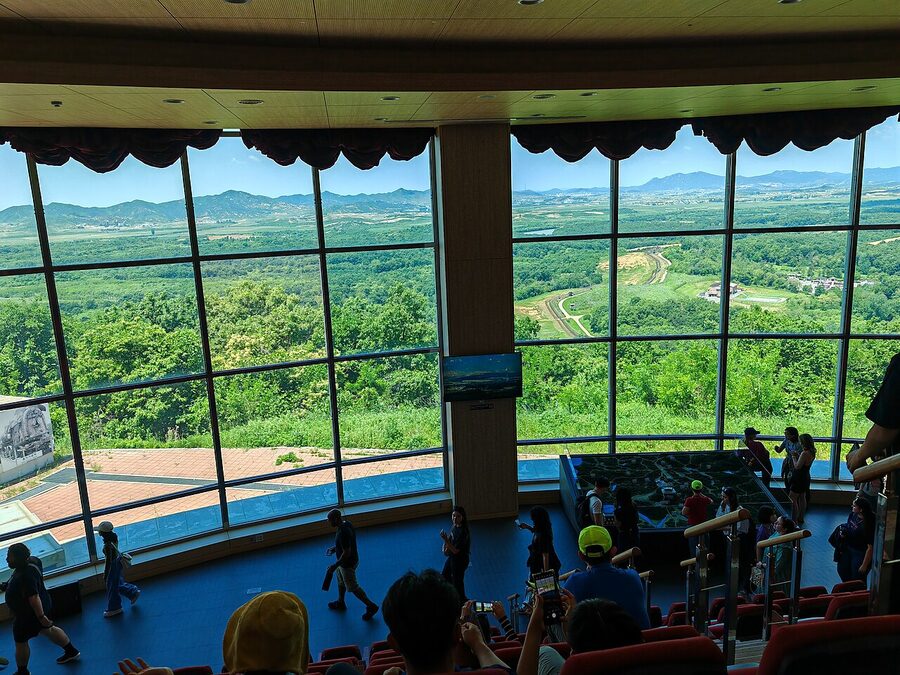
The observatory sits on top of Dorasan, the highest point on the southern side of the DMZ, and it looks directly across at Kaesong in North Korea. On a clear morning you can see Kijong-dong — the propaganda village the North built in the 1950s with loudspeakers and a 160-meter flagpole, and which has almost no actual residents.
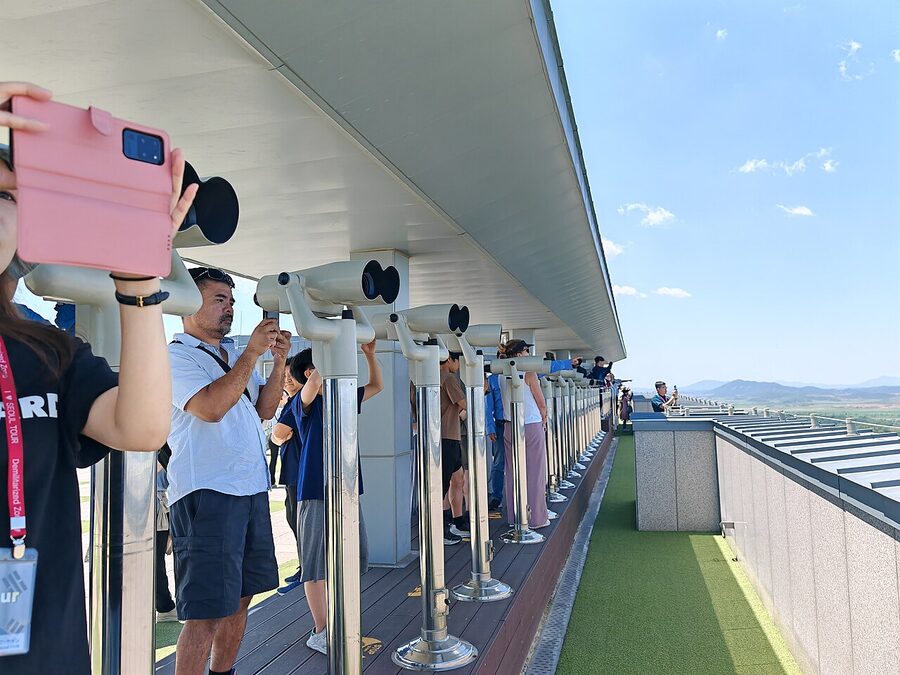
The building was rebuilt in 2018 with a glass front and a cafe. It is now a much nicer experience than the draughty old concrete bunker I visited the first time, but part of me misses that version.
Tip: go to the binoculars first, not the cafe. Everyone heads for the toilets and the snacks on arrival, which means the coin-operated binoculars clear out for about five minutes. Take them while they are free.
Dorasan Station
This was built in 2002, back during a brief period of thawing relations between the two Koreas, and was meant to be the first stop on a reconnected railway line from Seoul to Pyongyang and eventually onward to Europe via the Trans-Siberian. It never happened. The line has been mothballed since 2008.
Today Dorasan is a working station with one direction of track going nowhere. You can buy a souvenir ticket to Pyongyang (~1,000 won), get it stamped, and stand on a platform that has never actually seen a passenger train cross the border. It is moving in a quiet, anticlimactic way that I struggle to put into words.
Gamaksan Suspension Bridge (optional)
The newer tours add this to the itinerary. It is a 150-meter-long suspension bridge across a canyon on Mount Gamak, about 25 minutes from Imjingak. The bridge itself is not a DMZ site — it is in a regular national park — but it makes the half-day feel like a full day and the view across to the northern foothills is genuinely spectacular.
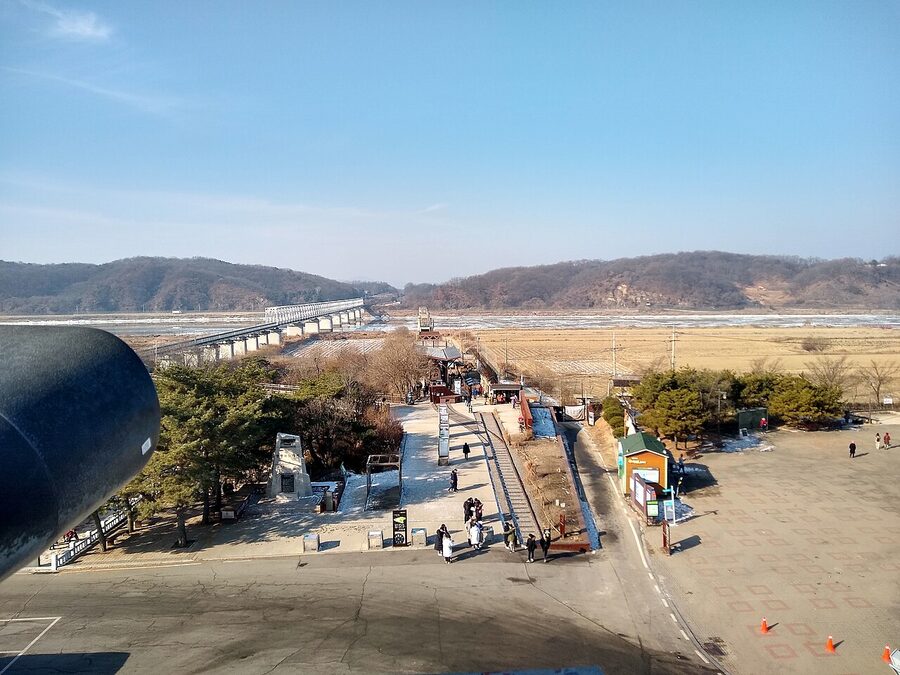
If you are even mildly scared of heights, the bridge wobbles noticeably when people walk on it. My friend refused to go past the first ten meters. I loved it.
Half-Day vs Full-Day vs JSA — Which Tour to Book
There are three broad categories of DMZ tour from Seoul and they are not interchangeable.
Half-day DMZ (5 to 6 hours, ~$30): Imjingak, Third Tunnel, Dora Observatory, Dorasan Station. You are back in Seoul by 2pm and the rest of the day is yours. This is the format most people want. It is the cheapest, the fastest, and hits the famous stops.
Full-day DMZ (7 to 9 hours, ~$50 to $70): Half-day itinerary plus Gamaksan Suspension Bridge, lunch, and sometimes the Unification Village or the Woljeongni Station. Worth it if you like a slower pace, want the photo ops, or are only in Seoul for a few days and want everything in one shot.
JSA / Panmunjom tour (~$80 to $140): This is the one where you actually cross the military demarcation line inside the blue conference huts. JSA tours are suspended for civilian travellers at the moment and have been on and off for years, depending on the political situation. Do not book a generic “DMZ tour” expecting JSA. If you want Panmunjom specifically, search for “JSA tour” and check very recent reviews to confirm it is operating.
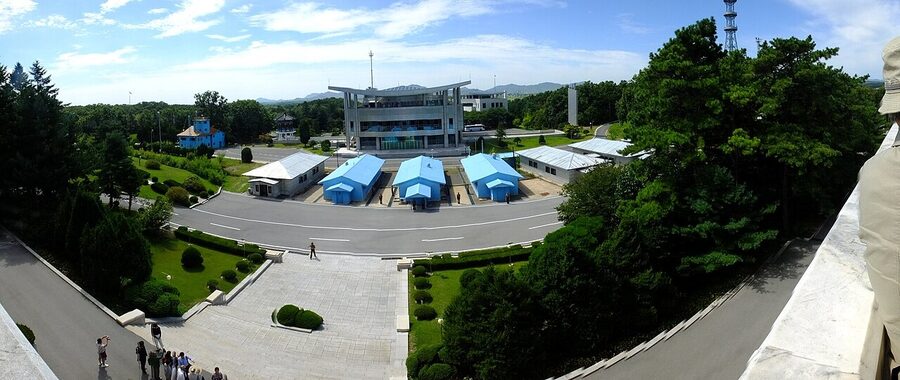
For 90% of travellers, the half-day or full-day DMZ tour is what you actually want. It costs a fraction of a JSA trip, never gets cancelled, and covers the parts most people have seen in documentaries.
The Best DMZ Tours from Seoul to Book Right Now
I have run through the big operators on GetYourGuide and Viator and cross-referenced the ones with the highest review counts and best recent feedback. Three stand out in 2026.
1. No-Shopping DMZ Morning Half-Day Tour — $29.75
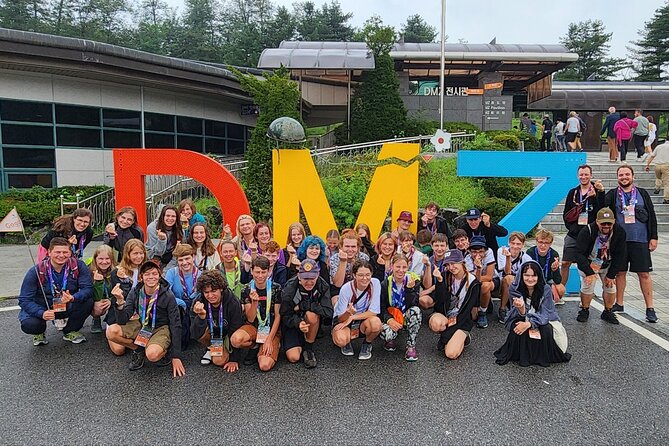
This is the most booked DMZ tour in Seoul and deserves the top slot. Over forty thousand five-star reviews tell a pretty consistent story — proper English-speaking guides, no shopping detours (which is the dealbreaker on cheaper operators), and you are back in Myeongdong in time for a late lunch.
At under $30 it is essentially the baseline price for a decent DMZ tour from Seoul, and almost every other operator on the market is either more expensive or drags you into an amethyst or ginseng shop on the way back. The “No Shopping” in the name is literal and it matters more than you would think.
Pick this one if you want the highlights (Imjingak, Third Tunnel, Dora Observatory, Dorasan), good guiding, and a morning-only schedule so your afternoon is still free.
2. DMZ Group Tour with 3rd Tunnel & Suspension Bridge — $35
This is the mid-range pick. For just $5 more than the basic No-Shopping tour, you also get the Gamaksan Suspension Bridge — which is easily the best photo stop of the day and the thing your Instagram will thank you for.
The group sizes are similar to the first option (around 20 to 25 people in a coach), the itinerary hits all the same DMZ stops, and the guiding style gets the same kind of praise. The review count is lower than our top pick simply because this is a newer listing. The actual quality is on par.
Book this one if the $5 upgrade for the suspension bridge feels worth it to you. It does to me — I would take it over the straight half-day every time.
3. Seoul DMZ 3rd Tunnel & Optional Suspension Bridge Tour — $50
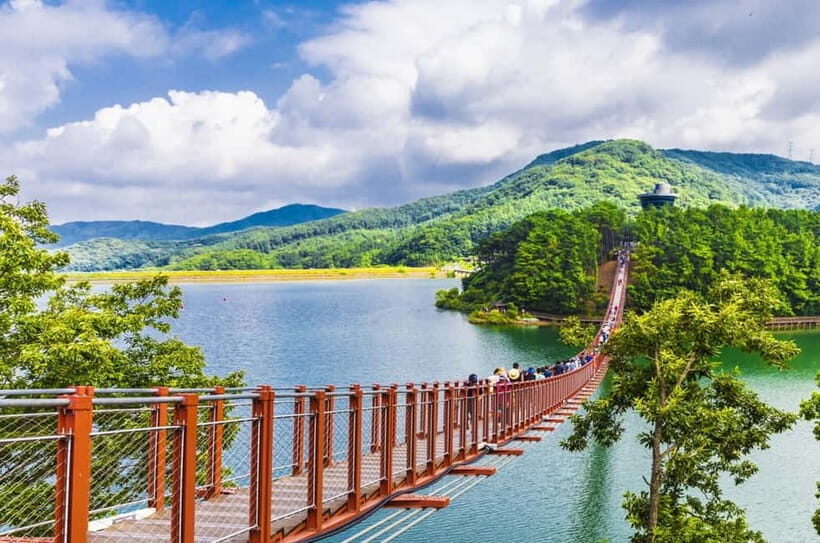
This is the full-day pick. It runs seven to nine hours, covers the same core DMZ itinerary at a much more relaxed pace, and adds the Gamaksan Suspension Bridge as an option you can toggle at booking. There is a proper lunch stop and the guiding consistently gets 4.9-star feedback.
At $50 it is about 60% more expensive than the half-day options but you get genuinely more — more time at each stop, a guide who is not rushing to get you back to Seoul by 2pm, and a structured lunch instead of a vending-machine snack at Imjingak.
Book this one if the DMZ is your main plan for that day in Seoul and you do not want to feel like you are being hustled through a military base on a timer.
When to Visit — Weather, Season, and Bookings
The DMZ is open year-round except for Mondays (most sites are closed) and major national holidays. Booking 48 hours ahead is usually fine in low season, but in summer and over Chuseok you want to book a week out at minimum — tours sell out and you do not want to be that person scrambling at 9pm the night before.
Best season: Late April to early June, or late September to October. Cherry blossoms at Imjingak in April are a genuinely nice surprise and the visibility from Dora is usually at its best in autumn.
Avoid: Mid-July to mid-August. The haze is brutal, the tunnel is the only cool spot in the itinerary, and you will be gasping by the time you get back to the coach. Mondays are a hard no — not just the DMZ, but half the museums in Seoul are shut.
A note on cancellations: the DMZ closes without warning for military exercises, heightened tension, or bad weather. Most reputable operators will refund you or reschedule. Check the cancellation terms before you book anything non-refundable.
How to Get There from Seoul (Short Version: The Tour Picks You Up)
You cannot take the train or bus to the DMZ on your own. The civilian control line means only registered tour operators can cross. Every tour on this page includes pick-up and drop-off from central Seoul — usually from a meeting point in Myeongdong, Hongdae, or near City Hall station.
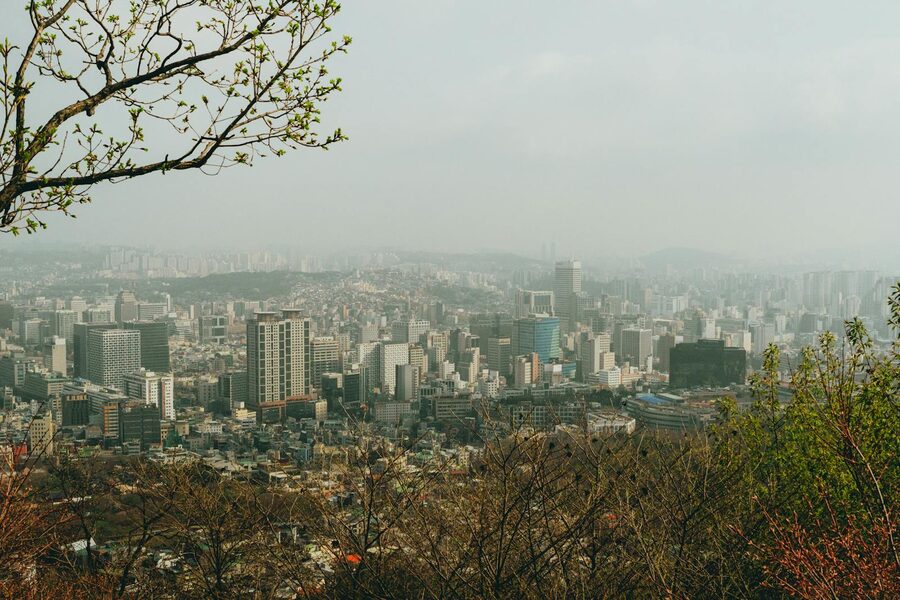
If you are staying further out — say, Gangnam or Jamsil — you will probably need to get yourself to the central meeting point. Most tours will text or email the exact pick-up location the evening before. Read it carefully. I have seen people miss the coach because they went to the wrong Myeongdong exit (there are about eight subway exits that could plausibly be “the” one).
Tips That Will Save You Time and Hassle
Bring your passport, not a copy. I know I said this already but people genuinely still forget and get sent home. No passport, no entry.
Wear layers. The tunnel is a constant 14 degrees Celsius regardless of what it is doing outside. In August you will go from 32-degree humidity to tunnel chill and back in the space of ten minutes.
Bring cash for the binoculars. 500 won coins for the observation deck machines. Card payment is not a thing up there.
Skip the monorail unless you have knee issues. The walk down and up the tunnel access ramp is part of the experience. The ramp is long — about 350 meters — and steep, but doable for most people. The ride is about $5 and it is quick, which means you get less time in the tunnel itself.
Book the English tour specifically. Several operators run Korean-language tours at cheaper rates. Make sure your listing specifies “English-speaking guide” before you pay. The DMZ with no context is just cold rocks and fencing.
Lower your expectations for food. Lunch on the full-day tours is usually at a roadside Korean restaurant with a set menu that is perfectly fine but not a highlight. Eat a big breakfast.
What You’ll Actually See (and Feel) Inside
I have said this to a few friends who were on the fence about booking a tour: the DMZ is not a theme park and it is not really a landmark in the normal sense. You do not come back with postcard shots or a checklist of monuments. You come back with a weird, heavy feeling that you cannot quite shake.
The tunnel is the one stop where the hair goes up on the back of your neck. You are standing in a cramped, damp, hand-carved passage that was built with the specific intention of launching a surprise attack on Seoul. And the evidence is everywhere — the drill marks all pointing south, the coal smeared on the walls when the North tried to claim it was just a coal mine.
Dora Observatory is quieter. You look out across a landscape that honestly could be anywhere in rural Korea — hills, rice fields, the occasional village — and then the guide tells you the tall thing is a flagpole at a village where no one lives, and you have to sit with that for a minute.
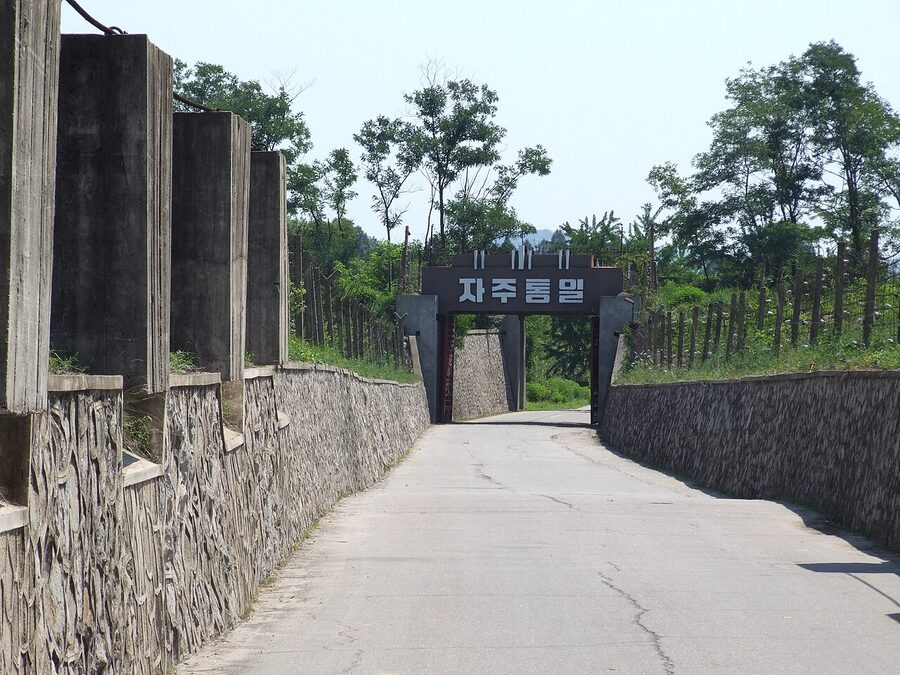
Dorasan Station is the part that got me. An empty, polished, modern train station with a departure board listing Pyongyang. A ticket gate with no one going through it. The line going north into an overgrown embankment. I am not normally a museum crier but I sat down on a bench there for ten minutes in 2024 and just watched other travellers walk past in confused silence.
What surprised me most about the DMZ is how un-theatrical it is. No dramatic soundtrack, no grand monument moment. Just a quiet, careful little tour of an edge of the world that most of us only know from news headlines and documentaries. And then you are back in Seoul eating bibimbap by 3pm. It is jarring, and it sticks.
While You’re in the Region
If you are flying into Seoul from Tokyo or Osaka (the most common route for travellers combining Japan and Korea), it is worth lining up a couple of the easier Japanese booking guides for the start or end of your trip — our Tokyo Imperial Palace walking tour guide and the Asakusa rickshaw guide are both easy half-day activities that pair well with a morning DMZ tour on the Seoul end.
If you are heading down to Kyoto afterwards, the Fushimi Inari hike and the Arashiyama bamboo forest walk are the two most-booked experiences there and our guides walk through which operators to use.
For a proper day trip out of Tokyo, the Nagano snow monkeys day trip is the closest thing Japan has in scale to the DMZ in terms of “you really should book a guided tour rather than DIY.” And if you have a food day in Osaka, our Osaka food tours guide has the same book-this-specific-one structure as this one.
Book the morning DMZ half-day, eat lunch in Myeongdong when you get back, and spend the afternoon at Gyeongbokgung or Bukchon. That is the itinerary I would run with three days in Seoul and one of them marked for the border.