
Seoul gives you a city that runs on the subway. Busan gives you one that runs on the tide. Three hours south by KTX and the whole mood changes — the pace softens, the air smells like salt, and the skyline has gaps where the sea pushes through. A Busan full-day city tour is the easiest way to see why people who’ve done both keep telling you to add Busan to the trip.
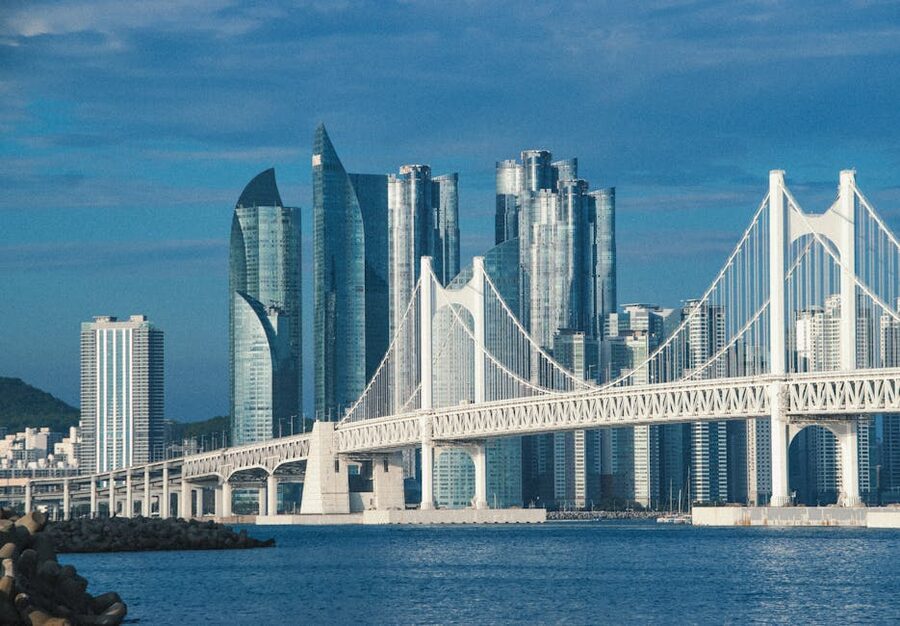
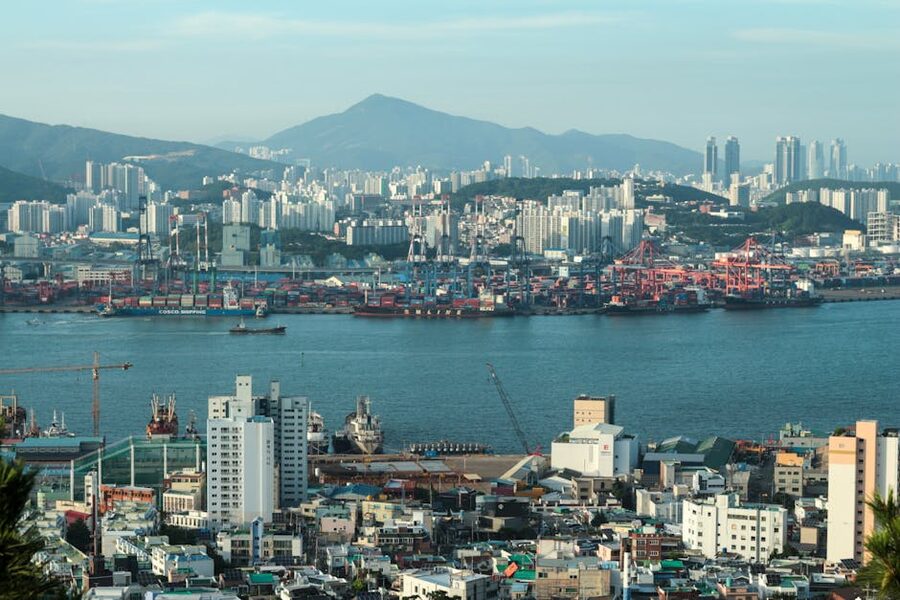
Busan is bigger than it looks on a map. The city spreads over beaches, headlands, mountains, and a working port, with the main sights spaced twenty to forty minutes apart by bus. You can do it yourself on the metro and Naver Map, but one day of self-navigation in a city Google Maps barely works in turns into a lot of bus waiting and backtracking. A city tour sidesteps that — a driver, a guide who speaks English, and a route that hits Gamcheon, Haeundae, and at least one temple before sunset.
- Short on time? Book one of these
- Why a city tour, not the city tour bus
- Getting to Busan in the first place
- What a good Busan city tour actually covers
- Three Busan full-day tours I’d actually book
- 1. Busan: Full-Day City Tour with Taejongdae, Gamcheon & More — around
- 2. Small Group Full Day Busan Tour (Max 6 Pax) — around
- 3. Busan: Coastal Wonders & Cultural Gems Tour with Sky Capsule — around
- The Sky Capsule and why it sells out
- Gamcheon Culture Village — the context most tours skip
- Taejongdae and the cliffs at the end of Yeongdo
- What you’ll actually eat
- When to go, and when not to
- Private tour or group tour
- Beomeosa — the temple most tours skip
- How to book — the actual logistics
- One-day, two-day, or three-day Busan
- Night tours and the Gwangan Bridge lights
- What this tour is NOT
- If you liked this, here’s what else to book while you’re in Korea
Short on time? Book one of these
If you just want the booking link and you’ll sort the details later, these are the three I’d point a friend at first.
- Busan Full-Day City Tour (Taejongdae, Gamcheon & more) — around $51: The best all-rounder. Taejongdae cliffs, Gamcheon Culture Village, Songdo Skywalk, plus the beach train. Check availability
- Small Group Full Day Busan Tour (Max 6 Pax) — around $99: Pricier, but it’s a proper small group with a guide who’s actually free to chat. Korean BBQ lunch included. Check availability
- Coastal Wonders & Cultural Gems with Sky Capsule — around $34: The budget pick that still gets you the Sky Capsule ride, Oryukdo Skywalk, and Gamcheon. Check availability
Why a city tour, not the city tour bus
First thing to clear up: when people say “Busan city tour” they usually mean one of two very different things. The Busan City Tour Bus is the red double-decker hop-on, hop-off run by the Busan Tourism Organization. It’s cheap, about 15,000 won for a day pass, and it loops Haeundae to Taejongdae on a few fixed routes.
The other kind — what this article is about — is a guided full-day tour where a minivan or small coach picks you up, a guide talks you through each stop, and you get taken between sights without waiting for the next bus in the loop. Same city, very different day.
If you have three or more days in Busan, the hop-on bus makes sense as one layer of your trip. If you have one day, the guided tour wins on pure efficiency. You’re not guessing which bus leg still has time to fit in. You also get a guide who can explain why Gamcheon’s houses are painted like that, and what makes Haedong Yonggungsa different from every other sea-facing temple in Korea.
Getting to Busan in the first place

Most people reach Busan one of three ways. The KTX high-speed train from Seoul is the standard — about 2h 40m to 3h depending on the service, roughly 60,000 won one way, and it drops you at Busan Station which is right in the old downtown. This is what I’d book if I had the choice. The Korail booking app wants a phone number to send the verification code, so have your SIM sorted before you try — if you haven’t already, a pre-booked Incheon Airport SIM and T-money card lands in your pocket the moment you clear customs.
The domestic flight from Gimpo or Incheon to Gimhae International takes 50 minutes in the air but around three hours door to door by the time you clear security and take the airport train into town. Worth it only if the KTX is sold out or the fares line up oddly in your favour. Cruise passengers docking at Busan Port are the third group — the port’s a ten-minute taxi from Jagalchi, and several of the tours below offer cruise-friendly pickup.
Every full-day Busan tour assumes you’re already in Busan by pickup time. Pickup is usually from a downtown hotel, from Busan Station, or from Haeundae. Check the tour’s pickup zone before you book — if you’re staying in Gwangalli or Songjeong, make sure it’s on the list.
What a good Busan city tour actually covers
There’s a fairly standard Busan one-day route that most full-day tours follow, and for a good reason — it works. You’ll see variations on this loop:
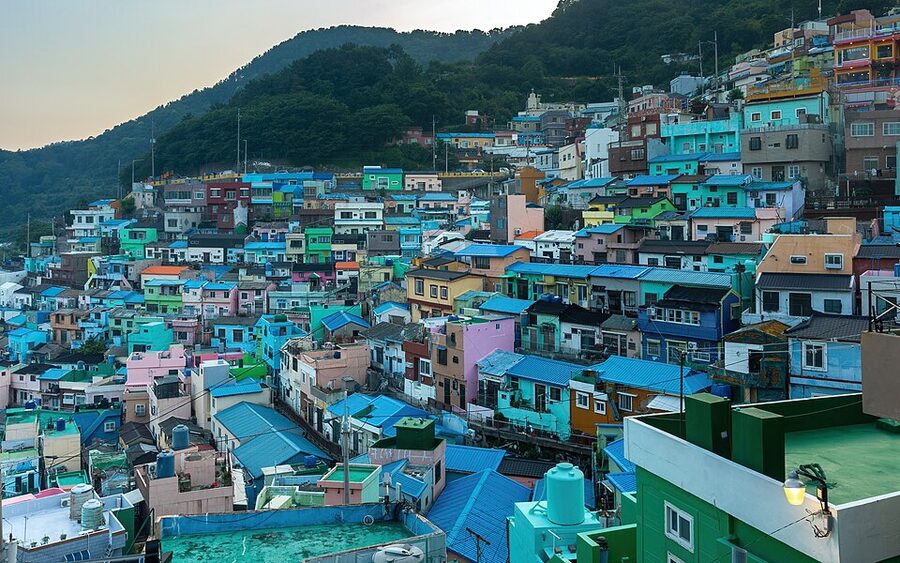
- Gamcheon Culture Village — the rainbow-painted hillside neighbourhood. Former refugee settlement, now Busan’s most Instagrammed spot.
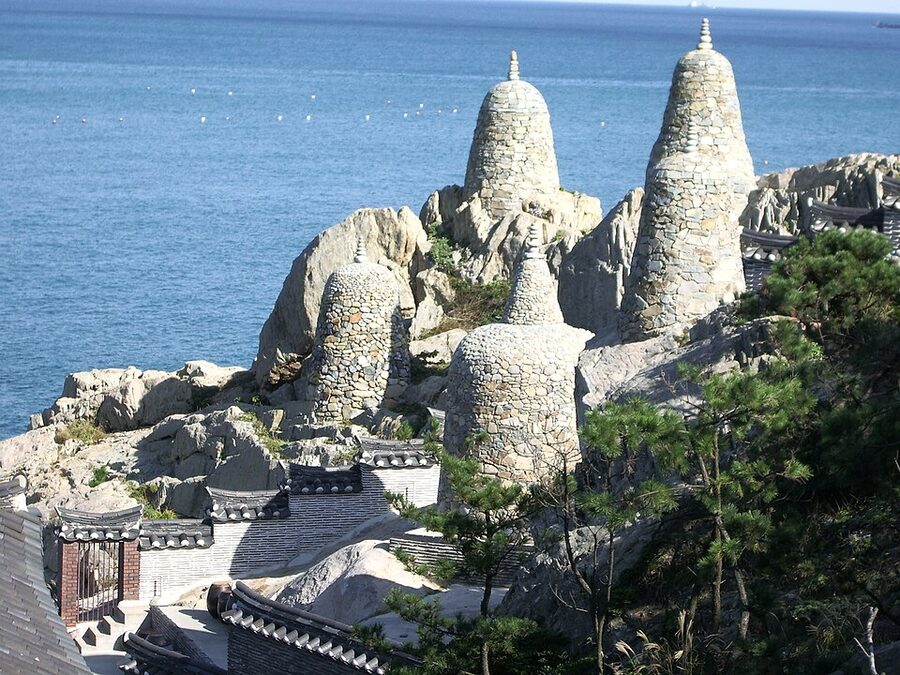
- Haedong Yonggungsa Temple — one of the only oceanside temples in Korea. Built in 1376, rebuilt after the 1592 Japanese invasion.
- Taejongdae — cliffs and pine forest at the southern tip of Yeongdo Island. Best views of the open sea.
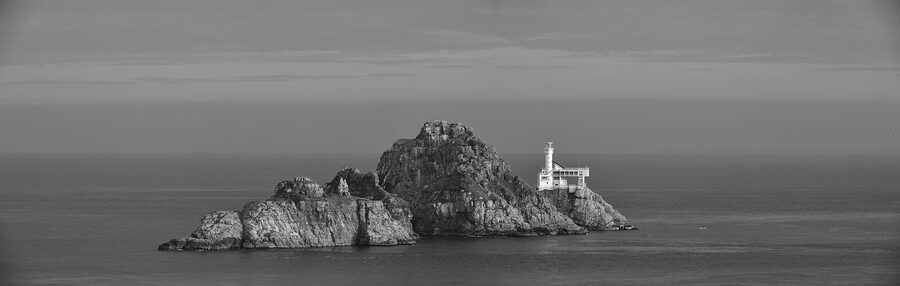
- Songdo Skywalk or Oryukdo Skywalk — glass-floored walkways over the ocean. One or the other, not both.
- Haeundae Blueline Park — the Sky Capsule and beach train. The photogenic bit.
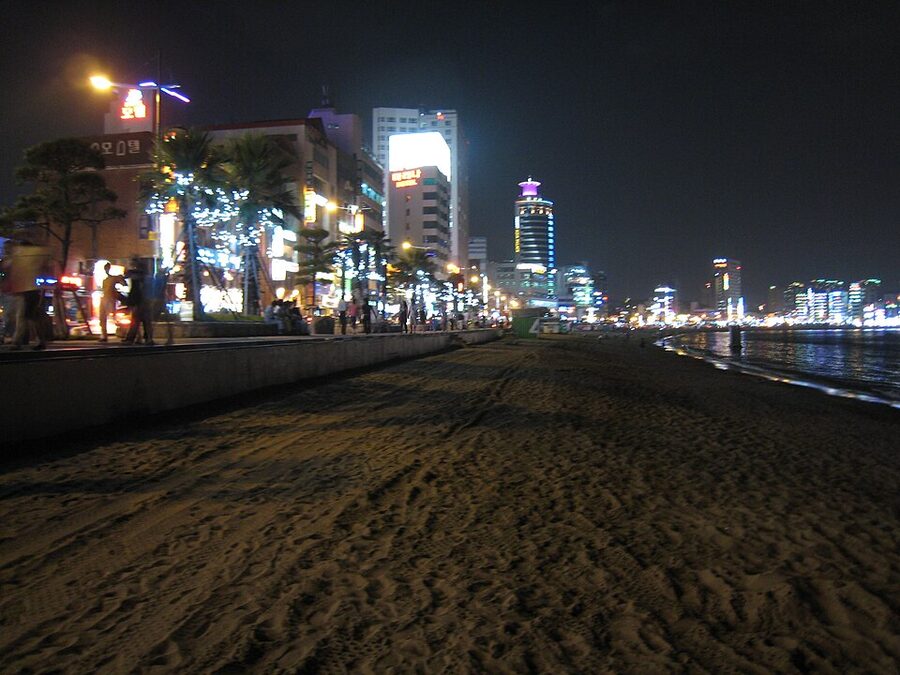
- Gwangalli Beach / Gwangan Bridge — usually the last stop, often at sunset or after dark.
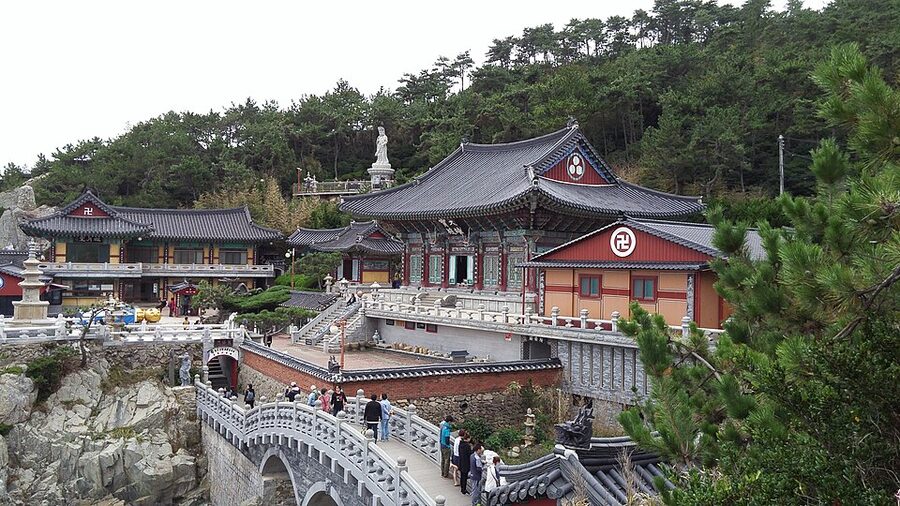
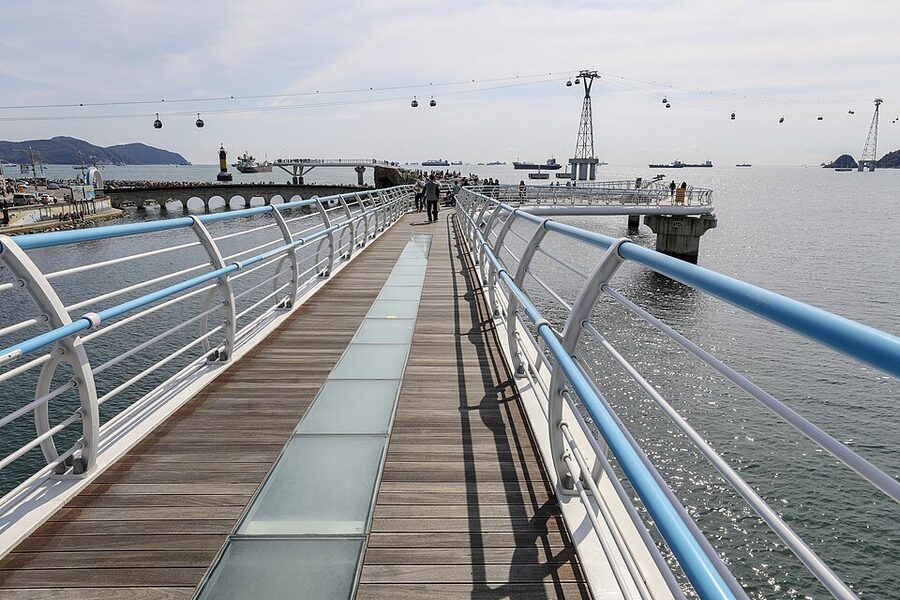
Any tour missing Gamcheon and Haedong Yonggungsa is not a real first-timer Busan tour. Those two are the anchors. Beyond that, tours differ on which skywalk they do, whether they include the Sky Capsule, and how much time they give you at the beach. Read the itinerary before you book — a few tours spend more time at the UN Memorial Cemetery or the Busan Museum than I’d personally want on a first visit.
Three Busan full-day tours I’d actually book
These are the three I’d steer someone toward from the tours we’ve reviewed on the site, in descending order of “book this first.” All three cover the core loop. They differ on price, group size, and how much of the coastal stuff gets in.
1. Busan: Full-Day City Tour with Taejongdae, Gamcheon & More — around $51
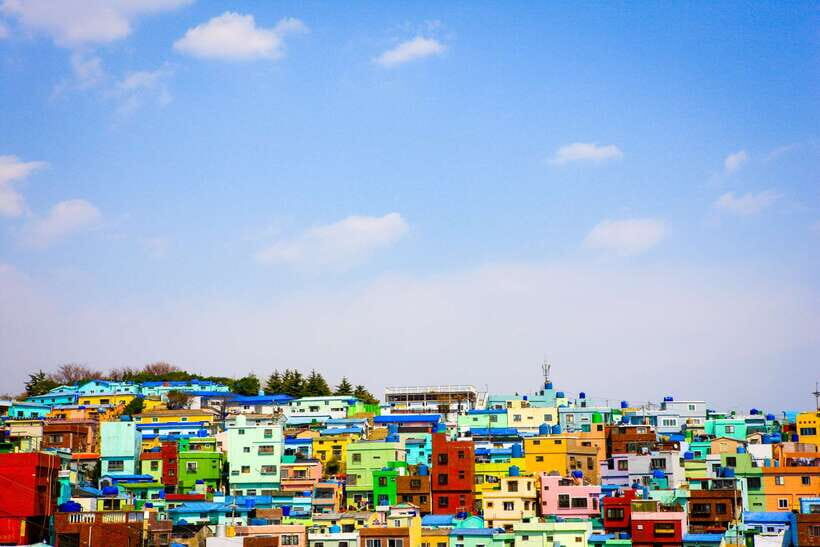
This is the tour I point people at when they ask me which one. It runs around 8 to 11 hours, covers Songdo Skywalk, Taejongdae, Gamcheon, the Haeundae beach train, and usually ends at Gwangalli. Entrance fees and the train ticket are included, which matters more than it sounds — our full review has the breakdown of what’s in the ticket and what isn’t. Guides are consistently strong.
2. Small Group Full Day Busan Tour (Max 6 Pax) — around $99
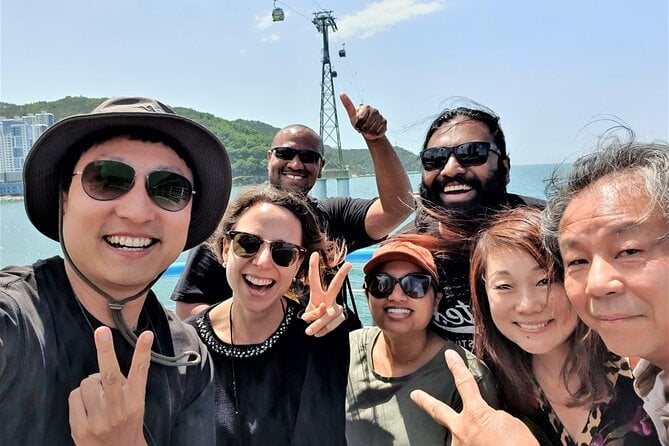
Double the price of the GYG standard, and worth it if you’re a couple or a small family who hates big-group tour dynamics. It’s capped at six, lunch is a proper Korean BBQ sit-down rather than a “grab something quick” break, and the guide can bend the itinerary around what you’re actually into — we write up a few of those tweaks in our review. Runs 8 hours or so.
3. Busan: Coastal Wonders & Cultural Gems Tour with Sky Capsule — around $34
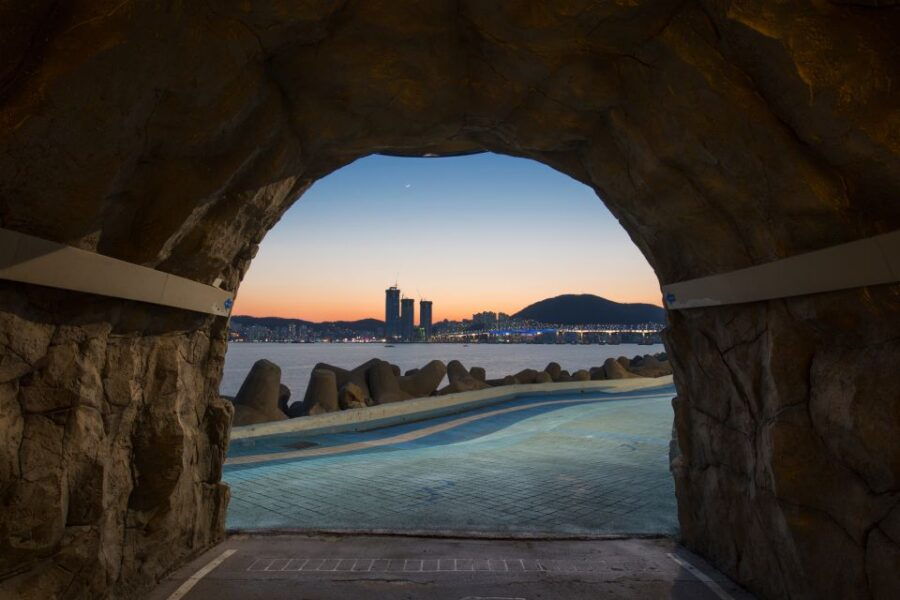
The cheapest of the three and somehow still fits in the Sky Capsule, Oryukdo Skywalk, Huinnyeoul Village, and Gamcheon. The trade-off is a larger group and less lingering at each stop — the full review goes into who this one suits and who should pay up. Meals are included, which is unusual at this price.
The Sky Capsule and why it sells out
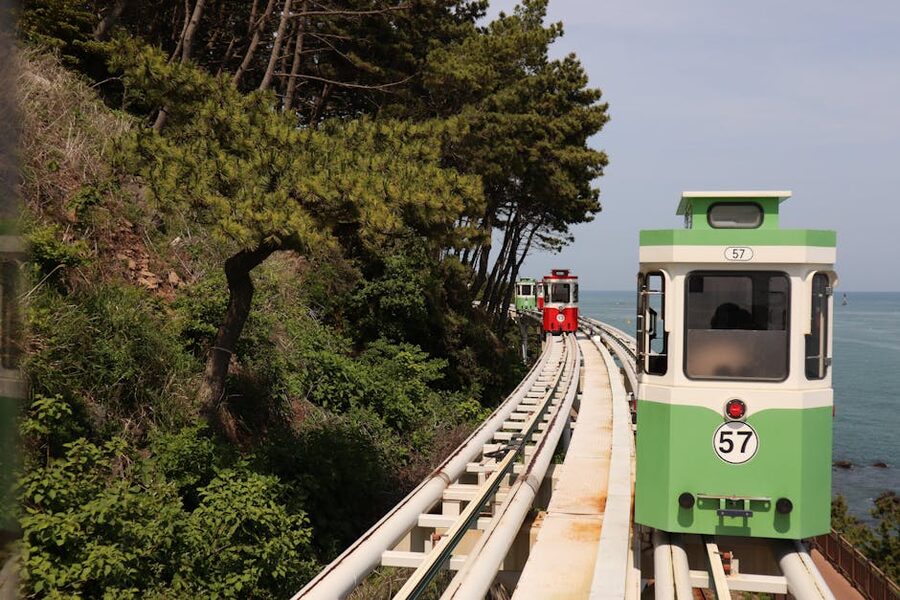
Almost every Busan tour brochure now leads with the Sky Capsule, and for good reason. These are the two-person pastel pods on the Haeundae Blueline Park track — two and a bit kilometres along the coast between Mipo and Cheongsapo stations, about 30 minutes each way. They run low enough to see the beach, high enough to pretend you’re in a Studio Ghibli film.
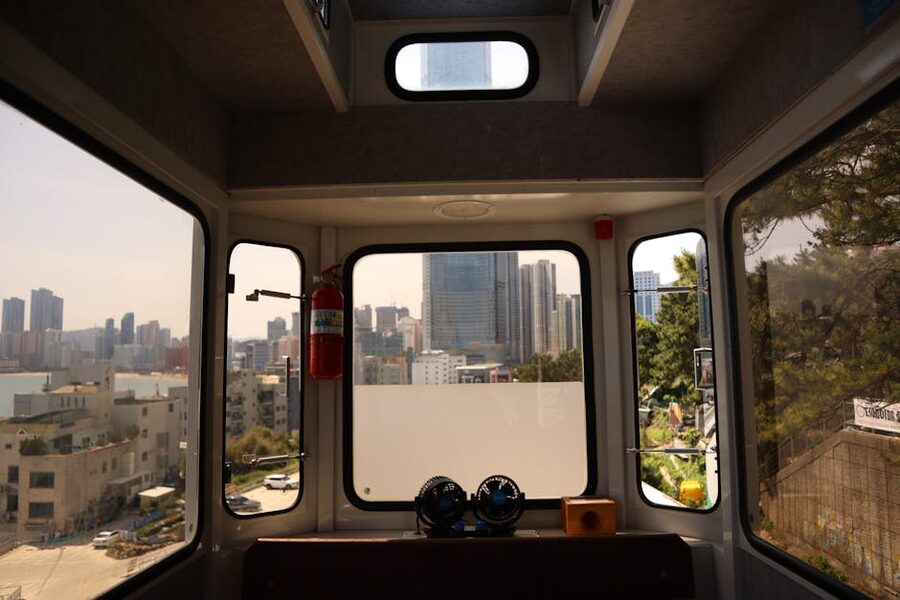
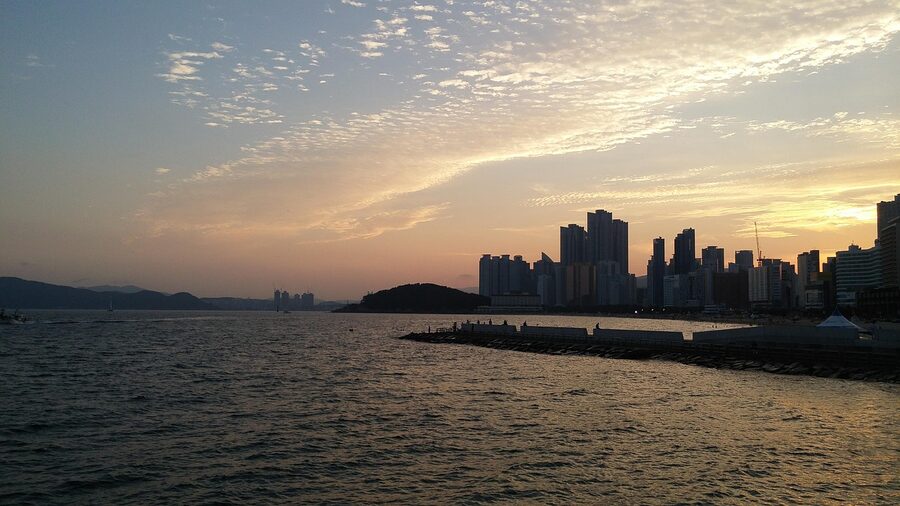
They also sell out. Peak weekends can be booked out two weeks ahead, and that’s after the capacity increase. If the Sky Capsule is the thing you came for, the guided tours that include it (pick 1 and pick 3 in my list above) are doing real work for you — the tour operator holds bulk tickets, which is easier than wrestling with the Korean booking site yourself.
If your tour only includes the cheaper Beach Train (also on the Blueline Park track, at ground level), that’s still a good ride. It’s just not the pastel pod on rails. Make sure you know which you’re getting.
Gamcheon Culture Village — the context most tours skip
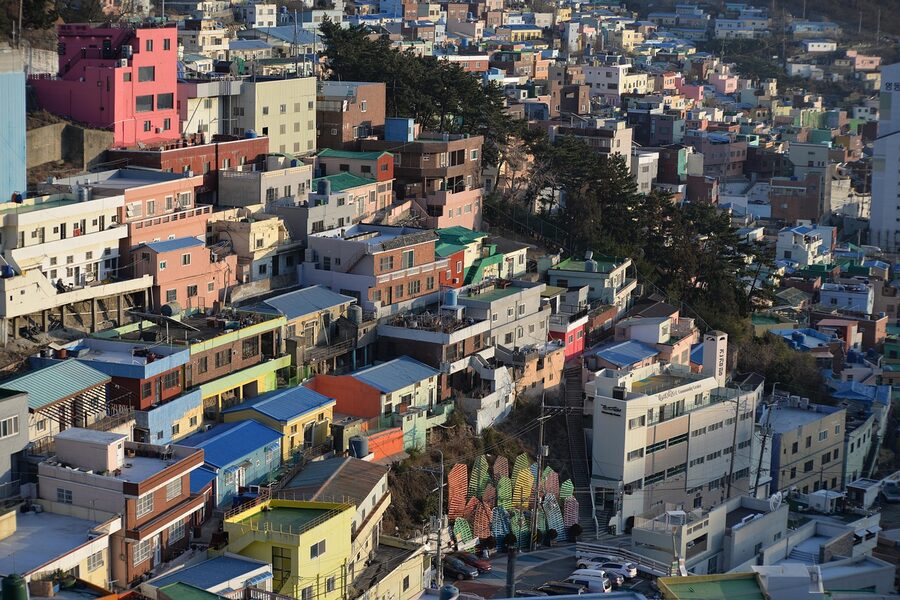
Here’s what the Instagram shots don’t tell you. Gamcheon-dong was built in the 1950s by refugees of the Korean War and members of a religious sect called Taegeukdo. They settled on the steep slope nobody else wanted, and the colour-coded houses were partly so people could find their way home in a maze where the streets don’t follow any grid.
It got rougher before it got Instagrammed. By the early 2000s Gamcheon was emptying out. The 2009 urban art project — students and residents painting murals and installing public art together — is what turned it into the Busan attraction it is now. A good guide mentions this. A bad one sends you up for thirty minutes of photos and then back down.
Practical bit: most tour stops give you about an hour here. That’s enough for the Little Prince statue, the stamped photo spot, and one of the side alleys. It’s not enough if you also want to eat. If food is a priority, do Gamcheon in the morning with just a snack, then eat properly at the next stop.
Taejongdae and the cliffs at the end of Yeongdo
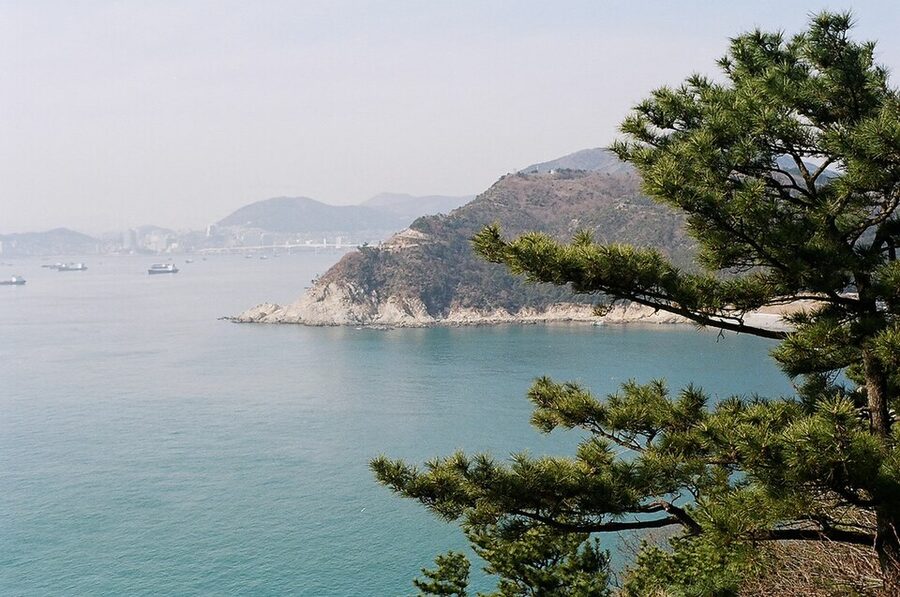
Taejongdae is the bit of Busan that looks least like a city. It’s a coastal park at the southern tip of Yeongdo, an island connected to the mainland by bridge. Pine forest, cliffs that drop straight into the sea, a lighthouse, and a Danubi Train shuttle that runs a loop of the park for anyone not up for the hour-long walk.
Most tours give you about 90 minutes here. That’s enough time for the Danubi shuttle, a stop at the lighthouse observation deck, and ten minutes of trying to spot Tsushima on the horizon. If the weather’s dramatic, it’s the best stop of the day. If it’s flat grey fog, it’s still nice, but it’s the one I’d trim first if the tour runs behind.
What you’ll actually eat
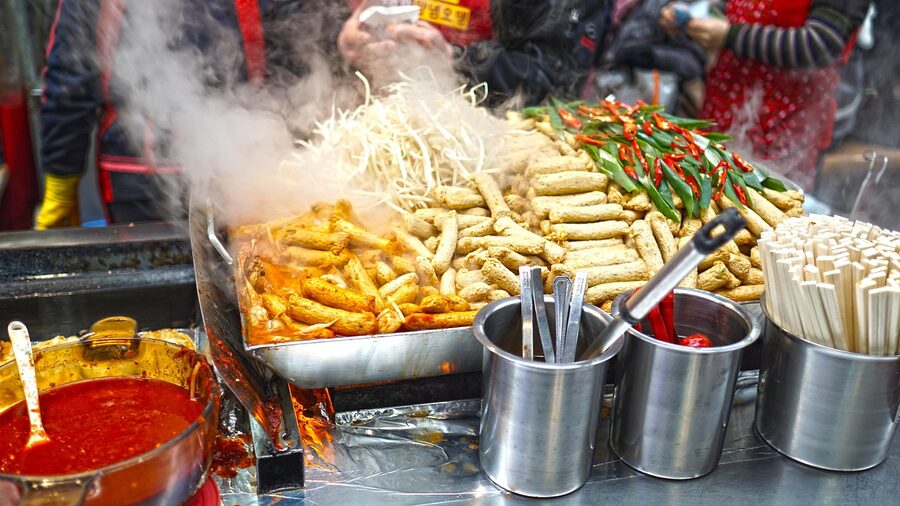
Tour lunches in Busan range from honestly decent to “this was included, I’ll get real food later.” What you want to know in advance is whether the tour includes lunch at all, and if so, what style.
The three tours I listed above all feed you. The Small Group tour is the one with the proper Korean BBQ sit-down. The GYG full-day typically does a hot bowl of something — Milmyeon (cold wheat noodles, a Busan specialty) or Dwaeji Gukbap (pork and rice soup, another Busan thing) depending on the guide’s pick that day. Both are excellent when they’re good.
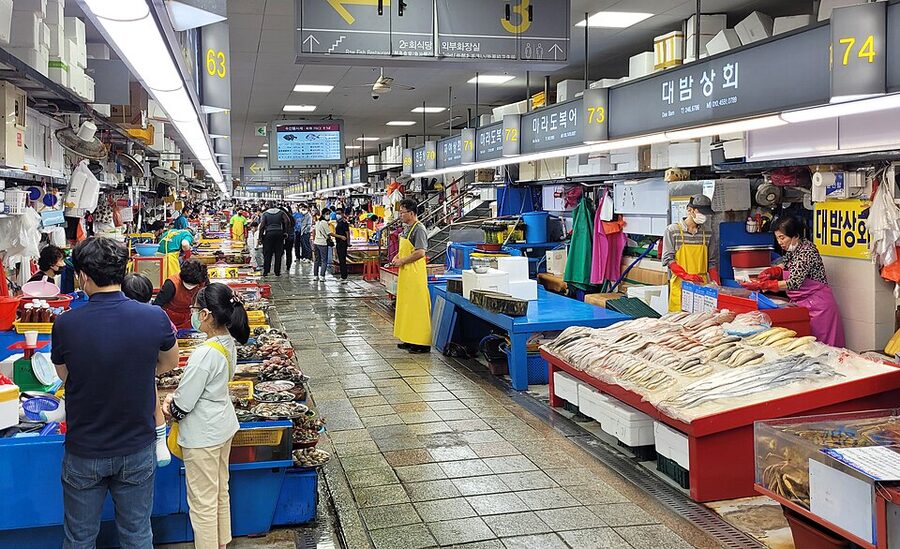
If your tour doesn’t include lunch, the route usually passes Jagalchi or BIFF Square, and you’ll get a break to eat. Budget about 12,000–18,000 won for a solid lunch and bring a bit of cash — not every stall takes cards.
When to go, and when not to
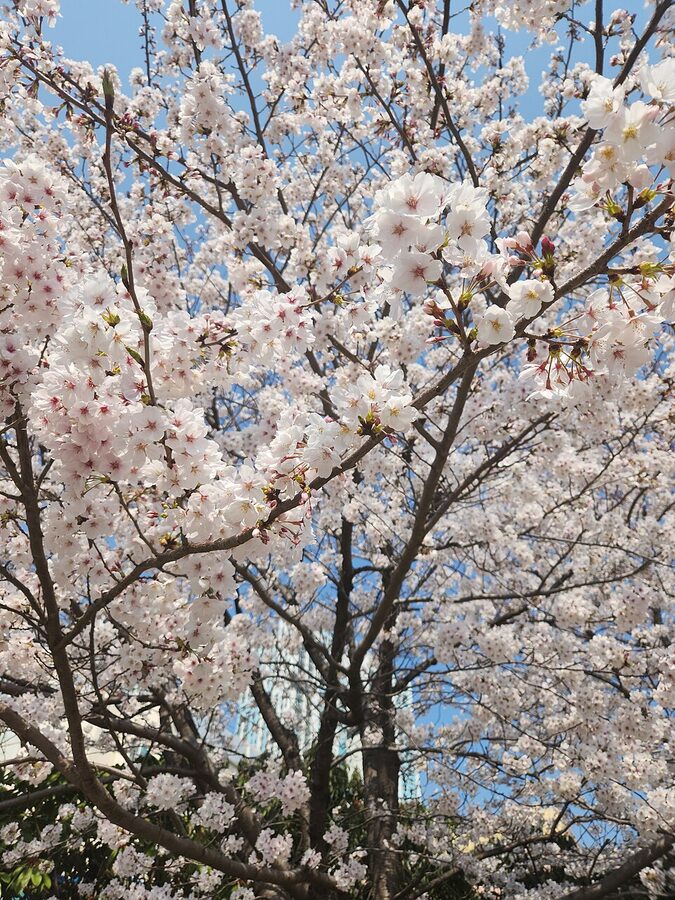
April to early June is the best window. Warm enough for the beaches without being humid, cherry blossoms lingering in April, and Gamcheon at its most photogenic. Book tours further in advance in this window.
Late June to August is monsoon overlap. Rain can shut down the skywalks and make the cliff walks at Taejongdae miserable. Some tours reroute, some just carry on. Check the forecast the night before.
September to November is the second-best window — clearer skies than spring, good sea colour, and fewer tourists.
December to February is fine but cold. The beach stops feel short. The Sky Capsule still runs. Temple visits and Gamcheon are arguably more atmospheric in winter light, but you’ll want a warm layer and a waterproof one.
Private tour or group tour
Group tours (the GYG full-day, the Coastal Wonders tour) run around 15–30 people. Cheaper, fine for most travellers, but you’re on their schedule and there’s a queue for the photo spots.
Small-group tours (Max 6 Pax, private tours) run 1–6 people. Double the cost, double the flexibility. If you’re travelling with older parents who can’t rush, or if you want to add a Seoul-side pickup in Busan Station, this is worth paying for.
If you’re building a multi-day Busan trip, a group city tour on day one and a private half-day on day two is a strong combo — you use the group day to cover the must-sees and the private day to go deeper on one area.
Beomeosa — the temple most tours skip
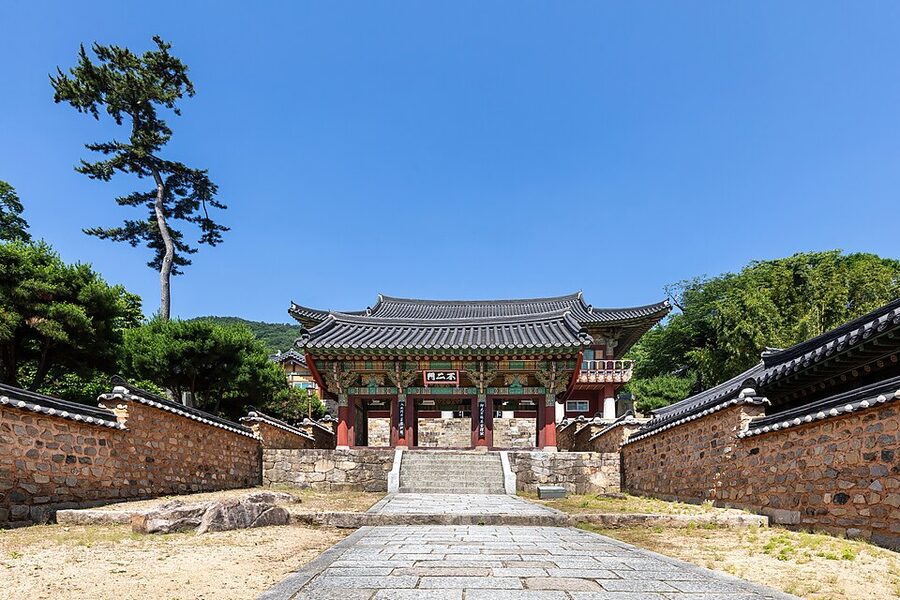
Quick note for anyone staying two or more days. If you only have time for one Busan temple, the default pick on every city tour is Haedong Yonggungsa — dramatic, seaside, worth it. But if you’re doing a second day, Beomeosa on Geumjeongsan is the one that locals recommend. Founded in 678, Korean mountain temple in the classic style, a 20-minute bus from the metro, and almost no tour buses.
No full-day city tour I’ve seen includes both Haedong and Beomeosa. Yonggungsa is the photogenic one, Beomeosa is the quiet one. Do Beomeosa on a free morning with a half-day guide if the city tour leaves you wanting more.
How to book — the actual logistics
Three things matter at the booking stage:
1. Book in advance. Busan tours are not Seoul tours — the supply is tighter. During cherry blossom season and Chuseok (Korean Thanksgiving, end of September to early October), the main GYG and Viator slots fill two weeks out. A week out is usually fine outside peak.
2. Check the pickup point. Most full-day tours pick up from a list of downtown hotels, from Haeundae, and from Busan Station. If you’re staying in Gwangalli or somewhere like Sasang, check the pickup list before you book — some tours make you get yourself to a central meeting point.
3. Know what’s included. The GYG full-day above includes entrance fees and the beach train. The Coastal Wonders tour includes Sky Capsule and meals. The Small Group tour includes lunch. Read the inclusions list, because a 20,000 won Sky Capsule ticket on top of a “cheap” tour ends up the same cost as the one that included it.
Cancellation policy matters too — the GetYourGuide ones are usually 24-hour free cancellation. The Viator ones vary. If your plans are loose, filter for flexible cancellation before anything else.
One-day, two-day, or three-day Busan
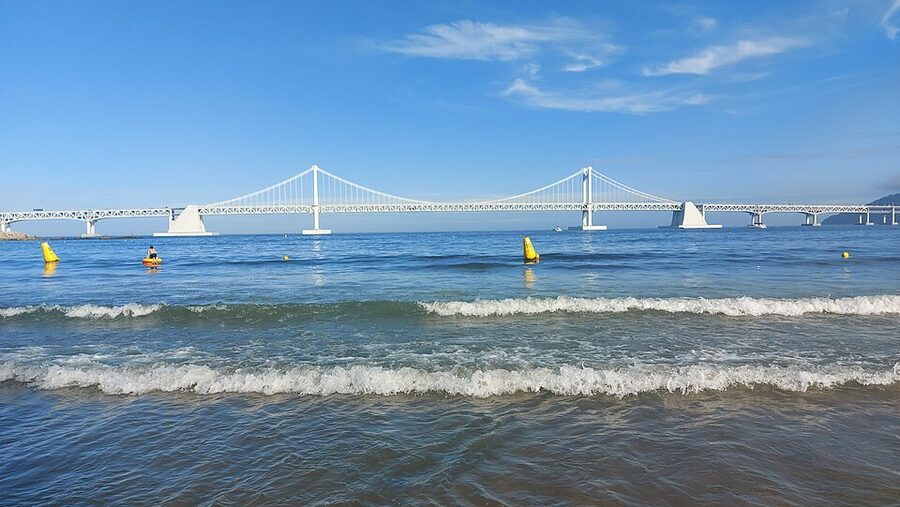
Honest answer on “is one day enough?” One day lets you see the highlights. Two days lets you slow down. Three days lets you start having a Busan trip rather than a Busan stop.
If you only have one day, a full-day city tour plus an evening at Gwangalli is the densest version of Busan you can squeeze into the hours. You’ll miss Beomeosa, Songjeong, the hot springs at Spa Land, and the bar scene in Seomyeon. That’s fine — you’ll leave wanting to come back, which is the right feeling to leave Busan with.
If you have two days, do the city tour on day one and a half-day food tour or a Gyeongju day trip on day two. Gyeongju is the old Silla capital, 40 minutes from Busan by KTX, and it’s the easiest “big history” add-on you can build onto a Busan trip.
Most people arrive in Busan from Seoul, and the Seoul side is a whole other trip — a private Seoul tour is a strong day-one move if you want the capital’s palaces, markets, and a bit of personal context before you start exploring on your own.
Night tours and the Gwangan Bridge lights
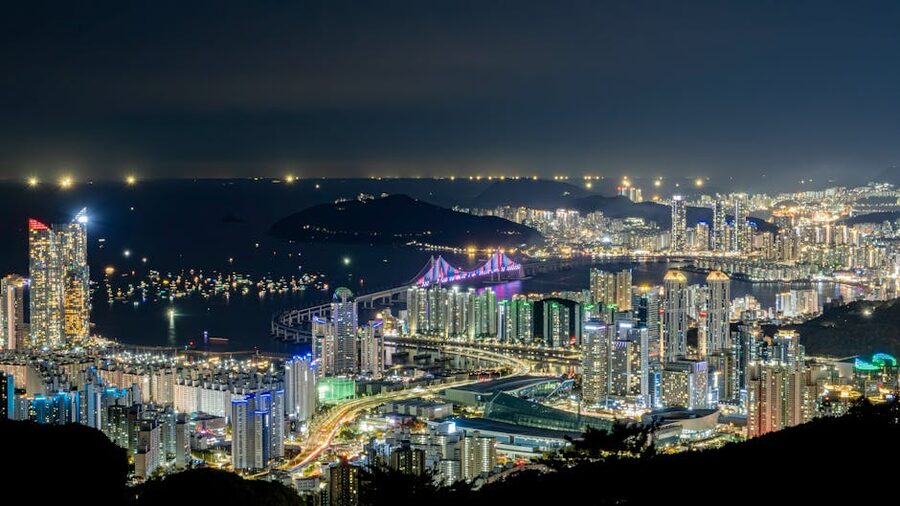
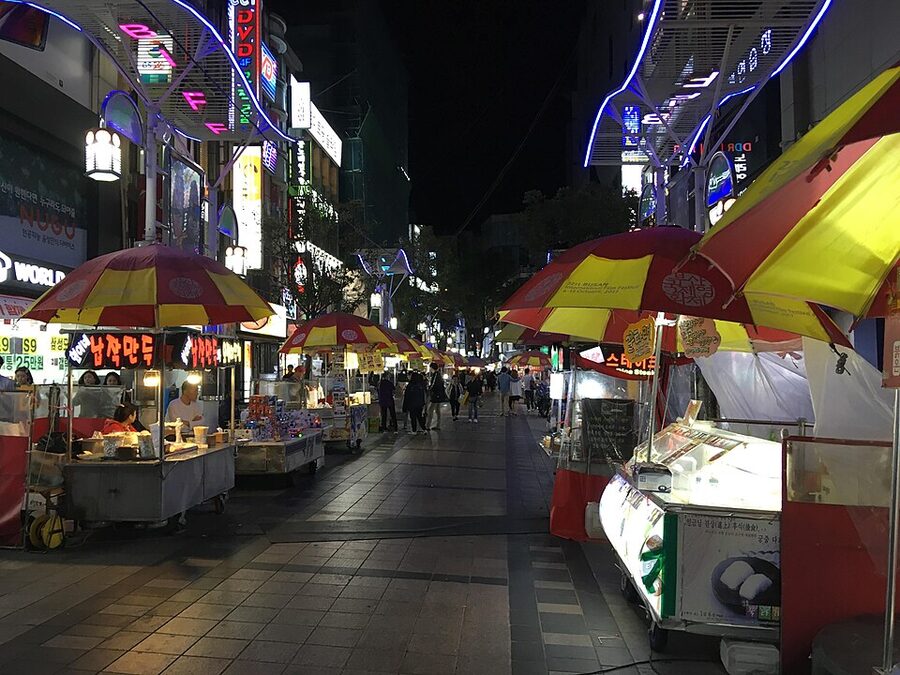
A few operators run Busan night tours that pick up where the day tours end — evening cruise out to Gwangan Bridge, fireworks on Saturdays, and the BIFF Square food stalls after. These are usually separate bookings from the day tour, about 3–4 hours in the evening. (If you’re doing Seoul on the same trip and want to feel out the after-dark rhythm there too, a Seoul night walking tour is the closest equivalent — markets, stream walk, palace wall.)
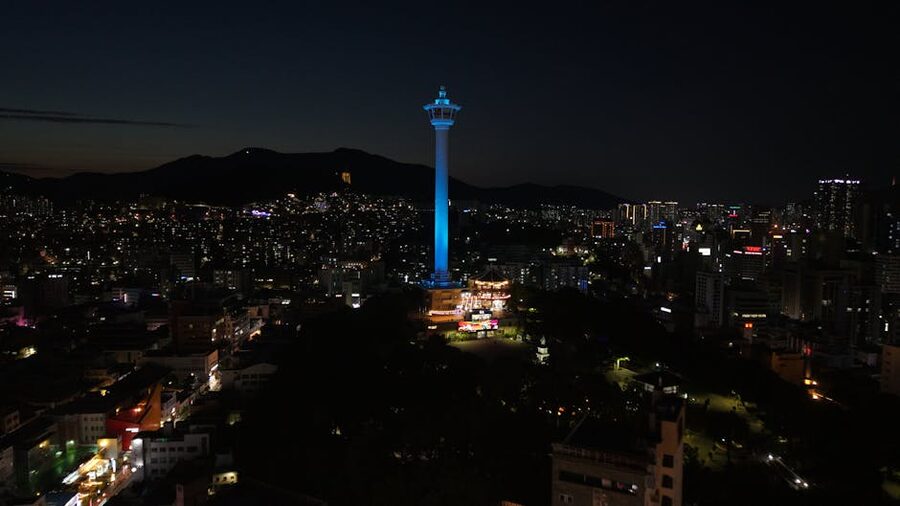
If you’re only spending one day in Busan and you want both the main sights and the bridge at night, look for a full-day tour that ends with a Gwangalli drop-off rather than back at your hotel. You finish the tour at the right place to walk to dinner and stay for the bridge.
What this tour is NOT
A few expectations worth flattening before you book.
These are sightseeing tours, not adventure tours. You’re in and out of a van. If you want hiking, Busan has good mountain day trips (Geumjeongsan, Jangsan) that are separate bookings.
They’re also not food tours. Meals happen, some are decent, none are the point. If food is the priority, layer a dedicated Busan food tour on top rather than expect the city tour to do double duty.
And they’re not private unless you book private. The GYG full-day is a group tour with a coach and a guide. That’s fine — it’s why it’s $51 — but if you walked in expecting a one-to-one chat with your guide, go straight to the small-group or private option.
If you liked this, here’s what else to book while you’re in Korea
Busan on its own is a two- or three-day stop. Most travellers pair it with Seoul and Gyeongju. If you’re starting from the capital, the easiest way in is to book yourself a private Seoul tour for your first day — it doubles as your orientation, so when you come back after Busan you actually know where things are. For after-dark Seoul, a Seoul night walking tour covers Gwangjang Market, the Cheonggyecheon stream, and the palace wall lit up — the atmosphere is closer to Busan than you’d expect. And the unglamorous but genuinely useful tip: get your SIM card and transport card sorted on arrival with an Incheon Airport SIM and T-money booking so the first two hours in the country aren’t spent at a kiosk.
If you’re planning the rest of the trip around this, three natural add-ons: a Busan-to-Gyeongju UNESCO day trip extends the Busan end of the trip by a day, Seoul city sightseeing covers the Gyeongbokgung + Bukchon core up north, and Jeju Island day tours round out the three must-visit regions. If you’re staying in Seoul first, a Korean cooking class in Seoul is the half-day indoors most first-timers wish they’d booked.