
Seoul is a city that runs on neon, subway push, and the low hum of a million delivery scooters. It is gloriously modern, relentlessly new, and the last place you would go looking for a thousand-year-old burial mound. For that you have to go south.
Specifically, you have to go to Gyeongju — the quiet capital of the old Silla kingdom, where Korean history is not locked behind glass in a museum but is literally sitting in grass fields, folded into hillsides, and balanced on top of a mountain in the form of a stone Buddha older than most European cathedrals.
And the easiest way to get there, in my opinion, is from Busan. Not Seoul. Gyeongju is roughly an hour from Busan on a KTX, or a 90-minute coach ride with a guided tour, which means you can bounce out of your Busan hotel at 8am and be standing in front of the Bulguksa pagoda by 10. From Seoul it is a much bigger commitment — more of a two-day trip than a day trip — which is why all three of the tours worth booking on this page leave from Busan and not the capital.
Short on time? Here are my top 3 picks for a Busan to Gyeongju day trip:
Best overall: Busan: Gyeongju Guided Day Trip to Three Kingdoms Capital — $52. 4.8-star with nearly two thousand reviews, a proper 11-12 hour day, the guides are what people write home about.
Best small group: Small Group Full Day Busan Tour (Max 6 Pax) — $99. Perfect 5-star rating and a six-person cap, which is almost unheard of at this price point.
Best UNESCO focus: From Busan: Gyeongju UNESCO World Heritage Guided Day Tour — $52. Tighter itinerary laser-focused on Bulguksa, Seokguram and the core UNESCO stops.
- Why Gyeongju Is Worth the Day Trip
- The Must-See Stops on a Gyeongju Day Trip
- Bulguksa Temple
- Seokguram Grotto
- Anapji Pond (Donggung Palace and Wolji Pond)
- Cheomseongdae Observatory
- Daereungwon Tumuli Park
- Yangdong Folk Village
- The Best Busan to Gyeongju Tours to Book Right Now
- 1. Busan: Gyeongju Guided Day Trip to Three Kingdoms Capital —
- 2. Small Group Full Day Busan Tour (Max 6 Pax) —
- 3. From Busan: Gyeongju UNESCO World Heritage Guided Day Tour —
- DIY vs Booking a Tour
- When to Go — Weather, Season, and Booking Windows
- What the Day Actually Looks Like
- What to Bring and What to Wear
- Pairing the Tour With the Rest of Your Trip
- Frequently Asked Questions
- The Bottom Line
Why Gyeongju Is Worth the Day Trip
Gyeongju was the capital of the Silla kingdom from 57 BCE until 935 CE, which is a run of almost exactly a thousand years. For context, that is roughly double the length of the Roman Empire in the west. During that run the Silla unified the Korean peninsula for the first time, imported Buddhism from China, and built an astronomical observatory that still stands in the middle of a field on the edge of town.
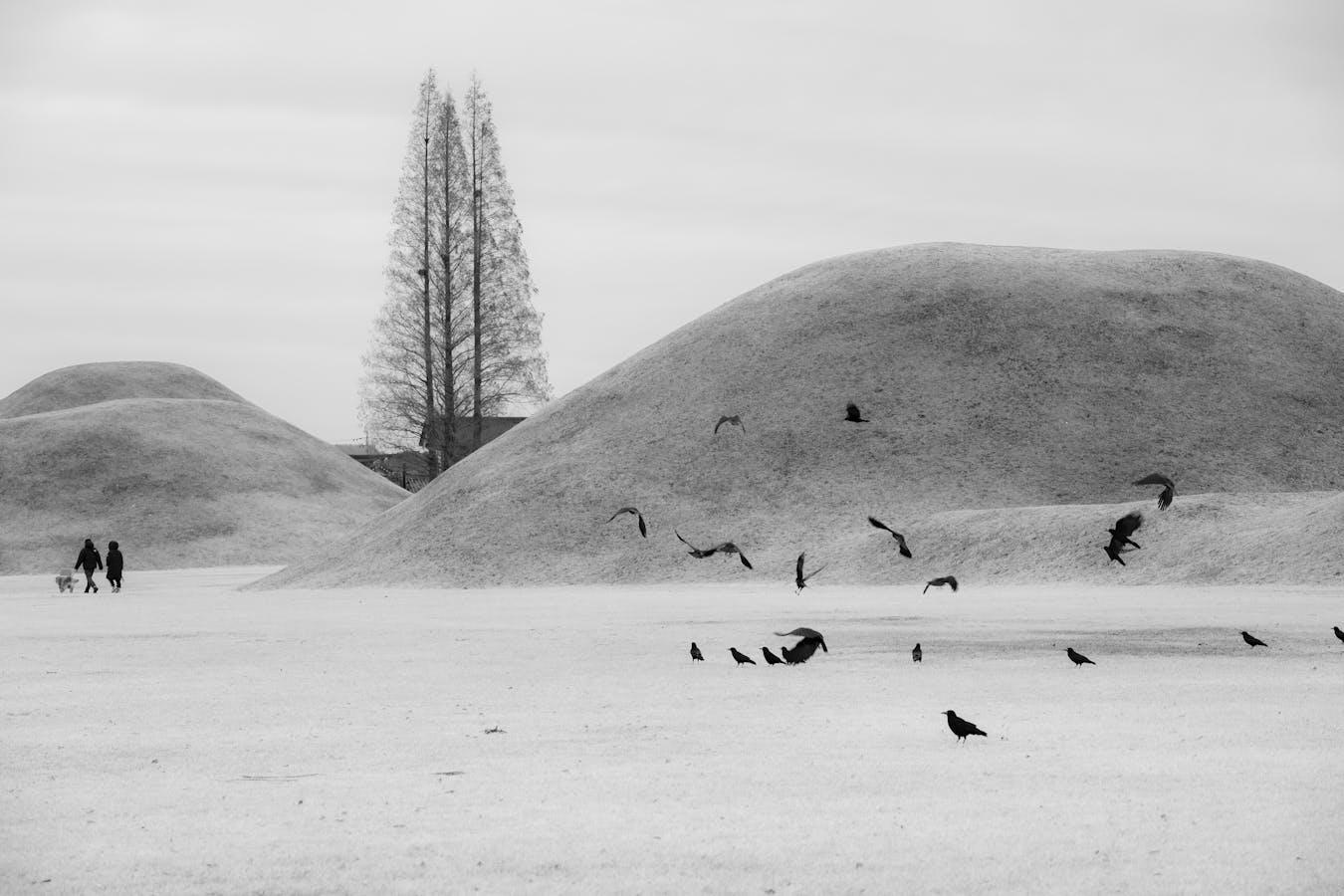
When the kingdom finally fell, Gyeongju just slowly went to sleep. It never got redeveloped into a modern city the way Seoul or Busan did. The royal tombs were never cleared away for apartment blocks. The temples on the mountainside were never torn down. Which means you can walk across a park today and pass a dozen 1,500-year-old burial mounds the size of small hills, with wildflowers growing over them, and children rolling down the sides.
UNESCO has inscribed three separate areas in and around Gyeongju on the World Heritage list. The Bulguksa Temple and Seokguram Grotto complex was the first, in 1995. The Gyeongju Historic Areas — which includes Namsan Mountain, the Wolseong palace site, the tumuli parks, and Hwangnyongsa Temple — went on in 2000.
And Yangdong Folk Village, a Joseon-era village about 20 minutes outside the city, was added in 2010. Almost no other city on earth has this much on the list in one place.
For a day trip, nobody tries to see all of it. The tours listed on this page pick the greatest hits — Bulguksa, Seokguram, Anapji, the tumuli, Cheomseongdae — and build an 8 to 12 hour loop around them. That is plenty. You come back to Busan tired, your phone full of photos, and your mental map of Korean history completely redrawn.
The Must-See Stops on a Gyeongju Day Trip
Bulguksa Temple
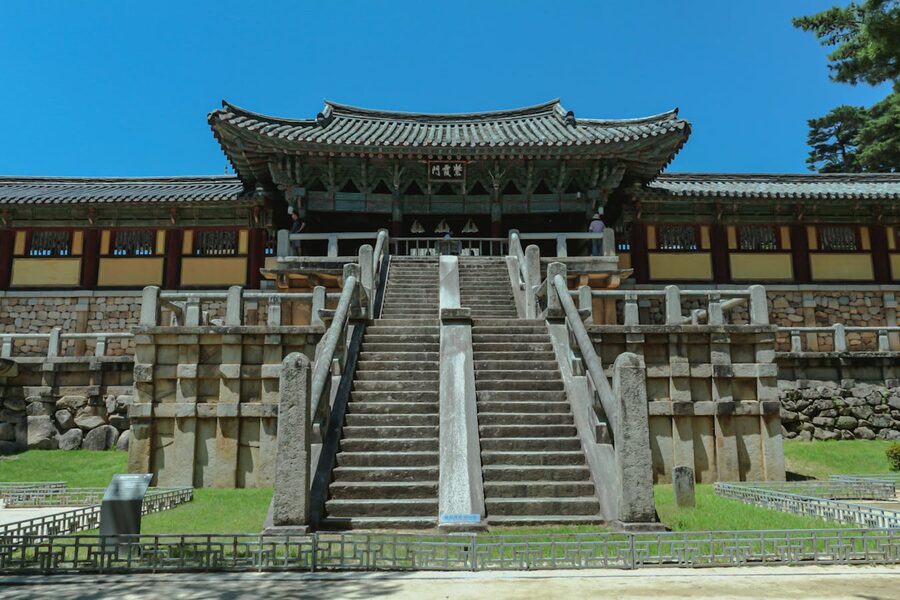
This is the headline. Bulguksa was built in 528 CE and rebuilt in 751 CE under the great Silla king Gyeongdeok, and despite a few fires and one brutal encounter with the invading Japanese in 1593, most of the stonework is original. That is over a thousand years old, and you can touch it.
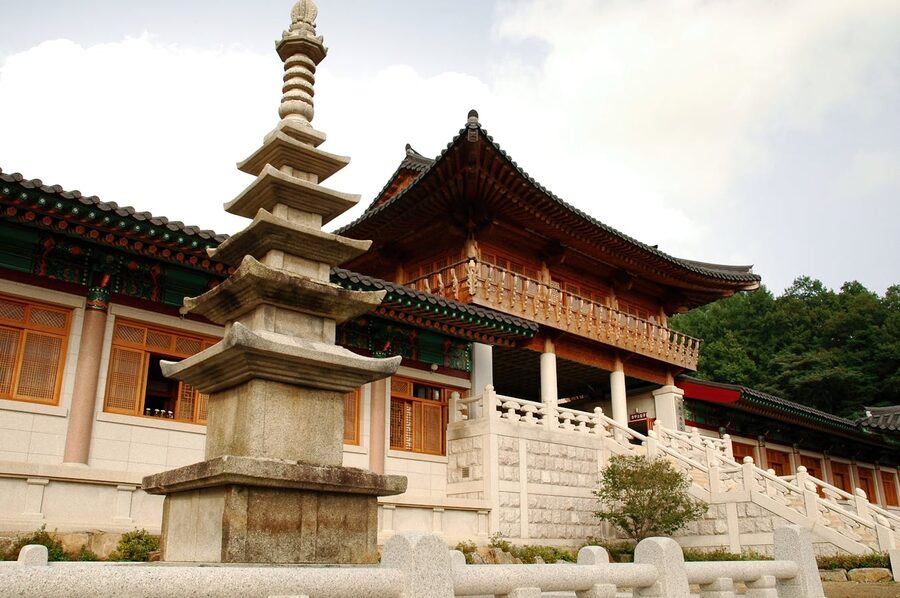
The walk into the complex passes under the Cheongun-gyo and Baegun-gyo, two stone staircase bridges that were so sacred they were roped off to actual use for most of the temple’s history. In the main courtyard you will see the two famous pagodas — Dabotap, which is asymmetric and intricate, and Seokgatap, which is austere and almost brutalist for its era. Everyone stands in roughly the same spot between them to take the same photo. You will too.
Budget about 60 to 90 minutes here. The tours build in enough time to walk the full perimeter and peek into the main halls without rushing, but not enough time to read every plaque. Pick your top three halls and call it.
Seokguram Grotto
Seokguram is the other half of the UNESCO listing and, for me, the more emotionally loaded of the two stops. The grotto sits on top of a mountain — Toham-san — about 20 minutes by winding road above Bulguksa. Inside is a single granite Buddha, carved in the 8th century, looking east toward the Sea of Japan and the sunrise.
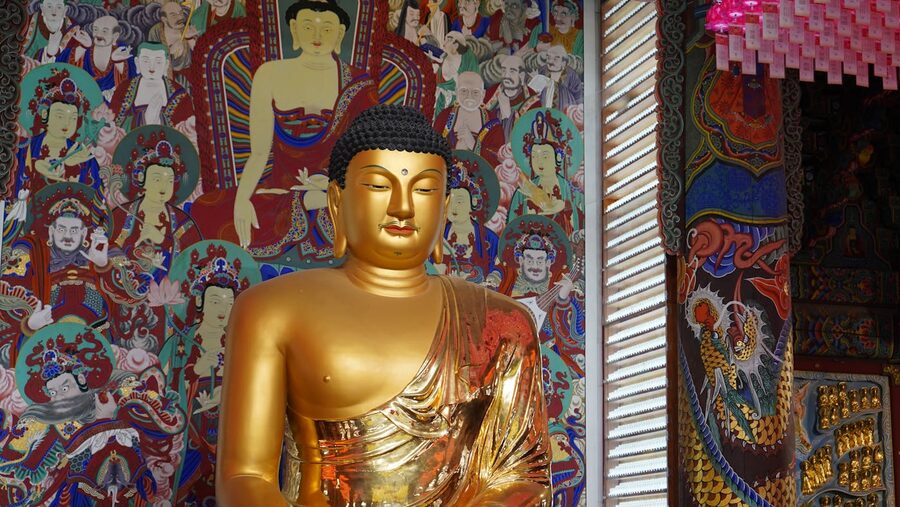
The Buddha is protected behind thick glass now — no one has been allowed physically inside the chamber since the 1970s when moisture and visitor breath started eating the stone. You peer in from a viewing platform and you get about three minutes before the line behind you starts shuffling. And yet, somehow, that is enough.
The statue is three meters tall, impossibly serene, and has that unmistakable quality that very old religious art sometimes has — the feeling that someone in the 700s poured everything they had into a single face and it is still radiating.
The catch: no photos inside the chamber. You can shoot the approach, the forest, the view from the top down to the coast, but not the Buddha itself. Do not try. The attendants will stop you.
Anapji Pond (Donggung Palace and Wolji Pond)
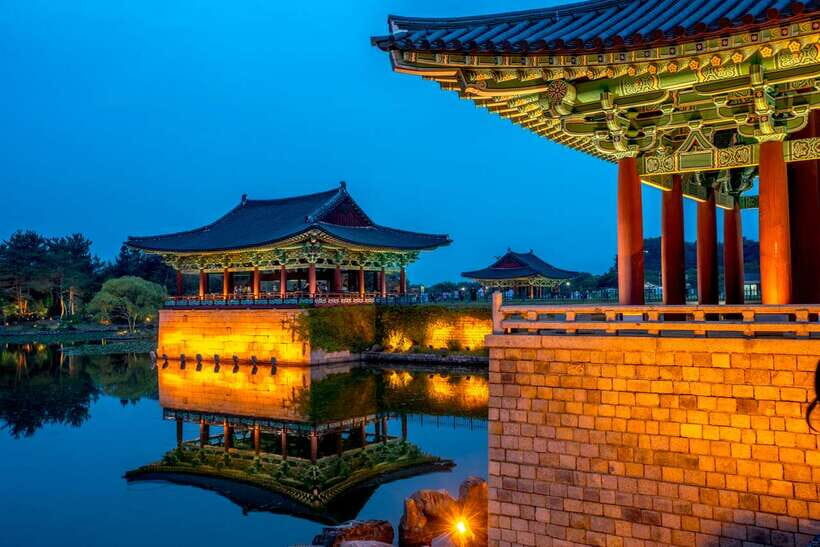
Anapji is the nighttime photo every Gyeongju travel blog opens with, and seeing it in person does not disappoint even in daylight. It is a reconstructed royal pleasure pond from the 7th century, part of the old Silla royal palace complex, and the reflection of the three main pavilions in the still water is one of those photos that you can basically not mess up.
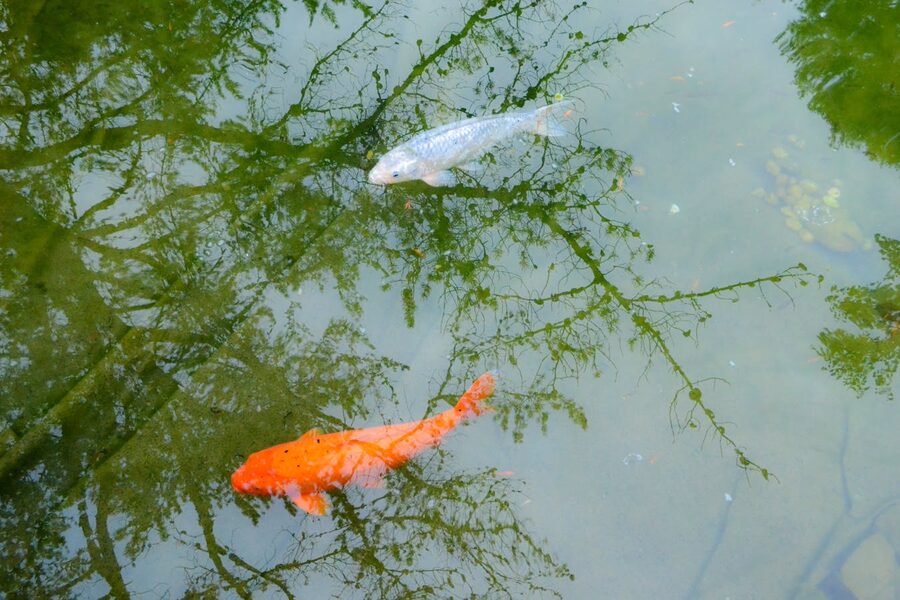
Most day tours hit Anapji toward the end of the afternoon, which is the right call — the light gets soft, the crowds thin out, and if you are lucky enough to be there in the hour before the lamps come on, you get both the daylight reflection and the first of the evening glow. Budget 45 minutes.
You will walk the full loop around the pond, take the photo, and read a couple of the placards about the artifacts that were dredged out of the mud when the pond was restored in the 1970s.
Cheomseongdae Observatory
Cheomseongdae is a squat, bottle-shaped stone tower sitting in the middle of a grass field. It is nine meters tall, made of 362 stones, and was built around 634 CE during the reign of Queen Seondeok. It is the oldest surviving astronomical observatory in East Asia, and — if you believe some of the more enthusiastic theories — possibly the world.
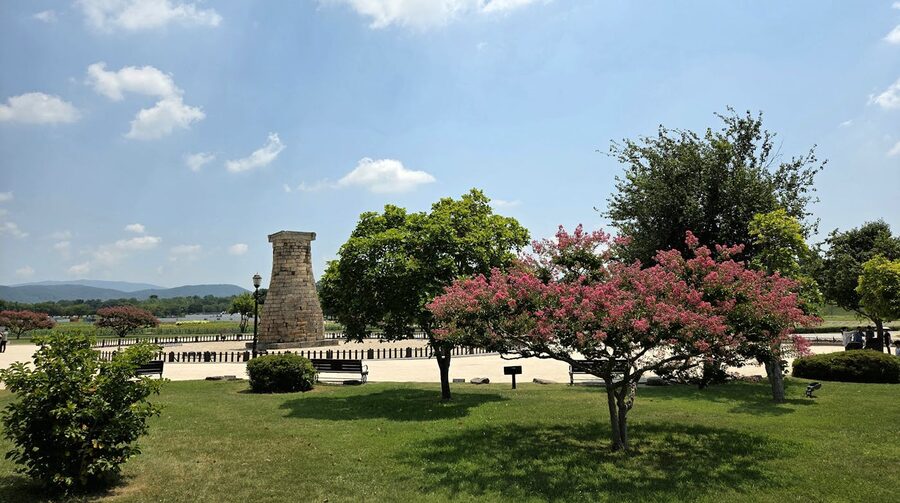
It does not look like much at first. It is basically a stone silo. But the longer your guide talks about it, the more details emerge — the 12 stones in the base representing the months, the 28 levels representing the 28 constellations, the square platform on top that is thought to have been used for naked-eye observations of stars. Silla astronomers were using this thing to make calendars a hundred years before Europe figured out that the earth moved.
Daereungwon Tumuli Park
This is the park with the hills that are secretly burial mounds. Twenty-three Silla royal tombs are crammed into a single 125,000 square-meter park right in the middle of town. One of them — Cheonmachong, the “Flying Horse Tomb” — has been excavated and opened up, and you can actually walk into the burial chamber and see the replica gold crown where it sat on the king’s head for 1,500 years.
Tours usually give you 30 to 45 minutes here. Pay the small entry fee for Cheonmachong if the tour does not cover it — it is worth it for the chamber experience alone. Everyone else is outside posing with the mounds and the Instagrammable single tree that grows on top of one of them.
Yangdong Folk Village
Only one of our three tours includes Yangdong, and it is honestly a tossup whether you want it. The village is a living, functioning Joseon-era settlement about 20 minutes out of town, with around 150 traditional houses and a few hundred residents who still live in them. It is beautiful and quiet and very different from the crowded Silla sites.
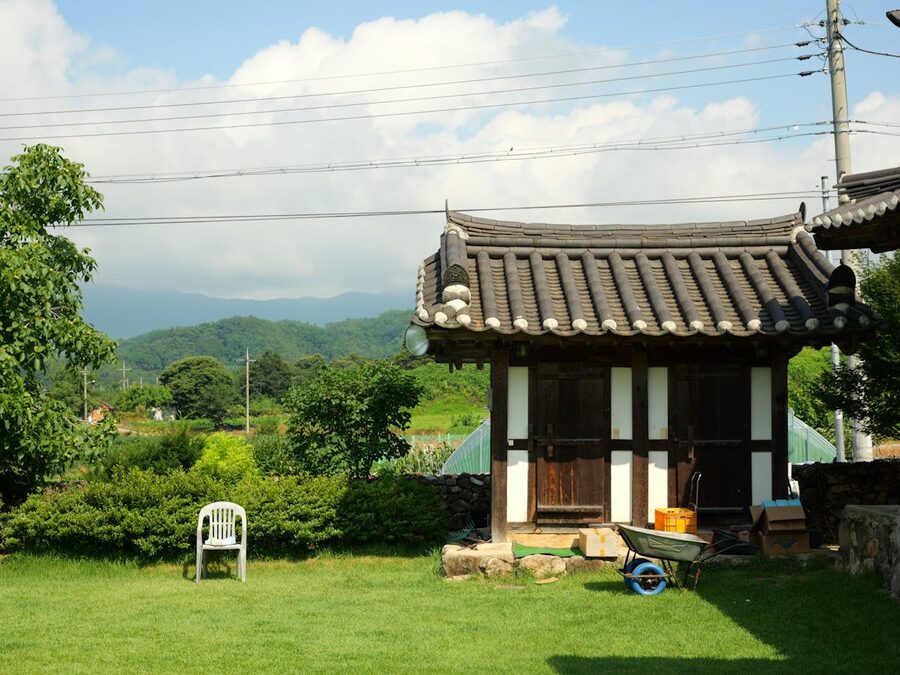
The tradeoff is time. Adding Yangdong usually means the tour drops either the tumuli park or Anapji to fit the schedule. If you are a folk-architecture person or a photographer, Yangdong is the pick. If you want classic Silla blockbuster sites, skip the Yangdong itinerary.
The Best Busan to Gyeongju Tours to Book Right Now
I pulled the top Busan-to-Gyeongju tours by review count from our database and cross-checked them against current listings on GetYourGuide and Viator. Three stood out in 2026 — one clear best overall, one premium small-group option, and one tighter UNESCO-focused pick.
1. Busan: Gyeongju Guided Day Trip to Three Kingdoms Capital — $52

This is the most booked Gyeongju day trip from Busan and it deserves the top slot. 1,925 reviews sitting at 4.8 stars, and the pattern in the recent feedback is unusually consistent — travellers are naming their guides in the write-ups, which is the single best signal that an operator has good people and is looking after them.
One January review I pulled from our database specifically thanked a guide named Bada for “always knowing the exact spots for the best photos” and for pacing the day so nothing felt rushed.
The itinerary is the full greatest-hits loop: Bulguksa, Seokguram, Cheomseongdae, the tumuli, Anapji, with pickup from central Busan around 8am and drop-off back in Busan by 7 to 8pm. That is a proper 11 to 12 hour day, which sounds exhausting until you realize the alternative is trying to DIY it and spending half the day waiting at bus stops.
At $52 it is the best value on the list and the combined review volume means you are booking into a machine that has run this exact day thousands of times. Pick this one if you want the safe default.
2. Small Group Full Day Busan Tour (Max 6 Pax) — $99
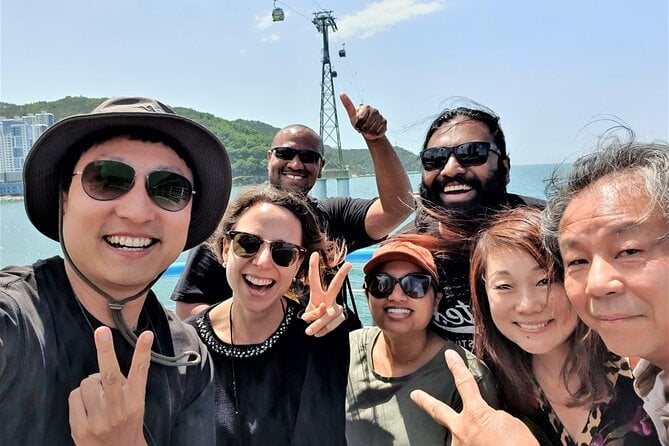
This is the premium option for travellers who hate coach tours. 1,464 reviews at a perfect 5.0-star rating, capped at six people per booking, and the feedback keeps naming two specific guides — Peter and Jade — as the ones who make it work. One review from Reginald calls Peter “very friendly, helpful and knowledgeable” after a day that included a proper seafood lunch.
Another from Nathan mentions that Peter tailored the tour for the small group and shared stories of growing up in Busan.
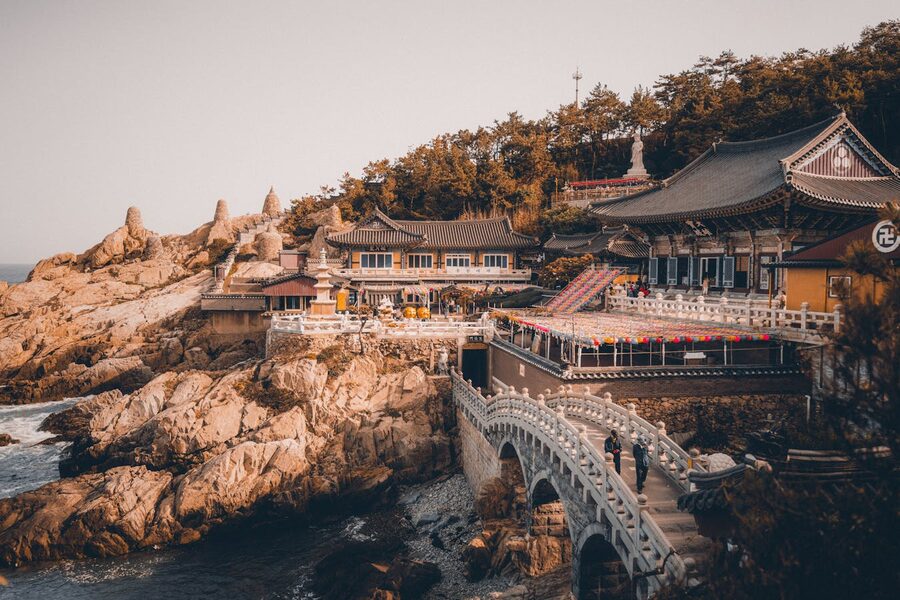
The important caveat: this is technically a Busan tour rather than a pure Gyeongju day trip. Some departures focus on Busan city highlights (Gamcheon, Haedong Yonggungsa, Jagalchi Market) rather than the full Gyeongju UNESCO loop. Message the operator before booking if Gyeongju is your non-negotiable — they will usually customize the day around what you want, and that is half the point of paying for a six-person tour instead of a 20-person coach.
At $99 it is almost double the price of option 1, and you are paying for the flexibility and the tiny group size. If you are traveling as a couple or a family of four, the per-head economics get closer to reasonable and the experience is noticeably better.
3. From Busan: Gyeongju UNESCO World Heritage Guided Day Tour — $52
This is the alternative for travellers who want the UNESCO sites specifically, at a slightly tighter pace than option 1. 1,250 reviews at 4.8 stars, running 8 to 12 hours depending on the departure, and the itinerary is built around Bulguksa, Seokguram, and the Gyeongju Historic Areas rather than trying to cram in everything.
What stood out in the reviews is how often people mention the photo support. Jesse’s February review in our database calls out guides Bobby Kim and Alice for “interesting information of all the places” and for taking photos. Malgorzata mentions her guide Olivia offered to take pictures and gave detailed information at each stop. It is a small thing but it matters on a day where you are moving between seven or eight photo-worthy locations.
At $52 it is priced identically to option 1, so the choice comes down to itinerary preference. Book this one if the UNESCO sites are your reason for going and you would rather spend longer at Bulguksa than squeeze in Anapji.
DIY vs Booking a Tour
You absolutely can do Gyeongju from Busan on your own. The KTX from Busan Station to Singyeongju takes about 30 minutes and costs around 11,000 won each way. From Singyeongju you take a local bus into Gyeongju proper, another bus out to Bulguksa, and either a separate bus or a taxi up the mountain to Seokguram. Add buses to Anapji and the tumuli and you are looking at a long, fragmented day of timetables and pointed Google Maps screenshots.
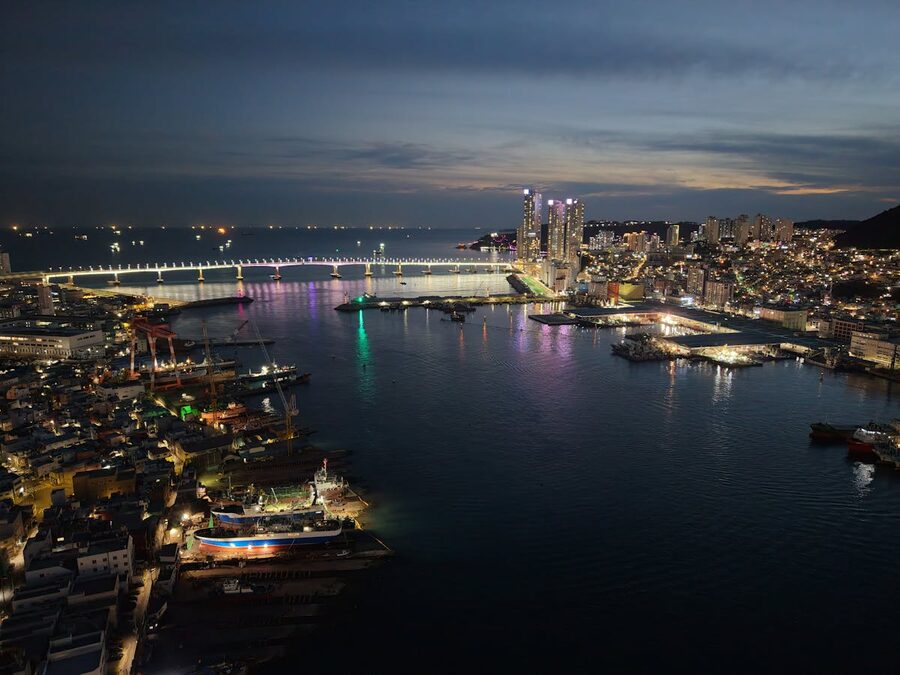
I have done it both ways. The DIY version cost me about 40,000 won in transport and took three hours of faffing between sites. The guided tour cost me $52, kept moving, and included context I would not have picked up from the placards. For a first visit, take the tour. Once you know the layout and the history, if you want to go back for a second day focused on Namsan or the museums, the DIY version is fine.
The one scenario where DIY genuinely wins is if you want to spend a full weekend in Gyeongju, stay overnight, and see it at night. Anapji is stunning after dark and no day tour from Busan gets you there at the right hour. For that, skip the day trip entirely and book a two-day Gyeongju stay.
When to Go — Weather, Season, and Booking Windows
Gyeongju is open all year, but the experience varies wildly by season.
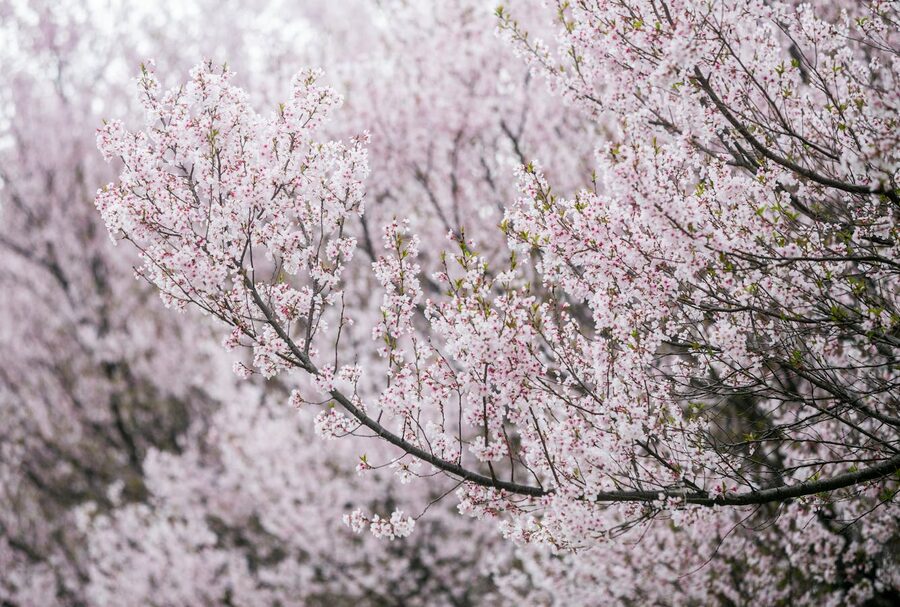
Spring (April to early May): This is peak Gyeongju season. Cherry blossoms cover the tumuli park, the temple grounds, and basically every roadside. The downside is everyone in Korea has the same idea and the tours sell out a week or two in advance. If you are going in blossom week, book the day you land.
Autumn (late October to mid-November): My pick if you have the choice. The maples turn red behind the pagodas at Bulguksa and the weather is crisp without being cold. Tours are still busy but bookable a few days out.
Summer (July and August): Skip it if you can. Korea in July is tropical — 33 degrees, 80% humidity, and the afternoon thunderstorms will eat whatever outdoor plans you had. The one advantage is that summer mornings at Seokguram are a bit cooler than down in Gyeongju city.
Winter (December to February): Bulguksa in snow is genuinely spectacular and the tours run with much smaller groups. Dress warm — Gyeongju gets colder than Busan because it is inland — and book the longer 11-hour tour to maximize your time at the temples.
Booking windows: For blossom week and Chuseok holiday, book a week ahead or more. For everything else, 48 hours is usually enough. All three of the tours above take free cancellation up to 24 hours before if you book through GetYourGuide or Viator.
What the Day Actually Looks Like
I have done the 11-hour loop twice and the rhythm is pretty consistent across operators.
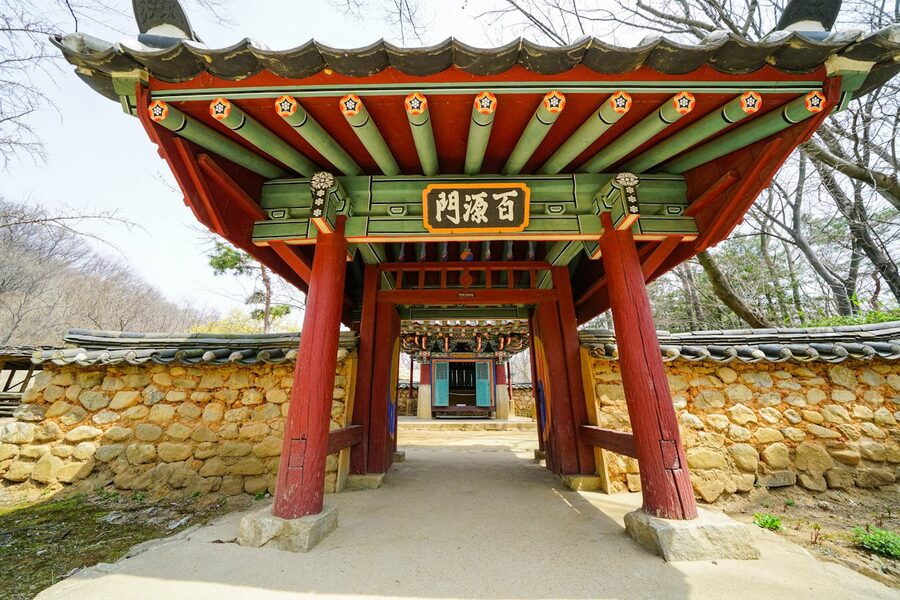
8am: Pickup from your hotel or a central meeting point in Busan. Seomyeon and Haeundae are the usual gathering spots. Coffee in hand, coach rolls out within 20 minutes.
9:30am: Arrive at Bulguksa. Guide walks you through the entrance, the stone bridges, the two pagodas in the main courtyard, and the main halls. You get about 75 minutes total, which is plenty for photos and a coffee from the gate-side cafe.
11am: Drive up to Seokguram. The road winds through forest for about 15 minutes. The walk from the car park to the grotto takes another 10 minutes on a mostly flat path through pine trees. You queue at the viewing platform for about 5 minutes to see the Buddha. Total stop is maybe 45 minutes.
12:30pm: Lunch. Tours either stop at a Gyeongju-area Korean restaurant (bibimbap, ssambap, or barbecue) or give you a 45-minute block at Hwangridan Street in central Gyeongju to pick your own. Hwangridan is the hipster food street and it is genuinely good.
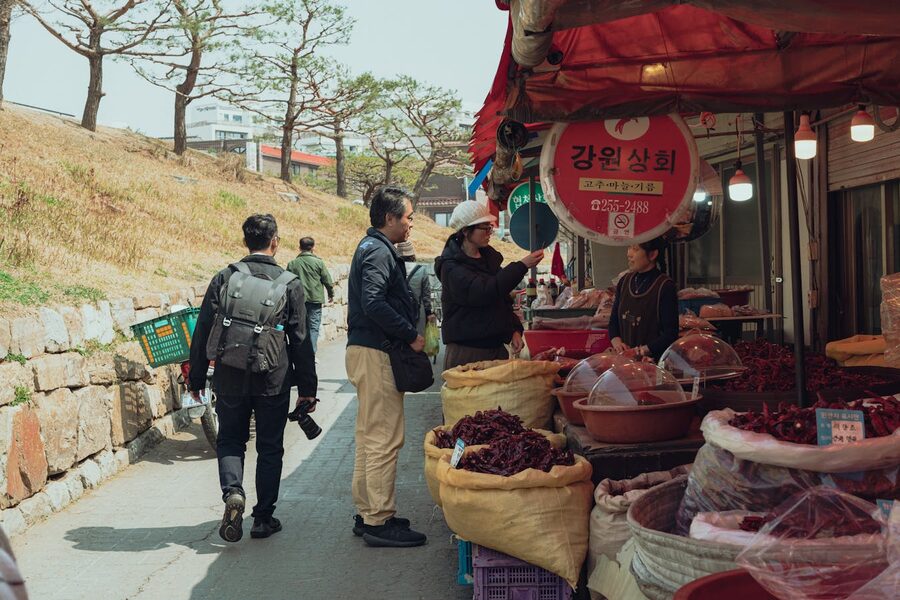
2pm: Cheomseongdae and the tumuli park. You walk from the observatory across the grass to the Daereungwon complex, which is a pleasant 15-minute stroll. You spend about 45 minutes at the tumuli and Cheonmachong burial chamber.
4pm: Anapji (Donggung Palace and Wolji Pond). Loop the pond, take the photo of the reflected pavilion, read a couple of placards about the artifacts dredged out in the 70s. About 45 minutes.
5pm: Coach back to Busan. The drive is around 90 minutes and most people sleep through at least half of it.
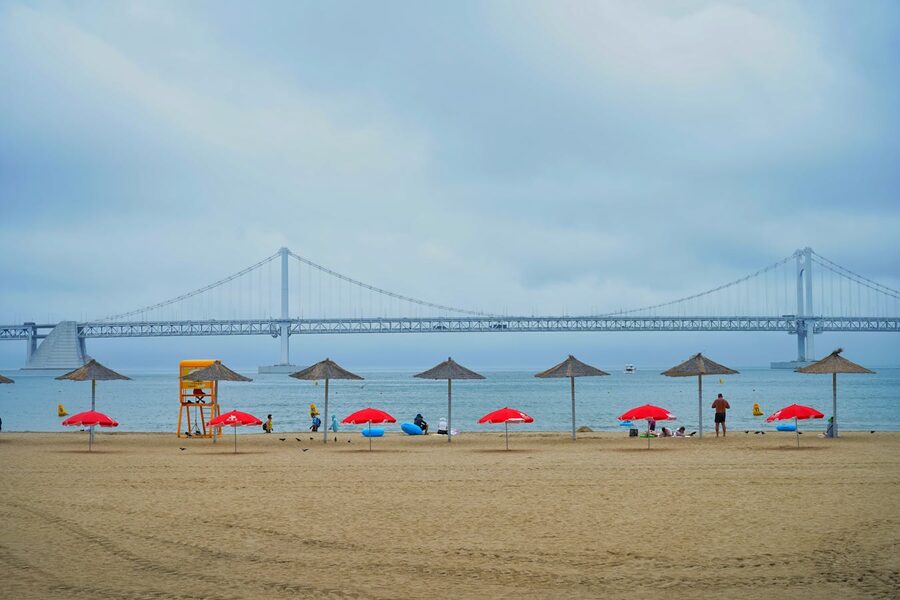
6:30 to 7:30pm: Drop-off back in central Busan. The exact time depends on traffic and the pickup point. Most days I was back in my hotel by 7pm and had dinner on Gwangalli Beach an hour later.
What to Bring and What to Wear
Comfortable walking shoes. You will be on your feet for about five hours across the day, on a mix of flat paths, stone bridges, and some mild forest trail at Seokguram. Trainers are fine. Sandals are not.
A jacket. Gyeongju is inland and usually a few degrees cooler than Busan. Seokguram is higher still and can be properly cold even in April. A light layer you can stuff into a daypack is the right call.
Water and a snack. There are vending machines and a couple of cafes at Bulguksa, but between sites you will get hungry if you forget to grab something at the lunch stop.
Cash (small amount). Most stops take card, but the Cheonmachong entry fee and the vending machines at the Seokguram car park sometimes default to cash. 10,000 to 20,000 won is more than enough.
A power bank. You will take more photos than you expect. The tumuli, the temples, Anapji — they are all made for phone cameras, and your battery will start whimpering by mid-afternoon.
What not to wear: no shorts at the temples if you can help it (it is fine in summer but you will feel self-conscious), and no noisy shoes at Seokguram — the path is quiet and so is everyone on it.
Pairing the Tour With the Rest of Your Trip
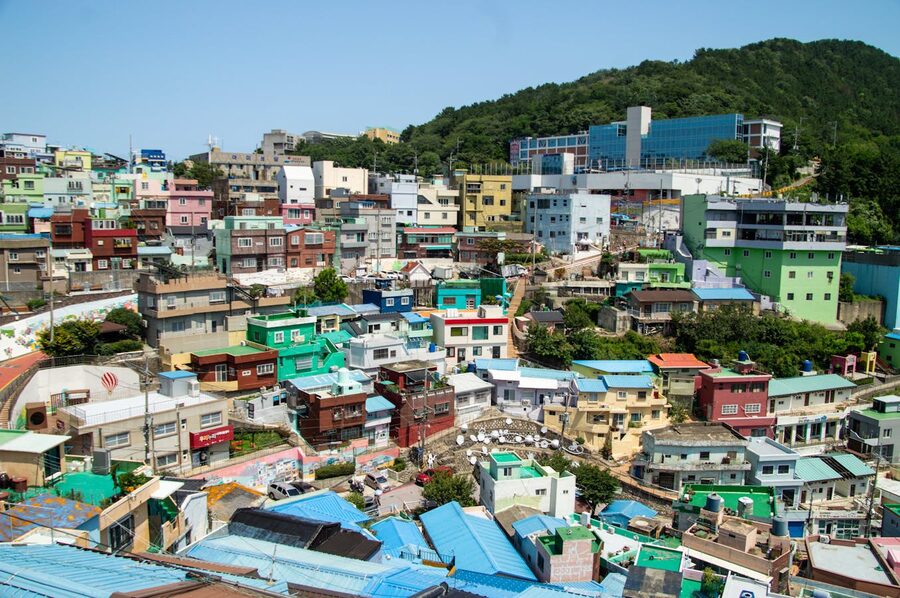
Gyeongju slots into the middle of a Korea itinerary beautifully. My favorite 10-day run is three days in Seoul (see our Seoul city sightseeing guide and our DMZ tour guide), a KTX down to Busan, two days in Busan with one of them dedicated to this Gyeongju day trip, then a quick flight to Jeju for the last two days. That gives you modern Seoul, ancient Silla, port-city Busan, and volcanic Jeju in a single trip.
If you are combining Korea with Japan (the classic route, and the one most travellers actually book), Gyeongju also pairs well as the ancient-history counterweight to Kyoto. Our guides to the Fushimi Inari shrine hike, the Arashiyama bamboo forest walk, and the Gion geisha district walk cover the Kyoto side of the equation.
On the Tokyo end, the Tokyo Imperial Palace walking tour and the Asakusa rickshaw tour are the best paired half-days, and if you have time for a proper day trip out of Tokyo, the Nagano snow monkeys trip has the same “book the tour because DIY is painful” logic as this Gyeongju one.
Day-trippers routing out of Osaka should also check our Nara day trip guide — Nara was Japan’s capital before Kyoto, which makes it the closest Japanese parallel to Gyeongju. For foodies, our Osaka food tours guide is the one to check.
Frequently Asked Questions
Can I do Gyeongju as a day trip from Seoul?
You can, but it is a long day. KTX from Seoul to Singyeongju is about 2 hours each way, and then you still need internal transport. Much better as a day trip from Busan, where the drive is under 90 minutes and the guided tours are built around this exact itinerary.
How long is a typical Busan to Gyeongju tour?
Between 8 and 12 hours depending on how many stops are included. Our top pick runs 11 to 12 hours. The UNESCO-focused option runs 8 to 12 depending on the departure.
Is Gyeongju worth it if I have already seen Kyoto?
Yes. Kyoto is Heian-era Japan (roughly 800 to 1200 CE). Gyeongju is Silla-era Korea (roughly 0 to 900 CE). They overlap in time but the artistic traditions, religious architecture, and scale of the royal tombs are completely different. I went to Gyeongju for the first time after five trips to Kyoto and it still surprised me.
Are the tours in English?
Yes, all three tours on this page offer English-speaking guides as the default. Double-check the listing before booking — some operators run Korean-language and Chinese-language departures on the same day at different times.
Can I visit Seokguram without climbing?
The path from the car park is about 10 minutes on a gentle forest trail with a mild incline. It is manageable for most people, but if you have knee or hip issues, warn your guide before you set off and they can hang back with you.
Is photography allowed inside Bulguksa and Seokguram?
Yes at Bulguksa, including inside most of the main halls if you are respectful. No at Seokguram — the Buddha chamber is behind glass and cameras are explicitly forbidden. Attendants enforce it.
What should I eat for lunch?
If the tour gives you a choice, go for ssambap — rice and meat wrapped in lettuce and sesame leaves. It is Gyeongju’s local specialty and noticeably different from the bibimbap and Korean barbecue you will get everywhere else. Bread-stuffed Gyeongju-pang from Hwangridan Street is the classic dessert.
The Bottom Line
If you are in Busan for more than two nights and you have any interest in Korean history — even the casual, “I liked Squid Game and want to know more about the country” level of interest — book the day trip. Gyeongju is the single best antidote to the Seoul-and-Busan impression that Korea is all concrete towers and K-pop.
An 11-hour guided tour for $52 is one of the better value bookings on the entire Asian travel circuit right now, and the two premium options (the small-group Busan tour and the UNESCO-focused day trip) both have strong reasons to pick them for the right traveler.
My default pick is the Busan Gyeongju Three Kingdoms day trip at $52. Book it the week before you travel, set an 8am alarm, bring a jacket, and spend the day watching a thousand years of Korean history unfold in one manageable loop. You will be back in Busan by 7pm with your phone full of photos of stone Buddhas and grass-covered tomb mounds, eating seafood on Gwangalli Beach, and making very different plans for the rest of your trip.