
I almost walked right past her.
It was about 6:30 on a Tuesday evening, and I was cutting through a side alley off Hanamikoji when a door slid open and a woman in full white makeup, elaborate hair ornaments, and a dark kimono stepped out. She moved quickly — purposefully — and disappeared around a corner before I could even process what I’d just seen. That was my first encounter with a real geiko in Gion, and it lasted maybe four seconds.
That’s the thing about Kyoto’s most famous geisha district. You can walk the main streets for hours and see nothing but travellers in rental kimonos. Or you can show up at the right time, on the right streets, with someone who actually knows where to look — and suddenly you’re watching a piece of living history that most visitors never get close to.
Booking a Gion walking tour is straightforward, but picking the right one matters more than you’d expect. Some run during the day when the district is overrun with selfie sticks. Others go at night when the teahouses are active and the streets are atmospheric. The price difference between them is almost nothing — we’re talking $20-25 for most — so the decision comes down to timing, route, and guide quality.
Short on time? Here are my top 3 picks:
Best overall: Gion Geisha District & Hidden Gems Walking Tour — $25. Covers two geisha districts with a knowledgeable local guide. Best balance of culture, history, and geiko-spotting.
Best for atmosphere: Gion Magical Night Walking Tour — $24. Evening departure means lantern-lit streets and far fewer crowds. Highest-rated night option.
Best budget: Gion Geisha District Walking Tour — $20. Same district, solid guide, five dollars cheaper. Does the job without the extras.
- How Gion Walking Tours Actually Work
- Daytime vs Evening Tours — Which One to Pick
- What’s the Difference Between Geisha, Geiko, and Maiko?
- The Best Gion Walking Tours to Book
- 1. Kyoto: Gion Geisha District & Hidden Gems Walking Tour —
- 2. Kyoto: Gion Magical Night Walking Tour with Geisha Trivia —
- 3. Kyoto: Gion Geisha District Walking Tour —
- 4. Gion: Night Owl Walking Tour —
- 5. Kyoto Gion: 2-Hour Geisha Culture & History Walking Tour — .88
- When to Visit Gion
- How to Get to Gion
- Tips That Will Save You Time (and Awkwardness)
- What You’ll Actually See in Gion
- Gion Etiquette — The Rules Nobody Tells You
- Making the Most of Your Kyoto Evenings
How Gion Walking Tours Actually Work
There’s no centralized ticket system for Gion tours like you’d find at a museum or monument. Everything runs through third-party tour operators — mainly GetYourGuide and Viator — who work with local licensed guides. You book online, get a meeting point (usually near the Kanji Museum on Shijo-dori or at a specific spot on Hanamikoji), and show up at the designated time.
Most tours last about two hours and cover a loop through Gion’s key streets: Hanamikoji-dori (the famous main street with the ochaya teahouses), Shinbashi-dori (the photogenic willow-lined stretch), and typically one or two side alleys that most visitors walk right past. Some tours also dip into the Miyagawa-cho geisha district south of Gion, which is less touristy and arguably more interesting.
Group sizes vary. The better tours cap at 10-12 people. A few run groups of 15-20, which gets awkward on Gion’s narrow streets. Private tours exist too, but they run $100+ per person and unless you have very specific questions about geisha culture, a small group tour gives you 90% of the experience at a fraction of the price.
Daytime vs Evening Tours — Which One to Pick
This is the single most important decision and most people get it wrong.
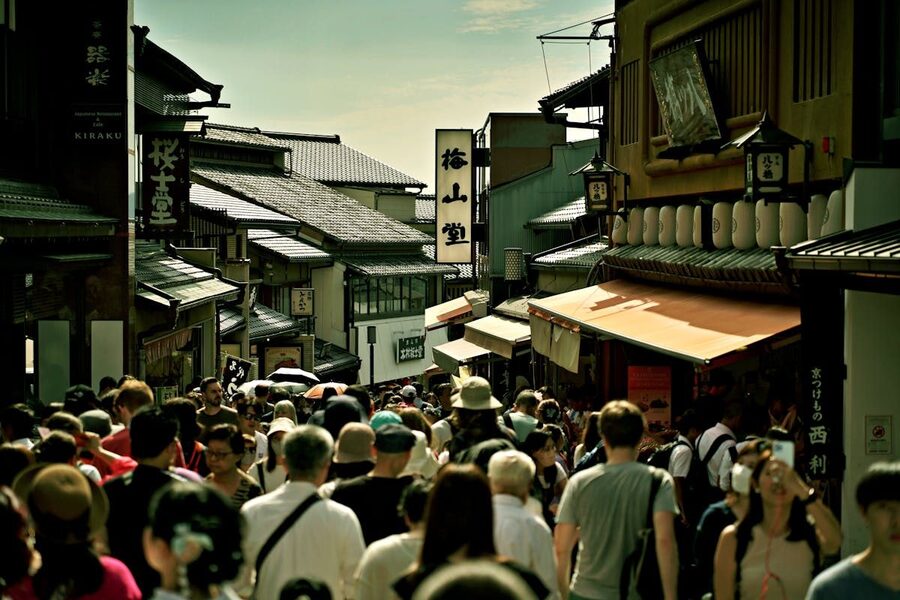
Daytime tours (usually 10am-2pm) let you see the architecture clearly. You get better photos of the buildings, you can peek into some shops that close early, and the guides can point out details on the wooden facades that you’d miss in low light. But Gion during the day is packed.
Tour buses dump hundreds of people onto Hanamikoji between 11am and 3pm, and the chances of spotting an actual geiko are close to zero — they don’t leave their okiya (lodging houses) until late afternoon at the earliest.
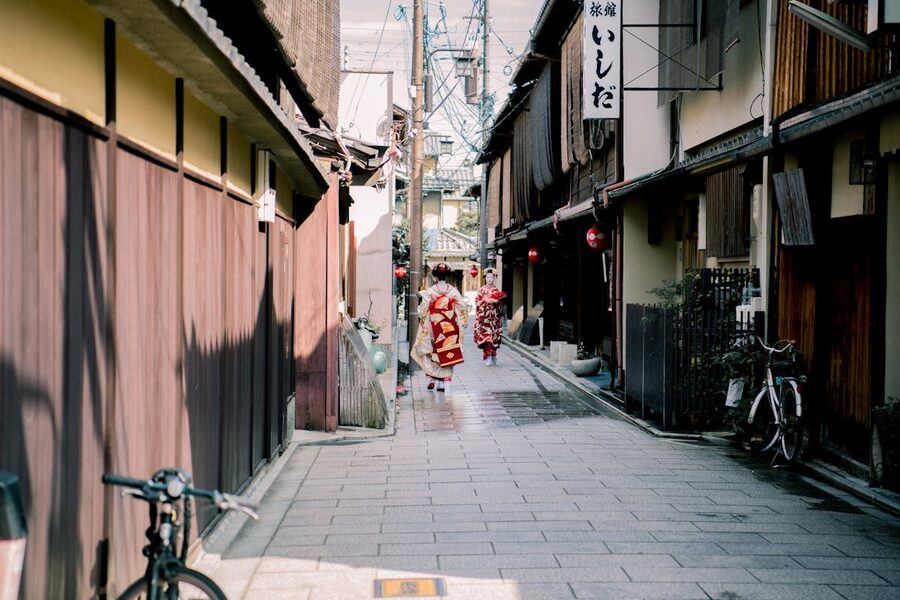
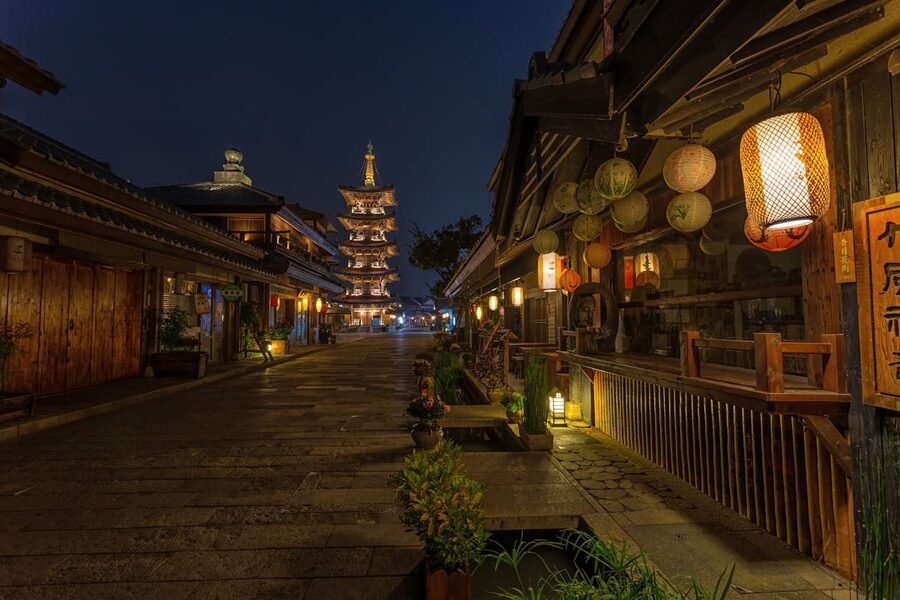
Evening tours (usually 5pm-7:30pm) are when Gion actually becomes what people imagine it to be. The lanterns come on. The crowds thin dramatically. And this is when geiko and maiko (apprentice geisha, aged 15-20) actually move through the streets heading to engagements at the ochaya teahouses. You won’t get a conversation with them — they’re working — but seeing one hurry past in full regalia is genuinely special.
My take: go evening. Every time. The architecture is still visible, the atmosphere is ten times better, and you might actually see what you came to see. The only exception is if you’re leaving Kyoto in the afternoon and have no evening free.
What’s the Difference Between Geisha, Geiko, and Maiko?
Quick primer, because your guide will explain this in detail but it helps to know the basics before booking.
In Kyoto, the word “geisha” is rarely used. They call them geiko — literally “arts child.” These are fully trained female entertainers who perform traditional music, dance, and conversation at private gatherings in ochaya teahouses. They’re over 20, live independently, and can earn serious money. It’s a respected profession here, not what Western movies have made it out to be.
Maiko are apprentices, aged 15-20, who live in communal okiya houses and train for years before becoming geiko. They’re the ones with the more elaborate hairstyles and colorful kimonos — the visual difference is obvious once someone points it out. Kyoto has five active kagai (geisha districts), with Gion being the most famous and Miyagawa-cho the second largest.
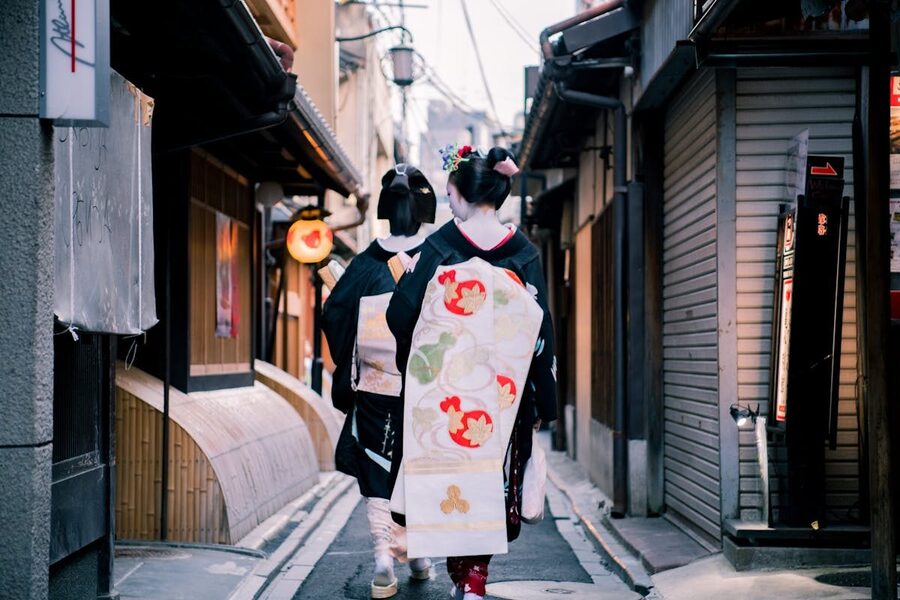
One important thing: do NOT chase or grab a geiko/maiko for photos. This has become such a problem that Kyoto has installed signs and even barriers on some streets in Gion. A good guide will explain the etiquette and make sure the group behaves respectfully. If your guide doesn’t mention this, that’s a red flag.
The Best Gion Walking Tours to Book
I’ve ranked these based on route quality, guide knowledge, group size, and timing. All five are solid picks — the differences are mostly about when you want to go and how much detail you want on the history. The Gion Hidden Gems tour edges ahead for most visitors, but night owls should look seriously at options 2 and 4.
1. Kyoto: Gion Geisha District & Hidden Gems Walking Tour — $25
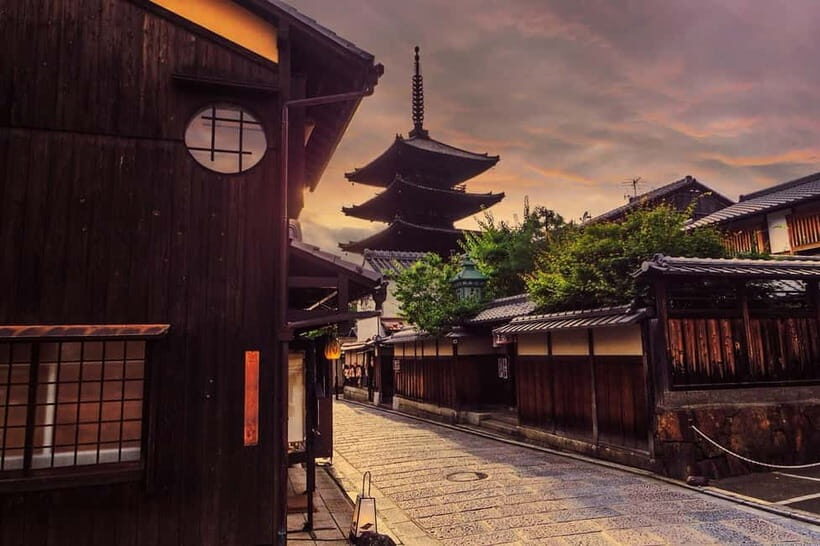
This is the one I’d pick if I could only do one Gion tour. It covers two geisha districts — both Gion proper and the less-visited areas that most walking tours skip entirely. At $25 for two hours, it’s hard to argue with the value, especially given that the guides are genuinely knowledgeable locals rather than script-readers.
What sets it apart is the “hidden gems” component. Instead of just walking the main Hanamikoji drag (which you can do yourself for free), the guide takes you into side streets and alleys where the actual ochaya teahouses operate. The group size stays small enough that you don’t feel like a parade. This is the most popular Gion district walking tour on the market, and the ratings reflect it.
2. Kyoto: Gion Magical Night Walking Tour with Geisha Trivia — $24

If you want to see Gion the way it’s meant to be experienced, this is the tour. The 100-minute evening walk hits the district when the lanterns are lit and the teahouses are active. At $24, it’s actually cheaper than the daytime Hidden Gems tour, and I’d argue the experience is better.
The “geisha trivia” angle isn’t gimmicky — it’s genuinely interesting background on how the kagai system works, what a maiko’s daily training looks like, and why these traditions have survived when so much of old Japan has disappeared. The guide weaves it into the walk naturally rather than lecturing at you. The night walking tour consistently gets the highest ratings of any Gion tour, and after doing the evening walk myself, I get why.
3. Kyoto: Gion Geisha District Walking Tour — $20
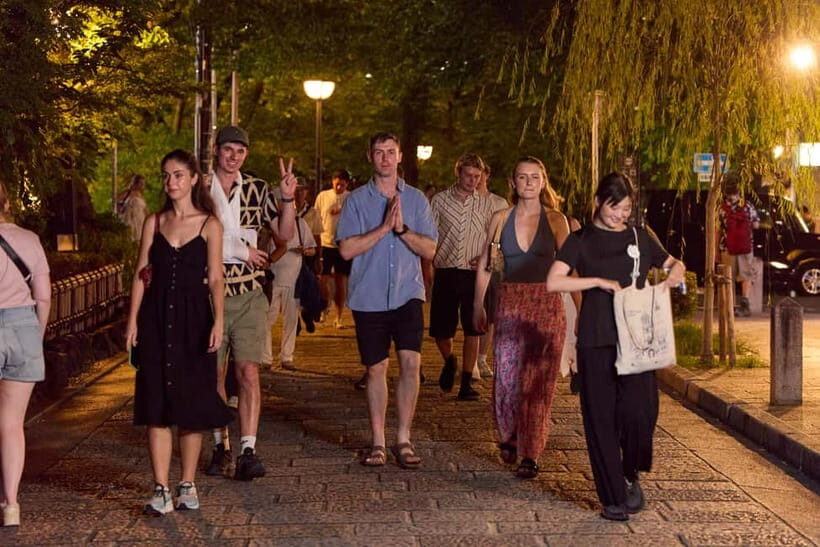
The most affordable option at $20 per person, and honestly, if budget is tight, you won’t feel like you’re missing much. The two-hour route covers Gion and Pontocho (another atmospheric alley running parallel to the Kamo River), and the guides focus on the stories and traditions of geisha culture.
Where this differs from the pricier options is mainly in the extras — you won’t get the deeper dives into the side alleys or the extended historical context. But the core experience is the same: walking the lantern-lit streets, learning to tell real geiko from travellers in rented kimonos, and hearing about the ochaya system from someone who actually knows the district. The Gion evening walk is the most booked budget option for a reason.
4. Gion: Night Owl Walking Tour — $24
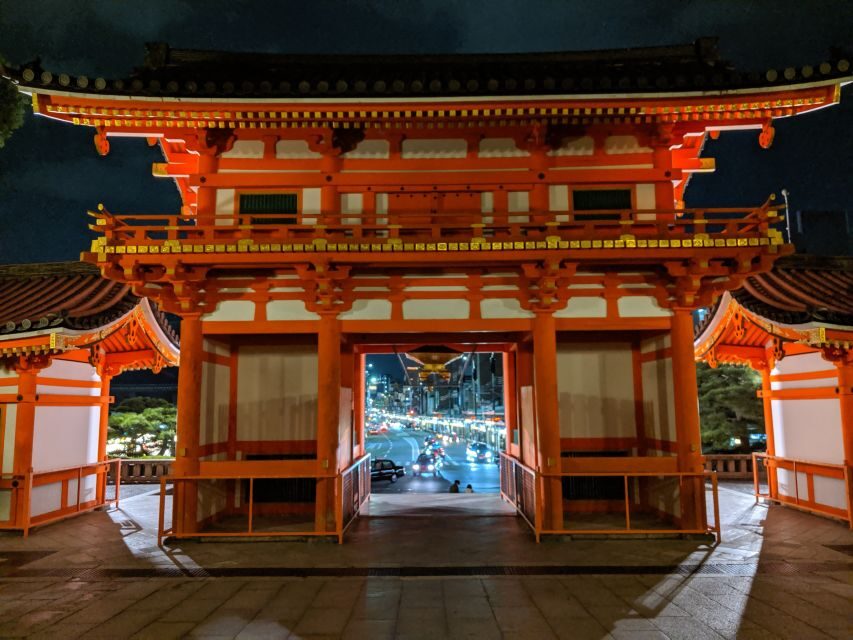
This one starts later than the other evening tours, which means you’re walking the streets when they’re at their emptiest. If you’ve ever seen those moody, lantern-lit photos of Gion with nobody in them — this is how you get that experience in real life. $24 for two hours of Gion at its most atmospheric.
The route goes beyond Gion proper into Higashiyama, which adds pagoda views and temple grounds that the other tours don’t reach. It’s a great pick if you’ve already seen Gion during the day and want the contrast. The Night Owl tour has built a strong reputation specifically because of that later departure time — it hits different when you’re practically alone on streets that were shoulder-to-shoulder six hours earlier.
5. Kyoto Gion: 2-Hour Geisha Culture & History Walking Tour — $23.88
The only Viator option in this list, and it has a perfect rating. At $23.88, the price is almost identical to the GYG tours, but the focus is more heavily weighted toward geisha culture and history rather than sightseeing. If you’re genuinely interested in understanding how the kagai system works — the hierarchy, the training, the economics of it — this is the deep-dive option.
The guides on this one tend to be specialists rather than generalists, which means you’ll get answers to questions that would stump most walking tour guides. The tradeoff is that the route is less scenic — it prioritizes historically significant spots over Instagram-friendly ones. If you’ve already taken plenty of photos and want substance over aesthetics, the Geisha Culture & History tour fills that niche well.
When to Visit Gion
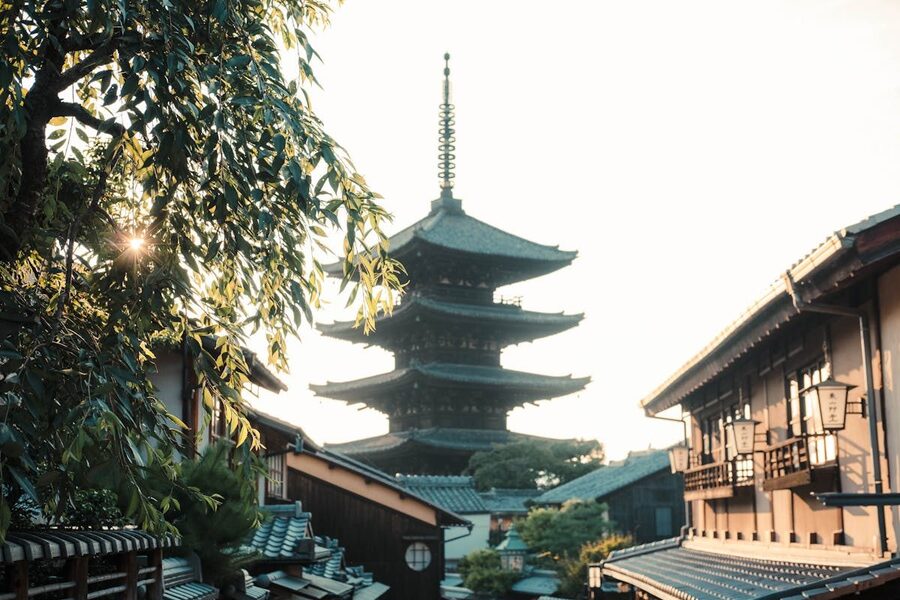
Best months: March-May and October-November. Cherry blossom season (late March to mid-April) makes Gion almost unbearably pretty but also unbearably crowded. Autumn foliage in November is just as photogenic with slightly fewer people. Summer is hot, humid, and the only advantage is longer daylight for evening tours.
Best time of day: Between 5pm and 7:30pm, without question. This is when geiko and maiko are most likely to be moving through the streets, heading to evening engagements. Monday and Tuesday evenings tend to be quieter than weekends.
Worst time: Midday on weekends, especially during Golden Week (late April/early May) and cherry blossom peak. Hanamikoji becomes a slow-moving wall of people and you’ll see nothing but the back of someone’s phone.
Special events to time around: The Miyako Odori dance performances happen in April — if you can get tickets to see maiko perform, it’s one of the only ways to experience geisha arts without a private teahouse connection. Gion Matsuri in July is Kyoto’s biggest festival and the streets around Gion fill with food stalls and processions, though the geisha district itself gets swallowed by the festival crowds.
How to Get to Gion
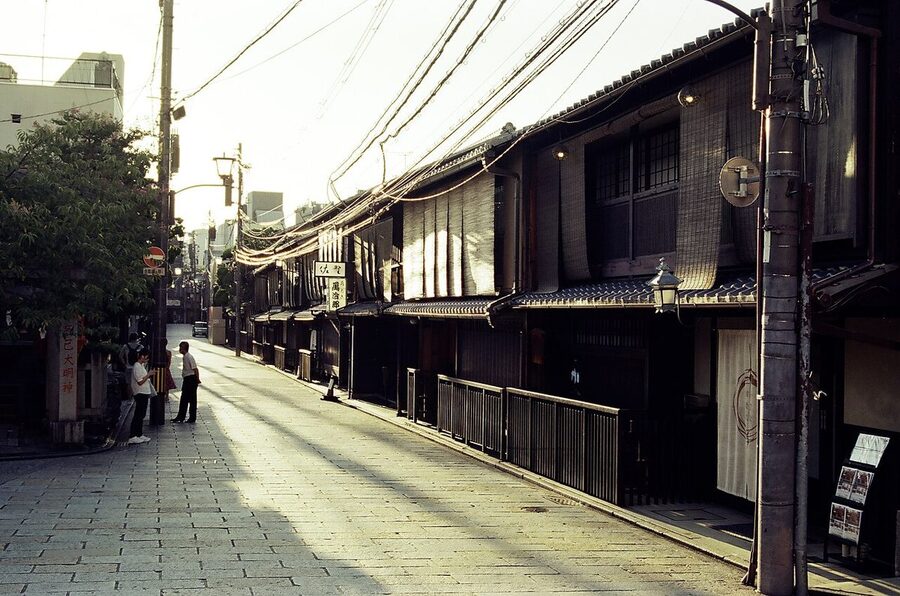
Gion sits in eastern Kyoto, running roughly from Shijo-dori in the north down to Gojo-dori in the south, with the Kamo River on its western edge. It’s surprisingly central.
By train: Take the Keihan Line to Gion-Shijo Station. You’ll come up right on the edge of the district. From Kyoto Station, it’s about 15 minutes on the Karasuma Line to Shijo Station, then a 10-minute walk east. The Hankyu Line to Kawaramachi Station also works — cross the Kamo River bridge and you’re there.
By bus: Kyoto city buses 100 and 206 stop at Gion. But honestly, Kyoto buses are painfully slow during busy periods. If you’re already planning to do a full-day Kyoto bus tour, you can combine it with a Gion evening walk — just make sure the bus tour ends early enough.
Walking: From Kiyomizu-dera, it’s a pleasant 15-minute downhill walk into Gion through the Higashiyama streets. From Kyoto Station, it’s about 25 minutes on foot — doable but not especially scenic. Most tour meeting points are within a 5-minute walk of Gion-Shijo Station.
Tips That Will Save You Time (and Awkwardness)
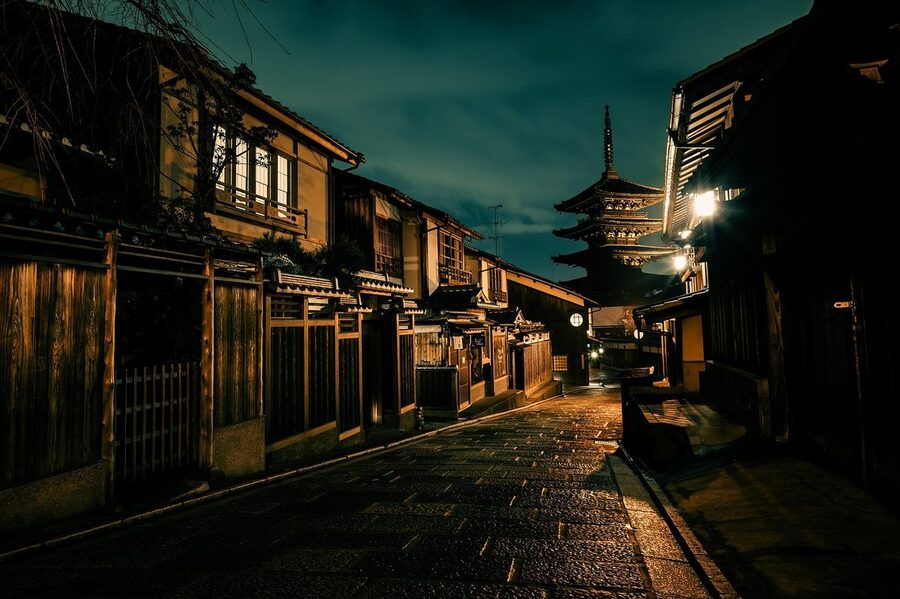
Book 2-3 days ahead for evening tours. Morning slots rarely sell out, but the popular evening departures (especially the Night Owl and Magical Night tours) fill up during peak season. A week ahead is safe. Same-day is risky from March through November.
Wear comfortable shoes you can walk in for two hours. Gion’s streets are flat but some are uneven stone. Heels are a terrible idea. If you’re renting a kimono, get the flat geta sandals — the elevated ones are painful after 30 minutes.
Don’t take photos of geiko without permission. This has become such a problem that Kyoto has banned photography on several Gion side streets. The fines are real. A good guide will explain the etiquette and point out where photography is restricted. If you see someone who looks like a geiko, observe from a respectful distance. Don’t block their path, don’t shout at them, don’t follow them.
Bring cash. The small shops and tea stalls in Gion’s side streets are still mostly cash-only. ATMs at 7-Eleven and Lawson accept international cards — there’s a 7-Eleven on Shijo-dori about a 3-minute walk from most tour meeting points.
The fancy teahouses aren’t open to walk-ins. Ochaya operate on an introduction system — you need an existing patron to vouch for you. No amount of money will get you through the door without one. Some tourist-friendly alternatives exist (Gion Corner runs cultural shows), but the real thing is invite-only. Don’t waste time trying.
Combine with dinner in Pontocho. The narrow alley running along the Kamo River, about a 5-minute walk from Gion, is packed with restaurants. Some have riverside seating (yuka) from May through September. Eat first, then do the evening tour, or vice versa. It makes for a great night out.
What You’ll Actually See in Gion
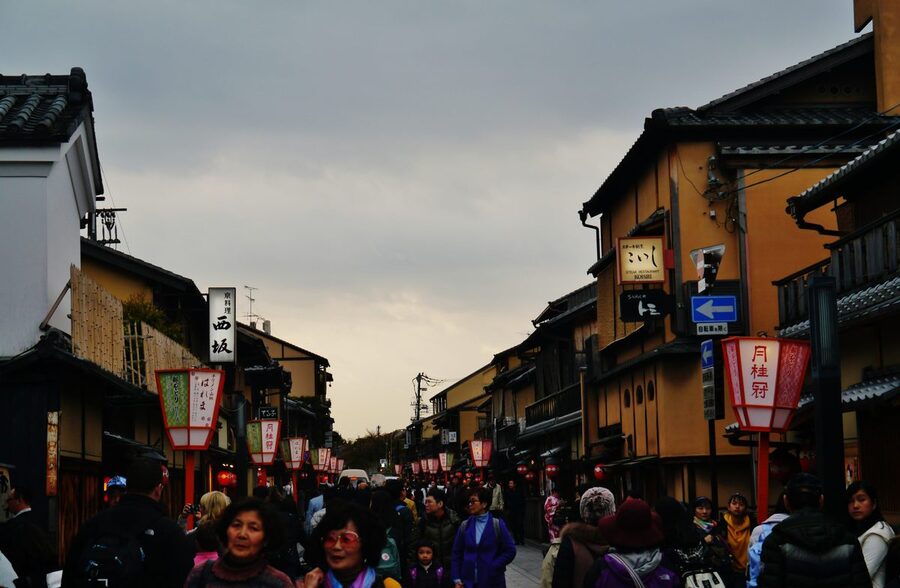
Gion isn’t a museum or a theme park. It’s a working neighborhood where real people live and work — including the roughly 200 geiko and maiko still active in Kyoto. That context matters, because it means there’s no scripted experience. Some nights you’ll see three maiko hurrying past. Other nights, nothing. The architecture and history are the constants.
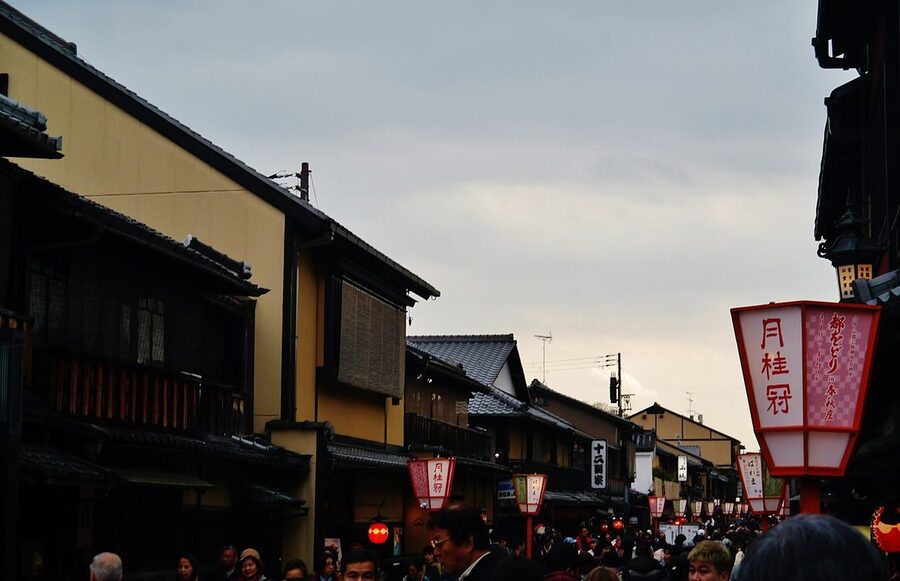
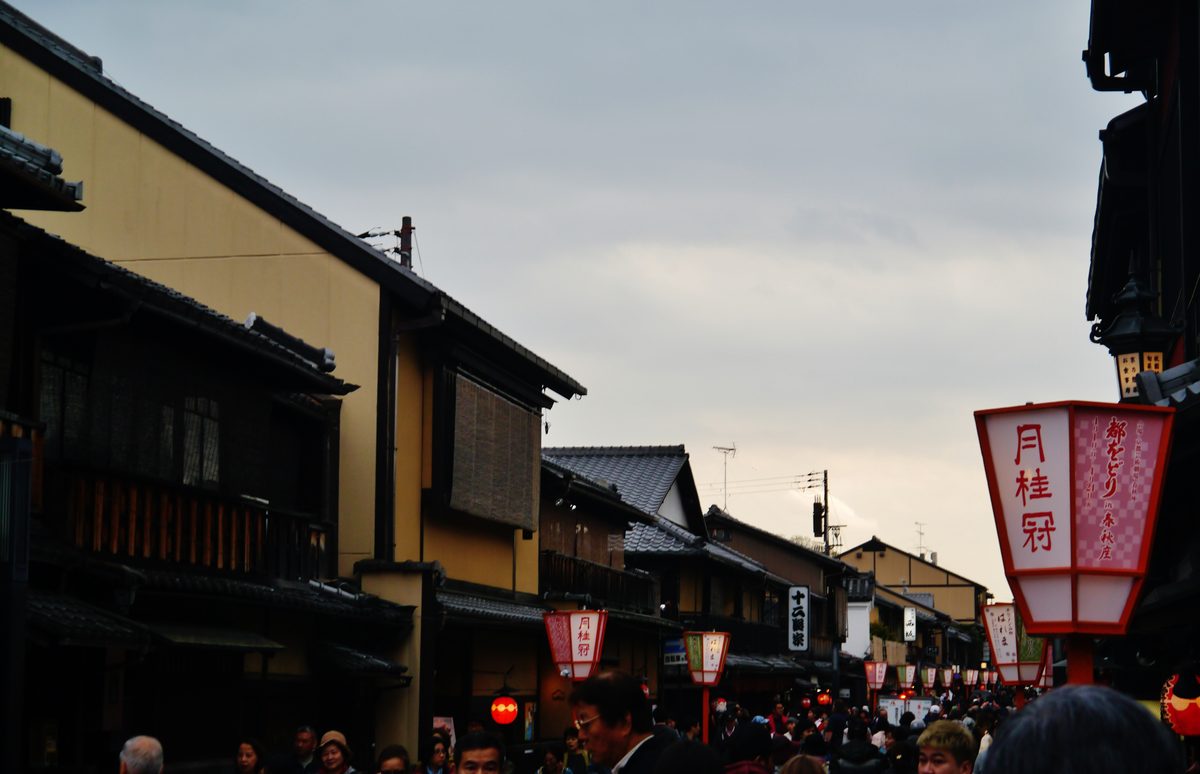
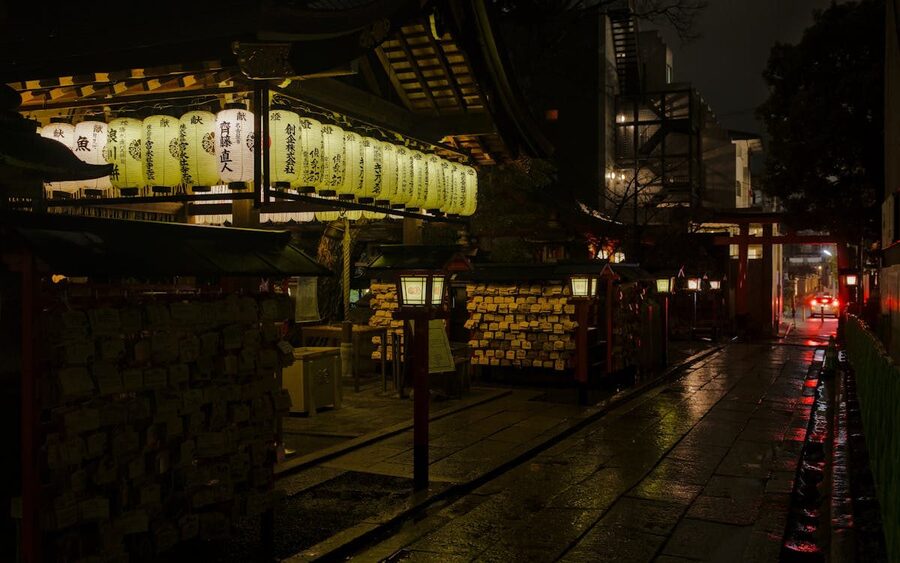
Hanamikoji-dori is the main street and the one you’ve seen in every Kyoto travel photo. It runs from Shijo-dori south toward Kennin-ji temple, lined with the wooden facades of ochaya teahouses. During the day it’s packed; at night it’s moody and atmospheric with paper lanterns glowing behind lattice windows.
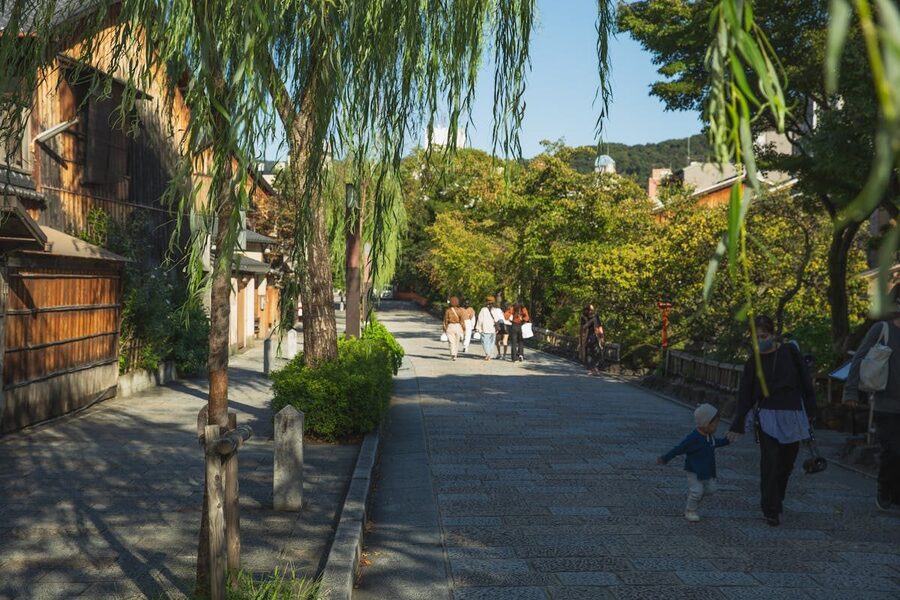
Shinbashi-dori is the postcard shot — a short stretch where willow trees hang over a stone-lined canal and the wooden buildings are perfectly preserved. It’s beautiful, extremely photogenic, and usually the first stop on walking tours.
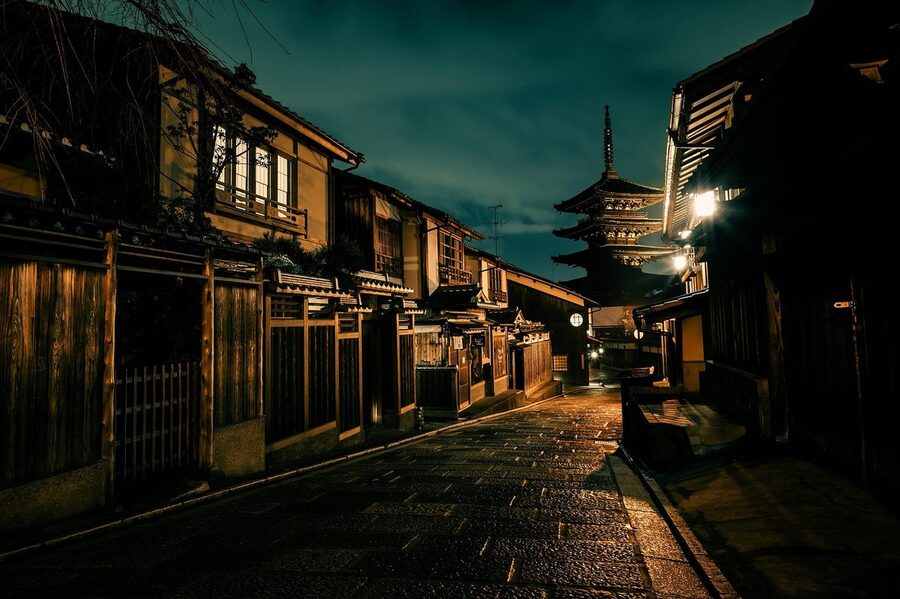
Tatsumi Daimyojin Shrine is a tiny shrine at the corner of Shinbashi and Hanamikoji where geiko traditionally stop to pray for success in their arts. It’s small enough to miss if you’re not looking for it — about the size of a garden shed — but it’s one of the most significant spots in the district.
Kennin-ji Temple sits at the southern end of Hanamikoji. It’s Kyoto’s oldest Zen temple, founded in 1202, and the contrast between the quiet temple grounds and the busy street outside is striking. Some tours include a quick visit here; others just pass the gate. The dragon ceiling painting inside is worth seeing if you have time after the tour.
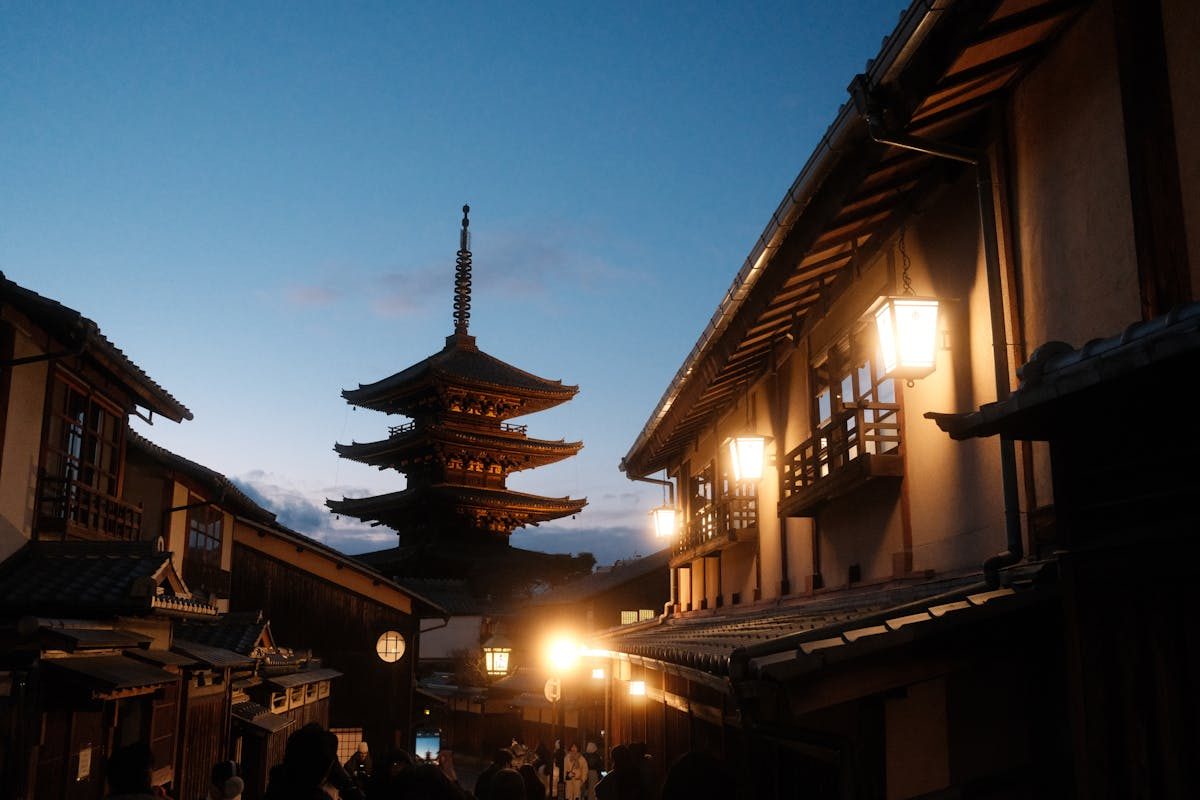
Yasaka Shrine marks the eastern boundary of Gion and is one of Kyoto’s most important Shinto shrines. The main gate faces directly down Shijo-dori, creating one of Kyoto’s most recognizable views. At night, the rows of stone lanterns are lit and the atmosphere shifts completely from tourist attraction to something much older and quieter.
Gion Etiquette — The Rules Nobody Tells You
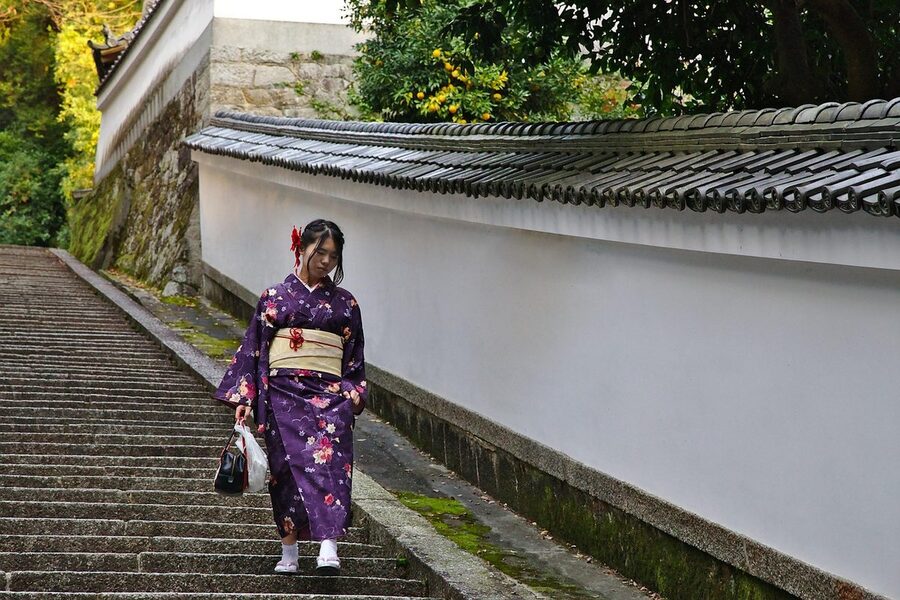
Gion has had a rough time with tourism, and the residents haven’t been shy about pushing back. In 2019, Kyoto started restricting photography in parts of Gion. Signs went up. Barriers appeared on some side streets. And local attitudes toward travellers hardened, understandably, after years of people chasing maiko down alleys for selfies.
The basic rules: stay on public streets, don’t block doorways or alleys, don’t touch anyone, don’t shout, and don’t take photos where signs say not to. If a geiko or maiko is walking past, step aside and let them through. They’re on their way to work. Imagine someone chasing you with a camera on your morning commute — that’s what it’s like for them.
This is actually one of the best reasons to take a guided tour rather than wandering alone. A good guide knows exactly which streets have restrictions, when to step back, and how to position the group so everyone sees what they came to see without being a nuisance. I watched a solo tourist get loudly scolded by a resident for blocking a doorway one evening — the guided group next to me was positioned perfectly and saw the same thing without any confrontation.
Making the Most of Your Kyoto Evenings
Gion works best as the evening anchor of a full Kyoto day. Spend the morning on a bike tour through northern Kyoto hitting the hidden temples and backstreets, grab lunch, then do a tea ceremony in the Higashiyama district before your Gion walk starts at dusk.
If you have a second day, the Fushimi Inari hike in the morning pairs well with a sake tasting in the Fushimi brewery district in the afternoon — totally different energy from Gion but equally worth your time.
The Arashiyama bamboo grove deserves its own half-day, and Nara is a quick train ride south if you want to feed deer and see the giant bronze Buddha before heading back for another evening in the geisha district.
This article contains affiliate links. If you book through our links, we earn a small commission at no extra cost to you. This helps us keep writing these guides.