
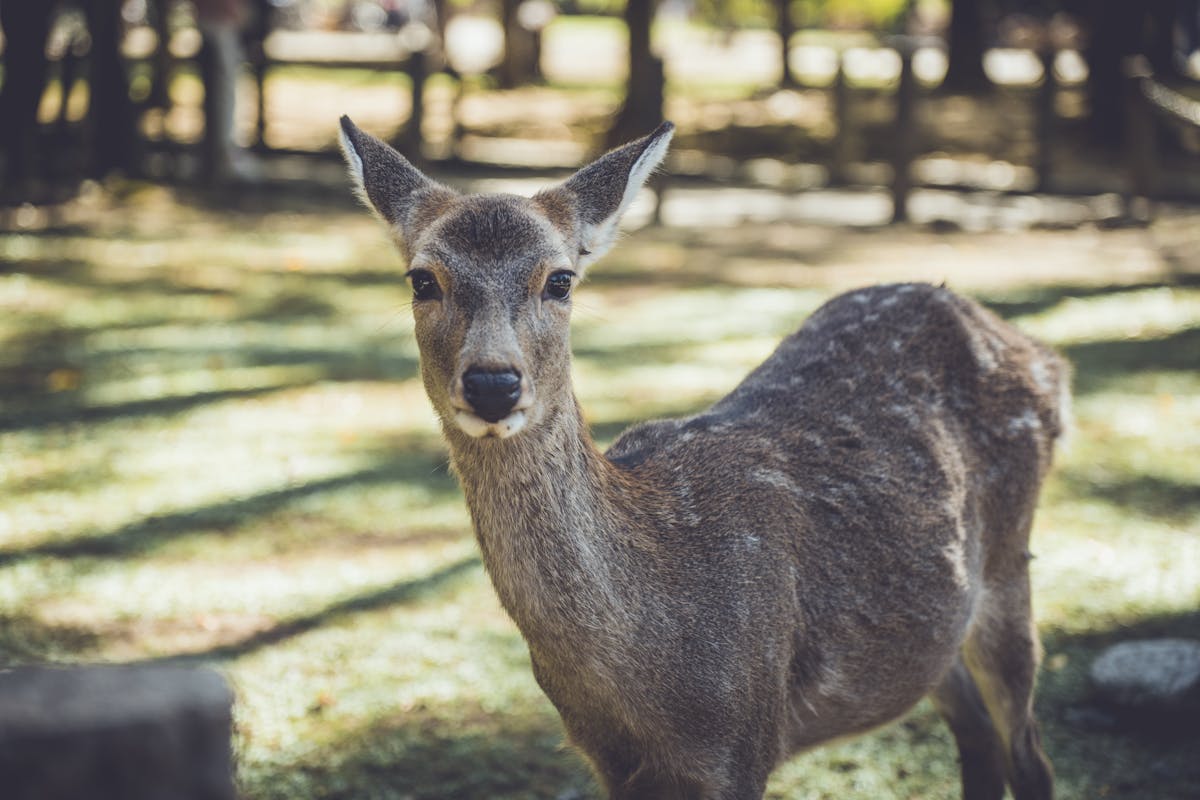
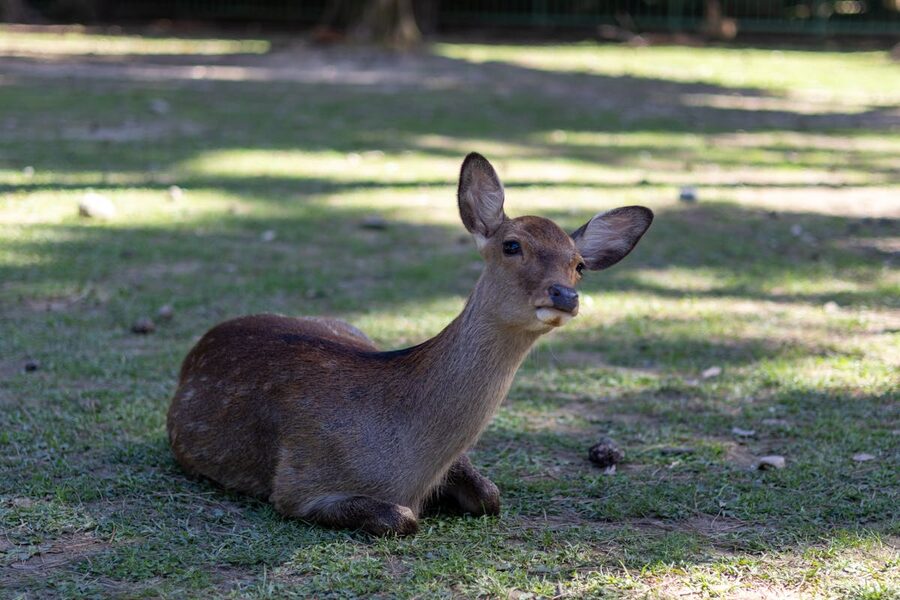
A wild-eyed deer shoved its nose into my jacket pocket at 7:45 in the morning. I hadn’t even made it past the first stone lantern on the path from Kintetsu-Nara Station, and already the reception committee had found me.
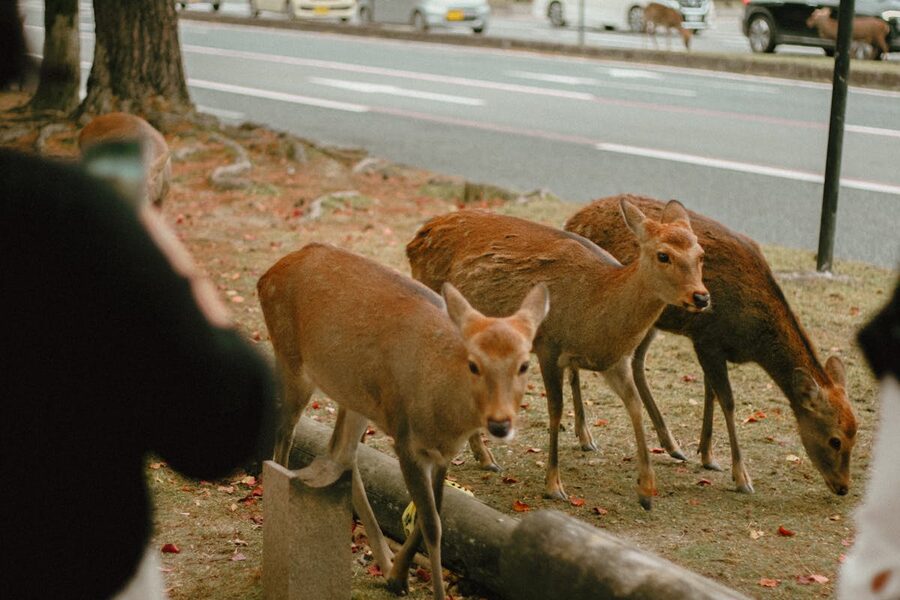
That’s Nara for you. It’s a city where 1,200 deer wander freely through temple grounds, across crosswalks, and right into your personal space — and somehow it all works. But the deer are honestly just the opening act.
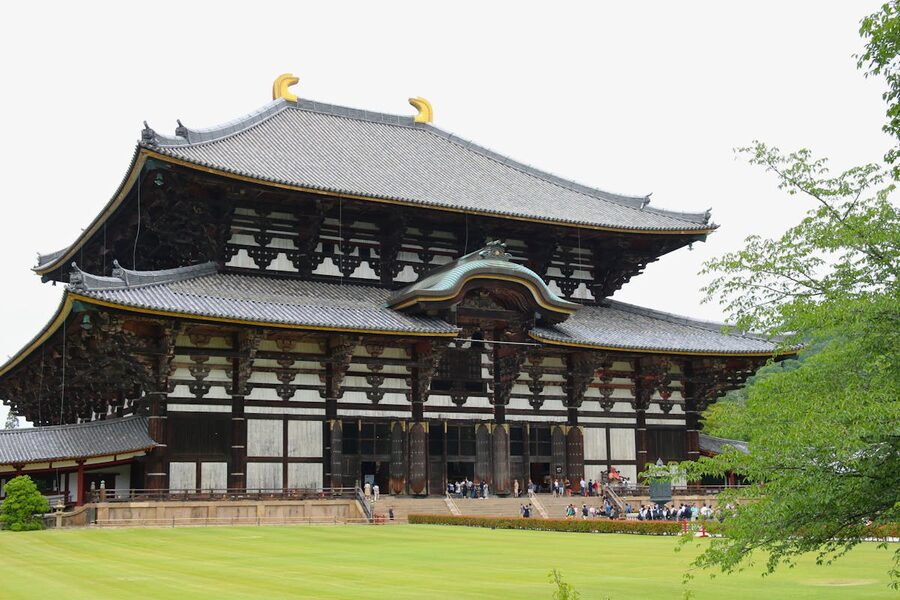
Nara was Japan’s first permanent capital back in 710 AD, which means the temples here are older than almost everything in Kyoto. Todaiji houses the world’s largest bronze Buddha inside the world’s largest wooden building. Kasuga Taisha has 3,000 stone and bronze lanterns lining its forest approach. And all of it sits within a park you can walk across in an afternoon.
The day trip from Osaka takes about 40 minutes by train. From Kyoto, 45 minutes. Either way, it’s one of the easiest and most rewarding side trips in all of Japan. But figuring out whether to go solo, join a walking tour, or take a full-day bus that combines Nara with Fushimi Inari and Arashiyama — that’s where it gets complicated.
I’ve sorted through every tour option available, compared prices, read through thousands of reviews, and put together everything you need to book the right Nara day trip for your schedule and budget.
Short on time? Here are my top picks:
Best overall: World Heritage Kyoto & Nara with Matcha Experience — $129.25. Full-day with Uji matcha tasting, expert guide, and zero logistics to figure out.
Best budget: Nara + Fushimi Inari + Arashiyama Bus Tour — $52. Three top destinations in one packed day — hard to beat on value.
Best for early risers: Nara Early Bird Tour — $61.02. Beat every tour bus to Todaiji and have the deer to yourself.
- How the Nara Day Trip Actually Works
- Going Solo vs. Joining a Guided Tour
- The Best Nara Day Trip Tours to Book
- 1. World Heritage Kyoto & Nara with Uji Matcha Experience — 9.25
- 2. Nara Half Day Walking Tour — 5.45
- 3. Nara Early Bird Tour — .02
- 4. Nara + Fushimi Inari + Arashiyama Bus Tour —
- 5. Arashiyama, Nara & Fushimi Inari Full Day Tour —
- When to Visit Nara
- How to Get to Nara
- Tips That Will Save You Time
- What You’ll Actually See in Nara
- More Japan Day Trip Guides
How the Nara Day Trip Actually Works
Nara doesn’t have a complicated ticketing system like some Japanese attractions. The main sights — Nara Park, the deer, walking around the temple district — are all free to access. Individual temples charge small entry fees, typically between 500-600 yen ($3-4) each.
Here’s what you actually need to know:
Getting there by train: From Osaka-Namba, take the Kintetsu-Nara Line (40 minutes, around 680 yen). From Kyoto Station, take the Kintetsu limited express (35 minutes, 1,280 yen with reserved seat) or the regular Kintetsu train (50 minutes, 760 yen). Always go to Kintetsu-Nara Station, not JR Nara Station — Kintetsu is much closer to the main sights.
Temple entry fees: Todaiji’s Great Buddha Hall costs 600 yen. Kasuga Taisha’s inner shrine area is 500 yen (the outer grounds are free). Kofukuji’s National Treasure Hall is 700 yen. Isuien Garden is 1,200 yen. You won’t hit all of these in a half-day trip, so budget for 2-3 entries.
Deer crackers: Shika senbei (deer crackers) cost 200 yen per bundle from vendors scattered around the park. Buy them when you’re ready to interact — the deer can smell them and will surround you immediately. And I do mean immediately.
Time needed: A focused visit to the main sights takes 4-5 hours. A relaxed day with lunch and garden visits is 6-7 hours. Most guided tours run either half-day (3-4 hours) or full-day (8-10 hours when combined with other destinations).
Going Solo vs. Joining a Guided Tour
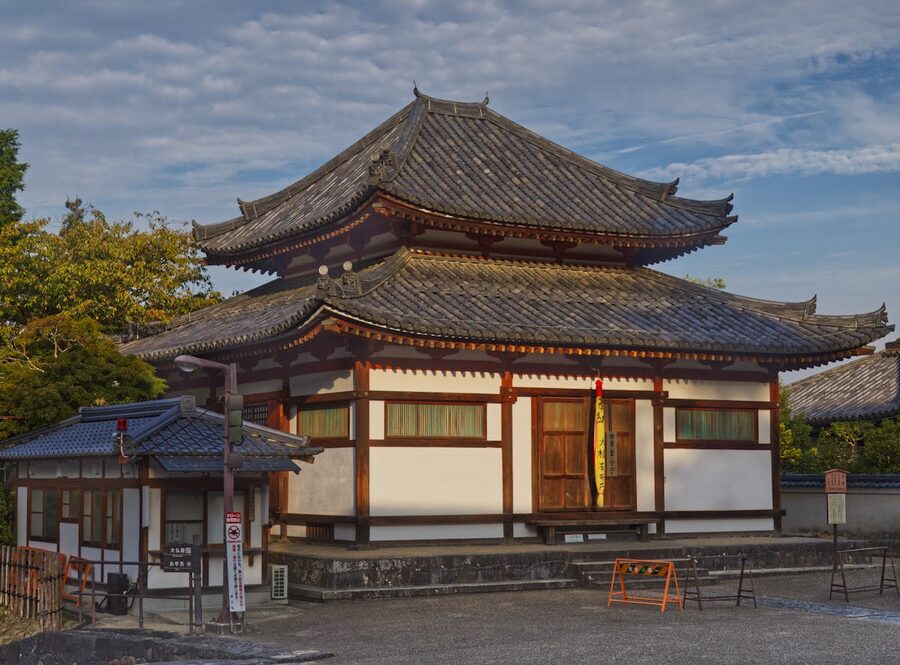
Nara is one of those places where both options genuinely make sense, depending on what you care about.
Going solo works well if you:
– Want to arrive early (before 8am) to beat the crowds — no tour starts that early
– Care about photography and want unlimited time at each spot
– Already know some Japanese history and don’t need narration
– Have a JR Pass or Kintetsu Rail Pass (the train is already covered)
– Prefer wandering without a schedule
A guided tour is better if you:
– Want to combine Nara with Fushimi Inari, Arashiyama, or Uji in one day
– Don’t want to deal with train logistics or navigation
– Want a local guide who can explain the history and significance of each site
– Are traveling with kids or older family members who prefer structure
– Want the matcha experience in Uji (you won’t do this on your own easily)
The solo train trip costs about $10-15 round trip depending on your route. Add temple entries and lunch and you’re at maybe $30-40 total. The cheapest guided tours start at $52 and include transport plus multiple destinations. So the cost gap isn’t huge — it’s really about whether you want structure or freedom.
One thing I’ll say: the full-day bus tours that combine Nara with Fushimi Inari and Arashiyama are genuinely good value. Trying to hit all three independently in one day is doable but exhausting, and the bus handles all the logistics.
The Best Nara Day Trip Tours to Book
I’ve gone through every Nara tour option and narrowed it down to the five worth booking. These are ranked by overall value — a mix of guide quality, what’s included, review scores, and price.
1. World Heritage Kyoto & Nara with Uji Matcha Experience — $129.25
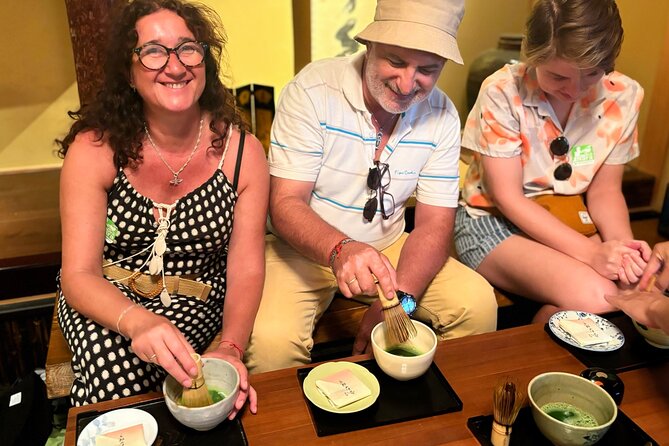
This is the one I’d pick if I could only book one tour. It covers both Nara and Kyoto’s highlights with a stop in Uji for an authentic matcha tasting — and Uji is the kind of place most visitors skip because it’s awkward to get to independently. The guide walks you through Todaiji, Nara Park, and the deer, then heads to Uji for matcha at a traditional tea house before wrapping up in Kyoto.
At $129.25 it’s the priciest option on this list, but you’re getting a full-day expert-guided experience across three UNESCO areas. The reviews are flawless — a perfect 5.0 rating from over 1,500 people, which at this scale basically never happens. The guides clearly know their stuff and keep the pace right.
2. Nara Half Day Walking Tour — $105.45

This is the Nara-only option for people who want depth over breadth. Instead of rushing through Nara as part of a multi-city blitz, you spend 3-4 hours walking through the main sights with a guide who actually explains the history behind what you’re seeing. The walking tour covers Todaiji, Kasuga Taisha, and Nara Park at a pace that lets you actually absorb it.
At $105.45 for a half-day, it’s not cheap — but the small group size means you can actually ask questions and the guide adjusts the pace. Perfect 5.0 rating across nearly 1,000 reviews. If you’re only spending a half day in Nara and want to make it count, this is the one.
3. Nara Early Bird Tour — $61.02
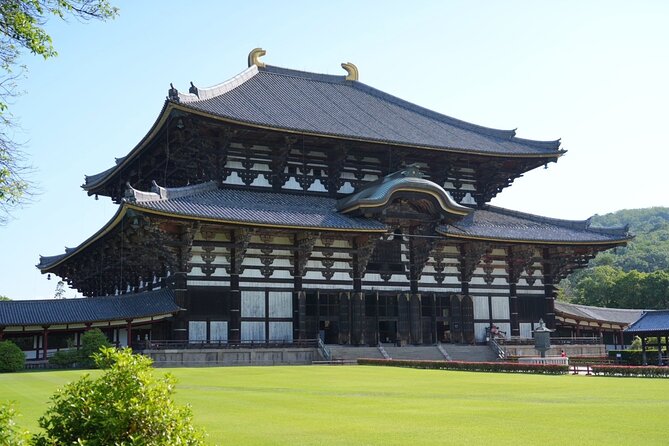
This is my pick for photographers and anyone who hates crowds. The tour starts early — departures from Nara or Kyoto — and gets you to the main sights before the tour buses roll in around 10am. If you’ve ever seen those photos of empty paths through Nara Park with deer peacefully grazing, this is how you get that experience.
At $61.02 it’s excellent value for a guided Nara experience. The trade-off is that it’s a half-day tour, so you’re done by midday — but that actually works perfectly if you want to spend your afternoon in Kyoto or Osaka. Another perfect 5.0 rating from nearly 700 reviews. The guides know all the best spots for deer interaction and photos.
4. Nara + Fushimi Inari + Arashiyama Bus Tour — $52
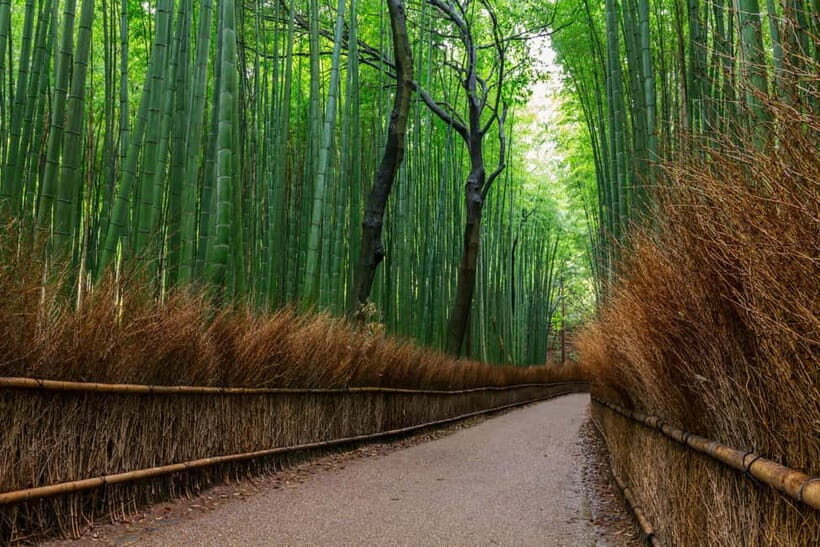
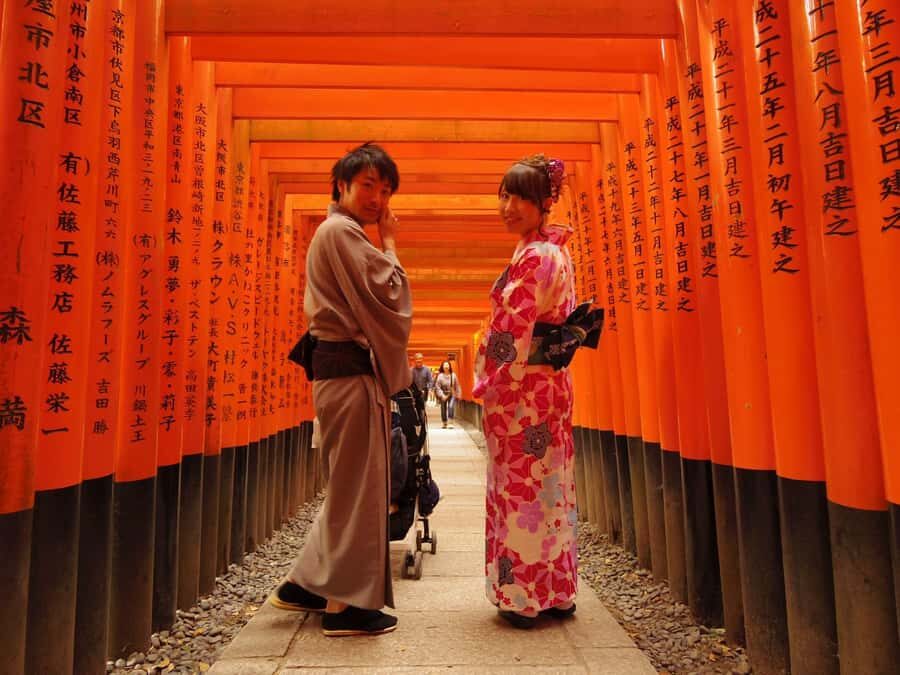
Here’s the best value on this list, full stop. For $52 you get a full-day bus tour (9-10 hours) covering three of the most popular destinations in the Kyoto-Nara-Osaka triangle: Nara Park with the deer and Todaiji, Fushimi Inari’s thousand orange torii gates, and the bamboo groves at Arashiyama. Departure from either Osaka or Kyoto.
The downside? You’re spending maybe 2 hours at each stop, which is enough to see the highlights but not enough to really explore. If Nara is your priority, you’ll feel rushed. But if you’re short on time and want to check off three bucket-list items in one day, nothing else comes close to this price. The 4.7 rating from over 1,200 reviews is solid — most complaints are about the rushed pace, which is kind of the deal you’re making.
5. Arashiyama, Nara & Fushimi Inari Full Day Tour — $52
This is essentially the same concept as Tour #4 — three destinations, one day, bus transport from Osaka or Kyoto — but from a different operator with a slightly different itinerary flow. The route hits Arashiyama first, then Nara, then Fushimi Inari, which some people prefer because the bamboo grove is less crowded in the morning.
Also $52, also a full 9-10 hour day. The 4.5 rating from 935 reviews is slightly lower than Tour #4, and the lunch situation varies — check whether lunch is included or just a stop. If Tour #4 is sold out on your date, this is the same experience with a different operator. Pick whichever has better availability.
When to Visit Nara
Nara is an outdoor destination, so weather matters more here than at most Japanese attractions.
Best months: April (cherry blossoms in Nara Park), October-November (autumn colors, cooler temps, baby deer season ends). March and early May are also great — comfortable walking weather without the peak crowds.
Avoid if you can: July and August are brutally hot and humid. Walking between temples in 35-degree heat with no shade is genuinely miserable, and the deer get cranky too. Golden Week (late April-early May) and New Year’s are packed.
Best time of day: Arrive by 8am if possible. The park is quiet, the deer are calm, and you can walk through Todaiji practically alone. By 10am the first tour buses arrive and it’s a completely different experience. If you’re on a half-day schedule, morning is always better than afternoon.
Seasonal events worth planning around:
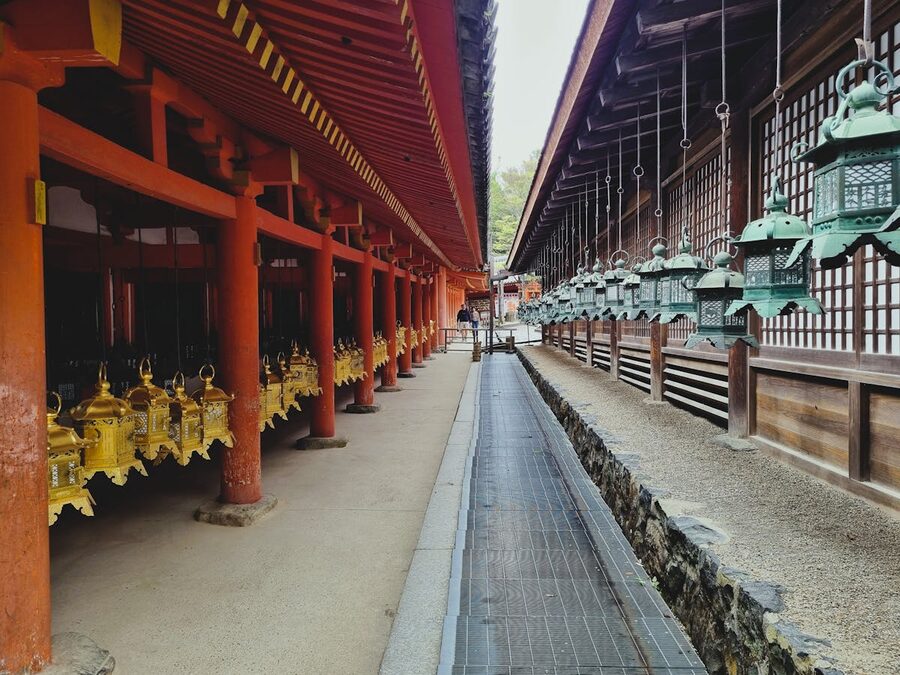
– Mantoro Festival (February 3 and August 14-15): All 3,000 lanterns at Kasuga Taisha are lit — genuinely magical
– Shika no Tsunokiri (early October): The annual deer antler cutting ceremony at Kasuga Taisha — been happening since 1671
– Omizutori (March 1-14): Fire festival at Todaiji’s Nigatsu-do hall — monks run along the balcony with massive flaming torches
How to Get to Nara
From Osaka (Namba):
Kintetsu-Nara Line from Osaka-Namba Station. The rapid express takes about 40 minutes and costs 680 yen. Trains run every 10-15 minutes. This is the cheapest and most convenient option.
From Osaka (Umeda/Shin-Osaka):
Take the subway to Namba first, then the Kintetsu line. Or take JR from Tennoji to JR Nara (about 50 minutes, 480 yen) — but JR Nara Station is a 15-minute walk from the main sights, so Kintetsu is still better unless you have a JR Pass.
From Kyoto:
Kintetsu limited express from Kyoto Station: 35 minutes, 1,280 yen (reserved seat). Regular Kintetsu: 50 minutes, 760 yen. JR Nara Line: 45 minutes, 720 yen — covered by JR Pass but drops you at JR Nara Station.
Pro tip: If you have a JR Pass, take JR to save money but add 15 minutes walking time from JR Nara Station. If you don’t have a JR Pass, Kintetsu is faster and drops you closer to everything. Kintetsu-Nara Station is the one you want — it’s right at the edge of the park.
From Tokyo:
Take the shinkansen to Kyoto (2 hours 15 minutes), then Kintetsu to Nara (35-50 minutes). Total journey is about 3 hours. It’s a long day trip from Tokyo — consider spending a night in Kyoto or Osaka instead.
Tips That Will Save You Time
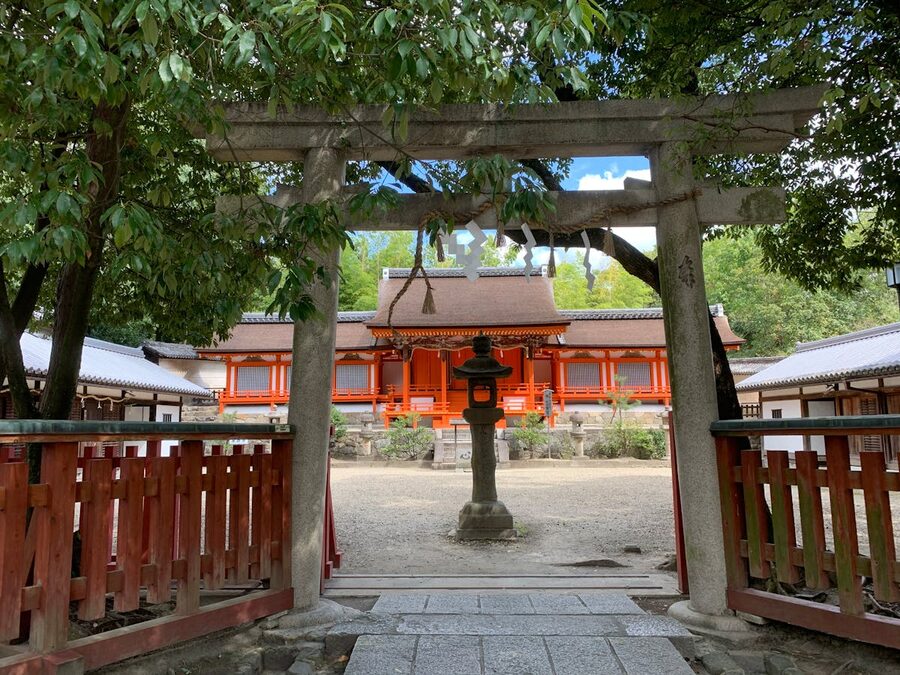
– Arrive before 8:30am. I can’t stress this enough. The difference between 8am Nara and 10:30am Nara is like two different cities. Morning Nara is peaceful, atmospheric, and the deer are relaxed. Late morning Nara is tour buses, selfie sticks, and deer that have been fed so many crackers they’ve stopped caring.
– Hide your deer crackers until you’re ready to use them. The deer can see the packets and will literally mob you. Buy them, put them in your bag, walk to a good spot, THEN pull them out. Trust me on this.
– Wear comfortable walking shoes. The main circuit (Kofukuji to Todaiji to Kasuga Taisha) is about 4km of walking on gravel paths and stone steps. Some paths get slippery when wet.
– Bring cash. Temple entry fees, deer crackers, and many smaller shops and restaurants in Naramachi are cash only. ATMs are available at 7-Eleven and the post office near Kintetsu-Nara Station.
– Use the lockers at Kintetsu-Nara Station. They cost 300-700 yen depending on size and are right near the east exit. Don’t drag luggage through the park — the gravel paths make rolling bags impossible anyway.
– Skip the deer crackers at peak hours if you have small children. The deer can be aggressive when they see food, and a 3-year-old holding crackers is going to get swarmed. Feed the deer in the quieter areas away from the main path instead.
– Todaiji closes at 5pm (4:30pm November-February). Kasuga Taisha closes at 5pm year-round. Plan backwards from these times if you’re arriving in the afternoon.
What You’ll Actually See in Nara
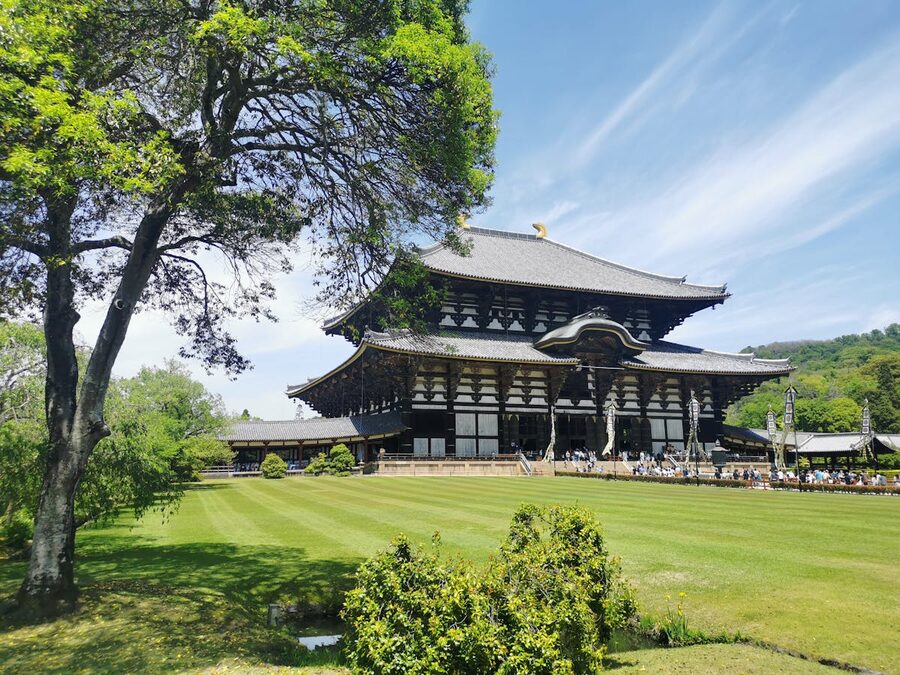
Todaiji Temple & the Great Buddha
The Great Buddha (Daibutsu) is 15 meters tall and made of 437 tonnes of bronze — and the building that houses it, Daibutsuden, is the largest wooden structure in the world (even though it’s actually only two-thirds the size of the original). The scale is genuinely hard to process until you’re standing in front of it. Entry is 600 yen and worth every yen.
Behind the main hall, don’t miss the pillar with a hole in its base. It’s said to be the same diameter as the Buddha’s nostril, and if you can squeeze through it, you’re guaranteed enlightenment in your next life. The line is usually long but moves fast.
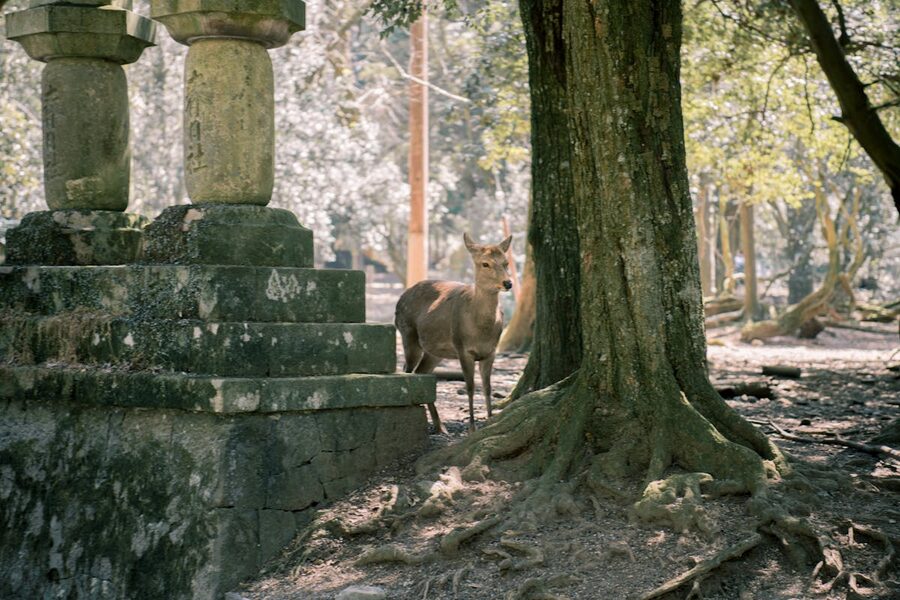
Kasuga Taisha Grand Shrine
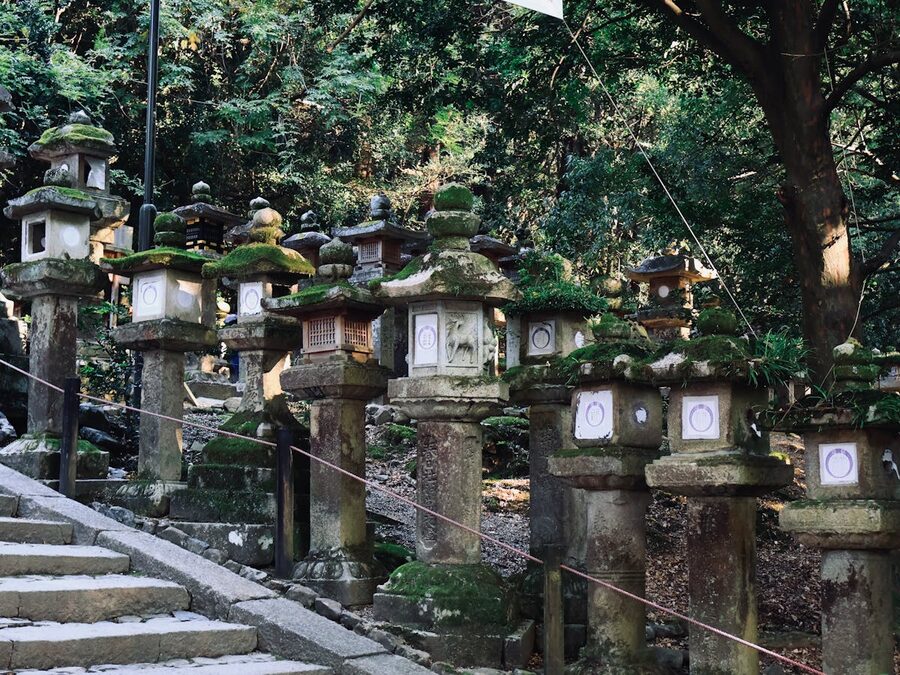
The approach through Kasugayama Primeval Forest — a patch of old-growth forest that has been protected since 841 AD — is one of the most atmospheric walks in Japan. Three thousand stone and bronze lanterns line the paths, many covered in centuries of moss. The shrine itself is painted a striking vermillion and gets rebuilt every 20 years as part of Shinto tradition. The inner sanctum costs 500 yen.
Kofukuji Temple
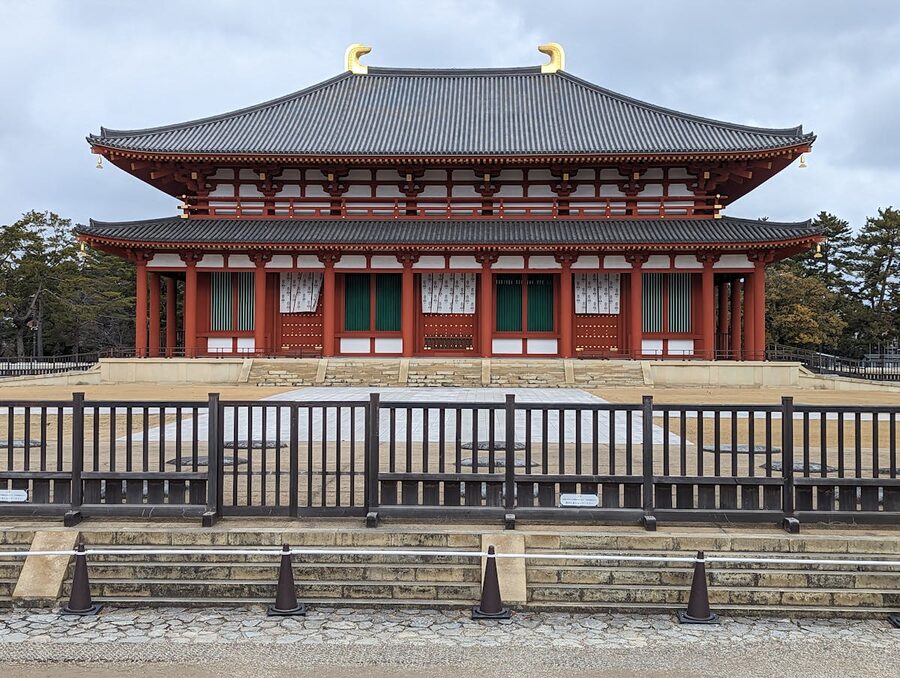
The five-story pagoda at Kofukuji is one of the tallest in Japan and the postcard image of Nara. The National Treasure Hall (700 yen) houses some of the finest Buddhist statuary in the country, including the famous three-headed, six-armed Ashura statue.
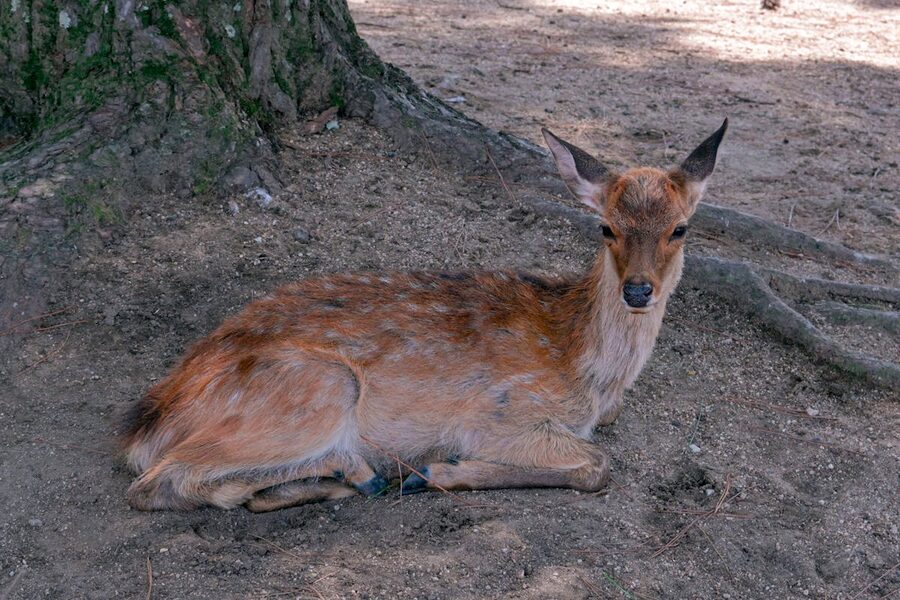
Isuien Garden
This is the hidden star of Nara. Most day-trippers skip it, which is a mistake. Isuien is actually two gardens — the front garden from the Meiji era and the rear garden from the Edo period — with a direct view of Todaiji’s roof and Mount Wakakusa as borrowed scenery. Entry is 1,200 yen and includes a matcha tea in the tea room overlooking the garden. Go.
Naramachi
The old merchant district south of the main sights is worth an hour of wandering. Traditional machiya townhouses line narrow streets, many converted into cafes, sake shops, and small museums. Kakisuga Main Shop sells kaki no ha zushi (persimmon leaf sushi) and other local specialties. It’s the kind of neighborhood where you stumble into things.
More Japan Day Trip Guides
If you are building an itinerary around the Kansai region, a Nara day trip pairs perfectly with a couple of days exploring Osaka — our guides cover Osaka food tours, Osaka Castle tickets, and Osaka bar hopping at night. Kyoto is even closer, and the tea ceremony experiences and Gion walking tours make great pairings for your remaining days.
For hands-on cultural activities, the sushi making classes run in Osaka for as little as $31 and the samurai experience in Kyoto is one of the highest-rated activities in the city. If you are heading further afield, the Hiroshima and Miyajima trip is completely doable from Osaka with an early start.
And back in Tokyo, the Kamakura day trip and Nikko day trip offer similar temple-hopping energy in very different settings.
This article contains affiliate links. If you book a tour through one of our links, we earn a small commission at no extra cost to you. This helps us keep creating free travel guides. We only recommend tours we’ve genuinely researched.