
The biggest misconception about Arashiyama Bamboo Grove is that it takes hours to explore. The bamboo walkway itself is about 500 meters long. You can walk through it in 10 minutes. And if that’s all you do — walk through, take a photo, turn around — you’ll leave thinking it was the most overrated attraction in Kyoto.
It isn’t. But you need a plan, and ideally a guide who knows where the good stuff is.
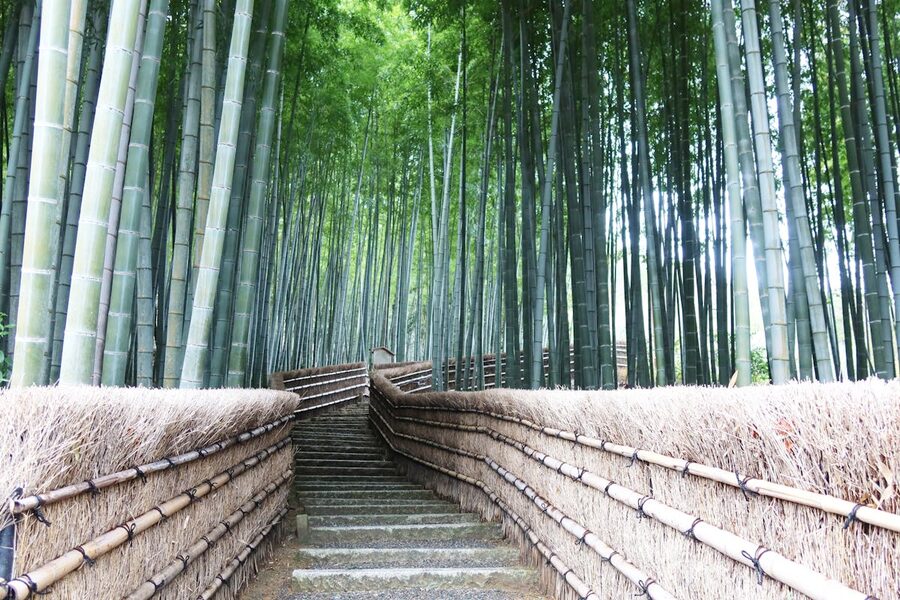
The grove is just one piece of Arashiyama. Within walking distance you’ve got Tenryu-ji Temple (a UNESCO World Heritage site with one of Kyoto’s finest gardens), the Iwatayama Monkey Park (where wild macaques roam a hilltop with panoramic views of the city), the Togetsukyo Bridge over the Katsura River, and a string of smaller temples and shrines that most day-trippers never find.
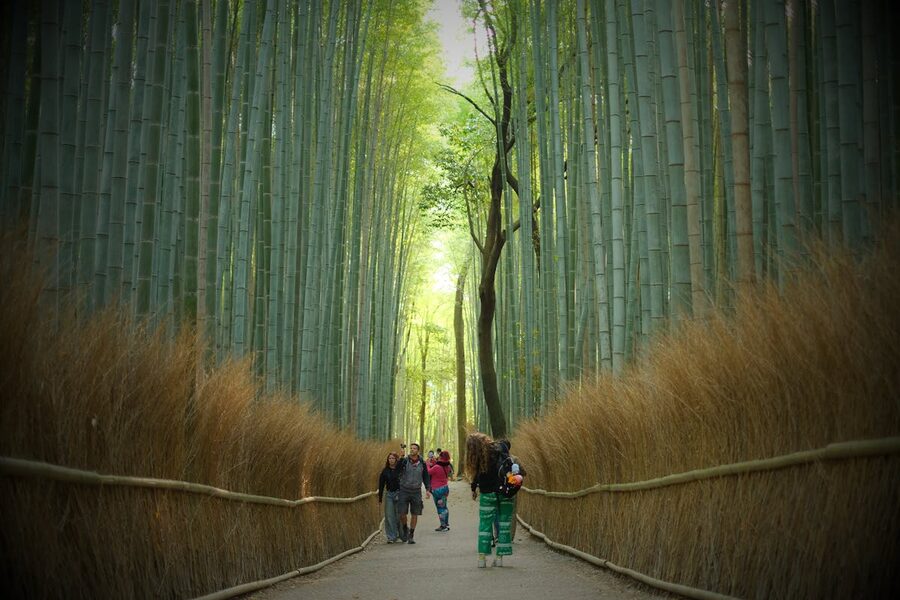
A guided walking tour connects all of these into a half-day experience that actually makes sense. On my own, I wasted time backtracking and missed the entrance to the monkey park entirely (it’s not where you’d expect). With a guide, the whole district clicks into place — bamboo grove, temple gardens, matcha break, monkey park summit — all in the right order, timed to dodge the worst crowds.
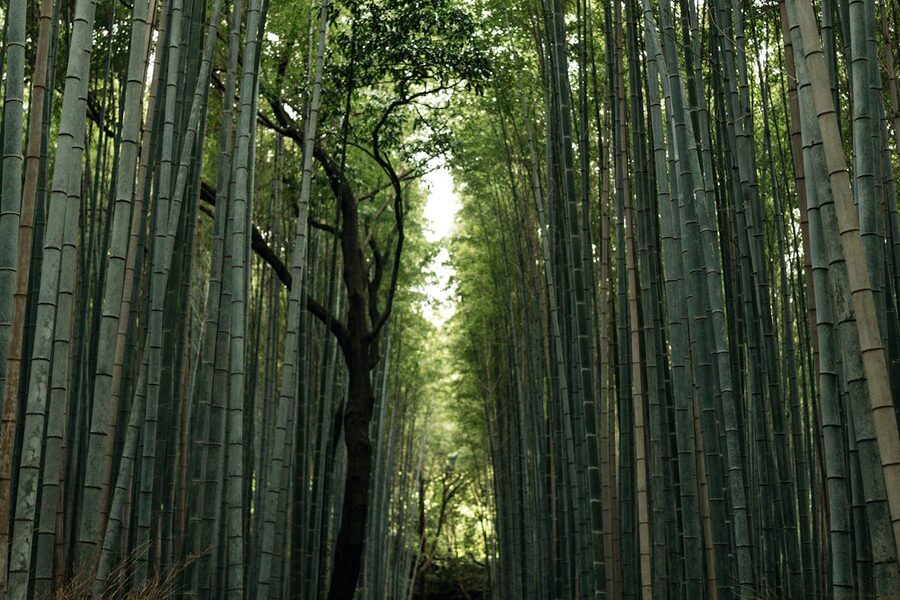
Short on time? Here are my top picks:
Best overall: Arashiyama Walking Tour: Bamboo, Monkey Park & Secrets — $66. Covers the bamboo grove, monkey park, temples, and hidden spots with a local guide.
Best budget: Arashiyama Bamboo, Monkeys, Matcha & Temple Tour — $53. Similar route at a lower price point with consistently high ratings.
Best full-day combo: Nara + Fushimi Inari + Arashiyama Bus Tour — $52. Bundle Arashiyama with Nara and Fushimi Inari in one day.
- How Visiting Arashiyama Works
- Walking the Grove on Your Own vs Booking a Tour
- The Best Arashiyama Walking Tours to Book
- 1. Arashiyama Walking Tour: Bamboo Forest, Monkey Park & Secrets —
- 2. Kyoto Arashiyama: Bamboo, Temple, Matcha, Monkeys & Secrets —
- 3. Arashiyama Bamboo Forest, Monkeys, Matcha & Temple Tour —
- 4. Nara, Fushimi Inari & Arashiyama Full-Day Bus Tour —
- When to Visit Arashiyama
- How to Get to Arashiyama
- Tips That Will Actually Help
- What You’ll See on a Walking Tour
- Filling the Rest of Your Kyoto Days
How Visiting Arashiyama Works
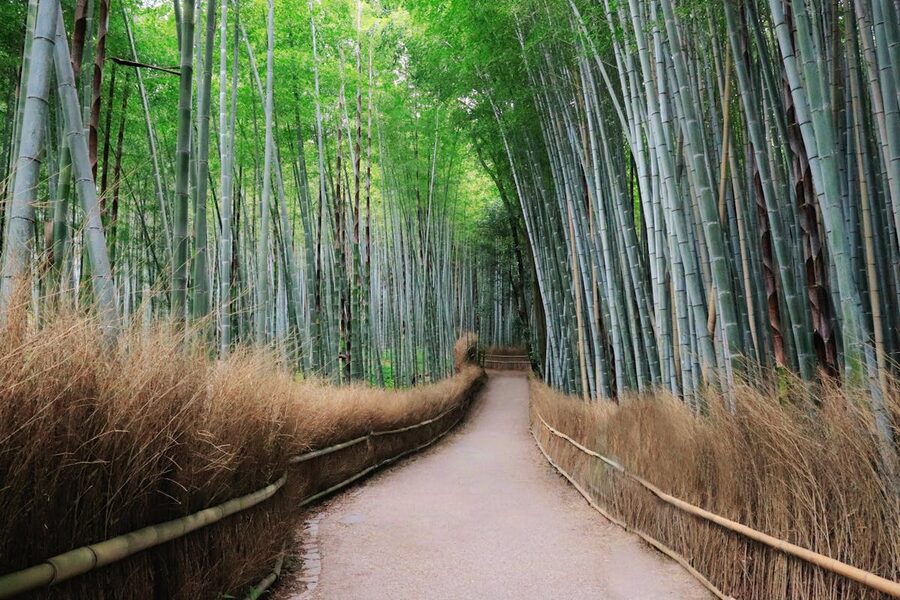
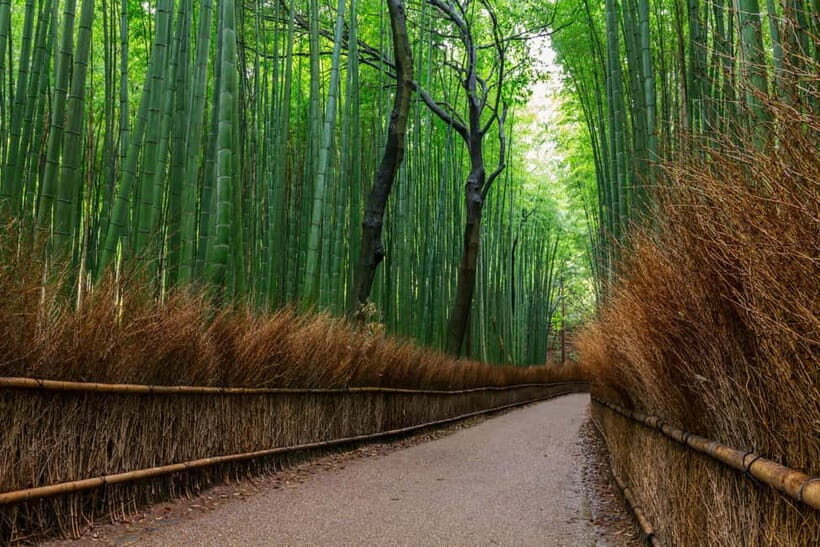
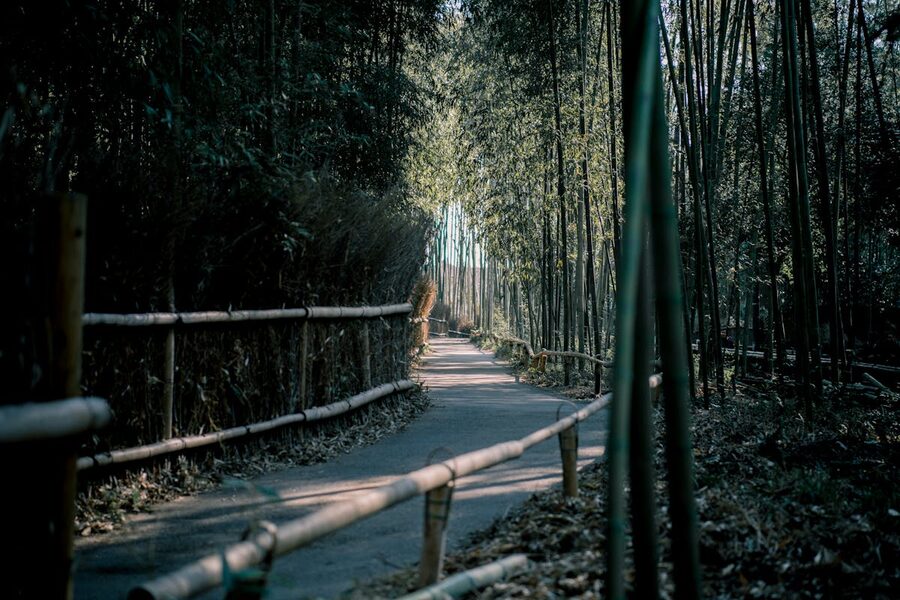
Arashiyama Bamboo Grove is free, open 24 hours, and requires no tickets. You just walk in. The grove itself is split into two sections sandwiched between Tenryu-ji Temple grounds and the JR Sagano train line. Combined length is roughly 500 meters, about 140 meters wide.
Here’s the thing most first-timers don’t realize: the bamboo grove is tiny. If all you do is walk through it and leave, you’ll spend maybe 15 minutes. The real value of Arashiyama is everything surrounding the grove — and that’s where a walking tour pays off.
What’s actually in the Arashiyama district:
- The Bamboo Grove — the famous 500m bamboo walkway. Free, no tickets needed. Beautiful but short
- Tenryu-ji Temple — UNESCO World Heritage site with a stunning Zen garden. Entry is 500 yen (garden only) or 800 yen (garden + buildings). The garden exit leads directly into the bamboo grove, which is the smartest route
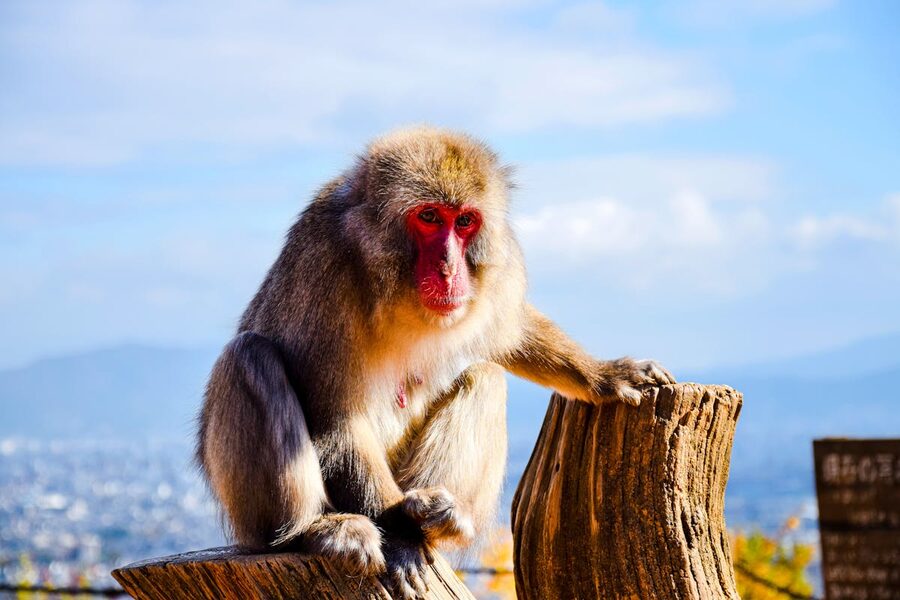
- Iwatayama Monkey Park — wild Japanese macaques on a hilltop with panoramic views of Kyoto. Entry 550 yen, plus a 20-minute uphill hike to reach them. You can feed the monkeys through a wire fence from inside a hut
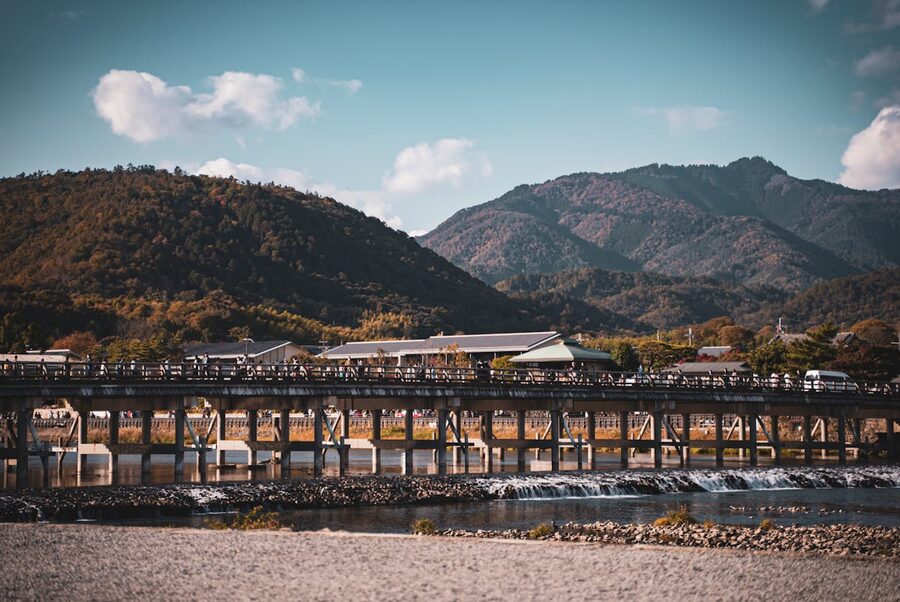
- Togetsukyo Bridge — the iconic bridge spanning the Katsura River. Free to cross. Best photos from the north bank in late afternoon light
- Nonomiya Shrine — small Shinto shrine inside the bamboo grove itself, famous for romance and matchmaking prayers
- Okochi Sanso Villa — the former estate of silent film star Okochi Denjiro. Entry 1,000 yen (includes matcha and a sweet). Gorgeous hillside garden overlooking the city
A walking tour typically covers the grove, Tenryu-ji (or enters the grove through the temple garden exit), the monkey park, and at least one matcha stop. The best ones include the hidden backstreet temples that don’t appear on Google Maps.
Walking the Grove on Your Own vs Booking a Tour
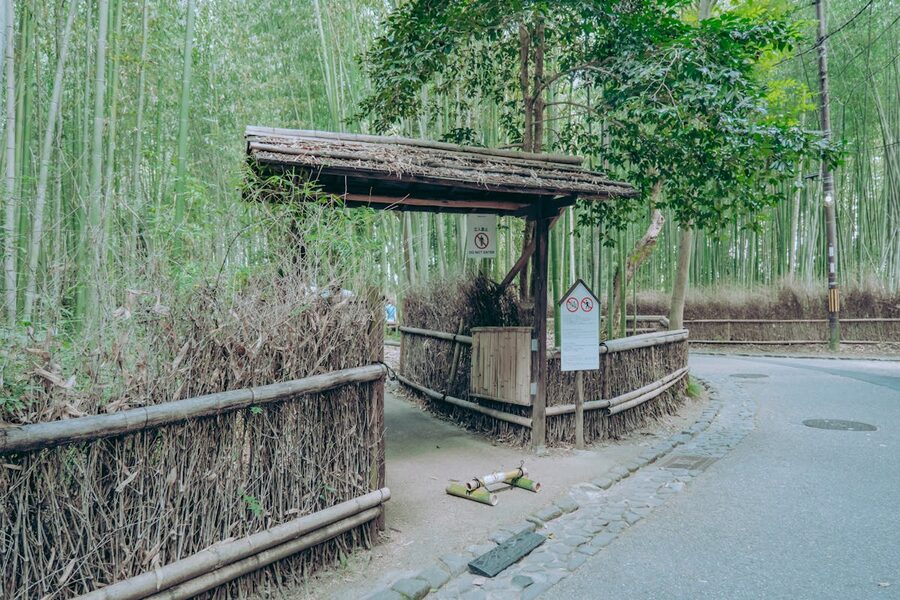
On your own, Arashiyama is perfectly doable. The bamboo grove is impossible to miss, Tenryu-ji is right next to it, and you can find the monkey park with a map. The challenge isn’t navigation — it’s timing and knowing what’s worth your limited hours.
Solo works if:
- You’ve been before and just want to revisit the grove
- You only care about photos in the bamboo and nothing else
- You’re going very early (before 8am) or late afternoon when crowds are manageable
A guided tour is better because:
- Guides know the backstreet shortcuts between attractions — saves you 20-30 minutes of wrong turns
- They’ll take you through Tenryu-ji’s garden exit into the quiet end of the grove, dodging the main entrance crowds
- The monkey park climb is steeper than expected (about 20 minutes uphill), and having a guide who times it right means you arrive when most tour groups have left the summit
- You’ll learn the actual history of the bamboo — why it’s here, what it was used for, why the government protected it in 1967
- Many tours include a matcha tasting, which saves you queuing at the tourist-trap shops on the main road
The price gap between tours is surprisingly wide. You can spend $53-87 depending on the option, and the differences matter. Cheaper tours tend to be larger groups; pricier ones include more stops and smaller group sizes.
The Best Arashiyama Walking Tours to Book
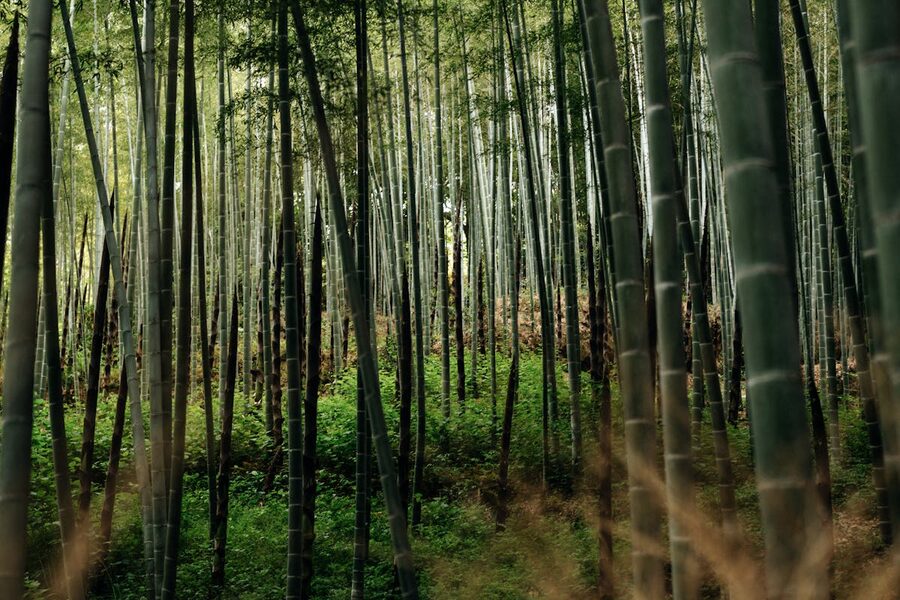
I’ve compared the available tours and picked the ones that actually deliver more than just a walk through the grove. The best ones combine the bamboo with temples, the monkey park, and local food stops.
1. Arashiyama Walking Tour: Bamboo Forest, Monkey Park & Secrets — $66

This is the definitive Arashiyama experience. At $66, it’s not the cheapest option, but the “Secrets” in the title isn’t marketing fluff — the guide takes you through backstreet temples and garden viewpoints that most visitors (and most other tours) skip entirely.
With over 1,200 reviews and a perfect 5.0 rating, the consistency is remarkable. The tour covers the bamboo grove, Tenryu-ji Temple grounds, the monkey park (including the uphill hike), and several hidden spots that the guide reveals along the way. If you only have one shot at Arashiyama and want to see everything, this is the one. It runs as a small group, which means the guide actually adjusts the pace based on who’s there.
The monkey park climb is real exercise — about 20 minutes uphill on a forest trail — but the views from the top across Kyoto make it worth the sweat. And the macaques couldn’t care less about you, which is oddly charming. If you’re also planning to visit Fushimi Inari, do that in the morning and Arashiyama in the afternoon.
2. Kyoto Arashiyama: Bamboo, Temple, Matcha, Monkeys & Secrets — $87
The pricier option at $87, and the extra cost goes toward a more complete cultural experience. This 5-hour tour adds a genuine matcha tasting (not a grab-and-go paper cup, but a sit-down experience), plus deeper temple visits and more time at each stop.
At 886 reviews with a 4.8 rating, it’s slightly lower than the first option but still excellent. The difference in score usually comes from the longer duration — 5 hours is a lot for some people, especially in summer heat. But if you want the full Arashiyama deep-dive without rushing, the extra time is exactly what you need. The guide weaves in historical context about Arashiyama’s role as a retreat for Kyoto’s aristocracy dating back to the Heian period.
If you’re already planning a separate tea ceremony experience in Gion, the matcha inclusion here might overlap. Otherwise, this packages everything neatly.
3. Arashiyama Bamboo Forest, Monkeys, Matcha & Temple Tour — $53
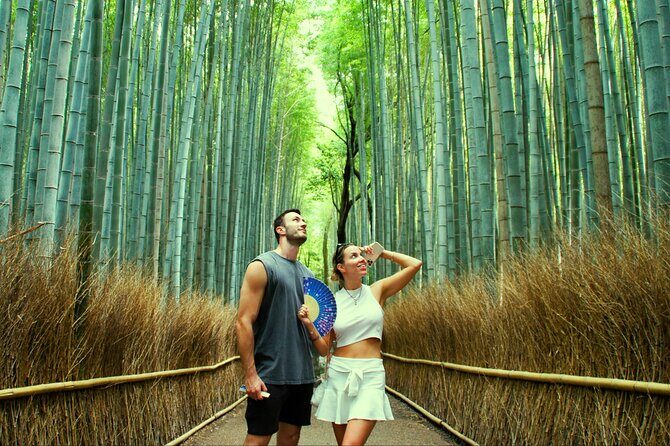
Same core itinerary as the options above — bamboo grove, monkey park, temple visit, matcha — but at $53, it’s the most affordable dedicated Arashiyama tour. The 5.0 rating from 759 reviews is spotless, and the content mirrors what you’d get on the pricier alternatives.
The trade-off is slightly less flexibility. Groups may be a bit larger, and you might spend less time at individual stops. But for someone who wants the guided Arashiyama experience without spending $87, this delivers. It covers all the highlights and includes a matcha stop, which at this price point feels like good value.
Worth pairing with a morning visit to Fushimi Inari — you can hike the mountain early, grab lunch near Kyoto Station, and head to Arashiyama for the afternoon tour.
4. Nara, Fushimi Inari & Arashiyama Full-Day Bus Tour — $52
This is the same combo tour I mentioned in my Fushimi Inari guide — a 9-10 hour bus tour that bundles Nara’s deer park, Fushimi Inari’s torii gates, and Arashiyama into one day. At $52, the per-attraction cost is barely $17 each.
The catch: you get about 45-60 minutes at Arashiyama, which is enough for the bamboo grove and maybe a quick look at Togetsukyo Bridge, but not enough for the monkey park or temple visits. With 1,275 reviews at 4.7, the logistics clearly work — just know you’re getting the highlights reel, not the director’s cut. Good for people with limited days in Kyoto who want to see as much as possible.
When to Visit Arashiyama
Best times of day:
- Before 8am — the bamboo grove is nearly empty, and the morning light creates long shadows through the stalks. The downside: Tenryu-ji and the monkey park don’t open until 8:30am and 9am respectively, so you’ll be limited to the grove and free-access areas
- Late afternoon (3-5pm) — crowds thin out, the light softens, and sunset from Togetsukyo Bridge is genuinely worth timing your visit around
Times to avoid:
- 10am-2pm on weekends — the bamboo path becomes a slow-moving queue. You won’t get a clean photo without strangers in every frame
- Peak cherry blossom season (late March-early April) — Arashiyama is one of Kyoto’s prime cherry blossom spots, and the crowds reflect that
- Peak autumn leaf season (mid-late November) — same story, but with koyo (autumn foliage) instead of cherry blossoms
Spring (March-May): Cherry blossoms along the Katsura River and at Tenryu-ji are spectacular. Temperatures are comfortable for walking. Late March through mid-April is peak season — book tours well in advance.
Summer (June-August): Hot, humid, and occasionally rainy during the June tsuyu (rainy season). The bamboo grove actually looks more dramatic in rain, and the monkey park macaques are most active. But prepare to sweat.
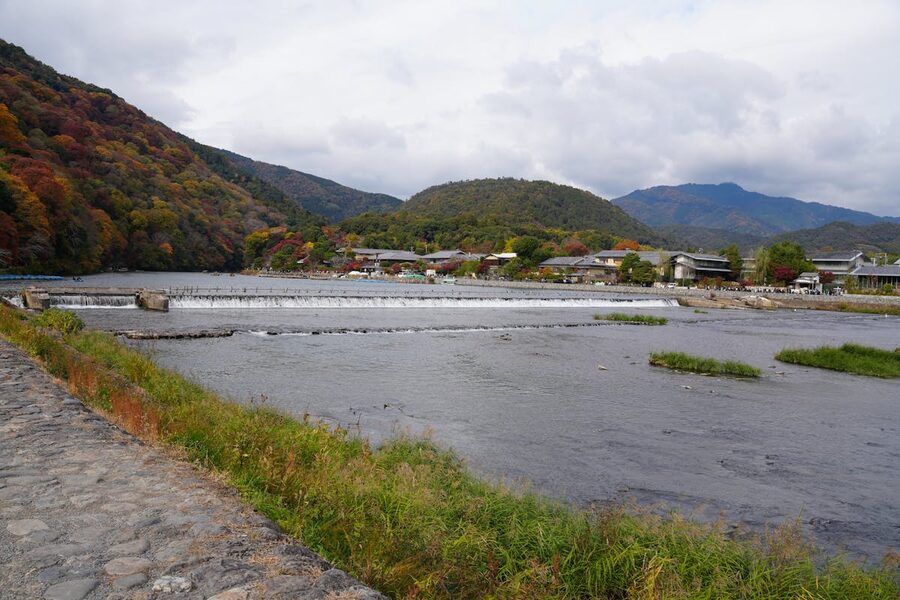
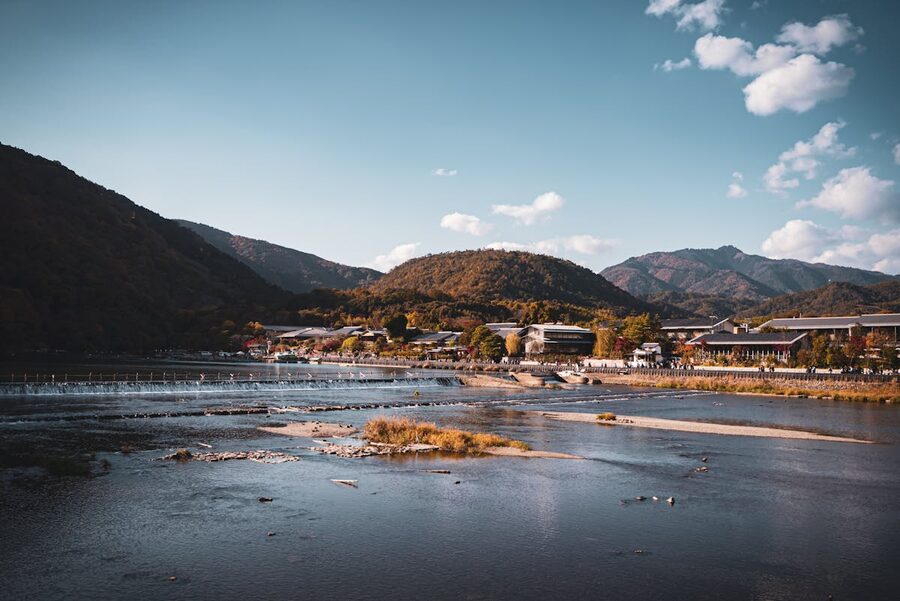
Autumn (October-November): The best season if you can tolerate crowds. The mountains surrounding Arashiyama turn red and gold, and the reflection in the Katsura River is one of Kyoto’s most iconic views. Late November weekends are extremely busy.
Winter (December-February): Quiet, cold, and occasionally dusted with snow. The bamboo grove in snow is breathtaking but rare — Kyoto only gets a few snowfalls per winter. The monkey park macaques huddle together for warmth, which makes for good photos.
How to Get to Arashiyama
Three train lines serve Arashiyama, each dropping you at a different edge of the district:
JR Sagano Line (from Kyoto Station):
JR Saga-Arashiyama Station. Takes about 15 minutes, costs 240 yen. Covered by the Japan Rail Pass. The station is about a 10-minute walk from the bamboo grove — follow the crowds, you can’t miss it.
Hankyu Line (from Osaka/Kawaramachi):
Hankyu Arashiyama Station. Closer to Togetsukyo Bridge and the riverside. Good if you’re coming from downtown Kyoto (Kawaramachi/Gion area) or from Osaka. About 220-400 yen depending on origin.
Keifuku Randen Line (scenic tram):
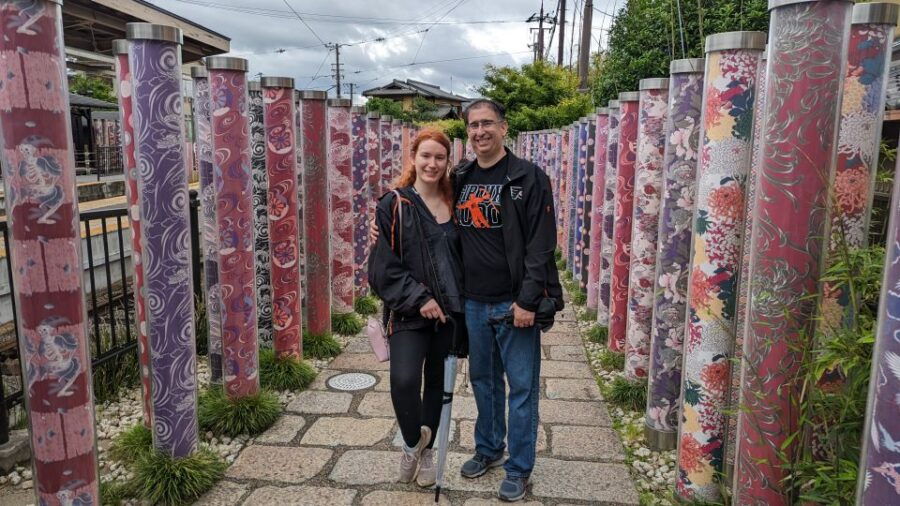
Arashiyama Station on the Randen Line. This is the charming old tram that connects Arashiyama with northwestern Kyoto. Not the fastest option, but the ride itself is part of the experience. The station has a kimono-draped light pole installation that’s worth seeing.
By bus: The full-day Kyoto bus tours include Arashiyama on their route. Kyoto City Bus #28 from Kyoto Station, about 40 minutes. Gets stuck in traffic often — train is faster and more reliable.
From Fushimi Inari: Take the JR Nara Line from Inari Station to Kyoto Station (5 min), then transfer to the JR Sagano Line to Saga-Arashiyama (15 min). Total about 30-40 minutes including the transfer. This is the natural Kyoto day-trip combo.
Tips That Will Actually Help
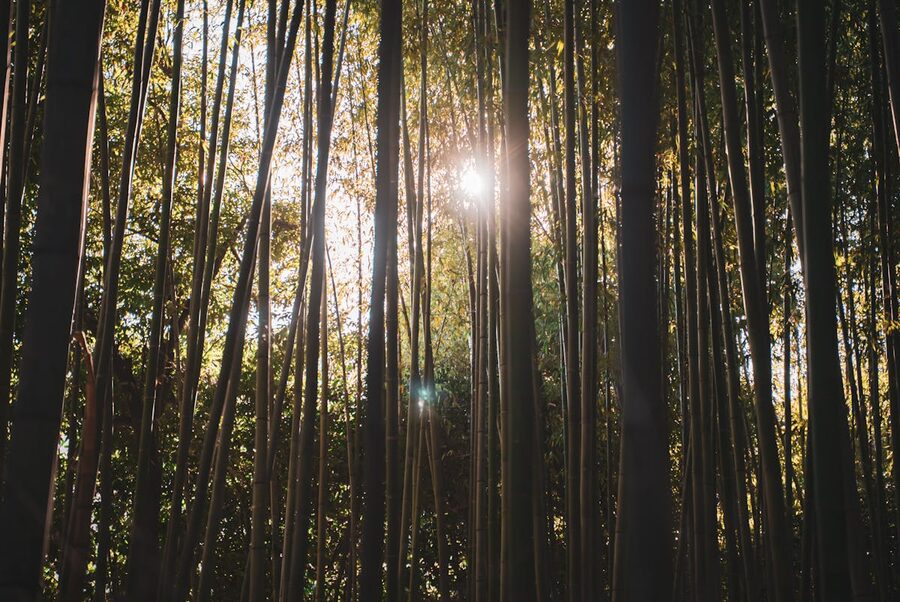
- Enter from Tenryu-ji. Pay the 500 yen garden entry, walk through the stunning garden, and exit through the north gate directly into the quiet western end of the bamboo grove. Everyone else enters from the main road on the east side and walks toward you — this way you’re going against the flow and hitting the less crowded section first
- The monkey park closes at 4pm (last entry 3:30pm). It takes 20 minutes to hike up, so plan accordingly. Don’t leave it for last unless you’re certain about timing
- Rickshaw rides are overpriced. They cost around 3,000-9,000 yen for 10-30 minutes. The drivers are friendly and the experience is fun if money isn’t a concern, but walking covers the same ground for free
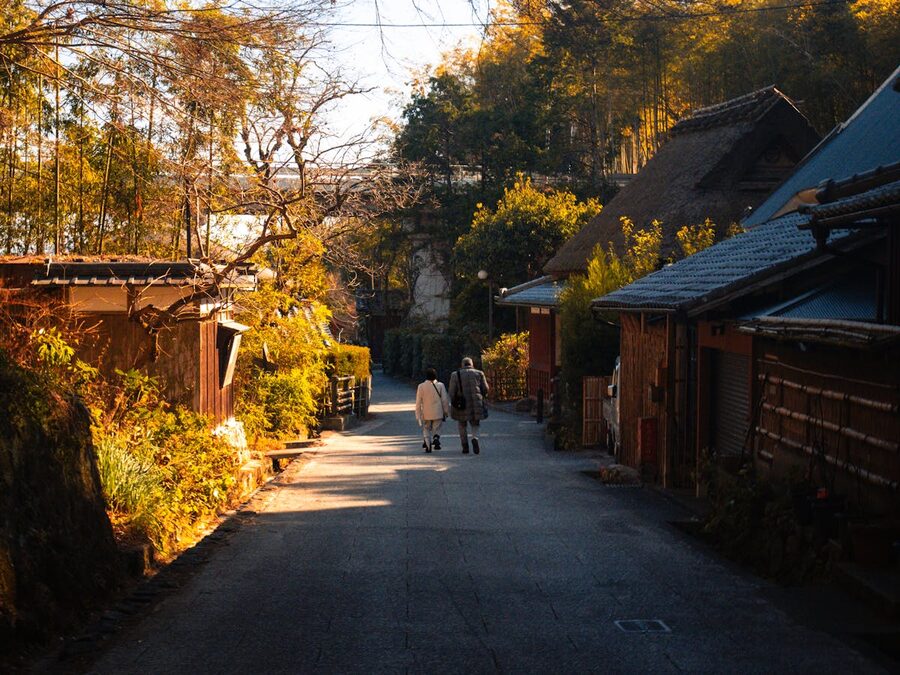
- Rent a bicycle (or join a guided bike tour). Arashiyama is flat (except for the monkey park hill). Bike rental runs about 1,000 yen per day and lets you cover the wider district, including the Saga-Toriimoto area with its preserved Edo-period houses — a 15-minute ride that most travellers never make
- Try the tofu. Arashiyama is famous for yudofu (boiled tofu) — Sagano and Yudofu Sagano are the traditional choices. Not the most exciting-sounding meal, but the silky texture of Kyoto tofu is genuinely different from what you’ve had elsewhere
- Skip the main shopping street. Ramen shops, souvenir stands, matcha soft-serve — it’s all overpriced and mediocre. The side streets have better food and fewer queues
What You’ll See on a Walking Tour
Arashiyama has been a leisure retreat since the Heian period (794-1185), when emperors and aristocrats built villas along the Katsura River to escape the heat and politics of central Kyoto. The bamboo groves were originally cultivated as garden elements for these estates. During the Edo period, the bamboo was harvested commercially for baskets, fencing, and food (bamboo shoots remain a local specialty).
The grove as it exists today nearly disappeared. Urbanization in the mid-20th century swallowed many of Arashiyama’s bamboo stands. The government stepped in with protection orders in 1967, preserving the remaining groves and eventually making them the tourist attraction they are today.
Tenryu-ji Temple, right next to the grove, was founded in 1339 by Ashikaga Takauji — the first Ashikaga shogun — to pacify the spirit of Emperor Go-Daigo. It’s a Rinzai Zen temple, and its garden (designed by the legendary Muso Soseki) is considered one of the finest examples of Japanese landscape gardening. The borrowed scenery (shakkei) technique incorporates the Arashiyama mountains as a backdrop, blending the garden into the surrounding hills.
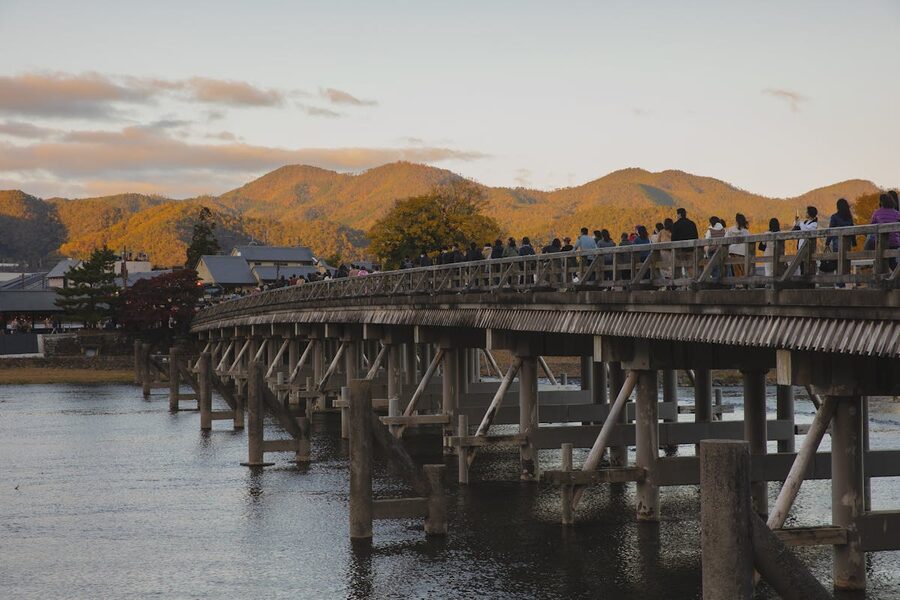
The Togetsukyo Bridge dates back to 836 CE, though it’s been destroyed and rebuilt many times. The current structure is from the 1930s — the railing is wood to maintain the traditional appearance, but the underlying structure is reinforced concrete. In December, Arashiyama hosts the Hanatoro illumination event, when the bamboo grove and the surrounding area are lit with thousands of lanterns. It’s one of the most atmospheric events in Kyoto’s winter calendar.
Filling the Rest of Your Kyoto Days
Arashiyama fills a solid half-day, which leaves you time for Kyoto’s eastern side. Fushimi Inari is the obvious morning pairing — hike the mountain’s torii gates early, then head to Arashiyama after lunch. The Gion geisha district is at its best in the evening, when the lanterns come on and you might catch a maiko hurrying between engagements.
A tea ceremony slots neatly between the two if you want a slower-paced cultural stop, and the Fushimi sake district is worth an afternoon if traditional Japanese drinks are your thing.
For getting around efficiently, a bike tour covers the hidden temples and residential streets between all these highlights, and Nara is an easy half-day trip from Kyoto if you want to feed deer and see the giant bronze Buddha.
This article contains affiliate links. If you book a tour through one of these links, I earn a small commission at no extra cost to you. I only recommend tours I’ve personally researched and verified.