
If you want one day out of Seoul that rewards you with more genuine “wow” moments per hour than almost any other day trip, the Korean Folk Village in Yongin is the answer. I’m talking tightrope walkers, horseback acrobatics, a full wedding re-enactment, thatched hanok courtyards, and the smell of pumpkin taffy cooking on a copper griddle. All inside one 243-acre open-air museum that exists to show you how Koreans actually lived during the Joseon dynasty.
I wrote this guide after pulling data from hundreds of traveller experiences and sitting on the Suwon shuttle bus with a bag of hotteok in my lap. Here’s exactly how to book it without wasting a day on logistics.
- Short On Time? Three Picks For Booking Now
- What The Korean Folk Village Actually Is
- Why Book A Tour Instead Of Going Solo
- The Three Tours Worth Booking
- 1. From Seoul: Suwon Hwaseong Fortress & Folk Village Day Tour —
- 2. Korean Folk Village and Suwon Hwaseong Fortress One Day Tour — .52
- 3. Korean Folk Village Half-Day Guided Tour From Seoul —
- Getting To Yongin Folk Village Without A Tour
- Admission And Opening Hours
- Performance Schedule — What To Actually See
- Craftsmen And Workshops
- Food At The Folk Village
- Hanbok Rental On Site
- Best Time Of Year To Visit
- A Note On Jangseung — The Spirit Poles
- Combining With Suwon Hwaseong Fortress
- What To Pack
- Accessibility
- Common First-Timer Questions
- Suggested Itinerary
- After The Folk Village — Where Else To Go
Short On Time? Three Picks For Booking Now
Best overall combo: From Seoul: Suwon Hwaseong Fortress & Folk Village Day Tour — about $67. Covers the UNESCO fortress AND the folk village in one day with English-speaking staff. This is the tour I’d book first.
Budget half-day: Korean Folk Village Half-Day Guided Tour From Seoul — about $63. Skip the fortress and focus on the village only. Hotel pickup, guide, entrance fees included.
Mid-range combo with Viator: Korean Folk Village and Suwon Hwaseong Fortress One Day Tour — about $70. Horseback martial arts demo plus a traditional wedding viewing are the highlights here.
What The Korean Folk Village Actually Is
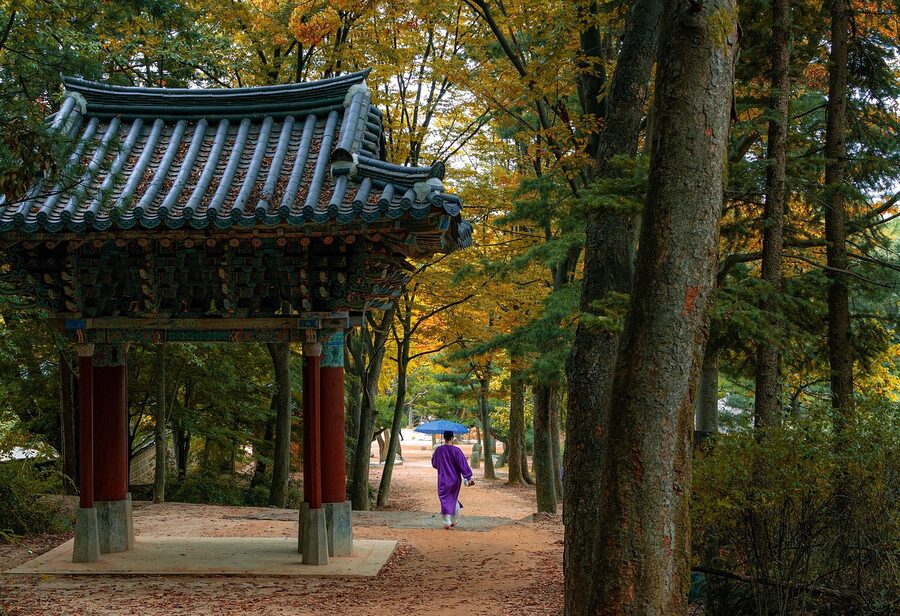
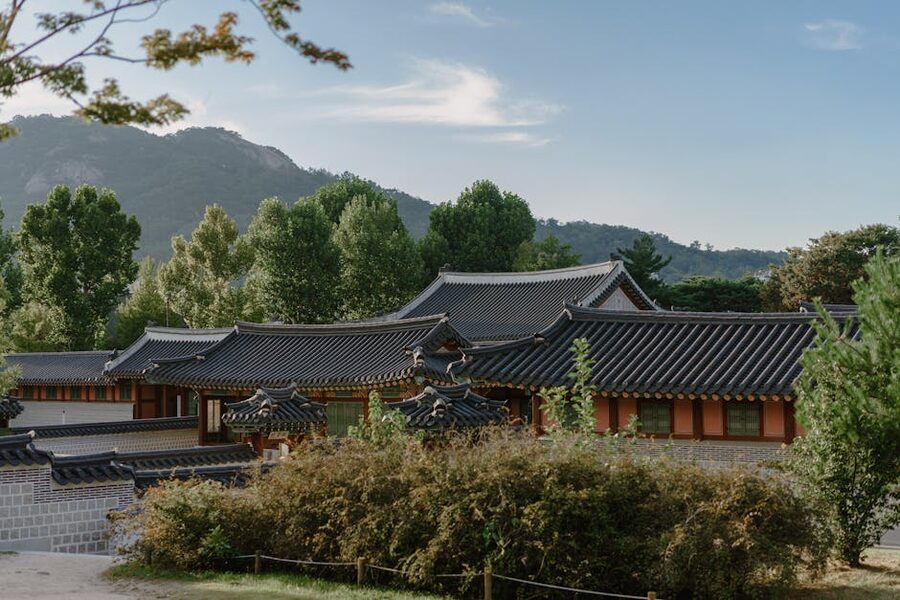
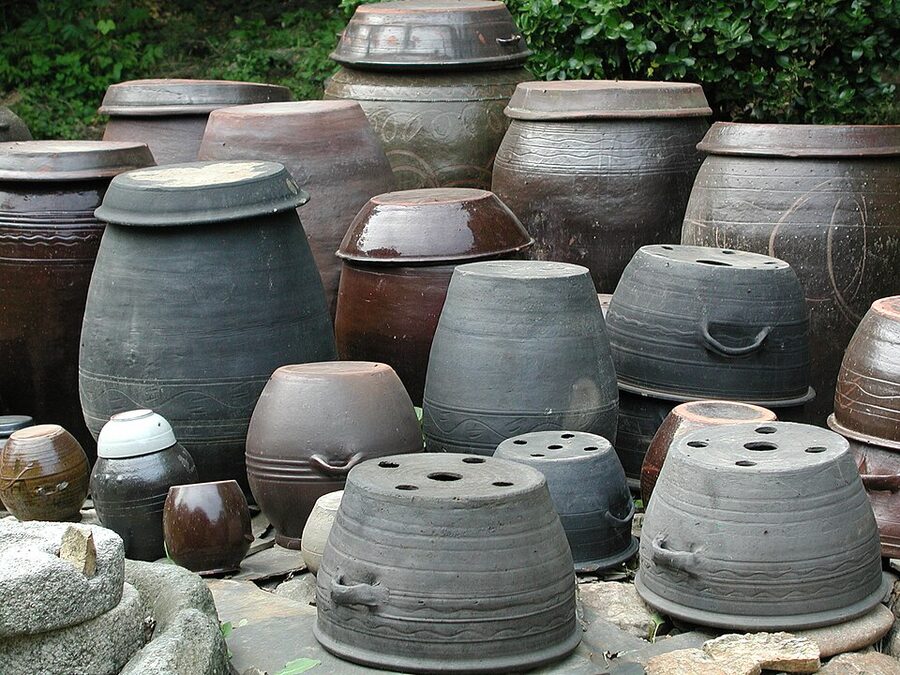
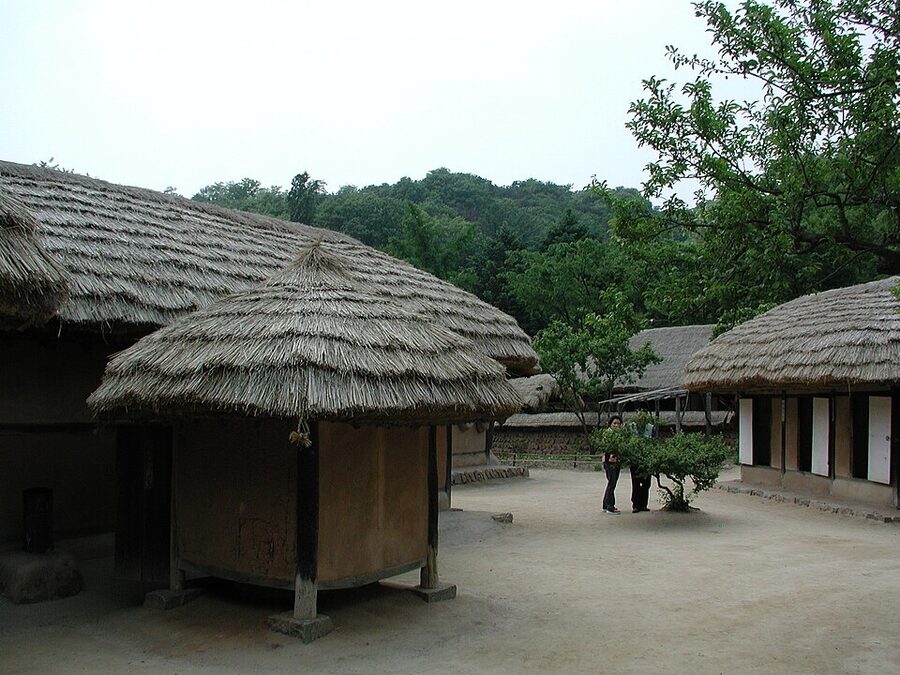
It’s a living-history museum. Not a cluster of restaurants with photo backdrops — an actual outdoor museum with more than 260 buildings relocated or rebuilt from different provinces and social classes.
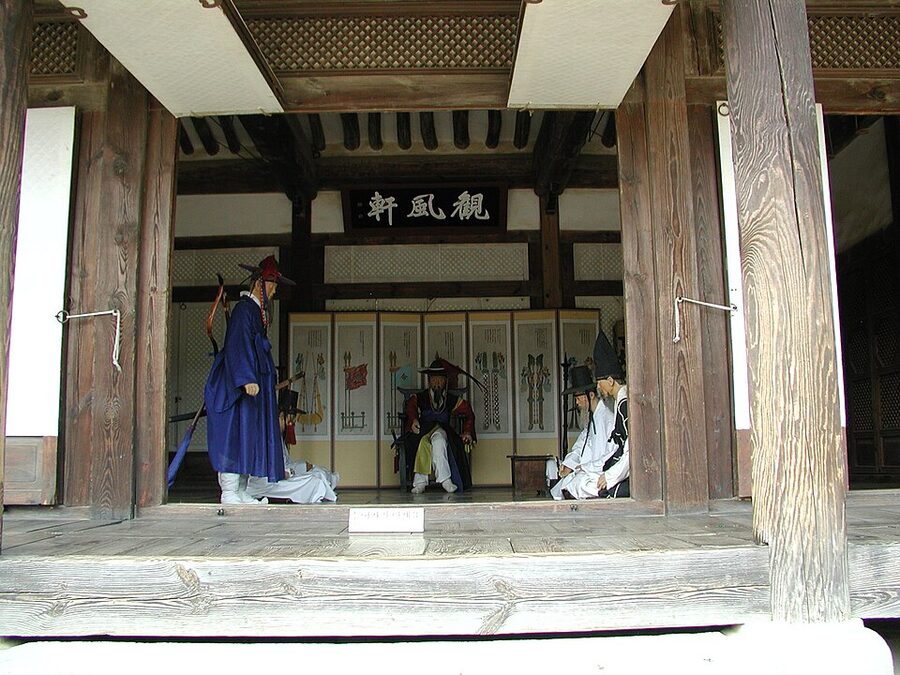
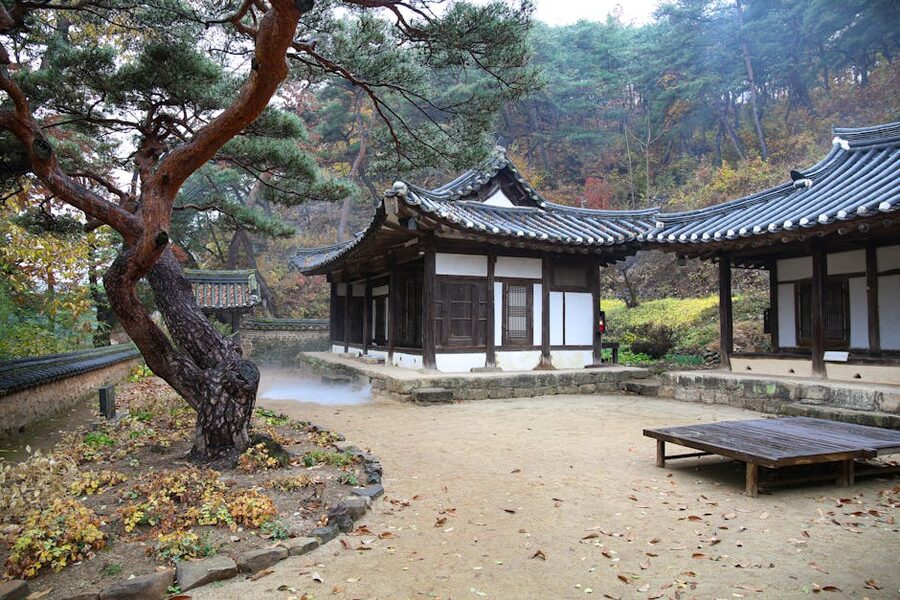
You’ll see a nobleman’s yangban compound with tiled roofs and reception halls. Two minutes later, you’re in a farmer’s thatched-roof house with a rice mill and a cow pen. Then a Confucian scholar’s study. Then a Buddhist temple. Then a shamanic shrine with spirit totems out front. The whole thing functions as a time capsule of late-Joseon Korea — the period roughly from the 1700s to the early 1900s.
The site sits in Yongin, Gyeonggi Province, about 40 km south of Seoul. It opened in 1974 as a state-backed cultural project and has been quietly expanding ever since. Koreans treat it as a school-trip rite of passage. Foreign visitors treat it as the one place in the Seoul area where you can actually see traditional performances, not just read signs about them.
A quick note on naming — it’s often listed as “Suwon Korean Folk Village” in English because the shuttle runs from Suwon Station. It’s physically in Yongin, not Suwon. Don’t let that confuse you when booking transport.
Why Book A Tour Instead Of Going Solo
Honest answer: you can absolutely do this without a tour. The free shuttle from Suwon Station makes it one of the easier day trips out of Seoul. But there are three good reasons most people book a package anyway.
One — the fortress combo. Most tours pair the folk village with Suwon Hwaseong Fortress, which is a UNESCO World Heritage site fifteen minutes up the road. Trying to fit both into one solo day is possible but tight, especially if you want to walk the full fortress wall. A guided combo handles the timing for you.
Two — language context. Performances are mostly in Korean. The tightrope walker’s banter is half the show and all of it is in Korean. A guide translates the punchlines as they land, which is the difference between “cultural demonstration” and “I actually got why everyone laughed.”
Three — hotel pickup. Getting to Suwon by subway takes about an hour each way on Line 1. A tour picks you up in Seoul, often at your hotel, and drops you back. When you’ve already spent a day walking a 243-acre park, that matters.
The Three Tours Worth Booking
After going through our tour database and cross-referencing visitor feedback, these are the three I’d actually recommend. I’ve tried to pick one for each use case — full-day combo, budget half-day, and a slightly pricier Viator alternative for travellers who prefer that platform.
1. From Seoul: Suwon Hwaseong Fortress & Folk Village Day Tour — $67
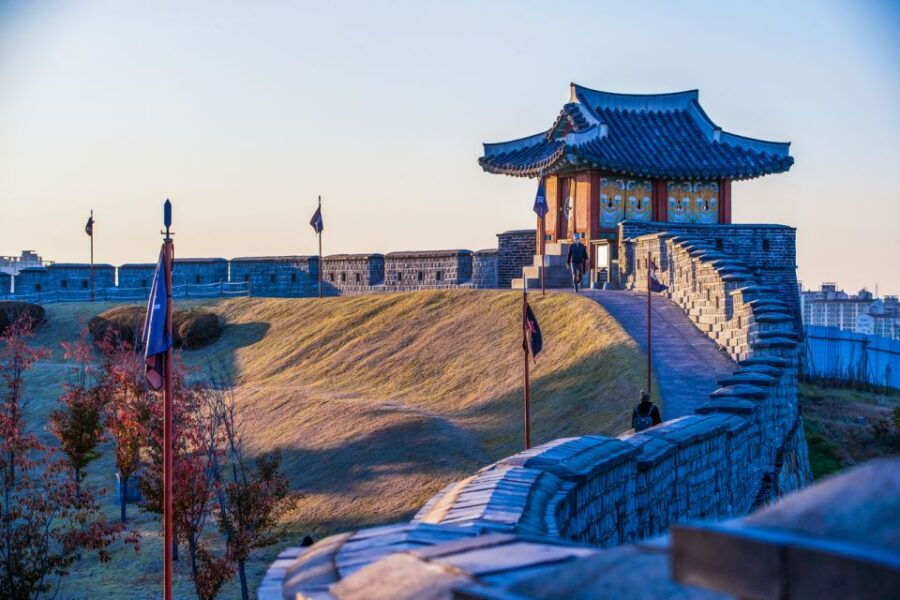
This is the tour I’d book if a friend messaged me “I’ve got one free day from Seoul, what do I do.” It runs 8 to 11 hours, covers both the UNESCO-listed fortress and the folk village in sensible order, and the English-speaking staff are the ones handling your entrance tickets and timing — our full review breaks down the itinerary. Transport and both entrance fees are included, so the $67 is close to the full out-of-pocket.
2. Korean Folk Village and Suwon Hwaseong Fortress One Day Tour — $69.52

Runs 7 to 8 hours and leans harder into performance viewing — horseback martial arts and a traditional wedding ceremony are the scheduled highlights, which lines up with what our full review flags as its strongest draw. Free cancellation gives you flexibility if a typhoon week or air-quality alert hits. Pick this one if you’re already using Viator credits or vouchers.
3. Korean Folk Village Half-Day Guided Tour From Seoul — $63
For anyone who’s already seen Suwon Hwaseong or simply doesn’t want a 10-hour day, this half-day focuses exclusively on the folk village and is our pick of the budget options — our full review notes the small-group format means you actually get to ask your guide questions. Guide, transport, and entrance fees are all included. Mornings usually work better than afternoons for performance timing.
Getting To Yongin Folk Village Without A Tour
If you decide to go independently, the process is genuinely simple. You just need to get to Suwon Station first, then take the free shuttle.
Seoul to Suwon: Subway Line 1 (the dark blue line) runs from central Seoul straight to Suwon. From Seoul Station it’s about 40 to 60 minutes depending on whether you catch an express. About KRW 1,850 one way with a T-money card. If you don’t have a T-money card yet, our Seoul guides cover the Incheon airport pickup and Busan airport version.
Suwon Station to the village: Exit at Suwon Station, find the Tourist Information Center at Exit 5 upstairs, and the free shuttle departs from the bus stop just outside. It takes about 30 to 40 minutes. Schedules vary by season — winter has fewer runs — so grab a printed schedule at the info desk.
Alternative: a taxi from Suwon Station runs about KRW 20,000 to 25,000 and takes 15 minutes. Good backup if you miss a shuttle.
By car: Parking is ample onsite and free. Seoul to Yongin is about an hour by car, longer in weekend traffic.
Admission And Opening Hours
Adult admission is around KRW 32,000 for full access including performances. Youth (13 to 18) pays around KRW 26,000, children around KRW 22,000, and seniors over 65 get a discount. A basic “village only” ticket without the amusement park rides costs less — check the official site for the current split because they periodically retire or add ride zones.
Opening hours are typically 9:30 am to 6:00 pm in high season (late spring through early autumn), shortening to 6 pm or earlier in winter. Last entry is usually 90 minutes before close. Weekends and Korean holidays extend performance schedules, so there’s actually a reason to visit on a Saturday beyond the obvious.
Closed days are rare but the site does close for maintenance a handful of times per year. Check before you commit.
Performance Schedule — What To Actually See
The performances are the reason to come. Everything else is charming, but the shows are what you’ll remember. Here’s the rough daily schedule — exact times shift by season so collect the English timetable at the entrance.
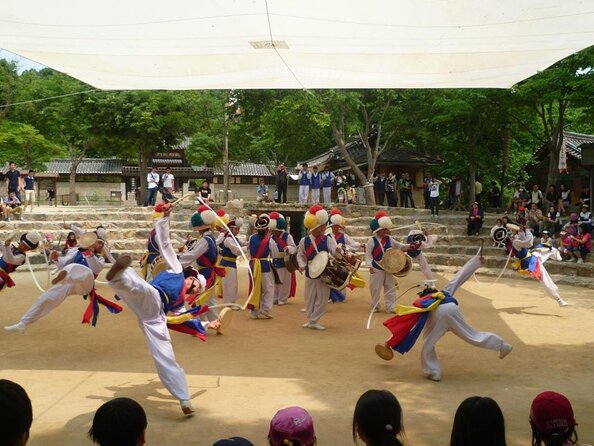
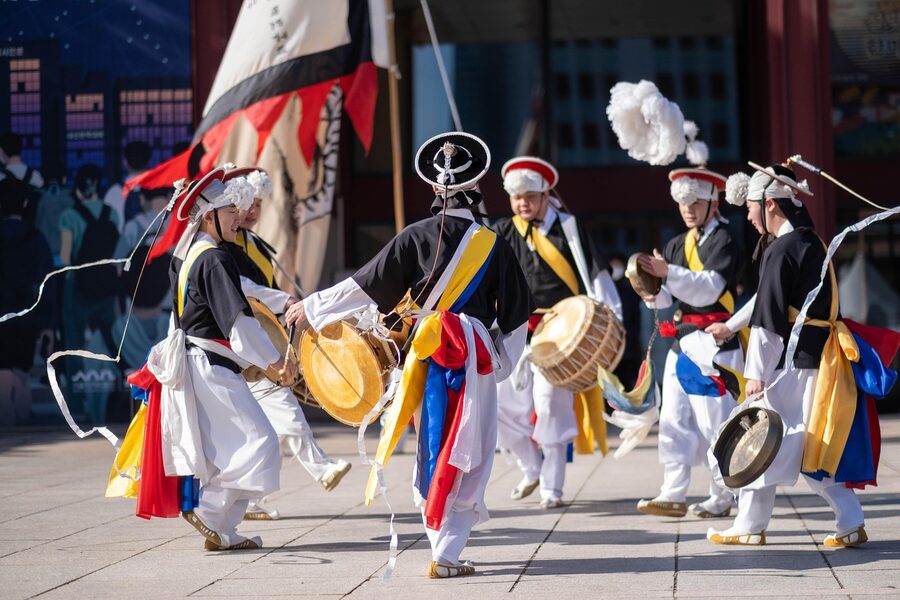
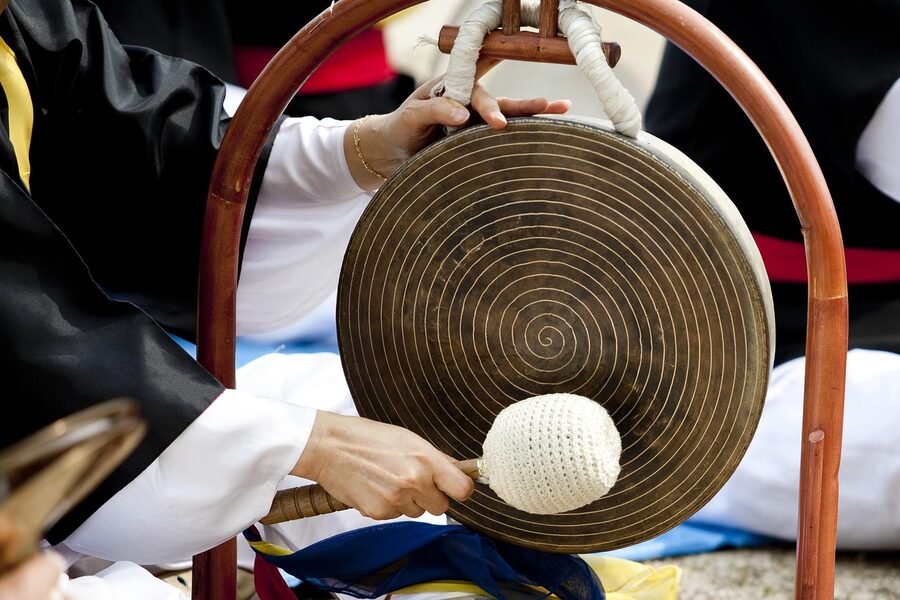
Namsadang Nori (farmer’s music and acrobatics): Usually 11:00 am and 3:00 pm. Watch the ribbon-hat dancer, called the sangmo, whip a 4-metre streamer in perfect spirals using just neck movement. This is the show I’d prioritise if you only catch one.
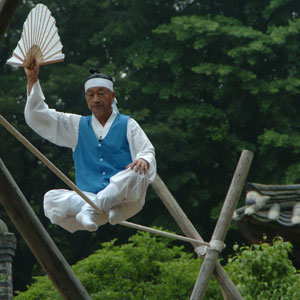
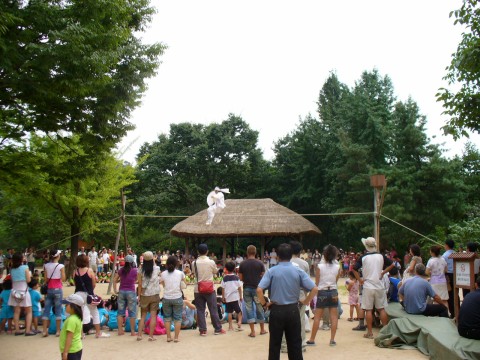
Tightrope walker (줄타기, juldagi): Around 1:30 pm. The performer isn’t just an acrobat — he’s a storyteller and comedian who trades jokes with a clown on the ground below. A lot of the banter is in Korean but the slapstick translates fine.
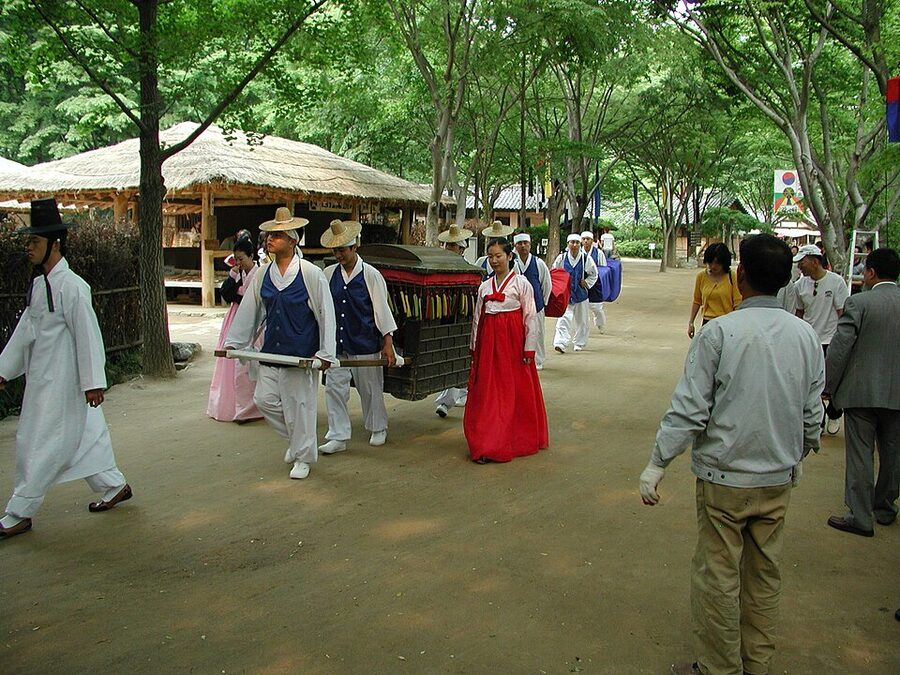
Traditional wedding re-enactment: Around 2:30 pm. Watch for the ham gift chest, the ceremonial bows, and the paebaek ritual where in-laws fling dates and chestnuts at the bride. Spoiler — there’s no “you may now kiss the bride” moment. Joseon weddings were not that kind of ceremony.
Equestrian martial stunts: Around 4:00 pm, March through November only. Horseback archery, upside-down saddle flips, and at least one routine that inexplicably uses Gangnam Style as its backing track. It’s great. Don’t ask why.
Juldarigi tug-of-war: Weekends around noon. Visitors join in — the straw ropes are thicker than your torso. Both teams get collective bragging rights if they win.
The full schedule lives on a board at the gate. Circle your musts and plan your loop around show timings. Everything clusters around the central arena so you’re never running more than five minutes between performances.
Craftsmen And Workshops
Between performances, the workshops are where the folk village earns its “living history” label. Real artisans work real materials in front of you. Some are demonstration-only, others let you try.
Pottery and ceramics. Master potters spin clay and fire earthenware. For a small fee you can try shaping a cup yourself — it takes about 30 minutes and you keep the result.
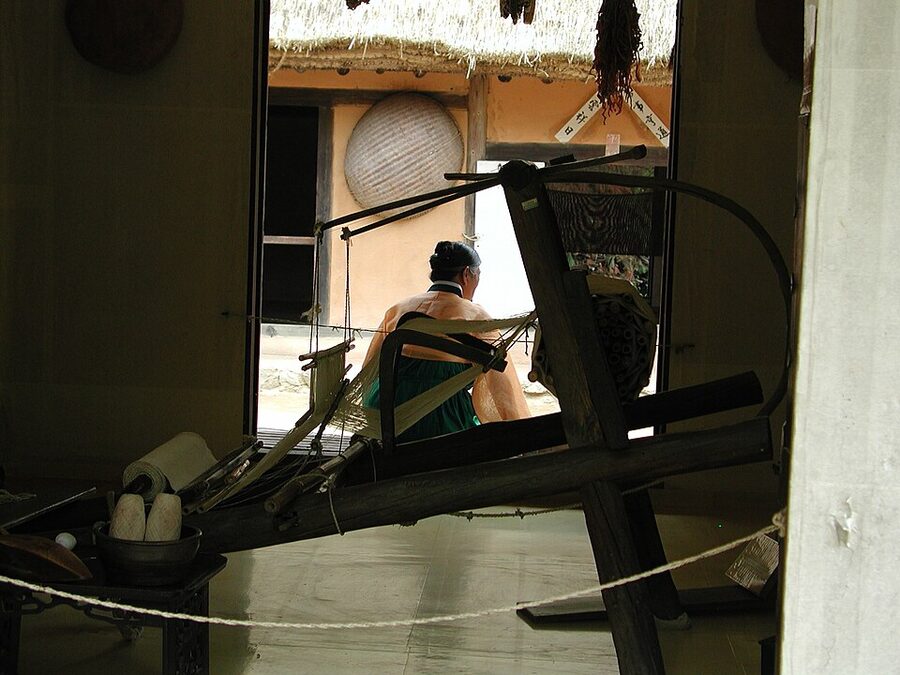
Weaving and dyeing. Korean textiles from humble hemp to silk. Demonstrations show how pigments were made from natural dyes. Occasionally you can join in on small sections.
Metalwork and carpentry. Blacksmiths hammer out farming tools, spoons, and musical instruments. Carpenters work on hanok joinery — all mortise-and-tenon, no nails. Even if you don’t participate, watching the rhythm of it is mesmerising.
Paper and hanji crafts. Traditional Korean paper-making is slower than Japanese washi production and uses mulberry bark. The afternoon hanji lantern workshop (around KRW 10,000) reserves out fast on weekends — book at the paper workshop mid-morning.
Rope-making. A grandfather near the farmer’s houses twists rice straw into bracelets while explaining how villagers crafted ox harnesses and sandals the same way. About KRW 3,000 and you keep the bracelet.
Dancheong wood-stamping. You get a wooden coaster stamped with a temple-pattern dancheong motif — the same colour pattern used on palace eaves. Around KRW 5,000.
Food At The Folk Village
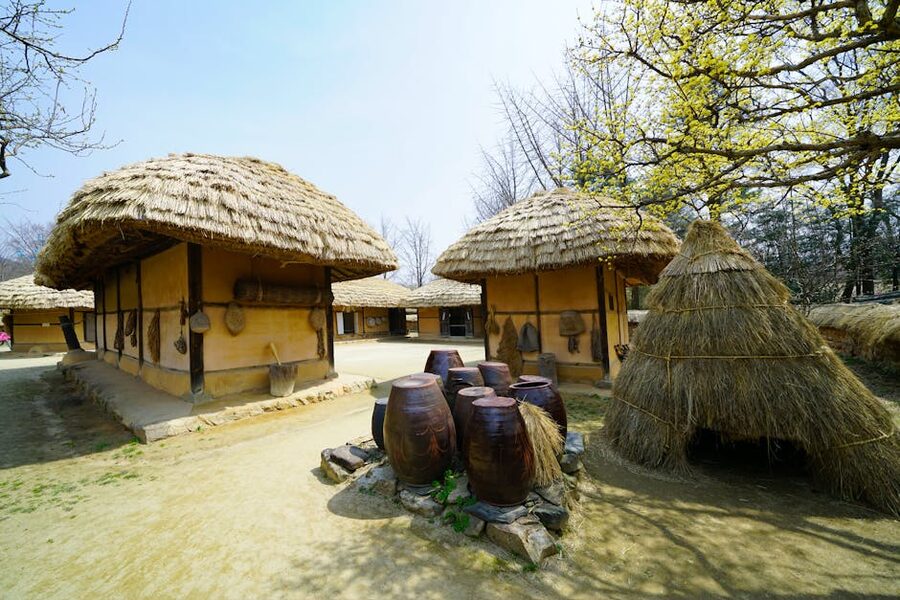
The village doubles as an open-air food court. Some of it is tourist-facing, but several stalls serve proper old-fashioned Korean snacks you can’t easily find back in Seoul.
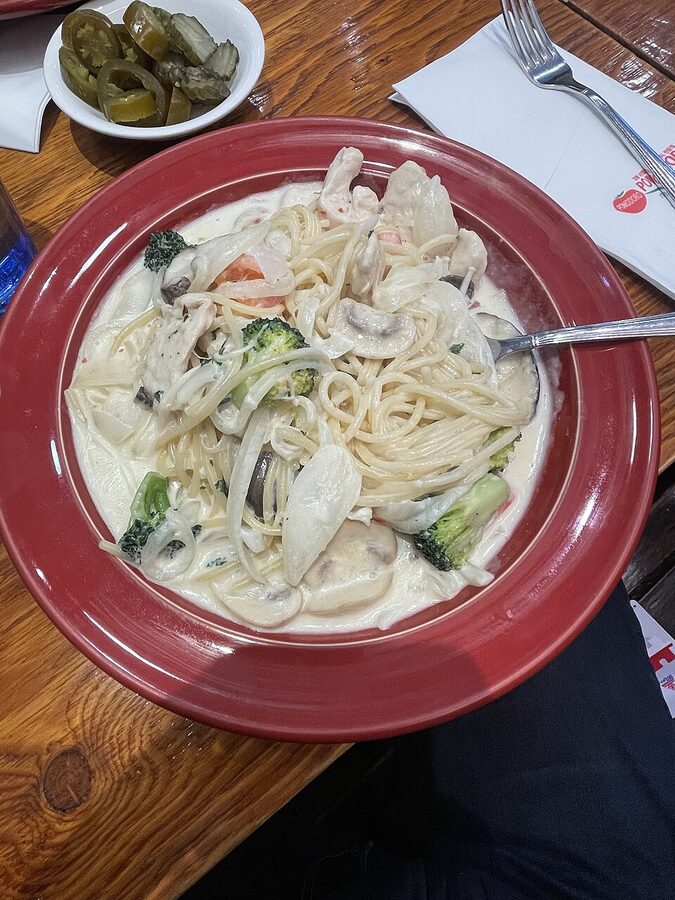
Hotteok. A sweet pancake stuffed with brown sugar syrup, cinnamon, and crushed peanuts. Cooked on a copper griddle until it puffs up like a little pillow. The stall near the smithy does a great version. Eat it immediately — the syrup inside is hot enough to hurt.
Pumpkin yeot. Traditional Korean taffy made from rice and pumpkin. It’s chewy, sweet, and addictive. I’ve watched visitors promise themselves they’ll save a bag to take home and fail immediately.
Janchi guksu. Light soy-broth noodles with zucchini ribbons. A nice reset between heavier treats. The noodle stall near the central arena has outdoor seating with a view of the performance space.
Tteokbokki. Modern rice cakes in spicy gochujang sauce. Not “traditional” in the Joseon sense but it’s a beloved Korean snack and the folk village does a decent version.
Ssalgwaja rice-cake cookies. Chewy flower-shaped cookies made from rice flour. Sold near the nobleman’s house. They photograph well and taste subtly sweet.
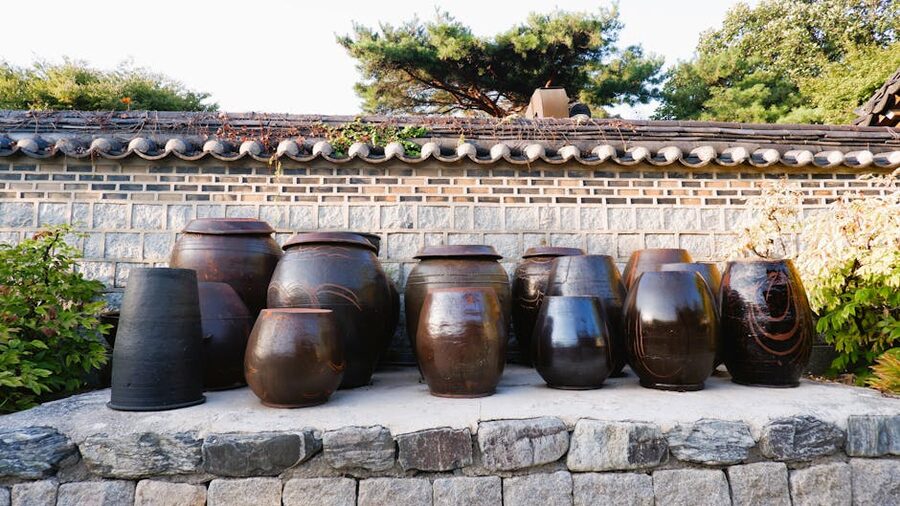
Makgeolli. Cloudy traditional rice wine, served in a bowl at the pavilion near the central pond. About KRW 4,000 a bowl. Mildly alcoholic, slightly sweet, and the perfect thing to sip while watching the farmers’ music performance.
Cash works at the food stalls but many take T-money card tap too. ATMs sit beside the folk-medicine shop. Bring some bills just in case.
Hanbok Rental On Site
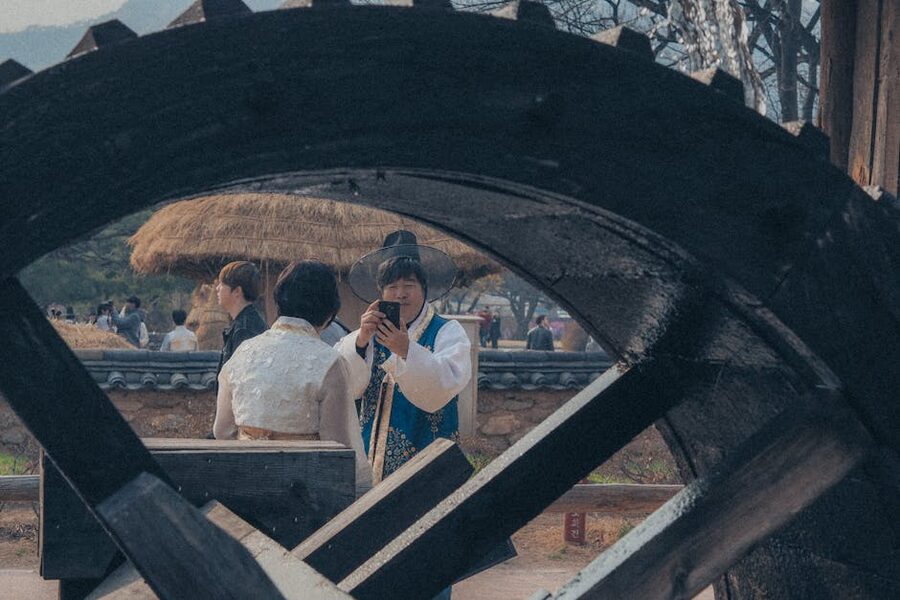
Hanbok rental is available right at the entrance and a couple of stalls inside. Prices start around KRW 15,000 for two hours. The selection is smaller than central Seoul but the backdrops are unbeatable — you’re posing in front of actual Joseon-era architecture, not a fake facade.
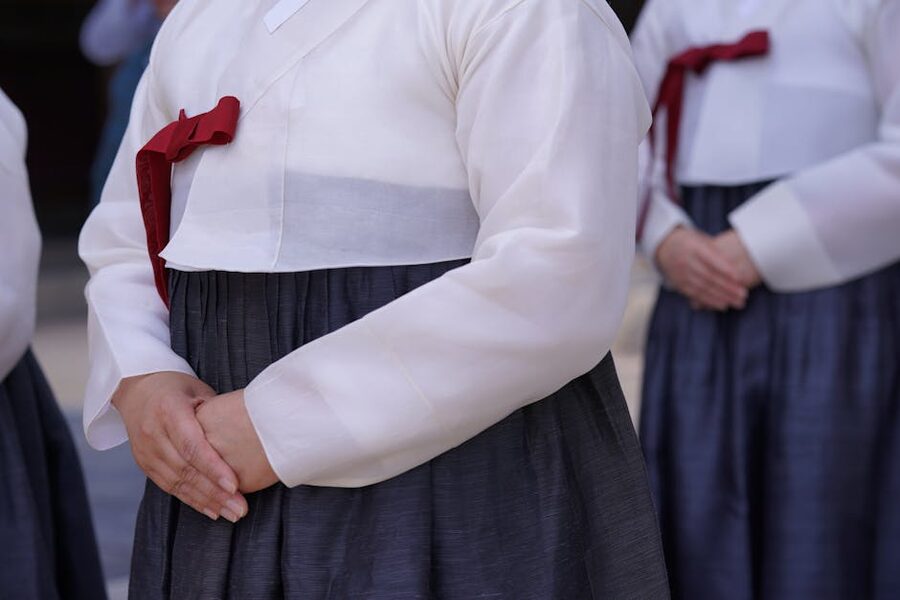
If you want a wider selection, our Seoul hanbok rental guide covers the studios in Gyeongbokgung and Bukchon that have the biggest wardrobes. For a proper studio session, see the Seoul hanbok photoshoot guide.
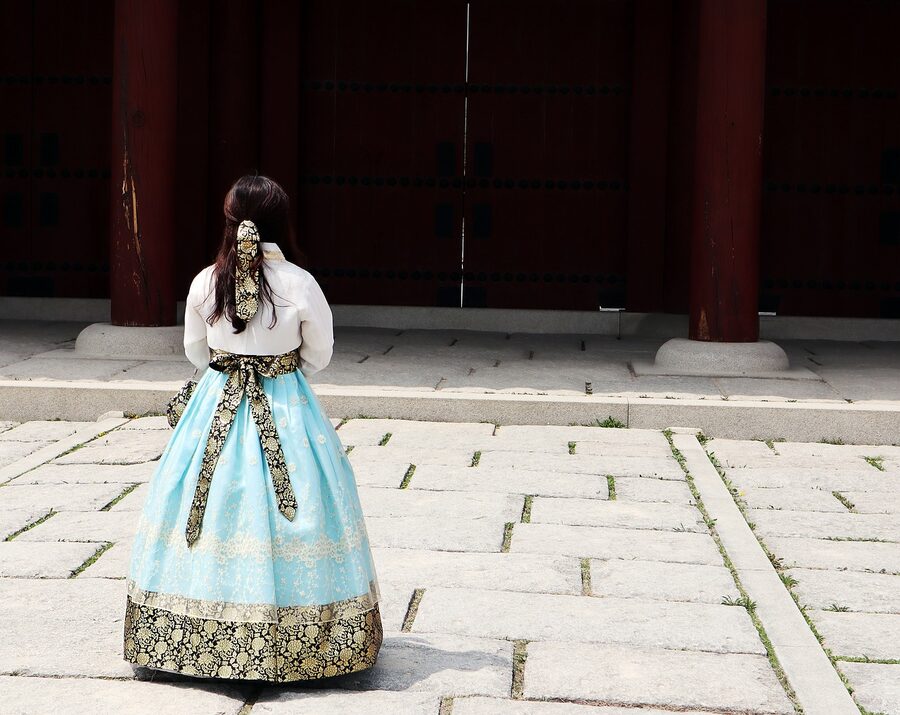
Quick tip — if you do rent at the village, wear flat shoes under the hanbok. The paths are packed dirt and some sections are gravel. Heels turn an easy walk into an ankle hazard.
Best Time Of Year To Visit
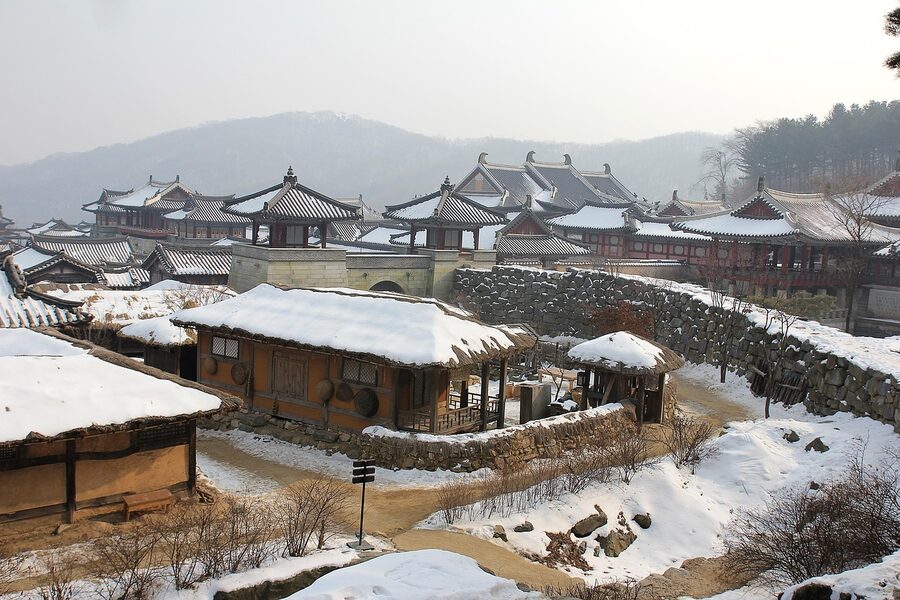
The folk village works year-round but each season feels different.
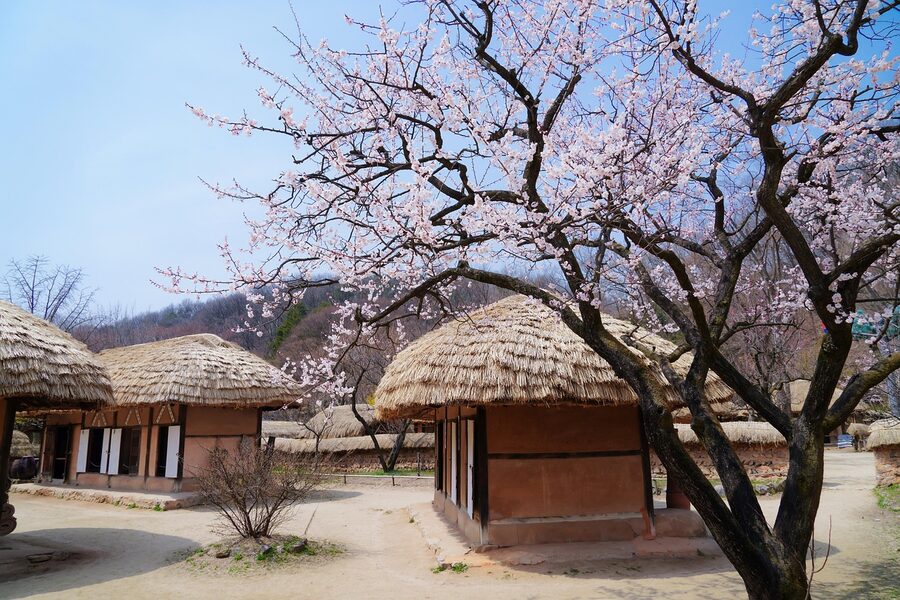
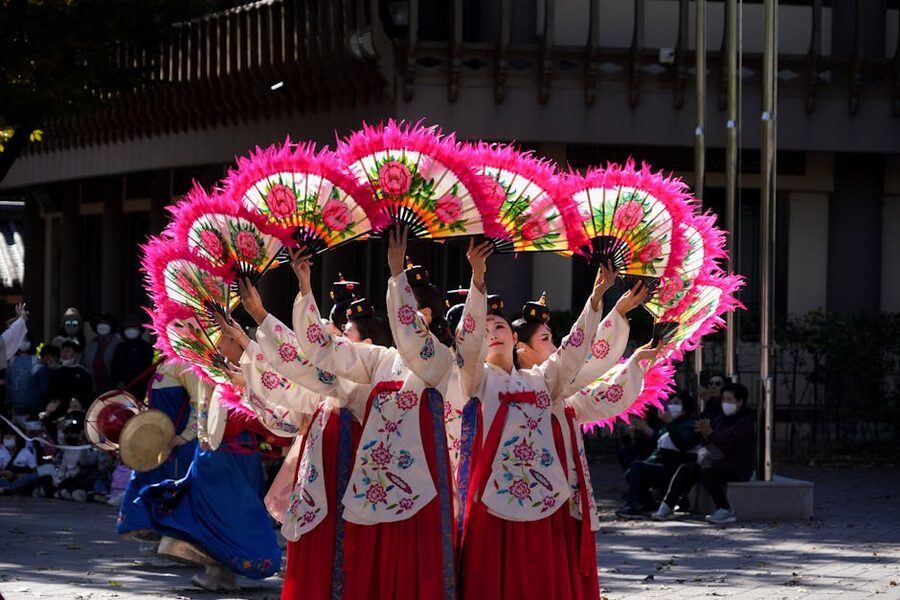
Spring (April to May). Plum and cherry blossoms fringe the thatched roofs. Extra fan-dance pop-ups appear around Buddha’s Birthday in May. Mild temperatures but weekends fill up with school excursions.
Summer (June to August). Lotus ponds in full bloom and night-market lanterns on Saturdays. Monsoon humidity is real — bring a mini towel (Koreans carry them) and a pocket fan. Misting stations help.
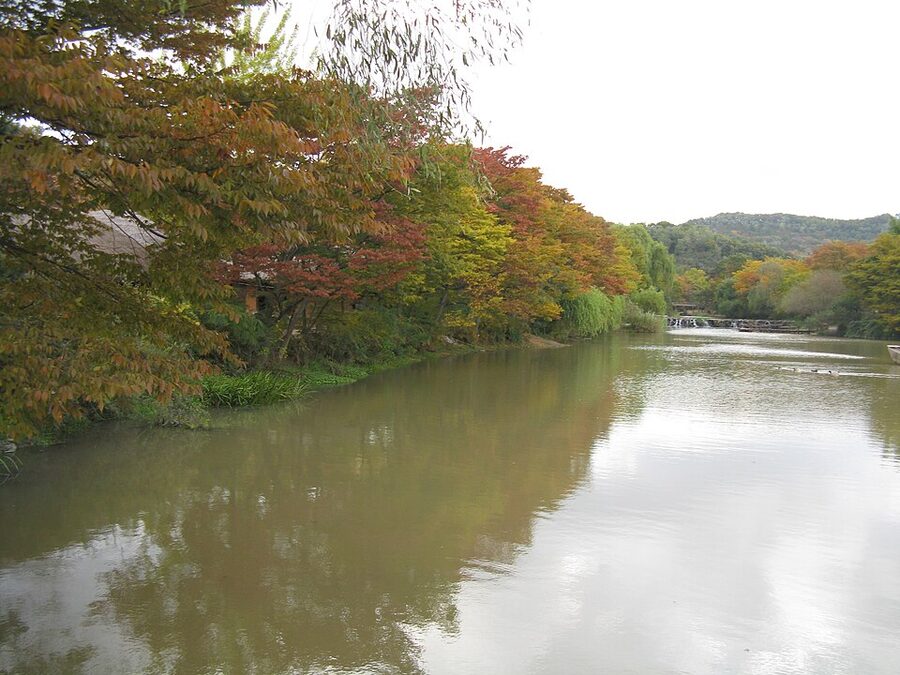
Autumn (September to early November). The best photography window. Maple trees go fiery red, persimmons hang like orange ornaments, and extra samulnori drum parades roll out around Chuseok (Korean Thanksgiving). Evenings get chilly — layer up.
Winter (December to March). The wood-fire ondol rooms get properly warmed for visitors. Snow-dusted hanok courtyards are genuinely beautiful. Rice-cake pounding demos run for Seollal (Lunar New Year). Short daylight and a few outdoor craft stalls close — still worth going if crowds are your main concern.
My pick would be the last two weeks of October. Golden ginkgo carpets and crimson maples peak together, and the outdoor performance schedule is still running at full capacity.
A Note On Jangseung — The Spirit Poles
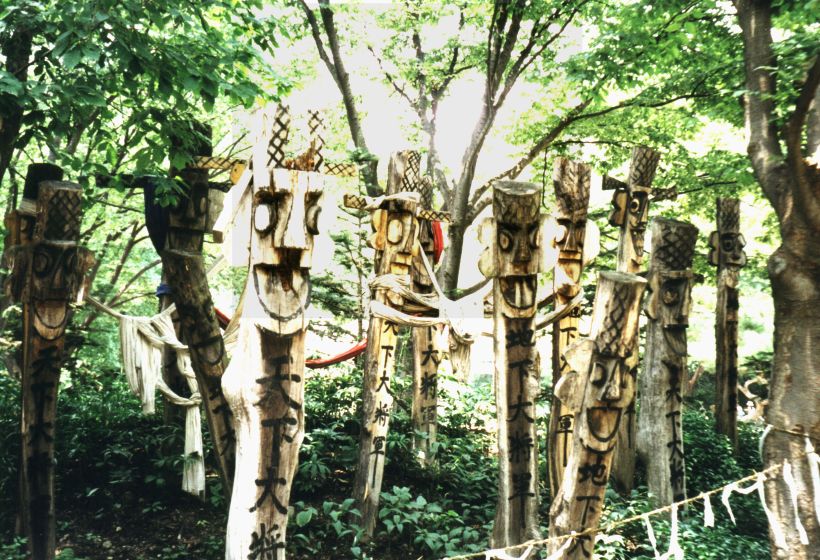
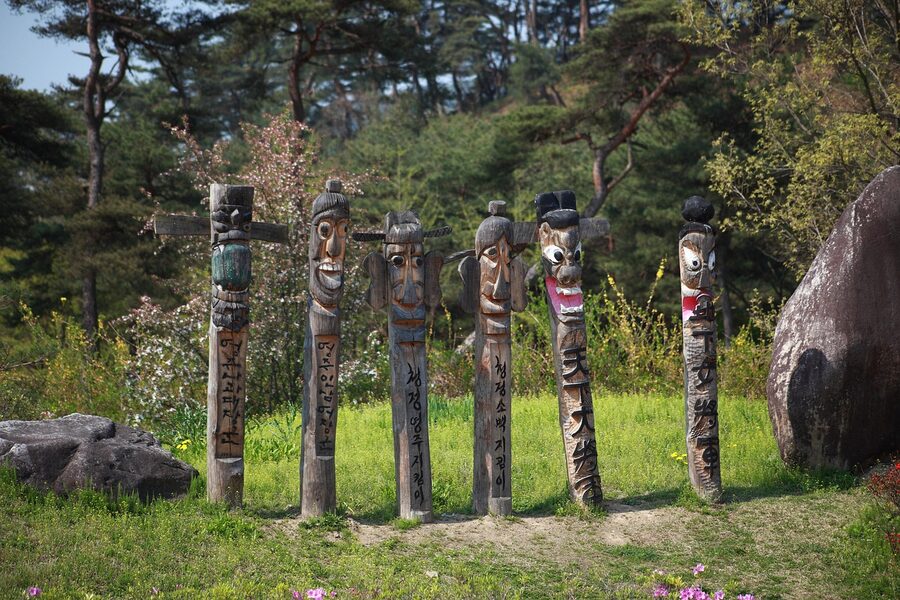
You’ll see these carved wooden totems all over the village. They’re called jangseung (장승) and they’re one of the more photographed features of the site.
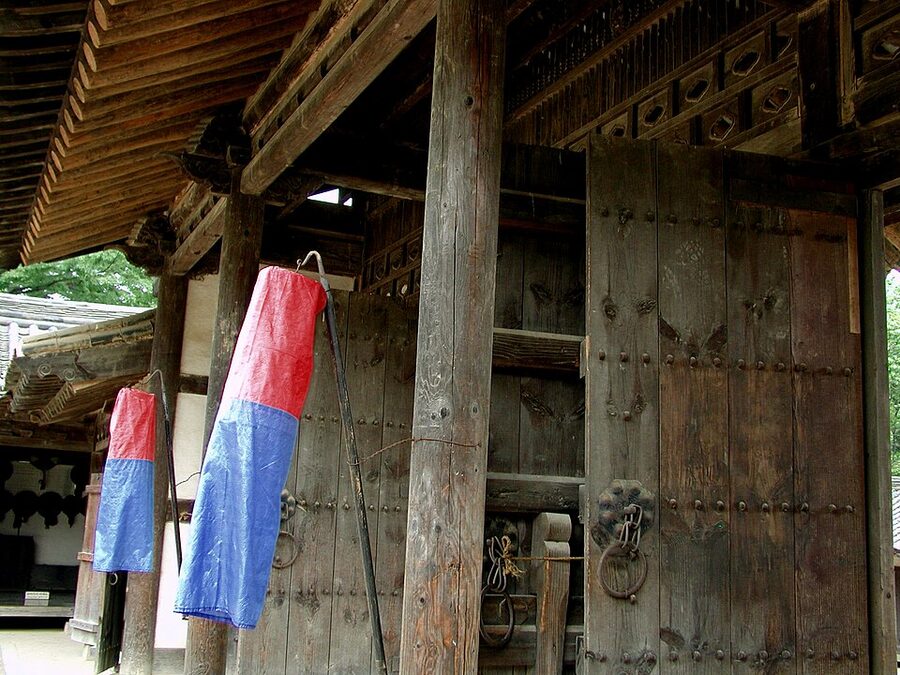
Traditionally jangseung were placed at the edges of villages to mark boundaries and scare off demons. Each pair has specific roles — the male is often labelled as the “Great General Under Heaven” and the female as the “Female General Under Heaven.” Their grinning, sometimes gruesome, faces were meant to intimidate misfortune before it reached the houses inside.
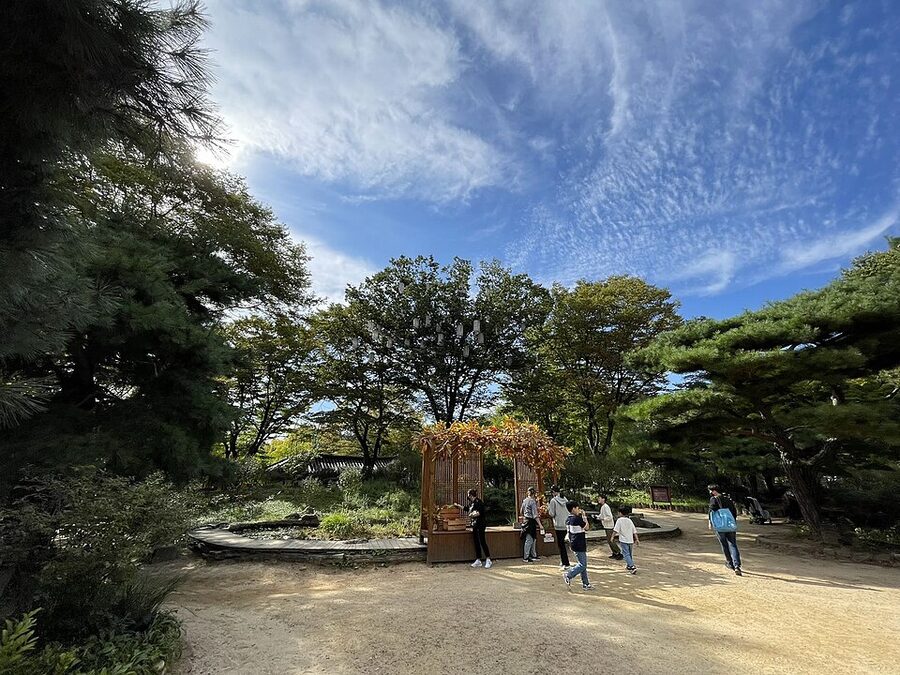
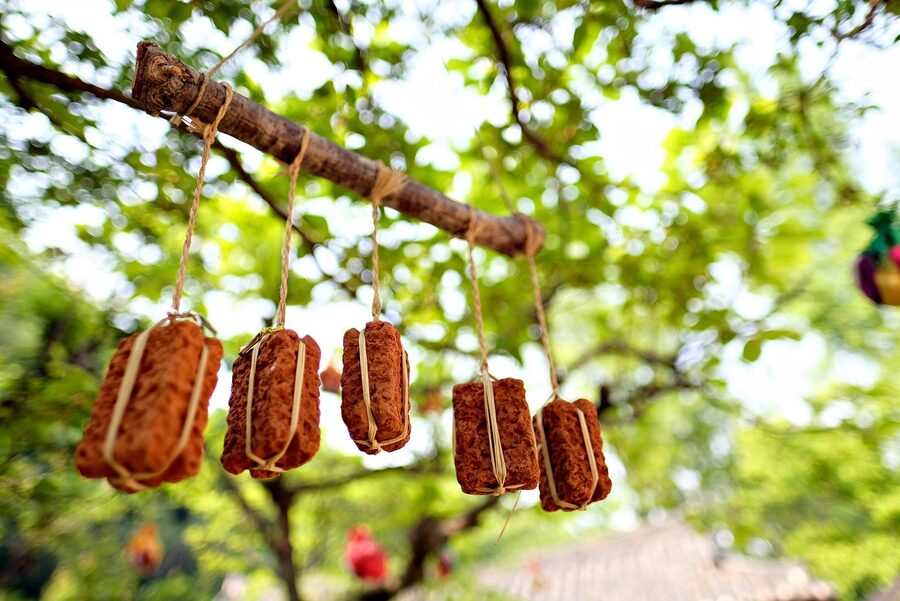
The ones at the folk village are working replicas — carved by artisans using methods passed down through generations. You’ll also see a boulder near the entrance where visitors tie wishes on paper strips to the ropes hanging down. Nearby trees are thick with old wishes. It’s a nice little ritual to close out your visit.
Combining With Suwon Hwaseong Fortress
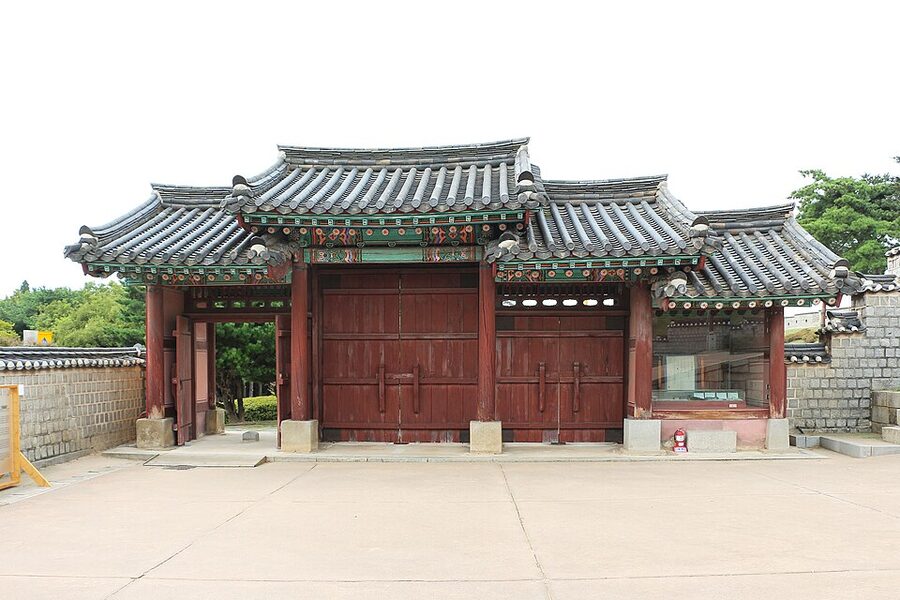
If you’re spending a full day out of Seoul, pair the folk village with Suwon Hwaseong Fortress. It’s 15 minutes away by road and it’s a UNESCO World Heritage site — the late 18th-century fortress walls of King Jeongjo, complete with watchtowers, gates, and a 5.7 km perimeter walk.
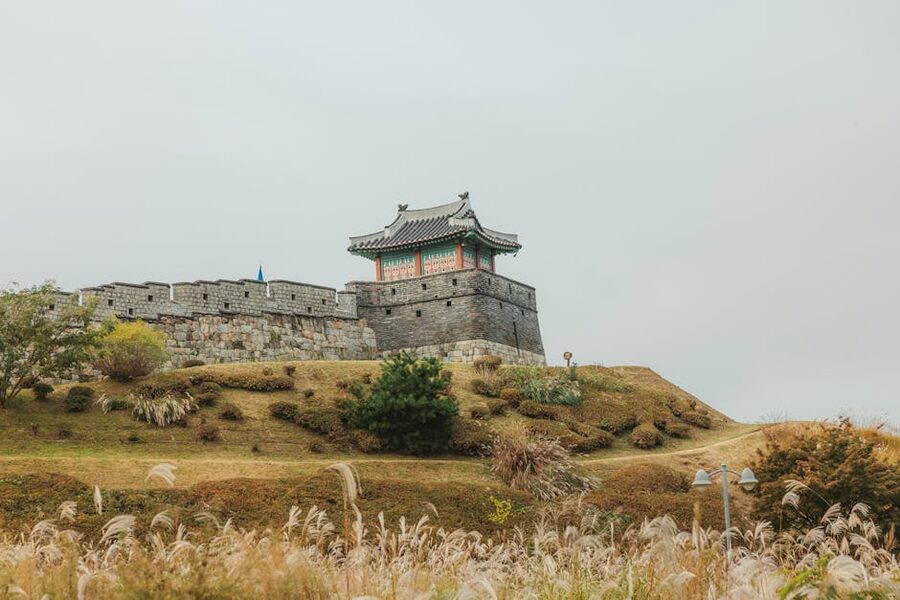
The two sites complement each other neatly. The folk village shows you daily life in Joseon Korea. The fortress shows you Joseon military architecture and urban planning. One is low-key and domestic, the other is monumental and strategic. Done together, you leave Seoul with a much fuller picture of the dynasty than either would give you alone.
For deeper coverage of the UNESCO site, see our Suwon Hwaseong Fortress day trip guide — it breaks down the wall circuit, the watchtowers, and the timing for the combined-ticket options.
What To Pack
Flat closed shoes are the main thing — the paths are packed dirt and gravel. Heels don’t work. Thick sandals are fine in summer but you’ll be grateful for trainers in any other season.
Layers work better than a single heavy coat in spring or autumn — you’re outdoors all day and temperature swings 10 degrees between morning and afternoon. A small backpack for water, snacks, a rain jacket, and anything you buy from the workshops.
Clear umbrella for photos on moody days (40% of structures have covered eaves but the walking paths don’t). Cash in small bills for workshop fees. T-money card for the shuttle and subway back.
Accessibility
The main lanes are mostly flat packed dirt and stroller-friendly. A handful of hillside houses need steps, so full wheelchair access isn’t universal — but you can still enjoy about 80% of the site without stairs. Rental strollers are available at the main info kiosk for about KRW 3,000.
Small dogs on leash are allowed but should stay clear of the livestock pens. Service dogs are fine everywhere.
Common First-Timer Questions
Is the folk village worth a full day? Yes, easily. Between the performances, the workshops, the food, and just walking the paths, you’ll comfortably fill six hours without rushing. Pair it with Suwon Hwaseong and you’ve got a full 10-hour day.
How is it different from Bukchon or Jeonju? Bukchon Hanok Village in Seoul is a real functioning neighbourhood — people live there, so you’re limited to walking outside the homes. Jeonju Hanok Village is similar. The Yongin folk village is a museum, which means you go inside everything, artisans demonstrate crafts, and performances run on a schedule. Different purpose, different experience.
Is it too commercial? Honestly, less than you’d expect. There’s an amusement park section at the back that’s very clearly for kids and families, but the main cultural village feels more curated museum than theme park. The 7-Eleven near the entrance is the most jarring bit of modernity.
Do I need to speak Korean? No. House plaques, workshop explanations, and map legends are all bilingual Korean-English. Performance MCs mostly ad-lib in Korean but the physical comedy translates. A guided tour makes the banter make sense but isn’t essential.
Rainy days — still viable? Yes. Around 40% of structures have covered eaves and the major shows move to the indoor arena in heavy rain. Pack a clear umbrella for moodier photos.
Can I combine it with Everland? Geographically yes — Everland is also in Yongin, about 20 minutes away. But they’re very different days — one is a theme park, the other is a museum. Most day tours pick one or the other rather than rushing both. See our Everland guide for the theme park version.
Suggested Itinerary
9:30 am. Arrive early, grab the English performance timetable, and walk the quieter side paths while things wake up.
10:30 am. Loop through the nobleman’s compounds and peek into the scholar’s study.
11:00 am. Catch the first Namsadang Nori performance at the central arena.
12:30 pm. Lunch — janchi guksu noodles plus a hotteok for dessert.
1:30 pm. Tightrope walker show.
2:30 pm. Wedding re-enactment.
3:00 pm. Hanji lantern workshop or rope-making session.
4:00 pm. Equestrian martial stunts.
5:00 pm. Write a wish, tie it to the sacred boulder, and do a final golden-hour wander for photos.
After The Folk Village — Where Else To Go
The folk village works best as part of a broader Seoul-area itinerary. If you’ve built the trip around traditional culture and history, the natural companion days are Gyeongbokgung Palace and Bukchon in Seoul proper, and our Suwon Hwaseong Fortress guide for the UNESCO partner site.
If you’ve got kids or want to pair the village with something more playful, the obvious combo is Everland theme park, which sits in the same Yongin area. The other standout day trip from Seoul is Nami Island and the Garden of Morning Calm — same region, but nature-led rather than history-led.
For urban rhythm breaks, a Seoul Han River cruise gives you the evening version of Seoul once you’re back in the city, and a Seoul hop-on hop-off bus is a good orientation day if the folk village is your first excursion. For travellers who want to pace their cultural hits, our K-drama filming location guide pairs surprisingly well because a few K-dramas have filmed at the folk village itself, including the sageuk palace drama Scandal.
And if you’re planning a longer cultural arc, our kimchi-making class guide and Korean cultural shows guide cover the hands-on Seoul experiences that match well with a folk village day — you watch the tradition in Yongin, then cook or see it performed in Seoul.