
Is the Seoul hop-on hop-off bus actually worth it when the subway system is one of the best in the world? That question sent me down a small rabbit hole on my last trip, and the answer surprised me.
Short version: yes, for the first day. The bus is not competing with the Seoul Metro for efficiency. It is doing something the metro cannot — stitching the top sightseeing stops into one ticket, with commentary, while your head is still spinning from the flight.
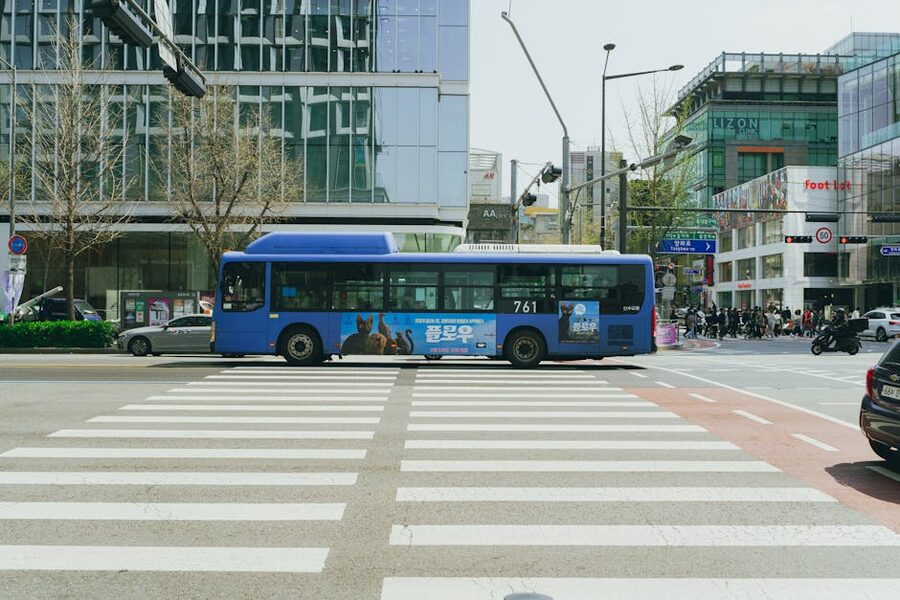
- In a Hurry? The Quick Picks
- What You Are Actually Booking
- The Two Routes, Plainly Explained
- Downtown Palace Namsan Course (day)
- Night View Course
- How to Book, Step by Step
- Discounts Worth Knowing
- Where to Pick Up the Bus
- The Top Tours for Your Pick
- 1. Seoul Hop-On Hop-Off Downtown Palace Course —
- 2. Seoul City Sightseeing with Gyeongbokgung, N Seoul Tower and Namsangol Hanok —
- 3. Seoul Night Tour: Gwangjang Market, Royal Palace and Naksan Park —
- Which Stops Are Actually Worth Getting Off For
- Stop 1: Myeongdong
- Stop 2: N Seoul Tower
- Stop 3: Bukchon Hanok Village and Insadong
- Stop 4: Gyeongbokgung Palace
- Which Stops to Skip
- Things I Would Know Before You Board
- The audio guide is better than you would expect
- There is a staff member on the bus
- Seats are first come, first served
- The bus runs on a loose schedule in traffic
- Can You Combine Day and Night in One Ticket?
- Comparisons You Might Be Making
- Hop-on hop-off bus vs Seoul subway
- Hop-on hop-off bus vs a private Seoul tour
- Hop-on hop-off bus vs a Han River cruise
- Logistics: Cash, Cards, Language
- Payment
- Language
- Accessibility
- A Day on the Bus, Planned Hour by Hour
- Common Questions I Get Asked
- Is It Worth It? The Honest Answer
- What to Pair It With
In a Hurry? The Quick Picks
- Best overall: Seoul Hop-On Hop-Off Downtown Palace Course — about $38, all-day pass. The actual city tour bus, all sixteen stops, audio in twelve languages.
- Best guided alternative: Seoul City Sightseeing with Gyeongbokgung, N Seoul Tower and Namsangol Hanok — around $80, full day. If you want a live guide walking you through the same stops.
- Best night add-on: Seoul Night Tour with Gwangjang, Royal Palace and Naksan Park — about $45, 5.5 hours. Better night coverage than the bus can give you on its own.
What You Are Actually Booking
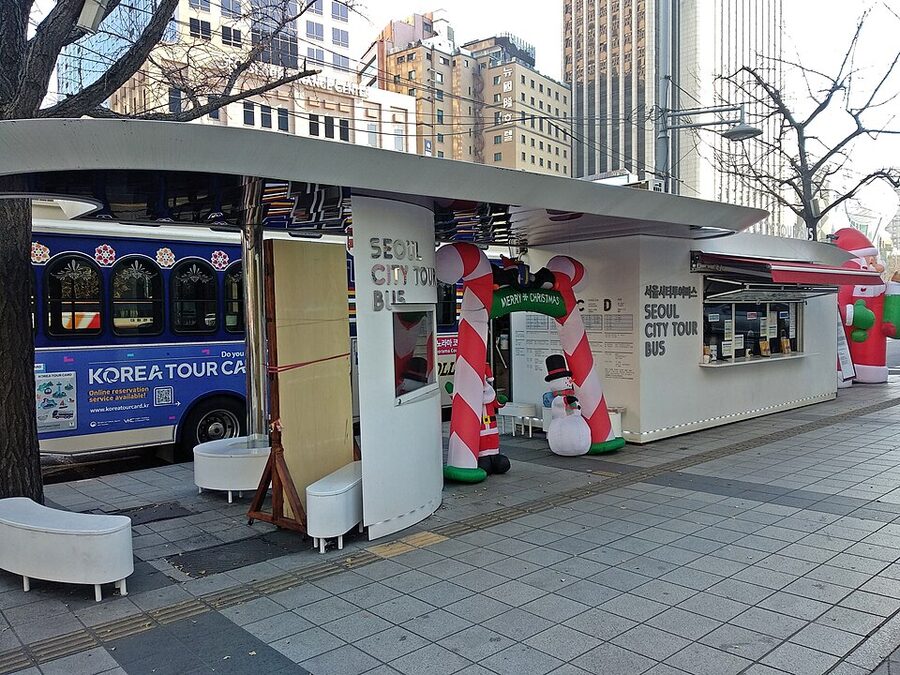
The Seoul hop-on hop-off bus is officially called the Seoul City Tour Bus. It is a government-run operation launched in 2000, which matters because the government backing is why the route structure has not been shuffled around by private operators chasing quarterly targets. The stops are deliberate, the audio commentary is careful, and the buses actually show up.
There are copycats. Yellow Balloon City Bus and the privately branded Tiger Bus both run sightseeing loops in Seoul, and their marketing looks nearly identical to the official one. I have looked at all three. Stick with the official City Tour Bus unless you have a specific reason not to — the route is tighter and the coverage is wider.
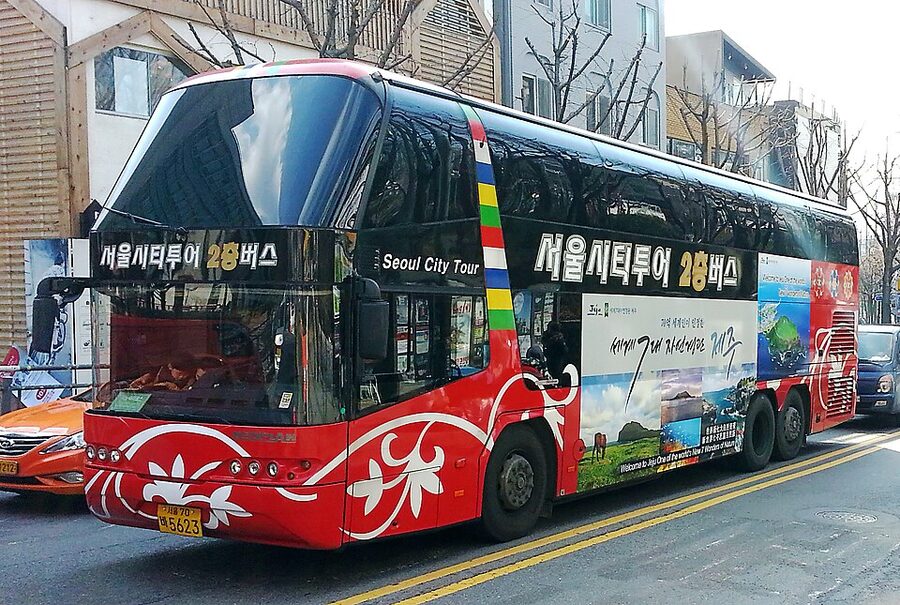
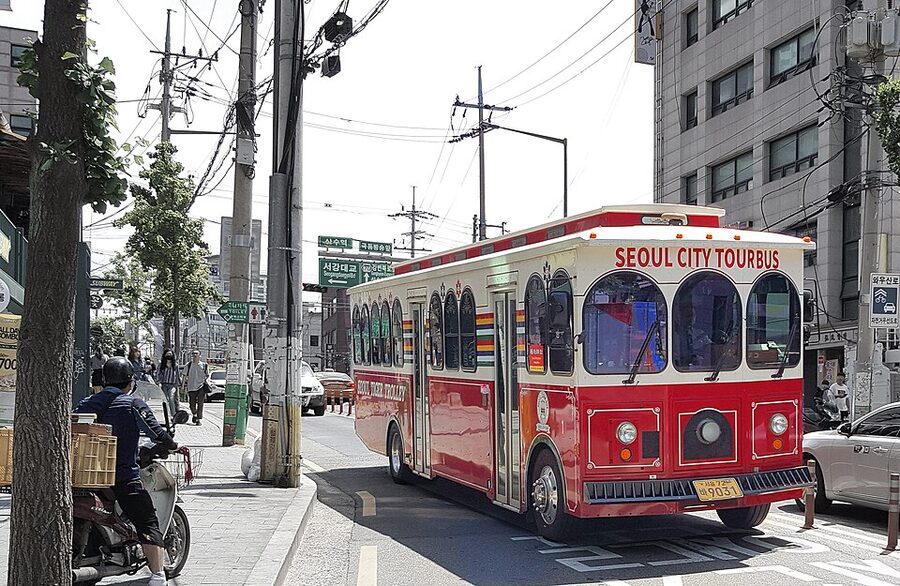
There are three physical bus types running the same route: a standard single-decker coach, a bi-level double-decker with the top deck covered, and an open-top double-decker. There is also a retro-style trolley bus that runs some departures. The trolley looks like a novelty but rides the same route and costs the same — it is fine for photos, less good for actually seeing out of.
The Two Routes, Plainly Explained
There used to be four different day routes — Downtown Palace, Gangnam, Panorama, and Night. That was pre-2024. The system got pruned. There are now two routes, and you should know both before you book.
Downtown Palace Namsan Course (day)
This is the flagship. Sixteen stops, one clockwise loop, the whole thing takes about ninety minutes end to end if you ride without getting off. Buses depart every 30 minutes from Gwanghwamun Square between 9:00am and 5:30pm. Not running on Mondays, which catches a lot of people out.
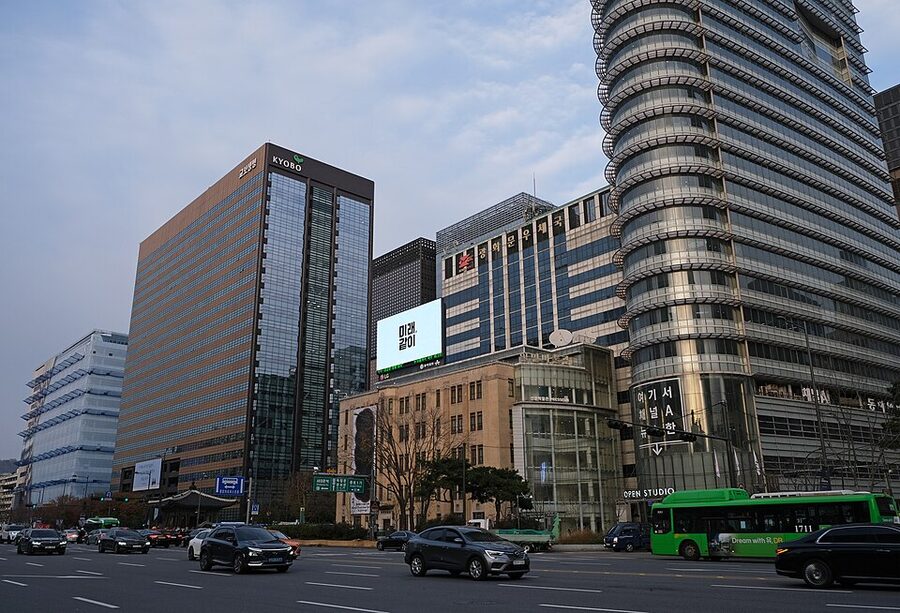
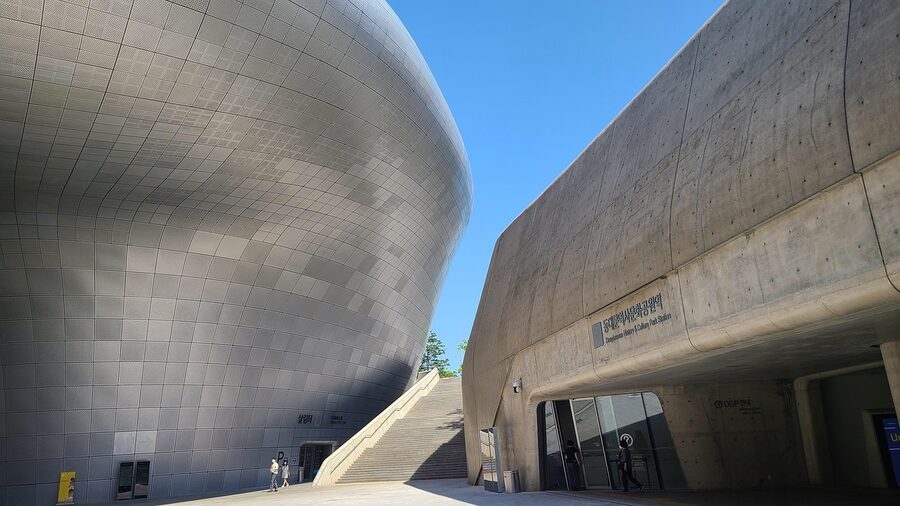
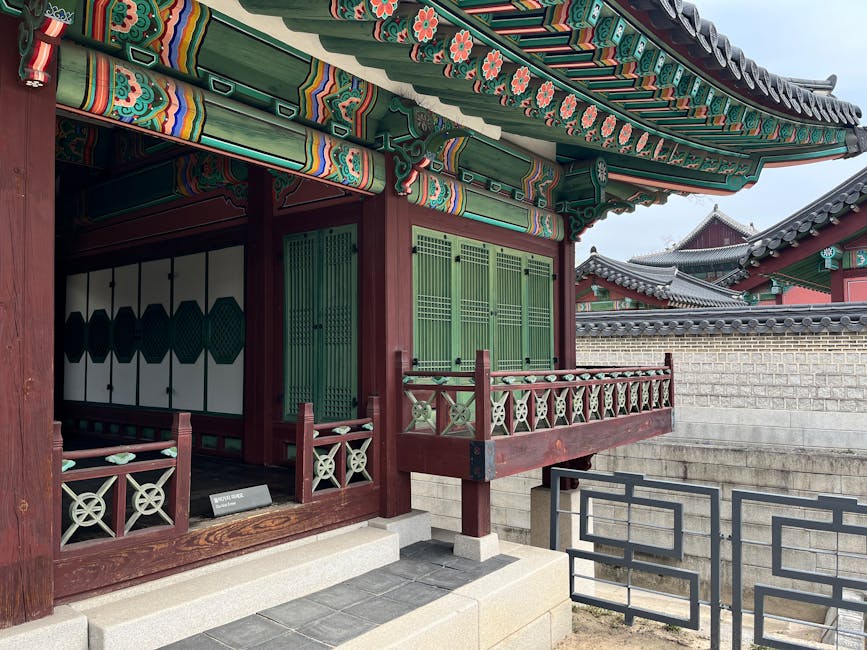
The full stop list, in order: Gwanghwamun, Myeongdong, Namsangol Hanok Village, Ambassador Seoul Pullman, Shilla Hotel, N Seoul Tower, Hyatt Hotel, Dongdaemun Design Plaza, Daehakro, Changgyeonggung Palace, Changdeokgung Palace, Insadong/Bukchon, Cheongwadae (Blue House), Gyeongbokgung Palace, Sejong Center for the Performing Arts, and back to Gwanghwamun.
Sixteen stops is too many for one day. Trying to hop off at all of them means five-minute visits and nothing else. Pick four. I will get into which four in the stops section below.
Night View Course
Eight stops, one departure a day at 7:30pm (8:00pm in July and August). The whole loop takes about an hour and a half and you only get one proper disembarkation — fifteen minutes at N Seoul Tower. Otherwise, it is a drive-through of the Han River bridges and the illuminated skyline.
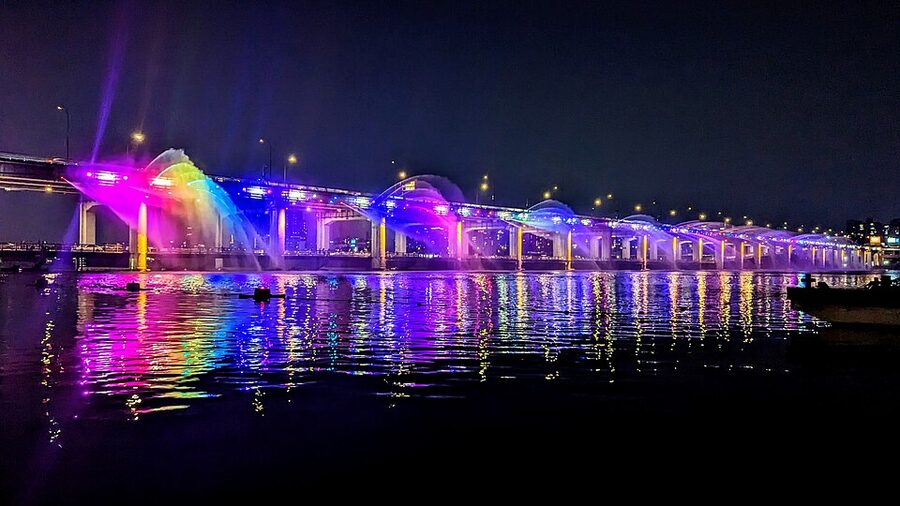
Night route stops include Mapo Bridge, Seogang Bridge, Gangbyeon Expressway, Banpo Bridge, Dongjak or Seongsu Bridge (varies by day), Hannam Bridge, N Seoul Tower, Namdaemun Market and Cheongye Plaza. It is a sit-back-and-watch ride, not a hop-on-hop-off ride. Budget is W27,000 (roughly $20 USD) for adults, W17,000 for kids.
One warning: the night course requires a minimum of ten passengers to run. Book as early in your day as you can so you are not standing at Gwanghwamun Square at 7:25pm learning the tour is cancelled.
How to Book, Step by Step
You have four booking options, in descending order of sensibility:
1. Pre-book online via Klook, Viator, Trazy or GetYourGuide. This is what I recommend. You get a QR voucher by email, you save roughly 10% off the walk-up price, and you can cancel up to 24 hours out on most platforms. I have used Klook most recently; Trazy is Seoul-focused and also fine.
2. Walk up to the Gwanghwamun ticket booth on the day. There is a dedicated City Tour Bus booth at Gwanghwamun, and you can buy adult day tickets for W30,000 cash or card. Low effort, but no discount.
3. Pay the driver when you board. Technically allowed at any stop, but only with cash. I would not bother — you will hold the bus up while rummaging for Korean won and the seats near the window will already be gone.
4. Use a Discover Seoul Pass. If you have already bought the pass (it bundles about 100 attractions including Gyeongbokgung, N Seoul Tower and the palaces), one free ride on the day OR night route is included. Not both — you choose.
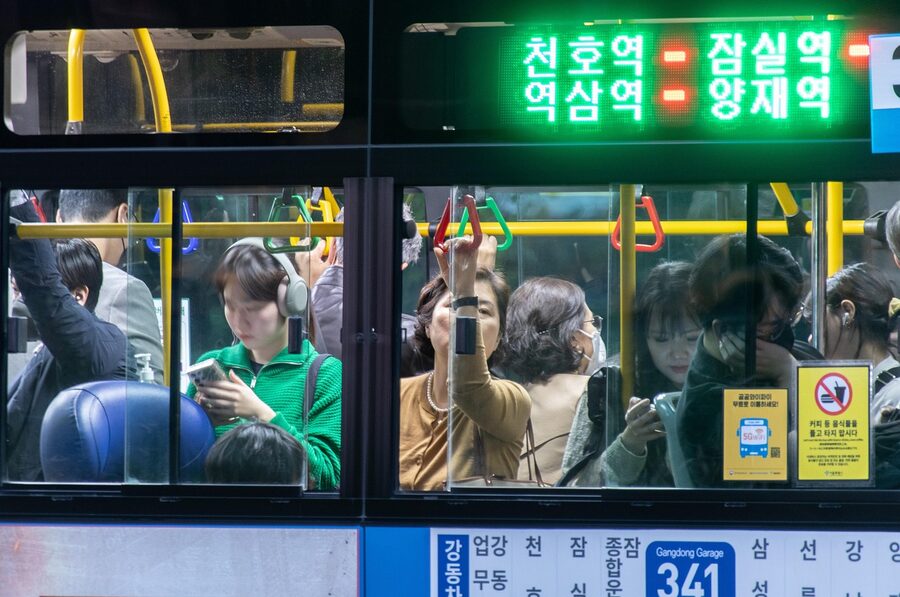
Discounts Worth Knowing
A few small savings most people miss:
- One free child under 5 per accompanying adult — useful if you are travelling as a family.
- 10% off parties of 10 or more. Relevant if you are on a group trip or big family visit.
- 15% off with a KR Pass (the rail pass for foreign visitors). Show the printed KR Pass at the Gwanghwamun booth.
- Klook and Trazy discounts stack seasonally — the adult ticket sometimes dips to around $24 on those platforms when you catch a flash sale.
Where to Pick Up the Bus
The pickup point is the detail that trips up the most people, including me on my first attempt. The bus does not leave from the middle of Gwanghwamun Square. It leaves from Gwanghwamun subway station, Exit 6, in front of the Koreana Hotel, across the road from the square itself.
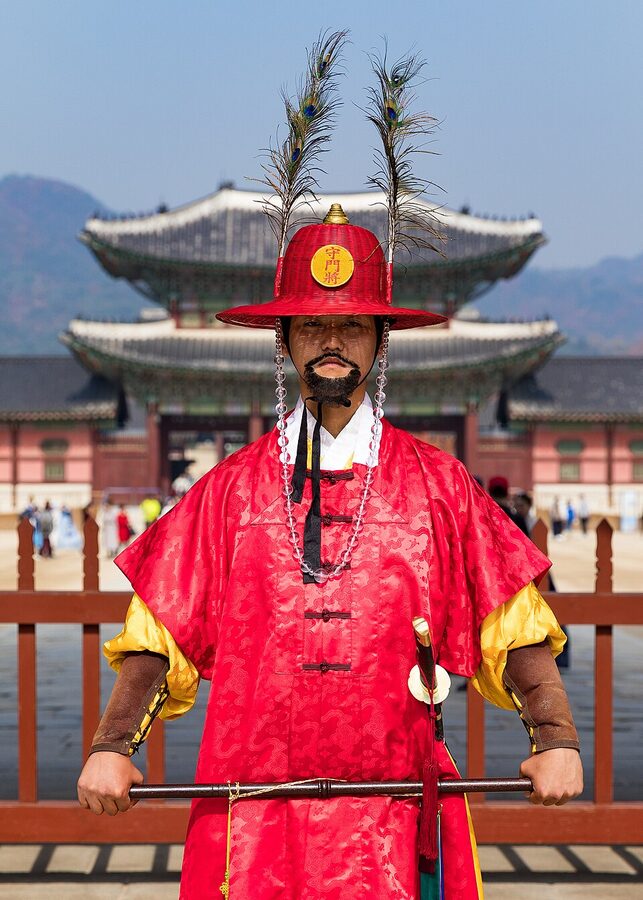
The most common mistake I have seen: drivers dropping people at Gwanghwamun Gate thinking it is the same as the pickup. It is not. The gate is the south face of Gyeongbokgung Palace. The pickup is across Sejongno Road at the Koreana Hotel. It is a five-minute walk apart, which is long enough to miss a 30-minute-gap bus.
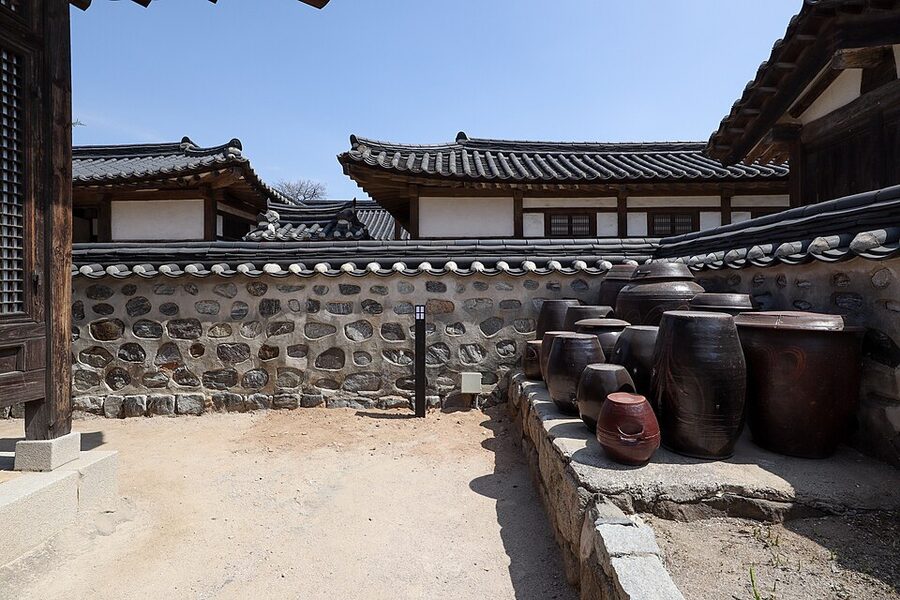
If you are boarding at any other stop along the route — say Namsangol Hanok Village or DDP — there is a sign at the stop with the red Seoul City Tour Bus branding. You do not need to find a ticket booth. Just wave your voucher at the driver.
The Top Tours for Your Pick
Three options that actually deliver on what the Seoul sightseeing bus search implies. Prices are from the booking platforms and shift with demand, so treat them as ballparks.
1. Seoul Hop-On Hop-Off Downtown Palace Course — $38

This is the real thing — the official Seoul City Tour Bus day route. I like it for the wheelchair and stroller access, the twelve-language on-board audio, and the fact that you can stop for as long or as little as you want. Our full review goes into the pickup-point confusion some visitors hit at Exit 6 of Gwanghwamun.
2. Seoul City Sightseeing with Gyeongbokgung, N Seoul Tower and Namsangol Hanok — $80
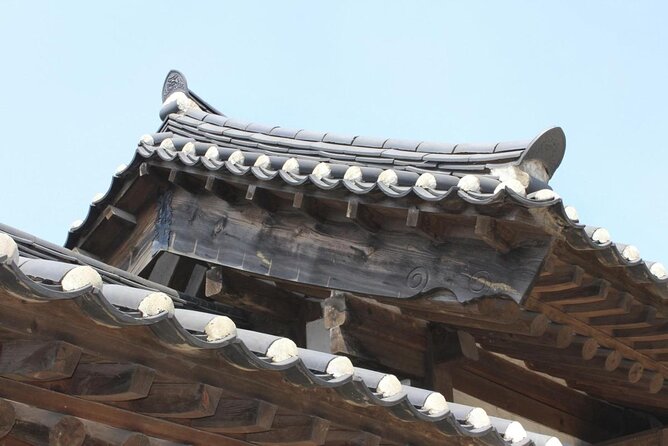
This is the pick if you want the hop-on-hop-off coverage delivered as a guided tour instead. The guides I have used here have been good — AJ is one name that keeps coming up in the feedback, and the pace hits Gyeongbokgung, Namsangol and the N Seoul Tower cable car properly. It is pricier than the bus but the ratio of time-saved to money is reasonable. Our in-depth write-up covers the pickup logistics and what to bring.
3. Seoul Night Tour: Gwangjang Market, Royal Palace and Naksan Park — $45
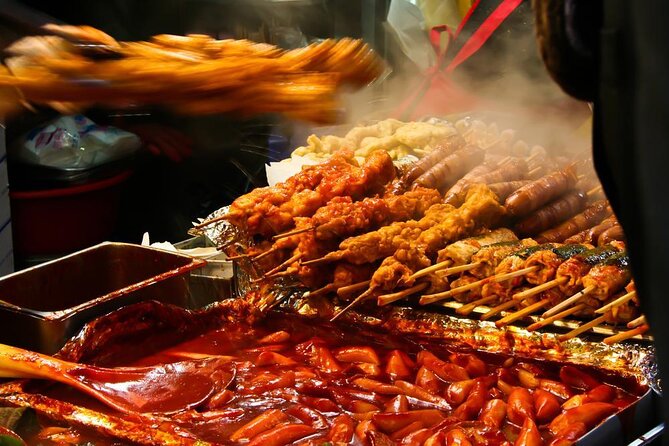
Pair this with a day on the bus and you get the best of both. The night tour goes deeper than the Night View Course — you actually eat at Gwangjang food stalls, walk a palace at night, and climb Naksan Park for a skyline view that most visitors miss. Shana, the guide most people get, is hyper-organised and warm. The full review lists the specific dishes she will push you toward.
Which Stops Are Actually Worth Getting Off For
Sixteen stops is the menu. Four is what you will realistically manage in a day if you want to see anything properly. Here are the four I would pick, in the order the bus hits them.
Stop 1: Myeongdong
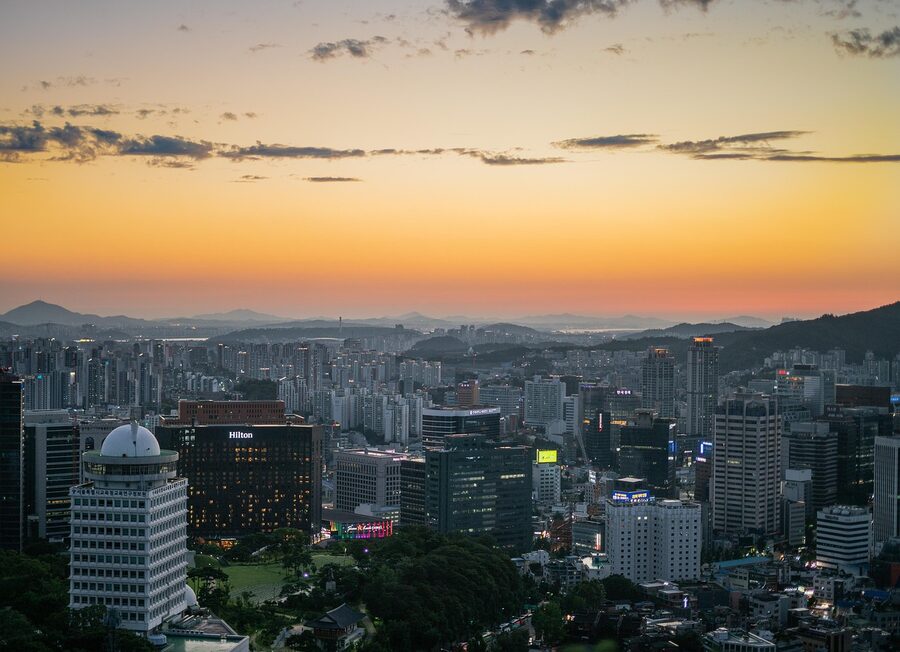
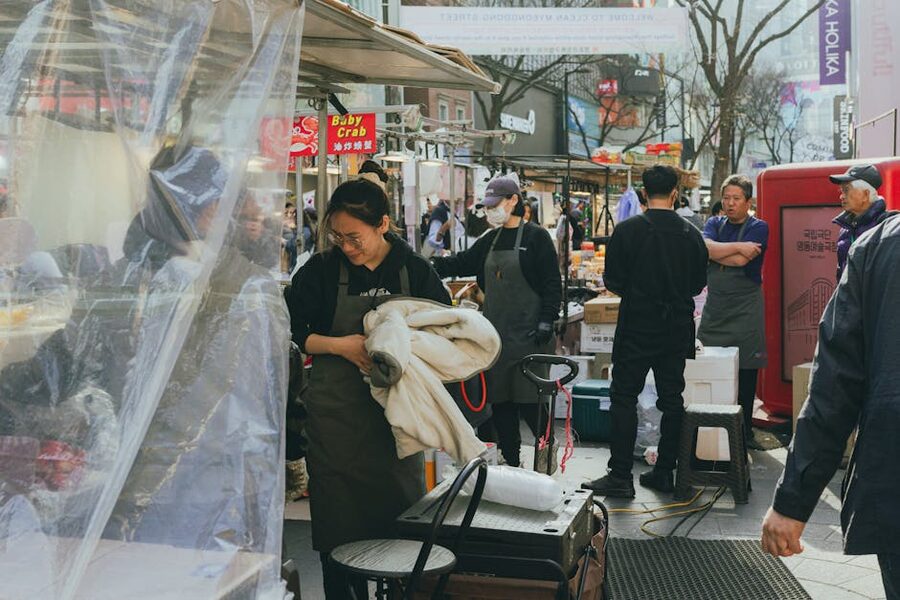
Skip the Myeongdong stop in the morning — half the shops are shuttered. Come back in the evening on your way out of the bus system. If you are doing it on a bus round trip, hop off here around 4:00pm, eat street food for an hour, then hop back on the last day bus at 5:30pm.
Stop 2: N Seoul Tower
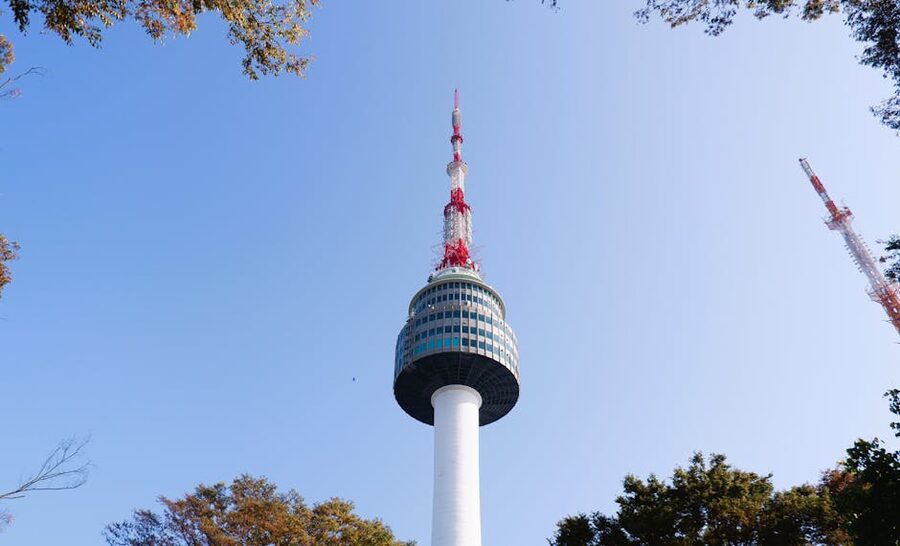
The N Seoul Tower stop is the one most visitors plan their whole day around. The bus gets you to Namsan Park base, but you will still need the cable car or a 25-minute walk up to the tower itself. Allow 90 minutes minimum here — more if you want to go inside the observation deck.
Stop 3: Bukchon Hanok Village and Insadong
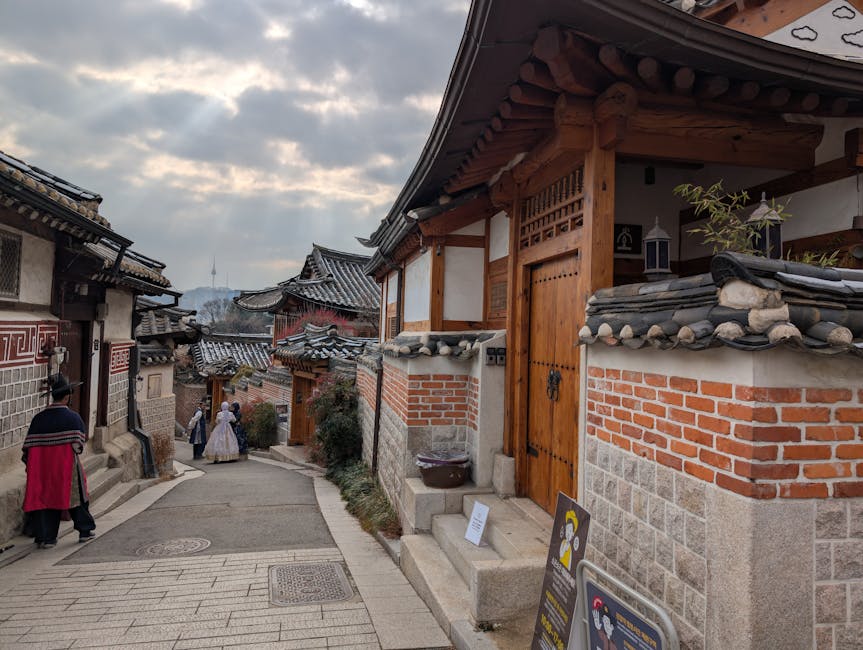
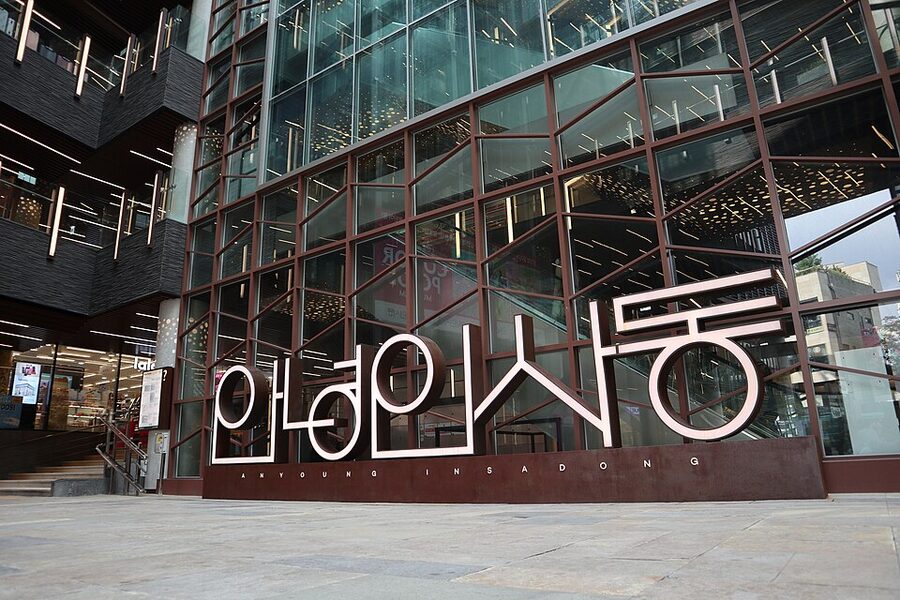
Bukchon and Insadong share one stop. Walk up into Bukchon for twenty minutes, then come back down for another twenty minutes on Insadong souvenir and tea-house street. Both are compact. Do not try to stretch them into a longer visit — you will burn time you need later.
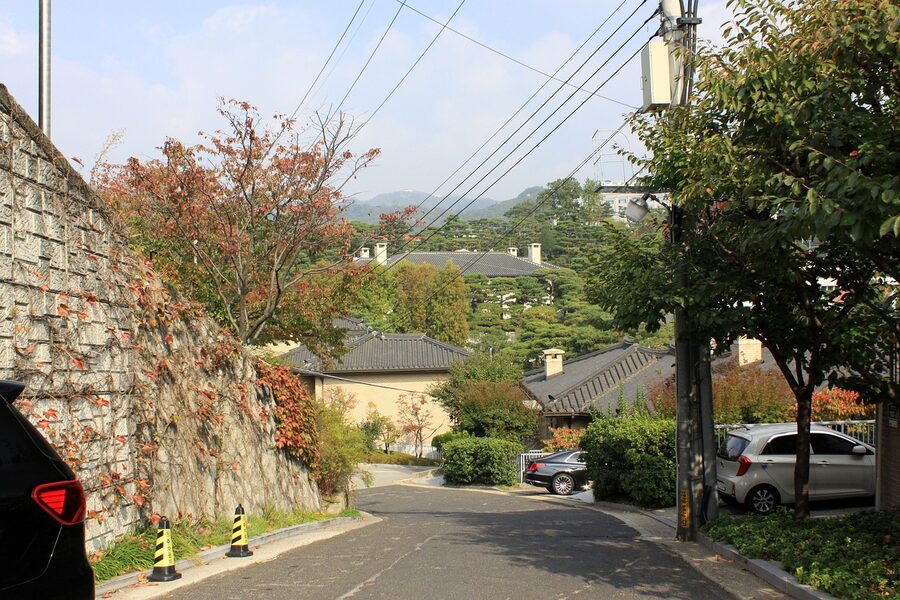
Stop 4: Gyeongbokgung Palace
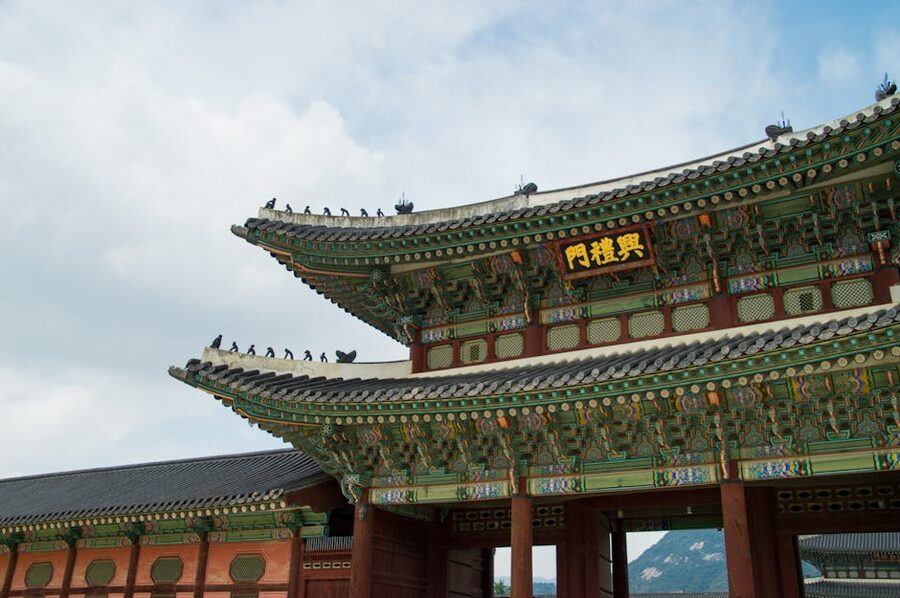
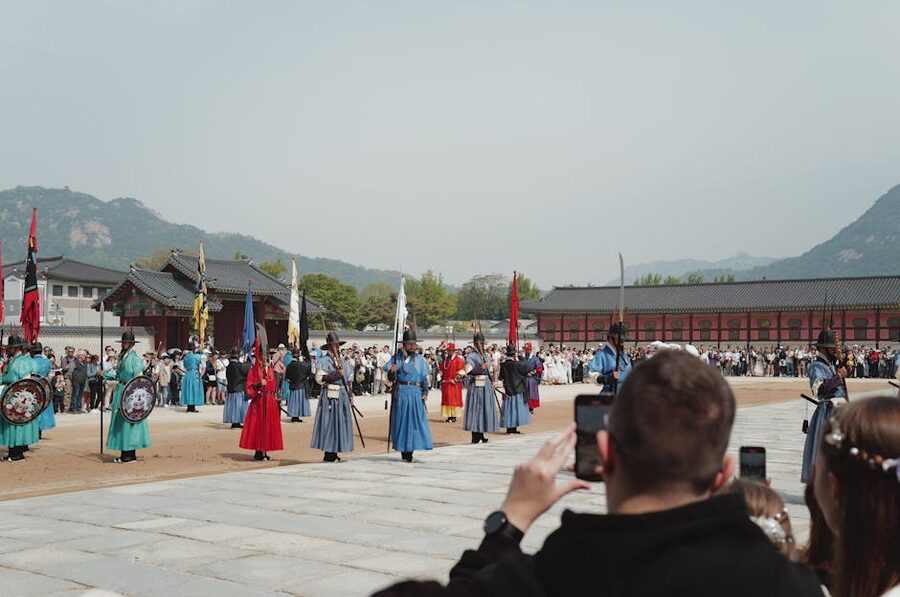
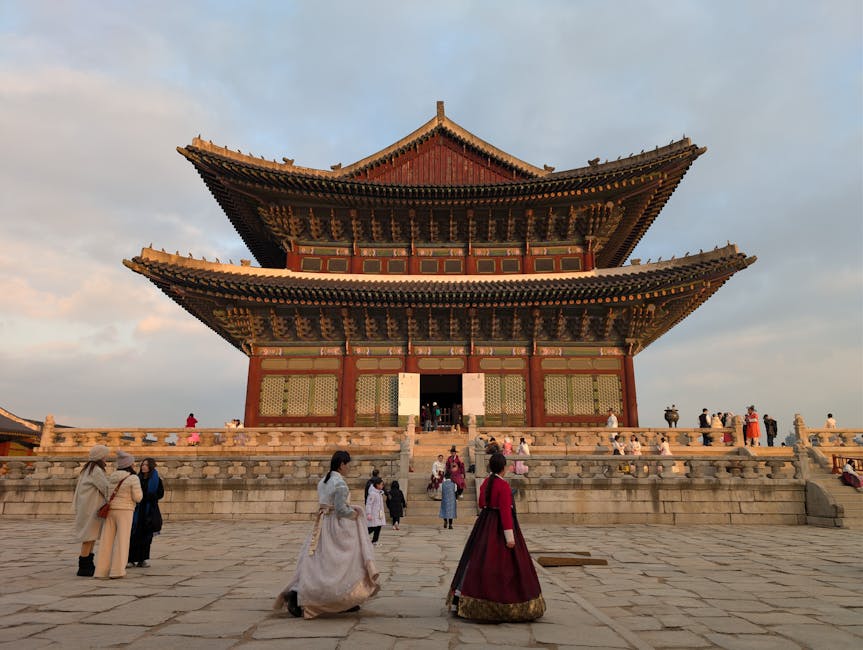
If you only do one palace, do this one. Gyeongbokgung is the biggest, the most photographed, and the one with the guard changing ceremony at 10:00am and 2:00pm. Allow two hours here. The National Folk Museum and the National Palace Museum are on the same grounds and included in the palace ticket.
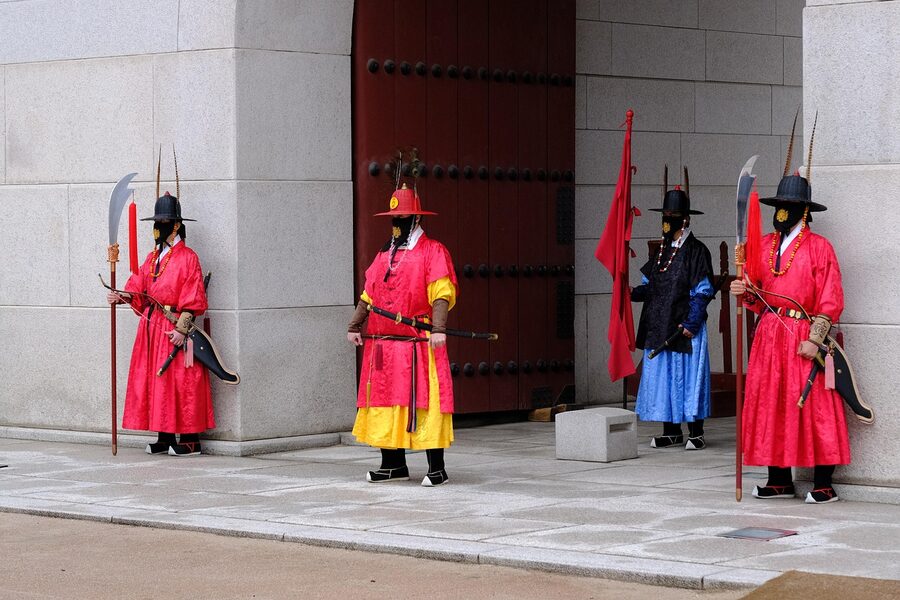
Tip most guidebooks miss: if you are wearing a rented hanbok, palace entry is free. The rental shops near Anguk Station will hold your regular clothes while you wander. It is a better photo op than any bus-window shot, and you will save the W3,000 entry fee.
Which Stops to Skip
The hotel stops (Ambassador Seoul Pullman, Shilla, Hyatt) are exactly what they sound like — drop-offs for guests. Do not bother unless you are staying there. Daehakro is a university arts district that is worth a separate evening, not a bus hop. And Cheongwadae (the former Blue House) is interesting historically but a 25-minute commitment minimum for a building you cannot go inside without advance booking.
Things I Would Know Before You Board
The audio guide is better than you would expect
Twelve languages: English, Japanese, Chinese, Thai, Vietnamese, Korean, Russian, German, French, Spanish, Indonesian, and Malay. The earphones are handed out on boarding. Plug in and leave them in — the commentary does not repeat, so if you miss a section you have missed it. The English track is particularly good on the palace stops.
There is a staff member on the bus
Not a tour guide in the traditional sense. They stay on board the whole loop. They will remind you which stop is coming up if you tell them which one you are targeting. This is underused — just lean forward and say I want to get off at Bukchon and they will keep an eye out for you.
Seats are first come, first served
If you want the upper deck of the double-decker, board at Gwanghwamun at the 9:00am departure. Stops later in the loop often board people who have already claimed the prime seats and will not move. Not a disaster, but it is something to know.
The bus runs on a loose schedule in traffic
The 30-minute interval is a guideline, not a promise. Seoul traffic around lunchtime and the 5:00pm rush can stretch gaps to 40-45 minutes. If you are on a tight schedule to catch a train, plan to hop off at a stop with subway access rather than relying on the bus to get you back.
Can You Combine Day and Night in One Ticket?
Not on the standard product, no. Day and night tickets are sold separately. What you can do is buy a day-plus-night combined package on Klook or Trazy — it bundles both tickets at roughly 15% off versus buying them separately, and the vouchers are independent, so you can use the day portion on one date and the night portion on another.
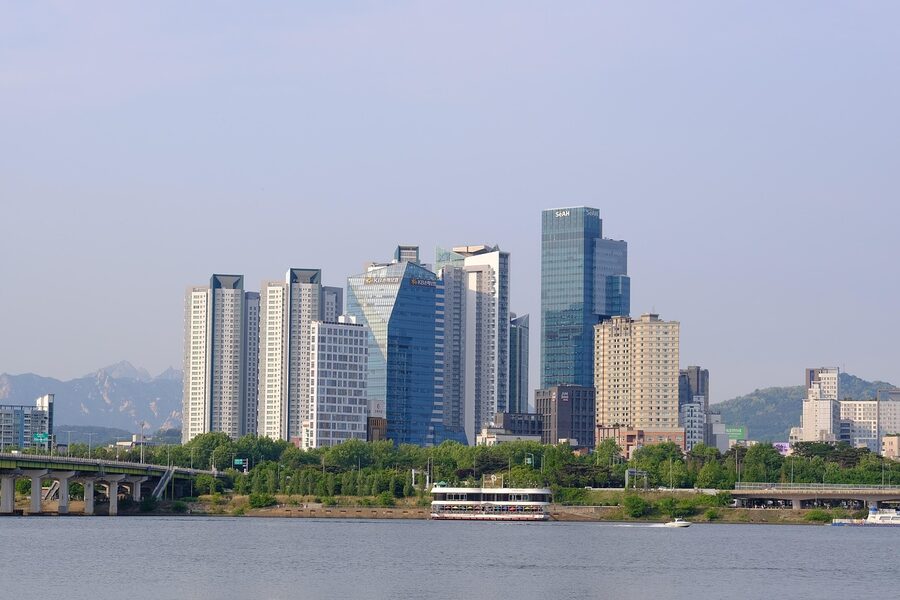
If you are only in Seoul for three days, skip the bundled night ticket. You will get more value from the night tour with Gwangjang Market I listed above. The Night View Course is a scenic drive-through; the walking tour is a proper evening out.
Comparisons You Might Be Making
Hop-on hop-off bus vs Seoul subway
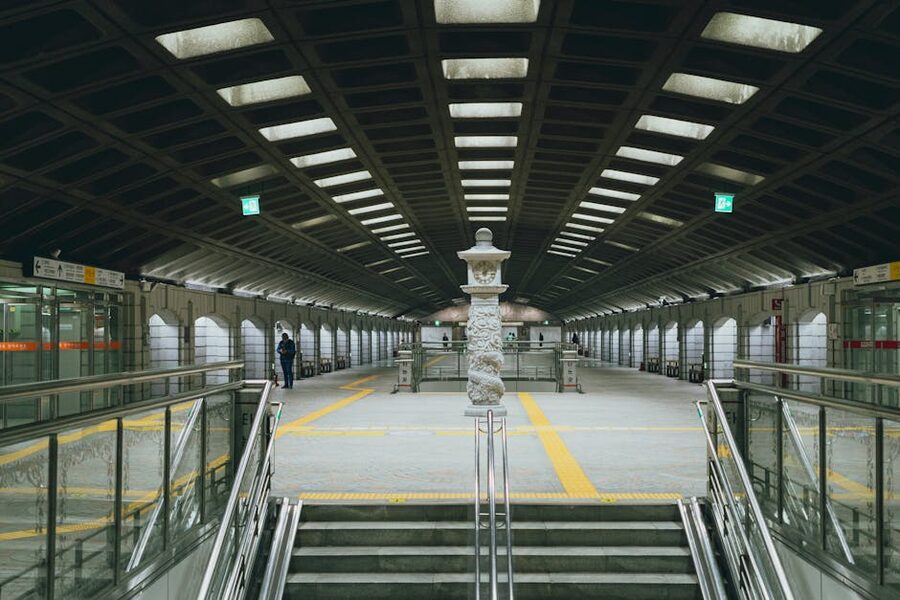
Subway wins on cost, frequency, speed, and coverage. Bus wins on commentary, sightseeing-first routing, and zero navigation stress. The real answer for a first-timer: use the bus on Day 1 to map the city in your head, then use the subway for Days 2 onwards. The $30-ish for the bus ticket pays for itself in the I now know where I am savings.
Hop-on hop-off bus vs a private Seoul tour
Private tours run $150-300 for a half day. You get a live guide, customised pace, door-to-door pickup, and no route constraints. The bus is a tenth of the price. If you are with older relatives or have specific dietary needs that will slow a group down, the private tour is the one. For everyone else, the bus does 80% of the job.
Hop-on hop-off bus vs a Han River cruise
Different products. The bus sees old Seoul; the cruise sees the river and the illuminated bridges from the water. If you only have a day, do the bus. If you have two days, do both — the Han River cruise works best as an evening add-on on Day 1 of the bus, since the main departure point at Yeouido is near the night bus route anyway.
Logistics: Cash, Cards, Language
Payment
On-board: cash only (Korean won). At the Gwanghwamun booth: cash or card. Online platforms: card or PayPal. T-Money and Cashbee transport cards are not accepted for the City Tour Bus, even though they work for regular city buses. A surprising number of visitors assume they are and have to scramble.
Language
The staff at Gwanghwamun speak workable English. The staff at individual stops may not. If you are trying to ask a complex question at Changdeokgung about the Secret Garden reservation, use Papago — the Korean-first translation app most locals default to. Google Translate is fine for basic questions but less accurate on Korean.
Accessibility
The double-decker buses have a low-floor ramp at the front. Wheelchair users can board without a lift. The trolley bus does not have ramp access, so if you need one, check which vehicle is running your departure. Contact Seoul Danurim (the city accessible travel service) for confirmation — they are responsive by email, usually within 24 hours.
A Day on the Bus, Planned Hour by Hour
The itinerary I would run for a first-time visitor with one day and a bus pass:
- 9:00am — Board at Gwanghwamun. Sit upper deck, right side, facing forwards.
- 9:15am — Hop off at Gyeongbokgung (stop 14 on the clockwise loop). Palace tour, catch 10:00am guard change. Leave 11:00am.
- 11:15am — Walk into Bukchon (stop 13). Wander for 40 minutes.
- 12:00pm — Down into Insadong for lunch. Traditional noodle house near Anguk Station.
- 1:30pm — Back on the bus. Ride to N Seoul Tower (stop 6). Cable car up.
- 3:30pm — Tower done. Catch the bus to Namsangol Hanok (stop 3) for a 45-minute stroll.
- 4:45pm — Last day bus to Myeongdong (stop 2). Street food dinner.
- 7:00pm — Walk or subway to wherever you are sleeping.
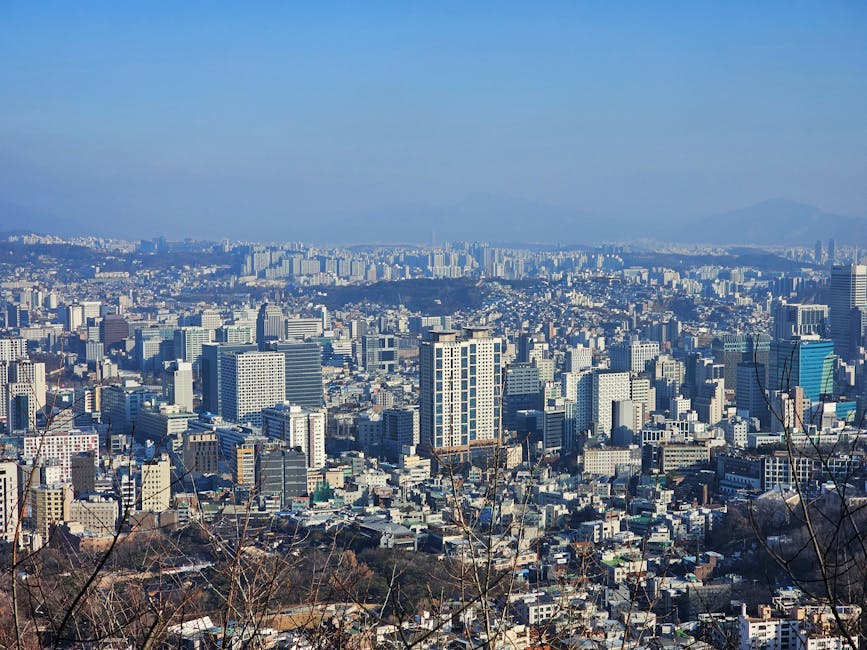
That is five hops for one ticket. It is a full day but it is not a sprint, and you will have seen more of Seoul core than 80% of visitors manage in three days of unstructured wandering.
Common Questions I Get Asked
Can I board at any stop, not just Gwanghwamun? Yes. Any stop along the route has the same bus pulling in every 30 minutes. Hand the driver your voucher, done.
What if it rains? The standard double-decker has an enclosed upper level. Open-top buses run only in fair weather and swap for enclosed ones when it pours. No refund, but also no wet seats.
How long is the ticket valid? One day, from first use to the last day bus at 5:30pm. If you board at 4:00pm, you have 90 minutes — not a great deal. Start early.
Is it kid-friendly? Very. The stops are short enough that boredom does not set in, the audio has a Korean-language kids track, and the upper deck is a novelty for children under 10. Strollers fit in the lower deck luggage area.
Can I combine the bus with a theme park day? Yes — the bus works well as Day 1, with Everland as Day 2 or 3. Everland has its own shuttle from Seoul, so the two tickets do not overlap.
What about day trips out of Seoul? The bus is strictly a city-only product. For the Korean Folk Village in Yongin, a dedicated day trip is the move — that is a separate suburb and a different infrastructure entirely.
Is It Worth It? The Honest Answer
For a first-time Seoul visitor with one to three days in the city, yes. You will pay roughly $30, you will see the headline stops without figuring out subway line changes, and you will finish the day with a mental map of Seoul that makes the rest of your trip faster.
For someone on trip two or three to Seoul, no. You already know where everything is. The subway is faster, cheaper, and takes you deeper into the neighbourhoods the bus only skirts.
For families with small kids, yes, absolutely. The novelty factor alone is worth the ticket, and the logistical ease — no subway stairs with a stroller — is the real selling point.
What to Pair It With
The bus fits into a longer Seoul plan nicely. I would pair a day on the hop-on-hop-off with an evening Han River cruise for the night skyline the Night View Course only gestures at. Day two I would do a folk village day trip to Yongin if you want the traditional Korea context, or Everland if you are travelling with kids. A hanbok rental morning at one of the palaces is the single best photo investment you can make on the whole trip — the bus Gyeongbokgung stop lines up perfectly with an Anguk Station rental. And on your final evening, a Seoul night walking tour, a Seoul pub crawl if you are in the mood for something looser, or a cultural show like Nanta rounds out the trip in a way the bus cannot.