
Jeju looks small on a map. In a rental car with no Korean, no local guide, and Google Maps refusing to give driving directions, it feels enormous. A private tour flips that: the same island, the same day, but with someone who actually knows which lava-tube cave has the best-lit chamber, which Olle trail spits you out next to tangerine farms, and which side road around Hallasan opens up when the main tourist car park is heaving. Of all the things we book in Korea — city walking tours, hanbok rentals for palace visits, Suwon fortress day trips — Jeju is the one where going private earns back every won.
- In a Hurry? Top 3 Jeju Private Tours
- Why a Private Tour Makes More Sense Here Than Anywhere Else in Korea
- What “Private Tour” Actually Includes in Jeju
- The 3 Private Jeju Tours I’d Actually Book
- 1. Jeju Island English Flexible Private Tour (John’s Team) — from 0/group
- 2. Jeju Island Popular Sightseeing Private Car Charter (5 or 9 hours) — from 8/group (up to 6)
- 3. Jeju Private Taxi Tour with Flexible Itinerary (Terry / Lucas Travel) — from 5/group
- East, West, or South — Which Route to Pick
- East Route — Seongsan Ilchulbong, Manjanggul, Udo
- South Route — Seogwipo, Cheonjeyeon, Jusangjeolli, Jungmun
- West Route — Hallim Park, Hyeopjae Beach, O’sulloc Tea Fields, Sanbangsan
- How Long Your Tour Actually Needs to Be
- How to Book — Step by Step
- A Quick Note on Tipping
- What About Group Tours?
- Practical Bits Nobody Mentions
- A Short History of Why Jeju Looks the Way It Does
- What Could Go Wrong
- Before You Book — The Three Questions to Ask
- Rounding Out the Korea Trip
In a Hurry? Top 3 Jeju Private Tours
- Jeju Island English Flexible Private Tour — from $230/group (up to 4) — The most-booked option I’d steer anyone toward. Driver-guide John and his team pick up from airports, hotels, or the cruise port, build a custom itinerary, and speak proper English. Check availability on Viator.
- Jeju Island Popular Sightseeing Private Car Charter — from $188/group (up to 6) — Slightly cheaper, slightly bigger car, same customizable format. Great for families and small groups who want a set 5-hour or 9-hour route. Check availability on Viator.
- Jeju Private Taxi Tour with Flexible Itinerary — from $185/group (up to 4) — Terry’s Team / Lucas Travel. Small operation, consistently safe drivers, flexible on stops. Good fallback when the two above are booked out. Check availability on Viator.
Why a Private Tour Makes More Sense Here Than Anywhere Else in Korea
On mainland Korea — Seoul, Busan, Gyeongju — public transport works. Once you’re in the capital, a Gangnam walking tour or a subway-based palace day are straightforward. Jeju is the opposite. The island has buses, but they run on a hub-and-spoke pattern through Jeju City, so crossing from Seongsan on the east to Mt. Sanbangsan on the west by bus takes half a day and two transfers.
Self-driving has its own problems. Google Maps doesn’t give driving directions in Korea, so you’re on Naver or Kakao — both Korean-only in their best features. Car hire is cheap on paper but every Korean driver will tell you Jeju roads have the country’s highest accident rate per visitor, and the insurance cost when you book local can be steeper than the car itself.
A private tour takes both of those off the table. You pay a flat rate per group (not per person), and for a couple or a family of four it often works out close to what a rental car plus gas plus parking plus stress would cost.
What “Private Tour” Actually Includes in Jeju
Some Jeju private tours are taxi-based. One driver, one sedan, up to four people. That’s the cheapest format. Others are private car charters with a dedicated car — Kia Carnival vans or SUVs — for groups up to six or eight. A handful are guide-plus-driver setups where the driver focuses on roads and a second person in English handles the storytelling.
Here’s what you should expect in the base price from any reputable Jeju operator:
- Pickup from your accommodation — hotel, guesthouse, Jeju International Airport (CJU), or the cruise port at Jeju Outer Port
- Fuel, tolls, and driver fees — bundled, so no awkward roadside top-ups
- A set tour length, usually 5, 8, or 9 hours, with a clear ending time
- An English-speaking driver or guide (confirm the English level before booking — more on this below)
- Flexibility on the route — you pick priorities, they shape the order
Here’s what’s almost never included: park entry tickets, cable car fares at Songaksan or Sanbangsan, boat tickets from Seongsan harbour, restaurant meals, and tips. Budget roughly ₩30,000-₩50,000 per person on top for entry fees across a full day.
The 3 Private Jeju Tours I’d Actually Book
I went through what’s bookable on Viator and GetYourGuide, filtered for operators with real booking volume rather than one-off listings, and read through the recent visitor notes. Three come up again and again.
1. Jeju Island English Flexible Private Tour (John’s Team) — from $230/group
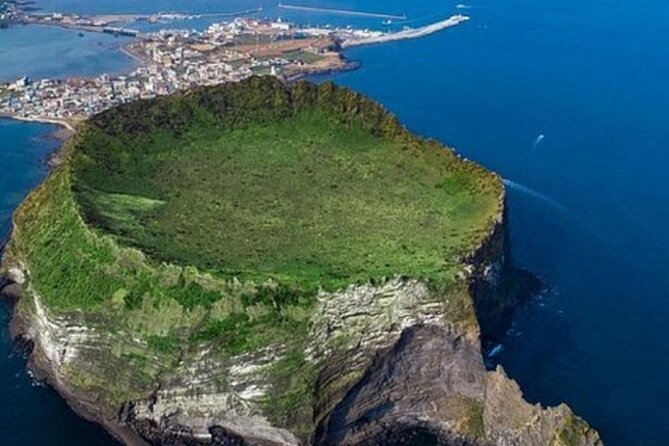
This is the one I’d recommend first, partly because it’s the one that’s hardest to book without friends pointing you to it — and partly because our full review lays out exactly how the 10 route options differ and which one makes sense for first-timers versus repeat visitors. John builds the itinerary around what you want to see rather than a fixed circuit. Group price up to four, so for couples and families it’s not far off a rental car.
2. Jeju Island Popular Sightseeing Private Car Charter (5 or 9 hours) — from $188/group (up to 6)
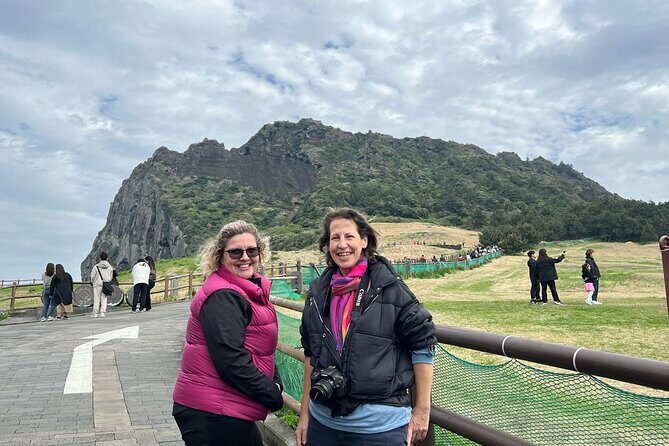
A slightly cheaper option than John’s team, with the same fully customizable route format. Two duration options (5 hours for cruise-port visitors, 9 hours for overnight guests) makes it easy to match to your schedule; our write-up on the full charter goes into what a typical 9-hour circuit looks like. The larger group capacity is where this one wins — six adults in one vehicle is cheaper per person than any rental-car-plus-hotel combo you’ll find.
3. Jeju Private Taxi Tour with Flexible Itinerary (Terry / Lucas Travel) — from $185/group
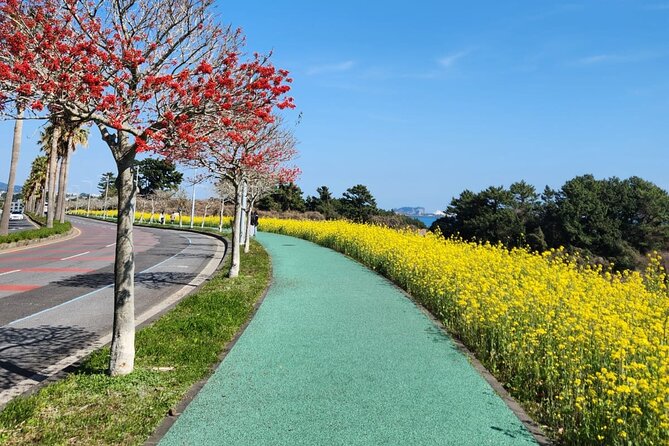
Terry’s Team, operated under Lucas Travel, is a smaller family-run outfit. What I like is the safety culture — our review digs into the two-day itinerary and the driving style comes up again and again as careful, unhurried, never trying to squeeze extra stops in to pad the schedule. Not the cheapest but a strong fallback if John and the main charter operator are both fully booked.
East, West, or South — Which Route to Pick
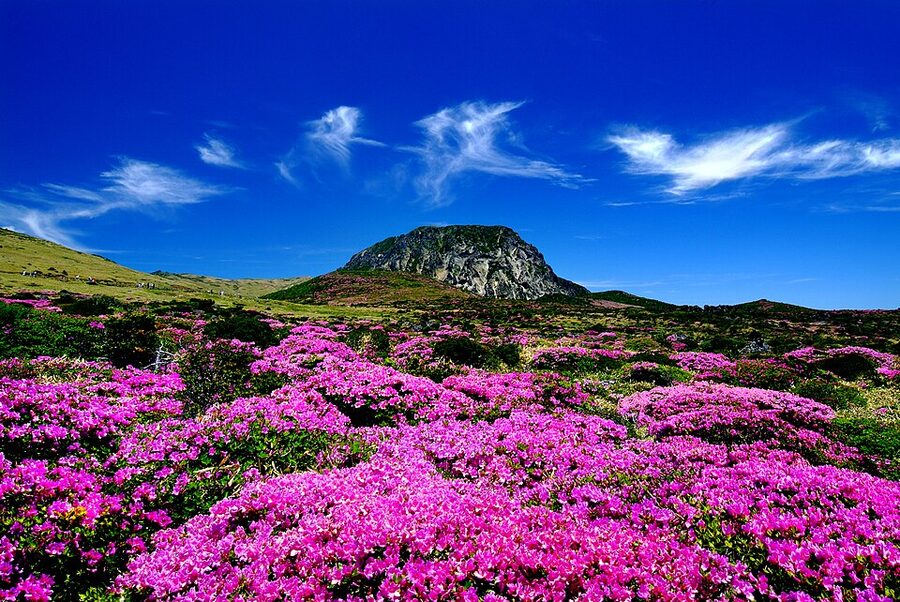
Jeju is roughly oval, Hallasan volcano in the middle, and everything worth doing is on the coastal ring road. Most private tours split into three day-route options, matched to which hotel area you’re staying in.
East Route — Seongsan Ilchulbong, Manjanggul, Udo
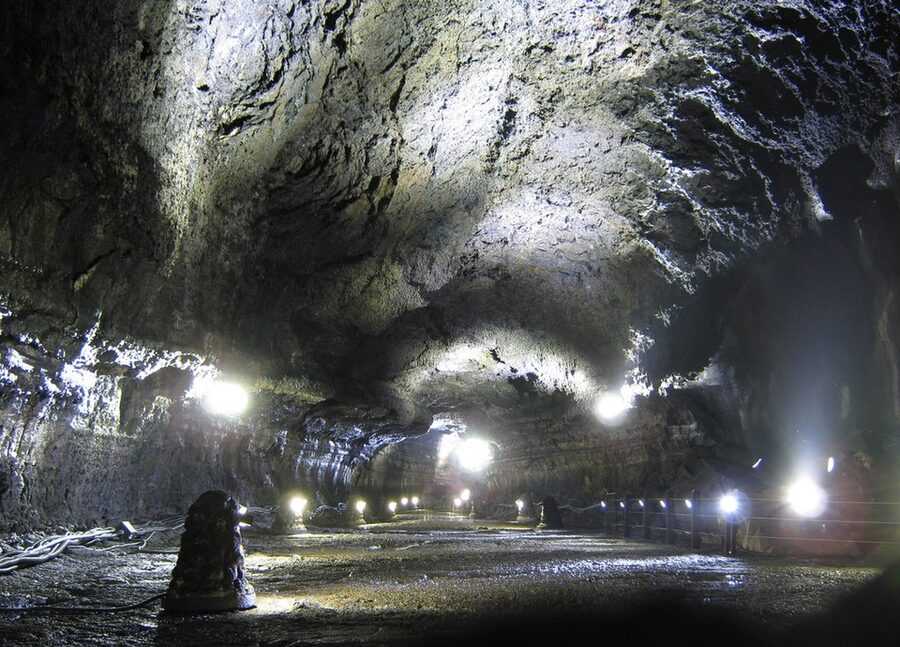
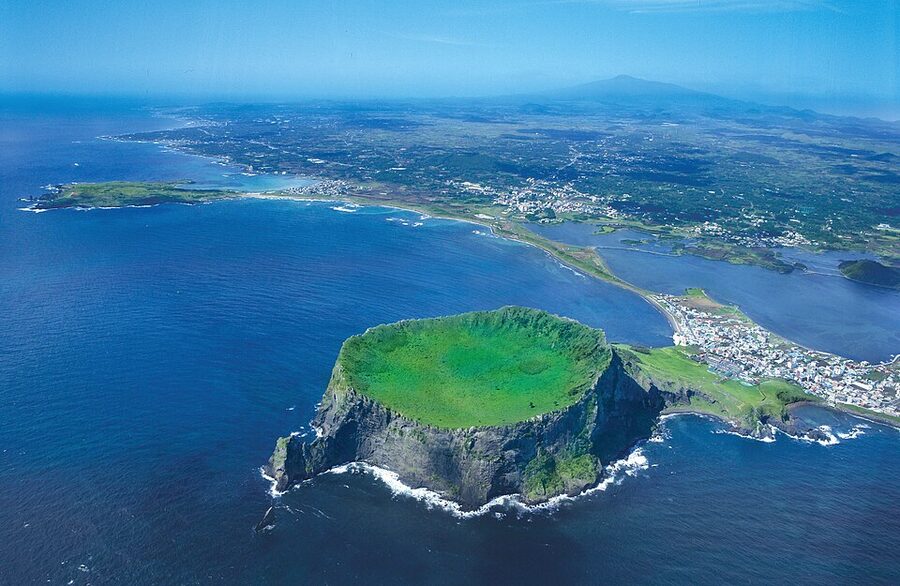
The highlights route if you’re only picking one day. Seongsan Ilchulbong (Sunrise Peak) is the iconic tuff cone crater, easy 20-minute climb. Manjanggul lava tube is one of the longest lava caves in the world and the air temperature inside stays around 12°C year-round. Udo Island is a ferry hop across from Seongsan harbour — bicycle rental, more volcanic coast, quieter than the main island.
South Route — Seogwipo, Cheonjeyeon, Jusangjeolli, Jungmun
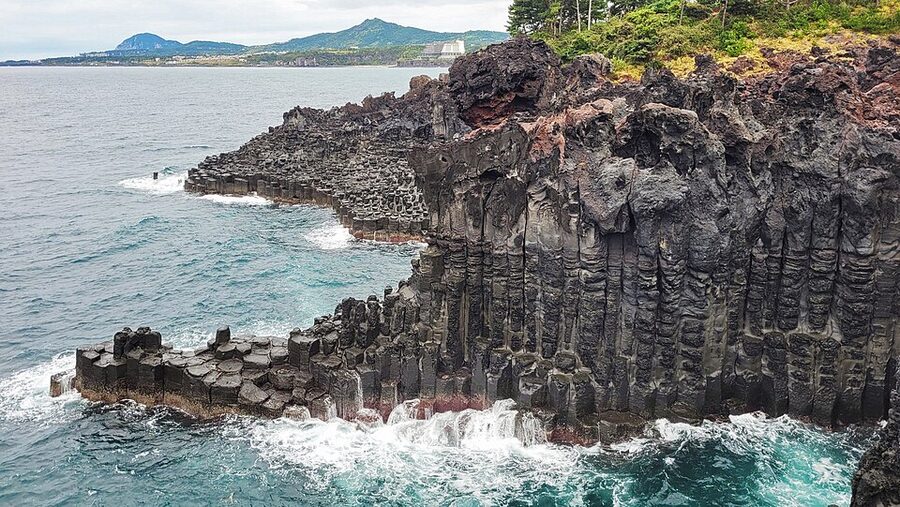
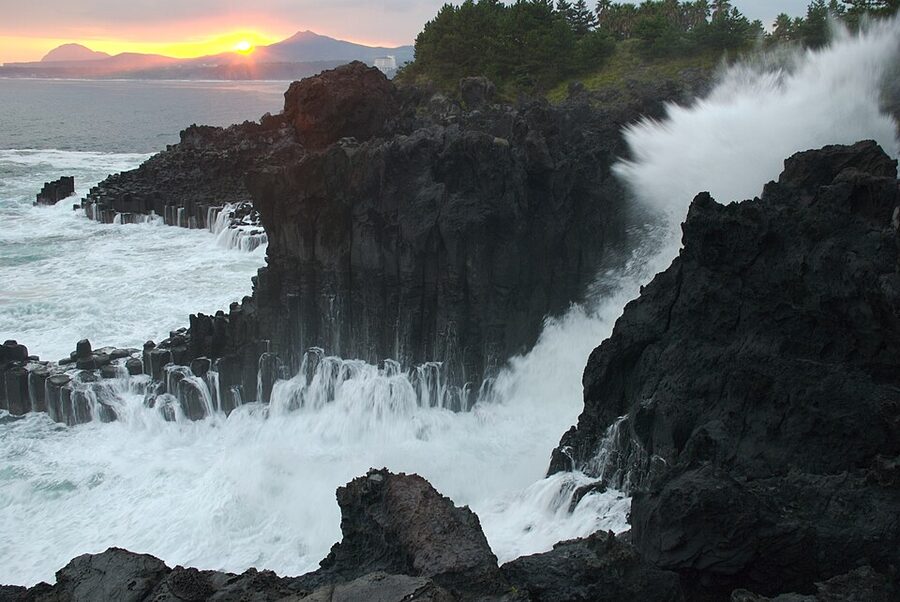
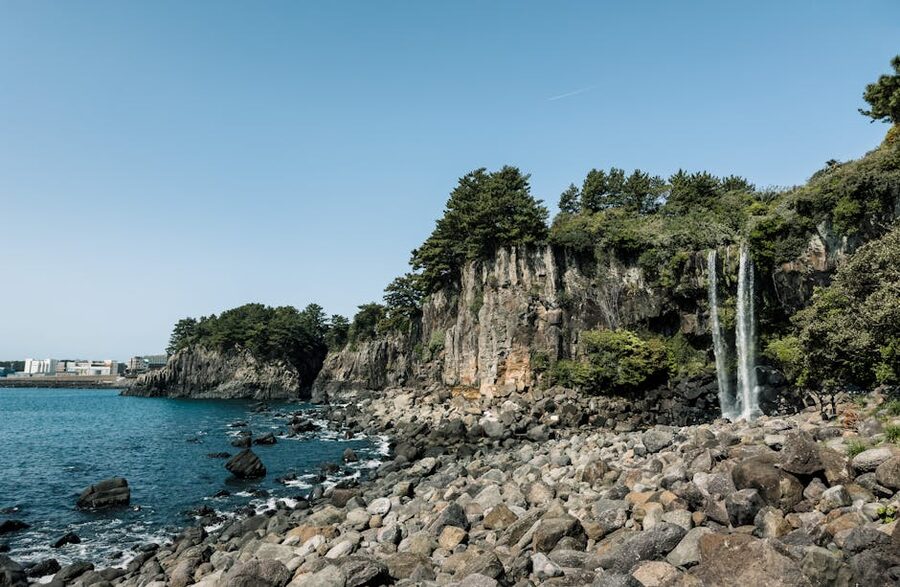
This is where most resort hotels sit. Cheonjeyeon and Jeongbang waterfalls, the hexagonal basalt columns of Jusangjeolli Cliffs (very short walk), Jungmun Beach’s dark sand, and the Teddy Bear Museum if you’ve got kids who’ve hit their landscape limit.
West Route — Hallim Park, Hyeopjae Beach, O’sulloc Tea Fields, Sanbangsan
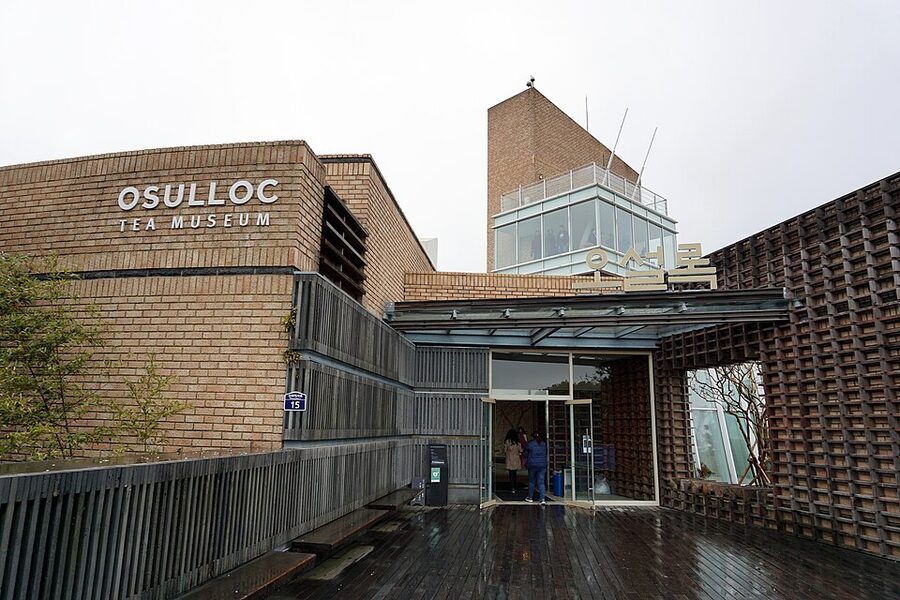
Quieter, greener, more time at each stop. Hyeopjae Beach is actually sand (rare for Jeju), O’sulloc’s green tea fields and museum are a legitimate half-day on their own, and Sanbangsan is where the cable cars and temples cluster. The west route works best for repeat visitors who’ve already done the east highlights.
How Long Your Tour Actually Needs to Be
The 5-hour option exists mostly for cruise passengers. It’s enough for one big sight plus one smaller stop. If you’re staying overnight, don’t bother — you’ll feel rushed the moment you hit the first place you want to linger at.
8 or 9 hours is the sweet spot. That gives you three or four sights with lunch in the middle, plus the drive time between them. Don’t underestimate drive time — from Jeju City to Seogwipo is 50-60 minutes even on a good day, and the east-to-west ring road takes the best part of 2 hours end to end.
Multi-day private tours exist too — Terry’s team runs proper 2-day and 3-day options that let you hit the east route one day and the south/west the next. These make sense if you’re staying at one hotel but want to cover all three circuits without changing accommodation.
How to Book — Step by Step
- Pick dates first, tours second. Jeju private tours book up four to six weeks out in high season (late April to early June, July-August, and October for foliage). Off-season, a week is usually enough lead time.
- Book through Viator or GetYourGuide, not direct. Direct websites exist for most of these operators, but they’re slow to respond, often Korean-only, and you lose the cancellation protection. Viator and GetYourGuide let you cancel for full refund up to 24 hours out on most Jeju tours.
- Confirm pickup location and time in writing. Once you’ve booked, the operator will message through the platform asking for your hotel and phone. Reply with specifics — which hotel entrance, your room number if the concierge knows you, and your international phone that works on Korean networks.
- Send your route priorities 48 hours before. Private tours are only as flexible as the info you give. List three or four must-sees and one or two nice-to-haves. The driver will slot them into a sensible order.
- Bring cash for entry fees and lunch. ATMs work, but most attraction ticket booths and smaller lunch spots are cash-only or card-only (not both). ₩100,000-₩150,000 per person in mixed notes covers a day comfortably.
A Quick Note on Tipping
Korean tipping culture is almost non-existent in restaurants and taxis. Private tour drivers are the one exception. ₩10,000 per person per day (roughly $7-8) is the going rate for drivers, ₩20,000 per day if the driver is also doing real guide work and handling your restaurant reservations. Cash, envelope if you have one, handed over at the end with thanks. Not compulsory, but it matters to them and every Jeju driver I’ve spoken to expects it.
What About Group Tours?
Large bus tours do exist on Jeju and they’re cheap — ₩40,000 per person for a full day. The reason I keep steering readers away: the stops are all 25-30 minutes, every stop ends at a gift shop, and the bus itinerary is locked. If you’re solo and budget-sensitive, a group bus tour is fine. For anyone in a pair or more, once you do the maths on a private 4-person tour at $230 total, the bus is a false economy.
Practical Bits Nobody Mentions
- Bring layers. Jeju is warmer than the mainland but windy. A 25°C day at the coast can be 18°C on a lookout deck.
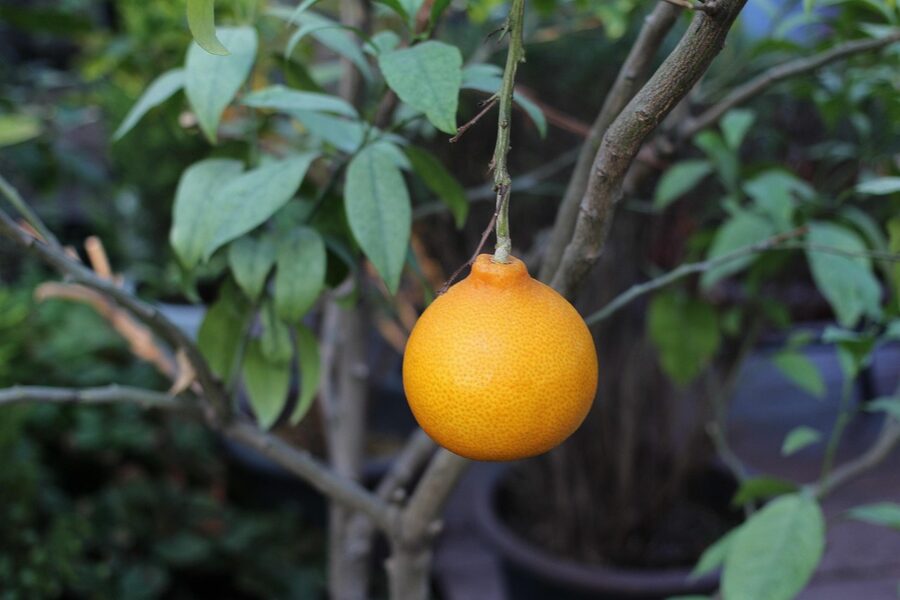
- Tangerines. October to February is tangerine season. Roadside stalls sell them by the net bag for next to nothing. Your driver knows the good ones.
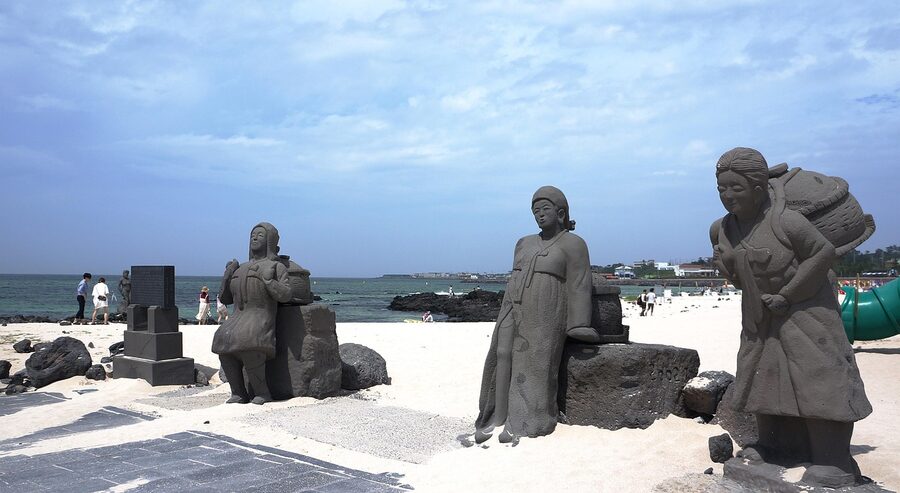
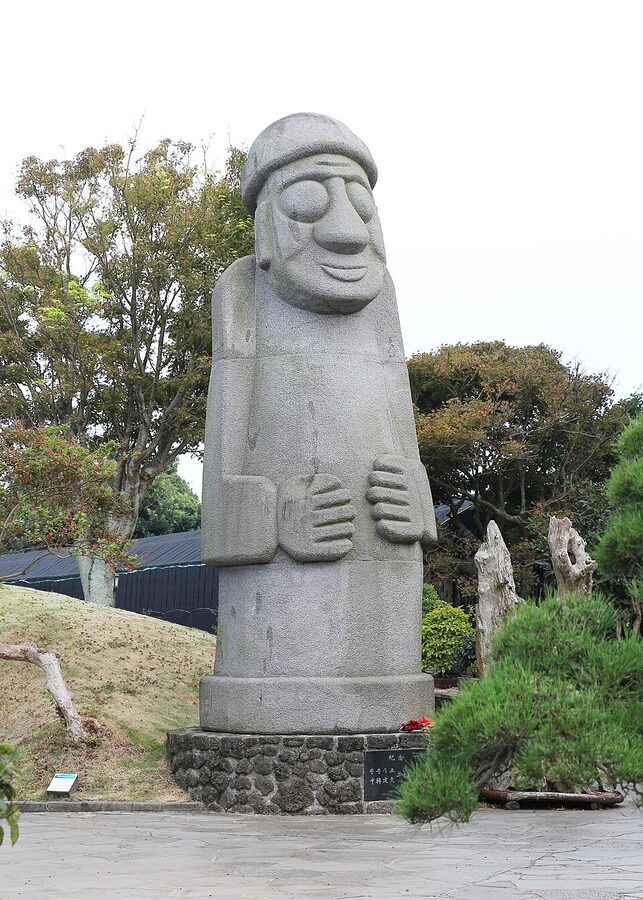
- Don’t over-photograph the dolharubang. The basalt grandfather statues are everywhere and you’ll get photo fatigue fast. One good shot at Jeju Stone Park (below) is enough.
- Language apps. Install Papago (not Google Translate — Papago is better for Korean). Your driver will have it too; it gets used for detailed restaurant questions.
A Short History of Why Jeju Looks the Way It Does
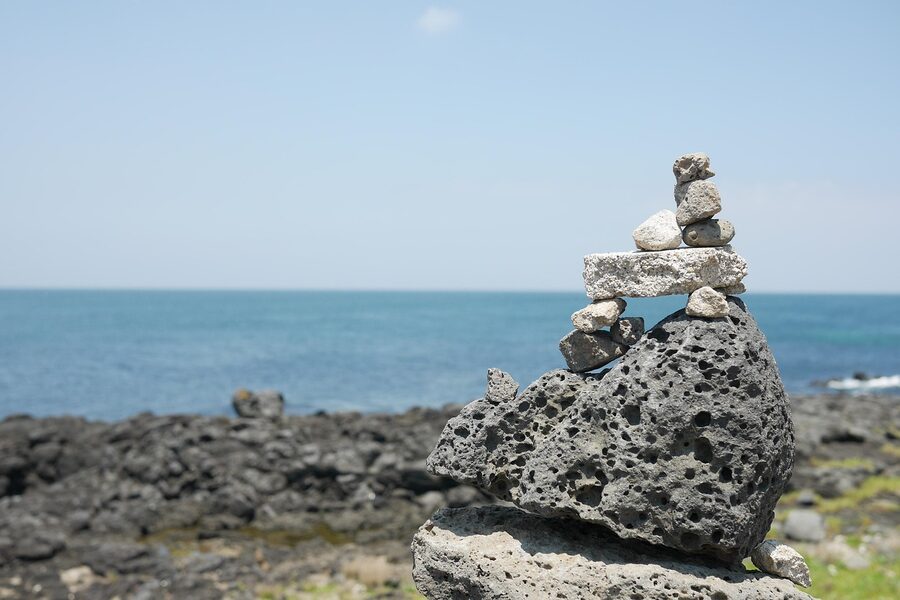
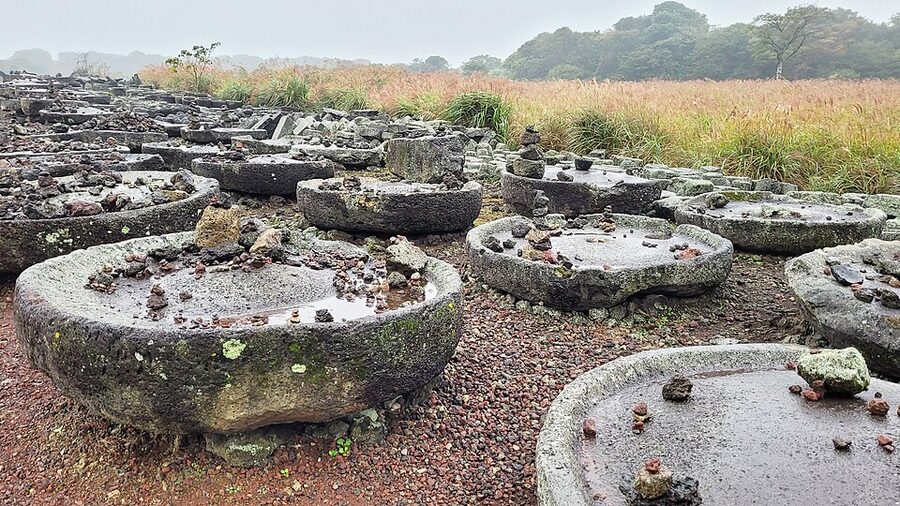
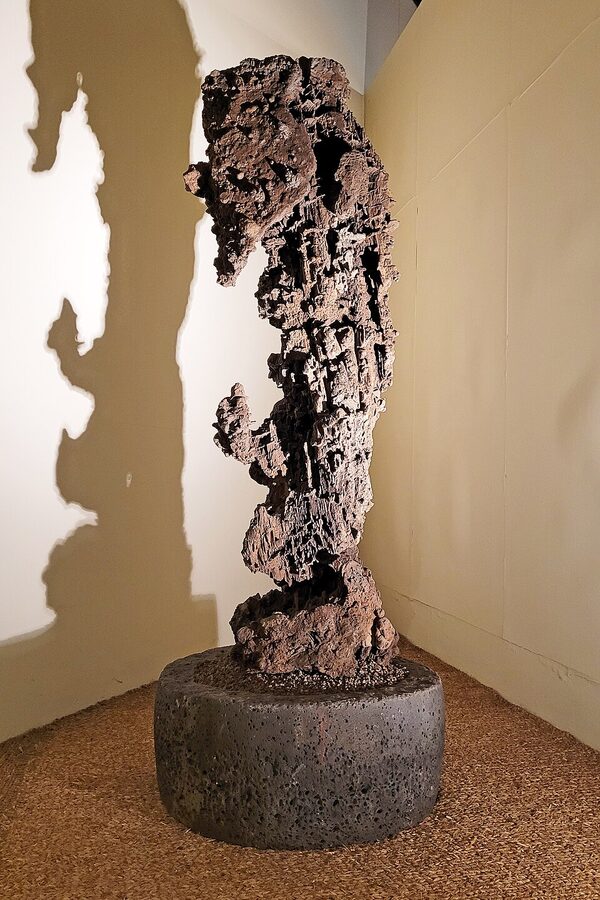
Jeju is entirely volcanic. Hallasan in the centre is a shield volcano that shaped the whole island through eruptions between 800,000 and about 5,000 years ago. The black rock along every coast is basalt. The lava tubes — Manjanggul is the famous one — formed when rivers of molten lava cooled on the outside while the hot core kept draining away, leaving tubes behind.
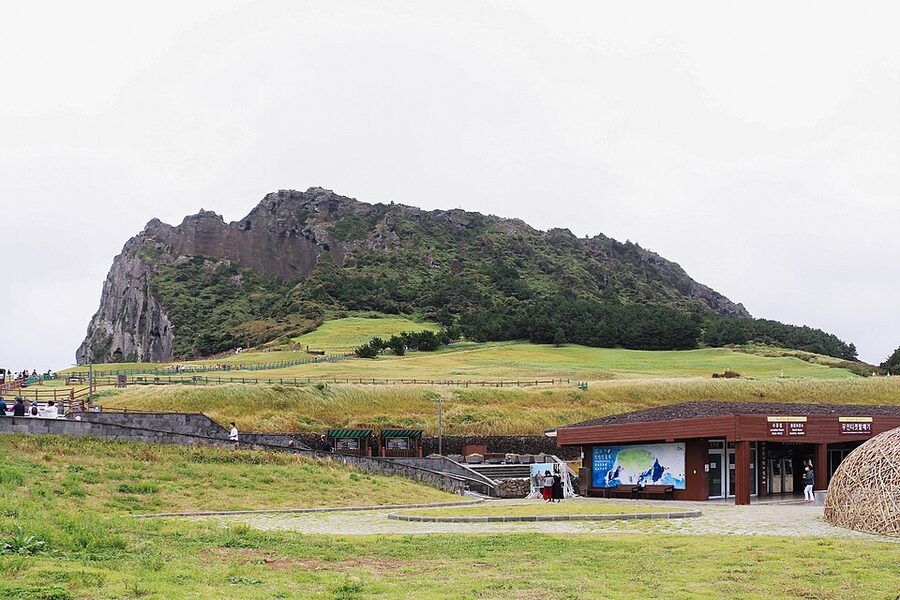
UNESCO declared Jeju a World Natural Heritage site in 2007 — specifically the Hallasan summit, the Geomunoreum Lava Tube system, and Seongsan Ilchulbong. All three end up on most private tour itineraries without you needing to ask for them by name.
What Could Go Wrong
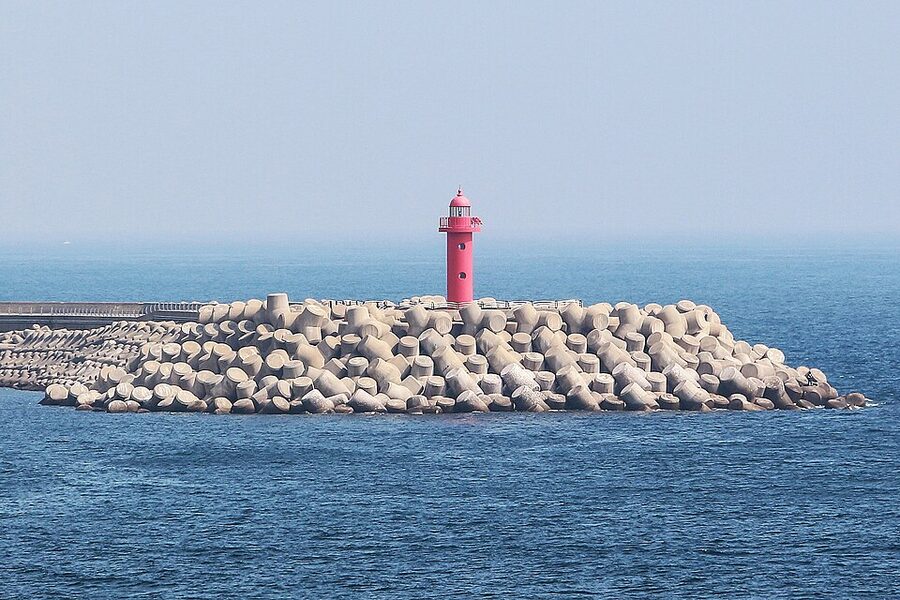
Weather is the main thing. Jeju sits between the East China Sea and the Korean mainland — typhoon season runs June through October, and even outside typhoons the island gets sudden storms that can shut down cable cars and Udo ferries for half a day. Good private operators will message you the day before if the forecast’s dire and suggest flipping routes. Book operators with solid cancellation policies.
The other thing: driver-English mismatch. “English-speaking” is a spectrum in Jeju, and a 4.5-star driver whose English is basic can still leave you nodding through narration you don’t fully follow. If your route includes heavy history (Stone Museum, Jeju 4.3 Peace Park) pay for the guide-plus-driver combo, not the cheaper taxi option.
Before You Book — The Three Questions to Ask
- “What car will we be in and how many seats?” — a taxi cap is 4 passengers max. Car charter vans go to 6 or 8. If you’re a group of 5, don’t book a taxi-format tour.
- “Is the quoted price per group or per person?” — almost all Jeju private tours are per group, but a few operators now list per-person for SEO reasons. Confirm before paying.
- “Is there a minimum time at each sight?” — the best operators say no and mean it. If the answer is “30 minutes each”, it’s closer to a group bus tour in a smaller car.
Rounding Out the Korea Trip
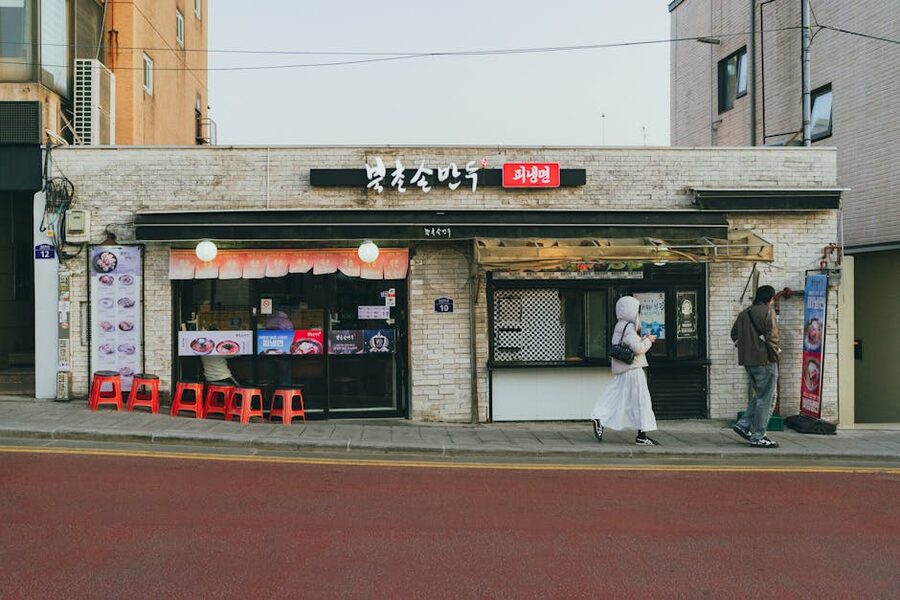
Most Jeju visitors come in from Seoul, do two or three nights on the island, and fly back. If you’ve got a day to spare in Seoul first, the two pieces I’d pair with a Jeju private tour are a hanbok rental in Gyeongbokgung Palace (the traditional Korean dress experience that looks great in photos and gets you free palace entry) and a Gangnam walking tour to see modern Seoul’s shopping and K-pop side. Between those and Jeju you’ve got both sides of Korea — tradition and trend — in about five days. If you’ve got a half-day to extend your trip, Suwon’s Hwaseong Fortress is the easiest UNESCO day trip from Seoul and balances nicely with Jeju’s natural heritage.
Jeju itself is the one stop in Korea where I’d push hardest to get a private driver. Public transport is too thin, self-driving is too stressful for first-timers, and the island earns its nickname — “Hawaii of Korea” is a stretch in pure beach terms, but in how much geology, food, and quiet coastal road you can pack into one day, it actually holds up. Book a private tour, give the driver your rough shortlist, and let the island do its thing.
Jeju is almost always the Korea-trip afterthought, which is why pairing it with mainland stops matters: most visitors pair the island with a group day tour of Jeju (cheaper alternative to private), then a day on the mainland for Gyeongbokgung Palace and Bukchon, a DMZ day tour, and the Busan-Gyeongju UNESCO route. That triangle — Jeju + Seoul day trips + Busan/Gyeongju — is the standard 7-to-10 day Korea loop the private-Jeju guides build toward.