
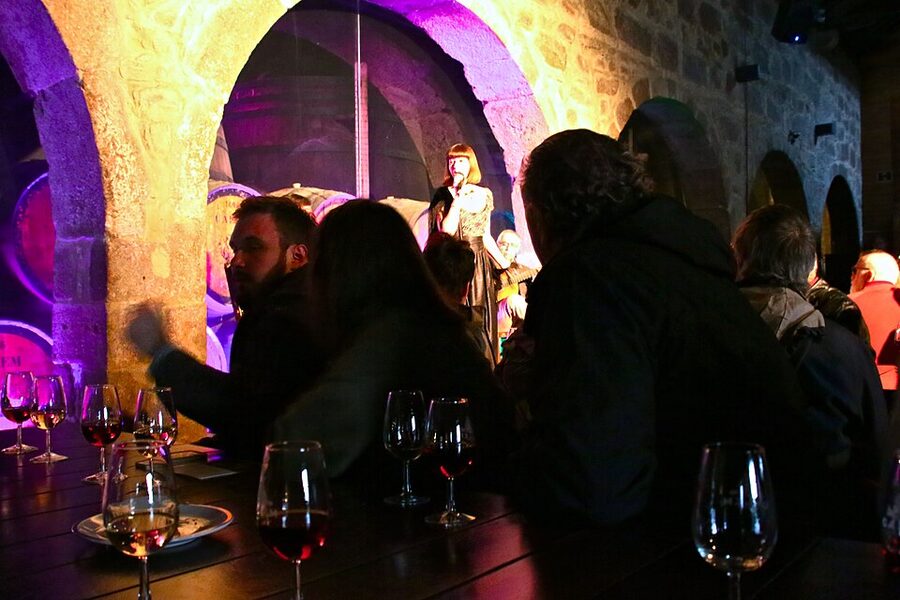
The Portuguese guitar trembles first. A small Cedofeita music shop, twelve folding chairs, granite walls, and the player wakes the strings up with a slow tremor while my glass of tawny port catches the candlelight. Then the singer steps forward, breathes once, and cracks open the first line of a Coimbra-style fado. The room goes still in the way only Porto fado rooms go still, and I forget I’m a tourist for about forty seconds.
Porto fado is rarer than the Lisbon version. Fewer rooms, smaller audiences, and a slightly different feel. This is how I’d actually go about booking one.
In a hurry? My three picks
Best overall: Live Fado Show with Glass of Port Wine, about $23, one hour, the most-booked Porto fado experience by a wide margin.
Most intimate: Fado & Port Wine in a Traditional Portuguese Music Shop, about $11, runs out of Casa da Guitarra in Cedofeita, surrounded by handmade instruments.
Best if you’re new to fado: What is Fado? Commented Live Concert, about $18, a fado primer between songs so you actually understand what you’re hearing.
- In a hurry? My three picks
- Porto fado vs Lisbon fado, in plain terms
- The four formats you’ll see in Porto
- The three Porto fado shows I’d actually book
- 1. Live Fado Show With Glass of Port Wine:
- 2. Fado & Port Wine in a Traditional Portuguese Music Shop:
- 3. What is Fado? Commented Live Concert with Port Wine:
- How to actually book
- What an evening actually looks like
- Etiquette, dress code, photos
- Where the venues actually are
- What is fado, anyway? A two-paragraph crash course
- Porto fado vs flamenco, briefly
- What to skip and what to watch out for
- Best time of year, best time of day
- Cost breakdown, no surprises
- If you only have one night in Porto
- Practical things people get wrong
- What to pair fado with
- Quick FAQs people actually ask
- More Porto and Portugal evenings worth your time
Porto fado vs Lisbon fado, in plain terms
If you’ve already read my Lisbon fado guide, the short version is this: Lisbon is the home base. It’s where the genre was born, and the UNESCO listing names Lisbon, not Porto. Alfama and Mouraria have dozens of dedicated fado houses with full dinners and three-set evenings. Porto has nine concert venues and five fado dinner houses. That’s it.
So why bother with fado in Porto at all? Two reasons. The rooms are smaller, and the price is roughly half. A one-hour Porto fado concert with a glass of port runs about $11 to $23. A Lisbon fado dinner is usually $80 and up. If you’re spending a couple of nights in Porto and you’ve already done your Douro cruise, an early-evening fado set is the thing I’d put before dinner.
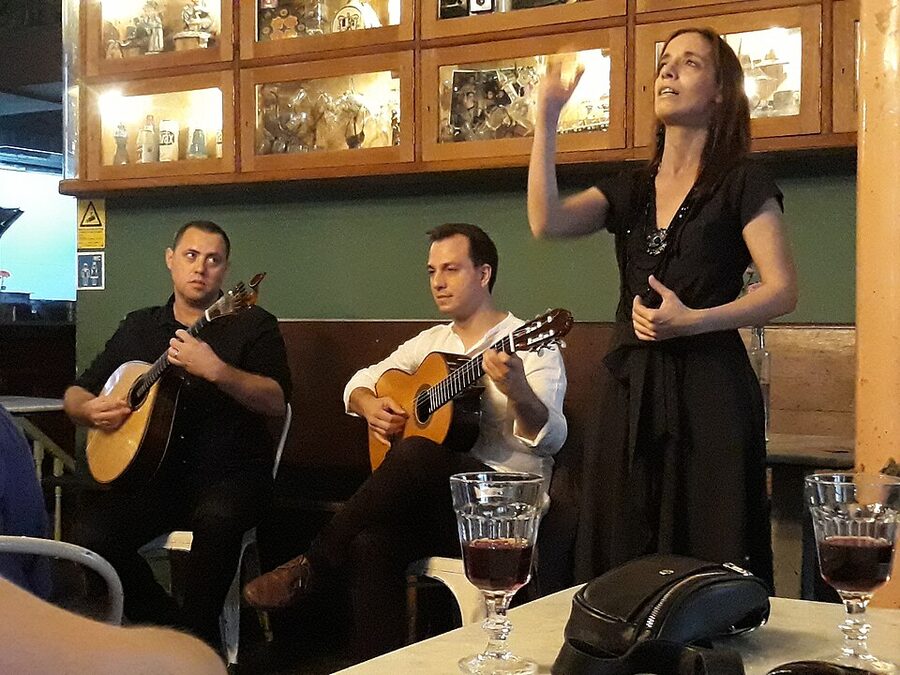
One more difference worth knowing: a fair amount of Porto fado leans toward Coimbra fado, the male university tradition with capes and serenades, rather than the female-led Lisbon style most tourists picture. Some venues mix both. Fado Maior do Porto, for example, programmes one set of each in the same evening. If you only know Amália Rodrigues, the Coimbra material will sound new.
The four formats you’ll see in Porto
Before you book anything, it helps to know what you’re choosing between. Porto packages fado four ways, and the experience is genuinely different between them.
Concert only. One hour, three or four songs, two or three Portuguese guitar instrumentals between vocals, a glass of port. Tickets land in the $11-$23 range. This is what I book most often. The music is the point, the room is small, and you’re out by 8pm with the rest of the night free for dinner. Most of the venues in the working list of nine concert houses sit within a five-minute walk of each other.
Fado with dinner. A “Casa de Fado”, which is a restaurant entirely built around fado. Dinner runs roughly three hours, with three or four short sets of fado scattered between courses. Expect $45 and up per person for food plus music. Casa da Mariquinhas in Cedofeita, founded in 1968, is the oldest of these and the one I’d pick if I wanted a long evening.
Fado plus another experience. The package most tourists buy without realising it. Wine cellar tour first, fado set at the end. Cálem and Fonseca both run versions in their cellars in Vila Nova de Gaia. The fado element here is shorter and the room is bigger. If a quality fado experience is your priority, the local musicians I’ve spoken to are blunt: go to a dedicated concert instead. If you want a one-stop evening that ticks the cellar box and the music box, this is the cleanest way to do it. I cover the cellar version separately in my Cálem Cellar guide.
Fado vadio. Amateur night. A back room of a tavern, two or three guitarists at a table, anyone can stand up and sing. This is the soul of the genre and it’s almost impossible to book in advance. Taberna Alecrim, Casa Balsas, and A Viela are the three places to try. Walk in around 9pm, order a glass of vinho verde, sit quietly, see what happens. No tickets, no schedule.
The three Porto fado shows I’d actually book
Three picks, ordered by what I’d send a friend to depending on what they want. All three include a glass of port and run about an hour, but the rooms and the framing are different enough that the choice matters.
1. Live Fado Show With Glass of Port Wine: $23
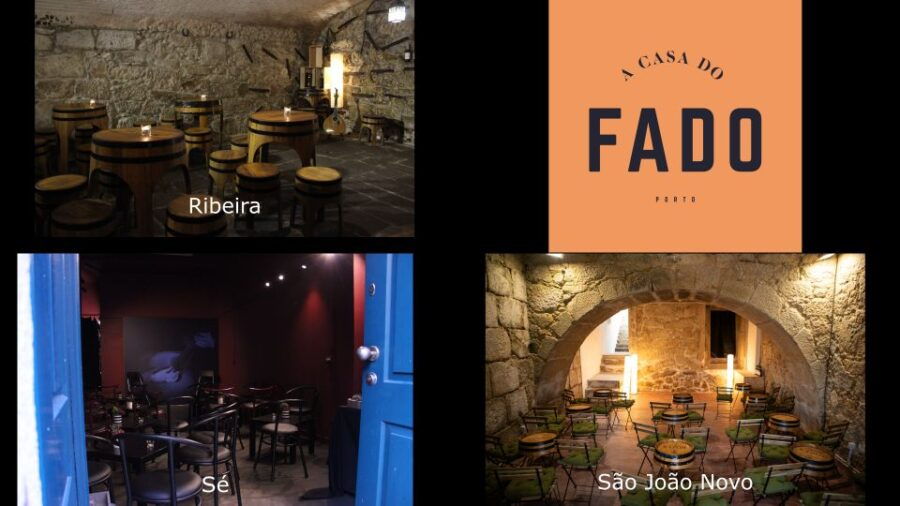
This is the most-booked Porto fado experience by a long way, and it earns the slot. The format is tight, the artists rotate so you don’t get the same fadista every night, and the port at the start does its job of relaxing the room. I read our full review before my first visit and the thing that surprised me most was how short an hour can feel when the room is right. Pick this one if you want the safest bet.
2. Fado & Port Wine in a Traditional Portuguese Music Shop: $11
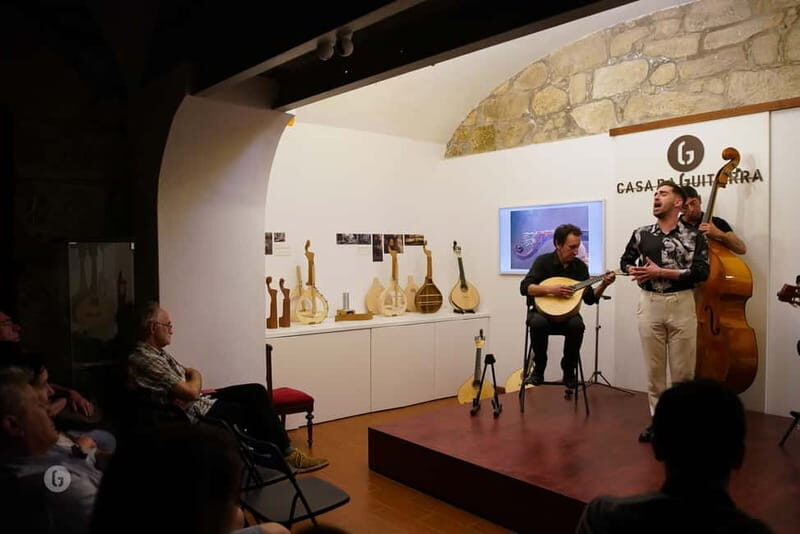
The cheapest fado ticket in Porto and, somehow, also the most intimate. Casa da Guitarra started as a string-instrument shop near the Luís I Bridge and added evening fado as a side project. Twelve to fifteen seats, the player almost within arm’s reach, and a brief intermission where you can pick up the very Portuguese guitar you just heard played. Read our deeper take on this one if you care about how the actual instruments work. Pick this if you want close.
3. What is Fado? Commented Live Concert with Port Wine: $18
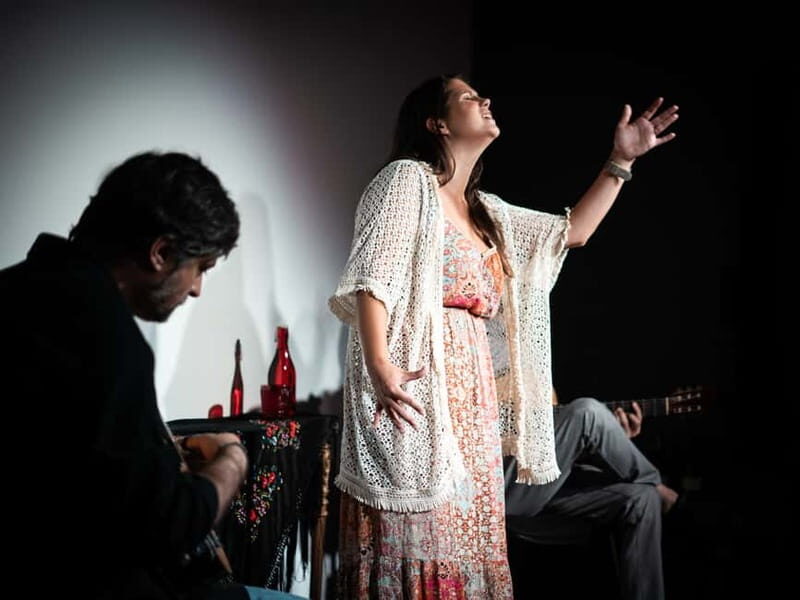
The fado primer for people who want to leave knowing what just happened. Each song gets a short introduction in English, the structure of the genre is explained, and the documentary inserts between numbers cover origins, instruments, and a couple of legendary fadistas. Some people find the videos break the spell, others love them. Our review goes deeper on the format. Pick this one if it’s your first fado night and you want context.
How to actually book
Three ways, and the order matters.
Book online ahead of arrival. The smaller venues sell about a dozen seats per show. Casa da Guitarra has fifteen. Mal Cozinhado seats around twenty. If you turn up unbooked, you’re competing for a single no-show. GetYourGuide listings cover most of the concert venues and they show real-time availability. I usually book two days ahead minimum, three to five days during summer or any Champions League/Festas de São João week.
Book direct with the venue. Some Porto venues run their own websites. Casa da Mariquinhas takes table reservations by phone. A Casa do Fado Virtudes books through a small booking widget on its own site. Direct booking sometimes lands you a slightly better seat, but you give up flexible cancellation. For most travellers, I’d stick with the platforms.
Walk-in. Possible at the dinner houses, almost never possible at concerts. If the show starts at 6pm and you arrive at 5.45pm with no booking, the door staff will tell you the truth. Sometimes there’s a seat. Most evenings there isn’t.
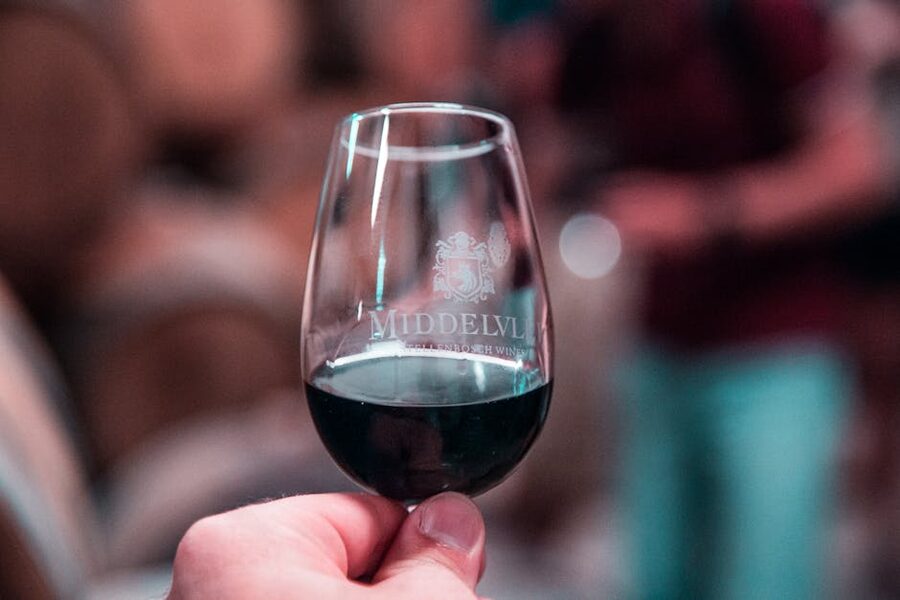
What an evening actually looks like
I’ll walk you through a typical concert-only night so you know what to expect.
Doors at 5.45pm or 6.45pm depending on the venue. Most run a 6pm or 7pm start. You hand over your booking on a phone screen, get pointed at a chair, and pick up your glass of port at a small bar by the door.
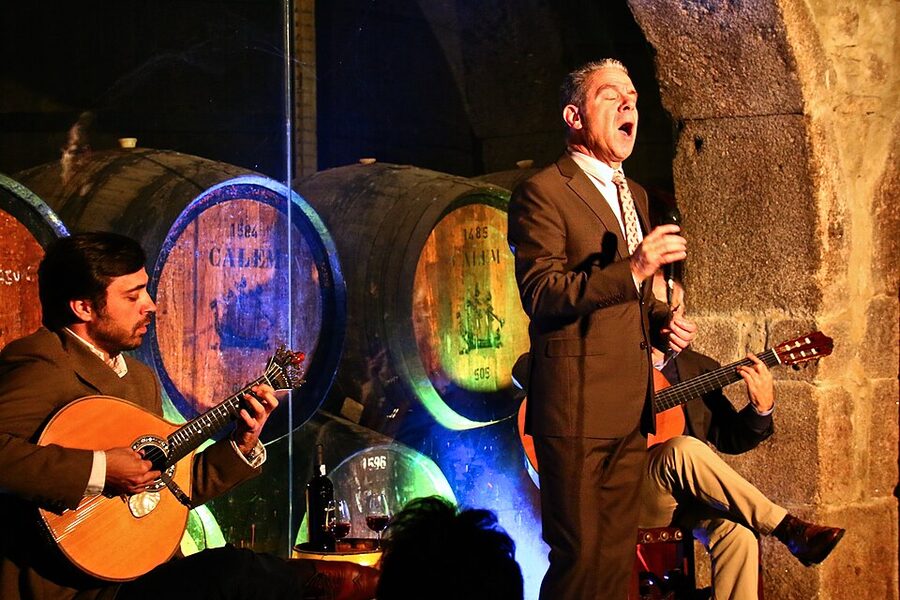
The musicians come in around showtime. Three of them, almost always: a fadista (singer), a Portuguese guitarist, and a classical guitarist. Sometimes a bass guitar called a viola baixo joins. There’s no big introduction. They sit, they tune for a second, and the room quiets without anyone telling it to.
The set runs three or four songs interspersed with two instrumentals on the Portuguese guitar. The instrumentals are not throwaway pieces. They’re often the technical highlights of the night, with the player demonstrating the tremor and the chord runs that don’t fit under a vocal. Don’t talk through them.
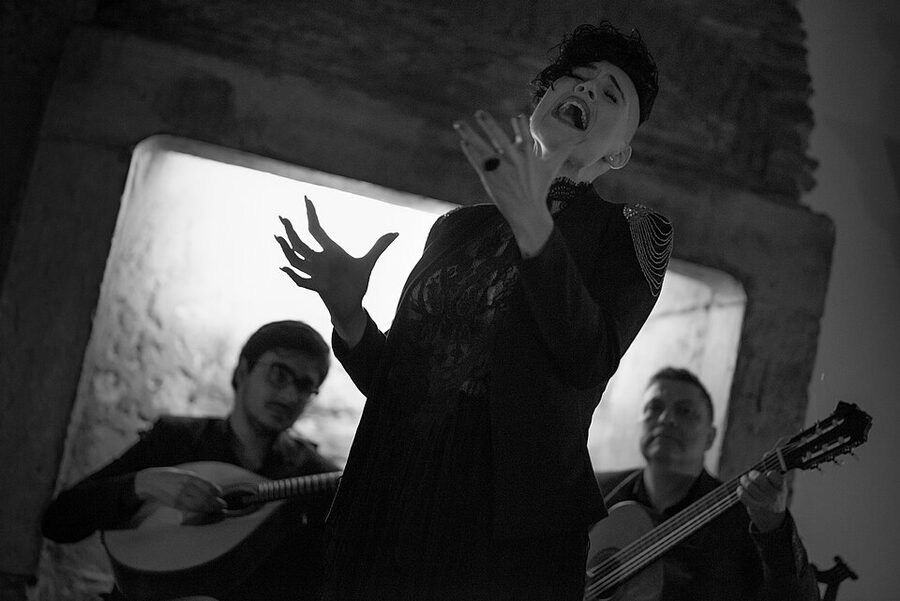
Applause comes after each piece, never during. Stay quiet through a song even if you know the line. There’s no clapping along, no whistling, no whooping. Save it for the end of the song. Then clap properly.
By 7pm or 8pm you’re back on the street with most of the evening still ahead of you. This is why Porto fado works as a pre-dinner thing. Lisbon’s three-hour dinner shows eat the entire night. A Porto concert leaves you free to walk down to Ribeira for a bowl of caldo verde at 8.30pm.
Etiquette, dress code, photos
The big rule is silence during songs. Everything else is more relaxed than people expect.
Dress: smart casual is plenty. Jeans and a clean shirt work everywhere except a couple of the higher-end dinner houses, where the regulars dress for it. No need for a jacket. The room won’t be hot, but it won’t be cold either, and granite walls do a strange thing where you feel a chill on the way in and forget about it after the first song.
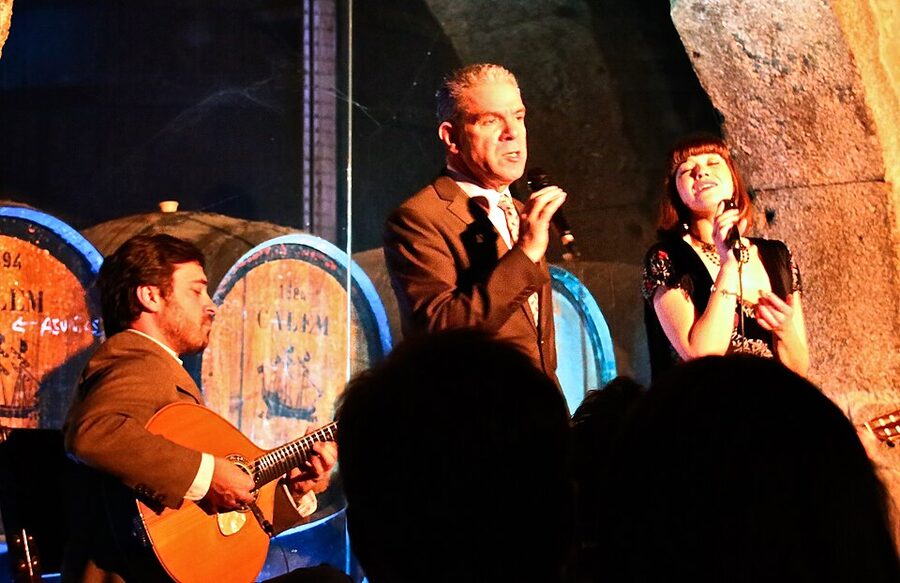
Photos: a quick shot before the show starts is fine. During the songs, put the phone away. The signal you’re looking for is when the lights drop and the player tunes. After that point, no photos. Most venues will say so explicitly. If you want a souvenir image, shoot the empty room beforehand or the applause moment at the end.
Children: most concert venues take kids over 12 without issue. Casa do Fado São João Novo lets under-12s in for free. Dinner houses are usually fine for kids who can sit still through a meal, less fine for toddlers.
Drinks: you get one glass of port included with the ticket. Some venues will sell you a second; some won’t. If you want food, eat before. The “with dinner” houses are a separate category and you book them as a restaurant.
Where the venues actually are
Porto fado is geographically tight. Almost everything I’ve mentioned sits inside a triangle of about 1.5km between three points: Clérigos Tower, São Bento Station, and Rua de Cedofeita. You can walk it in fifteen minutes flat.
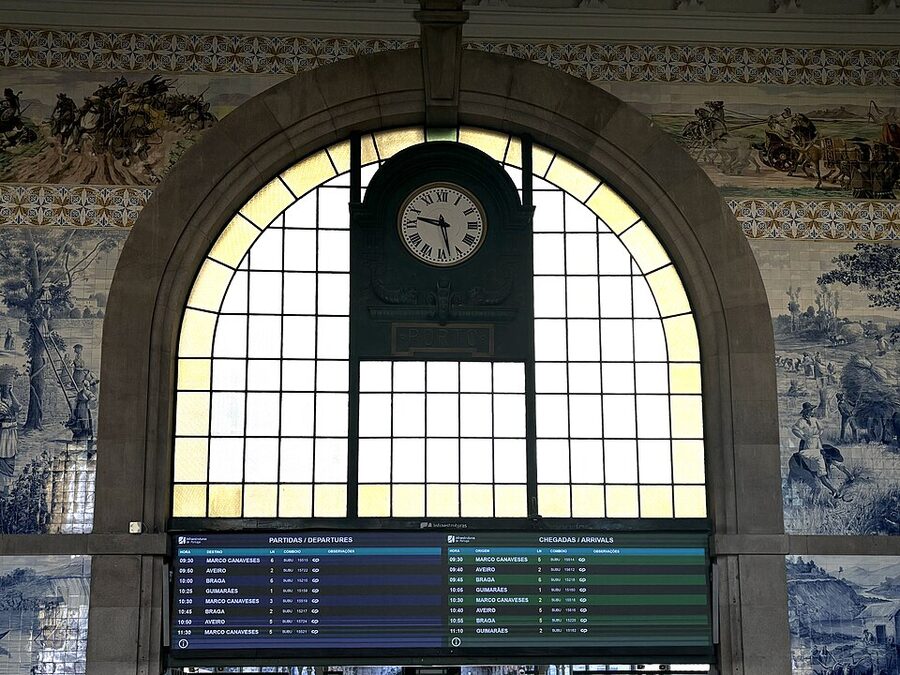
Cedofeita corner. Casa da Mariquinhas (dinner), Casa da Guitarra (concert at the music shop), Fado Maior do Porto in nearby Miragaia. Best neighbourhood for the post-show walk because Cedofeita itself stays open late, with bars and the occasional vinyl shop.
Downtown / São Bento. Fado na Baixa, Presidencial Fado, Destino Fado. These are your central, easy-arrival options if you’re staying near the river or near Avenida dos Aliados. Closest to most hotels.
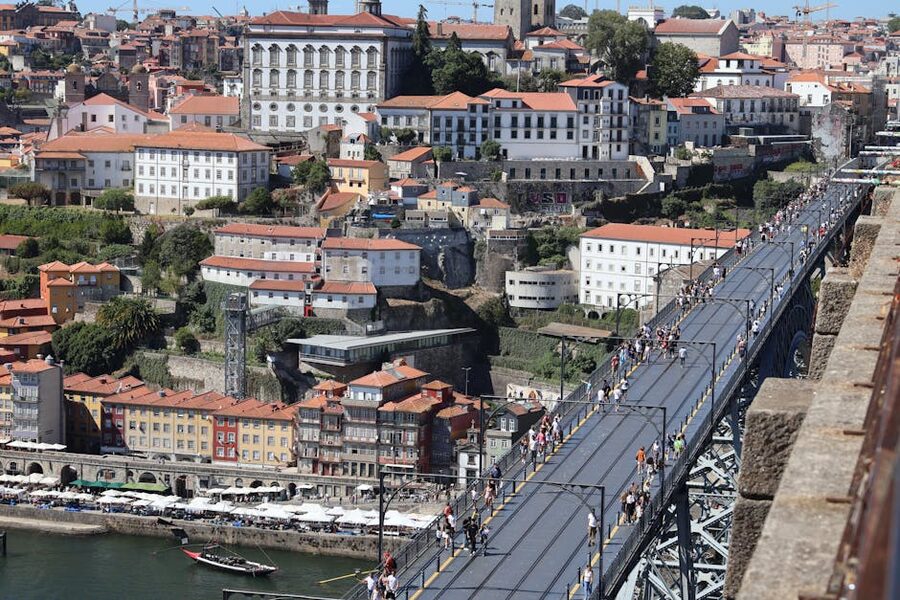
Vila Nova de Gaia (south bank). The cellar fado experiences live here: Cálem, Fonseca, Rozés. Ten minutes by the metro D line, or a walk across the lower deck of the Luís I Bridge. The format here is wine cellar tour first, then a thirty-minute fado set at the end. Different beast from a concert.
What is fado, anyway? A two-paragraph crash course
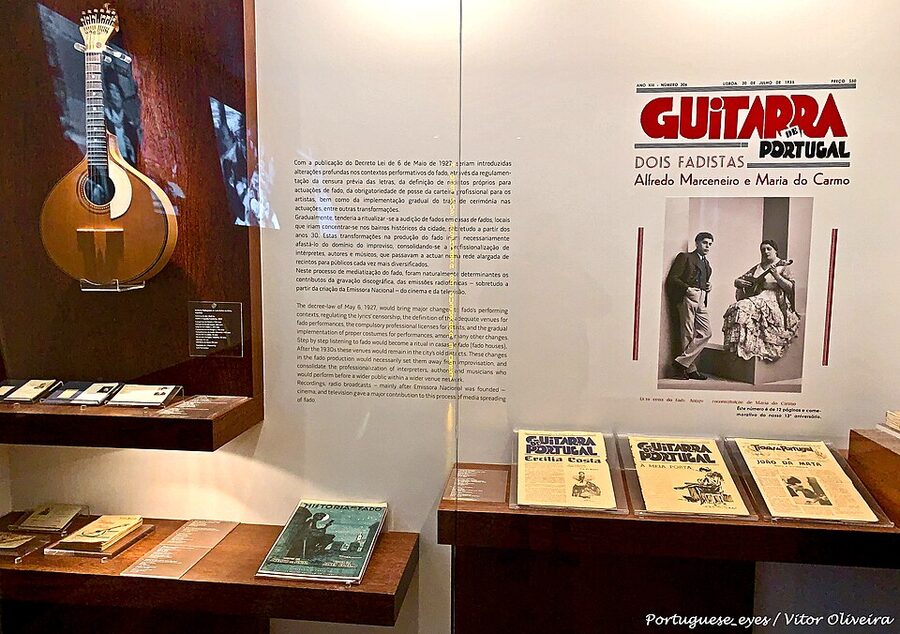
Fado comes from the Latin fatum, meaning fate. The genre was born in Lisbon in the early 1800s, in the working-class districts of Alfama and Mouraria, mixing Portuguese folk traditions with Brazilian musical forms (lundu, modinha) that had come back across the Atlantic with returning noble families after the Napoleonic invasions. The first named fadista we know about, a woman called Maria Severa, was a prostitute. That tells you most of what you need to know about where fado started.
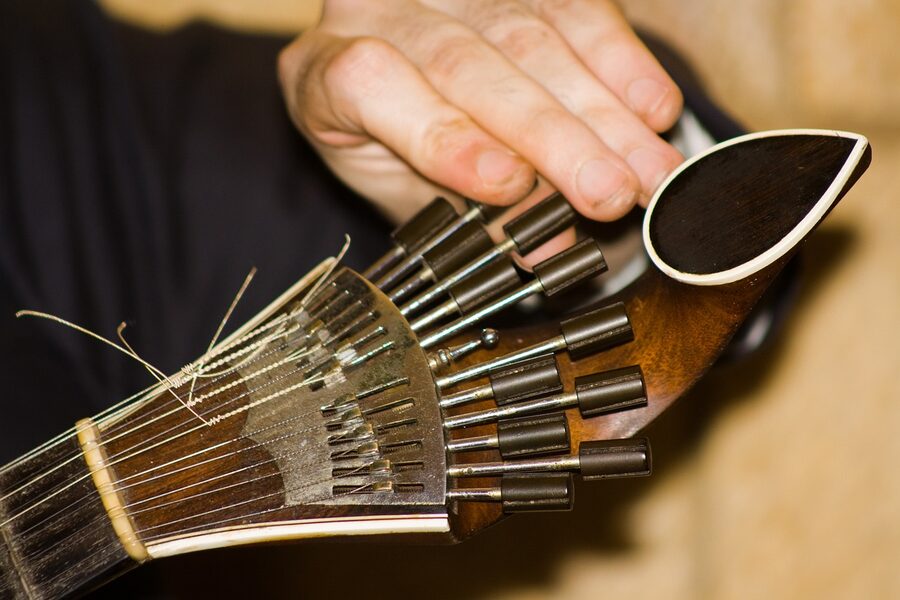
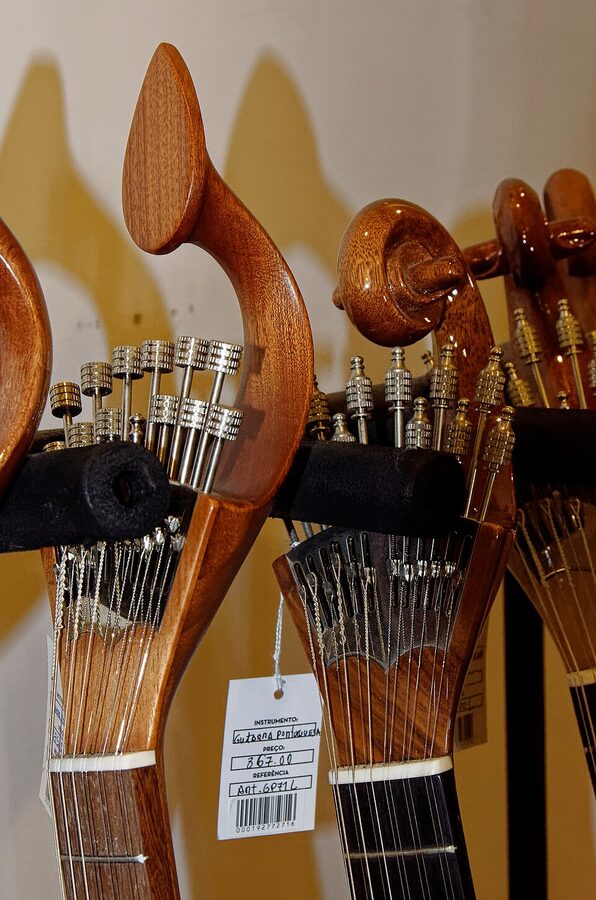
What makes it sound the way it does: the Portuguese guitar (the pear-shaped one with twelve strings in pairs), the tremor technique under the vocal, and the fadista’s posture. It’s binary rhythm, mostly 2/4 or 4/4, mostly minor key, and the sung subject matter is usually about loss, distance, longing, or the untranslatable Portuguese word saudade. There are joyful fados too, and they get short shrift in the international image of the genre. A good night will mix moods.
Porto fado vs flamenco, briefly
I get this question a lot from travellers who’ve already done a flamenco show in Seville and want to know how Porto fado compares. They’re cousins, not siblings. Both are Iberian, both are intense, both rely on a guitar-and-voice core.
The differences come fast. Flamenco is loud and percussive, with palmas (handclaps), cajón, and footwork driving the rhythm. Fado is quiet and melodic. The fadista barely moves. There’s no dance. The room is silent in a way a flamenco tablao never is. If you’ve already done flamenco in a Sacromonte cave or a Madrid tablao, fado will feel almost meditative by comparison. Closer to the contemplative end of an Andalusian horse show than to the kinetic energy of Barcelona’s flamenco rooms or Málaga’s tablaos. Both are worth doing. They’re answering different questions.
What to skip and what to watch out for
The fado-for-tourists problem is real. Some of the bigger venues programme repertoire that isn’t actually fado. Songs like Casa Portuguesa or Cheira a Lisboa are folk pop with fado-ish guitar accompaniment, written in the 1950s and aimed squarely at visitors. They’re catchy. They’re not what fado is. Local musicians get visibly tired of being asked for them.

If a programme leans heavily on Casa Portuguesa, it’s a flag, not a deal-breaker. The cellar packages are most prone to this. The dedicated concert venues are far more likely to programme real fados. The commented concert format actually helps here, because the host names what each song is and you can hear yourself which ones land.
The other thing to watch for: amplification. A small unamplified room is the whole point. If you can hear the wood of the guitar and the singer’s breath between phrases, you’re in the right place. If there’s a PA system, the magic is leaking out. The bigger the room, the more amplification, the less of the actual texture you get.
Best time of year, best time of day
Porto fado runs year-round. There’s no off-season because almost all of it is indoors. That said, May, late September, and October are the sweet spots: fewer cruise crowds, easier walk-up bookings at the smaller venues, and the city itself is at its best. June through August fills up because of São João and the summer cruise traffic combined.
For time of day: the early-evening 6pm and 7pm concerts are my picks. They’re better attended by locals (who are coming straight from work) than the later 9pm slots, which skew tourist-heavy. The earlier slot also leaves your evening intact for dinner. A Douro Valley day trip followed by an early-evening fado show is one of the better single-day combinations Porto offers.
Cost breakdown, no surprises
Concert tickets land in three tiers. The cheapest is Casa da Guitarra at $11. The mid-tier sits around $16-$18 and includes Fado na Baixa, Ideal Clube de Fado, and Destino Fado. The flagship Live Fado Show with Glass of Port Wine sits at the top of the concert range at $23. All three include a glass of port. None include food.
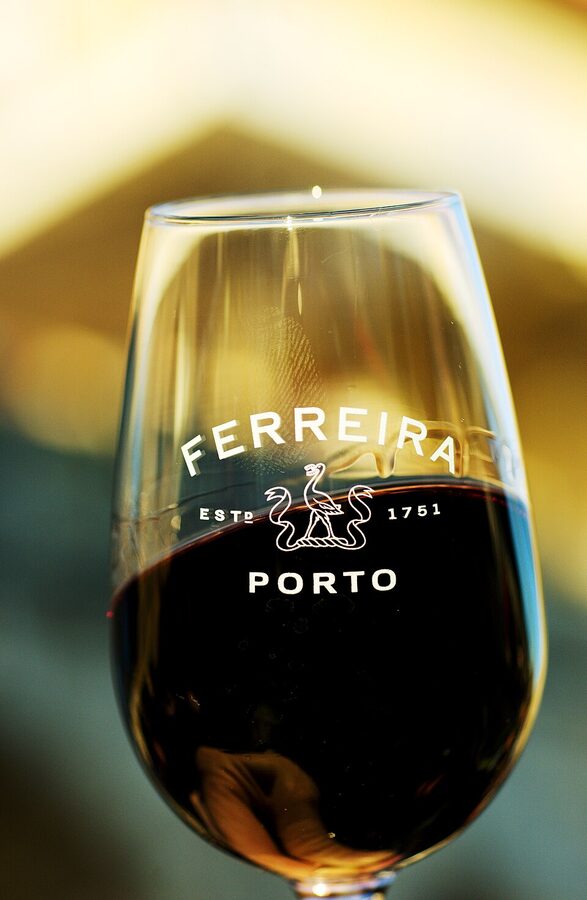
Dinner shows: $45-$70 per person depending on the menu. Casa da Mariquinhas offers a fixed menu around $55 with the music included. The cellar packages run $25-$45 depending on which cellar and which port tier you choose. Always check what’s included: a “premium tasting” version usually swaps the basic ruby for a 10-Year tawny.
Hidden costs to watch for: some online listings advertise a “champagne package” that adds another $15-$20 for sparkling wine. It’s not necessary. Stick with the included port. Booking platform fees are typically baked in, so what you see is what you pay. Tipping is not customary at fado venues, though a few euros into the player’s open guitar case at the end of the night is welcomed.
If you only have one night in Porto
Don’t try to combine fado with a Douro cruise on the same evening. The cruise eats your daylight, you’re tired by 7pm, and the music goes past you. Pick one.
If fado is your single night out, my run is this: take a tuk-tuk tour at 3pm to cover the city basics, drop the bags at the hotel, head to Casa da Guitarra for the 6pm show, walk down to Ribeira, eat at a tasca, and call it a night. Total cost for the cultural half: about $30 for the fado, $40 for the tuk-tuk, $25 for dinner. It’s hard to do Porto cheaper than that and still see all the things you came for.
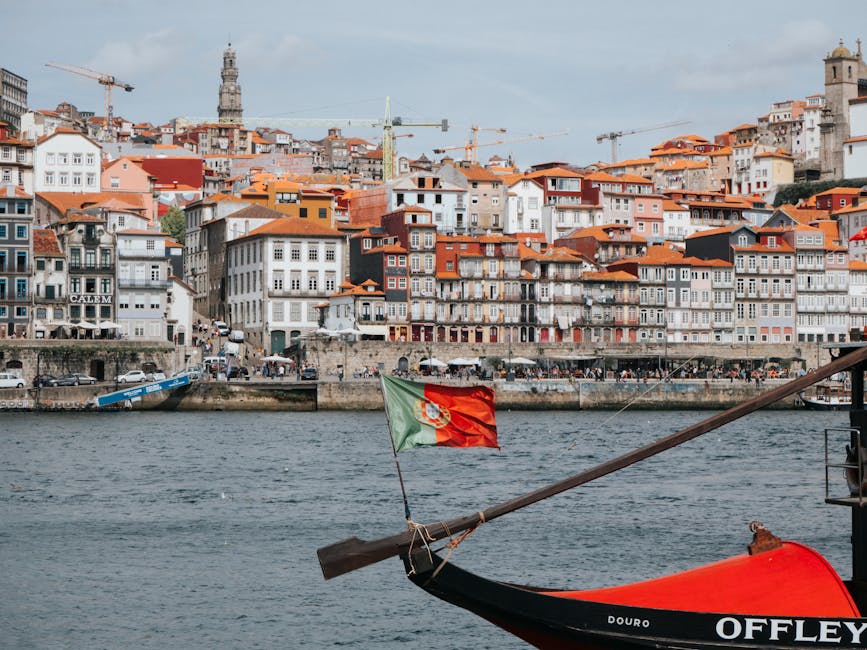
If you can spare a second night, swap the cellar tour into one of those evenings. The combined Cálem cellar fado package works as a “see Vila Nova de Gaia” plus “hear some music” combination. Just don’t book it expecting the same intimate format as a Cedofeita concert.
Practical things people get wrong
Two myths I keep running into.
The first is that Porto fado is “more authentic” than Lisbon fado because it’s smaller. That’s backwards. Lisbon is the home, the conservatory, and the centre of the genre. Porto fado is genuine, but it’s a smaller satellite scene. If you have to choose one city for fado on a Portugal trip, pick Lisbon. If you’re already in Porto for other reasons, the Porto scene is well worth a night.
The second is that you need to dress up. You don’t. The dinner houses are a touch dressier than the concerts, but no one is wearing a tie. Skip the heels because the cobbled streets between venues will eat them.
One more: the “free for under 12” line at A Casa do Fado São João Novo is real, but bring an actual ID for the kid. The door staff have been asked enough times that they now check.
What to pair fado with
Porto fado is short. An hour, sometimes ninety minutes. So most travellers wrap it inside a longer day or evening. The combinations that work, in roughly the order I’d rank them:
Late afternoon walk + 6pm fado + 8pm dinner is the cleanest. A guided Porto city walking tour at 3pm leaves you at the right spot for the 6pm show, and you’ve earned the glass of port.
If you’ve got a Porto Card, the discounts at Livraria Lello and Torre dos Clérigos stack into the same afternoon as a fado evening pretty well. See my Porto Card guide for whether the card actually pays for itself on your specific trip.
For a slower-paced night, a six bridges Douro cruise at midday, late lunch, then a 7pm fado show. The cruise covers the river side of Porto without exhausting you. Some travellers also pair fado with a hop-on hop-off bus pass, the same way I described in my Lisbon hop-on guide, but in Porto the city is genuinely walkable so the bus is a budget choice rather than a necessity.
Quick FAQs people actually ask
Is Porto fado the same as Coimbra fado? No. Coimbra fado is a separate male-led tradition tied to the University of Coimbra, with its own dress code (black capes) and serenading style. Some Porto venues programme Coimbra material in the same evening as traditional fado. Fado Maior do Porto specifically does this.
Can I take photos? Before and after, yes. During songs, no. Phone on silent.
Is there a language barrier? The lyrics are in Portuguese and translations are not provided. The commented concert is the only format that gets close to a running explanation in English. For the others, sit and let the sound carry you.
Can I drink more than the included glass? Most venues sell drinks at a small bar, yes. But the room is small and walking back and forth during a song is not done. Buy your second glass at intermission if there is one.
Is fado depressing? No. The international image of fado as Portugal’s sad music is a real misconception. Many traditional fados are joyful or playful. The genre’s expressiveness shines in melancholy, but it isn’t limited to it.
More Porto and Portugal evenings worth your time
Once you’ve heard Porto fado, the natural follow-on is the Lisbon original. A Lisbon fado night in Alfama or Mouraria is the deeper version of what you experienced here, with longer sets and a stronger UNESCO-recognised tradition behind it. If you want to keep it local instead, pair the show with a port-cellar fado package at Cálem for a different format, then check whether a Porto Card earns its keep across the rest of your trip. And if your route brings you back south, an Alfama walking tour at golden hour gives the music geography to anchor itself to.