
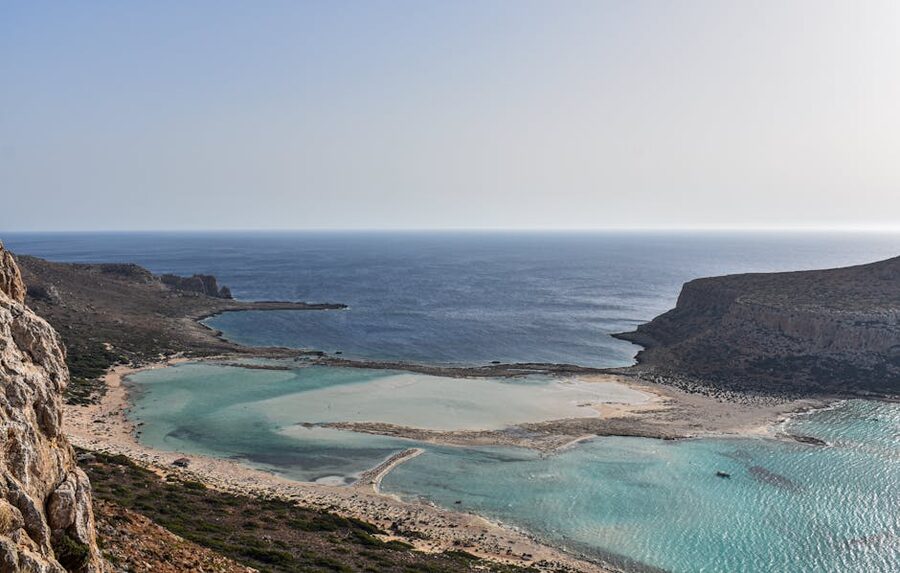
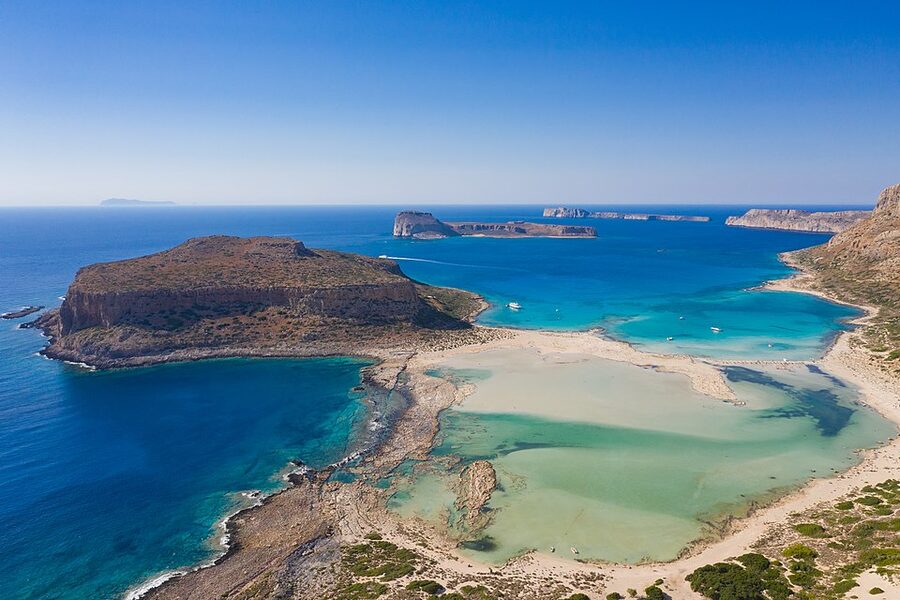
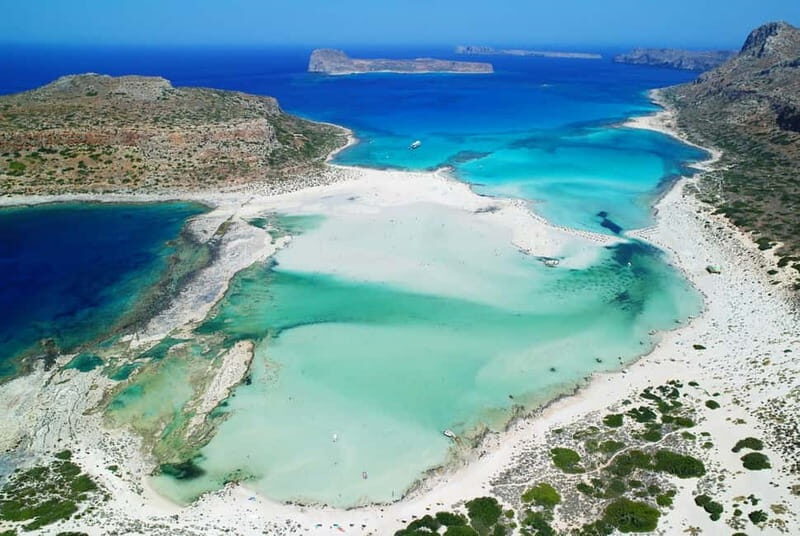
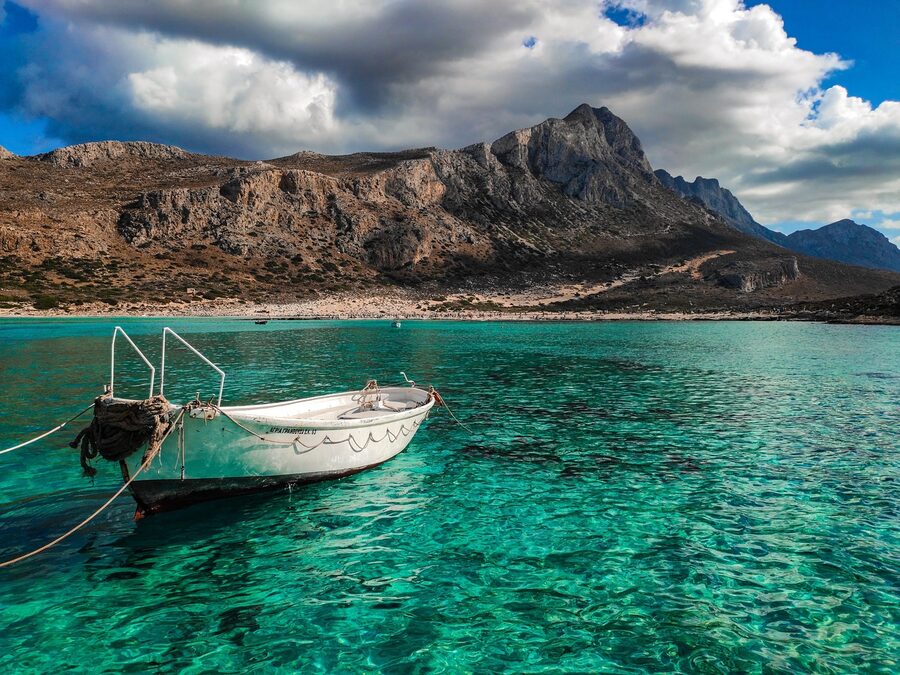
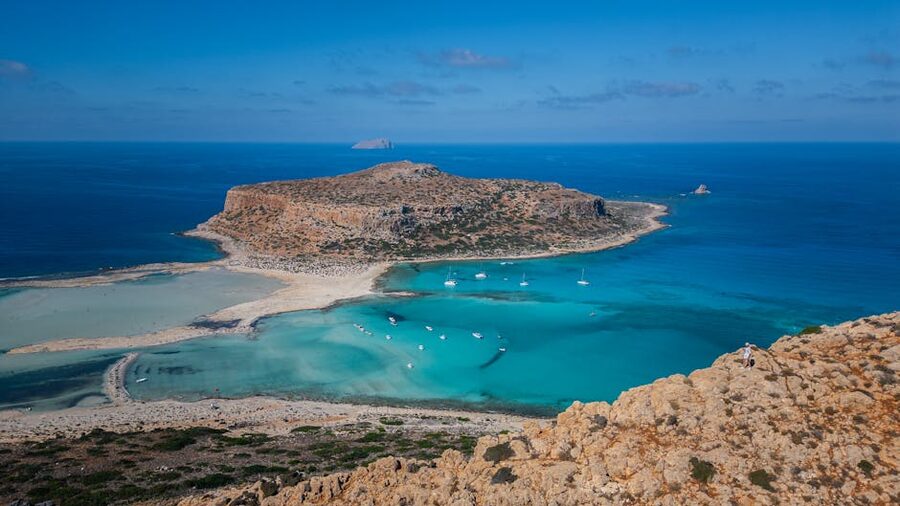
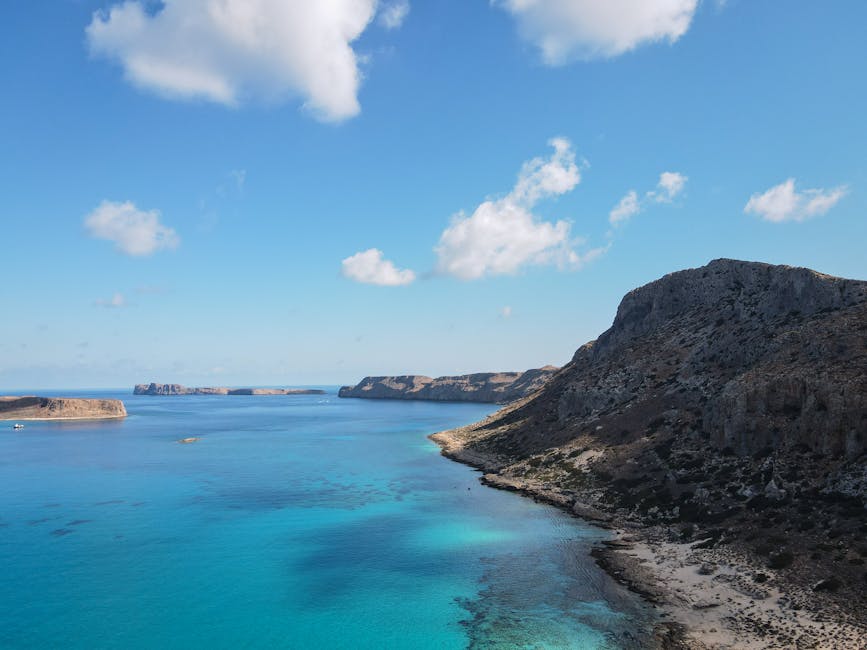
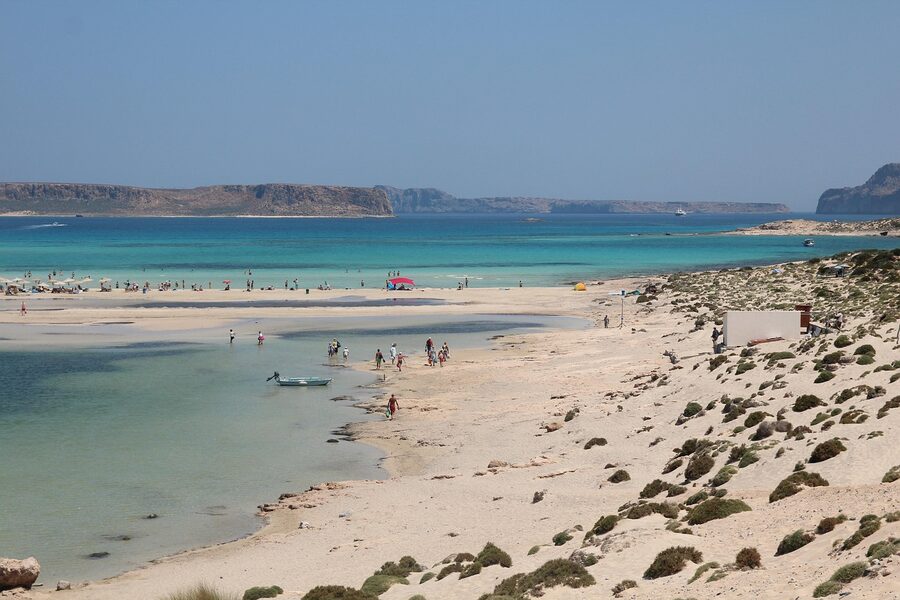
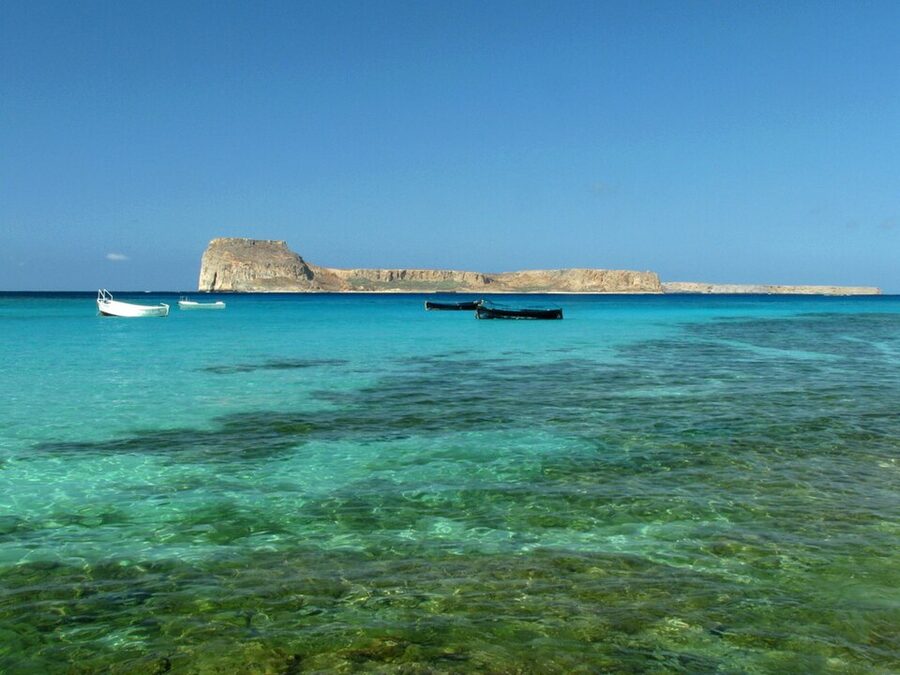
The boat rounds the cape and the colour of the water just stops making sense. One minute you are on the open sea, dark blue, choppy at the edges. The next, the engine drops to a crawl and a long sandbar slides into view between Crete’s northwestern tip and a rocky peninsula called Cape Tigani, the lagoon between them so shallow and so clear that the white pink-tinged sand reads through the surface like glass on a swimming pool floor.
That is Balos. The standard day trip pairs it with Gramvousa, a small island a little further out with a Venetian fortress on top and a rusting tanker called the Dimitrios D beached in the bay below. This is the practical guide to actually booking it, in the order you will need to make decisions.
- In a Hurry? My Top 3 Picks
- What This Day Trip Actually Is
- Ferry vs Speedboat: Pick Your Format
- Getting to Kissamos: This Is the Real Logistics
- Drive yourself
- Combined transfer plus boat
- Public bus (KTEL)
- The Best 3 Tours to Book
- 1. Kissamos Port: Boat Cruise to Balos Lagoon and Gramvousa:
- 2. Chania: Balos and Gramvousa Cruise with Transfer and Boat Ticket
- 3. Limeniskos: Gramvousa and Balos Speedboat Tour with Drinks:
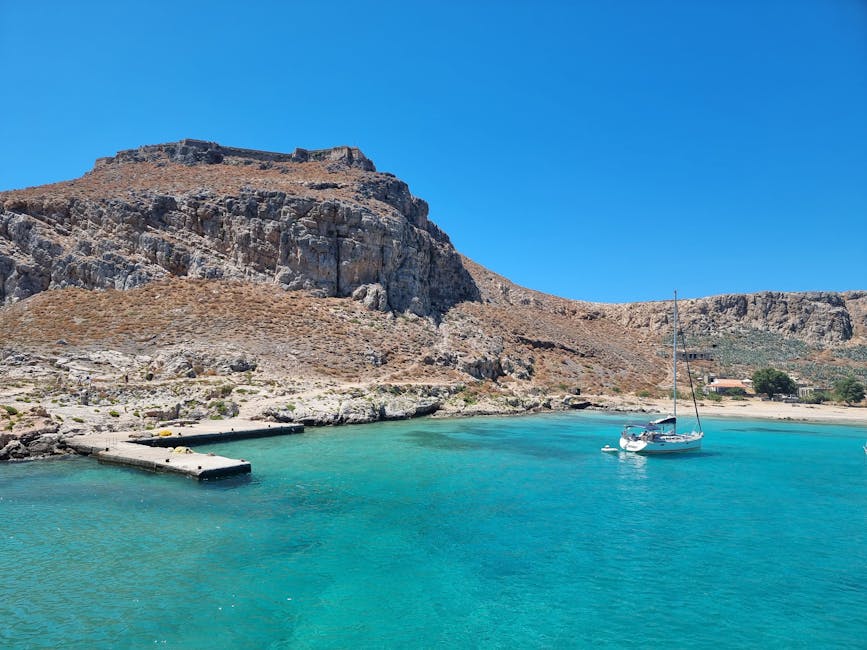
- Gramvousa: The Fortress Climb People Underestimate
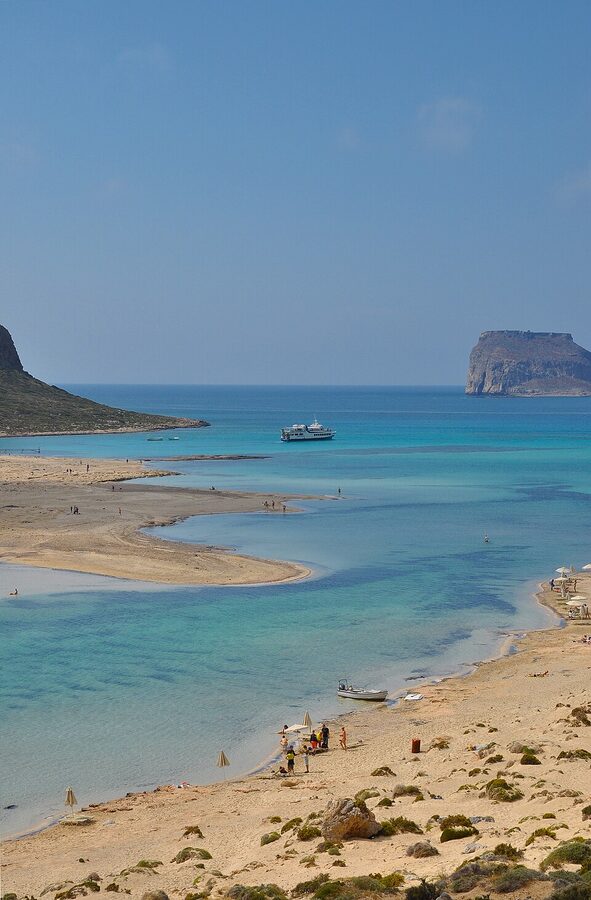
- Balos Lagoon: Why the Sandbar Looks Like That
- What to Bring (And What to Skip)
- When to Go (And When Not To)
- Driving In Instead of Boating
- Combining the Day with Other Crete Trips
- The Stuff Nobody Tells You
- Worth It Or Skip It?
- More to Plan in Greece
In a Hurry? My Top 3 Picks
Kissamos full-day boat cruise to Balos and Gramvousa, around $47. The standard option and the most-booked Balos boat on the market. Departs Kissamos port at 10am, both stops, back by 7pm. Pick this if you are already in or near Chania and just want the day. Check availability and times.
Chania transfer plus boat ticket combo, price varies. Same boat, but with the bus from Chania bundled in. Easier if you are staying in Chania town and do not want to figure out the local KTEL bus or rent a car for the day. See dates and price.
Limeniskos speedboat to Gramvousa and Balos, around $99. A faster, smaller-group alternative to the big boat. Three hours instead of nine, no fortress climb, just the lagoon and a swim stop. Pick this if you have a half-day, hate big ferries, or just want time on the water. Check the listing.
What This Day Trip Actually Is
Almost all the standard Balos day trips run the same shape. The boat leaves Kissamos port between 9 and 10am. First stop is Gramvousa island, about 50 minutes out. You get roughly two hours there. Climb the fortress if you can take the heat, swim by the shipwreck if you cannot. Then the boat reboards and crosses the cape to drop anchor off Balos lagoon for another two hours of swimming and sandbar wading. Back in Kissamos by about 7pm.
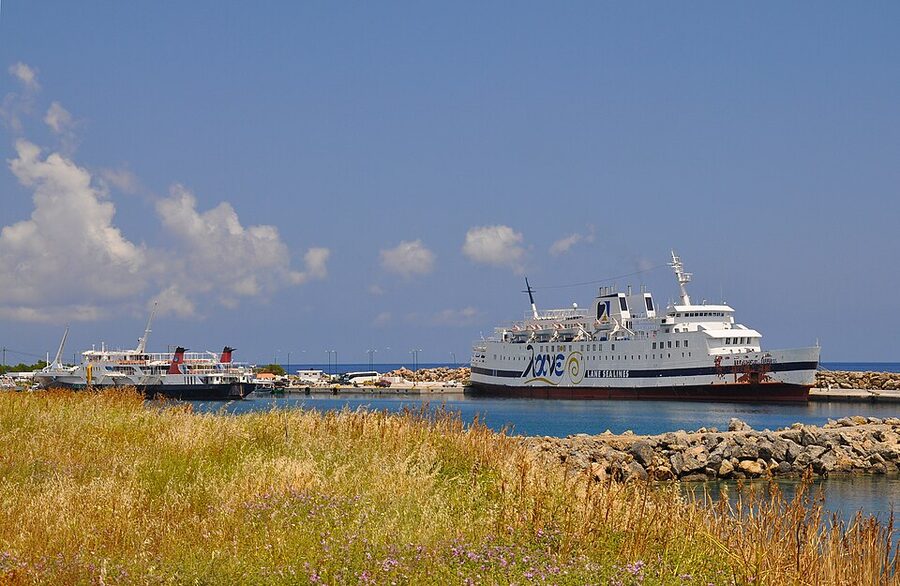
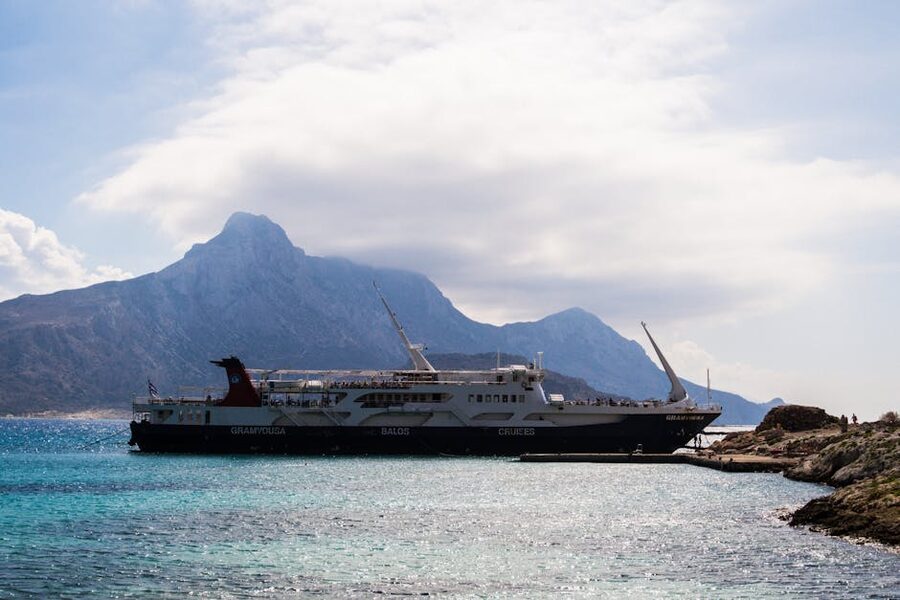
Most operators run two-deck day-ferries that hold 300 to 500 passengers. Sounds like a lot. In practice the boats are big enough that you can almost always find a quiet rail, and the crowds spread thin once everyone is in the water at Balos. The boats are not luxury cruisers. There is a snack bar onboard, an indoor saloon out of the sun, and open sun decks above. Bring your own lunch if you want to save money, since the prices on board run roughly twice what you would pay at a Kissamos taverna. If a slower-paced sailing day is more your thing, there is a smaller luxury catamaran option from the same port that swaps the big-ferry feel for a half-dozen guests and a chef on board.
Pricing on the standard ferry is genuinely cheap by Crete day-trip standards. About $47 per adult for the boat ticket, plus a small extra fee paid on the boat for the protected-area access at Balos. Add maybe $15 to $20 if you pre-book the round-trip transfer from Chania. Compare that to the prices on a Santorini volcanic islands cruise, a Santorini BBQ catamaran, or even an Athens Saronic Islands day cruise, and you will see why this is one of the best-value days out in Greece.
Ferry vs Speedboat: Pick Your Format
This is the first decision. They are not the same trip.
The ferry is the classic version. Big-deck day-boat from Kissamos, about nine hours door to door, both Gramvousa and Balos, hundreds of other passengers, cheap. You get the fortress climb if you want it, two long swim stops, and time to actually sit and read on a sun deck on the way out and back. This is what most people picture when they say “Balos day trip.”
The speedboat option (the Limeniskos boat from the Chania side, or smaller fast-RIBs out of Kissamos) is a different beast. Three hours total. No fortress climb. No shipwreck stop unless the operator includes it. You get the lagoon and a swim and you are back. Much smaller group, usually around 12 people, drinks included, no shoulder-to-shoulder boarding. Pick this if you only have a half day or you really cannot face the ferry crowd.
There is also a third format that is harder to find but worth knowing about: the small-group sailing catamaran out of Kissamos. Eight to twelve people, all-day, anchor in private coves, food cooked onboard, no fortress visit. It is the most expensive of the three formats and the slowest to actually reach the lagoon, but the day on board is the experience, not just the destination. If that is your speed, this is closer to a chartered yacht day than a tour. A version of the same idea on the Santorini side is covered in our BBQ catamaran guide, if you are considering both islands.
Getting to Kissamos: This Is the Real Logistics
Kissamos port is not in Chania town. It is about an hour west by road, in the small town of Kissamos (sometimes also called Kastelli on signs and bus timetables). You have three ways to get there.
Drive yourself
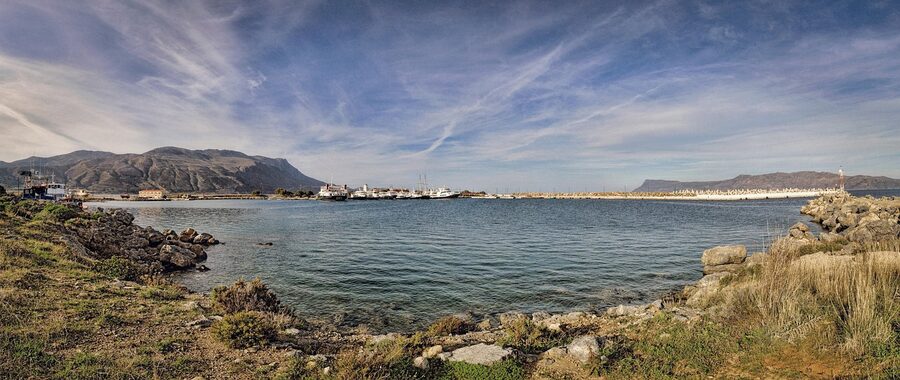
Easiest if you have a rental. The drive from Chania is roughly 50 to 60 minutes on the new E65 highway, which is a proper fast road, not the older coastal route. Park at the port itself. There is a paid lot at the harbour that fills by 9.30am on a busy day. The first sign that you are at the right place is the long row of tour-coaches lining up to drop people off at the boats. Drive past them, the public lot is on your left.
Combined transfer plus boat
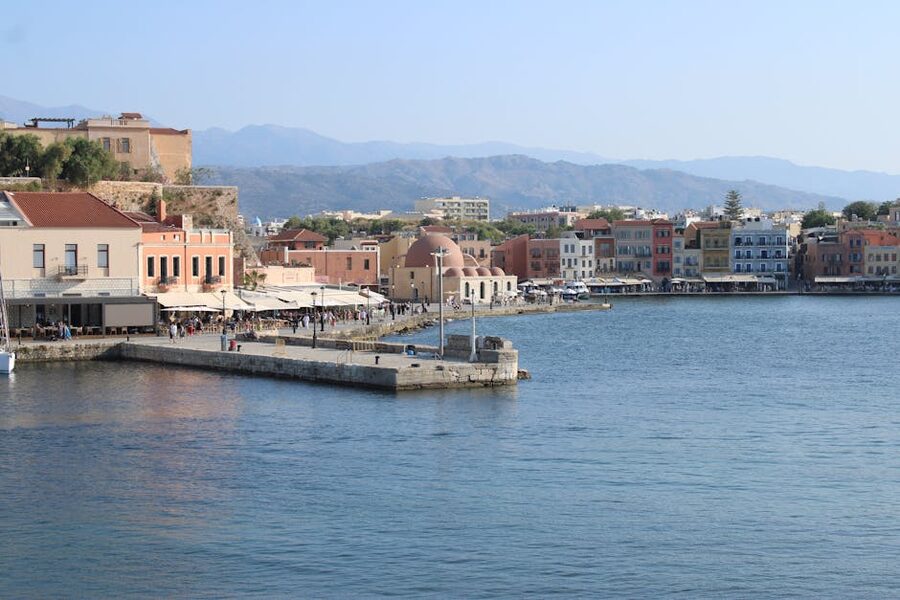
This is the simplest option for most people, especially if you are not driving. You pre-book a Chania pickup that includes the round-trip coach to Kissamos and your boat ticket as one bundle. The bus picks up at hotels in central Chania between 7.45 and 8.30am, drops you at the port in time for the 10am boat, and is waiting in the lot when the boat returns at 7. There are also pickups bundled from points further east, like the Crete-wide Rethymno-and-Heraklion transfer combo if you are based in those towns. The catch on Heraklion pickups: you are looking at a 5.30am hotel pickup. Brutal start.
One small thing the booking pages do not always make clear: the Kalyves and Almyrida side has its own dedicated pickup route (running through the eastern Chania coastal villages). If you are staying in Kalyves, Almyrida, Georgioupolis or one of those eastern beach villages, this is the easier transfer to book than the Chania-town one.
Public bus (KTEL)
The cheapest. KTEL Chania-Rethymno runs hourly buses to Kissamos from the central Chania bus station for about €5 each way. Travel time is closer to 75 minutes than the coach 60 because the public bus stops in villages along the way. The catch is the schedule. The first bus is usually 8am, which puts you at Kissamos around 9.15. You will be running for the boat. Skip this option unless you are watching every euro. If you are also planning Athens days at the start of your trip, the same KTEL-style public-transport approach works well for the city sights, but a pre-booked hop-on hop-off bus is the cleaner option for short visits.
The Best 3 Tours to Book
I have run the numbers across the dozen or so listings on the major booking platforms. Three rise to the top depending on what you actually want from the day. Here they are.
1. Kissamos Port: Boat Cruise to Balos Lagoon and Gramvousa: $47
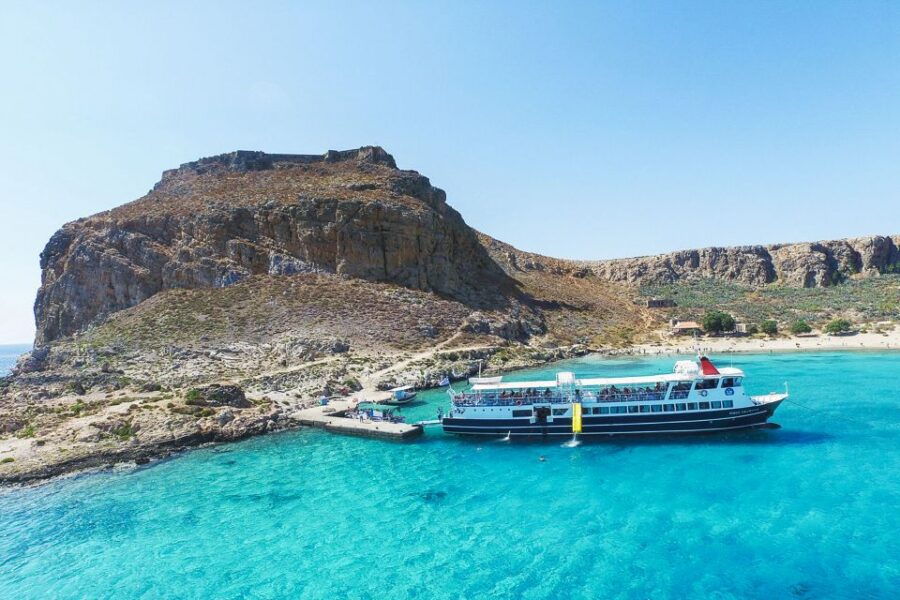
This is the default Balos day for a reason. It is the most-booked boat trip on the entire Crete west coast, and at this price it is a no-brainer if you do not need a fancier format. Our full review of this Kissamos cruise covers the on-board food upgrade options and which deck level to aim for. Book it if you have a car or you are happy to add the transfer separately.
2. Chania: Balos and Gramvousa Cruise with Transfer and Boat Ticket
If you are staying in Chania town and not driving, this is the version to book instead of pick one. You pay a small premium over buying the boat ticket and the bus separately, and in return you do not have to think about the schedule. Our Chania transfer combo review notes one trade-off worth knowing about: the pickup window can run 45 minutes long if your hotel is the last on the route.
3. Limeniskos: Gramvousa and Balos Speedboat Tour with Drinks: $99
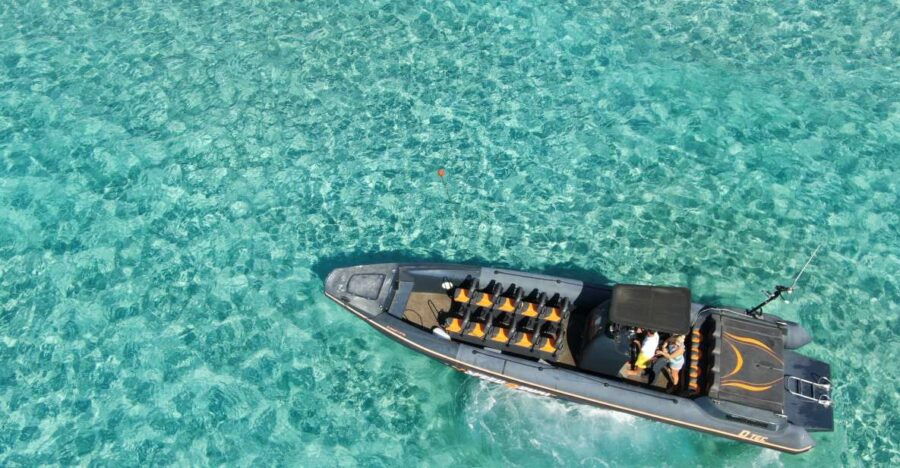
This is for the half-day crowd or anyone who saw the size of the day-ferry on a booking page and quietly winced. You skip the Gramvousa fortress climb and the long lunch stop, but you still get the lagoon and a real swim. Our Limeniskos speedboat write-up covers what to expect at the smaller boarding dock, which is on the Chania side rather than Kissamos.
Gramvousa: The Fortress Climb People Underestimate
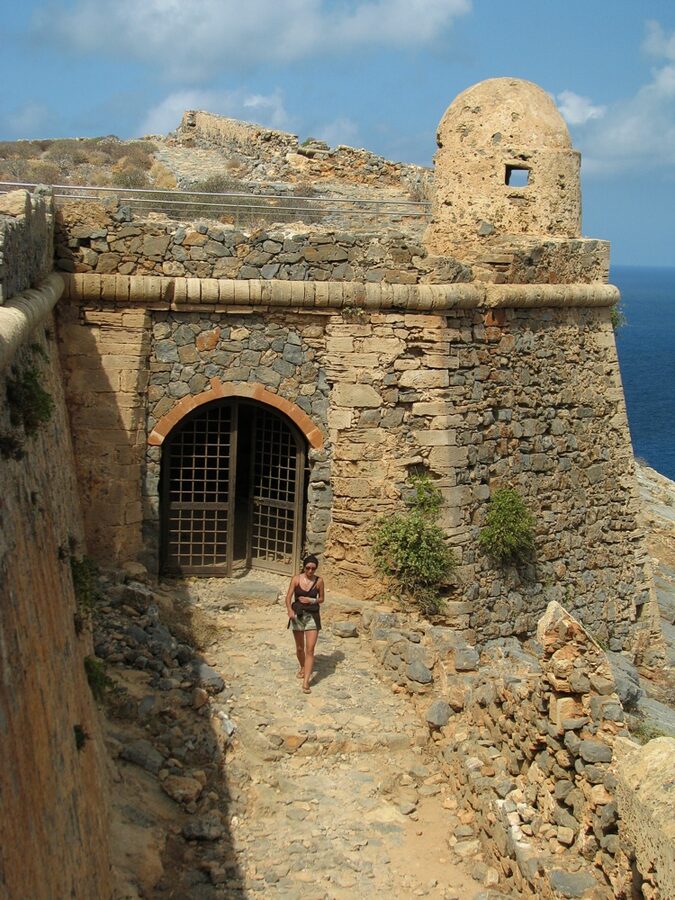
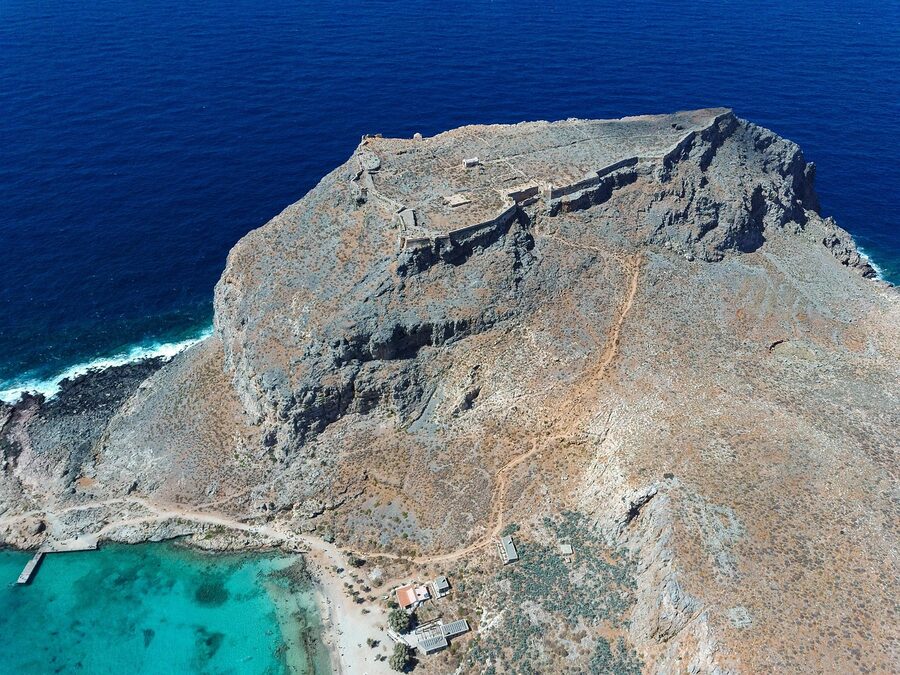
Most people get off the boat at Gramvousa thinking the climb to the fortress is a stroll. It is not. The path is loose stone, exposed to the sun, with about 140 metres of vertical gain over a roughly 50-minute hike. There is no shade. The summit is the entire reason this island has tourists, but the trail will absolutely punish you if you climb it at noon in July without water.
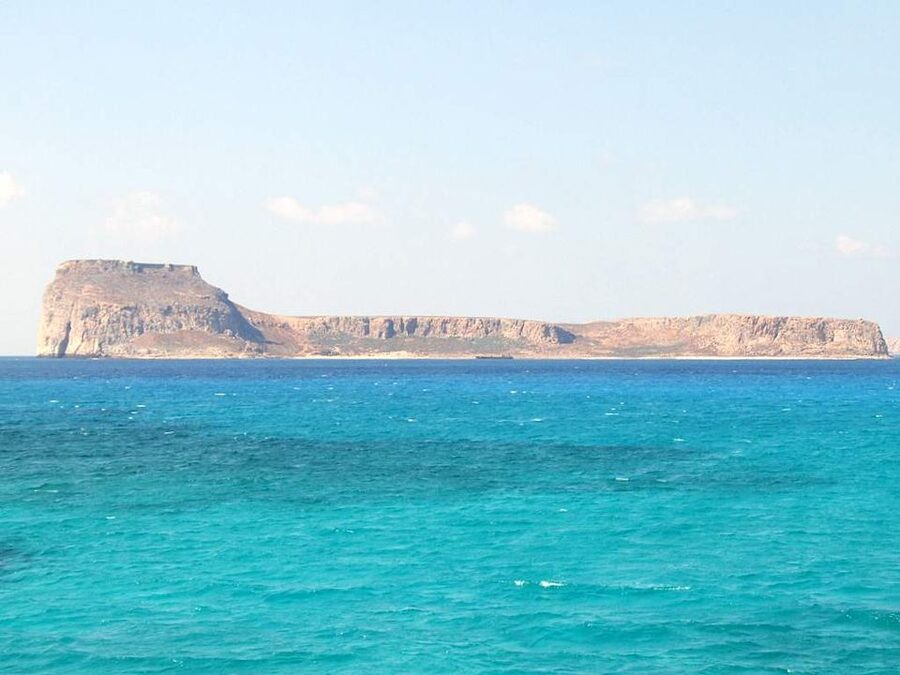
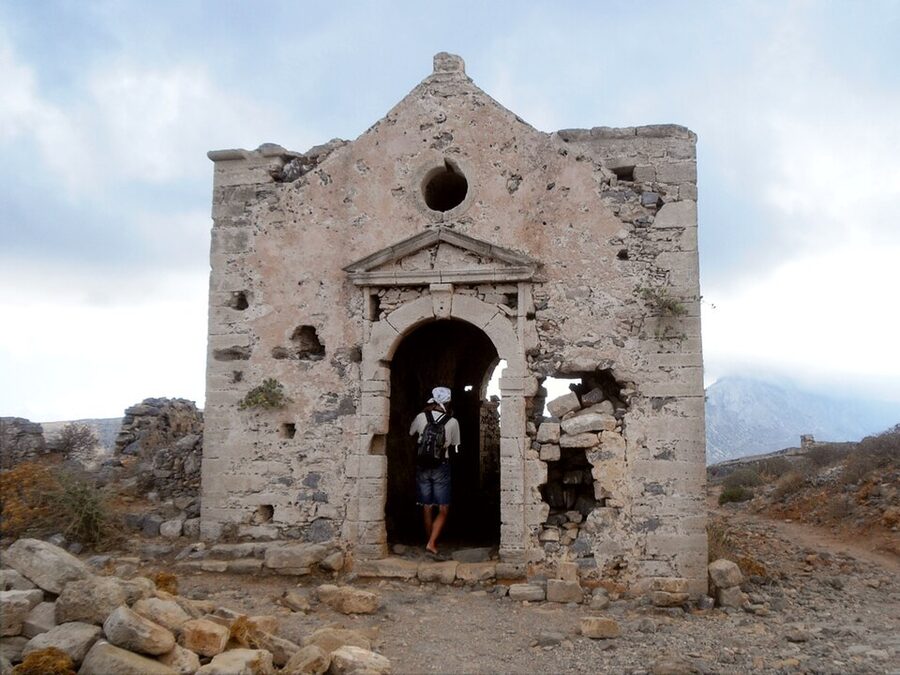
The fortress itself is a 1579 Venetian build. Triangular plan, about 1,100 metres of perimeter walls, a ruined chapel inside, and views back across to Balos and the open Cretan sea that genuinely justify the climb. It changed hands more times than is sensible during the Ottoman period and was briefly held by Cretan revolutionaries in the 1820s as a base for piracy in the central Mediterranean. There is no museum or interpretive signage at the top, so read up before you go if you care about the history. If you like this kind of layered Venetian-and-Greek-revolution story, the Delphi day trip from Athens covers the older, classical layer of Greek history that you do not get at Gramvousa.
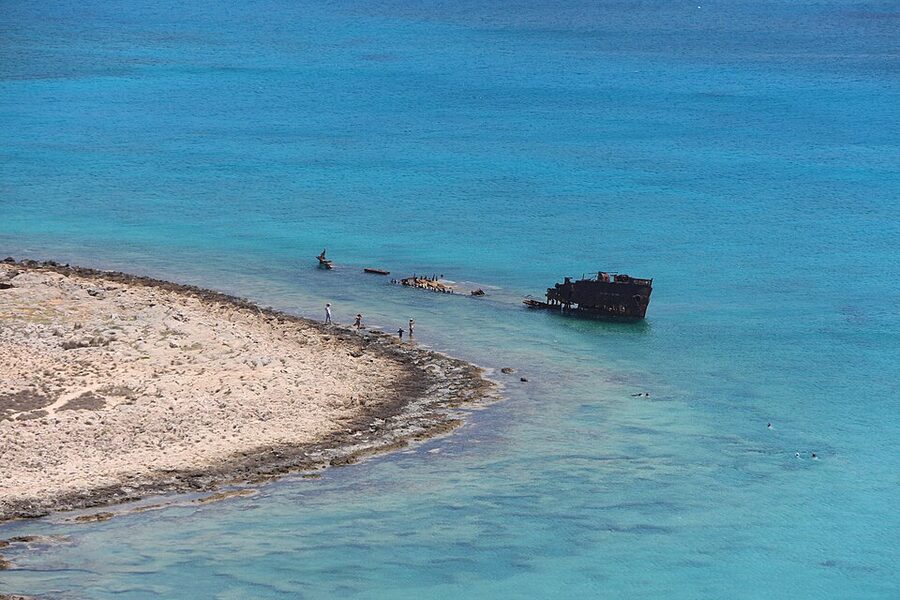
If you are not climbing, the alternative is the small beach below the dock. This is where the Dimitrios D, a small Lebanese-flagged tanker that ran aground in 1968 carrying contraband cigarettes, has been quietly rusting away for almost six decades. The hull is still intact at the water line, you can wade out and touch it, and it makes for one of the more unexpectedly photogenic shipwrecks in the Aegean. Watch your feet. The seabed around it has plenty of sea urchins.
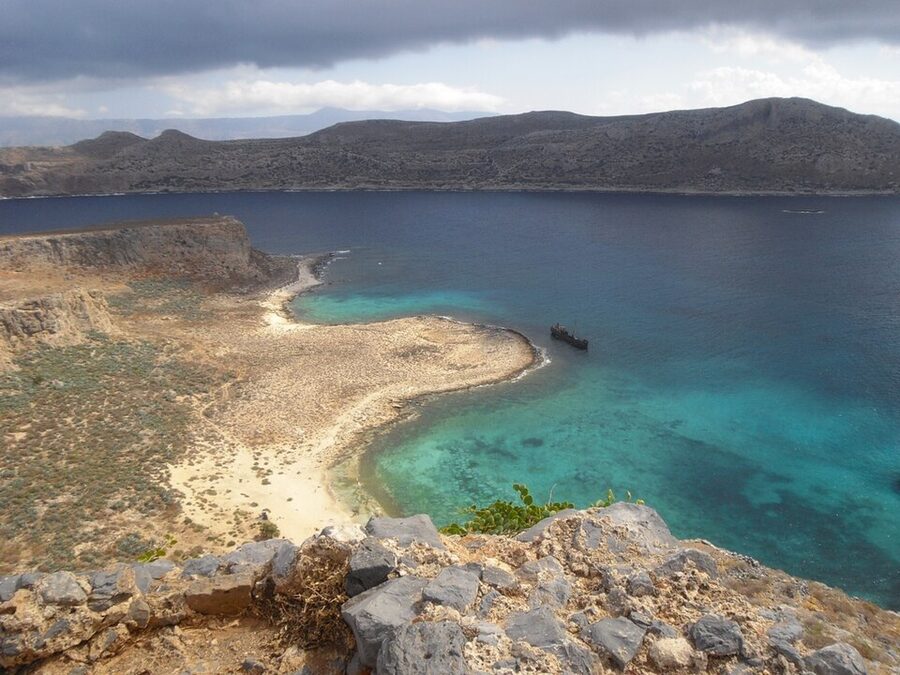
From the fortress walls you also get the best view of Balos that exists from anywhere on land. You can see the entire shape of the lagoon, the sandbar, Cape Tigani sticking out to the south, and on a clear day the white-sand line continuing all the way around to the next bay. People who skip the climb because of the heat almost always say it was their biggest regret on the way back.
Balos Lagoon: Why the Sandbar Looks Like That
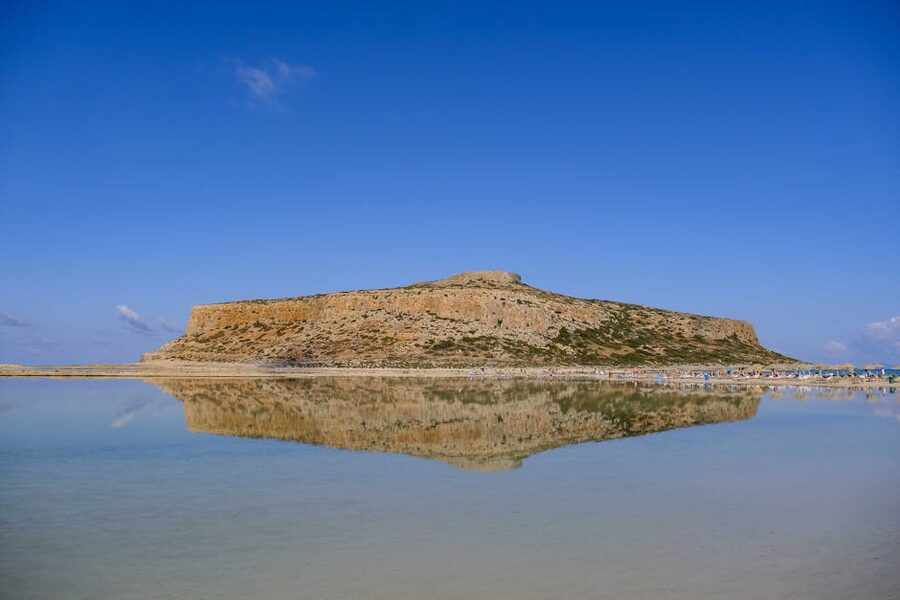
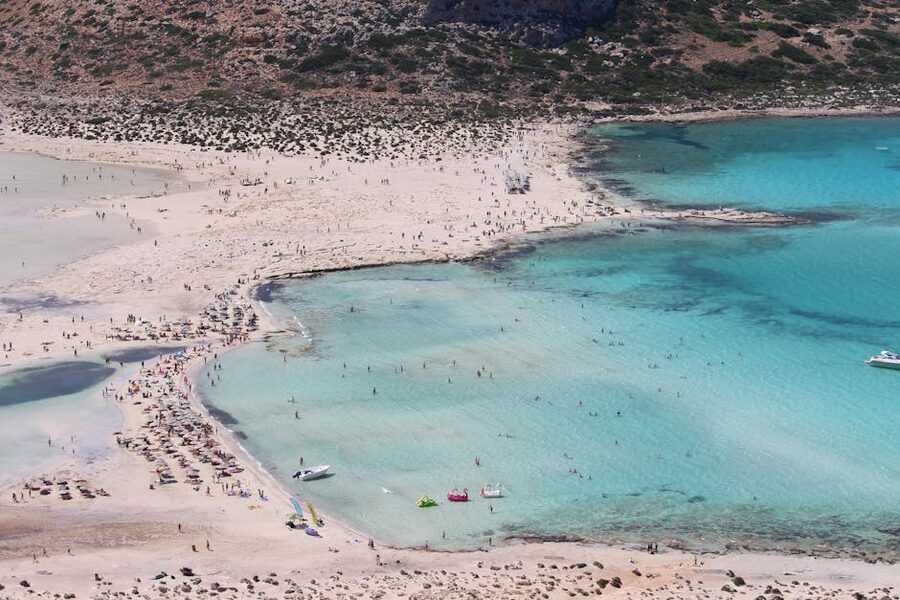
The reason Balos photographs the way it does is geological. The sandbar is made of fine white shell sand mixed with crushed pink Turritella shell fragments. The shell powder gives the sand its faint pink tinge, especially noticeable at the high-water line. The water above it sits over a flat sand bed that is mostly knee-deep, with the deeper channel of the lagoon running closer to the Cape Tigani peninsula. Because the bottom is uniformly white, the water reflects sky and stays that almost too-bright Caribbean blue all day.
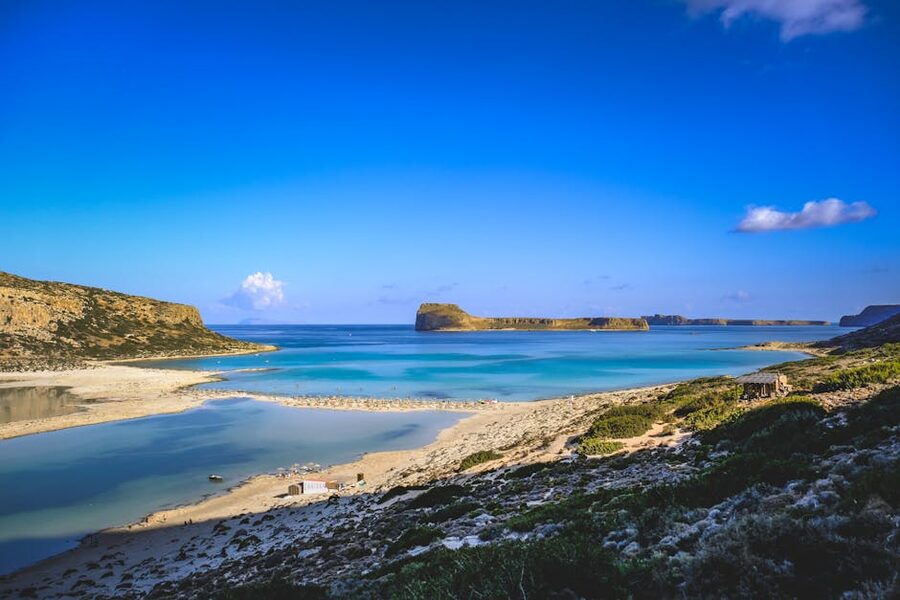
The big day-ferry anchors out in the deeper water on the open side of the cape and tenders passengers in. From the tender drop-off it is a few minutes wading through ankle-deep water to reach the actual sandbar, then maybe 200 metres along the bar to where the colour really turns electric. The walk between is the shot people come for. I have never been disappointed by it. The only place I have seen water this colour outside the Caribbean is the Cyclades, and even on Mykonos and Naxos it is rarely this still and shallow at the same time.
If you want a less-crowded version of this same colour-and-sand experience, our companion guide to the Spinalonga and Agios Nikolaos day trip covers a different corner of Crete with similar water but a much heavier history. Different vibe, smaller crowds.
What to Bring (And What to Skip)
The single most useful thing on this day is water shoes. The Gramvousa beach near the shipwreck is rock and pebble with sea urchins in places. The sandbar at Balos is fine sand and forgiving on bare feet, but the entry point at the boat tender drop-off has slippery rocks underwater. A cheap pair of plastic-soled water shoes solves both. You can buy them at any tourist shop in Chania for about €5.
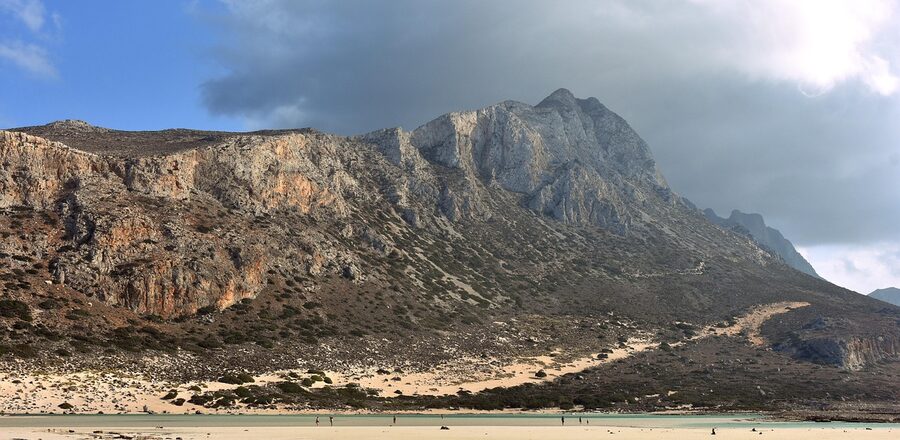
The other thing to plan for is shade. The boat has covered decks, but the sandbar at Balos has zero natural shade. None. There are no umbrellas you can rent. The taverna at the back of the beach has some shade under awnings, but it is small and packed by 11am. Bring a sun-rated hat, a long-sleeve UPF top if you burn easily, and reef-safe sunscreen. The midday sun on white sand is brutal even by Greek-island standards.
Bring more water than you think. Two litres per person minimum. The boat sells bottled water, but at €3 a bottle. Bring a refillable bottle and fill it before boarding. A dry-bag is useful if you want to wade with your phone or wallet. Towel. Snorkel mask if you have one, because the rocks at the Gramvousa shipwreck end have small fish around them. Cash, ideally in small notes for the protected-area fee paid on the boat (about €1 per person at time of writing).
Things you can skip: snorkel fins (you do not need them in this water), beach umbrellas (impractical to lug onto the boat and useless on the sandbar), and full beach kit. Travel light. The boat boarding lines are a tight squeeze and a tote bag fits much better than a wheelie cooler.
When to Go (And When Not To)
The boats run from late April to the end of October, weather permitting. Best months are late May, June, and September. The water is warm enough to swim in (around 22-23°C), the boats are not yet at peak capacity, and the wind is generally lighter. July and August are doable but full. The big-ferry pick can hit 80 percent capacity on a Saturday in mid-August.
The two things that will cancel a day are wind and sea state. The route runs along the exposed northwest tip of Crete and any meltemi wind blowing strong from the north will make the sandbar swim unpleasant or close the boats entirely. Operators will refund or rebook you if the cancellation is theirs, but they will not refund you if you cancel because you “saw clouds.” Check the forecast the night before. If the wind speed is over about 25 knots from N or NW, the boats may not run.
Avoid the days right after a storm. The sandbar gets churned-up seaweed pushed onto it and the lagoon takes a day or two to clear. Coming the morning after a calm night is when you get the postcard water.
Driving In Instead of Boating
There is a second way to reach Balos that the boat companies will not advertise: drive. A rough dirt road from the village of Kalyviani runs out along the Gramvousa peninsula and ends at a clifftop car park about 1.2km above the lagoon. From the car park, a steep but well-marked path drops you down to the sandbar in about 25 minutes.
Pros: you get there at 8am, you have the lagoon almost to yourself for the first hour, and you save the boat fare. Cons: the access road is a rental-car-killer (sharp limestone, no asphalt) and most rental contracts specifically prohibit driving it. The road also adds a flat €1 to €2 per person environmental fee paid at a small kiosk near the start.
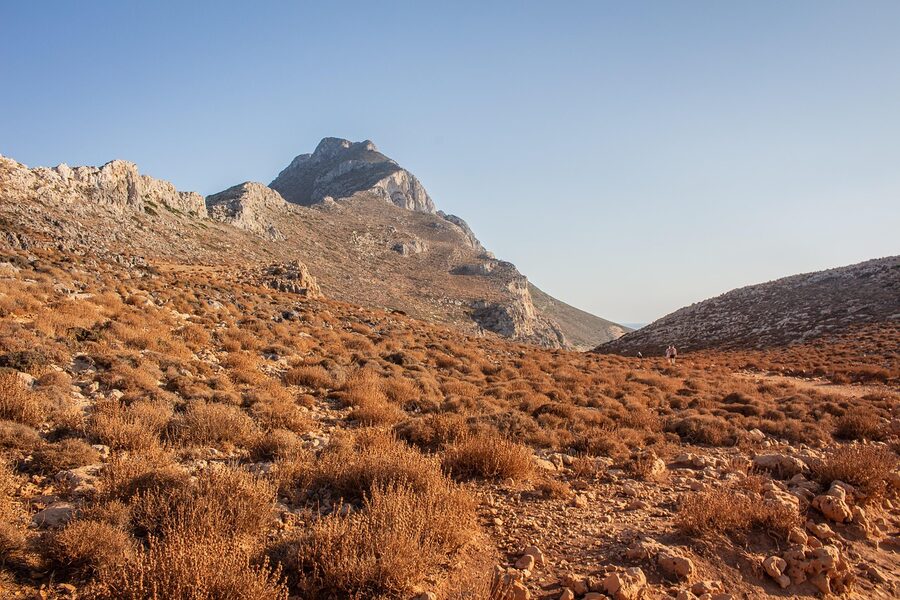
You also miss Gramvousa island entirely on the drive-in option. There is no boat shuttle from the Balos beach to the Gramvousa islet. If you want to climb the fortress and see the shipwreck, you have to do the boat day. The drive-in is a Balos-only experience.
My take: do the boat day for a first visit so you see both Gramvousa and Balos in one shot. If you fall in love with the lagoon, drive in for a second morning during your stay and you will get the place at its best, before the day-ferries arrive.
Combining the Day with Other Crete Trips
If you are spending a week on Crete, there are a couple of natural pairings to think about. Balos and the Spinalonga and Agios Nikolaos day trip book-end the island geographically. Balos is the far west, Spinalonga the far east. Doing both gives you a strong sense of how big and varied Crete actually is. They are very different days. Balos is pure scenery and swimming. Spinalonga is history and a former leper-colony fortress.
If you are a beach-and-water person making a Greece trip in general, the closest cousin to Balos elsewhere in our coverage is the Santorini volcanic islands cruise, which is also a boat day with a swim stop and a fortress-equivalent in the Nea Kameni lava field hike. The water at Palea Kameni is hot-spring-warm rather than Caribbean-blue, but the boat-day rhythm is similar. A different style of all-day-on-the-water is the Santorini BBQ catamaran, which is the lazy-day version of the same idea.
Beyond Greece, if you are putting together a longer Mediterranean trip, our Ibiza western coast cruise guide covers a similar boat-and-swim format on a different sea, our Gran Canaria catamaran and dolphin guide is the Atlantic version, and the Malaga, Ronda and Setenil white-village day is a useful contrast for an Andalucia leg of the same trip.
The Stuff Nobody Tells You
A few things that took me by surprise the first time and are worth knowing.
The boat lunch is bad value. Pre-packed sandwiches and warm pasta at €10 a plate. Stop at one of the bakeries on the main street in Kissamos before boarding (the one called Tasty Corner, the one near the post office, or any of them) and stock up on spanakopita and cheese pies. Five euros gets you a far better lunch than the boat will sell you. If the food side of Greek-island days appeals to you, our Athens Greek food walking tour guide is the city-side companion to this kind of bring-your-own-bakery day.
The toilets on the boat are functional but small and the queues are long after lunch. Use the dock toilets in Kissamos before boarding. There is also a single small taverna behind the Balos sandbar with toilets, free if you buy a drink.
The “Best deck” question. People will tell you the upper deck is better. It is, for views. It is also fully exposed to the sun. If you are doing the full nine-hour day, plan to spend the outbound leg on the upper deck for the cape rounding (this is the moment you came for) and the return on the lower covered deck when the sun is at its worst. Reverse if you are only on a half-day speedboat tour, since the speedboats have less covered shade.
The protected-area fee. There is a small fee paid on the boat for entering the Balos marine-protected zone. About €1 per person at the time of writing, paid in cash. The boat staff come around with a clipboard during the leg out and you get a paper ticket. Lose this and they may charge you again on the way back. Keep it tucked into your shoe or your phone case. (The same paper-ticket logic applies to most Greek archaeological sites too. The Acropolis combo ticket in Athens uses the same kind of clipboard-and-stub system at every site you enter.)
Photography. The colour you see in your eyes is real. The colour your phone captures depends on the time of day. Best light is between about 10.30am and 12.30pm, when the sun is high enough to penetrate the lagoon but not yet directly overhead. After 2pm the contrast washes out and the sandbar reads as flat white. If you want the postcard shot, line up your photos in the first hour after boat anchor.
Worth It Or Skip It?
Worth it. The colour of the water at Balos is one of the most-photographed scenes in Greece for a reason. The Gramvousa fortress climb adds a real history-and-views beat to what would otherwise be a beach day. And the price, around $47 for the standard ferry, makes this one of the cheapest spectacular days you can have anywhere in the Mediterranean. The closest comparable cost-to-spectacle ratio in our Greek coverage is probably the Cape Sounion sunset tour from Athens, and even that one runs nearly double the price.
Skip if you only have a day in Chania and you really, really hate boats. The sandbar is unique enough that nothing else in Crete substitutes for it, but the day is long, and if you are prone to seasickness the rounding of Cape Spatha can be choppy. Half a Dramamine and you will be fine. Without it, the return leg can feel long.
More to Plan in Greece
If you are stitching together a wider Greece trip, the obvious next move after Crete is a couple of nights on Santorini for the BBQ catamaran sunset, and a day in Athens before you fly south. The two Athens guides I would read first are the Acropolis walking tour and the Meteora day trip. Two completely different sides of the country, and they pair well with a Balos-and-Gramvousa day for a one-week loop.