
The British woman in front of me stepped into one of the empty stone houses on Spinalonga, paperback open at a page she had already creased twice. The Island, by Victoria Hislop. She had been carrying it through Greece for three weeks. This, she said quietly, was where her grandmother’s neighbour had been sent.
That is the thing about Spinalonga. Almost nobody arrives cold. They come because of Hislop’s 2005 novel, or the 2010 Greek TV adaptation that made it an event in living rooms across the country, or because their family’s history brushes up against the place. Below I will walk you through how to get there, which boat to take, and what the day actually feels like.
- In a Hurry? My Top 3 Picks
- What Spinalonga Actually Is
- Where the Boats Leave From
- How to Pick Between the Three
- The Tours I Would Actually Book
- 1. Crete: Day Trip to Agios Nikolaos and Spinalonga Island (around )
- 2. Agios Nikolaos: Boat Trip to Spinalonga With Swim Stop (around )
- 3. From Ag. Nikolaos: Spinalonga and Kolokytha Cruise with Lunch (around )
- What You Actually See on the Island
- The Cemetery and the Last Resident
- The Venetian Layer Underneath
- Kolokytha Bay: The Swim Stop
- Common Mistakes
- Agios Nikolaos: What to Do With the Rest of the Day
- Elounda and Plaka: If You Stay the Night
- Practical Notes for the Day
- The Hislop Effect
- If You Are Doing Spinalonga as Part of a Bigger Greece Trip
- Booking Tips, in Order of Usefulness
- What I Would Do With a Single Day
- More Greece Guides
In a Hurry? My Top 3 Picks
Crete day trip to Agios Nikolaos and Spinalonga island, around $44. The flagship coach-and-boat day from any Heraklion-side resort. Hotel pickup, harbour cruise from Agios Nikolaos, full ticket and guided walk on Spinalonga. The most-booked option on the route by a wide margin. Check availability and times.
Agios Nikolaos boat trip to Spinalonga with swim stop, around $29. Just the boat, no coach. You make your own way to Agios Nikolaos harbour, sail across the Mirabello Gulf, get a full visit on the island, and stop to swim on the way back. Fastest, cheapest, and best if you are already staying in Agios Nikolaos or Elounda. See dates and price.
Spinalonga and Kolokytha cruise with lunch, around $35. A longer five-and-a-half-hour day with a sit-down BBQ at Kolokytha Bay folded in. Pick this if Spinalonga is the headline but you also want a proper swim afternoon and a meal you do not have to organise yourself. Check the listing.
What Spinalonga Actually Is
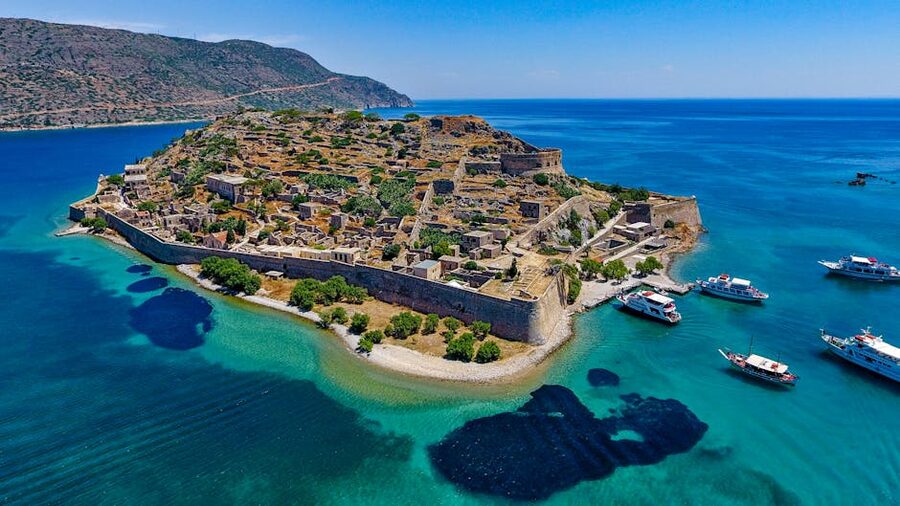
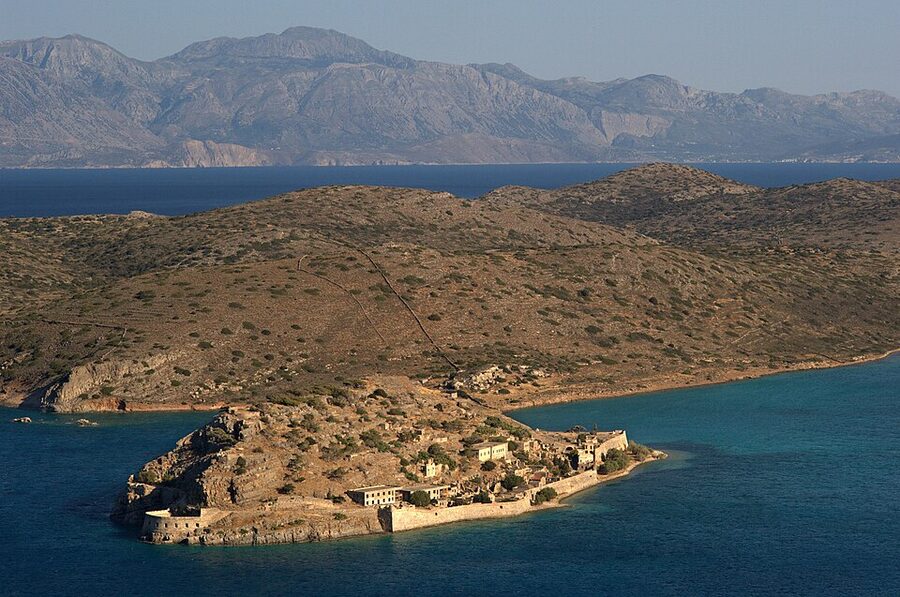
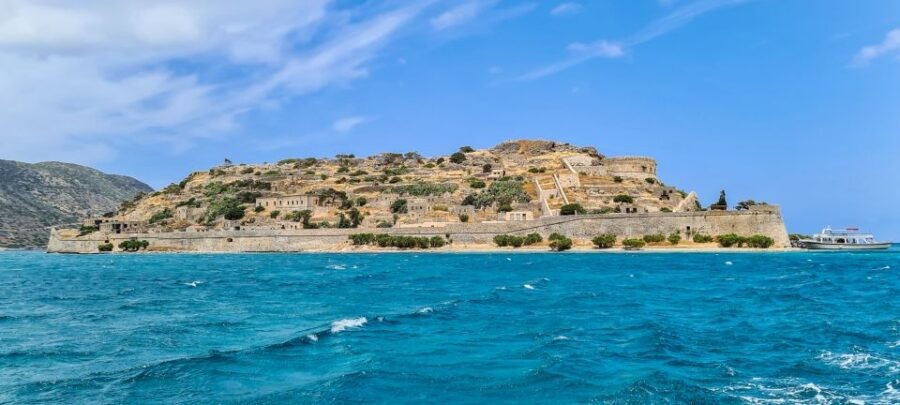
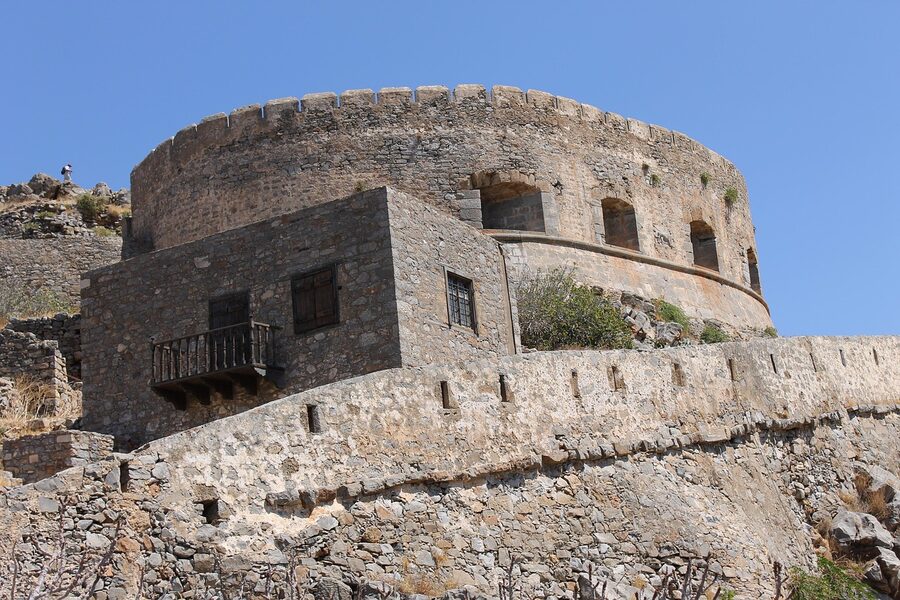
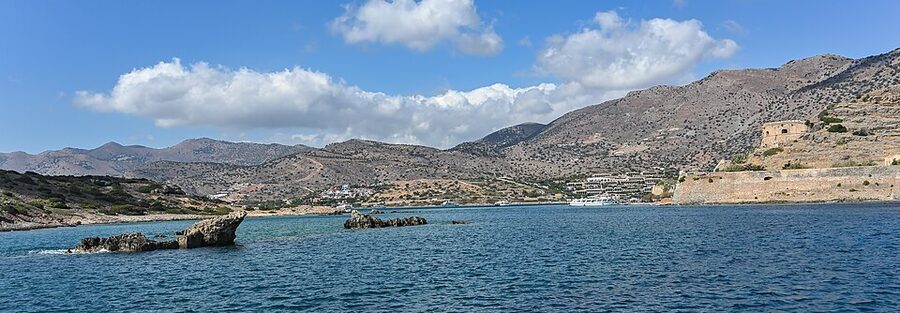
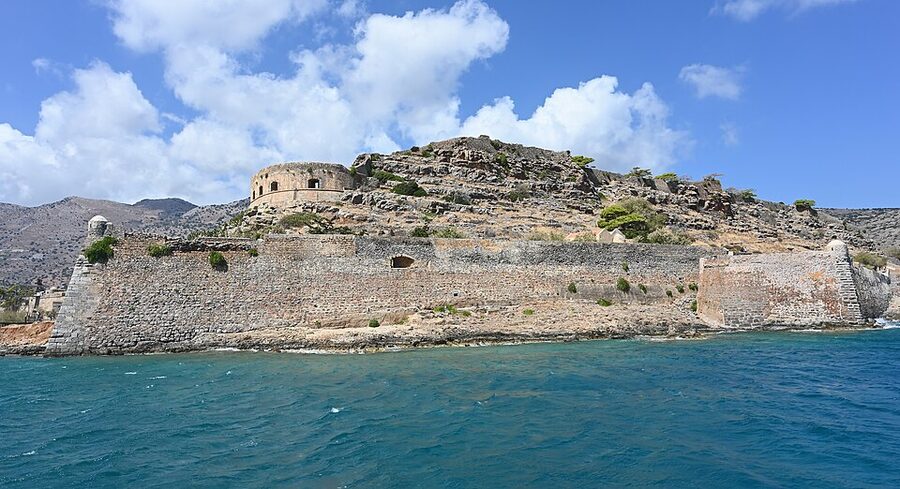
Spinalonga is a small fortified island in the Mirabello Gulf on the north-east coast of Crete. About 8.5 hectares, low and dry, ringed by Venetian walls. From any of the launch points it looks tiny on the horizon. Up close it has the steep, dense layout of a fortress town because that is exactly what it was for 250 years.
The cliff-notes history is dense. The Venetians cut Spinalonga off from the Kalydon peninsula in 1579 and built a sea-fort to protect the salt pans and the entrance to Elounda Bay. They held it for almost a century after Crete fell to the Ottomans, surrendering only in 1715. An Ottoman village then grew inside the walls. In 1903 the new Greek state cleared out the last residents and turned the island into a leper colony for the whole of Crete. The colony ran until 1957. The last patient, a priest named Dimitris Matzaridakis, stayed on alone for another five years to maintain the cemetery and conduct burial rites for those interred there. He left in 1962.
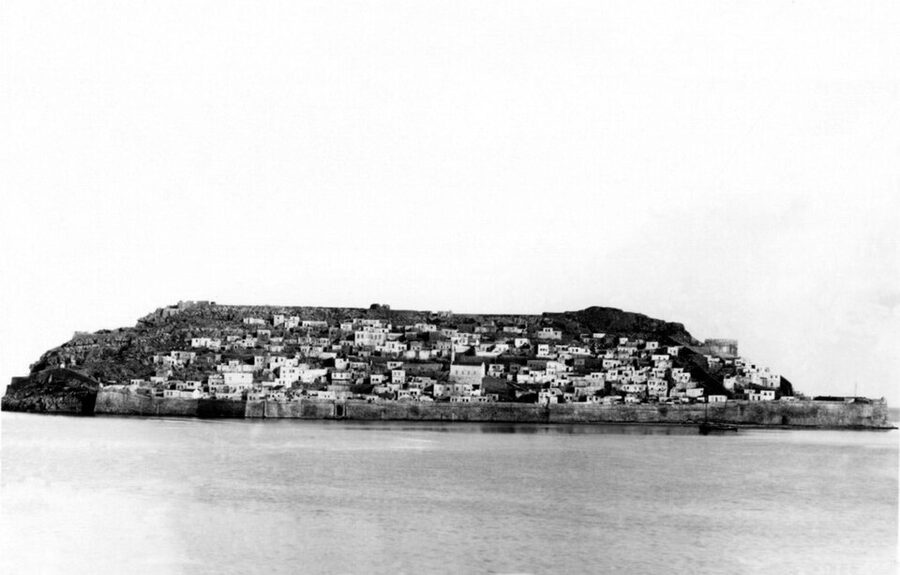
For most of the 20th century, Spinalonga was a place Cretans did not talk about. Then in 2005 a British novelist named Victoria Hislop published The Island, a multi-generational story set inside the colony. It sold over a million copies in Greek translation. In 2010 Mega TV adapted it as a 26-part series called To Nisi, and the country watched it. Visitor numbers to Spinalonga went from a quiet trickle to over 200,000 a year. They have stayed there.
That is the layer most travellers do not realise they are walking into. The crowds you find on the island in July are not just history tourists. A meaningful slice are Greeks doing a kind of pilgrimage to a story they grew up reading or watching. It changes the tone of the place. Quieter than you expect. People leave flowers at the cemetery.
Where the Boats Leave From
Three departure points. Each suits a different starting position on the island.
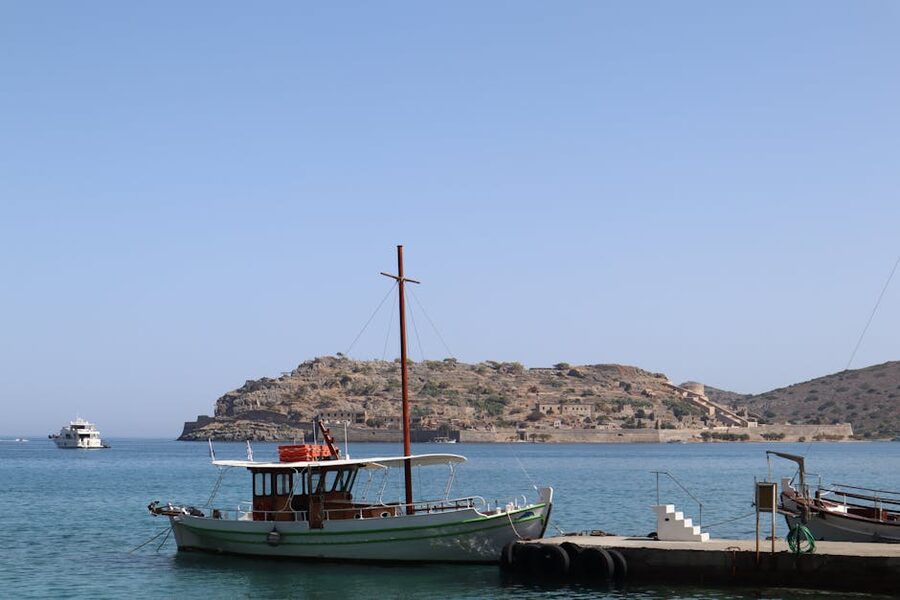
Plaka. The closest. Plaka is a small fishing village on the mainland directly across the channel from Spinalonga. The crossing is about five minutes by small open boat. Tickets are around 12 euros return, sold from a couple of competing booths on the quay. There is no schedule beyond “the next one leaves when it fills.” If you have your own car or you do not mind a 20-minute taxi from Agios Nikolaos, this is the cheapest and fastest way on. The downside is no narration, no swim stop, and Plaka itself is small. You will want lunch in Elounda after.
Elounda. The mid-tier. Elounda is the resort town just south of Plaka, with a deeper harbour and a long line of glass-fronted ticket offices on the seafront. The crossing takes 15 minutes and costs around 15 euros return, often with a quick swim stop folded in. Boats run roughly hourly through summer. This is what most independent travellers staying in the Elounda hotels end up doing.
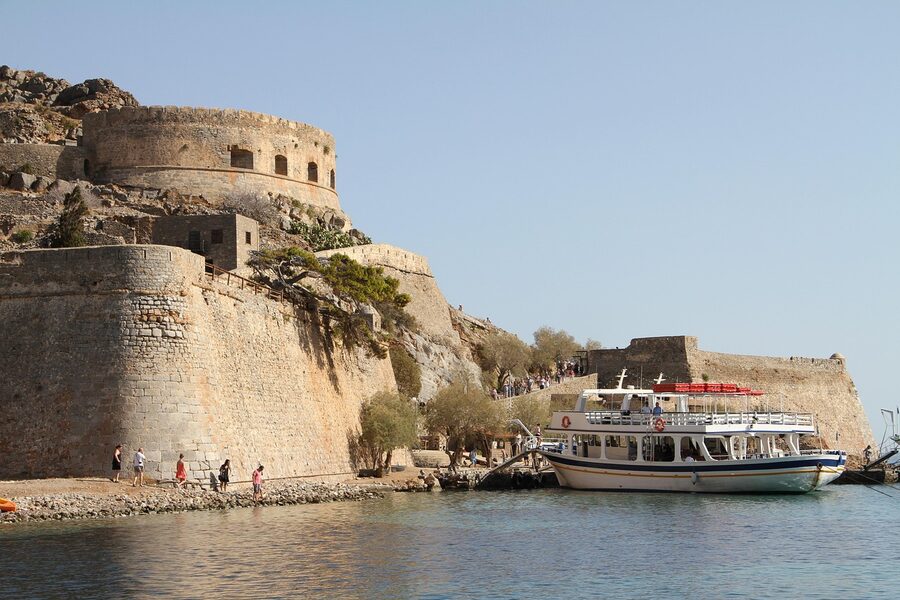
Agios Nikolaos. The full day. Agios Nikolaos is the regional capital, about 11 kilometres south of Elounda. The boat ride is 45 minutes each way, which sounds long until you realise you are sailing the entire length of the Mirabello Gulf with the Lasithi mountains rising on your left. Most Agios Nikolaos cruises stop for a swim at Kolokytha Bay on the return leg. This is the version that doubles as a proper sea day, not just a museum visit.
If you are coming all the way from Heraklion or one of the south-coast resorts (Hersonissos, Stalida, Malia), you will almost certainly take an organised coach-plus-boat day. Those go via Agios Nikolaos and add an Elounda or Heraklion lunch on the way back. The standard price is around 44 to 60 dollars depending on lunch and pickup point.
How to Pick Between the Three
Three quick decision points.
First, where you are staying. Heraklion-side or south-coast resort: take an organised day from your hotel, the coach time alone makes self-driving uneconomic. Already in Agios Nikolaos: the boat-only Spinalonga cruise from the harbour is the right shape. Already in Elounda or Plaka: skip the long boat and just take the local five or fifteen-minute crossing. There is no extra value in adding the long approach if you can see the island from your hotel terrace.
Second, do you want a swim. The Spinalonga visit itself is land time and it is hot. Most people want to be in the water before the boat goes back. Agios Nikolaos and Elounda day cruises bake a swim stop into the schedule, usually at Kolokytha Bay on the inland side of the peninsula. Plaka boats do not.
Third, what you want from a guide. The official guides on Spinalonga itself are excellent and not cheap (about 4 euros for the entry plus an optional 5 euros for a 45-minute walking talk). Some boat tours include this guide as part of the package, others leave you on the island unsupervised for 90 minutes. If The Island is your reason for being there, take the boat that includes the guide. The detail you get on Hislop’s research and the colony’s last decades is worth it.
The Tours I Would Actually Book
I have looked at the seven main listings on the route. Three stand out for genuinely different reasons. Pick by the shape of your day, not by the headline price.
1. Crete: Day Trip to Agios Nikolaos and Spinalonga Island (around $44)
This is the safe pick if you are based anywhere from Hersonissos through to Heraklion and you do not have a car. The coach handles the long drive, the cruise handles the boat ride, and you get a guided walk on the island itself. Our full review covers what is included in the lunch upgrade and which pickup points actually save you the most morning sleep. The real weakness is the length. By the time you are back at the hotel it is past 7pm and the day costs you everything either side of it.
2. Agios Nikolaos: Boat Trip to Spinalonga With Swim Stop (around $29)
This is what I would book if I were already in Agios Nikolaos or driving up to it for the day. The price difference against the full coach day is steep, you skip the bus time, and the boat ride across Mirabello Gulf is genuinely beautiful. Our review walks through the swim cove and the on-board commentary. The trade is no narration on the way to the harbour, no included transfer, and you have to find your own lunch in Agios Nikolaos. None of those are deal-breakers if you have your own wheels.
3. From Ag. Nikolaos: Spinalonga and Kolokytha Cruise with Lunch (around $35)
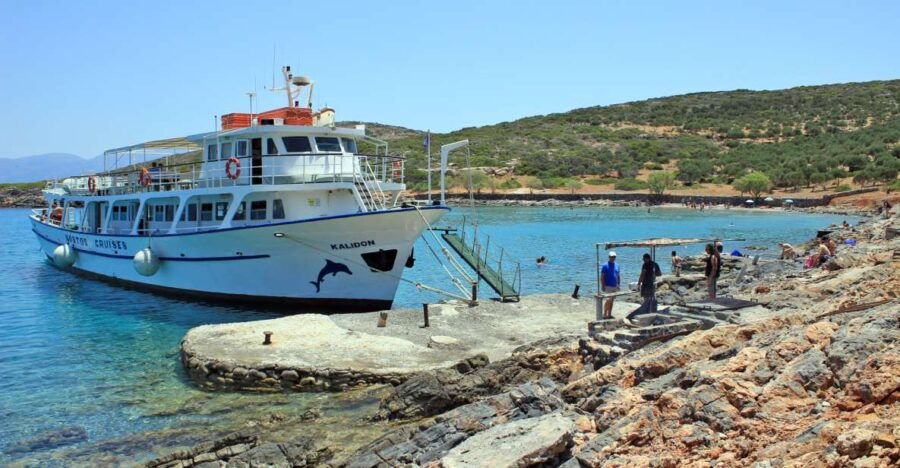
Pick this when Spinalonga is the headline but you also want the day to feel like a holiday and not a school trip. Smaller boat than the flagship, less crowded swim cove, and the BBQ removes the lunch question. Our review covers the catering shape and which days the captain runs the longer Kolokytha route. The weakness is on-island time. You get less than the boat-only cruise gives you, around 75 minutes versus 90, because the lunch session eats into the schedule.
What You Actually See on the Island
You enter through Dante’s Gate. That is the local nickname for the long, narrow tunnel cut through the Venetian wall on the south-west side, and it is the only way on or off. The colony residents called it that because of what was written on its inner wall and because, once you walked through, you were in for life. The tunnel itself is not long, maybe twelve metres, but it is dark and the temperature drops noticeably as you walk through. Then you come out into the village.
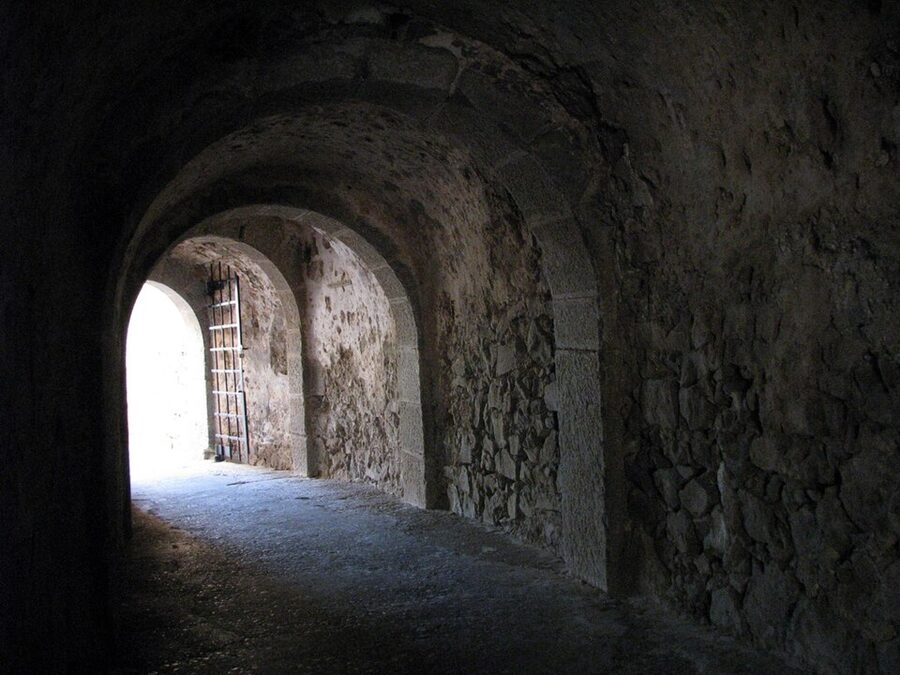
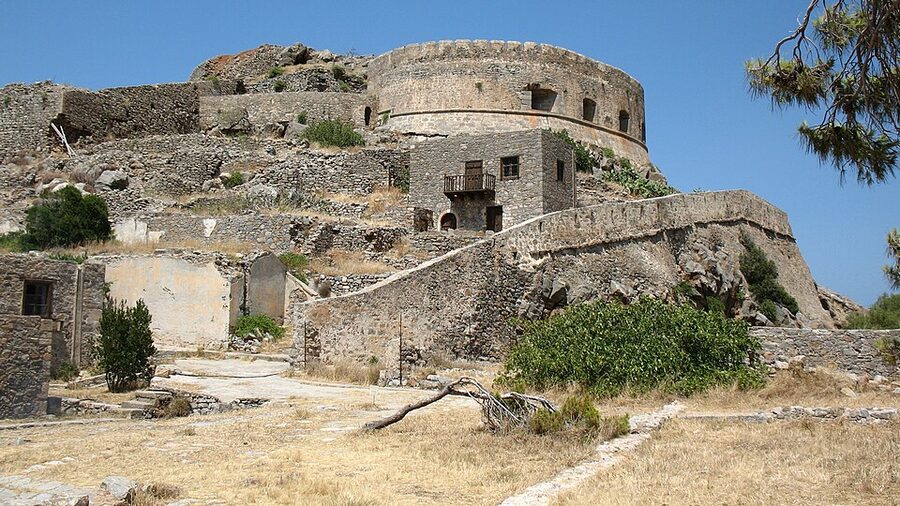
The main street climbs in a long curve. On both sides are the houses the patients lived in, single-storey and double-storey, made from the same local stone as the walls. About 20 of them have been partially restored. The roofs are mostly gone. You can walk inside almost any of them. There are no signs forbidding it.
Six or seven buildings have been turned into a rolling open-air museum. A small bakery (the colony was self-sufficient on bread by 1920). A laundry. A cinema, of all things, set up by a lawyer-patient named Epaminondas Remoundakis in the 1930s. Remoundakis is a name worth remembering. He was a literature student from Sitia who was diagnosed at 21, sent to Spinalonga in 1936, and spent the next twenty years organising a kind of citizen government for the colony. The cinema, the running water, the small clinic, the children’s school for the few uninfected babies born on the island. They came from him.
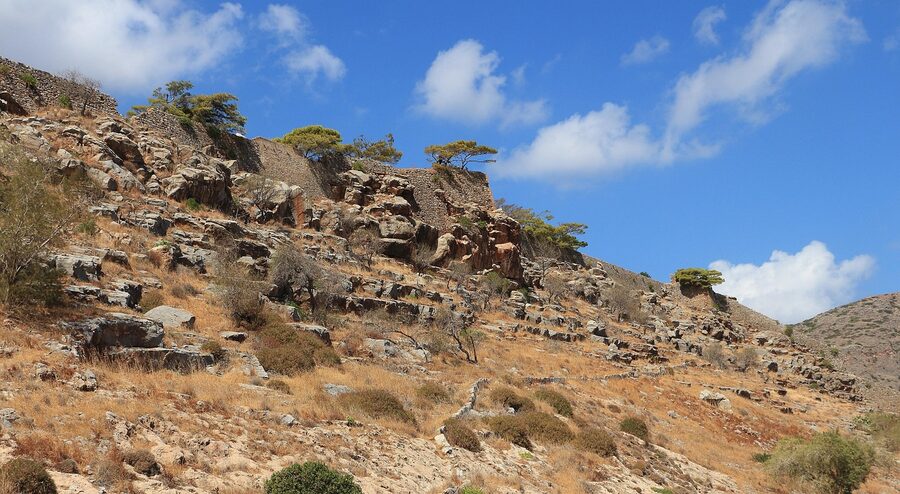
You also pass the church of Agios Panteleimonas, the colony’s main place of worship, and the small two-room museum near the upper square. The museum is light on labels but heavy on photographs, and it is worth the ten minutes. There is one room with a wall of names: every patient registered between 1903 and 1957, all 850 or so, listed by year of arrival.
The Cemetery and the Last Resident
If you only do one thing apart from walking the main street, walk to the cemetery. It is on the lower north-east side of the island, about ten minutes from the gate. Not signposted from inside the village, but there is a path along the north wall that takes you down.
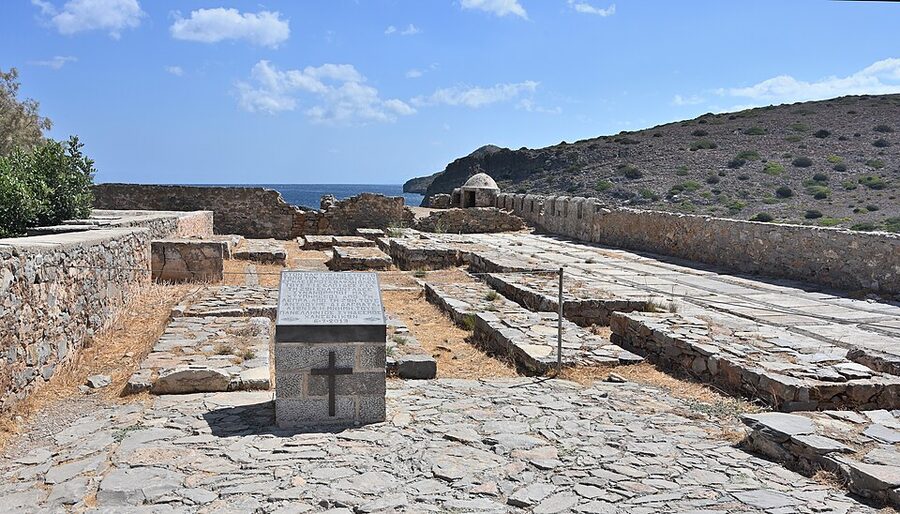
The cemetery is small, quiet, and the most affecting thing on the island. There are three communal vaults and a low chapel. The plaque was added in 2010, the year the TV adaptation aired. People still leave flowers, postcards, small photographs. It is one of the only spots on the island where the volume of voices visibly drops.
The last patient was technically discharged in 1957 when the cure for leprosy reached Greece, but a priest named Father Chrysanthos Katsoulogiannakis volunteered to stay alone on the island after that, conducting daily liturgies for the empty graves until 1962. There is a small bust of him near the cemetery entrance. Without his five extra years, the cemetery would not have been maintained, and most of what you see today, intact and dignified, would be gone.
The Venetian Layer Underneath
It is easy to come away from Spinalonga with only the colony in your head. But the bones of the place are Venetian, and they are some of the best-preserved 16th-century sea-fortifications in the eastern Mediterranean.
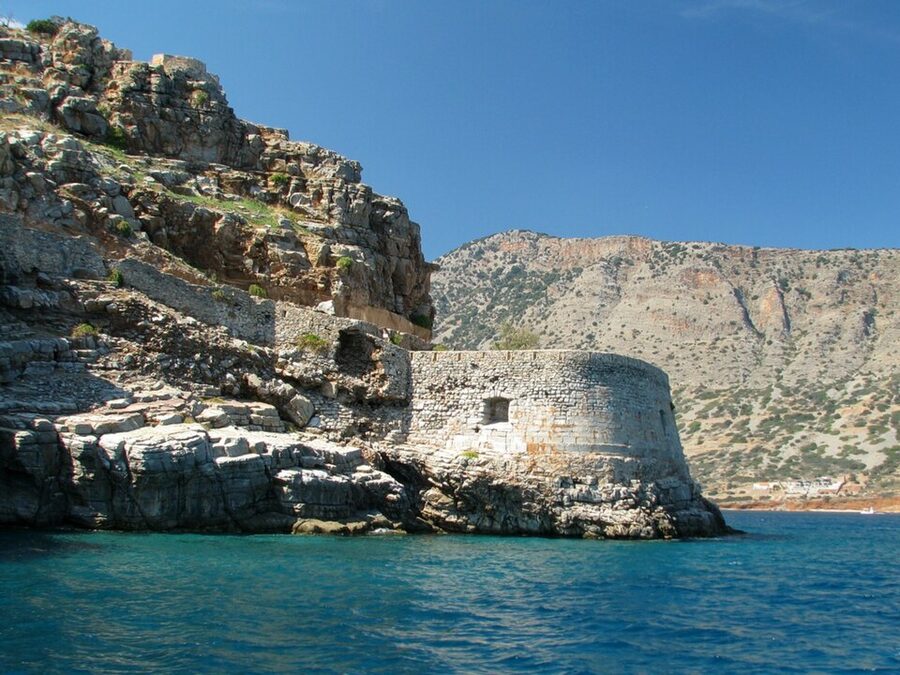
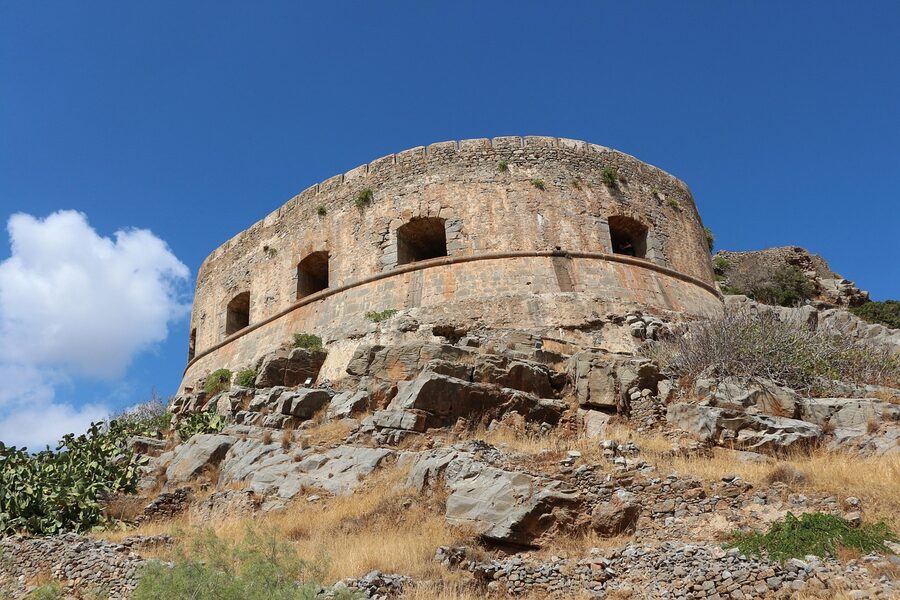
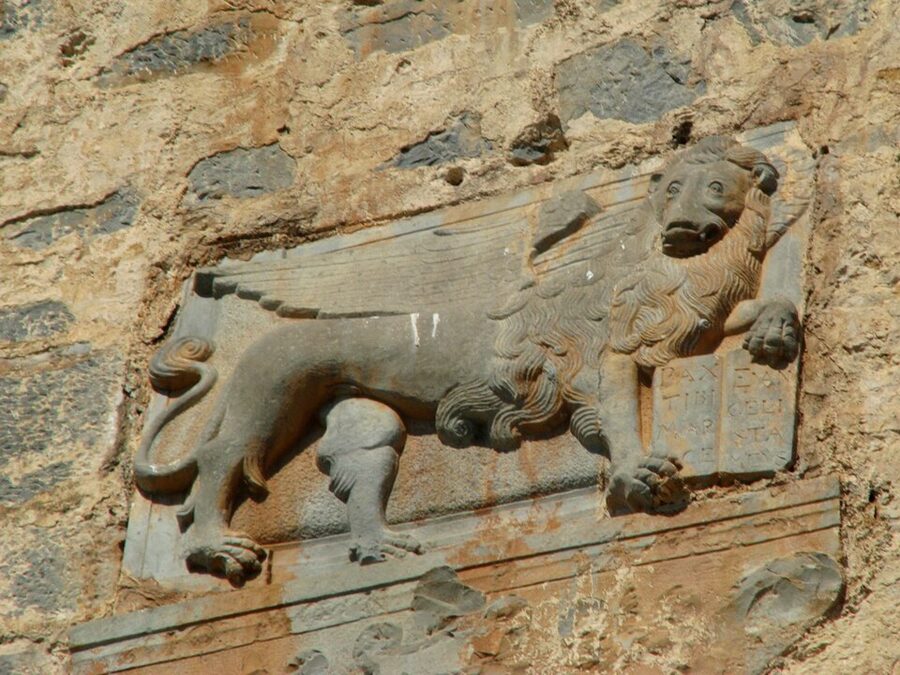
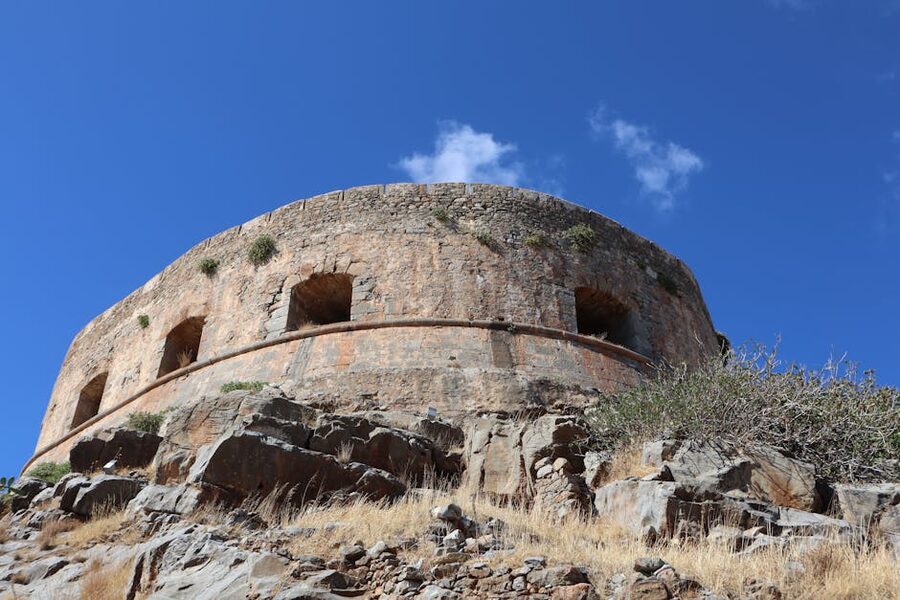
The fort was built between 1579 and 1586 by the Venetian governor Luca Michiel and re-engineered by the great fortification architect Genese Bressani in the 1580s. The Venetians used the same star-bastion logic they applied at Iraklion, Chania, and at Gramvousa on the far western tip of the island. Five corner bastions, low sloped walls, no high silhouette to attract artillery fire. They held it for 13 years after the rest of Crete had fallen, finally surrendering in 1715, more than a generation after the loss of Iraklion in 1669.
If you have done any of the major Venetian or fortified-city days elsewhere in the Mediterranean, the architectural language here will feel familiar. The same logic shows up in the layered fortifications of Andalusia and at the Alcazaba in Malaga, where 16th-century planners stacked new defences on Roman and Moorish foundations. Crete’s Venetian forts belong in that conversation.
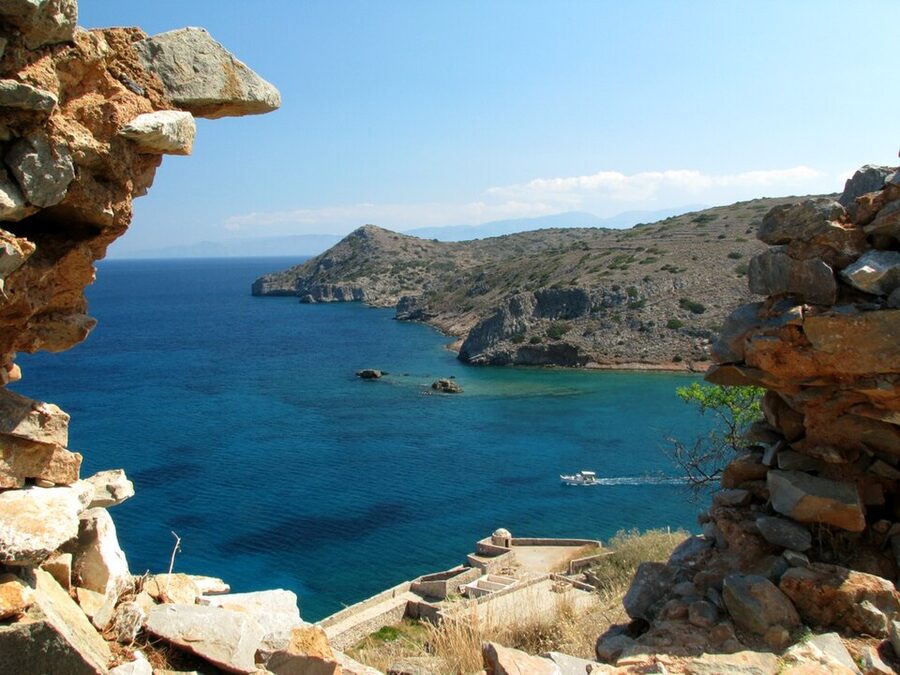
Climb to the highest point on the island, just above the upper square. The view from there explains the strategic logic in about three seconds. You can see the entire Mirabello Gulf, the entrance to Elounda Bay, and the Kalydon peninsula across the channel. Anyone trying to enter or leave the salt pans had to come through this sightline. Building a fort here was not a hard call.
Kolokytha Bay: The Swim Stop
If your boat includes a swim stop, it almost certainly means Kolokytha Bay. Kolokytha is a small island, or technically a peninsula since the Venetians dug the channel that cut it off from Spinalonga in 1579. The bay on its inland side is shallow, sand-floored, and ringed by low rocks. Water temperature in July and August sits around 24 degrees Celsius. In May or October you will want a wetsuit unless you grew up swimming in cold water.
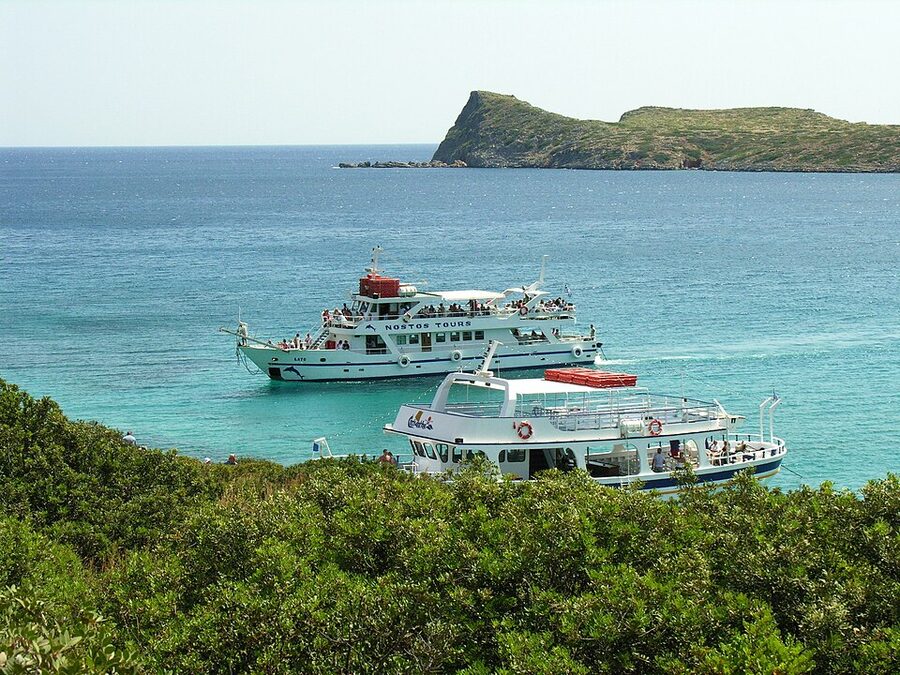
You normally get 30 to 45 minutes here. Some operators include masks and snorkels, some sell them on board for around 5 euros. The seabed slopes gently which makes it good for kids and weak swimmers, and there is no current to speak of inside the bay. There are also no facilities. No toilet, no kiosk, no shade. Bring water with you.
If you are on the BBQ-lunch version of the cruise, lunch is usually served while anchored in the bay, with the boat rocking gently and the food coming out of an on-deck galley. It is not gourmet, but it is plentiful, and there are worse places to eat grilled chicken than tied up off a Cretan island.
Common Mistakes
Five things I see people get wrong on this trip, in rough order of how often.
Picking a midday boat in July. The island has no shade above the village. From 12 to 3pm in summer you are walking on hot stone with sun directly overhead. The early boats (8.30 or 9am from Agios Nikolaos, 9.30am from Elounda) are noticeably cooler and noticeably less crowded. Take one of those. Same applies to the saronic-style boat days like the Athens three-island cruise; the early-departure logic is universal in Greek summer.
Not paying the official guide. The 5-euro guided walk on the island is the bargain of the day. It runs in English at set times posted at the entrance booth. Without it the houses are just empty stone rooms. With it, the layers come back. Even if your boat tour includes its own commentary on the way over, the on-island guide is a different and better thing.
Skipping the museum. The two-room museum near the upper square is small enough that everyone walks past it. Do not. The wall of names is the single most affecting object on the island.
Underestimating how hot the rock gets. The fortifications above the village have no shade, no railings on parts of the upper walls, and the stone radiates heat. People in flip-flops, tank tops, no hat. They suffer. Closed shoes, hat, water bottle, sunblock for arms and legs. This is not a beach day.
Booking a Plaka boat and expecting a swim. Plaka crossings are five minutes each way and they do not stop to swim. If you want a swim, book through Elounda or Agios Nikolaos. If you only want the island, Plaka is fine.
Agios Nikolaos: What to Do With the Rest of the Day
If you are on a coach day from Heraklion, your boat will dock back in Agios Nikolaos around 2 or 3pm and you will get an hour or two of free time before the bus leaves. If you are doing this independently, the same window applies but you can stretch it.
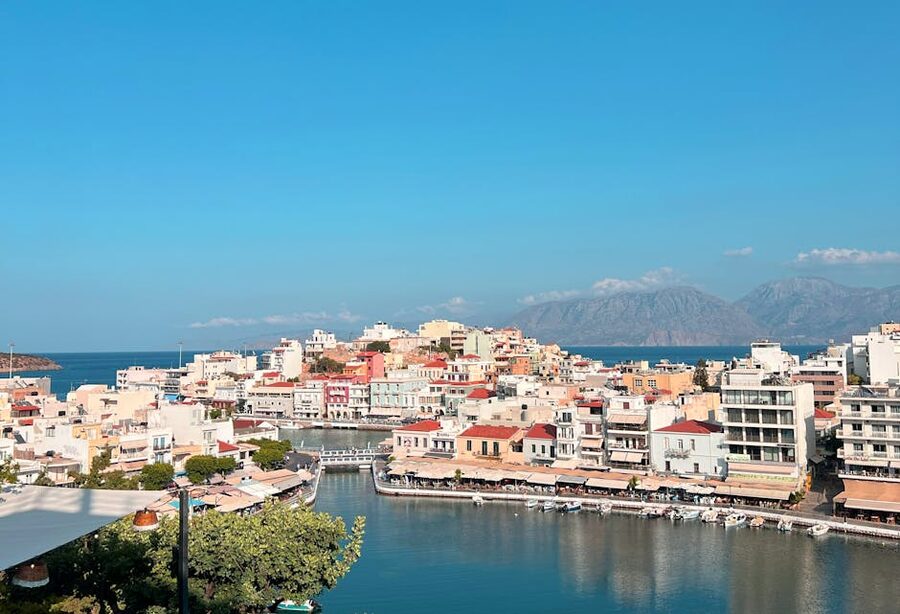
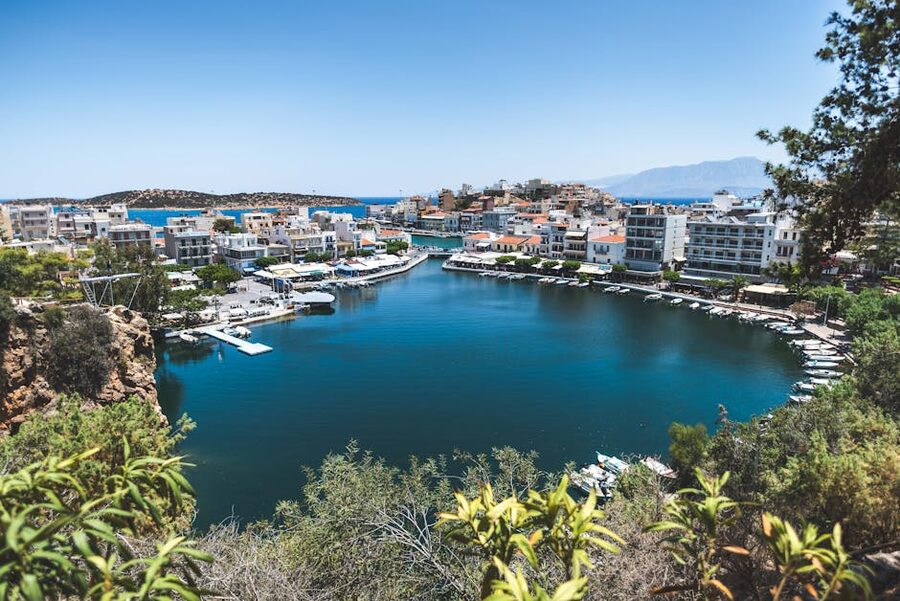
Lake Voulismeni is the centrepiece. A small saltwater lagoon, around 60 metres deep, ringed by cafes, connected to the harbour by an artificial channel cut in 1870. Local legend says Athena bathed there. The cafes around the rim are tourist-priced but the location is unbeatable. The classic move is a coffee or a beer at one of the south-side terraces with the lake at your feet and the working harbour 50 metres beyond.
Beyond the lake, Agios Nikolaos is a working town more than a tourist trap. The pedestrianised Koundourou Street has the better restaurants, the indoor market on Kanevaro is where locals shop, and the small archaeological museum on Paleologou Street is genuinely worth 45 minutes. The Minoan grave goods from the Lasithi Plateau are the highlights. If your bus is not leaving until 5 or 6pm, the museum is your best move.
Elounda and Plaka: If You Stay the Night
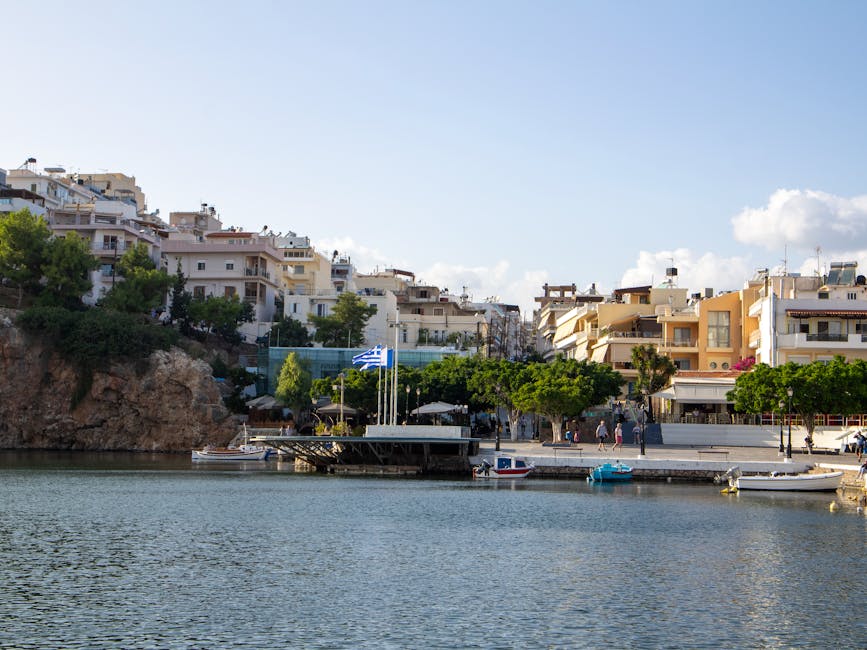
Plenty of people who fall for the Spinalonga story end up staying a night or two in Elounda or Plaka rather than coming and going on the same day. This is a good move if you can afford it. Elounda has the deep-cut harbour and the famous five-star resorts on the outer peninsula (the Mandraki, Blue Palace, Domes Aulus). Plaka is smaller, quieter, and more openly a fishing village that happens to face Spinalonga from across a 200-metre channel.
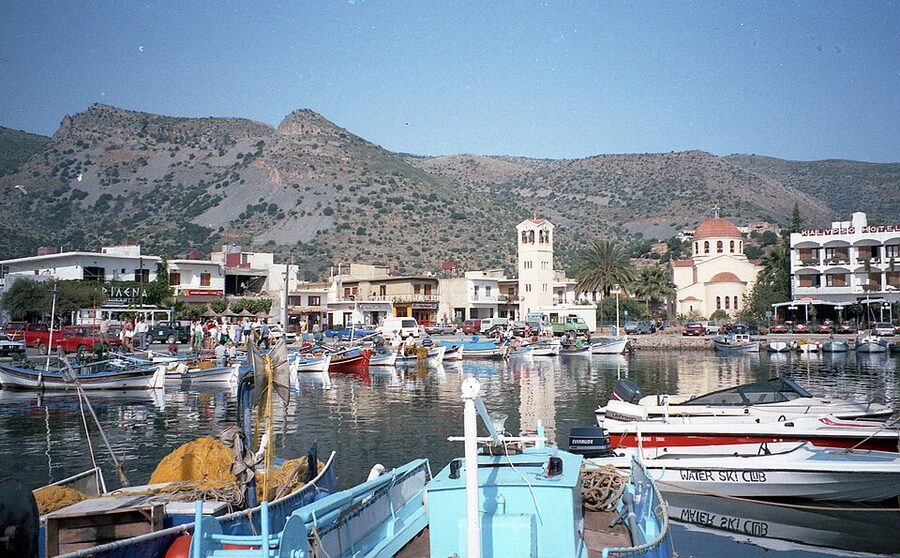
The eating is better in Plaka than in Elounda for the size, and noticeably cheaper. Taverna Giorgos and Taverna Kapetan Nikolas are the two that show up consistently for grilled fish and stuffed kalitsounia. Eat early, before 8pm, because both fill with the night-boat crowd off Spinalonga.
If you are continuing on a longer Crete loop, Spinalonga is one of three obvious eastern stops. The other two are the Lasithi Plateau (windmills, almonds, the Diktaean cave where Zeus was supposedly born) and the palm-beach at Vai on the far east coast. Pace them. A day on Spinalonga followed by a day on the Lasithi mountain road is fine. A day on Spinalonga followed by a long western drive to Balos and Gramvousa on the Kissamos side is brutal.
Practical Notes for the Day
The island is open daily from 8am to 7pm in high summer (June through September), 8.30am to 4pm in winter. Entry is 8 euros for the archaeological site, free for under-18s and for EU students with ID. Last entry is one hour before closing. The ticket booth takes card.
There are toilets on the island near the entry gate. There is no cafe, no shop, no shade above the village. Bring water. Two litres per person if you are walking the upper bastions in July or August.
The walk from the boat dock up to the highest point and back is around 2 kilometres total, almost all of it on uneven stone or shallow steps. Closed shoes are sensible. Sandals are fine for the lower village. Flip-flops are not enough.
You will want around 90 minutes on the island to do it properly. Two hours if you are reading the museum panels and walking the cemetery slowly. Boat tours that give you 60 minutes feel rushed. Boat tours that give you over 2 hours start to drag in the heat. The 90-minute slot is the sweet spot.
The Hislop Effect
It is impossible to talk about Spinalonga in 2026 without reckoning with Victoria Hislop. The Island is what put the colony back in the Greek public imagination after 50 years of relative silence. The TV adaptation cemented it. Hislop herself was made an honorary Greek citizen in 2020, partly in recognition of her novel’s role in restoring this corner of Cretan history.
The novel is fiction, but the historical scaffolding is genuinely accurate. Hislop spent two years with surviving relatives of patients, with descendants of the doctors who served on the island, and with the small academic community that has worked on Greek leprosy history. Most of the shapes she describes (the bakery, the cinema, the night ferry from Plaka, the role of Father Chrysanthos) are real. The patient politics and the hierarchy under Remoundakis are drawn from primary sources.
What she changed, mostly, is interior life. The composite character at the centre of the novel is invented. The specific romance is invented. The continuity of the Plaka family is partly invented. None of that diminishes the book. It just means that if you are visiting because of the novel and you find yourself looking for Eleni’s house, you will not find it. You will find something better, which is the actual lane the actual women walked in 1939.
For Greeks, the equivalent reference point is the 2010 series rather than the book. If your Cretan boat captain or guide is in their 40s or 50s, they probably watched To Nisi on Sunday nights with their family for six months in 2010. Ask them about it. The answers are interesting.
If You Are Doing Spinalonga as Part of a Bigger Greece Trip
Spinalonga sits naturally inside a wider eastern-Mediterranean island and history loop. If your Greece itinerary started in Athens and you have already done the Acropolis walking tour or the Acropolis combo ticket, the long-arc story carries through nicely: Bronze Age palace at Knossos to Classical Athens to Byzantine and Venetian Crete, and Spinalonga is the late chapter in that fortified-Greek-island arc. The sea-day rhythm is the same shape as the Saronic Gulf three-island cruise from Athens, just with a much darker history.
For coastal pacing, the obvious next sea day on Crete is the long western drive to Balos and Gramvousa, where another Venetian sea-fort sits on top of an even more remote rock. If you are doing the volcanic-island side of Greece, the Santorini caldera cruise and the Santorini BBQ catamaran are the natural pairings. They are completely different sea days, but they share the trick of putting you on small water with old stories.
On wider Mediterranean parallels, if Spinalonga is your first proper Venetian fortress, you will see the same engineering vocabulary at the Alhambra in Andalusia, where 16th-century Christian additions sit on top of much older Moorish walls. Closer to the equestrian tradition that Crete shares with southern Spain, the Jerez Andalusian horse school is a useful cross-reference. The link is not casual, the Venetians and the Spanish were trading horses, fortification engineers, and religious orders along the same shipping routes for two centuries.
Booking Tips, in Order of Usefulness
Book at least two days ahead in July and August. The flagship Agios Nikolaos coach day sells out on the day in peak weeks, and the boat-only Agios Nikolaos cruise is full by 9am most summer mornings. Outside July and August you can usually walk up.
If your Crete hotel is on the Heraklion side and you do not have a car, the coach day is your only realistic option. Trying to take a regional bus to Agios Nikolaos and then a boat is a 12-hour day with too many transfers.
If you are staying in Elounda, do not book the Agios Nikolaos cruise, that is a longer boat ride than you need. Walk down to the Elounda kiosks the day before and pick a 15-minute Plaka or harbour crossing.
If the weather forecast is windy, expect Plaka and Elounda short crossings to keep running while Agios Nikolaos longer cruises get cancelled. The big Mirabello Gulf gets choppy in north winds. Plan a backup, like the Meteora day if you are connecting through Athens, or the inland Delphi run.
Arrive at the Agios Nikolaos quay 30 minutes early on cruise days. The ticket queue moves slowly and the boats leave on time.
What I Would Do With a Single Day
If I had exactly one day on Crete and I wanted to do this properly, here is the shape.
Drive or take a transfer to Agios Nikolaos by 8.30am. Park in the long-stay lot just east of the harbour, around 5 euros for the day. Walk to the cruise quay, pick up the morning boat-with-swim ticket. Take the 9am or 9.30am sailing. Forty-five minutes across the gulf. Ninety minutes on Spinalonga, including the cemetery and the small museum. Quick swim at Kolokytha on the return leg.
Back in Agios Nikolaos by 2.30pm. Lunch at one of the south-side Voulismeni cafes, or up the hill at one of the better tavernas on Koundourou. An hour at the archaeological museum. Coffee at a harbour-side terrace. Drive back via the Lasithi mountain road if you have the energy and the time, or straight back along the coastal highway if not.
That is a complete day with no rushing. About 9 hours door to door from Agios Nikolaos, longer if you are coming from Heraklion. Total cost in 2026 prices: around 35 euros for the cruise, 8 euros island entry, 5 euros guide tip, 25 to 35 euros for lunch and coffee, plus your transfer. Call it 80 to 100 euros for the full day, depending on appetite.
More Greece Guides
If Spinalonga is your eastern Crete day, the obvious western pairing is the long drive to Balos and Gramvousa, where another Venetian sea-fort sits on top of a remote rock at the opposite tip of the island. For the Aegean leg of a wider trip, the Santorini caldera cruise is the natural pairing, and if you are connecting through the capital before or after, the Saronic Gulf three-island day from Athens is the closest cousin to the long Mirabello morning you have just done. Take the early boat, pay the guide, walk to the cemetery. Those three calls are what turn a museum visit into the day people actually remember.