
You start the climb at the gate, and within ten minutes the marble underfoot has changed character. Worn smooth by 2,500 years of feet, polished slippery enough that you take small steps even in dry weather. The rock radiates heat back at you. Then the column drums of the Parthenon facade lift over the rise, and a guide who knows their stuff is already pointing at the stones below your feet, telling you which century each block belongs to.
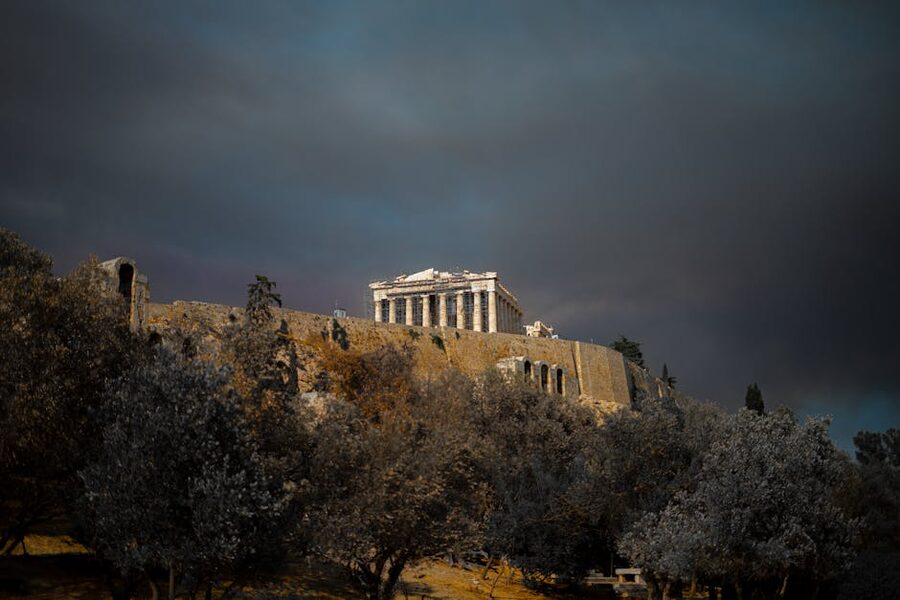
This is the second piece in our Athens Acropolis pair. The first one covers combo tickets that bundle multiple archaeological sites and how to read them. This one is for the readers who already decided they want a guide. Below: which Acropolis walking tour is actually worth the money, what a good guide will show you that signs can’t, and the small-group versus private versus museum-included calculation.
- In a Hurry? Three Acropolis Walking Tours Worth Booking
- Why a Guide Is the Move on the Acropolis
- What I mean by “licensed guide”
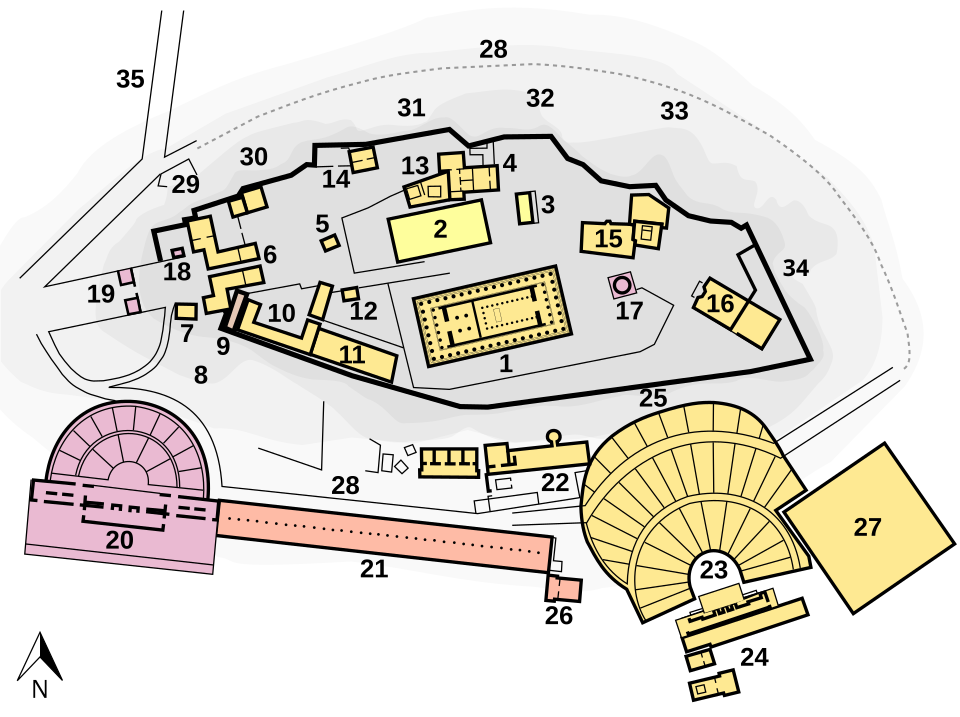
- Six Things a Good Acropolis Guide Will Show You
- 1. The Pelasgian wall on the west approach
- 2. The Doric column inside the Propylaea
- 3. The Erechtheion’s porch of Caryatids
- 4. The choragic monument of Thrasyllos
- 5. The Theatre of Dionysus
- 6. The Belvedere viewpoint
- The Three Walking Tours I’d Actually Book
- 1. Acropolis & Parthenon Guided Walking Tour:
- 2. Acropolis, Parthenon & Acropolis Museum Guided Tour:
- 3. Acropolis & Mythology Highlights Small Group Tour:
- Small Group, Private, or Museum-Included? How to Pick
- Standard walking (about 50 people, -45)
- Small group (around 20 people, -65)
- With Acropolis Museum included (-55)
- Private (1-6 people, 0-450)
- The Bits Most Walking Tours Skip and How to Add Them Back
- Practical Booking Tips
- Book the morning slot
- Headset quality varies by operator
- Skip-the-line is mandatory in summer
- What’s actually included in the ticket
- Closure days and reduced access
- What to Wear and Carry
- A Bit of History (For When You’re Standing There)
- If You Have Half a Day After
- If You Have a Full Day After
- Booking Logistics: When to Lock It In
- Currency and tipping
- Athens Continues from Here
In a Hurry? Three Acropolis Walking Tours Worth Booking
Best overall walking tour: the Acropolis & Parthenon guided walking tour from $40. Licensed Greek guide, skip-the-line entry, two hours on the rock.
Best with the museum: the Acropolis + Parthenon + Acropolis Museum combo from $40. Three hours, hill plus the climate-controlled museum where the original Caryatids live.
Best small group with mythology focus: Acropolis & Mythology Highlights small group tour from $53. Caps at 20, lots of stories, useful if you have kids who learn through narrative.
Why a Guide Is the Move on the Acropolis
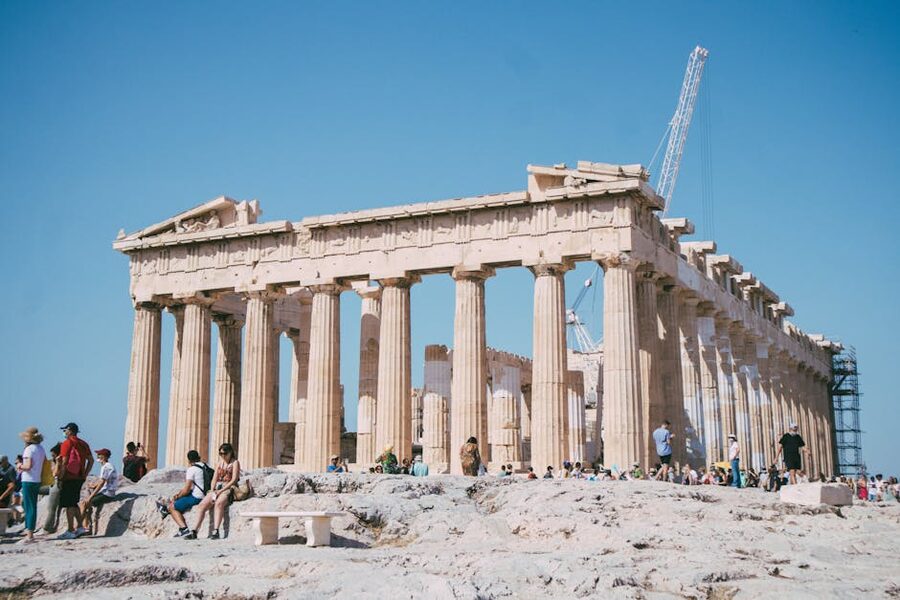
I’ll be blunt about it. The Acropolis without a guide is one of the more confusing famous sites in Europe. There are barely any signs. The interpretive panels at the gate are decent on the Parthenon and almost silent on everything else. You can stand directly in front of the Erechtheion and miss what makes it strange. You can walk past the choragic monument of Thrasyllos and not know it exists.
The signage gap is partly archaeological caution. The site is layered: Mycenaean, Pelasgian, Archaic, Classical, Roman, Byzantine, Frankish, Ottoman. Different ministries have rebuilt different bits in different decades. A printed sign would either be a wall of text or wrong by next year, so they mostly skip it. A licensed guide is the workaround.
The other reason: a guide handles the queue. Guided walking tickets are issued separately, and a good operator gets you past the ticket line and the security line in one motion. On a hot July afternoon that can save 45 minutes. We compare the queue logistics in detail in our Acropolis combo ticket guide, but the short version is that the walking tour ticket and the combo ticket use the same fast lane.
What I mean by “licensed guide”
Greek law restricts archaeological-site commentary to guides who hold a state licence. The licence requires a four-year university degree in archaeology, art history, or a related field, plus an exam. So when an operator says “licensed local guide,” they’re not just using flattery. They’re saying the person on the headset is allowed by Greek law to talk to you on the hill. Some online tours skirt this with “city hosts” who are not licensed; those are forbidden from interpreting at the site itself, and a ranger can shut the group down.
For the three tours I cover below, all use licensed guides. If you book outside this list, ask. If they hesitate, book a different one.
Six Things a Good Acropolis Guide Will Show You
This is the section I wish someone had given me before my first walking tour. Below are the six stops where a guide changes the experience from “famous old hill” to “I now understand what I’m looking at.” If you’ve already booked, treat it as a checklist. If you haven’t, it’s a reason to spring for one of the longer options instead of the 90-minute express version.
1. The Pelasgian wall on the west approach
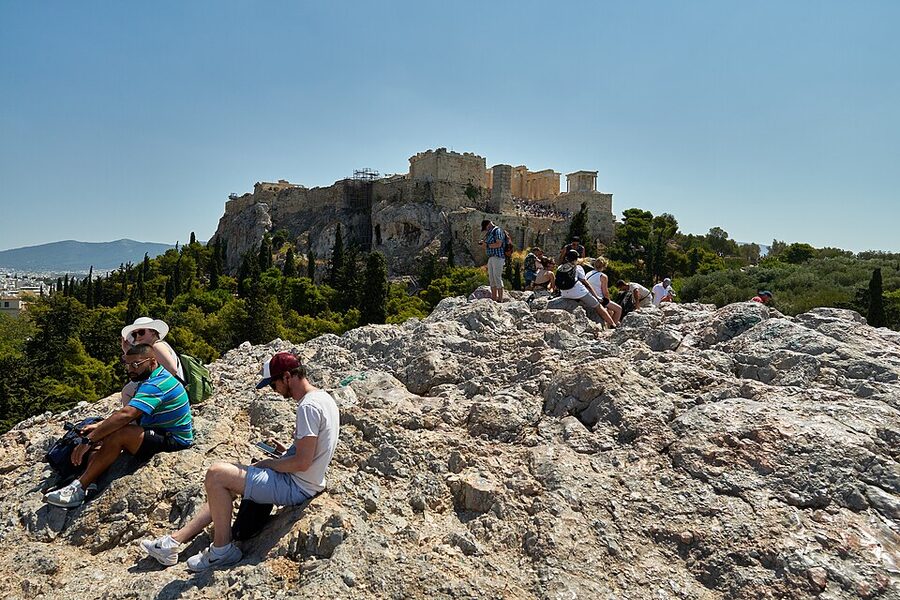
Before you walk up the modern path, look right at the cyclopean blocks built into the cliff. Those are from the 13th century BC, predating the Parthenon by nearly 800 years. Locals called them “Pelasgian” because legend said pre-Greek Pelasgians built them, and the name stuck. A guide will point at one specific seam where Mycenaean stones meet Classical stones meet Byzantine repair, all in one wall. You’re looking at three civilisations stacked vertically. Without commentary, it reads as just another rough wall.
2. The Doric column inside the Propylaea
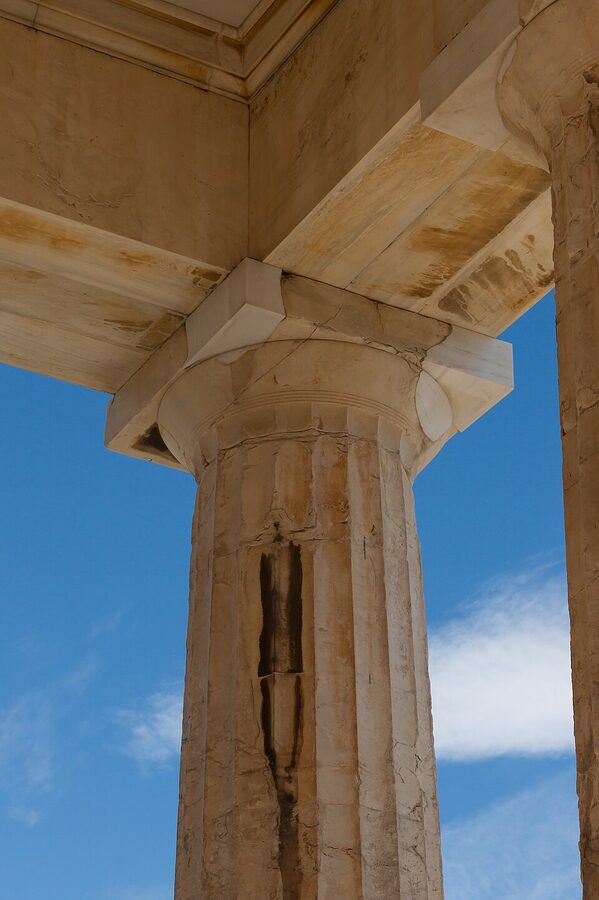
The Propylaea is the monumental entrance, and most people barrel through it because they’re rushing for the Parthenon view. A guide will stop you here. They’ll point out that the architect Mnesicles ran out of budget when the Peloponnesian War broke out and the building was never finished. You can see the exact column where the work stops. The unfinished blocks are still rough on one side and polished on the other. It’s one of those small details that flips a tourist site into a story.
3. The Erechtheion’s porch of Caryatids
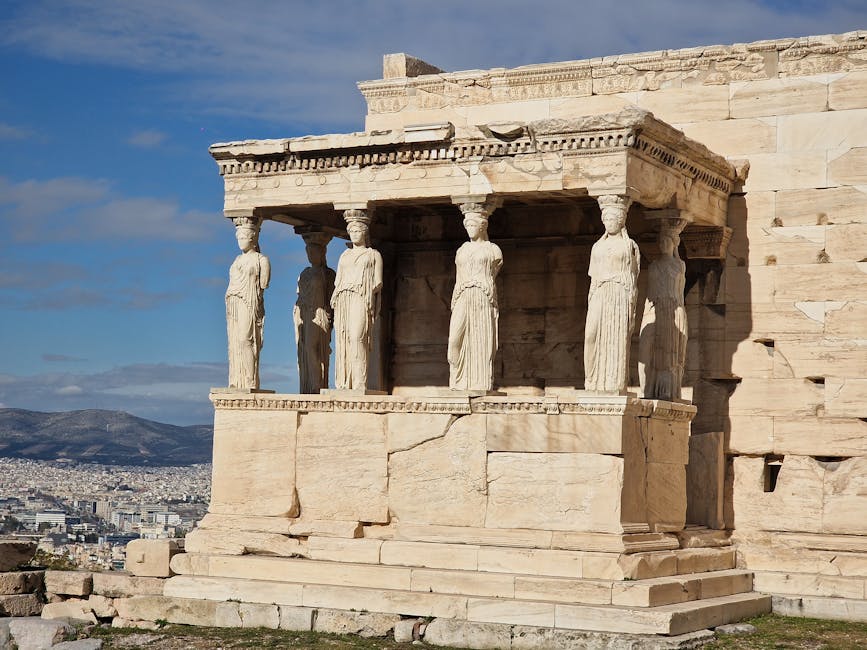
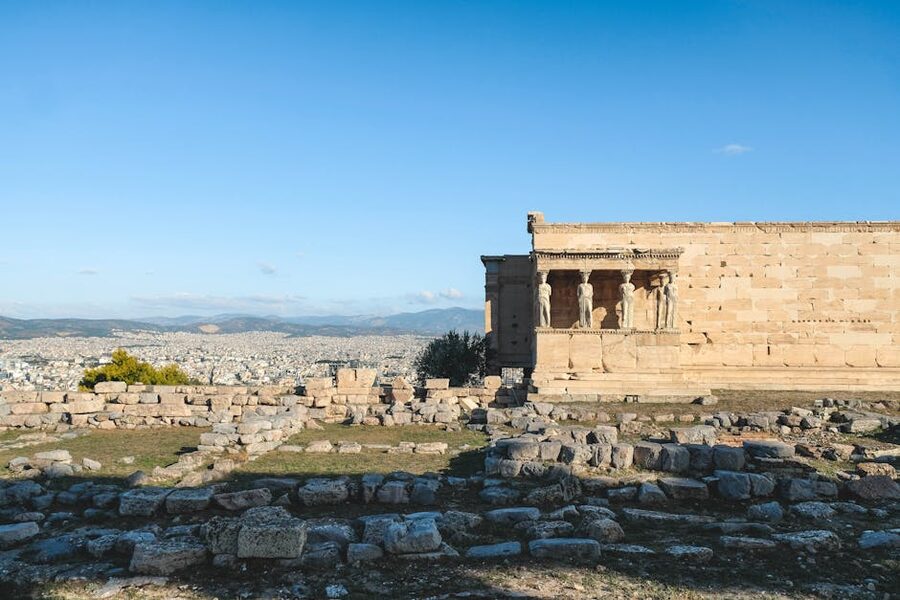
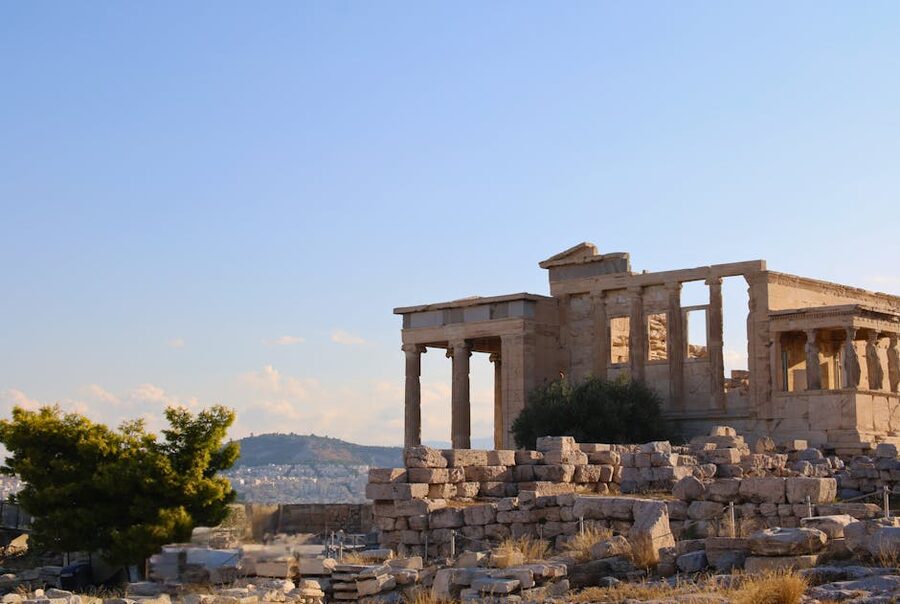
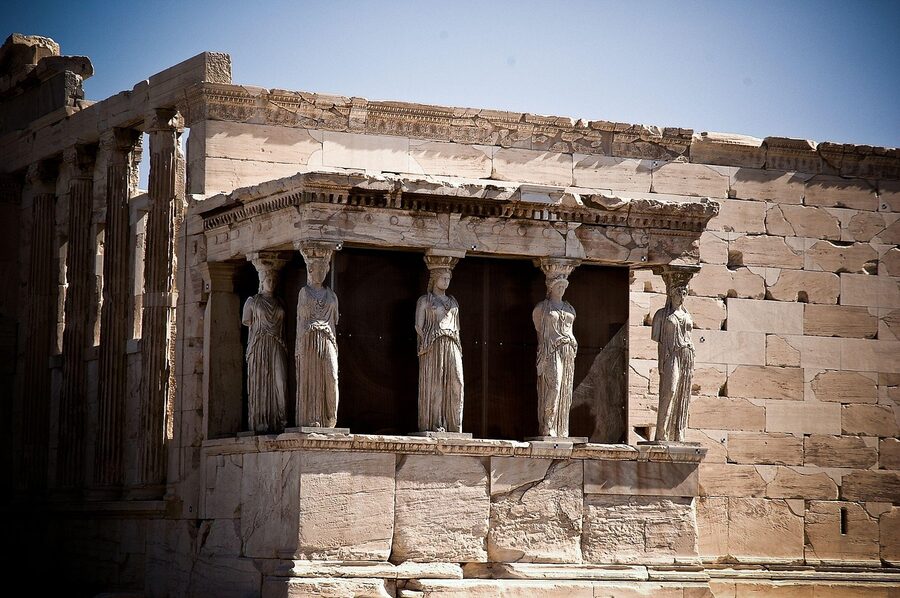
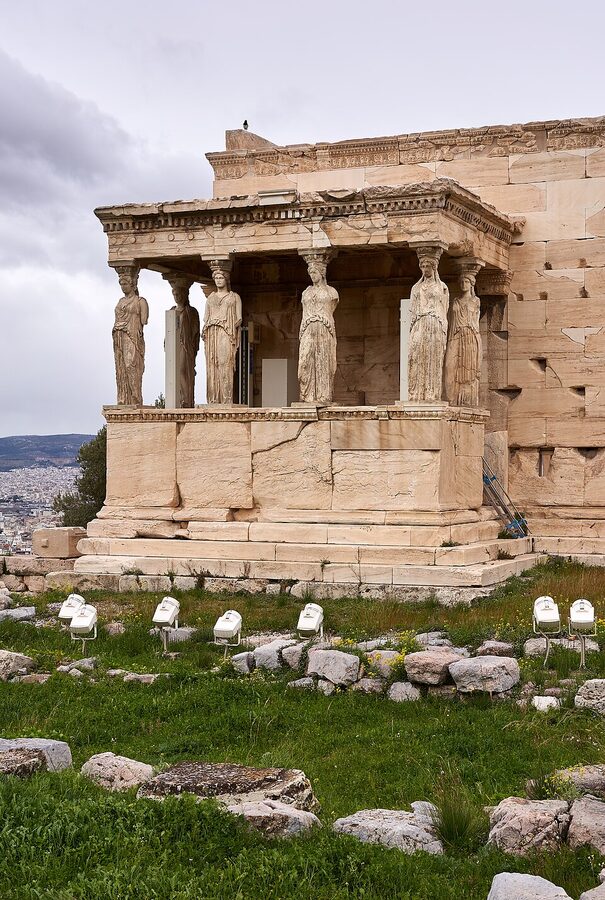
The Erechtheion is the asymmetrical temple north of the Parthenon, and its porch of the Caryatids is the most photographed corner of the Acropolis after the Parthenon facade. Six female figures replace columns, holding the roof on their heads. The ones you see on the hill are casts. The originals were moved to the Acropolis Museum in 2007 to save them from acid rain. A guide will point this out, then walk you around to the north porch where the columns are real and the carved doorway is among the finest surviving Ionic work in Greece. Self-guided visitors almost never go around to the back.
4. The choragic monument of Thrasyllos
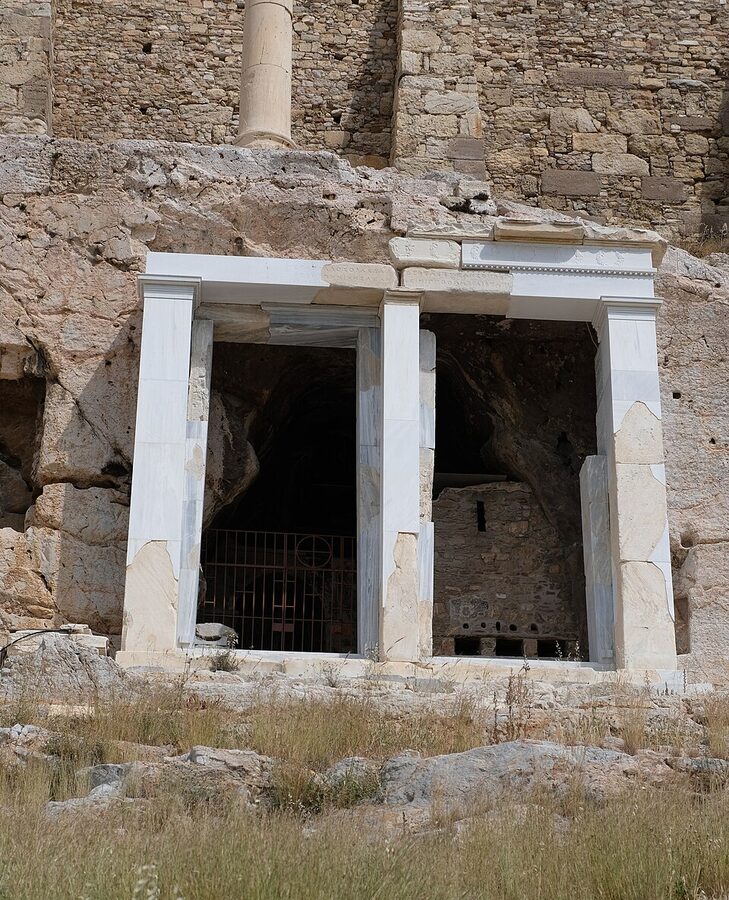
Halfway down the south slope, on the way out, is the choragic monument of Thrasyllos. A choragus was a wealthy citizen who funded a chorus for the dramatic festivals. When their team won, they got to put up a monument bragging about it. Most have vanished. Thrasyllos’s is still here because someone in the Byzantine period turned it into a tiny chapel and that gave it a thousand extra years of structural care. A guide will tell you all of this in two minutes. You’d otherwise walk past it as “another rock-cut something.”
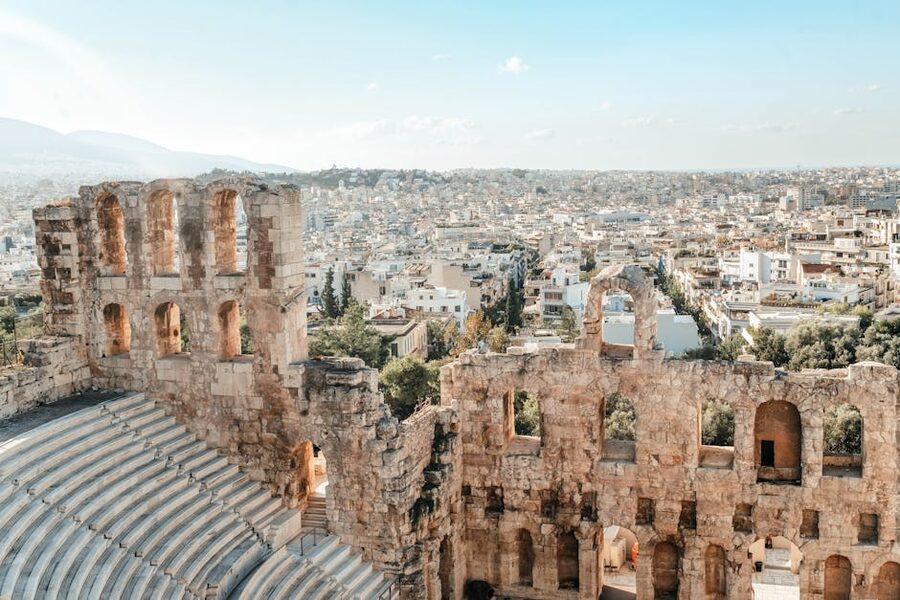
5. The Theatre of Dionysus
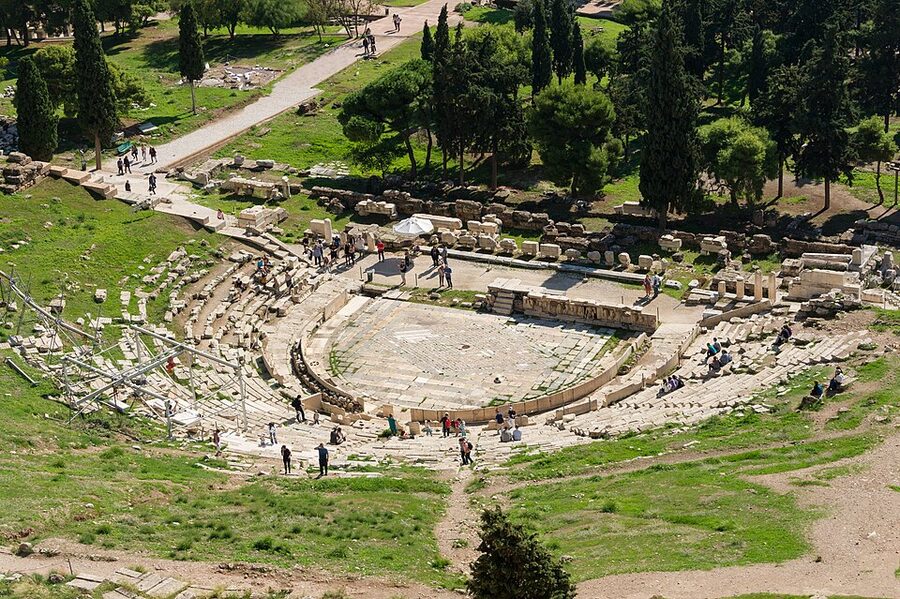
This is where Western drama begins. The current stone seating dates to the 4th century BC. The earlier wooden version, where Aeschylus’s plays were first performed in 458 BC, was a few metres away. A licensed guide will walk you through the seating hierarchy, point at the marble thrones in the front row, and explain how the festival ran across three days with five plays per day. The tour ticket usually includes the south-slope archaeological zone, so there’s no extra entrance fee.
6. The Belvedere viewpoint
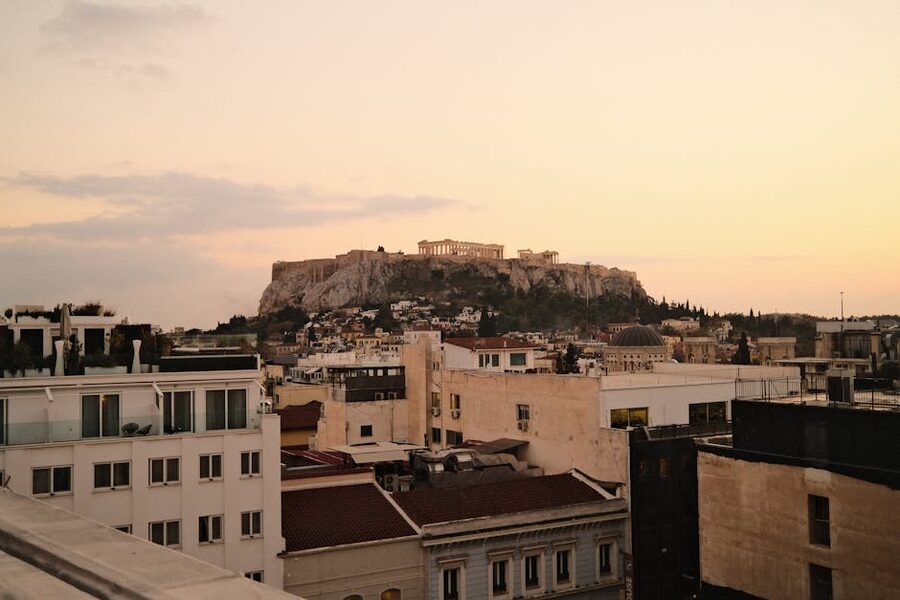
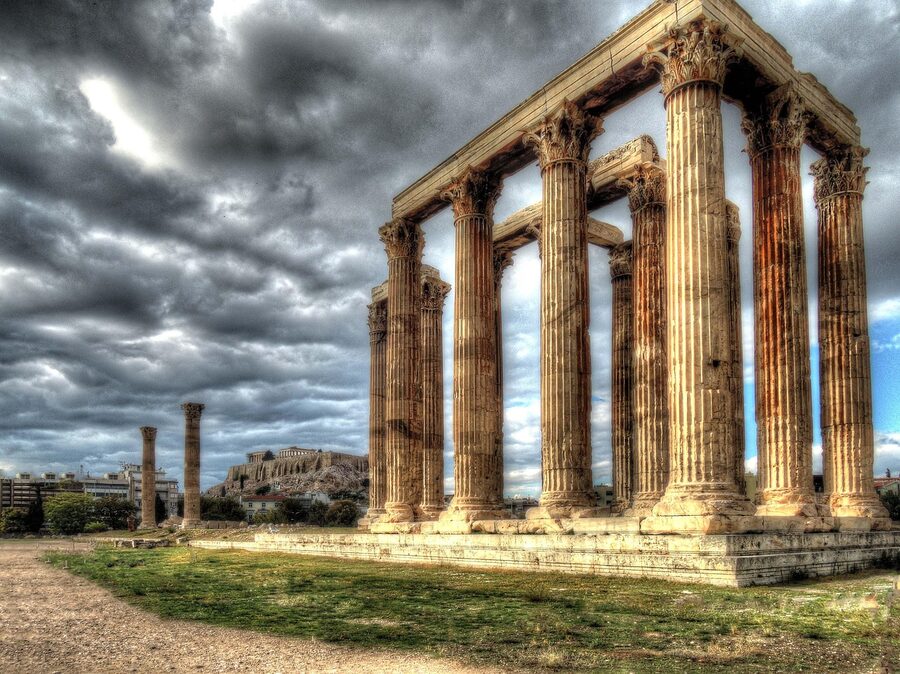
The Belvedere is the small viewing platform on the northeast corner of the Acropolis. A guide will time your visit so you stand here right before walking down, when you’ve already absorbed the buildings and can read the city below. You can pick out Plaka, the Roman Agora, Hadrian’s Arch, the Olympieion temple, and on a clear day the sea. It’s the moment that makes the climb feel earned. Self-guided visitors tend to spend it looking at their phones.
The Three Walking Tours I’d Actually Book
Out of about a dozen Acropolis walking tours that genuinely use licensed guides, three are worth your money. They’re not the cheapest, they’re not the most expensive, and they cover three different angles. Pick by the style of trip you want.
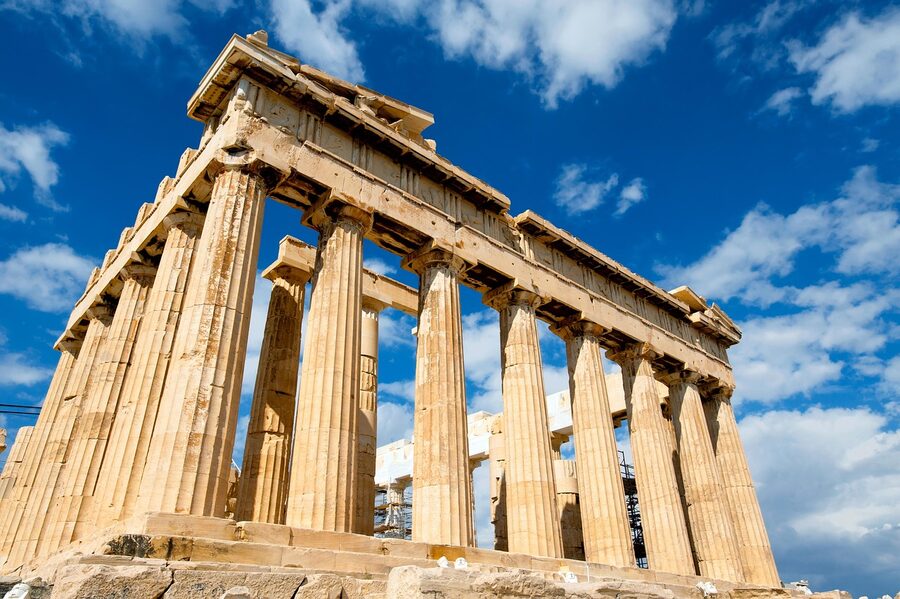
1. Acropolis & Parthenon Guided Walking Tour: $40
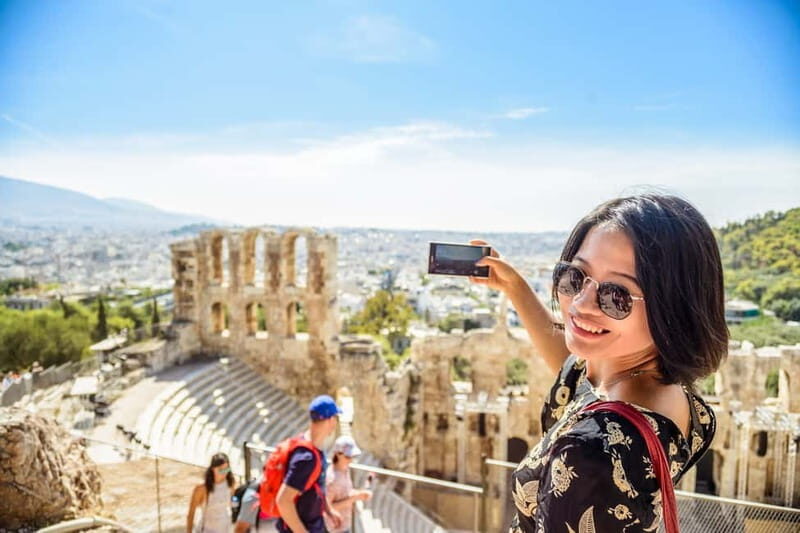
This is the tour I’d book if a friend asked me. A two-to-three hour walk with a licensed guide, skip-the-line entry, headset audio that actually works, and pacing that gives you time at the Erechtheion porch and the Theatre of Dionysus rather than racing for the Parthenon photo. Our full review covers the morning departure cadence and what to expect at the entry gate. Departure times include early-morning slots that beat the heat and the crowds.
2. Acropolis, Parthenon & Acropolis Museum Guided Tour: $40
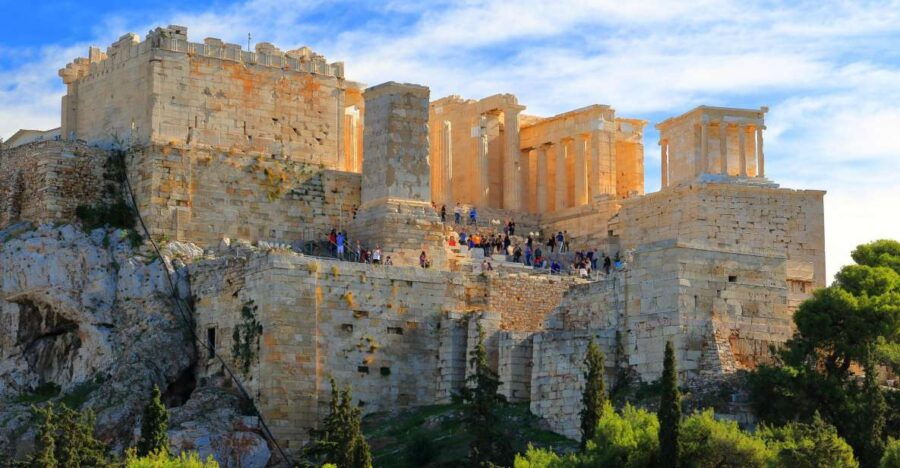
Pick this one if you want the full picture in a single morning. The walk on the rock is paired with a tour of the Acropolis Museum down the hill, where the original Caryatids and the surviving Parthenon frieze blocks are displayed at the same compass orientation as on the temple. Our review breaks down the museum portion and why the air-conditioned second half is welcome on a 35-degree summer day. Museum entry is included, which saves you the separate ticket.
3. Acropolis & Mythology Highlights Small Group Tour: $53
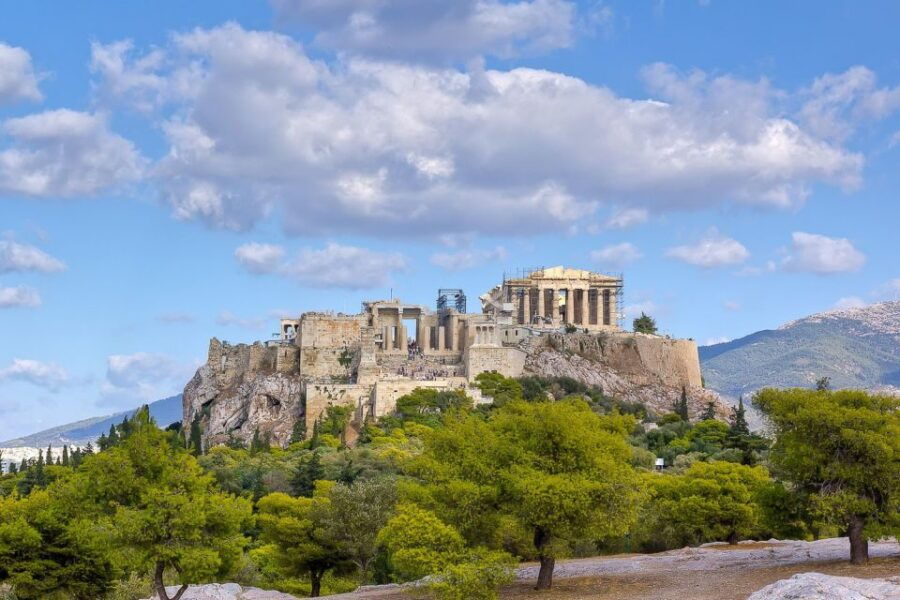
This is the small-group pick. Capped headcount, mythology-led narrative, and a route that takes in the Areopagus rock on the way up where Paul gave his sermon to the Athenians. Our take on this small-group format goes into why it’s the version I’d pick for a family with kids who like stories. Slightly higher price than the flagship, but you trade the crowd of 50 for a crowd of 20.
Small Group, Private, or Museum-Included? How to Pick
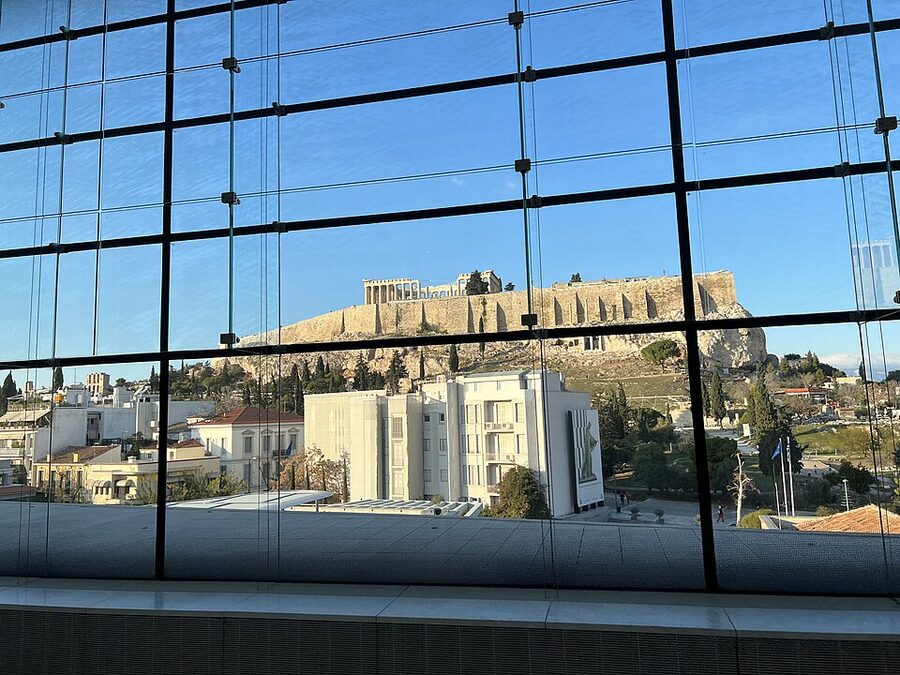
Three different formats, three different reasons to book each. Here’s how I’d think about it.
Standard walking (about 50 people, $35-45)
This is the workhorse format. Around 50 people, headsets, two hours on the rock, licensed guide. The headsets do the work, so the larger group size doesn’t really hurt the listening experience as long as the operator hands out quality units. There are cheaper walking variants at the lower end of that price band, and the budget version sits at $35. The cheaper ones tend to start later in the morning and skimp on the south-slope archaeological zone.
Small group (around 20 people, $50-65)
Pay an extra $15-20 to drop the headcount to roughly 20 and you get a tour where the guide can actually adjust pace to your group. They can pause on the way up the steps without blocking 50 people behind. Worth it if you have a curious kid, an elderly parent, or you simply hate big groups. The mythology-focused small group tour is the most-booked version in this band.
With Acropolis Museum included ($40-55)
This is the format I’d default to if I had only one morning in Athens. The walk on the rock plus the museum below tells the complete story, because the surviving sculpture is in the museum, not on the hill. Our review of the flagship guided + museum option walks through the timing. About three hours total. The museum half is air conditioned, which matters in July and August.
Private (1-6 people, $250-450)
Private guides cost roughly six times what a group ticket costs, and the math only works for two scenarios. Either you have a group of 4-6 (in which case the per-head cost lands close to the small-group rate) or you have a specific archaeological interest you want explored in depth. For most travellers the small-group format hits the right balance.
The Bits Most Walking Tours Skip and How to Add Them Back
Most two-hour walking tours can’t cover everything. Here’s what often gets cut and how to add it back.
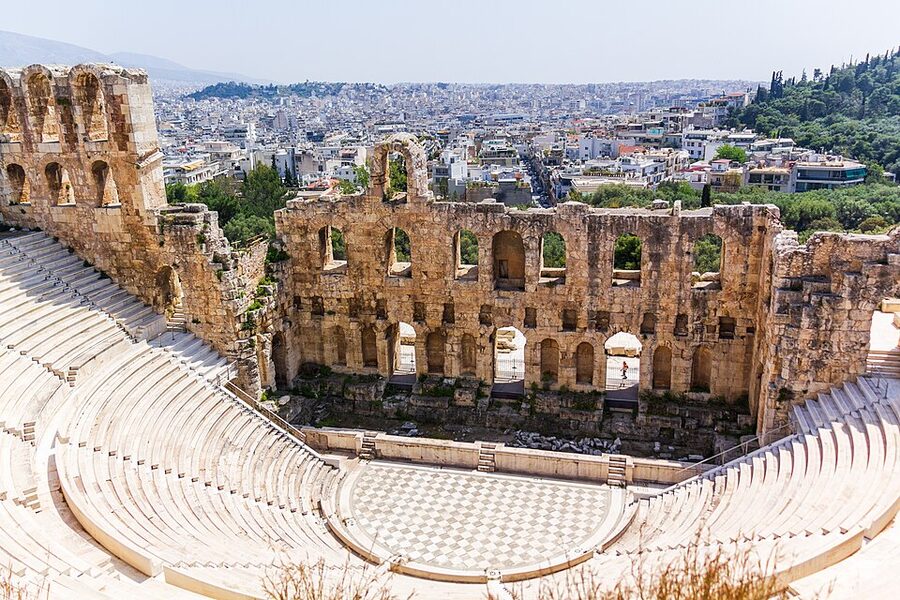
The Odeon of Herodes Atticus. Almost every tour stops at the upper rim above it for the photo, but very few descend to actually walk the orchestra floor. You can do this on your own afterwards if your ticket covers the south slope. It’s a 6-minute walk down the path. The Odeon is closed during summer evenings because performances are running, so visit in the morning if you want the floor empty.
The Areopagus rock. The bare limestone outcrop just below the Acropolis on the west side. Steep, slippery, and worth ten minutes for the view back up at the gate. Mythology-focused tours include this stop. The standard walking tours often don’t.
The Theatre of Dionysus south side. Some tours skip the lower seating because the staircase is rough. If yours does and you want to see it, ask the guide where to go after they release you. The full ticket usually still admits you.
The Acropolis Museum. Only included if you booked the museum-combo version. If you didn’t, the museum entry is currently 15 EUR and you can walk in straight from the south slope exit. Our combo ticket guide covers the museum-and-archaeological-sites pass that bundles them.
Practical Booking Tips
Book the morning slot
The 8am or 8:30am departures are the ones that work. By 10:30 the rock is hot and the entry queue is long enough that even skip-the-line takes 15 minutes. By noon the marble is reflecting heat upward and you’ll regret your shoes. From October to March the calculus changes, and a 10am tour is fine because temperatures behave. From mid-May to mid-September, get up early.
Headset quality varies by operator
Not all licensed-guide tours are equal on hardware. The flagship operators use modern bluetooth headsets that don’t crackle in wind. The cheap ones use older receiver-and-earpiece kit that catches static near electrical interference, of which the Acropolis has a lot from cranes and lighting rigs. Read the recent reviews on the booking page; if recent visitors complain about audio, it tends to repeat.
Skip-the-line is mandatory in summer
From June through September the entry queue without skip-the-line can run an hour. Every tour I’m recommending here is skip-the-line. If you book one without that feature to save $5, you’ll lose it back in queue time and probably also in the bottom of an empty water bottle.
What’s actually included in the ticket
The Acropolis ticket admits you to the rock and the south slope (Theatre of Dionysus, Odeon of Herodes Atticus, choragic monuments). It does not include the Acropolis Museum. The museum is a separate ticket or a combo. The Acropolis Museum is across the street, two minutes downhill from the south exit, and is the natural second half of any walking tour. The museum-included tours bundle both.
Closure days and reduced access
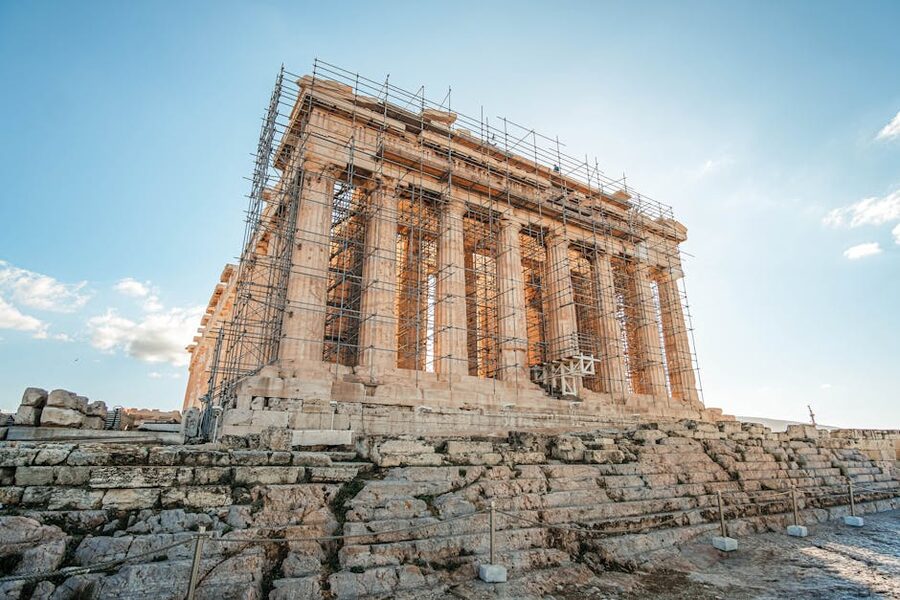
The Erechtheion is occasionally closed off for restoration work, especially the porch of the Caryatids. The Parthenon itself has been under continuous restoration since 1975 and there will always be at least one crane in the photos. The Propylaea was closed for several months in 2024 for masonry work. Booking platforms don’t always update closure information, so check the official site before booking if a specific monument matters to you.
What to Wear and Carry
I’ll spare you the generic packing list and just flag the four things that actually matter on the rock.
Closed-toe shoes with grip. Sandals fail on polished marble. The walk up has at least three sections where the path is smooth, sloping limestone with no railing. Trainers or hiking-style sandals with rubber soles work. Heels are forbidden by site rules anyway because they damage the stones.
A hat with a brim. No shade on the summit. The Parthenon is north of where you stand for the photo, so the sun is on your face for most of the visit. A baseball cap works. A wide-brim is better.
One litre of water per person. There’s a water fountain near the gate but no shop on the rock itself. The summit is dry. You can refill at the south-slope exit before you head to the museum.
A light scarf or wrap. The Theatre of Dionysus seating is cold marble. If your tour includes a sit-down moment for the storytelling, you’ll appreciate something between you and the stone, especially in spring or autumn.
A Bit of History (For When You’re Standing There)
The hill has been continuously occupied since the Neolithic. The Mycenaeans fortified it around 1300 BC, and traces of that wall (the Pelasgian wall I mentioned earlier) are still visible. The buildings you see today were almost all commissioned by Pericles in the 5th century BC, after the Persian invasion of 480 BC destroyed the previous temple complex. The Parthenon, the Propylaea, the Erechtheion and the Temple of Athena Nike were all built between 447 and 406 BC, mostly under the supervision of Pheidias and Mnesicles.
The Parthenon stayed largely intact for nearly 2,000 years, partly because it kept getting reused. It was a Christian church for about a thousand years, then an Ottoman mosque, then a powder magazine. The reuse is what kept the roof on. In 1687 a Venetian shell hit the powder store and the central section blew out. That single explosion did more damage to the Parthenon than the previous 21 centuries combined.
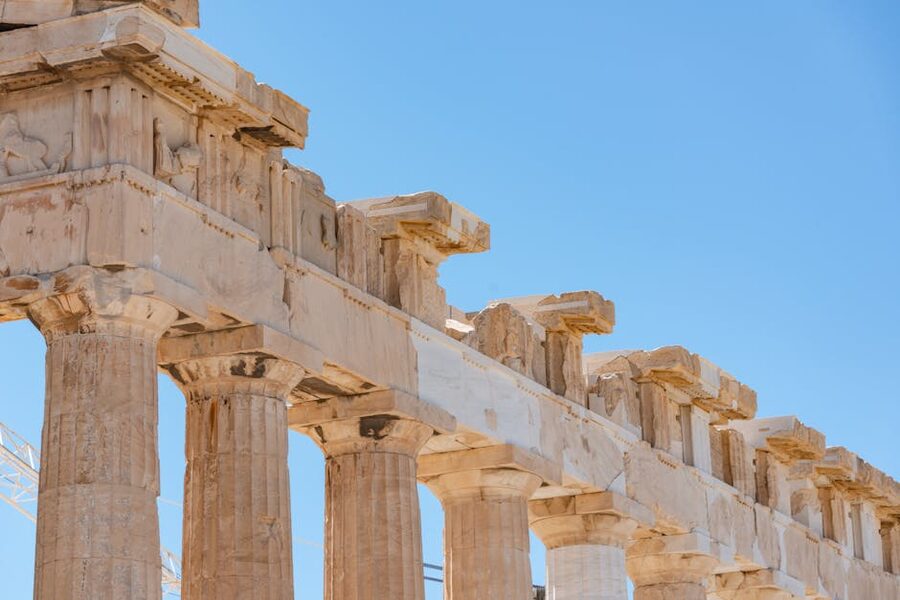
Restoration began in earnest in 1975 and is ongoing. The Greek team has reversed earlier 20th-century repairs that used iron clamps which corroded and split the marble. The current method uses titanium clamps and computer-modelled block replacement. Every block taken down is either restored and replaced, or copied in fresh Pentelic marble from the same quarry the original builders used. A walking tour guide will usually point at one specific block on the south colonnade where you can see the new marble’s brighter colour against the weathered originals.
If You Have Half a Day After
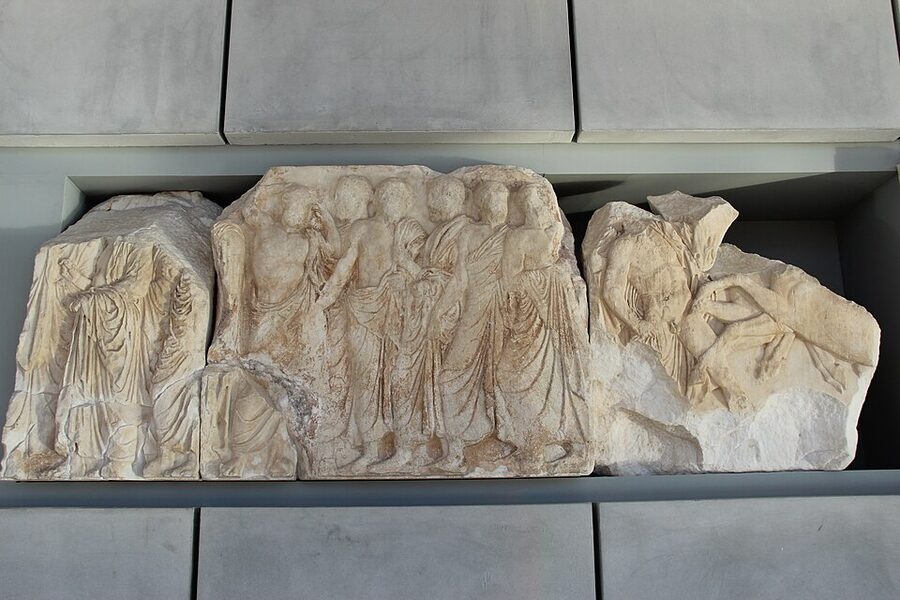
The Acropolis walking tour ends at the south exit, two minutes from the Acropolis Museum. If your tour didn’t include the museum, walk straight in. The ground floor alone is worth an hour: glass floors over Roman streets, plus the Archaic-period kouros and kore statues from the rock itself. The third floor (the Parthenon Gallery) is laid out at the same compass orientation as the Parthenon, with originals where they survive and white plaster casts where the British Museum still holds them.
From the museum, Plaka is a 5-minute walk. The Roman Agora and the Tower of the Winds are 10 minutes. Our combo guide breaks down the multi-site passes if you want to add the Roman Agora and the Olympieion to the same day.
If You Have a Full Day After
Cape Sounion in the late afternoon is the obvious move, and one I covered in detail in our Cape Sounion sunset tour guide. The tour buses leave Athens around 2pm, you reach the Temple of Poseidon by 4 or 5pm depending on the season, and you watch the sun go down behind the columns. It pairs naturally with a morning Acropolis walk because the geographies and energy levels match.
If you want a different rhythm, Meteora is a longer day out and one of the most photogenic places in Greece. The Meteora day-trip guide covers the practical logistics, including the train option that beats the bus on time and price. It’s a long day, but the Byzantine monasteries balanced on rock pillars are worth the early start.
Booking Logistics: When to Lock It In
For a flagship walking tour, two weeks ahead is comfortable in shoulder season (April-May, October-November). For July and August, book three to four weeks ahead. The 8am slots sell out first because they’re the only ones that beat the heat. The small-group versions sell out fastest of all, sometimes a month ahead in peak season. Weekend slots fill faster than midweek.
The two cancellation policies you’ll see on the booking platforms are 24 hours full refund (most tours) and 48 hours full refund (some smaller operators). Both are reasonable. I would not bother with insurance for a tour at this price point unless you’re booking a private guide.
Currency and tipping
Tickets are priced in EUR or USD depending on the platform. They charge in EUR at the gate. Tipping is not expected for guides in Greece, but a 5-10 EUR tip on a $40 tour is appreciated and customary if the guide was good. Round groups together for a single tip rather than each person tipping separately.
Athens Continues from Here
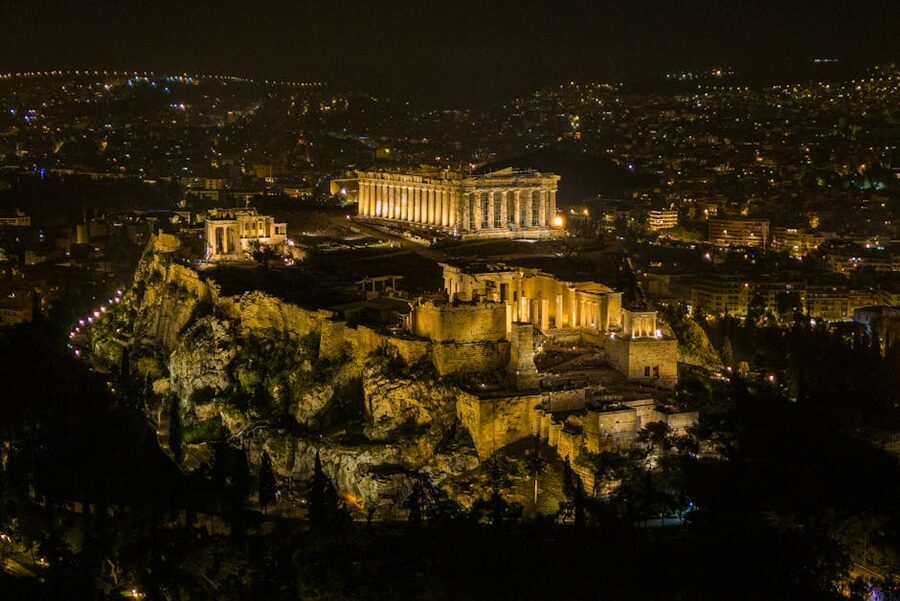
If the Acropolis hooked you, the rest of Athens is built around it in concentric rings. Once you’ve done the rock with a guide, the city map starts making sense. The combo passes I covered in the Acropolis combo ticket guide are the most efficient way to add Hadrian’s Library, the Roman Agora and the Olympieion. For a half-day after, the Cape Sounion sunset tour ends the day with a Poseidon temple over the Aegean, and for a longer trip out, the Meteora monasteries day trip from Athens is the marquee Greek mainland excursion. If you’re moving on through the Mediterranean, the same licensed-guide-on-an-old-building format applies at Granada’s Alhambra, where the commentary makes the long walk make sense.