
It’s the smoke from the souvlaki spits in Psyrri at lunchtime that gets you first. A koulouri seller at the metro exit hands over a warm sesame ring before you’ve finished asking what it costs. By the time you’ve walked four blocks, a woman on Aiolou street is dragging fresh-fried loukoumades through honey at a stand and you’re already hungry again. This is Athens at noon, and a good walking food tour is mostly about giving you a guide who knows which of these small stops to actually stop at.
This guide covers how to actually book a Greek food walking tour in Athens that’s worth the money, what shows up on the route at almost every stop, the difference between an ouzeri and a mezedopoleion (it matters), and the three tours I’d put on a shortlist over everything else. Walking is short, eating is the point. If you’ve already locked in your archaeology day, this slots best on the rest day after an Acropolis walking tour or before a long Delphi or Meteora bus ride.
Short on time? Here are my top picks:
Best overall foodie tour: Athens Greek Foodie Small-Group Tour from $81. Four hours, around eight stops, the most-booked Greek food walk in Athens. The default pick if you’ve never done one before.
Best street-food focus: Athens Street Food Tasting Small-Group Tour from $67. Pure souvlaki, koulouri, loukoumades, bougatsa run. Less ouzeri sit-down, more eating on your feet.
Best market-and-shops route: Athens Local Market and Shops Greek Food Tour from $62. Heavier on Varvakios market and the small olive, cheese, and honey shops behind Athinas street.
- What an Athens Food Walking Tour Actually Includes
- The Foods You’ll Actually Eat in Athens
- The Ouzeri vs Mezedopoleion Distinction (And Why It Matters)
- Where Athens Food Tours Actually Go
- Varvakios Market: Where the Food Tour Actually Earns Its Money
- The Three Athens Food Tours Worth Your Money
- 1. Athens Greek Foodie Small-Group Tour:
- 2. Athens Street Food Tasting Small-Group Tour:
- 3. Athens Local Market and Shops Greek Food Tour:
- Booking Logistics: When, Where, and How to Pay
- How a Food Tour Fits Into a 2-3 Day Athens Trip
- Practical Things People Get Wrong
- FAQ-style Bits I Get Asked
- More Athens Anchor Days Worth Pairing
What an Athens Food Walking Tour Actually Includes
Most Athens food tours run for three and a half to four hours and cover six to eight stops between Monastiraki, Psyrri, and Plaka. You walk maybe 2 kilometres total, in slow bursts of five to ten minutes between bites. The walking is easy. The eating is what gets you.
At each stop you’ll get one to three small tastings plus a drink, alternating between standing-up street food and sit-down tavernas. By the end of a four-hour tour, that’s usually 12 to 15 different items and a couple of glasses of wine, ouzo, or frappé. The good operators tell you the stops in advance. The great ones leave room to swap one out if a particular bakery sold through, which happens with the better spots in the middle of the day.
Group sizes vary a lot. Small-group caps at 8 to 12 people. Larger group versions can hit 16 or 18, which is too many for a small Psyrri taverna to handle gracefully. You end up split across two tables and miss half the guide’s commentary. Pay extra for the small group every time. It’s the single biggest predictor of whether the tour works.
Almost every tour includes:
- A licensed Athens-based guide who lives in the city, not a touring contractor
- All food at each stop, served family style or wrapped in paper
- One or two drinks across the tour (typically wine, ouzo, or frappé)
- Real context on the dishes, the neighbourhoods, and how Athenians actually eat
What’s usually not included: tips for the guide (10 to 15 percent is the going rate in Athens), any drinks beyond the pre-arranged ones, and getting yourself to the meeting point. Vegetarian and vegan options exist on most tours but you have to flag it at booking, not on the day. If you want a deeper sit-down meal as well, our Acropolis walking tour guide talks through the post-tour taverna run that pairs well with these.
The Foods You’ll Actually Eat in Athens
Greek food at street level is cheaper than people expect. A souvlaki pita is two and a half to four euros at most stands. A spanakopita is one fifty to two. A frappé sits around two and a half. The walking tour saves you the awkwardness of ordering at a place that looks intimidating, not the money.
Here’s what shows up on almost every Athens food tour:
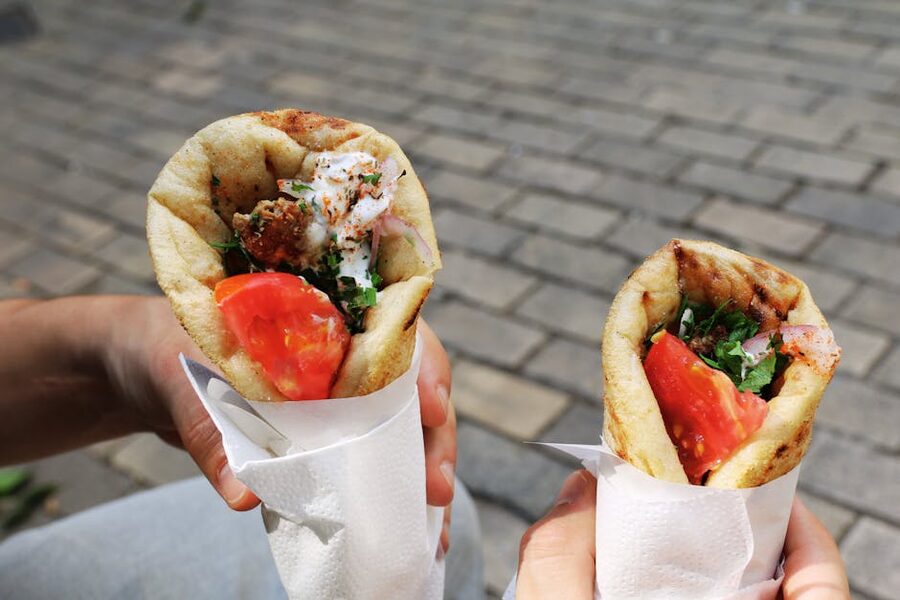
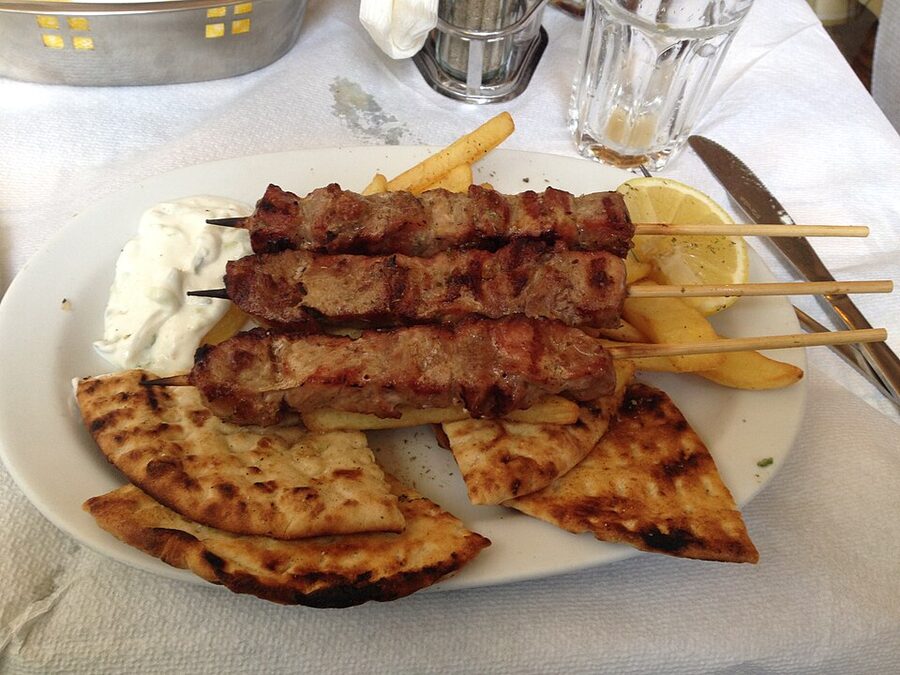
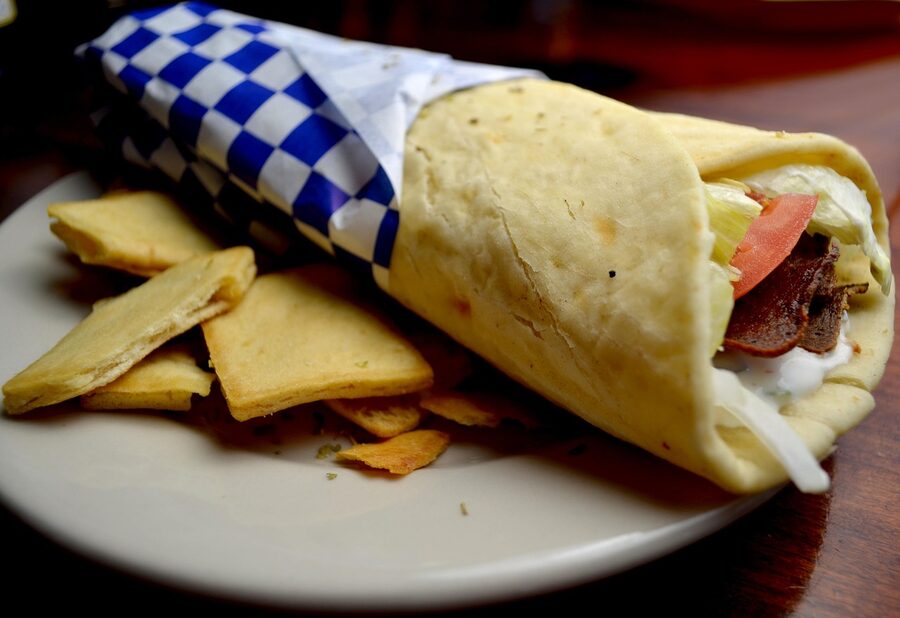
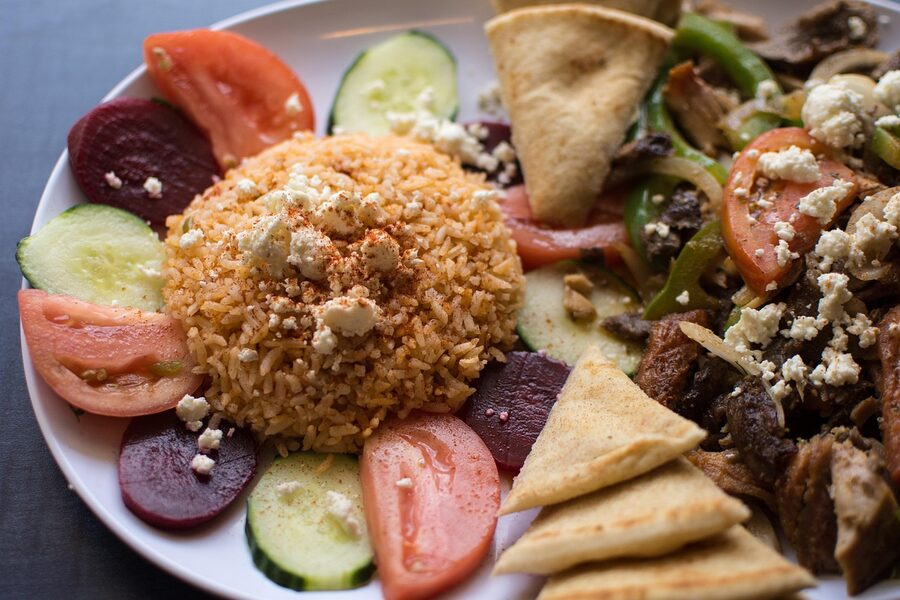
Souvlaki and gyros. The two get conflated by visitors. They’re not the same thing. Souvlaki is the skewer, small cubes of pork or chicken grilled over coals. Gyros is the rotating spit, big stack of marinated meat shaved off as it cooks. Both end up wrapped in pita with tomato, onion, tzatziki, and a bit of paprika or oregano. A good guide will get you to taste both back to back so you can actually feel the difference. The pork gyros at the Psyrri stand on Mitropoleos is what most locals eat at lunch. The chicken souvlaki at the spot near Monastiraki market gets the late-night queue.
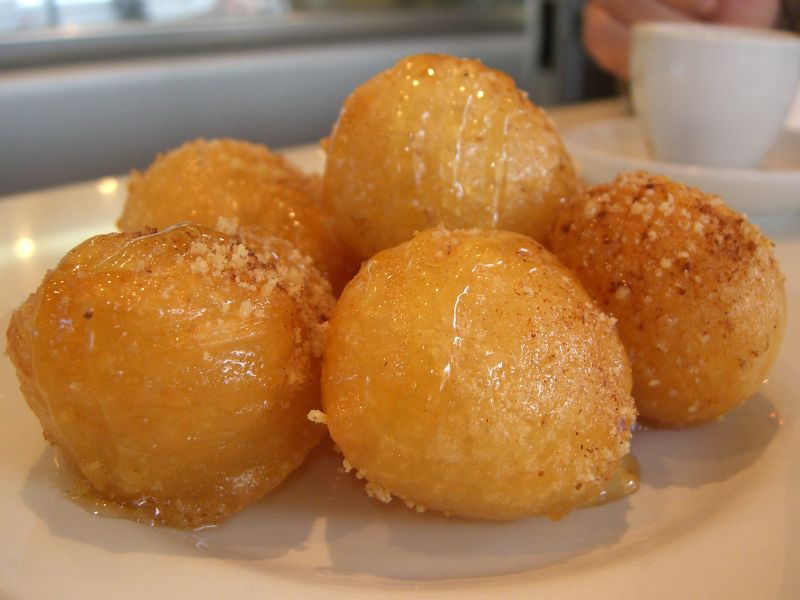
Loukoumades. Small fried dough balls, drenched in honey and cinnamon. Served hot, eaten with toothpicks because they burn your fingers otherwise. The good places fry to order. The lazy ones fry in batches and microwave them. You can tell the difference in the first bite. The best loukoumades stop in central Athens is on Aiolou street, and most tours route you past it for exactly this reason.
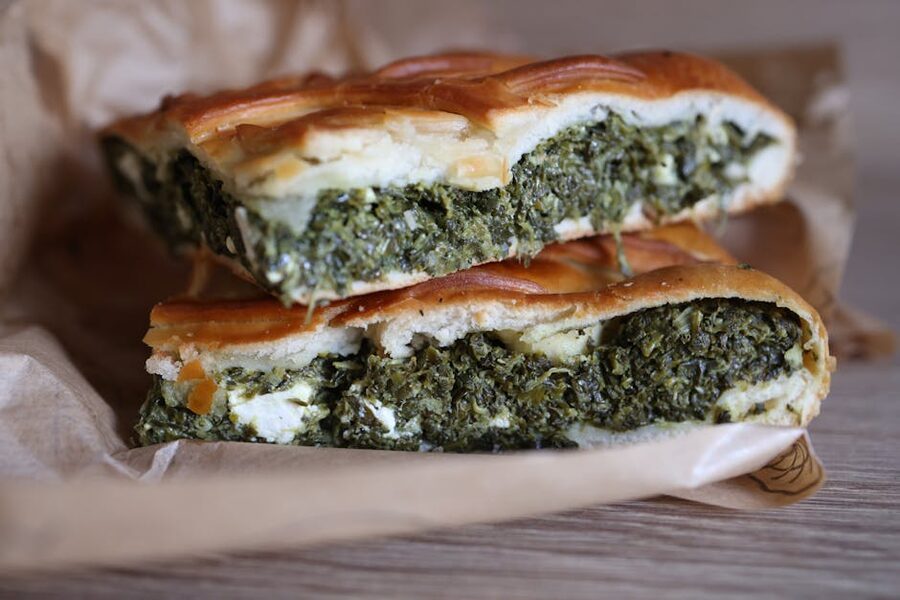
Spanakopita. Spinach and feta wrapped in filo pastry, baked, sliced into squares or triangles. Cheap, filling, sold from bakery counters across the city centre. The ones from Mesogeion bakery on Stadiou are the standard most other places get judged against. Filo should crackle when you bite, not bend. If your tour skips a bakery stop entirely, you got short-changed.
Tiropita. Same idea as spanakopita but with cheese instead of spinach. Usually a blend of feta, mizithra, and kasseri. Saltier, richer, harder to share. The triangular ones at most bakeries are what you want. Stay away from the rectangular factory ones at the supermarket counter, the filo is wrong.
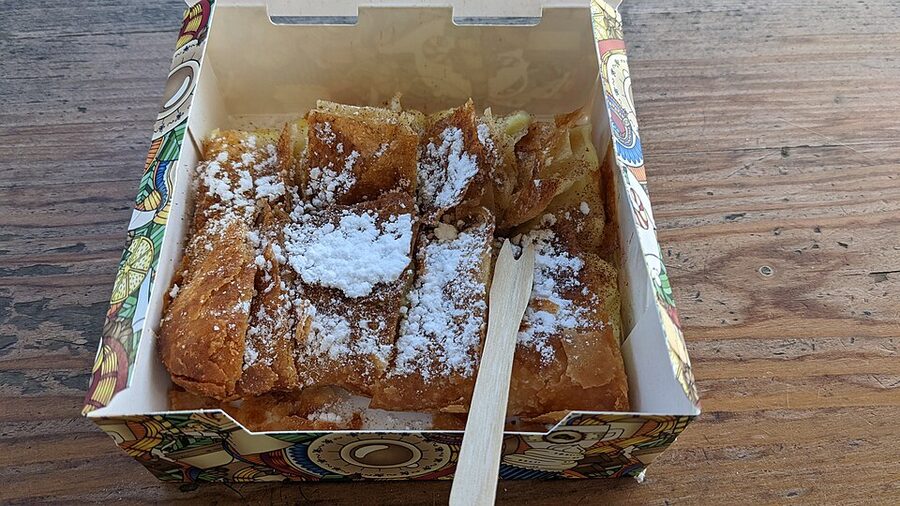
Bougatsa. Thin filo wrapped around either a sweet semolina custard or a savoury minced meat or cheese filling. Originally from Thessaloniki, but the Athenian bakeries do it well. Sweet bougatsa gets dusted with icing sugar and cinnamon at the counter, in front of you, and you eat it from a paper sheet on the spot.
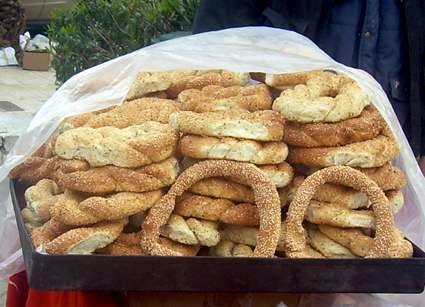
Koulouri. The sesame-crusted bread ring sold from glass-fronted carts at every metro exit. One euro, sometimes one twenty. This is breakfast for half of Athens. Office workers grab one with a frappé on the walk in. The street vendor at the Monastiraki metro exit is the one most tour groups stop at, partly because the woman who runs the cart has been there for twenty-something years.
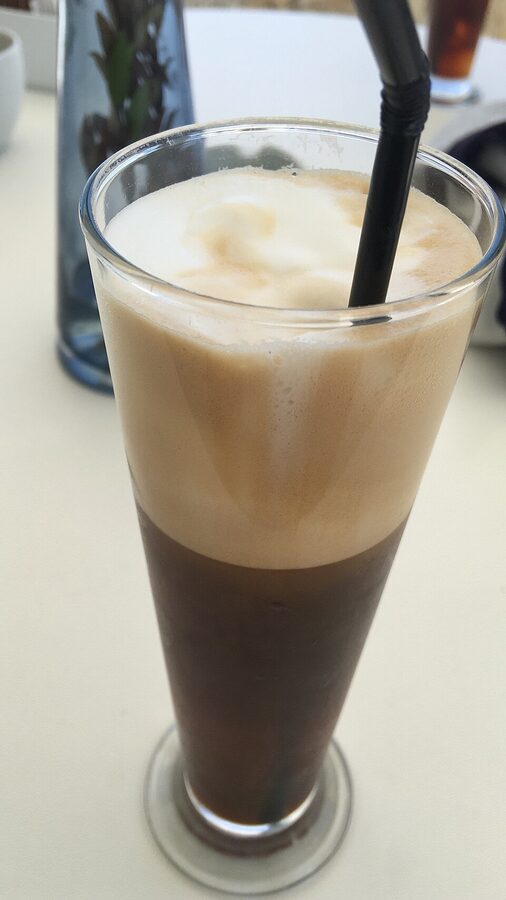
Greek frappé. Instant coffee, water, sugar, ice, shaken until foamy. Looks like cheating, tastes like a small reset on a hot day. Order it metrios (medium sweet) if you’ve never had one. Sketos is no sugar and is a strong introduction. Glykos is sweet and most foreigners go too far in that direction. Tour guides will sit you at a kafeneio for one and let you nurse it for half an hour. That sit-down is part of the tour, not a break.
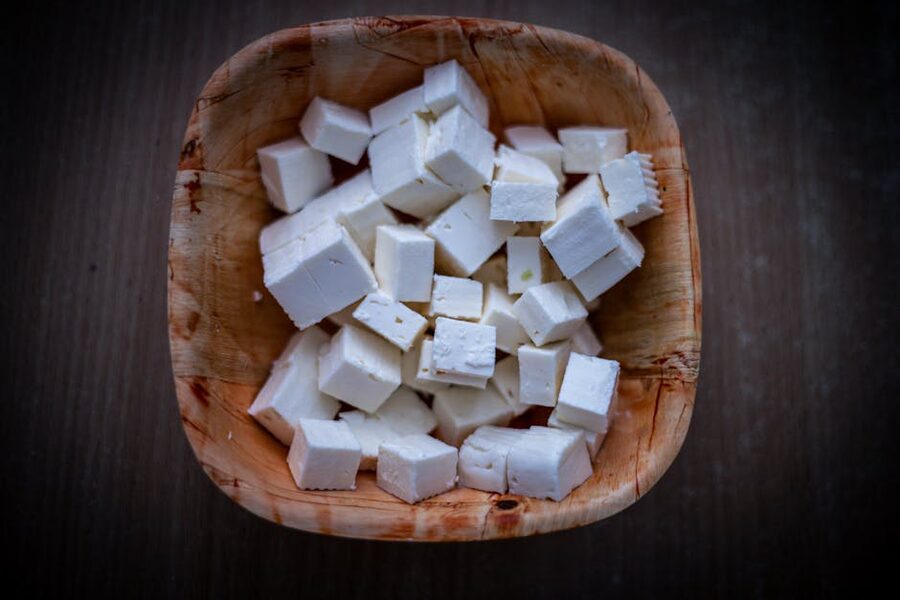
Feta and Greek olives. Most tours route through one olive shop and one cheese counter near Athinas street, behind the central market. You taste three or four different feta blocks side by side. The differences are real once you’ve actually compared them. PDO feta has to be sheep and goat milk, made in specific regions, aged at least three months. The blocks are softer and crumblier than the supermarket version most travellers know.
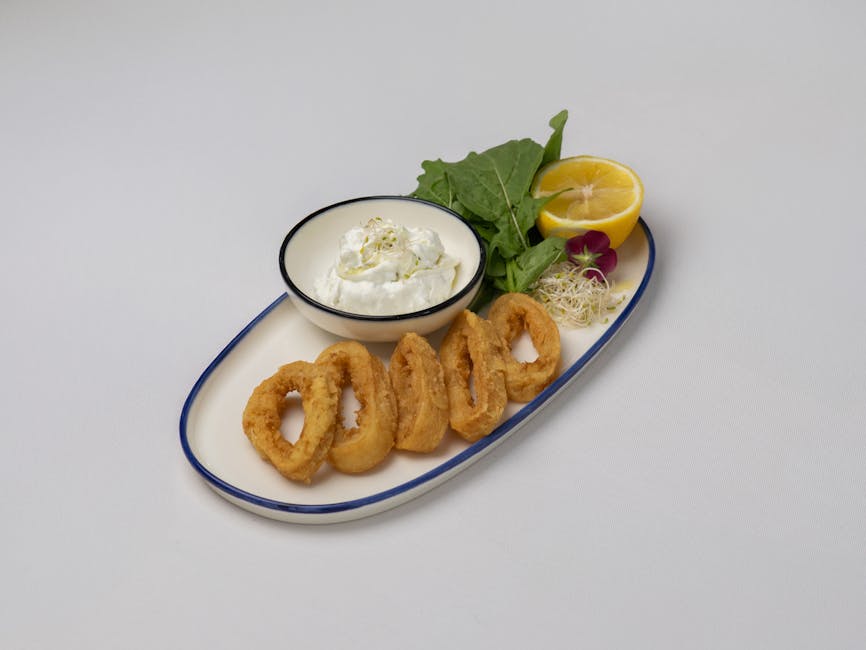
You’ll also see fried calamari, dolmades (stuffed vine leaves), tzatziki, dakos (a Cretan rusk salad with tomato and feta), kefalotyri saganaki (fried cheese), and either ouzo or tsipouro at the end of the route. A solid four-hour tour will hit eight to twelve different tasting items.
The Ouzeri vs Mezedopoleion Distinction (And Why It Matters)
Almost every food tour will pause for an explainer at one of these places, and travellers usually mix them up. Quick version.
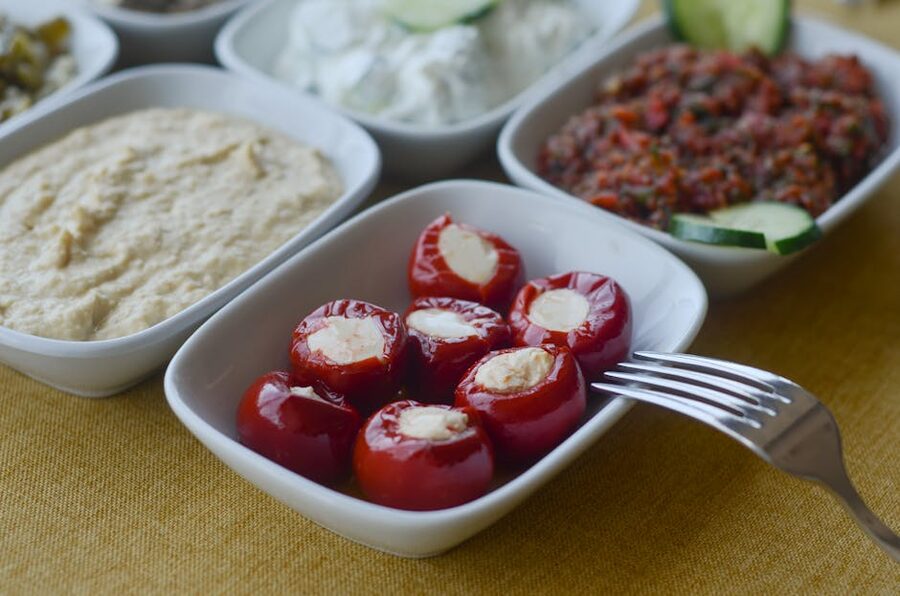
An ouzeri is built around the drink. Ouzo is the centrepiece, the food is small plates that go with it. You order a carafe of ouzo, plates land, you stay for hours. Loud, slightly raucous, often older clientele. The food is meze in the original sense, “snack alongside drink.”
A mezedopoleion is built around the food. The mezethes (small plates) lead, the drink supports. More polished, more menu-driven, more couple-and-family friendly. Same kind of dishes, different rhythm. You linger but you also actually leave, which doesn’t always happen at an ouzeri.
The Pasokia ouzeri up near Omonia is the textbook old-school version, although tourists are now common. Most food tours stop at one mezedopoleion in Psyrri, where the dishes come out in a steady drip and the ouzo is rationed to one shot. If you have an extra evening in Athens after the food walk, find an ouzeri on your own. That’s where the real second course of this trip lives.
This distinction is also why the difference between cluster siblings matters. A pure flamenco-and-tapas evening in Madrid runs the same logic but with vermouth instead of ouzo, and the rhythm of a Madrid flamenco show plus dinner follows a similar small-plates-with-spectacle template. Seville’s tablao circuit tilts the other way, more flamenco-as-show, less food-as-event. Athens fits closer to the Madrid model than the Seville one.
Where Athens Food Tours Actually Go
Three neighbourhoods do most of the heavy lifting, plus the Varvakios market in the middle.
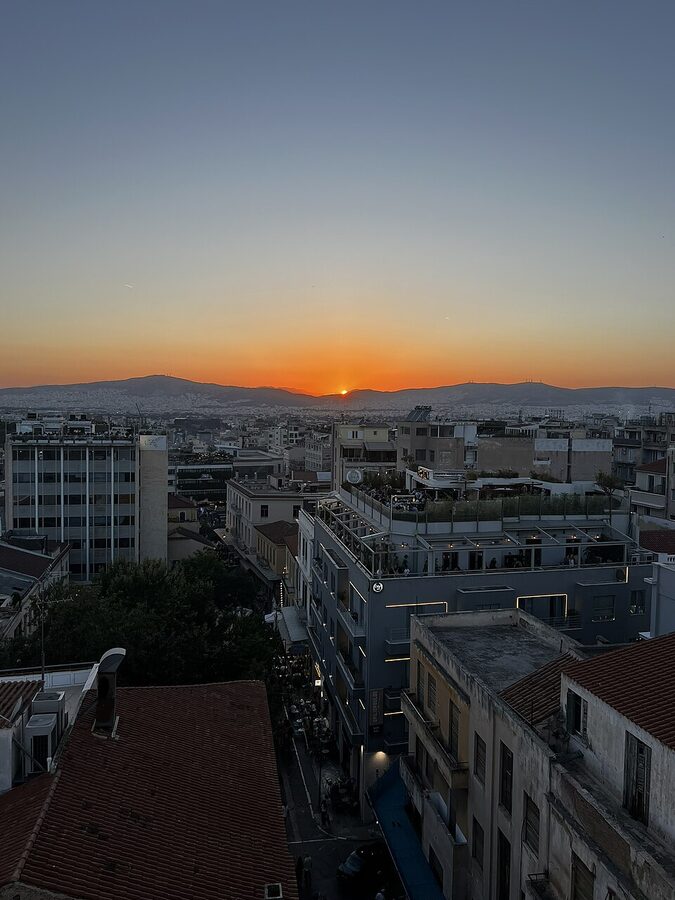
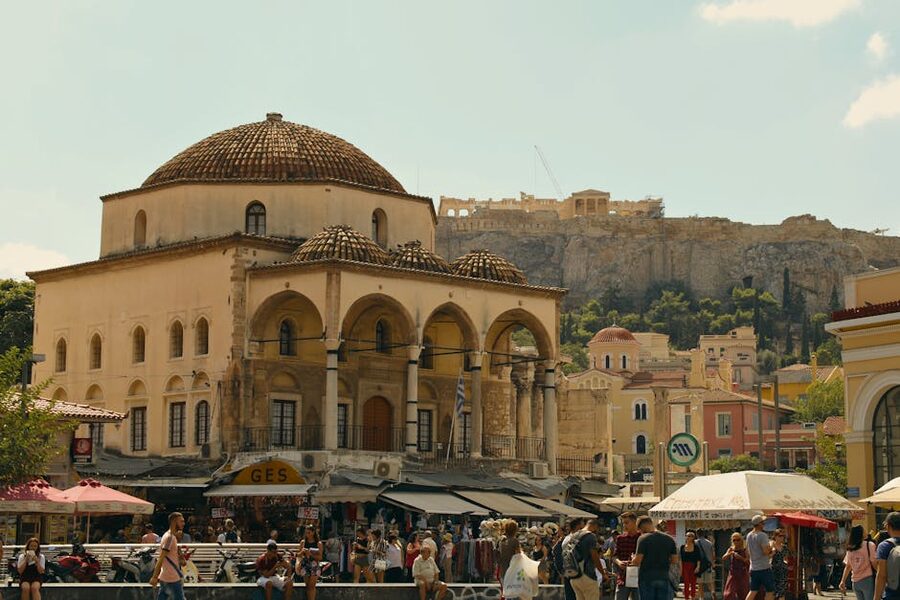
Monastiraki. Where the metro lets you out, where most tours meet, where the first souvlaki stop usually lands. Tourist-heavy at street level. The good spots are one block off the main square. Look up rather than around at eye level, the historic buildings are still there above the souvenir shops.
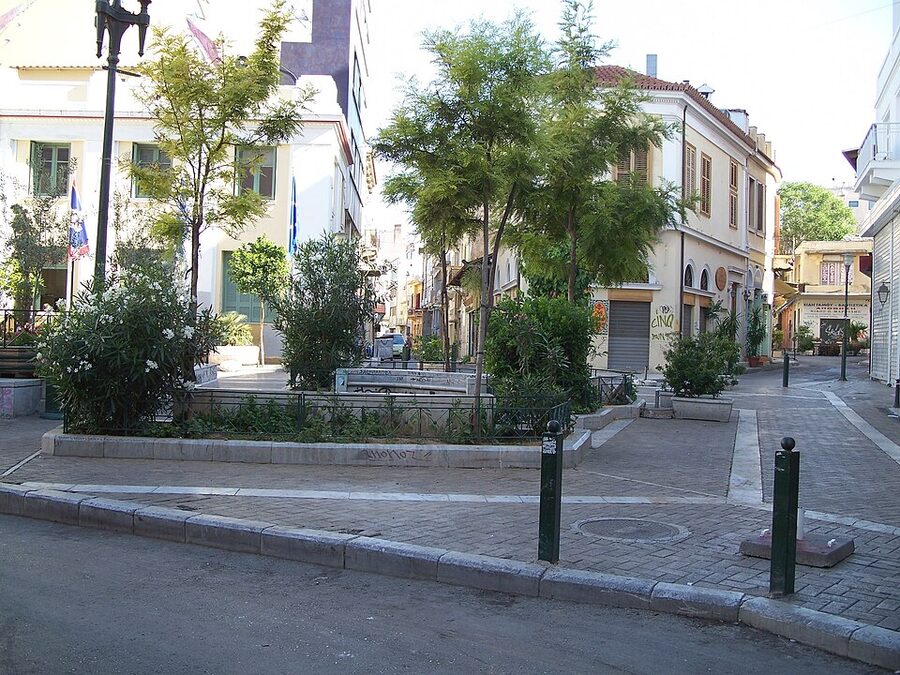
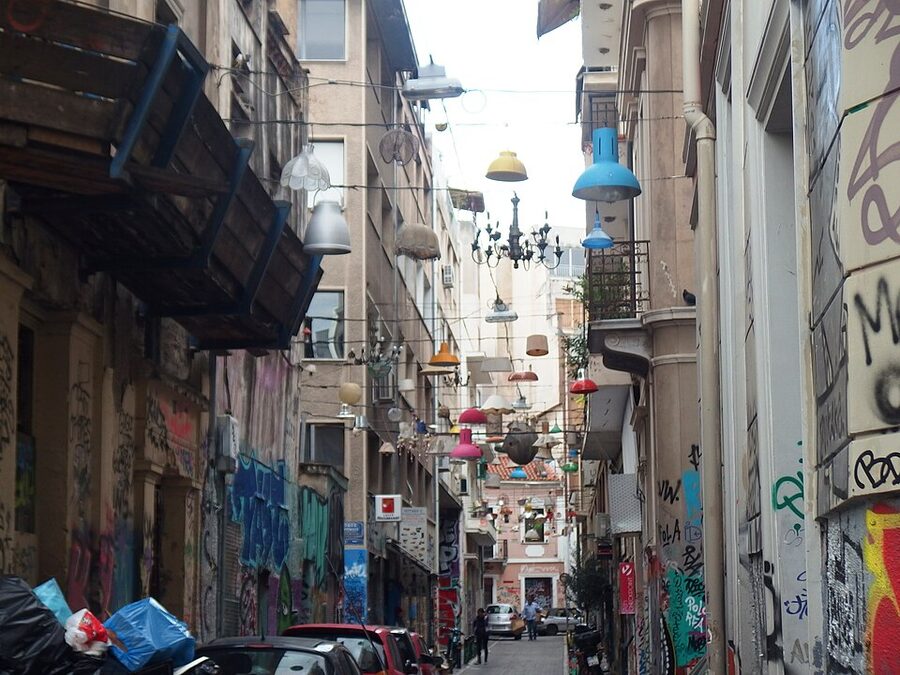
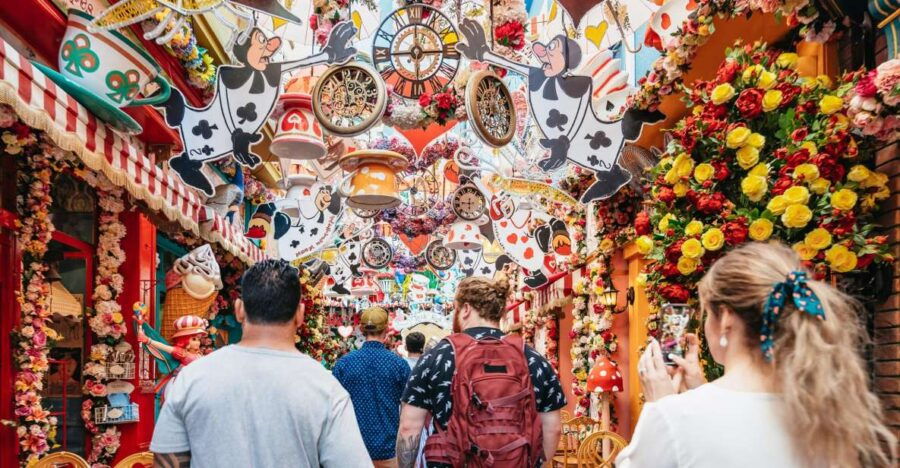
Psyrri. The neighbourhood north of Monastiraki, west of Athinas street. Bohemian-leaning, lots of small bars, food carts, a permanent low cloud of grilled meat smoke from about midday onward. This is where the actual eating happens. The Pittaki street installation (a whole street decorated with hanging vintage lamps) is one block up from the main food cluster, and most evening tours route past it.
Plaka. The old town under the Acropolis. Stone-flagged lanes, a lot of overpriced tourist tavernas, and a handful of genuinely good ones. A food tour that spends most of its time in Plaka is a flag. The bars and souvlaki stands here charge a 30 to 50 percent Acropolis tax. The good operators only stop at one Plaka spot to break up the route, then move on.
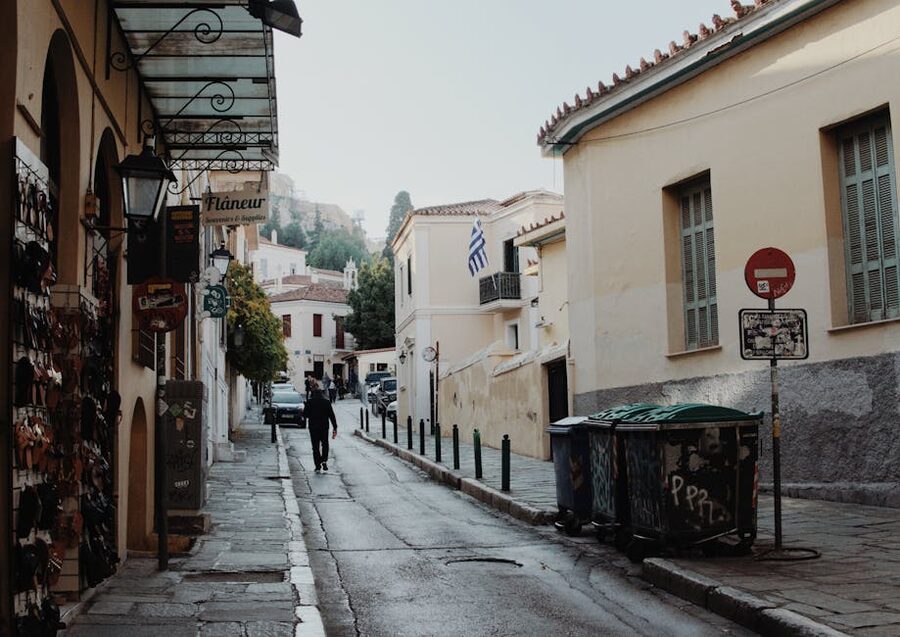
Beyond the three neighbourhoods, the Varvakios market on Athinas street is where everything else gets sourced. We’re going to spend the next section on it because most travellers walk past it and miss the most interesting twenty minutes of the day.
Varvakios Market: Where the Food Tour Actually Earns Its Money
Varvakios (also called the Athens Central Market or Dimotiki Agora) opened in 1886. It’s the working market for half the restaurants in central Athens. The fish hall, the meat hall, and the produce stalls outside are all separate but linked. Open Monday through Saturday, closed Sunday, busiest from 7 to 11 in the morning.
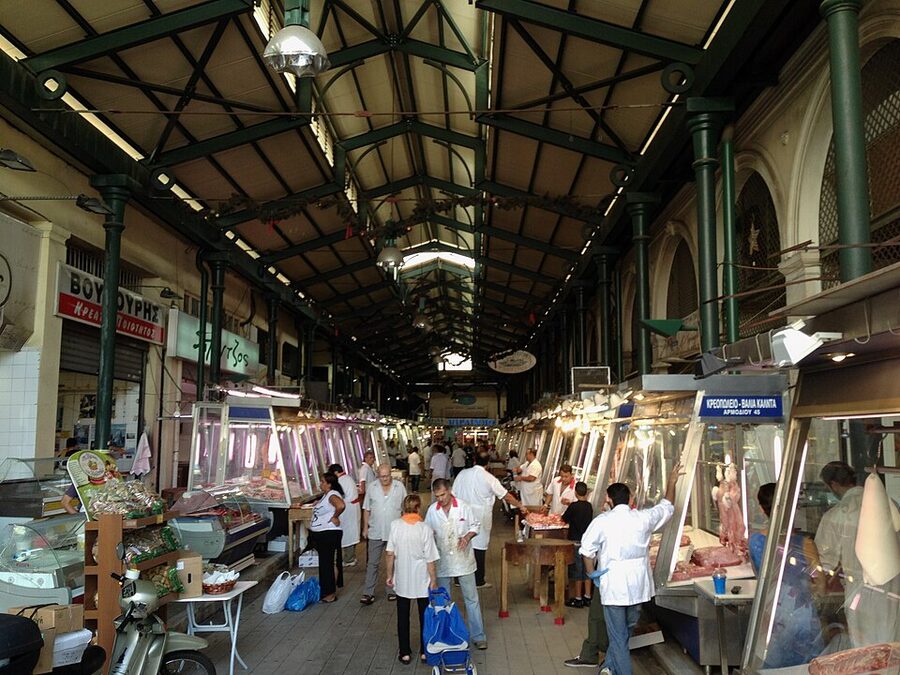
Food tours that include Varvakios usually go in around 9 or 10am, when the morning rush has slowed but the stalls are still fully stocked. You walk through with the guide, who explains what’s what (which fish are local, which aren’t, why the lamb price doubles around Greek Easter), then you taste at a couple of small shops nearby. Olives, honey, cured fish, dried herbs.
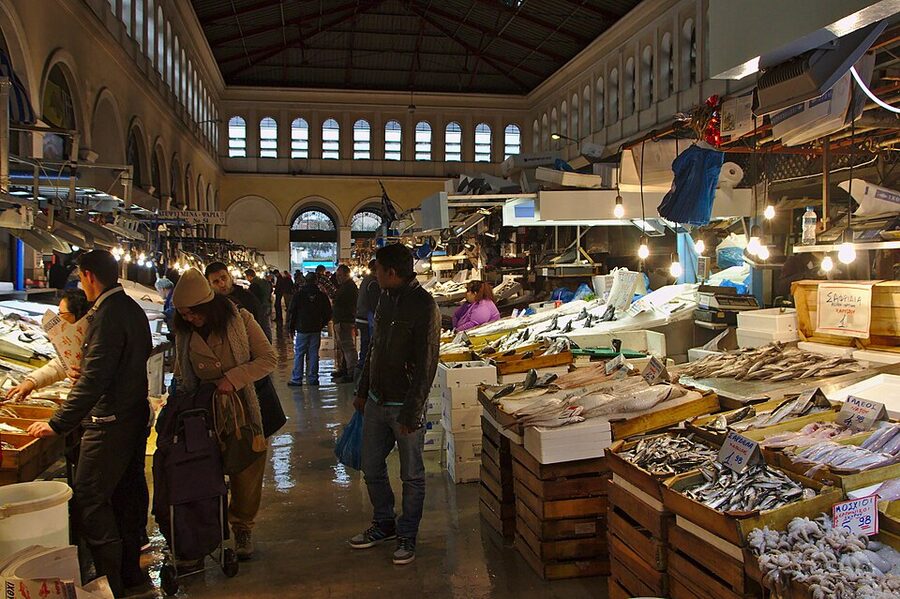
The fish hall is loud. Vendors yell prices, water gets thrown around to keep the ice fresh, and gulls wait outside the doors for the lunch sweep. If you’re squeamish about dead fish staring at you, sit out this section. If you’re not, it’s the most theatrical twenty minutes of the entire tour.
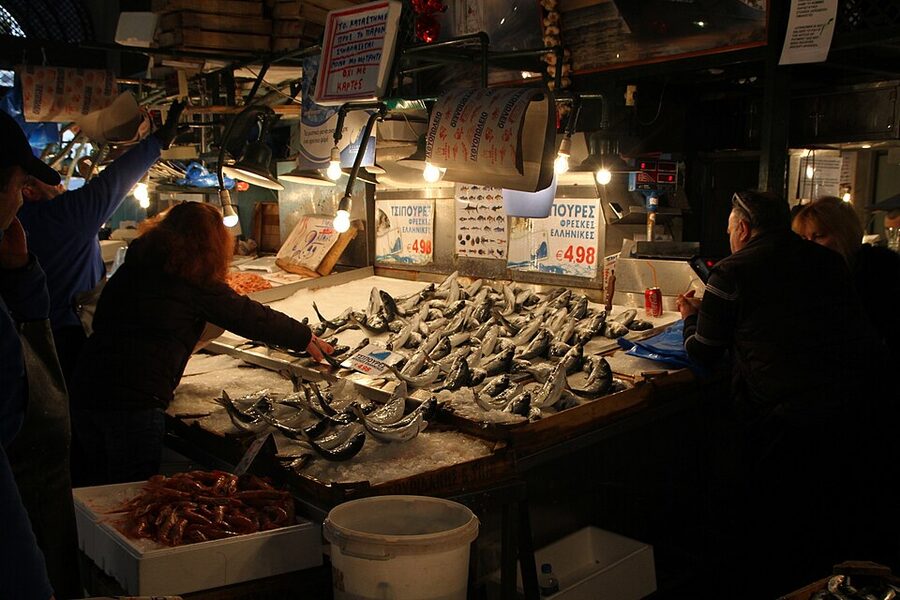
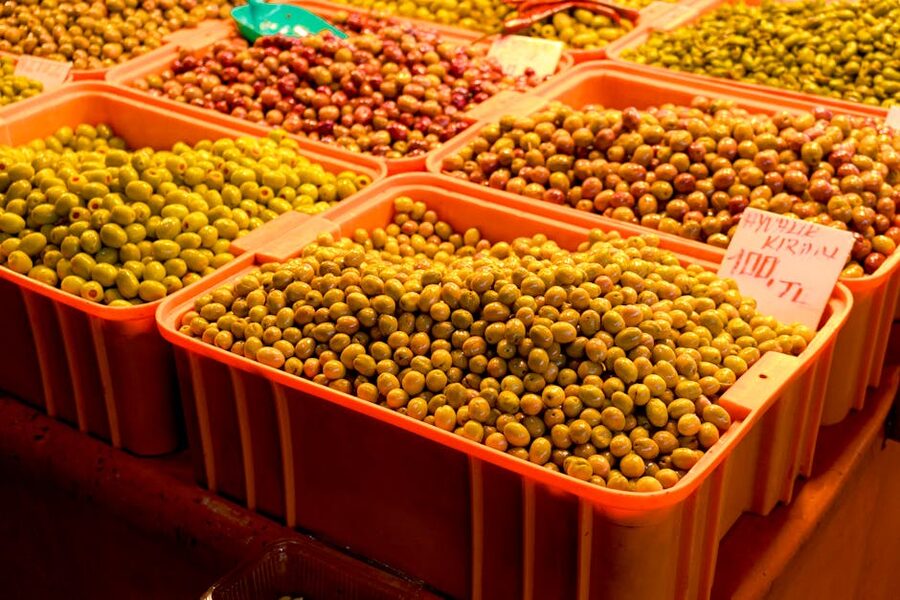
The shops behind the market are where the actual tasting happens. Olive merchants will line up six bowls and walk you through Kalamata, throumba, gigantes, in price order. Honey shops do something similar with thyme honey, fir honey, pine honey. Spice shops stack rigani (Greek oregano) by region. None of these places will be embarrassed if you taste and don’t buy. They’d rather you understood the differences.
If you skip the market and go straight Psyrri-to-Psyrri, you’ve done a perfectly good food tour. But you’ve missed the layer that explains where the food comes from. The market-and-shops style tour exists for exactly this reason and is the one I’d push to anyone who actually likes shopping for food at home.
The Three Athens Food Tours Worth Your Money
Below are the three Athens food walking tours I’d actually book if I was planning the trip myself. The shortlist is shorter than the long list of Athens food experiences sold on the booking platforms because most of them duplicate each other and the differences come down to small things like group size cap and which Psyrri taverna they use.
1. Athens Greek Foodie Small-Group Tour: $81
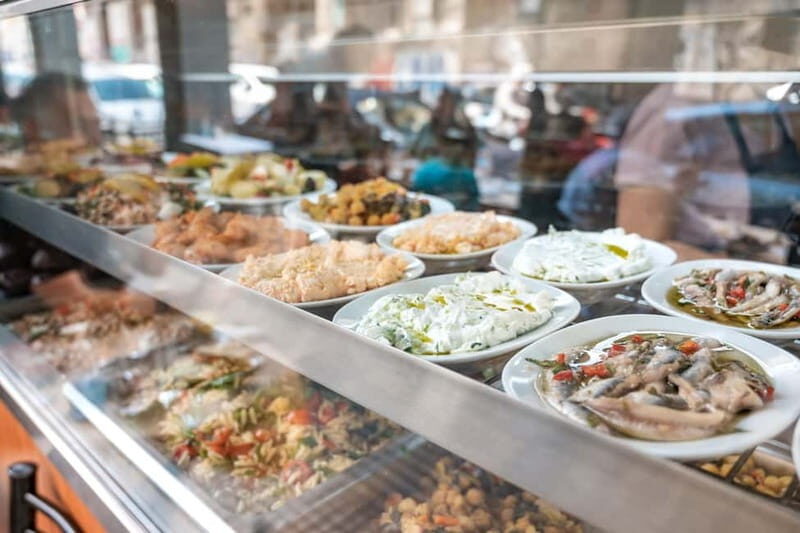
This is the tour I’d send a first-time visitor to. Four hours, small group, six to eight stops covering souvlaki, loukoumades, spanakopita, the market loop, and a sit-down meze finish with wine or ouzo. Our full review of the foodie tour walks through the typical menu and the guide quality, which is what actually decides whether one of these works.
2. Athens Street Food Tasting Small-Group Tour: $67
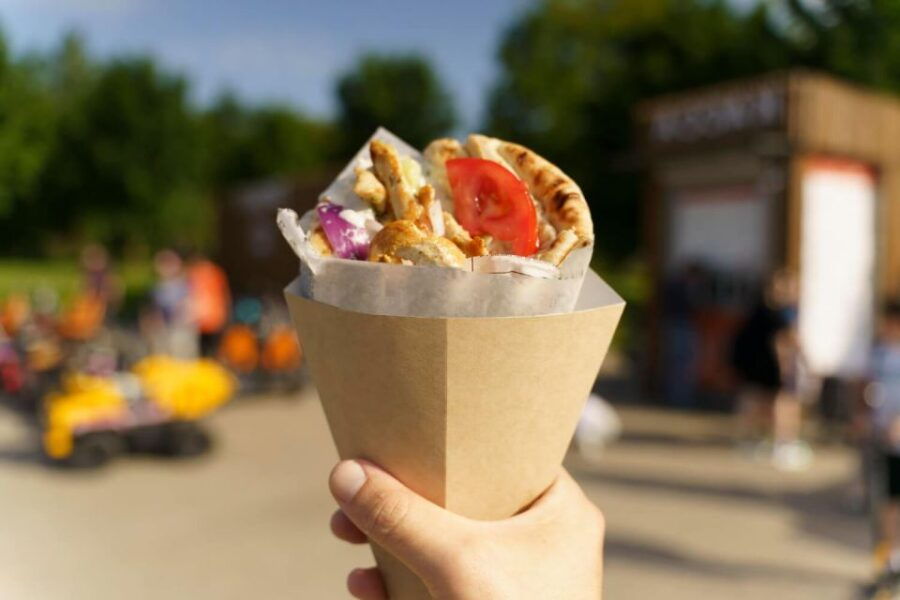
Pick this one if you’d rather eat on your feet. The street-food route covers koulouri, souvlaki, gyros, loukoumades, bougatsa, and a frappé sit-down at the end. About three hours, smaller group than the foodie flagship. This is what we’d recommend for travellers who hate sit-down restaurant pacing or only have an afternoon to spare. Our in-depth review of the street food tour covers the typical stops and timing.
3. Athens Local Market and Shops Greek Food Tour: $62
This is the one I’d push to anyone who likes shopping for food at home. The market route spends a real twenty to thirty minutes in Varvakios, walks through three or four small specialty shops behind it, and finishes with a plate of mezethes at a Psyrri taverna. Less filling overall but it teaches you what goes into the rest of the food. Our review of the market-and-shops tour talks through which shops actually let you taste seriously.
Booking Logistics: When, Where, and How to Pay
Athens food tours fill up fastest in May, June, September, and October. July and August are surprisingly easier because a lot of Athenians leave the city for the islands (the Saronic islands cruise sells out at the same time, for the same reason) and the dinner crowds thin out. Winter (December to February) is fine, the weather is mild, but a couple of stalls run reduced hours and the koulouri carts close earlier.
Most platforms (GetYourGuide, Viator, the operators’ own sites) take payment in advance and let you cancel free up to 24 hours before. Book three to four days ahead in shoulder season, a week ahead in May or September peak. The Acropolis Museum and main archaeology days draw similar peaks, so the cluster of Acropolis combo tickets often books up at the same time as the food tours.
The meeting point is almost always Monastiraki Square or the metro exit one block north. The operators don’t want lost tourists wandering into a private taverna, so the meeting point is public. The confirmation email will tell you exactly where to stand. Save the operator’s phone number to your phone before you leave the hotel. Athens metro signal is fine but the alleys behind Athinas street drop service unpredictably. If you’d rather skip the metro entirely, the Athens hop-on hop-off bus stops near Monastiraki and gets you to the meeting point without any underground navigation.
Tipping. Greek norm is 10 to 15 percent for a guide. American travellers often tip more, locals tip less. The food and drinks are already covered in the tour price, so the tip is just for the guide. Cash, in euros, handed over at the end with a thank you. Cards work for the booking but not the tip.
How a Food Tour Fits Into a 2-3 Day Athens Trip
Most readers asking about food tours are also wrestling with how to slot it into a tight Athens itinerary. Here’s the rhythm I’d actually recommend.
If you have two days: A guided Acropolis walking tour on day one in the morning (cooler), then a long lunch and rest. Food walking tour on day two starting around midday. You sleep on day two with a heavy stomach, fly out day three. The food tour is your second-day anchor. Don’t try to combine it with another walking-heavy thing.
If you have three days: Acropolis day one (the combo ticket is the move if you also want the Ancient Agora), a sunset half-day at Cape Sounion or a Saronic islands cruise on day two, food walking tour on day three. The food tour as a final-day activity is genius because you’ve already done the museum walking and you can sit and eat without guilt. The Cape Sounion sunset run as the day-two anchor is what most people I send to Athens end up doing.
If you have four days plus: Add a Delphi day trip or a Meteora day trip. The food tour stays best as the last anchor day or the day after a long bus ride, when your legs are tired and you want sit-down. The Meteora day trip is brutal on the body and a slow food walk the next morning is the perfect counter. The Delphi run works the same way. Don’t food tour the same day as a five-hour bus ride. You won’t enjoy either.
Practical Things People Get Wrong
A few things that come up at every meeting point and could be solved before you show up.
Don’t eat a big breakfast. Skip the hotel buffet, save the calorie budget. The first stop of an 11am food tour is going to be a full meal disguised as a tasting.
Wear walking shoes. Plaka and the streets behind Varvakios are stone-flagged and uneven. Open sandals are fine. Heels are not. The market floor in particular is wet and slippery.
Bring water. Athens summer temperatures can sit at 35 degrees by 11am. The tour usually has a water break but you’ll want your own bottle for the walks between.
Carry small euro notes. Tipping the guide, paying for any extras at street stalls, and rounding up at the kafeneio all want fives and tens. ATMs are common but the small coffee stand will not break a 50.
Tell the operator about diet rules at booking. Vegetarian, vegan, gluten-free, allergies. Most tours can accommodate but the kitchen needs notice. On-the-day swaps usually mean you’re left with bread and salad while everyone else eats meat.
Don’t drink the ouzo neat the first time. Add water, watch it turn cloudy, sip slowly. Knocking back the shot is a tourist move and the ouzo is stronger than it tastes.
FAQ-style Bits I Get Asked
Is a food tour worth it if I’ve already been to Athens before? Yes if you’ve never done a guided one. The neighbourhood and shop knowledge is the differentiator. Even repeat visitors learn something at Varvakios.
Are kids okay? Eight and up generally fine. Under five is hard, the four-hour pacing wears them down. Some operators offer family versions with shorter routes.
Can I do this on a Sunday? Most food tours run Sunday but the market is closed. The Sunday version skips Varvakios and adds an extra Psyrri or Plaka stop. If the market is the part that interests you, book Monday-Saturday.
What about gluten-free? Possible but limiting. You lose the koulouri, the bougatsa, the spanakopita, and the bread basket at the meze stop. That leaves grilled meat, cheese, olives, and salads. Tell the operator at booking.
Vegan? Doable. Greece has a long Orthodox fasting tradition that means most tavernas have proper vegan dishes (gigantes plaki, fasolada, dolmades without rice fillers, lots of vegetable mezethes). Not just an afterthought salad.
Can I bring a stroller? Plaka is brutal on strollers. The cobbles will trash the wheels. A baby carrier works far better.
Is there a difference between morning and evening food tours? Yes. Morning tours hit Varvakios when it’s busy, koulouri carts when they’re fresh, and bakeries in their best window. Evening tours skip the market entirely (it’s closed) and lean into ouzo, mezethes, and Psyrri sit-down. Pick by what you actually want to see.
Will the guide expect me to drink alcohol? No. Frappé, lemonade, and water work fine as substitutes. Don’t feel pressured.
More Athens Anchor Days Worth Pairing
The food walk slots best on the day after a long bus ride, when your legs are tired and you want sit-down. A Meteora day trip the day before, food tour the morning after, is the rhythm that works best for most travellers I’ve sent. If you’re going lighter, a Saronic Gulf islands cruise stops at Hydra, Poros, and Aegina and lands you back in Athens by dinner. And if you’re heading on to Spain after, the Barcelona tapas walking tour follows nearly the same rhythm with vermouth instead of ouzo.
Book the food tour for whichever day you’ve labelled “rest day.” That’s the day this kind of tour pays off the most. Take the early afternoon slot if you have any choice. The mid-day light at Varvakios is genuinely nice, and Psyrri at 2pm is louder and less polished than at 8pm but in the good way.