
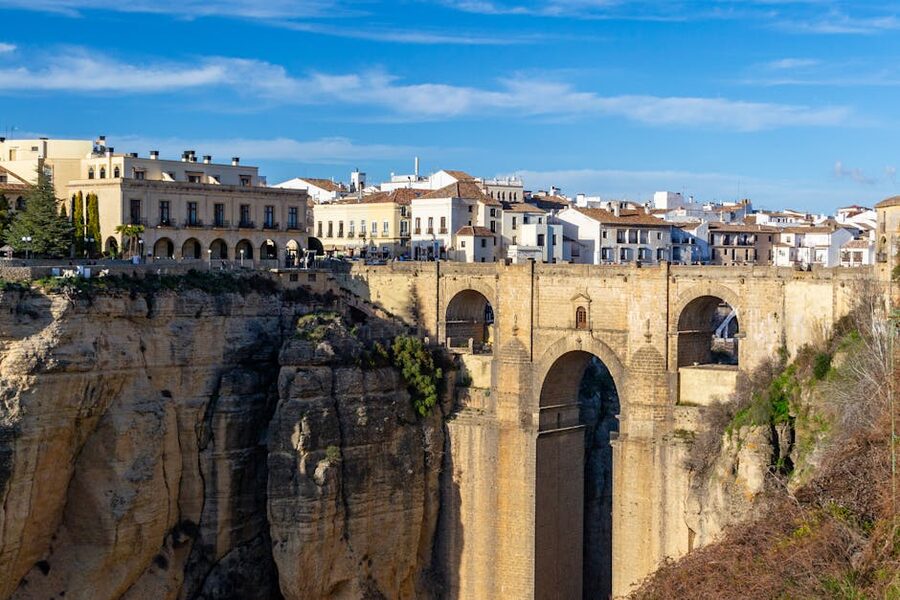
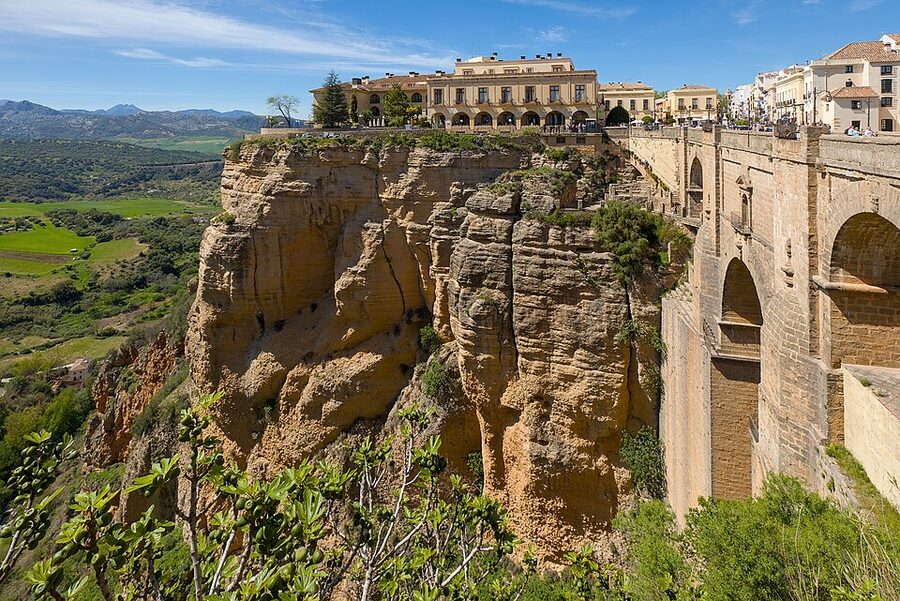
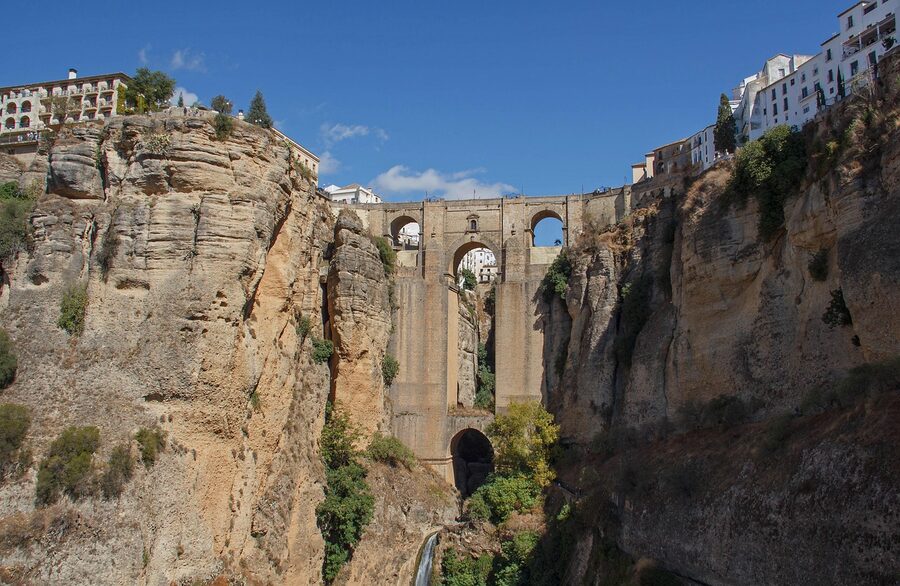
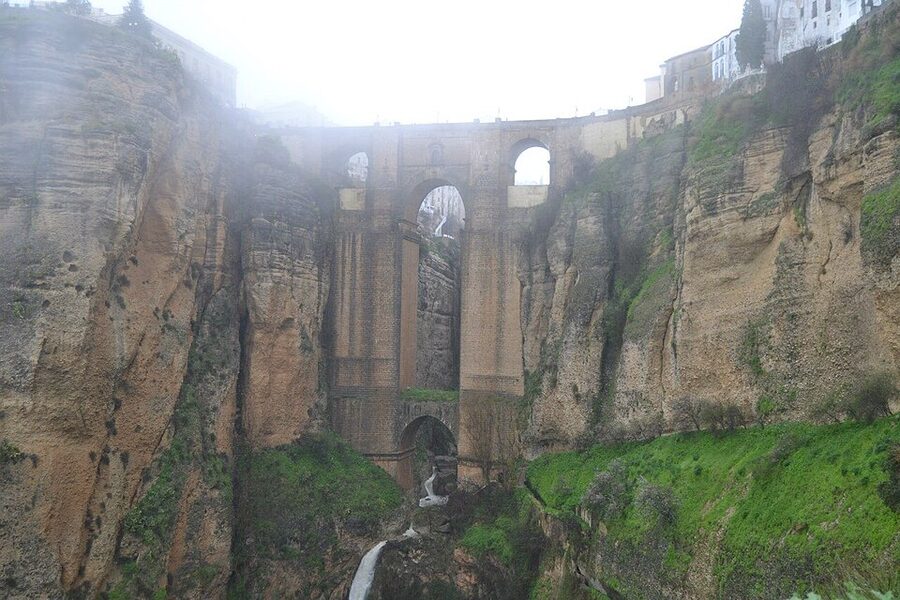
You walk to the centre of the Puente Nuevo, lean both forearms on the stone railing, and look straight down. The drop is 98 metres. The wind from the gorge funnels up between the two cliffs, the river is a silver thread far below, and on a hot afternoon the railing itself is so warm it pushes back against your skin. Then a swift dives past your face on its way home.
That is the moment the Ronda day trip pays for itself, and the moment people start asking how Setenil de las Bodegas fits into the same day.
In a Hurry? Top Picks
- Best free-time tour from Málaga (around $33): the 9-hour Ronda and Setenil with free time is the most-booked option for this day, runs daily, and gives you four useful hours in Ronda plus a stop in Setenil.
- Best sunset variant (around $34): the Ronda and Setenil with optional sunset stretches the day to ten hours so you stand on the Puente Nuevo as the gorge turns gold.
- Best for Seville-based readers (around $52): the Pueblos Blancos and Ronda full-day from Seville covers two extra white villages on the way in, which makes more sense than a Málaga tour if you’re coming from the west.
- In a Hurry? Top Picks
- The drive, and why it’s longer than the map suggests
- Group bus, private car, or Costa del Sol pickup: which one fits
- Ronda first or Setenil first?
- What you actually do in Ronda
- What you actually do in Setenil de las Bodegas
- Sunset timing on the Puente Nuevo
- Where the tours leave from in Málaga
- Doing this from Seville instead
- Tour picks: the three I’d actually book
- 1. Ronda and Setenil with Free Time from Málaga:
- 2. Málaga: Ronda and Setenil with Optional Sunset:
- 3. Pueblos Blancos and Ronda Full-Day from Seville:
- Lunch logistics, and the bodega question
- What it costs, end to end
- What to skip
- Practical bits
- One more thought before you book
- Other Andalusian day trips worth a look
The drive, and why it’s longer than the map suggests
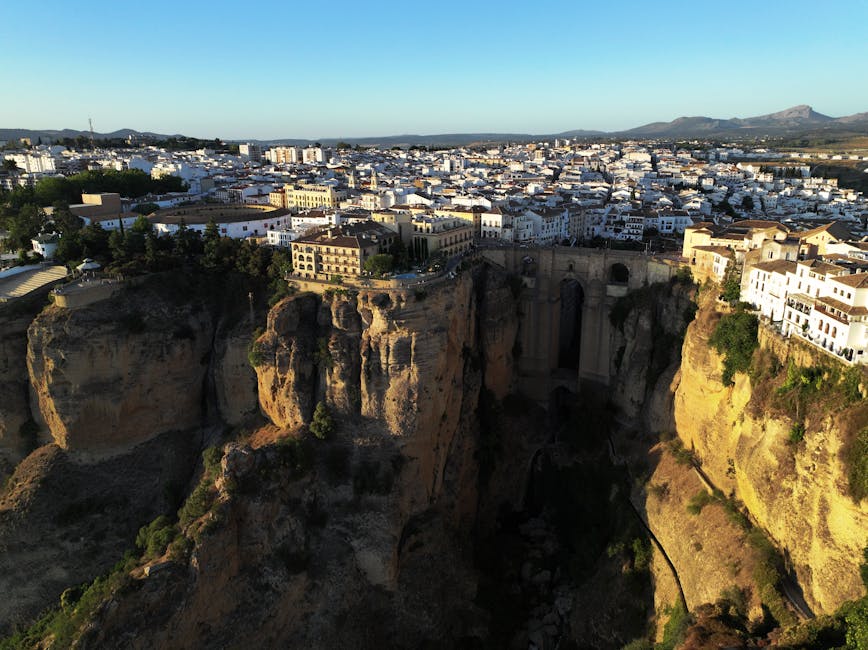
Google Maps will tell you Málaga to Ronda is 100 kilometres and an hour and forty minutes. In practice, every coach I’ve watched leave Málaga has needed close to two hours each way. The road is the A-357 then the A-367, and it climbs into the Sierra de las Nieves through a string of switchbacks that the bus has to take slowly. There is no toll motorway between the two cities. The mountain road is the road.
So if a tour advertises a 9-hour day from Málaga, expect about four of those hours to be on the bus and five on your feet, split between the two villages. Setenil is another 20 minutes northwest of Ronda by van, and most operators do that leg in a smaller vehicle because the streets in Setenil are too narrow for a coach.
If you’d rather drive yourself, the rental option is fine. Parking in Ronda is straightforward at the underground Martinez Astein car park near the train station, about ten minutes’ walk from the bridge. Parking in Setenil is the hard part. The village has two car parks above the cliff, both small, both full by 11am most days. If you drive, hit Setenil first and Ronda second, the opposite of every group tour.
Group bus, private car, or Costa del Sol pickup: which one fits
Most readers want the group bus. It’s the cheapest option, you don’t drive, and the operators have the rhythm of the day worked out. The tradeoff is that you’re tied to the group’s lunch slot and you’ll lose 20 minutes per stop to roll-call. The Ronda and Setenil with free time tour is the version most people pick. It does a quick guided walk in Ronda, then turns you loose for four hours, which is enough for the bridge, the bullring, and lunch.
The sunset variant stays out an hour longer so you’re back on the Puente Nuevo at golden hour. I’d pay the small upcharge for that one if you’re shooting photographs. The bridge in mid-afternoon light is harsh and contrasty. The bridge at sunset is a different building.
If you’re staying along the Costa del Sol instead of in Málaga proper, the Costa del Sol pickup option collects from Torremolinos, Benalmadena, Fuengirola and Marbella before heading inland. The pickup adds about an hour to your day but saves you the morning train into Málaga centre. The fully-guided day trip is the alternative if you’d rather not be left to your own devices in Ronda. You get a guide for the full afternoon, lunch is usually included, and the Plaza de Toros visit is part of the script rather than an optional add-on.
Private cars exist for this route but they’re priced for couples or quartets. If there are four of you, splitting a private day driver works out close to two group seats and you control the timing. Solo travellers and pairs should book the group bus and use the saving on a long lunch in Ronda.
Ronda first or Setenil first?
The standard tour order is Ronda in the morning, Setenil after lunch. There’s a logic to it. Setenil is a small village. You can walk both of its main streets in 90 minutes, and the cafés along Calle Cuevas del Sol fill up at lunchtime so a 2pm arrival catches them as the lunch crowd is leaving.
If you’re driving yourself, flip it. Hit Setenil at 9:30am when the streets are quiet, take your photographs without a tour group’s heads in them, and have a coffee at one of the cave-ceiling bars before they get noisy. Then drive into Ronda for late lunch and an afternoon at the bridge. The light on the Puente Nuevo is best from about 4pm onwards. The light on Setenil’s white walls is best at mid-morning. The standard tour gets the second of these wrong because of how lunch logistics work, not because the order is correct.
What you actually do in Ronda
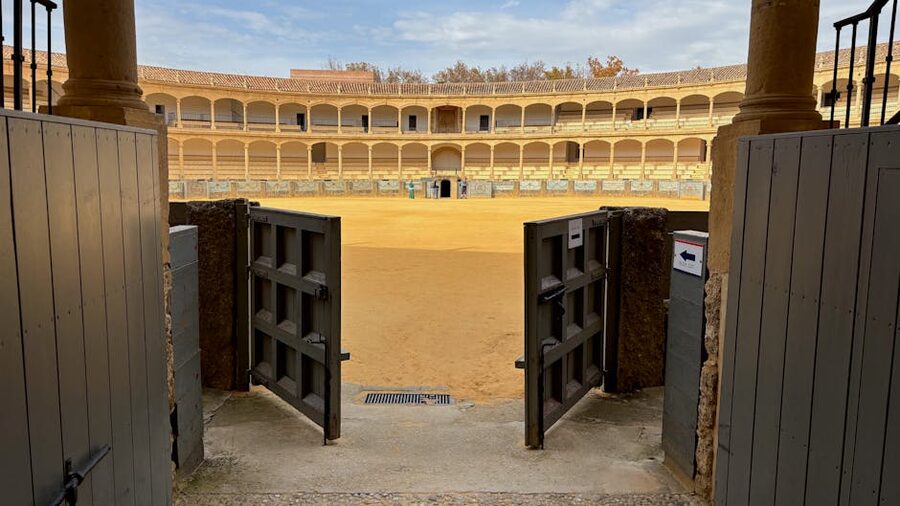
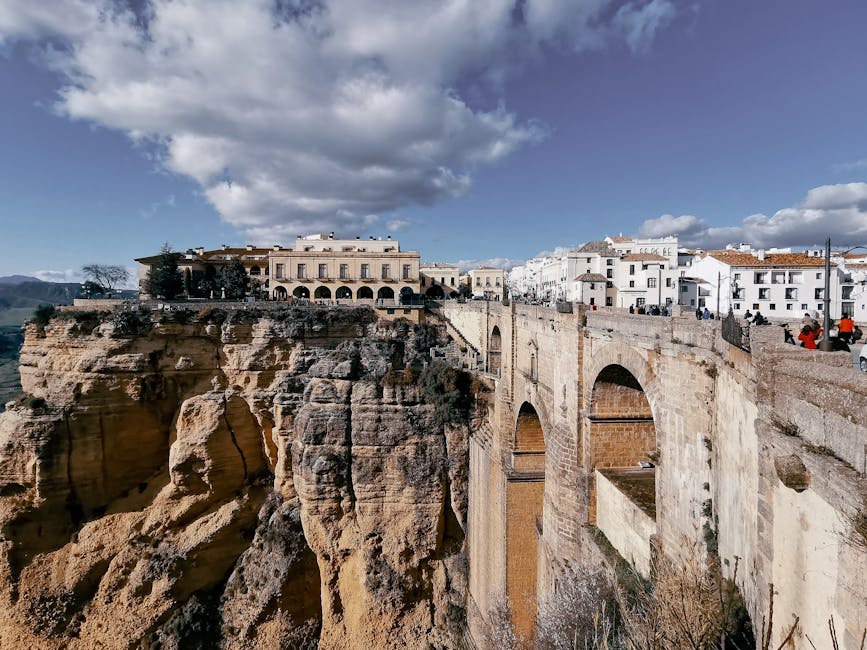
Ronda is divided in two by the Tajo gorge. The old town (La Ciudad) on the south side and the new town (El Mercadillo) on the north. The Puente Nuevo joins them. Ninety percent of what visitors do is in a tight rectangle around the bridge, which makes the city easy to walk in three or four hours.
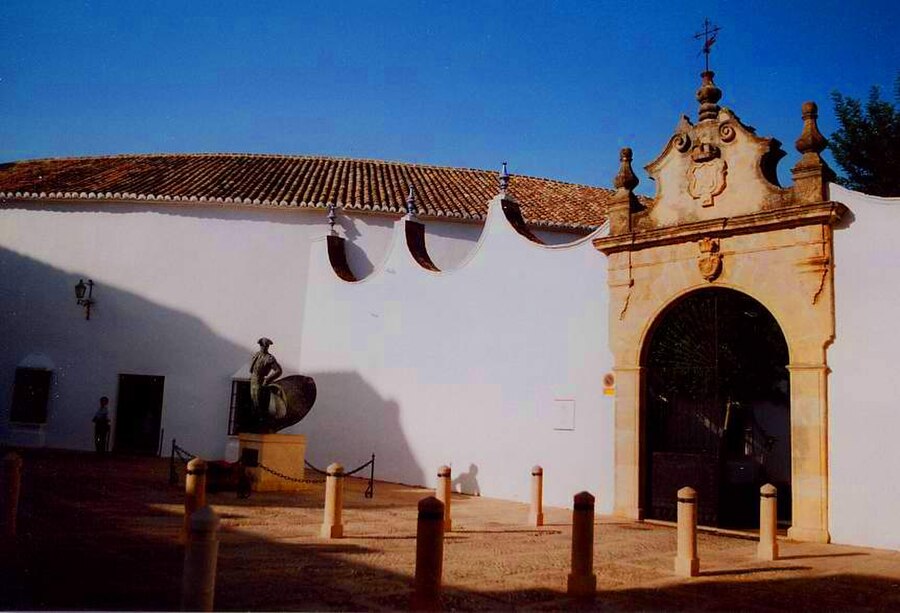
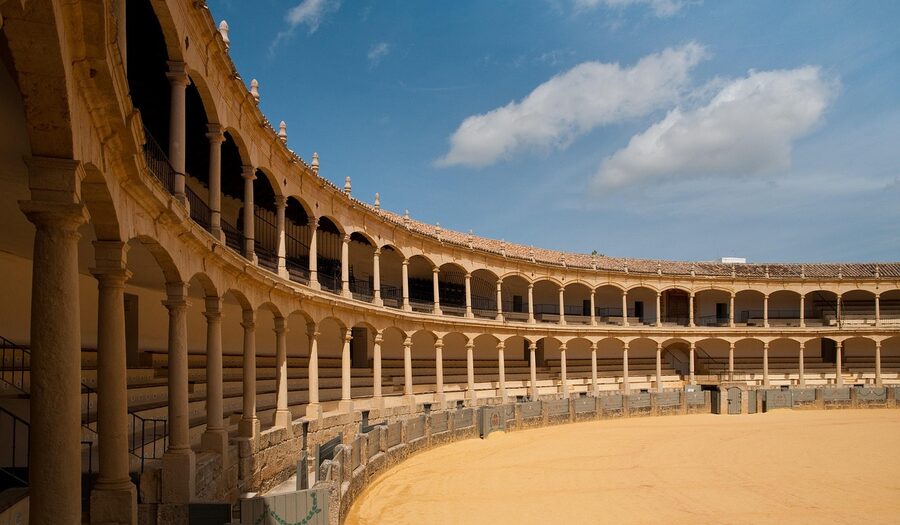
The Plaza de Toros is Spain’s oldest stone bullring, built in 1785 by the same architect who designed the Puente Nuevo. The interior is a perfect double-tiered gallery in cream sandstone with a Tuscan colonnade that holds the upper deck. The ticket is around 9 euros and includes the small but well-laid-out bullfighting museum and the equestrian school stables. The ring itself is the bit you came for. Walking out onto the yellow sand under the Andalusian sun, with the empty terraces rising around you, is one of those moments where the architecture does the talking.
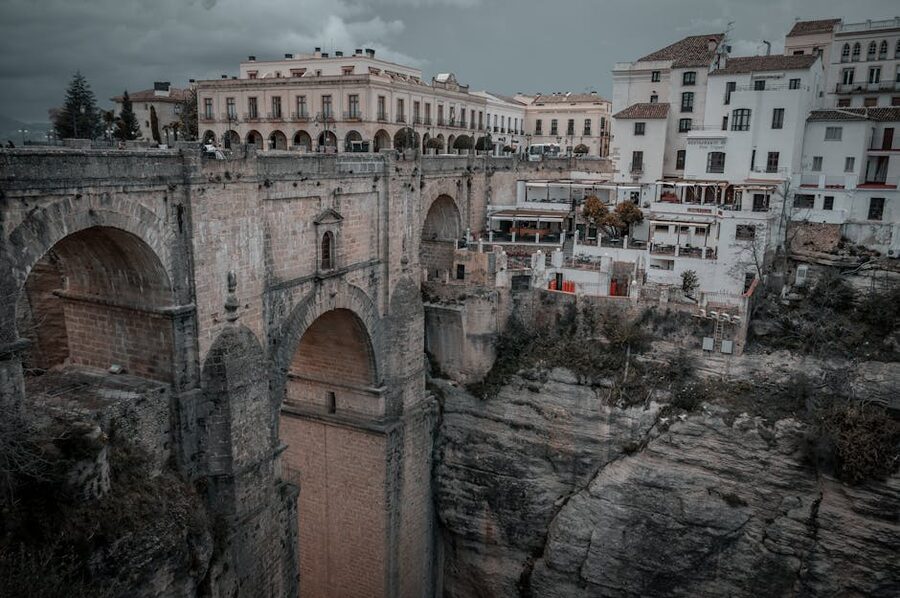
The Puente Nuevo is the obvious next stop. It took 42 years to build, finishing in 1793, and the chamber inside the central arch was once a prison. There’s a small interpretation centre in that chamber if you want to climb down, but the views from the bridge itself and from the Plaza Maria Auxiliadora cliff path are the real attractions. Both are free.
Beyond those two, the things worth queueing for in Ronda are the Casa del Rey Moro with its 14th-century Water Mine staircase carved into the cliff (300 steps down to the river, then back up, around 8 euros), and the Arab Baths down the path on the eastern side of the gorge (about 5 euros, closed Mondays). The cathedral of Santa Maria la Mayor is on most itineraries but it’s a quieter visit than the bullring or the bridge. I’d skip it on a tight day.
What you actually do in Setenil de las Bodegas
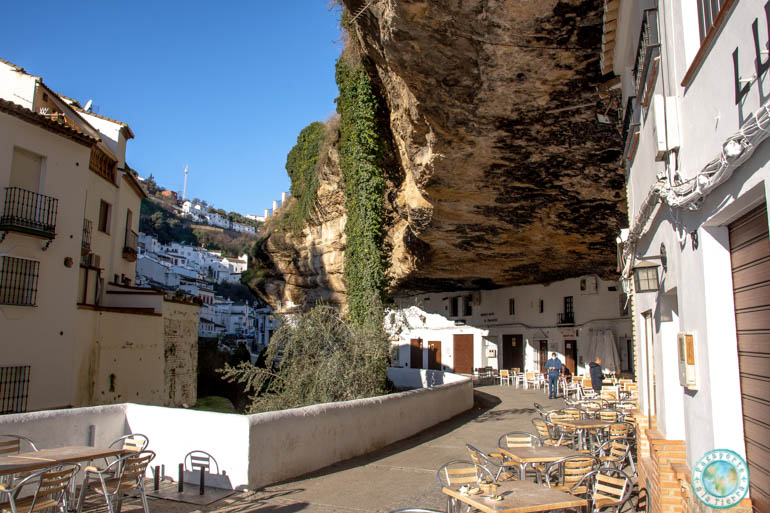
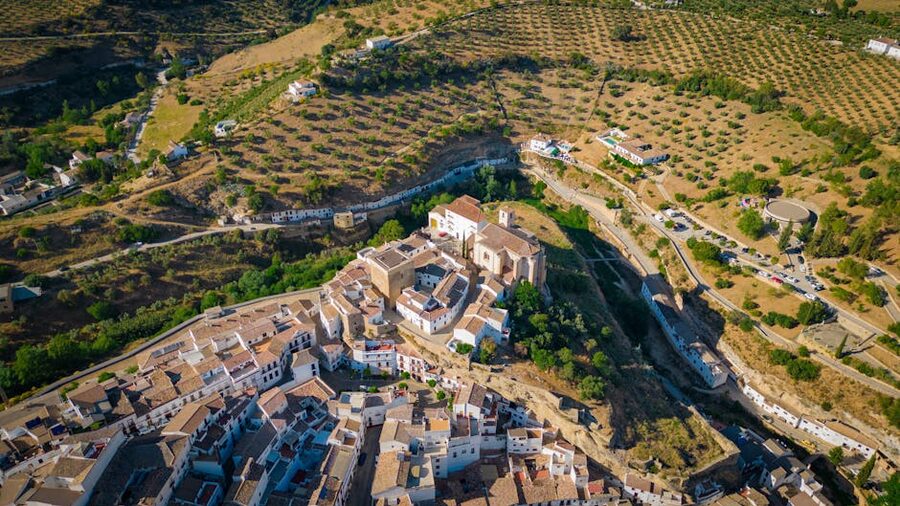
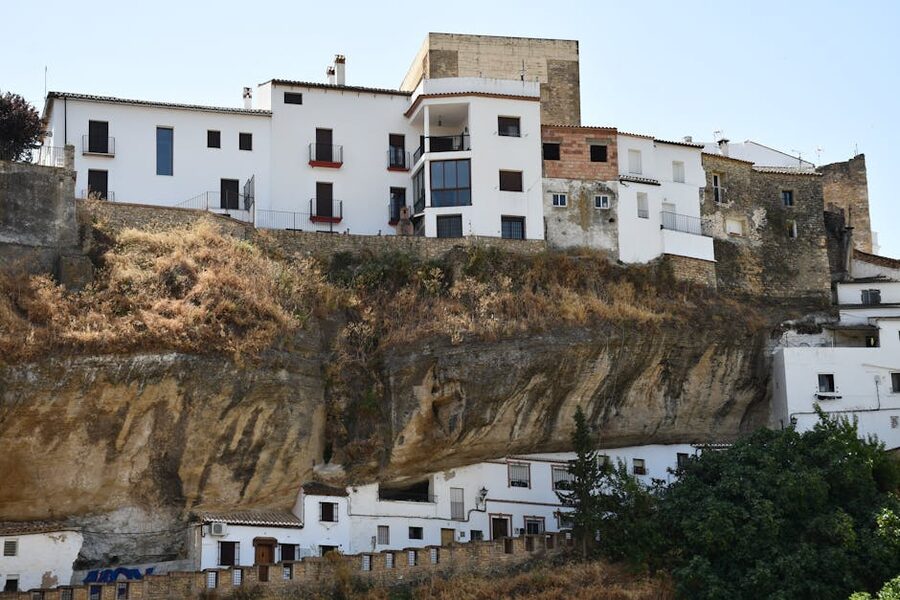
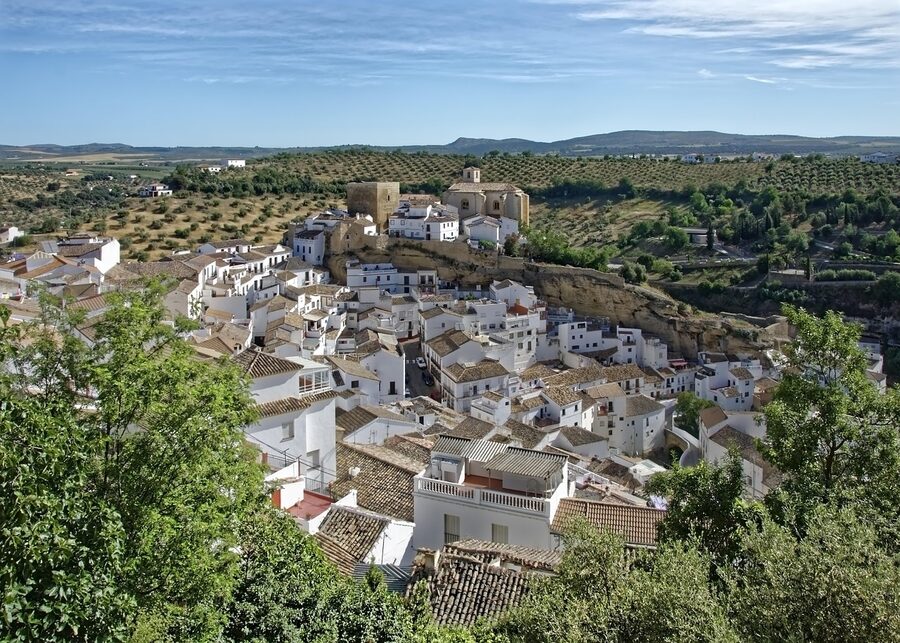
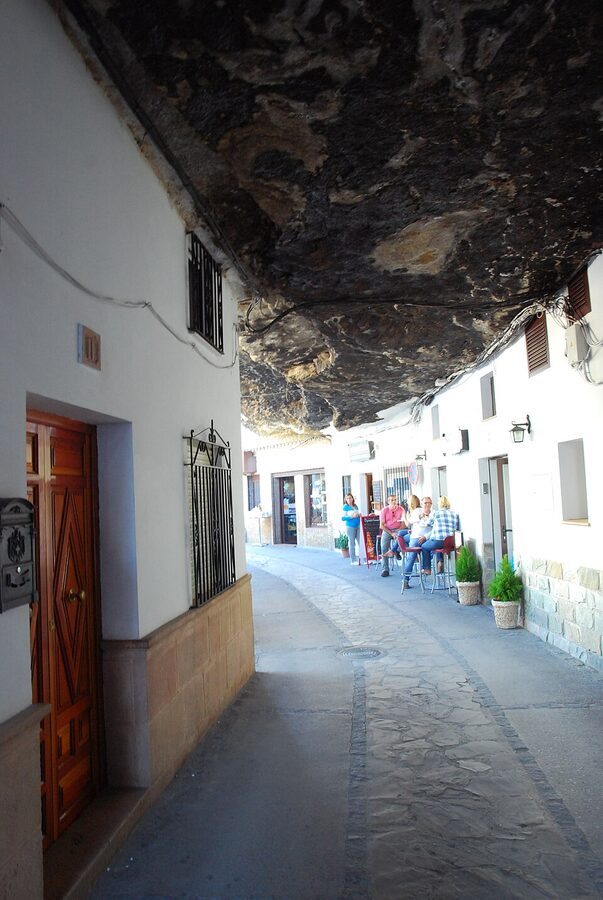
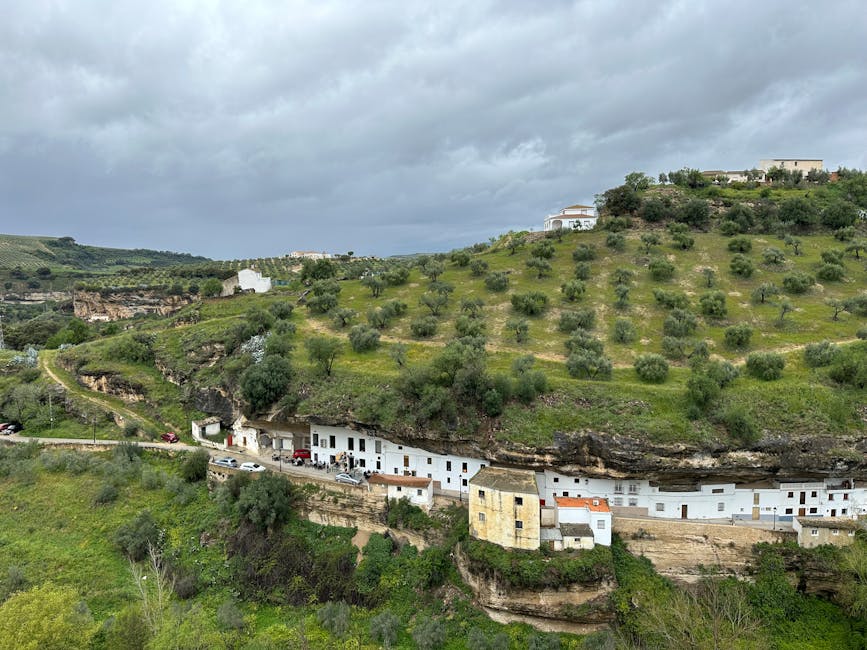
Setenil is two streets and a hill, and that’s almost the whole village. The two streets are Calle Cuevas del Sol on the south bank of the Trejo river and Calle Cuevas de la Sombra on the north. Sol catches the morning sun, Sombra is in shadow most of the day, and both are roofed by the same outcrop of rock that the Trejo carved out a few thousand years ago.
The names are accurate. Sol is warm in the mornings and packed with cafés, Sombra is cooler and quieter and feels more like the village people actually live in. Walk both. The full loop is about 800 metres. Add the climb up to the castle ruins (the Almohad watchtower) and the views down the canyon at the top, and you’ve got 90 minutes of village.
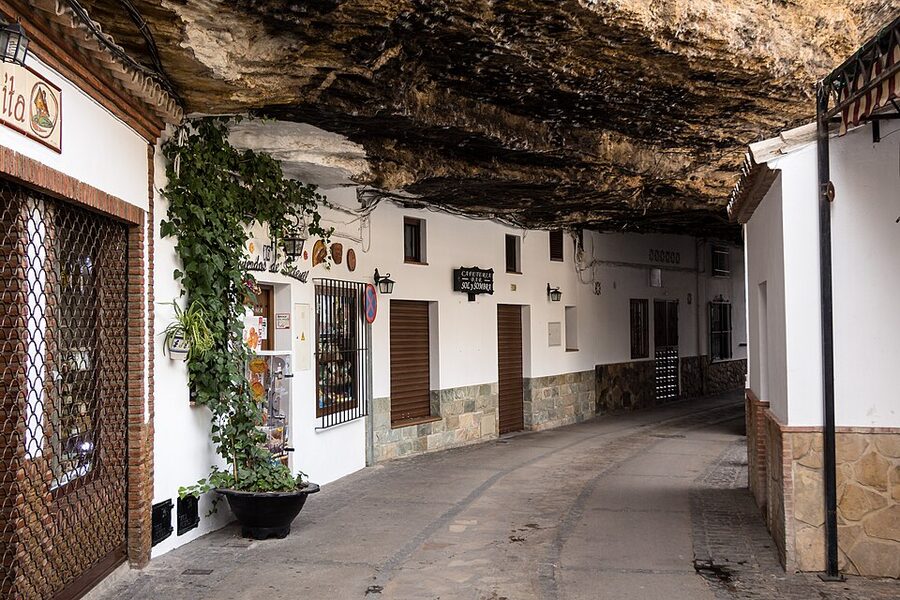
If you only have time for one café, sit at one of the tables along Sol with a beer and tapa. The traditional combination is chicharrones (slow-cooked pork belly, served sliced and cold with bread) and a glass of the local red. Setenil’s name literally means “Setenil of the wineries”, and although the phylloxera epidemic killed off most of the production in the 1860s, a handful of small bodegas still operate. La Almazara just outside Ronda is the better-known producer to visit and the alternate Ronda and Setenil day trip from Málaga sometimes builds in a tasting stop.
Sunset timing on the Puente Nuevo
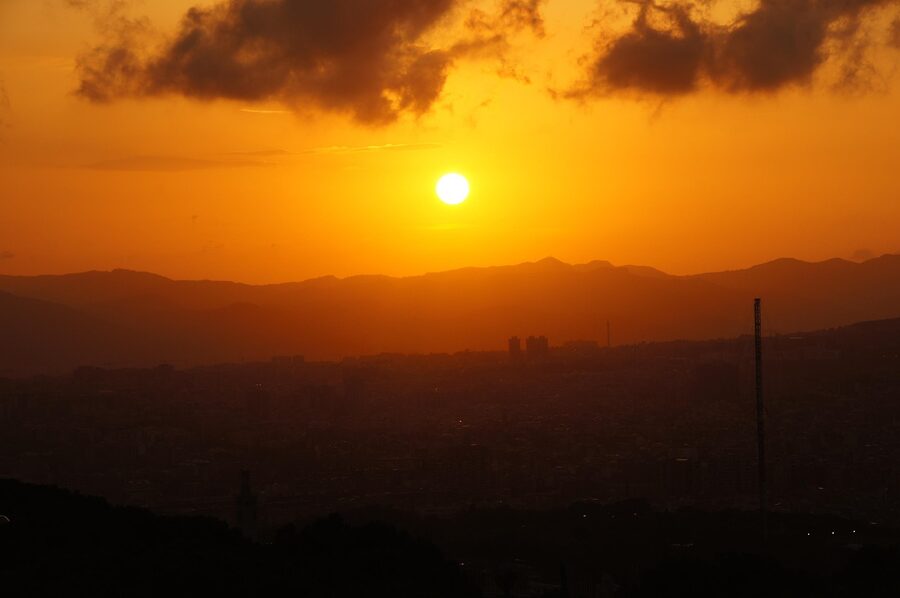
If you’ve booked the sunset variant, here’s how it actually plays out. The sun sets behind the Sierra Bermeja, which is to the south-west of Ronda. The Puente Nuevo points roughly east to west, so you stand on the western edge of the bridge looking back at the gorge to catch the cliff face lit gold. The Parador balcony at the north end of the bridge is the easier vantage if you’d rather not jostle on the railing.
The light window is short. About 25 minutes from when the gorge wall lights up to when it goes flat. May and September give you the best balance of long days and clear skies. June and July are also good but the bus journey home in the dark is the same as in May. December through February the gorge sits in shadow most of the afternoon and the sunset variant doesn’t add as much.
Where the tours leave from in Málaga
The pickup point for almost every group tour is the bus park behind the Plaza de la Marina, the small fountain square at the western end of the Paseo del Parque. It’s a five-minute walk from the cathedral and ten minutes from most central hotels. If you’re staying further out, take a taxi rather than the bus. The Plaza de la Marina is a small square and the buses leave between 8 and 9am sharp.
Pickup time on the email voucher is when the bus departs, not when you should arrive. Show up 15 minutes early. If you’re not at the bus by departure they leave without you and the company doesn’t refund. I’ve watched it happen.
If you’d rather build a fuller Málaga day around your Ronda trip, the Caminito del Rey day trip is the obvious sister excursion. Most people pick one or the other since both eat the full day. The Picasso Museum works as the rest-day activity in between. And if you want to do flamenco the night before your Ronda trip, the Málaga flamenco show options tend to wrap by 10pm, which still gets you in bed in time for an 8am bus.
Doing this from Seville instead
If you’re reading this from Seville rather than Málaga, the equation flips. Seville to Ronda is two and a half hours each way, but the Seville-based trips usually fold in a full white-villages loop on the way in. The standard route from Seville is Zahara de la Sierra, then Grazalema, then Ronda, then either Setenil or Olvera depending on the operator. You see four villages instead of two, and the drive is on quieter roads.
The Pueblos Blancos and Ronda full-day trip from Seville is the most-booked of these. It’s longer (10 hours instead of 9) and pricier than the Málaga version but you genuinely get more white-village exposure for the day. If your trip ends with two nights in Seville and you’re trying to decide whether to do this from there or wait until Málaga, do it from Seville. The villages in between are the part you’d otherwise miss.
Comparable day-trip logic applies in central Spain. Readers basing in Madrid often debate Toledo, Toledo and Segovia together, or the full three-cities loop. Two villages in a day works better than three. Five hours in two well-chosen places beats two hours each across four.
Tour picks: the three I’d actually book
Most operators run the same skeleton itinerary so the differences come down to free time, sunset timing, and if you want a guide for the full afternoon. The three below are the ones I’d actually book.
1. Ronda and Setenil with Free Time from Málaga: $33
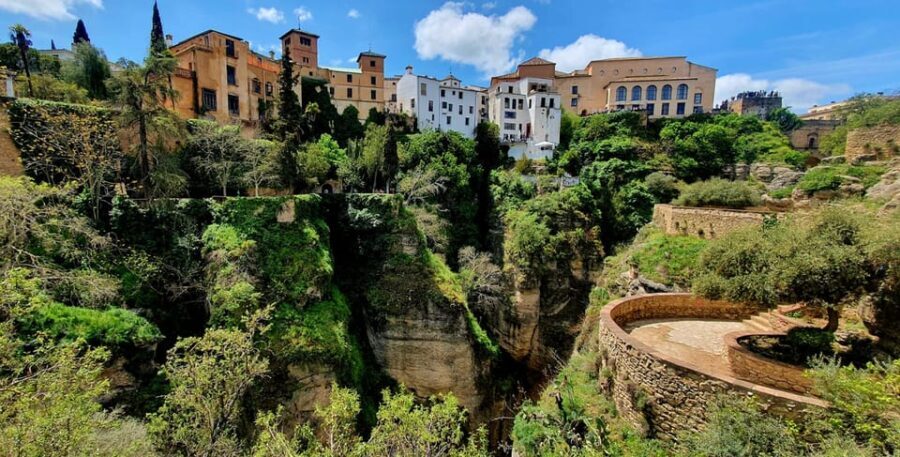
This is the option I tell most people to book. The free-time tour gives you a 30-minute orientation walk in Ronda, points out where the bullring and the bridge are, and then leaves you alone until 4pm. That’s the right amount of guidance. The Setenil stop afterwards is shorter, around 90 minutes, which is enough for the two streets and a coffee. Áloratur runs it daily.
2. Málaga: Ronda and Setenil with Optional Sunset: $34
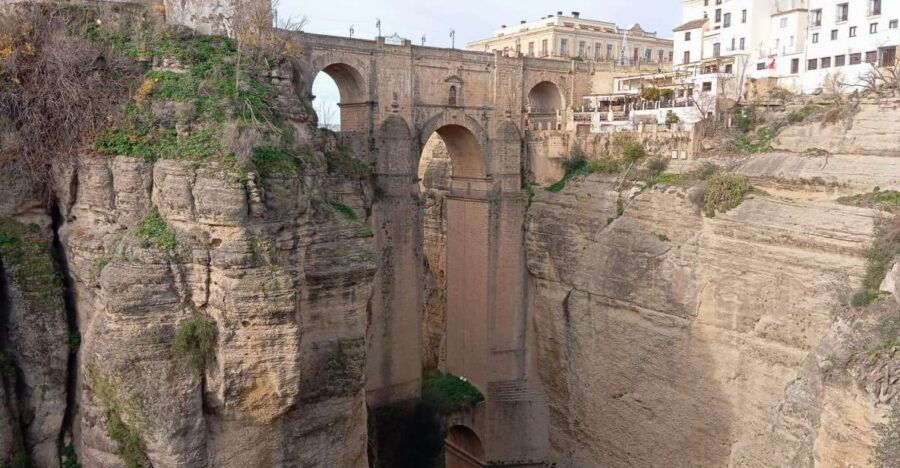
If you care about photographs at all, book this one. The sunset variant is ten hours instead of nine, and the extra hour lands you on the Puente Nuevo at golden hour. The trade is a slightly later return to Málaga, somewhere between 9 and 10pm depending on the season. Worth it from May through September. Less worth it in winter when the sun drops behind the Sierra before you’ve left Setenil.
3. Pueblos Blancos and Ronda Full-Day from Seville: $52
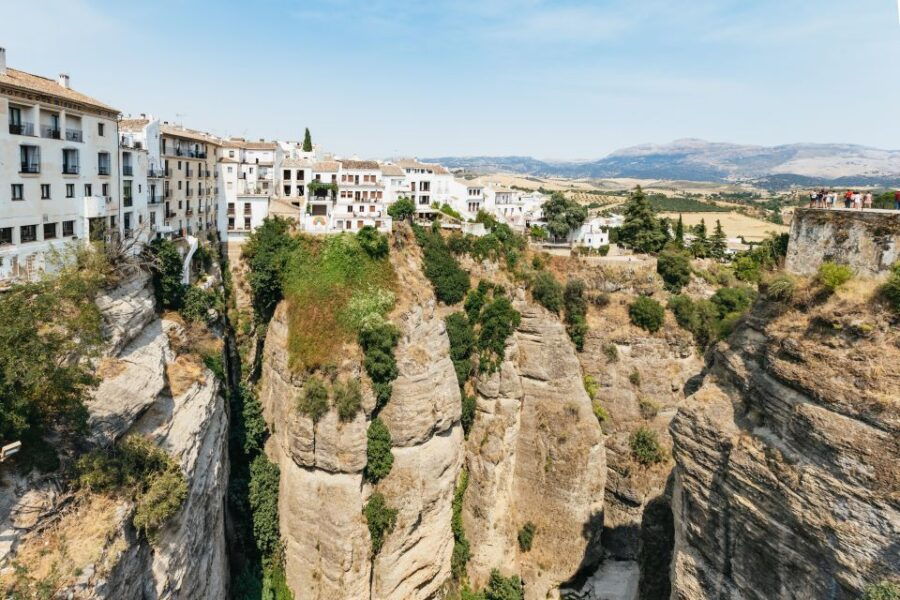
Different starting point, fuller route. The Seville version takes in Zahara de la Sierra and Grazalema before reaching Ronda, so you see four villages over the day instead of two. Lunch usually has an olive oil tasting attached on the return leg. It’s longer and pricier than the Málaga tours but the inbound drive is the prettiest part of the package and you’d miss it on a same-day Málaga loop.
Lunch logistics, and the bodega question
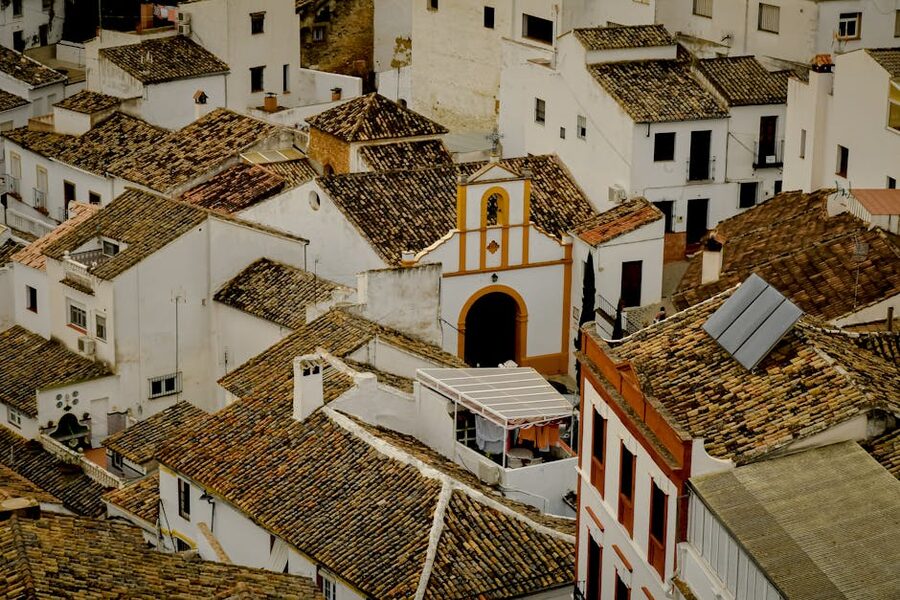
Lunch on a tour day is your problem to solve, not the operator’s, with one or two exceptions. The free-time tour assumes you eat in Ronda. The sunset variant ditto. The fully-guided tour usually books a set lunch at a venue near the bullring, which costs about 18 euros and is fine but not memorable.
If you’re picking your own restaurant in Ronda, three are worth knowing about. Tragatá on Calle Nueva is the more interesting cooking, run by a chef with a Michelin-starred restaurant down the street. Tropicana in the new town does the classic Andalusian set lunch for around 14 euros. Pedro Romero opposite the bullring is the tourist-volume option and frankly fine for a quick plate.
For Setenil, the choice is simpler. The cafés along Calle Cuevas del Sol are mostly equivalent. Order chicharrones and a beer or, if you’re driving, a tinto de verano. None of the rock-ceiling places are bad. None are exceptional either. The reason to sit at one is the ceiling, not the kitchen.
An olive oil tasting bodega visit is sometimes folded into the day. La Almazara at Reservatauro just outside Ronda is the standard stop, and the alternate from-Málaga day trip includes one in some departures. Worth it if you’ve never tasted unfiltered virgin oil straight from the press. Skip it if you’ve done a tasting in Italy or Greece, the format is similar.
What it costs, end to end
For a couple, planning to book the basic free-time tour: the seats run around 33 euros each, lunch in Ronda comes to roughly 30 to 40 euros for two, the bullring entry adds 9 each, and a coffee plus chicharrones in Setenil is another 10 to 15. Total for two people, 130 to 150 euros for the full day. Sunset variant adds about 2 euros per person.
If you’re doing it self-drive: a small rental from Málaga is around 35 to 45 euros for the day, fuel for the round trip is roughly 25, parking in Ronda comes to 12 to 15 euros for the day, and parking in Setenil if you find a spot is 3 to 5. Same lunch and entry costs as above. Self-drive ends up cheaper for two only if the rental price is on the low end. For four people self-drive is clearly the better economics.
The Costa del Sol pickup option for Caminito del Rey, by way of comparison, runs about 75 euros per seat. Ronda and Setenil are nearly always the cheaper of the two day trips out of Málaga, despite the longer drive, because the entries themselves cost less than Caminito’s 18-euro hike permit.
What to skip
A few things on the standard tour brochures that I wouldn’t bother with. The cathedral of Santa Maria la Mayor in Ronda is fine but it’s not a bullring or a bridge. The museum of bandits on Calle Armiñán is a small, dated collection that’s mostly mannequins. Skip it. Ronda’s Mondragón Palace has good gardens but at around 4 euros it’s a hard sell against the same time spent at the cliff path or the Alameda balcony.
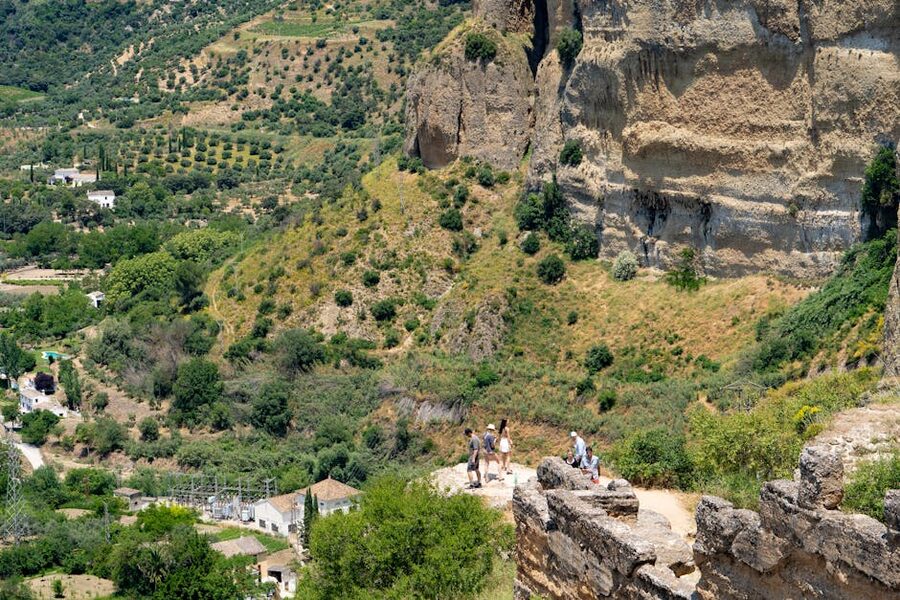
I’d also be careful about the El Tajo cliff descent if you have any knee issues. The path drops about 80 metres vertical over slippery polished stone and the climb back up is a workout. The view is incredible. The route back is rough.
Practical bits
Cash and card both work in Ronda. The cafés in Setenil are mixed, and a couple of the smaller bodegas along Sombra still prefer cash for sub-10-euro tabs. Carry a 20.
The buses are air-conditioned, but the May-to-September temperature in Ronda regularly hits 35 degrees by 2pm and the cliff paths have no shade. Take water. The cafés sell 2-euro bottles but the ones near the bridge mark them up to 3.50.
Sundays the bullring still opens, the bridge is always open, and many of Setenil’s smaller cafés take Sundays off. Mondays the Arab Baths in Ronda are closed and the bullring runs reduced hours. Tuesdays through Saturdays are the cleanest days for the full programme.
If you’re booking last-minute, the standard free-time tour can sell out from Friday afternoon onwards in spring and autumn. The sunset variant rarely fills more than 24 hours ahead. Costa del Sol pickups need 48 hours’ notice for the smaller departure points like Marbella. If you’re booking from a phone in your hotel lobby the night before, the standard 9am Málaga departure is the safest bet.
One more thought before you book
The Ronda and Setenil day is the single best one-day excursion from Málaga in my opinion. It’s not the most famous (Caminito del Rey gets that vote) and it’s not the most refined (Granada’s Alhambra is a different category of monument). But it’s the most complete in terms of variety. You get a city perched on a cliff, a village built into one, an 18th-century bullring, a Roman-era stone bridge, an Andalusian lunch, and the kind of golden-hour light that makes the photographs you actually keep. For 33 euros and a 9-hour day, that’s the trade.
If your trip has time for two day trips out of Málaga, pair this with the Caminito del Rey hike and you’ve covered the two reasons most people end up in Málaga in the first place. If you only have one day, this is the one. The bridge is the photograph. The cave streets are the surprise. Both pay you back.
Other Andalusian day trips worth a look
If your Spain itinerary has more days to fill, two routes deserve a mention next to this one. The Mezquita-Cathedral of Córdoba is the most extraordinary religious building in the country and works as a long day from Málaga or a stopover between Seville and Granada. Seville’s cathedral with the Giralda climb is the obvious pairing for travellers who base themselves further west. And if you want to compare day-trip economics across Spain, the Avila and Segovia loop from Madrid hits a similar two-villages-in-a-day rhythm in the centre of the country.