
Halfway between Aegina and Poros, on the open deck of a Saronic Gulf day-boat, the lunch buffet rolls out and the sea goes the kind of blue you stop trying to photograph. Lamb in tomato sauce, a steel tray of moussaka, the bread basket already half empty. On the front deck, two Greek dancers in costume start tying sashes for the late-afternoon set.
This is the rhythm of the standard Saronic three-island cruise from Athens. Aegina, then Poros, then Hydra, with a buffet lunch and a folk-dance show in between. It is one of the most-booked day trips in Greece, and below I will walk you through how to actually pick one and book it without messing up the day.
- In a Hurry? My Top 3 Picks
- What This Cruise Actually Is
- Aegina: The Workhorse First Stop
- Poros: The 90-Minute Forest Stop
- Hydra: The Stop That Actually Stays With You
- The Buffet, the Dancing, and the Bit Nobody Warns You About
- Saronic Three-Island vs the Swimming-Focused Alternative
- How to Get to the Boat (Pickup or DIY)
- What to Wear and Bring
- Best Time of Year
- The Cruises I Would Actually Book
- 1. Hydra, Poros and Aegina Full-Day Cruise from Athens (around 4)
- 2. Athens Cruise to Agistri, Moni and Aegina with Lunch and Drinks (around 4)
- 3. Athens Day Cruise Since 1965: Hydra, Poros and Aegina (around 9)
- The Common Mistakes
- Pacing the Saronic Day Into a Bigger Athens Trip
- Worth It or Not
- Other Athens Day Trips Worth a Look
In a Hurry? My Top 3 Picks
Hydra, Poros and Aegina full-day cruise from Athens, around $154. The flagship three-island day. Buffet lunch, Greek dancing, all three Saronic stops, hotel pickup option. Most-booked cruise on the route. Check availability and times.
Agistri, Moni and Aegina swimming cruise, around $174. Same Saronic Gulf, different vibe. Two long swim stops on Moni and Agistri, less running between islands. Better for hot days when you want sea time over sightseeing. See dates and price.
Hydra, Poros, Aegina day cruise running since 1965, around $159. A long-running operator on the same three-island loop with the original entertainment-and-buffet format. Pick this if you want the classic experience and do not mind a slightly older boat. Check the listing.
What This Cruise Actually Is
The Saronic three-island day is a packaged thing. There are about half a dozen operators, all running the same basic shape, all leaving Marina Flisvos or the Piraeus passenger port between 7 and 8am, all back by 7 or 8pm. You pay roughly $115 to $175 depending on operator, hotel pickup, and whether the lunch is an upgrade.
The sequence on most boats is Aegina first (closest, around 75 minutes out), then a 90-minute crossing to Poros, then a longer leg to Hydra and back to Piraeus. A few operators flip the order and hit Hydra first. The total stops add up to about four hours on islands and four to five hours on the boat. The rest is buffet, dancing, and sun.
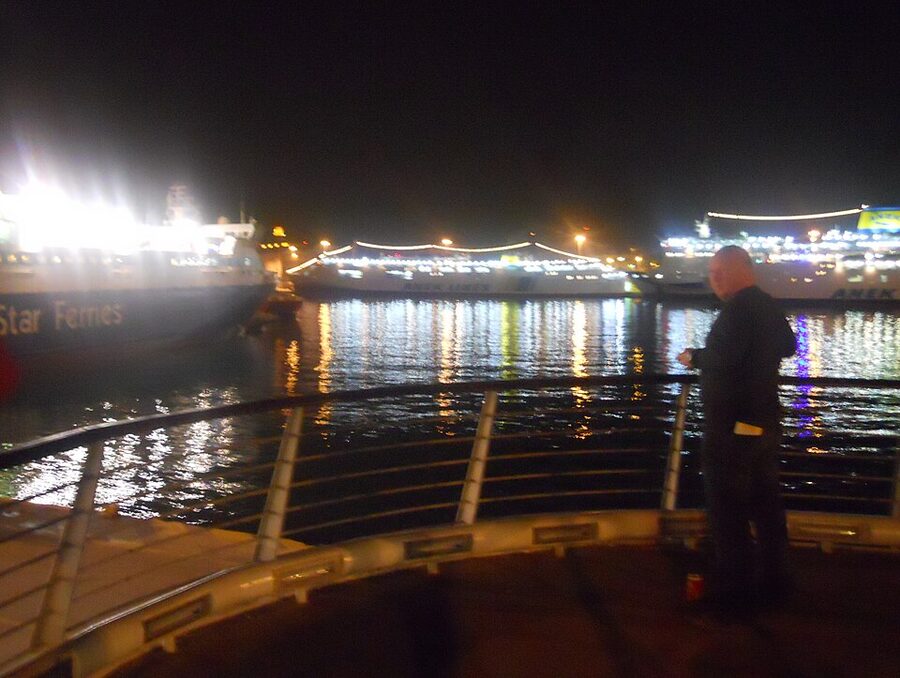
The boats are not luxury cruise ships. Most are converted day-ferries with two or three decks, an indoor air-conditioned saloon for the buffet and the dancers, and open upper decks for sun. They sleep about 300 to 500 passengers when full, which sounds chaotic but rarely is. People split between decks all day, and the boats are big enough that you can almost always find a quiet rail to lean on.
Greek dancing happens twice. Once around lunch in the saloon, with two or three dancers in proper costume doing kalamatianos and syrtaki and pulling out passengers in the second song. Once again on the front deck mid-afternoon, longer, less staged, and usually with more booze involved. If you want to skip it, you can. Nobody minds. If you have read our other Athens guides, like the Acropolis walking tour, you already know how Greek tours handle the cultural-show beat: light touch, optional, fun if you are in the mood.
Aegina: The Workhorse First Stop
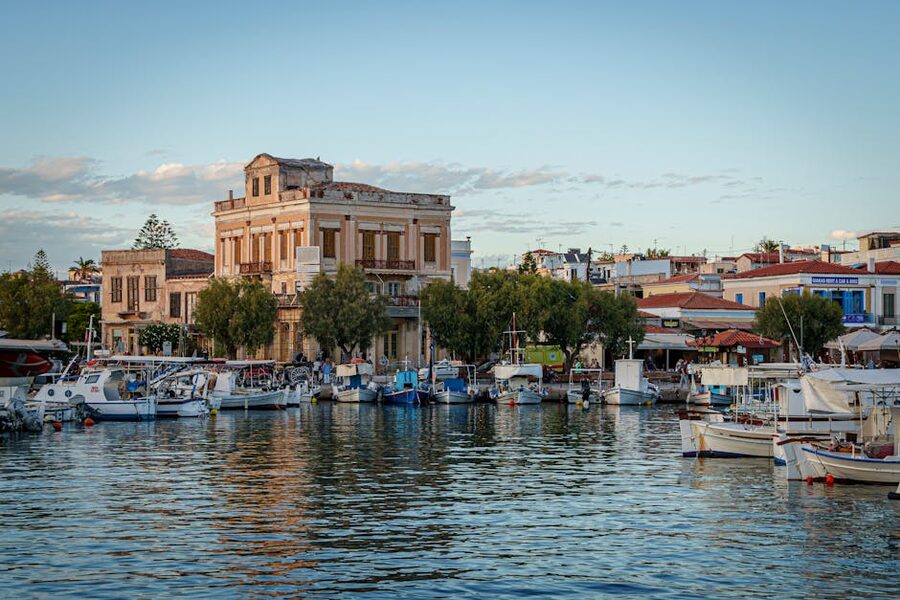
Aegina is the closest Saronic island to Athens. About 75 minutes by cruise boat, a bit faster on the regular ferry. It is the working island of the three. Bigger, busier, full of pistachio orchards, a real fishing fleet, and a population that does not just exist for tourists. You usually get 90 minutes here on a cruise, which is enough for one of three things.
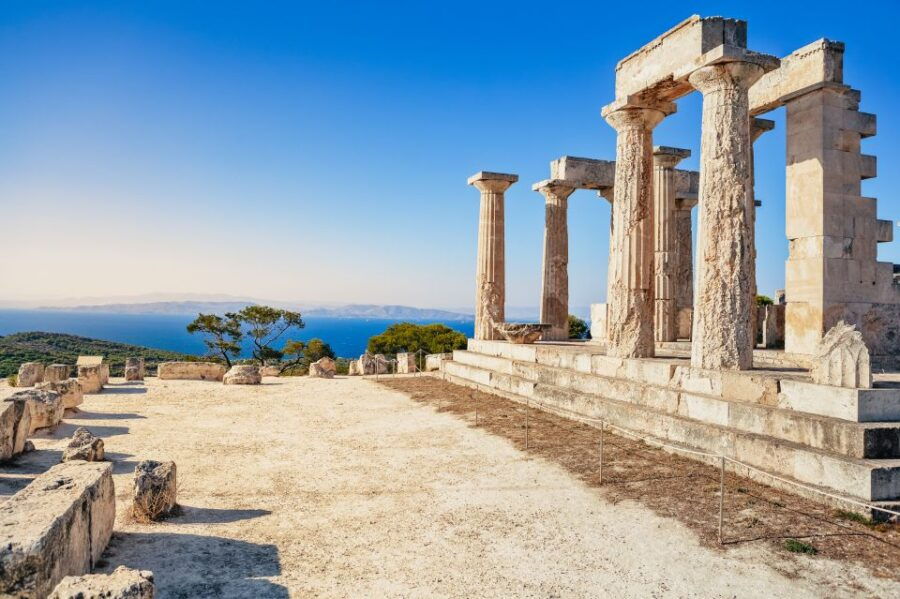
Option one is the optional bus tour up to the Temple of Aphaia. You pay roughly 12 to 15 euros extra at the ticket booth on the boat, the bus meets you at the dock, and you get the temple plus a quick stop at Agios Nektarios monastery on the way back. This is what I would do on a first visit.
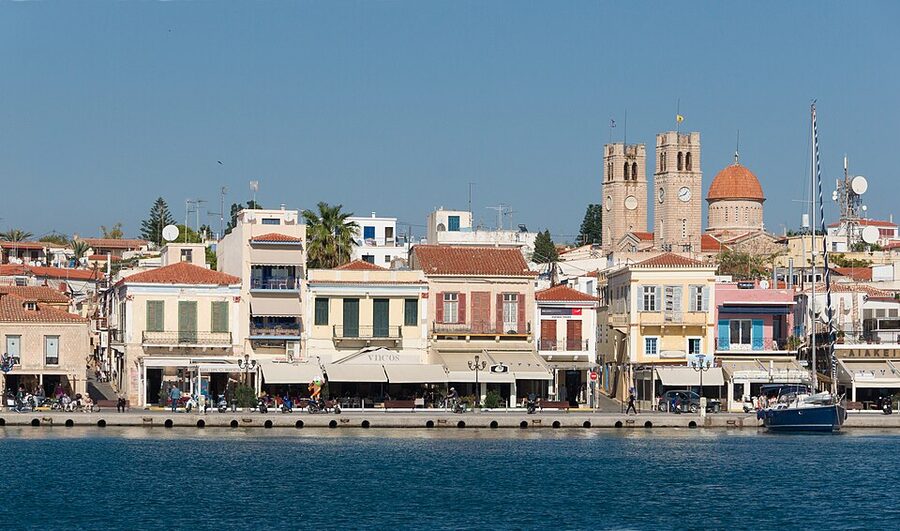
Option two is to stay in Aegina town. There is a fish market on the harbour where the morning catch comes in, a long line of cafes facing the water, and dozens of pistachio shops selling every form of the nut you can imagine. Fistikia Aigines is the Greek phrase you want to look for. The local pistachios have a specific taste, drier and slightly more savoury than the bigger Iranian and American ones, and sellers will give you handfuls to try. It is one of those edible souvenirs that survives the journey home.

Option three is to skip both and just sit. Get a frappé at the cafe nearest the boat, watch the fish boats come in, and wait for the horn. Some days that is the right call. The Aegina town fish market is one of the more unfiltered scenes in the Saronic Gulf, and a quiet hour with an iced coffee beats a rushed temple visit if your day has already been rushed.
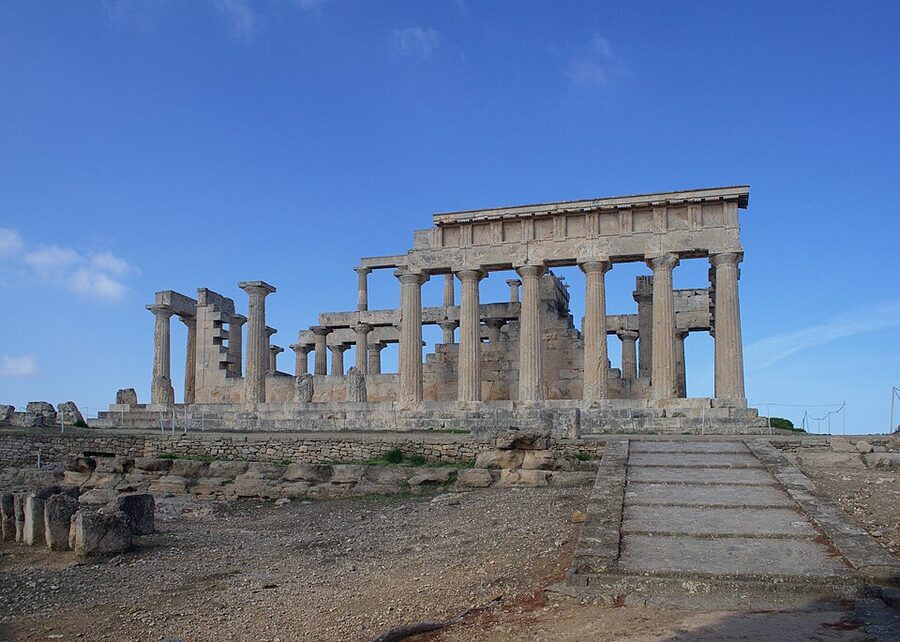
The Temple of Aphaia itself is the underrated bit of this whole trip. Sixth century BC, late Archaic, beautifully preserved, and almost nobody outside Greece knows about it. The pediment sculptures are mostly in Munich now (the Aegina Marbles, sold by the Bavarian crown in the 19th century), but the temple structure is intact. You get about 30 minutes on site, which is about right.
Poros: The 90-Minute Forest Stop
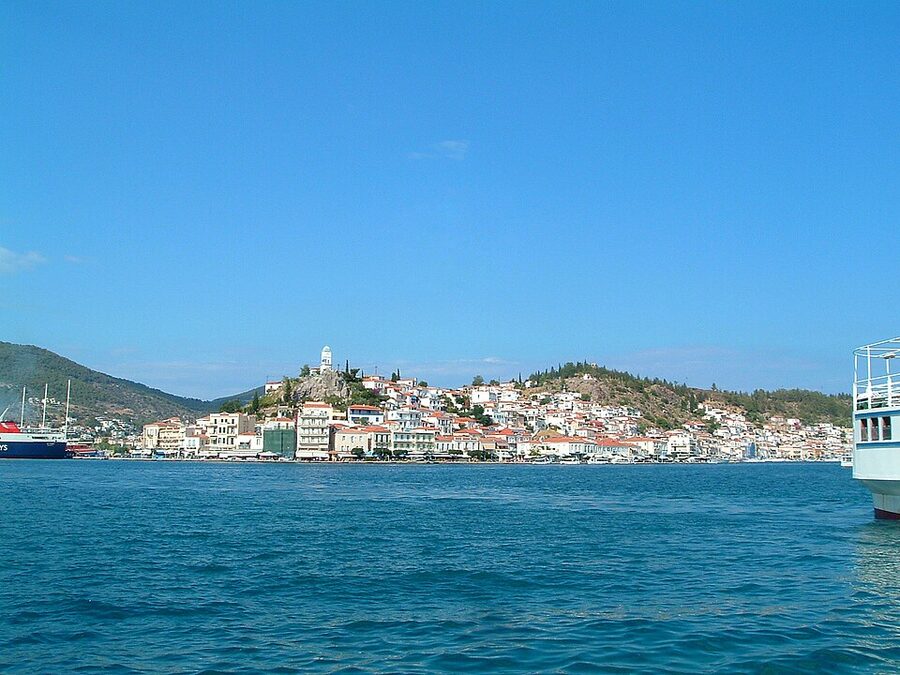
Poros is the small one. It is the second stop on most cruises, about 30 to 40 minutes by boat from Aegina. You usually get 50 to 90 minutes here, which is the shortest stop of the three.
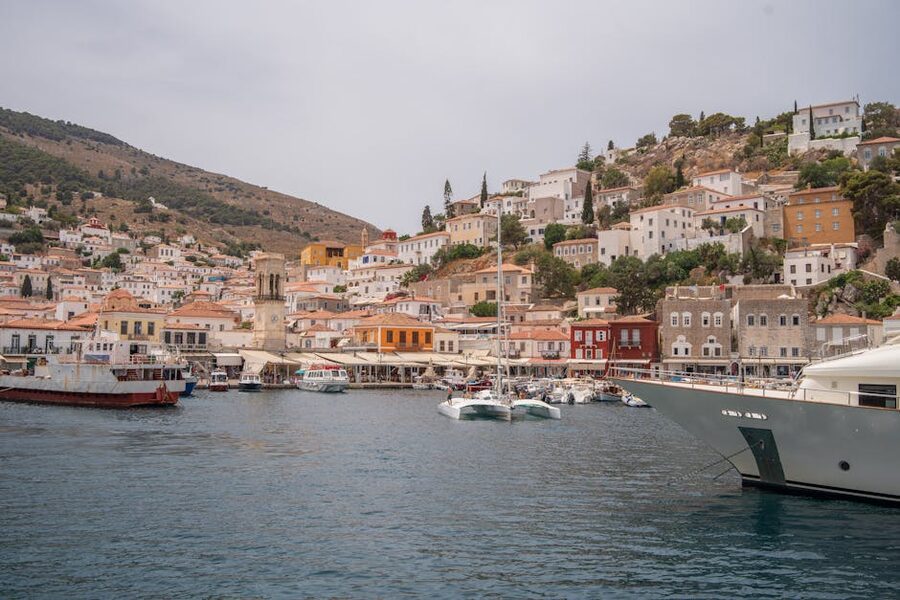
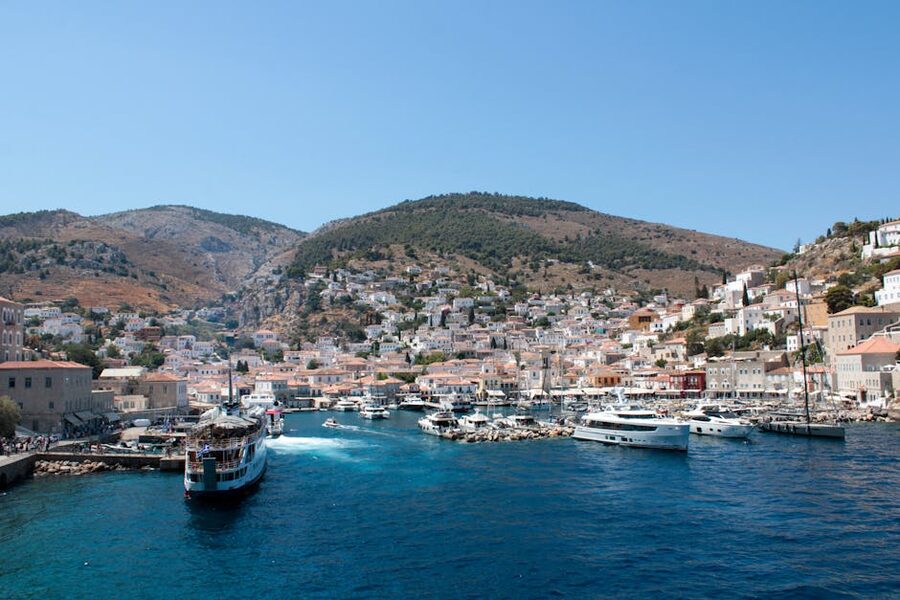
The geography is what makes it. Poros sits in a narrow channel separating it from the Peloponnese mainland. The crossing in is dramatic in a quiet way: the boat threads between two pine-covered hills with the town stacked up the south one in white-and-terracotta layers. It looks like a film set. Photographers on the upper deck will start hunting angles about 10 minutes before docking.
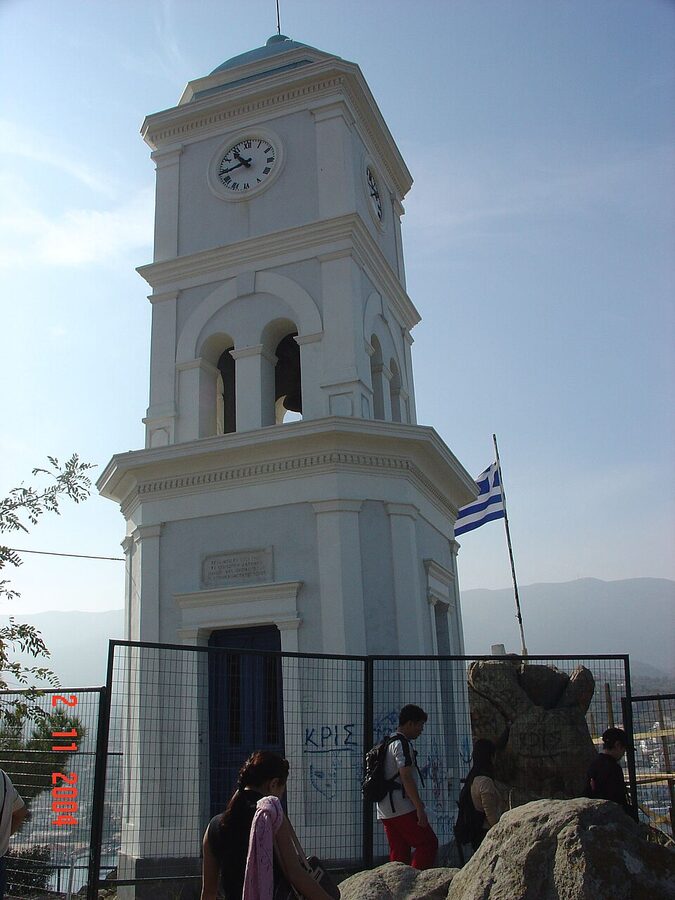
What to actually do here in 90 minutes is simple. Walk up the clock tower (15 minutes up, 10 down, free, view from the top covers the whole channel and the Peloponnese hills). Or sit at one of the harbour tavernas and have a frappé and a tiropita. Or do the postcard waterfront walk along the south quay, which lasts about 30 minutes and ends at a small Orthodox chapel where the locals tie up the smaller boats.
Skip the inland excursions. People sometimes try to taxi out to Poseidon’s Sanctuary on the north side of the island and they almost always run late. The boat will not wait. If you have read our breakdown of Cape Sounion’s Temple of Poseidon run, you already know there is a much better-preserved Poseidon temple on the mainland that is worth the day trip on its own. Do not chase a worse version of it on a 90-minute stop.
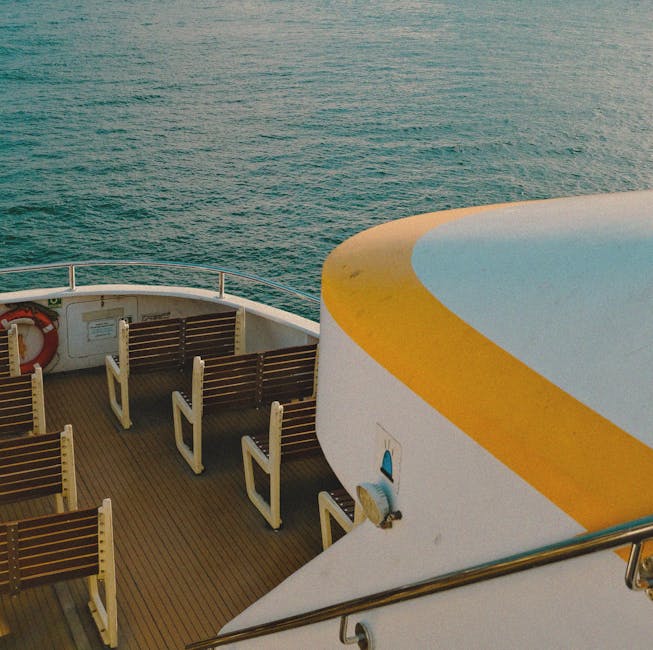
The ferry-hub history is real, by the way. Poros was a Greek naval station in the 19th century and you will see the old shipyard buildings down at the south end of the bay. The whole vibe is sleepier than Aegina. If Aegina is the working island, Poros is the in-between, the place locals from Athens come to for a long weekend rather than a day.
Hydra: The Stop That Actually Stays With You
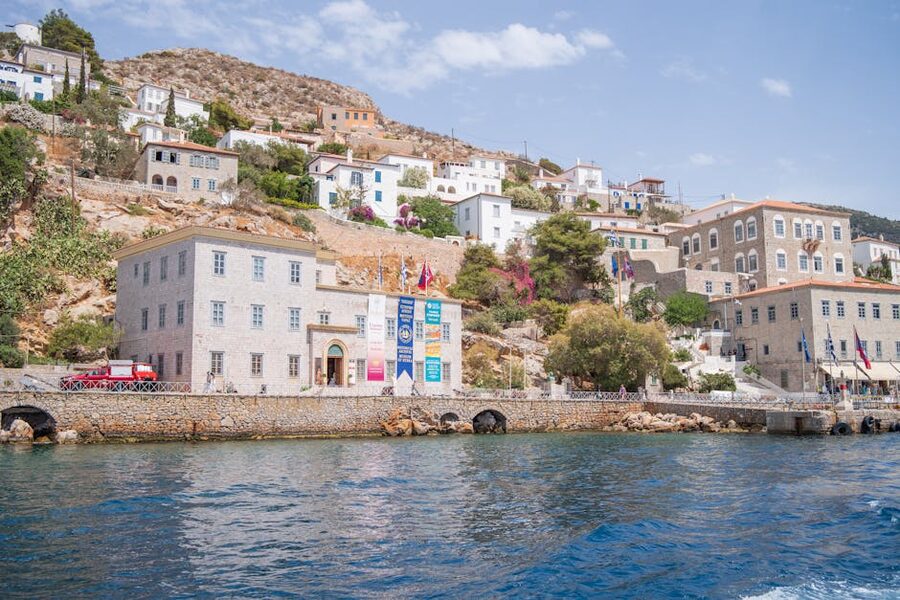
Hydra is the keeper. If you do this cruise and remember one stop in detail two years later, it will be Hydra.
Three things make it different from the other two. No cars are allowed on the island. Donkeys and water taxis carry everything. The houses up the cliffs are mostly preserved 18th-century shipping mansions. And there is no real beach in Hydra town. The swimming happens off rock platforms a 10-minute walk along the coast in either direction.
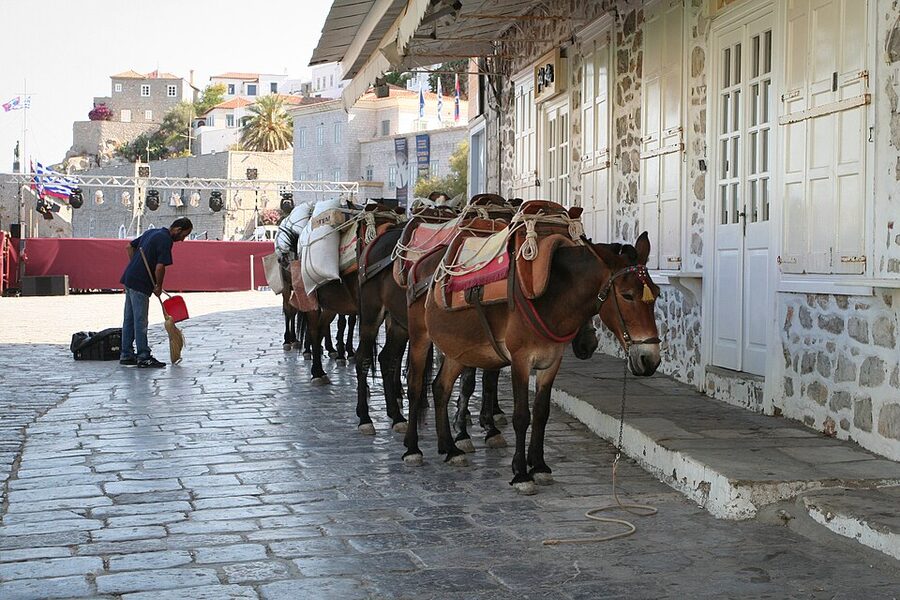
The car-free thing is not a tourist gimmick. Hydra has banned motor vehicles since the 1950s. Rubbish gets carried out on donkey, building materials get hauled up by donkey, suitcases too. You will pass a donkey rank at the port within 30 seconds of stepping off the boat. It changes the feel of the whole town instantly. No engines, no horns, just hooves on cobbles, the slap of water against stone, and people talking.
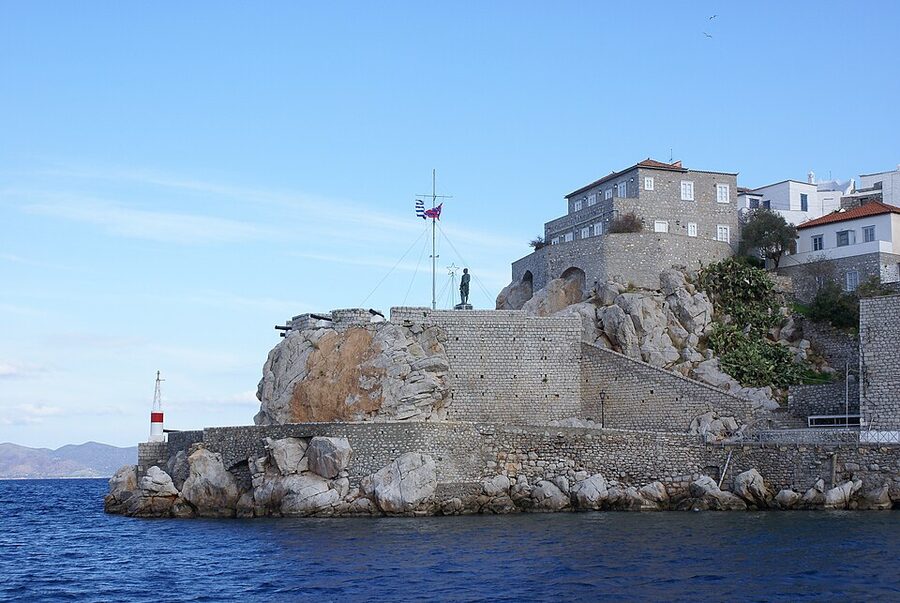
The 18th-century history is the bit most cruise narrators race past. So here is the short version. Hydra got rich in the late 1700s and early 1800s on Mediterranean shipping, particularly grain to Marseille during the Napoleonic blockade. By 1820 the island had a merchant fleet of around 150 ocean-going ships. When the Greek War of Independence broke out in 1821, Hydra’s shipowners turned half that fleet into a navy and bankrolled the war effort. Half the famous old Greek admirals (Miaoulis, Tombazis, Kountouriotis) were Hydriots. The big white mansions you can see from the harbour are their houses.
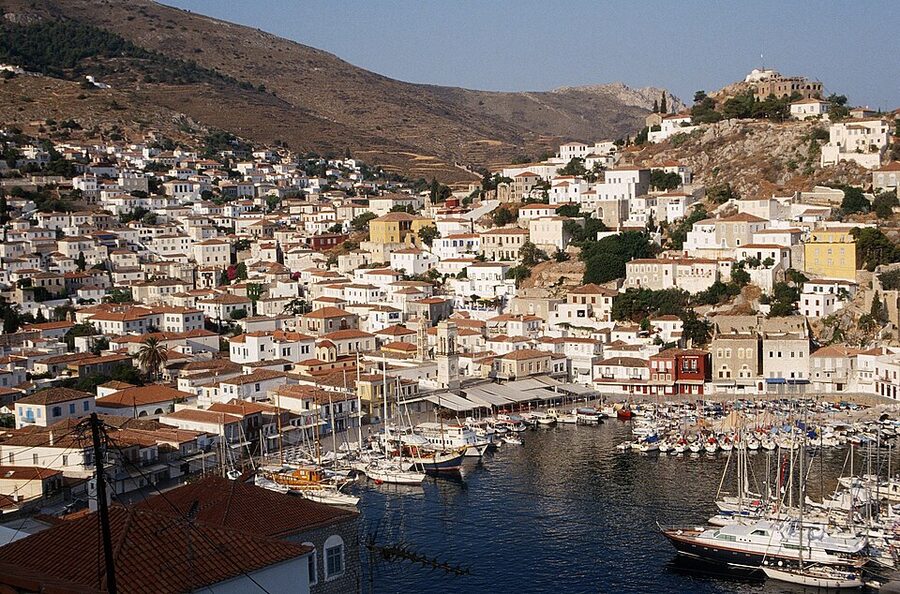
Most cruises give you 90 minutes to two hours on Hydra. Here is how to use it.
If you want the harbour walk: do the south side, past the cannons at the entrance to the port and along to Spilia, the rock-platform swimming spot about 10 minutes out. You can swim, dry off, walk back, and still have 30 minutes for a frappé. Bring your swimsuit on under your clothes; there is nowhere to change without queuing.
If you want the cultural option: walk five minutes up from the harbour to the Lazaros Kountouriotis Historical Mansion. It is the family home of one of the war-of-independence shipowners, now a small museum, costs about 4 euros, takes 30 minutes. Combine it with a coffee at the cafe on the cathedral square below it.
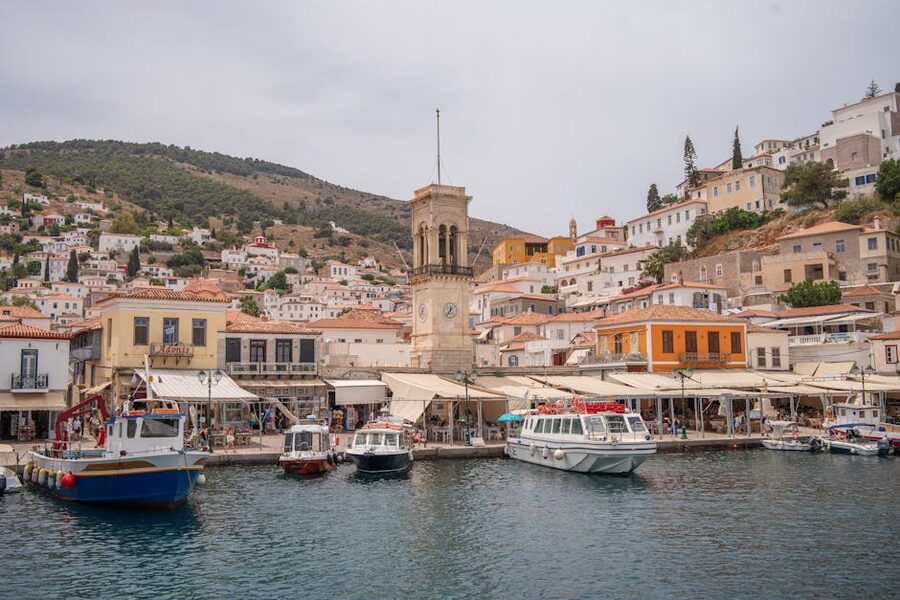
If you want to do nothing: you can. Sit at the cafe nearest the boat, order a Greek coffee and a glass of cold water, and watch the day-trippers do their thing. There is a particular kind of Hydra people-watching where you start to clock who is local (carrying groceries) and who is from the Athens money set who keeps a summer house here (sunglasses, white linen, dog on a lead). It is its own small theatre. The cruise blogs almost never mention this and it is one of the most fun parts of the stop.
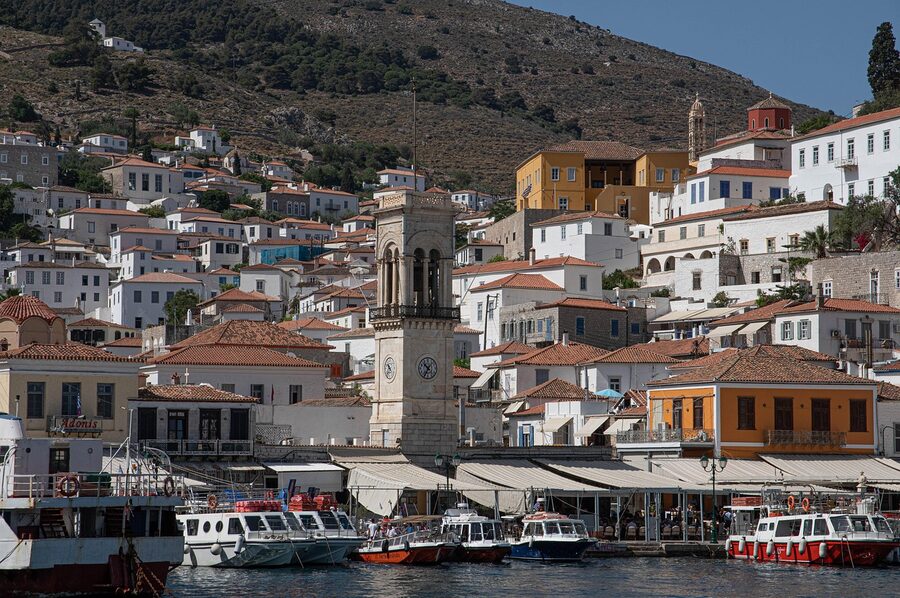
What you cannot do in 90 minutes is hike to the Profitis Ilias monastery up the mountain. It is a 90-minute walk one way, in full sun, on stone. Do not try. People do, and people miss the boat. The cruise will leave without you and the next ferry back to Piraeus is the 5pm direct, which costs about 30 euros and will not get you to your hotel until late. If you really want to hike Hydra, come back and stay overnight.
The Buffet, the Dancing, and the Bit Nobody Warns You About
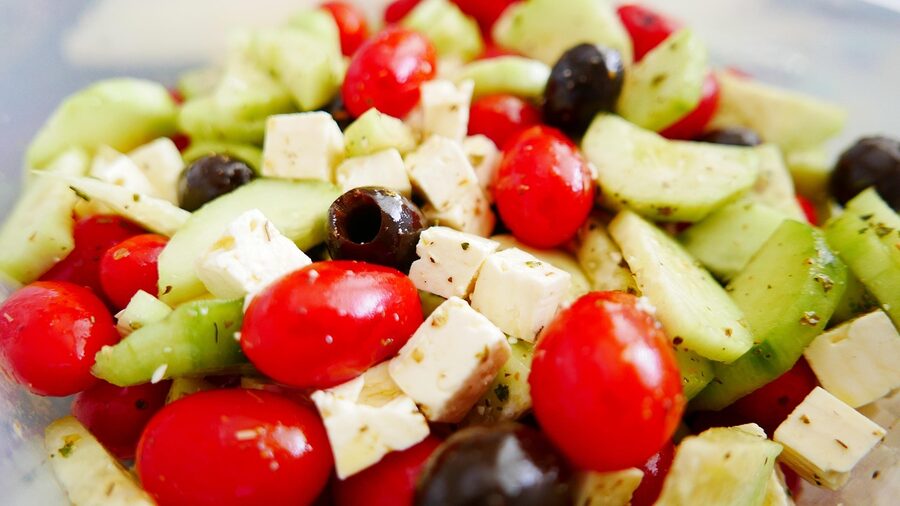
The buffet is included on most cruises and runs around 1pm during the long Poros-to-Hydra leg. It is correct rather than great. Greek salad, moussaka, lamb in tomato or pork in lemon, rice, bread, cheese, fruit. There is usually a vegetarian moussaka or a stuffed-pepper option. Drinks are not included. Wine and beer are 5 to 7 euros, water 2 euros, soft drinks 3 euros.
Eat early. The line wraps around the saloon by 1:15pm and the lamb is gone by 1:30. If you sit down with the second wave you are eating salad and bread. This is universal across operators. I have done four different Saronic cruises across two trips and the pattern never changes.
The dancing is the cultural set piece. Two or three professional dancers, full traditional costume (white shirts, dark vests, fustanella for the men, white embroidered dresses for the women), three or four pieces. Kalamatianos first, syrtaki second, sometimes a Cretan pentozali, sometimes a hasapiko. Halfway through the second song the lead dancer will pull a passenger up to dance. It is light, friendly, optional. If you do not want to be picked, sit in the back and look busy.
The bit nobody warns you about: motion sickness. The Saronic Gulf is mostly calm, but the open stretch between Aegina and Poros can get choppy in afternoon wind, especially July and August. The boats are big enough that it never gets dangerous, but if you are sensitive bring something. Stugeron or Dramamine, taken 30 minutes before boarding. The cabin staff will tell you the gift shop sells it onboard for triple price. Bring your own.
Saronic Three-Island vs the Swimming-Focused Alternative
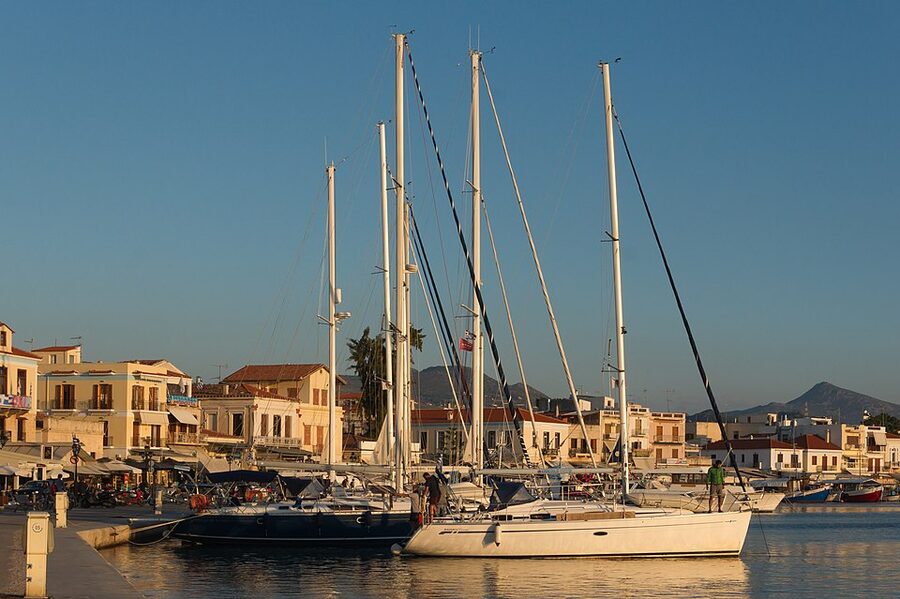
Not everyone wants the three-island sightseeing day. There is a second format that is worth knowing about, especially in July and August.
The Agistri-Moni-Aegina cruise is structured as a swimming day rather than a culture day. Same gulf, fewer islands, same ticket price ballpark. Moni is a small uninhabited islet off Aegina with peacocks (yes, real peacocks) and a single rock-platform swimming bay. You get an hour and a half there. Agistri is the bigger and quieter sister of Aegina, with cleaner-water beaches than anywhere on the main three-island route. And then a short Aegina town stop on the way back.
The trade is straightforward. You give up Hydra, which is the most photogenic stop on the standard route, and you get two real swim sessions in clear water instead. If your trip already includes a Cape Sounion sunset evening, you are getting your scenic-coast fix elsewhere, and the swimming day starts to look like the better Saronic option.
Most operators offer both formats. The standard three-island runs daily year-round. The Agistri-Moni-Aegina swim cruise runs more in May to October. If you are travelling June through September with kids, I would lean swim cruise. October through April, lean three-island. The same swim-versus-sightseeing trade comes up on coastal day boats elsewhere; we covered the choice in our writeup of the Palma catamaran day and the answer is usually the same. If the day is hot, swim wins.
How to Get to the Boat (Pickup or DIY)
Two options. Hotel pickup, included in some operators’ tickets and a 5 to 8 euro upgrade with others. A minibus comes to your hotel between 6:30 and 7:15am, drives you to either the Marina Flisvos pier (closer, smaller) or the Akti Themistokleous quay in Piraeus (the main passenger port).
Or DIY. Tram line 6 runs from central Athens to the south coast and stops near both Marina Flisvos and Piraeus. Last tram leaves Syntagma around 7am, arrives in plenty of time. Tickets are 1.20 euros. Cab from Plaka to Piraeus is 12 to 18 euros depending on traffic, takes 20 to 25 minutes. The metro line 1 runs to Piraeus station, which is a 5-minute walk to the cruise pier. Buy a single ticket, not the day pass; you will not need the return.
If your morning logistics are tight, the pickup option is worth it just for the peace of mind. You will not be the only person on the bus dozing on the way to the dock. Compared to other early Athens transport runs, like the first Hop-On Hop-Off bus of the day, this is a much earlier start and a longer day, so the included pickup actually pays off.
What to Wear and Bring
Three things you actually need.
Swimsuit under your clothes. If you want to swim at Hydra (Spilia rocks) or the optional swim stop on the Agistri route, the boats do not have proper changing facilities and the queue for the toilets is long.
A light layer. The morning departure is cool even in summer. The wind on the upper deck on the run from Aegina to Poros has knocked plenty of sunburned travellers into shivering by 10am. A long-sleeve shirt or a sarong solves it. Take it off at midday.
Cash. About 30 to 40 euros per person beyond the ticket. Drinks on board (wine 6 euros, beer 5, frappé 4), the optional Aegina temple bus (12 to 15 euros), pistachios and small souvenirs. Cards work on the bigger boats but the smaller island shops are still cash.
Skip the sun cream pitch. The boat shop sells it at 15 euros a tube. Bring your own. Skip the souvenir t-shirt pitch even harder. They are 25 euros onboard and 10 anywhere on land.
Best Time of Year
The cruise runs every day of the year. The experience changes a lot by month.
May and June. Best window. Warm enough to swim by mid-May. Sea temperatures in the high teens to low twenties. Boat at 60 to 70 percent capacity. The dancers have energy. The buffet is fresh because the kitchens have not been working at peak volume for two months yet.
July and August. Hot. Sea temperature in the mid-twenties. Boat at full capacity, lines for the buffet, queues for the toilets. The afternoon meltemi wind kicks up between Aegina and Poros; the open stretch can be choppy. If you go in August, take seasickness tablets.
September and October. Second-best window. Sea still warm into early October. Day-trip volume drops sharply after mid-September. The light is softer and the photos look better.
November to April. Quieter and cheaper. The dancing still happens. Swimming does not. The buffet shifts from cold meze toward warm lamb stew. If you want the islands without the crowds and you do not care about the swim, the off-season run is genuinely lovely. Pack a proper jacket.
The Cruises I Would Actually Book
I have looked at every Saronic Gulf day cruise in our review database. Three sit clearly above the rest. They cover the three different ways to do this trip: the flagship three-island run, the swim-focused alternative, and the long-running heritage operator.
1. Hydra, Poros and Aegina Full-Day Cruise from Athens (around $154)
This is the most-booked Saronic Gulf cruise on the market and the safe pick if you want the canonical three-island day. The crew tend to be the most-mentioned positive in the feedback, with one passenger describing the on-deck staff as if they had personal waiters who remembered every drink order. Our full review covers what is and is not in the buffet upgrade. The real weakness is the long day. By the return leg you are tired, and the front-deck dancing happens just when you would rather be horizontal.
2. Athens Cruise to Agistri, Moni and Aegina with Lunch and Drinks (around $174)

This is what I would pick in July or August when the heat in Athens is brutal and you really just want to be in the water. Smaller boat, traditional wooden hull, fewer passengers, two proper swim stops at Moni and Agistri instead of one rushed harbour visit at Hydra. Our review walks through the on-board open bar (yes, it is genuinely unlimited, and yes, the captain still gets you home safely). The trade is no Hydra, no donkeys, no 18th-century cliff houses. If you have already done the standard route on a previous trip, this is the better second visit.
3. Athens Day Cruise Since 1965: Hydra, Poros and Aegina (around $159)

Pick this if you want the classic version of the experience and the flagship is sold out for your dates. The format is identical to the headline cruise, just an older boat with a slightly more old-school feel. Our review covers the staff (consistently named in feedback as the strong point) and the buffet (correct rather than memorable). One passenger in our database called the trip fabulous and singled out the outstanding crew, which lines up with the operator’s six-decade reputation. The boat itself shows its age. Cabin areas are tighter than on the flagship and the upper deck has fewer shaded seats.
The Common Mistakes
Five things I see people get wrong on this cruise, in rough order of how often.
Booking peak August and expecting a quiet day. The boat will be at capacity. The buffet line will be 40 minutes. The Hydra harbour will be 30 percent day-trippers from your boat alone. If you cannot avoid August, accept that the experience is busier than the photos suggest, or switch to the swim cruise.
Wandering on Hydra and missing the boat. The boat will leave at the time printed on your ticket. If you are walking back from Spilia and the horn blows, you have 10 minutes. Use them. Plenty of people have spent an extra night in Hydra because they thought a 90-minute climb to Profitis Ilias was doable. It is not.
Skipping the temple bus on Aegina. The Temple of Aphaia is the single most underrated ancient site in this part of Greece. The optional 12-to-15 euro bus is the bargain of the day. Take it.
Eating with the second wave at lunch. Get to the buffet at 12:55. The 1:15 wave gets bread and salad.
Forgetting the swimsuit. Hydra has rock-platform swimming 10 minutes from the dock. Saronic three-island days that include a swim stop on the way back fold a 30-minute dip near Aegina or Salamina into the schedule. If you did not bring swimwear, you will spend that 30 minutes watching everyone else have fun.
Pacing the Saronic Day Into a Bigger Athens Trip
Saronic is one of three obvious day-trip directions out of Athens, alongside ancient Greece north (Delphi or Meteora) and the south coast (Cape Sounion). The combinations matter for pacing. A long sea day like this one followed by a long inland coach day to Meteora or Delphi is brutal back to back, so split them with an Athens-based day. The Acropolis combo ticket works well as the recovery day. If you are pacing food into the trip, the Psyrri food walking tour is the right scale for tired legs after a 12-hour cruise. And if it is your second time in Athens and you have already done the obvious sights, the Blue Route hop-on bus reaches stretches of coast (Glyfada, Vouliagmeni) that the day cruises do not, in a much shorter window.
Outside Greece, the buffet-and-music day boat is a Mediterranean-wide template. We have looked at similar gulf-and-island day cruises down the Guadalquivir from Seville, around Barcelona at sunset, off Valencia at sunset, and on the western Ibiza coast. The common thread is the lunch-and-music format. The Saronic version is the one with the strongest sightseeing payoff, mostly because of Hydra.
Worth It or Not
Yes. With caveats.
It is worth it if you are in Athens for three or more days, you have not seen any Greek islands yet, and you cannot give a separate overnight to one of them. You get the three-island taster, the cultural performance, the boat day, the buffet, all in one shot. The price-per-experience is good.
It is not worth it if you have already been to a Greek island and you remember it well. Hydra in 90 minutes is a sketch. The real Hydra is a sleepy two-night thing with a sunset on the rocks and a meal at one of the harbour tavernas after the day-trip boats leave. If your itinerary has the time, take the regular ferry to Hydra (90 minutes from Piraeus, about 30 euros, runs three to four times daily) and stay overnight rather than doing the cruise.
For everybody in between, book the flagship, take the Aegina temple bus, eat with the first wave, swim on Hydra, watch the dancing, and let the boat do the rest. The Saronic Gulf is the closest set of real Greek islands to Athens, and a day on the water beats almost any other day-trip option you can buy from Syntagma.
Other Athens Day Trips Worth a Look
If the Saronic day works for your itinerary, the rest of our Athens cluster is built around the same one-day rhythm. The Meteora monasteries day trip is the long inland counterpart, dramatic in a totally different way, and the Delphi run covers the ancient oracle and the mountain village of Arachova. Cape Sounion at sunset is the half-day version, perfect when you want a sea view but only have an evening.