
The juvenile bottlenose came up on the port bow first. He held the wave for a beat, looked up at the rail, then cut sideways across the bow and dragged the rest of the pod with him. Six animals, then ten, then fifteen, riding the catamaran’s wake for almost a full minute before the captain eased off the throttle and let them choose. They chose to stay.
That’s the part of the Gran Canaria catamaran and dolphin watching cruise that doesn’t make the brochures. Most of the boats out of Puerto Rico are family-cruise hulls, two-deck catamarans with a buffet, a swim stop, and music on the upper deck. Less worthy than Tenerife’s eco-purist fleet on paper. And then a bow-riding pod shows up and the format stops mattering.
Short on time? Three picks that cover the way most travellers actually book this trip out of Puerto Rico.
- Catamaran with dolphin watch and snorkel, around $44: the flagship 3.5-hour run from Puerto Base. Lunch, swim stop, glass-floor viewing panels. Check availability.
- Dolphin and whale watching cruise, around $41: the leaner 2.5-hour option for people who want sightings, not the lunch buffet. Check availability.
- Fun catamaran with food, drinks and water sports, around $88: the 4.5-hour upgrade with paddleboard, jet-ski-style rides, and a longer lunch. Check availability.
- Why Puerto Rico is the launchpad, not Las Palmas
- How Gran Canaria differs from Tenerife (you should know this before booking)
- Catamaran or dolphin-only? The boat format question
- The catamaran day (most travellers want this)
- The dolphin-only cruise (focused on the animals)
- The fun-catamaran-with-watersports day (the upgrade)
- The lunch-day cruise (slow, food-first)
- What you’ll actually see in the channel
- The 3 cruises I’d actually book from Puerto Rico
- 1. Catamaran Dolphin Watch with Snorkeling: from
- 2. Dolphin and Whale Watching Cruise from Puerto Rico: from
- 3. Fun Catamaran Cruise with Food and Drinks: from
- If those three are full
- How to book without overpaying
- Best months and what to bring
- Kids, accessibility, and seasickness
- The wider Mogan and Puerto Rico area
- How Gran Canaria stacks up against Tenerife and Fuerteventura
- The one-line take
- More Spain guides for the same trip
Why Puerto Rico is the launchpad, not Las Palmas
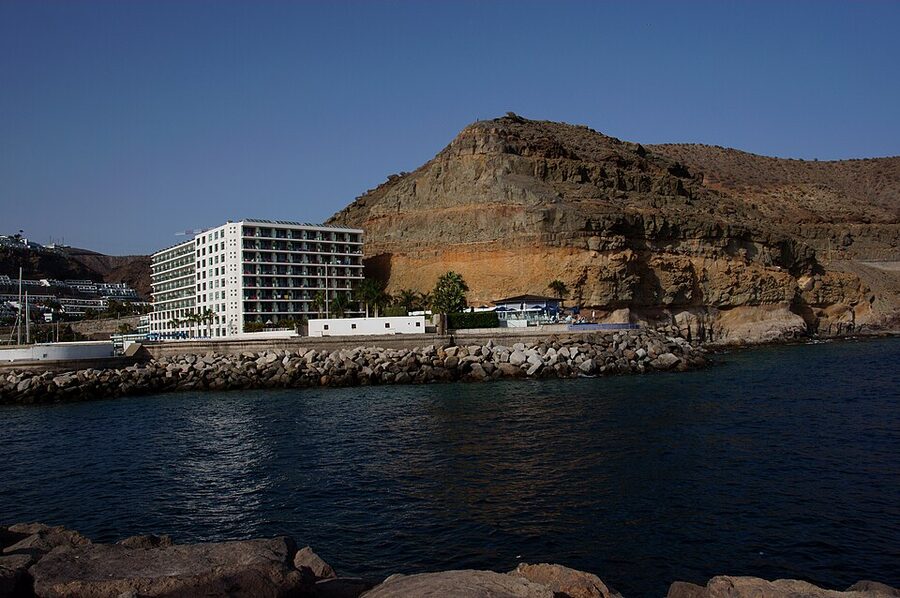
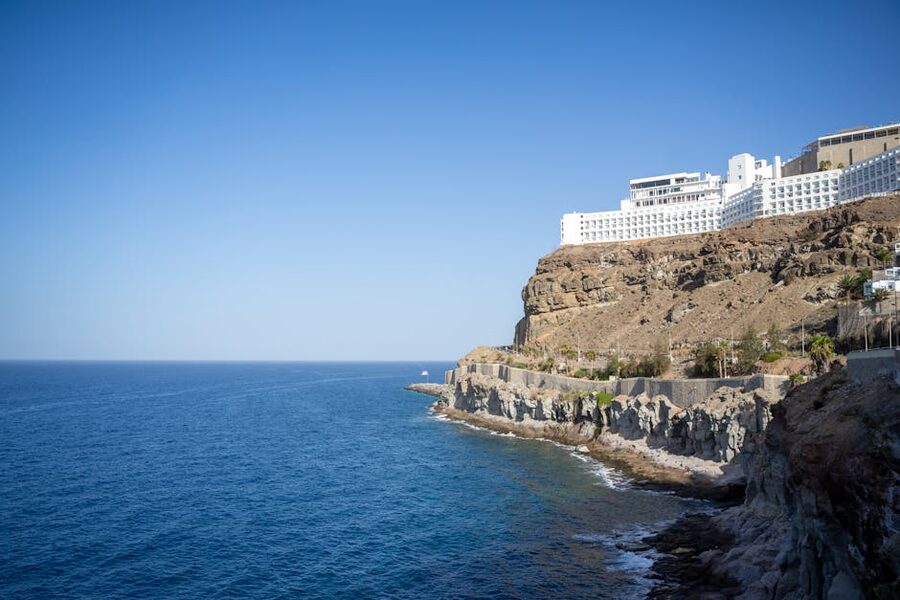
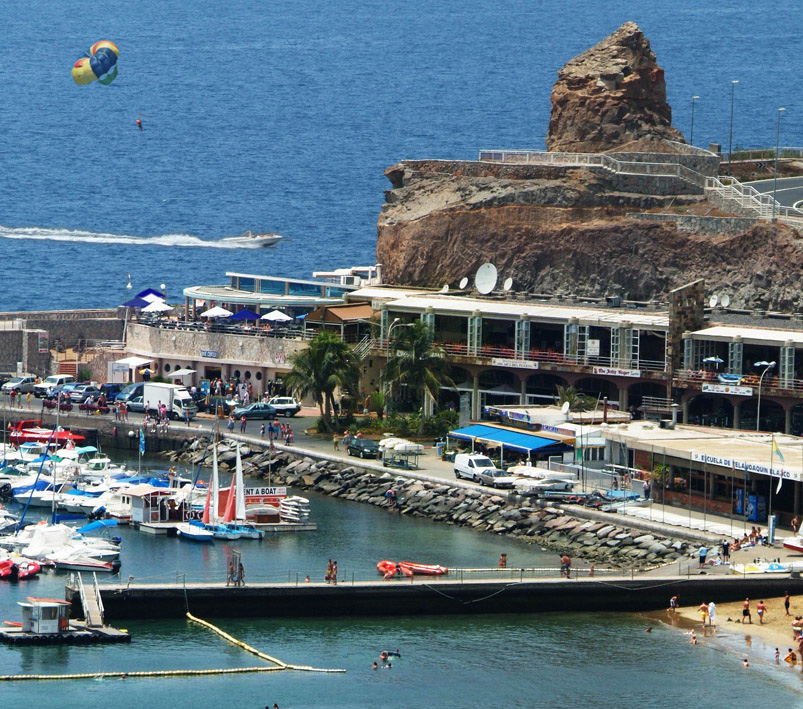
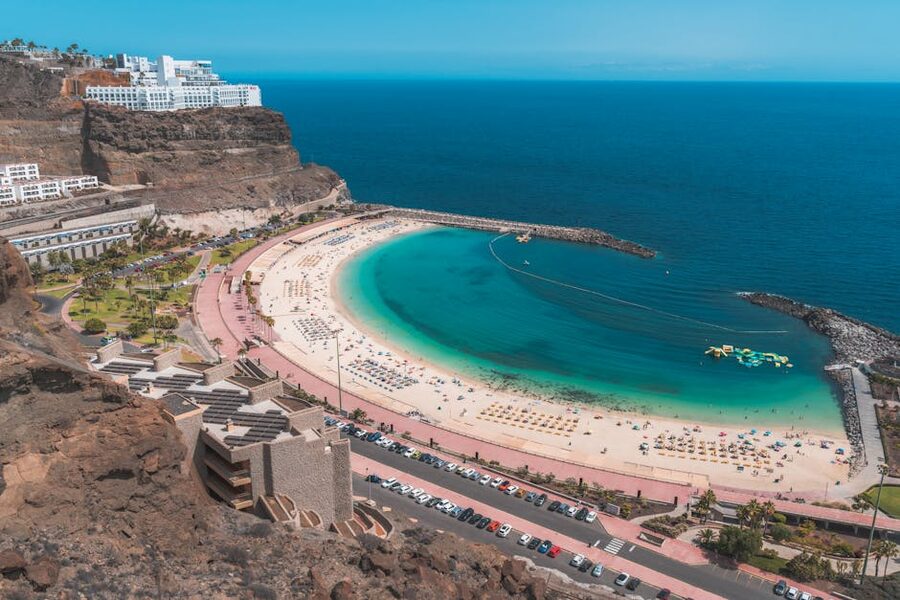
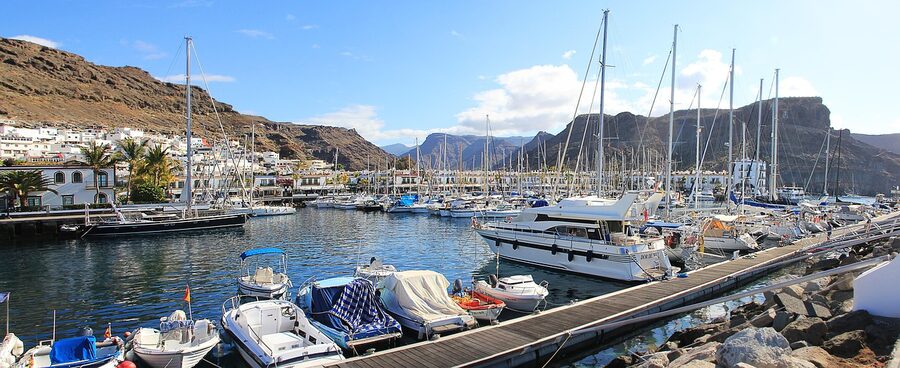
If you’ve already searched “Gran Canaria dolphin watching” you’ve probably noticed something. Almost nothing leaves from Las Palmas, the capital up on the north coast. Almost everything leaves from a single small resort on the south, Puerto Rico, with a few extras out of Puerto de Mogan five kilometres west.
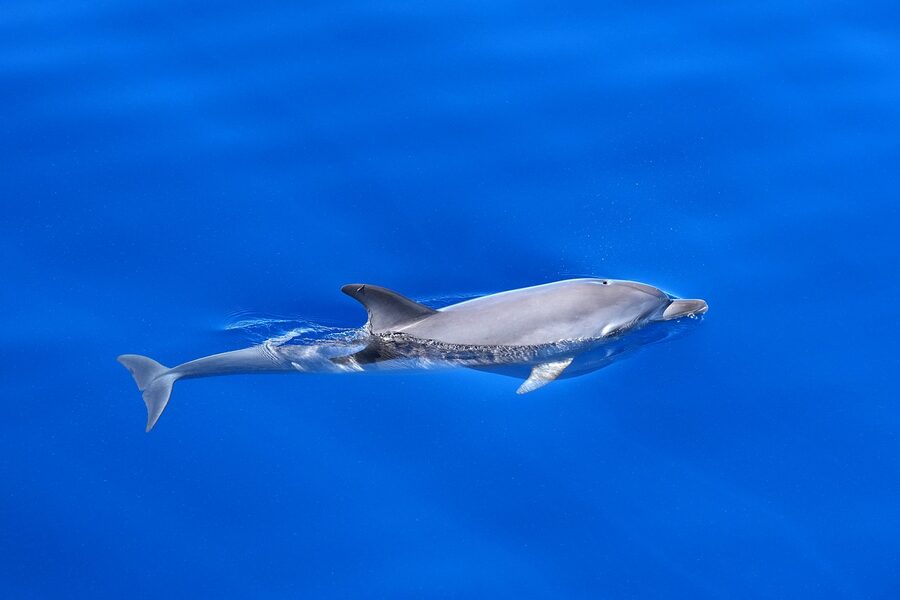
There’s a reason. The Atlantic channel between the south of Gran Canaria and the north shore of Tenerife is the cetacean motorway of the eastern Canaries. Bottlenose dolphins live there year-round in pods of fifteen to thirty animals. Common dolphins pass through in bigger groups, often forty or fifty at a time, mostly autumn through spring. Atlantic spotted dolphins arrive in summer. And sperm whales transit the channel on their long migrations, mostly between February and June.
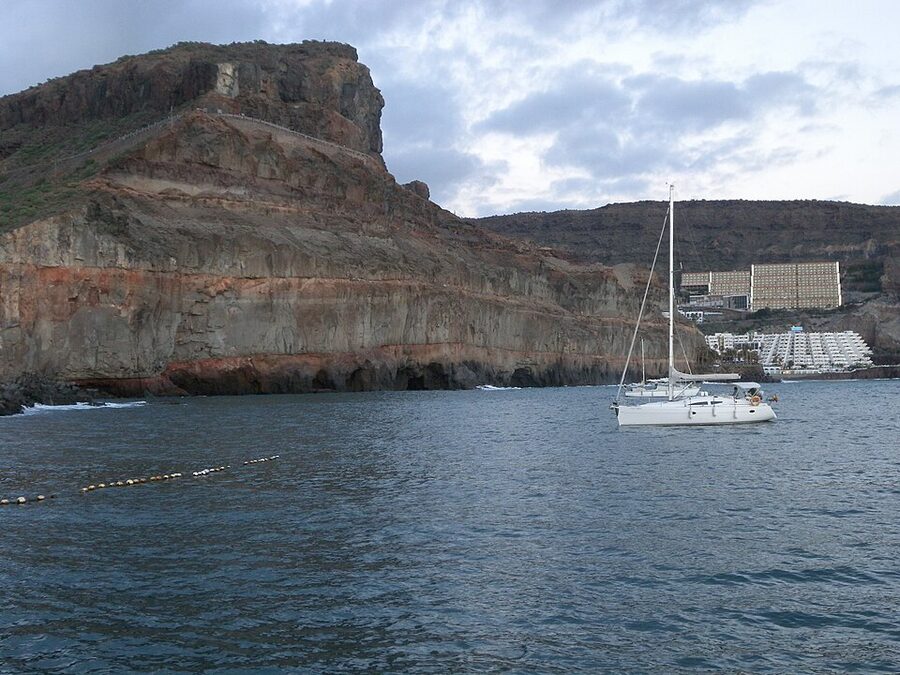
Puerto Rico sits about twenty minutes by boat from the deeper water where the pods feed. From Puerto de Mogan, the next harbour west, it’s roughly the same. From Las Palmas in the north it’s two and a half hours of open water just to reach the same channel. Nobody runs that route. The fleet, the booking platforms, and the eco-certification all live on the south.
The other reason to leave from Puerto Rico specifically is the wind. Trade winds run northeast across the archipelago. The high cliffs above the resort sit in the rain shadow on the leeward side. Your morning departure rolls out into water that looks more like a lake than the Atlantic. Compare to whale watching out of Los Cristianos in Tenerife where the channel is open and the swell builds quickly, and the Gran Canaria advantage is the easier ride.
How Gran Canaria differs from Tenerife (you should know this before booking)
If you’ve cross-shopped Canary dolphin tours, you’ve seen that the Tenerife south coast looks like the obvious pick. More boats, more eco-certification, biologist-led trips, the whole “gold standard” reputation. The Tenerife side wins on the pure wildlife quality of the encounter, that’s true. Our Costa Adeje dolphin cruise breakdown covers exactly that, the eco-yacht and biologist-led format.
But the trips work in different shapes.
Tenerife is dolphin-watch first, family-cruise second. Most operators are eco-yacht hulls with a swim stop bolted on. The boats are smaller, the briefings are tighter, the focus is the wildlife. Pirate-themed schooners and party catamarans exist but they aren’t the norm. Pilot whales are the headline animal because they live there year-round in dense numbers.
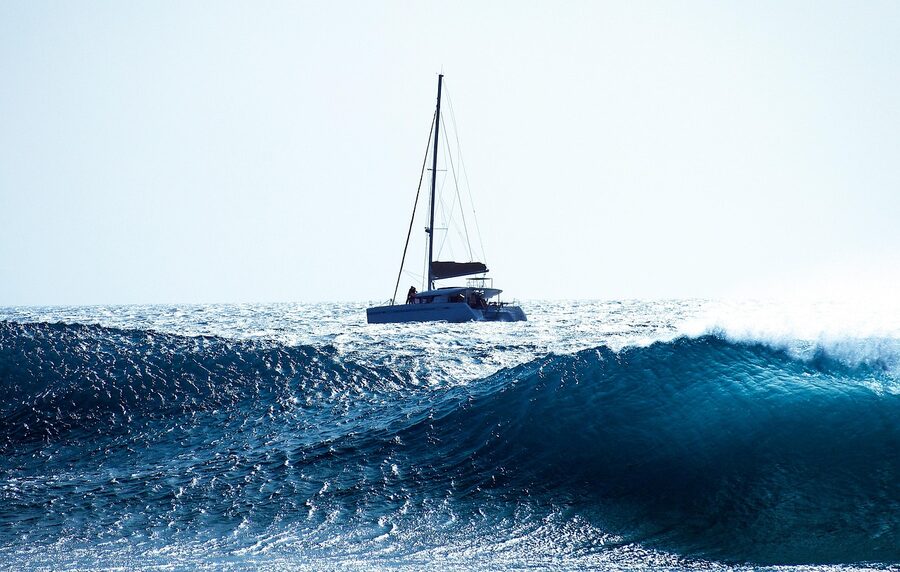
Gran Canaria is family-cruise first, dolphin-watch second. The flagship boats are bigger catamarans, two decks, sun loungers, a full bar, a paella lunch, sometimes a glass viewing panel set into the floor. The dolphin watch is part of the day, not the whole day. Most cruises run three to four hours and include a swim and snorkel stop in a sheltered cove. The focus split is roughly sixty per cent boat day, forty per cent wildlife.
This isn’t worse. It’s a different product. If you’re travelling with kids, with a non-swimmer, with grandparents, with anyone who finds an eco-yacht briefing intense, the Gran Canaria format suits you better. If you came specifically for cetaceans and want a marine biologist on the rail, you want Tenerife.
The eco-purist scene is thinner on Gran Canaria. Tenerife’s Barco Azul certification is widely held by the south-coast fleet. On Gran Canaria the equivalent badge exists but fewer operators chase it. The boats here are bigger and slower, which keeps the noise pressure lower than a fleet of small chasing speedboats would, but the formal eco code is less visible. You’ll want to check the captain’s track record on the booking platform reviews rather than rely on the badge alone.
Catamaran or dolphin-only? The boat format question
You’re picking between two basic formats out of Puerto Rico, and the price tells you nothing useful about which is which. They overlap on price but the day looks completely different.
The catamaran day (most travellers want this)
Three and a half to four and a half hours. Big twin-hull boat, two decks, sun loungers, paella or buffet lunch served on board, music, and a swim stop in a sheltered cove on the way back. The dolphin search happens in the first ninety minutes. Once a pod is found, the captain holds position, engines drop, everybody runs to the rail. After the wildlife portion, the boat repositions to the swim stop. Snorkel kit usually included.
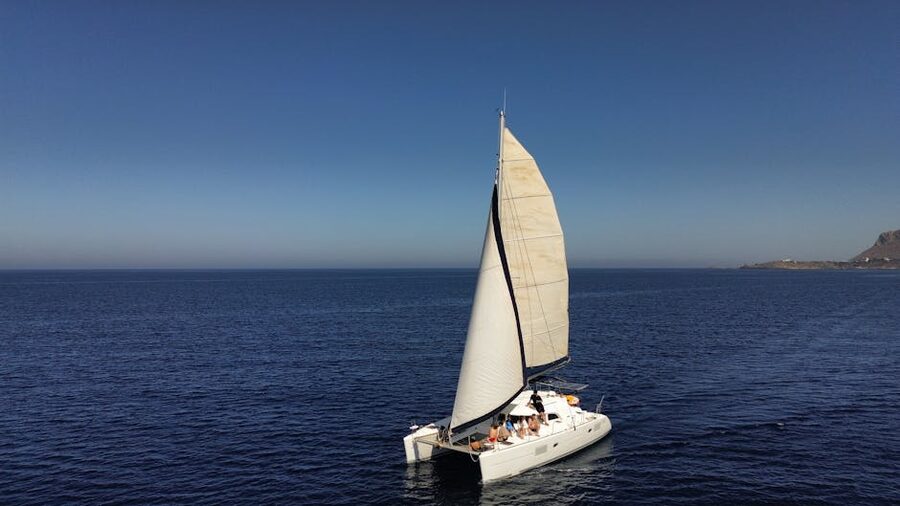
The catamaran is what you book if you want the day on the water as much as you want the dolphins. Lunch on the upper deck, two hours in the sun, a swim and snorkel in calm bay water, an hour or so of cetacean watching as the centrepiece. It’s a holiday day, not a wildlife sprint. The flagship version that almost everyone ends up on is the Puerto Base catamaran cruise with the snorkel stop, around $44 for adults.
The dolphin-only cruise (focused on the animals)
Two to two and a half hours. Smaller motorboat or single-hull cruiser, lower deck, fewer passengers, no lunch service, a drink or two and that’s it. The whole trip is the search. Boats run further out, hold longer at sightings, and turn back when they’ve worked the channel. No swim stop on most departures. This is the format if you genuinely want the wildlife and not the day-cruise wrapping.
The reliable mid-range option is the 2.5-hour dolphin and whale watching cruise out of Puerto Rico, around $41 for adults, which is roughly the same money as the catamaran for half the time. The trade-off is sharper focus on the animals and more time pointing at fins rather than passing salad.
The fun-catamaran-with-watersports day (the upgrade)
Four and a half hours. Same catamaran format as the flagship but bolted with extras, paddleboard, banana ride, sometimes a tow-behind float. Lunch is more elaborate, often a barbeque rather than a buffet. The price jumps from $44 to around $88 because of the activities, not because of a better boat. If you have teenagers or a partner who wants to do something with their hands rather than sit on a deck, this is the format. The fun catamaran cruise with food and drinks is the version most travellers end up on, around $88.
The lunch-day cruise (slow, food-first)
Same boats again, but with the activities replaced by a longer, more proper lunch. Four and a half hours, often with hotel pickup, a sit-down meal of fish, chicken or vegetarian options, salad and Canarian potatoes with mojo. The dolphin watch is the bonus rather than the headline. The catamaran day trip with food and drinks is the slowest, most food-focused option in the fleet, around $97. Best for couples who want a long boat day, worse for anyone whose priority is wildlife coverage.
What you’ll actually see in the channel
The hit rates here are different from Tenerife and worth getting straight before you book. There’s no resident pilot whale population on the Gran Canaria side, which is the headline downside. The trade-off is a more even mix of bottlenose, common, and (in season) larger whales, plus a more relaxed encounter because the operators aren’t all jostling for the same pod the way they sometimes are off Los Cristianos.
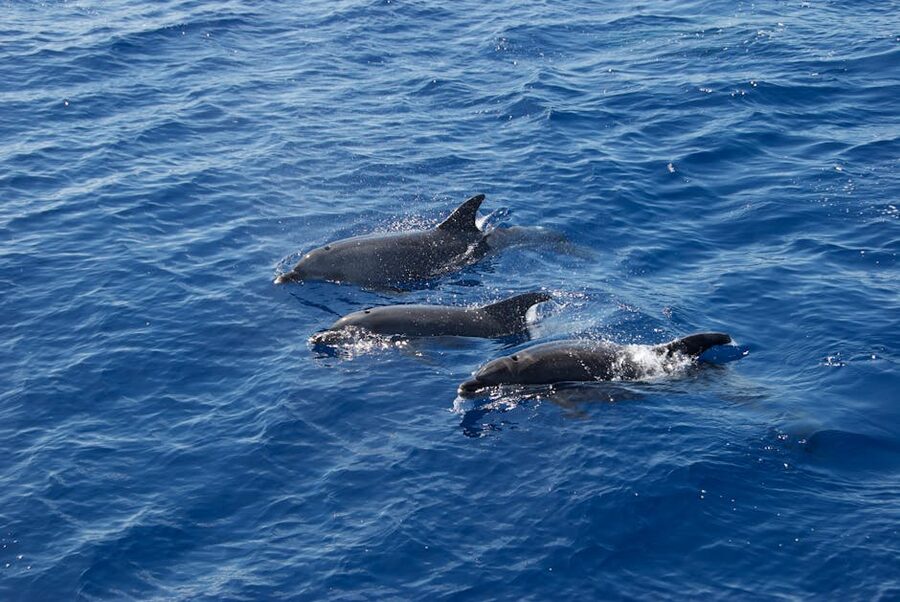
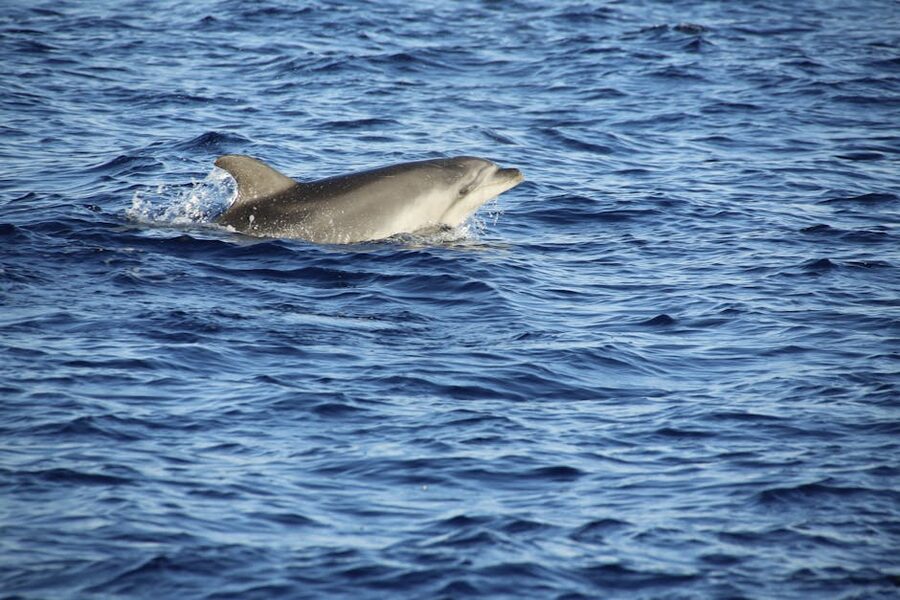
Bottlenose dolphins are the closest thing to guaranteed. Most operators advertise around 90 per cent sighting rates and offer a free repeat trip if you go home empty-handed, which barely happens. The Atlantic bottlenoses here are bigger than the Mediterranean species, three to four metres for adults, and they bow-ride. A juvenile pod riding the catamaran’s wake is the postcard moment. Everyone gets it on video.
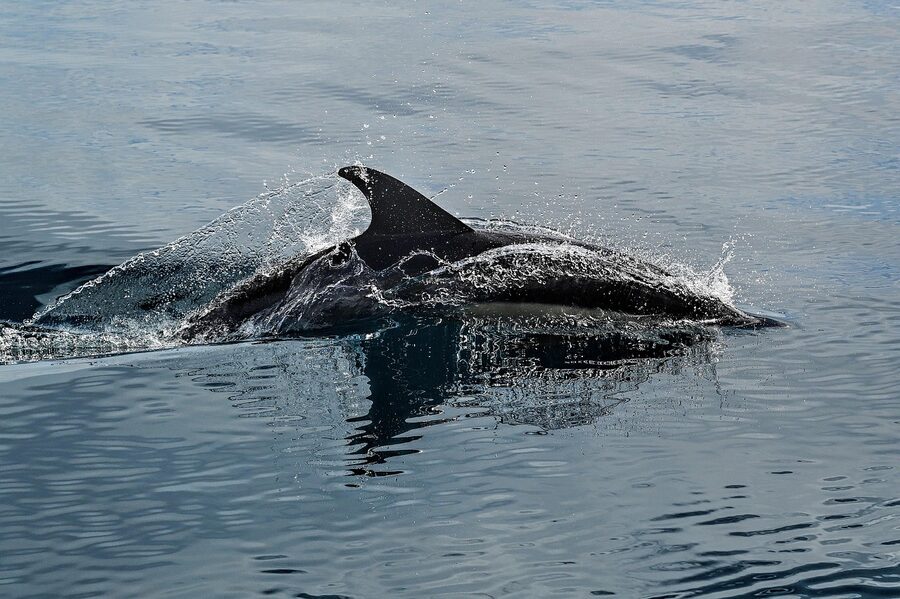
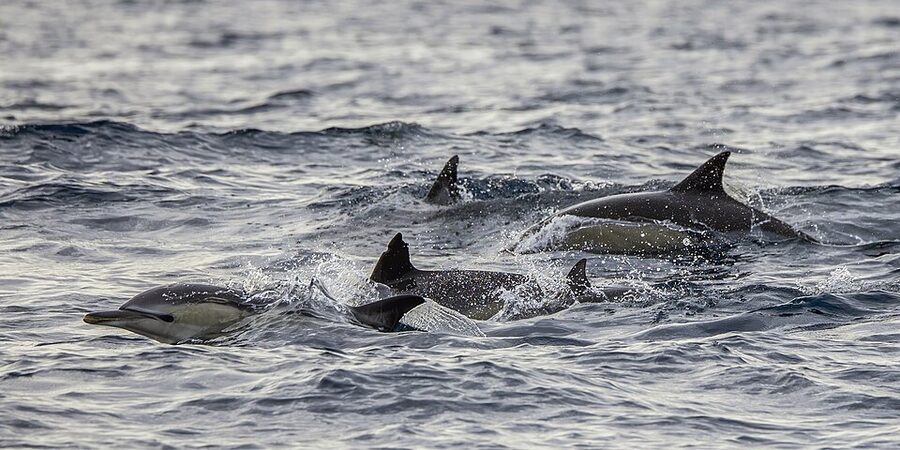
Common dolphins show up in bigger groups, sometimes forty or fifty animals, and they leap. The classic yellow-and-grey hourglass flank pattern is unmistakable. They’re seasonal, mostly October through April, but boats see them on roughly half their winter trips. Common dolphins put on more of a show than bottlenoses do because they breach high and travel fast.
Atlantic spotted dolphins arrive in summer (June through September). They look bottlenose-shaped at distance but they have heavy speckling on the flanks at adult age, which the captains will point out. Sighting rate is maybe 30 per cent through summer.
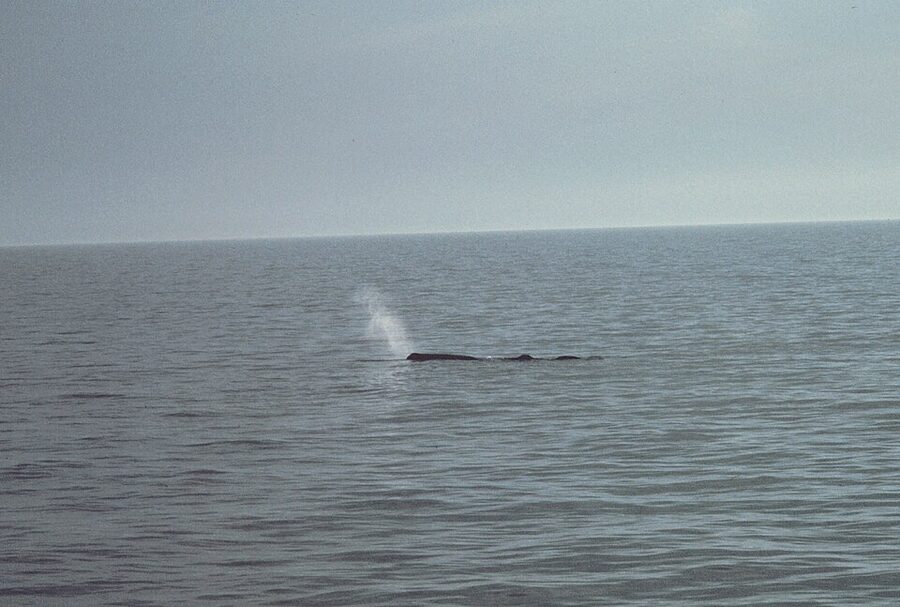
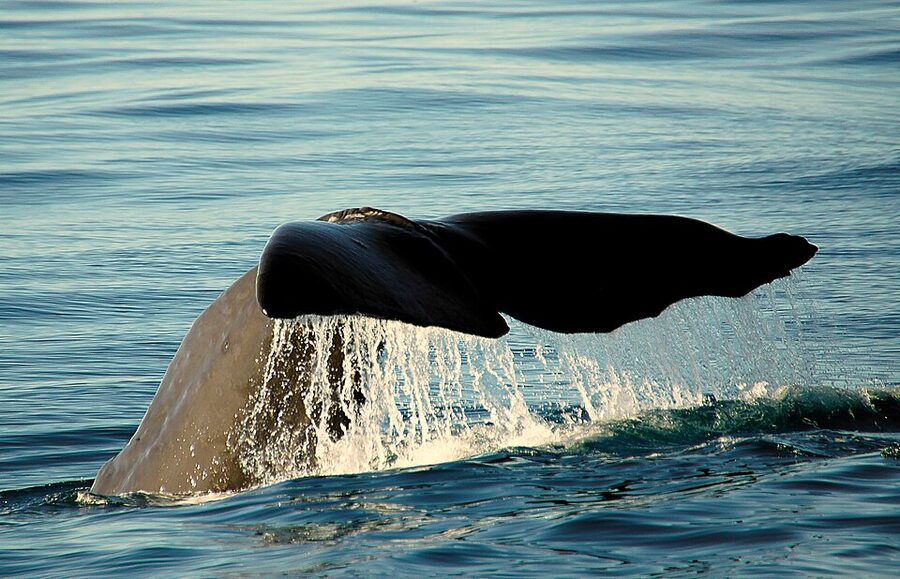
Sperm whales are the headline rare. They transit the channel between February and June, mostly heading south. Sighting rate is single digits, maybe one in ten trips during peak migration weeks. The thing to watch for is the slick of glassy water that spreads when a pod has just been at the surface and dived. The captain spots a horizontal blow from a kilometre off, the engine drops, and you wait. If you get a sperm whale fluke before a deep dive, it’s the trip everyone on board talks about for the rest of the holiday.
Pilot whales occasionally cross from the Tenerife side, mostly in summer when the squid push west. Sighting rate is low. If pilots are your priority, you want the Tenerife trips covered in our Tenerife marine wildlife guides and the main Los Cristianos whale watching write-up, both of which work the resident pilot whale ground year-round.
Sea turtles show up most trips, usually loggerheads resting at the surface. The catamarans always slow when the captain spots one. Don’t expect a long encounter, they dive quickly when they hear the engine.
The 3 cruises I’d actually book from Puerto Rico
Three picks, sorted by the kind of day you want, not by the price. The first is what most travellers actually book. The second is for people who care about the wildlife more than the buffet. The third is the upgraded version with proper food and a longer day.
1. Catamaran Dolphin Watch with Snorkeling: from $44

This is the default catamaran trip out of Puerto Rico for anyone who wants the full day on the water. Three and a half hours, lunch served on board, glass-bottomed viewing panels for the dolphin section, snorkel stop included. The bilingual guide handles the wildlife commentary in both English and Spanish, and the boat is small enough that you don’t end up at the back staring at someone else’s head. Our full review of the Puerto Base catamaran cruise covers the swim stop location, the lunch, and what visitors actually saw on recent trips.
2. Dolphin and Whale Watching Cruise from Puerto Rico: from $41
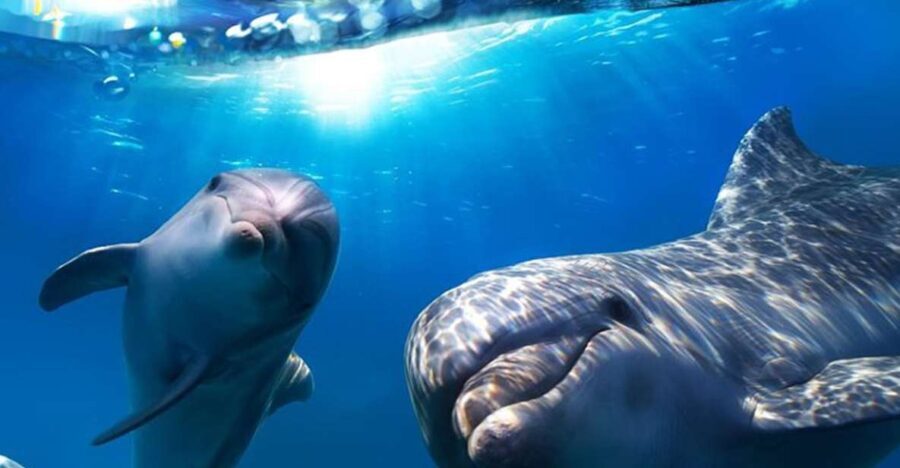
If you want the dolphins and not the buffet, book this one. Two and a half hours, smaller and faster than the catamaran, more time pointing at fins. The format suits people who’ve already done a catamaran day on a previous holiday, or who came to Gran Canaria specifically for the wildlife. Our review of this Puerto Rico dolphin cruise walks through the search pattern, the typical sighting timeline, and the small operator’s track record.
3. Fun Catamaran Cruise with Food and Drinks: from $88

The upgrade if you want a longer day with watersports baked in. Four and a half hours, paella or barbeque lunch, paddleboard, banana ride, and an unlimited bar after the dolphin watch is done. The boat is the same hull as the flagship trip but the crew run a fuller programme of activities at the swim stop. Our full review of the fun catamaran cruise goes into what the watersports actually look like and which slots include hotel pickup.
If those three are full
If the top three are sold out, three more I’d happily book on a busy week. The Spirit of the Sea cruise from Puerto Rico is a 2.5-hour ethical-format option with a sighting guarantee, around $47, and it’s the close cousin of the dolphin-only pick above. The catamaran day trip with food and drinks at around $97 is the slow lunch-first version, four and a half hours, multilingual crew, sangria and Canarian potatoes on board. And the smaller Puerto Rico jet-ski tour isn’t a dolphin trip but it’s the right shape if you’ve already done the catamaran day and want a half-hour blast on the water with a chance of spotting a pod from the back of a jet ski.
How to book without overpaying
Three things worth knowing before you click book.
The hotel kiosks add 25 to 35 per cent. The same Puerto Base catamaran that sits at $44 online is normally quoted around $58 to $62 at a resort kiosk in Playa del Inglés or Maspalomas. Same boat. Same captain. Same departure. The kiosks are taking the commission. If you book on GetYourGuide or directly on the operator’s site you skip that markup.
Hotel pickup is real and free on most operators. Pickup runs into all the south-coast resorts, Playa del Inglés, Maspalomas, Amadores, San Agustín, Taurito, and Puerto de Mogan itself. The shuttle adds 30 to 45 minutes either side of the boat day, which is a fair trade against a taxi. Smaller dolphin-only boats sometimes don’t include pickup, you’ll need to read the fine print on the booking platform.
Book the morning slot. Trade winds build through the day even on the leeward south. The 9am or 10am departures are flatter and the dolphins feed more actively in the early hours. Afternoon slots are still fine but the chop picks up and a couple of people on the upper deck always start to feel green. Mornings are the better trip on every metric.
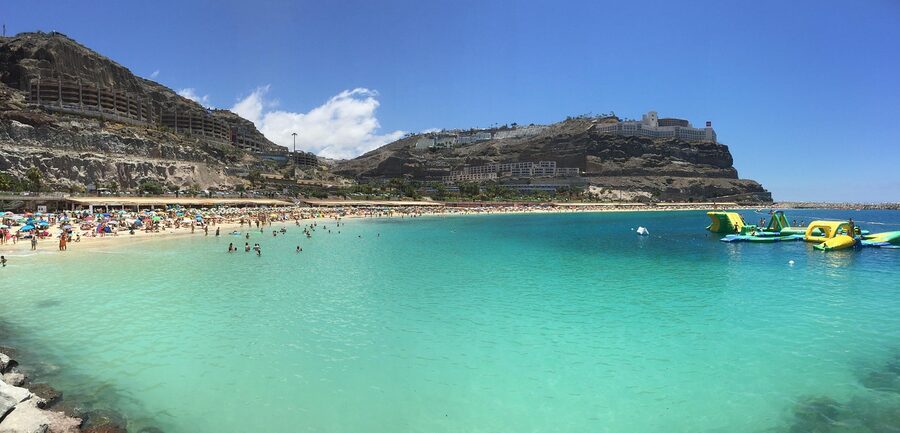
Worth knowing: the catamarans rarely actually sail. The masts are there for the look, the engines do the work. If you specifically want a sailing experience you’re better off booking the Palma catamaran cruise on Mallorca or the Valencia sunset catamaran, both of which actually use their sails on most departures.
Best months and what to bring
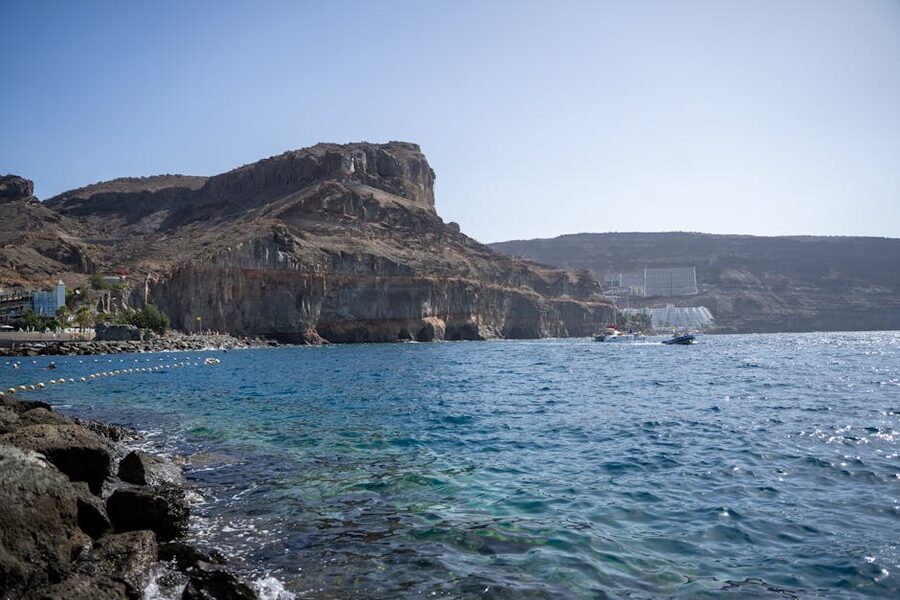
Best months: April through October give you the longest, warmest days, the calmest channel, and the highest chance of summer species (Atlantic spotted dolphins, occasional pilot whales). Sperm whale season runs February to June, so an early-spring trip can hit both. November through March still works for bottlenose and common dolphins, the channel is a touch choppier, and trips run on a reduced morning-only schedule for some operators.
Pack: reef-safe sunscreen, a hat, sunglasses, a thin layer for the upper deck (the wind feels colder offshore than it does in the resort), water, and a phone in a dry pouch if you want to film at the rail. Reusable water bottle, most boats have a refill point. If you’re prone to seasickness, take the tablet 45 minutes before you board, not after, and sit on the lower deck where the motion is gentler.
Watch the wind warnings. Trade winds in the 20-knot range will see speedboats cancel even if the catamarans still run. The Spanish met office (AEMET) issues alerta amarilla notices when the channel is rough. Operators move bookings automatically. Don’t pin a single afternoon to a single departure if your trip dates are tight.
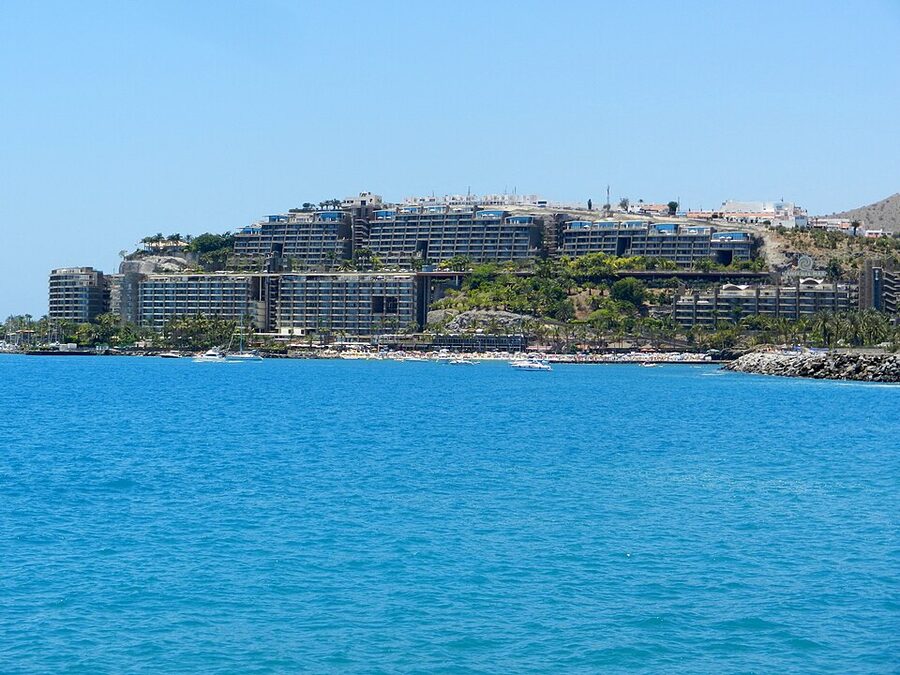
Kids, accessibility, and seasickness
Kids: the catamarans are fine for children three and up. Toddlers are allowed but need to be in arms or a carrier under way. Infants under three usually go free. Smaller dolphin-only motorboats often won’t take under-sixes for insurance reasons.
Seasickness: the bigger catamarans are the steadier of the formats. Twin hulls dampen the motion better than a single-hull motorboat. The dolphin-only speedboats are bouncier on the way out. If anyone in your group is prone, the catamaran is the call.
Accessibility: Puerto Rico marina has step-free access to the main pontoons but boarding the boat itself involves a small step. The bigger catamarans have on-board toilets. None of the operators advertise full wheelchair accessibility. Email the day before if it matters, the crews are honest about what they can and can’t accommodate.
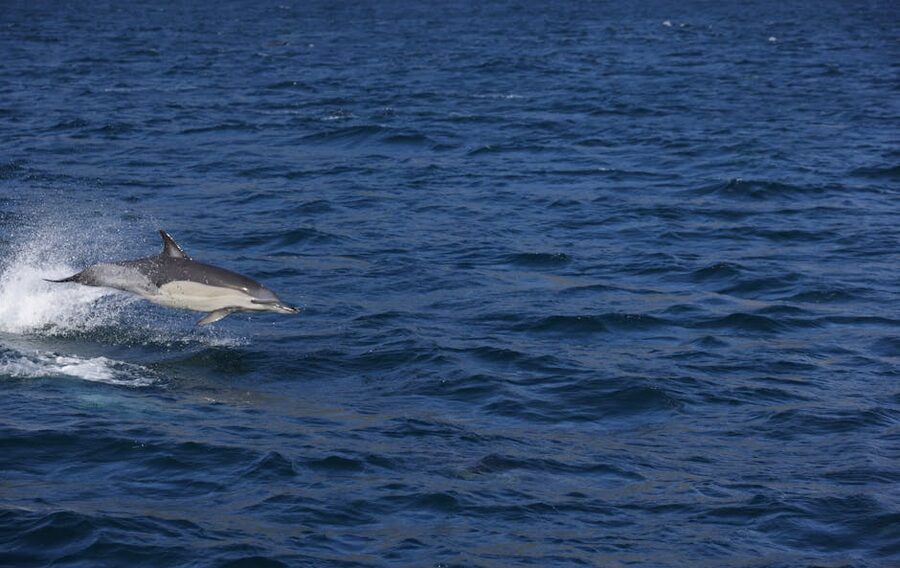
The wider Mogan and Puerto Rico area
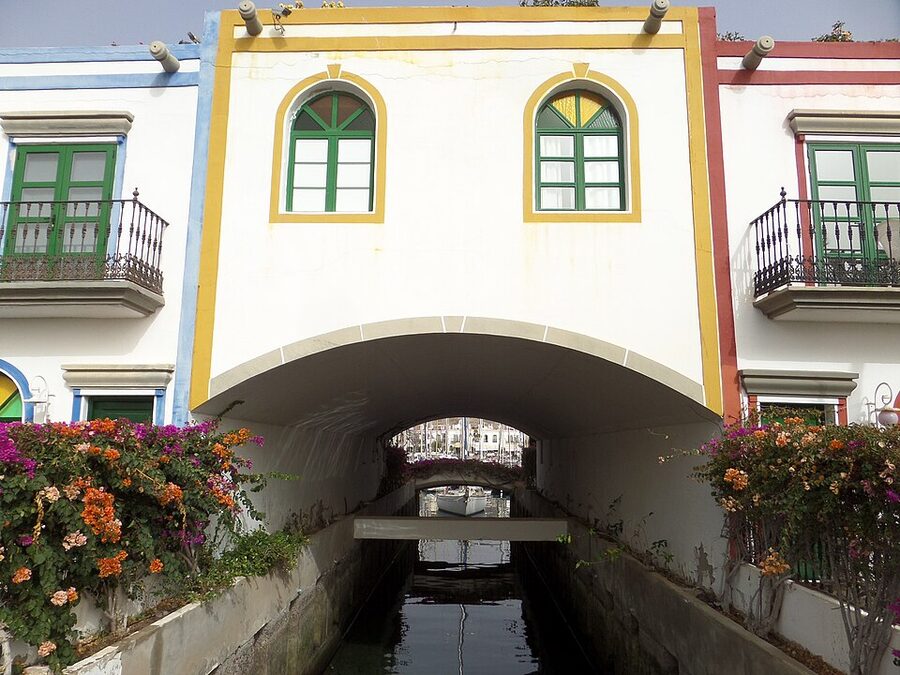
The boat trip eats roughly half a day. The other half is yours, and the south coast has more around it than the resort strip suggests. Puerto de Mogan, fifteen minutes west of Puerto Rico, is the prettiest old fishing village on the south coast and runs an open-air market on Friday mornings. Walk along the harbour wall, eat at one of the harbour-side restaurants (Cofradía or El Cortijo are the working fishermen’s spots), order the local fish (vieja, sama, cherne) with papas arrugadas and mojo verde.
The Maspalomas dunes, half an hour east of Puerto Rico, are a proper micro-Sahara, six square kilometres of sand on the south-east tip of the island. The dunes are a protected reserve and the walk down to the lighthouse takes about an hour each way. If you’ve got a free morning before or after the boat day, this pairs well.
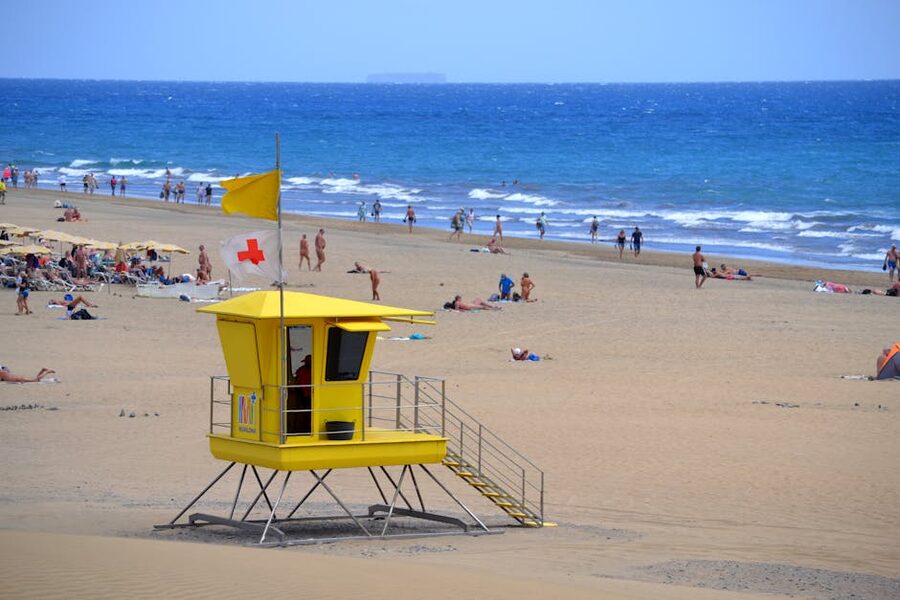
For dinner the night of your boat day, the Puerto de Mogan harbour restaurants run later than the Puerto Rico ones and feel less Anglo-tourist-coded. House wine, fresh fish, papas, mojo. About 25 to 30 euros a head for a proper sit-down meal.
How Gran Canaria stacks up against Tenerife and Fuerteventura
If you’re choosing between Canary Islands for the dolphin trip, here’s how I’d frame it.
Tenerife wins on guaranteed pilot whales, on the depth of the eco-certified fleet, and on the variety of small-boat formats (eco-yachts, biologist-led RIBs, no-chase gulets). The trip is more wildlife-pure. Our Los Cristianos whale watching guide and Costa Adeje dolphin cruise breakdown cover the two main south-coast departures in detail.
Gran Canaria wins on family-cruise format, on the cheaper catamaran-plus-lunch combo, and on a more relaxed fleet density. Better for travellers who want a holiday day with dolphins as the centrepiece, not the only activity. Worse for hardcore wildlife watchers.
Fuerteventura wins on uncrowded boats and on logistics if you’re staying in the south of that island. Our Morro Jable dolphin cruise guide covers the third option in this cluster, which works the same Atlantic channel from a different angle.
Pick by your travel base. None of the three is wrong if you’re already on that island. If you can pick freely, Tenerife is the cetacean-purist call, Gran Canaria is the family-day-out call, and Fuerteventura is the quiet-boat call.
The one-line take
Book the flagship catamaran-plus-snorkel trip if it’s your first day on the water in the Canaries. Book the leaner dolphin-only cruise if you’ve done a catamaran day before and want the wildlife focus. Take the morning slot, sit at the bow, watch for a juvenile bottlenose riding the wake. That’s the trip.
And if Gran Canaria is the marine highlight of a wider Spain holiday, a few directions worth carrying forward. On the same archipelago, our Tenerife Loro Parque guide handles the closest big-name marine and bird park as a wet-weather backup, the Mount Teide guide pairs as the dryland half of a Canaries week, and on Lanzarote the volcano buggy guide is the going-deep-on-volcanic-terrain option. Across the mainland the Valencia Oceanografic write-up covers Europe’s biggest aquarium for anyone wanting to see these species in close-up after meeting them in the wild, and the Barcelona sunset catamaran is a different shape of boat day on the other end of the country.
More Spain guides for the same trip
If a Canary marine day is the centrepiece, the rest of the islands round out a week well. Our Tenerife Siam Park guide is the family-day backup if the kids loved the boat trip, and on Mallorca the Palma catamaran cruise is the next island-hop boat day. Ibiza’s western cruise breakdown covers a totally different boat shape on the other end of Spain.