
Most travellers I know booked Delphi the same way: they saw “day trip from Athens” on a tour list, glanced at the price, clicked the cheapest option, and woke up at 6am wondering what they had agreed to. Then the bus rolled out of Syntagma at 7, and they realised the small print said five hours of driving each way, three quick stops, and a return after dark.
The mistake is not booking Delphi. The mistake is booking the wrong version of it. A bad Delphi day skips the museum, runs past Arachova without stopping, and leaves you with photos of broken columns and no idea why anyone walked here for two thousand years. A good one is one of the best days you can have in Greece. Let me walk you through how to get the second.
- In a Hurry? My Top 3 Picks
- Why People Underestimate the Drive
- Why Delphi Existed in the First Place
- The Big Mistake: Skipping the Museum
- Walking Up the Sanctuary of Apollo
- The Theatre and the Stadium Most Tours Skip
- The Tholos at Athena Pronaia (the Photo Everyone Has Seen)
- The Castalian Spring (Five Minutes That Most People Skip)
- Arachova: The Stop That Saves the Day
- How the Coach Day Compares to the Two-Day with Meteora
- Three Ways to Get to Delphi (Coach, Driver, Self-Drive)
- What to Wear (and Why It Matters)
- Spring vs Summer vs Off-Season
- The Tours I Would Actually Book
- 1. Athens: Mythology of Delphi, Museum and Arachova Guided Tour (around )
- 2. Athens: Delphi Day Trip with Licensed Guided Tour and Pickup (around )
- 3. From Athens: Delphi Full Day VR Audio Guided Tour (around )
- The Other Half of the Booking Decision: Lunch
- Common Mistakes I See
- What About the Pure Day-Trip vs the Coastal Run from Athens?
- Pairing Delphi With the Rest of Your Athens Trip
- Pythian Games Trivia (Stop Here If You Are Not a History Person)
- FAQ Bits I Get Asked
- Where Else to Look in Greece After Delphi
In a Hurry? My Top 3 Picks
Mythology of Delphi, Museum and Arachova combo, around $30. The most-booked Delphi day trip on the market and the one I push for first-timers. Includes the museum and the Arachova mountain stop, which most cheap tours skip. Check availability and dates.
Licensed guide and pickup, around $32. Nearly the same shape, slightly tighter group, hotel pickup from a wider central Athens zone. Pick this if you are staying outside Plaka or Syntagma. See dates and price.
VR audio guided full day, around $30. Same coach run, no live guide, headset and tablet experience instead. The headset reconstructions of the Temple of Apollo are surprisingly good if you have any visual imagination. Check the listing.
Why People Underestimate the Drive
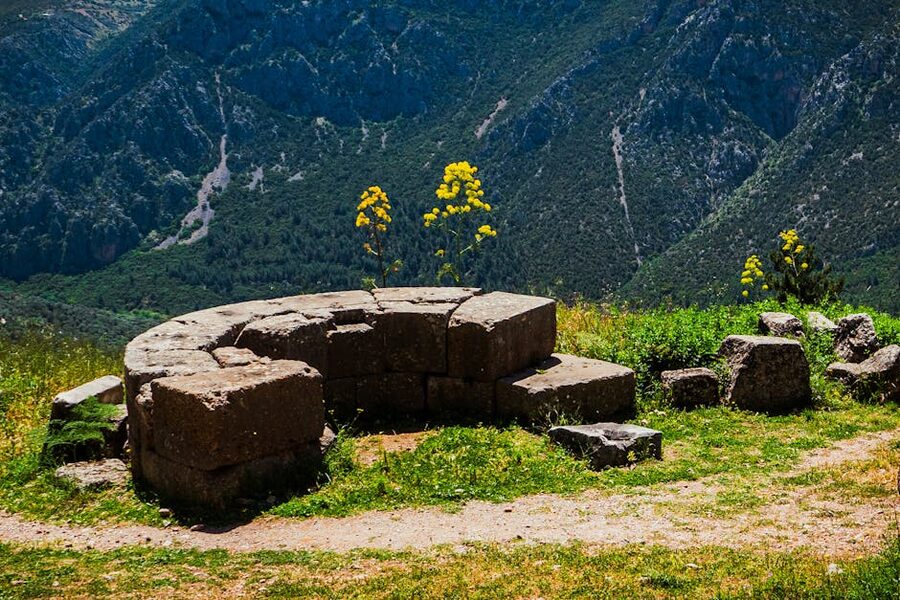
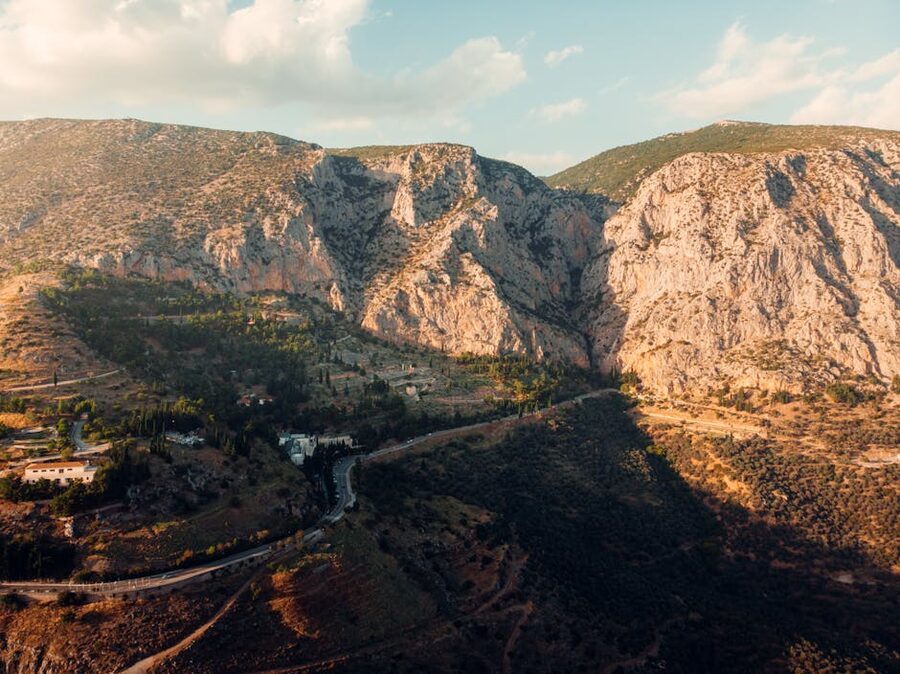
Delphi looks close on the map. It is not. The ancient sanctuary sits about 180 kilometres northwest of Athens, on the southern flank of Mount Parnassus, and the road there climbs through three mountain passes before dropping you at the gate. Driving it takes around two and a half to three hours each way in clean traffic. Tour coaches add a fuel-and-coffee stop in each direction, which pushes the round-trip driving time to roughly six hours.
So a 7am pickup at Syntagma puts you at the Delphi site by 11. You spend two and a half to three hours at the sanctuary plus the museum, you eat lunch, you stop for coffee in Arachova on the way back, and the bus pulls into Athens between 7 and 9pm. That is a 12-to-14-hour day on its feet. Not Meteora-level brutal, but not a half-day either. If you are travelling with kids under seven, or if you only have one rest day in your trip, plan around it.
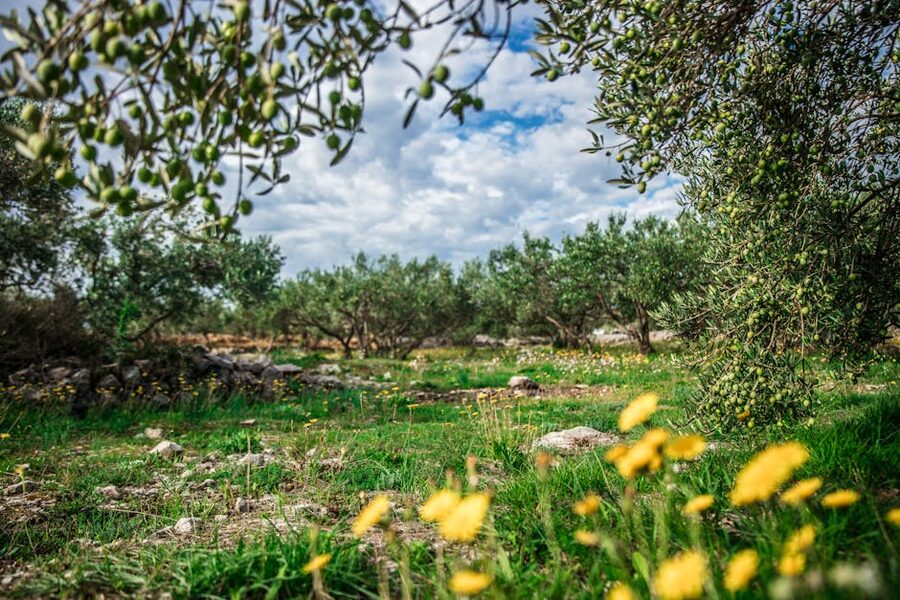
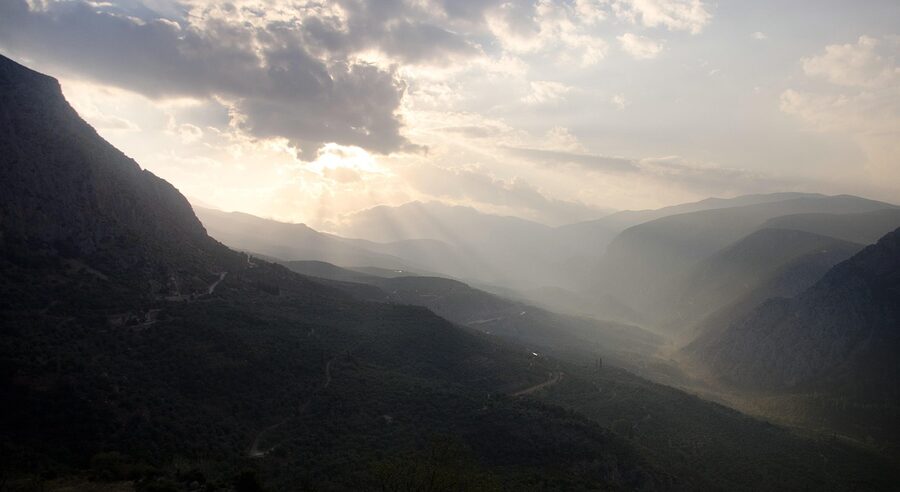
The drive is, in fairness, beautiful. You roll out of Athens on the A1 motorway, pass Thebes (yes, that Thebes), climb through olive groves and cotton fields, and then the road tips up into Mount Parnassus. About forty minutes from Delphi the trees thin out and the mountain wall rises on your right. Your guide, if you have a good one, will start the Apollo story somewhere around there.
Why Delphi Existed in the First Place
Skip this section if you only want booking advice. But if you are going to spend twelve hours travelling to a pile of stones, knowing why those stones exist is what turns the day from a bus trip into a story.
The Greeks believed Delphi was the centre of the world. The story goes that Zeus released two eagles from opposite ends of the Earth and they met above this slope, which made the spot the navel, the omphalos. They marked it with a stone you can still see in the museum.
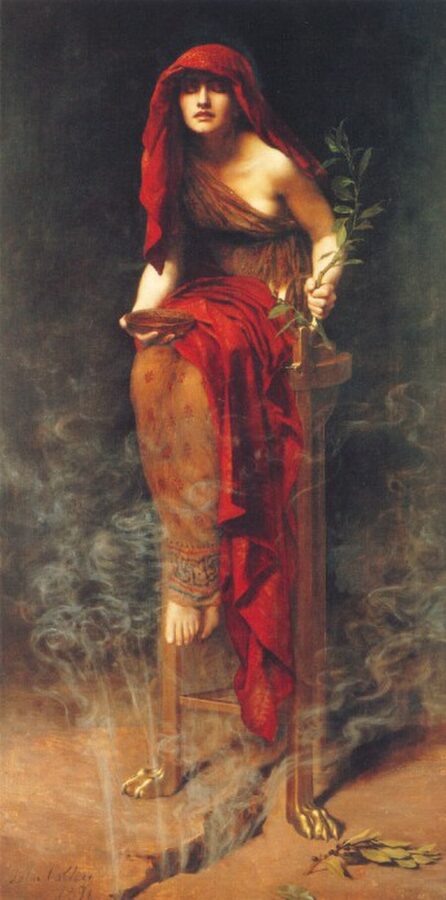
The site was sacred to Apollo, who was said to have killed a giant serpent called Python here, on the slope where the temple later stood. The cult that grew up around the killing was the largest oracle in the ancient Greek world. From around the 8th century BC through the 4th century AD, leaders from across the Mediterranean sent envoys to ask the oracle for guidance on wars, marriages, colonies, succession. The pythia, the priestess, sat on a tripod above a crack in the rock, breathed in vapours that rose from the ground (modern geology suggests ethylene), and spoke. Priests interpreted what she said.
It worked, in the political sense, for almost a thousand years. The Romans kept it open after they took Greece. Plutarch, the writer you may have read in school, was a priest at Delphi. The oracle was finally shut down by the Christian emperor Theodosius in 393 AD. Then the buildings collapsed in a series of earthquakes and the slope went quiet for fifteen hundred years until French archaeologists started digging in 1860.
The Big Mistake: Skipping the Museum
I want to deal with this one first because it costs you more than any other booking decision. About half the cheap Delphi day trips do the archaeological site, do lunch, do the bus back, and never enter the museum. The museum is where the best-preserved pieces from the site live. The site itself is mostly foundations and reconstructed columns. The bronzes, the carved friezes, and the omphalos stone all sit in the climate-controlled rooms a hundred metres from the ticket gate.
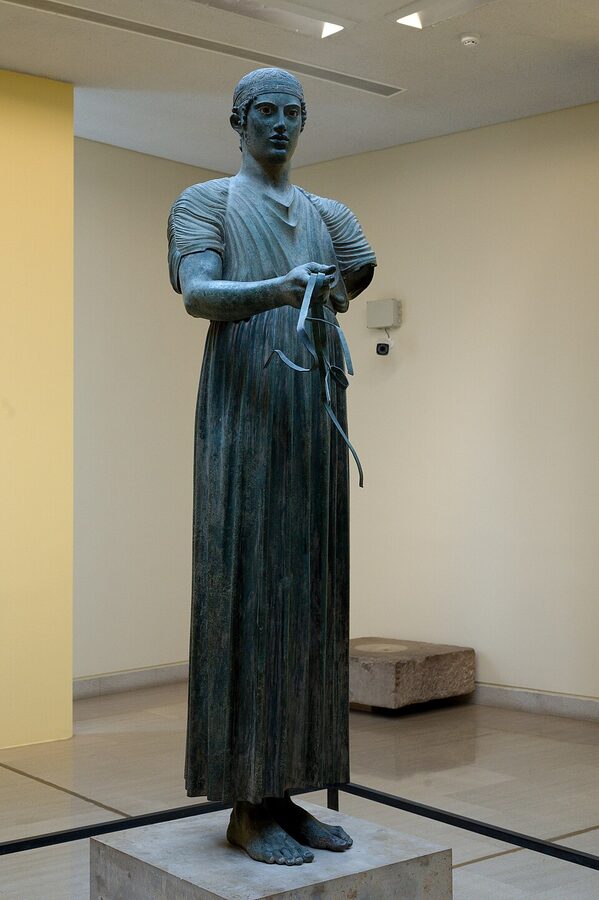
The Charioteer is the headliner. It is one of the very few large bronzes that survived antiquity (most were melted down for the metal). You will recognise it the second you walk into its room. The pose is calm, the robe falls in vertical pleats like a temple column, the eyes look straight at you. Stand for two minutes and look at the eyelashes. They are made of copper. That is craftsmanship from 478 BC.
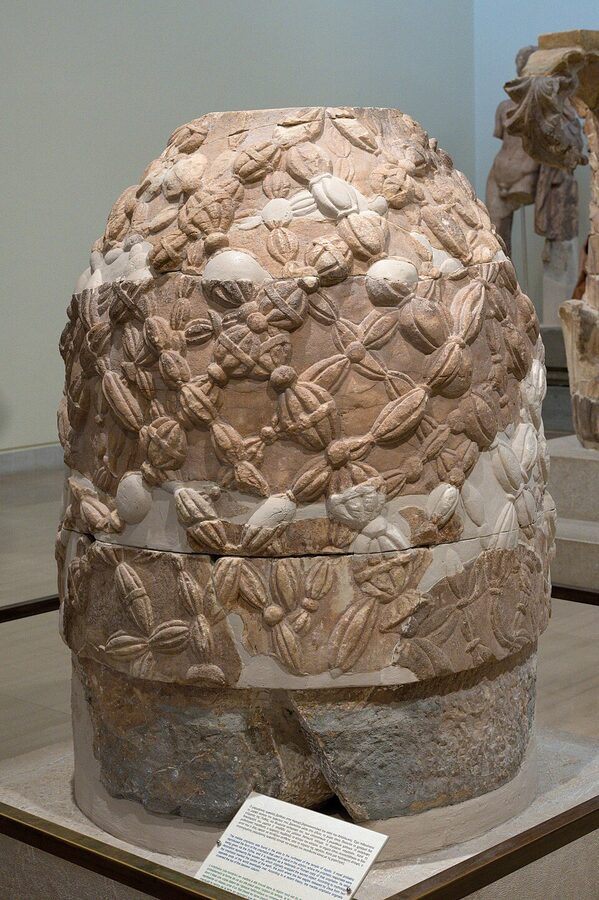
The omphalos is the second piece I would not skip. It is a carved stone, about a metre tall, that marked the navel of the world for the Greeks. The version in the museum is a Hellenistic copy of an older original. There is also a slightly weathered one outside on the site itself, which is what tour groups sometimes photograph thinking they have seen the real thing. The one indoors is the one to spend time with.
Beyond those two, the room of bronze offerings, the friezes from the Siphnian Treasury, and the famous Naxian Sphinx are the three other pieces I would not let a guide rush past. The whole museum takes about 45 to 60 minutes to walk through properly. Any tour that gives you less than 45 minutes inside is short-changing you. When you are checking which tour to book, the flagship combo with museum and Arachova writes the museum into the price for a reason. The slightly more focused Oracle and museum licensed-guide tour is the alternative if you want a deeper museum walkthrough specifically. Either way, take the version that includes the museum. The discounted version that “drops you near the museum” usually means you are paying the entry fee separately and standing in line on your own. The few euros you save are not the saving they look like.
Walking Up the Sanctuary of Apollo
The main archaeological site is the Sanctuary of Apollo. It is the upper of two sites you visit, the lower being the Sanctuary of Athena Pronaia about ten minutes downhill. Most tours hit Athena Pronaia first as a quick stop on the way in, then take you up to the main sanctuary for the full visit.
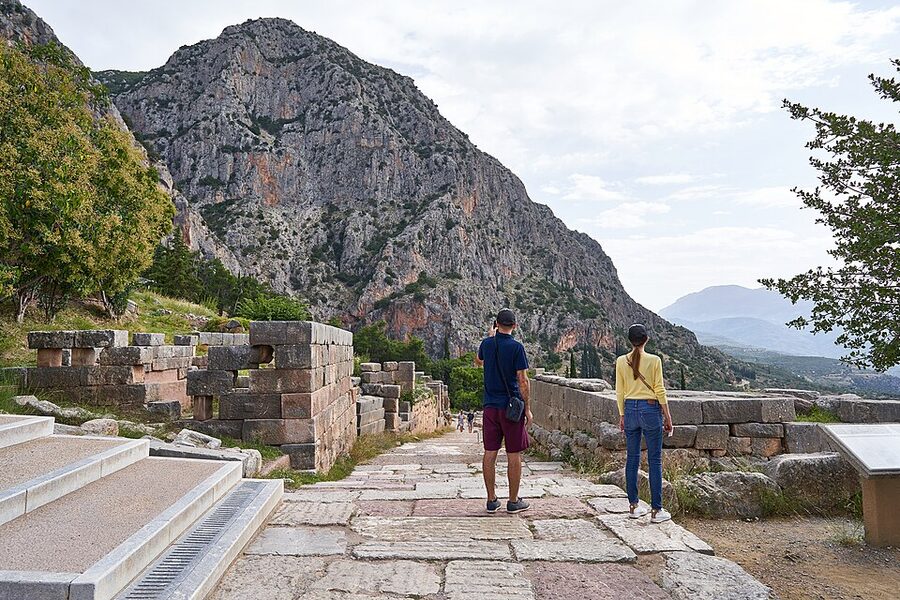
You enter the upper sanctuary through a small gate and start climbing the Sacred Way. This is a stone path that zigzags up the slope, lined on both sides with ruined treasuries (small temple-shaped buildings, each one paid for by a different Greek city to thank Apollo or hold offerings). Most are now just foundations, but the layout still reads. Your guide will point out which city built which.
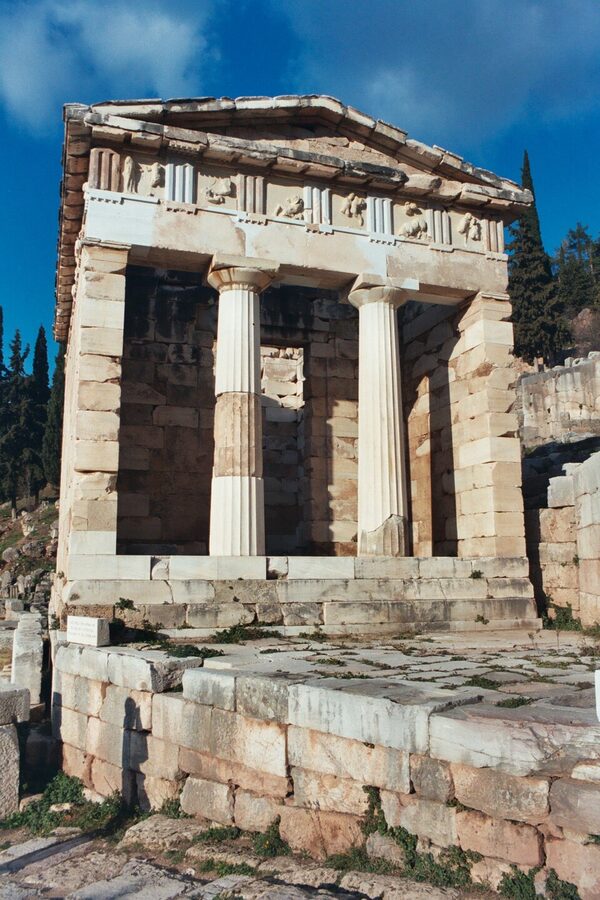
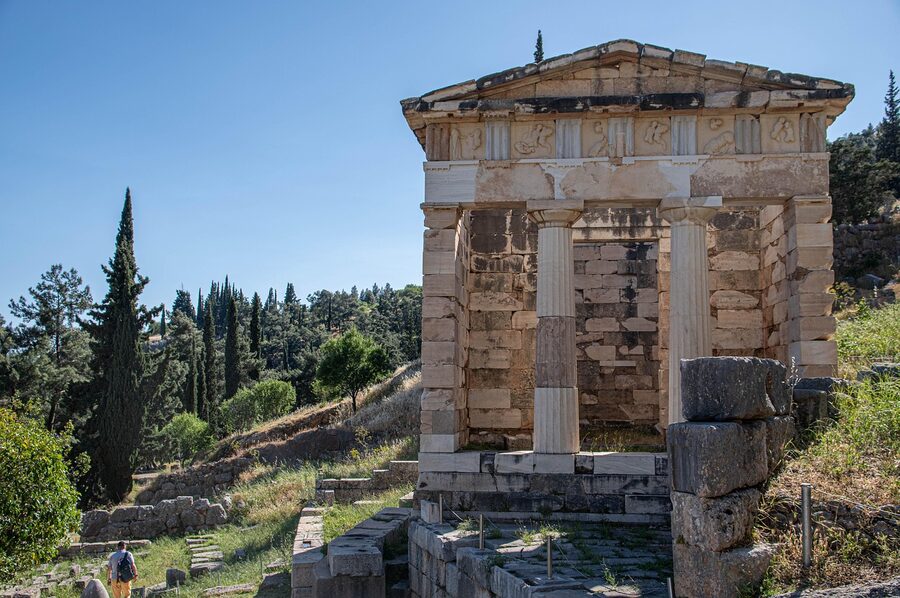
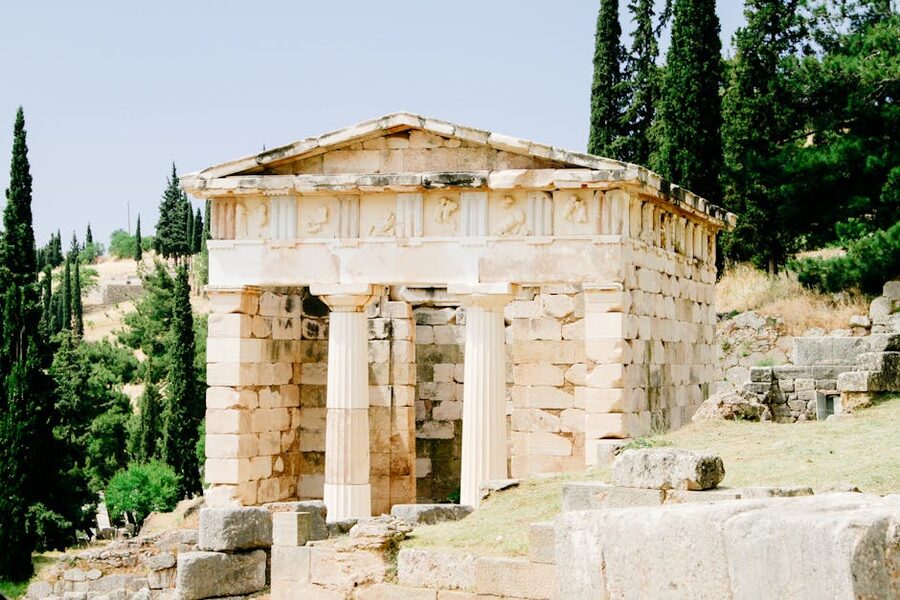
The Treasury of the Athenians is the standout. It is the only treasury that has been fully reconstructed, because enough original blocks survived to put it back together. The Athenians built it to celebrate their victory over the Persians at Marathon in 490 BC. Walk up to it and look at the marble blocks. Some carry inscriptions of two of the oldest surviving pieces of Greek musical notation, hymns to Apollo with notes scratched above the syllables. You cannot read them without help, but the fact they are there is one of those facts you carry home.
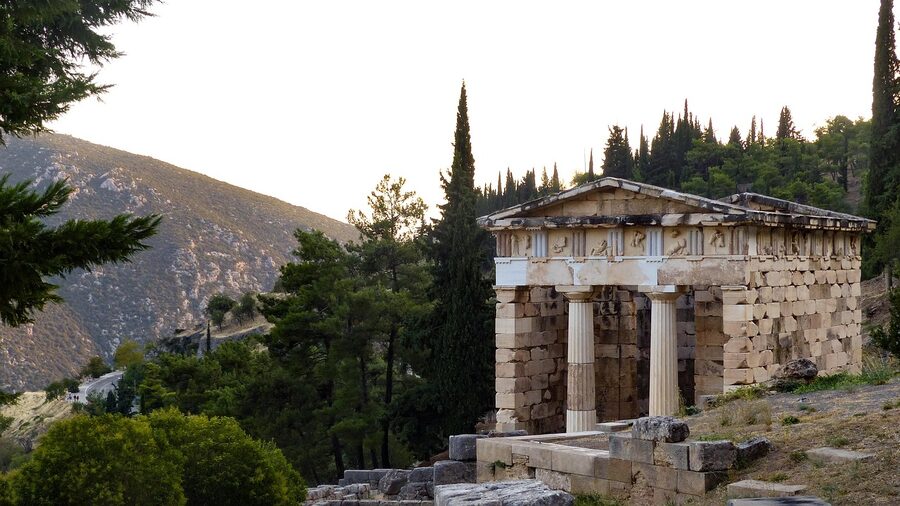
Above the Treasury, the slope opens up. You walk past the Polygonal Wall (the supporting wall for the Temple of Apollo, made of irregular stones fitted together so cleanly that no mortar was needed), past the Rock of the Sibyl (where the earlier prophetess sat before the temple was built), and up to the Temple of Apollo itself. This is the building everyone has come to see.
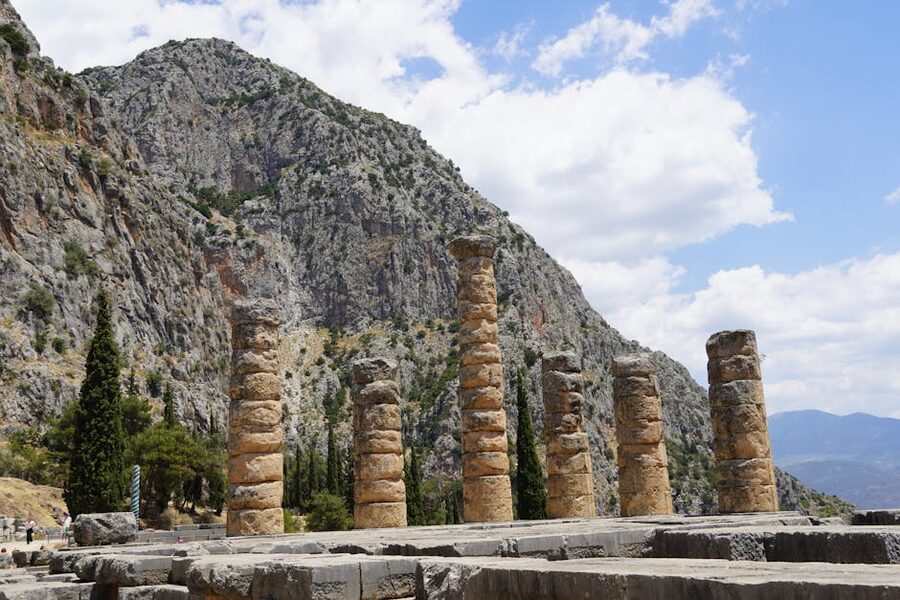
The temple is not the most photogenic ruin in Greece. Six reconstructed columns, an outline of the foundation, and the altar in front. But this is where the oracle worked. The pythia sat in an inner chamber called the adyton, somewhere under the floor you are looking at, breathed in the rising vapours, and answered the questions that the kings of half the Mediterranean had paid to ask. Stand at the altar, look down the slope, and you can see all the way to the Gulf of Corinth on a clear day. That is the view the priests had every morning.
The Theatre and the Stadium Most Tours Skip
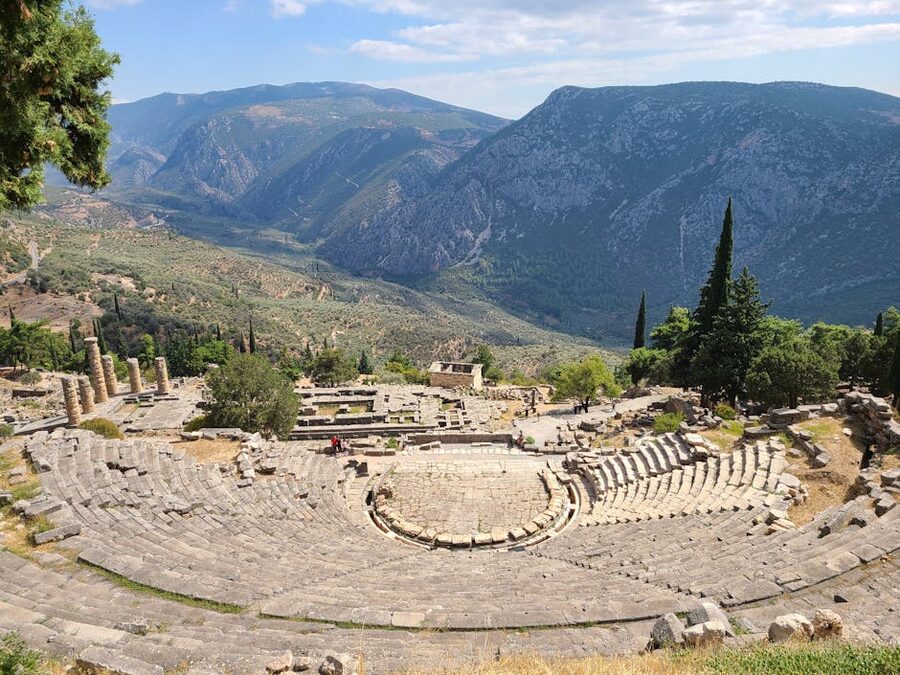
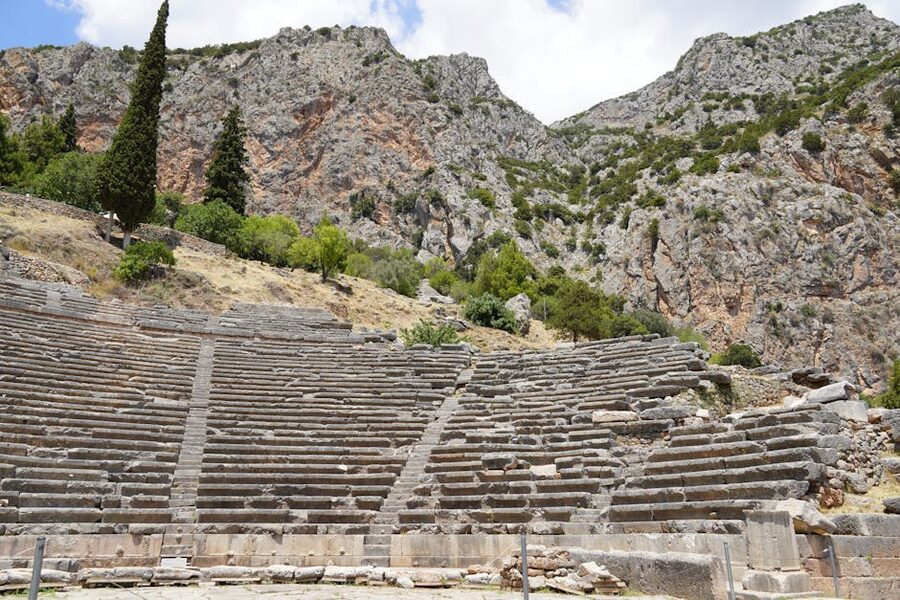
Above the temple, the path keeps climbing to the theatre. This is where I would push back against any tour that turns around at the temple. It is another five minutes uphill, and the theatre is where the photo most people want is actually taken from.
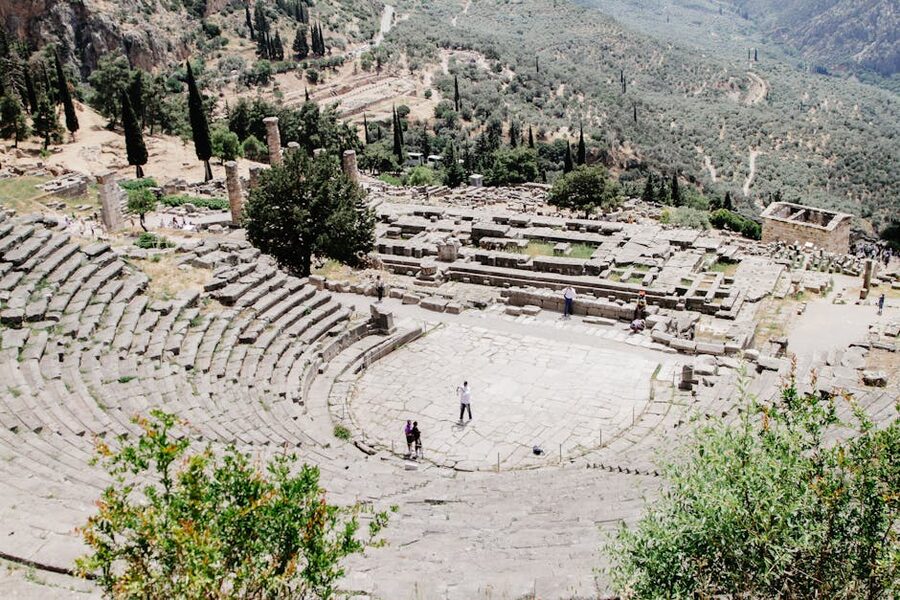
The theatre seats around 5,000 people, and during the Pythian Games (which were held every four years, like the Olympics, but at Delphi) it hosted music and poetry contests. The acoustics are still perfect. If you stand at the bottom and someone speaks at normal volume from the top, you can hear them clearly. Try it.
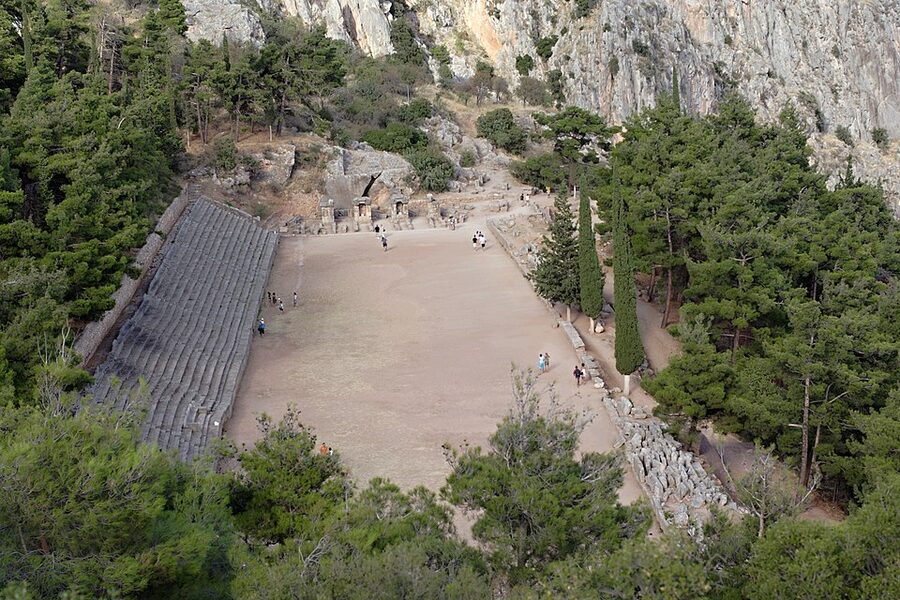
From the theatre it is another fifteen minutes uphill to the stadium. This is the highest point at the site, sitting at around 645 metres above sea level, and most day-trip groups skip it because of the climb. If your knees can handle it, go up. The starting line is the original marble, with the toe grooves where the athletes set themselves. You can still see them. Standing on that line is one of the strangest, most concrete moments in Greek archaeology. Real feet, real friction, two and a half thousand years ago.
If you are weighing this against a similar uphill archaeological site closer to Athens, the climb is about as steep as the Acropolis, but longer overall. Two-thirds of the way up to the stadium is where most people sit down on a low wall and reconsider. Take a water bottle. Take your time.
The Tholos at Athena Pronaia (the Photo Everyone Has Seen)
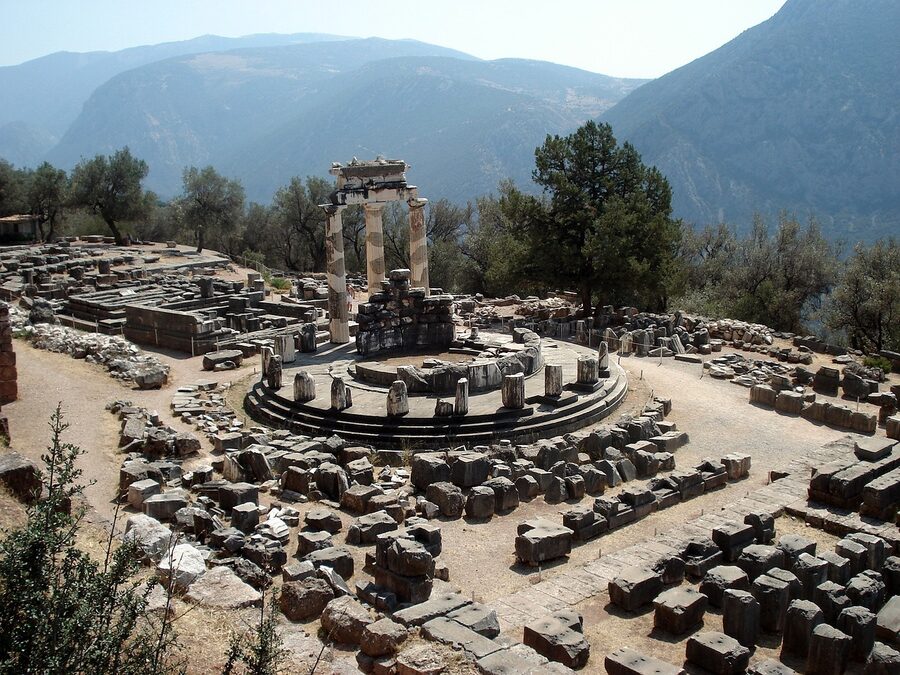
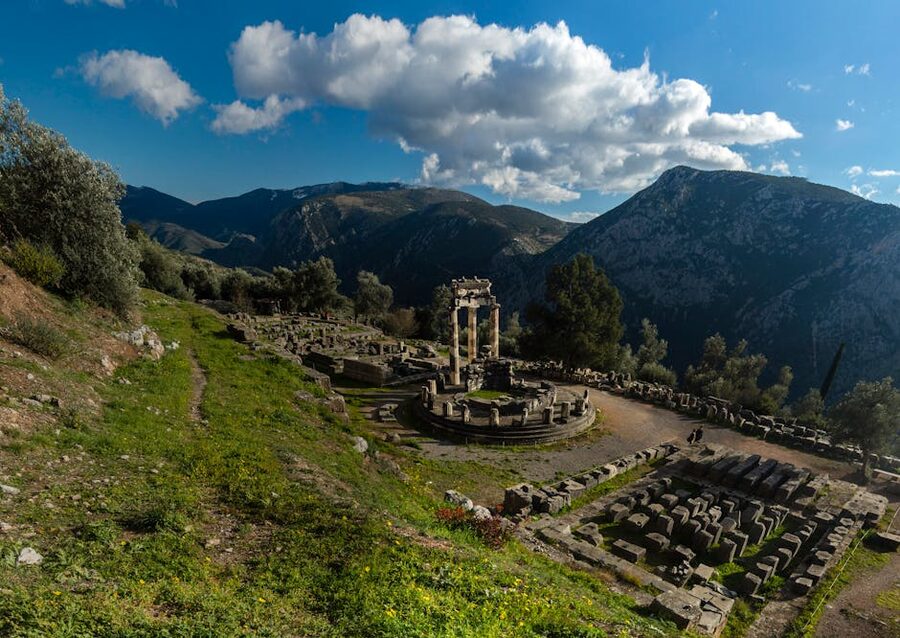
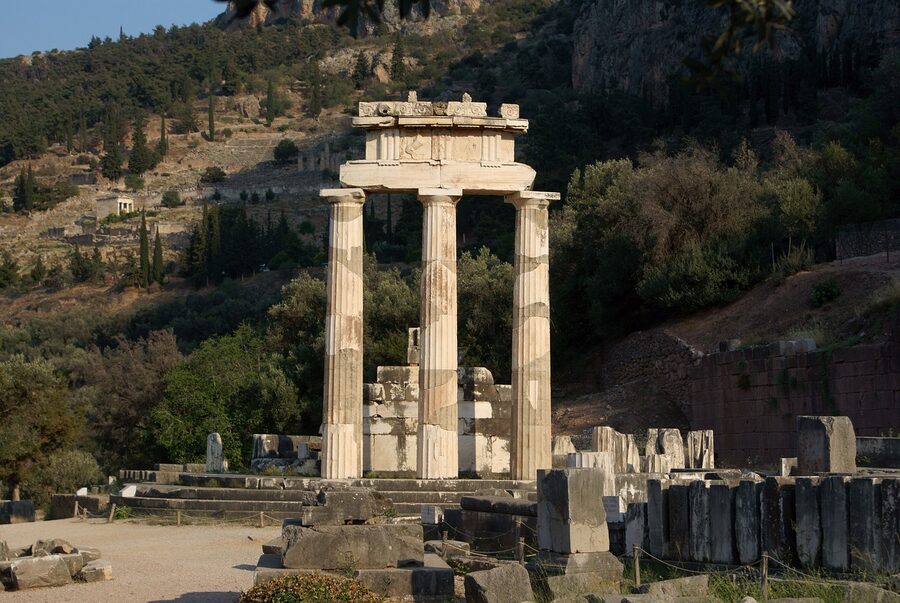
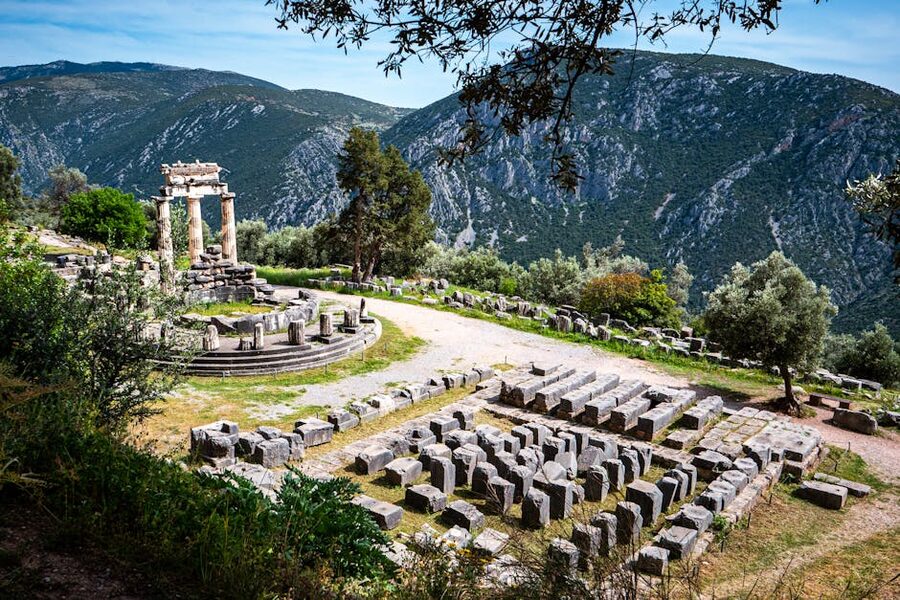
About ten minutes downhill from the main sanctuary, on the other side of a ravine, there is a smaller archaeological enclosure called the Sanctuary of Athena Pronaia. This is where the famous circular temple, the Tholos, sits. If you have seen one photo of Delphi in a guidebook, it is probably this one.
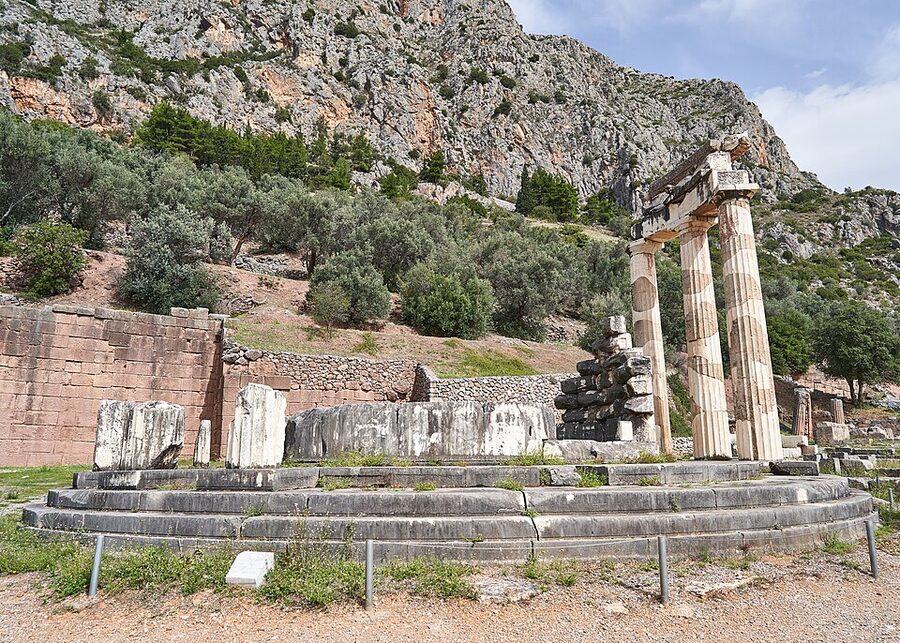
The Tholos was built around 380 BC. Three of its columns have been re-erected so you can see the proportions. What survives is striking enough that the round building has been argued over by classicists for centuries. We do not know who it was dedicated to, what rituals happened inside, or why it was circular when almost every other Greek temple was rectangular. The answer is probably some specific cult of Athena that has been lost to time.
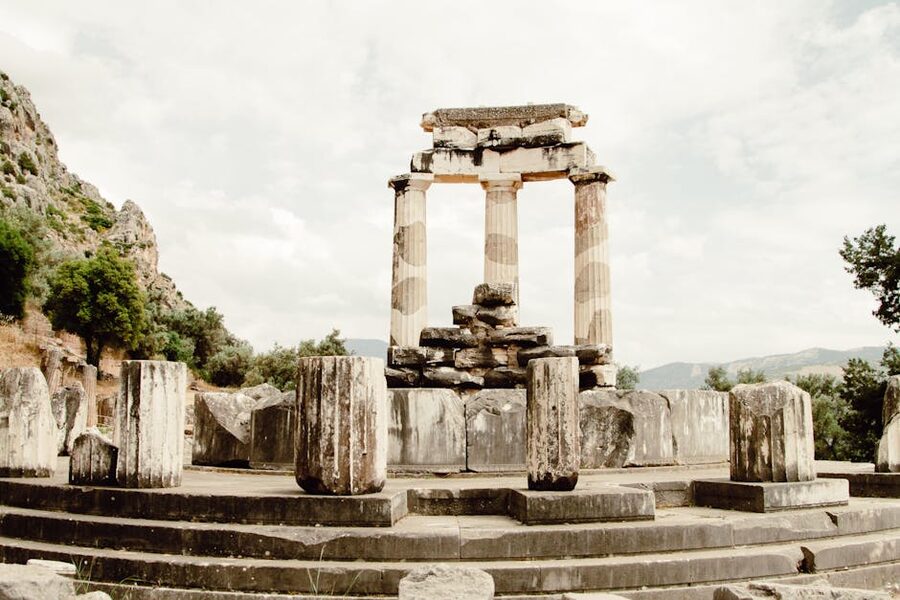
Most tours give you 15 to 20 minutes here. Use them. Walk all the way around the temple, not just the front. The metopes (the carved square panels under the roofline) run unbroken around the circle, which is the geometry that makes the building unusual. If you are using the audio version of the tour, this is one of the spots where the VR reconstruction overlays are genuinely worth the headset.
The Castalian Spring (Five Minutes That Most People Skip)
Between the two sanctuaries, on the road that connects them, there is a stone basin set into the cliff. This is the Castalian Spring. Pilgrims washed here before going up to consult the oracle. The water still runs.
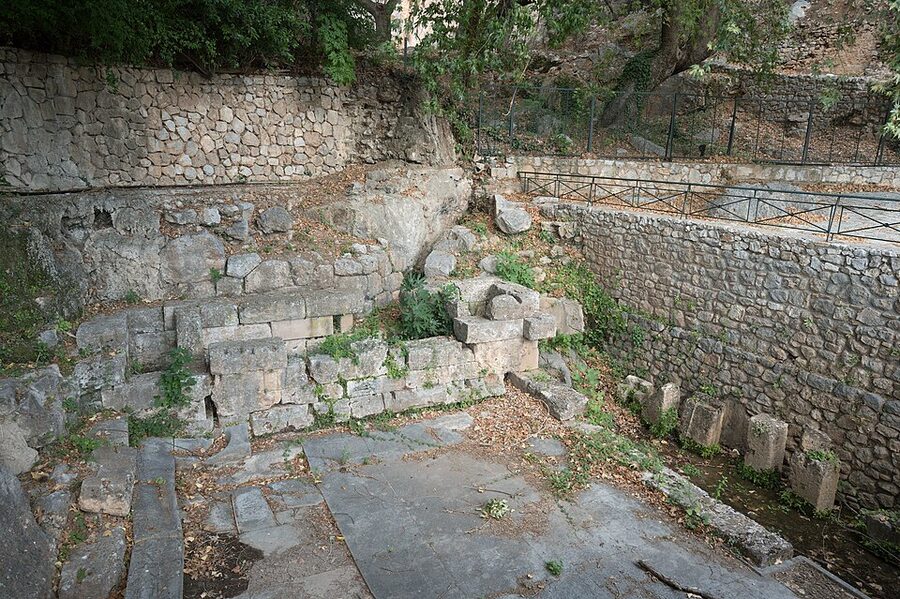
It is a five-minute stop, easy to walk to from the Tholos. Most coach tours roll past it without comment. Ask your guide to point it out, or just spot it on the map and walk over for a minute on your own. The carved niches in the rock above the basin held bronze offerings that pilgrims dropped in after purifying. Some are in the museum. The actual basin still has water in it most of the year.
If you are religious or just romantic about it, this is the spot to take a moment. You are standing where, for a thousand years, every visitor to the oracle paused before climbing the slope. Apollo is supposed to have killed the dragon Python near here. The Romans diverted the spring once and the oracle stopped working until they put it back. Small sites have big stories.
Arachova: The Stop That Saves the Day
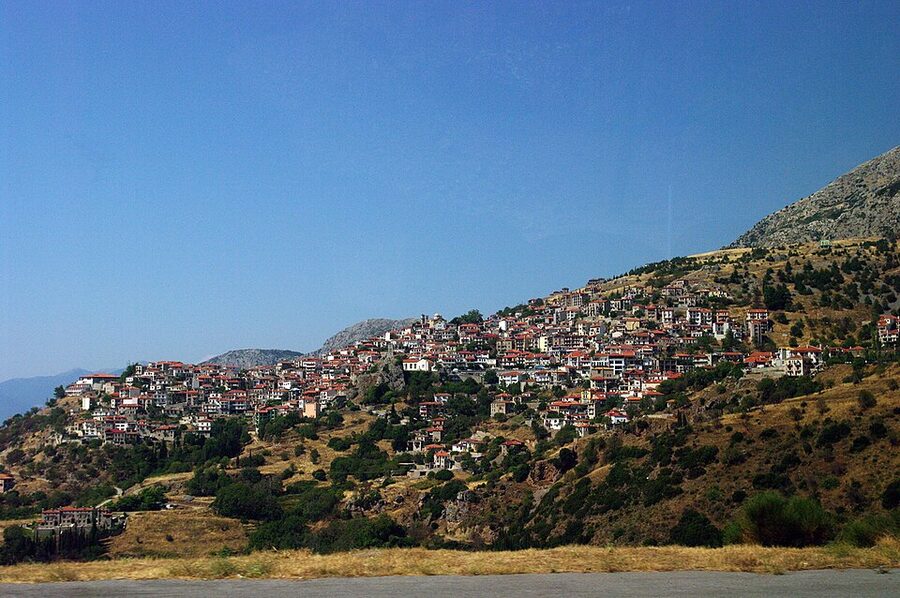
About 11 kilometres east of Delphi, on the road back to Athens, the highway threads through a mountain village called Arachova. It is built into the side of Mount Parnassus, all white houses tumbling down a steep slope, with a single main street that follows a switchback. This is the stop most cheap tours skip. It is the stop that turns a tiring day into a great one.
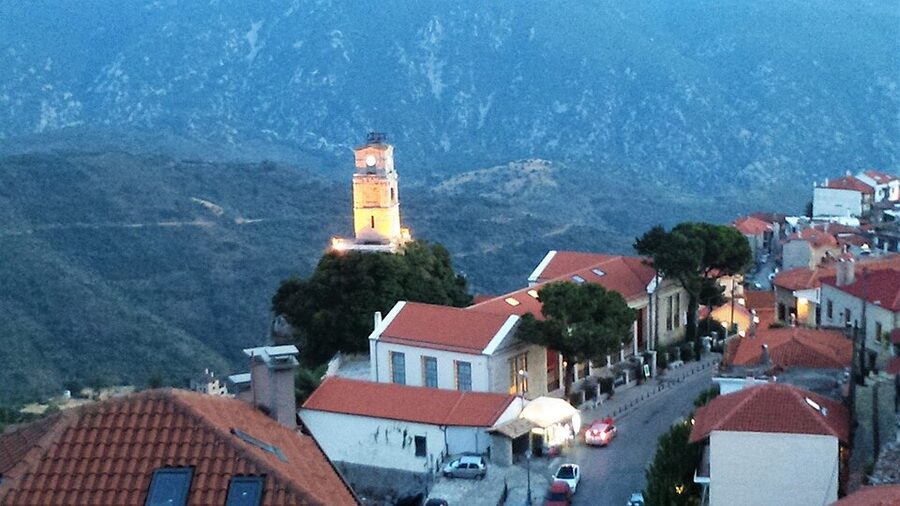
Arachova is a working ski village in winter (the Mount Parnassus ski centre is fifteen minutes up the road) and a quiet stone-and-flagstone town in summer. The day trip stops there for around 30 to 45 minutes, usually for coffee or the bathroom or a quick walk along the main street. That is enough time to do three things: have a Greek coffee at one of the cafes that hangs over the valley, buy a hilopites (the local egg-and-flour pasta, sold dry in paper bags by older women in headscarves), and look at the formaela cheese in the cheese shops. Formaela is a sheep’s-milk cheese made only here, fried with a quick squeeze of lemon, and you will not eat it anywhere else in Greece.
If you are doing the flagship combo with Arachova or the audio-guide version with the same Arachova stop, the village is in your itinerary by name. If you are looking at a tour that does not name Arachova on the page, ask before booking. The pure-Delphi tours skip the stop to save 45 minutes on the return drive, and that is the wrong trade.
Practical small thing: there is a small church at the top of the village that the tour might point out, called Agios Georgios. Climb the stone steps if your group has time. The view from the church terrace over the whole valley is the best photo of Arachova you can take. The flagstones under your feet at the top date from before Greek independence.
How the Coach Day Compares to the Two-Day with Meteora
If you have two consecutive nights to spare, there is a much better version of this day. The two-day Delphi and Meteora combo runs Athens to Delphi on day one (sanctuary plus museum plus Arachova plus an overnight in Kalambaka, a town under the Meteora rocks), then Meteora monasteries on day two, then back to Athens.
I rate the two-day Delphi and Meteora combo above the day trip for a simple reason: you spend the same hours in coach seats, but you split them across two days, you sleep in a hotel under spectacular rocks, and you add Meteora (which is itself the kind of place people still talk about a year later). Cost-wise it is around three times the day-trip price, but you get a hotel night, half-board, two days of guiding, and the second site for that. If you priced those separately you would not get close.
The trade-off is logistical. You need a free 48-hour window. You need to be okay sleeping somewhere other than your Athens base. You need to pack a small overnight bag separately. If you are running a tight schedule with only seven nights in Greece, the day trip wins on flexibility. If you have ten nights and you can give two of them, the combo is the better experience. We cover the Meteora half of that combo in detail in our how-to-book a Meteora day trip guide if you want to compare what the second day looks like in practice.
Three Ways to Get to Delphi (Coach, Driver, Self-Drive)
You have three real options for the journey. Each suits a different traveller.
Coach day tour. The standard format. Around $30 per person, all-inclusive of pickup near Syntagma, English-speaking guide, fuel stops, the Delphi site, the museum (on the better tours), Arachova, and lunch (sometimes included, sometimes a $12-15 add-on). Easy to book, no logistics. The price has dropped a lot since 2024, mostly because of operator competition. Cons: 12 to 14 hours sat in a seat, fixed schedule, you cannot linger anywhere. The licensed guide and pickup version is the variant I would book if I was staying outside the centre and wanted hotel pickup rather than meeting at a coach park.
Private driver and guide. Around 350 to 500 euros for the day for a car of four. Includes pickup, driver, English-speaking guide, all entries usually extra. Pick this if you are travelling as a small group and want to set your own pace, linger at the museum, or detour to the Hosios Loukas monastery (a UNESCO site about 40 minutes off the main route, easy to add when you have your own driver). Per person it works out to 90 to 130 euros, more than the coach but a different experience. George’s Taxi out of Athens runs this format and shows up in a lot of recommendation threads.
Self-drive. A rental car costs about 30 to 50 euros for the day plus 25 to 35 euros in fuel and tolls. You get full flexibility. You can do all six monasteries in the area if you stretch the trip, you can spend an extra hour in Arachova, you can stay until sunset and drive back overnight. The catch is that 6 hours of motorway plus mountain driving on top of the actual visit is a lot. Greek motorway driving is fine and orderly. Greek mountain road driving in fading light, less so. If two of you can split shifts, do it. If you are solo, take the coach.
What to Wear (and Why It Matters)
Delphi is open-air, on a steep slope, at altitude (the site sits around 600 metres above sea level), and exposed to wind. The weather is not the same as Athens.
Footwear. Closed-toe walking shoes or trainers. The path is uneven stone and gravel, often slippery, and the climb to the stadium has loose footing. Sandals are a bad call. Flip-flops are a much worse one. I have seen a tourist in flat-soled mules slip on the Sacred Way, and the bruise was theatrical.
Layers. In winter, expect 8 to 12 degrees Celsius at the site, sometimes colder at the stadium. In summer, 28 to 35 degrees on the lower terraces but with cool wind through the upper sanctuary. Bring a thin layer either way. The bus is air-conditioned, so a long-sleeve thrown over a t-shirt is the right shape.
Sun cover. Hat, sunglasses, sunscreen. The Greek sun is harsher than the temperature suggests, and there is no shade on the Sacred Way. May to September, you will burn in 90 minutes if you do not cover up.
Water. Bring a 750ml bottle minimum. There is one fountain near the museum entrance and a small kiosk by the bus park, but most of the climb has nothing.
Modesty. Unlike Meteora monasteries, Delphi is an open archaeological site, no dress code at the gate. You can wear shorts. But if your tour combines Delphi with a side stop at Hosios Loukas (some private tours do), you will need shoulders and knees covered. Carry a thin scarf in your daypack.
Spring vs Summer vs Off-Season
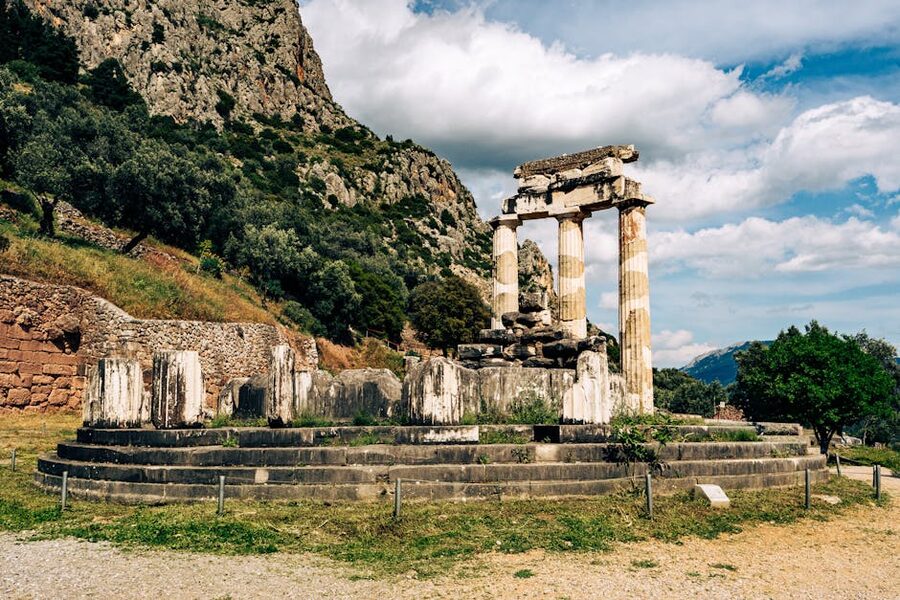
April and May are the right months for Delphi. The grass between the ruins is green, the wildflowers are in bloom along the Sacred Way, the air is clear, and you can climb to the stadium without sweating through your shirt. Bus rides are pleasant. Photography light is warm. The crowds are present but not crushing.
September and the first half of October are the second-best window. The summer heat has eased, the harvest is in (you will see threshing machines in the cotton fields outside Thebes), and the tour buses are emptier than peak August. October light at the upper sanctuary is genuinely beautiful.
July and August are the rough months. The heat at the site can hit 38 degrees on the lower terraces, the bus seats are sticky on the four-hour drive each way, and the museum is at full capacity. If you are travelling in July or August, book the earliest pickup the operator runs (some leave Syntagma at 6am instead of 7) and bring twice as much water as you think you need.
November to March is genuinely off-season. Tours still run but on a reduced frequency, some operators cut the Arachova stop, and the road over Mount Parnassus can carry snow that closes the pass for a day or two. December and January are the best months in Arachova itself (the ski centre is open, hot chocolate is the drink), but it is the worst time to visit Delphi as a sanctuary because the wind off the cliff at the upper terraces is brutal. If you are visiting in winter, book the two-day combo with Meteora rather than the rushed coach day.
The Tours I Would Actually Book
I have looked at every Athens-to-Delphi option in our review database. Three sit clearly above the rest. They cover three different ways to do this trip: the flagship coach day with the Arachova stop, the licensed-guide upgrade with hotel pickup, and the audio-VR option for travellers who prefer self-paced over a live guide.
1. Athens: Mythology of Delphi, Museum and Arachova Guided Tour (around $30)
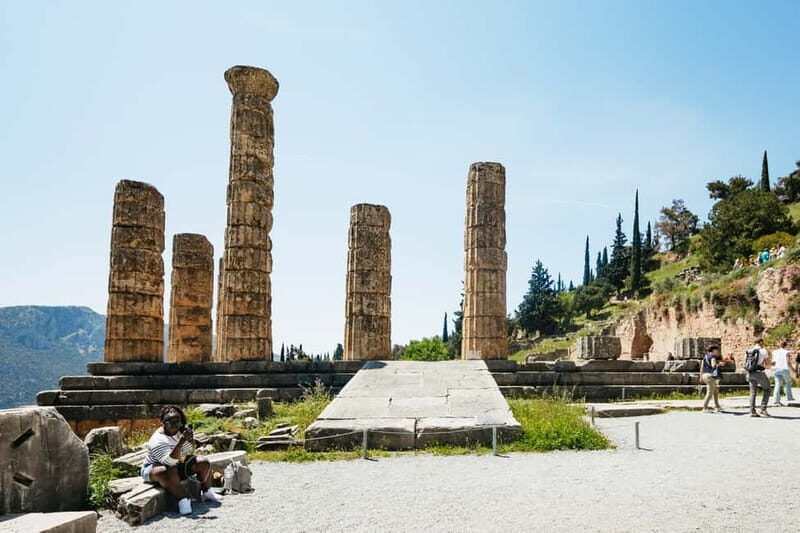
This is the single most-booked Delphi day trip on the market and the one I would push for first-timers. The named guides come up consistently in feedback for actually telling the Apollo story rather than just pointing at columns. Our full review walks through the lunch options and the Arachova free time. The named weakness is that the lunch itself is correct rather than memorable, but you fix that by buying formaela cheese in Arachova and eating it for dinner instead.
2. Athens: Delphi Day Trip with Licensed Guided Tour and Pickup (around $32)

This is the option I would pick if you are staying outside Plaka or Syntagma. Hotel pickup from anywhere in central Athens means you are not lugging your camera on the metro at 6am, and the licensed-guide accreditation tightens up the museum half of the day. Our review covers what “licensed” actually changes inside the museum (it lets the guide take you into the Charioteer room and tell the story without rushing). The lunch stop is the same Arachova taverna circuit as the flagship.
3. From Athens: Delphi Full Day VR Audio Guided Tour (around $30)
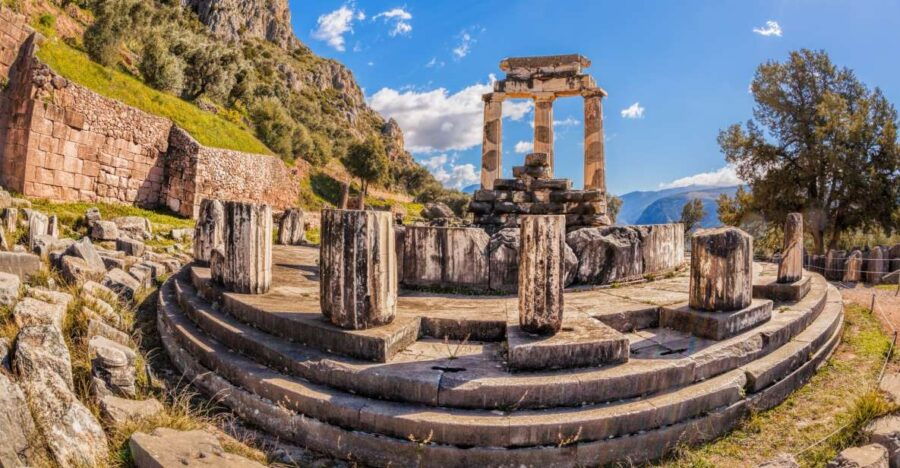
This is the option for people who hate group tours. The VR headset gives you 3D reconstructions of the major buildings layered onto what you see in front of you, which is a much better illusion than I expected. Our review walks through what the headset does and does not work for (good for the Tholos and Temple of Apollo, less interesting at the Treasury). Pick this if you want to set your own pace at the site rather than follow a group around.
The Other Half of the Booking Decision: Lunch

Most Delphi tours stop for lunch at a Delphi-village taverna or in Arachova on the way back. The included menu is usually moussaka, salad, bread, olives, sometimes lamb, sometimes a fish option. The price is around 12 to 15 euros, often paid as an add-on. Vegetarians will eat well (the salads and the cheese are the strongest part). Vegans should bring snacks. Most operators do not provide a vegan option without warning.

The included lunch is fine, but it is rarely the food memory you take home from the day. If your bus stops in Arachova long enough, walk into one of the small kafeneia and order a portion of fried formaela with lemon. Six euros, a glass of cold tsipouro on the side if you want it, eaten standing at the bar. That is the Delphi-day food memory worth having.
Common Mistakes I See
People book the cheapest tour, find out at the gate that the museum is “optional” (meaning extra), and stand outside the gates for ninety minutes while their group goes in. The few euros you save are not the saving they look like. Always book the version with the museum baked into the price.
People skip Arachova because their tour did, then realise on the bus home that they drove through it without stopping and there are no other Greek mountain villages on the route. The flagship combo names Arachova in the title for a reason. Pick the one that does.
People wear sandals or thin sneakers, slip on the Sacred Way, and limp back to the bus. The path is loose stone. Closed shoes with grip. This is not negotiable.
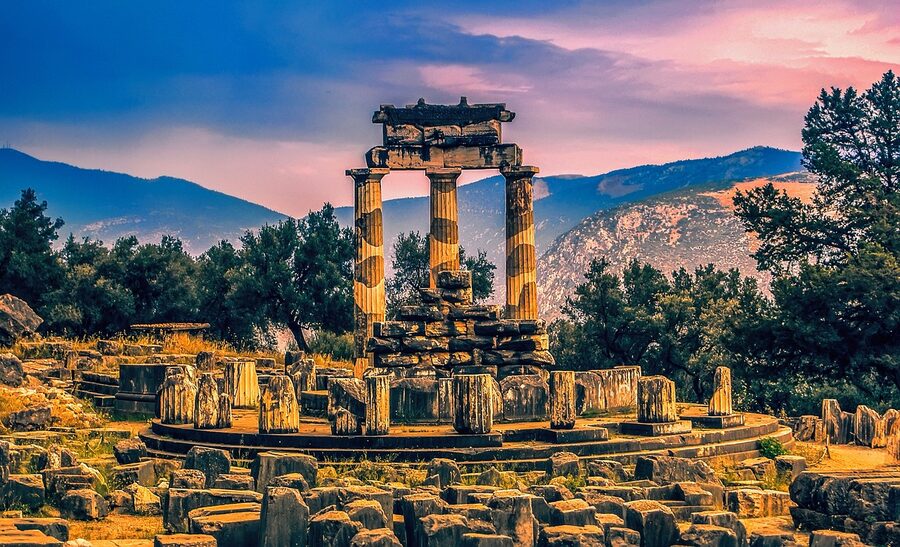
People also try to do Delphi on a Monday, find the museum is sometimes closed (some operators run modified itineraries that day), and lose their headline piece. Check the day of week before booking, or pick the flagship combo that already prices in the museum being open.
And people forget cash. The museum entry is included in your tour, but the toilet at the rest stop is 50 cents in coins, the church donation in Arachova is a one or two euro coin, and you will want a coffee at one of the cafe terraces. Bring 20 euros in small notes and coins.
What About the Pure Day-Trip vs the Coastal Run from Athens?
Quick comparison if you are weighing Delphi against the other big Athens day-trips. Delphi is the deepest day in terms of history. Cape Sounion is the prettiest in terms of sunset but also the lightest, only a half-day. Meteora is the most spectacular landscape but the longest day on the road. If you only have one inland day-trip in your Athens trip, Delphi is the one I would pick. The combination of museum, sanctuary, and Arachova covers more layers in one day than any other option.
If you are choosing between Delphi and one of the further-afield Spanish day trips like a Toledo run from Madrid, the calculus is different but the same logic applies. Pick the day that has multiple layers (history, food, landscape) rather than a single attraction. Delphi does this better than almost any day trip in Greece.
Pairing Delphi With the Rest of Your Athens Trip
Delphi is a long day, so build the rest of your itinerary around recovery. The day before, do something easy in central Athens like the Acropolis walking tour (no driving, finishes by lunchtime, leaves you the afternoon to nap). The day after, do nothing strenuous. A food-walking tour through Psyrri is the perfect recovery activity, since it is mostly slow walking with food breaks. The Cape Sounion sunset half-day also works as a soft third anchor if you have one more day to spend.
For getting around Athens itself between day trips, the metro plus walking covers most of what you need. If you want a quick orientation on day one, the Athens hop-on hop-off bus is the easiest way to scope out the city in three hours, although the metro is genuinely cheaper and faster for the same routes.
If you have a free fourth day, a Saronic Islands day cruise is the body’s reset button after a long inland day. Sea, sun, lunch on the boat, no walking. By day five, you can take on the Acropolis combo ticket or whatever else is left on your list.
Pythian Games Trivia (Stop Here If You Are Not a History Person)
If you got this far, you are the kind of traveller who wants the deeper layer. So: the Pythian Games. Held every four years at Delphi, two years offset from the Olympic Games, from 586 BC onwards. Unlike the Olympics, which were purely athletic, the Pythian Games included music and poetry contests as well as the running and chariot events. The first prize was a wreath of laurel from the sacred grove. Pindar, the lyric poet whose odes still survive, wrote his Pythian Odes for the winners.
The wreath is the relevant detail. Apollo, after killing the dragon Python, retreated to the Vale of Tempe (north of Olympus) and cut a laurel branch as a symbol of victory. He brought it back to Delphi. Every Pythian victor since wore a copy. Two and a half thousand years later, when modern Olympic gold medallists wear an olive wreath, the wreath is doing something Apollo set up. There is a continuous thread.
FAQ Bits I Get Asked
Can I do Delphi as a half-day from Athens? No. The drive alone is six hours round-trip. The minimum sensible day is around twelve hours.
Are kids okay on this? Older kids, fine. The museum holds their attention for about 30 minutes if you tell the Apollo and dragon story before they go in. Under-sevens, the bus day is too long. The two-day combo with Meteora works much better with young children.
Is the lunch vegetarian-friendly? Yes. Salads, feta, olives, bread, stuffed vine leaves. Vegetarians will eat well. Vegans should bring snacks; the included menu rarely has a vegan option without notice.
Is there wifi on the bus? Some operators have it, most do not. Treat it as bonus. Download a podcast or a playlist for the morning leg.
Can I drink the water at the Castalian Spring? The water is technically potable but the basin is 2,500 years old and nobody is going to recommend you drink from it. There is a modern fountain near the museum.
How long inside the museum is enough? 45 to 60 minutes is the right window. The Charioteer room is the must-stop. The Siphnian Treasury frieze room is the second.
Where Else to Look in Greece After Delphi
Most travellers fold Delphi into a five-to-seven day Athens core. After Delphi, the natural pairings are an Acropolis walking tour for the layered Athenian context (the Treasury of the Athenians at Delphi makes much more sense if you have stood at the actual Athenian Acropolis), a Meteora day trip if you can spare another long inland day, or the Cape Sounion sunset run for a softer half-day on the coast. If you have one more morning, a Saronic Islands cruise closes out the week with sea air. Five different angles of Greece, and Delphi is the one your friends will ask the most questions about.
Book your tour at least a week in advance for May, June, September, and October. Three weeks ahead for July and August. Pack closed shoes, layers, water, and 20 euros in small notes. Choose the version that includes the museum and the Arachova stop. Sit by the window on the way out so you catch the moment Mount Parnassus first appears. That moment is worth showing up for.