
The sword came out of the scabbard in a single fluid motion — no warning, no flourish, just a precise 40-centimetre arc of steel that stopped about 3 feet from my face. I jumped. Everyone in the tiny basement theatre jumped. The performer didn’t even blink.
That’s when I understood why people still practice kenbu 700 years after it was invented. The danger is real. The steel is real. And unlike the samurai museums up in Tokyo, you’re watching it from about 3 metres away.
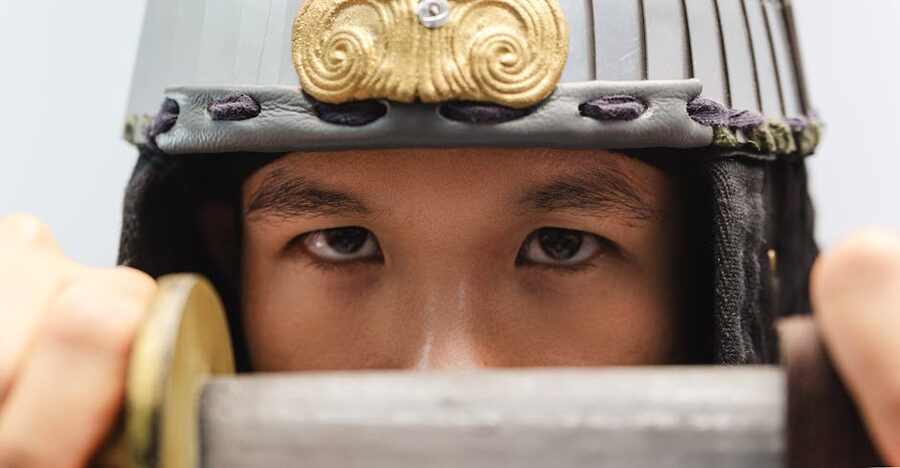
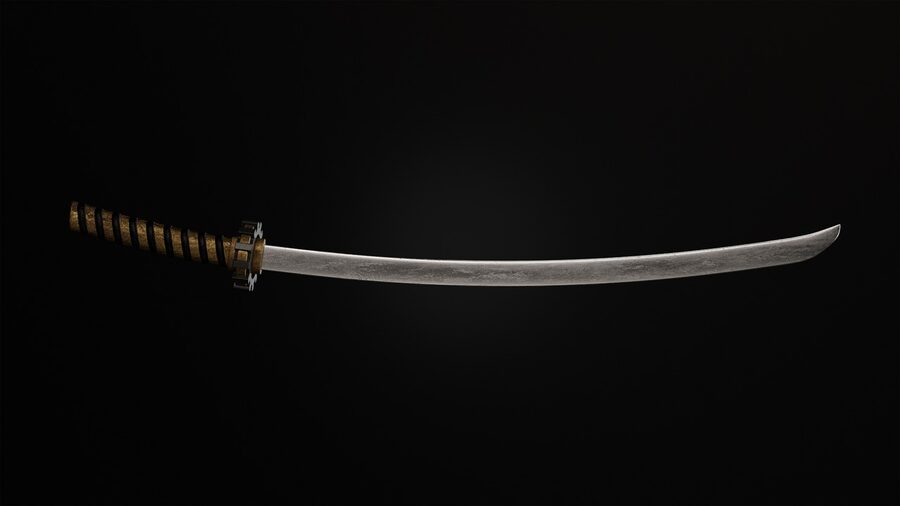
Samurai kenbu is a traditional Japanese sword dance performed with a real katana and a paper fan. It emerged about 700 years ago from the training rituals of samurai warriors. The dances are set to recited poetry (shigin) and each routine tells a story — a battle, a lament, a farewell before a duel.
Kyoto’s Samurai Kenbu Theater in Higashiyama is the best place to see it. The shows are intimate (under 40 seats), the performers are professional, and you can pair the 40-minute show with a hands-on samurai lesson where you hold a real sword yourself.
Short on time? Here are my top picks:
Best show-only: Samurai Kenbu Traditional Sword Dancing Show — $32, 1 hour, 426 reviews. English narration, intimate theatre, photos after the show.
Most hands-on: Kyoto Samurai Experience — $119, 1,294 reviews, perfect 5.0. Samurai costume, etiquette lesson, sword practice, and the kenbu show.
Martial arts focus: Kendo and Samurai Experience with Uniform — $103, 2 hours, 815 reviews. Proper kendo training in a 100-year-old dojo with a master instructor.
- What Actually Happens at a Kenbu Show
- The English Narration Matters
- Hands-On: You Hold the Sword
- The 3 Best Samurai Kenbu Experiences in Kyoto
- 1. Samurai Kenbu Traditional Sword Dancing Show —
- 2. Kyoto Samurai Experience — 9
- 3. Kendo and Samurai Experience with Uniform — 3
- 700 Years of Kenbu: The Story You’ll See Onstage
- Where the Theater Sits: Higashiyama
- Kenbu vs Other Kyoto Samurai Experiences
- Booking and Practical Tips
- How to Get There
- A Perfect Kyoto Samurai Day
- More Kyoto Experiences
What Actually Happens at a Kenbu Show
The show runs about 40 minutes. No interval. No warning music. The theatre is small enough that every seat is a front-row seat.
The performer walks onto a bare wooden stage in full hakama (traditional pleated trousers) and kimono. They bow. The recitation begins — usually in Japanese poetry from the 1200s-1600s. Then the katana comes out.
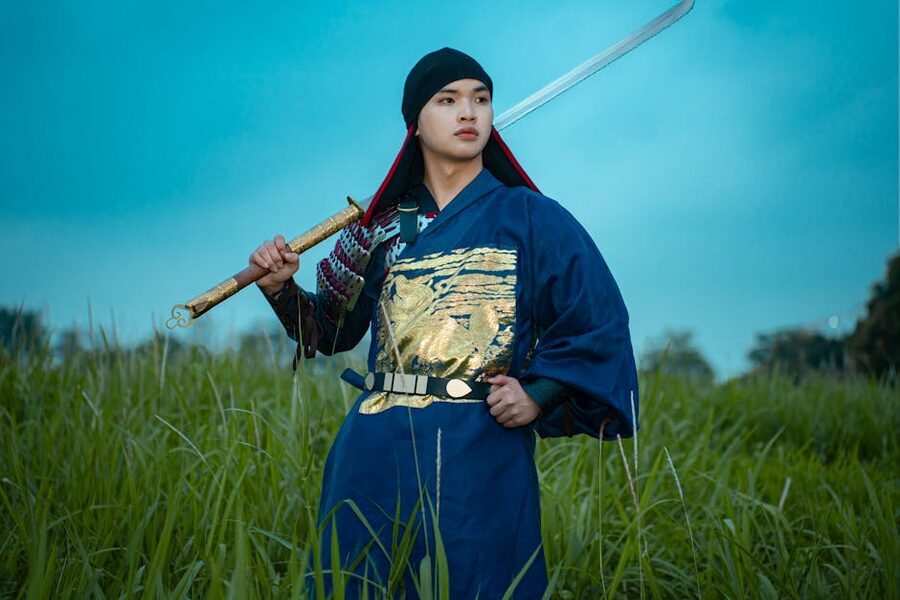
Each routine tells a story. One famous piece is about a samurai writing a final poem the night before he knows he’ll die in battle. Another is about a lone warrior walking through snow. You don’t need to understand the Japanese to feel what’s happening — the movements carry the narrative.
Between routines, the performer swaps the sword for a paper fan. Fan dances are the same visual vocabulary as sword dances but slower, gentler, and somehow more difficult. The fan is weightless, which means the performer has to generate all the drama themselves.
The English Narration Matters
This is the detail that separates the Kyoto Kenbu Theater from every other “traditional show” in Japan. Before each routine, one of the performers steps out of character and explains — in clear English — what the story is, why it matters, and what to watch for.
It’s short. Two or three sentences. Then they return to the character and perform. The effect is like having subtitles for an opera: you understand what’s happening without losing any of the atmosphere.
Hands-On: You Hold the Sword
The longer experiences include a lesson where you put on a samurai hakama, learn a basic sword draw, practice a couple of ceremonial stances, and then strike a target with a live katana. Yes, a real one.
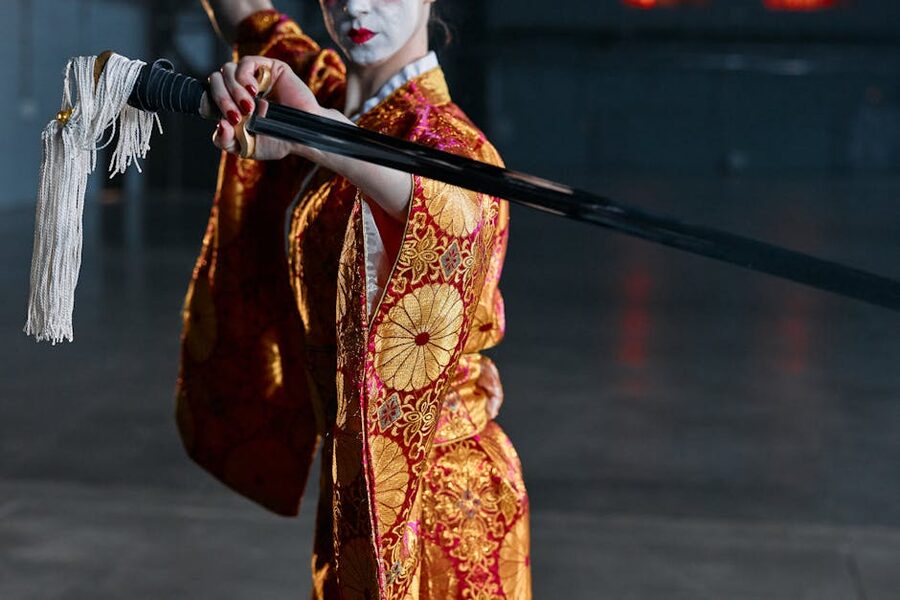
The instructor stays beside you the whole time. They correct your grip, your footwork, your breathing. Most people get 2-3 attempts at a clean cut. Even the nervous ones leave with a decent swing.
The 3 Best Samurai Kenbu Experiences in Kyoto
1. Samurai Kenbu Traditional Sword Dancing Show — $32
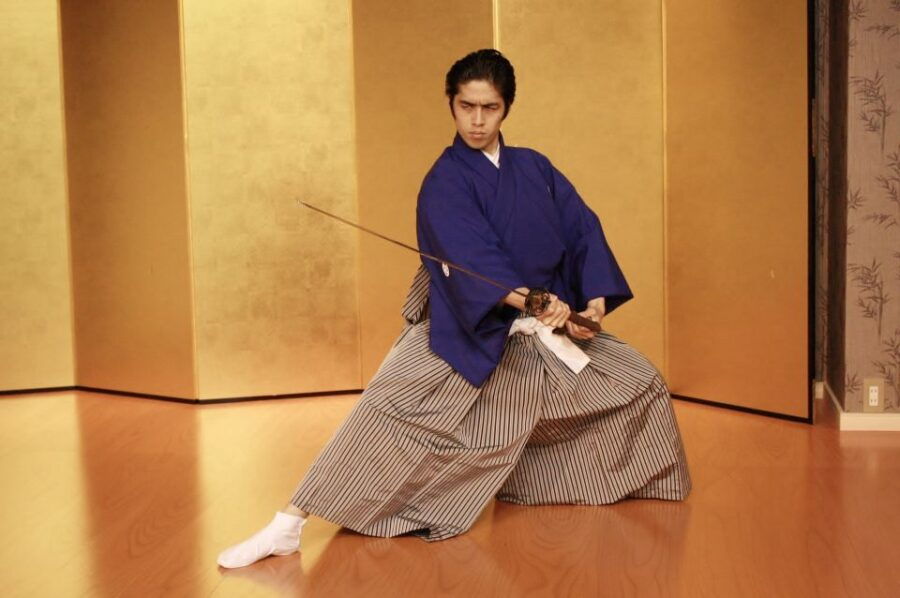
This is the cheapest way to experience kenbu properly. 426 reviews, $32, one hour of your evening. You get the full show with English narration plus a photo session where the performers happily pose with you afterwards. Julia from a recent visit said the show was unforgettable and knowledgeable — and loved that the performers took photos for guests after the ceremony. Our full review goes into what each routine represents and why the English narration works so well.
2. Kyoto Samurai Experience — $119

A perfect 5.0 across 1,294 reviews. This is the one to book if you want the complete experience rather than just the show. Samurai etiquette lesson, costume, sword practice, and the kenbu performance — about 2 hours total. Lan from a recent visit said her husband and son had an incredible time together. Our review covers the full sequence of what you’ll do during the lesson portion.
3. Kendo and Samurai Experience with Uniform — $103
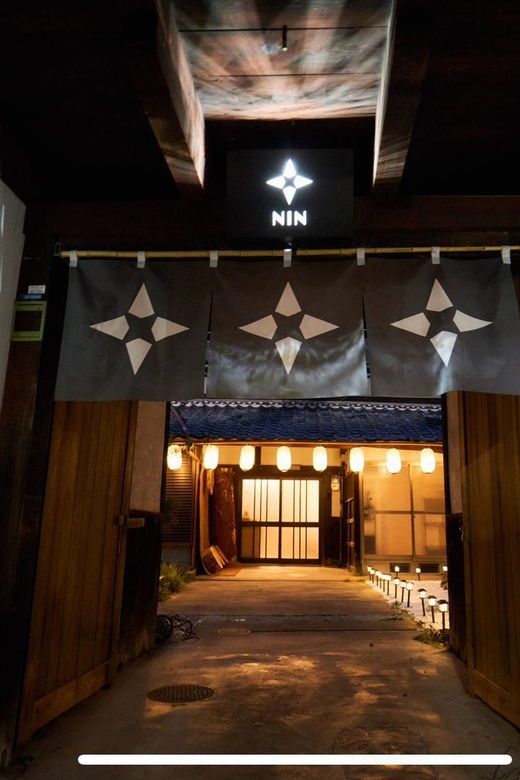
If you want genuine martial arts rather than performance, this is it. 815 reviews, $103, 2 hours in a 100-year-old dojo with a kendo master who has been training for 50+ years. Jonas from a recent visit said the facilitator taught not just Kendo and katana techniques but the history and importance of samurai in Japanese culture. Our review details the dojo and training structure.
700 Years of Kenbu: The Story You’ll See Onstage
Kenbu didn’t start as entertainment. It started as spiritual training.
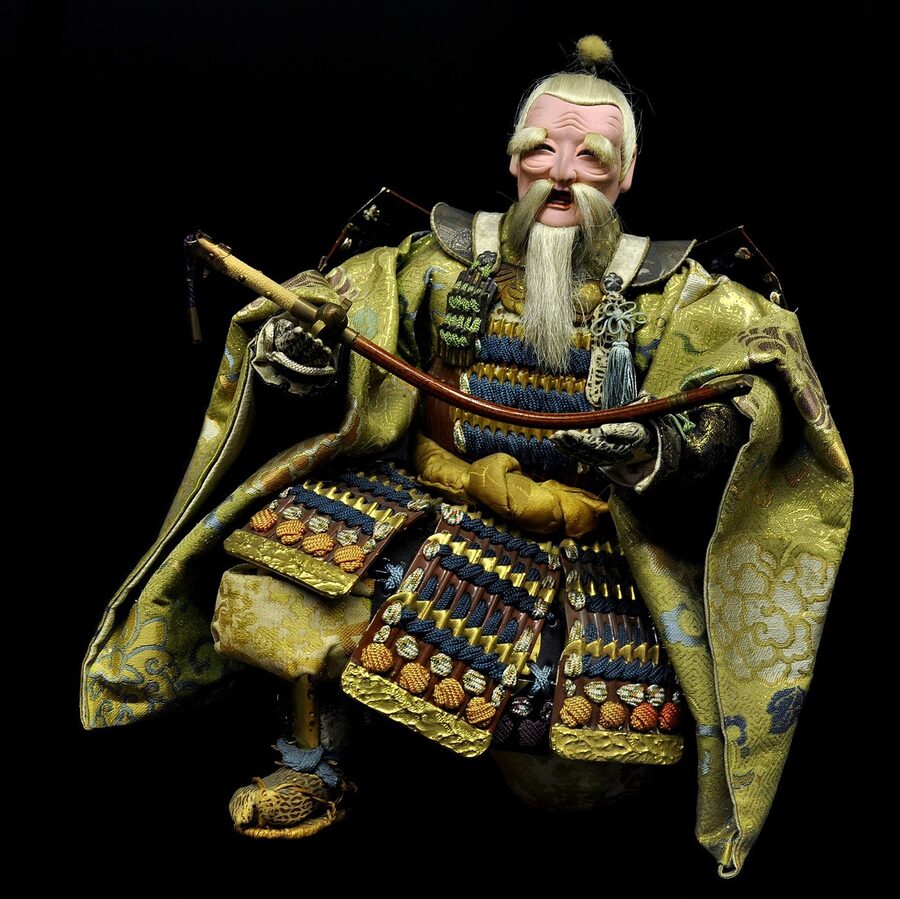
In the 1200s, samurai in training used choreographed sword routines to develop focus, timing, and emotional control. The routines were paired with shigin — the recitation of classical Chinese and Japanese poetry — because calming the mind through verse was considered essential preparation for combat.
By the Edo period (1603-1868), kenbu had evolved into a recognised art form. Samurai performed at festivals, private gatherings, and ceremonial events. It was never a popular street entertainment like kabuki. It stayed close to its warrior roots.
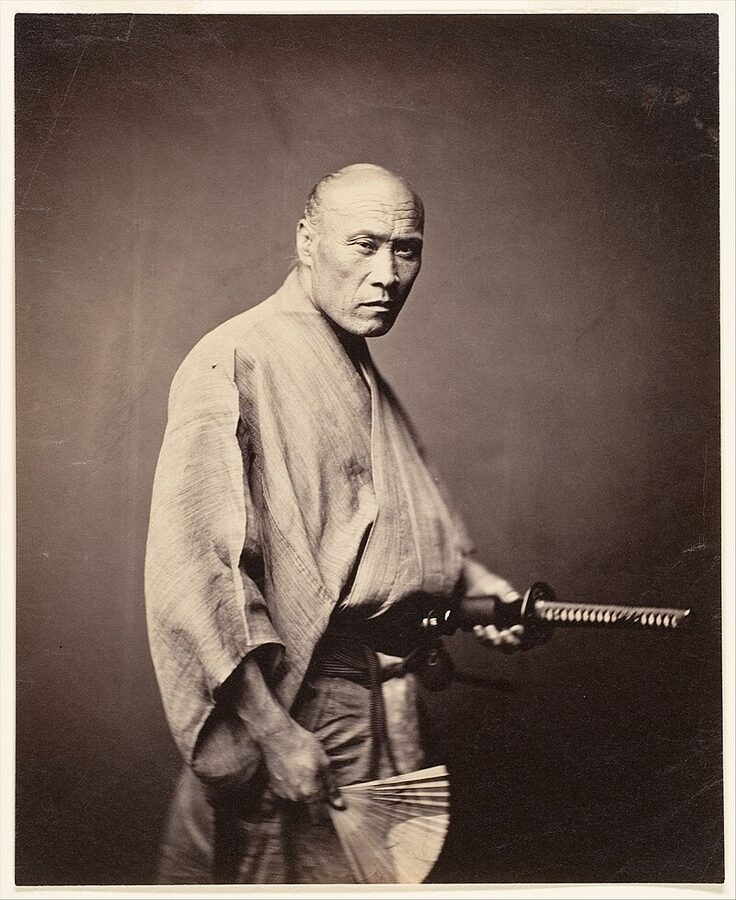
Then the Meiji Restoration of 1868 happened. The samurai class was dissolved. Wearing a sword in public was banned in 1876. Kenbu almost disappeared along with the warriors who practiced it.
A handful of masters kept the art alive in private schools. In 1957, the tradition was formally organised into schools that still exist today. The performers you’ll see in Kyoto are trained in direct lineages that trace back to pre-Meiji masters.
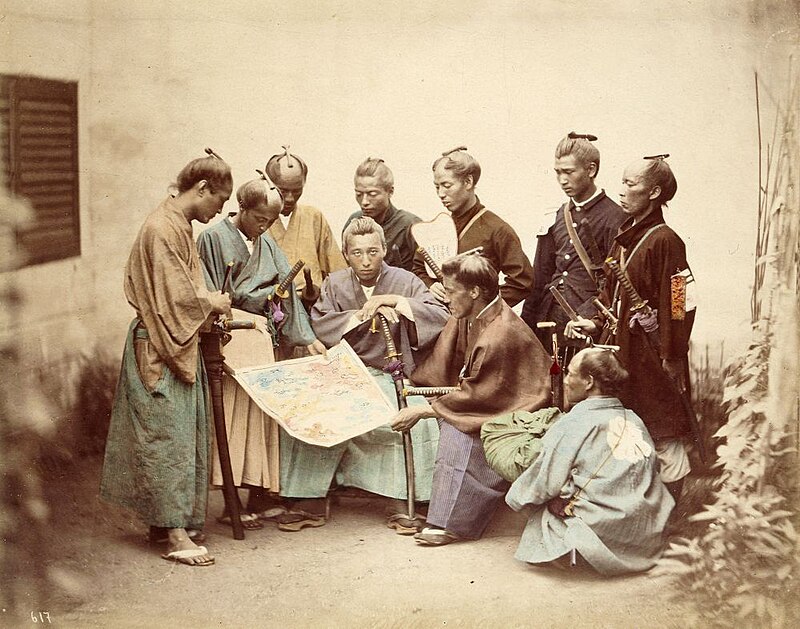
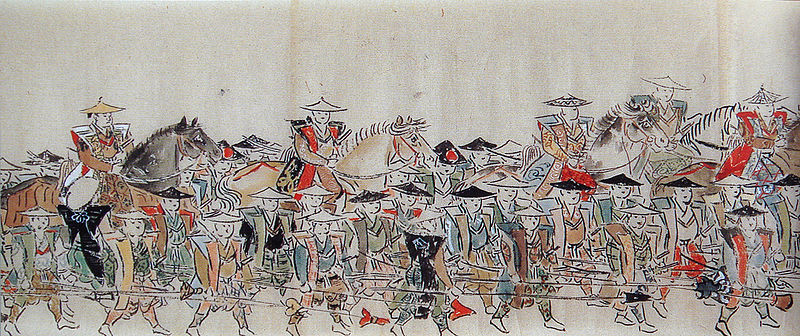
Why this matters when you visit: The routines you watch aren’t “inspired by” samurai culture. They’re the same routines the samurai in these photos actually performed. That’s why the Kyoto Kenbu Theater insists on live steel and real recitation. Anything else would be a dilution.
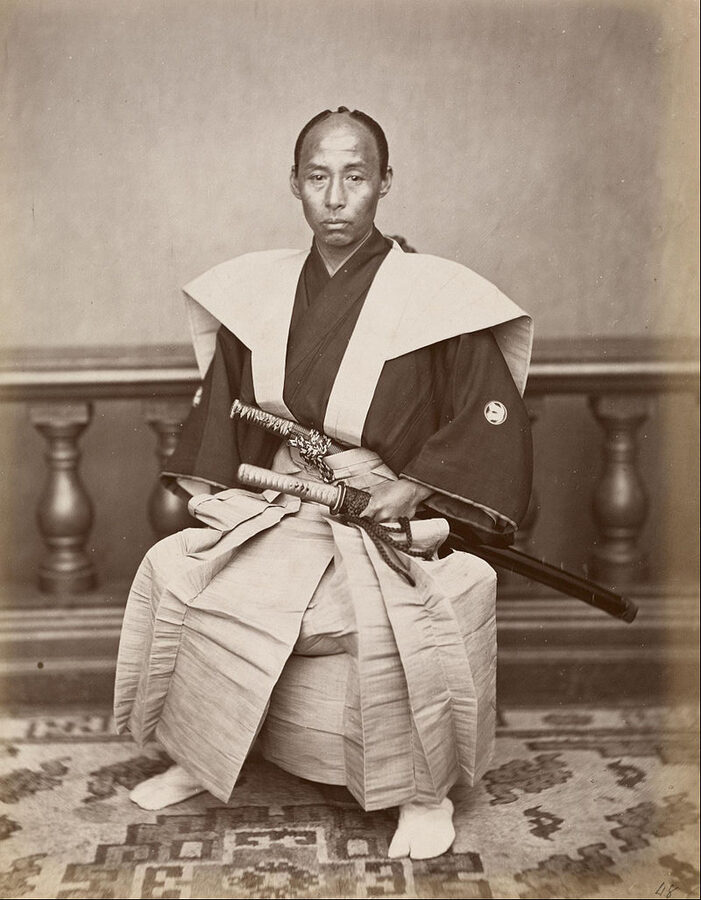
Where the Theater Sits: Higashiyama
The Samurai Kenbu Theater is tucked into Kyoto’s most atmospheric district. This matters for your evening planning.
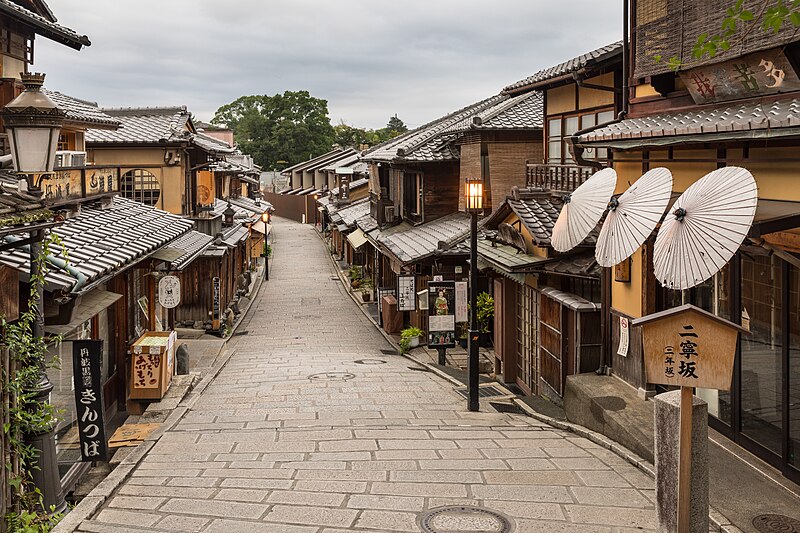
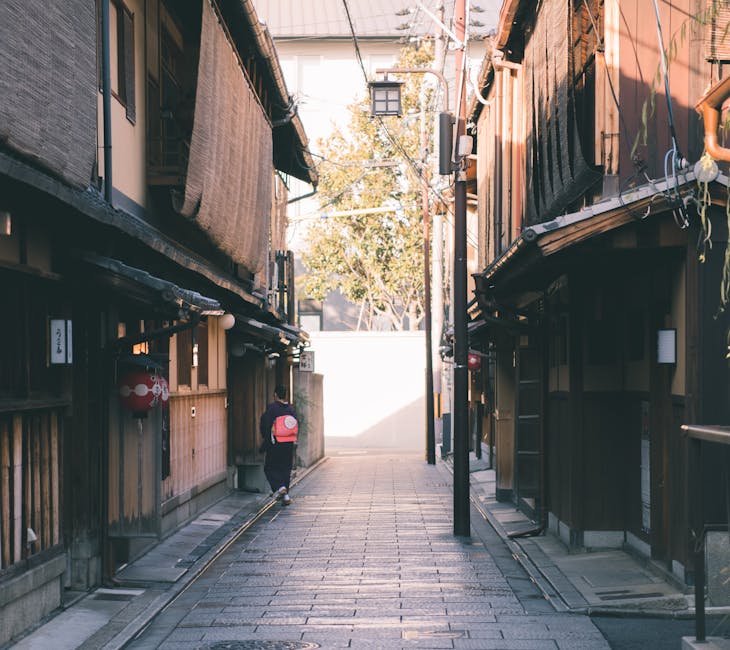
Higashiyama is the district where old Kyoto still looks like old Kyoto. Wooden machiya houses, stone-paved streets, low-hanging red lanterns, and the kind of atmospheric alleys that show up in every Japan travel photo collection. The Kenbu Theater is a short walk from Yasaka Shrine and Kiyomizu-dera temple.
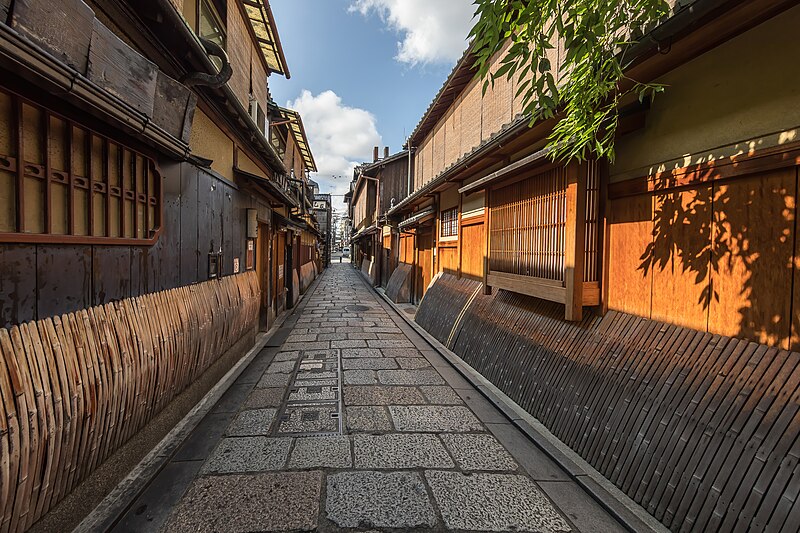
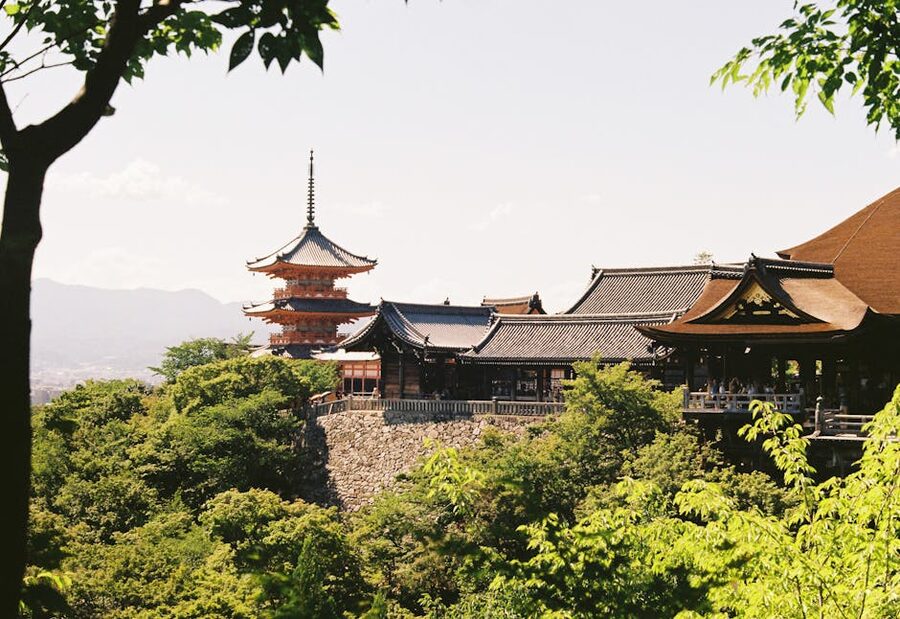
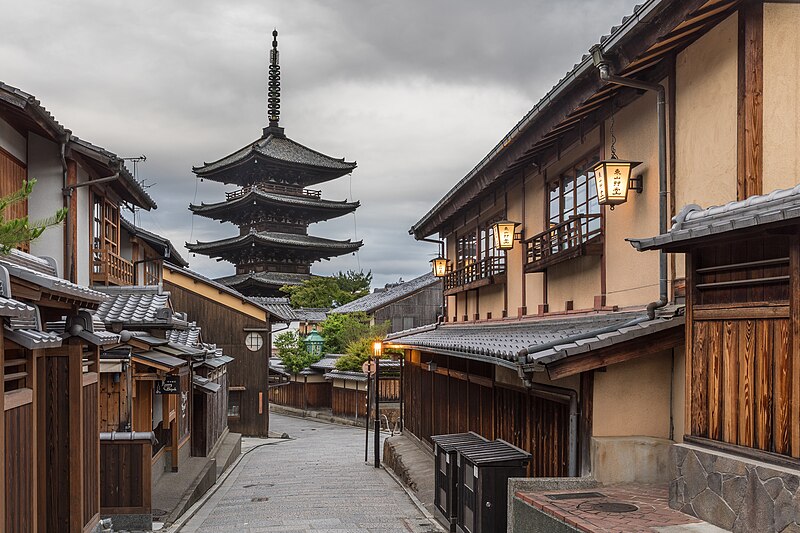
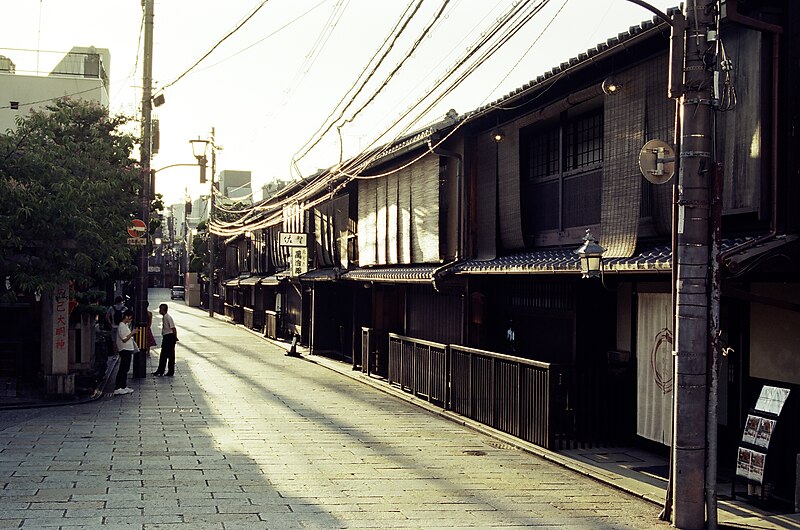
Pair this with a Gion geisha district walking tour for an unforgettable afternoon of old Kyoto. Gion is literally next door. If you book the late kenbu show, you can do the geisha walk first, grab dinner in Gion, then head to the theatre as the sun goes down.
Kenbu vs Other Kyoto Samurai Experiences
There’s a lot of “samurai” in Kyoto. Here’s how kenbu fits in.
Kenbu vs general samurai experiences: The broader samurai experiences focus on costume, philosophy, and basic sword handling. Kenbu zeros in on one specific art form — the dance — and shows you what mastery looks like. If you’ve already done a general samurai class, kenbu is the next step.
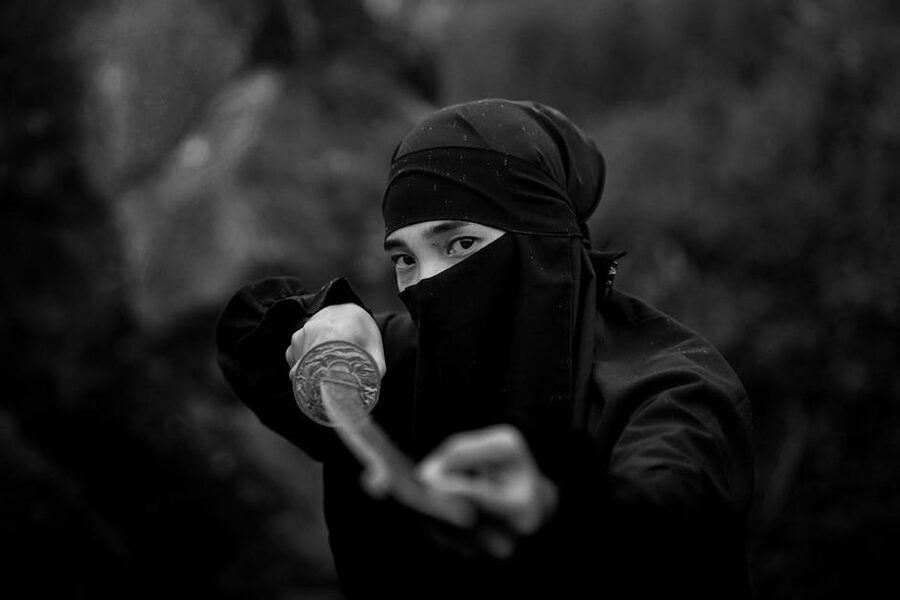
Kenbu vs kendo: Kendo is competitive sport — two people, bamboo swords, protective armor, scoring. Kenbu is solo performance art — one person, a real blade, poetry. They descend from the same samurai traditions but evolved in different directions. The kendo experience (option 3 above) is the sport version.
Kenbu vs Tokyo’s Samurai Ninja Museum: The Tokyo museum is hands-on and educational — you try on armor, hold weapons, watch short demonstrations, and learn the history in a guided tour format. It’s great for families and first-timers. Kenbu is more focused and performance-oriented. If you’re doing both cities, do the Tokyo museum first and the Kyoto kenbu show second.
Booking and Practical Tips
When to book: 1-2 days ahead for standard show seats. 3-5 days ahead for the hands-on experiences, which have smaller capacity. Weekends fill fastest.
Show times: Most days have a 16:15 show (door opens at 16:00) and occasionally an earlier or later slot. The hands-on experiences run longer and start earlier (around 14:00-15:00).
Photography: No photos during the performance itself. Photos absolutely allowed during the hands-on practice, during the costume session, and in the post-show photo op. The performers actively help you get good shots.
What to wear: Anything. If you’re doing the hands-on experience, they’ll give you the hakama and kimono to wear over your clothes. Wear socks — you’ll remove your shoes on the tatami mats.
Language: English narration during the show. English instruction during the hands-on. You don’t need any Japanese. The venue is used to international visitors.
Accessibility: The theatre is in a basement with stairs. Contact the venue directly for specific mobility needs.
Group size: Shows are under 40 people. Hands-on experiences are usually 6-12 per session. If you want a genuinely small group, book the early afternoon sessions on weekdays — they often have just 3-4 people.
Age: Suitable for all ages. Kids over 7 usually love it. Under 7 may find the 40 minutes of sitting still too long.
How to Get There
The Samurai Kenbu Theater is in Higashiyama-ku, Kyoto. Address details come with your booking confirmation.
From Kyoto Station: 15 minutes by taxi (~1,500 yen) or 25 minutes by bus (206 from Kyoto Station to Gion). The subway to Higashiyama Station puts you a 15-minute walk away.
From Gion: 10-minute walk. Make a day of it — do the Gion geisha walking tour in the afternoon, then walk over to the Kenbu Theater for the evening show.
From Nijo Castle: 20 minutes by taxi. A good pairing — Nijo Castle in the morning (where the shogun actually lived), kenbu in the evening (watching how his warriors trained).
A Perfect Kyoto Samurai Day
If you want to build a full day around samurai and traditional culture, here’s the sequence that works best.
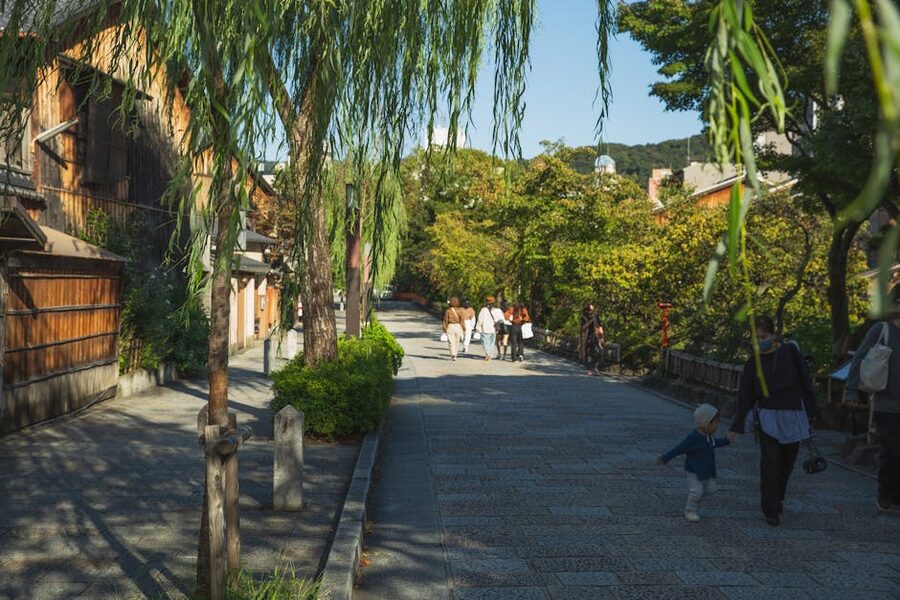
Morning: Kyoto early morning temple tour (6-9am). Starts before the crowds. You’ll see Kiyomizu-dera and Fushimi Inari when they’re quiet.
Mid-morning: Walk the Higashiyama district. Stop at Yasaka Shrine. The streets near the Kenbu Theater are at their best with morning light.
Lunch: Kaiseki or casual noodles in Gion. Nishiki Market food tour is 15 minutes away if you want more of a food experience.
Afternoon: Gion geisha walking tour. You’ll understand the geisha side of old Kyoto before you see the warrior side.
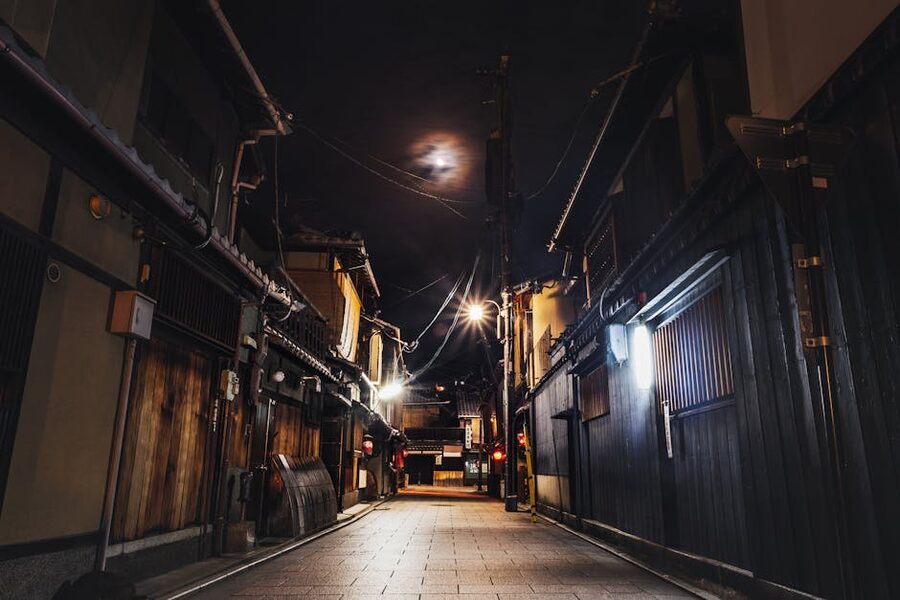
Evening: Kenbu show at 16:15. Dinner after the show in Pontocho or Gion. Kyoto night food tours if you want to keep going.
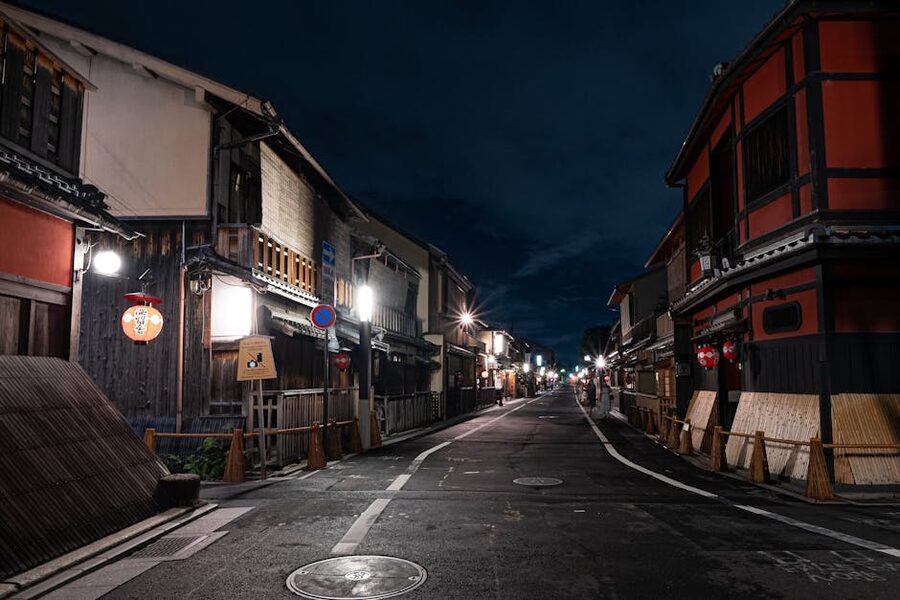
More Kyoto Experiences
Samurai kenbu is one piece of old Kyoto. From here, the tea ceremony is the calmest counterpoint — a warrior tradition expressed through silence and hot water rather than steel. Fushimi Inari’s thousand torii gates sit 15 minutes south by train. Arashiyama’s bamboo forest is on the west side of town for a morning half-day. And Nijo Castle — where the Tokugawa shogun actually ruled — is where all this samurai history started. For something completely different, the sake brewery tour explores the drink that fuelled samurai ceremonies for centuries, and cycling around Kyoto covers more ground than walking if you’ve only got one day.