
The woman behind the counter had been grilling mochi for 40 years. Same stall, same recipe, same spot in the market. She didn’t speak English and I didn’t speak Japanese, but she handed me a skewer of mitarashi dango — rice dumplings glazed with sweet soy sauce — and the look on her face said “eat this immediately, before it cools down.” She was right. It was perfect. And it cost 200 yen.
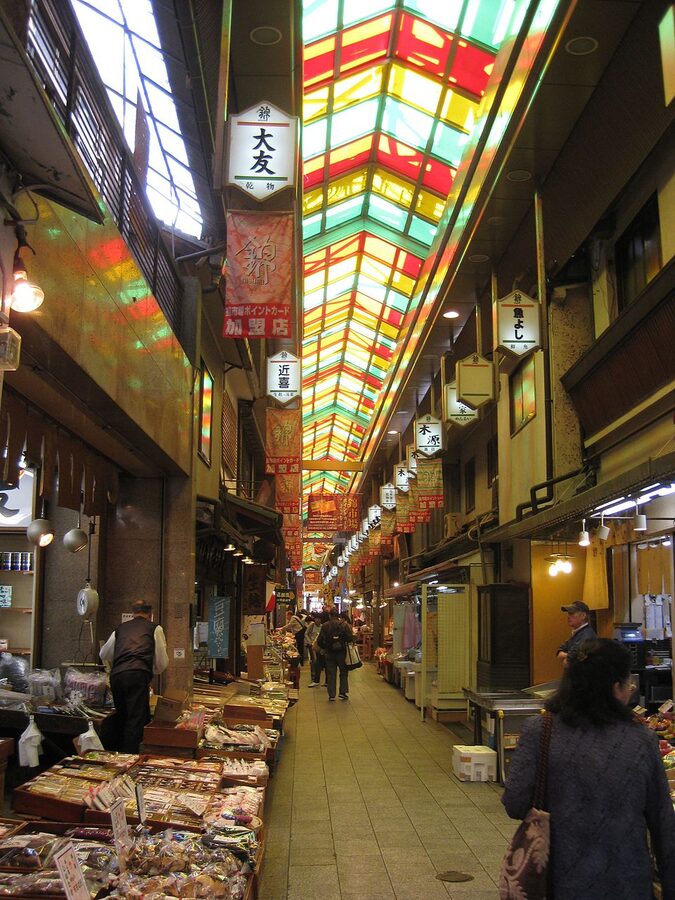
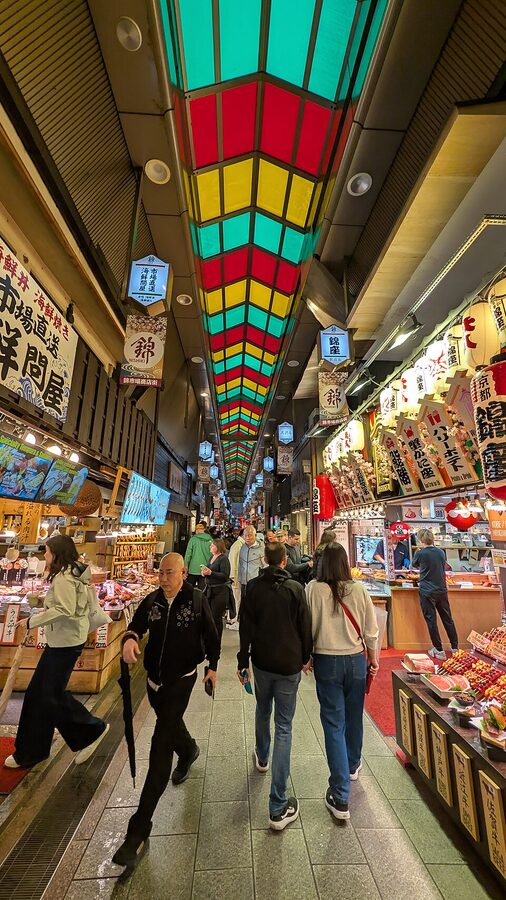
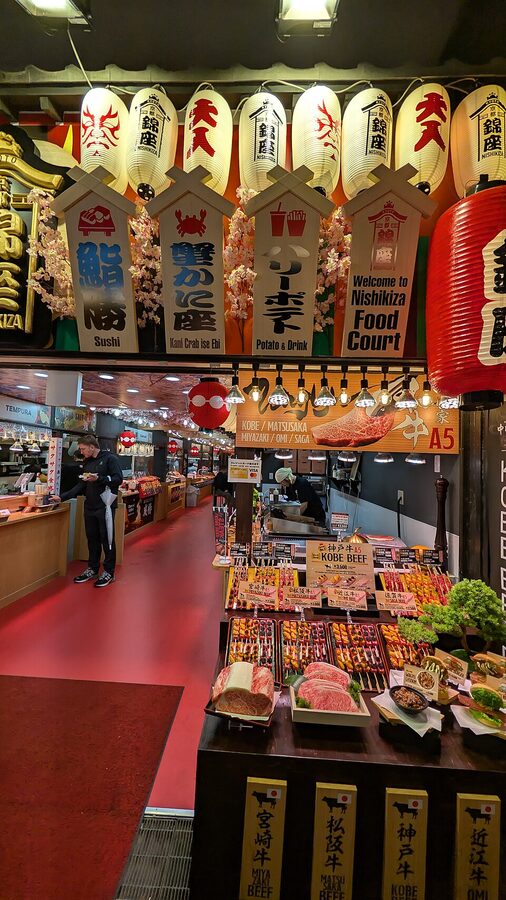
Nishiki Market is called “Kyoto’s Kitchen” and it has been earning that name for over 400 years. The covered shopping arcade runs five blocks through central Kyoto, packed with over 100 stalls selling everything from pickled vegetables and fresh tofu to grilled seafood on sticks and wagyu beef skewers. Every stall specialises in something. The pickle shop has been pickling for five generations. The knife shop has been sharpening since the Meiji era. The tofu shop makes it fresh every morning using water from the same well their great-grandfather used.
Walking through Nishiki on your own is overwhelming. The stalls look similar, the signs are in Japanese, and the sheer volume of food options creates decision paralysis. The food tours solve this by giving you a guide who knows every stall, what to try, and — just as importantly — what to skip.
Short on time? Here are my top picks:
Best overall: Nishiki Market Brunch Walking Food Tour — $68. Perfect 5.0 rating. Morning tour through the market with multiple tasting stops. The most popular option.
Food + culture combo: Nishiki Market Food & Cultural Walking Tour — $81. Extends beyond the market into Gion for a broader Kyoto food and culture experience.
- What You’ll Eat
- Which Tour to Book
- 1. Nishiki Market Brunch Walking Food Tour —
- 2. Nishiki Market Food & Cultural Walking Tour —
- 400 Years of Kyoto’s Kitchen
- Nishiki Tenmangu Shrine
- What to Buy (Not Just Eat)
- Nishiki vs Tsukiji — The Two Great Food Markets
- Seasonal Highlights at Nishiki
- How Nishiki Fits Into a Kyoto Day
- Practical Tips
What You’ll Eat
The food tours typically include 8-12 tastings across 5-7 stalls. Here’s what to expect:
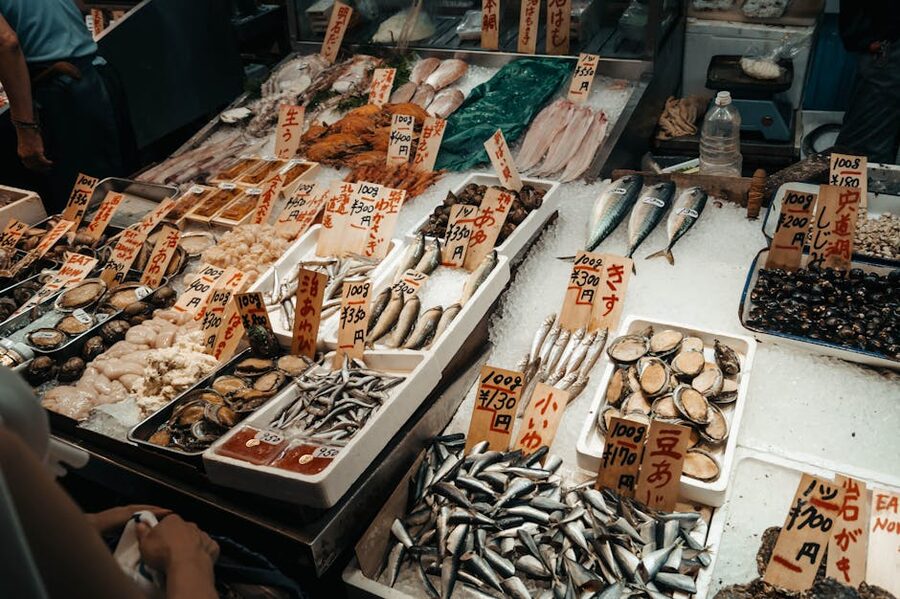
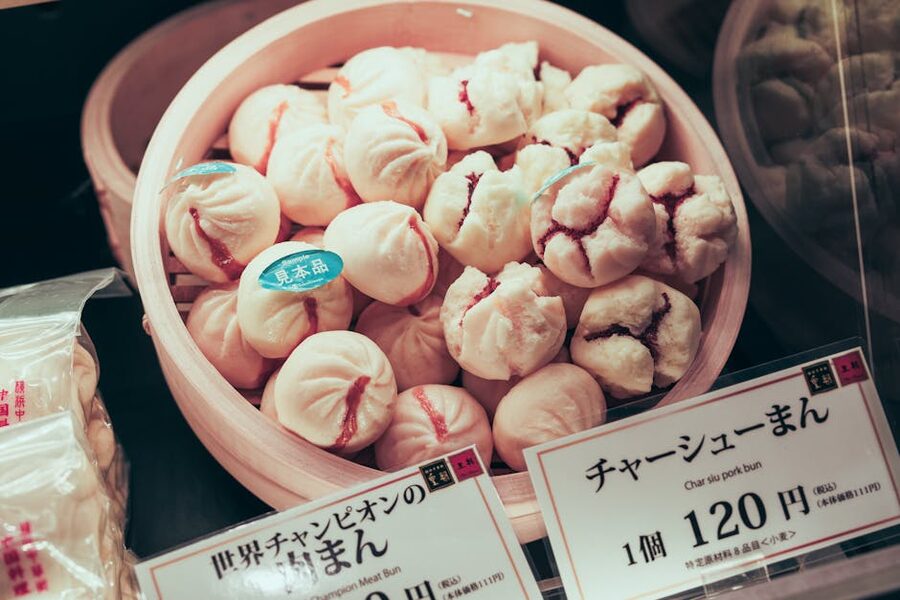
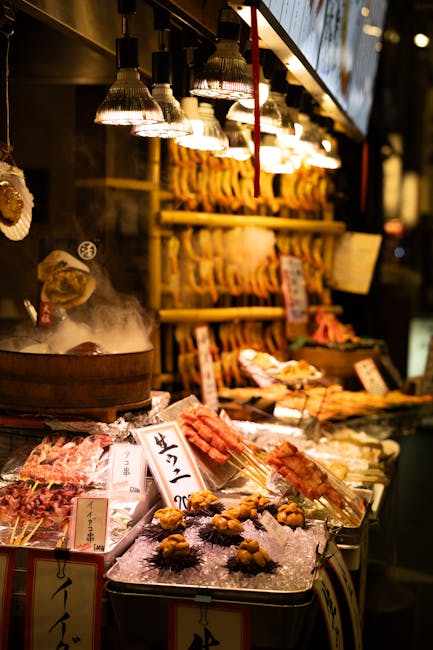
Tsukemono (pickled vegetables). Kyoto’s signature contribution to Japanese cuisine. The city has been pickling vegetables for over 1,000 years and the techniques here are noticeably different from the rest of Japan. Shibazuke — cucumbers, eggplant, and ginger pickled in red shiso leaves — is Kyoto’s own invention. You’ll taste several varieties and the guide will explain why Kyoto’s soft water produces a different fermentation than harder water elsewhere.
Yuba (tofu skin). When fresh soymilk is heated, a skin forms on the surface. That skin is yuba — and in Kyoto, where tofu-making is an art form, yuba is served fresh, creamy, and delicate. It tastes nothing like the dried version you might have had elsewhere. The Nishiki stalls serve it with a drop of soy sauce and wasabi.
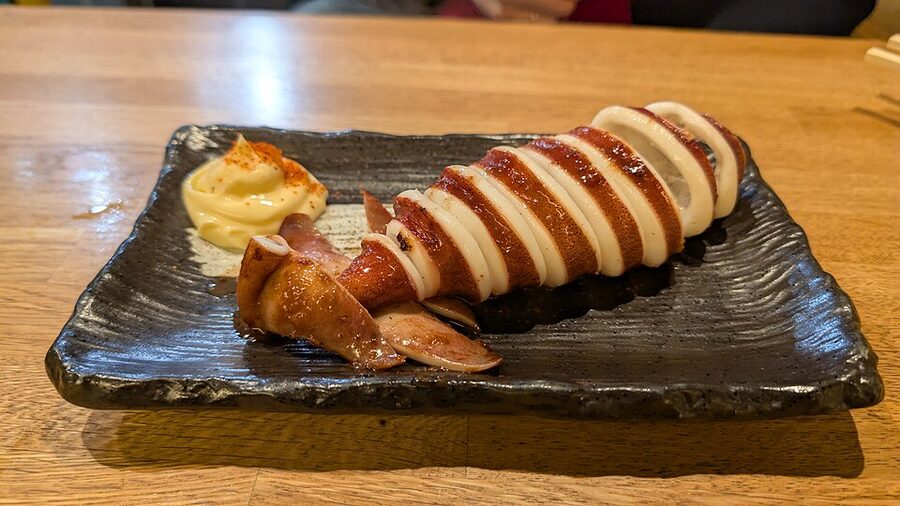
Dango (rice dumplings). Small glutinous rice balls on skewers, grilled and glazed. Mitarashi dango (sweet soy glaze) is the classic. Some stalls also sell matcha-flavoured and black sesame versions. At 200-300 yen per skewer, they’re the cheapest snack in the market and one of the best.
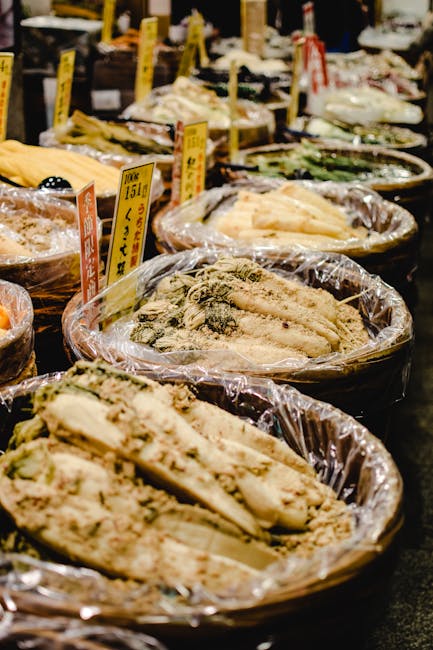
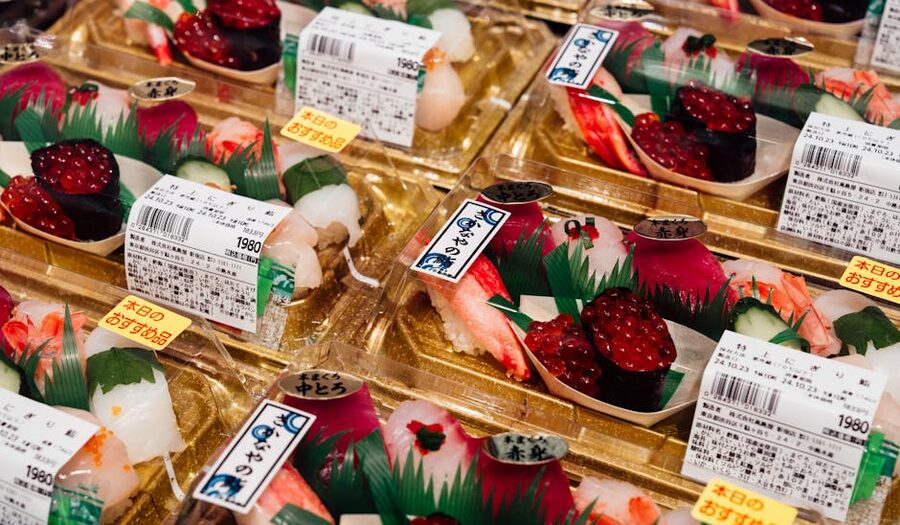
Fresh sashimi and sushi. Several Nishiki stalls sell sashimi by the piece — tuna, salmon, yellowtail, octopus — arranged on small wooden trays for 300-1,000 yen. The fish comes from Osaka’s central market every morning. The tour guides know which stalls have the freshest supply.
Matcha everything. Nishiki sits near the northern end of the Uji tea district’s supply chain, and matcha appears in forms you won’t see elsewhere: matcha soba noodles, matcha mochi, matcha soft-serve, matcha salt for tempura. The dedicated matcha stalls offer tastings of different grades — from cooking-grade to premium ceremonial.
Which Tour to Book
1. Nishiki Market Brunch Walking Food Tour — $68

The flagship Nishiki Market tour. At $68 per person for about 3 hours, a guide takes you through the market with stops at 5-7 stalls for tastings. The “brunch” format means it starts in the morning (typically 9 or 10am) and the food accumulates into a substantial meal — you won’t need lunch afterwards.
The perfect 5.0 rating across 1,350+ bookings is consistent with the operator (Magical Trip), who also run the Kyoto night food tours and the early morning temple tours. Our review covers the typical tasting lineup.
The morning timing is strategic — Nishiki gets crowded by 11am and some fresh items sell out by early afternoon. Starting at 9-10am means you hit the market when the stalls are fully stocked and the aisles are walkable.
2. Nishiki Market Food & Cultural Walking Tour — $81
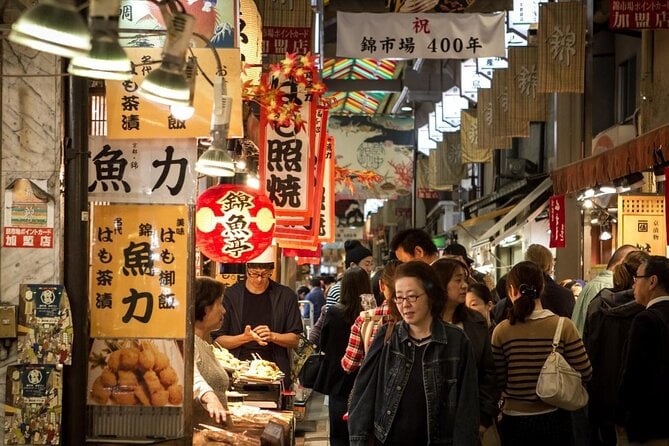
At $81 per person, this extends the market tour into a broader Kyoto food and culture experience. After Nishiki, the guide walks you through Gion — Kyoto’s historic geisha district — with food stops along the way. The total duration is about 3.5 hours.
The $13 premium over Tour 1 gets you the Gion extension, which adds cultural context that a pure market tour doesn’t cover. If you’re already planning to visit Gion separately (or if you’ve booked a Gion walking tour), stick with Tour 1. If this is your only day in Kyoto, the combined format is more efficient. Our review compares the two options.
400 Years of Kyoto’s Kitchen
Nishiki Market didn’t set out to be a tourist attraction. It started as a fish market. Kyoto sits inland, 50 kilometres from the nearest coast, and for a city that needed fresh seafood, reliable supply was a constant challenge. In the early 1600s, fish sellers began congregating along what is now Nishiki-koji street because the area had access to cold groundwater — natural refrigeration in an era before electricity.
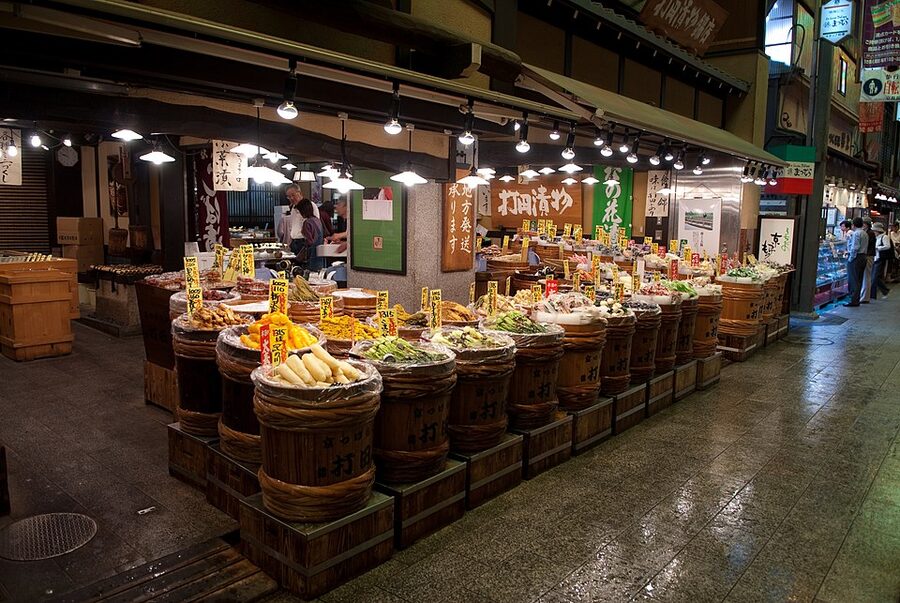
The groundwater was the market’s secret advantage. Wells along the street produced water cold enough to keep fish fresh for days — a significant competitive edge when the alternative was salt-curing or rapid consumption. By the mid-Edo period (1700s), Nishiki had evolved from a fish market into a full food market, adding vegetables, pickles, dried goods, tofu, and prepared foods. The fish sellers named it “Nishiki” (brocade) because the colourful displays of food reminded them of richly patterned fabric.
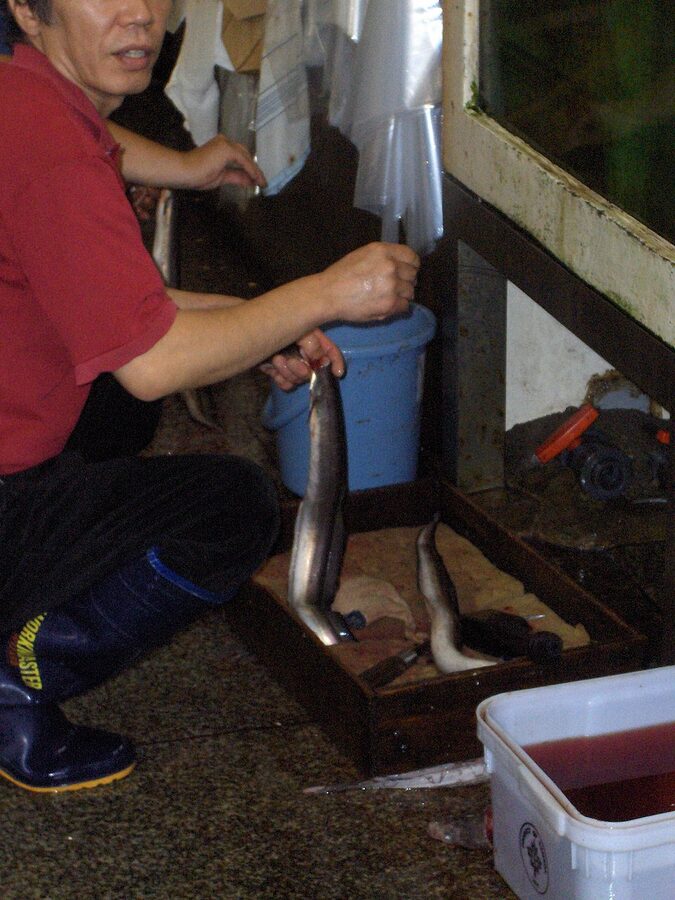
The market survived fires, earthquakes, two world wars, and the economic upheavals of modernisation. When supermarkets arrived in the 1960s and 70s, many predicted Nishiki would die. It didn’t — partly because the quality was genuinely better (the stall owners were specialists, not general retailers), and partly because Kyoto’s restaurant industry relied on Nishiki for ingredients that couldn’t be sourced elsewhere. The city’s kaiseki restaurants still send their junior chefs to Nishiki every morning to hand-select ingredients — a tradition that dates back to the market’s fish-selling origins.
Today about half of Nishiki’s trade is with locals and restaurants, and about half is tourist-driven. The balance works — tourist spending keeps the stalls profitable, while local trade keeps the quality honest. A stall that sells mediocre fish to travelers will lose its restaurant customers, and restaurant clients are worth far more per year than tourist impulse purchases.
Nishiki Tenmangu Shrine
At the eastern end of the market sits Nishiki Tenmangu Shrine — a small Shinto shrine dedicated to Sugawara no Michizane, the patron deity of learning and scholarship. It’s been here since 1003 AD, making it older than the market by about 600 years. The shrine’s torii gate is unique: it’s embedded directly into the building wall on either side, because the shops crowded in so close to the shrine over the centuries that there was no room for the gate’s pillars.
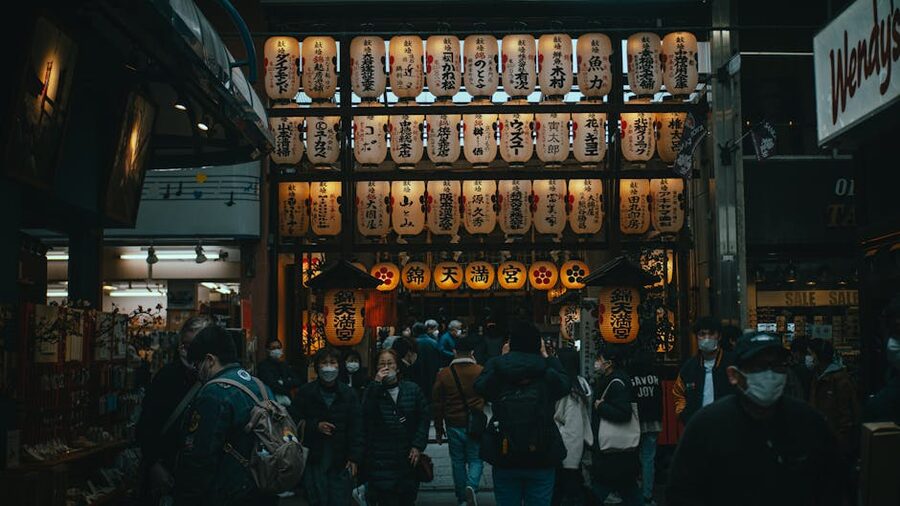
The shrine has a unique fortune-telling system. Instead of the usual paper slips, you lift a karakuri (mechanical) device that pops open a drawer with your fortune inside. Look for the stone cows near the entrance — rub the cow’s head for wisdom, its body for health. The water flowing through the shrine grounds comes from a natural underground spring. Locals fill bottles from the spout. Most market visitors walk straight past without realising the shrine is there. Don’t.
What to Buy (Not Just Eat)
Nishiki Market is not just a food tour destination — it’s one of the best places in Kyoto to buy edible souvenirs and kitchen items.
Japanese knives. Several Nishiki stalls specialise in hand-forged kitchen knives — a Kyoto tradition that goes back to the sword-making era. A good Japanese chef’s knife costs 8,000-30,000 yen at Nishiki (compared to 15,000-50,000 at department stores) and the quality is noticeably better than anything you’ll find outside Japan. The stall owners will sharpen your purchase to a mirror edge before wrapping it. Some shops even engrave your name in Japanese characters.
Tsukemono (pickles) for gifts. Vacuum-sealed packets of Kyoto pickles travel well and make unique gifts. Shibazuke (red shiso pickles) is the most distinctively Kyoto variety. Prices range from 400-1,500 yen depending on the type and size. They last weeks unopened.
Matcha powder. The matcha stalls sell grades ranging from cooking-quality (good for baking, about 800 yen per 30g tin) to premium ceremonial grade (for traditional tea ceremony, 3,000-5,000 yen per 30g tin). The stall owners will explain the differences and usually offer tastings. This is genuinely better quality than what you’ll find at airports or convenience stores.
Shichimi togarashi (seven-spice blend). Japan’s equivalent of chilli flakes, but more complex — typically containing chilli, sansho pepper, sesame, hemp seed, citrus peel, ginger, and seaweed. The Nishiki versions are freshly ground and you can customise the spice level. A bag costs about 500 yen and transforms any dish.
Chopsticks. Handcrafted chopsticks from Nishiki range from simple bamboo pairs (300 yen) to lacquered wood masterpieces (5,000+ yen). They pack flat, weigh nothing, and make excellent gifts. Some stalls offer engraving.
Nishiki vs Tsukiji — The Two Great Food Markets
If you’ve done the Tsukiji Fish Market food tour in Tokyo, you’re probably wondering how Nishiki compares. The answer: they’re different experiences that reflect different food cultures.
Tsukiji is primarily a seafood market with some general food stalls. The atmosphere is louder, faster, and more chaotic — it’s a working market that also serves travelers. The food is overwhelmingly fish-based: sushi, sashimi, grilled scallops, tamagoyaki (egg omelette).
Nishiki is a broader food market with a more diverse range. Seafood is present but shares space with pickles, tofu, vegetables, sweets, prepared foods, and kitchen equipment. The atmosphere is calmer and more browsable. Nishiki is a place to stroll and taste. Tsukiji is a place to eat fast and dodge delivery carts.
The food quality is comparable — both are top-tier. Tsukiji has better sushi and raw fish. Nishiki has better everything else. If you’re visiting both Tokyo and Kyoto (which most visitors do), do both markets. They’re different enough that neither substitutes for the other.
Seasonal Highlights at Nishiki
The market’s offerings change with the seasons, which is one of the things that keeps locals coming back.
Spring (March-May): Bamboo shoots (takenoko) appear in March and April — Kyoto’s are famous nationwide. Fresh bamboo shoots are sold whole, pre-boiled, or grilled on skewers at stalls. Sakura mochi (cherry blossom rice cakes wrapped in salted leaves) appear for about 6 weeks.
Summer (June-August): Hamo (pike conger eel) is Kyoto’s summer delicacy — served as sashimi, tempura, or in soup. Watermelon, peaches, and Kyoto’s tiny cucumbers dominate the vegetable stalls. Cold noodles (hiyashi somen) appear at prepared food stalls.
Autumn (September-November): Matsutake mushrooms — the most expensive mushroom in the world — appear in October. Domestic matsutake sell for 30,000-50,000 yen per kilogram but imported versions are more affordable. Persimmons, chestnuts, and autumn root vegetables fill the stalls.
Winter (December-February): Root vegetables dominate — Kyoto’s traditional winter cuisine relies heavily on daikon, turnip, and taro. Osechi ingredients (for New Year celebration meals) take over the market in late December. The pickle stalls expand their winter-specific offerings.
How Nishiki Fits Into a Kyoto Day
Nishiki Market sits in central Kyoto, which makes it easy to combine with other activities. The market opens around 9am and most stalls close by 5-6pm.
Morning combo: Early morning temple tour (6-9am) followed by Nishiki Market food tour (10am-1pm). This covers Kyoto’s two best experiences before lunch.
Afternoon combo: Nishiki Market for brunch, then walk north to Nijo Castle (15 minutes on foot), then a tea ceremony in the afternoon.
Full-day food crawl: Nishiki for brunch, sake brewery tour in the afternoon, Pontocho night food tour in the evening. You will eat more in one day than most people eat in three. Budget accordingly.
Practical Tips
Go in the morning. Nishiki Market opens around 9am (some stalls earlier, some later) and gets genuinely crowded by 11am. The food tours that start at 9-10am have the right idea. By early afternoon, some stalls begin closing as their fresh items sell out.
Bring cash. Most stalls are cash-only. Budget 2,000-3,000 yen for independent snacking on top of whatever the tour includes. ATMs at nearby convenience stores accept international cards.
The market is closed or reduced on Wednesdays and Sundays. Not every stall closes, but enough do that the experience is noticeably thinner. Check the day before booking.
Combine with other Kyoto food experiences. Nishiki Market in the morning, followed by a tea ceremony in the afternoon, and a night food tour through Pontocho in the evening gives you the complete Kyoto food experience in one day. The sake brewery tour also pairs well — several sake shops in Nishiki offer tastings, and the brewery tours go deeper.
Haggling doesn’t work here. Prices are fixed. This isn’t a flea market. Asking for discounts gets you a polite smile and the same price. The exception is the knife shops — if you’re spending over 20,000 yen on multiple knives, asking about a set price sometimes works.
Dietary restrictions. The food tours ask about allergies during booking. If you’re exploring solo, most stalls display ingredients in Japanese only. Vegetarians will find options — tofu, pickles, rice cakes — but the market leans heavily on seafood and dashi broth. The tour guides navigate around restrictions.
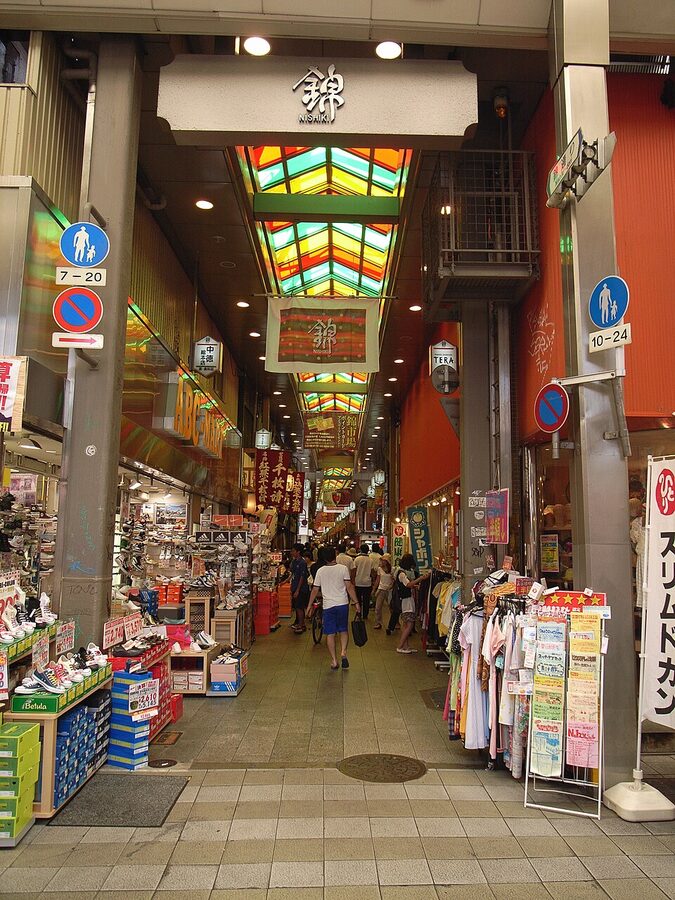
Location: Nishiki Market runs along Nishiki-koji street between Teramachi and Takakura streets. The nearest stations are Shijo (Karasuma Line) and Kyoto-Kawaramachi (Hankyu Line), both about a 5-minute walk. The market sits parallel to Shijo-dori, Kyoto’s main east-west shopping street — you can combine a market visit with general Kyoto shopping easily.
For other Kyoto guides, our Nijo Castle tour guide covers the castle that’s a 15-minute walk north, and the early morning temple tours are the perfect complement — temples before the market opens, then food at Nishiki. For a sit-down evening food experience rather than a morning graze, our Kyoto Gion food tour guide is the direct counterpart — Nishiki at lunch, Gion at dinner is the complete one-day Kyoto food pairing.