
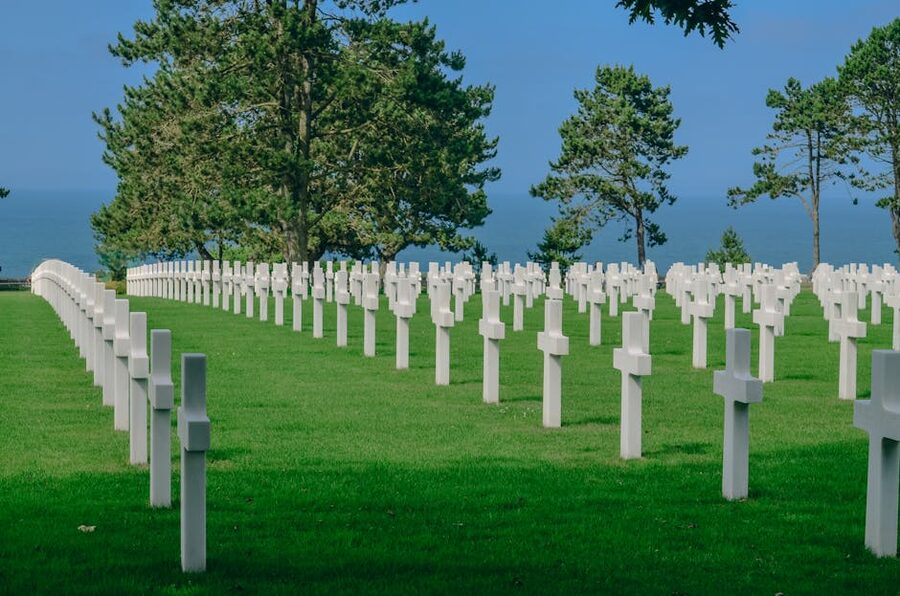
A friend of mine took her father, a retired history teacher, to Normandy two summers ago. He’d been waiting his whole life. She told me the moment they crested the path above Omaha Beach and looked down at the cemetery, he just stopped walking. Didn’t say a word for about ten minutes. That’s the trip, basically. You can read every book on D-Day, watch every documentary, but standing on that cliff and looking at 9,388 white crosses lined up in the grass changes something in you.
This guide covers the day-trip version of that experience: leaving Paris early, hitting the key sites, getting back the same night. It works. But there are tradeoffs, and I’ll flag them as we go.
In a Hurry? Top 3 D-Day Tours from Paris
- Best value (massive following): Normandy D-Day Landing Beaches Day Trip with Cider Tasting & Lunch — about $121 per person. Hits Utah Beach, Omaha Beach, Pointe du Hoc, the American Cemetery, plus lunch and cider in a coastal village.
- Best small-group experience: Small-Group D-Day Day Trip with Omaha Beach, Cemetery & Cider Tasting — about $320 per person. Maximum eight travellers, the Overlord Museum is included.
- Quieter alternative: D-Day Beaches and American Cemetery Day Trip — about $207 per person. Often books up later than the others, good if the top two are sold out for your dates.
- In a Hurry? Top 3 D-Day Tours from Paris
- What you actually get out of a day trip
- The three tours from Paris worth booking
- 1. Normandy D-Day Landing Beaches Day Trip With Cider Tasting & Lunch — about 1
- 2. Normandy D-Day Small-Group Day Trip With Omaha Beach, Cemetery & Cider Tasting — about 0
- 3. Normandy D-Day Beaches and American Cemetery Day Trip from Paris — about 7
- Why these three and not the others
- Where the tours actually take you
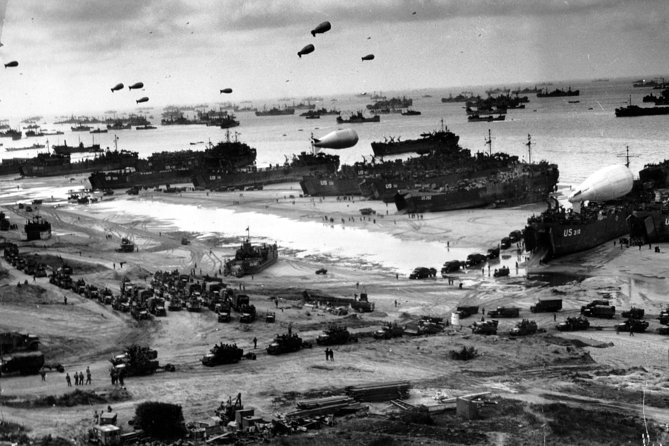
- Omaha Beach
- Normandy American Cemetery, Colleville-sur-Mer
- Pointe du Hoc
- Utah Beach (most tours)
- The bunkers and battery you’ll probably visit too
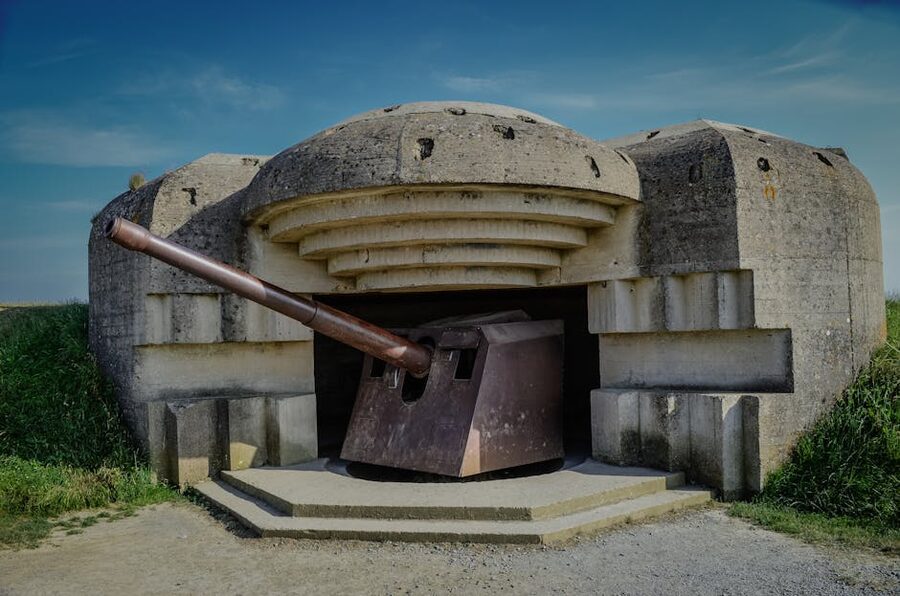
- Longues-sur-Mer Battery
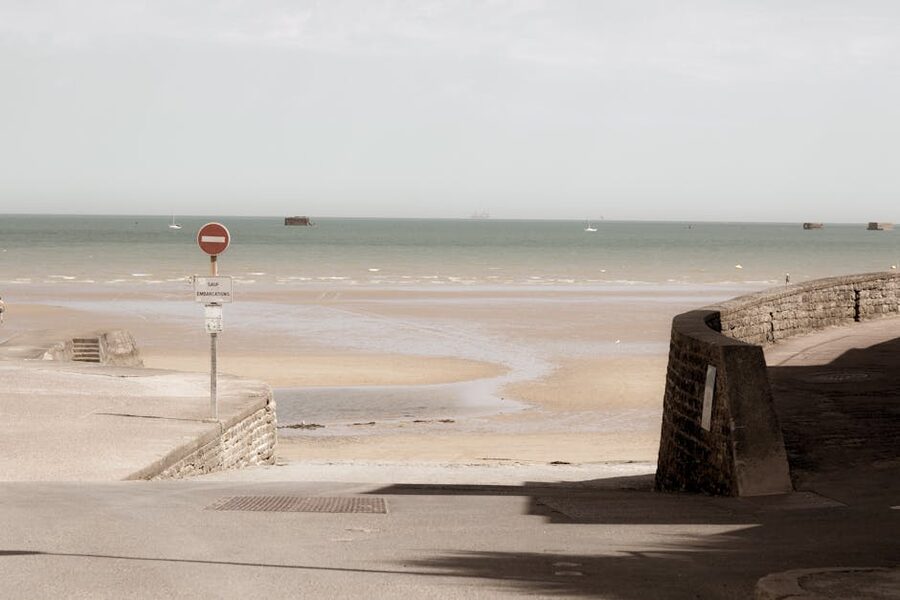
- Arromanches and the Mulberry Harbour
- Practical stuff people miss
- Pegasus Bridge — sometimes included, worth knowing about
- Sainte-Mère-Église — for the airborne story
- Should you stay overnight in Normandy instead?
- The Caen Memorial — best D-Day museum, but tight on a day trip
- What you’ll see and feel that nobody photographs
- If you’re combining Normandy with other Paris excursions
- Booking timing — when prices and availability shift
- One last thing about emotional weight
- While you’re planning Paris
What you actually get out of a day trip
I’ll set expectations first. A day trip from Paris to Normandy is a 14-hour day. You’re on a coach for roughly six of those hours. The remaining time is split across four or five sites, which means about an hour at each, sometimes less. It’s enough to see the major beaches and walk the cemetery. It’s not enough to read every plaque at the Overlord Museum or sit alone on Omaha for an hour.
If you only have one extra day in Paris and you want to see Normandy, this is the right call. If you have two days and a real interest, basing yourself in Bayeux is much better — more on that further down. There’s no shame in either choice, but going in with the right expectations matters.
Most tours leave central Paris between 6:45 and 7:15 in the morning. The drive to the first site is around three hours, with a coffee and bathroom stop somewhere on the A13 motorway. You’ll get back to Paris between 9 and 10 pm. Eat a real breakfast before you go. You will be hungry by 11.
The pickup points cluster near the major Paris landmarks. The cider-tasting tour meets near the Pyramides metro station; the small-group runs from near the Arc de Triomphe; the CityVision option from rue Auber near Opéra Garnier. Stay within a 10-minute walk of those areas the night before and you’ll save yourself a stressful 6am metro ride.
The three tours from Paris worth booking
I’ve narrowed this down to three. Below the picks I’ll explain why I left certain options off, and then we’ll cover the sites themselves.
1. Normandy D-Day Landing Beaches Day Trip With Cider Tasting & Lunch — about $121
This is the one with nearly seven thousand reviews and a perfect rating, and it earned them. Our full review goes deep on what’s included, but the short version is: it’s the most popular Normandy tour from Paris because it covers the most ground for the lowest price. The catch is the group size — up to 50 people on a coach. You’ll feel the herd at the Utah Beach Museum entrance.
2. Normandy D-Day Small-Group Day Trip With Omaha Beach, Cemetery & Cider Tasting — about $320
The cost is more than double the budget option, but you’re paying for a fundamentally different experience. Our review of this small-group day trip walks through what changes when you cap the group at eight — guides actually answer questions properly, and the Overlord Museum visit doesn’t feel rushed.
3. Normandy D-Day Beaches and American Cemetery Day Trip from Paris — about $207
It’s run by Paris CityVision, which has been doing this run for decades. You can read our take on the CityVision day trip for the full breakdown. The 4.5-star rating tracks — the lunch stop has had mixed feedback, but the route hits all the headline sites and the guides know their stuff.
Why these three and not the others
There are private tours from Paris running $2,000+ for a small group. They’re great if you can split the cost across six people, but for solo travellers and couples the math falls apart. Most luxury private tours don’t visit any sites the small-group tour doesn’t already cover — you’re paying for the car, not for unique access.
I also skipped the overnight tours. They’re a different product — if you’re going overnight, you’re better off taking the train to Bayeux yourself and booking a local guide there. You save money, and you get a real evening in town instead of a hotel restaurant somewhere.
The Canadian-focused tours from Paris are excellent if you have specific interest in Juno Beach. But for a first visit, the American sites tour above gives you a more complete D-Day overview because the Allied story was largely an American operation on this stretch of coast.
Where the tours actually take you
Every Paris-departing tour I trust hits the same core sites. The order changes based on traffic and tide, but the list is consistent. Here’s what you’re seeing.
Omaha Beach
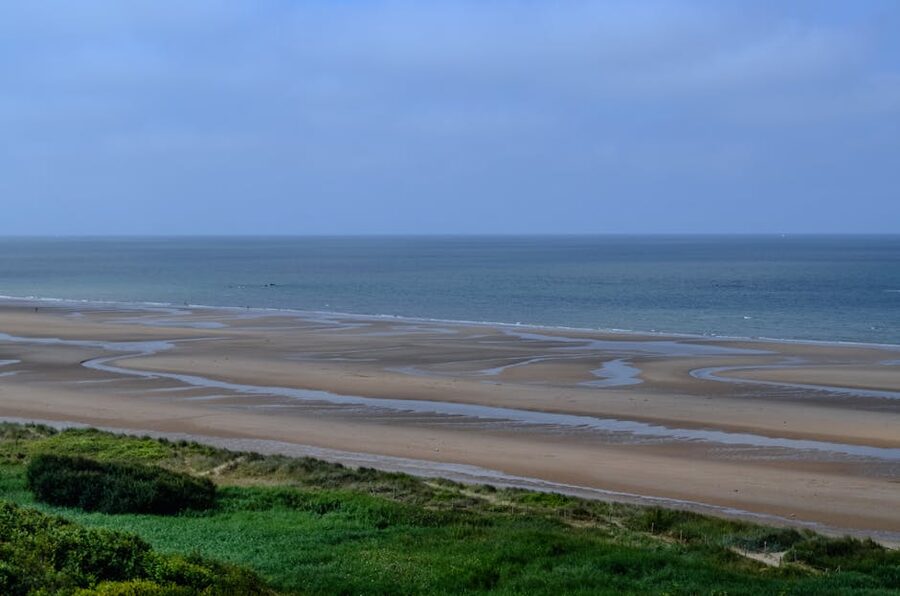
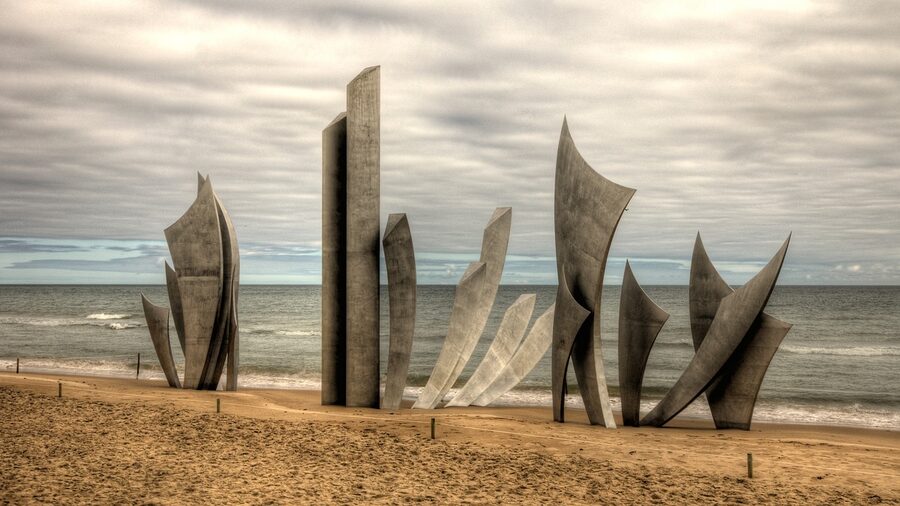
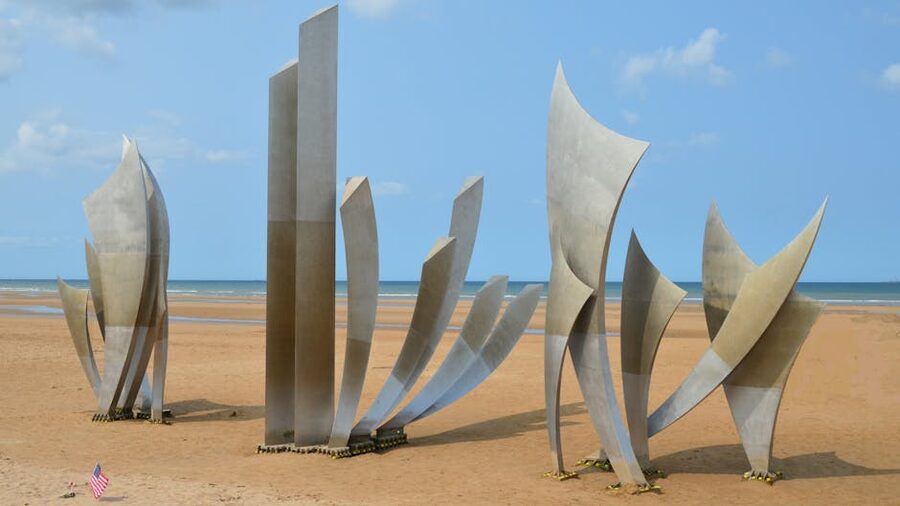
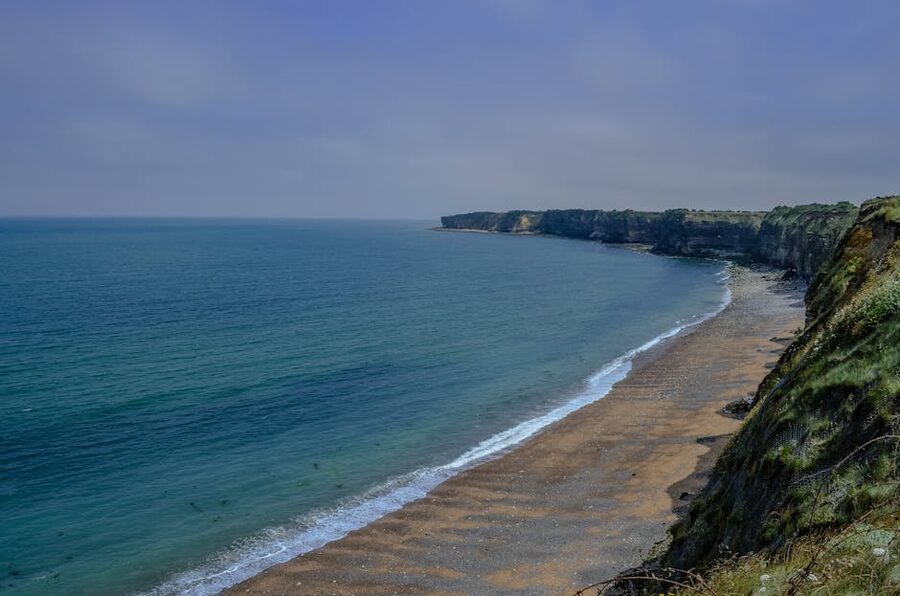
This is the one everyone comes for. The largest of the five Allied landing sectors, and the bloodiest by a wide margin — over 2,000 American casualties on the morning of June 6, 1944. Standing on the sand, you’re looking at the same view the soldiers had, except in reverse. The bluffs above are where the German MG-42 nests were dug in.
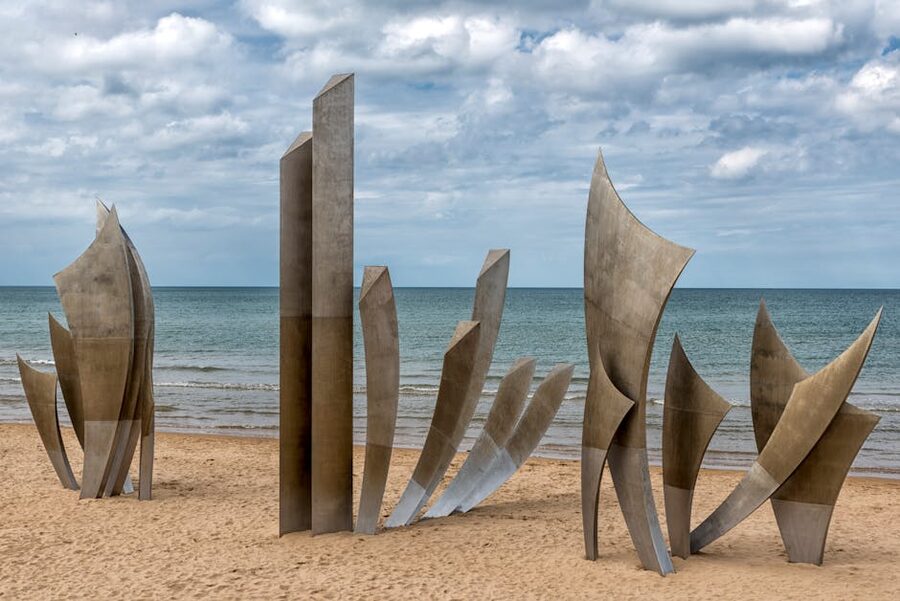
Tours generally drop you at Saint-Laurent-sur-Mer, near the Monument des Braves. You’ll get 30 to 45 minutes here. Walk down to the water if the tide allows — touching the sand matters more than I can explain. If it’s grey and drizzling, lean into it. The weather on the actual D-Day was worse.
Normandy American Cemetery, Colleville-sur-Mer
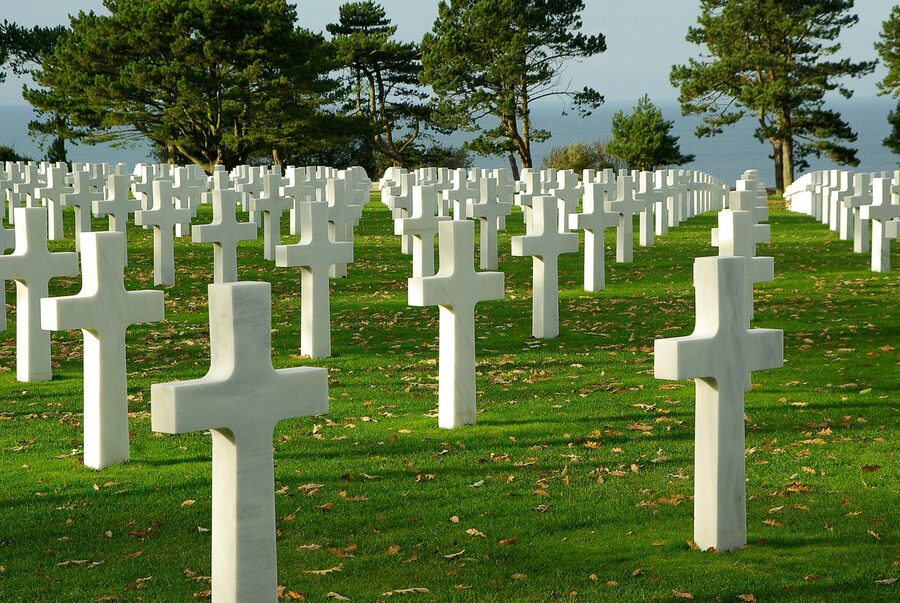
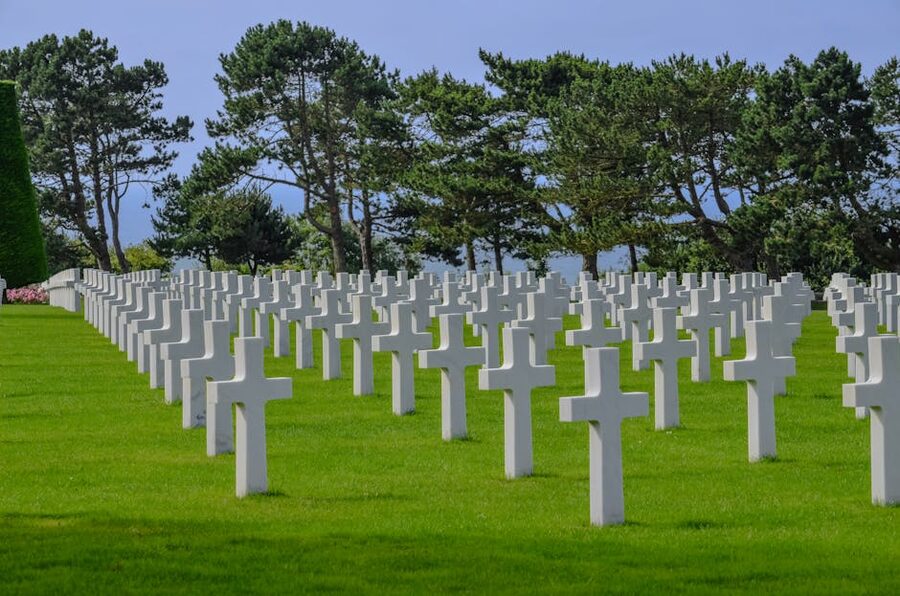
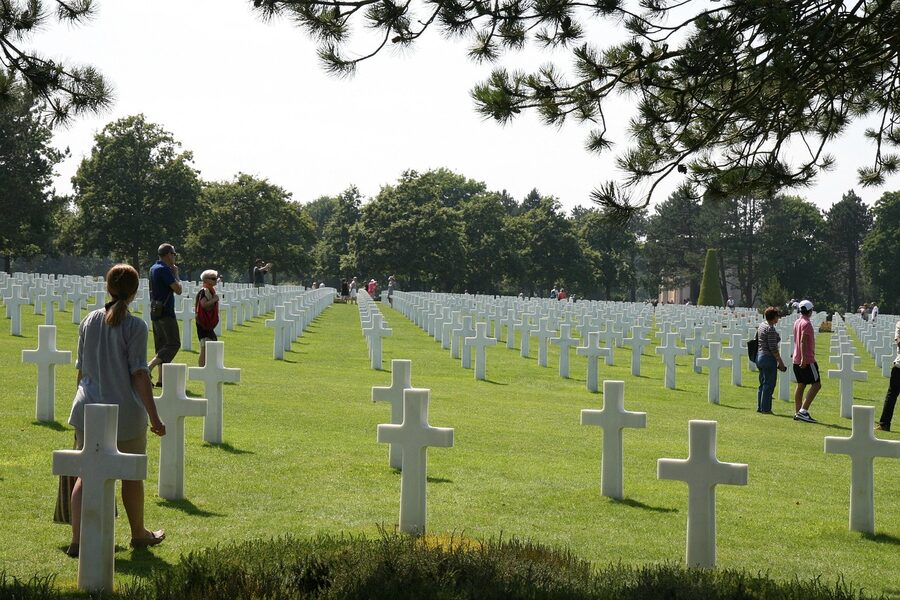
The cemetery sits on a 172-acre bluff that the United States holds in perpetuity, granted by the French government in 1956. There are 9,388 graves, plus the Walls of the Missing listing another 1,557 names. This is also the cemetery from the opening and closing scenes of Saving Private Ryan. If the war-memorial side of the trip is what hooked you, check out our guide to Les Invalides in Paris as a complement — it covers the broader French military history through the same period.
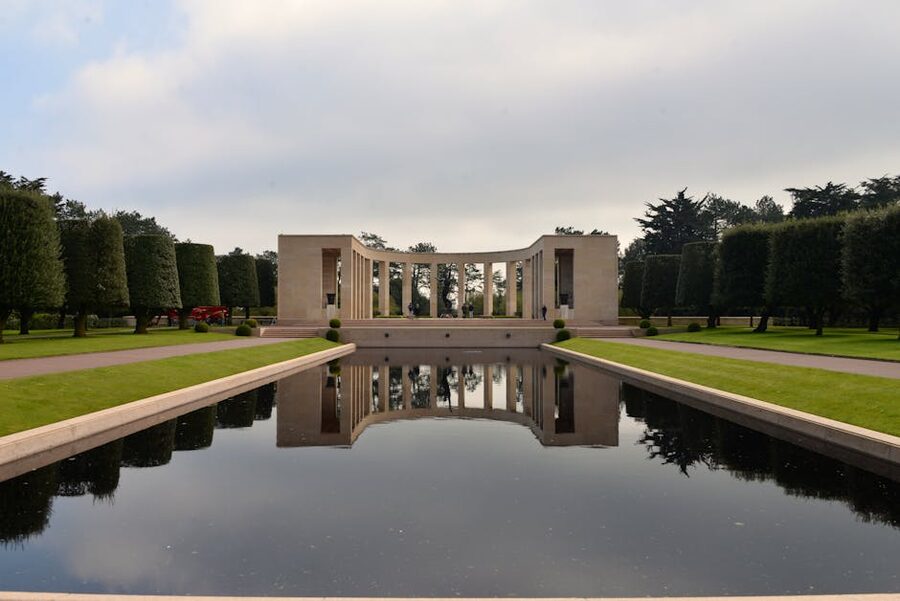
The visitor centre, opened in 2007, is genuinely good. The exhibits walk through D-Day operations and personal stories of soldiers buried in the cemetery. You’ll have about an hour here total. Spend at least 20 minutes just walking the grave rows. Find a name from your home state — there’s almost certainly one. It makes the abstract personal.
Practical note: there’s a security check at the entrance with a no-bag policy similar to airport screening. If you’ve got a daypack, you’ll need to leave it on the bus or stash it in a small locker. Bring a thin layer — the bluff catches sea wind even in July.
Pointe du Hoc
The cliff face the US Army Rangers scaled with grappling hooks and rope ladders under direct German fire. Lieutenant Colonel James Earl Rudder led 225 men up the rock; about 90 made it through the next two days of fighting. The site was bombed and shelled so heavily before the assault that the moonscape of craters is still visible — the entire surface is pockmarked.
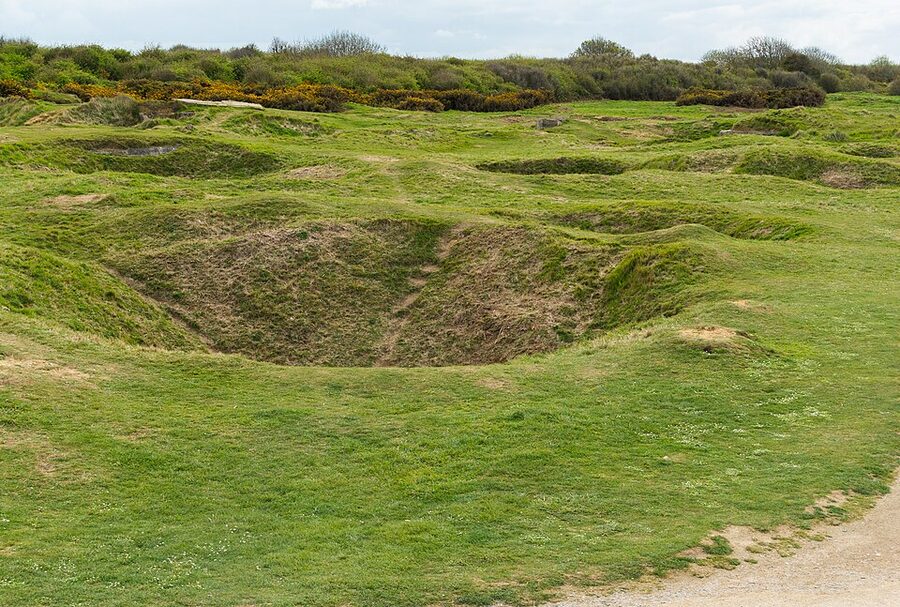
You can climb down into the original German bunkers and walk along the cliff edge. There’s no railing in places. Watch kids carefully. The drop to the sea is around 100 feet straight down — which is precisely what the Rangers climbed up.
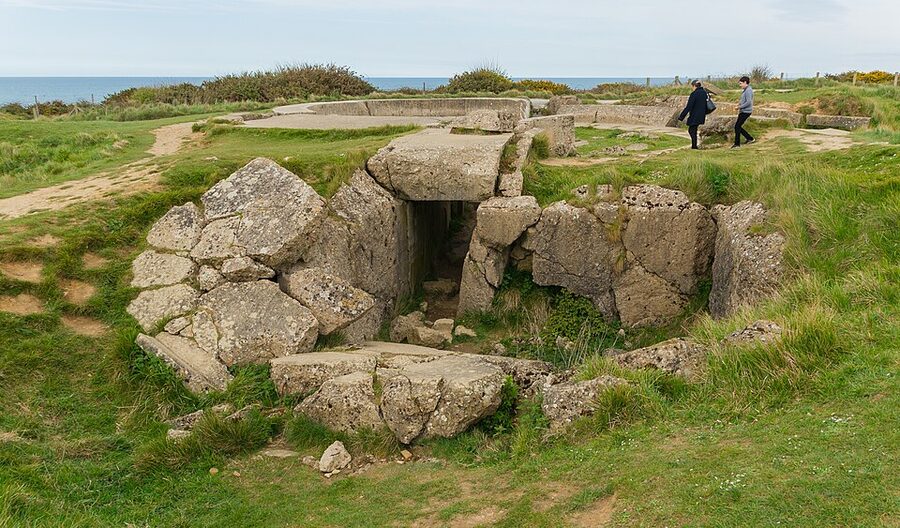
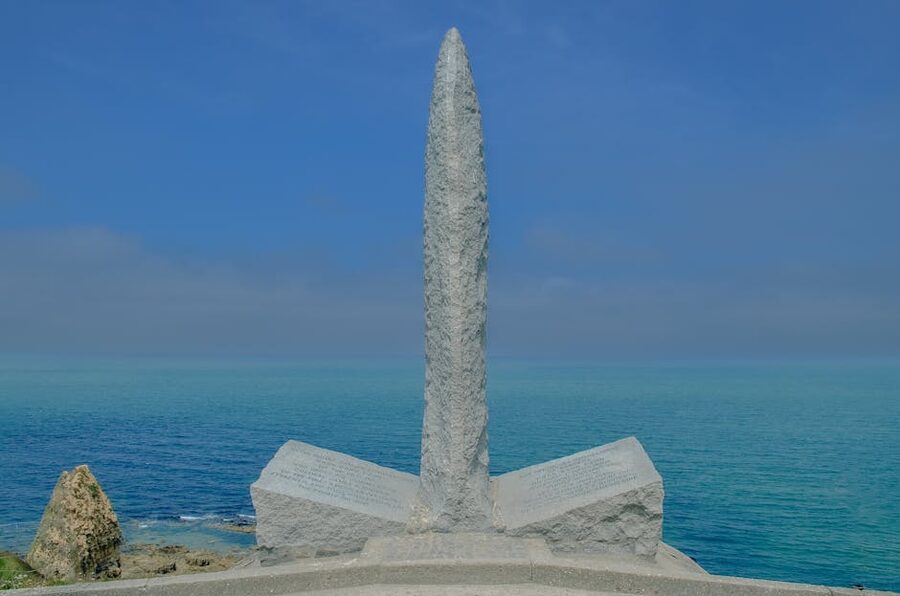
The Pointe du Hoc Ranger Monument at the cliff edge is a granite dagger pointing up. Allied bombing in the lead-up to the invasion missed the actual gun emplacements, which had been moved inland — the Rangers found mostly empty bunkers when they reached the top. They located the moved guns later that day in a hedgerow and destroyed them anyway. Most tours give you 45 minutes here. It feels short.
Utah Beach (most tours)
The westernmost of the five landing sectors, and the one where the airborne divisions linked up with the seaborne forces. Casualties were much lower here — the 4th Infantry Division landed on a stretch of beach the Germans had effectively abandoned, partly because tides and currents pushed the landing craft off course in their favour.
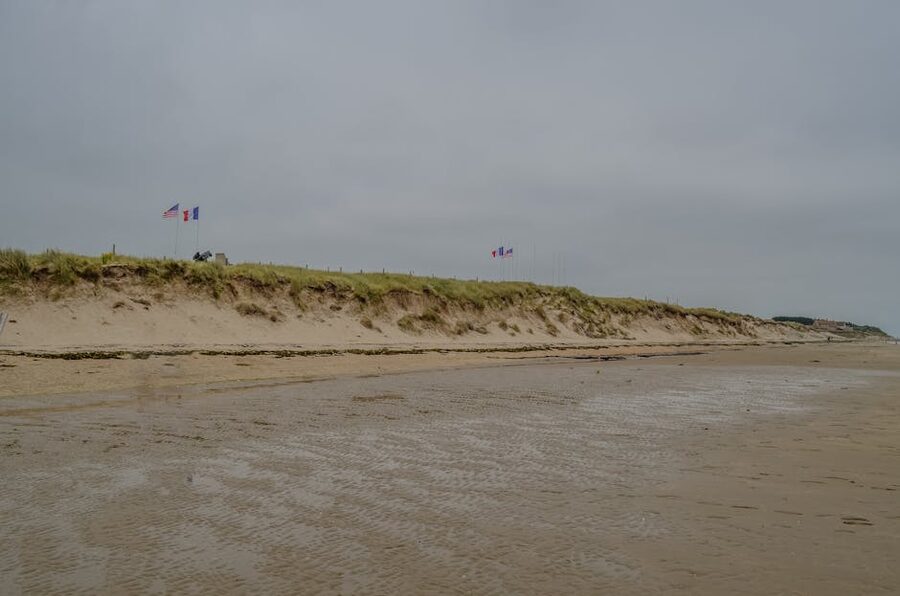
Not every Paris day trip includes Utah. The flagship cider-tasting tour does, the small-group tour usually does. Some shorter routes drop it for time. If you’ve got a strong family connection to a specific division, check the itinerary before you book — the 4th Infantry came in here, the 1st and 29th came in at Omaha.
The bunkers and battery you’ll probably visit too
Beyond the headline beaches, most full-day tours work in one or two of the German fortifications. They matter — they’re what the Allies were attacking, and they’re some of the most photogenic stops on the day.
Longues-sur-Mer Battery
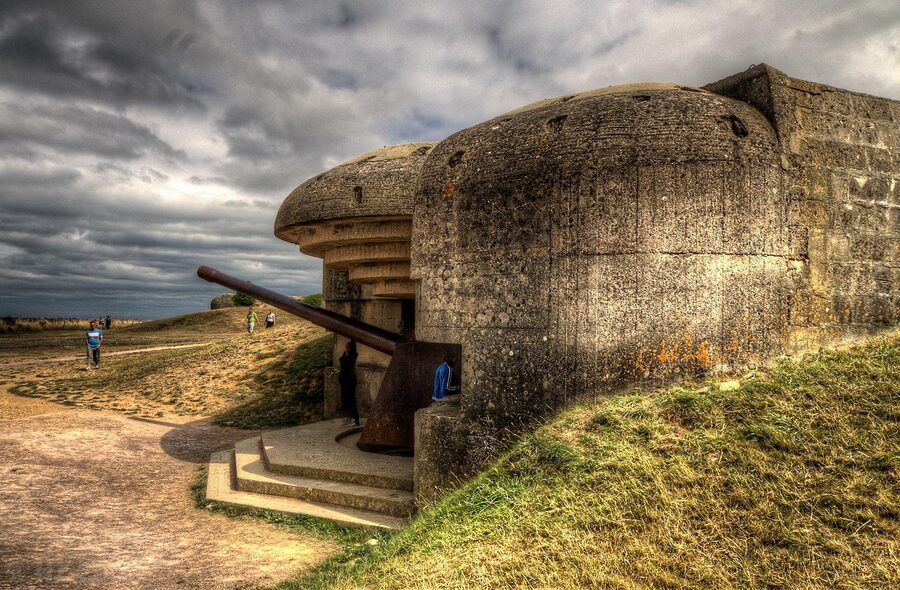
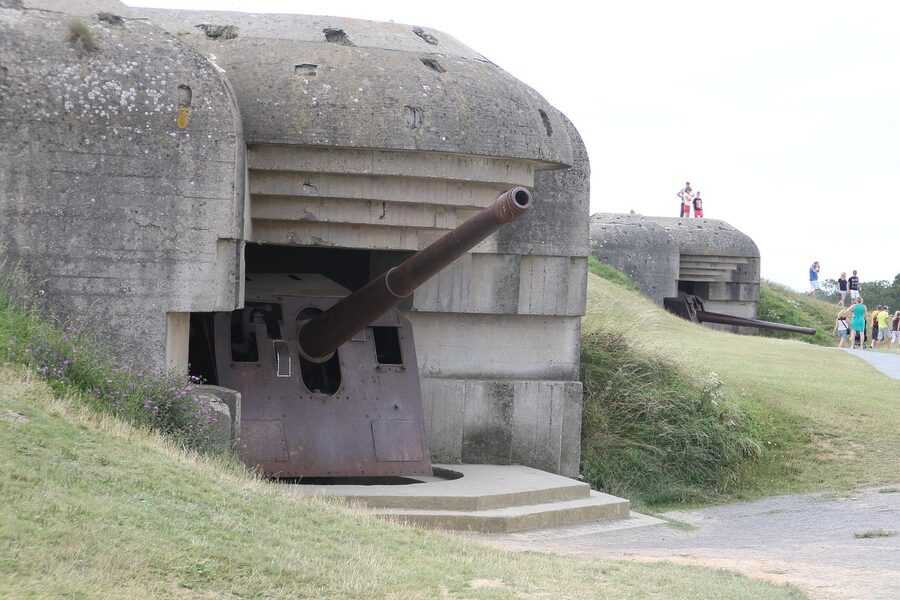
The only D-Day battery where you can still see the original German guns in their casemates. Four 150mm naval cannons, three of them still in working position. The fourth was shifted by the Allied naval bombardment on June 6 and never put back — you can see the damage on the concrete.
Arromanches and the Mulberry Harbour
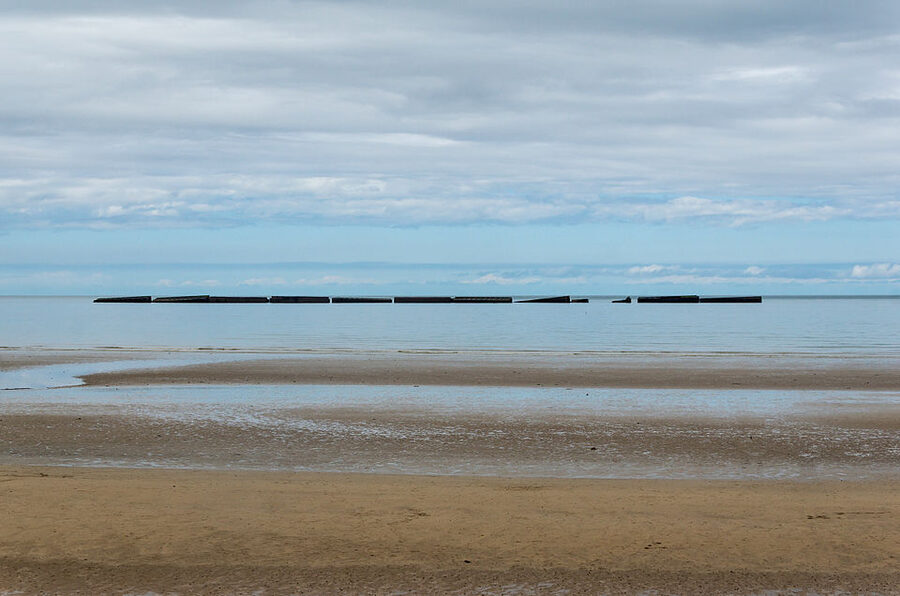
This is one of the most extraordinary engineering feats of the war. The Allies, knowing they couldn’t capture a working port immediately, built one. Massive concrete caissons (called Phoenix units) were towed across the Channel and sunk in a horseshoe pattern off Arromanches to create an artificial harbour. Within days, vehicles, fuel, and men were flowing in over floating piers.
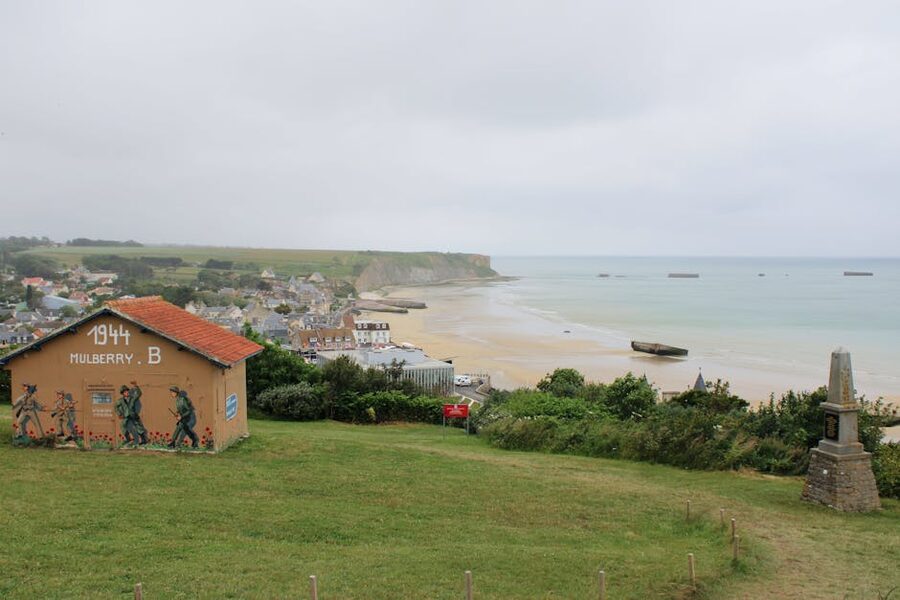
The town of Arromanches itself is small but lively. Most coach tours stop here for lunch or for the cider tasting because there’s parking, restaurants, and the views over the bay are immediate. The 360° Cinema on the cliff above town shows archive D-Day footage — it’s not always included in tour tickets but worth the eight euros if you have time.
Practical stuff people miss
A few things that make the day better, that the booking page won’t tell you.
Pack layered. The Normandy coast catches Atlantic weather even in July. I’ve been there in 28°C sun and in horizontal rain in the same week. Bring a windbreaker. The cemetery and Pointe du Hoc are both exposed sites — the wind cuts.
Cash for tips. Tour guides on these day trips work hard and earn modestly. Five to ten euros per person is standard if the guide was good. Have it on you — there are no ATMs at the sites.
Small daypack only. The American Cemetery has a security checkpoint that’s strict about bag size. Anything larger than a small handbag may need to go back to the bus. A folded tote bag in your pocket works for picking up snacks during the day.
Phone chargers. Most coaches have USB ports under the seats but they don’t always work. Bring a power bank if you plan to take a lot of photos, navigate, or use audio guides on your phone. The full day eats battery.
Eat lunch even if you’re not hungry. The included lunches on the cider-tasting tours are simple — galette, cider, sometimes a tart. Eat anyway. The afternoon at the cemetery and Pointe du Hoc is emotionally tiring and you don’t want to do it on an empty stomach.
The bathroom situation. Stops are spaced out. Use the cafe in Arromanches or the visitor centre at the cemetery. Pointe du Hoc has facilities at the entrance but they’re sometimes closed in winter. Don’t rely on bus toilets — most coaches have them but they’re locked off for road segments to keep the smell down.
Pegasus Bridge — sometimes included, worth knowing about
Pegasus Bridge isn’t on every Paris itinerary, but it shows up on the longer small-group tours and on routes that include the British/Canadian beaches. It was the first objective taken on D-Day — captured by British glider troops at 16 minutes past midnight, more than five hours before the seaborne landings.
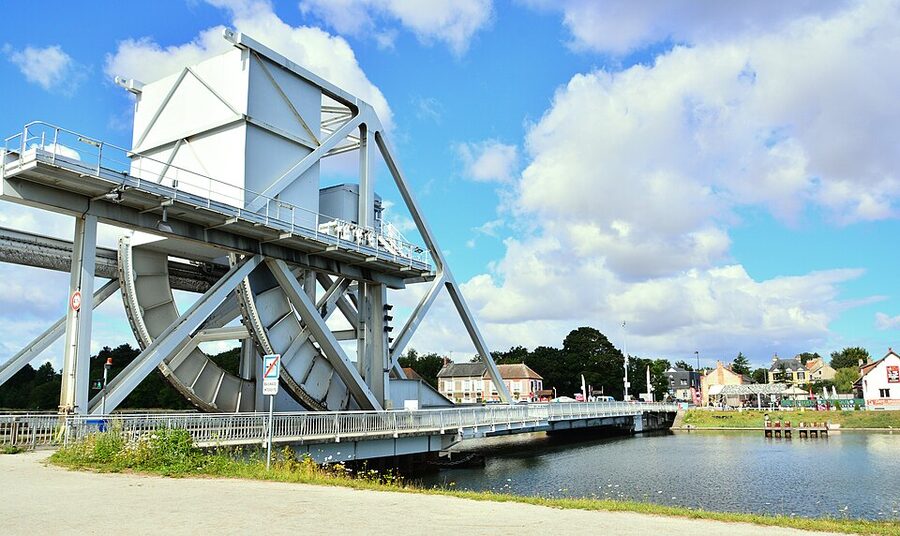
If your tour stops here, take the time to read the plaques about Major John Howard and the Ox and Bucks. The story of three Horsa gliders landing within yards of the target in pitch darkness is one of the most impressive military operations of the entire war. There’s a small museum next to the bridge with the original aircraft fragments.
Sainte-Mère-Église — for the airborne story
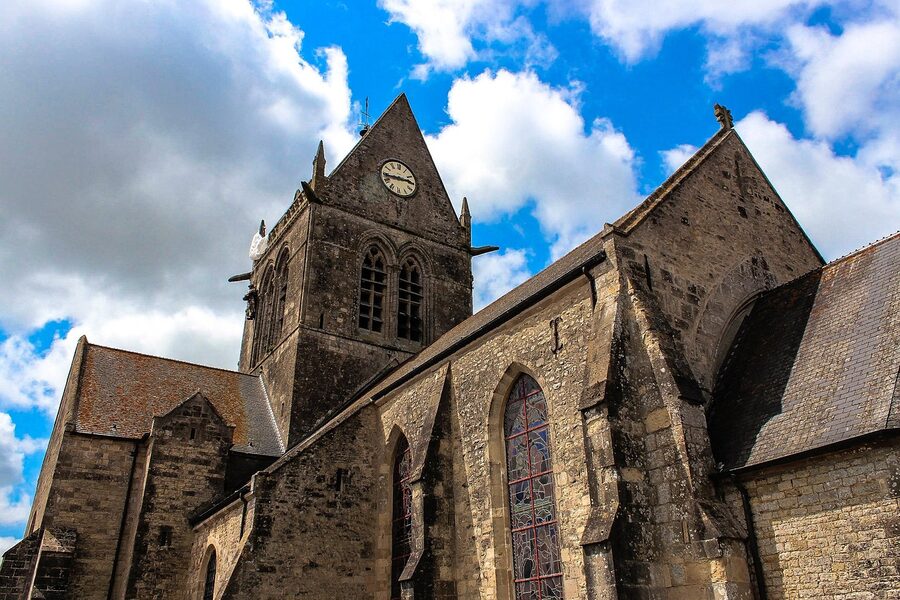
Another stop that comes and goes from itineraries. This is the village where US paratroopers from the 82nd and 101st Airborne landed in the night of June 5-6, before the beach landings. The famous incident: Private John Steele’s parachute caught on the church spire and he hung there for two hours, playing dead, while the fighting raged below. He survived.
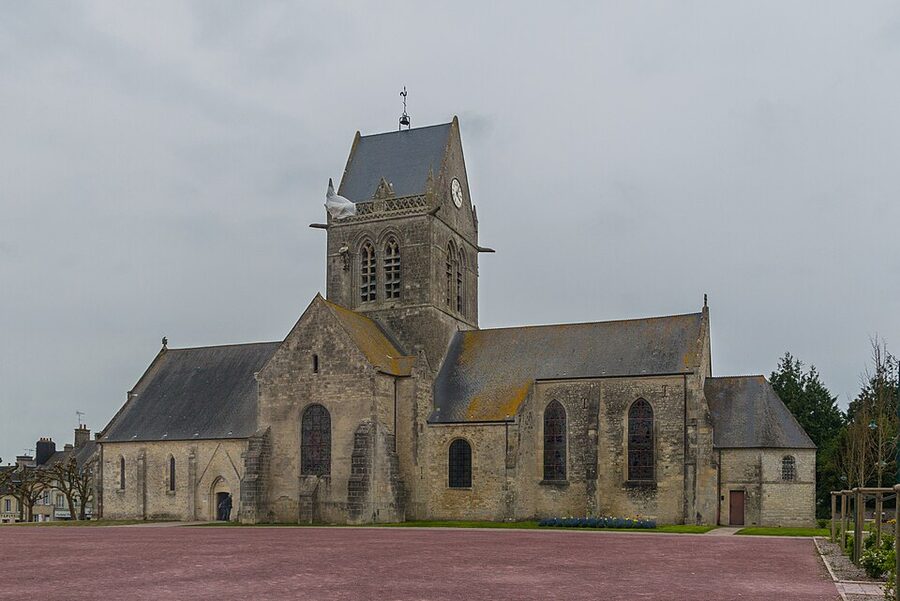
The Airborne Museum next to the church has a real C-47 transport plane, a Waco glider, and full-scale recreations. It’s small but excellent. Most coach tours don’t include it — you’ll only see it on tours that specifically advertise the airborne sites.
Should you stay overnight in Normandy instead?
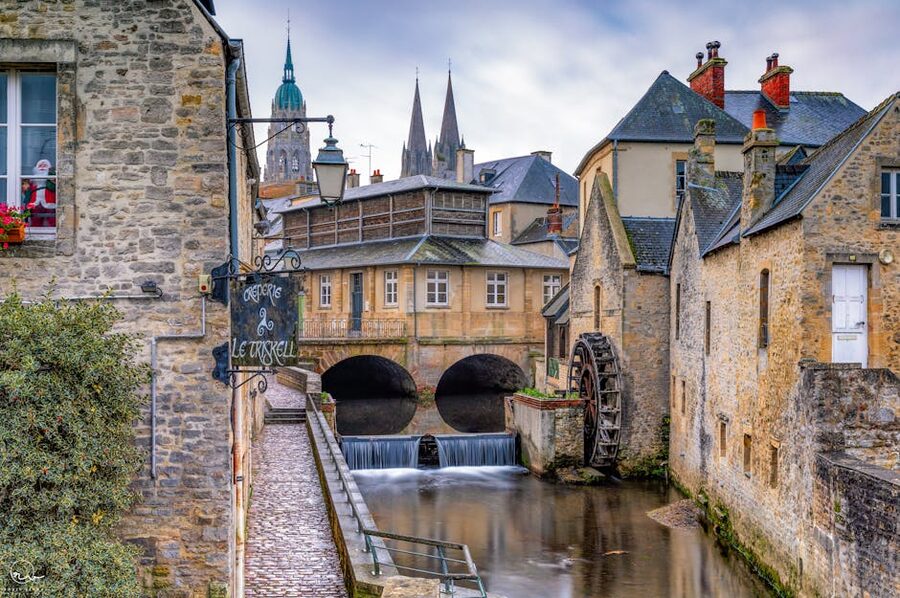
Yes, if you can spare two nights. The day trip from Paris is fine — I’ve recommended it three times in this article — but here’s the truth: spending one night in Bayeux changes everything. You can do the beaches without rushing, eat dinner in a town that smells like the Atlantic instead of a Paris hotel kitchen, and visit the Bayeux Tapestry the next morning before catching the train back.
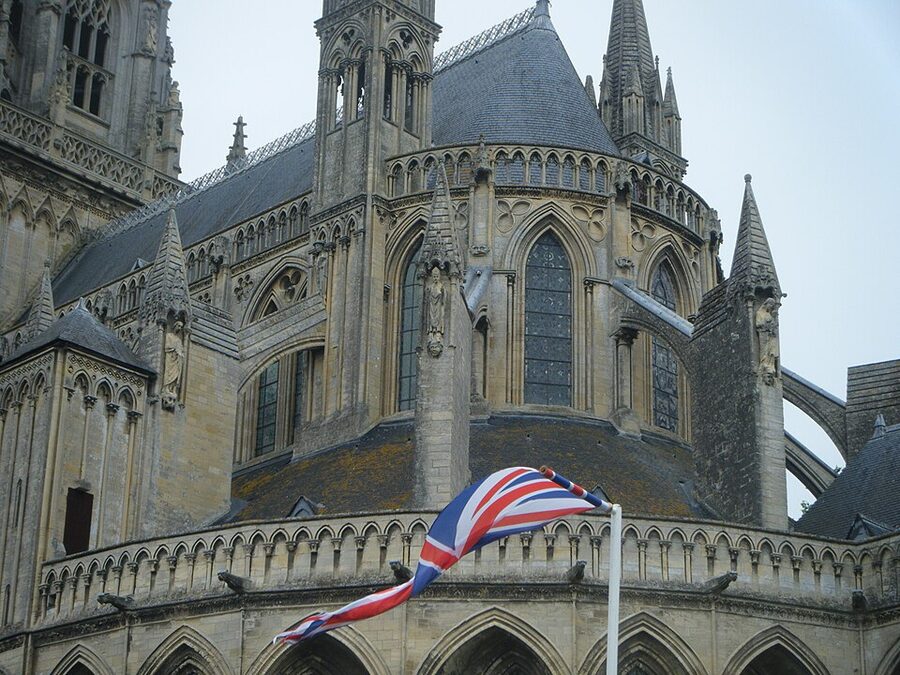
Bayeux is a two-hour direct train from Paris Saint-Lazare. Tickets are around €40-50 each way. From Bayeux you can book the full-day American beaches tour from Bayeux — same sites, smaller group, longer at each stop, and you don’t lose six hours to coach travel. Or the flexible-cancellation Bayeux option if your dates aren’t locked in yet.
If you can only spare a single full day, take the day trip from Paris and accept the tradeoffs. If you can stretch to two days, take the train. It’s not even a close decision.
The Caen Memorial — best D-Day museum, but tight on a day trip
The Mémorial de Caen is the most thorough WWII museum in Normandy, covering the run-up to the war, the occupation, D-Day itself, and the aftermath. It’s enormous — easy to spend three hours and still feel rushed. Most day-trip tours from Paris skip it for that reason. The smaller museums (Overlord, Utah Beach, the Airborne) are more day-trip friendly.
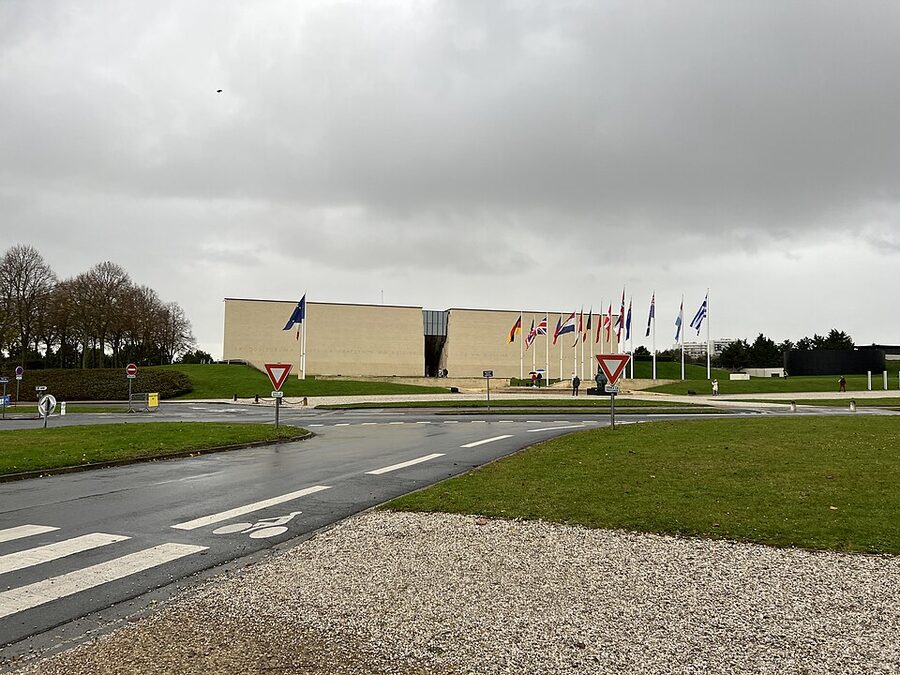
If the Caen Memorial is your priority, base in Caen for a day. Caen is on a different train line from Paris (Saint-Lazare to Caen, also about two hours). The museum runs its own day tours that combine the museum with the beaches — the half-day version covers Omaha and the cemetery, the full-day adds Pointe du Hoc and Arromanches.
What you’ll see and feel that nobody photographs
Some things don’t show up in photos. The wind on the cliff at Pointe du Hoc — even on a calm day, there’s a steady push that makes you imagine what it felt like in a glider at 600 feet. The smell of the cemetery — cut grass and salt air, oddly the most pleasant scent on the whole tour. The sound of taps if you’re at the cemetery near closing time, when the staff lower the flag.
The other thing photos miss: the visitors. Some are kids on school trips. Some are old men in 101st Airborne caps and their wives in matching jackets. Some are descendants in tears looking for a specific grave. Some are tourists with selfie sticks who don’t know what they’re looking at. All of them are welcome, all of them are part of why these sites still mean something. The cemetery especially has a way of equalising the crowd within minutes of entry.
If you’re combining Normandy with other Paris excursions
Most travellers visiting Normandy from Paris are doing it as part of a broader trip. A few pairings worth thinking about. Mont-Saint-Michel is the obvious one — same general direction (west of Paris), iconic, totally different in mood. If you’re keen on both, do them on separate days; trying to combine in one day from Paris is a logistical fiasco. Read our guide to Mont-Saint-Michel from Paris for the day-trip vs overnight breakdown.
The Loire Valley castles are another classic Paris day trip but completely different in tone — quieter, more architectural, a wine tour rather than a battlefield tour. Our Loire Valley guide covers Chambord and Chenonceau if that’s the kind of contrast you want after a heavy day in Normandy.
If you’re back in Paris with energy in the evening, an evening Seine cruise is the gentlest way to wind down. The illuminated cruise with live music runs late enough that you can grab dinner first, and an hour on the river with the city lit up is a different kind of beautiful after a heavy day. If you’re spent and just want a meal, a dinner cruise handles both at once and you don’t have to think about restaurants.
Booking timing — when prices and availability shift
The cider-tasting day trip and the small-group tour both book up two to three weeks ahead in summer (June through August), and on weekends throughout the year. June 6 itself — the D-Day anniversary — books up months in advance and prices are higher. If you’re flexible on dates, midweek in shoulder season (May or September) is the sweet spot: smaller groups, fewer crowds at the cemetery, and weather that’s usually cooperative.
If you’re trying to fit a lot into a Paris trip, the Paris Museum Pass doesn’t cover the Normandy day (none of the day trips include passes) but it does cover most of the Paris museums you’ll want to fit around it — the Louvre, Orsay, Orangerie, Sainte-Chapelle, and the Arc de Triomphe rooftop are all included. A 4-day pass starts paying for itself by the third entry.
Both of the major Viator-sold tours offer free cancellation up to 24 hours before, which I always use as a safety net. Book the dates you want now, then if your plans shift you’ve still got 24 hours to back out. Do it the other way and you’ll watch the small-group tour sell out two weeks before your trip.
Prices have crept up roughly 10-15% over the last two years. The cider-tasting tour was around $105 in 2023, $120 now. The small-group tour was $290, now $320. They’ve still got the best price-per-stop ratios I can find for D-Day day trips from Paris.
One last thing about emotional weight
If you’re going to Normandy because someone in your family fought there, brief the rest of your group beforehand. Tell them why this matters to you. The day will hit you harder than you expect, even if you’re not normally emotional about history. Several tour guides I’ve spoken to mention this — there’s almost always someone on each bus who quietly cries at the cemetery. That’s normal, and the guides are used to it.
If you’re not going for a family reason, go anyway. The story isn’t only American or only military — it’s about ordinary people from places like Iowa and Manchester and Calgary doing something most of us can’t fully imagine. Standing where they stood, on the actual sand and the actual cliff, makes that imaginable for an hour or two. That hour is worth the day-trip pricetag, the long bus ride, and the early start.
For French context, the Panthéon in Paris is where Resistance heroes like Jean Moulin and Geneviève de Gaulle-Anthonioz are interred — visit on a different day if WWII history is what brought you to Normandy. It rounds out the picture of who the French were fighting to liberate themselves from, on the home front.
While you’re planning Paris
If Normandy’s your big day-out from Paris, you’ll still want to fill the rest of the trip. The classics first — book the Eiffel Tower summit tickets early because they sell out, and the Louvre is best done with timed entry. For something quieter on the day after Normandy when you’re tired, the Musée de l’Orangerie Monet rooms are the most restorative hour you can spend in the city. Skip the long Versailles day if Normandy is already on the schedule — they’re both heavy. Save Versailles for a separate, lighter day.