
Is Versailles actually worth the whole day — and what’s the least painful way to turn a Paris breakfast into a palace afternoon without blowing half of it in queues? I’ve been twice, once in miserable sleet and once under blue spring sky, and I can tell you both trips were worth it. But the second one was about five hours happier than the first, because the second time I actually knew what to book.
This guide is the version of that knowledge I wish somebody had handed me the first time around.
In a Hurry? My Top 3 Picks
- Passport (full estate) ticket from $17 — palace, gardens, Trianon, audio guide. The one to book if you have the full day. Book Passport entry
- Skip-the-line guided palace tour — around $74 — a guide inside the palace is the single thing that changes Versailles from pretty to unforgettable. Book guided palace tour
- Full day with transport from Paris — from $53 — coach pickup, entry, audio guide, guide, no train timetables. The sanity option if you hate logistics. Book with transport
- In a Hurry? My Top 3 Picks
- So Do You Need a Tour, or Just a Ticket?
- How to Get to Versailles from Paris
- RER C — The Standard Route
- Coach From Paris — The Easier Option
- Which Ticket Do You Actually Want?
- Palace-Only Ticket
- Passport Ticket (around €32)
- Passport With Musical Fountain or Musical Gardens
- Evening Fountain Show Ticket
- When to Go — The Crowd Math
- By Season
- The Best Versailles Tours to Book
- 1. Versailles Passport — Full Access Ticket — from
- 2. Skip-the-Line Guided Palace Tour — around
- 3. Full Day With Transport From Paris — from
- What to Actually See Inside the Palace
- The Royal Chapel
- The State Apartments (Grand Appartement du Roi)
- The Hall of Mirrors
- The Queen’s Apartments
- The Gardens and How to Not Walk Forever
- Walk the Main Axis, Then Stop
- Take the Petit Train or Rent a Bike
- Rowboat on the Grand Canal
- The Trianon Estate — Why You Should Actually Go
- The Grand Trianon
- The Petit Trianon
- The Queen’s Hamlet (Hameau de la Reine)
- A Bit of Context — How Versailles Became Versailles
- Food, Bathrooms, and Other Small Things That Matter
- Where to Eat
- Bathrooms
- What to Bring
- If You’re Bringing Kids
- Versailles Paired With What Else?
So Do You Need a Tour, or Just a Ticket?
Short answer: if you’ve never been, I’d pay for a guided palace tour. If you’ve been before and just want to walk the gardens and the Trianon, a Passport ticket is plenty.
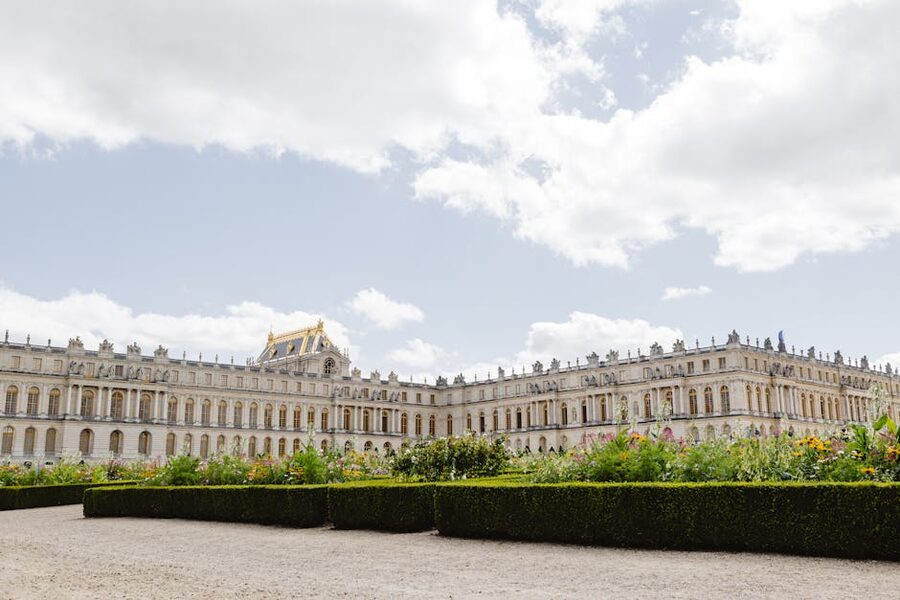
The palace without context is mostly a lot of gold leaf. Gorgeous gold leaf, but you’ll drift through the King’s and Queen’s apartments with a vague sense of “wow, fancy” and no memory of why you’re looking at any specific room. A good guide turns that into a story about Louis XIV’s morning ritual with a hundred courtiers watching him get dressed, about Marie Antoinette hiding in the back rooms because the public audience exhausted her, about where the guillotine verdicts actually started. That’s what you came for.
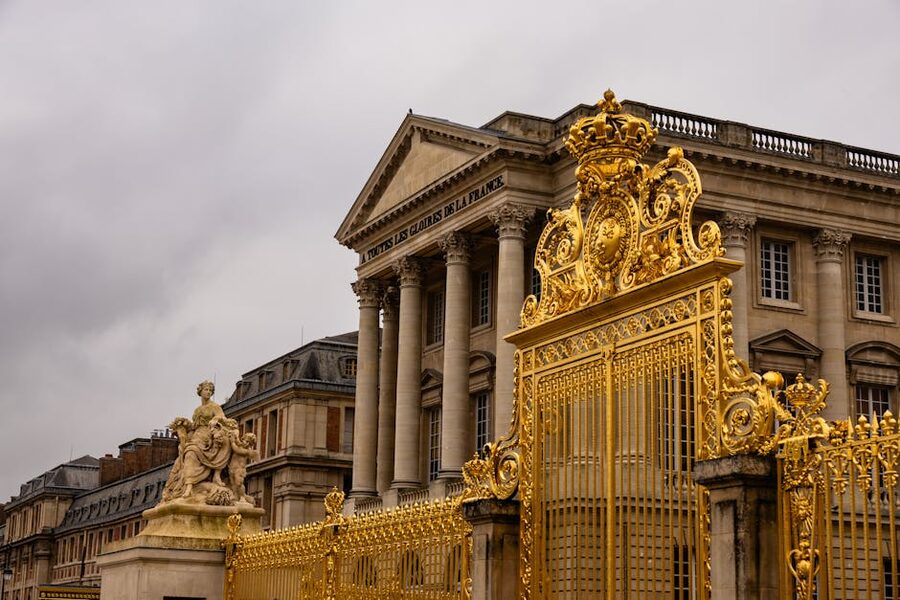
If you’re more of a wander-solo type, the official audio guide (included in the Passport ticket) is genuinely decent. Not as good as a human guide, but it tells you what you’re looking at in each major room. What I’d avoid is the cheapest “entry only” tickets that don’t include audio. You’ll pay to stand in gilded rooms and read nothing.
How to Get to Versailles from Paris
The palace sits about 20 km southwest of central Paris. Train is the easy answer. Driving is the silly answer — parking is awful and you don’t need a car for anything else that day.
RER C — The Standard Route
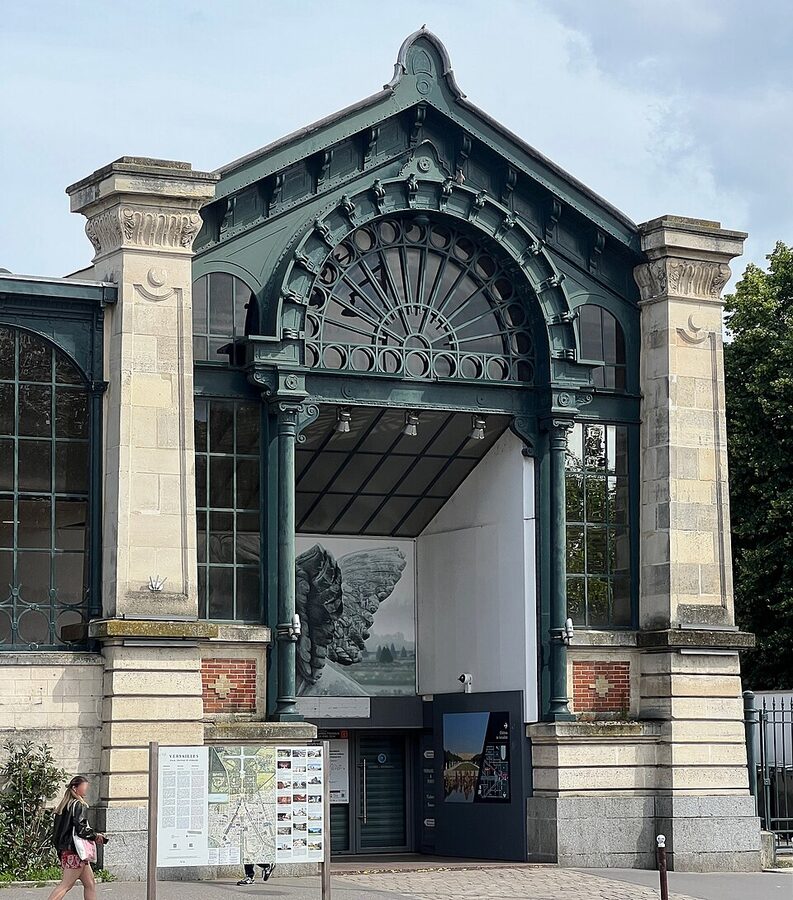
Board the RER C line at any of the central stops: Saint-Michel-Notre-Dame, Musée d’Orsay, Invalides, or Champ de Mars-Tour Eiffel. You want a train with a headsign starting with a V (the destination codes on RER C are actually pairs of letters — “VICK” is the one you want, heading to Versailles Château Rive Gauche).
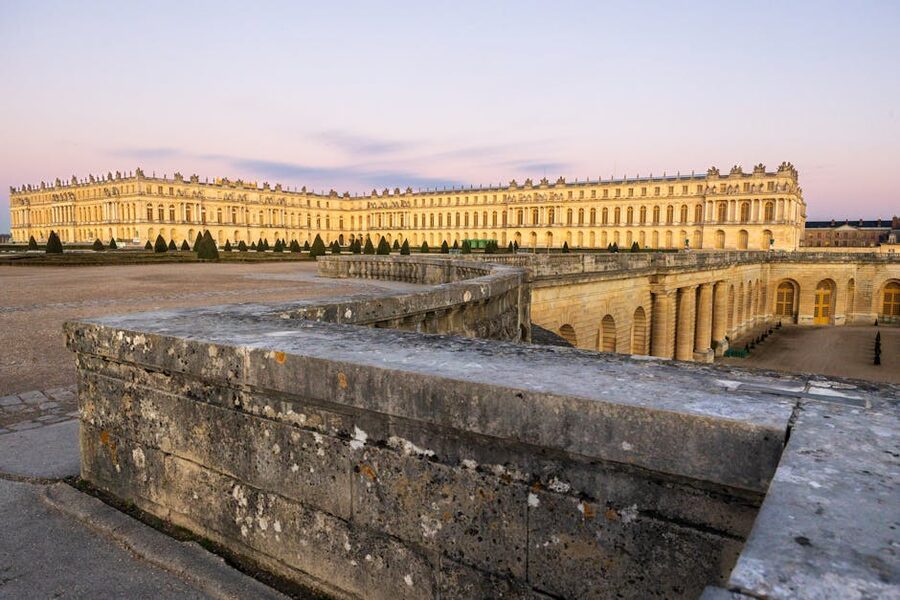
Journey time is around 40 minutes. The station is a 10-minute walk from the palace — straight down Avenue de Sceaux, palace dead ahead. You’ll know when you’re close because the gold rooftops start sticking up above the trees.
A single ticket was around €5 when I last went. You can pay with contactless on the turnstiles now, same as the Paris metro. If you’re already in Paris with a Navigo Easy or a day pass that covers all five zones, that works too.
Coach From Paris — The Easier Option
If the idea of decoding RER headsigns after a long flight sounds miserable, book a tour that includes coach transport. You get picked up in central Paris, they handle the entry, they bring you back. On my first attempt at Versailles I tried to do the whole thing by train and I was genuinely tired by 2pm. On my second trip I used a coach tour and got back to my Paris hotel with energy to spare for dinner.
The transport-included tour I’d pick covers the train-faff-free version — more on that below.
Which Ticket Do You Actually Want?
The ticket page on the official Château website is a confusing wall of options. Let me simplify.
Palace-Only Ticket
Skip this one. It gets you into the palace but not the gardens on fountain-show days (when the gardens are paid), not the Trianon, and you’ll regret stopping at just the palace interior by lunch. The small saving isn’t worth the restriction.
Passport Ticket (around €32)
This is the default. You get the palace, the gardens, the Trianon Estate (Grand Trianon, Petit Trianon, Marie Antoinette’s Queen’s Hamlet), and the audio guide. Book a timed-entry slot for the palace at 9am if you can — the first hour of the day is the only time the Hall of Mirrors isn’t shoulder-to-shoulder.
Passport With Musical Fountain or Musical Gardens
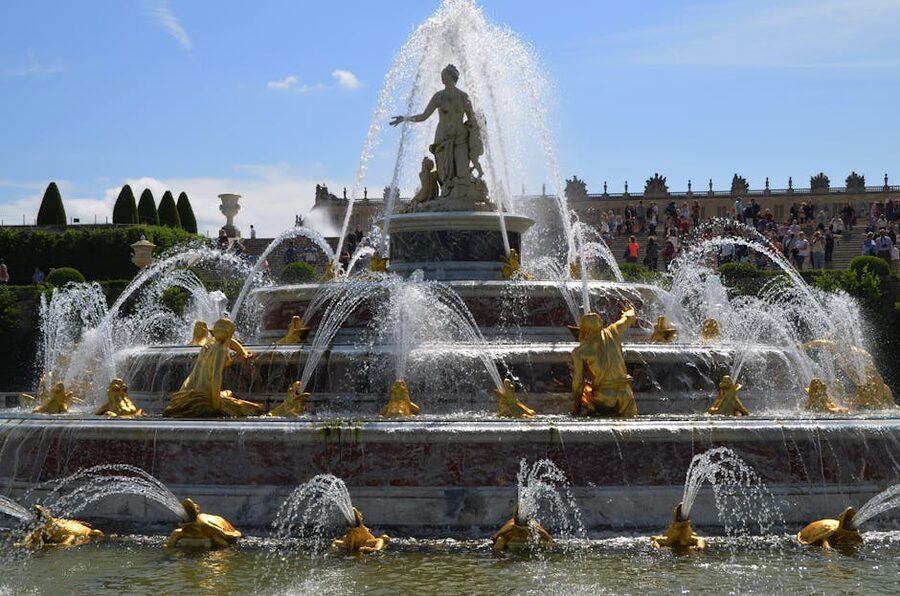
On Saturdays, Sundays, and Tuesdays between April and October, the fountains are turned on and set to classical music. The “Musical Fountains” day is the full show — basins spraying choreographed arcs, baroque music echoing across the parterres. It costs a few euros more than the regular Passport, but if your visit falls on one of these days, do the upgrade. It’s the single experience that separates Versailles from a static museum visit. The gardens feel alive in a way they simply don’t when the basins are flat.
Evening Fountain Show Ticket
Only on Saturday nights in summer (June to mid-September usually). Separate ticket from the day ones. If you’re staying in Paris for a few days and have already done the palace interior, this is worth coming back out for — the fountains plus fireworks finale is genuinely different from the day experience. A long day though. You’ll roll back into Paris around midnight.
When to Go — The Crowd Math
Versailles closes on Mondays. Remember this. I watched a family argue with a security guard about it in January and it didn’t help anyone.
The palace interior is busiest Tuesday through Sunday between 11am and 2pm. If you can book your palace timed entry for 9am (first slot), the first 90 minutes are genuinely enjoyable. By 11am the State Apartments become a river of tour groups and the Hall of Mirrors is a slow clockwise shuffle.
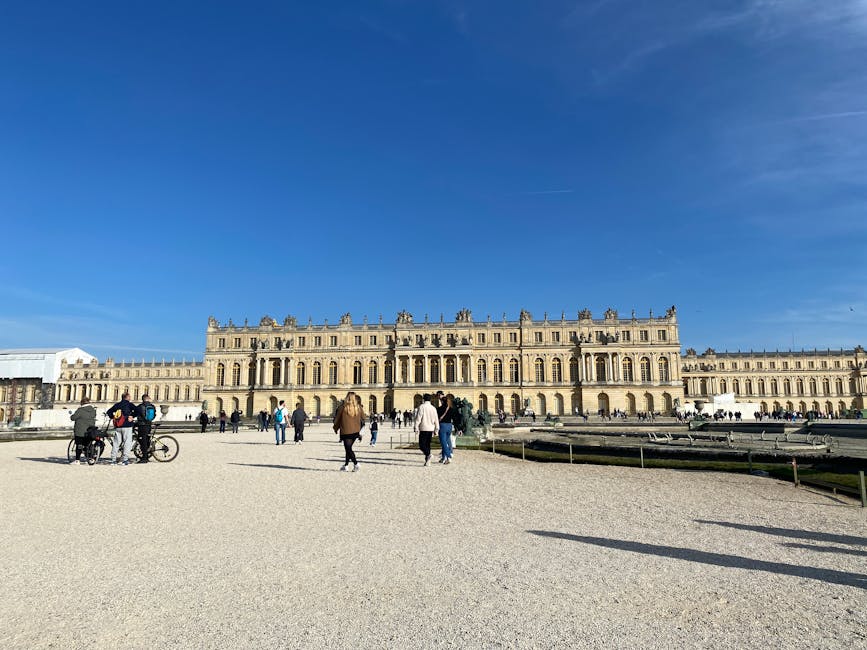
My loose plan that worked: 9am palace entry, finish the interior by 10:30, lunch on the terrace at 11:30, gardens and Trianon from noon until close. Spreading the day like that means you’re inside the palace while it’s calm, and outside when the sun is highest.
By Season
April through June is the sweet spot. Trees leafed out, fountains running on weekends, statues uncovered, lighter crowds than July-August peak. July-August is warm but genuinely busy — and the gardens can be brutally exposed without tree cover. September is a quieter version of spring. November through March, you lose the fountains entirely and some of the garden statues are boxed up for frost protection (I saw this on my winter visit — it’s more charming than it sounds, weirdly). But you also lose the queues.
If you’re booking in winter, skew your day around the palace interior and the heated Trianon rooms. The gardens in January are beautiful in a stark way, but you’ll be walking fast.
The Best Versailles Tours to Book
I picked these three out of the dozens on the market because they each solve a different traveler’s problem — pure ticket, guided palace, or full-service transport. Book whichever matches your day.
1. Versailles Passport — Full Access Ticket — from $17
This is what I’d book if I wanted to do Versailles on my own terms. It’s the most-reserved Versailles ticket on the market — my full review of the Passport covers how the timed entry slots work and when they tend to sell out. Pick an early morning slot, download the audio guide before you leave your hotel, and you’re set.
2. Skip-the-Line Guided Palace Tour — around $74
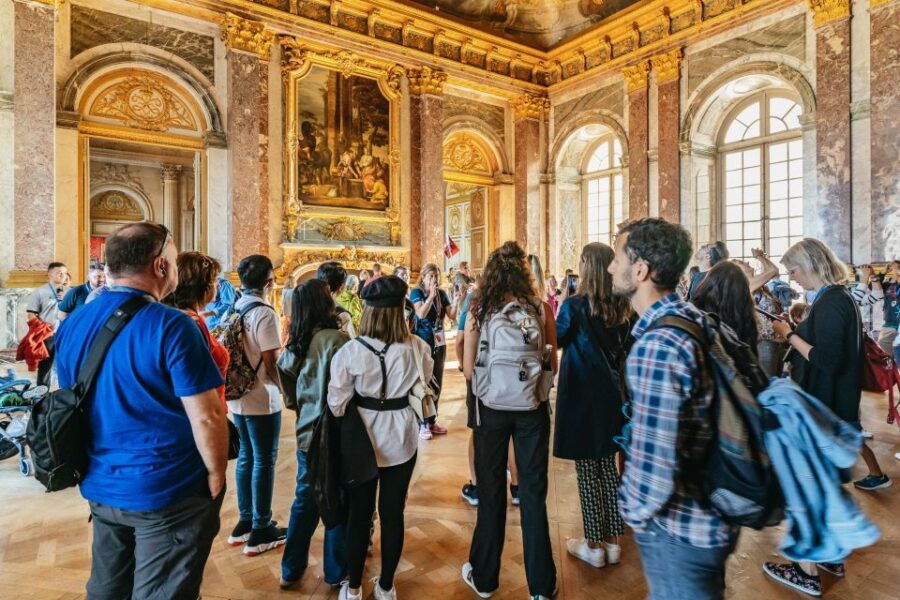
If you only do Versailles once in your life, go with a guide. The skip-the-line guided tour I’d recommend is roughly 2 hours inside the palace with a licensed guide, then you keep the ticket and spend the rest of the day exploring the gardens and Trianon at your pace. The difference between guided and unguided is the difference between pretty rooms and understanding why any of this existed.
3. Full Day With Transport From Paris — from $53
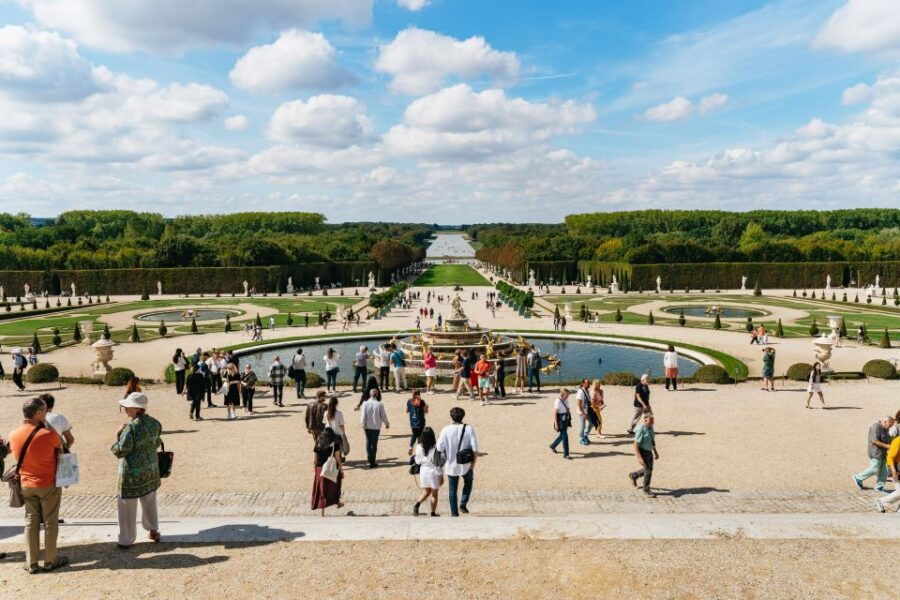
This is the option I’d pick if Paris logistics already felt like a lot — first-time visitors, anyone jet-lagged, anyone traveling with teenagers or older parents. The full-day coach tour we reviewed handles pickup from a central meeting point, runs 8 to 10 hours door-to-door, and drops you back in the city in time to still have dinner in Paris. You pay more than the train-it-yourself version for exactly one reason — you don’t have to plan anything.
What to Actually See Inside the Palace
Two hours inside is enough for most people. The main route takes you through the State Apartments, the Hall of Mirrors, the Queen’s Apartments, and back out to the garden terrace. Here’s where I’d slow down.
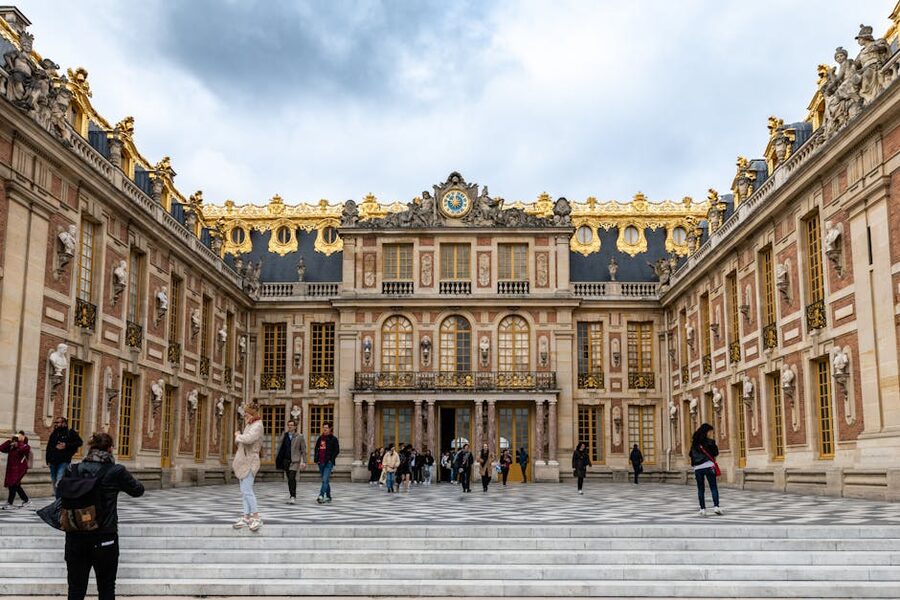
The Royal Chapel
First major room on the route. High vaulted ceiling, organ loft, two-tier gallery — the royal family sat upstairs, the courtiers below. The chapel was where Louis XVI and Marie Antoinette were married. It’s also the quietest of the big rooms because most visitors walk straight through it.
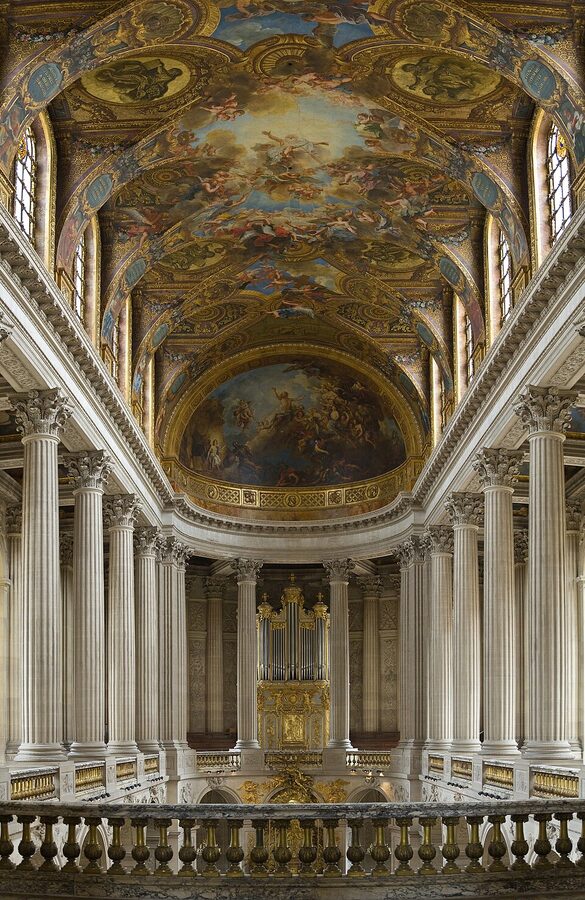
The State Apartments (Grand Appartement du Roi)
Seven rooms, each named after a planet — Venus, Diana, Mars, Mercury, Apollo. This was Louis XIV’s public-facing wing. Ceremonial dinners in the Venus Salon. Card games and billiards in the Mars Salon. The Apollo Salon was the throne room. Read the little placards at the doorways — they explain what each room was used for, which turns ceiling paintings from “nice mythology” into “political propaganda on purpose.”
The Hall of Mirrors
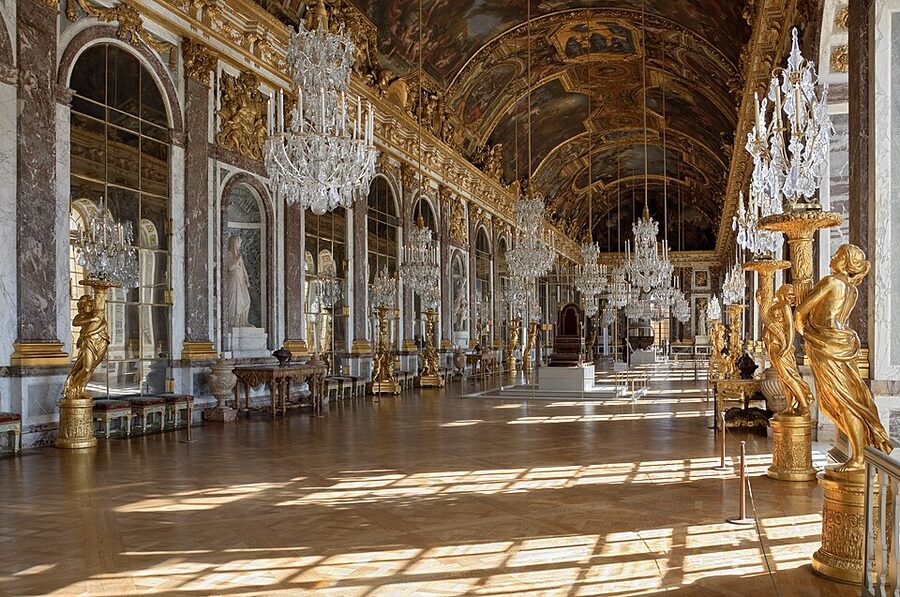
Seventy-three meters long, 357 mirrors, 17 arched windows facing west over the gardens. Built by Louis XIV in 1684 as a political flex — mirrors that size were almost impossible to manufacture at the time, and having a whole hall of them was a way of saying “I can do things no other European court can do.” In 1919, the Treaty of Versailles ending World War One was signed in this exact room. Stand still for a minute and let both timelines sit on top of each other.

The Queen’s Apartments
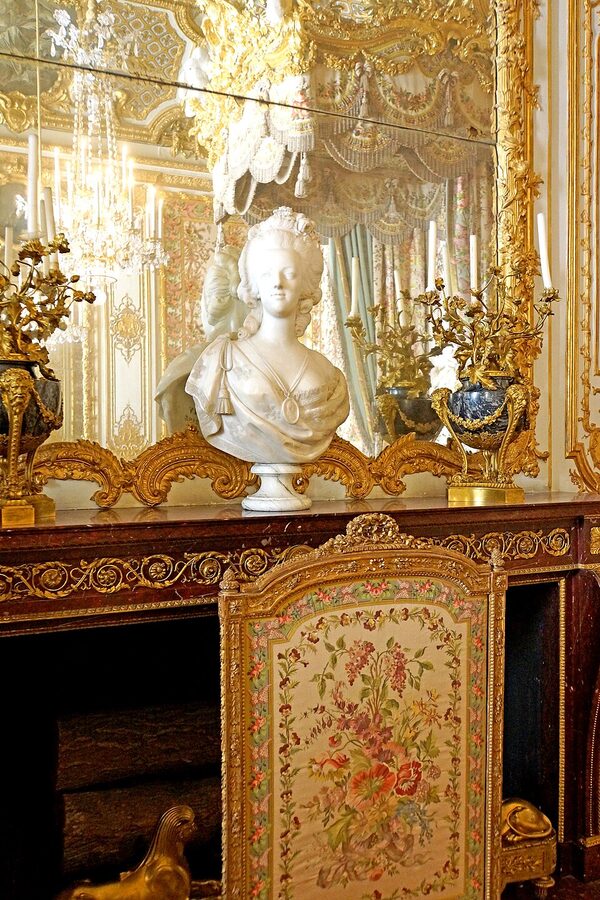
Marie Antoinette’s bedroom is the room most people remember. Painted ceilings, a canopy bed that looks impossibly ornate, and a hidden door that she used to escape a mob in October 1789 when the women of Paris marched on the palace. The door’s a small thing in the wall — easy to miss if you don’t know to look. Guides point it out. Audio guides mention it in passing.
The Gardens and How to Not Walk Forever
The gardens cover around 800 hectares. Yes, hectares. If you try to walk the whole thing you will ruin your afternoon and probably your friendship with whoever came with you. Here’s what I’d actually do.
Walk the Main Axis, Then Stop
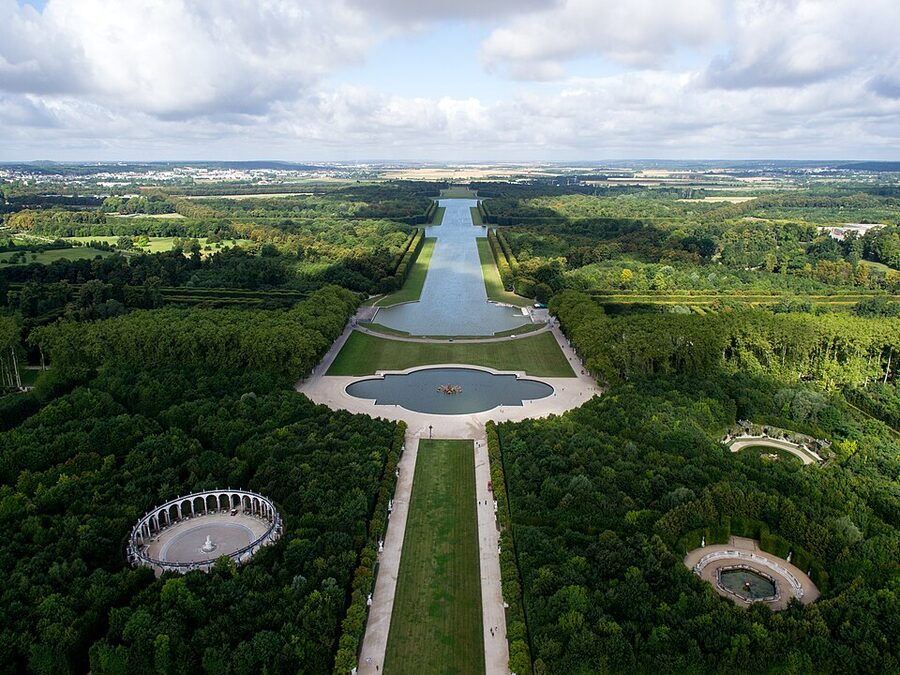
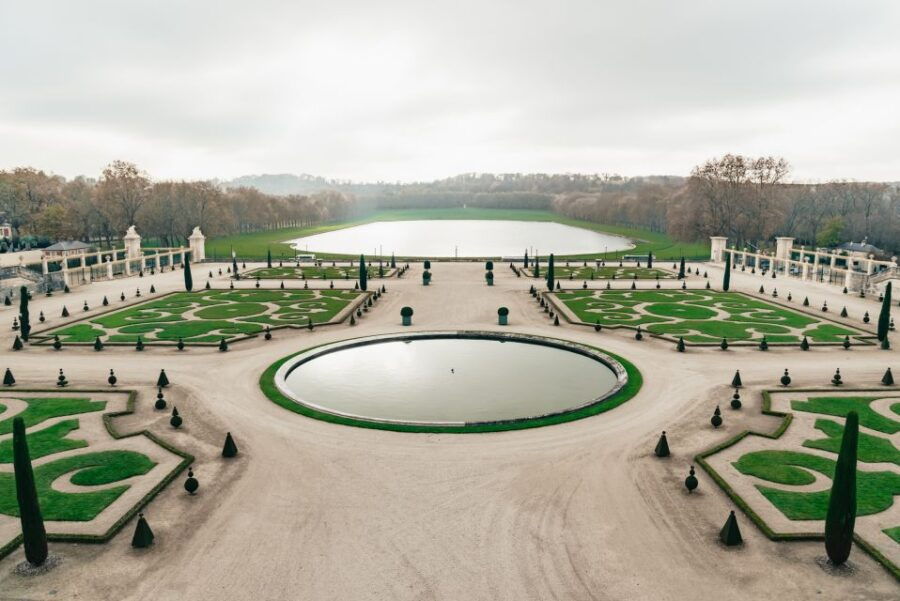
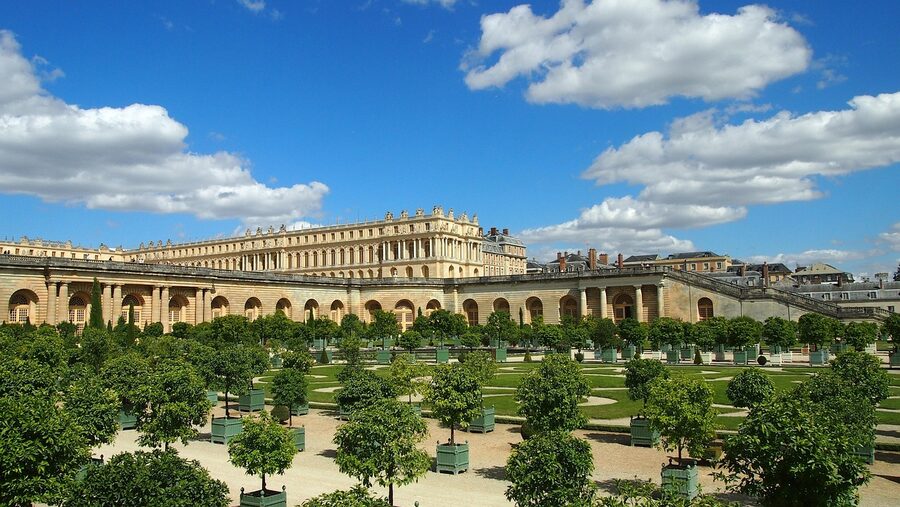
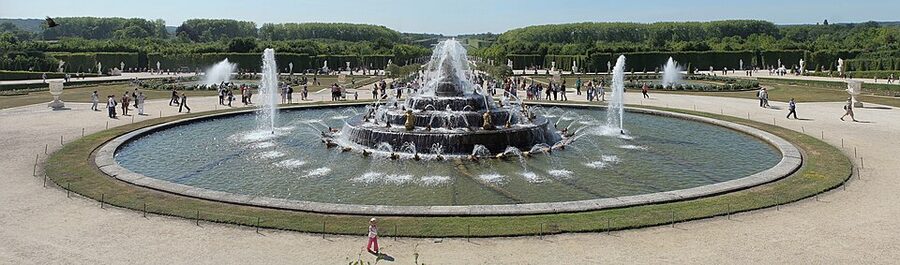
Step out of the palace onto the terrace. Directly ahead you’ll see the Water Parterre (two long reflecting pools), then the steps drop down to the Latona Fountain, then the Tapis Vert (Green Carpet, a wide grass avenue), and finally the Grand Canal. That’s the main axis. Walk as far as the Latona Fountain at minimum — about 10 minutes from the terrace.
Take the Petit Train or Rent a Bike
To reach the Trianon estate at the far end of the gardens, you have three options. Walk (about 25 minutes one way, flat), take the little road train (around €8 return, runs every 15 minutes from the terrace, drops you near the Grand Trianon), or rent a bike from ParkRental near the Grand Canal (around €8/hour). If your day is already long, take the train. If you want a fun memory, bike it.
Rowboat on the Grand Canal
Hidden tip most tourists miss. You can rent a small rowboat on the Grand Canal for around €15 for half an hour. Louis XIV used to stage miniature naval battles on this canal. Now it’s mostly couples rowing in small circles. A weirdly lovely 30 minutes, especially late afternoon when the palace reflects on the water behind you.
The Trianon Estate — Why You Should Actually Go
About two-thirds of day-trippers never make it to the Trianon. Which is honestly a mistake. This is where Marie Antoinette actually lived when she needed to escape the palace, and the atmosphere is totally different — quieter, greener, much smaller in scale, and far fewer people.
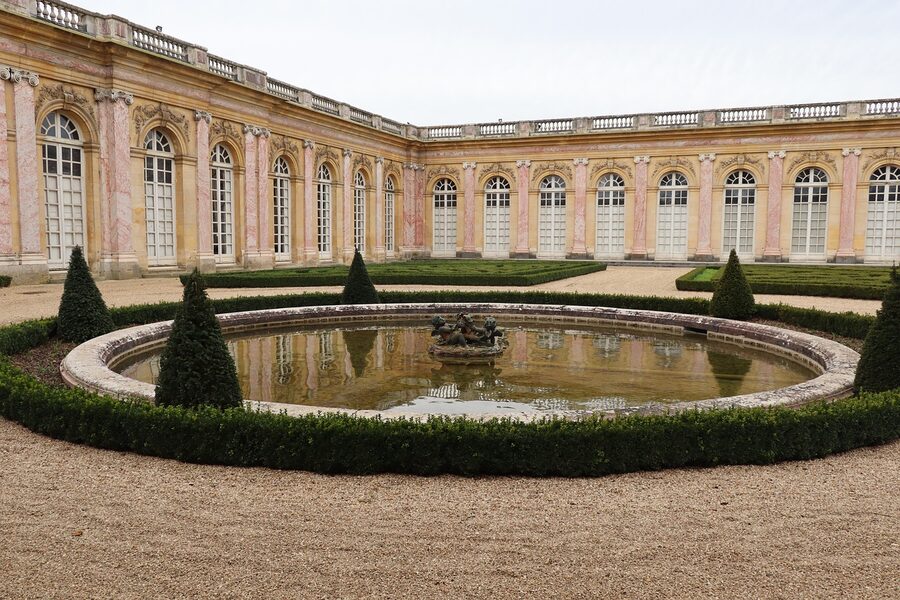
The Grand Trianon
Pink marble colonnade, long single-story palace, designed as a retreat for Louis XIV. Feels almost Mediterranean compared to the formal palace. Napoleon later used it as a residence, and some of the rooms still have his Empire-style furniture. Twenty minutes is plenty inside.

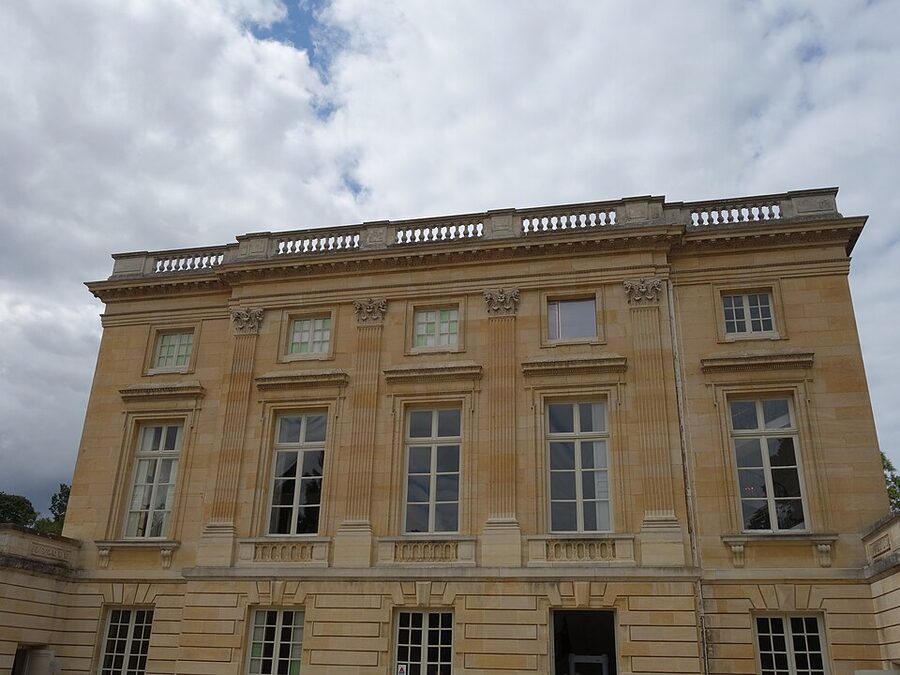
The Petit Trianon
Gifted by Louis XVI to Marie Antoinette on his coronation. She used it as her personal home, off-limits even to her husband without her permission. Inside is much more intimate than the main palace — smaller rooms, less gold, her actual taste rather than court-mandated pomp.
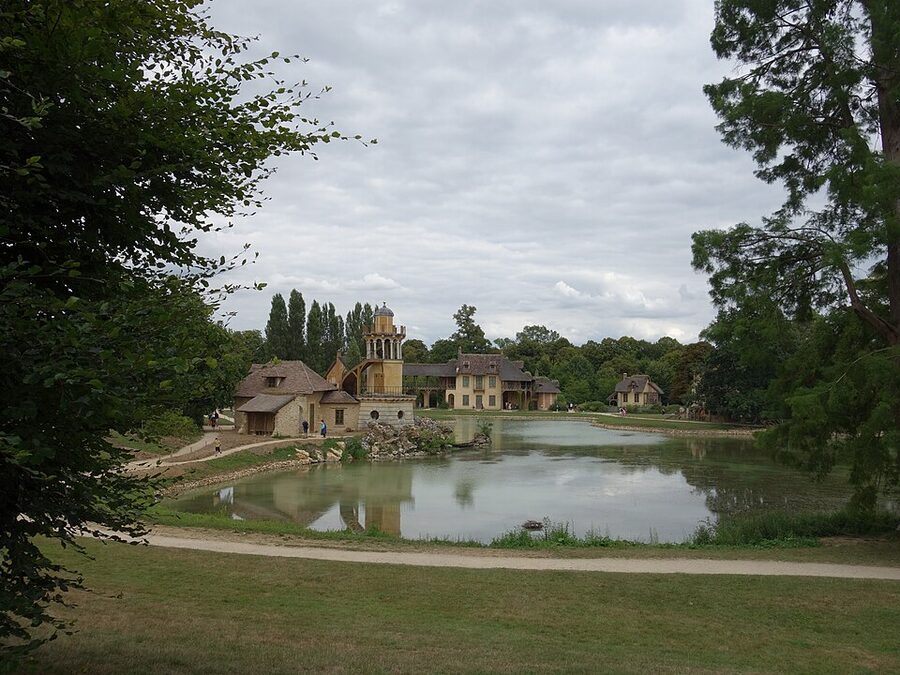
The Queen’s Hamlet (Hameau de la Reine)
This is my favorite corner of the entire estate. Marie Antoinette had a working mock-village built in the Petit Trianon grounds — thatched cottages, a working farm, a small dairy. It was where she went to “play peasant” in an era where that kind of performance was a common aristocratic indulgence. Yes it’s historically complicated. Yes the optics are awful in hindsight. It’s also genuinely lovely, tucked away in a wooded corner most day-trippers don’t reach, with a pond and a windmill and the real smell of actual farm animals (the estate maintains it as a working farm to this day).
A Bit of Context — How Versailles Became Versailles
The plot that the palace sits on started as a hunting lodge for Louis XIII in 1623. His son Louis XIV, the Sun King, spent over fifty years expanding it into what we see now, and formally moved the royal court here in 1682. He did it partly out of genuine love for the place and partly on purpose — moving the nobility out of Paris and into apartments at Versailles let him watch everyone all the time. It was a golden cage by design.
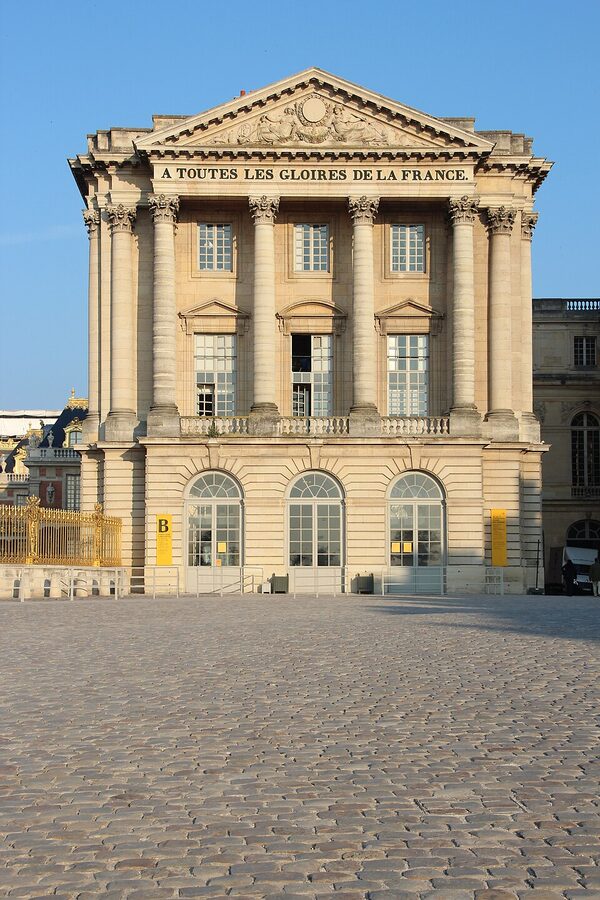
The court lived here until the French Revolution. On October 5, 1789, a mob of Parisian market women marched 20 km out from the city and forced Louis XVI and Marie Antoinette to return to Paris. They never came back. The palace was stripped and many of its furnishings auctioned during the Revolution. Restoration began in the 19th century and is still ongoing — some rooms you’ll see today were completed in the last fifteen years.
UNESCO added the palace to the World Heritage list in 1979. The 357 mirrors in the Hall of Mirrors are originals. The gardens were designed by André Le Nôtre, the same landscape architect who laid out the Tuileries in Paris.

Food, Bathrooms, and Other Small Things That Matter
Where to Eat
Inside the estate there are a few cafés — Angelina near the palace entrance (French brasserie, decent, pricey), ORE restaurant upstairs in the palace (Alain Ducasse-run, lovely, expensive and needs reservations), and a few kiosks near the Grand Canal doing sandwiches and crepes.
Honestly, pack a picnic. The French cheese and baguette combo from a supermarket back in Paris, a bottle of something modest, and a bench in the gardens is the single best Versailles lunch move. You can’t picnic in the formal parterres near the palace, but the lawns near the Grand Canal are fair game.
Bathrooms
Plentiful inside the palace and at the garden entrance. Much harder to find once you’re deep in the gardens. Go before you commit to the long walk toward the Trianon.
What to Bring
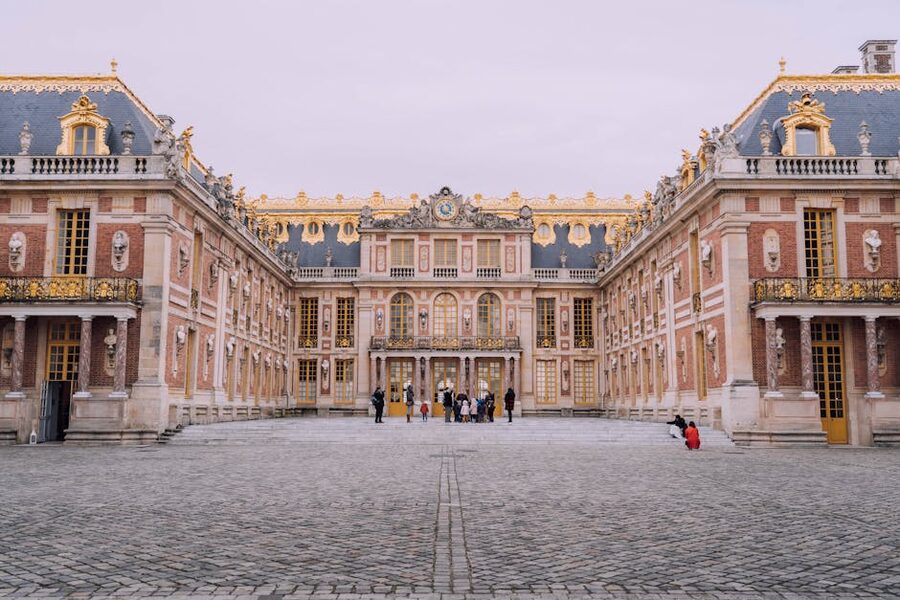
A water bottle (refill stations at the entrance), a small bag (large bags go to cloakroom, which creates a bottleneck on arrival), actually comfortable shoes (the courtyard cobblestones are genuinely rough and the gardens have gravel paths throughout), and sun protection April through September (much of the garden is fully exposed).
If You’re Bringing Kids
Under-18s enter free. Versailles with young children is honestly hard — long walks, restricted spaces, lots of “don’t touch” — but teenagers tend to love it, especially the Trianon and the hamlet. A stroller works fine in the gardens but the palace interior has steps in a few places.
Versailles Paired With What Else?
A Versailles day trip pairs beautifully with a slower Paris day on either side. If this is your first Paris trip, I’d schedule it on day three or four — you’ll want one full rest day after all the walking. On my second trip I did Versailles on a Saturday (to catch the Musical Fountain day), then spent Sunday on the Seine — which was genuinely one of my favorite Paris afternoons.
If you have four days in Paris and you’re doing the big three hits, the order that worked best for me was: Louvre morning on day one while I was fresh (the how to book the Louvre guide covers the timed-entry system, which is similar to Versailles but more strict about your slot), a gentle Eiffel Tower day with a climb to the summit level on day two, Versailles day trip on day three (save it for when you’re oriented to the transport), and a Seine cruise on day four as a reward — the cruise guide explains why a boat at sunset on your last night is a better farewell to the city than any rooftop bar. That’s your unshakeable-memory week in Paris.
On a first Paris trip, it helps to keep a rough map of the other bookings in your head before Versailles day. The Louvre timed-entrance ticket is the single most booked attraction in the city and the one to lock in first. The Eiffel Tower entry with optional summit sells out the summit tier earliest and can be decided after you pick your Versailles slot. The 1-hour Seine cruise from the Eiffel is the gentle pairing for the evening after your palace day, and the evening river cruise with music is the low-effort upgrade if you want the same view with a glass in hand.
Book early — the 9am Passport slots sell out two or three weeks ahead in summer, and the guided palace tours tend to book faster than the self-guided options. Whichever ticket you land on, give yourself the full day. Versailles punishes the rushed and rewards the patient.