
A stranger in the oval room once told me she’d been coming to the Orangerie every Paris trip for fifteen years. Same bench, same panel, same twenty minutes of doing nothing. She’s not alone in that. This place does something the other Paris museums can’t — and the trick to visiting well is knowing what you’re actually here for.
- In a Hurry? Book Here
- Why This Museum Is Different
- Tickets, Prices, and What’s Actually Included
- Booking Direct vs. Through a Reseller
- Best Tours and Tickets
- 1. Reserved Entrance Ticket —
- 2. Semi-Private Water Lilies Tour (6 people max) — 6
- 3. Orangerie + Seine River Cruise Combo —
- How to Get There
- Opening Hours (And When to Actually Go)
- What You’ll Actually See: The Two Oval Rooms
- How Much Time to Budget
- The Walter-Guillaume Collection (Don’t Skip It)
- A Short History of a Strange Building
- The Monet-Clemenceau Story
- What to Do Around the Museum
- Food Nearby
- Practical Things People Ask
- Is the museum accessible?
- What about bags?
- Can you take photos?
- Is there an audio guide?
- Which entrance door should I use?
- How early should I arrive for my slot?
- Monet Beyond the Orangerie
- A Few Honest Downsides
- Still More Paris Museum Tips
In a Hurry? Book Here
- Reserved Entrance Ticket — $12. The cheapest skip-the-line option and the one most people end up booking. Book on GetYourGuide
- Semi-Private Water Lilies Tour — $156. Small group with a guide who explains what you’re looking at. Worth it if Monet matters to you. Book on GetYourGuide
- Orangerie + Seine Cruise combo — $45. Useful when direct tickets are sold out, and you get a boat ride thrown in. Book on GetYourGuide
Why This Museum Is Different
The Orangerie is small. That’s the first thing to know. You can see everything properly in two hours and not feel rushed. Compared to the Louvre — which eats four hours and still spits you out feeling you missed half of it — this place is a palate cleanser.
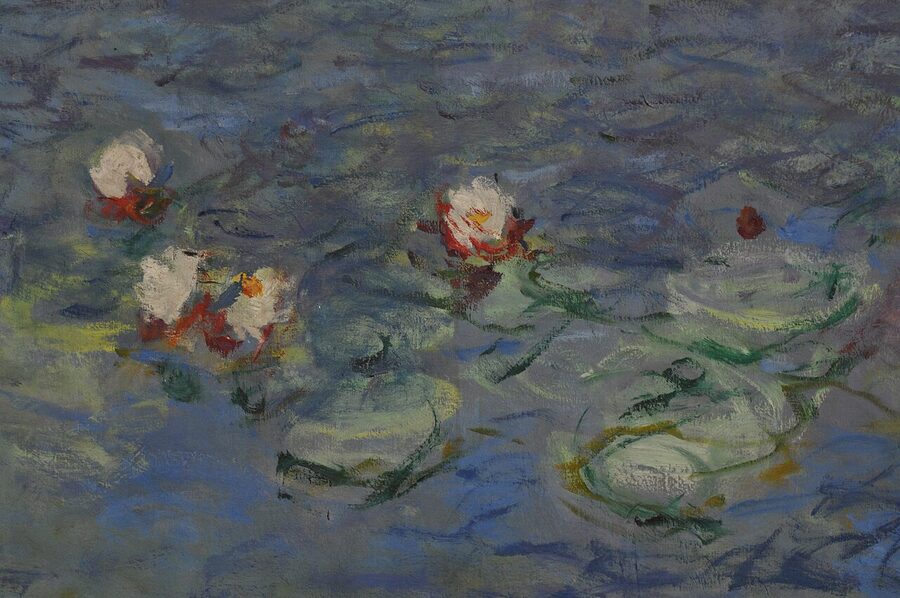
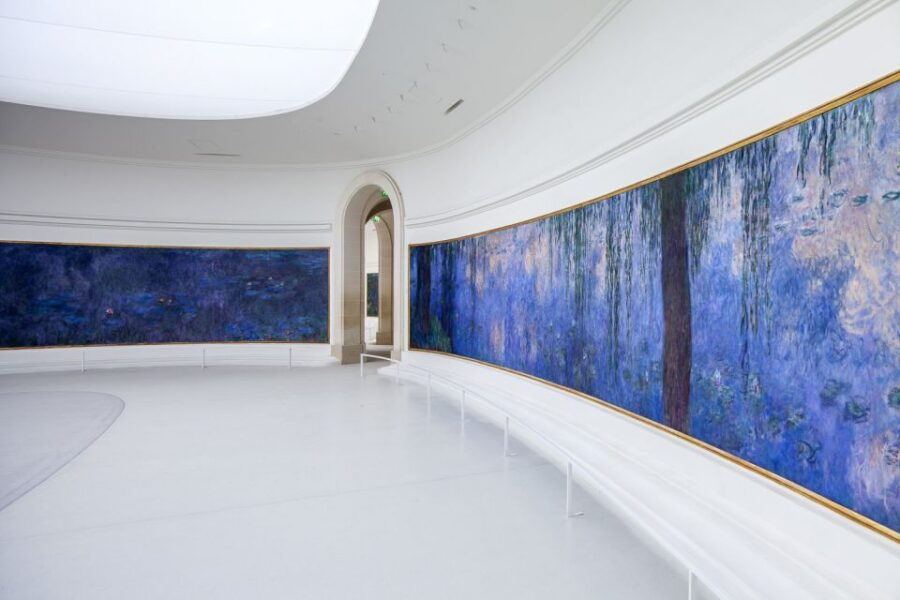
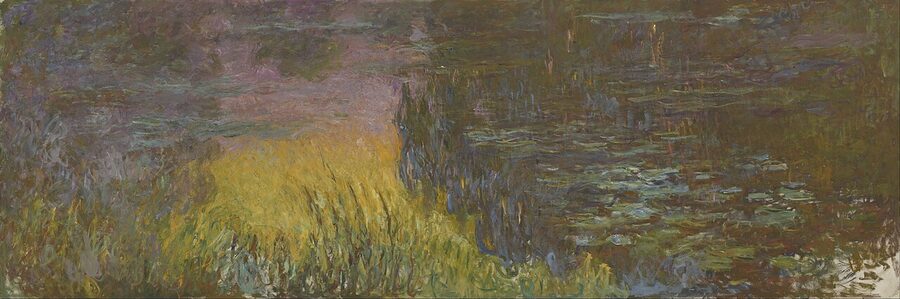
The draw is Monet’s Nymphéas — the Water Lilies — in the two oval rooms on the ground floor. Eight giant panels wrapping around you at eye level, lit by natural overhead light through a diffused skylight. Monet himself designed the rooms with the architect Camille Lefèvre. He wanted a space that felt like “a peaceful asylum for quiet meditation” after the First World War. He died in December 1926. The rooms opened five months later, in May 1927.
That backstory matters because the Water Lilies aren’t just big paintings hung on a wall. They’re an installation. Monet painted them for these specific rooms, at this specific scale, for this specific light. You can see his Water Lilies in Tokyo, Cleveland, New York, and the Marmottan. You can only see what he actually intended here.
Tickets, Prices, and What’s Actually Included
Standard adult admission is €12.50 for the permanent collection. A temporary exhibition bumps it to €14.50 or so, depending on the show. Both are booked as timed-entry tickets, and yes, timed entry is genuinely enforced — you can show up fifteen minutes before your slot but not thirty.
Under-18s get in free. EU residents aged 18–25 also get in free with ID. On the first Sunday of each month, everyone gets in free — which sounds great until you see the queue, which is two hours most of the year and worse in summer.
The Paris Museum Pass covers the Orangerie. If you’re already planning to do the Louvre, Versailles, and one or two other big-hitters, the pass pays for itself quickly. You still have to reserve a timed slot on the Orangerie site even with the pass, though — that tripped up a lot of people this year.
There’s a combined ticket with the Musée d’Orsay that costs around €22 and gives you four days to use both. If you’re doing both anyway on separate days, it’s the no-brainer — but you have to buy it in person at one of the two museums, not online. Annoying but true.
Booking Direct vs. Through a Reseller
The museum’s own website sells tickets at face value. Good. The catch: availability on the direct site runs out fast for popular slots. Resellers like GetYourGuide and Viator buy tickets in advance and have inventory when the museum doesn’t, but they mark up the price.
My rule: check the museum site first. If your preferred time is there, book direct. If it’s sold out — and it will be on short notice — go to GetYourGuide for a timed-entry reseller ticket. That’s what the Reserved Entrance option below is.
Best Tours and Tickets
1. Reserved Entrance Ticket — $12
For $12 this is the no-brainer. You get a timed-entry slot and walk past the general queue through the reserved-ticket door. Our review digs into the booking mechanics and why this option consistently has the fewest complaints. Skip it only if you genuinely want a guide.
2. Semi-Private Water Lilies Tour (6 people max) — $156
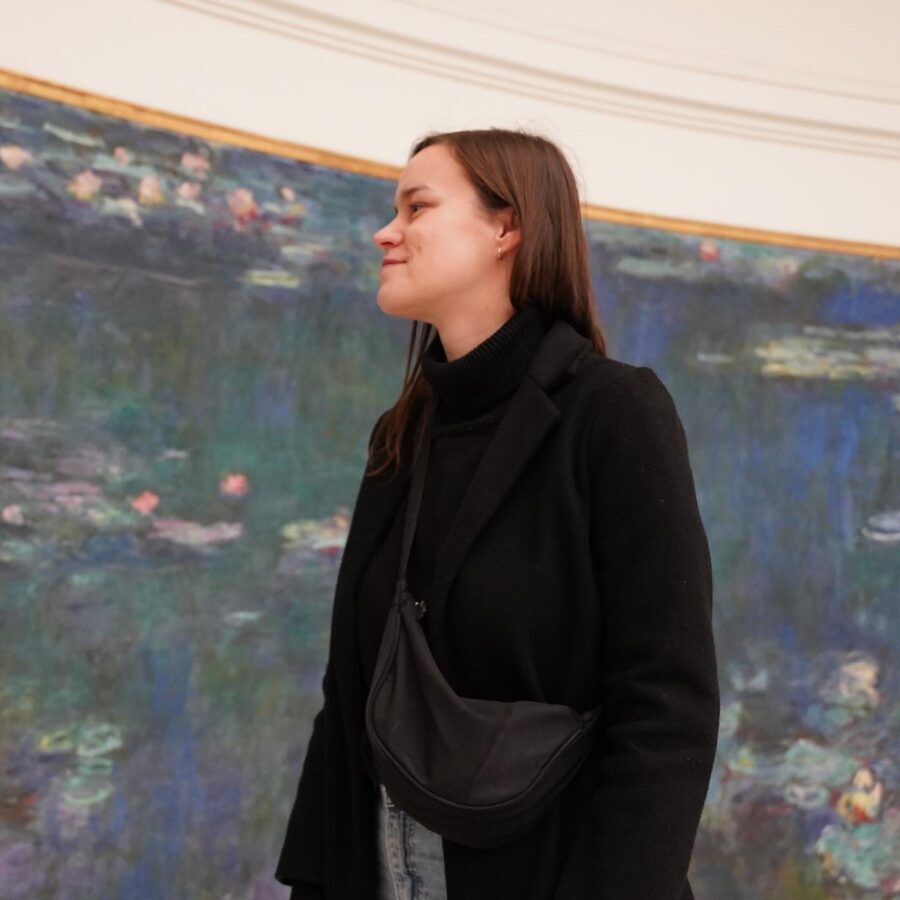
The price stings, but this is where the Orangerie changes from “pretty paintings” to “oh, that’s what he was doing.” A guide points out what you’d otherwise walk past. Our full review covers what the guide actually talks about and which language tours are worth the upgrade. If you want something even more personal, there’s also a fully private version of the tour at a higher price point.
3. Orangerie + Seine River Cruise Combo — $45

This one’s useful in two specific situations: you tried to book direct and got shut out, or you want to knock two things off the list in one afternoon. Our review flags the caveats — the audio guide mentioned in the listing isn’t always provided, so don’t rely on it. The standalone Seine cruise is cheaper if you only want the boat.
How to Get There
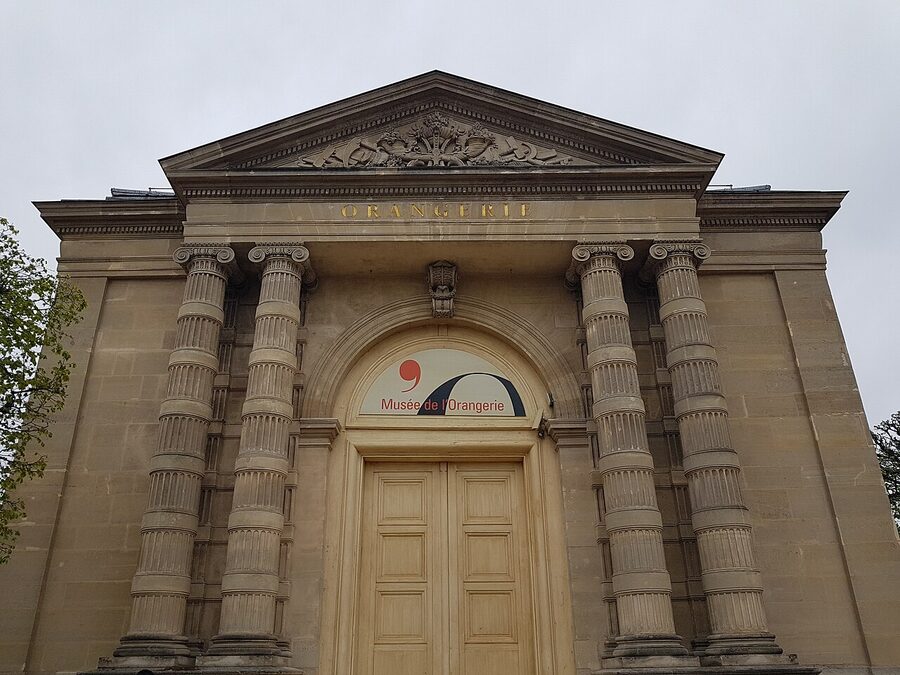
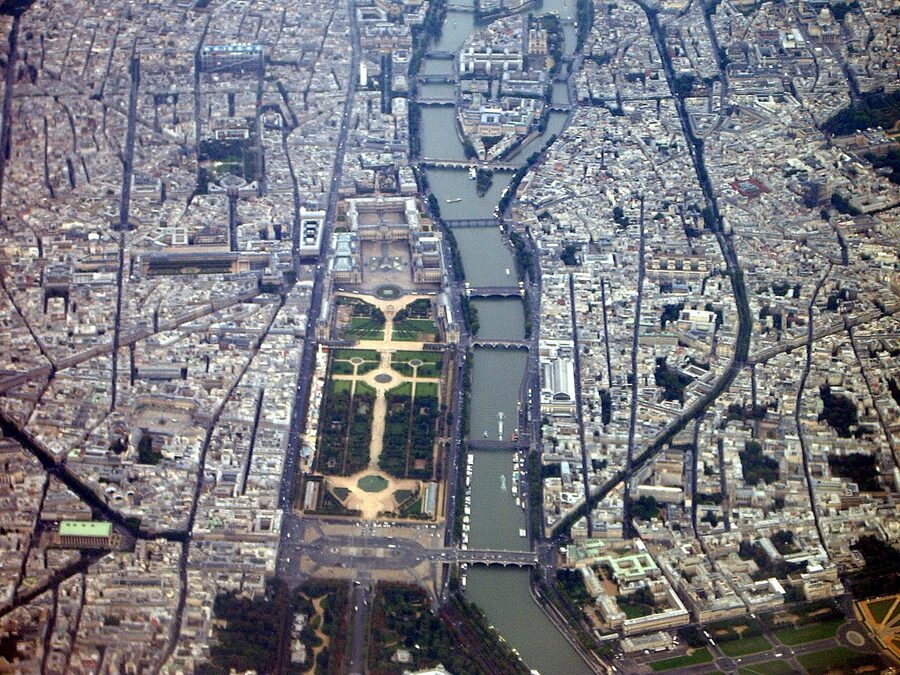
The museum sits at the Place de la Concorde end of the Tuileries Garden. Not in the Louvre end — people mix this up constantly.
Metro: Concorde (lines 1, 8, 12) is the closest. Exit toward Jardin des Tuileries and walk about 200 metres into the garden. You’ll see the low stone building on your right. Two to three minutes.
From the Louvre: Walk straight west through the Tuileries. Fifteen minutes if you don’t dawdle, thirty if you do (and you’ll want to — the garden is a museum of its own).
Bus: Routes 24, 42, 72, 84, and 94 all drop near Concorde.
Taxi / rideshare: Say “Musée de l’Orangerie, Place de la Concorde” — drivers sometimes try to take you to the d’Orsay if you only say “orangerie,” so be specific.
Opening Hours (And When to Actually Go)
The museum is open Wednesday to Monday from 9am to 6pm. Closed every Tuesday. Last entry is 5:15pm. They also close on May 1st, July 14th (morning only, reopens at 2pm), and December 25th.
Here’s the honest timing advice: book the first slot of the day or the last hour before closing. Everything in between is busier, and the oval rooms get crowded enough that the whole “peaceful contemplation” thing falls apart.
First slot on a Wednesday or Thursday in April or October, with the pre-booked Reserved Entrance ticket in hand — that’s the sweet spot. You’ll get ten or fifteen minutes in the oval rooms with fewer than a dozen other people. It’s very different from a Saturday at noon in July, when you’re sharing the space with a hundred people and a dozen tour groups.
Skip the first Sunday of the month unless you love queueing. Free entry brings everyone out, and the line wraps around the building.
What You’ll Actually See: The Two Oval Rooms
Down the ramp from the entry hall, you arrive in the first oval room. Then a narrow passage, then the second oval room. That’s it for the Water Lilies. Two rooms, eight panels, one installation.
The panels are arranged to follow the pond through the day. Room one: morning light on the water, clouds reflected. Room two: late afternoon, willow trees, setting sun. Monet laid them out like a clock, sort of — except he broke the symmetry on purpose so it doesn’t feel like a diagram.
The panels themselves are two metres tall and between six and seventeen metres wide. When you’re standing in the middle of the room, they fill your entire field of vision on both sides. Your peripheral vision stops registering walls and starts registering water. That’s the point.

A few things people miss:
- The benches in the middle are there for a reason. Sit down. The paintings are designed to be seen at eye level from that low position, not standing.
- Look up. The natural light through the ceiling changes everything about the colours. A grey sky makes the paintings cooler; direct sun makes them glow. You’re seeing a different painting at 10am than at 3pm.
- Walk the perimeter slowly. There’s a reason Monet put no corners in these rooms — the image is supposed to be continuous.
- Don’t photograph everything. Your phone can’t capture it. Two minutes of looking beats twenty minutes of framing.

How Much Time to Budget
For the oval rooms alone: 30 minutes minimum, 45 to 60 minutes if you want to sit and really look. For the whole museum including the basement Walter-Guillaume Collection: budget two hours. Three if you’re a slow walker or stop to read every label.
If you’re only here for the Water Lilies and you’re time-crunched — you could do the museum in 45 minutes and not feel cheated. I’ve done it. It’s fine. But the basement is where the museum earns repeat visitors.
The Walter-Guillaume Collection (Don’t Skip It)
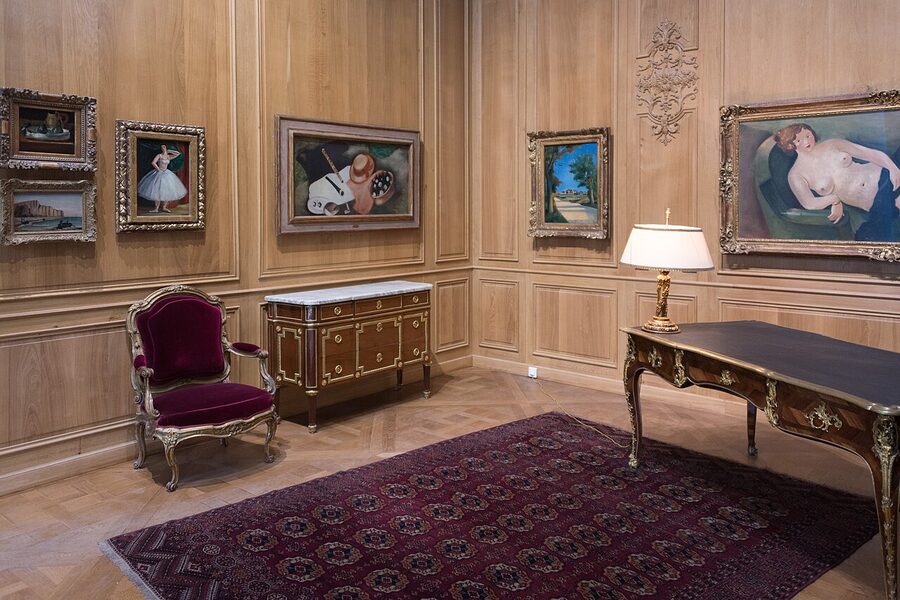
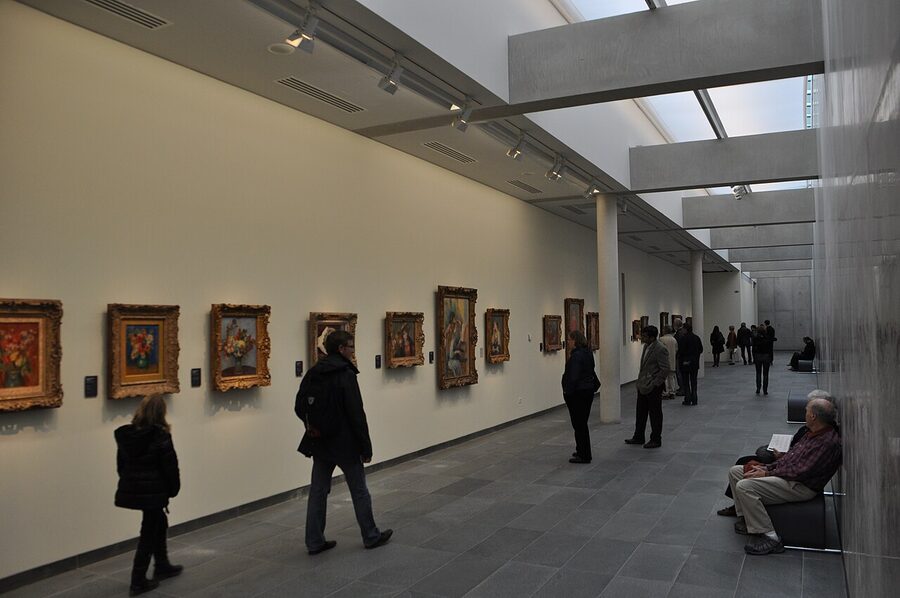
Downstairs you find something most first-time visitors don’t expect: one of the best small impressionist and early-modern collections in Europe. About 146 paintings, built over three decades by the art dealer Paul Guillaume, finished by his widow Domenica and her second husband Jean Walter after Guillaume’s death in 1934.
What’s in it:
- Cézanne: fourteen paintings, including a Madame Cézanne portrait and several of the apples-and-pears still lifes.
- Renoir: twenty-four works — more than most dedicated Renoir rooms.
- Matisse: eleven, including late odalisques.
- Picasso: twelve, spanning his blue and rose periods through the 1920s.
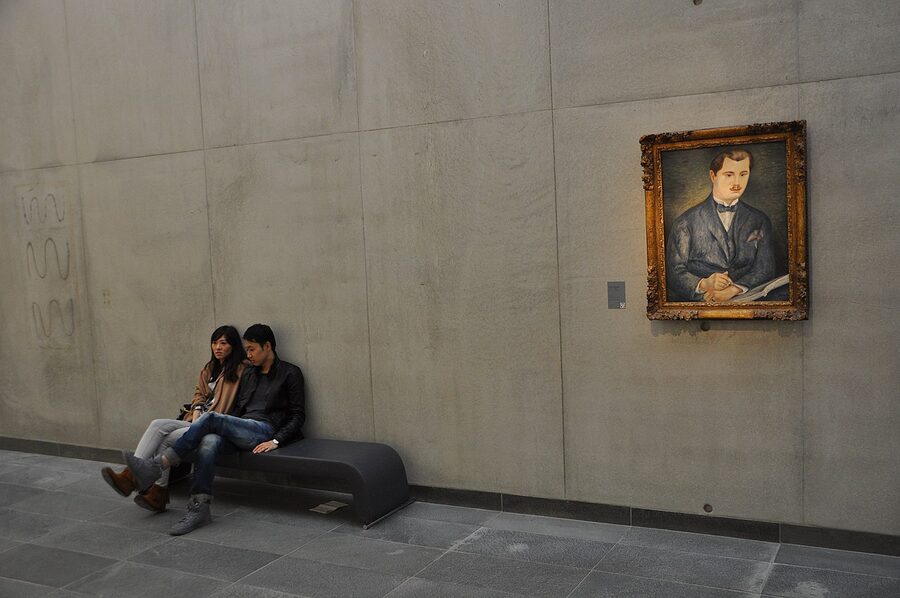
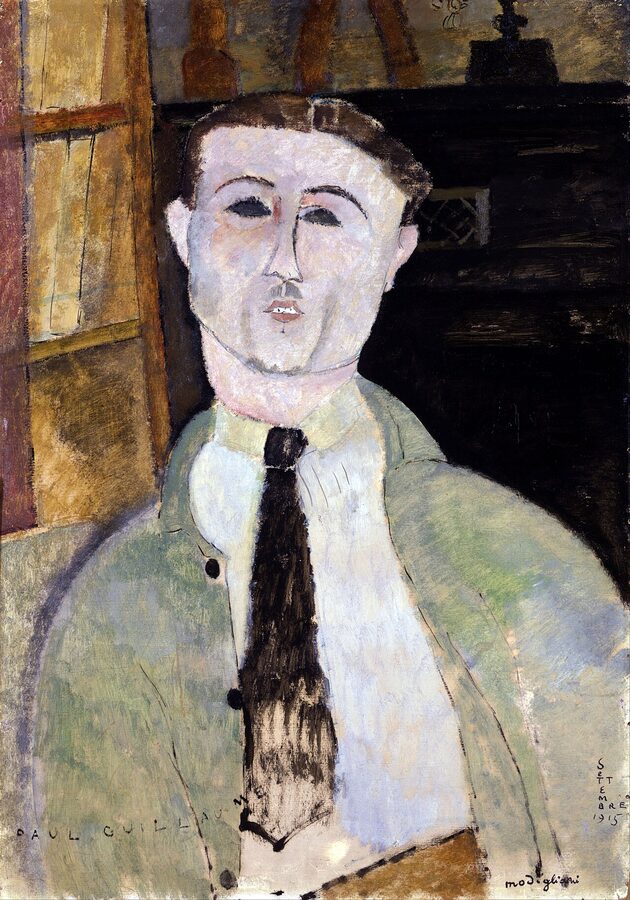
- Modigliani: four, including the Paul Guillaume portrait that hangs in its own small room.
- Derain, Utrillo, Soutine, Rousseau, Laurencin — the supporting cast, all worth the ten minutes.
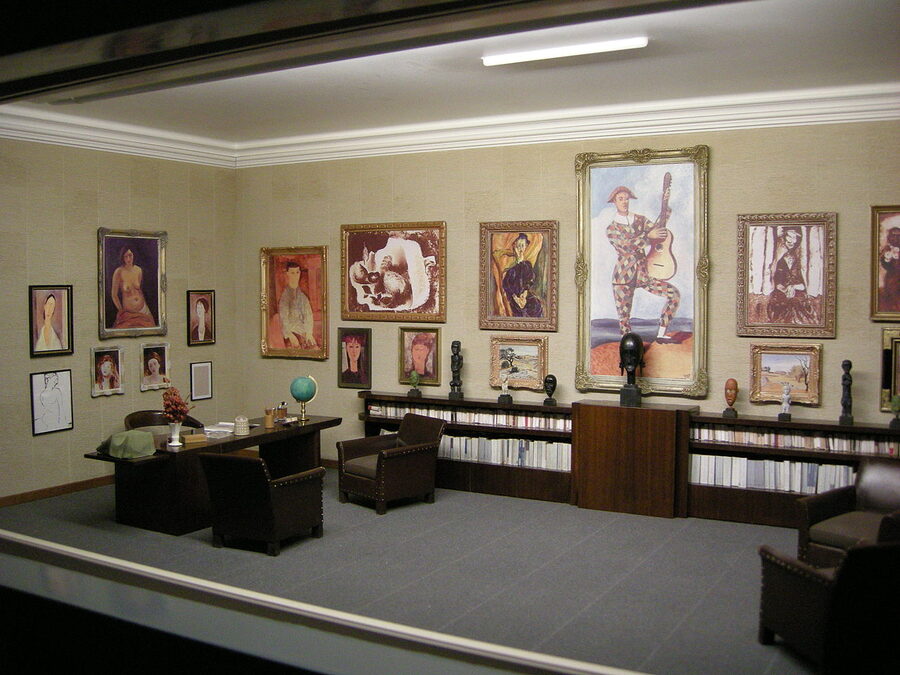
The basement is reconstructed to feel something like Paul Guillaume’s own Paris salon — walls painted specific colours to match how he hung the works in life. It’s a weird, intimate contrast to the white light of the oval rooms. Most visitors burn through it in fifteen minutes. Give it forty.

A Short History of a Strange Building
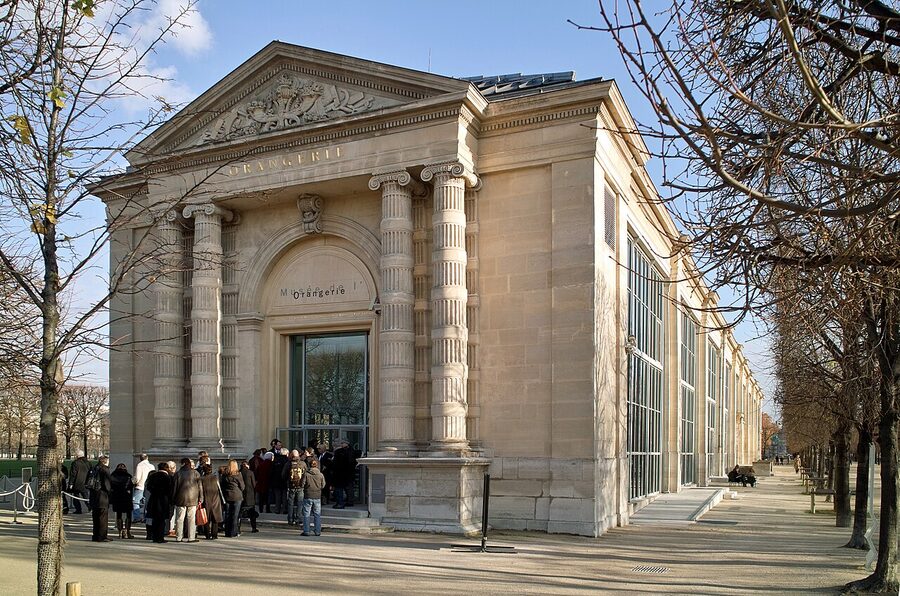
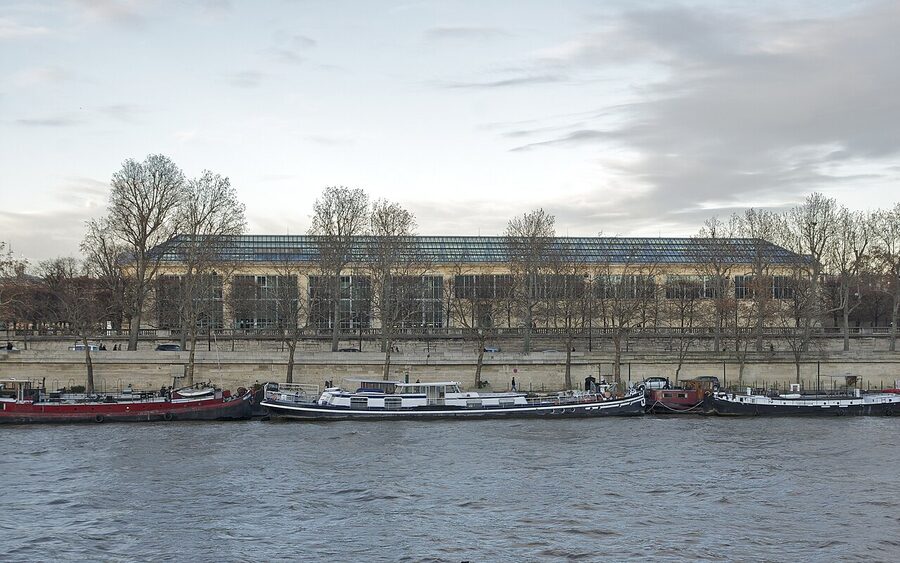
The building is a greenhouse. Napoleon III ordered it built in 1852 to shelter the citrus trees of the Tuileries over winter — oranges, lemons, clementines. Architect Firmin Bourgeois designed it with the south-facing glass wall for heat. The north wall is solid masonry and blank, which is why it looks like a shed from that side and a conservatory from the other.
After 1871 the orange trees left and the building drifted for decades as a storage space, gym, and exhibition hall. Then Georges Clemenceau — the French prime minister who pushed through the Versailles Treaty after World War I, and Monet’s old friend — proposed it as the permanent home for Monet’s Water Lilies in 1921.
Monet donated the paintings to the French state. In return, he got to design the rooms. It took six years. Monet insisted on the east-west orientation of the ovals so the light would match the paintings. The skylights were engineered to diffuse direct sun into even overhead light — the effect you see today was baked into the architecture before the paintings arrived.
A bombing raid in 1944 damaged the skylights. The building was restored. The Walter-Guillaume Collection moved in between 1959 and 1984 in pieces. A major renovation from 2000 to 2006 excavated the basement and put the Monet panels back on their original layout after decades of being re-hung wrong.
The Monet-Clemenceau Story
One detail that makes this place hit differently: Monet was nearly blind when he finished the panels. Cataracts in both eyes. He had surgery in 1923. He re-worked the panels after the surgery because the colours he’d painted turned out not to be what he thought.
Clemenceau — the politician who signed the treaty that ended the First World War — sat with Monet through the last years and pushed him not to destroy the panels when Monet wanted to. Monet died in December 1926, weeks before the rooms opened. He never saw the installation he designed.
What to Do Around the Museum
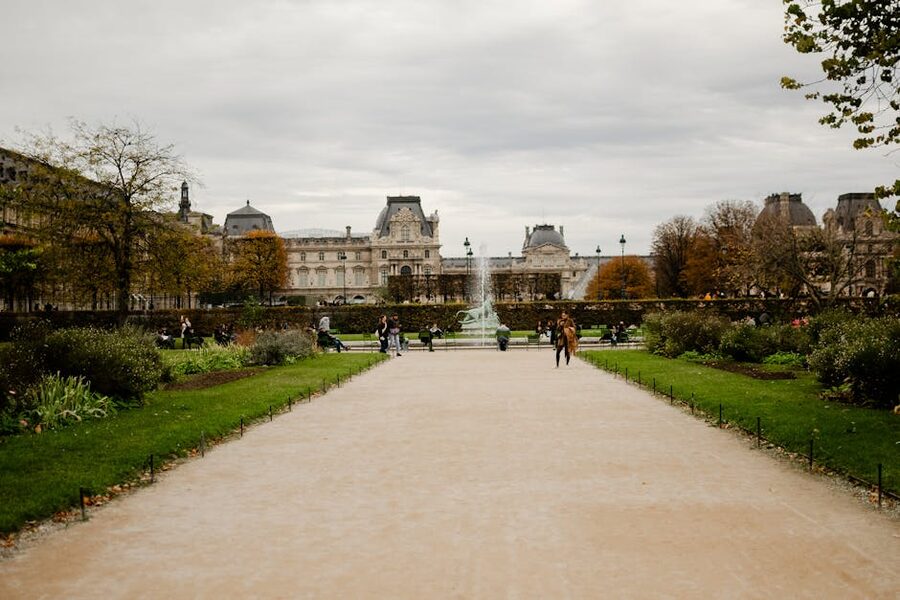
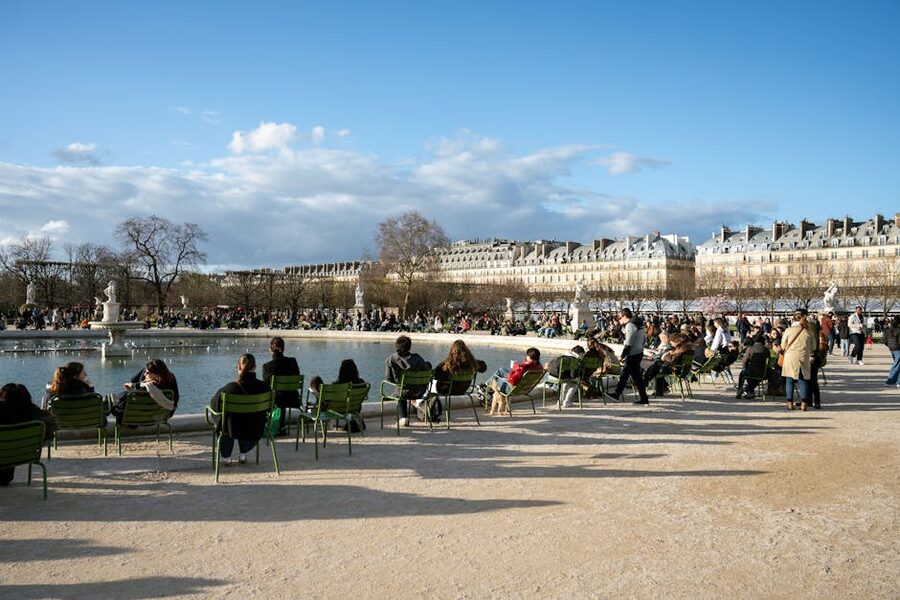
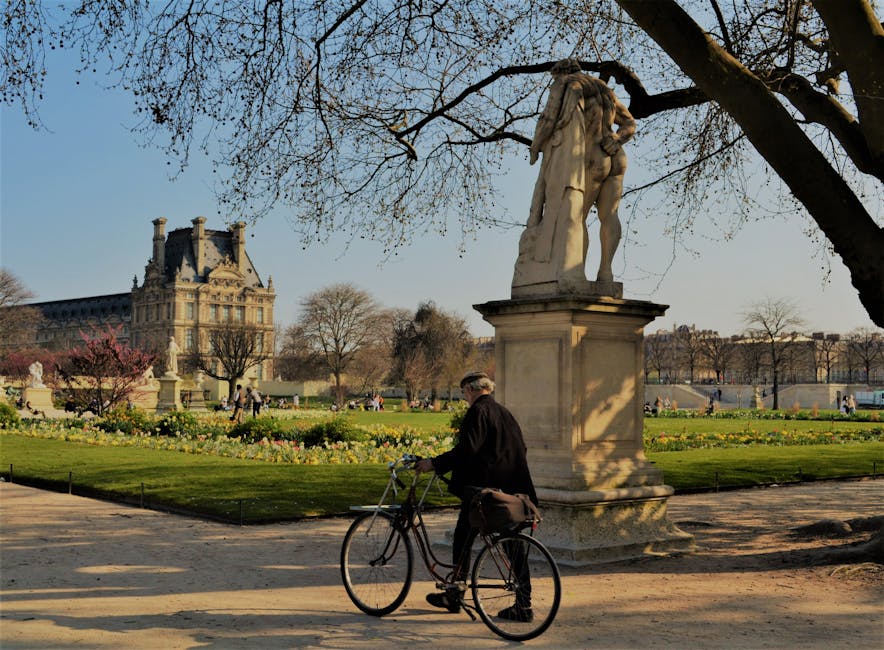
The Orangerie sits in the southwest corner of the Jardin des Tuileries, which is itself one of the nicer free things to do in central Paris. Come early, wander the gardens for thirty minutes, visit the museum, then walk out and do whatever’s next.
Within a ten-minute walk:
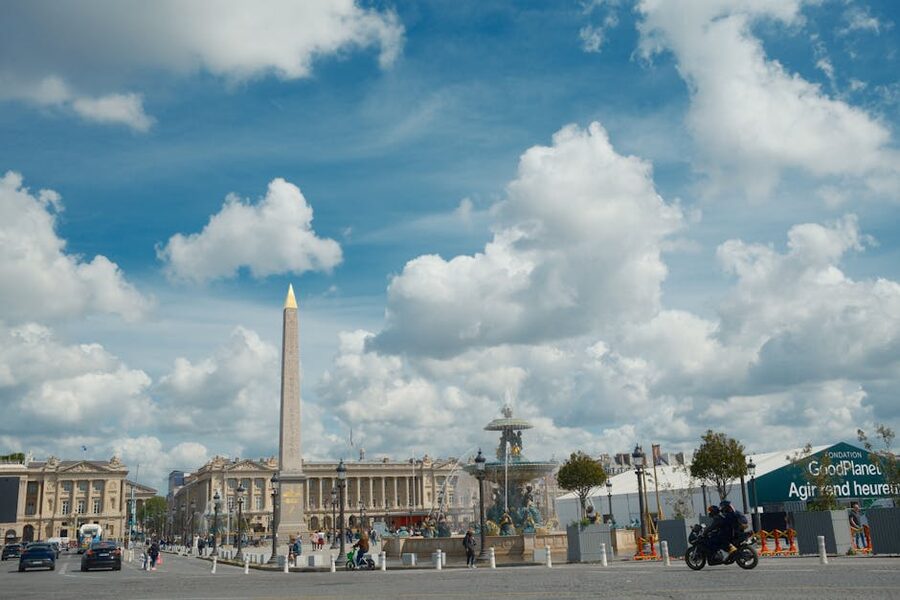
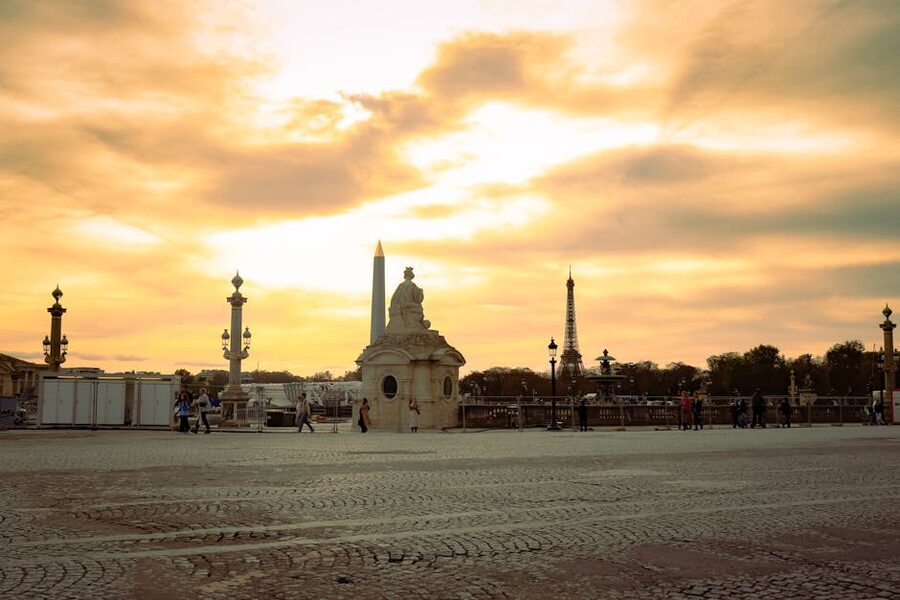
- Place de la Concorde — the huge octagonal square right outside, with the Luxor Obelisk in the middle. Worth five minutes to cross and see the Eiffel Tower framed down the Champs-Élysées.
- Jeu de Paume — the Orangerie’s sister building at the opposite end of the gardens. Contemporary photography and video. Often overlooked.
- Musée d’Orsay — directly across the Seine via the Pont Royal, about fifteen minutes on foot. The natural pairing if you’ve got half a day.
- The Louvre — east end of the Tuileries, fifteen minutes away. Too much to combine into one day with the Orangerie unless you pace it carefully.
- Rue Saint-Honoré — behind the Tuileries to the north. The shopping street, though prices get eye-watering around Place Vendôme.
- A golden-hour Seine cruise from Port de la Bourdonnais, five minutes’ walk from the Pont de la Concorde. If the Orangerie is your afternoon visit, this lines up for dinner time.
Food Nearby
The Orangerie’s own café is fine — coffee, sandwiches, small plates, overpriced but convenient. The Tuileries cafés between the ponds are tourist-priced and not great value.
Better: walk north across Rue de Rivoli to Angelina (226 Rue de Rivoli) for the famous thick hot chocolate, though the queue is ridiculous. Or go a block further to the Saint-Roch district for actual neighbourhood lunch spots — there’s a cluster of them around Rue Saint-Roch and Rue des Pyramides where locals eat.
For a cheap sandwich and a coffee to sit on a Tuileries bench with: the kiosks near the central basin will do it for about €8–€12.
Practical Things People Ask
Is the museum accessible?
Yes. Lifts cover all three levels (ground, ramp, basement). There are accessible toilets on each floor. The oval rooms have fold-out seating on request. Staff speak enough English to help, though French-first is the default.
What about bags?
Backpacks and large bags go in the cloakroom at the entrance — mandatory, not optional. It’s free. Small handbags are fine.
Can you take photos?
Yes, without flash, for personal use. No tripods, no selfie sticks. Videos of the oval rooms are technically allowed but staff sometimes wave you off if you’re blocking other visitors.
Is there an audio guide?
Yes — €5 extra from the ticket desk. The free museum app covers most of the same ground if you’re happy reading on your phone. Worth it for the basement; skippable for the oval rooms (where the point is to look, not listen).
Which entrance door should I use?
There’s one public entrance, on the north side of the building, facing the Tuileries. Not the door on the Seine side — that’s staff-only. Reserved ticket holders have a dedicated lane at the same door.
How early should I arrive for my slot?
Fifteen minutes. You clear security and the cloakroom, and you’re inside at your slot time. Earlier than that and you’ll just wait outside.
Monet Beyond the Orangerie
If the oval rooms leave you wanting more, there are three other Monet places in and near Paris worth considering:
Musée Marmottan Monet in the 16th arrondissement holds the world’s largest collection of his works — 94 paintings including Impression, Sunrise, the painting that gave the movement its name. Less tourist pressure than the Orangerie or d’Orsay, and a good half-day.
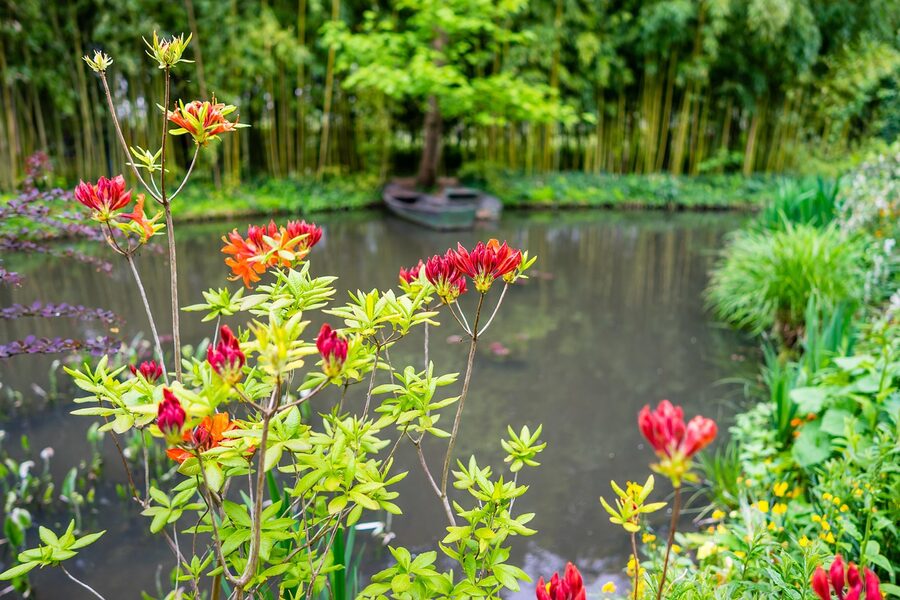
Monet’s house and water garden at Giverny, roughly 75km west of Paris. A full day — train from Saint-Lazare to Vernon, then shuttle. Only open April to November. The pond that appears in the Water Lilies is the real physical pond he kept designing and redesigning for thirty years.
Musée d’Orsay, across the river, holds another dozen Monets plus the definitive rooms on impressionism as a whole movement. The combined ticket is the obvious play if you’re doing both.
A Few Honest Downsides
The Orangerie isn’t perfect. Some things worth knowing:
- It’s small. If you’re travelling with someone who wants a big museum experience and you only have one slot, this isn’t it — send them to the Louvre and come here by yourself or with a fellow art person.
- The temporary exhibitions vary wildly. Sometimes they’re essential. Sometimes they’re a weak contemporary show shoehorned into two rooms. Check what’s on before paying the bump.
- Summer crowds are real, even with timed entry. Mid-July on a Saturday in the oval rooms at 1pm is not the experience you’re hoping for.
- The basement labels are French-first with English translations that are sometimes short and stiff. The audio guide or app fixes this.
- Children under about ten will not get much out of this. There’s nothing to touch, the rooms are quiet, and the oval benches fill up fast.
Still More Paris Museum Tips
The Orangerie pairs naturally with a few other Paris stops we’ve written about. If you’re spending three or four days here, the pattern that works best is: the Louvre on day one for breadth, the Orangerie and Musée d’Orsay on day two for depth on impressionism specifically, then a non-art day — maybe a Seine cruise at golden hour, a trip out to Versailles, a climb to the Eiffel Tower summit, or an afternoon at Les Invalides if Napoleonic history is your thing. Doing three art-heavy museums back-to-back will fry you. The Orangerie’s gift is that it’s short and clean — use that rather than crowding the day around it.
One last thing. The stranger on the bench in the oval room, fifteen years of Paris trips — she told me the trick was to look at one panel for ten solid minutes without moving. Not a whole room. Not the whole series. One panel. Try it. The paintings stop being paintings and start doing something else.