
There are 17 rabbits living on the lawn of one of the most visited war museums in Europe, and since 2022 it’s technically illegal to remove them. That’s the kind of detail nobody tells you about Les Invalides before you go. The dome you can see from half of Paris houses Napoleon’s sarcophagus. The building itself was a functioning veterans’ hospital for 300 years. And outside, on the esplanade, is the biggest protected rabbit colony in the city after Bois de Boulogne.
Here’s how to actually book a visit, what’s inside, and which three tickets are worth paying for.

- Short On Time? Three Invalides Tickets Worth Booking
- What Les Invalides Actually Is
- The Napoleon Part — Why Most People Come
- Booking Tickets — What You Actually Need to Know
- Which Ticket Type to Pick
- Three Tickets and Tours Worth Booking
- 1. Les Invalides: Napoleon’s Tomb & Army Museum Entry —
- 2. Paris: Aura Invalides Immersive Experience —
- 3. Army Museum: Invalides and Napoleon’s Tomb Guided Tour — 7
- The Army Museum — Don’t Skip It
- The Dôme Up Close
- The Free Parts
- Getting There
- What to Combine It With
- Hours, Opening, and the Small Print
- When to Go
- The Rabbits, Actually
- Planning the Rest of Your Paris Week
Short On Time? Three Invalides Tickets Worth Booking
- Les Invalides: Napoleon’s Tomb & Army Museum Entry — $20. The flagship entry ticket. Covers the tomb, the Musée de l’Armée, and the Saint-Louis church. Priority access, valid all day.
- Paris: Aura Invalides Immersive Experience — $33. A 50-minute after-dark light-and-sound show projected inside the Dôme itself. Completely different experience from the daytime visit.
- Army Museum: Invalides and Napoleon’s Tomb Guided Tour — $117. A 90-minute guided walk with a historian who cuts through the military collections and tells you what you’re looking at. Small-group, best for first-timers.
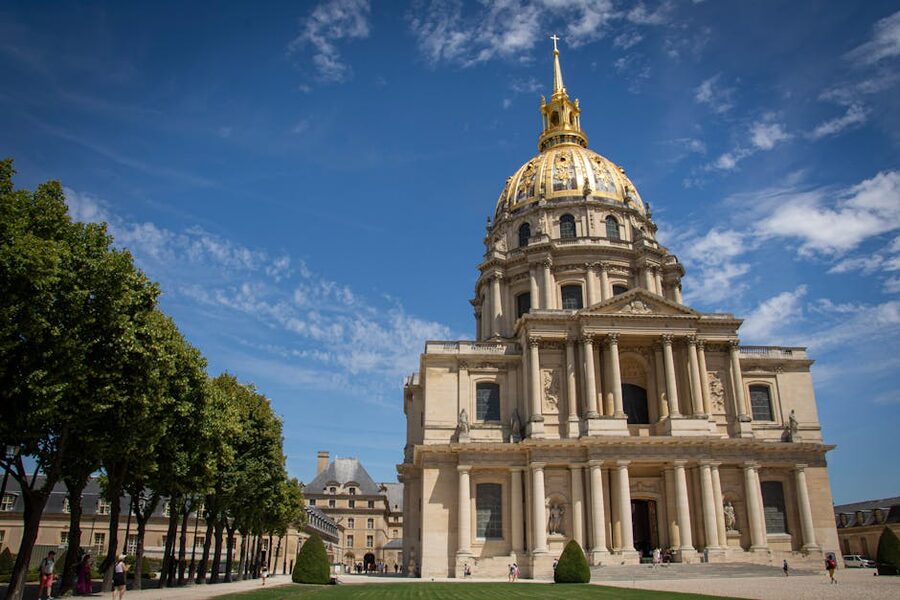
What Les Invalides Actually Is
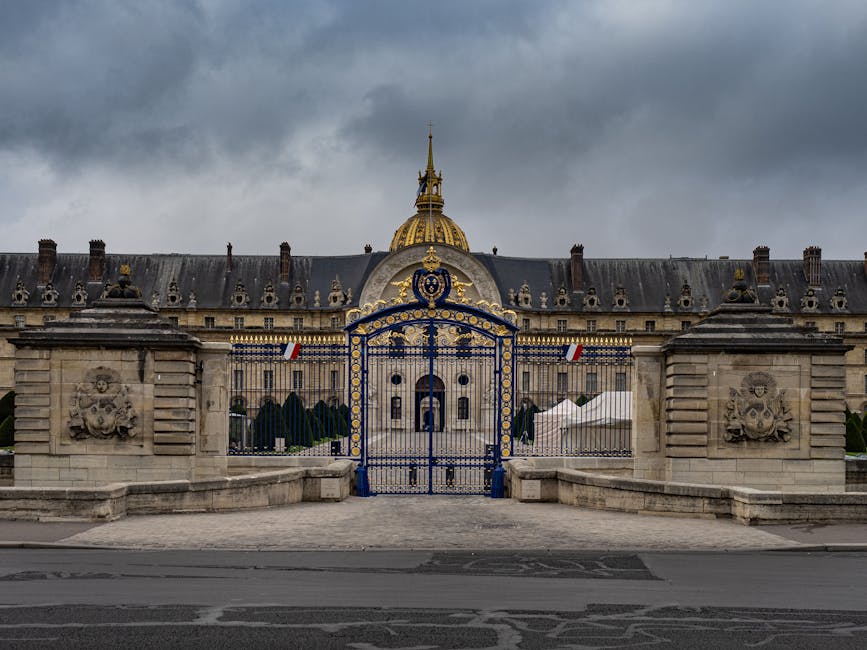
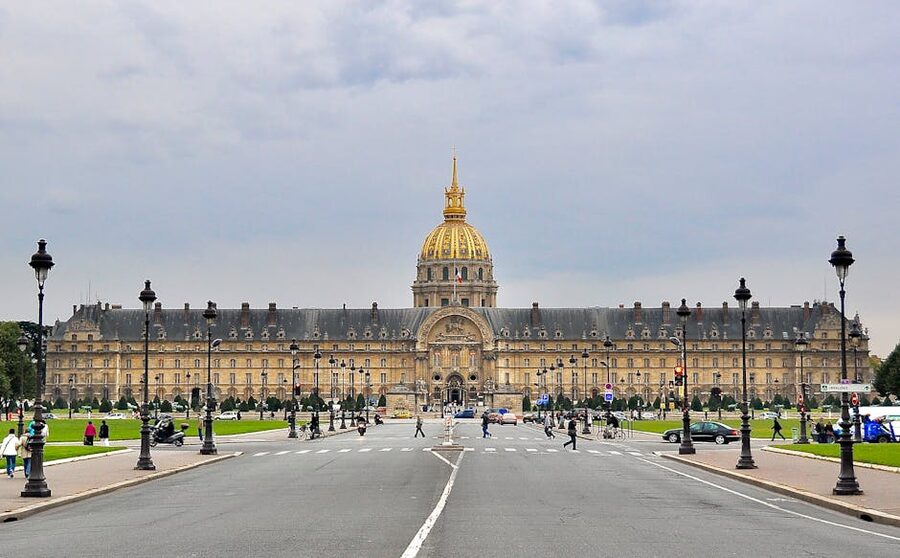
Calling it a single thing is the first confusing bit. Les Invalides isn’t a museum. It’s a complex of 15 courtyards, two churches, a military hospital, a ministry of defence office, and two separate museums, all inside one enormous 17th-century walled compound on the Left Bank.
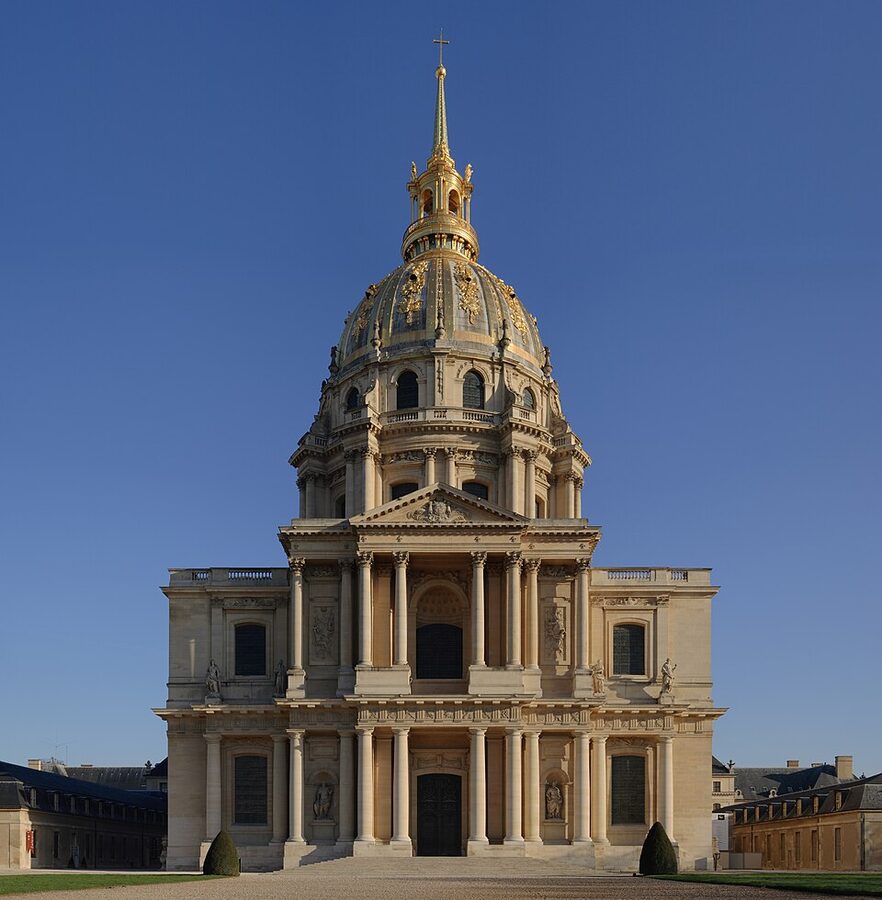
Louis XIV built it starting in 1670 as housing for injured and aging war veterans. At its peak it sheltered 4,000 men. Soldiers who had spent their whole adult lives in the army and had nowhere else to go lived here, ate here, worshipped in the chapel next door, and were buried in the adjacent cemetery. The site still houses about a hundred veterans today in a small residential wing most tourists never see.
The bit you can visit as a tourist is three things stitched together:
- The Dôme des Invalides — the gold-domed church, finished in 1706, that now contains Napoleon’s tomb and the remains of about 20 other French military figures.
- The Musée de l’Armée — the army museum, one of the five most-visited museums in Paris, covering 600,000 artefacts from medieval armour to World War II.
- The Cathédrale Saint-Louis — the adjoining soldiers’ church, still in use, free to wander.
One ticket covers all three. The gardens, the Cour d’Honneur, and the esplanade are free.
The Napoleon Part — Why Most People Come
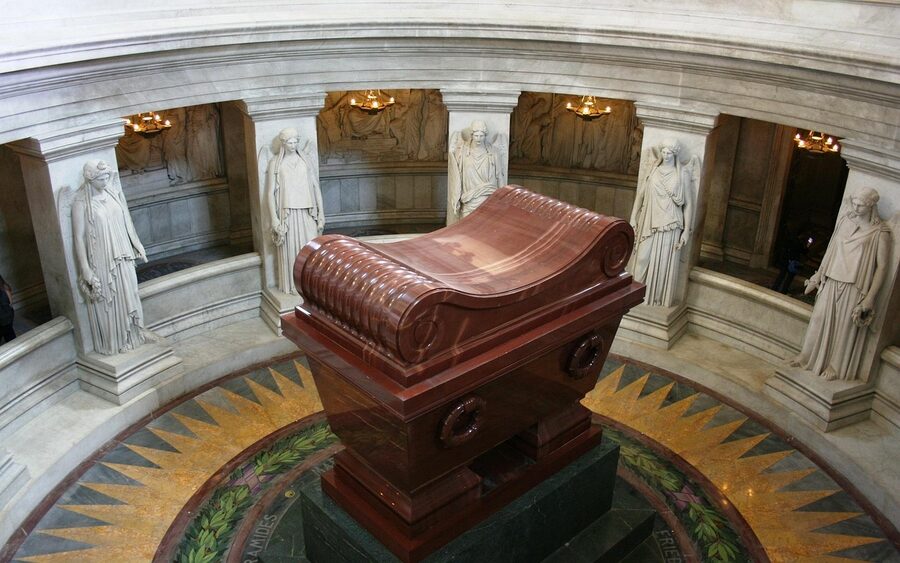
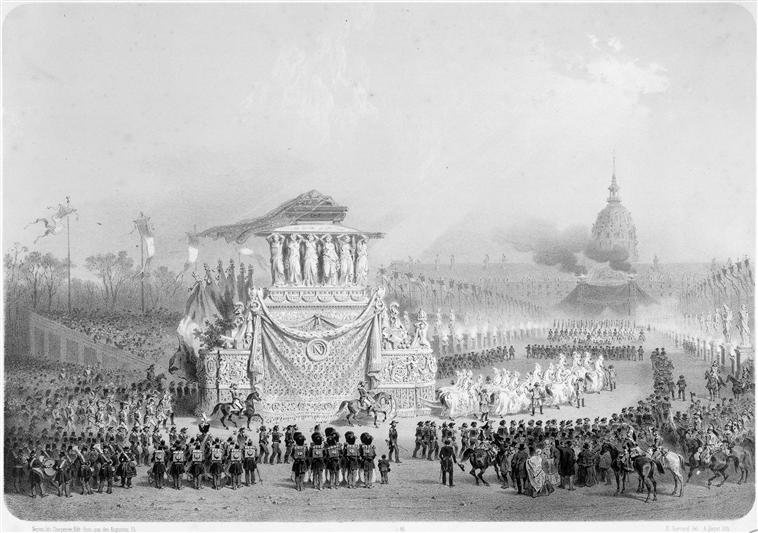
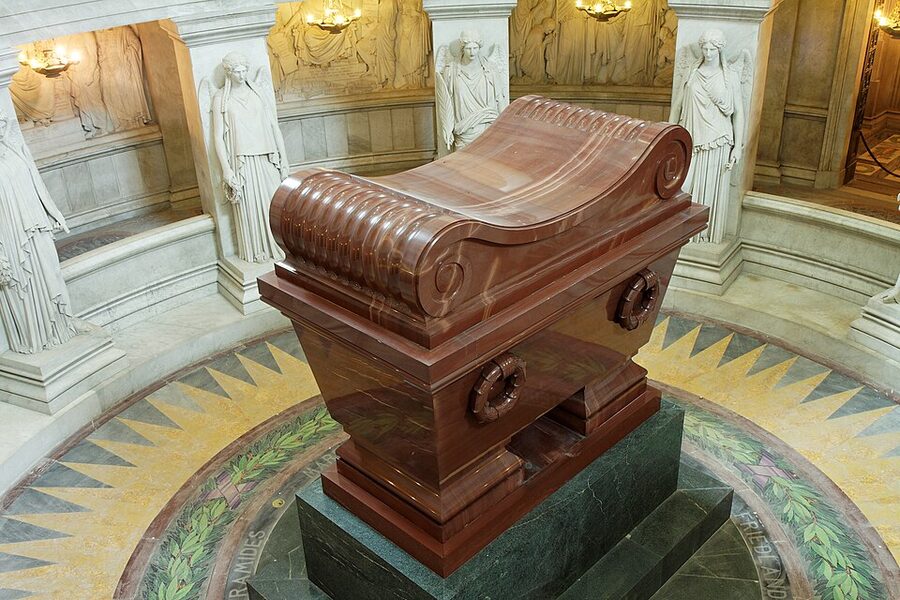
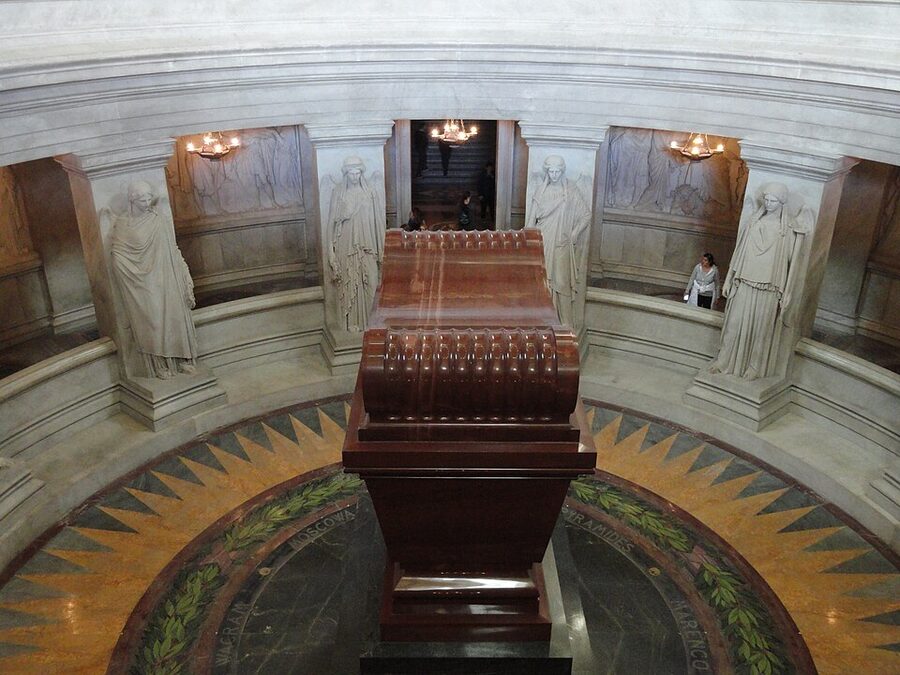
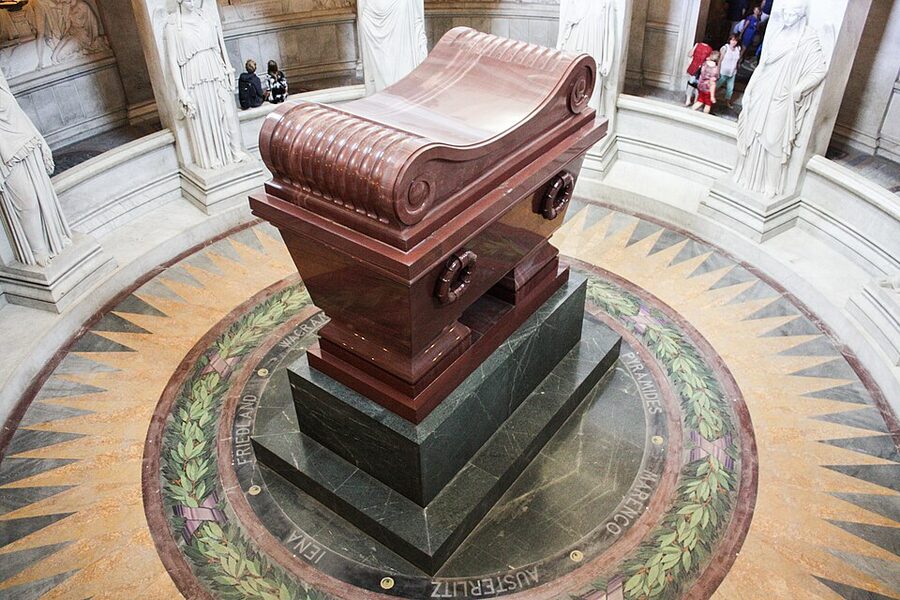
Let’s be honest — most people who visit Les Invalides are here for one thing, and it’s sitting under that dome. Napoleon died in 1821 in exile on Saint Helena, where the British kept his body for 19 years before finally letting France bring him home. In 1840 his remains were shipped back, paraded up the Champs-Élysées, and laid in the Dôme. The sarcophagus wasn’t finished until 1861.

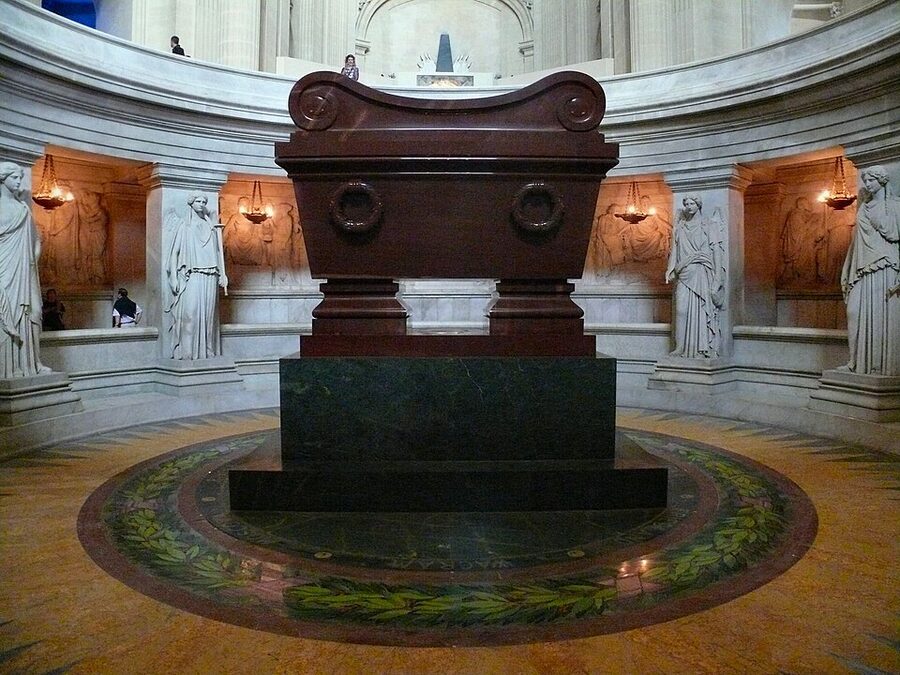
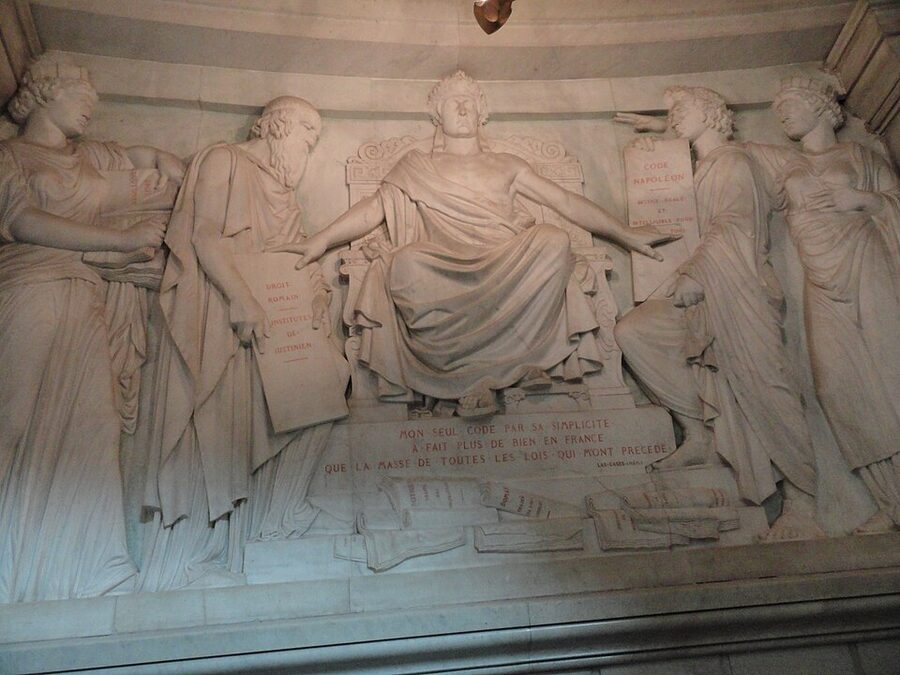
The room is genuinely impressive. The crypt is sunk below floor level so you look down at the sarcophagus from a circular balcony. The ceiling is a Baroque painting by Charles de La Fosse, gold and blue and busy. Twelve marble statues of Victories surround the tomb. The whole thing was designed to be a pilgrimage site, and it still reads like one.
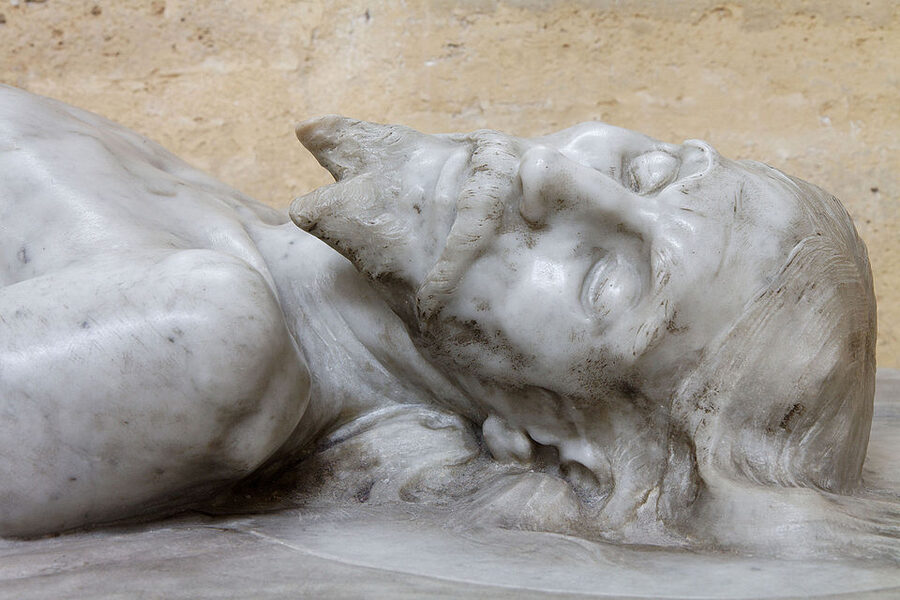
A few things I wish I’d known before my first visit. Napoleon is not the only person buried here — his brothers Joseph and Jérôme are in the side chapels, as is his son (who died at 21 of tuberculosis, in exile in Austria, and was only returned to Paris in 1940 by Hitler of all people). Marshal Foch, who commanded Allied forces in 1918, is in a massive side tomb that’s often more interesting architecturally than Napoleon’s. And Vauban — the military engineer who designed most of France’s fortress system — is buried here too, but only his heart. His body is in his home village in Burgundy.
Booking Tickets — What You Actually Need to Know
Good news first. Les Invalides is one of the easier Paris tickets to book, and it doesn’t sell out the way the Louvre or the Eiffel Tower summit do. Same-day tickets are almost always available on the official site, at the gate, or through any of the third-party platforms. I’ve walked up on a Saturday in July and been inside within ten minutes.
The flagship ticket is €16 adult, €14 reduced, and it covers entry for the same day to the tomb, the Army Museum, and Saint-Louis-des-Invalides. Under-18s and EU residents under 26 are free. Pre-booking online saves you maybe 5-10 minutes in the queue at peak times, and that’s about the only reason to bother.
The one time I’d tell you to book ahead is the first Friday of every month, when the site stays open until 10pm for the “Nocturnes” programme. The late-night slots fill up because the light show and the piano recitals bring in a local Parisian audience, not just tourists. If you want the evening light experience without building your whole trip around a specific Friday, the Aura show runs almost every night of the year.
Which Ticket Type to Pick
There are really only three options worth considering, and they map cleanly to how much time you have:
- Entry ticket ($20) — you get the tomb, the Army Museum, and the church. Takes anywhere from 90 minutes to a full day depending on how into military history you are. Most visitors do it in two hours.
- Aura show ($33) — this is a separate evening ticket, not an add-on. The show runs twice a night from around 7pm. If you’re staying near the 7th arrondissement after dinner, it’s a genuinely different way to see the Dôme. You sit inside the rotunda while the walls become the screen.
- Guided tour ($117) — you’re paying mostly for the guide. The entry fee is baked in. Worth it if you want context on the Napoleon myth, the restoration of the monarchy, and why the French are still slightly confused about how to feel about all of it. If you want an even smaller group with a Louis XIV angle, our semi-private 8-person tour review breaks that one down.
There’s a combined Paris Museum Pass that includes Les Invalides plus about 50 other sites. If you’re already planning three or four museums it pays for itself. If this is the only historical site on your list, buy a single Invalides ticket.
Three Tickets and Tours Worth Booking
1. Les Invalides: Napoleon’s Tomb & Army Museum Entry — $20

The default ticket and the one I’d recommend 90% of the time. It’s a near-official product — the platform just handles the digital ticket and the priority lane. Our full review breaks down the entry procedure and where to use the QR code. One under-$25 ticket, valid all day, in and out as many times as you want. Hard to go wrong.
2. Paris: Aura Invalides Immersive Experience — $33

This one surprised me. I expected generic video mapping and got a proper 50-minute narrative inside the actual rotunda, with the architecture as the screen. You move through six chapels during the show, not just sit in one spot. Evenings only, separate ticket, and it pairs really well with dinner on rue Saint-Dominique beforehand. The Aura Invalides review goes into the narrative structure and which seat angles work best.
3. Army Museum: Invalides and Napoleon’s Tomb Guided Tour — $117
The Musée de l’Armée is massive and most people wander aimlessly for 40 minutes before giving up. A guided tour fixes that. This one is 90 minutes, small groups, and the guides know the difference between a cuirassier’s breastplate and an infantry kit. Our guided tour review has notes on which sections they cover and how much time you get at the tomb. Worth it if it’s your first Paris visit and military history interests you at all.
The Army Museum — Don’t Skip It

Roughly 60% of visitors walk through the Musée de l’Armée on autopilot, already thinking about getting back to the metro. That’s a mistake. It’s genuinely one of the best military museums in Europe, and your ticket already covers it. Here’s what’s actually worth slowing down for:
The medieval and Renaissance armour hall. Ground floor, east wing. Over 500 pieces, including children’s suits commissioned for princes and jousting armour that weighs 35kg. François I’s personal parade armour is here. So is a full horse barding set that makes you realise how enormous chargers actually were.

The Two World Wars section. Second floor, west wing. Much bigger than most people expect. The WWI galleries have individual soldiers’ letters home, uniform stains, trench objects, and a reconstructed trench section. The WWII wing includes the French Resistance and a lot of de Gaulle material — the museum shares the building with the Musée de l’Ordre de la Libération, which is covered by the same ticket.
The Historial Charles de Gaulle. A semi-underground wing on its own. A proper immersive biographical museum — video walls, audio exhibits, the works. Worth about 30 minutes. It’s quieter than the rest of the complex and often feels half-empty.
Napoleon I and the Second Empire. First floor, covering the revolutionary wars through to Napoleon’s hat (which is here — the small bicorne he wore at Eylau). His horse Vizir is stuffed and on display. Camp bed, field uniforms, sabres. Slightly morbid, very effective.
The Dôme Up Close

A few practical things people don’t mention. You enter the Dôme through a separate entrance from the Army Museum — around the south side, next to the Vauban ticket office. Same ticket, different door. Don’t waste twenty minutes wandering the museum looking for an interior connection.
Best time of day for photos is late afternoon, when the sunlight hits the west windows and floods the painted dome. Tripods aren’t allowed but handheld is fine and the building is bright enough that you don’t need one. Flash is off-limits in the crypt — there’s a guard whose entire job is reminding people of this.
If you have time, walk down into the crypt itself. Most people stop at the balcony. The descent takes you past the side chapels where Joseph Bonaparte (made King of Spain), Jérôme Bonaparte (King of Westphalia), and the Duc de Montebello are buried. The stone gets colder as you go down. It’s a weird bit of Paris most tourists miss.
The Free Parts
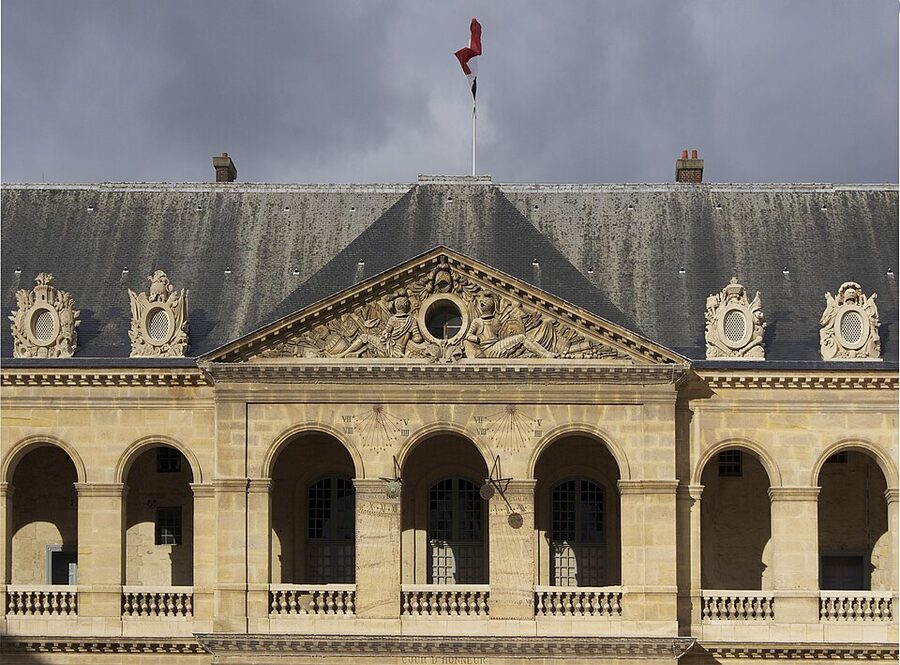
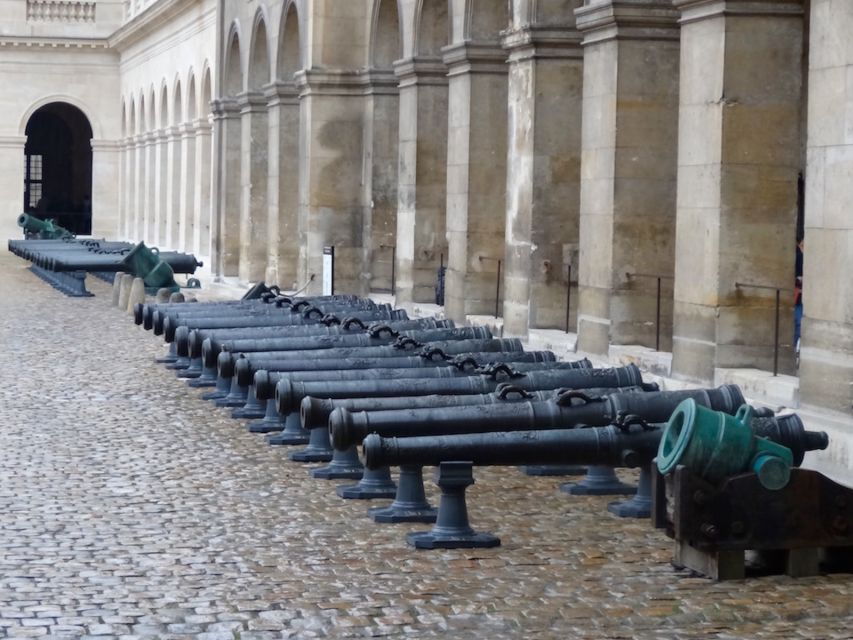
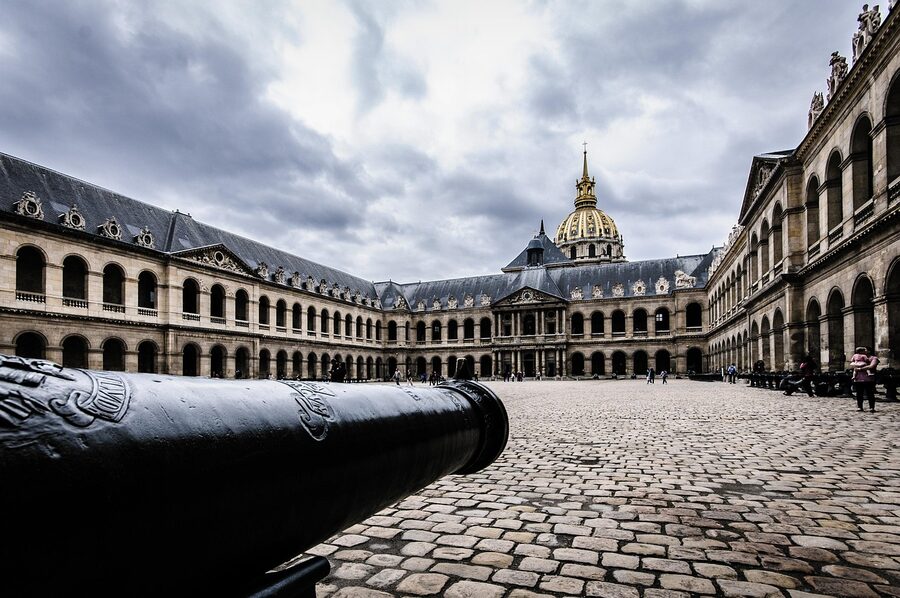
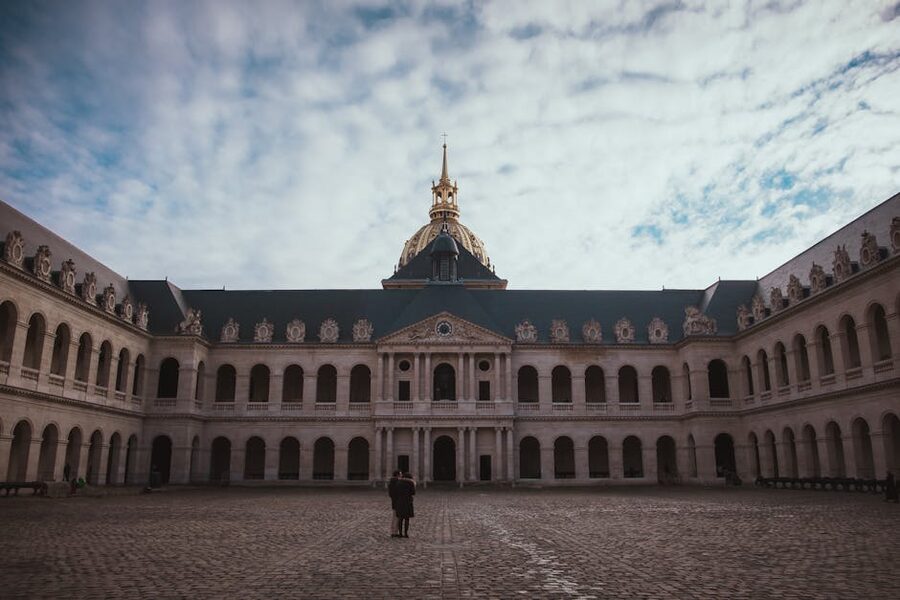
A surprising amount of Les Invalides is free. The esplanade, the Cour d’Honneur (the central parade ground with the cannon collection lined up along the walls), the gardens, and the Cathédrale Saint-Louis-des-Invalides — the soldiers’ church — are all walk-in. You don’t need a ticket. You don’t go through security for any of this.
The Saint-Louis church is the one to pop into if you have ten minutes. It’s still a functioning Catholic church, still holds funerals for French military officers. The walls are hung with captured enemy flags — over a hundred of them — taken from campaigns going back to the Napoleonic wars. Officially they’re consigned to rot in place. When a flag disintegrates it’s not replaced.
Getting There
Les Invalides has four nearby metro stations and a dedicated RER stop. In order of closeness to the ticket offices:
- La Tour-Maubourg (Line 8) — two minutes from the Vauban south entrance. My usual choice.
- Varenne (Line 13) — four minutes. Right next to the Rodin Museum, so pair them.
- Invalides (Lines 8 and 13, plus RER C) — four or five minutes. The station is named after the building but it’s actually slightly farther than Tour-Maubourg from the ticket office.
- École Militaire (Line 8) — eight to ten minutes through the esplanade. Scenic, slow.
The Batobus river shuttle stops at the Invalides dock on the Seine — it’s a useful option if you’re combining the visit with a river cruise. A single-entry Batobus ticket is €19 for the day, so it only makes sense if you’re hopping on and off. We cover the Seine options in detail in our Seine cruise booking guide.
What to Combine It With
Les Invalides sits in one of the densest tourist clusters in Paris, which is actually useful. You can combine it with:
- Rodin Museum — 450 metres from the Vauban entrance. Small, beautiful, underrated. An hour is plenty.
- Eiffel Tower — 15 minutes on foot via the Champ-de-Mars. If you’re going up, our Eiffel Tower booking guide covers the summit-ticket process.
- Musée d’Orsay — 20 minutes on foot along the Seine, or three stops on the RER C. If you’re pairing art and history, the Orsay ticketing guide has the details.
- Musée de l’Orangerie — just across the river in the Tuileries. Tiny, different mood, best for Monet’s water lilies. See how to visit the Orangerie for timing.
- Pont Alexandre III — the most ornate bridge in Paris, free, directly in front of the building. You can see the Dôme from the middle of it.
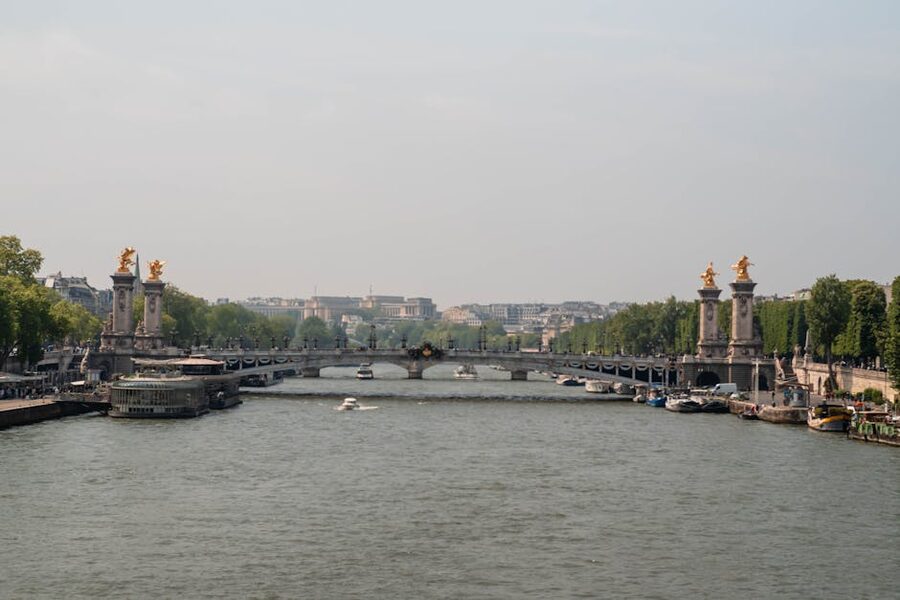
On a compressed day, I’d do Invalides in the morning (opens at 10), walk to the Rodin after lunch, then finish at the Eiffel Tower at sunset. That’s a realistic triangle with no metro rides.
Hours, Opening, and the Small Print
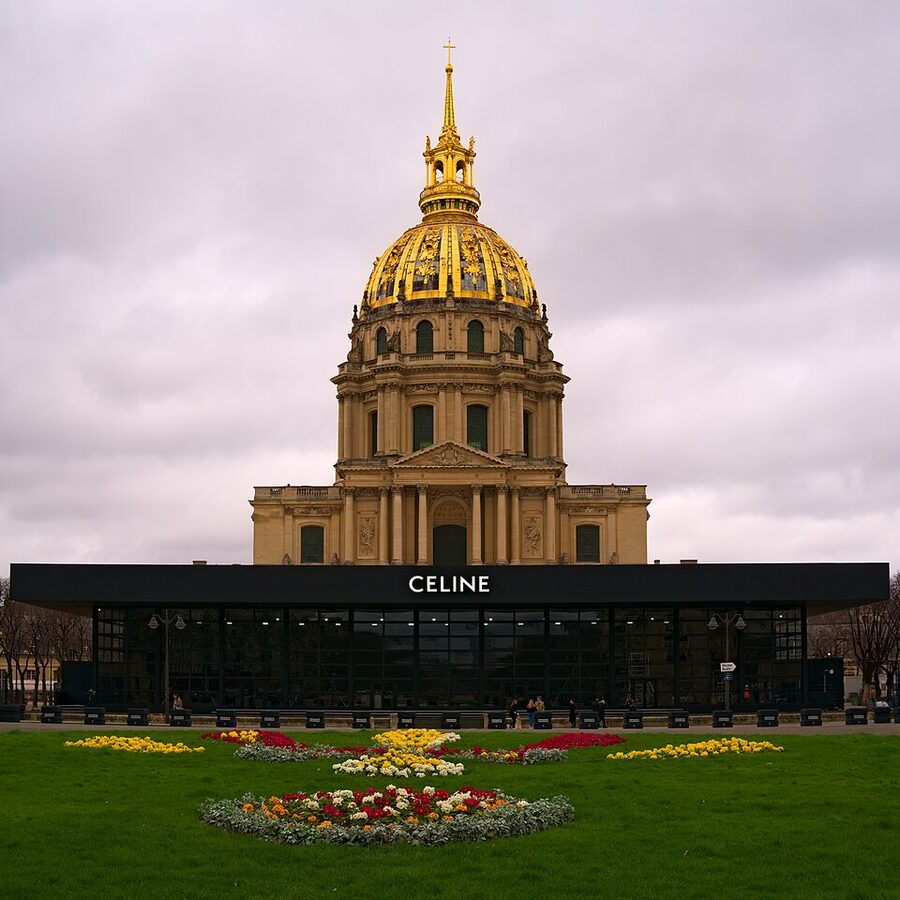
Open daily from 10am to 6pm, with final admission at 5.30pm. The Dôme stays open until 7pm from April through September. Closed on 1 January, 1 May, and 25 December.
First Friday of the month is the Nocturne — the site stays open to 10pm, with ticket offices closing at 9pm. You’ll find piano concerts, small talks, and generally a much quieter, more local atmosphere than daytime. Worth building a trip around if you’re in Paris that week.
Security is standard museum-grade — bag check at the entrance, no large backpacks (there’s a cloakroom), no tripods. Water bottles are fine. Kids under 18 get in free, under-6s don’t need a ticket at all.
When to Go
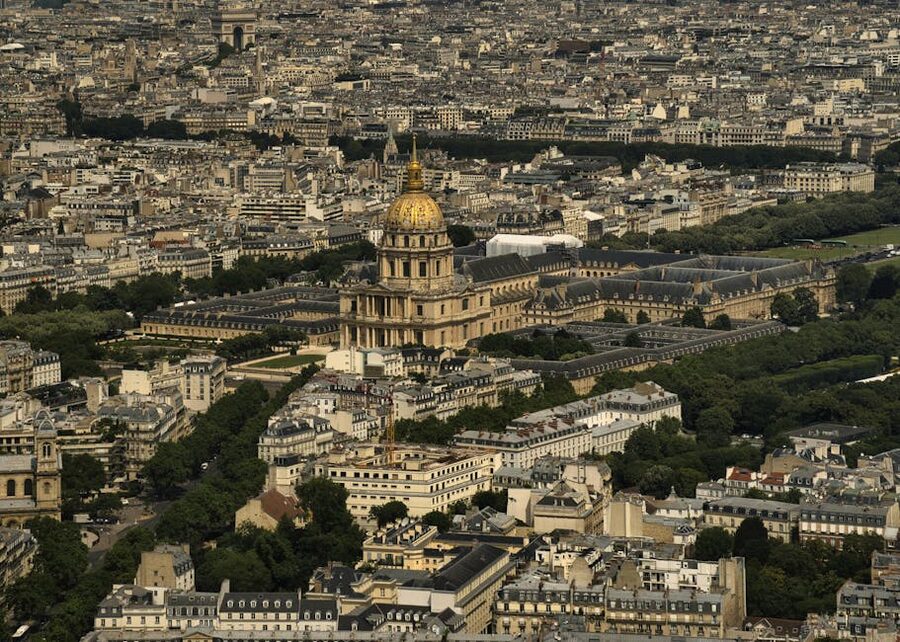
Tuesday through Thursday mornings are the quietest. Weekends are fine but busier. August is full of tour groups — not as bad as the Louvre or the Eiffel Tower, but noticeable. Winter — November through February — is genuinely uncrowded and the museum feels almost private. Bring a jacket; parts of the complex (the Dôme in particular) are unheated.
Time needed: I’d plan 2-3 hours for a first visit. That gets you the Dôme, a focused walk through two wings of the museum, and a sit in the courtyard. Military-history nerds routinely spend 5-6 hours and still don’t finish.
The Rabbits, Actually
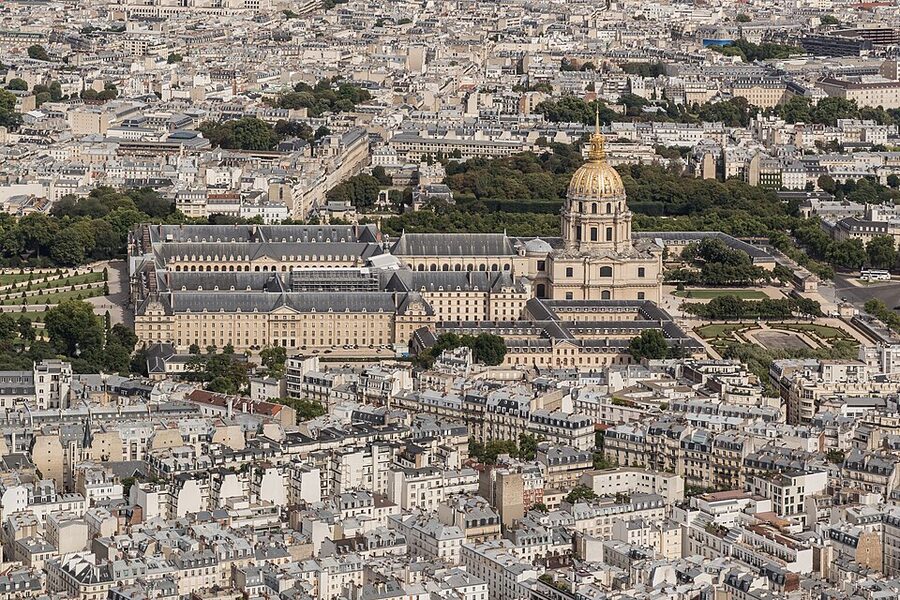
One last thing. Since I started this piece with the rabbits, I should finish with them. The lawn in front of the building has been home to a feral rabbit population for at least 30 years. The Paris prefecture tried to cull them in 2022 and lost a very public legal battle. The colony is now protected. You’ll see them most reliably around dusk on the north esplanade. Don’t feed them — the signs specifically ask you not to. But if you bring kids, point them at the grass as you walk past the north façade and see how long it takes them to spot one.
Planning the Rest of Your Paris Week
If Les Invalides is on your list, you’re almost certainly doing a classic Paris week — Louvre, Eiffel, Versailles, a river cruise, probably one of the Left Bank museums. We’ve written booking guides for all of them. The Louvre booking guide walks you through the timed-entry system and why you absolutely can’t walk up on a Saturday. The Versailles guide covers the train out and the Trianon circuit most people miss. For the Tower, the Eiffel Tower summit guide is the one to read before you pay for the top-floor ticket. For afternoons when you’re tired of standing, the Seine cruise guide and our Orsay and Orangerie ticket guides have you covered. Les Invalides takes half a day. The rest of Paris takes as long as you’re willing to give it.