
The first plate hits the table and the smell of warm olive oil, smoked paprika, and crisp potato edges arrives a second before the food does. Then a small cone of jamón. Then someone fills your glass with vermouth before you ask. This is what a Barcelona tapas walking tour actually feels like, and it’s the reason I now plan an evening around it every time I’m in the city.
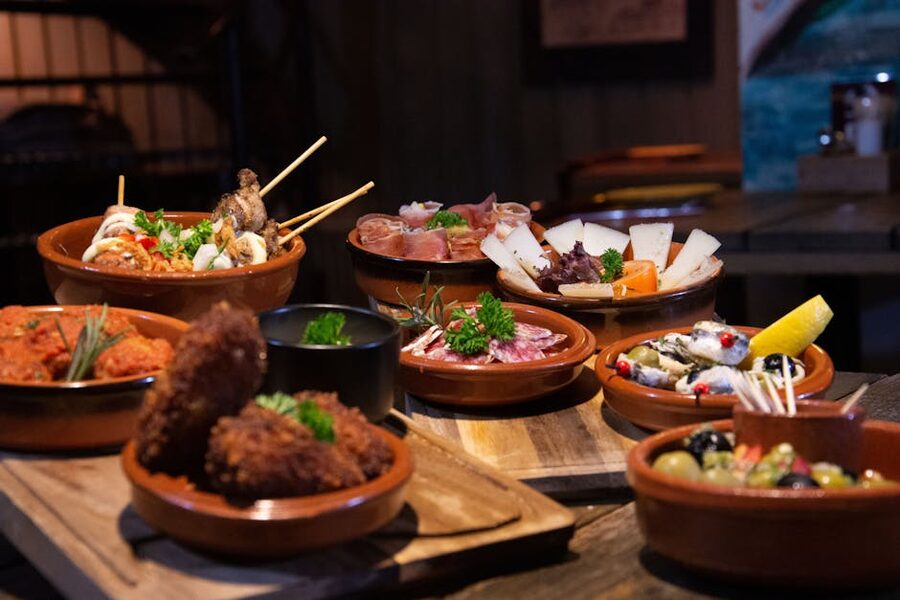
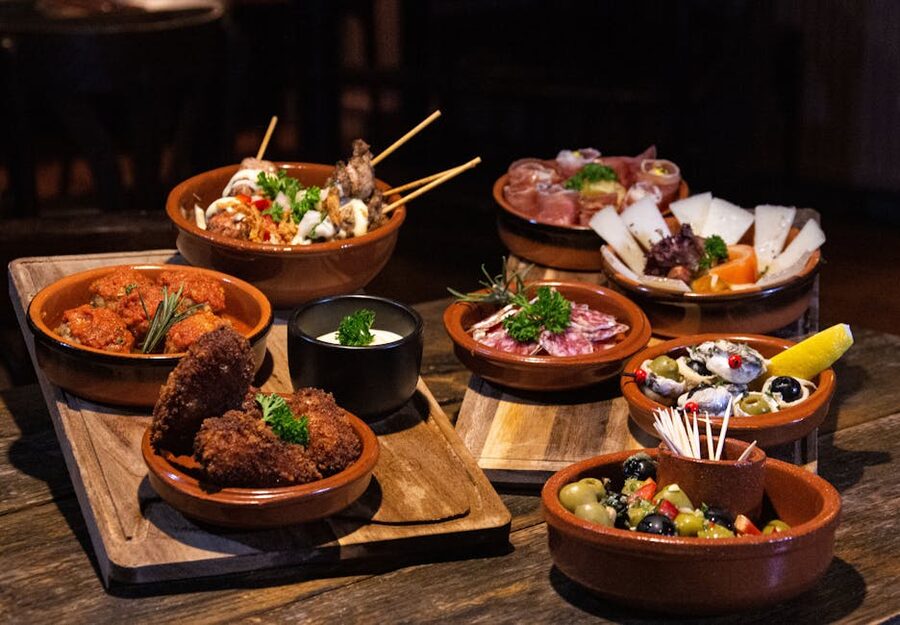
This guide covers how to actually book a tapas tour in Barcelona that’s worth the money, what to expect on the night, which dishes show up at almost every stop, and the three tours I’d recommend over everything else. The walking is short. The eating and drinking is the point.
Short on time? Here are my top picks:
Best small-group classic: Barcelona Tapas and Wine Experience Small-Group Walking Tour from $83. Three hours, three to four bars, wine paired with each stop, capped at small group size. The most consistent pick.
Best Gothic Quarter route: Barcelona Tapas Walking Tour With Food, Wine, and History from $78. Tapas plus vermouth and history through the Gothic Quarter. Heavier on the storytelling side.
If you also want to learn to cook: Paella Barcelona: Market Visit, Tapas, Sangria and Paella Class from $115. La Boqueria market visit, sangria, then a hands-on paella class. Three hours, longer than a normal tapas tour.
- What a Barcelona Tapas Walking Tour Actually Includes
- The Dishes You’ll Actually Eat
- Where Tapas Tours Actually Go in Barcelona
- The Three Tapas Tours I’d Actually Book
- 1. Barcelona Tapas and Wine Experience Small-Group Walking Tour:
- 2. Barcelona Tapas Walking Tour With Food, Wine, and History:
- 3. Paella Barcelona: Market Visit, Tapas, Sangria and Paella Class: 5
- Booking Logistics: When, Where, and How to Pay
- What to Eat Before, During, and After
- Vegetarian, Vegan, and Allergy Reality Check
- How Tapas Tours Compare to Just Eating on Your Own
- Tapas vs Pintxos: A Quick Glossary
- Practical Things Most Guides Don’t Tell You
- Pairing the Tour With the Rest of Your Barcelona Trip
- What If This Is Your Only Food Experience in Barcelona?
- Where to Go From Here
What a Barcelona Tapas Walking Tour Actually Includes
Most tapas tours in Barcelona run for two and a half to three and a half hours and cover three to five bars within walking distance of each other. You walk maybe 1.5 to 2 kilometres total, in short bursts of five to ten minutes between stops. The walking is not the workout. The eating is.
At each stop you’ll get two to four small dishes plus a drink. By the end of a three-hour tour, that’s usually 10 to 15 different tapas and at least three to four glasses of wine, vermouth, cava, or beer. The good tours tell you upfront which bars you’re hitting and what you’re eating; the great ones leave room for the guide to swap a stop based on how the night is going.
Group sizes vary a lot. Small-group tours cap at 8 to 12 people. Larger group tours can hit 20, which is too many for a tapas bar to handle gracefully. You end up split across two tables, missing half the guide’s commentary. I’d pay extra for a small group every time.
Almost every tour includes:
- A licensed local guide who actually lives in the city, not a touring contractor
- All food at each stop, served family style
- One or two drinks per stop (wine, vermouth, sometimes cava or beer)
- Some context on the neighbourhood, the dishes, and how Catalans actually eat
What’s usually not included: tips for the guide (15 to 20 percent is the going rate), any drinks you order beyond what’s pre-arranged, and getting yourself to the meeting point.
The Dishes You’ll Actually Eat
Tapas culture in Barcelona is a bit different from Madrid or Andalusia. You’ll see classic Spanish tapas, but also Catalan dishes that don’t show up elsewhere, plus some pintxos influence brought down from the Basque country.
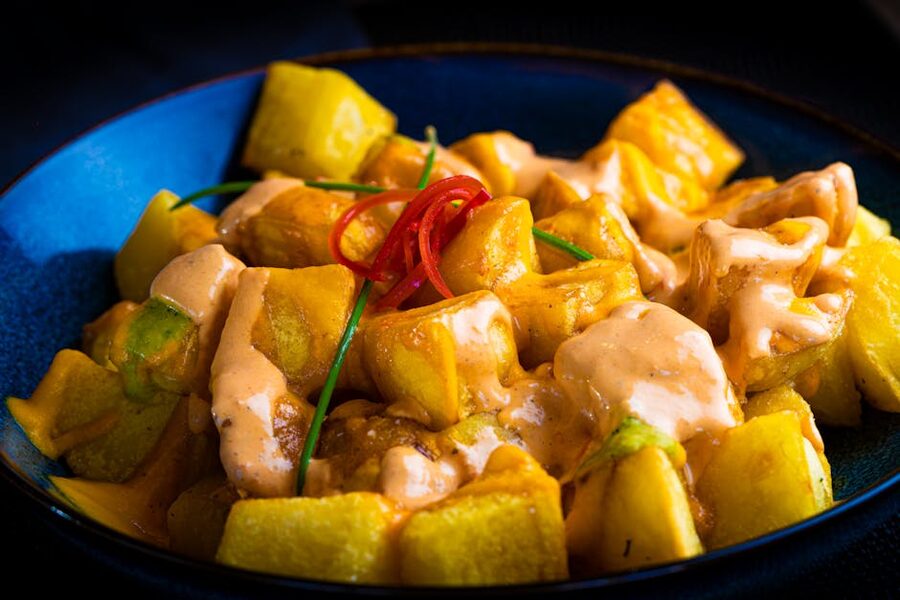
Here’s what shows up at almost every Barcelona tapas tour stop:
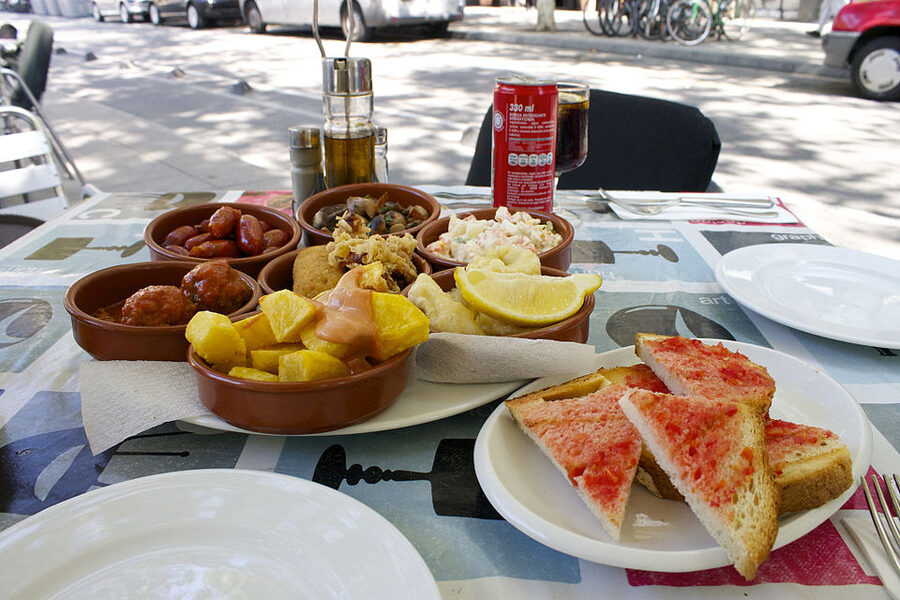
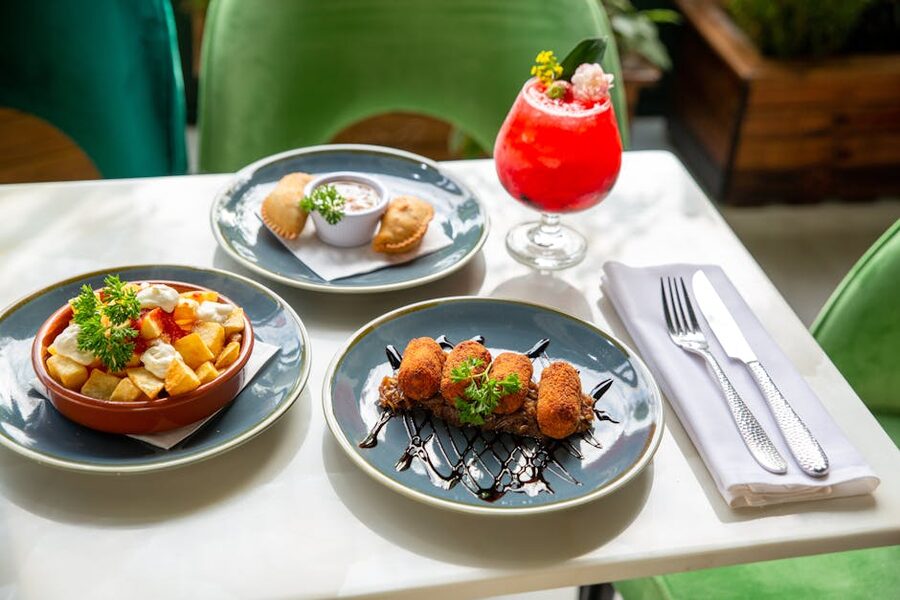
Patatas bravas. Fried potato chunks with a spicy tomato sauce and aioli. The classic. The version at the second or third stop is usually the best because by then the guide has worked out who in the group can handle heat.
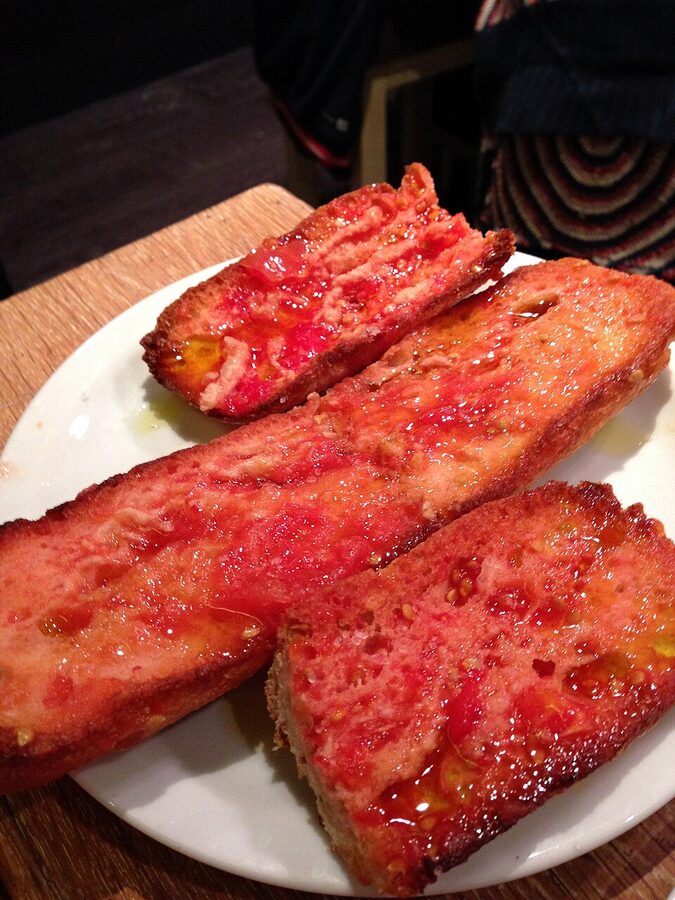
Pa amb tomàquet. Catalan for “bread with tomato.” Toasted bread rubbed with raw garlic and a halved ripe tomato, then drizzled with olive oil and salt. Sounds dull. Is not. This is the foundation that everything else gets piled on.
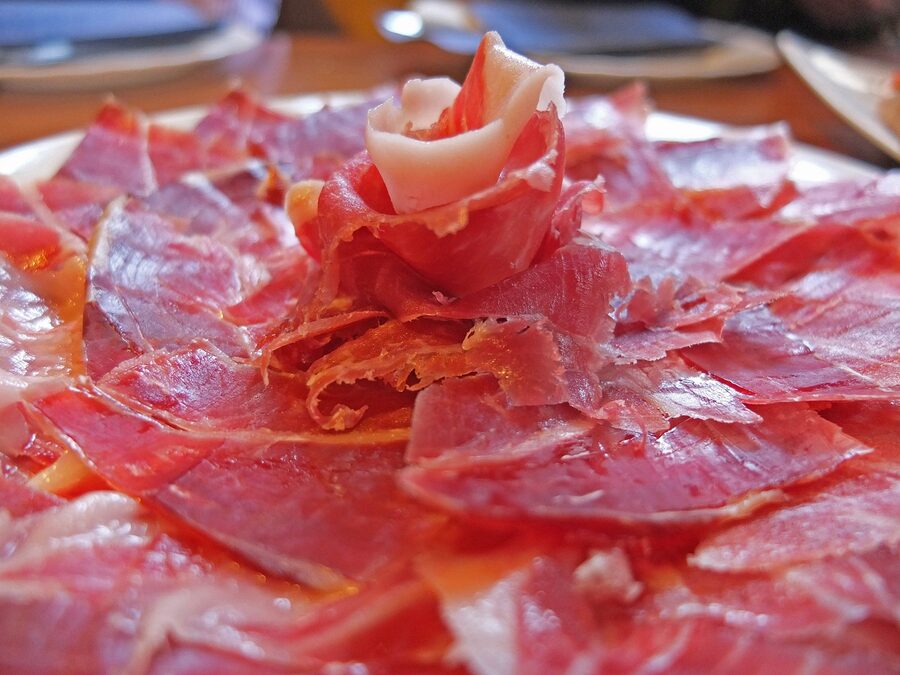
Jamón ibérico. Cured Iberian ham, sliced wafer thin, often served with the pa amb tomàquet. The good stuff comes from acorn-fed pigs and is sliced fresh by hand. If your tour stops at a bar where someone is hand-slicing ham at the counter, that’s the sign of a real place.
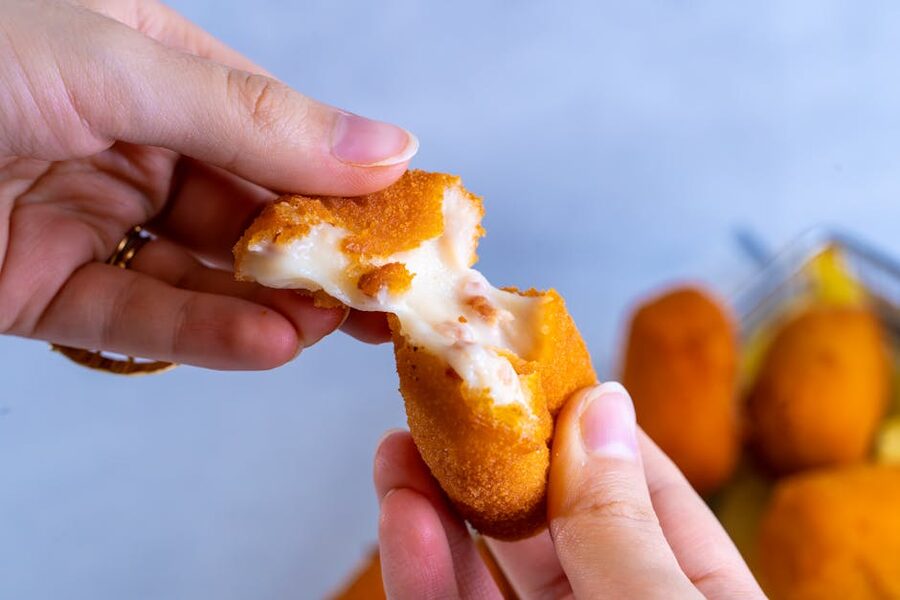
Croquetas. Breaded, fried bechamel filled with ham, salt cod, or chicken. The inside should be molten. The outside should crack when you bite. Burned tongues are part of the experience.
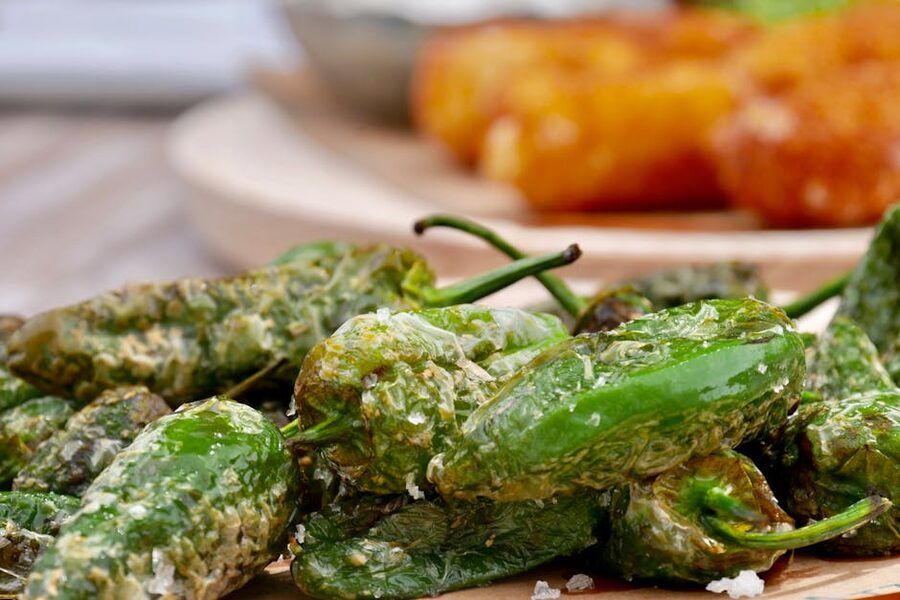
Pimientos de Padrón. Small green peppers blistered in olive oil and salt. Most are mild. About one in ten is hot enough to make you reach for water. There’s no way to tell which is which. The Spanish proverb is “unos pican y otros no”. Some are hot, some are not. It’s a game.
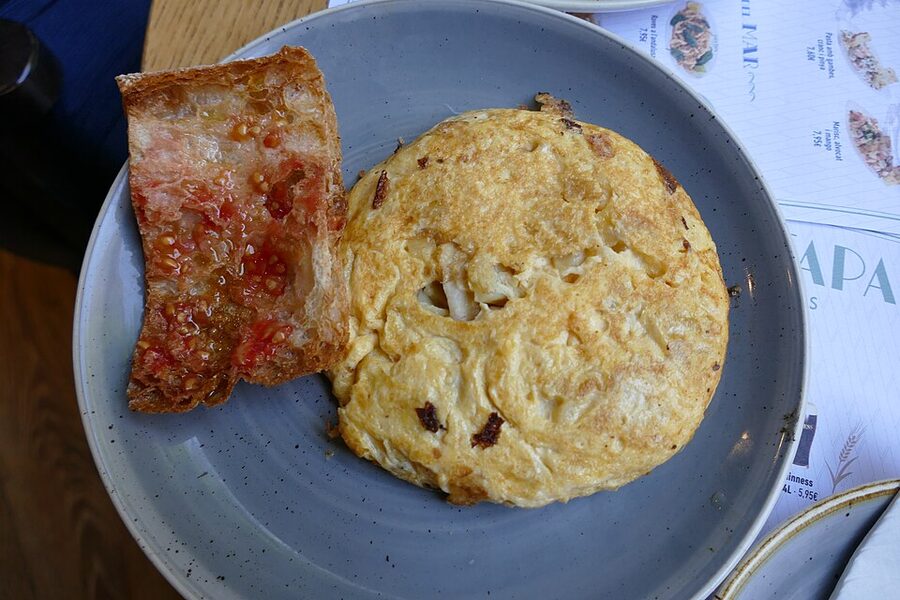
Tortilla española. Spanish potato omelette. Thick, served at room temperature, sliced into wedges. The argument across Spain is whether the centre should be runny or set. Barcelona usually serves it slightly runny, which is the better answer.
You’ll also see fried calamari, anchovies (the cured boquerones in vinegar are far better than the salty preserved ones), Manchego cheese, chorizo, and various pintxos on bread skewered with toothpicks. A good tour will cover at least eight to ten different items.
Where Tapas Tours Actually Go in Barcelona
Three neighbourhoods do most of the heavy lifting for tapas tours, and a few bordering ones occasionally feature.
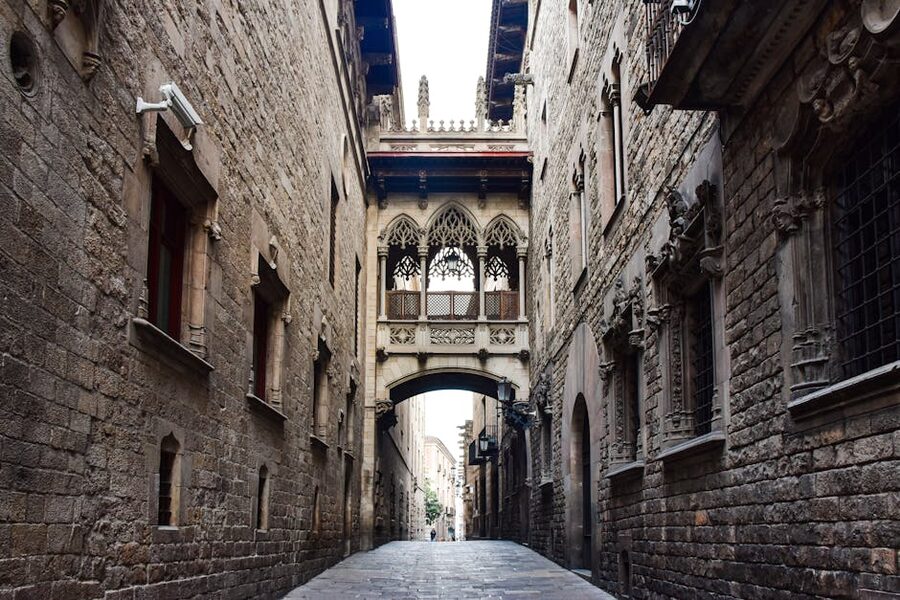
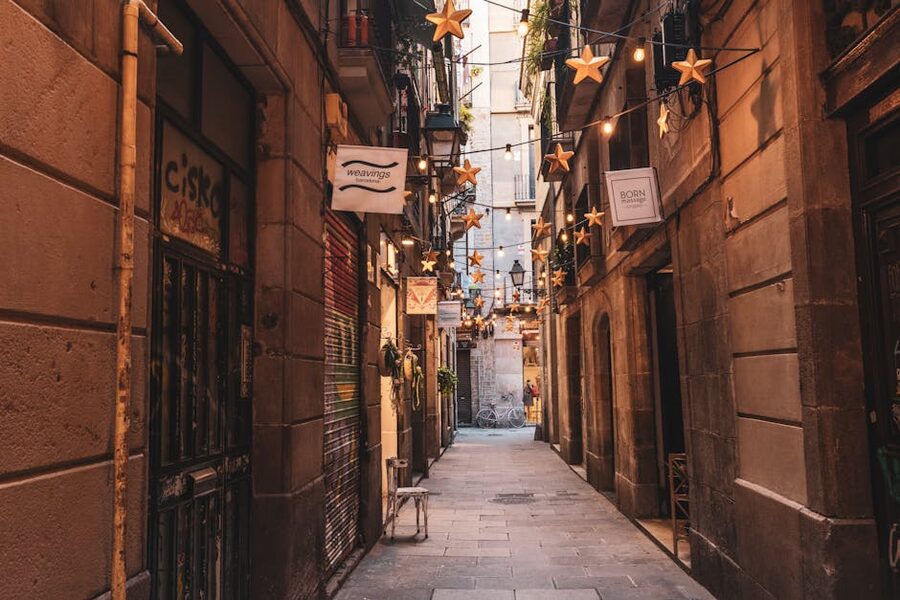
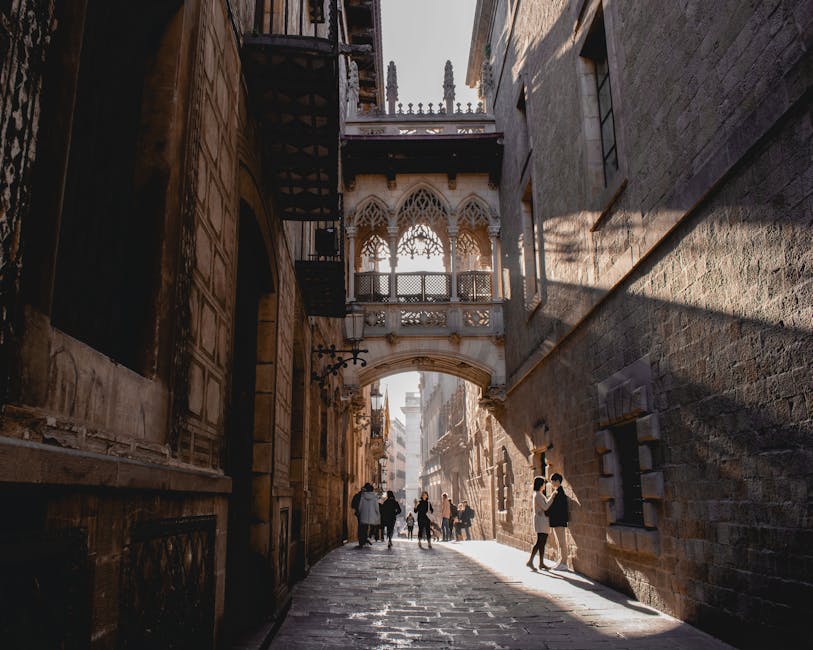
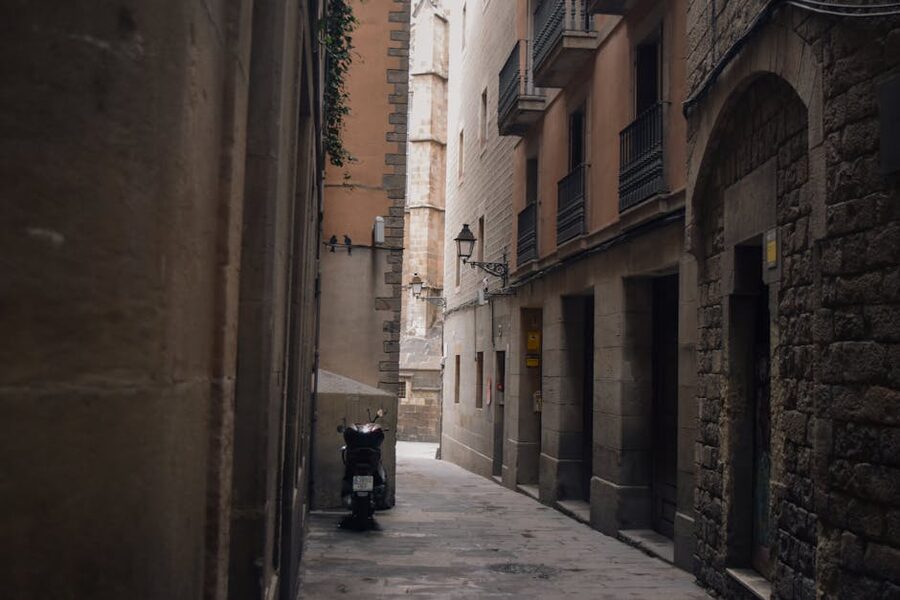
The Gothic Quarter (Barri Gòtic). The medieval old town. Narrow streets, hidden plaças, bars tucked into 14th century buildings. This is where the food-and-history tours mostly run, because the walking between bars is short and the architecture does half the storytelling work.
El Born (La Ribera). Just east of the Gothic Quarter, on the other side of Via Laietana. More polished, more design-led, generally more expensive bars. The tapas here tend to be slightly more modernised, with chefs doing creative twists on classics. If your tour mentions “modernist tapas” or “creative tapas,” you’re probably going to El Born.
Barceloneta. Old fisherman’s neighbourhood next to the beach. The seafood tapas here are noticeably better than what you’ll get inland. Boquerones, fried fish, prawns, octopus. The drawback is that it’s flooded with tourists in summer, so the better tour operators avoid the obvious bars and route you to back streets locals still use.
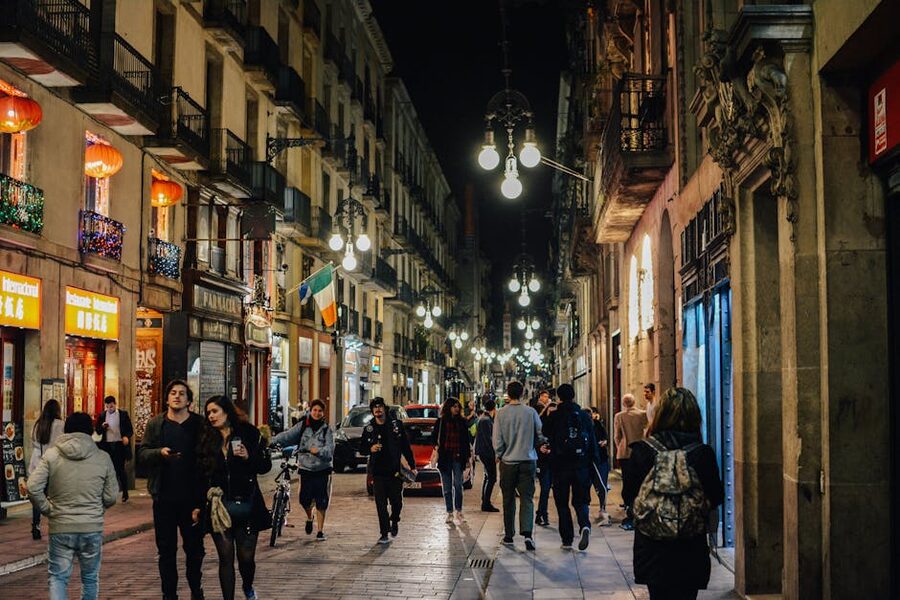
El Raval. South-west of the Gothic Quarter, traditionally rougher, now mostly fine. Some tours include El Raval for the genuinely local tapas bars and a more multicultural feel. The neighbourhood has a strong North African and South Asian community. The food gets more interesting here.
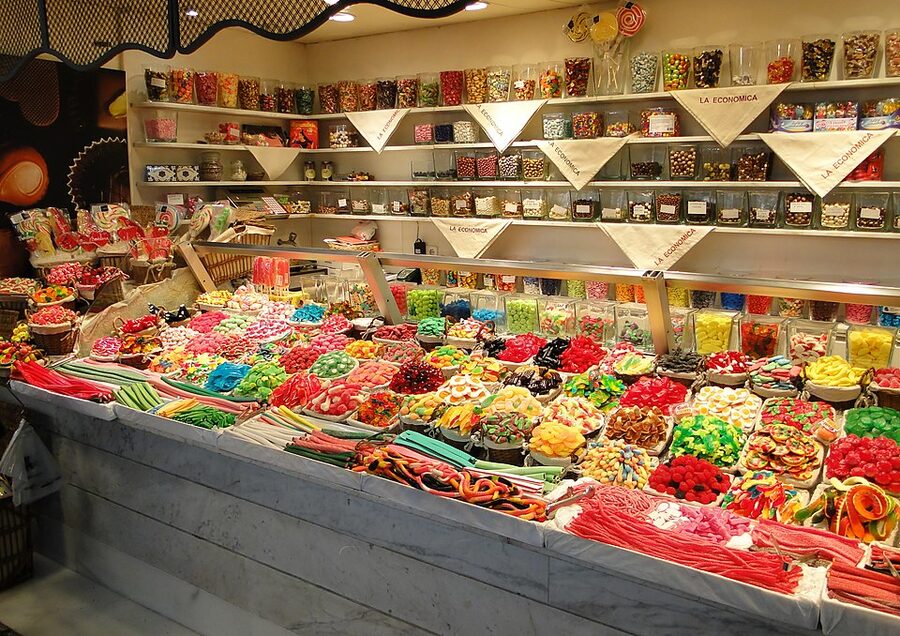
Some tours start or finish at La Boqueria market, which is worth the visit even if you’re already on a food tour. Most don’t actually buy and eat at La Boqueria though. The market is for sourcing, not eating, and the stalls there are pricier than the back streets. If you’re planning to combine the tapas tour with the obvious sights, our breakdown of how to book Sagrada Familia tickets is worth reading the same week, since both tend to fill up fastest in the same booking windows.
The Three Tapas Tours I’d Actually Book
Out of the dozens running in Barcelona on any given evening, three stand out for being consistently well-reviewed, well-run, and worth the price. I’ve put them in the order I’d book them, but any one of these will give you a solid evening.
1. Barcelona Tapas and Wine Experience Small-Group Walking Tour: $83
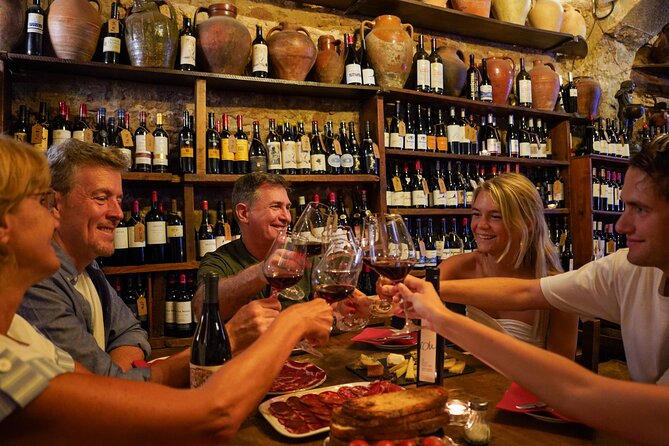
The default pick if you’ve never been on a Barcelona tapas tour before. Three hours, small group, three to four bars across the old town with paired wine at every stop. Our full review of this tour goes deep on the menu and the guide quality, which is the part most matters.
2. Barcelona Tapas Walking Tour With Food, Wine, and History: $78
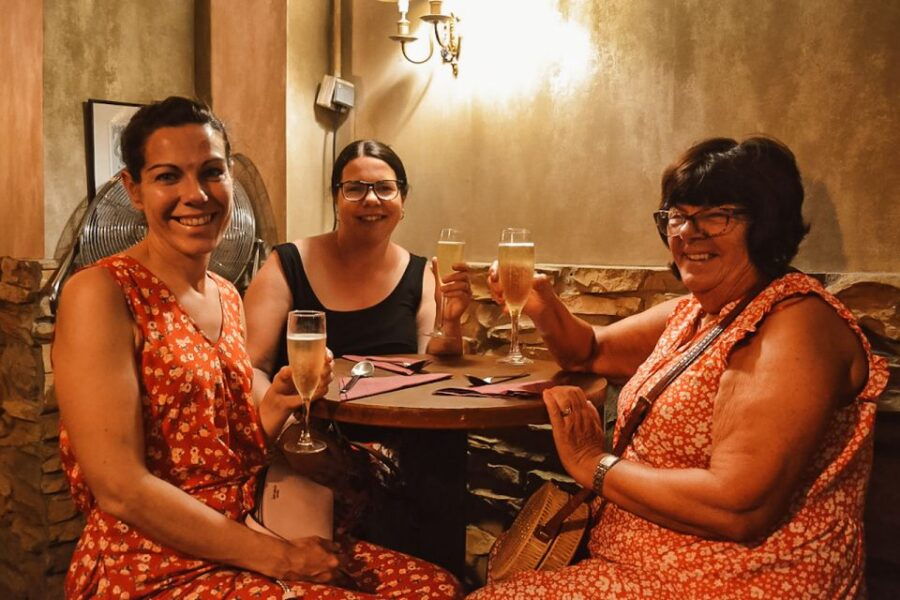
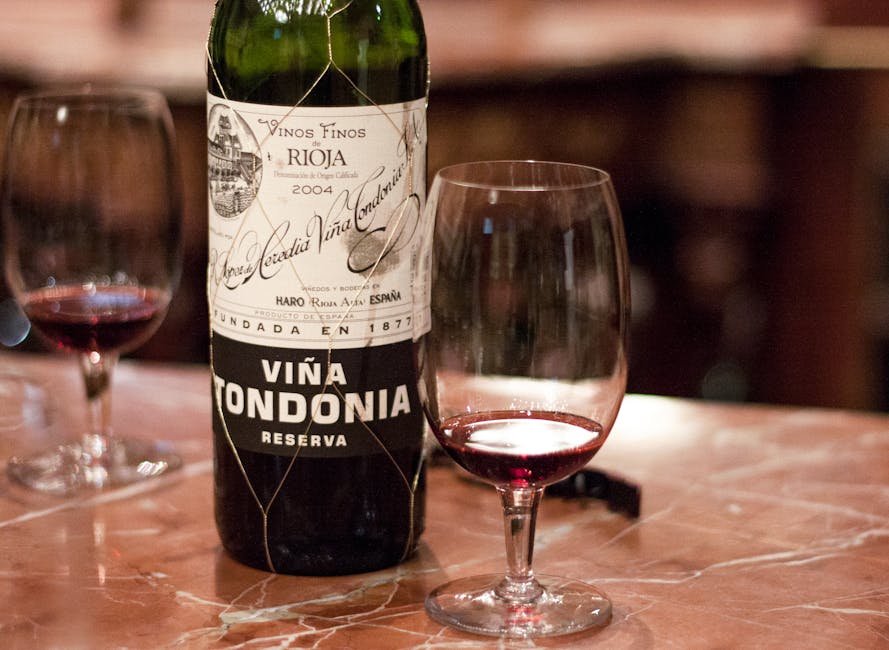
This is the option for travellers who want context with their food. The route winds through the Gothic Quarter, the guide talks through Catalan history between bars, and you get vermouth as a third drink alongside the standard wine and cava. Read our full take on this tour for the typical menu.
3. Paella Barcelona: Market Visit, Tapas, Sangria and Paella Class: $115
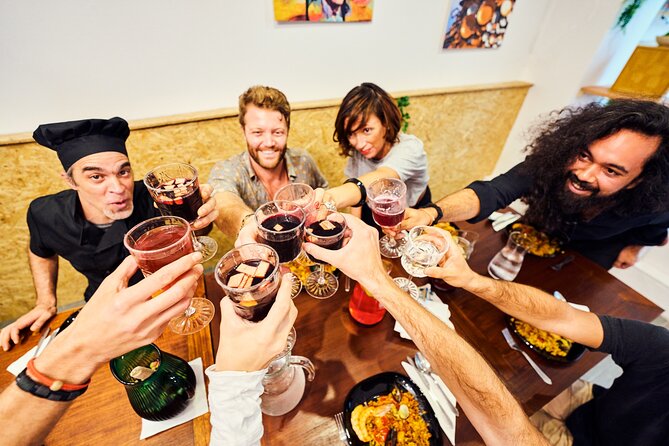
This isn’t a pure tapas tour, but it’s the better option if you also want to learn to cook. You start at La Boqueria for the market visit, then walk to a kitchen for the paella class with tapas and sangria along the way. Our review covers what you actually make and how hands-on the class is.
Booking Logistics: When, Where, and How to Pay
Tapas tours fill up fast in May, June, September, and October. July and August are surprisingly quieter because locals leave the city, and a lot of bars close for two or three weeks. Winter is fine. Barcelona doesn’t really get cold. But a handful of bars run reduced hours.
Most platforms (Viator, GetYourGuide, the operators’ own sites) take payment in advance and let you cancel free up to 24 hours before. I’d book three to four days ahead in shoulder season and a week ahead in peak.
The meeting point is usually a public square or metro station rather than the first bar. The operators don’t want lost tourists wandering into a private restaurant. Common meeting spots are Plaça Catalunya, Plaça Reial, or in front of the Mercat de la Boqueria. The confirmation email will tell you exactly where to stand.
Bring some cash for tips and any extra rounds you order. Card payment is standard everywhere now, but tipping is still mostly a cash thing.
Most tour meeting points are right on the metro network. The Hola BCN transport card covers unlimited metro and bus rides for 2 to 5 days and pays for itself if you’re using transit more than three times a day. If you’re already heading to a tour through the old town, you’ll almost certainly use it.
What to Eat Before, During, and After
The biggest mistake I see people make is eating a full lunch and then going on a 7pm tapas tour. You will struggle. Eat light at lunch. A salad, a small sandwich, a piece of fruit. Save the room.
During the tour, drink water between glasses of wine. Spanish wine is generally lower in alcohol than American or Australian equivalents, but the heat and walking still adds up.
After the tour, you’ll want one of two things: a coffee or a digestif. Most bars in the old town serve carajillo, which is espresso with a shot of brandy. It’s the standard Catalan post-meal drink and it works.
If you’re still hungry afterward, you’re on the wrong tour. The right tour leaves you full, slightly buzzed, and walking slowly back to the metro.
Vegetarian, Vegan, and Allergy Reality Check
Tapas culture is meat- and seafood-heavy. A vegetarian tapas tour exists in theory, but in practice you’re going to get a lot of cheese and bread and not much else. Most operators will accommodate vegetarians with a few hours’ notice. Pa amb tomàquet, pimientos de Padrón, escalivada (roasted vegetables), olives, manchego, and the occasional vegetable croqueta.
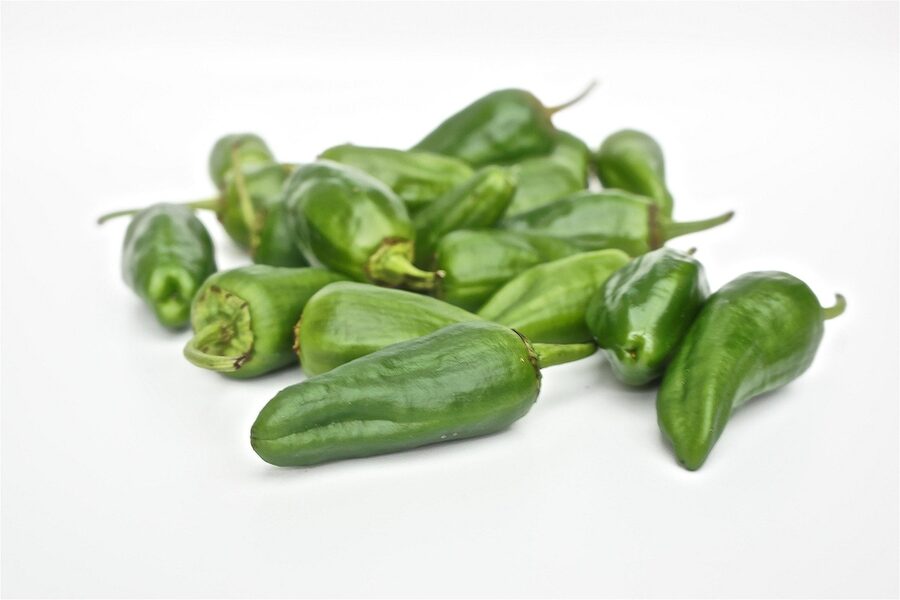
Vegan is harder. You’ll get olives, escalivada, padrón peppers, and bread. The bread might or might not be vegan depending on the bakery. I’ve taken vegan friends on tapas tours and they’ve always come away fed but slightly bored. If you’re vegan, look at the food walking tours that specifically advertise vegan options rather than booking a generic tapas tour and asking for accommodations.
Gluten-free is more workable. The naked dishes (jamón, manchego, padrón peppers, tortilla without the bread, grilled prawns) are all gluten-free. Skip the croquetas and the pa amb tomàquet. Tell your operator at booking, not on the night.
Anchovy and seafood allergies. Flag these clearly. Boquerones (vinegar-cured anchovies) sneak into a lot of pintxos as a base layer.
How Tapas Tours Compare to Just Eating on Your Own
Honest answer: you can eat tapas in Barcelona without a tour and have a great time. The bars are open, you can walk in, you can point and order, and the food will be good. So why pay $80 to $115 for a guided version?
Three reasons.
You skip the worst tourist traps. The bars on La Rambla and the obvious tourist drags around Plaça Reial are uniformly mediocre and twice the price of equivalent bars three streets away. A guide knows where to actually go. You get the real version of every dish on your first try, not after three failed attempts.
You eat ten things instead of three. Solo, you sit at one bar, order three plates, and that’s dinner. On a tour you hit four bars, eat two or three things at each, and try ten or twelve different tapas in one evening. The variety is the entire point of the format.
The wine pairing is real. Most tapas bars in Barcelona pour from a couple of house wines. On a tour, you get specific Catalan and Spanish wines paired with specific dishes. The first time someone explains why this albariño goes with the boquerones, it clicks in a way that menu reading does not.
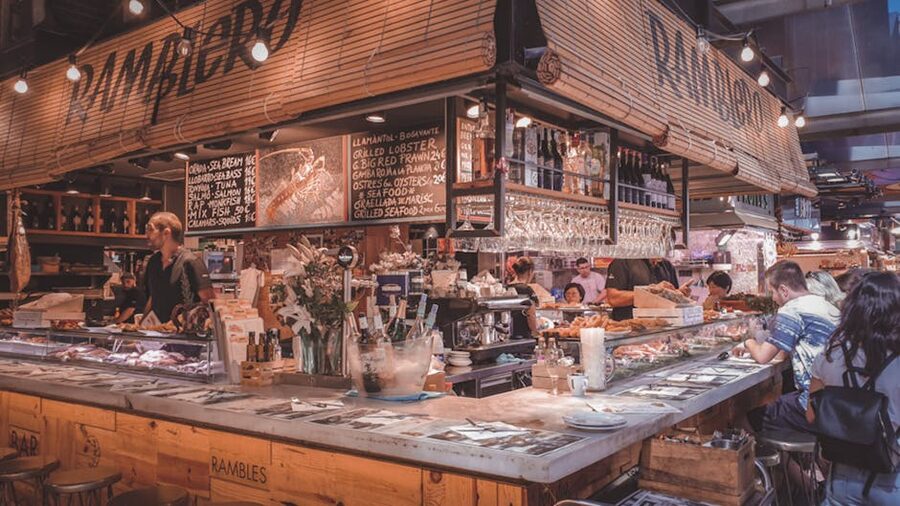
If you have one night in Barcelona and you’ve never had Spanish tapas before, do the tour. If you’ve lived in Spain for six months and you can read a menu in Catalan, you’re past the point where a tour adds much.
One pairing that works surprisingly well: tapas tour one evening, a flamenco show the next. The food tour gives you the cultural foundation, the show gives you the music side. Don’t book them on the same night. That’s too much in one evening, and the late seatings at flamenco venues finish around midnight.
Tapas vs Pintxos: A Quick Glossary
Barcelona’s bar scene includes both tapas and pintxos, and they’re not the same thing. Knowing the difference helps you order.
Tapas are small dishes, served on a small plate, often shared. The word originally comes from “tapa” meaning lid. Bartenders used to put a slice of bread on top of a wine glass to keep flies out, and the bread evolved into a small snack on top of the wine glass. You order them, they arrive, you pay at the end based on what you ordered.
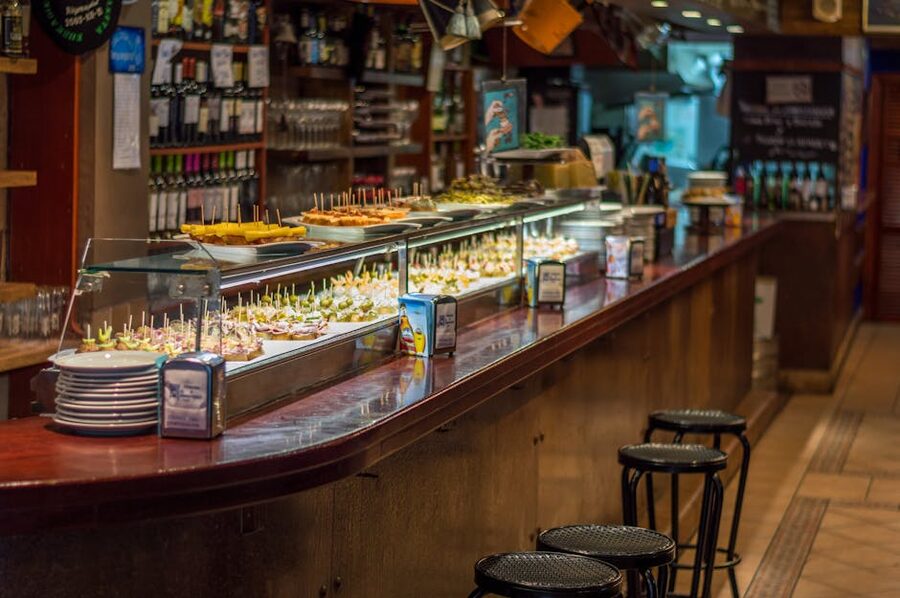
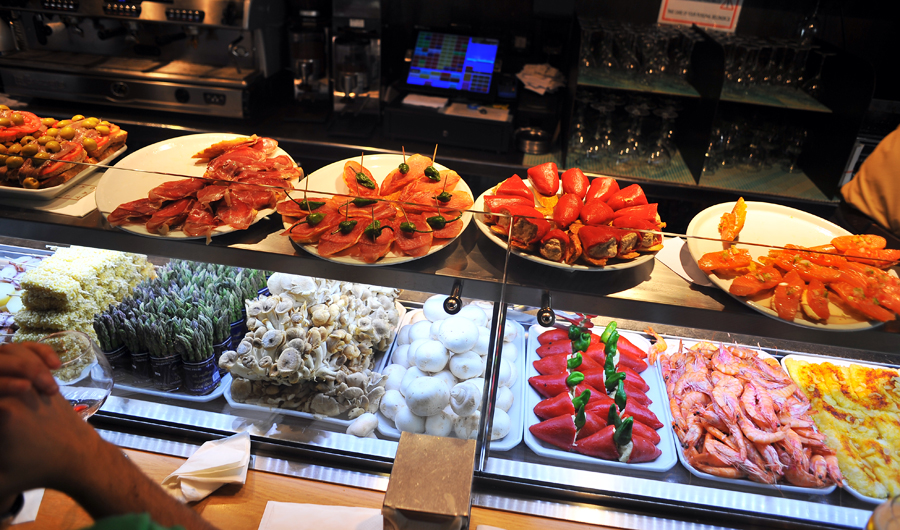
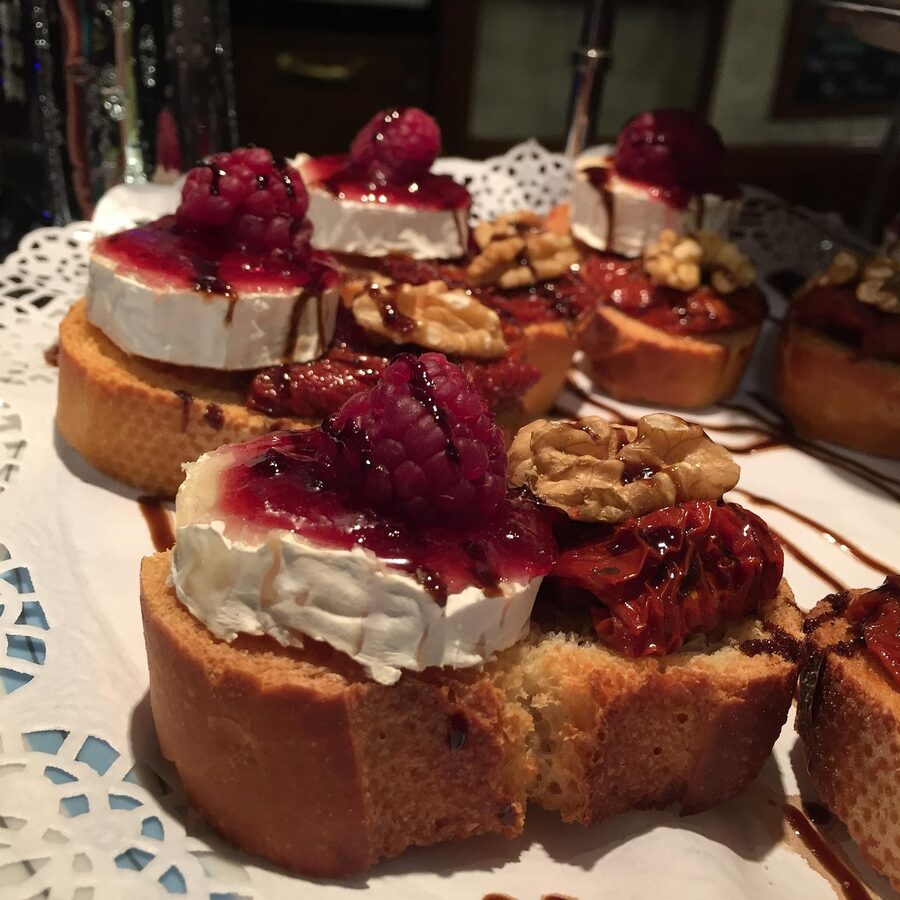
Pintxos are originally Basque, but you’ll see them all over Barcelona. They’re small bites served on a slice of bread, skewered with a toothpick. You don’t order them. They’re laid out on the bar counter, you take what you want, and you pay at the end based on the toothpicks left on your plate.
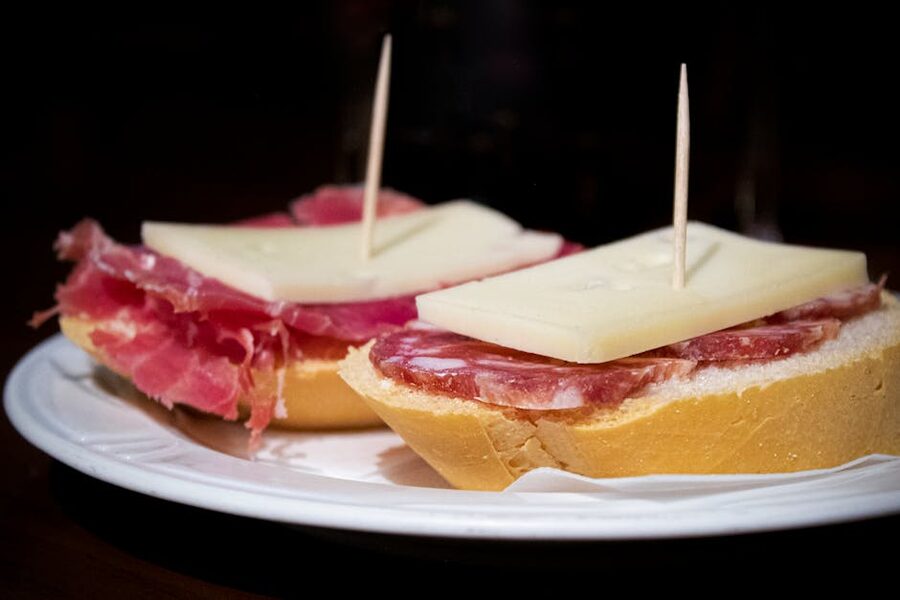
Some bars in Barcelona use the words interchangeably or have hybrid menus. If your guide mentions “pintxos bar,” expect the toothpick system. If they say “tapas bar,” expect to order and have plates brought to you.
Practical Things Most Guides Don’t Tell You
A few small details that tour pages don’t bother explaining but that help on the night.
Don’t show up hungry-hungry. Counter-intuitive, but true. If you arrive starving, the first plate of pa amb tomàquet will hit hard and then the second stop arrives ten minutes later and you’re already slowing down. Eat a banana before you leave the hotel.
Standing is normal. A lot of tapas bars don’t have seats. You stand at a counter or against a wall ledge with your plate balanced on a high table. After two bars your feet will be more tired than your stomach.
The good places are loud. Spanish people don’t whisper. Barcelona tapas bars at 8pm on a Friday are at conversational levels you’d describe as a riot in another country. Don’t expect quiet ambience. The noise is part of the appeal.
Spanish bartenders don’t want chitchat. They will be polite. They will not be your new best friend. Order, eat, pay, move on. This is the rhythm. Don’t take it personally.
The check arrives when you ask. Spanish service does not bring the bill before you ask for it. “La cuenta, por favor” is the magic phrase. Otherwise you’ll sit there forever.
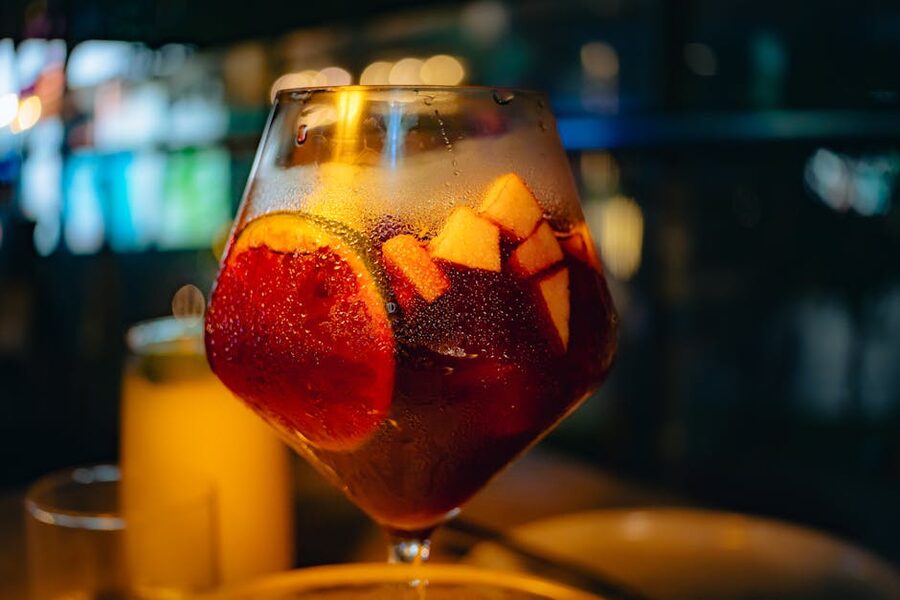
Sangria is not what locals drink. Locals drink wine, vermouth, beer, or cava. Sangria is a tourist drink. There’s nothing wrong with it, but if your guide is steering you toward sangria, you’re on the wrong tour.
Pairing the Tour With the Rest of Your Barcelona Trip
If you’re booking a tapas tour for one of your nights in Barcelona, think about what else you’re doing on the same day. The tour is heavy, both food-wise and wine-wise. Don’t book it for the night you’re planning a 9am Sagrada Familia visit the next day. You’ll regret the wine. Park Güell is more forgiving. It’s outdoors, you can show up at 11am, and the morning light suits a slow start.
If you’re in Barcelona for a long weekend, here’s the rough rhythm I’d suggest. Day one: morning Sagrada Familia, afternoon Park Güell, evening tapas tour. Day two: morning Casa Batlló, afternoon walk down the beach to Barceloneta, evening dinner on your own using what the tapas tour taught you. Day three: morning Boqueria for breakfast, afternoon a daytime catamaran or Montjuïc cable car, evening flamenco show.
The point is that the tapas tour gives you the food vocabulary for the rest of the trip. After the tour, you can read a menu and order with confidence. Without it, you’ll spend three days pointing at random words and hoping.
What If This Is Your Only Food Experience in Barcelona?
It might be. People do Barcelona in 36 hours. If a single tapas tour is your only food experience in the city, here’s what I’d push for.
Pick a tour that hits at least three different neighbourhoods, not three bars in the same street. The variety of bar style matters more than the number of dishes. Three bars in different parts of the old town teaches you more about Barcelona’s food than five bars in El Born.
Pick a tour that includes vermouth. Most don’t, by default. Vermouth is the unsung hero of Barcelona drinking. Chilled, fortified, herby Spanish vermouth poured from a tap is a different drink from the bottled stuff at home, and you won’t find it on most non-Catalan menus.
Pick a tour with a small group. Eight people maximum. Twelve is okay. Twenty is too many.
And book it for your second night, not your first. You want one day in the city to settle in and see what kind of bars you’re walking past every day. The tour then makes sense as the deeper version of what you’ve been seeing.
Where to Go From Here
If the tapas tour leaves you wanting more of Barcelona’s design history, La Pedrera is the next obvious stop. Gaudí’s apartment block on Passeig de Gràcia, walkable from most of the tapas tour finish points. For the lesser-known Gaudí house in Gràcia, the Casa Vicens guide is worth the side trip on a quieter morning. And if you’re trying to fit a Camp Nou visit around your food and culture days, our FC Barcelona stadium tour breakdown tells you which slot to pick.