
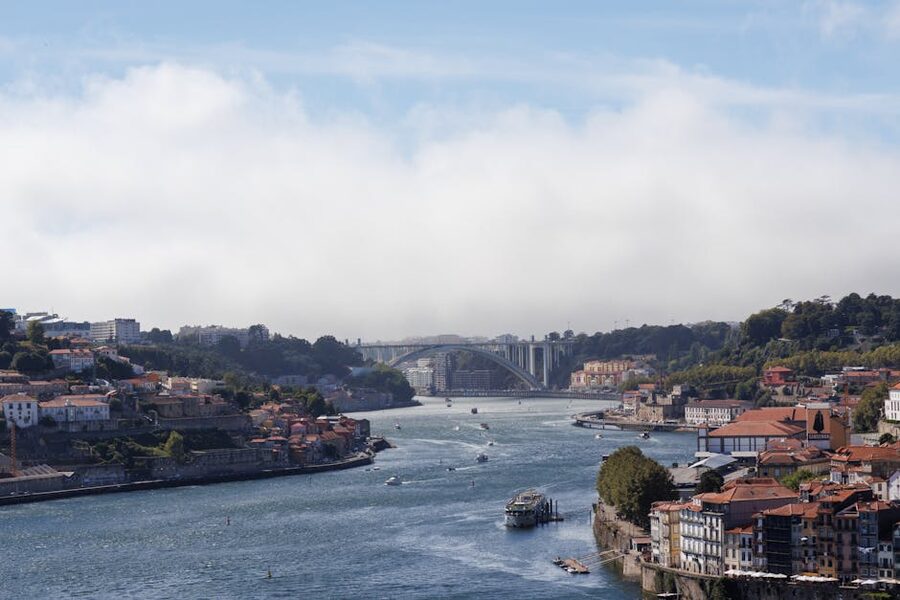
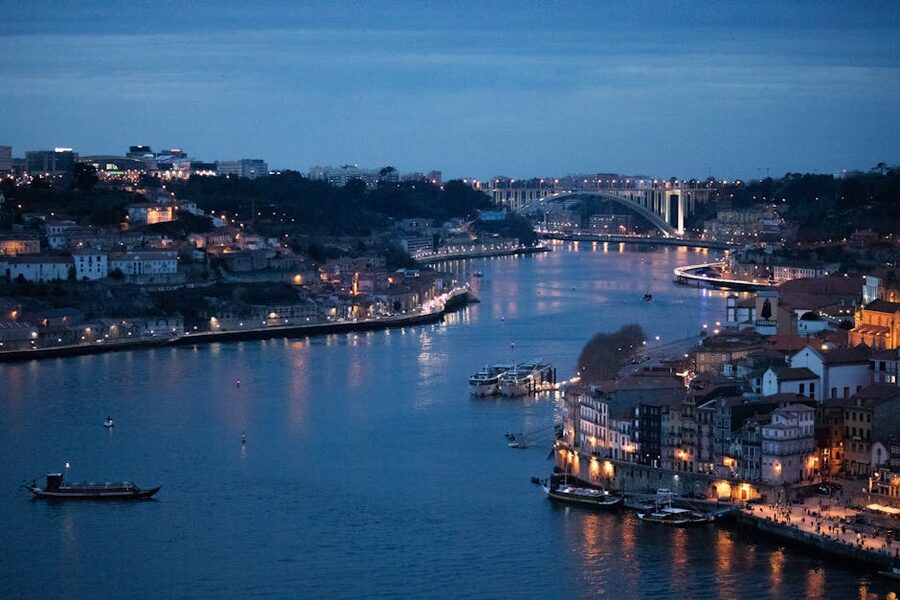
The driver leaned the throttle a little harder and the tuk-tuk hauled itself up the ramp toward Miradouro da Vitória, three wheels scrabbling on damp granite, brake squealing once near the top. We were maybe seventy metres above the river. He stopped without warning and pointed across the rooftops. Ribeira was unfolding below, terracotta tiles staggered down to the Douro, and Vila Nova de Gaia’s port-wine warehouses lined up on the far bank like soldiers. “No bus comes here,” he said, and grinned. “That is why you booked me.”

This guide covers booking a Porto tuk-tuk tour. Not the freelancers who shout at you near São Bento with no fixed price, but the licensed operators with insurance, GPS-routed itineraries, and drivers who know which alleys are passable and which dead-end at a wall. I’ll walk through the four standard formats, the prices, what each one actually covers, and the three I’d book first.
Short on time? My three picks:
- Porto: Guided Tour by Tuk-Tuk and Douro River Cruise, around $20 per person, around 50 to 105 minutes. The most-booked combo by a wide margin and the one I send first.
- Oporto Tuk-Tuk Tour: Fast, Fun and Flexible (1H to Full Day), around $88 per group up to three. The flexible pick when you want to choose your own duration on the day.
- Porto: Private Sightseeing Tour by Electric Tuk Tuk, around $47 per person, two hours. Quietest ride, smallest carbon footprint, and the only format you can hear the guide on at full speed.
- Why a tuk-tuk works in Porto when nothing else does
- The four formats and which one fits you
- The 1-hour Ribeira loop
- The 2-hour historic centre loop
- The 3-hour tuk-tuk plus Douro cruise combo
- The full-day private with Vila Nova de Gaia tasting
- Electric or petrol: it actually matters
- The driver is most of the product
- What every decent route hits
- São Bento and the Liberdade-Aliados spine
- Sé Cathedral and the Bishop’s Palace
- Miradouro da Vitória and the rooftop view
- Lello, Clérigos, and the Carmo tile wall
- Ribeira and the Cais
- Dom Luís I Bridge and the Gaia crossing
- What it actually costs
- Where to start the tour
- Praça da Liberdade and Avenida dos Aliados
- São Bento railway station
- Ribeira
- My three Porto tuk-tuk picks
- 1. Porto: Guided Tour by Tuk-Tuk and Douro River Cruise, around
- 2. Oporto Tuk-Tuk Tour: Fast, Fun and Flexible (1H to Full Day), around per group up to 3
- 3. Porto: Private Sightseeing Tour by Electric Tuk Tuk, around per person
- Choosing between the three
- Tuk-tuk vs walking, e-bike, and HOHO
- Porto tuk-tuk vs Lisbon tuk-tuk
- Practical tips that nobody tells you
- What about the freelancer with no fixed price
- One last thing about the cellar half
- Where this fits in a wider Portugal trip
Why a tuk-tuk works in Porto when nothing else does
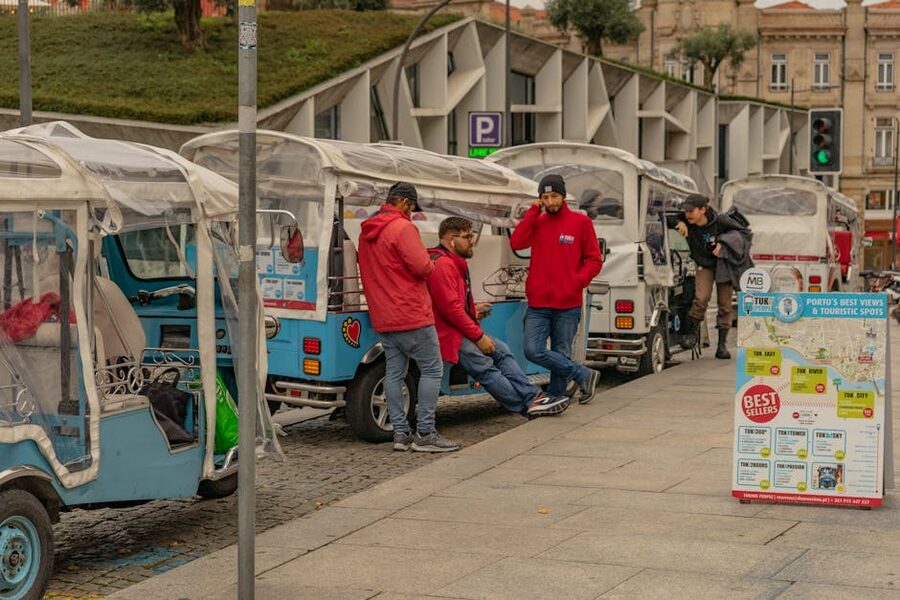
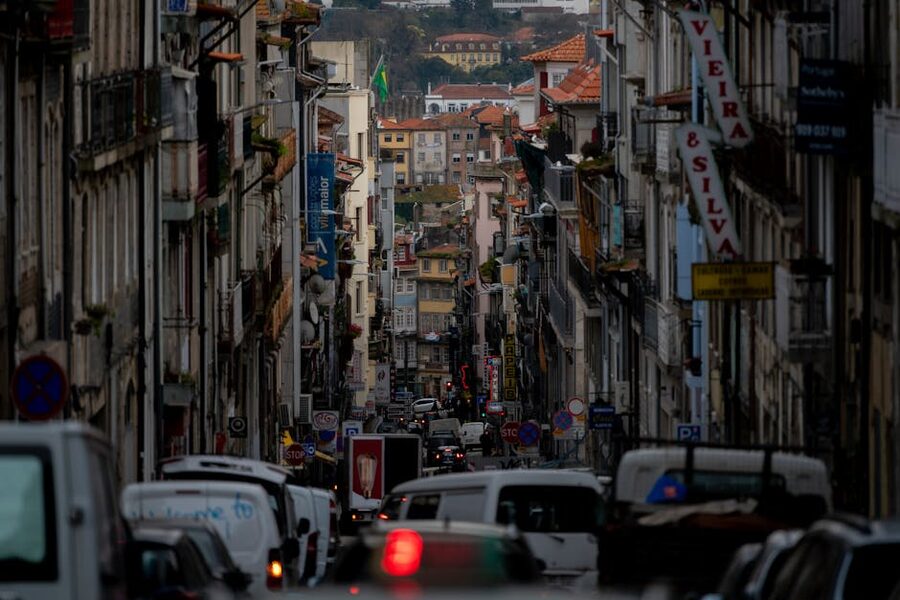
Porto sits on a series of slopes that fall hard into the Douro. The historic centre is mostly granite cobbles, twenty-degree gradients, and lanes barely two metres wide. A coach can drop you at Praça da Liberdade and that is it. Anything south or east of there, the bus physically cannot go. A walking tour gets you in, but it costs you a knee and three hours.
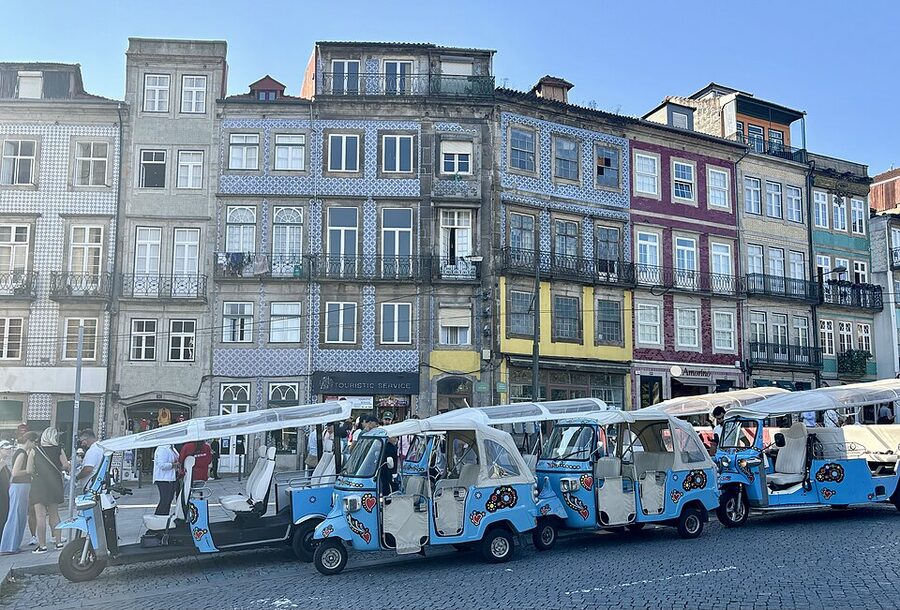
Tuk-tuks slot through this geometry like they were designed for it. They are about 1.4 metres wide, electric models weigh under 600 kg, and they climb the ramps up to Sé and Vitória without complaint. The good operators know exactly which alleys are passable and which end at a wall of laundry lines. Stops happen wherever the driver wants to stop. That is usually somewhere your guidebook does not list.
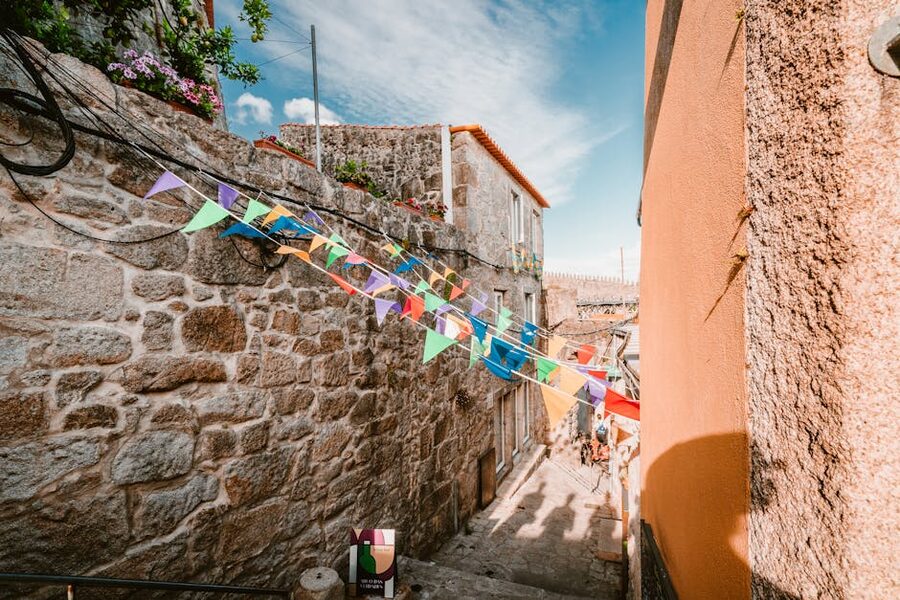
I usually argue against booking a city tour and just walking. Porto is one of the cities where I make the exception. If you have one full day in town and want to actually see Ribeira, Sé, the Vitória viewpoints, and Gaia in a single sitting, a tuk-tuk is the only sensible option. The alternative is the classic walking circuit, which I love but only when I have two days to spread it across.
One more thing worth knowing. The tuk-tuk is open. You hear what is happening as you go. Bells from Clérigos. A guitar leaking out of an unmarked taberna near Mouraria. Someone shouting up at a fourth-floor window in heavy Portuense. On a hop-on hop-off coach you get scratchy multilingual audio and tinted glass. On a tuk-tuk you get the city.
The four formats and which one fits you
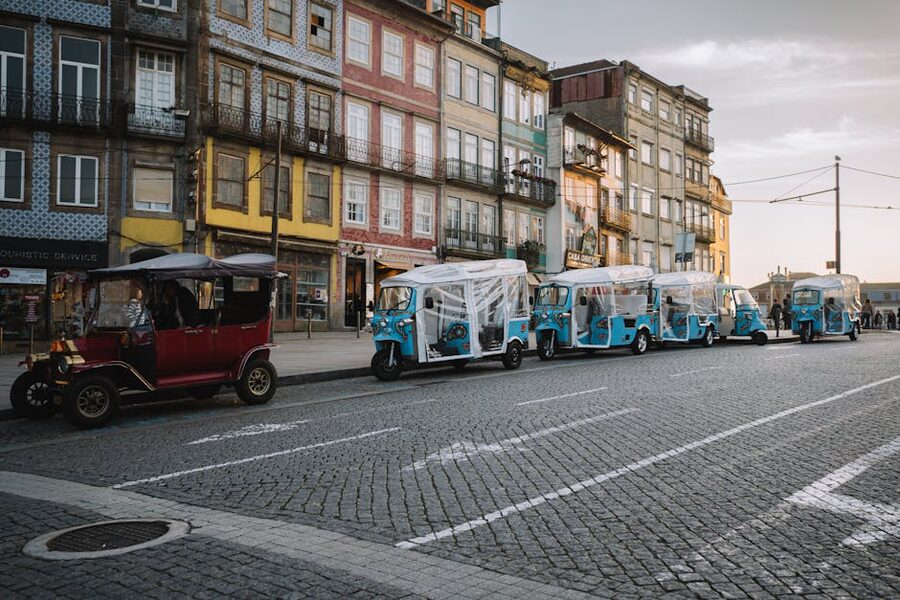
Tour platforms in Porto roughly group tuk-tuk listings into four buckets. Once you know what each one buys you, the decision becomes simple.
The 1-hour Ribeira loop
One hour, almost always Ribeira-focused. Pickup near São Bento or Praça da Liberdade, a fast loop down to the riverside, a stop or two for photos, sometimes a token climb up to a viewpoint and back. Around $15 to $25 per person on shared tuk-tuks. This format is fine if you have already done the bulk of Porto on foot and you want a tuk-tuk experience for the photos. It is too short to actually learn anything. The driver spends ten minutes of the hour fighting traffic on Avenida da Ponte.
The 2-hour historic centre loop
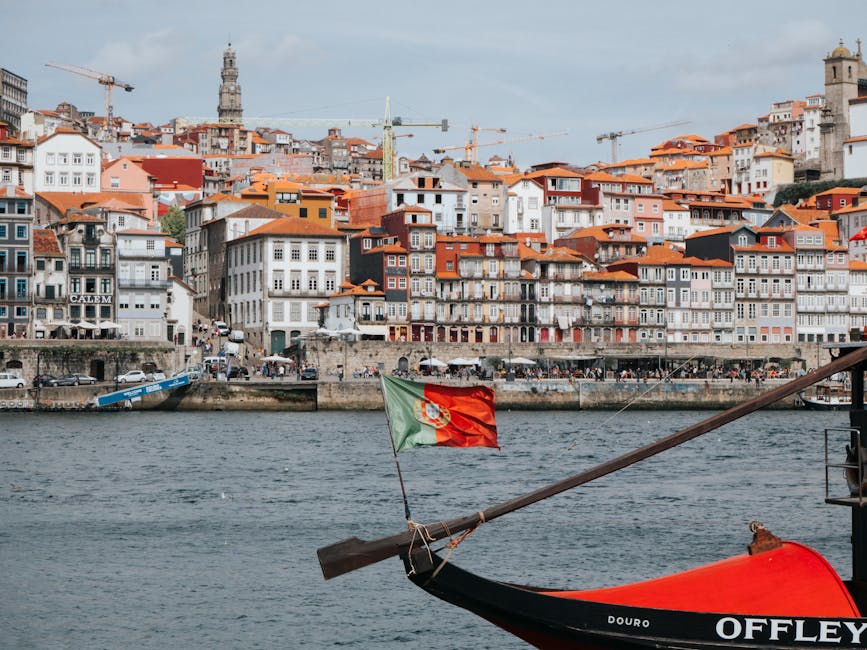
Two hours covers the historic centre properly. You start in Liberdade or São Bento, climb past Sé Cathedral, hit the Vitória viewpoints, drop down through Ribeira, and finish either back at the start or across the Dom Luís I Bridge in Gaia. About $35 to $50 per person on shared, or $80 to $130 private depending on group size. This is the sweet spot for most first-time visitors. If I had one half-day in Porto and no other plan, this is what I would book.
The 3-hour tuk-tuk plus Douro cruise combo
Three hours, and easily the most-booked tuk-tuk format in the city. The first half is the historic-centre loop on the tuk-tuk. The second half is a 50- to 60-minute river cruise on a rabelo boat that loops under the city’s six bridges. You finish either back at the dock or in Gaia for a self-guided cellar visit. Prices land around $20 to $35 per person on shared boats, more on private tuk-tuks. The combo wins because it solves two things in one block of time, which is exactly what you want on a short Porto trip. The standalone 6 Bridges Cruise covers the boat half on its own, but the tuk-tuk integration is worth the small premium.
The full-day private with Vila Nova de Gaia tasting
Four to six hours, fully private, route negotiable. You give the driver a brief: photos at three viewpoints, a stop at Lello if you have a ticket, lunch wherever they recommend, and a port-wine cellar tasting in Gaia. They build the day around it. Expect $200 to $400 for the tuk-tuk and driver, regardless of group size. The cost-per-head drops if there are three of you. If you are travelling with kids or with anyone whose knees are no longer young, this is the only format that lets the schedule actually breathe.
The cellar half is the weighting variable. Some operators bundle the entry fee. Some drop you at the gates and you pay separately. Ask before you book. We covered the cellar half in detail in the Cálem cellar guide and the broader Douro Valley wine itinerary. The basic Cálem experience runs around twenty euros for the museum, cellar, and tasting.
Electric or petrol: it actually matters
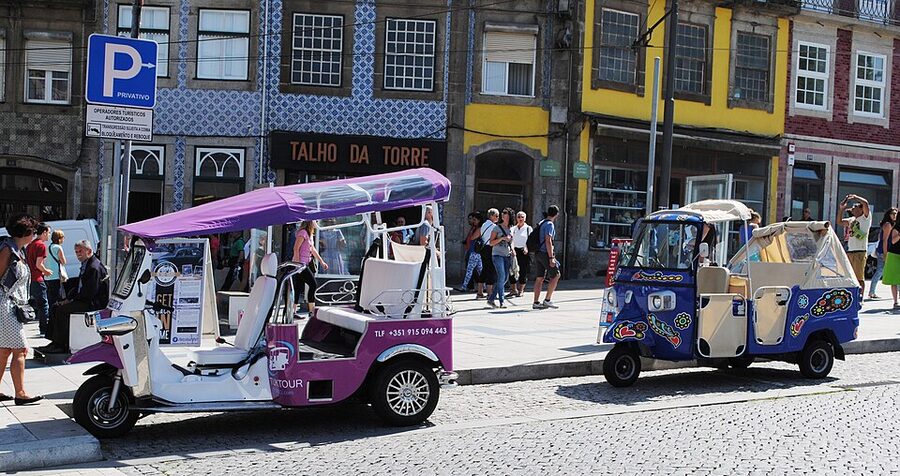
Roughly four out of every five licensed Porto tuk-tuks are now electric. The remaining fifth are older Piaggio Ape conversions running on petrol or diesel. The differences are real and they affect what you actually experience.
Electric tuk-tuks are quiet. That is the headline. You can hear the guide at full speed, which sounds basic until you have ridden a petrol one up a hill in second gear and realised you missed the entire monologue between Sé and Largo de São Domingos. Electric models also climb the steeper ramps better because torque is instant. They run for a full four-hour shift on one charge. The downside is range: a full-day private booking sometimes needs a swap mid-tour. Ask before you book if you are going long.
Petrol tuk-tuks are louder, hotter inside the cab, and they struggle on the steepest ramps to Vitória and the Castelo do Queijo. The advantage is range. They do not need to swap mid-day and they can run further afield (Foz, Matosinhos, Avintes) without operator stress. If your itinerary involves anything west of Boavista or south past Gaia, a petrol vehicle is fine. For everything inside the historic centre, electric is the better ride.
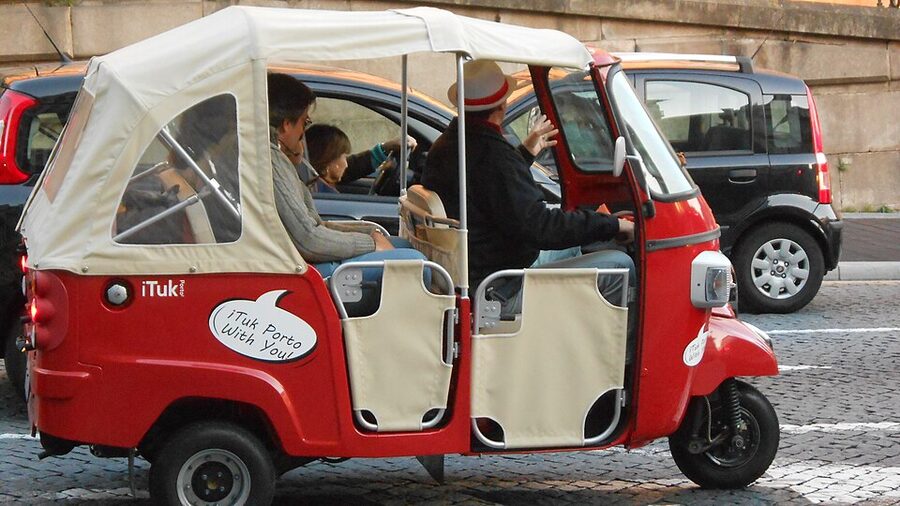
One niche category I will mention briefly: vintage-styled tuk-tuks with wooden bench seats and retro paintwork. Porto has fewer of these than Lisbon does. They cost more, photograph better, and ride slightly worse on bumpy granite cobbles. If you saw the format on a Lisbon tuk-tuk trip and loved it, the Porto equivalent is a smaller niche but it does exist. Most operators will tell you on the booking page if the vehicle is vintage-bodied.
The driver is most of the product
Two tuk-tuks could leave from the same stop on the same morning, follow the exact same route, and one would be the highlight of your whole trip while the other was a fine but forgettable two hours. The vehicle hardly matters. The driver does almost all of the work.
Good Porto drivers know the city in layers. They can tell you why the granite walls along Rua das Flores are darker on the left side (carriage soot, eighteenth century). They know which family ran which port house in Gaia before the 1986 EU rules opened up small producers. They will physically stop the tuk-tuk, get out, and tap a tile pattern on a wall because they think you will care that the cobalt blue here is different from Lisbon’s. Bad drivers cycle through three facts about Henry the Navigator and complain about Uber for the rest of the hour.
The difference is enormous, and it is mostly invisible from the booking page. Read recent reviews carefully. Skip the operator’s average rating and look for guide names that come up by name in the actual recent text. The flagship operator in my picks below has half a dozen drivers who get praised by name in nearly every recent review, which is the strongest signal you can get.
If the operator has more than one driver and the platform does not let you request a specific person, your assigned guide will be more or less random. Most are fine. A few are exceptional. Almost none are bad. But the gap between fine and exceptional is what you remember a year later.
What every decent route hits
If a Porto tuk-tuk tour does not include the stops below, ask the operator why. There can be reasons (events, restoration, traffic), but a generic city loop without these is not really a city loop.
São Bento and the Liberdade-Aliados spine
Most routes start here. The point is the azulejo panels inside São Bento station, twenty thousand of them depicting Portuguese battle scenes painted by Jorge Colaço in 1905-1916. A good driver swings past the entrance hall before climbing into the historic centre, partly because the meeting point is here anyway, and partly because almost every passenger asks about the panels at some stage of the trip.

Sé Cathedral and the Bishop’s Palace
The granite cathedral above São Bento dates to the twelfth century and was where Henry the Navigator was baptised in 1394. Tuk-tuks usually park in the small square in front and give you ten minutes outside. The cloister and its azulejos are worth a paid entry on their own, though most tour packages do not include the ticket. Ask in advance if you want it built in.
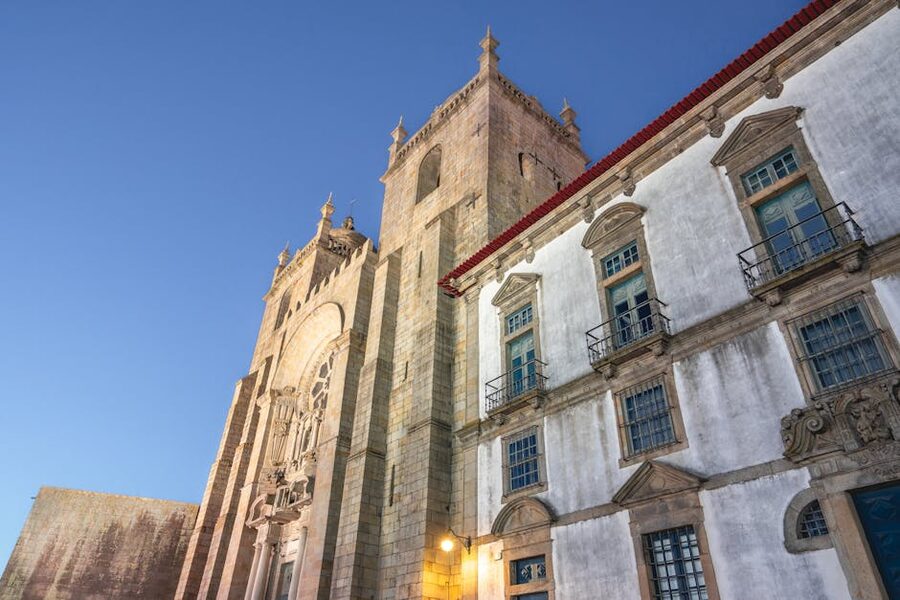
From the cathedral square the tuk-tuk usually drops down through the steep alleys behind Sé toward Ribeira. This is where the vehicle proves its worth. The streets here are narrower than a parked car, and the tilt is steep enough that walkers in trainers slip on cobbles in winter.
Miradouro da Vitória and the rooftop view
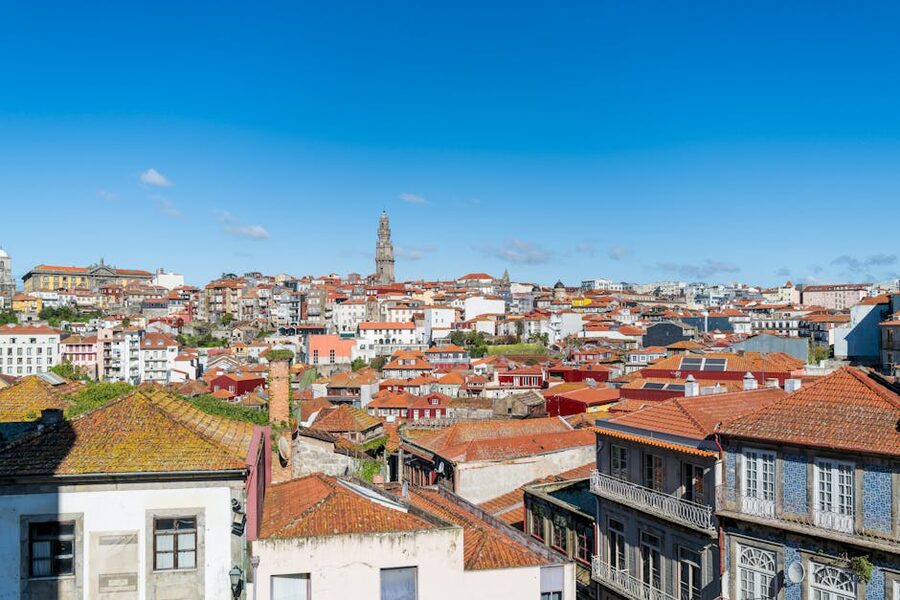
This is the postcard. A small square in the old Jewish quarter at the top of a steep climb, with an open balcony looking south over Ribeira to Gaia and the Mosteiro da Serra do Pilar. Most tuk-tuk routes time the Vitória stop for the back half of the tour, when the light is better. If your driver gets you here in the first ten minutes, ask if you can swing back at the end.
Lello, Clérigos, and the Carmo tile wall
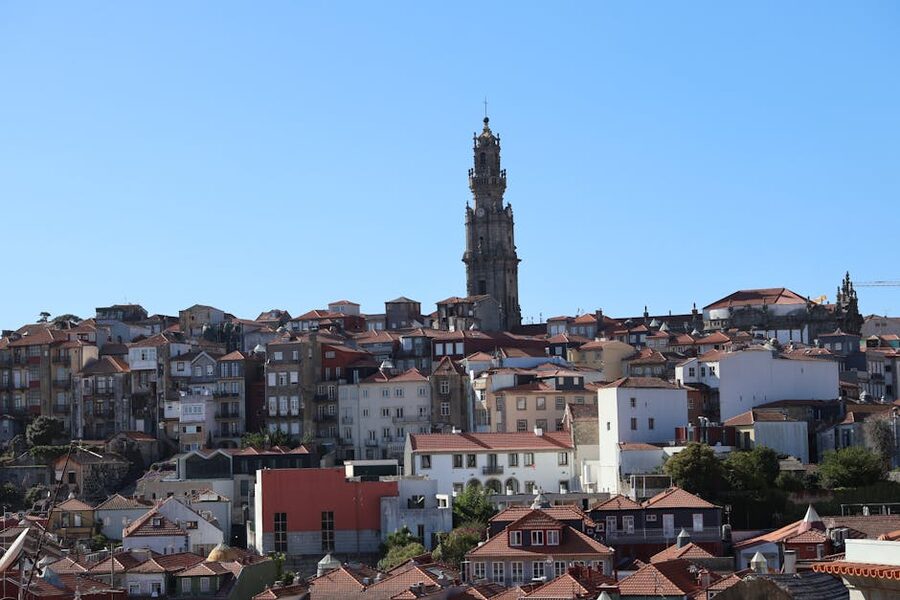
Most tuk-tuks pass these landmarks rather than stop at them. Livraria Lello requires a paid ticket and a queue. Clérigos Tower is climbable but eats forty minutes if you go up. The Carmo church’s azulejo wall, on the other hand, is street-side and free, and most guides will pause for a 90-second photo. If Lello is the reason you came to Porto, book the ticket separately and add it as a defined stop on a private 4-hour tour. Otherwise the drive-by is fine.

Ribeira and the Cais
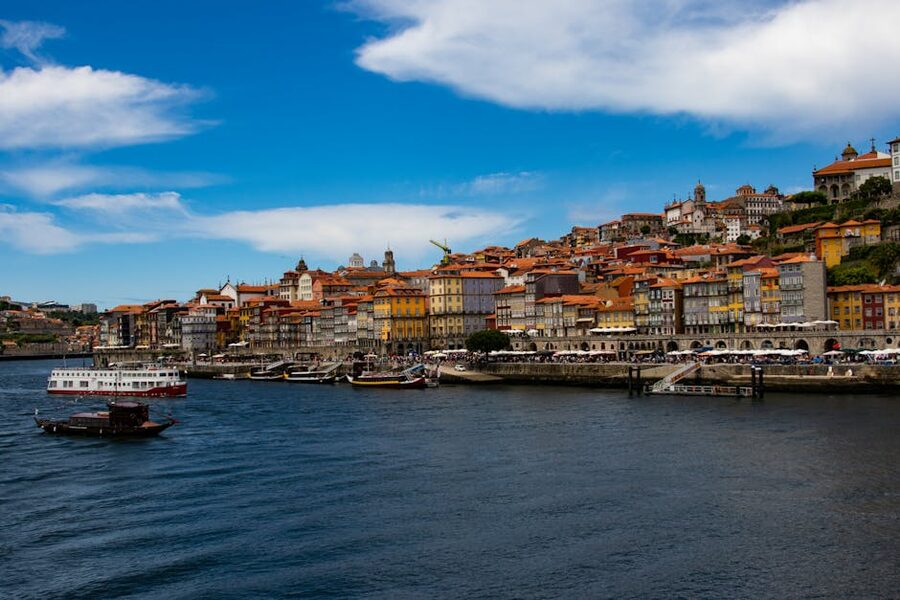
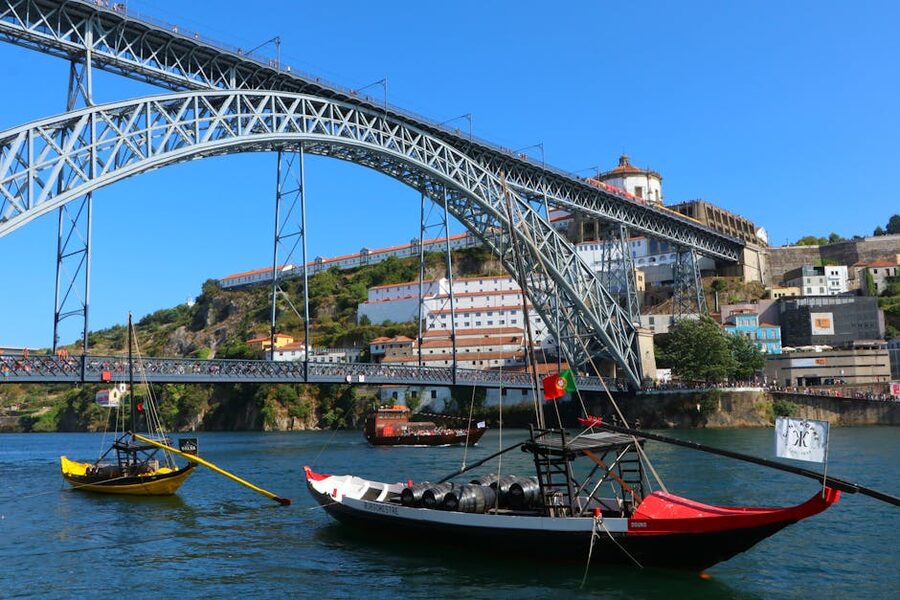
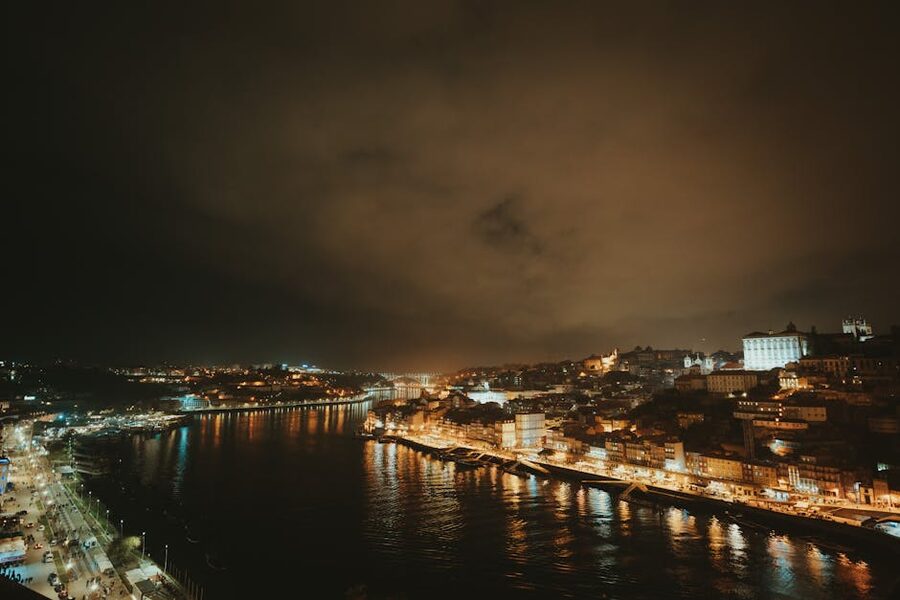
The riverside. Almost every loop ends or pauses here. The buildings facing the Douro are protected as a UNESCO site and the cobbled wharf is closed to most car traffic, which is why tuk-tuks stand out. A good driver will swing past Casa do Infante (where Henry the Navigator was probably born), drop you near the rabelo boats for photos, and let you walk a hundred metres on your own before picking you back up. Some operators stop here for the boat half if you have booked the cruise combo.
Dom Luís I Bridge and the Gaia crossing
Half the licensed Porto tuk-tuks make the crossing. The lower deck of Dom Luís is open to road traffic and the upper deck takes the metro plus pedestrians. Tuk-tuks can use the lower deck, which puts you about ten metres above the river with a head-on view of Gaia. Cross over and you are in port-wine country. Most longer tours stop on the south bank for the cellar quarter and the riverside esplanade.
What it actually costs
Public price ranges as of early 2026. These shift seasonally, but the relative gaps are stable.
Shared one-hour tuk-tuk: $15 to $25 per person, payable per head. The cheapest sensible format. Group of up to five strangers in the same vehicle. Useful if you are alone or as a couple and you want the experience for a low budget.
Shared two-hour: $30 to $50 per person. Same logic, longer route. The price-per-hour is actually better than the one-hour version because the second hour gets you out of the centre and into the better viewpoints.
Private two-hour: $80 to $150 for the whole tuk-tuk regardless of group. This is the format I default to if there are three or four of you. The cost-per-head drops below the shared option once you fill the seats.

Tuk-tuk plus Douro cruise combo: $20 to $35 per person on the most-booked listings. This is genuinely good value because the cruise alone is around $18 per person. You are paying about ten dollars more for the tuk-tuk half. That is a steal compared to booking the two separately.
Full-day private with Gaia cellar: $200 to $400 for the tuk-tuk, plus separate entry fees for the cellar (around twenty euros for Cálem) unless bundled. With four people splitting the tuk-tuk fee, the per-head cost lands close to a one-day Douro Valley group coach. The big difference is that you control the schedule.
Where to start the tour
Three main staging zones for licensed tuk-tuks in Porto. None of them is bad. Pick by where you are staying.
Praça da Liberdade and Avenida dos Aliados
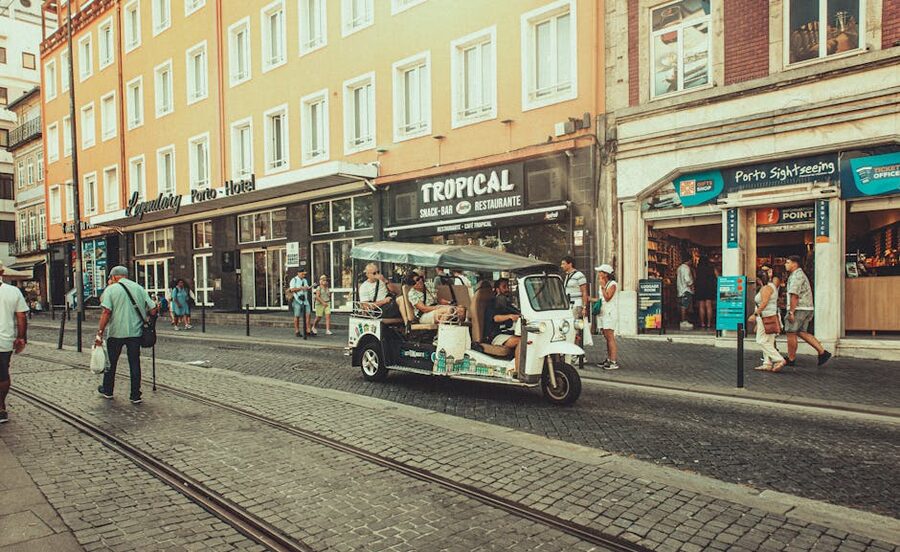
The default. Most operators stage here because it is central, flat, and has hotel pickups within a 200-metre radius. If you are staying anywhere in the historic centre, this is where you will start. Walk-ups are easier here than anywhere else, but the licensed-versus-unlicensed split is also visible: the legitimate operators have a registration number on the side and a fixed-price board. The freelancers do not. Walk past the freelancers.
São Bento railway station
The second staging point, especially for tours that include the azulejo hall or that pick up from the metro. Slightly less crowded than Liberdade. If you arrived by train from Lisbon and want to start the day immediately, walk out the front door and there will be a rank within 50 metres.
Ribeira
The river-side staging zone. Mostly used by tours that finish on the boat (the cruise combo) and a few private operators with a riverside office. Pretty for photos. Slightly fewer choices than Liberdade. Worth using if you are staying in Ribeira and you do not want to climb to the centre just to start the loop.
My three Porto tuk-tuk picks
These are the three I would actually book, in order. The flagship dominates the market for a reason. The other two cover the cases where the flagship is not the right shape for what you want.
1. Porto: Guided Tour by Tuk-Tuk and Douro River Cruise, around $20
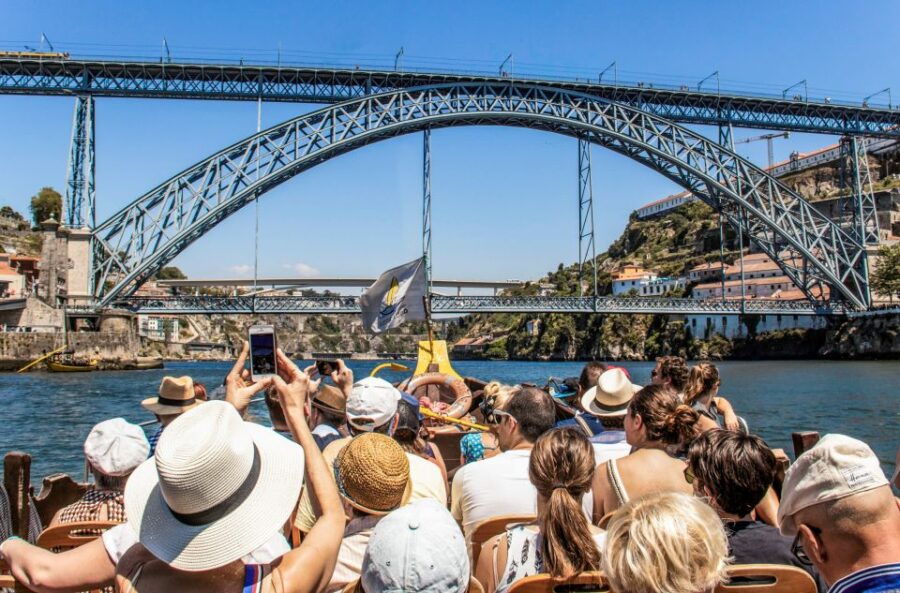
This is the one I send first. You get the historic-centre tuk-tuk loop and the Douro cruise in a single booking, which solves two of Porto’s three big sightseeing jobs in under two hours. Our review of the combo goes into the typical route and how the boat handover works at the Cais. Pick this if you have a half-day and you want to see the maximum amount of Porto for the smallest amount of time and money.
2. Oporto Tuk-Tuk Tour: Fast, Fun and Flexible (1H to Full Day), around $88 per group up to 3
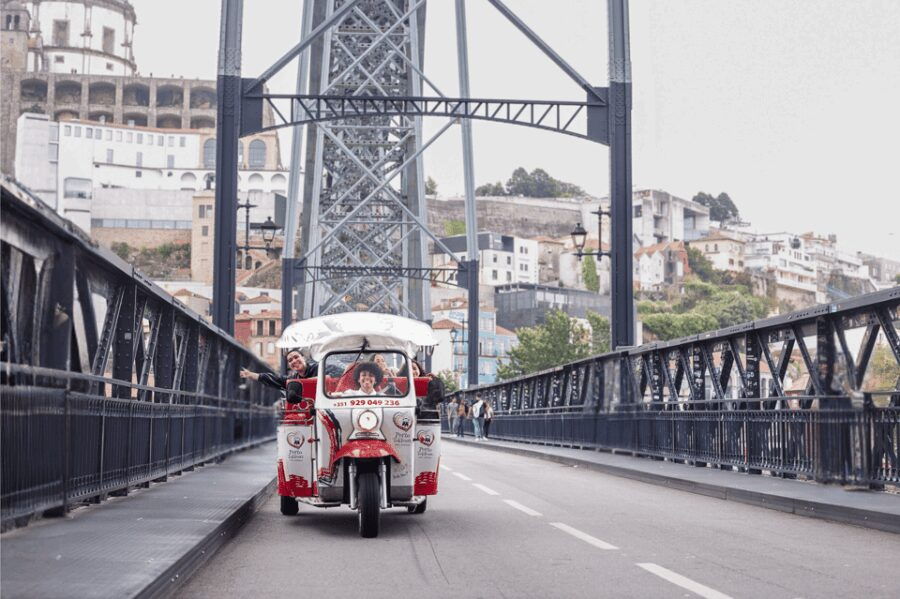
Pick this if you want flexibility on the day. The operator runs everything from a quick one-hour Ribeira loop up to a full-day private with Gaia cellar tasting on the same booking thread. Our review of the flexible format covers the duration brackets and how the price scales as you add hours. Useful when your trip plan keeps shifting and you do not want to commit to a fixed slot weeks in advance.
3. Porto: Private Sightseeing Tour by Electric Tuk Tuk, around $47 per person
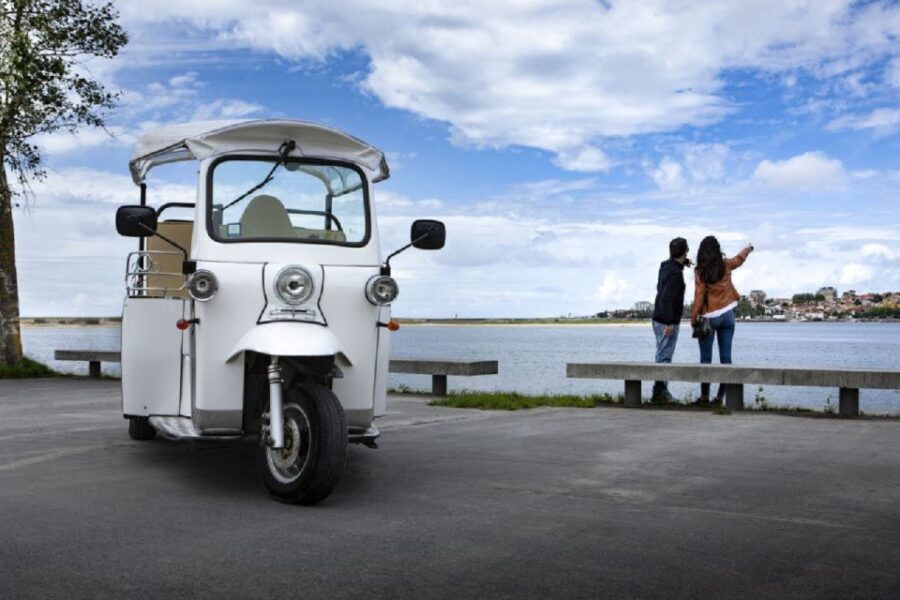
This is the one I would book if I cared about hearing every word the driver said. Two hours, fully private, electric, a hotel-area pickup window if you ask, and a route that hits the historic-centre highlights without the cruise add-on. Our review of the electric private goes into the typical route and the vehicle. Pick this when you want a focused city loop and you do not need the boat.
Choosing between the three
Three filters. If you have a half-day and you want the maximum coverage for the least money, pick the combo. If you want flexibility to choose your duration on the day, pick the flexible format. If you want a private electric tuk-tuk you can hear the guide on and a focused two hours, pick the electric.
Two more variables. Group size: the combo is shared (you and a few strangers per tuk-tuk), the flexible can run private or shared, and the electric is private only. Pickup: only the flexible and electric do hotel-area pickups. The combo wants you at the staging point. If you are staying in Boavista or Foz, that ten-minute taxi to Aliados is a real cost in time.
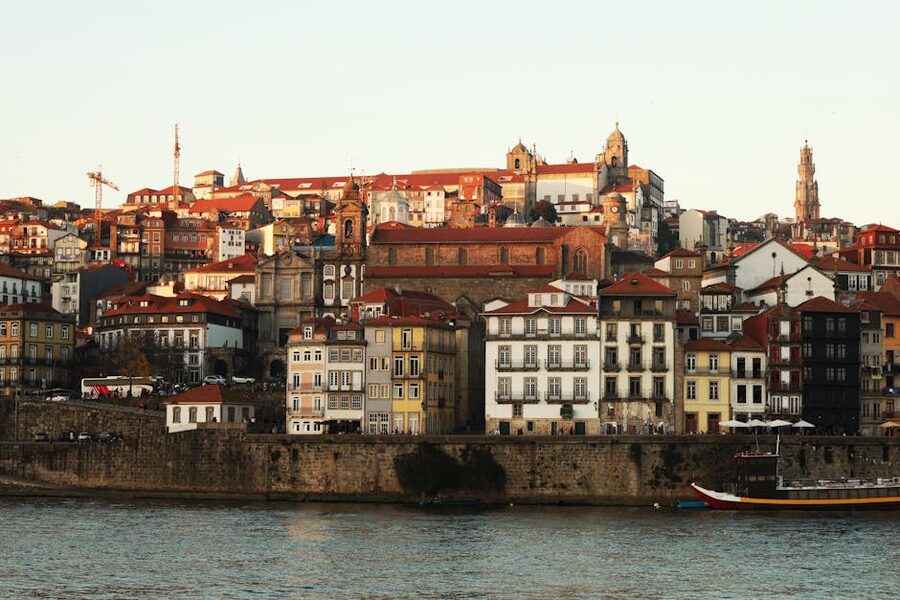
If the three above are sold out for your dates, look at the historic-centre dedicated tour, the tuk-tuk plus cruise plus wine tasting upgrade, or the 2-hour shared as fallbacks. The first two are smaller-volume listings but cover the same broad routes. The 2-hour shared is the cheapest legitimate option in town.
Tuk-tuk vs walking, e-bike, and HOHO
People ask me which is best, and the truthful answer is each does a different job.
A walking tour is slower but more intimate. Three hours covers maybe four kilometres. You stop, you read inscriptions, you go inside Sé. The pace forces attention. The tradeoff is the climb. Porto sits on real hills and a July afternoon walking up from Ribeira to Vitória is genuinely punishing. If you have functional knees and a morning slot, walking first then tuk-tuk second is the ideal split. The full Porto city tour breakdown covers the walking tour pricing and route.

An e-bike tour is the closest thing to a tuk-tuk in terms of geography solved. It costs roughly the same per hour and covers the same range, but you are doing the riding. Helmet, intercom for the guide, and stops every fifteen minutes. The motor flattens the hills. Less storytelling because the guide is also riding, but more athletic and weirdly more memorable. Good if you are confident on a bike. Skip if you have not ridden in five years and Porto cobbles will be your reintroduction.
A hop-on hop-off bus is cheaper per hour but route-locked. The HOHO physically cannot enter Alfama-equivalent streets in Porto: the historic centre’s lanes are too narrow. So the bus stays on the modern boulevards and circles Boavista, Foz, and the Gaia ridge. Useful if you have three days and want a transit pass with audio narration. Useless if you have one day and want to actually see the old quarter. We have written about the same product family in Lisbon and the equivalent Seville HOHO; the format is consistent across cities.
A tuk-tuk slots between walking and HOHO. More flexible than the bus, faster than the walk, and the only one of the three that gets you onto the steep ramps where the actual character of the city lives. If you can only do one, do this. If you have three days, do all three on different mornings.
Porto tuk-tuk vs Lisbon tuk-tuk
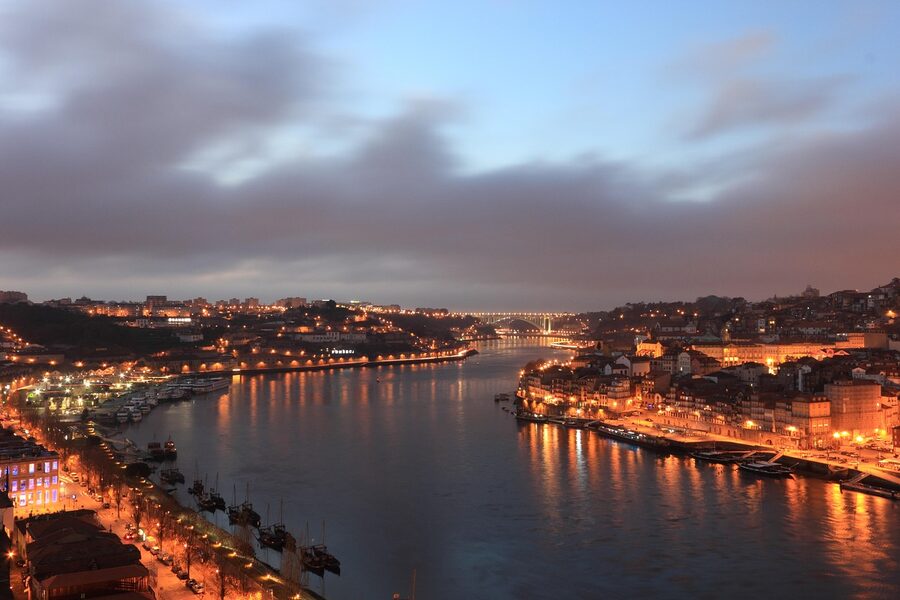
People often ask if a Porto tuk-tuk tour is just the Lisbon experience, repeated. It is not, and the difference is geographic. Lisbon’s tuk-tuks specialise in Alfama, Mouraria, and Bairro Alto, three medieval quarters built on a wide hill. The streets are narrow but the network is sprawling, so a Lisbon tour can run for two or three hours and still feel like discovery.
Porto’s tuk-tuks operate in a denser, smaller historic core that drops harder into the river. The whole UNESCO zone is maybe a kilometre square. So a Porto tuk-tuk tour is shorter on average, hits more named landmarks per hour, and crosses the river to Gaia in a way Lisbon never quite has an equivalent for. Different rhythm. The Lisbon version is more meandering. The Porto version is denser, faster, and ends with port wine.
If you are doing both Portuguese cities on one trip and you only want to ride a tuk-tuk in one, I usually pick Porto. The geography rewards it more. If you have time for both, do them on different days and notice the difference yourself.
Practical tips that nobody tells you
Six things I would have liked to know before my first Porto tuk-tuk run.
Book a morning or late-afternoon slot. The midday window between 12 and 3pm is when the cruise-ship crowd lands and Ribeira gets crushed. Tuk-tuks still run, but the Cais is harder to walk and your photos have other people in them. Mornings before 11 and slots from 5pm onward are dramatically calmer.
Sit on the right side of the tuk-tuk if you can. The route loops the historic centre clockwise on most operators, which means the Douro views and the Gaia panorama are on your right. The driver will not tell you this, and the seating is informal. Climb in first.
Tip in cash. Card payments are normal on the booking platforms but the drivers run on tips and most platforms do not pass them through. Five euros for an hour, ten for two, twenty for the full day. Cash. Hand it over before you walk away or it is awkward to find them again.
Bring a windbreaker. Even in July, the open cab plus the river air plus the speed is colder than you expect. Twenty minutes into a run with a sea breeze coming up the Douro you will be glad you have a layer.
Cancel within 24 hours if the rain forecast is heavy. Most operators have a free-cancellation window. Most have side curtains for light rain. Heavy rain in Porto is genuinely heavy (the city averages 1200mm a year, mostly in winter), and a tuk-tuk in a downpour is not fun. Reschedule.
Combine with a Sintra-equivalent day trip elsewhere on the same Portugal trip. There is no Sintra in Porto, but the Pena Palace day trip from Lisbon is the obvious south-end pairing if you are doing both cities. Spread it out: tuk-tuk in Porto, palace day-trip in Lisbon, fado evening in either, and you have a coherent five-day Portugal arc.
What about the freelancer with no fixed price
You will see them. They stand near São Bento and Aliados without a registration number on the vehicle and they quote an hour for whatever they think you will pay. Sometimes the price ends up reasonable. Sometimes it does not. The vehicles are usually older and the insurance situation is unclear. Most importantly, the driver-guide quality is genuinely random.

The licensed listings on GetYourGuide and Viator handle this for you. The operator is verified, the insurance is real, the driver is on the books, and the price is fixed. The few extra euros you pay for the platform are worth it for the absence of price negotiation in the middle of your holiday. Walk past the freelancers and pre-book.
One last thing about the cellar half
If your tuk-tuk run includes a Gaia cellar stop, the operator will usually drop you at the gates of one specific port house and pick you up an hour later. Cálem is the most-booked, partly because their interactive museum is good and partly because their fado-show package is genuinely worth the upgrade. We covered the cellar visit and the fado option in the Cálem cellar guide. Treat the tuk-tuk and the cellar as two products: the tuk-tuk gets you there, the cellar is its own experience.
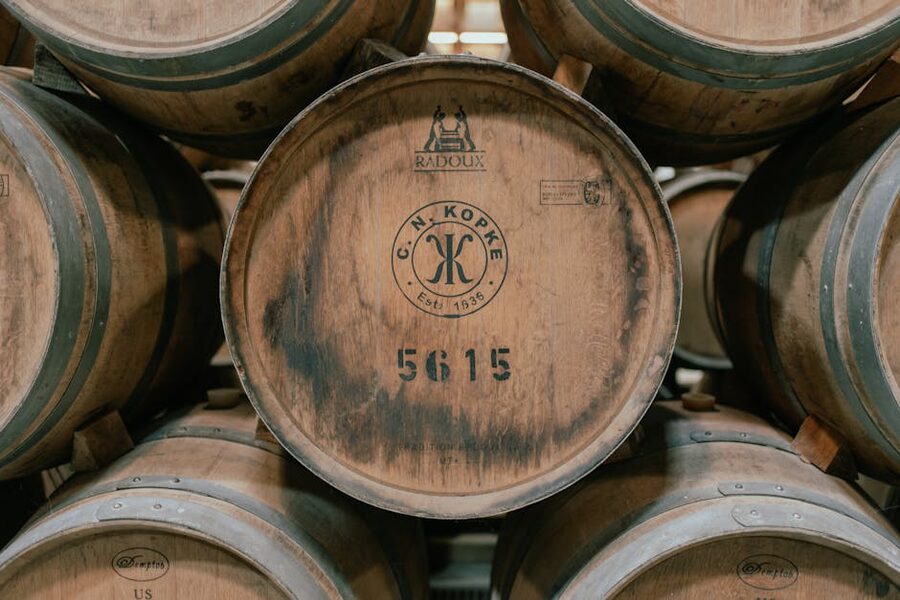
If the day plan is to do a deeper Douro experience instead, the Douro Valley wine tour is the alternative full-day. That is a different product, much further upriver, and beyond the range of a single tuk-tuk. The tuk-tuk plus Gaia cellar combo is the city-bound version. The Douro Valley day trip is the proper-vineyard version. Different scopes, different prices.
Where this fits in a wider Portugal trip
If Porto is your only Portuguese stop, a tuk-tuk on day one is a strong opener. You orient quickly, you see almost everything, and your subsequent days can drill into specifics: a slow Lello morning, an actual cellar tour, a Foz seafood lunch. If Porto is paired with Lisbon, do the tuk-tuk in Porto and the Lisbon tuk-tuk on a different day and notice the difference. They are sister products with distinct rhythms. The southern Lisbon walking tour covers the slower-pace version of the same idea.
For a four- or five-day Portugal arc, I usually default to: Porto tuk-tuk day, Douro Valley day, train to Lisbon, Lisbon tuk-tuk or walking, Sintra day trip, then a fado evening. Each piece is independently bookable and the order does not matter much. The tuk-tuk simply gets the orientation done in two hours, leaving the rest of the week for the deeper experiences.
The point of a tuk-tuk is to give you the city in compressed form. Once you have it, you know where you want to come back to. That is the whole job. After the run, you will have your shortlist of cellars, viewpoints, and side streets, and the rest of the trip becomes about going back and seeing them properly.