
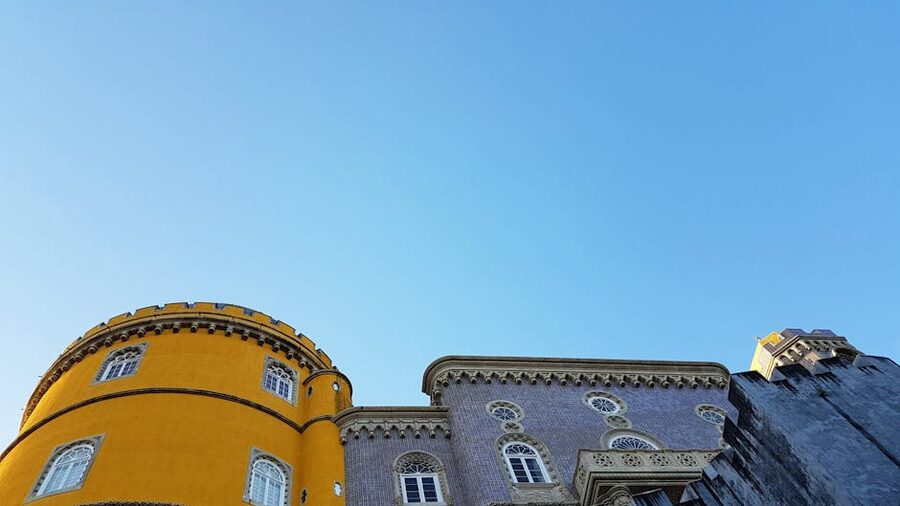
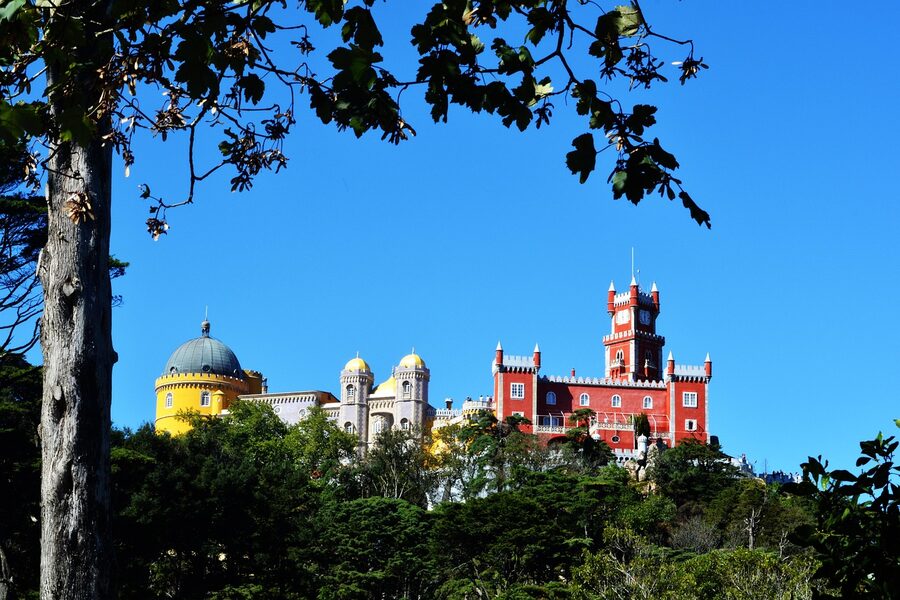
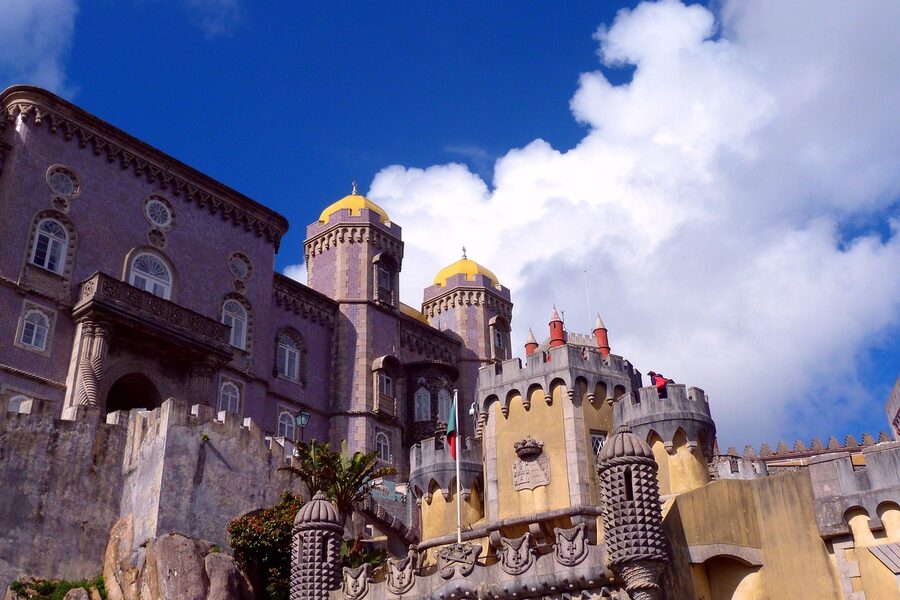
The shuttle road bends one last time and Pena Palace just appears. The morning mist is still on the upper hill, the impossible yellow tower is the first thing through it, then the pink keep, then the ochre walls, and you stand on the terrace for ten seconds doing nothing but staring. Inside the chapel cloister the air drops a few degrees. The Manueline tiles are cold against the back of your hand. There is a faint breath-mark of damp on the stone. This guide is about how to actually book the day so you get that arrival, not someone else’s arrival behind a coach group.
- In a Hurry? My Top 3 Picks
- The Two Tickets, and Why Most People Pick the Wrong One
- The Yellow, the Pink, and the 1996 Restoration
- How to Get There Without Wasting an Hour
- Inside the Palace: What You Actually See
- Pena Park: The Forest Most People Skip
- The Castle of the Moors: A Fifteen-Minute Walk Worth Doing
- The Tours I Would Actually Book
- 1. Sintra: Pena Palace and Park Entrance Ticket (around )
- 2. Sintra: Castle of the Moors Skip-the-Line Ticket (around )
- 3. From Lisbon: Sintra Highlights and Pena Palace Full-Day Tour (around )
- Quinta da Regaleira: The One Add-On Worth Doing
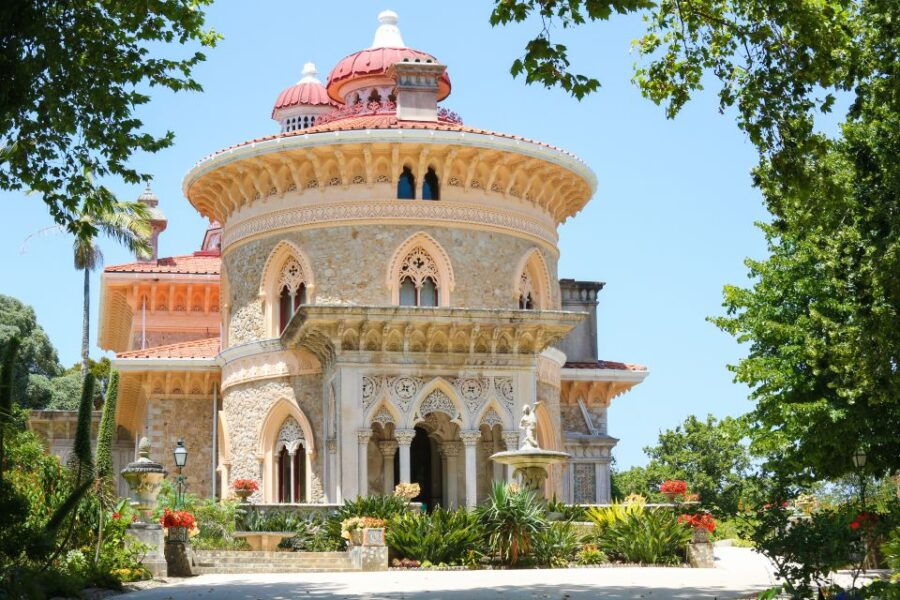
- Monserrate Palace: For the Second Visit
- Sintra National Palace: The One in the Village
- What I Would Do With a Single Day
- Booking Tips, in Order of Usefulness
- How This Compares to Other Iberian Palace Days
- If You Have Two Days in Sintra
- Worth a Last Look
- More Portugal Guides Worth a Look
In a Hurry? My Top 3 Picks
Sintra: Pena Palace and Park Entrance Ticket, around $11. The single ticket most independent visitors actually need. Skip the on-site queue, walk in on a timed slot, do the palace and the park at your own pace. Best for anyone who is taking the train from Rossio and wants the standalone visit. Check times and price.
Sintra: Castle of the Moors Skip-the-Line Ticket, around $14. Pair it with Pena. Fifteen minutes uphill from the Pena gate, completely different mood. Stone walls, no roof, the long view back over the village and the Atlantic. Cheap, fast, no queue with this ticket. See availability.
From Lisbon: Sintra Highlights and Pena Palace Full-Day Tour, around $52. If you do not want to deal with trains, shuttles, or ticket logic at all, take the all-included guided run. Pickup, Pena, Regaleira, Cabo da Roca, Cascais, drop-off. Eight hours, English-speaking guide, all entries handled. Book the day.
The Two Tickets, and Why Most People Pick the Wrong One
There are really only two tickets you need to understand. The Park ticket and the Palace and Park combined ticket. Everything else is a variation.
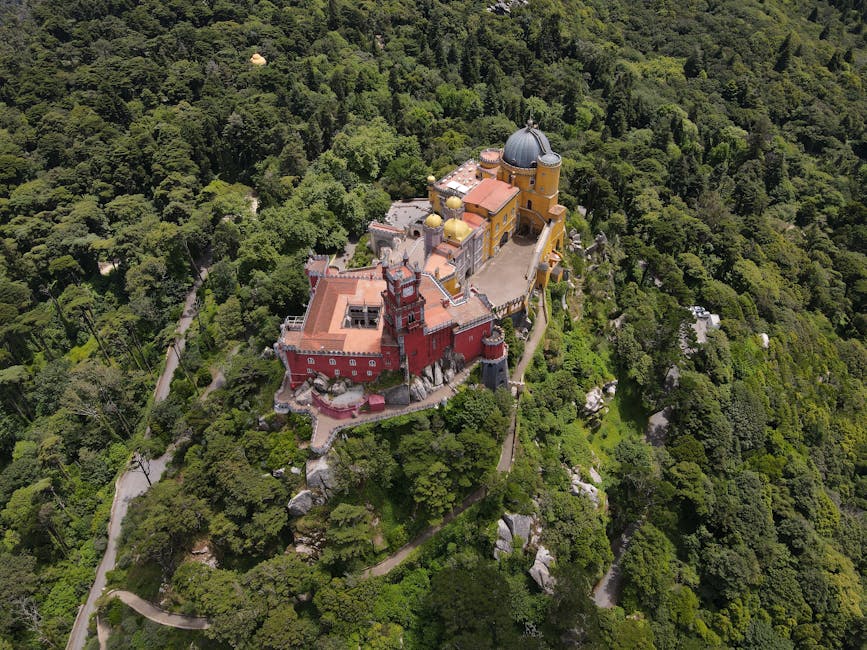
The Park ticket gets you onto the grounds. You walk up through the forest, ride the shuttle bus to the upper level if you want, and stand on the south terrace looking up at the palace from the outside. You can walk the gardens, see the High Cross at the highest point, and circle back to the gate. You do not go inside the palace itself.
The Palace and Park combined ticket includes everything above plus a timed slot to enter the palace interior. The chapel, the cloister, the state apartments, the kitchens, the Manueline tile work, the king’s bedroom. This is the one most international visitors should book. The price difference is small. The experience difference is large.
One trap. People see “Park ticket” at a lower price online and click it thinking they have the cheap version of the same visit. They do not. They have the grounds-only version. They turn up, walk uphill for forty minutes, and discover the palace itself needs a separate timed slot they did not buy. Some days, on-the-day upgrades are not available because the palace is sold out. So if you came to see the inside, book the combined ticket from the start. It is the most popular product on the official Pena entrance ticket listing for a reason.
The Yellow, the Pink, and the 1996 Restoration
If you have looked at old photos of Pena Palace from the 1970s and 1980s, you might have seen a faded grey mass on the hilltop. That was not the original colour. It was a hundred years of weathered paint, badly maintained, then stripped back to bare stone in the mid-twentieth century when the building was being treated as a folly more than a national monument.
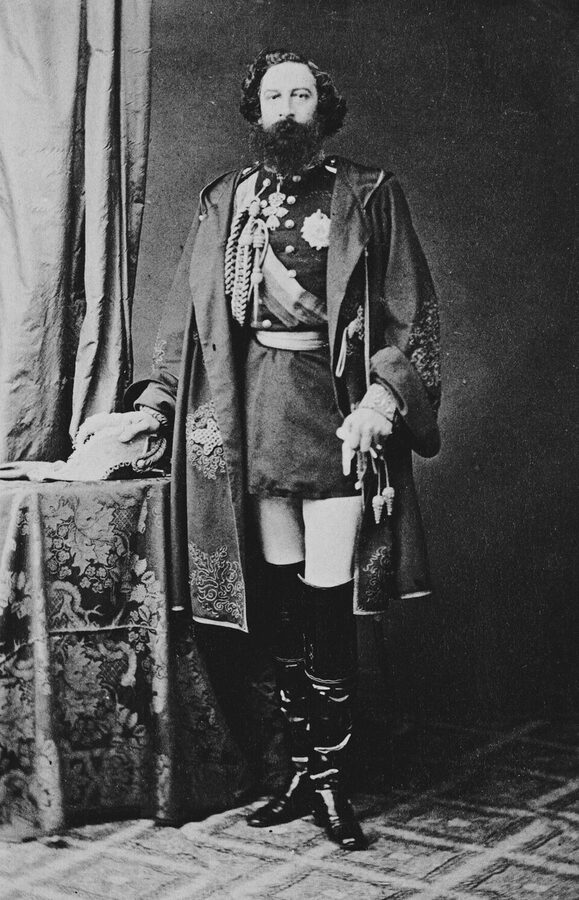
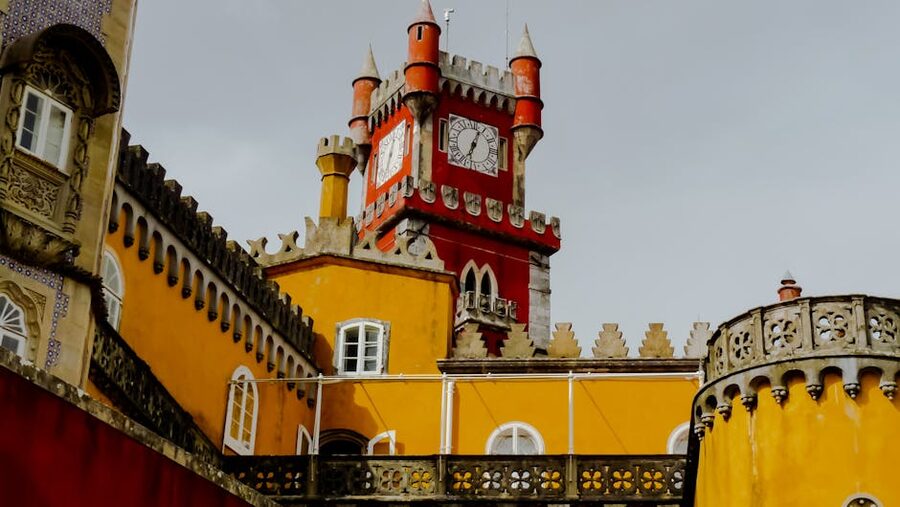
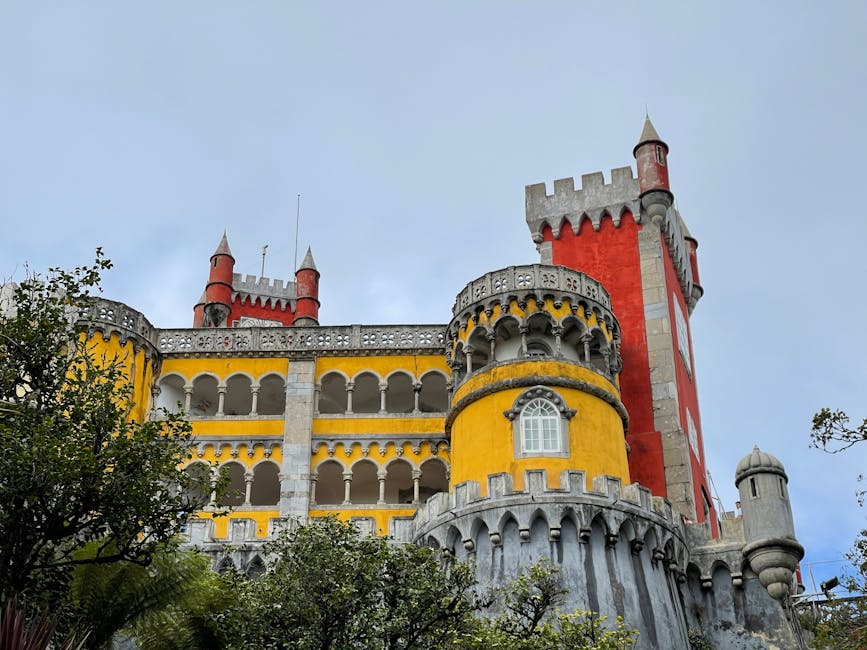
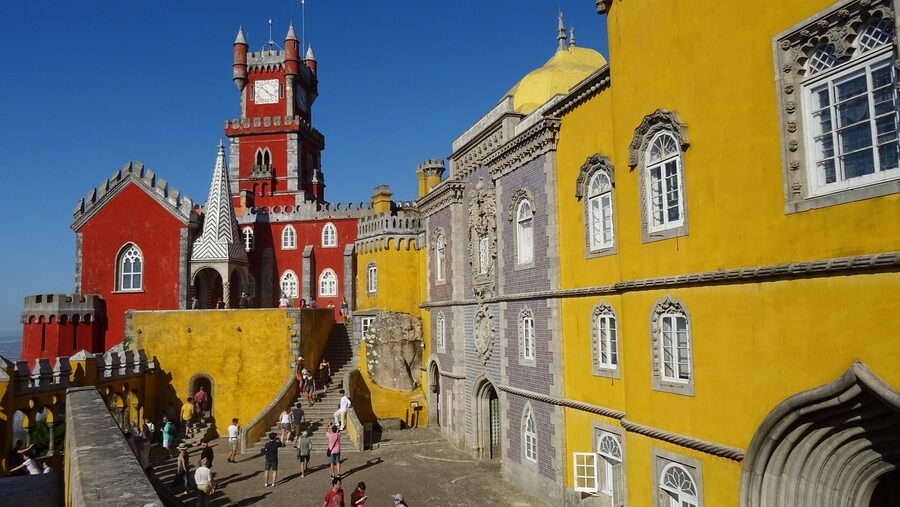
The 1996 colour restoration was based on Ferdinand II’s own correspondence and on paint-layer archaeology done on the building itself. Yellow for the original monastery. Pink for the new keep he commissioned. Ochre and ironwork red for the trim. It is not a Disney-fied repaint. It is a research-led return to what the king actually built. Every five to seven years the colour gets a refresh. The current coats date from a 2021 cycle.
Why this matters for your visit. The colour is the photo. If the weather is grey and overcast, the yellow still pops because the pigment is so saturated. On a blue-sky day the contrast is harder to handle in a phone camera. Most of the strongest pictures get taken on partly-cloudy mornings, around 10am, with the south face in soft light. If you can choose a day, that one.
How to Get There Without Wasting an Hour
You have three real options. Train, day-tour coach, or rideshare. None of them is wrong. The right one depends on how much hand-holding you want and how much flexibility you are willing to trade for it.
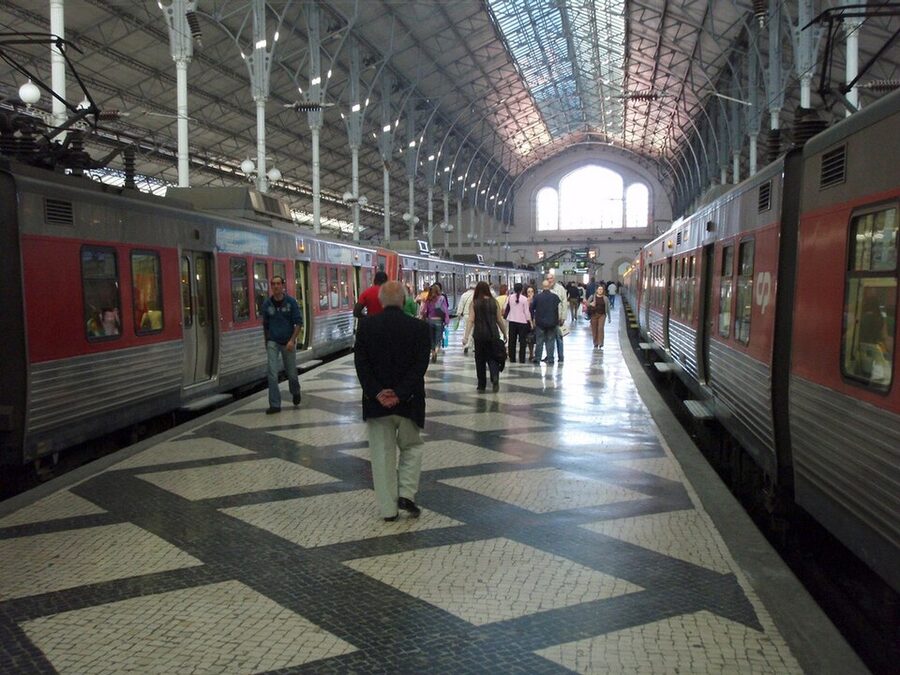
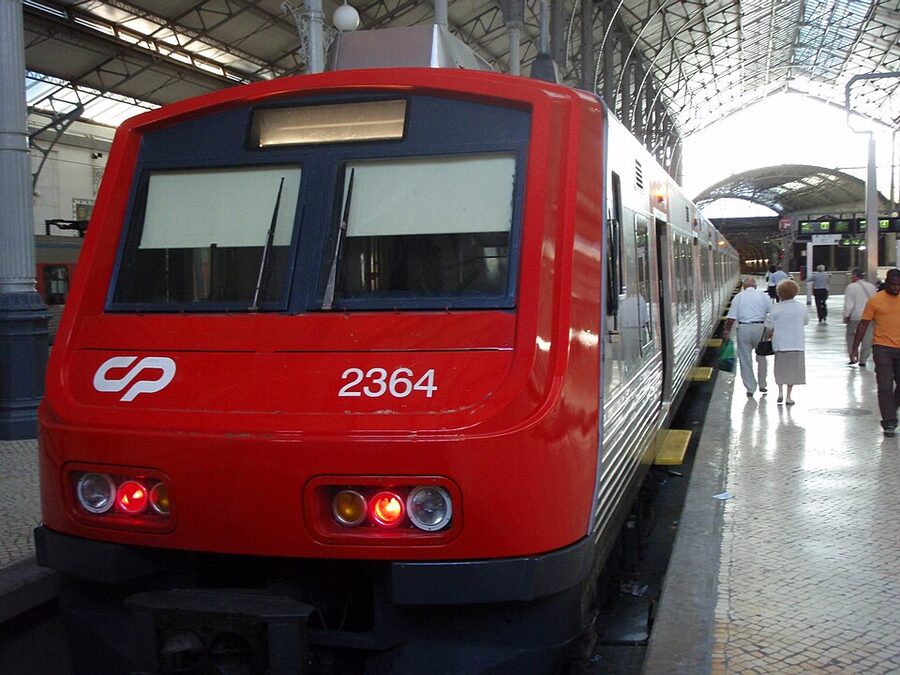
Train from Rossio. The cheapest option and the one most independent travellers use. Direct from Rossio in the centre of Lisbon to Sintra station in 40 minutes. From Sintra station you take the 434 tourist bus uphill to the palace, or you walk into the village first and pick it up there. Total round-trip transport in 2026 is around 5 to 6 euros for the train and another 7 or 8 for the day bus pass.
Tour coach from a Lisbon meeting point. The fixed-itinerary option. A guide handles tickets and shuttle logistics, you sit on a coach that does Sintra plus three other stops in one day. Useful if you want to see Cabo da Roca and Cascais on the same outing, which is the format covered in our guide to the standard four-stop Sintra day trip. You spend less time choosing and more time looking.
Small-group transfer or rideshare. The middle option. A driver picks you up from your hotel, takes you to the Pena gate, you do the visit at your own pace, and they take you back. Costs more than the train and less than a coach tour. The format is closest to a small-group day-trip with Sintra and Cascais if you also want a beach stop on the same loop.
Inside the Palace: What You Actually See
The interior route is one-way. You enter through the courtyard, climb a curving stair to the entrance, and follow a numbered circuit through about twenty rooms before exiting into the cloister. The walk takes most people 45 minutes to an hour. Less if you are quick, more if you read every plaque.
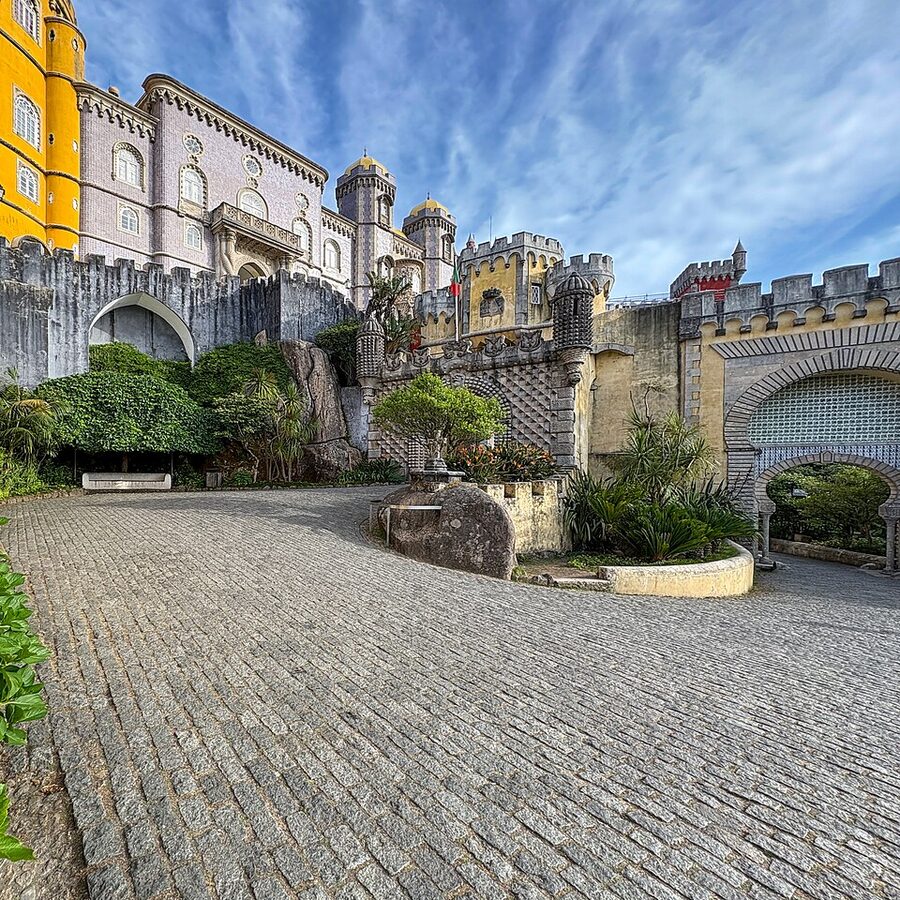
The chapel is small and dark and almost entirely unchanged from the 16th century. There is a Nicolau Chanterene altarpiece in alabaster and black marble that pre-dates the colour-palace wings by 300 years. Stand in front of it for two minutes. Then turn around and look at the tile floor. The geometry under your feet is older than the building you arrived to see.
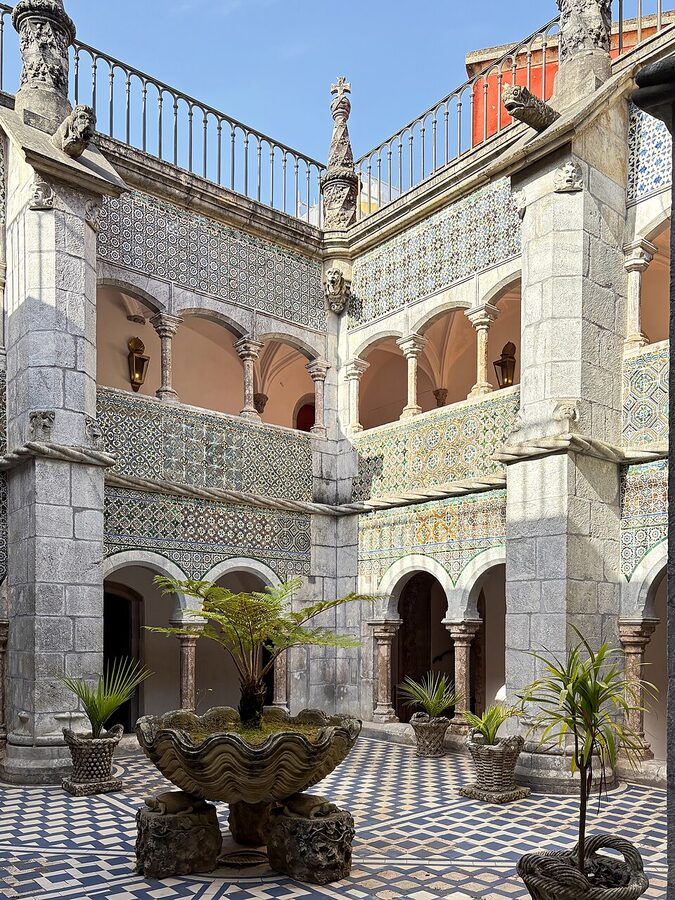
The state apartments come next. Queen Amelia’s bathroom with its Victorian plumbing. The dining room with the original 19th-century china still on the table. The Arab room, which is a German romantic’s idea of a Moorish space, gilded and stuccoed and slightly mad. The kitchens at the far end, with copper saucepans hanging in graded rows, are the calmest room in the building because most groups are tired by the time they reach them.
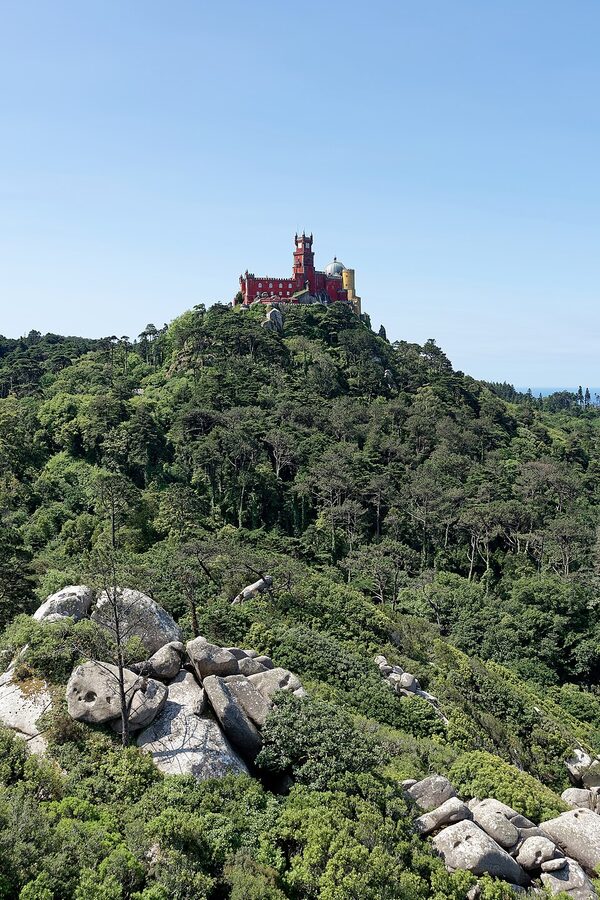
Pena Park: The Forest Most People Skip
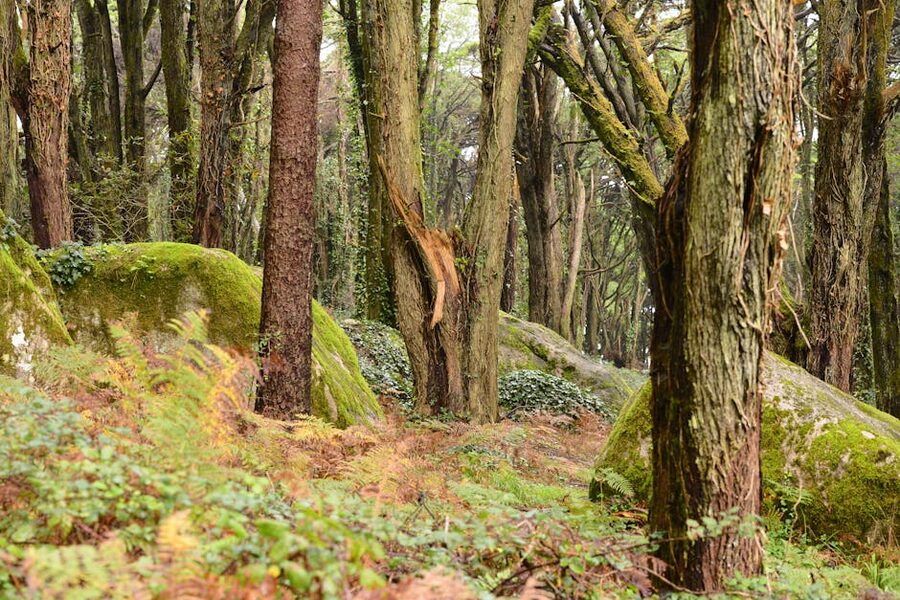
The Park is half the experience and most day visitors give it twenty minutes. Mistake. Ferdinand II laid it out in the 1840s as a romantic landscape garden in the English style. He brought in trees from every Portuguese colony plus from Australia, North America, and northern Europe. Sequoias, ferns, magnolias, camellias, ginkgos. The forest is now mature and the canopy in places is closed and dim and feels nothing like the open hilltop above it.
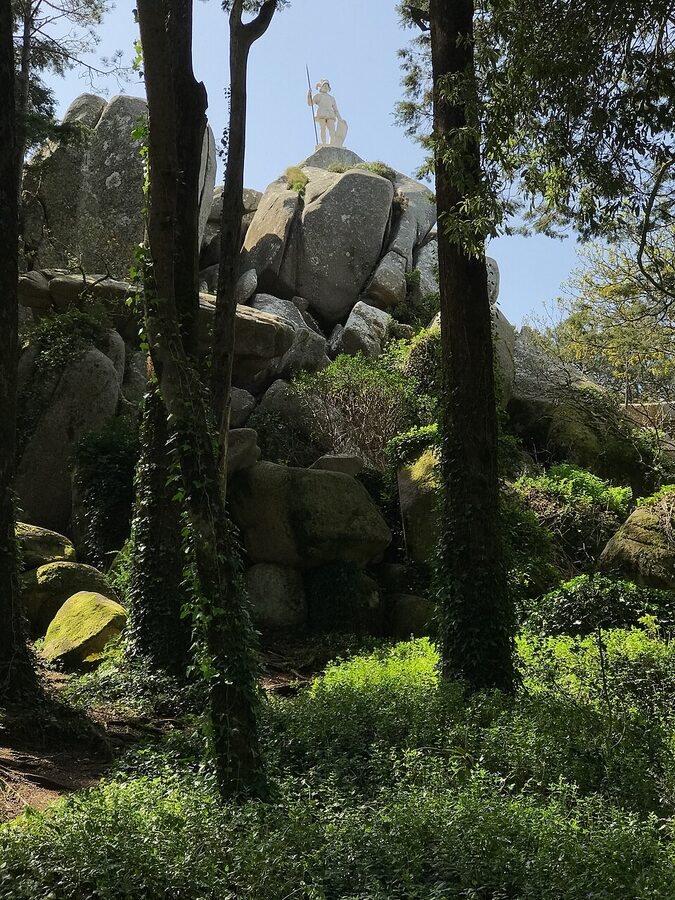
If you can give the park 90 minutes you should. Walk to the High Cross. Look out at the Atlantic and Cabo da Roca on a clear day. Come back via the Chalet of the Countess of Edla, a smaller pink-and-white folly Ferdinand built for his second wife in the 1860s, which is included on most ticket combos and is open as a small museum.
The Castle of the Moors: A Fifteen-Minute Walk Worth Doing
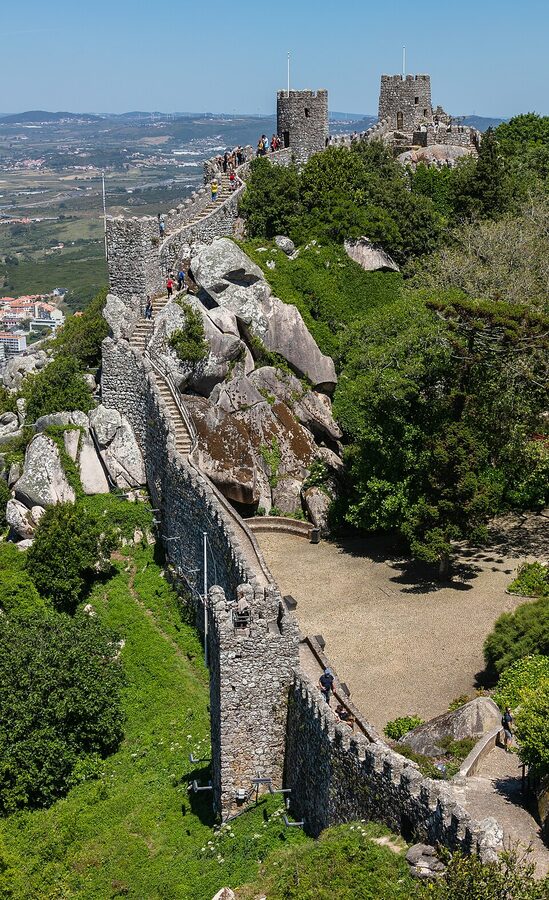
From the lower entrance of Pena there is a signed path that climbs to the Castle of the Moors in about fifteen minutes. Stone steps, a few short uphill stretches, no real difficulty. The Castle is older, built by the Moors in the 8th and 9th centuries, abandoned after the 1147 Christian reconquest, and partly restored in the 19th century by, again, Ferdinand II.
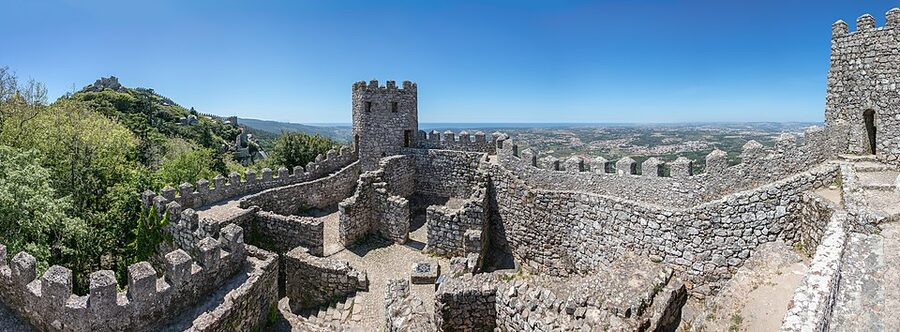
It is a complete contrast to Pena. No paint, no chapel, no king’s bedroom. Just stone walls following the ridge, towers at intervals, the long wind off the Atlantic, and the views down to Sintra village and out to the ocean. The skip-the-line variant on the Castle of the Moors entry ticket avoids a small queue at the gate and pairs cleanly with a morning at Pena.
If you book Pena and Castle of the Moors as two separate skip-the-line tickets you spend less than a single combined day-tour ticket. The trade-off is that you handle your own pacing, your own bus, and your own lunch. If that sounds fine, you have just saved real money.
The Tours I Would Actually Book
Three picks. They cover three completely different ways to do this day. Pick by what kind of day you want, not by the headline price.
1. Sintra: Pena Palace and Park Entrance Ticket (around $11)

This is the ticket I would book first. Our full review of the Pena entrance ticket covers the timed-slot logistics and the small print on the upgrade if you also want the Castle. It is the single most-booked Pena product on the market by a wide margin, which tells you the format works.
2. Sintra: Castle of the Moors Skip-the-Line Ticket (around $14)
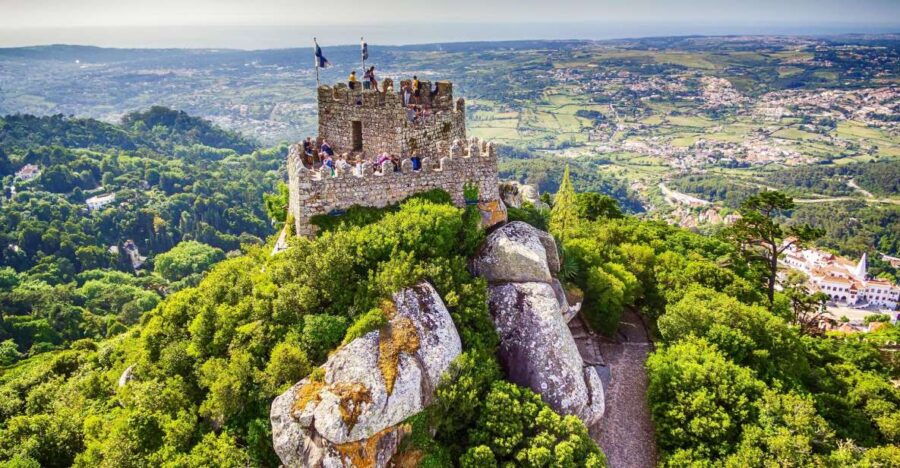
If you have any energy after Pena, do this. Our Castle of the Moors review gets into the queue dynamic at the lower gate and the small section that closes when it is windy. Two separate skip-the-line tickets together are still cheaper than a single guided day tour, and you get to walk between the two on a path most coach groups never see.
3. From Lisbon: Sintra Highlights and Pena Palace Full-Day Tour (around $52)
If you do not want to think, this is the day. We cover the pickup-window quirks and the lunch logistics in our Sintra highlights and Pena Palace full-day review. The trade-off is less time at each stop than a self-arranged visit, but the upside is no queueing, no transport choices, and a guide who can answer the questions you didn’t know to ask.
Quinta da Regaleira: The One Add-On Worth Doing
If you are picking a second Sintra site and the Castle of the Moors does not interest you, pick Quinta da Regaleira. It is a 19th-century estate built by an eccentric Brazilian millionaire, Carvalho Monteiro, with a Italian theatre architect named Luigi Manini. The headline feature is the Initiation Well. A 27-metre-deep spiral staircase that descends underground in a series of nine helical galleries. You walk down, not up. The light comes from above. The stones are wet with moss.
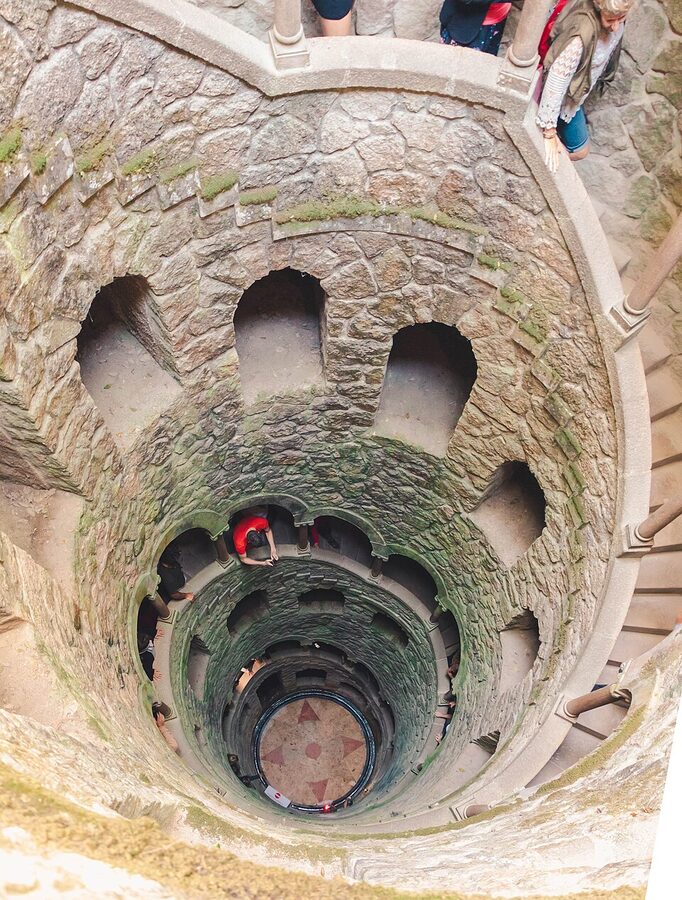
The Regaleira gardens themselves are a maze of grottoes, towers, ponds, and hidden tunnels. Most visitors give them an hour. Two would not be too long. Tickets are sold timed, but the timed slots are generous and you rarely feel rushed. The entry ticket with host option adds someone to walk you through the gate and explain the symbolism, which is helpful given how much of the site is symbolic rather than decorative. The audio-guide variant is the cheaper, no-host alternative if you prefer to wander on your own.
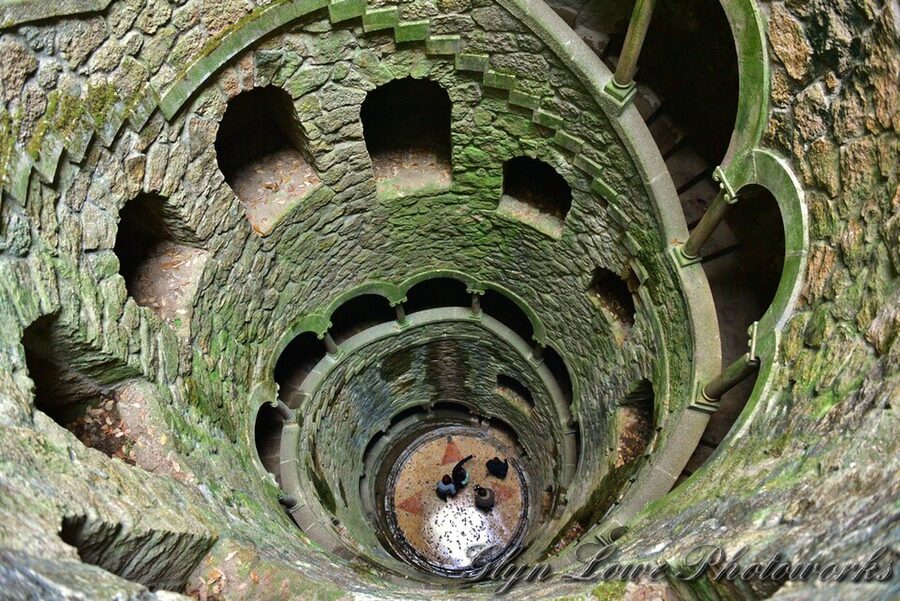
If you want to do Pena and Regaleira on a guided day, the Sintra, Regaleira and Pena Palace guided tour covers both with an English-speaking guide. The schedule is tight but the trade-off is no logistics on your side.
Monserrate Palace: For the Second Visit
Most people do not get to Monserrate. It sits 4km west of Pena, on a separate ridge, and the bus connection is slow. But if you have done Sintra once before and you are coming back for a deeper second day, this is the third palace I would book.
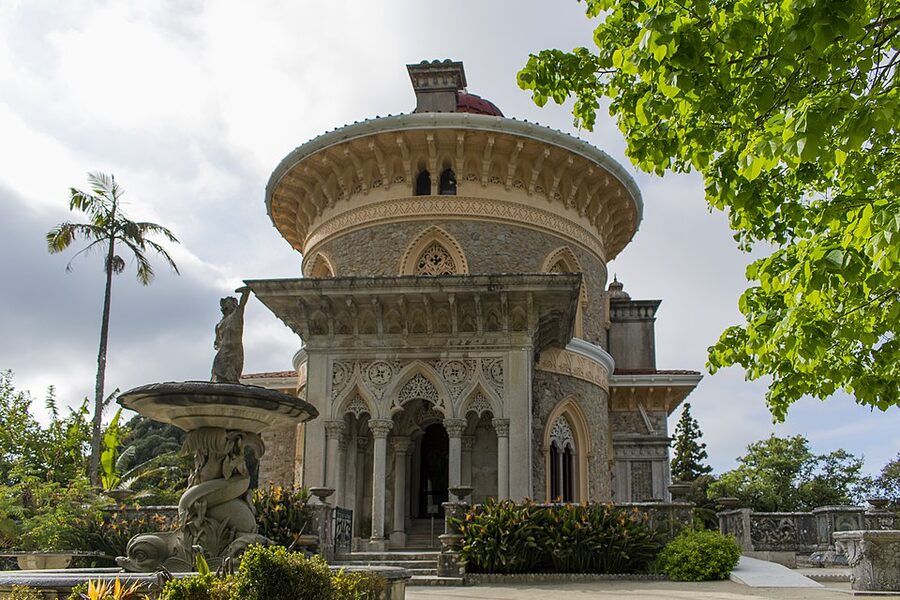
Monserrate is calmer, smaller, and far less crowded than Pena. The interiors are restrained and elegant where Pena is theatrical. The gardens are arguably more interesting from a botanical perspective. If you have already seen Pena and you are choosing what else fills the day, Monserrate over the third major castle nine times out of ten.
Sintra National Palace: The One in the Village
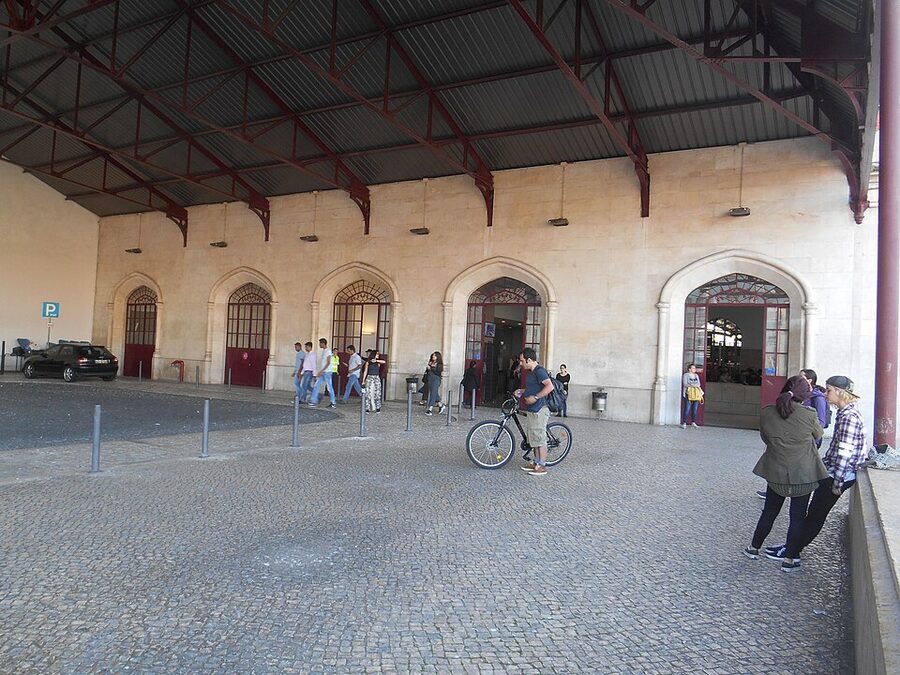
The Sintra National Palace is the white building with the two enormous conical chimneys you can see from anywhere in the village. It is older than Pena by several centuries, having served as a royal residence from the 14th to the 19th century, and the chimneys are not decorative. They vent the original kitchens that used to feed the entire court.
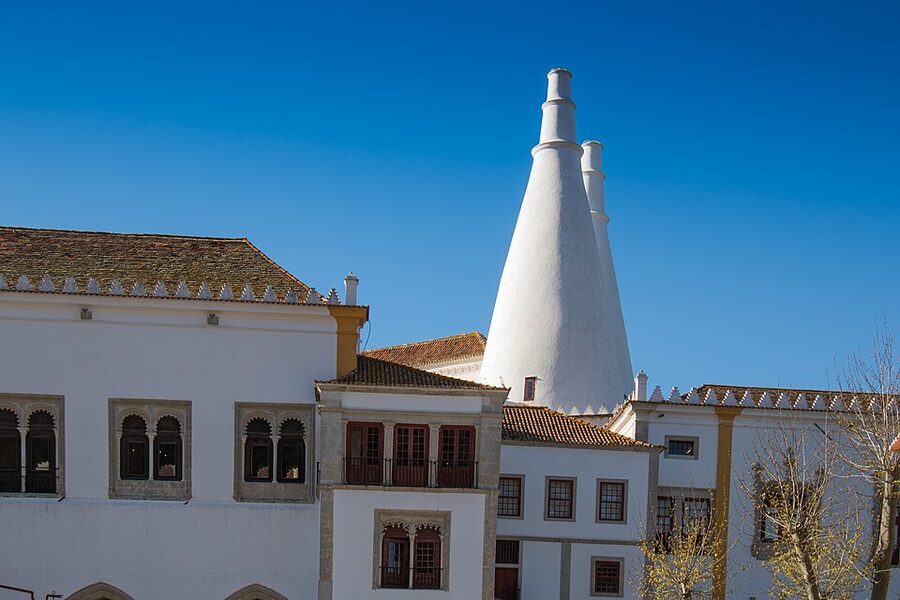
This is the easiest palace to do in Sintra because it is right in the village, two minutes from the train station bus stop, and you do not need a shuttle. If you have only an afternoon and a tight budget, the National Palace plus a walk through the village is a complete short visit. Pena is the headline but the National Palace is the older and arguably the more historically important building.
What I Would Do With a Single Day
If I had exactly one day in Sintra and I wanted to do Pena Palace properly, this is the shape.
Catch the 8.30am train from Rossio. Arrive Sintra 9.10am. Take the 434 bus straight uphill to Pena (about 15 minutes by road). Be at the gate by 10am with a Palace and Park combined ticket already booked. Do the palace interior first while the morning light is still soft. Walk the cloister, the chapel, the state apartments, the kitchens. Out by 11.15am. Spend forty minutes on the south terrace and the pink-keep courtyard.

From there, walk down the signed path to the Castle of the Moors. Fifteen minutes. Walk the ramparts for an hour. The view from the upper west tower is the best long view in Sintra. Back down the same path to the Pena lower entrance by 2pm. Bus to the village. Lunch in Sintra centre. Try the queijadas and a glass of vinho verde.
Afternoon, the National Palace. Ninety minutes inside. Out by 4.30pm. If you still have legs, walk through the village to the gates of Quinta da Regaleira and do an abbreviated visit, hitting the Initiation Well and the main grotto. Done by 6pm. Train back to Rossio. In Lisbon by 7pm for a late dinner in Bairro Alto.
That is a complete day with no rushing. Total cost in 2026 prices: around 11 euros for Pena, 14 for Castle of the Moors, 12 for the National Palace, 14 for Regaleira, 6 for the train return, 8 for the day bus pass, 25 for lunch and snacks. Call it 90 euros for the full day, including everything.
Booking Tips, in Order of Usefulness
Book the Palace and Park combined ticket at least 48 hours ahead in May, June, September, and October. The timed slots for the palace interior sell out a full day in advance on peak weekends. November to February is fine same-day, March-April-July-August are mixed.
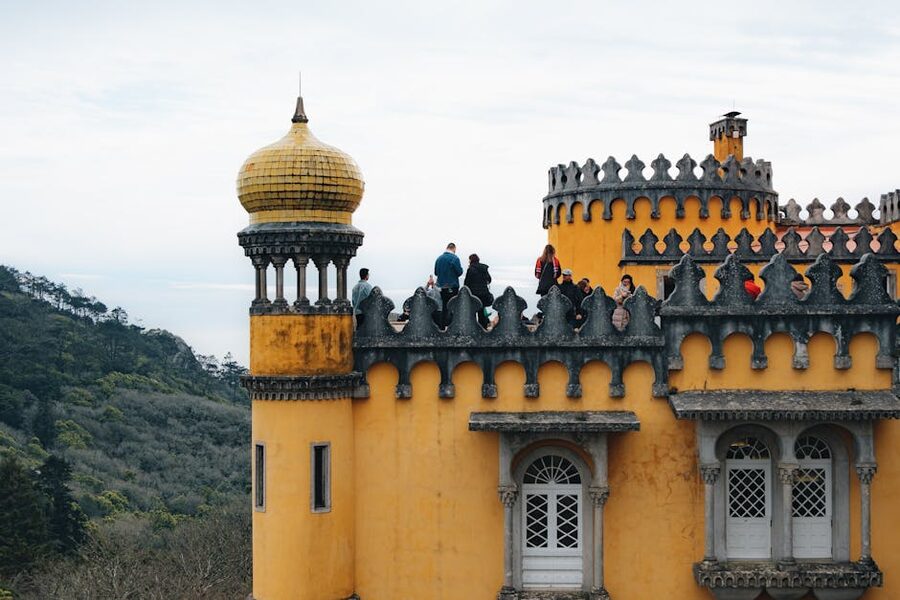
Pick the earliest slot you can, ideally 9.30am or 10am. The light is better, the queues are shorter, and the upper terrace is not yet packed. By 11.30am the same terrace is shoulder-to-shoulder.
If you are travelling with someone who has limited mobility, book the on-site shuttle bus from the lower park gate to the upper palace level. The walk between them is steep and takes about twenty minutes uphill. The shuttle is a separate small fee and runs continuously. Some skip-the-line tickets include it. Check the listing carefully.
If the forecast is heavy rain, swap Pena interior to the morning and the Castle of the Moors to a different day. The Castle has no roof. Pena holds up fine in light rain because most of the interior is, well, interior. The colours actually look better in light overcast than in harsh sun.
If you want a guided format with Regaleira included instead of Castle of the Moors, the Sintra, Regaleira and Pena Palace guided tour is the cleanest pairing. The schedule is fixed but a guide handles the timed-slot stress.
How This Compares to Other Iberian Palace Days
If you are travelling around the Iberian peninsula and trying to fit Pena into a wider trip, three close relatives are worth knowing. The Alhambra in Granada is the closest in scale and queue intensity, also a hilltop palace, also requires a timed-entry ticket booked ahead, and rewards you with the same kind of arrival moment when the towers first come into view through the cypress trees. The Alcazar in Seville is the Mudejar cousin to Pena’s Manueline tile work, an older building, with a tile and stuccowork tradition that runs in parallel to what you see in the Sintra cloister.
The Cordoba Mezquita is a different category but worth pairing in your head, because the Manueline-Mudejar exchange is what links Sintra back to southern Spain. The Madrid Royal Palace is the Bourbon equivalent: bigger, grander, less personal, and easier on logistics because it is in a city centre rather than on a hill outside one. If you are choosing between Pena and one of those for a single Iberian palace day, Pena wins on character and Madrid Royal wins on convenience.
If You Have Two Days in Sintra
Worth a paragraph. If you can give Sintra two days the order I would do is Pena plus Castle of the Moors on day one (the headline), then Regaleira plus Monserrate plus the National Palace on day two (the deeper layer). Two days is the only way to actually walk the parks rather than drive past the gardens. It is also the only way to spend the late afternoon in the village without rushing for a 5pm train.
Stay in the village if you can. There are a handful of guesthouses in the centre and they are walking distance to the bus stops and the National Palace. The morning bus to Pena is far less crowded if you are already in Sintra rather than coming up from Lisbon. You arrive at the palace gate fifteen minutes before the day-trip coaches do, and that fifteen minutes is the best fifteen minutes of the visit.
Worth a Last Look
The thing that surprises most first-time visitors to Pena is how small it actually is. Photos online make it look enormous. In person it is a compact, layered, theatrical building on top of a hill, the kind of place you can walk around in 90 minutes and still feel you have seen properly. The colour is the headline. The Manueline detailing is the depth. The park is the surrounding atmosphere. Get the combined ticket, take the early bus, and give yourself enough time to stop on the south terrace before the queue swallows you. The 1996 restoration brought back the yellow and the pink. Your job is to see them in good light.
More Portugal Guides Worth a Look
If you are building a wider Lisbon and Sintra week, three guides on this site round out the picture. The standard Sintra, Cabo da Roca and Cascais coach day trip is the easy all-in-one. The small-group Sintra and Cascais variant trades the coach for a more flexible day. And the Lisbon city center walking tour covers the back-in-Lisbon side of the trip with Rossio, Chiado, and Alfama. Pick the one that fits the day you have left after Pena, then leave room for one slow dinner in the village before the train back.