
My friend Lena landed at Lisbon Portela on a Tuesday with a borrowed backpack and a guidebook she never opened. By Wednesday morning she was in Rossio with her guide Paulo, watching pigeons scatter across the wave-pattern calçada portuguesa, riding the old Santa Justa lift for a view she said felt like cheating, and then standing in a Mouraria doorway while a man with no microphone played twelve-string guitar to nobody and everyone. She called me that night and said, “I want to live here.” She did not. But the walking tour did its job.
This guide is for the history-and-architecture walking tour of central Lisbon. Not the food tour. Not the tuk-tuk loop. The one where a guide walks you from Rossio through Chiado and Bairro Alto into Alfama and the spine of the story is the 1755 earthquake. About three hours. Some end at São Jorge Castle, some end at Sé de Lisboa, some tack on a Tram 28 ride. I’ll tell you which is which and what to actually book.
In a hurry? My three picks:
- Lisbon History, Stories and Lifestyle Walking Tour, around $29. The most-booked of the lot, three hours, Bairro Alto plus Alfama plus a tram segment.
- Best of Lisbon Walking Tour: Rossio, Chiado and Alfama, around $23. The classic three-neighborhood loop with a pastel de nata stop baked in.
- Lisbon Tram No. 28 Ride and Walking Tour, around $23. If you specifically want the famous yellow-tram experience inside a guided walk.
- What a Lisbon city-center walking tour actually is
- The 1755 earthquake is the story
- Stop by stop, what you actually see
- Praça do Comércio and Baixa
- Rossio and Praça da Figueira
- Chiado and A Brasileira
- Convento do Carmo and São Roque
- Miradouro de São Pedro de Alcântara
- Bairro Alto in the morning
- Santa Justa and the Calçada da Glória
- Alfama and the Moorish bones of the city
- Sé de Lisboa
- Miradouro de Santa Luzia and Portas do Sol
- Mouraria, fado, and where the old guard still sings
- Castelo de São Jorge as the optional finish
- Three city-center walking tours actually worth booking
- 1. Lisbon: History, Stories and Lifestyle Walking Tour,
- 2. Best of Lisbon Walking Tour: Rossio, Chiado and Alfama,
- 3. Lisbon Tram No. 28 Ride and Walking Tour,
- How to choose between them
- Practical bits
- Pairing the walking tour with the rest of your Lisbon trip
- What the walking tour will not give you
- One small thing about saudade
- Beyond Lisbon
- Other Portugal guides
What a Lisbon city-center walking tour actually is
The standard format is roughly the same across operators. You meet near Rossio or Praça do Comércio at 9:30 or 10am. You walk for about three hours with two short stops. You end somewhere in Alfama, usually at a viewpoint or at the cathedral, sometimes at the castle gates if you’ve paid extra. Group size is typically eight to fifteen people on the regular tickets and capped at twelve on the small-group ones.
Most guides keep to a familiar route: Praça do Comércio, the Arco da Rua Augusta, Rua Augusta itself, Praça Luís de Camões, the Convento do Carmo, São Roque, the Miradouro de São Pedro de Alcântara, down to Rossio, past Santa Justa, then over to Sé and into Alfama. Some swap stops based on weather or crowd flow. None of them rush you, but none of them go inside the paid sites either. The history-focused tour we cover below works mainly outdoors and uses the streets themselves as the lecture.
The 1755 earthquake is the story
If you take only one thing from a Lisbon city-center walk, take this. On the morning of November 1, 1755, a magnitude-8.5 earthquake hit just offshore. It was All Saints’ Day, the churches were full, candles were lit, and the rest you can guess. The quake levelled most of the lower town. The tsunami that followed swept up the Tagus and into Praça do Comércio. Fires from those church candles burned for almost a week. Tens of thousands died.
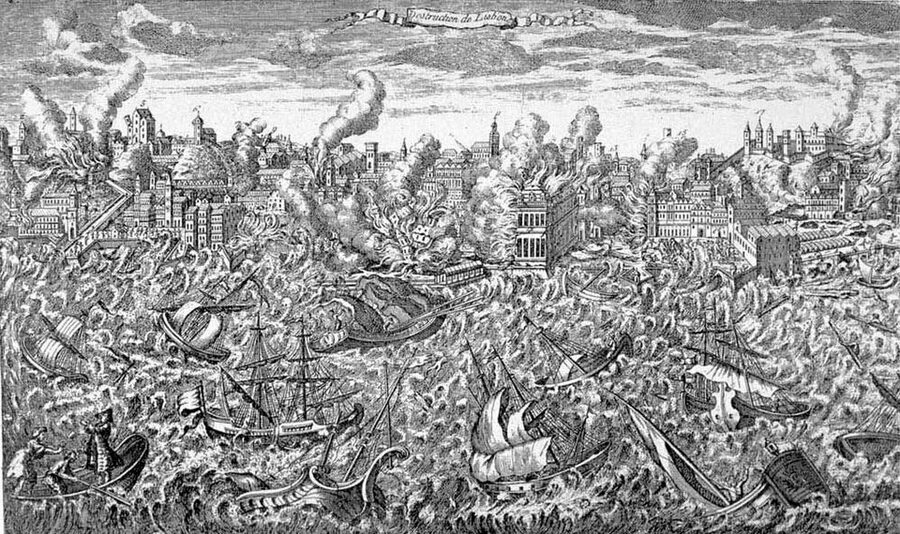
That morning is why central Lisbon looks the way it does. The Marquês de Pombal rebuilt the lower town, the Baixa, on a strict grid with seismic-reinforced wood frames inside the masonry. So when you walk Rua Augusta you are walking on Europe’s first deliberate earthquake-resistant urban design. The hilltop neighborhoods, Bairro Alto and Alfama, mostly survived because they sat on harder rock. The bones of medieval Moorish Lisbon are still up there in Alfama because the 1755 quake did not flatten them.
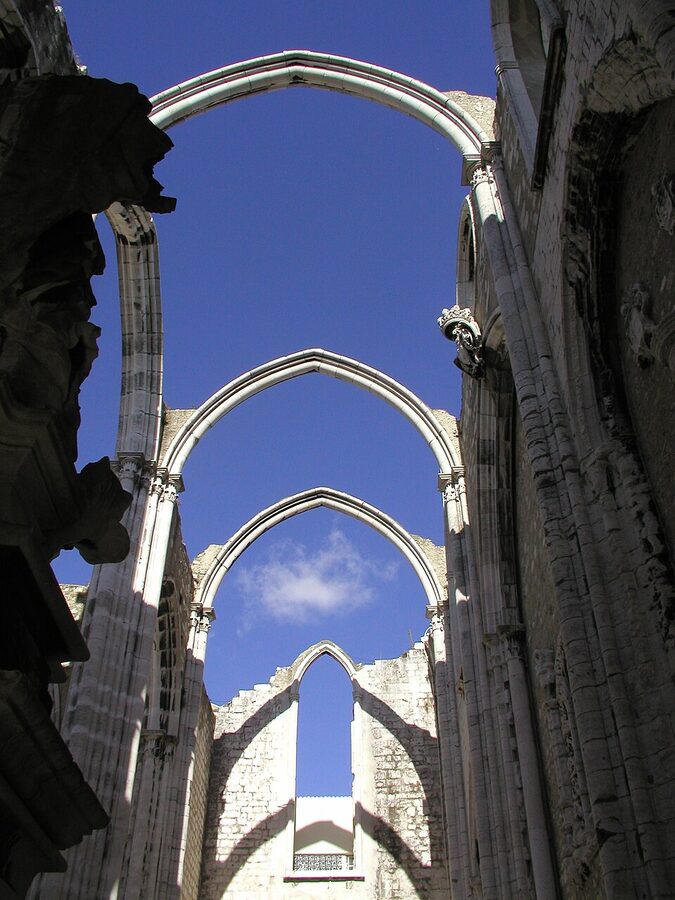
A good guide will stop you in the Convento do Carmo and let it land. The roof never came back. You stand inside the nave with sky above the arches, which is exactly what the locals saw on November 2, 1755, when they came back to bury the dead. It is the most moving stop on most of these tours, and it is free to walk past, though the small archaeology museum inside costs about 7 euros.
Stop by stop, what you actually see
Praça do Comércio and Baixa
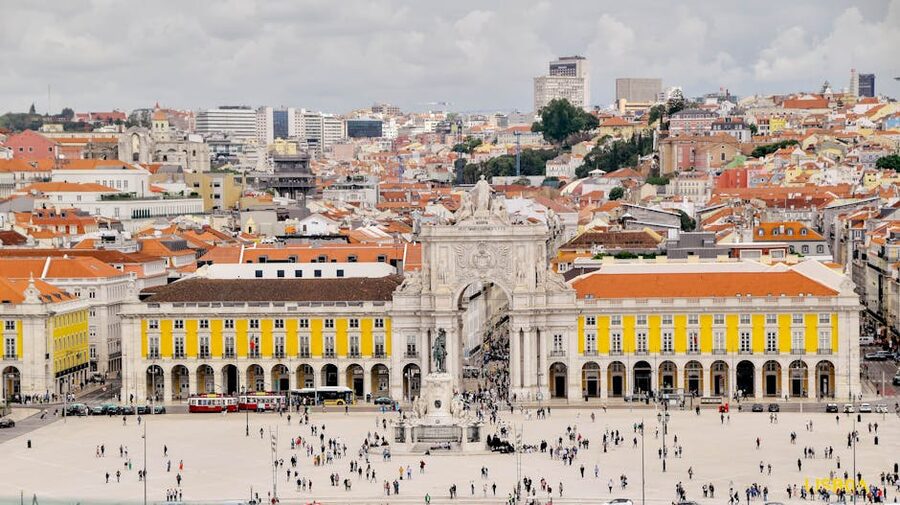
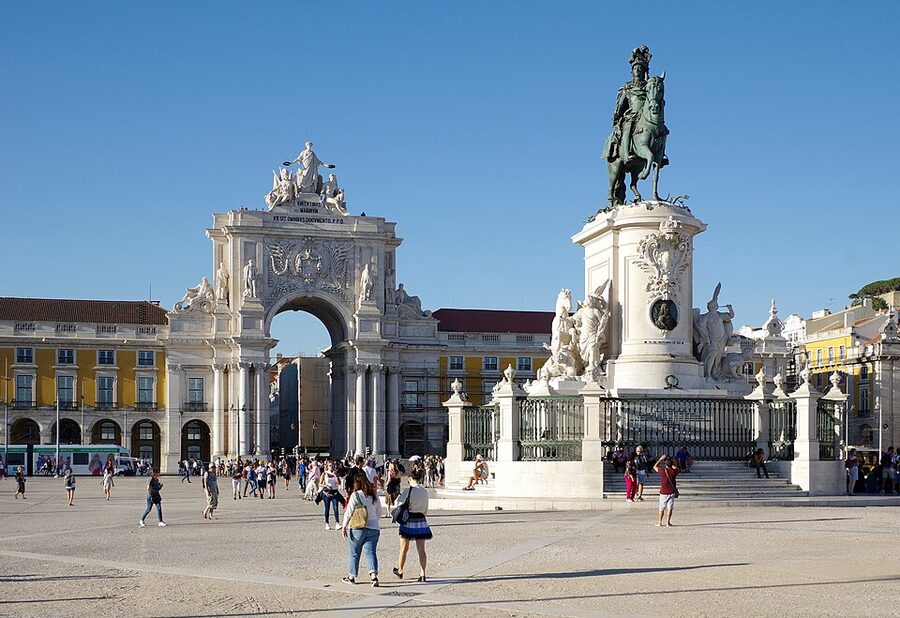
The big riverside square with King José on a horse and a triumphal arch at the back. This was the royal palace until the quake and tsunami took it out. It is now the postcard shot of Lisbon and a logical meeting point. Tours that start here usually walk you under the Arco da Rua Augusta, up the pedestrian Rua Augusta, and into Rossio. Allow ten minutes for the walk and another five if your group photographs the arch from below.
Rossio and Praça da Figueira
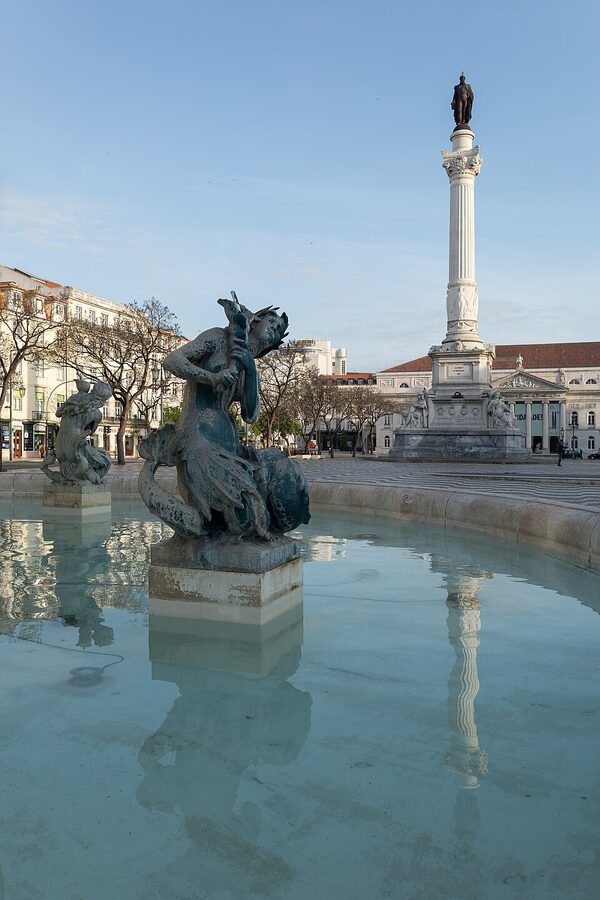
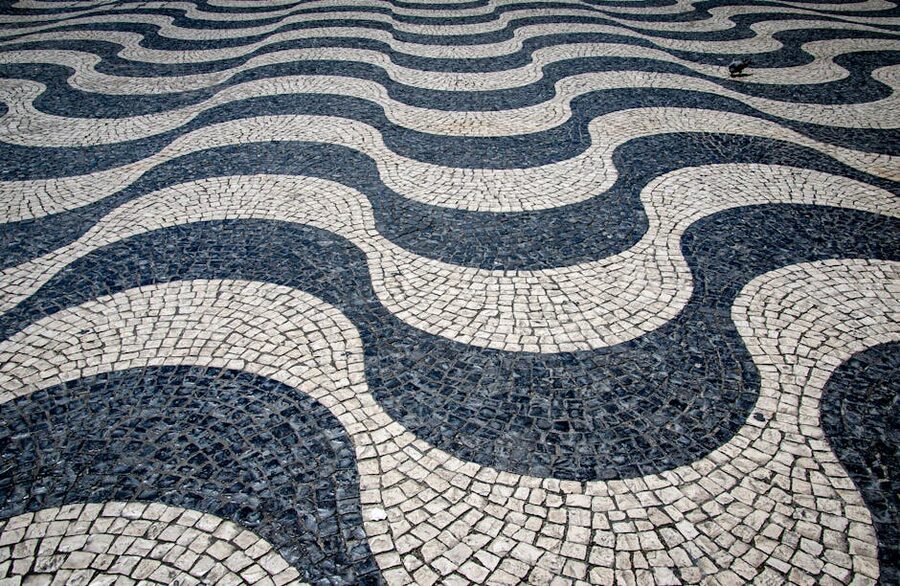
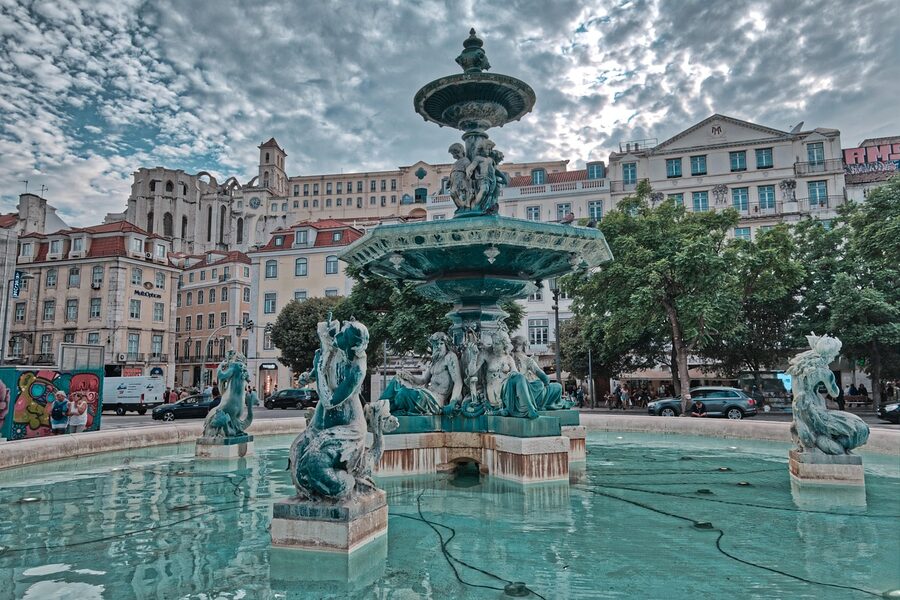
Rossio is officially Praça Dom Pedro IV. Pedro IV is on the column. The wave pavement under your feet is meant to evoke the sea, and you’ll see variations of it across the city. Rossio is where Lisbon meets every morning, locals and tourists mixed, and most walking tours pause here for ten minutes so the guide can set up the geography. Praça da Figueira sits one block east, quieter, with King João I on a horse and good coffee at the kiosks if your guide gives you a break.
Chiado and A Brasileira
Up the hill from Rossio you pass into Chiado, the literary quarter. Livraria Bertrand on Rua Garrett claims to be the oldest operating bookstore in the world (1732, with paperwork). The big draw on most walking tours is Café A Brasileira, where Fernando Pessoa drank his coffee in the 1920s and where his bronze statue now sits at an outside table. It is touristy. It is also genuinely where Pessoa wrote, so the photo op is not a fake one. The coffee inside is nothing special. Pay for the seat outside if you want a moment with Pessoa, otherwise keep walking.
Convento do Carmo and São Roque
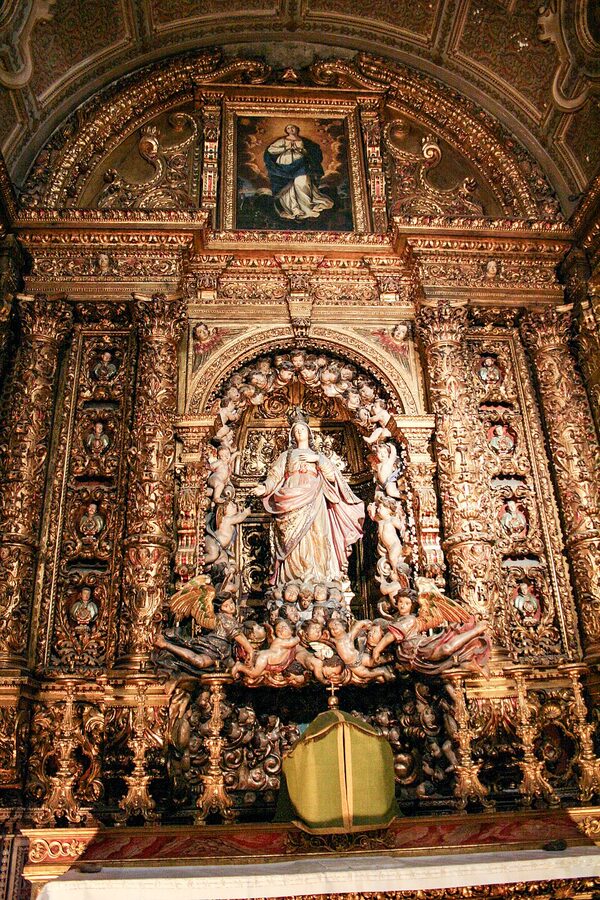
Five minutes uphill from A Brasileira sits the Carmo ruin. After the 1755 stop, your guide will most likely walk you over to São Roque, which from the outside looks plain and from the inside is the most expensive square metre of decoration in Portugal. Lapis lazuli, agate, mother of pearl, and a chapel that was assembled in Rome, blessed by the Pope, then shipped piece by piece to Lisbon in 1747. It is free to enter and worth ten quiet minutes, although the side chapels go quickly because the lighting is dim and there are usually two other tour groups inside.
Miradouro de São Pedro de Alcântara
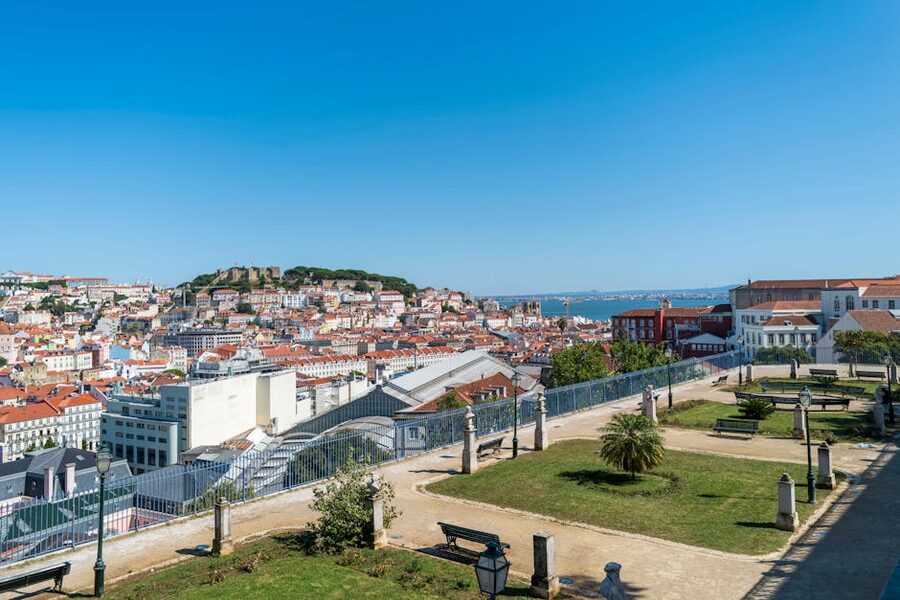
From São Roque, a steep two-minute walk takes you to São Pedro de Alcântara, the first major viewpoint on the loop. You look across the valley at São Jorge Castle on its hill, with Alfama spilling down the slope below it. This is also where most guides hand out a paper map of where you are about to go, which is helpful because Alfama is genuinely confusing on a phone screen.
Bairro Alto in the morning
Most history walks pass through Bairro Alto rather than dwelling. Mornings here are dead quiet. The bars are shut, the cobbles are being hosed down, and you’ll see only locals walking dogs and the occasional baker rolling a tray. Your guide will point out the grid (Bairro Alto is a planned 16th-century neighborhood, much older than Pombaline Baixa) and tell you what changes after dark, when the same streets fill with bar crowds. The two views of Bairro Alto, daytime sleeping and nighttime drinking, are part of why this neighborhood works in a guided tour. You see it at its calmest and you understand why locals love it before the noise.
Santa Justa and the Calçada da Glória
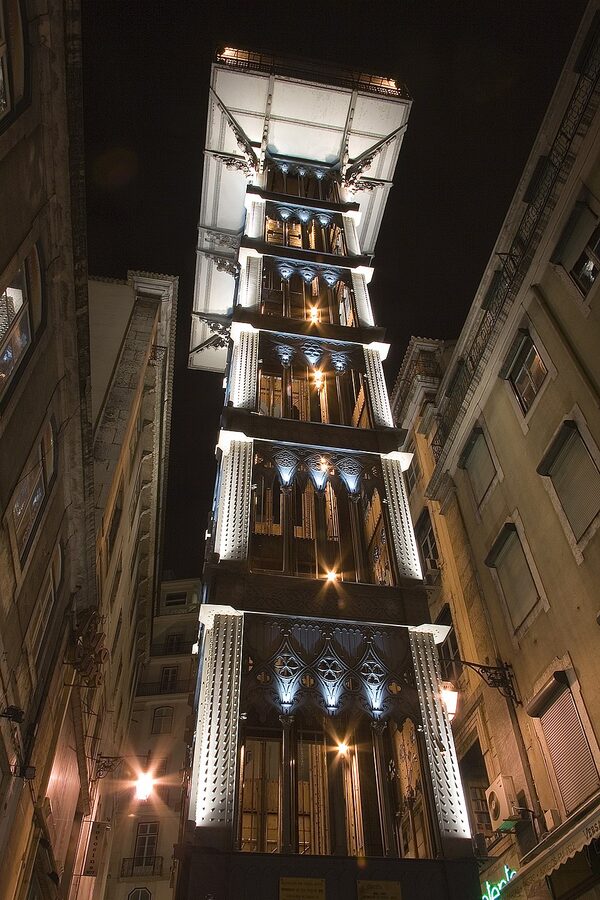
Coming back down off Bairro Alto you cross the Calçada da Glória, the funicular street with the old yellow ascensor running up the middle. Time it right and you get a postcard photo of the funicular climbing past graffiti walls. Then you reach Santa Justa, the cast-iron neogothic lift that opened in 1902. It was designed by Raoul Mesnier du Ponsard, a Portuguese engineer who studied under Gustave Eiffel, which is why it looks like it walked off the Paris skyline. Most walking tours do not pay to ride it because the queue is brutal and your guide knows the lookout up top is reachable from Rua do Carmo for free, which is what Lisboetas do. If you want to ride it for the kid in you, do it before 10am or after 6pm and skip lunchtime entirely.
Alfama and the Moorish bones of the city
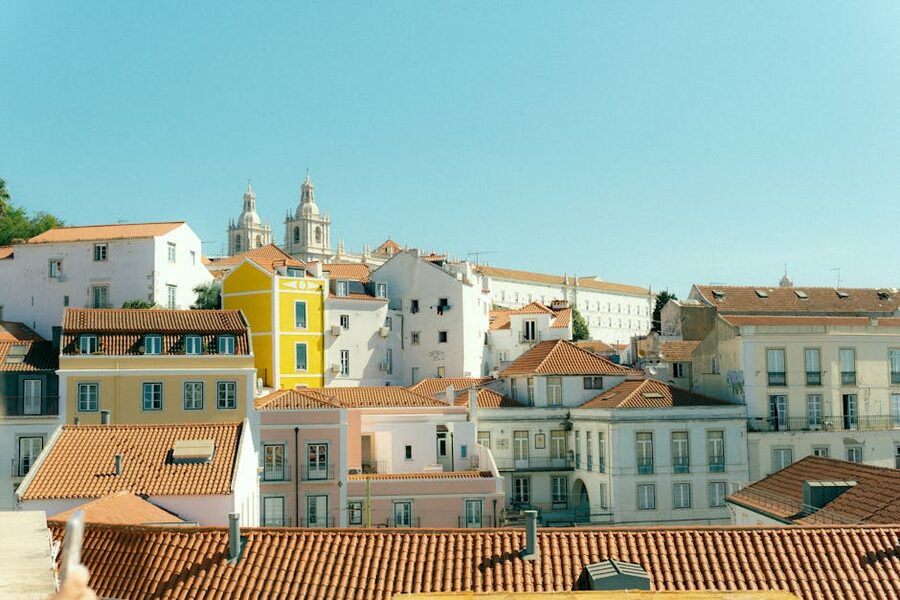
Alfama is where the walking tour becomes the walking tour. The streets are too narrow for cars, the maps stop helping, and you smell grilled sardines from doorways. This is the oldest district, the one the Moors held until 1147 when Afonso Henriques and a crusader fleet took the city back. The Christian rebuilding kept the Arabic street pattern because the Arabic street pattern was already shaped to the hill. So when you walk Alfama you walk a 12th-century plan, not a 16th- or 18th-century one. The 1755 earthquake left it largely intact for the same reason. Hard rock under the foundations.
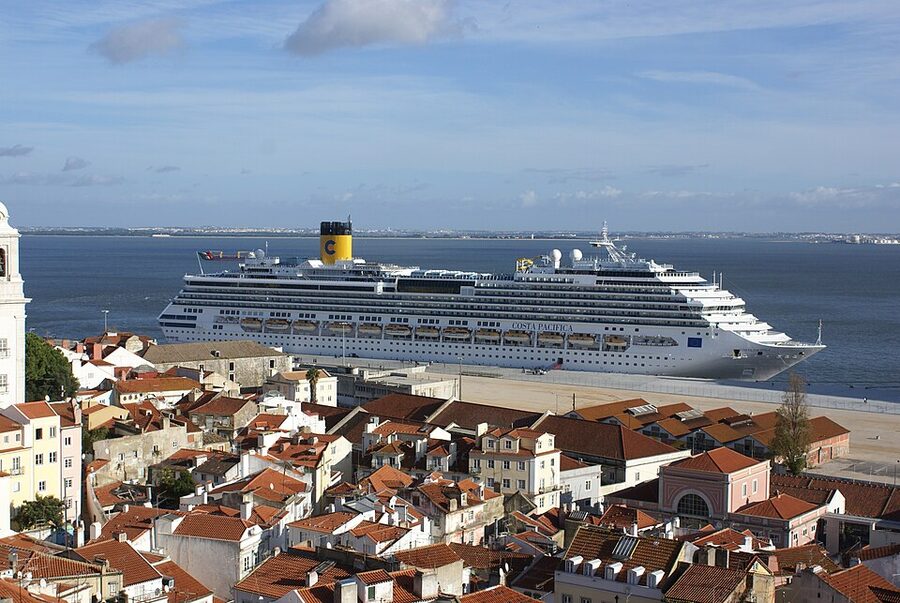
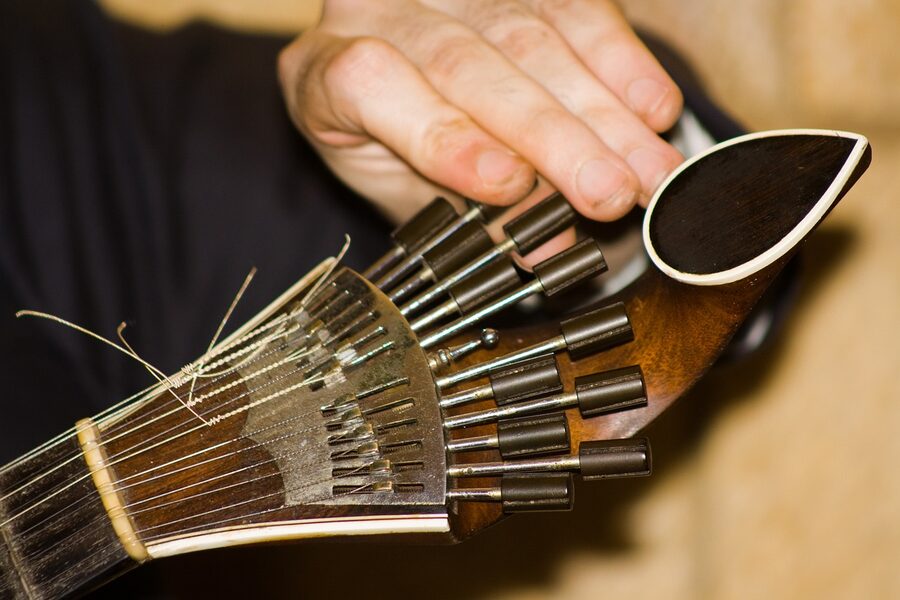
The walking-tour stops in Alfama are usually the same five places: the Sé cathedral, Largo das Portas do Sol, Miradouro de Santa Luzia, the small fado-house lane on Rua de São Pedro, and either São Vicente de Fora or São Jorge Castle to close. A small-group operator will normally swap one of those for a fado square in Mouraria, the next neighborhood over. That swap is the right call if you’ve never heard fado live.
Sé de Lisboa
The cathedral is fortress-shaped because it was built on the foundations of a mosque, and because in the 12th century your church doubled as your fallback if the city fell. It survived the 1755 quake mostly intact, which makes it one of the few continuous medieval buildings still standing in central Lisbon. Inside is darker and plainer than you might expect. The cloister cost about €5 last we checked, and it is worth the small detour because that’s where the archaeological excavation is, with Roman, Moorish and Christian layers exposed.
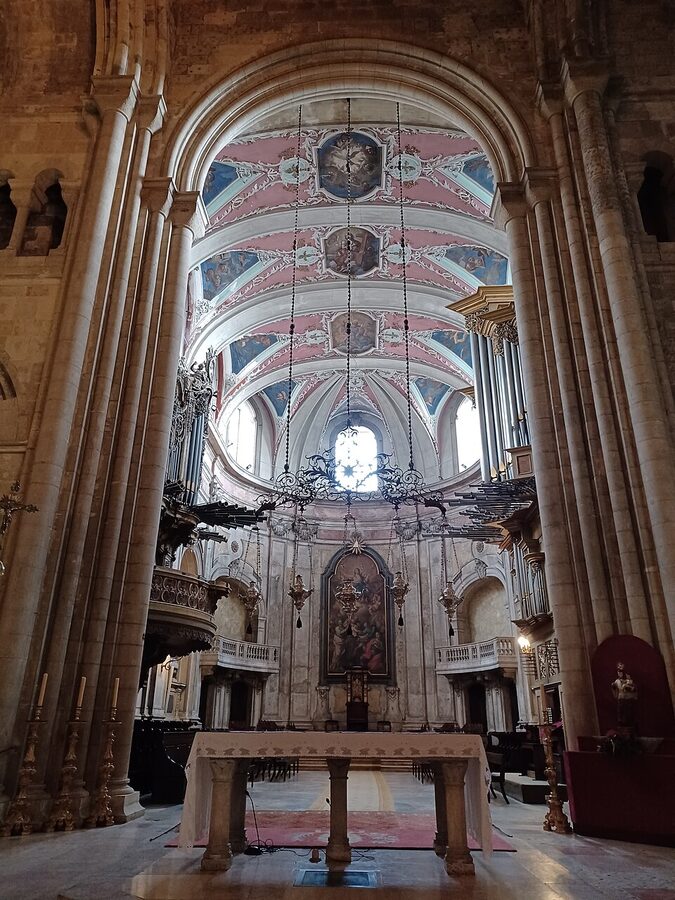
Miradouro de Santa Luzia and Portas do Sol
Two viewpoints, a one-minute walk apart. Santa Luzia has a small church, a pergola covered in bougainvillea, and a wall of blue azulejo tiles depicting the 1147 retaking of Lisbon. Portas do Sol is wider, less shaded, and gives you the cleaner photo of Alfama’s red rooftops with São Vicente in the distance. Most tours stop at both. If your group only stops at one, it is usually Portas do Sol because the photo is easier and there is space for a fifteen-person semicircle to actually hear the guide.
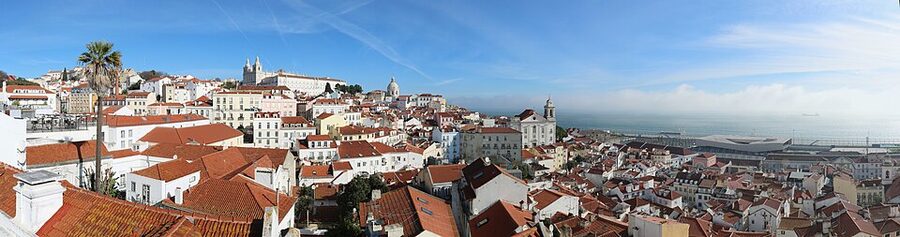
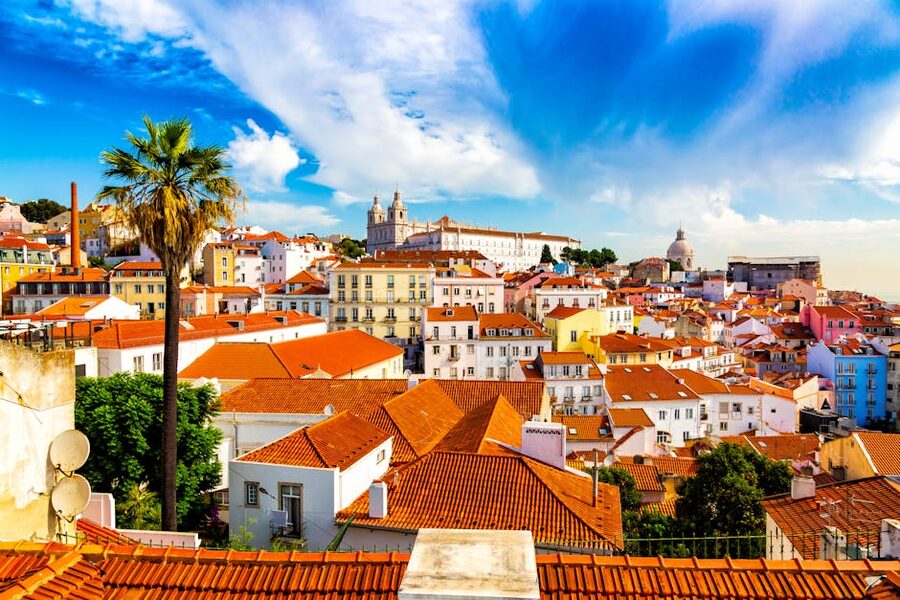
Mouraria, fado, and where the old guard still sings
Mouraria is where Lena’s friend stood listening to the stranger play, and it is the neighborhood walking tours add when they want to give you something less polished. The name means “Moorish quarter,” because after 1147 this is where Lisbon’s defeated Muslim population was allowed to stay. Centuries later, in the 1820s and 1830s, this is also where fado was born, in the doorways and bars between Alfama and Martim Moniz. Maria Severa, the first famous fadista, sang here. Her name is on a small plaque on Rua do Capelão, and most history-style walking tours route past it.
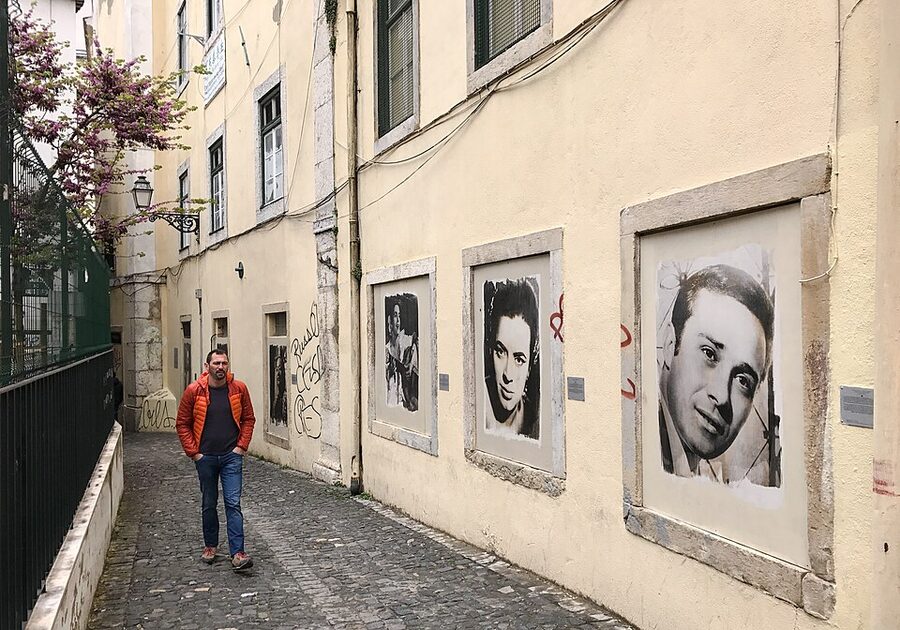
If your tour does not include Mouraria and you want it, ask before you book. The small-group max-12 walking tour almost always swings past, the bigger 30-person buses normally don’t because the alleys can’t hold a group that size.
Castelo de São Jorge as the optional finish
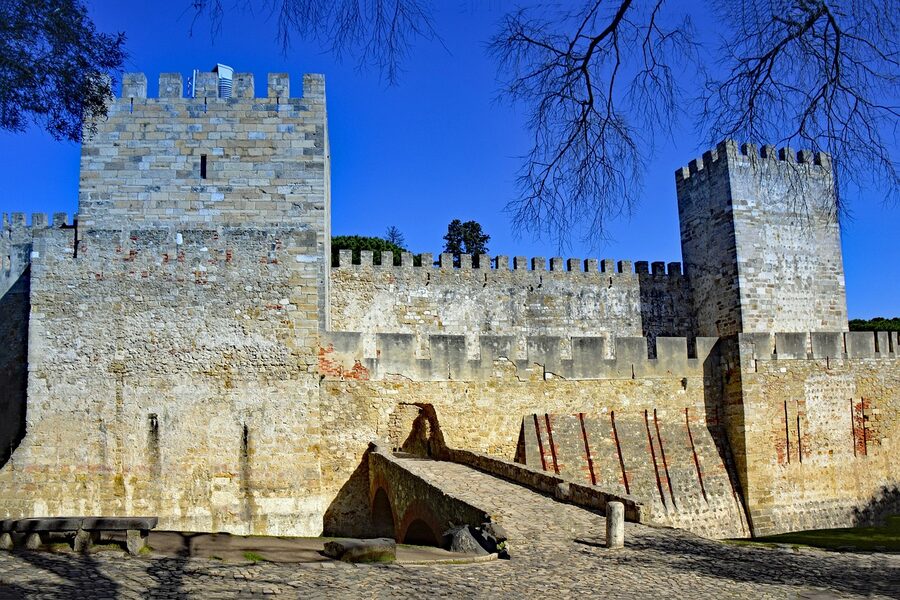
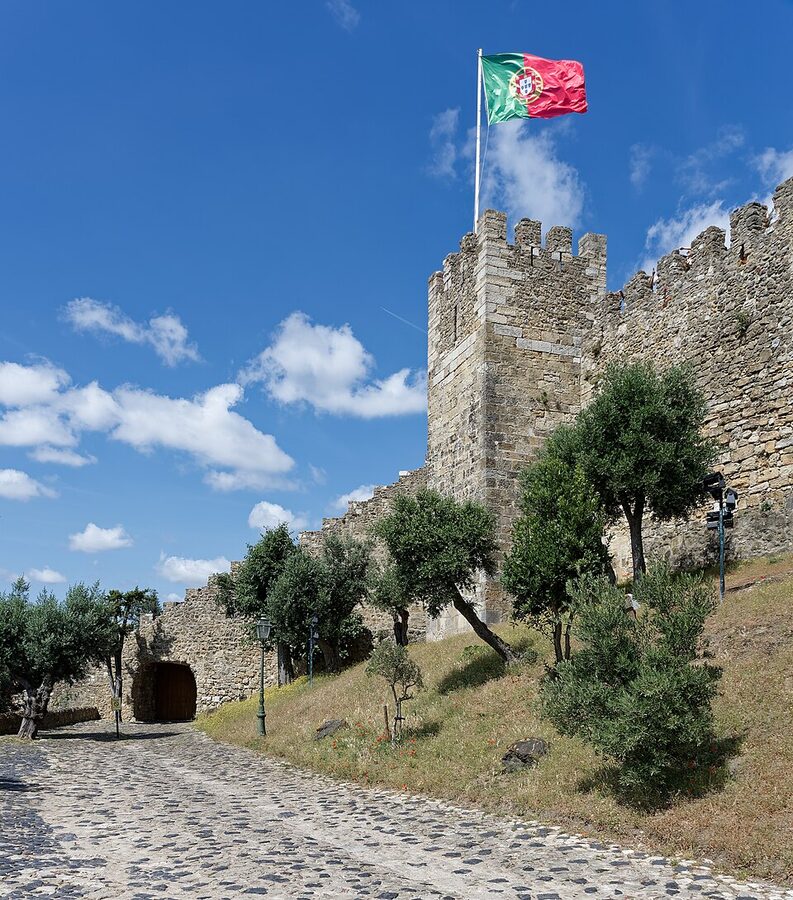
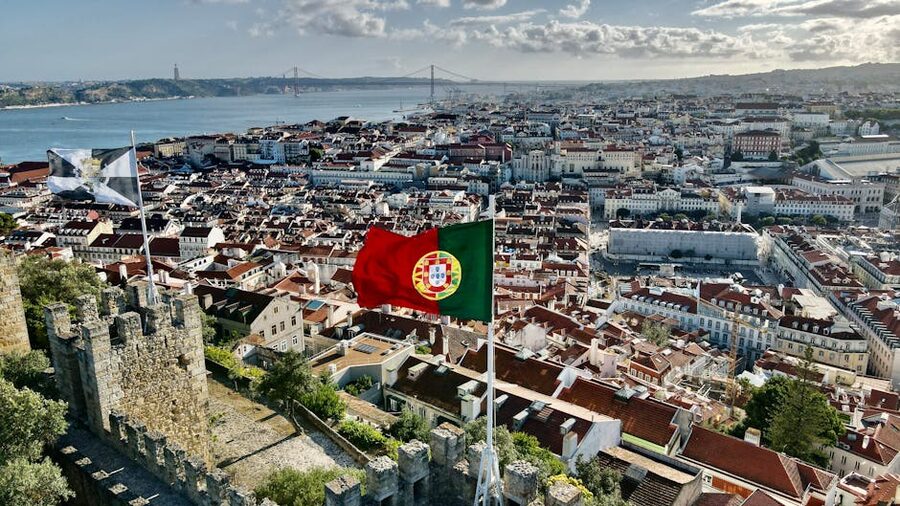
Some tours end at the gates of São Jorge Castle and let you decide whether to go in. The ticket is around €15 and the visit takes between 60 and 90 minutes. Inside you walk the ramparts, see a small archaeology core, and get the highest panoramic view in central Lisbon. If you’ve already seen Lisbon from Santa Luzia and Portas do Sol, the castle is more about the walk on the walls than a new view. If you’ve got kids with you, go in. If you’re tight on time, skip it and use the hour for an early dinner in Alfama instead.
Three city-center walking tours actually worth booking
Out of the dozens of walking tours sold for Lisbon, only a handful are designed around the history-architecture-storytelling angle (rather than tasting your way around for three hours, which is its own thing). These three are the ones I’d put in front of a friend.
1. Lisbon: History, Stories and Lifestyle Walking Tour, $29
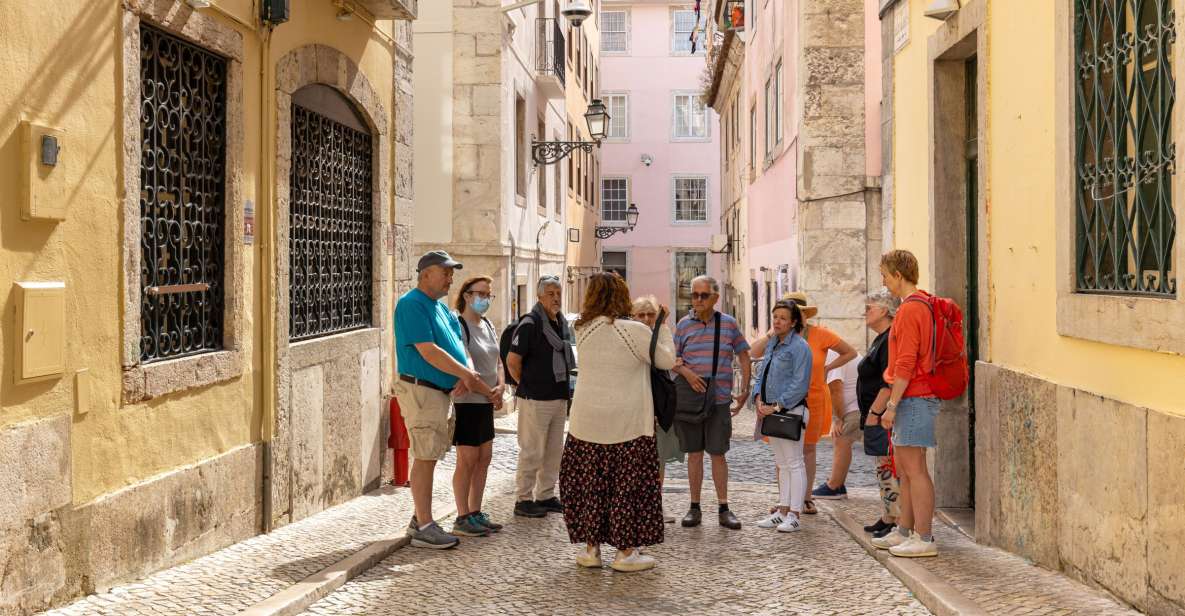
This is the most-booked guided walk in central Lisbon, by a wide margin, and the one I send first-timers on. The guides lean hard into the historical narrative (1755, Pombaline rebuild, Moorish Alfama, where fado was born) which is what you actually want from a walking tour. Our full review of this tour covers what’s included and the tram segment in detail. Pick this one if you want to walk away knowing why Lisbon looks the way it does.
2. Best of Lisbon Walking Tour: Rossio, Chiado and Alfama, $23
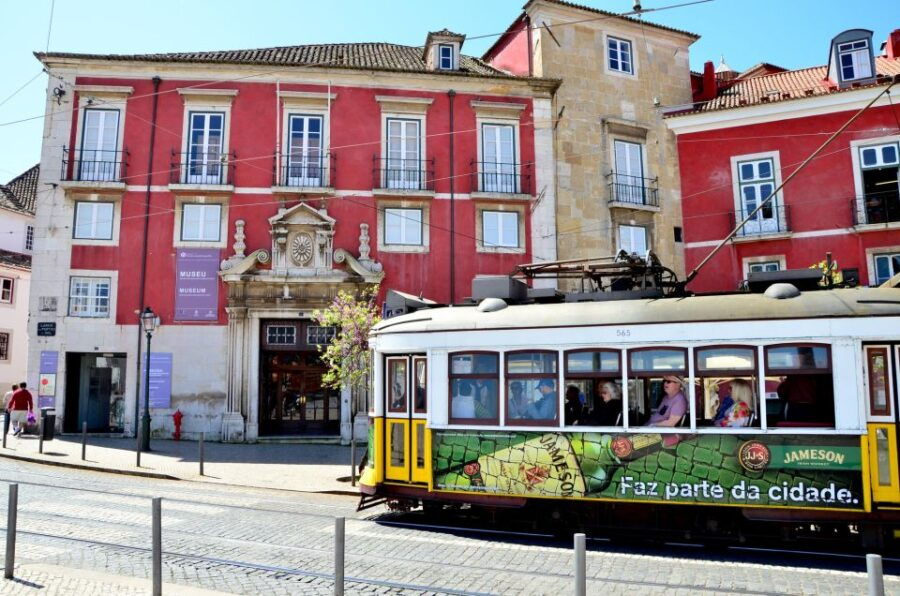
If the flagship is sold out or you’re on a tighter budget, this is the alternative. Same three-hour format, same three neighborhoods, slightly less storytelling polish but a guide who’ll still walk you through the Pombaline rebuild and a pastel de nata break baked into the route. Our review goes into the language options and group size. Solid first-day-in-Lisbon orientation.
3. Lisbon Tram No. 28 Ride and Walking Tour, $23
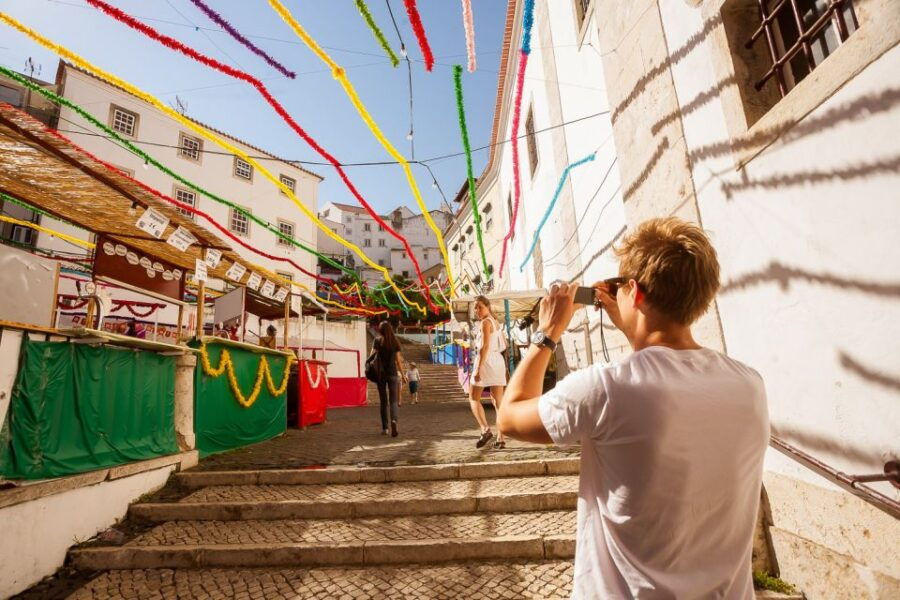
If the only reason you’re in Lisbon is to ride that yellow tram, book this and stop trying to do it solo (you’ll wait an hour at Martim Moniz and then stand the whole way up). The tour reserves seats for the group, which on Tram 28 is the difference between an experience and a sweaty grumble. The walk that follows takes you into Alfama for the fado history. Our review notes the meeting-point catch and a couple of small operator quirks.
How to choose between them
Three quick filters. If you only do one walking tour in Lisbon and you want it weighted toward storytelling, pick the flagship. If you’ve already done one big city tour and want a leaner, cheaper second walk, pick the Rossio-Chiado-Alfama one. If your top priority is the Tram 28 ride and you don’t want the queue stress, pick the tram tour.
Two more variables that matter. Group size: the regular tours run 12 to 18 people, the small-group max-12 walking tour caps at twelve, and a private tuk-tuk option is just you and a driver-guide. Pace: walking tours cover roughly 4 to 5km on hills and old paving, the tuk-tuk covers more ground without the climb. If anyone in your group has bad knees, the tuk-tuk option is honest, not a cop-out.
Practical bits
What to wear. Flat shoes with grip, even in summer. The wave pavement looks pretty and gets slick from morning hosing, dew, or the lightest rain. Long trousers if you plan to go inside São Roque or the cathedral. Lisbon morning sun in May and October is stronger than you think, so a hat is not optional.
What to bring. Cash for the kiosk coffee (€1 espresso, €1.50 abatanado), a refillable bottle (the Carmo and Sé cloisters both have fountains), and €5 to €10 in case your guide tips into a small museum. Most tours don’t include those entry fees.
When to book. Spring (April-May) and autumn (September-October) sell out two to three days ahead. July-August is a free-for-all and you can sometimes walk up at 9am and join the 10am, but not always. December-January is genuinely quiet and you can book the day before. The flagship history walk runs about three slots a day in shoulder season and five in summer.

Where to start the day. Most tours meet within a five-minute walk of either Rossio or Praça do Comércio. If you’re staying in Alfama or Bairro Alto, walk to the meeting point rather than taking a metro, because that fifteen-minute walk down through the streets is itself useful warm-up. If you’re in Avenida da Liberdade, the metro to Baixa-Chiado is two stops and runs every six minutes.
Language. Almost every operator runs English, and many run Spanish, French, German and Portuguese. The flagship I recommended runs daily in English and most days in Spanish. If you need a less-common language, book at least a week ahead and confirm with the operator that the language slot is actually staffed (not just listed on the website).
Pairing the walking tour with the rest of your Lisbon trip
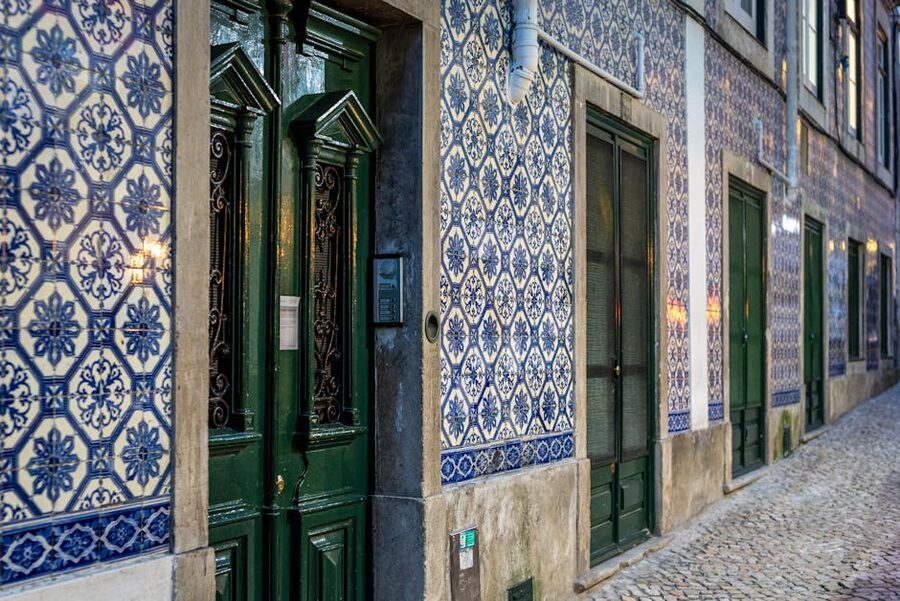
I’d put the city-center walking tour on day one. It orients you, it tells you the 1755 story which underwrites everything else, and it shows you the four neighborhoods you’ll keep coming back to (Baixa, Chiado, Bairro Alto, Alfama) so you stop getting lost on your phone. Day two is when you go further afield. Most people pair it with a Sintra day trip, and there are three reasonable Sintra formats depending on time and money.
The classic full-coach Sintra-Cabo da Roca-Cascais day trip from Lisbon hits four stops in one long day and is the cheapest option. If you want a tighter, longer-at-each-stop version, the small-group Sintra and Cascais small-group day trip caps the group around eight to twelve and trades Cabo da Roca for more time at Quinta da Regaleira. If your one Sintra priority is just the famous painted palace, the standalone Pena Palace ticket guide is cheaper and lets you take the train from Rossio at your own pace. Pick whichever fits your day-two appetite.
What the walking tour will not give you
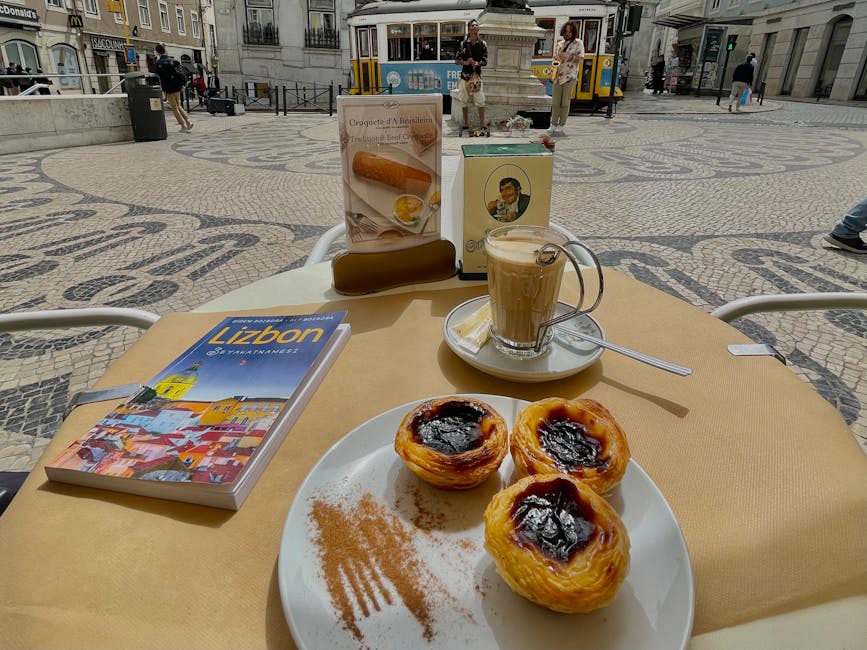
It will not give you food. Two hours of pastel de nata, bacalhau, and ginja deserves its own dedicated tasting walk, and trying to combine the history tour with a food tour usually shortchanges both. It will also not give you fado live, beyond a passing mention or a recorded clip on the guide’s phone. For a real fado evening you go separately, after dinner, in Alfama or Mouraria. And it will not give you Belém: that is its own afternoon (Jerónimos Monastery, the Tower, and Pastéis de Belém), all easy on Tram 15 from Praça da Figueira and a separate post for another time. If you’d rather see the city from a small motor than your own feet, a private 1-hour tuk-tuk tour covers ground a walk can’t and is genuinely fun.
One small thing about saudade
Every guide will use the word saudade at some point on a Lisbon walking tour. It does not translate cleanly into English. The closest is “a longing for something that may never have been,” which sounds like a marketing line and isn’t. It is what fado is about, what the 1755 story leaves behind, and what an hour on a Mouraria step listening to a stranger play guitar will let you feel for yourself. Lena said it the night she landed. She didn’t move to Lisbon. But she still talks about that morning.
Beyond Lisbon
If a Lisbon walking tour scratches the itch and you want to keep going, Spain pulls similar threads in different cities. Seville’s old quarter walks pair well with a flamenco evening and a tour of the Seville Cathedral; Madrid does the same trick with its own flamenco scene. Barcelona’s tighter old town suits a tapas walking tour or, again, a flamenco show, and Granada’s gypsy caves are the original setting for the form, well covered on a Sacromonte flamenco evening. Further east, Athens has its own walking tradition: a slow morning around the Acropolis followed by a Greek food walking tour through Plaka and Monastiraki feels like a Mediterranean cousin to what you’ve just done in Lisbon.
Other Portugal guides
If you’re staying in Lisbon for more than two days, the obvious second-day move is Sintra. We’ve covered the full coach day trip with Cabo da Roca and Cascais, the Pena Palace standalone for travelers who only want the painted palace, and the more relaxed small-group Sintra and Cascais day for people who’d rather see fewer places properly. Mix and match by day of the week and how much you want to walk.