
“You cannot eat Kyoto food without knowing Kyoto.”
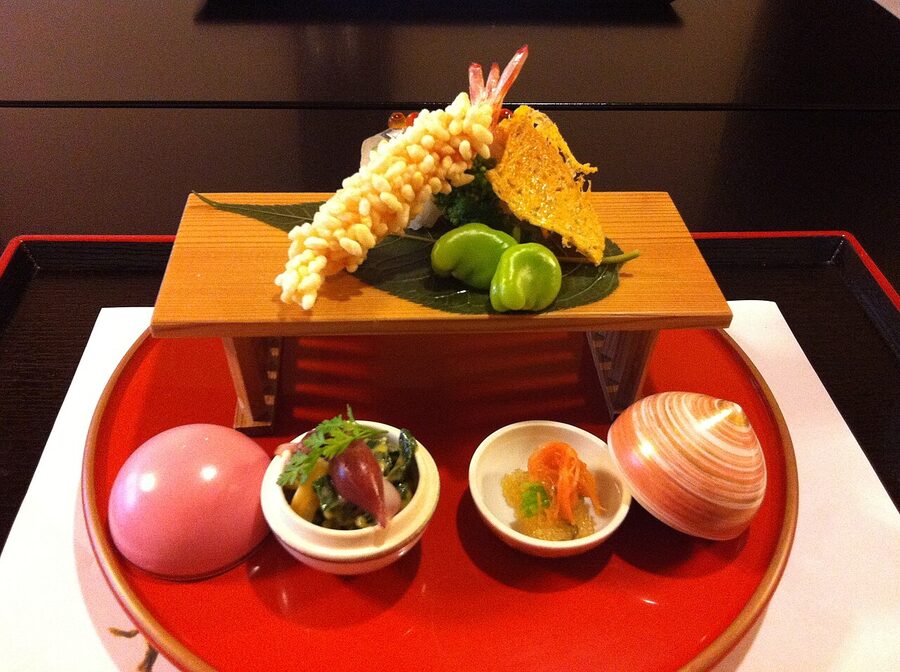
That’s what our guide said on the walk between the first and second shops — not as a marketing line but as practical advice. Kyoto cuisine doesn’t show off. It hides. A bowl of soup looks like dashi and a sliver of tofu; the 45 minutes of preparation and the five types of kombu-katsuobushi stock reduction that went into it are invisible. Most visitors don’t pick this up on their own. They taste something delicate, move on, and miss half of what they just ate.
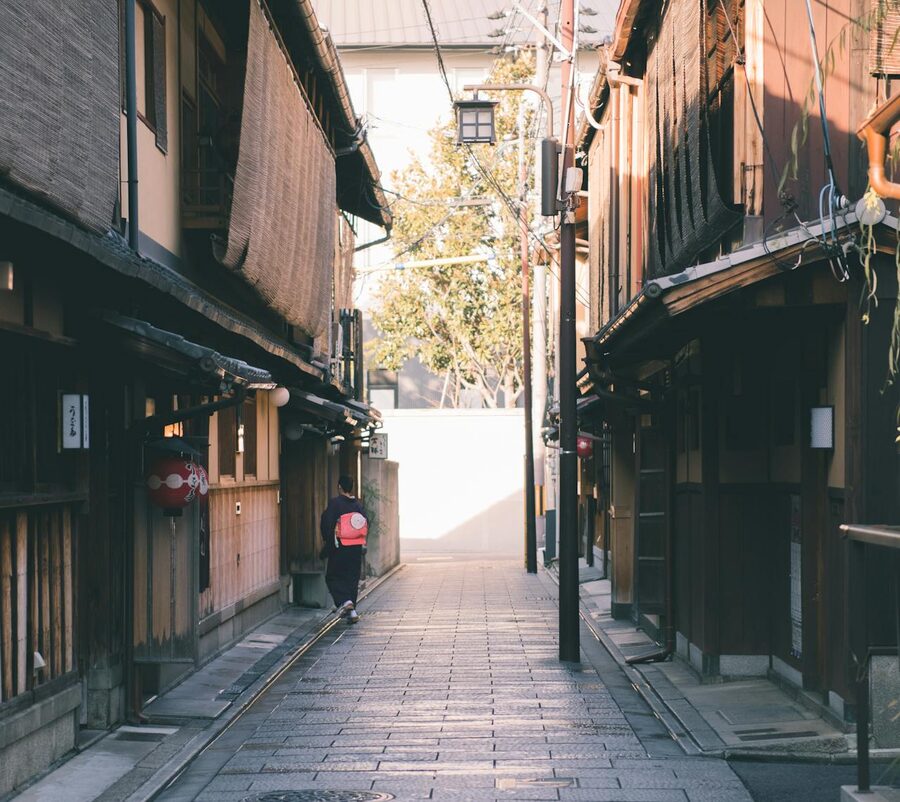
A guided Gion food tour fixes this. You’re walked between 4-5 small eateries tucked into the lanes of Kyoto’s most preserved old district, and at each stop someone who understands the food explains what you’re eating, why it’s made that way, and what to look for.
Three tour operators run Gion food tours. They differ in number of dishes, neighbourhood coverage (Gion only vs Gion + Pontocho), and group size.
Short on time? Here are my top picks:
Best all-rounder: Kyoto: Gion Food Tour 13 Dishes at 4 Eateries — the most-booked Gion tour. 4 eateries, 13 small dishes, 3-hour walking tour.
Best Gion + Pontocho combo: Gion & Pontocho Food Tour with 13 Dishes — covers both of Kyoto’s iconic food districts in one evening.
Best deep dive: Kyoto: Gion Local Food Tour (15 Dishes) — more dishes, more time at each shop, smaller group. For visitors who want depth over efficiency.
- Why Kyoto Food Is Different
- The 3 Best Kyoto Gion Food Tours
- 1. Kyoto: Gion Food Tour 13 Dishes at 4 Eateries —
- 2. Kyoto: Gion & Pontocho Food Tour with 13 Dishes —
- 3. Kyoto: Gion Local Food Tour (Taste 15 Dishes) —
- What You’ll Eat: The Gion Food Shortlist
- Crossing Between Gion and Pontocho
- Gion vs Nishiki Market — Which Food Experience First
- Why Gion Specifically
- Practical Tips
- More Kyoto and Japan Experiences
Why Kyoto Food Is Different
Kyoto cuisine has its own name in Japanese — Kyo-ryori, “Kyoto cooking” — and it’s recognised as a distinct tradition separate from “Japanese food” more broadly. Three things define it:
Dashi-first philosophy: Kyoto chefs spend enormous time on dashi (the kombu-and-bonito stock that underlies everything). Kyoto dashi is more subtle and less fishy than Tokyo dashi, with longer kombu-only preparations. You’ll taste the difference in soups even without trying.
Seasonal obsession (kisetsukan): Kyoto restaurants change their menus about every two weeks through the year. A bamboo shoot dish in April is different from a chestnut dish in September is different from a sea-bream-and-cherry-blossom dish in March. The Gion food tours usually mention what’s in season the day you visit.
Vegetable heritage (Kyo-yasai): Kyoto has dozens of heirloom vegetables — Kamo eggplant, Kintoki carrot, shogoin turnip — grown nowhere else in Japan at any meaningful scale. These appear in obanzai dishes and kaiseki tastings.
The 3 Best Kyoto Gion Food Tours
1. Kyoto: Gion Food Tour 13 Dishes at 4 Eateries — $73
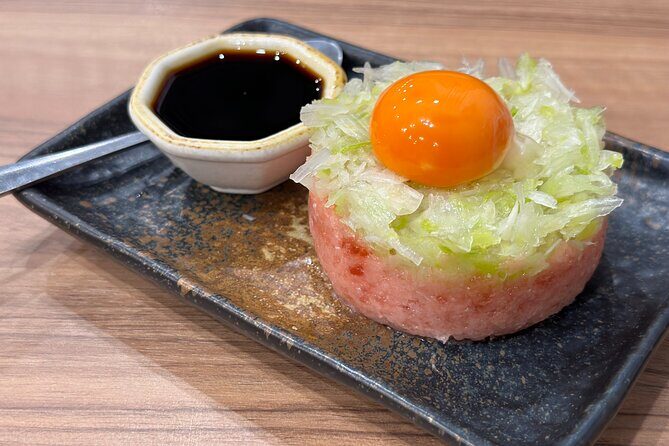
Three hours, four shops, 13 small dishes. The 4 shops are chosen to cover the spread of Gion’s food identity — one obanzai (home-style), one yudofu or kaiseki, one seafood (often saba sushi), and one dessert spot (matcha-based, seasonal). Small group (8-10 people), English-speaking guide, pacing that lets you actually taste each dish rather than rushing. Evening start (usually 5pm or 6pm) so you walk through Gion as the lanterns light up. Book 5-7 days ahead; weekend slots fill quickly. Our full review covers the specific shops and dish highlights.
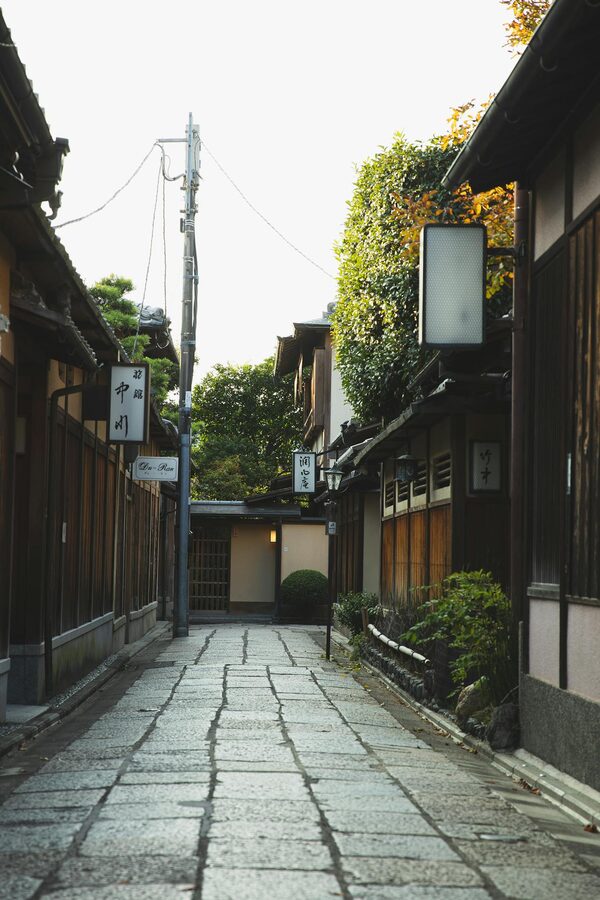
2. Kyoto: Gion & Pontocho Food Tour with 13 Dishes — $82
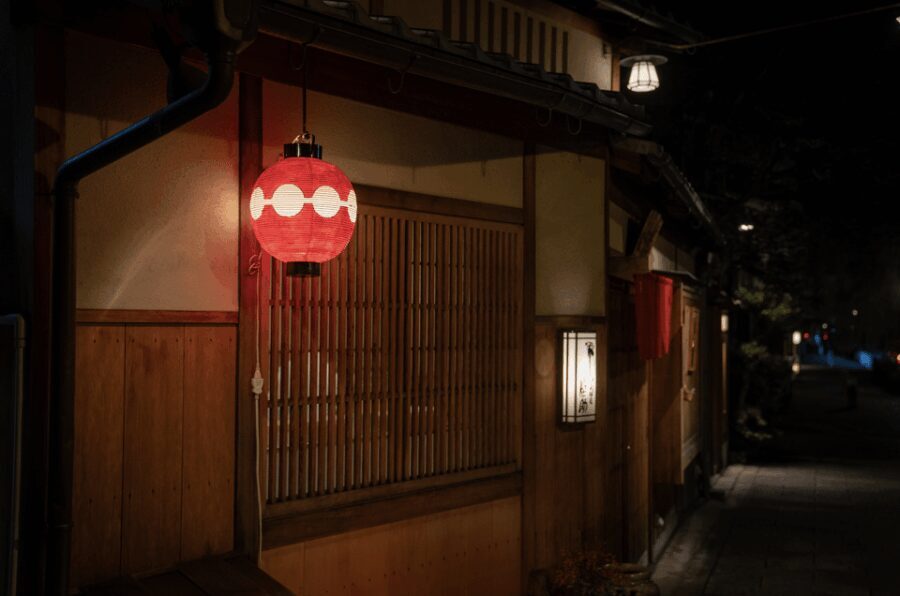
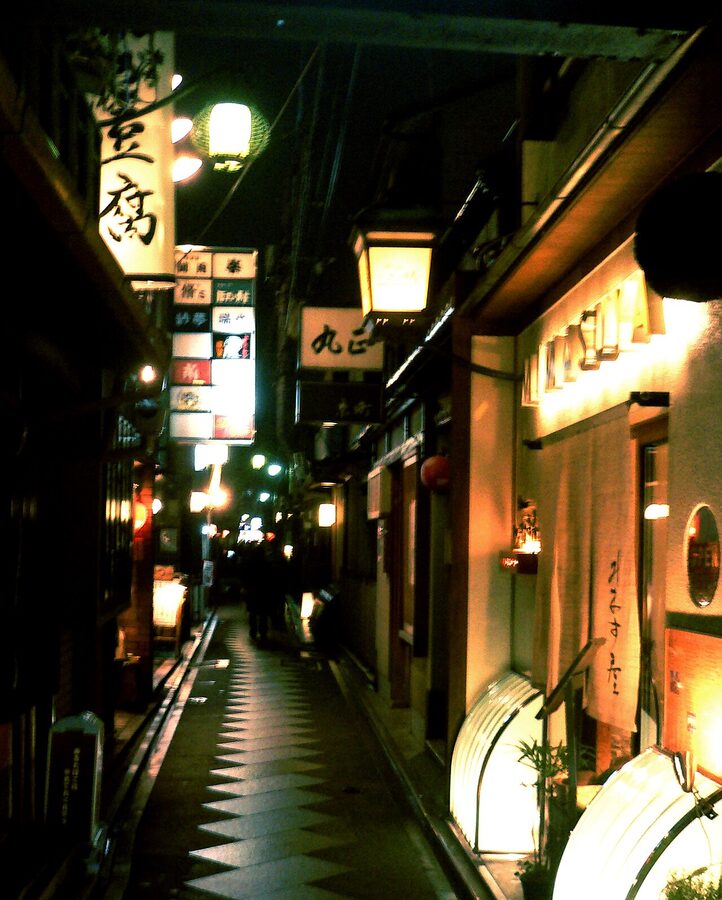
$9 more than the Gion-only tour and trades one Gion shop for a Pontocho stop instead. Pontocho is the narrow alley of bars and small restaurants that runs parallel to the Kamo River on the opposite side from Gion — similar atmosphere, different specialty shops. The tour crosses the Shijo-ohashi bridge between the two districts, which gives you a real sense of Kyoto’s historic food map. Book this one if you want geographical variety over dish density. Our review compares it to the Gion-only option.
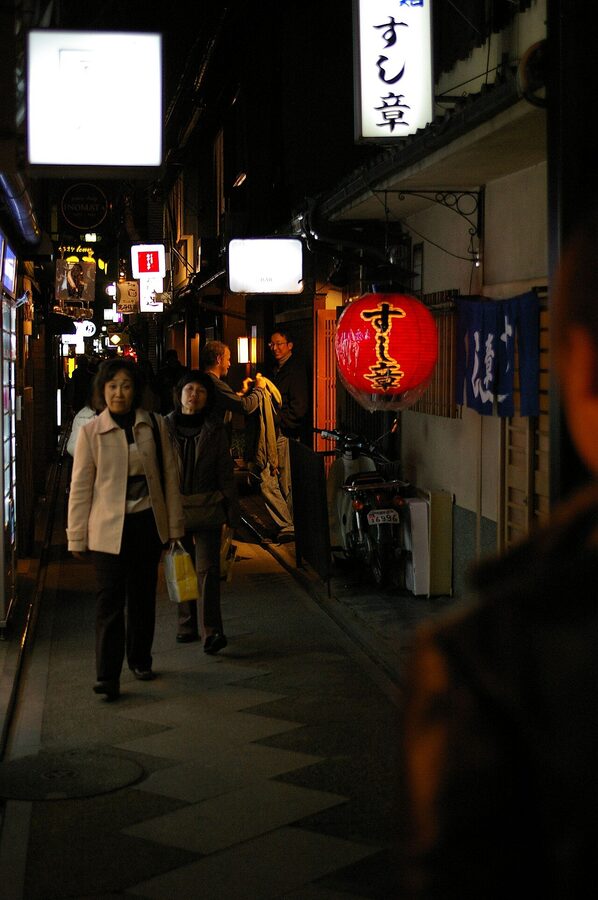
3. Kyoto: Gion Local Food Tour (Taste 15 Dishes) — $94
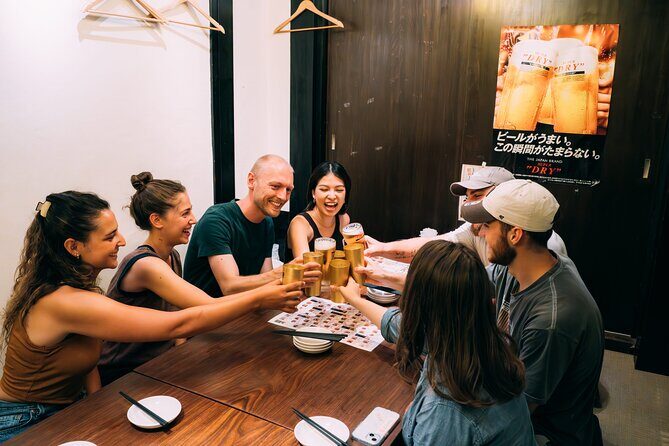
$21 more than the main tour and delivers 15 dishes across the same general Gion footprint, but with a smaller group (max 6) and more time at each shop. The extra money buys you actual conversation with the shop owners — something the bigger groups don’t always get. Good for food-obsessed travellers, couples wanting a slower evening, or anyone who prefers quality of attention over quantity of locations. Our review covers the deep-dive format.
What You’ll Eat: The Gion Food Shortlist
Each tour operator has their own route, but the dish mix is fairly consistent across the three. Expect to try most of these:
Saba sushi (pressed mackerel): Kyoto’s iconic sushi style. Mackerel is pressed with vinegar-rice in a wooden box, sliced into rectangles, and served without wasabi. Invented because fresh sea fish couldn’t survive the overland journey from the coast; pressing preserved it. The best Gion shops still make it the old way.
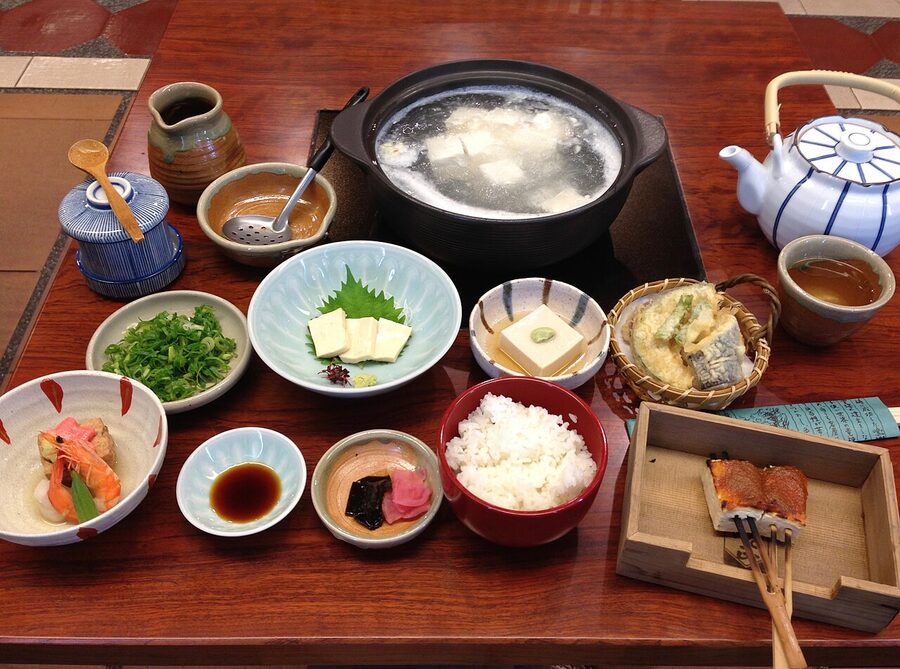
Yudofu (tofu hot pot): Hot water, high-quality tofu, soy-based dipping sauce, a sprinkle of green onion. Mentioned above. Worth trying at least once in Kyoto; the local tofu is genuinely different from commercial tofu elsewhere.
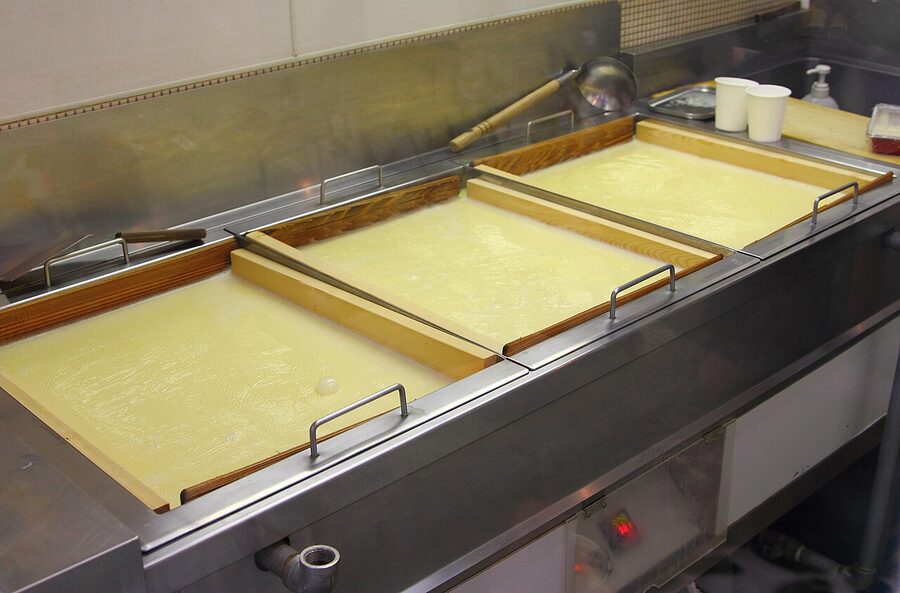
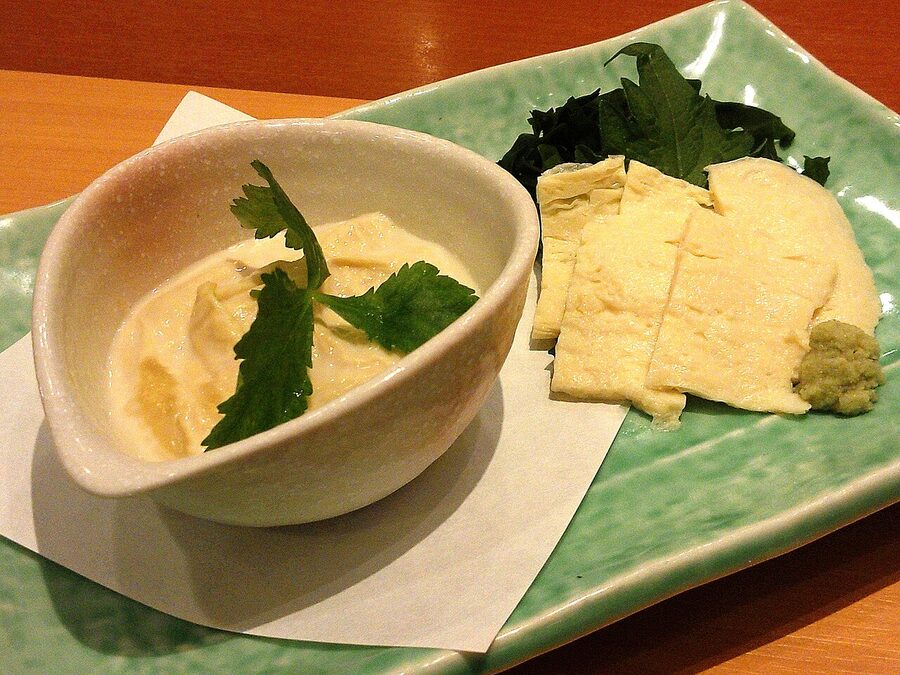
Yuba (tofu skin): When you boil soy milk, a skin forms on top. That’s yuba — peeled off, served fresh, used as an ingredient in many Kyoto dishes. You’ll likely try it in a small soup or wrap.
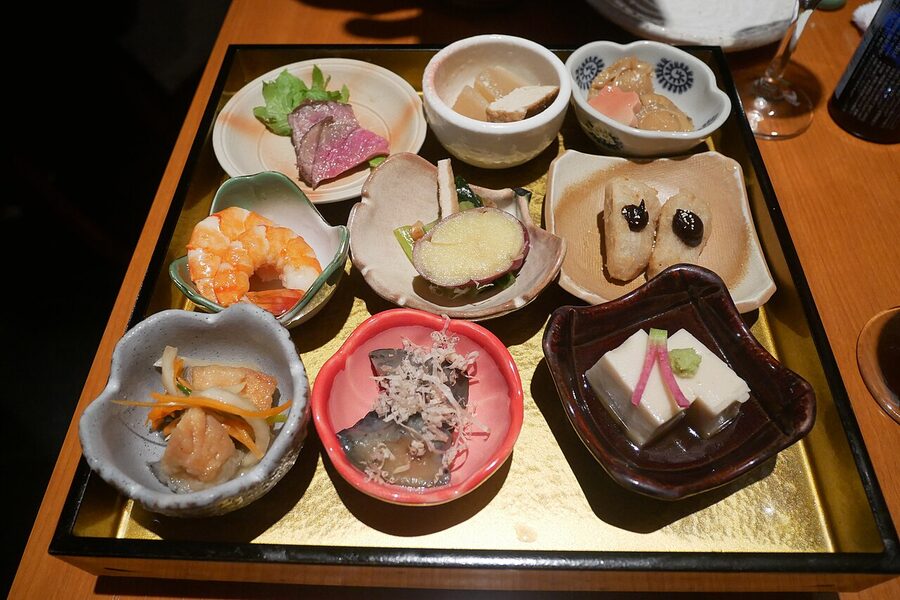
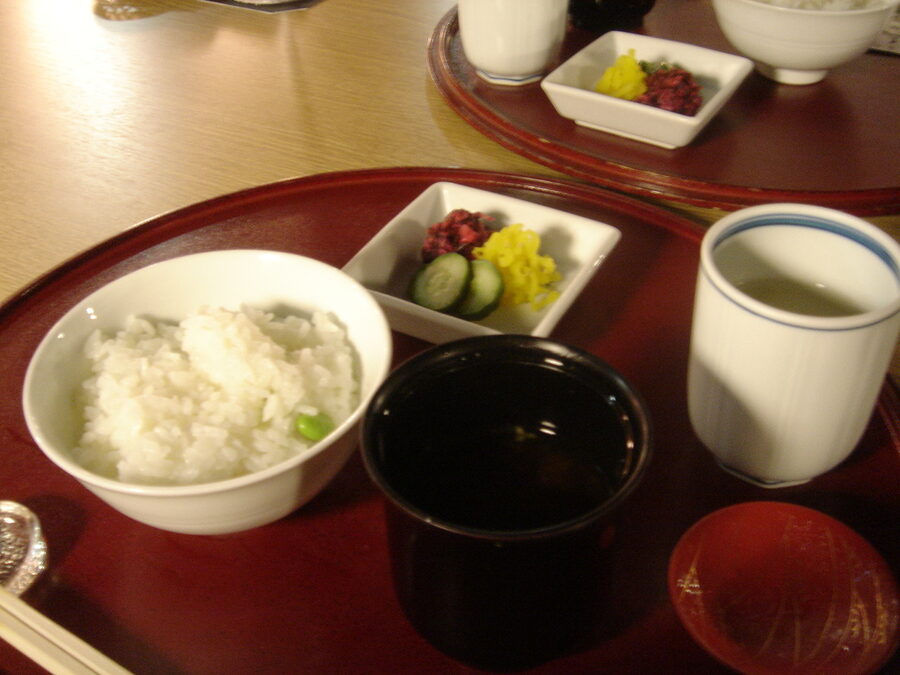
Obanzai set: Small plates of home-style Kyoto cooking. Typical components: simmered vegetables, marinated fish, a pickled dish, rice, miso soup. Cheap everyday eating that the tour elevates by explaining what each component is.
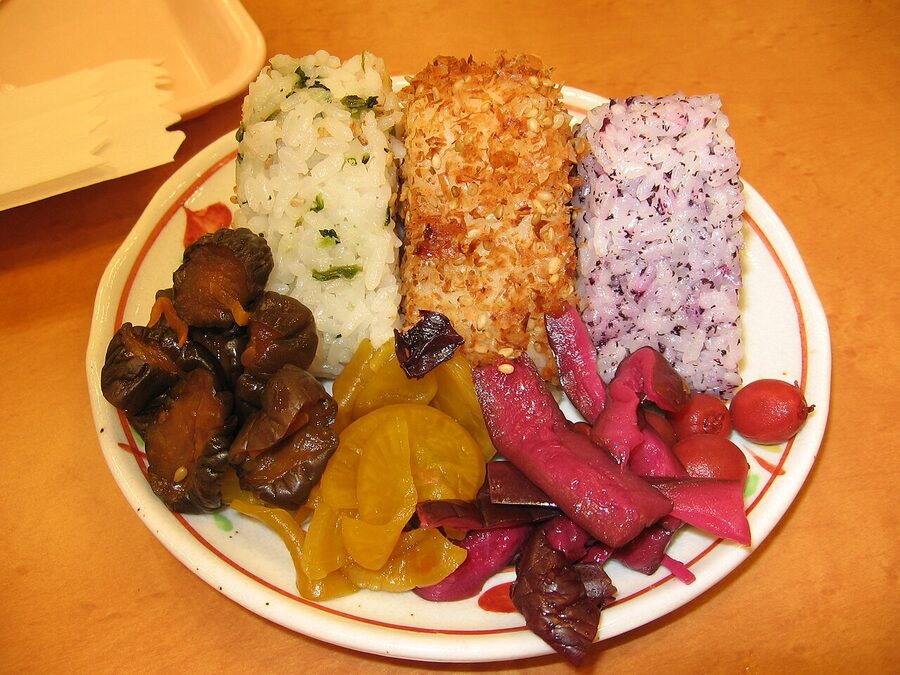
Tsukemono (Japanese pickles): Kyoto has its own pickling tradition — kyo-tsukemono — using the city’s heirloom vegetables and long fermentation. Shibazuke (purple eggplant and cucumber with shiso), suguki (lactic-fermented turnip), and senmai-zuke (thinly sliced turnip) are the three Kyoto classics. Every obanzai set includes at least one. Many Gion tours stop briefly at a tsukemono shop for a tasting.
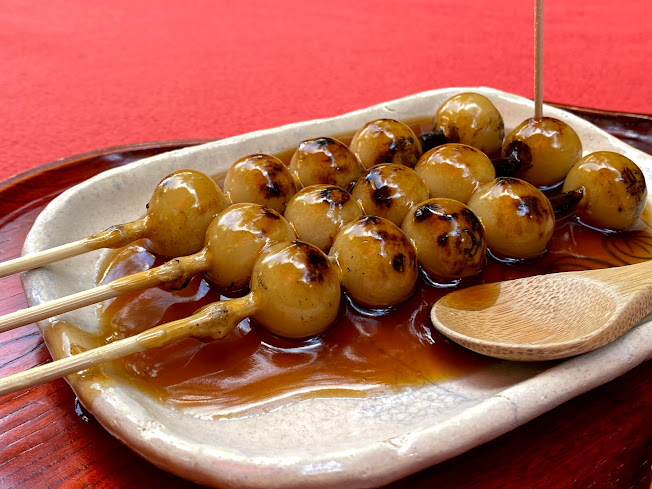
Mitarashi dango: Skewered rice dumplings grilled and dipped in sweet soy glaze. Street-food staple across Japan but particularly associated with Kyoto. Often a tour’s “walking snack” between stops.
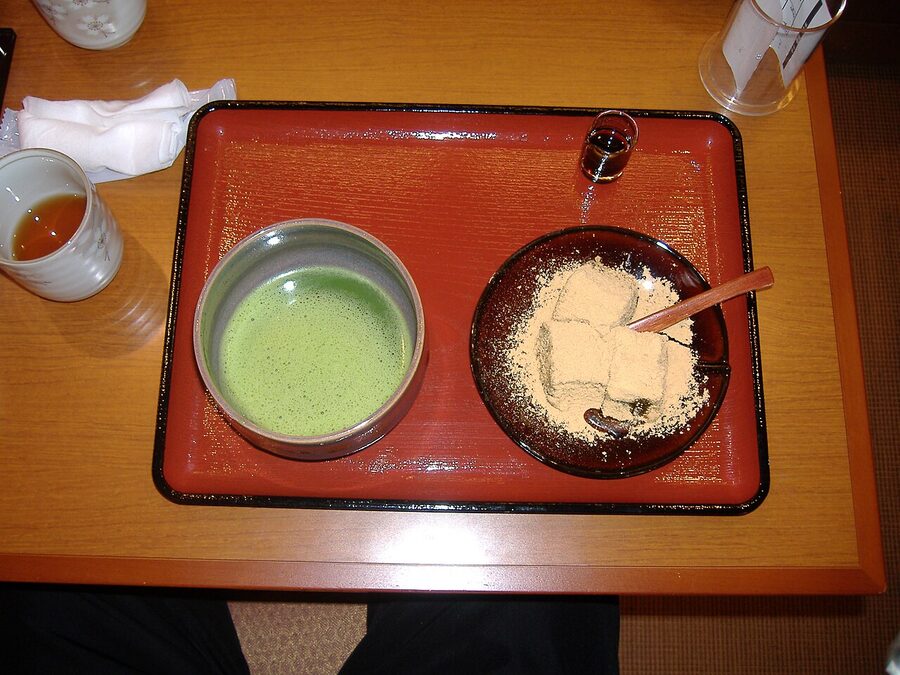
Matcha wagashi (tea sweets): The dessert stop. Matcha-flavoured mochi, warabimochi, or namagashi. Seasonal — the exact sweet changes based on when you visit. Paired with a small cup of matcha green tea.
Sake: Most tours include one or two sake tastings. Kyoto is a major sake-producing region — Fushimi, just south of central Kyoto, is one of Japan’s two great sake districts (the other is Nada in Kobe). The tour will pour a comparison between a dry and a sweeter sake so you can calibrate.
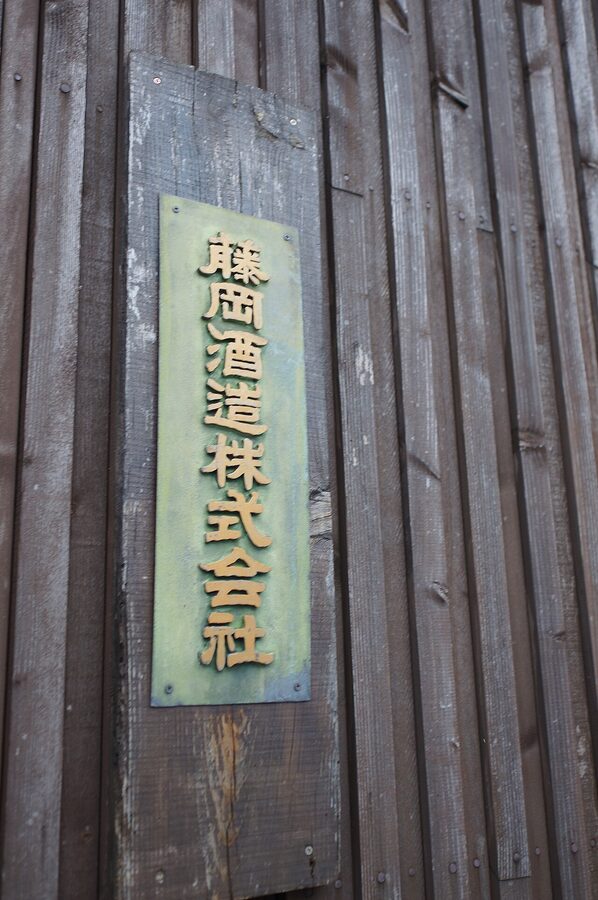
If you like what you taste on the tour, Fushimi itself is a half-day trip from central Kyoto — about 15 minutes by train — and several breweries run tastings and small tours on their own. The Gion food tour is a good first-taste; Fushimi is where you go deeper.
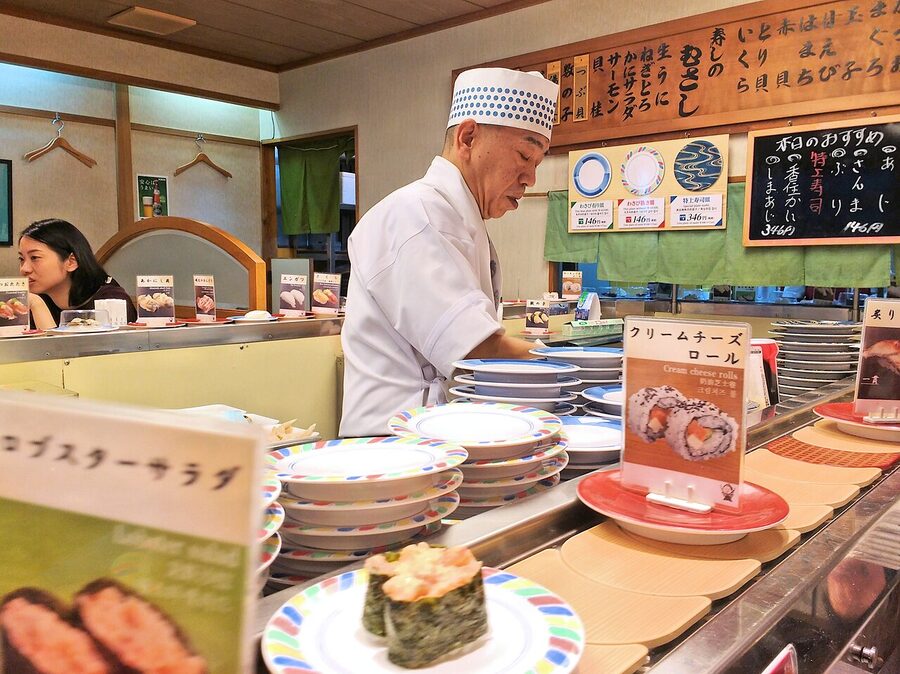
Japanese sushi (Edomae-style): Some tours include a sushi shop stop. This is hand-shaped sushi in the Tokyo tradition rather than Kyoto pressed sushi — just as good but different.
Crossing Between Gion and Pontocho
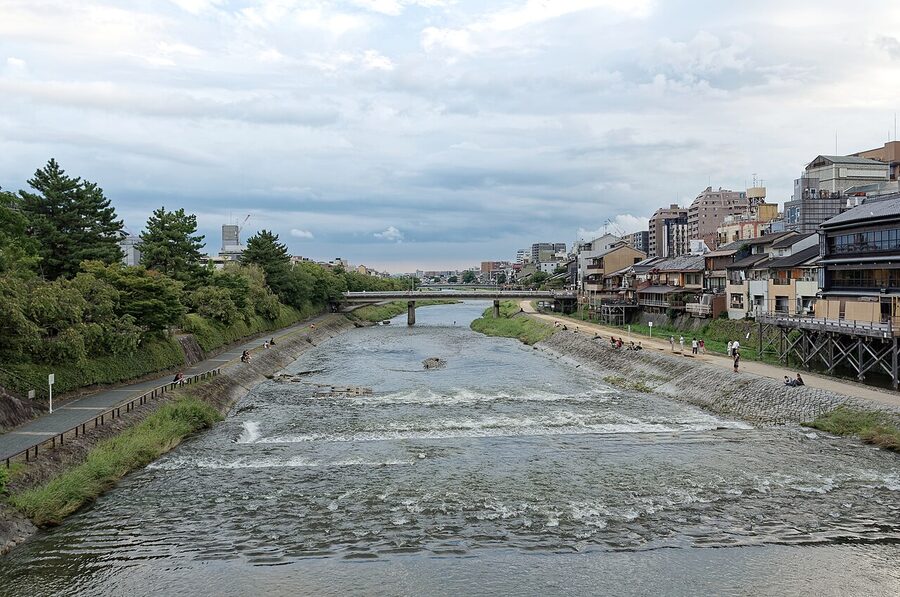
The combined Gion + Pontocho tour hinges on one short walk: crossing the Shijo-ohashi bridge over the Kamo River. Gion sits on the east bank; Pontocho runs along the west bank. Both were built as entertainment districts in the Edo period, and both still function that way — but with different characters.
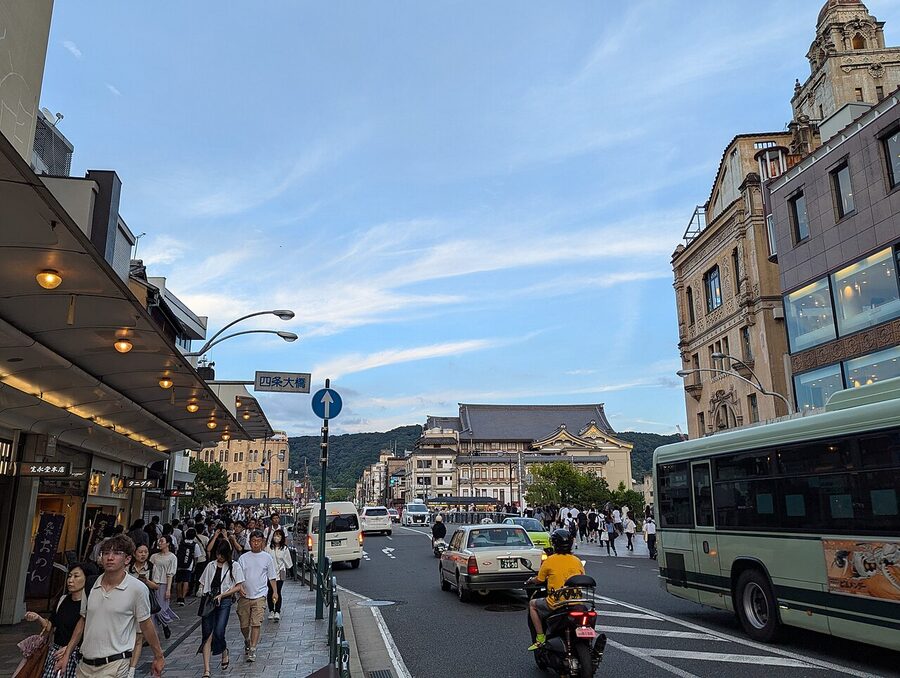
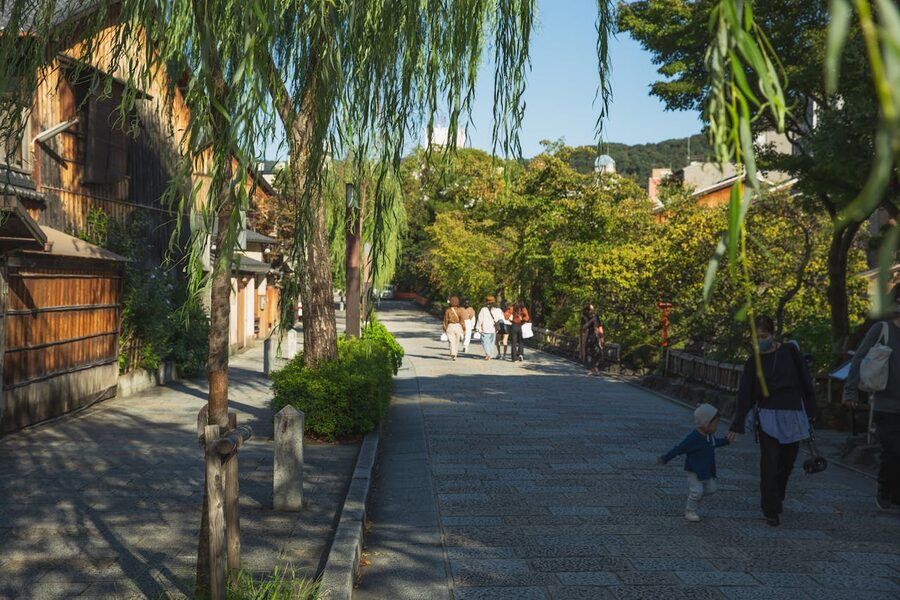
Gion’s restaurants are larger, quieter, and older. Wooden machiya buildings, tatami-room seating, kaiseki and yudofu-focused. Dress code skews a little more formal. You’ll eat seated on the floor at least once.
Pontocho is a single narrow alley — barely two metres wide — lined with small bars and counter-seat restaurants. The kitchens are smaller, the menus more specialised, and the atmosphere is tighter and more conversational. In summer, the Pontocho restaurants on the river side open kawa-yuka (river platforms) for dining over the Kamo. The combined tour can sometimes include a river-platform stop in summer.
If you’re deciding which of the three tours to book, the Gion + Pontocho tour gives you both sides of Kyoto’s historic dining geography in one evening — the trade-off being slightly less time inside each neighbourhood. The Gion-only tour goes deeper in Gion. Neither is wrong; it’s a question of whether you prefer breadth or depth.
Gion vs Nishiki Market — Which Food Experience First
Kyoto has two famous food tours: Gion (evening, restaurants, sit-down) and Nishiki Market (daytime, stalls, walking). They’re designed to complement each other, not compete.
Nishiki Market is a long covered arcade of 100+ food stalls and shops. You walk, graze, sample. The atmosphere is loud, packed, fast. Best in the late morning or early afternoon. Our Kyoto Nishiki Market food tour guide covers the options there.
Gion food tour is the opposite format: small restaurants, sit-down meals, hushed wooden-machiya interiors, evening atmosphere. Slower pacing. Deeper dishes. Both are worthwhile; they show different sides of Kyoto’s food identity.
If you’re only doing one, do Nishiki Market if you’re travelling solo or on a budget (it’s faster and cheaper). Do Gion if you have one evening to commit to a real food experience. If you have time for both, do Nishiki at lunch on one day and Gion at dinner on another.
Why Gion Specifically
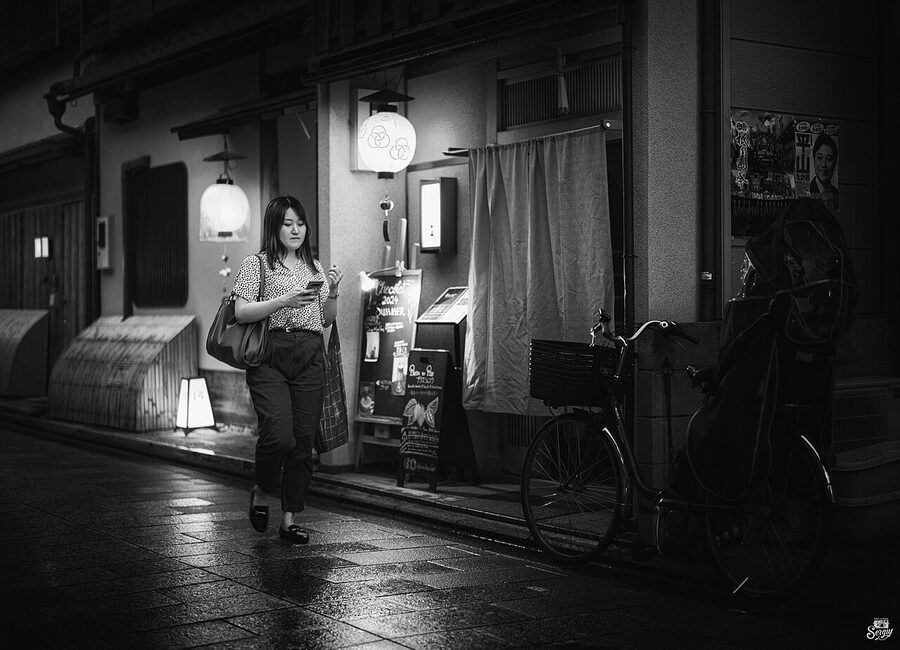
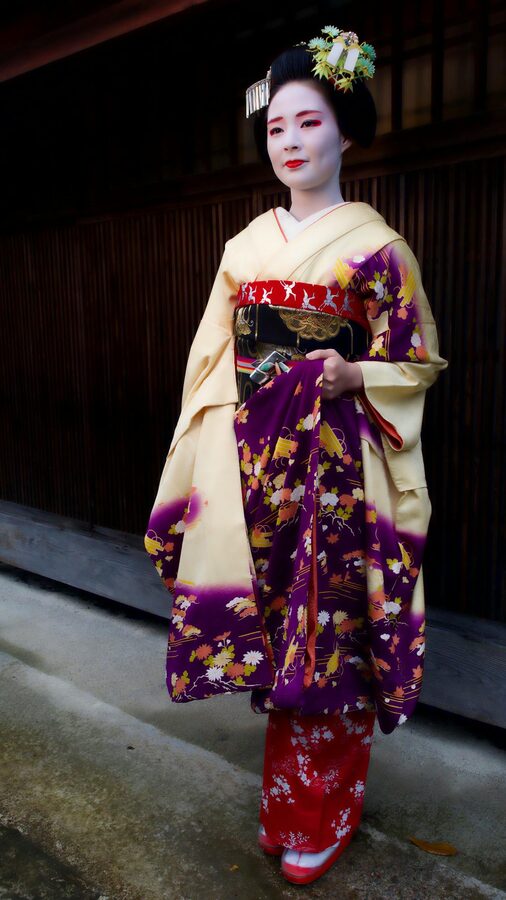
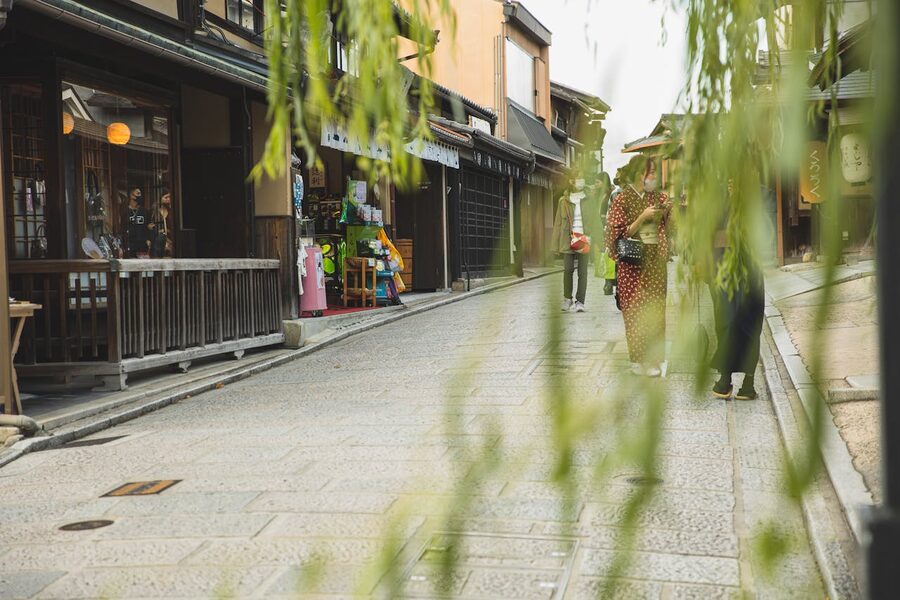
Gion is Kyoto’s historic entertainment quarter. Geiko and maiko have worked here since about 1700. The district’s economy was built around serving high-end guests — wealthy merchants, samurai, priests, and later industrialists — which meant that the local restaurants had to be extraordinary to survive.
That history still shapes the food. Many Gion restaurants are 50+ years old. Some are 100+. The knife skills are passed from chef to apprentice over decades. The ingredients are sourced from producers the restaurant has worked with for generations. The prices are reasonable for what you get — precisely because the clientele has historically been people who’d notice if the quality dropped.
The food tour format lets you sample this without the investment of a full kaiseki dinner, which can run $200-400 per person at a top-tier restaurant. For $73-94 you get a structured tasting that teaches you what’s worth going back for.
Practical Tips
When to book: 5-7 days ahead. Weekends fill faster than weekdays. Cherry blossom season (late March-early April) and autumn foliage (mid-November) have longer waits — 2 weeks ahead recommended.
Dietary restrictions: Mention at booking. Vegan versions are possible but limited — several stops traditionally include fish or meat. Vegetarian (no red meat) is well-accommodated. Celiac/gluten-free is trickier; Japanese soy sauce contains wheat.
What to wear: Smart casual. The tours go into some nicer restaurants where sloppy dress feels out of place. No need for formal wear, but good shoes (you’ll walk on uneven lanes) and a tidy shirt.
How much you’ll eat: The total food is roughly one full dinner, spread across 4-5 portions. You’ll leave full. Don’t plan another meal for the evening.
Payment: Tour price includes food and drinks. Nothing else to pay at the shops. Tipping isn’t expected in Japan.
Camera: Photos of food are generally fine. Photos of geiko or maiko on the street are restricted — ask the guide about rules before shooting anything in the alleys.
Time: Block 3.5 hours including travel to/from. The 15-dish tour can run 4 hours.
More Kyoto and Japan Experiences
A Gion food tour pairs perfectly with Kyoto’s other evening experiences. Our Kyoto geisha show guide covers the adjacent traditional-performance side. The Kyoto bar hopping in Pontocho guide is the drinks-focused follow-up. Kyoto Nishiki Market is the daytime food-tour counterpart. For quieter Kyoto, our zen meditation guide is the morning contrast. Matcha tea museum and Kanazawa tea ceremony cover the tea tradition underlying Kyoto’s dessert stops. If you’re extending to Tokyo, the Tokyo ramen tasting tour is the Tokyo food-tour equivalent. Osaka Kuromon Market and Osaka Dotonbori cruise cover Osaka’s food scene. And our Kyoto kimono rental guide is the dress-up option that pairs well with a Gion evening. Gion food works best on your first full day in Kyoto — you’ll understand the city’s food identity from the start and notice it in every other meal you eat for the rest of your stay.