
The guide handed me a live scallop. Actually handed it to me. Shell still closing and opening. “Eat it,” she said.
I did. It was the best seafood I’ve ever had. I’ve spent a lot of time second-guessing that claim since, but I keep coming back to it. There’s something about raw scallop that was swimming 30 seconds earlier that no restaurant can match.
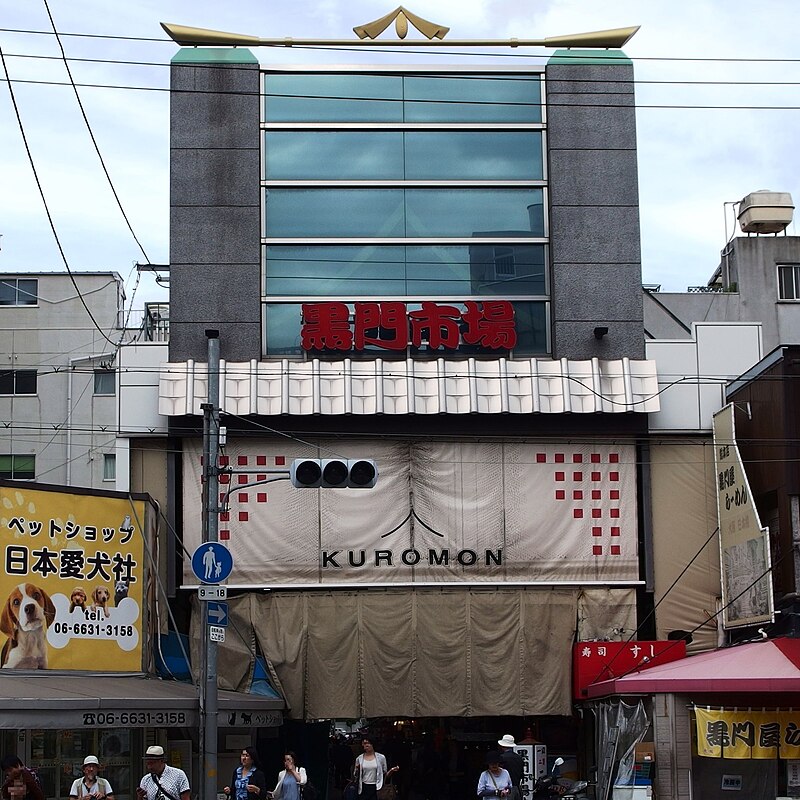
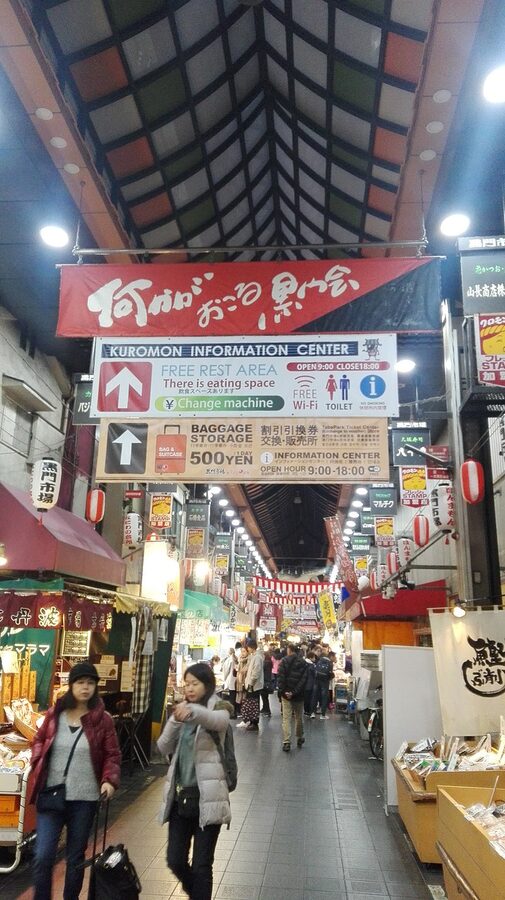
Kuromon Market is Osaka’s oldest and most famous food market. Over 150 stalls running down a 600-metre covered arcade, selling everything from live scallops and wagyu beef skewers to takoyaki, knives, and matcha ice cream. The food tours let you skip the indecision and eat your way through the best 6-10 stops with a guide who knows the vendors personally.
If you’re spending any time in Osaka, this market is essential. If you’re short on time, book a tour — you’ll try twice as much food for half the effort.
Short on time? Here are my top picks:
Best overall: Kuromon Market Food Walking Tour — $50, 550 reviews, perfect 5.0. 2-3 hours, 6-8 food stops, drinks included, small group.
Best structured: Kuromon Market Food Walking Tour (6 stops, 6 tastes) — $49, 272 reviews, 2 hours. Fixed format, 6 specific stops, 6 tastes. Good for first-timers.
Shorter option: Osaka 2-Hour Kuromon Market Walking Street Food Tour — $53, 212 reviews. Fast-paced, 2 hours, perfect if you have a tight schedule.
- What You’ll Actually Eat
- Raw Seafood Shops
- Wagyu Beef Skewers
- Takoyaki (Octopus Balls)
- Fruit and Vegetables
- Rice Balls, Tempura, and Pickles
- The 3 Best Kuromon Market Food Tours
- 1. Kuromon Market Food Walking Tour —
- 2. Kuromon Market Food Walking Tour (6 stops, 6 tastes) —
- 3. Osaka 2-Hour Kuromon Market Walking Street Food Tour —
- What to Eat If You’re Exploring Alone
- 400 Years of Osaka’s Kitchen
- Kuromon vs Kyoto Nishiki Market: The Honest Comparison
- Best Time to Visit
- Practical Tips
- Combining Kuromon with Osaka’s Other Essentials
- Getting There
- More Osaka Experiences
What You’ll Actually Eat
Every Kuromon food tour hits the same core categories but with different specific stops. Here’s what you’ll run into.
Raw Seafood Shops
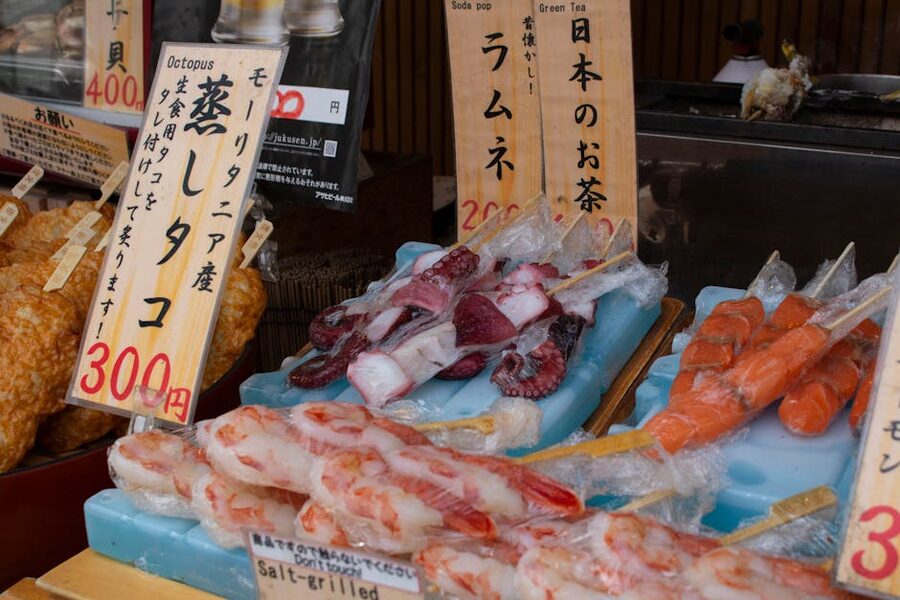
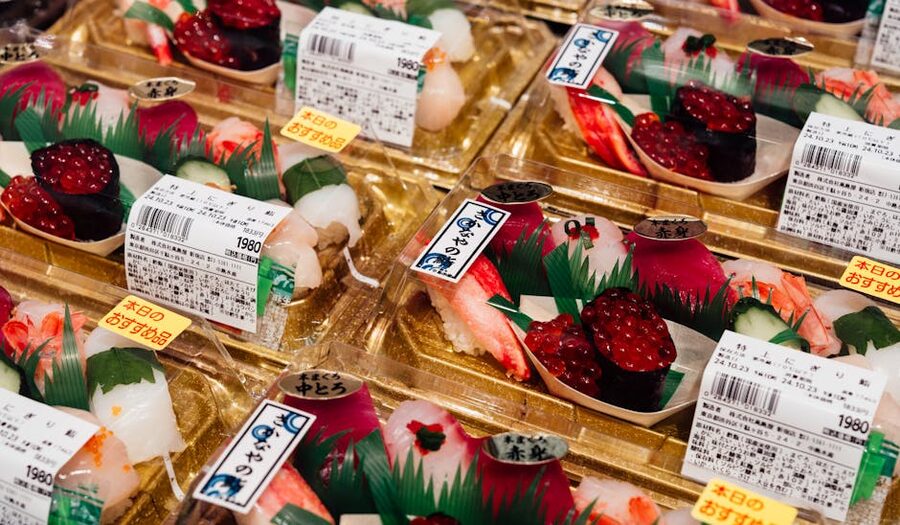
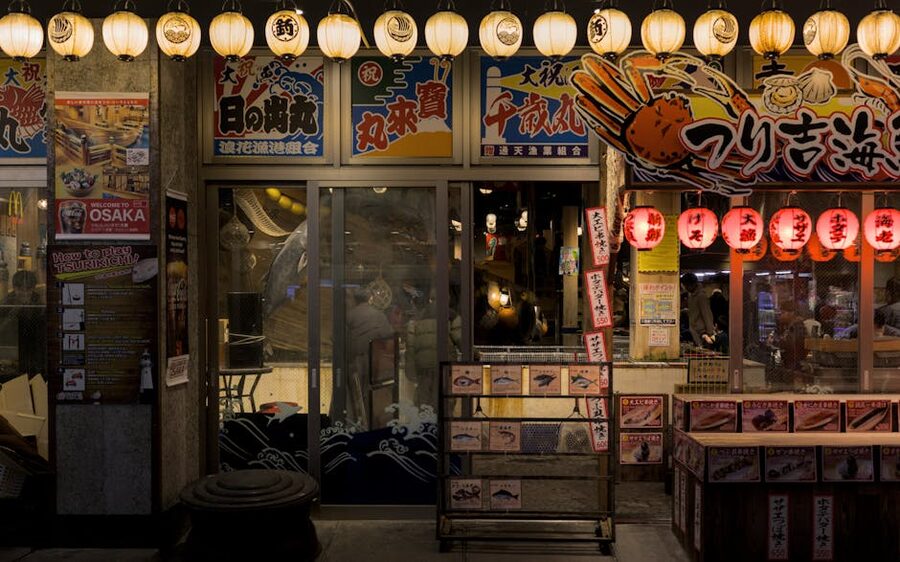
Osaka is 40 minutes from the coast and Kuromon is where the coast meets the city. The seafood stalls are the first stop on most tours. You’ll eat oysters, sea urchin (uni), scallops, and fresh tuna sashimi directly from the display case. Most stalls have small standing tables so you can eat right there.
The live scallop experience is the signature Kuromon moment. The vendor grills it for you while you watch — 30 seconds, then they hand it to you. The texture is unlike cooked scallop. Sweeter, firmer, with a specific bite that only works with this method.
Wagyu Beef Skewers
Most tours include a wagyu beef stop. You choose your cut (ribeye, sirloin, tenderloin), watch the vendor sear it over charcoal, and eat it on a bamboo skewer with a pinch of salt. A2 grade runs 800-1,200 yen. A5 runs 2,000-3,000 yen. Even the A2 is better than most Western steak.
Takoyaki (Octopus Balls)
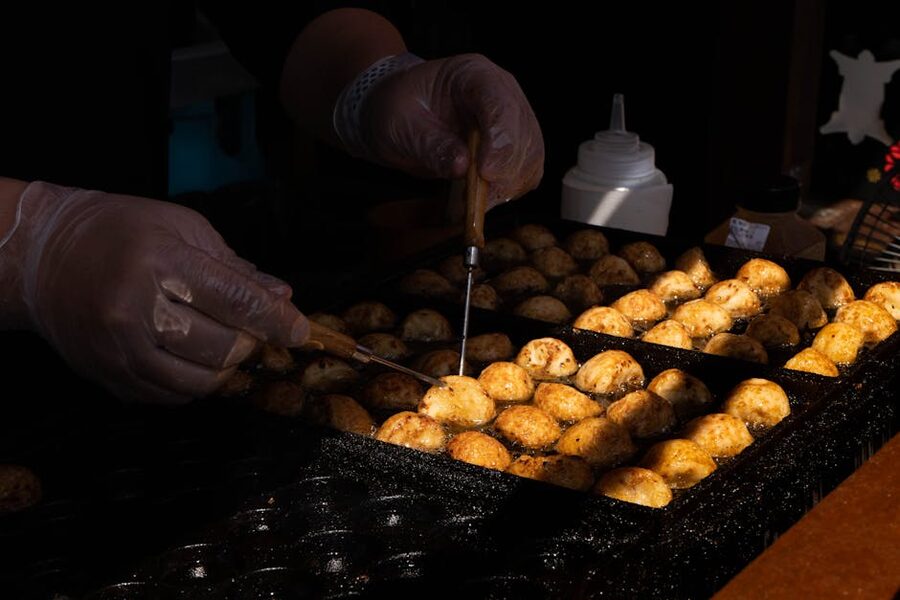
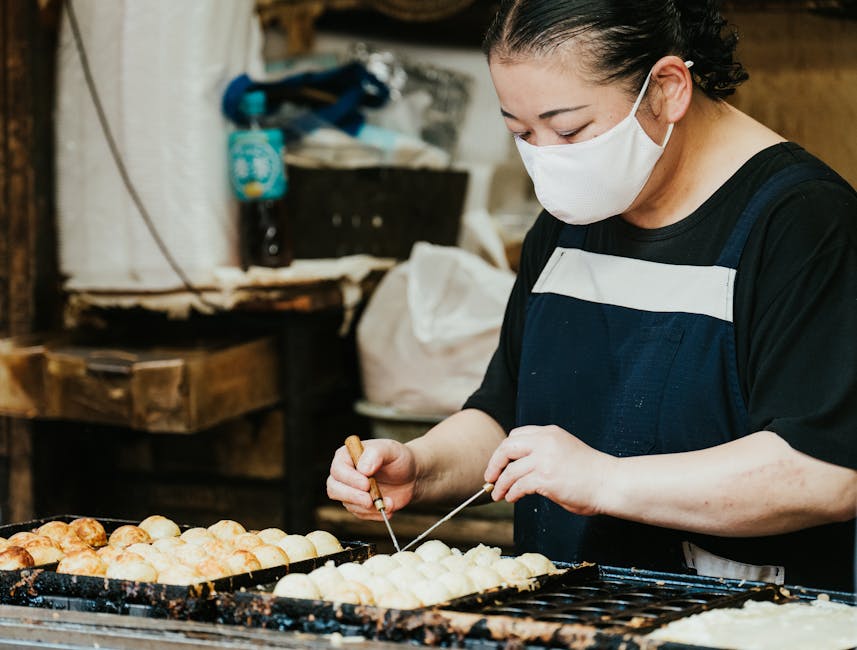
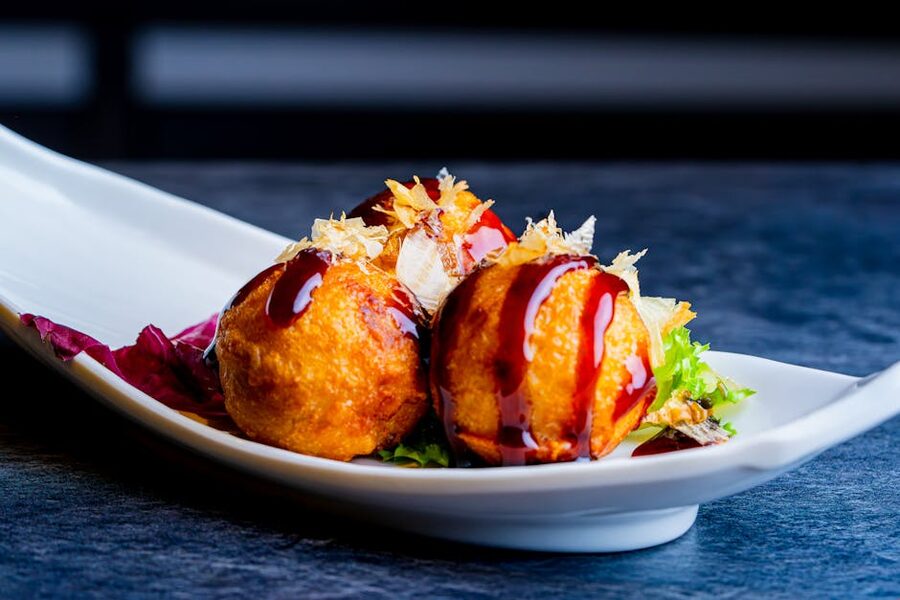
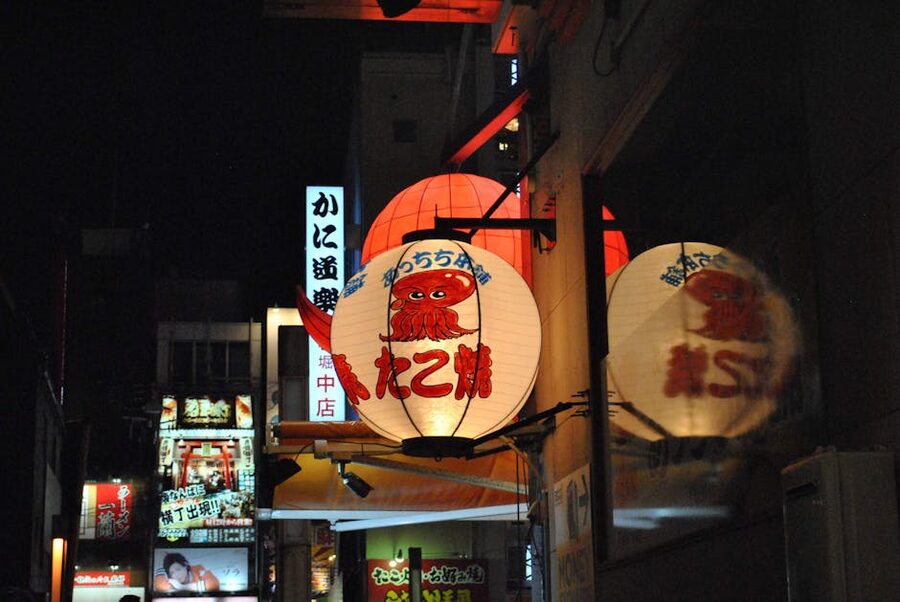
Takoyaki is Osaka’s signature street food. Molten batter in round moulds, a piece of octopus in each, flipped until golden on all sides. The outside is crispy. The inside is molten. You cannot eat them straight off the griddle — you’ll burn every taste bud you have.
Fruit and Vegetables
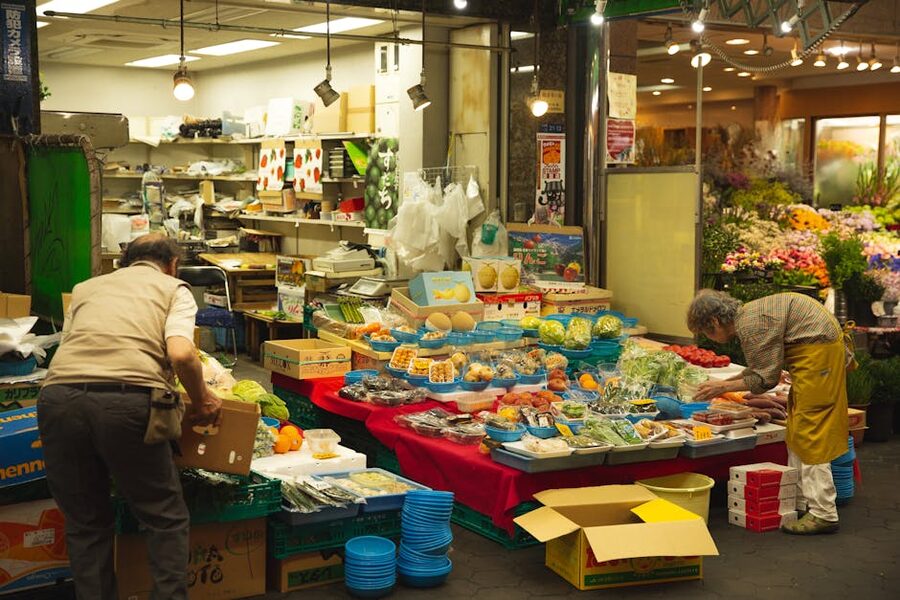
Japanese fruit is famous for being expensive and worth every yen. Kuromon has stalls selling strawberries, melons, peaches, and grapes at prices that would shock a Western shopper. A single Musk Melon can cost 10,000-20,000 yen. A premium strawberry can be 800 yen each. The food tours usually include a taste so you understand what you’re looking at.
Rice Balls, Tempura, and Pickles
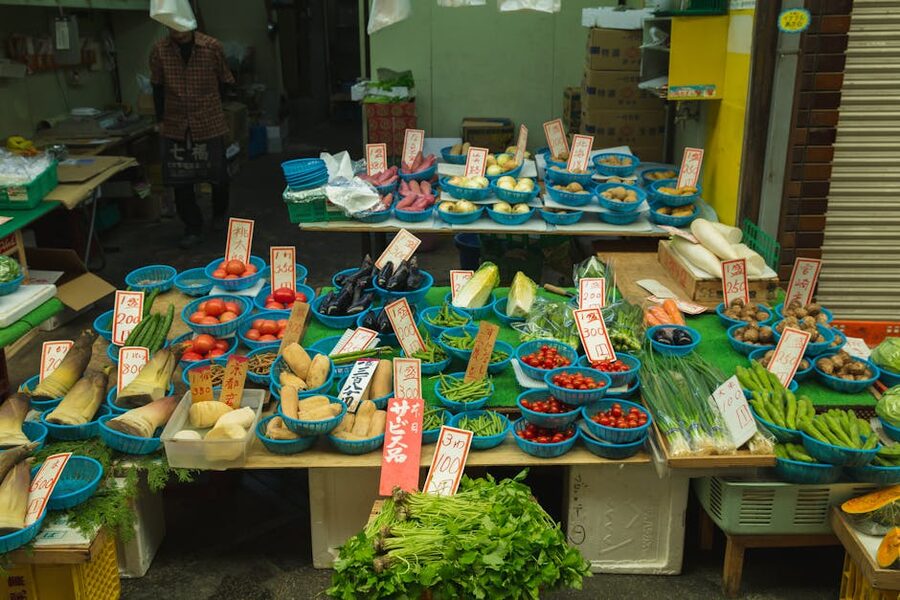
The non-Instagram sections of the market. Pickles, tofu, dried seafood, packaged rice balls. These aren’t photo stops but they’re where Osaka’s restaurant trade sources its ingredients. The tours usually include a quick educational stop so you can see the working side of the market.
The 3 Best Kuromon Market Food Tours
1. Kuromon Market Food Walking Tour — $50
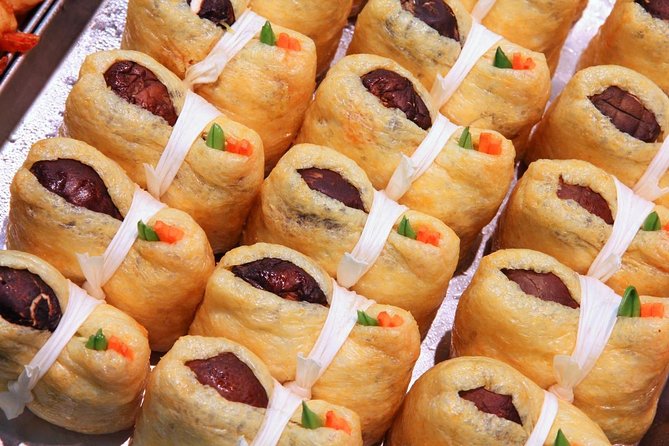
Perfect 5.0 across 550 reviews at $50. This is the most-reviewed Kuromon food tour and it consistently delivers. Small groups, 6-8 tasting stops, and the guide has been running these tours long enough to know every vendor personally. Our full review covers the specific stops and what to expect.
2. Kuromon Market Food Walking Tour (6 stops, 6 tastes) — $49
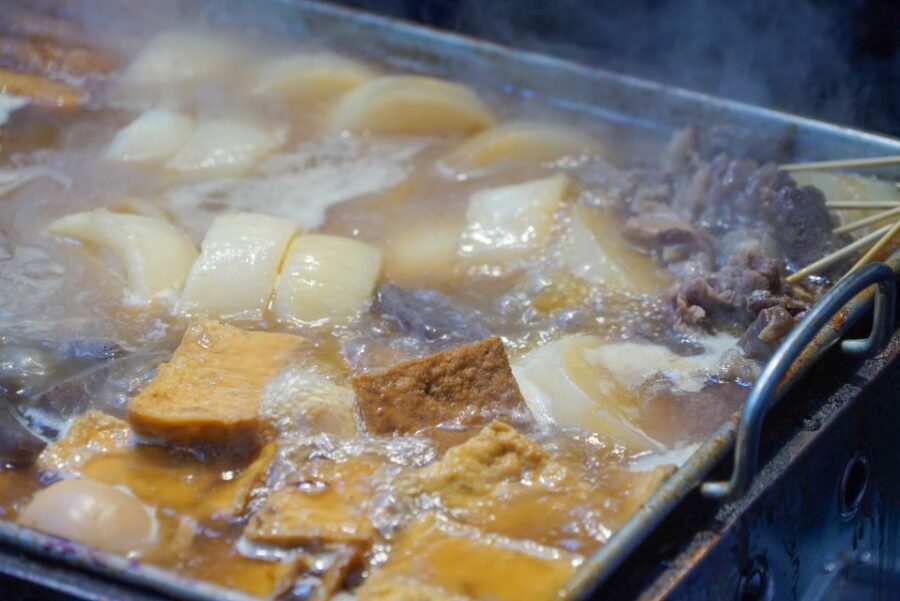
$49 with 272 reviews and a 4.6 rating. This tour uses a fixed format — 6 stops, 6 tastes, predictable duration — which makes it easier if you want to know exactly what you’re getting. Sarah from a recent visit praised Nina (the guide) for her English and her deep knowledge of the area and history. Our review details the 6 fixed stops.
3. Osaka 2-Hour Kuromon Market Walking Street Food Tour — $53

$53 with 212 reviews, 2-hour format. This is the compressed version — same great food, less downtime, faster pace. Terry from a recent visit called it the best tour they had with the operator and praised guide Mitch. Our review explains the 2-hour structure.
What to Eat If You’re Exploring Alone
If you don’t book a tour, here’s the self-directed Kuromon food crawl. Start at the south entrance (near Nippombashi Station) and work north.
Stop 1 — Oyster shop: Kurobei near the south entrance. 500 yen per oyster. Eat on the spot at the standing counter.
Stop 2 — Takoyaki: Wanaka or any stall with a queue. 8 pieces for 500-700 yen.
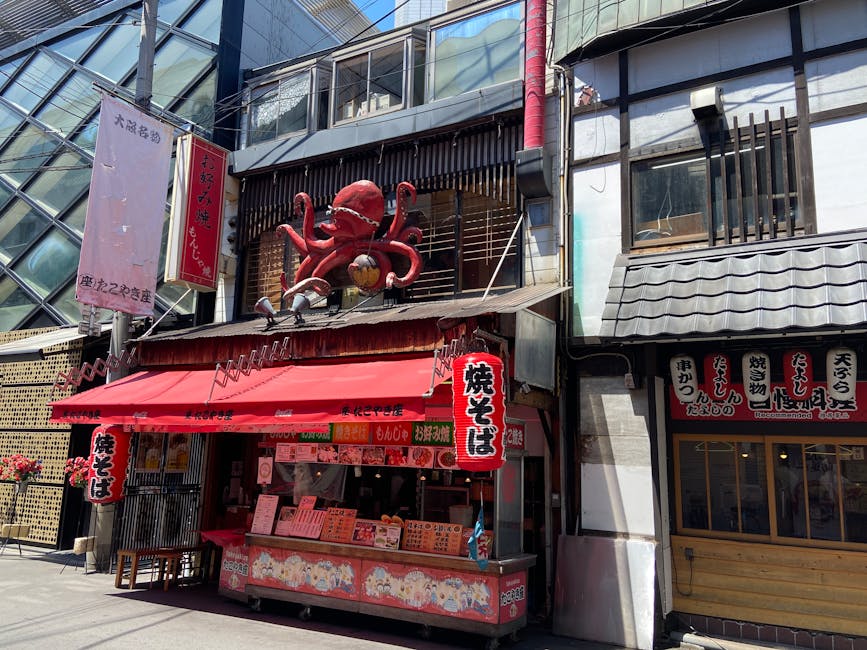
Stop 3 — Wagyu beef skewer: Any charcoal grill stall. Look for “和牛” (wagyu) signs. 800-2,500 yen per skewer depending on grade.
Stop 4 — Live scallop: Scallop vendors mid-market. 300-500 yen for a freshly grilled one.
Stop 5 — Fruit tasting: Any of the premium fruit stalls. Try the cut fruit cups (500-800 yen) rather than buying whole pieces.
Stop 6 — Matcha ice cream or taiyaki: Finish sweet. Matcha soft-serve runs 400-600 yen. Taiyaki (fish-shaped pastries) 200-300 yen.
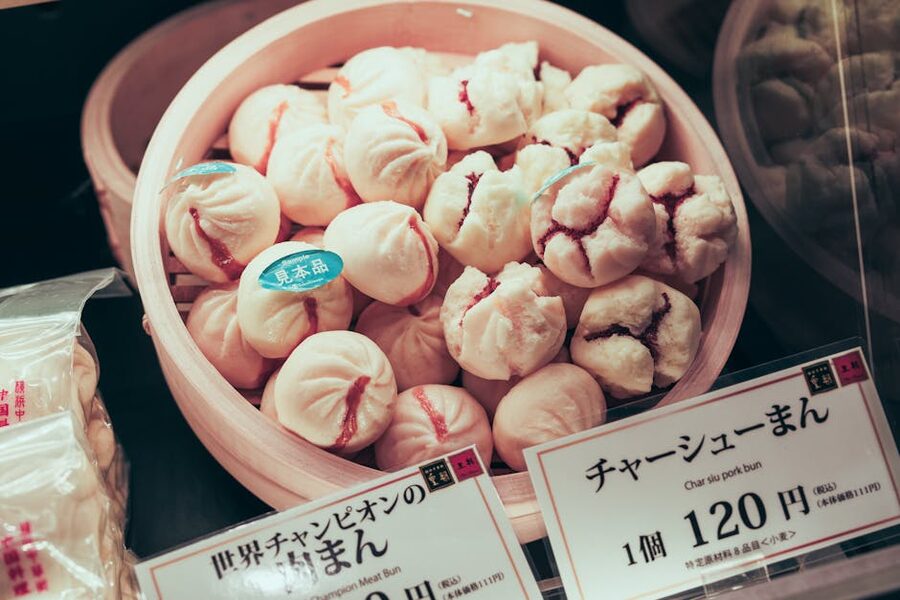
Budget 3,000-5,000 yen ($20-35) for a proper solo food crawl. A guided tour at $50 actually comes out cheaper when you include the food value AND the guide knowledge.
400 Years of Osaka’s Kitchen
Kuromon Market didn’t exist 400 years ago. It existed 800 years ago, but under a different name and a completely different purpose.
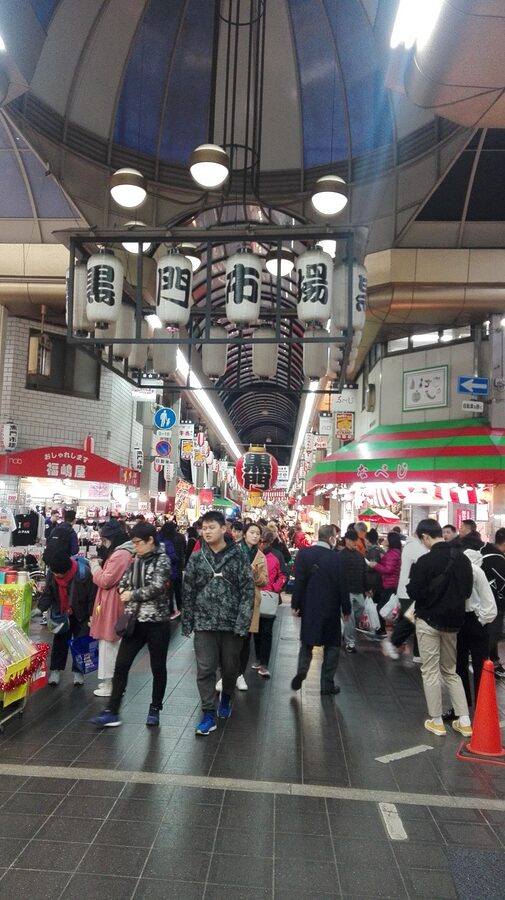
The earliest records of a market on this site go back to the 1200s. It started as a produce and fish market — Osaka was Japan’s trading hub, and Kuromon was where the city fed itself. Through the Edo period (1603-1868), the market evolved into the main distribution point for seafood coming in from Osaka Bay and produce from the surrounding Kansai countryside.
The “Kuromon” (Black Gate) name comes from the old Enmyoji temple that once stood next to the market. Its main gate was painted black, and locals started calling the market area “the black gate market.” The temple burned down in a 1912 fire. The name stuck.
In 1902, the current covered arcade was built. That building was destroyed in WWII. The modern structure went up in the 1950s and has been the city’s main fresh food market ever since. The stalls are mostly family businesses passed down through generations. When you buy a scallop from the vendor, you might be buying it from the 5th generation of the family that built the stall in 1957.
Why this matters when you visit: The food tours pass the specific stalls that have been here for 60+ years. Your guide can point out the family names, the specialty of each generation, and the dishes that the grandchildren are now making. It’s not theme park history — it’s Osaka’s actual working kitchen, open daily.
Kuromon vs Kyoto Nishiki Market: The Honest Comparison
Japan has two world-famous food markets and they’re about 45 minutes apart. Here’s how they differ.
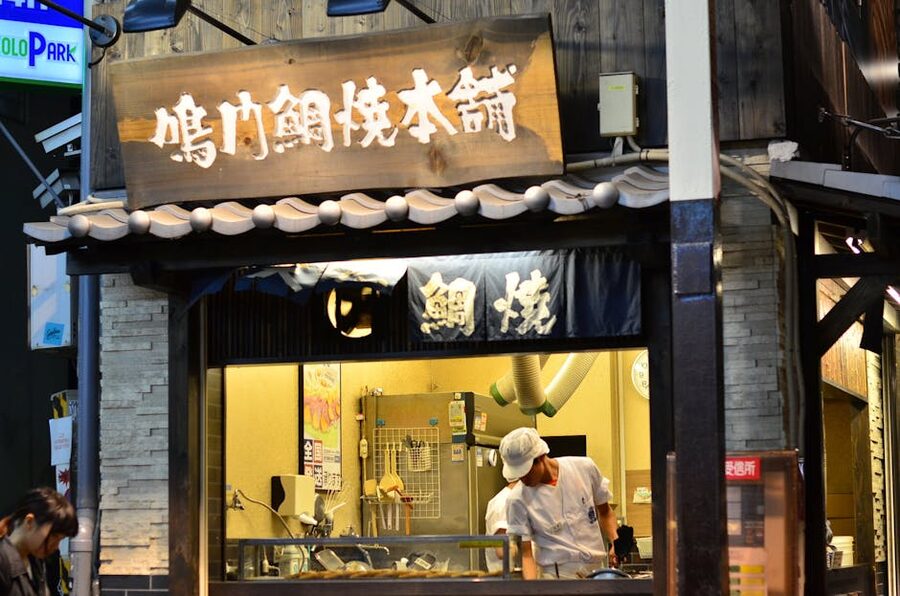
Kuromon (Osaka): Street-food-focused, eat-as-you-walk, seafood-heavy, cheaper, more casual. The vibe is “market meets food court.” Perfect for takoyaki, live scallops, wagyu skewers.
Nishiki (Kyoto): Ingredient-focused, buy-to-cook, pickle-heavy, slightly more expensive, more refined. The vibe is “traditional grocery meets tourist shopping.” Perfect for matcha, pickles, knives, ceramics.
If you’re doing both cities, do both markets. They’re different enough that neither substitutes for the other. The Kuromon tour first (hearty, hands-on) then Nishiki later (elegant, educational).
Best Time to Visit
Kuromon’s hours are 9am-6pm for most stalls, with some closing earlier. The right time depends on what you want.
Morning (9-11am): Freshest seafood, smallest crowds, best photos. The vendors are setting up or just opened. If you hate crowds, this is the slot.
Lunch (11am-2pm): Peak crowds but all stalls are open and active. Best energy, hardest to move. Book a tour for this slot so the guide can cut through the crowd for you.
Afternoon (2-5pm): Crowds thinning, some stalls starting to run low on popular items. A few bargains appear as vendors try to clear daily stock. Good for deals but worse for selection.
Evening (after 5pm): Most stalls closed. Skip this slot entirely for Kuromon — go to Dotonbori instead.
Practical Tips
When to book: 2-3 days ahead usually fine. 5-7 days for weekends and the perfect 5.0 Viator tour, which fills faster.
Allergies and dietary restrictions: Tell the guide at booking. The tours include seafood heavily — vegetarians will find options (fruits, vegetables, tofu, rice dishes) but the default is heavy on raw fish and seafood. Vegans will struggle. Call the operator if you have strict needs.
Cash: Most Kuromon stalls are cash-only. Bring 5,000-8,000 yen if you plan to buy extras beyond the tour-included food. There’s an ATM near the market entrance but avoid the queue.
Eating etiquette: Japanese eating-while-walking is frowned upon. Kuromon is mostly exempt from this rule — you’re expected to eat at the stall, but some quick bites as you walk are accepted. The guides will explain the specifics.
How full you’ll be: The tours include 6-10 food tastings. That’s genuinely 1-1.5 full meals of food. Don’t eat breakfast. Do have water between stops.
Photos: Photography is allowed everywhere. Ask before photographing the vendors — most say yes happily, some prefer you focus on the food.
Language: All tours in English. Vendors don’t always speak English, but the guides translate.
Accessibility: The market is flat, covered, and easy to navigate. Wheelchair-accessible. Note that some stalls have step-up counters that might be difficult without a companion.
Combining Kuromon with Osaka’s Other Essentials
Here’s a full Osaka day that puts Kuromon at the centre.
Morning: Kuromon Market food tour (9:30-12:00). Start fresh, end full.
Early afternoon: Osaka Castle. 20 minutes from Kuromon by subway. Walk off some of the market food.
Afternoon: Osaka walking tour through Namba and Shinsekai, or teamLab Botanical Garden for something unexpected.
Sunset: Dotonbori river cruise. 10-minute walk from Kuromon. See the Glico Man and the canal from the boat.
Early evening: Umeda Sky Building for sunset from 173 metres up.
Night: Osaka backstreet night tour or Osaka bar hopping. By now you’ve eaten a full day of food, but Osaka will still convince you to keep going.
Getting There
Closest station: Nippombashi Station (Osaka Metro Sennichimae or Sakaisuji Line). Exit 10 puts you at the south entrance of Kuromon Market.
From Namba Station: 5-minute walk. Namba is the central Osaka hub, so most visitors come from here.
From Dotonbori: 3-minute walk. Kuromon is a block east of the Dotonbori neon strip. You can literally do both in one morning.
From Kyoto: 30 minutes by Keihan Line or JR Kyoto Line to Osaka Station, then one stop on Midosuji Line to Namba, then 5-minute walk.
From Kansai Airport: Nankai Airport Express to Namba (40 minutes), then 5-minute walk. Kuromon is one of the easier attractions to visit on an Osaka stopover.
More Osaka Experiences
Kuromon is the food piece of Osaka’s identity. From here, the city opens up. Our Osaka food tours guide covers other neighbourhoods and tour styles. The Dotonbori river cruise takes you past the giant crab sign and the Glico Man that locals call the city’s mascot. For history, Osaka Castle is 20 minutes north by metro. For modern Osaka, the Umeda Sky Building gives you the 360-degree skyline view. For nightlife, Osaka backstreet night tours and bar hopping take you into the hidden izakaya scene. If you want to compare the two great food markets in one trip, our Kyoto Nishiki Market food tour guide covers Kuromon’s Kyoto cousin.