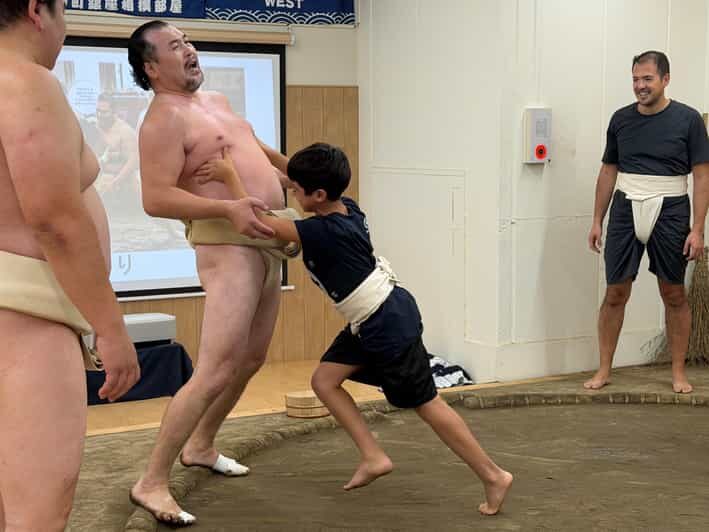
Here, sumo is not just something to watch from the stands. Former professional wrestlers demonstrate their skills, then you can step barefoot onto a real dohyo, the raised ring, and try to push one of them out. Women and children are welcome on this ring, unlike in professional sumo.
I love two things about this experience: the close-up view of the wrestlers, and its setting on Sunamachi Ginza, a working shopping street rather than a tourist district. You can arrive early, choose your own yakitori, croquettes, sweets, or seafood, and take your food in to eat near the ring.
The main drawback is the location. Sunamachi Ginza is a short trip from central Tokyo, but it takes a walk from the nearest train stations, so allow time to get there. Food and transport also cost extra, and the optional ring challenge may not suit everyone.
- Key points
- Sumo lessons on Sunamachi Ginza
- Arrive early for a street-food stop
- Thirty minutes of sumo basics and ritual
- Former pros train and wrestle just meters away
- Your turn on the real dohyo
- What the price covers
- Getting to Koto and planning the visit
- Who will get the most from it
- Should you book this sumo experience?
- FAQ
- How long does the sumo experience last?
- Where does the experience take place?
- How do I get to the venue by train?
- Should I arrive before the scheduled start?
- Is food included in the price?
- Can children take part?
- Do I have to wrestle?
- Is sumo clothing provided?
- Is the venue wheelchair accessible?
- The Best Of Tokyo!
- More Tours in Tokyo
- More Tour Reviews in Tokyo
- Not for you? Here's more nearby things to do in Tokyo we have reviewed
Key points
 1 / 3
 2 / 3
 3 / 3
- A real local shopping street: Sunamachi Ginza has 140 shops along 670 meters and has served the neighborhood since 1932.
- Sumo at close range: Two former pros train and face off just meters from the audience, without a stage or barrier.
- A chance to enter the ring: You can wear a provided mawashi and take on a wrestler, or step onto the dohyo for photos without wrestling.
- A family-friendly format: Children aged 4 and up can take part; children under 4 are free.
- A small group: The maximum is 40 people, with English support throughout.
- Food is your choice: Arrive 30 to 45 minutes early to buy snacks from local shops. Food and drinks are not included.

👉 See our pick of the 25 Best Guided Tours In Tokyo
Sumo lessons on Sunamachi Ginza
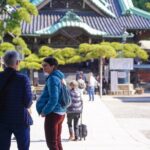
This 90-minute experience takes place in Koto, east of central Tokyo, at TY’S Sunamachi Building, 3-38-16 Kitasuna. The venue is on Sunamachi Ginza, one of Tokyo’s well-known neighborhood shopping streets. It is a practical change of scene from the city’s major sightseeing districts: the street has 140 shops, runs for 670 meters, and has been open since 1932.
That setting is part of the appeal. You are not simply watching a themed presentation in a tourist area. You can browse a street used by local residents, choose what you want to eat, then learn about sumo in a nearby ring. The contrast gives the visit a useful bit of Tokyo context, especially if your itinerary has been heavy on the central sights.
The experience is led in English and Japanese. The team has included host Dorugon and wrestlers such as Oni and Ooko. The English-speaking host explains rules, rituals, and sumo’s background, while the wrestlers bring the techniques to life. Expect an informal presentation, with humor and interaction rather than a formal lecture.
You can also read our reviews of more tours and experiences in Tokyo.



Arrive early for a street-food stop
Plan to reach Sunamachi Ginza 30 to 45 minutes before the show. That is not spare time to kill. It is your chance to walk the shopping street and pick up food and drinks before heading to the ring.
The available choices include yakitori, croquettes, fresh seafood, traditional sweets, and drinks. You decide what to buy, then bring it inside to eat. That arrangement gives you more control than a set meal, and it connects the activity to the neighborhood around it. It also means you should not expect food to be served as part of the ticket.
If you are traveling with children or have a particular appetite, this flexibility can be useful. You can choose familiar snacks, try something new, or keep the meal light. Just leave enough time to find the venue and make your purchases without rushing.
Thirty minutes of sumo basics and ritual
The first part of the 90-minute program is an introduction to sumo. The host explains its history, rules, and customs, including why wrestlers throw salt and how a bout is won. The goal is not to turn you into an expert in half an hour. It is to give you enough context to understand what you are seeing next.
That explanation matters because sumo is more than two large athletes pushing against each other. Its rituals and techniques are part of the sport, and a demonstration makes those details easier to follow. The tone is accessible, so you do not need any prior knowledge of sumo or Japanese culture.
The presentation is also a good fit for families. Children can follow the action, and the host helps make the rules understandable. Still, the program is a short introduction, not a deep technical course. If you already know sumo well, the hands-on portion may be the bigger draw.
Former pros train and wrestle just meters away
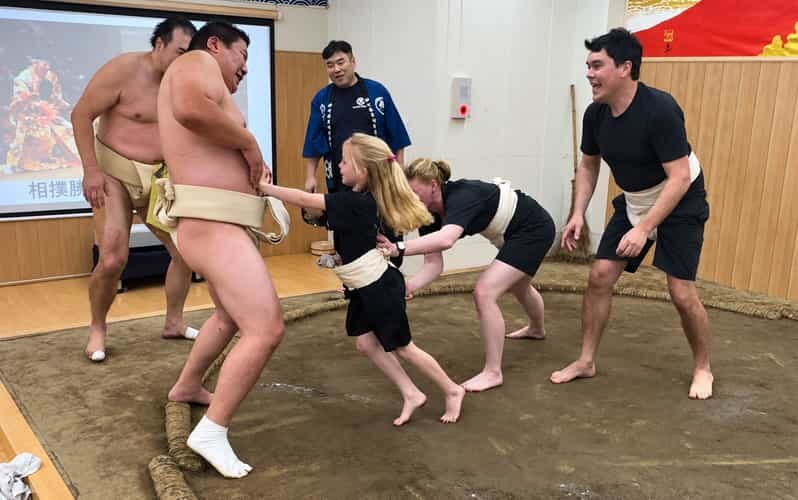
Next, two former professional wrestlers demonstrate sumo training and techniques, then face off in real bouts. The action takes place close to the audience, with no stage or barrier between you and the ring. That distance makes the physical side of the sport plain: the wrestlers’ movements, the sound of bodies meeting, and the effort behind each push.
The demonstration is not a full professional tournament. It is a chance to see former pros show how the sport works in a smaller, more direct setting. The bouts give the earlier explanation a practical payoff, and the wrestlers can make the session lively without losing the focus on technique.
The group limit is 40 people, and the venue is designed to keep the audience close to the action. That is a meaningful advantage over a large arena if your aim is to understand how sumo works at close range. It is not a substitute for watching a grand tournament, though. If you want the scale and atmosphere of professional competition, this is a different kind of outing.
More Great Tours NearbyYour turn on the real dohyo
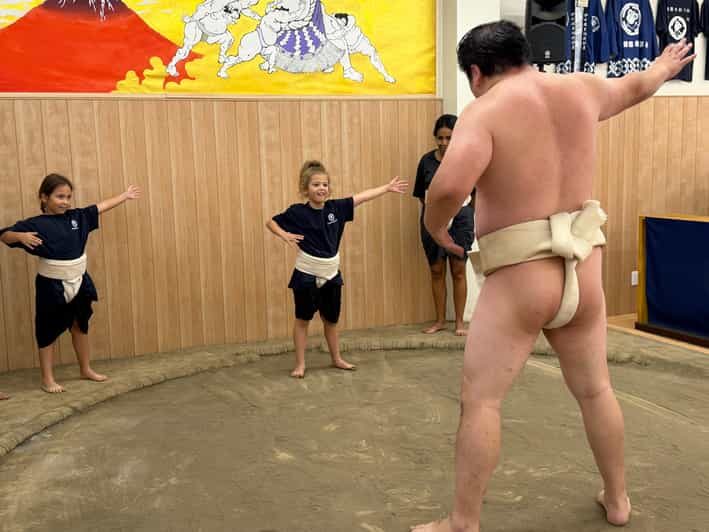
The final portion is optional and hands-on. If you want to try sumo, you change in a private area and put on a real mawashi with the supplied changing kit. Then you can take on a wrestler. The point is not to win; a former pro is a formidable opponent, and the fun is in experiencing the stance, effort, and balance for yourself.
Women and children can step onto this dohyo, which makes the experience distinct from professional sumo, where women are not allowed on the ring. You do not have to wrestle to take part. If you would rather watch, you can still step onto the ring afterward for photos with the wrestlers.
The challenge is a good reason to wear comfortable shoes for the walk there, but you do not need sportswear. The venue provides the sumo gear and a private changing area. If you are unsure, you can watch the demonstration first and decide when it is your turn. Nobody needs to treat the challenge as a test of strength.
After the ring session, you can ask the wrestlers about training and daily life and take photos together on the dohyo. This informal time rounds out the experience: you have watched the techniques, tried the basics, and can ask questions face to face.



What the $60 price covers
At $60 per person, the price includes an English-speaking host, a full explanation of sumo rules and rituals, the live demonstration and bouts, and the optional ring challenge. If you choose to wrestle, a mawashi and changing kit are provided, and there is a private place to change. Photos with the wrestlers on the ring are included as well.
That is a reasonable package if you value participation and close access. You are paying for more than a brief show: the 90-minute program combines an introduction, live demonstrations, and a chance to enter the ring. The small group cap helps keep the action near, though it does not mean every person will want or need to wrestle.
Keep two extra costs in mind. Food and drinks are bought separately on Sunamachi Ginza, and transport to the venue is not included. The food choice is a strength if you like deciding for yourself, but less convenient if you prefer an all-in ticket with a meal arranged for you.
Getting to Koto and planning the visit
The venue is about a 15-minute walk from Minami-Sunamachi Station on the Tokyo Metro Tozai Line, or about a 20-minute walk from Nishi-Ojima Station on the Toei Shinjuku Line. Buses stop on the shopping street at Kitasuna 2-chome. A taxi from either station is another option.
The lanes around the venue are narrow. For a taxi, show the driver the venue address and get out at 3-38-11 Kitasuna, Koto-ku, then walk the short remaining distance. Clear directions are sent when you book, but allow time for the station walk and your food stop rather than aiming to arrive at the last minute.
The activity runs year-round, almost every day, with starting times depending on availability. That matters because Japan’s grand sumo tournaments are held only in January, May, and September. If your Tokyo visit falls outside those months, this offers a way to see sumo up close without planning around tournament dates.
The venue is wheelchair accessible, and English and Japanese are available. Children aged 4 and up can join in; those under 4 are free. The experience has also accommodated a baby, but parents should still consider their own child’s needs and the close, active nature of the room. Smoking is not allowed indoors or during the activity.
Who will get the most from it
This is a strong choice for families who want something more hands-on than a museum visit. Older children can learn a few rules, watch the bouts, and choose whether to try the ring. Younger children can attend for free, though the 90-minute format and close-up wrestling may be more engaging for some than others.
It also suits adults curious about Japanese customs who want a clear introduction without a full day commitment. The format balances explanation and action, and the local shopping street gives you a reason to make time for the neighborhood rather than head straight back after the show.
You may want to skip it if your priority is a formal professional tournament, or if you need a centrally located activity with transport and food included. The venue is not in the main tourist core, and its food plan requires you to arrive early and make your own choices.
Should you book this sumo experience?
Book it if you want to understand sumo through a mix of explanation, live action, and optional participation. The strongest reasons are the close view of former pros, the chance for anyone to step onto the real dohyo, and the setting on a working Tokyo shopping street. At $60, the experience offers good value for someone who will use the interactive elements.
Plan around the location, arrive early for food, and do not feel obliged to wrestle. You can get a lot from watching the demonstrations and stepping onto the ring for photos. If you are seeking the scale of a grand tournament instead, this is best treated as a hands-on introduction, not a replacement.
Tokyo Sumo Experience: Local, Family-Friendly, Kids Welcome
FAQ
How long does the sumo experience last?
The program lasts about 1.5 hours. It includes an introduction to sumo, demonstrations and bouts by former pros, and an optional ring challenge.
Where does the experience take place?
It takes place at TY’S Sunamachi Building in Kitasuna, Koto, beside Sunamachi Ginza shopping street.
How do I get to the venue by train?
It is about a 15-minute walk from Minami-Sunamachi Station on the Tokyo Metro Tozai Line, or a 20-minute walk from Nishi-Ojima Station on the Toei Shinjuku Line.
Should I arrive before the scheduled start?
Yes. Arrive 30 to 45 minutes early so you can buy food or drinks along Sunamachi Ginza before the show.
Is food included in the price?
No. You choose and buy food and drinks from shops on the street before the experience.
Can children take part?
Children aged 4 and up can take part, and children under 4 are free. The ring challenge is optional.
Do I have to wrestle?
No. You can watch the demonstration and bouts without taking on a wrestler. You can also step onto the ring for photos afterward.
Is sumo clothing provided?
Yes. Challengers receive a real mawashi and a changing kit, and there is a private changing area. You do not need to wear sports clothing.
Is the venue wheelchair accessible?
Yes. The venue is wheelchair accessible.
You can check availability for your dates here: