The unusual souvenir here is one you help build: a working Game Boy with a new backlit IPS screen and a shell color you choose. In Akihabara, you can pick the original DMG-01 or a Game Boy Advance, then learn about the console as you take it apart and put it back together.
I like two things especially: the workshop gives you hands-on time with a piece of gaming history, and the small group means you can ask for help instead of guessing your way through delicate parts. You also get to try classic cartridges on your finished console before you leave.
The main consideration is the $382-per-person price. It is a lot for a two- to two-and-a-half-hour activity, so it makes most sense if you value the build, instruction, and custom console together, not just the time spent in the room.
- At a glance
- Akihabara, with a screwdriver in hand
- First, choose DMG-01 or Game Boy Advance
- A short lesson before the hands-on work
- The careful part: removing the old screen
- Shell colors, buttons, and a personal design
- Test the build with classic cartridges
- Is 2 worth it?
- A good family activity, with an adult beside younger builders
- Who will enjoy the workshop most?
- Should you book it?
- FAQ
- Which Game Boy can I build?
- How long does the workshop take?
- Do I need technical experience?
- What is included in the activity?
- Can I take the modified Game Boy home?
- Are children allowed to participate?
- Can someone come along without taking part?
- What languages do the instructors speak?
- The Best Of Tokyo!
- More Workshops & Classes in Tokyo
- More Tours in Tokyo
- More Tour Reviews in Tokyo
- Not for you? Here's more nearby things to do in Tokyo we have reviewed
At a glance
 1 / 8
 2 / 8
 3 / 8
 4 / 8
 5 / 8
 6 / 8
 7 / 8
 8 / 8
- Choose your console: Build either an original Game Boy DMG-01 or a Game Boy Advance.
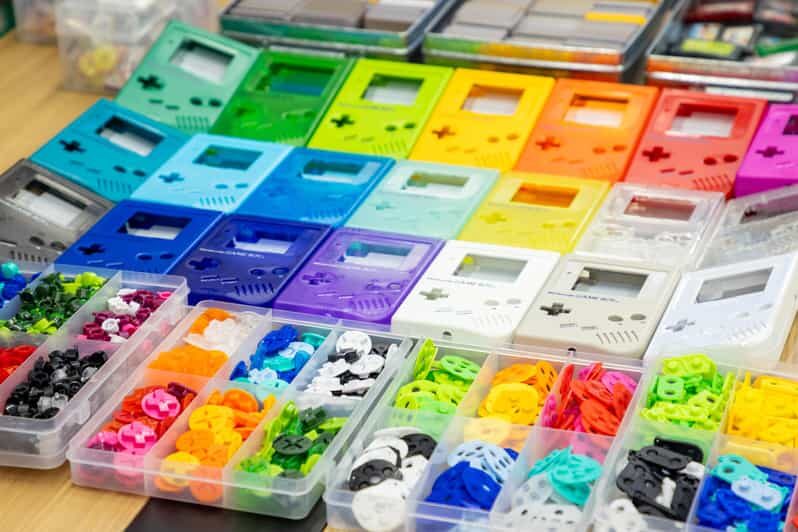
- Make it yours: Pick a custom shell color, swap buttons, and fit a backlit IPS screen.
- Get guided help: English- and Japanese-speaking staff support a group of no more than six participants.
- Play before you go: Try original Game Boy and Game Boy Advance cartridges on-site after your build.
- Bring the family: Children are welcome, but anyone 17 or younger must be accompanied by a parent or guardian.
- Take home a working keepsake: Each unit is tested before the session, and the finished console goes home with you.

👉 See our pick of the 25 Best Guided Tours In Tokyo
Akihabara, with a screwdriver in hand
Akihabara is a fitting place for this workshop. The Tokyo district is closely linked with electronics and games, and this activity turns that setting into more than a backdrop. Instead of only browsing shops, you spend a few hours learning how a familiar handheld is put together and making one your own.
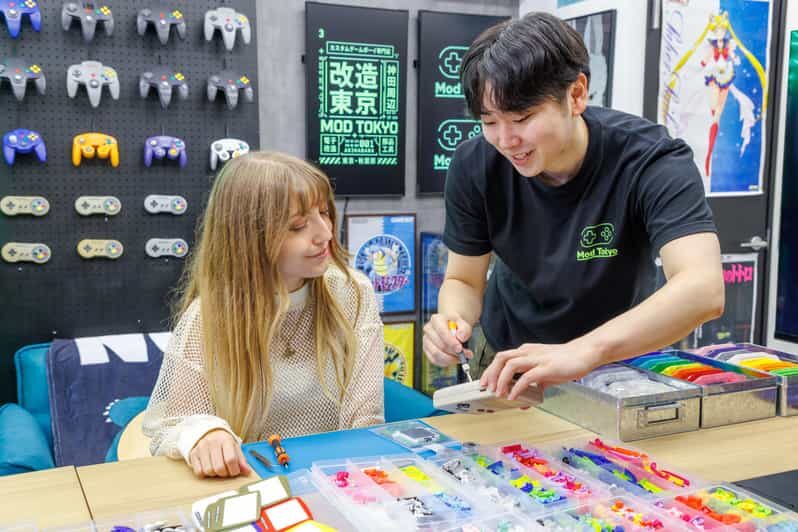
The workshop lasts about two to two-and-a-half hours. It is a compact activity, but not a passive one: you handle the console, make choices about its look, and follow the build with a guide nearby. Groups are limited to six, which is useful when the work calls for patience and a clear explanation.
You do not need technical experience. The consoles are tested and verified before your session, and the staff walk you through each stage. That preparation matters. It means you are not starting with a faulty machine or being asked to diagnose a problem; the focus is on the process of modifying a working handheld.
The workshop is not affiliated with Nintendo. If you are buying it as a gift for a Nintendo fan, that detail is worth knowing, though the activity itself centers on Nintendo’s handheld consoles and their games.
You can also read our reviews of more tours and experiences in Tokyo

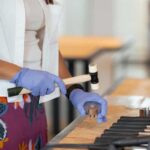
First, choose DMG-01 or Game Boy Advance
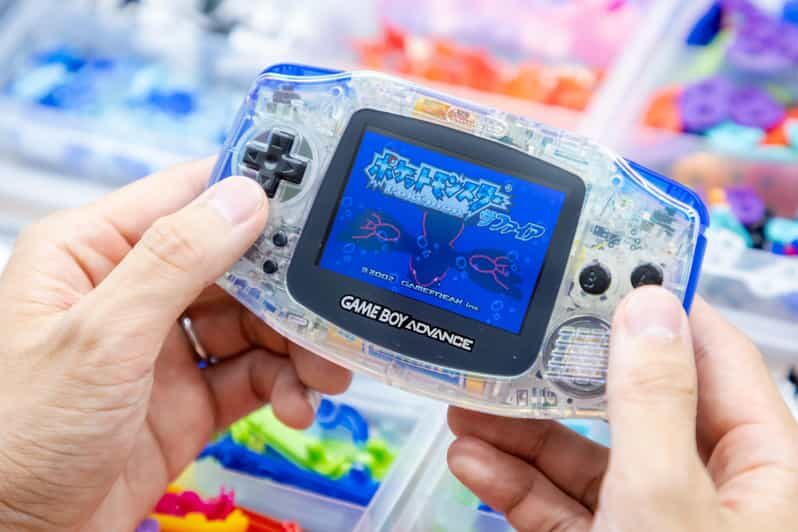
When you book, choose between the original Game Boy DMG-01 and the Game Boy Advance. The DMG-01 is the model that launched in 1989, while the Advance offers a wider screen and access to its 32-bit game library. The choice affects the console you work on and the games you can play later.
If your fondest memories are of the original Game Boy, the DMG-01 is the natural pick. Its place in handheld gaming history is part of the appeal, and fitting it with a backlit screen gives the old design a practical update. If you prefer the Advance’s broader game library and wider display, choose that version instead.
I would decide before booking rather than assume you can switch at the workshop. The available information asks you to select a console when you reserve, and your choice shapes the whole build. If you are booking for a family or couple, you can choose different versions, as some pairs have each built their own.
A short lesson before the hands-on work
The session includes an introduction to the history and technology behind Nintendo’s handheld consoles. This gives the work context: you are not just changing a case, you are handling a device with a particular place in gaming history and seeing how its parts fit together.
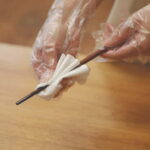
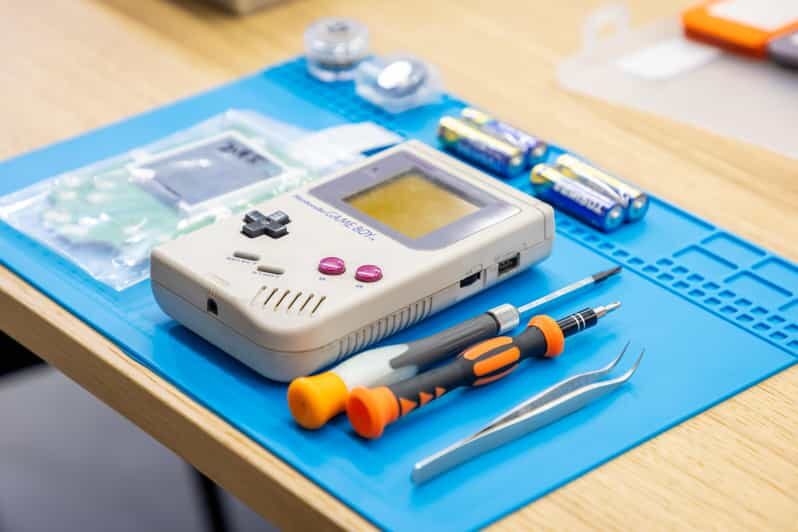
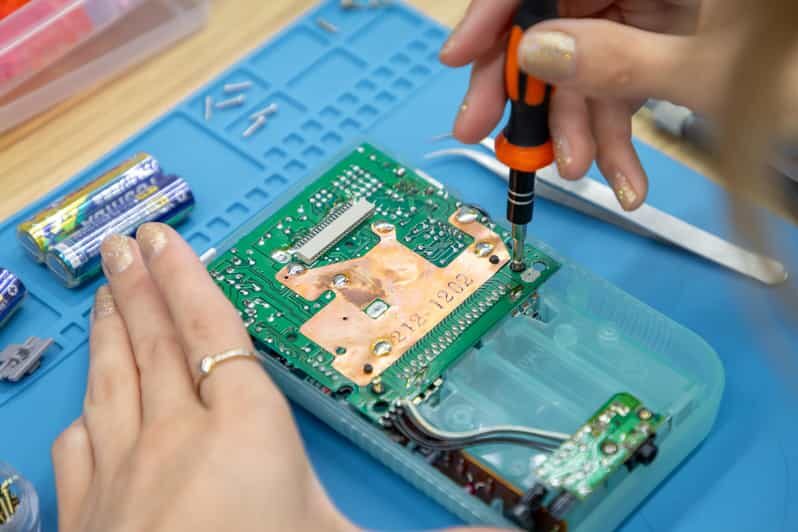
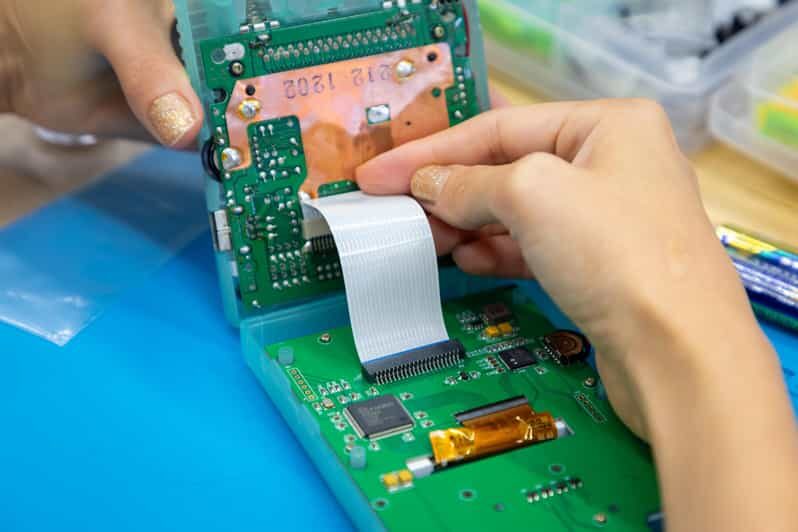
The guide then leads you through disassembly and rebuilding. You install the IPS screen, swap buttons, and fit your chosen custom shell. The exact steps differ by console, but the point is the same: you do the work yourself, with staff on hand to explain what to do and help when a step gets tricky.
That balance is a strength. A purely demonstration-based class would leave you with less of a connection to the console; a build without instruction could turn a fun project into a stressful one. Here, the guides stay nearby and the group is small enough for questions and individual help.
Staff named in past sessions include Taichi, Hiroto, Maui, and Ariana. You should not count on a particular person being assigned to your date, but the English-speaking team is there to guide the build. The instructors speak English and Japanese.
The careful part: removing the old screen
Most of the workshop is intended for beginners, but taking out the old screen can be a more delicate step. One participant found this part harder than expected and warned that the board can be sharp. That is a useful reminder to follow the guide’s instructions closely and avoid rushing, especially if you are helping a child.
You are not expected to arrive with repair skills. Still, this is a real hands-on activity, not a pretend assembly with every difficult bit already done. If you are nervous about handling small parts, tell the guide and ask for help. The team’s role is to support you through the process, and careful work is more important than speed.
The consoles are checked before the session, and the staff check the result during the build as well. That quality control offers reassurance, but it does not make the experience entirely risk-free or remove the need to pay attention. Treat the components with care, and let the guide handle a step if you are unsure.
More Great Tours NearbyShell colors, buttons, and a personal design
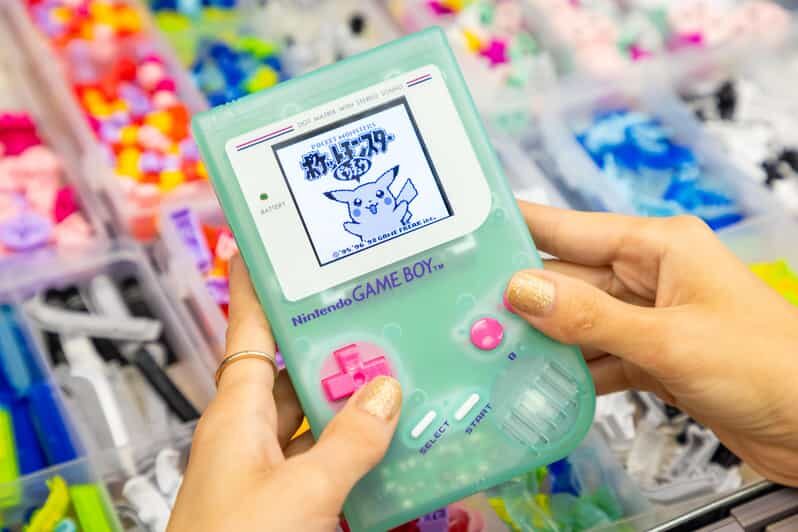
The custom shell is where the console becomes distinctly yours. You choose a color and swap the buttons as part of the modification. The available options are described as varied, but the exact color range is not specified, so do not plan around a particular shade or design before you see what is on offer.
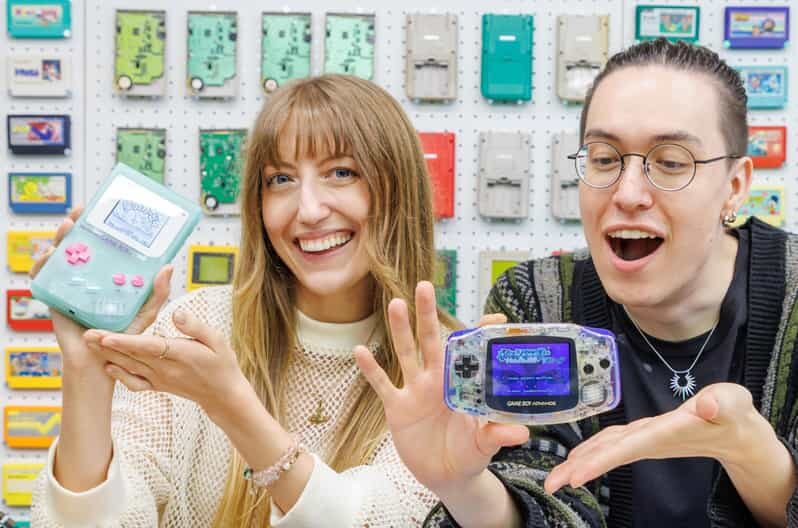
There is room for a playful theme. One couple, for example, made a Godzilla-inspired console and an opalescent one. That gives a sense of how different the finished machines can look, though your options depend on the parts available in the workshop.
The customization is more than decoration. You leave with a console that reflects choices you made during the session, not a generic souvenir pulled from a shop shelf. For a gaming fan, that personal connection can be part of the value. For someone less attached to the Game Boy, the hands-on making may still be appealing, but the console itself is less likely to be the main draw.





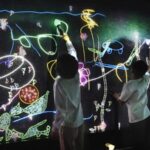
Test the build with classic cartridges
Once your console is assembled, you can try a selection of original Game Boy and Game Boy Advance cartridges on-site. This final step is practical as well as nostalgic: you can see the new screen in use and enjoy a few games on the machine you just built.
Cartridges are also available to buy at the workshop. That may be useful if you want a game to take home with your console, though the price and selection are not specified. Treat it as an optional extra rather than something included in the stated activity.
The chance to play is a satisfying finish. You have spent the session handling the console’s parts, and now you can use the result for its original purpose. If you already own compatible games, you will have a reason to keep the machine in rotation long after your Tokyo visit.
Is $382 worth it?
At $382 per person, this is a premium activity. The price includes the guided modification, tools and materials, a custom shell choice, IPS screen installation, and access to cartridges during the session. You also leave with the console you built. The total value depends on how you weigh those things, and the listed details do not break down the console’s separate retail value.
I would compare it with buying a modified Game Boy elsewhere only if your main goal is to own the device. This workshop adds instruction, time with the console’s internals, and the satisfaction of building it yourself. If you mainly want the cheapest way to get a handheld, the price will be harder to justify. If the process and a personal keepsake matter to you, it makes more sense.
You can reserve now and pay later, and cancellation is free up to 24 hours in advance. Those terms give you some flexibility if your Tokyo plans are still taking shape, but they do not change the core question: are you paying for a console alone, or for a memorable activity and a console you helped make?
A good family activity, with an adult beside younger builders
Children are welcome, and participants aged 17 or younger must attend with a parent or guardian. The activity is hands-on, but the guides can help children through the steps. Families have brought children as young as seven, and the staff have been described as patient and encouraging with younger participants.
For a parent, this can be a nice change from watching a child play on a screen. You can see them learn how the handheld is assembled and make choices about its appearance. Adults can also come along as non-participating companions and watch for free, with no booking or extra fee required.
If you are bringing a child, be realistic about the careful assembly work. The guide is there to help, but a younger participant may need an adult nearby, especially during the screen removal and rebuilding steps. The workshop is best approached as a shared project rather than a drop-off activity.
Who will enjoy the workshop most?
This is an obvious fit for people who grew up with the Game Boy, Nintendo fans, and anyone who likes making things with their hands. The history lesson and the chance to play cartridges add interest beyond the assembly itself. If you already have a favorite model, game, or childhood memory tied to the console, the experience has extra meaning.
It can also work for a curious non-gamer. The build is guided, and you do not need prior technical knowledge. The most useful question is whether you enjoy a small-group activity and want a souvenir with a story attached. If your ideal Tokyo day is mostly museums, food, and wandering, this is a different sort of outing, but it can fit neatly into a visit to Akihabara.
The workshop can accommodate both small private experiences and larger group requests through corporate partnerships. For the regular session, the group limit is six. If you are arranging a special group, ask the provider what can be arranged rather than assuming the standard format will apply.
Should you book it?
Book this if you want more than a Game Boy to take home. The strongest reasons are the guided, hands-on build, the choice between two classic models, the careful support from English-speaking staff, and the chance to play your finished console before leaving. For a parent and child, or a couple with shared gaming nostalgia, it can turn a Tokyo souvenir into an afternoon you make together.
Think twice if you are focused on keeping costs down or have little interest in the console itself. Two hours is a meaningful slice of your day, and $382 per person is not a small spend. But if the idea of choosing a shell, fitting a new screen, and carrying home a working handheld you assembled appeals to you, this is a distinctive way to spend time in Akihabara.
Tokyo: Game Boy Mod Workshop in Akihabara (Original/Advance)
FAQ
Which Game Boy can I build?
You can choose either the original Game Boy DMG-01 or the Game Boy Advance when booking. The Advance has a wider screen and a 32-bit game library.
How long does the workshop take?
The workshop lasts about two to two-and-a-half hours. Starting times vary, so check availability when you book.
Do I need technical experience?
No. The workshop is designed for beginners, and staff guide you through the modification process.
What is included in the activity?
The activity includes the hands-on modification, guidance from staff, the tools and materials needed, a choice of custom shell color, installation of a backlit IPS screen, and cartridges to play during the session.
Can I take the modified Game Boy home?
Yes. You leave with the personalized console you built.
Are children allowed to participate?
Yes. Children are welcome, but participants aged 17 and under must be accompanied by a parent or guardian.
Can someone come along without taking part?
Yes. Partners, family, and friends may watch for free. They do not need a booking.
What languages do the instructors speak?
The instructors speak English and Japanese.
You can check availability for your dates here: