teamLab Planets turns a museum visit into a physical journey: you walk barefoot through water, cross soft, unstable floors, and watch digital art shift around you. The rooms are built for participation, not just looking, so your steps and movements become part of the show.
I like the contrast between the water-and-koi artwork, which feels calm and playful, and the Crystal Universe, where thousands of lights create a room-sized field of color. The drawing activity adds a different pleasure: you sketch a creature, then see it appear and move through a digital world.
The main drawback is the crowd. A timed ticket does not guarantee a quiet visit, and some rooms can feel busy or end sooner than expected. You will also need to go barefoot in parts of the exhibit, and one water section can reach an adult’s knees.
What to know before you go
- Walk through water with digital koi: The fish respond to movement, making this one of the most hands-on rooms.
- Stand among thousands of lights: The Infinite Crystal Universe surrounds you with LEDs that shift in color and pattern.
- Draw, then watch your art move: Sketch Umwelt World turns your drawing into part of a digital scene.
- Expect soft floors and dark passages: The Soft Black Hole and dim rooms can challenge your balance and sense of direction.
- Wear practical clothing: Some rooms require bare feet, water can reach knee height, and mirrored floors make trousers a better choice than a skirt.
- Allow one to three hours: A quick visit can be shorter, but families and anyone who likes to linger may need closer to two hours or more.

👉 See our pick of the 25 Best Guided Tours In Tokyo
- What to know before you go
- A ticket into art you can walk through
- Following the rooms, from flowers to water
- The practical side: bare feet, water, and mirrors
- Getting there and planning your time
- What the ticket costs, and which option makes sense
- Who will enjoy it most
- Should you book teamLab Planets?
- FAQ
- How long should I allow for teamLab Planets?
- What are the opening hours?
- Do I need to book a ticket in advance?
- Will I get wet?
- Can I take photos?
- Is teamLab Planets suitable for children?
- How do I get to teamLab Planets?
- The Best Of Tokyo!
- More Tickets in Tokyo
- More Tours in Tokyo
- More Tour Reviews in Tokyo
- Not for you? Here's more nearby things to do in Tokyo we have reviewed
A ticket into art you can walk through
 1 / 7
 2 / 7
 3 / 7
 4 / 7
 5 / 7
 6 / 7
 7 / 7
teamLab Planets TOKYO is in Toyosu, a waterfront district in Koto City. Its central idea is simple: instead of viewing each artwork from a marked spot, you enter it. The digital images, light, sound, water, and floor surfaces make the body part of the work.
That changes the pace of a museum visit. You may pause in a light-filled room, then move carefully through water or across a yielding surface. The exhibits are not all quiet or contemplative. Some are playful, some are visually intense, and some are over quickly. If you expect a traditional gallery, this will feel unusual. If you are curious about art that responds to your presence, the format is the point.
The attraction is designed for children and adults, but it is not equally suited to every mood or age. Kids often take to the movement and changing images right away. Adults who like digital art, visual effects, or unusual installations have plenty to engage with. If you prefer quiet galleries, dislike crowds, or are sensitive to flashing light and loud sound, you may find parts of the visit tiring.
You can also read our reviews of more tours and experiences in Tokyo



Following the rooms, from flowers to water
The visit moves through a series of large artwork spaces. The exact order and time spent in each room can depend on the flow of people, so it is better to think of the exhibits as a route through different sensations than as a fixed, timed performance.
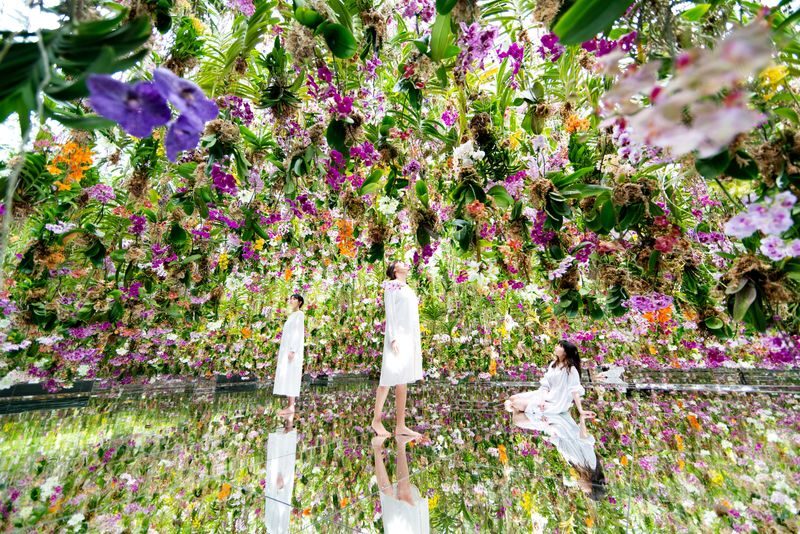
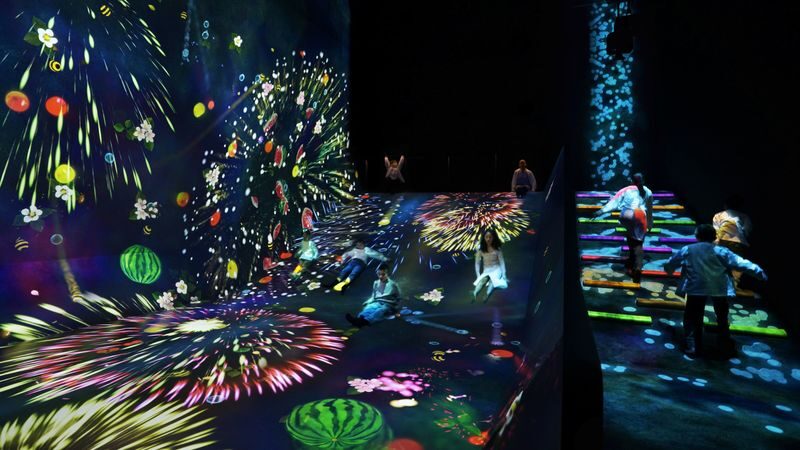
The Floating Flower Garden surrounds you with flowers and changing visual patterns. It is one of the more restful parts of the attraction, and the floral scent adds another layer beyond sight. The room invites you to pause rather than rush through. It can also be a popular stop, so a little patience may be needed if you want space to take it in.
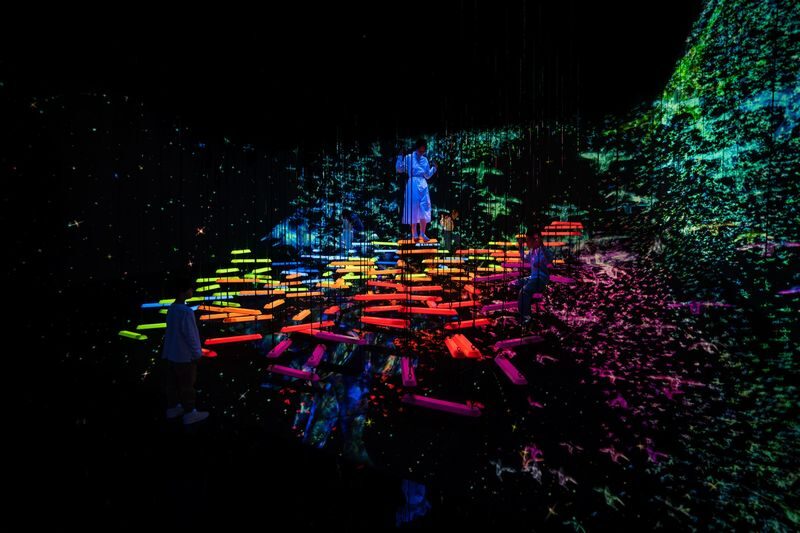
The Infinite Crystal Universe trades flowers for a dense field of points of light. Thousands of LEDs create the impression of a deep, shifting space around you. It is one of the clearest examples of teamLab’s approach: you do not simply see the image, you stand inside it. Expect strong visual stimulation, and keep in mind that the effect depends partly on the room being dark.
The Moss Garden of Resonating Microcosms takes the experience outdoors in spirit, if not in scale. Moss-covered forms glow softly and respond as you move around them. Compared with the more dramatic light rooms, this one has a gentler rhythm. It is a good place to slow down and notice how small changes in your position affect what you see.
In the Soft Black Hole, the floor gives underfoot. Walking across it can feel like crossing a giant cushion, and the shifting surface makes balance part of the artwork. This is an entertaining change from hard museum floors, but take your time, especially if you are walking with a child or anyone who is unsteady.
The water room, Drawing on the Water Surface Created by the Dance of Koi and People, is among the most memorable and practical to prepare for. You remove your shoes and walk through shallow water as digital koi move around your legs. The fish react to your movements, so the scene changes as people cross the pool. Water may reach knee height for adults. It is fun, but it is also the room most likely to leave clothing damp.
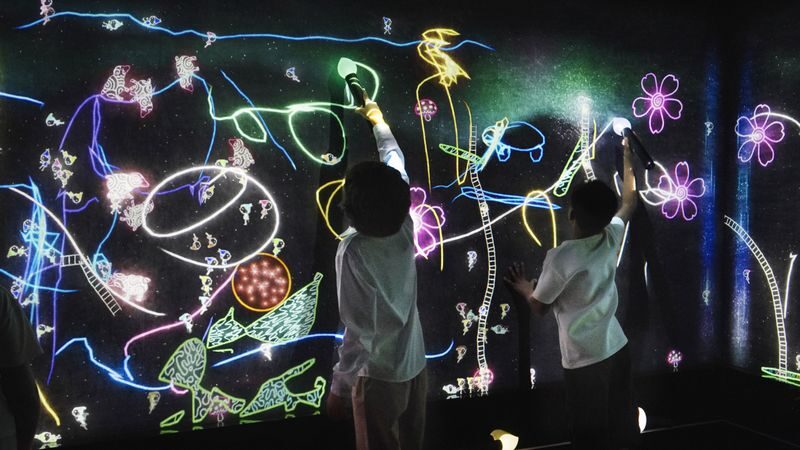
In Sketch Umwelt World, you draw an image and see it join a digital environment. This is a smart option for families because it gives children a clear role beyond watching. It can also appeal to adults who enjoy seeing a simple drawing become part of a larger scene. The Universe of Fire Particles Falling from the Sky offers another visual shift, with digital particles filling the room like a sky of falling sparks.
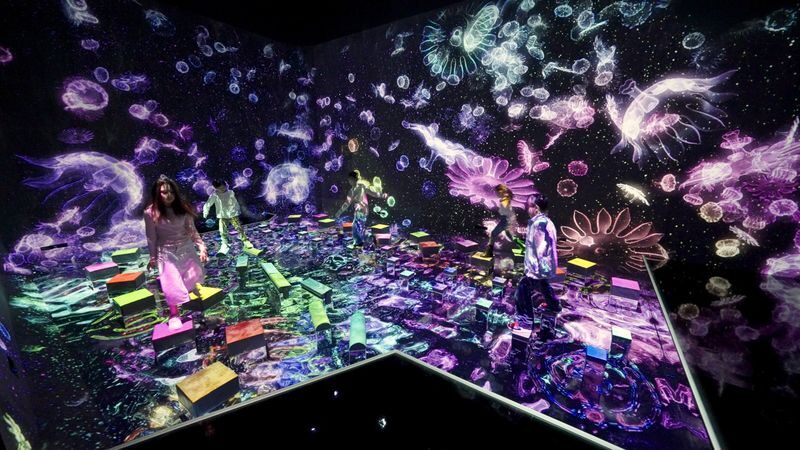
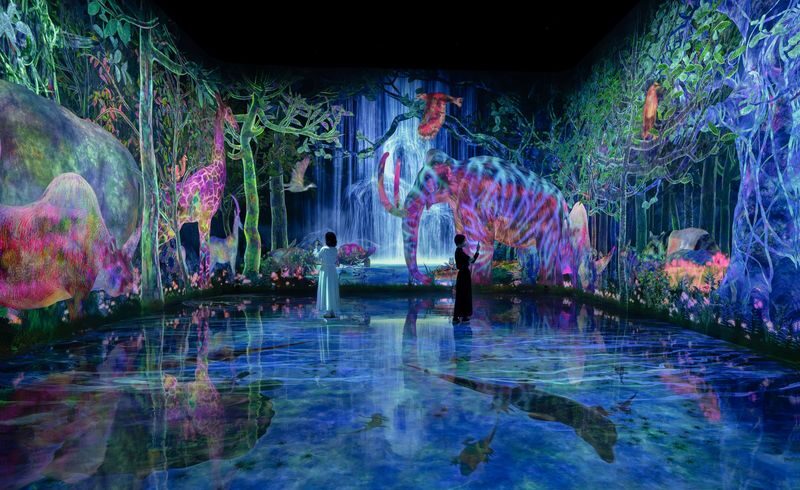
Other spaces include the Collecting Extinct Forest, where the theme turns toward disappearing creatures, and artworks built around flowers and changing light. Taken together, the rooms offer more than one kind of appeal. The strongest moments are often the ones that ask you to move, touch, draw, or simply stand still long enough for the image to change.
The practical side: bare feet, water, and mirrors
This is not a shoes-on, hands-in-pockets museum. You will need to take off your shoes before entering the locker area, and some installations are experienced barefoot. Small lockers are free, but they are compact: about 23 centimeters wide, 34 centimeters deep, and 37 centimeters high. Leave large bags elsewhere if you can.
Wear trousers if possible. One area has a mirrored floor, which can reflect underwear beneath a skirt or wide-hemmed pants. For the water section, bring a change of clothes for young children, or choose clothing you do not mind getting wet. If your clothes are damp, staff may ask you to change before continuing. Towels are available to rent, and you will need to dry off before entering the next artwork.
The dim passages and changing floors call for steady steps. Hold a child’s hand throughout the visit. Strollers must stay in the designated area, and the facility has no re-entry after you leave, so take care of bathroom, snack, and packing needs before going inside. Outside food and drinks are not allowed.
Photography for personal use is allowed, but commercial recording and live broadcasts are prohibited. Some artworks use flashing lights and loud sounds. If you are sensitive to either, consider whether this is the right outing for you.
Getting there and planning your time
The address is 6-chome-1-16 Toyosu, Koto City, Tokyo. Shin-Toyosu Station, on the Yurikamome Line, is about a one-minute walk away. Shijoumae Station and Toyosu Market are roughly five minutes on foot, while Toyosu Station on the Tokyo Metro Yurakucho Line is about a ten-minute walk.
Choose a timed entry in advance. Admission is limited by time slot, and popular periods can sell out. Arrive at the time printed on your ticket and join the entrance line. Even with a timed booking, entry can take longer when the venue is crowded. The stated opening schedule is 08:00 to 22:00, with last entry at 21:00, but hours and closure dates can change. Check the official site before setting your day around the visit.
Allow one to three hours. One to two hours is a sensible plan for most people, but children may want to repeat activities or linger in the rooms they like best. Do not schedule a tight connection immediately afterward. A long entrance wait or a room you want to spend more time in can stretch the visit.
The attraction is close to Toyosu Market, so it can fit into a Toyosu day. A free one-hour parking ticket is included with the ticket package described here, but only on weekdays. To collect it, take your parking ticket and booking voucher to the first-floor General Information Desk at Urban Dock LaLaport Toyosu 1 between 11:00 and 19:00. Congestion may mean a wait, and a lost parking ticket cannot be reissued.
What the ticket costs, and which option makes sense
Tickets start at $26.55, though the price depends on the package and time slot. For that amount, you get more than a short photo stop: the ticket grants access to a group of distinct spaces that combine light, sound, movement, drawing, flowers, and water. If you enjoy interactive art, that variety can make the price feel worthwhile. If you mainly want a conventional art collection, or expect every room to be spacious and quiet, the value may be less clear.
There are several ticket choices. A standard admission ticket is the straightforward pick if you can commit to a selected date and time. The admission ticket with a Bic Camera discount coupon can be useful if you plan to shop there, but the coupon is an optional add-on selected at checkout, and only one is provided per booking. Its stated validity runs through December 31, 2026.
A Premium Pass is described as offering access without waiting and flexible entry during opening hours. Its main value is avoiding the queue at the entrance, especially when you have a packed Tokyo schedule. Do not assume it clears every line inside. Rooms can still be busy, and the pass is not a promise of an empty exhibition.
Other packages combine teamLab Planets with Tokyo Tower’s Main Deck or with Senkyaku Banrai Toyosu Manyo Club Onsen, which includes a foot bath and a free drink. These combinations can suit a day built around several attractions, but compare the added cost with what you actually want to do. Transport, meals, and drinks are not included in the basic admission ticket.
Tickets are valid only for the selected date and, where applicable, time. The voucher is needed to enter, all people under one booking must enter together, and the ticket is nonrefundable. Those limits make it worth checking your Tokyo schedule before you buy.





Who will enjoy it most
I would put teamLab Planets high on the list for families with school-age children, couples looking for an unusual shared activity, and anyone curious about digital art. The drawing activity gives children a hands-on task, while the water and light rooms offer visual rewards for adults. It can work for older visitors too, but the uneven floors, barefoot sections, and dark corridors deserve a little thought.
For small children, keep a close hold. The rooms are dim and can be crowded, which makes it easy to lose sight of a child for a moment. Children aged 0 to 3 enter free, but children aged 0 to 12 must be accompanied by a paying adult, with a maximum of three children per paying adult. Children’s tickets cannot be booked without an adult ticket.
Some people may find the mix of lights and sound overwhelming, and the exhibition can feel crowded at busy times. A few rooms are smaller than their dramatic names might suggest, and some installations end abruptly. If you have already visited another teamLab attraction, consider whether you want a second digital-art experience or would rather spend that time elsewhere in Tokyo.
The venue has limited wheelchair arrangements. Visitors using wheelchairs are asked to transfer to a venue wheelchair inside, and the number available is limited. Some areas are not accessible to pregnant women. Pets, including guide dogs, are not permitted. Check the official guidance before booking if you have specific access needs.
Should you book teamLab Planets?
Book it if you want art that asks you to move, play, and pay attention to your surroundings. The best parts are distinct enough to keep the visit from feeling like one long light show: the koi-filled water, the changing Crystal Universe, and the chance to watch your own drawing enter the digital world. For many families, those hands-on moments are the reason to go.
Think twice if crowds, dark rooms, bright flashing images, or wet feet are deal-breakers. The Premium Pass may save time at the entrance, but it will not make the rooms private. Check the hours, choose a time slot that fits your day, and wear practical clothes. With those details sorted, teamLab Planets can be a memorable change of pace from Tokyo’s temples, shops, and streets.
teamLab Planets TOKYO Ticket
“Purchasing teamLab Planets TOKYO Ticket Admission ticket + free Bic Camera on Klook has been a smooth and easy experience!”
FAQ
How long should I allow for teamLab Planets?
Plan for one to three hours. Many people can see the main rooms in one to two hours, while families or anyone who likes to linger may want longer.
What are the opening hours?
The stated hours are 08:00 to 22:00, with last entry at 21:00. Hours and closure dates can change, so check the official website before your visit.
Do I need to book a ticket in advance?
Yes. Tickets are sold for selected dates and time slots, and admission capacity is limited. Arrive at the time on your ticket, though you may still need to wait to enter.
Will I get wet?
You walk through water in one artwork, and the water can reach knee height for adults. Wear clothing that can handle a splash, especially for children, and consider bringing a change of clothes.
Can I take photos?
Personal photography is allowed. Commercial photography or video recording, and live broadcasting, are prohibited.
Is teamLab Planets suitable for children?
Yes. Children can take part in interactive rooms, including the drawing activity, but children aged 0 to 12 must be accompanied by a paying adult. Keep children close in the dim, busy spaces.
How do I get to teamLab Planets?
It is about a one-minute walk from Shin-Toyosu Station on the Yurikamome Line. Toyosu Station on the Tokyo Metro Yurakucho Line is about a ten-minute walk away.