Mount Fuji is a spectacular sight, but the real trick is seeing it before clouds swallow the summit. This private day trip gives you a driver-guide, your own vehicle, and room to shift the schedule when weather or traffic makes a change sensible.
I like two things most: the freedom to tailor the stops and the chance to see Fuji from very different settings, from a shrine approach to clear spring ponds and lakeside parks. Past guides including Afi, Rana, and Sam have also been praised for early starts, flexible pacing, and helping with family photos.
The trade-off is a long day, often 10 to 12 hours, with plenty of driving and many possible stops competing for time. Fuji can also hide behind clouds, so book for the region and its sights, not for a guaranteed mountain view.
- The details that matter before you book
- A private day built around Fuji, not a fixed bus route
- Chureito Pagoda and the shrine stops
- The 5th Station: closer to the mountain
- Oshino Hakkai and the lakeside views
- Hakone, Owakudani, and the ropeway option
- Caves, village history, and shopping detours
- What the private format does well
- Price, extra costs, and who gets the best value
- Practical points before you set off
- Should you book this Mount Fuji day trip?
- FAQ
- How long does the tour take?
- What is the price?
- Is the tour private?
- What languages are available?
- Where can pickup be arranged?
- Are lunch and attraction tickets included?
- Can I choose which places to visit?
- What should I bring?
- Can I cancel for a refund?
- Is the tour suitable for people with mobility or health concerns?
- The Best Of Fujiyoshida!
- More Guided Tours in Fujiyoshida
- More Tours in Fujiyoshida
- More Tour Reviews in Fujiyoshida
- Not for you? Here's more nearby things to do in Fujiyoshida we have reviewed
The details that matter before you book
 1 / 2
 2 / 2
- Private van and pickup: Your group travels together in an air-conditioned vehicle, with pickup and drop-off available at eligible Tokyo accommodations.
- Two broad route choices: You can focus on Mount Fuji, or combine Fuji and Hakone. Ask which stops fit your chosen plan before setting out.
- A wide menu of sights: Pagodas, shrines, spring ponds, lakes, caves, a ropeway, an outlet mall, and Fuji’s 5th Station are among the possible stops.
- Timing can improve your chances: Several guides have suggested earlier starts to beat crowds and catch Fuji before cloud cover builds.
- The advertised price is per group: At $312 for up to five people, the base cost can be good value for a private day, but tickets and lunch are extra.
- The mountain is not guaranteed to appear: Cloudy weather has hidden Fuji on some outings, even when the rest of the day went well.
👉 See our pick of the 3 Best Tours In Fujiyoshida
A private day built around Fuji, not a fixed bus route
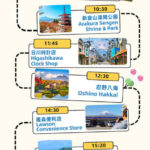
This tour is best understood as a private driving day with a choice of route, rather than a promise to visit every place in the long stop list. The Mount Fuji-focused option names the 5th Station, Chureito Pagoda, Sengen shrines, Oshino Hakkai, Lake Kawaguchi, and Oishi Park, among others. A separate Fuji and Hakone option includes sights such as Lake Ashi, Hakone Shrine, Owakudani, and the Hakone Ropeway.
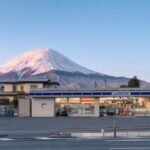
The detailed stop menu also includes Lake Yamanaka, two lava caves, the Mt. Fuji Panoramic Ropeway, Gotemba Premium Outlets, and the familiar Lawson near Kawaguchiko Station. With a 10 to 12 hour day and substantial driving from Tokyo, it would be unwise to assume you can fit every stop into one outing. Tell the provider what matters most and confirm the actual route, especially if you have your heart set on both Fuji and Hakone.
That flexibility is the tour’s chief advantage. You are not tied to a large group’s pace, and you can ask to spend longer at one stop or skip another. Families have found this useful: guides have adjusted schedules for children, provided a child seat when requested, and made time for breaks. The private setup also gives you a calmer way to cover a broad region than trying to link multiple sights by public transport in one day.
You can also read our reviews of more guided tours in Fujiyoshida

Chureito Pagoda and the shrine stops
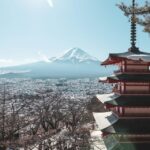
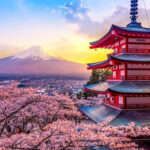
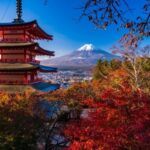
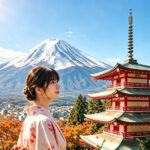
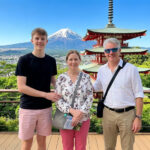
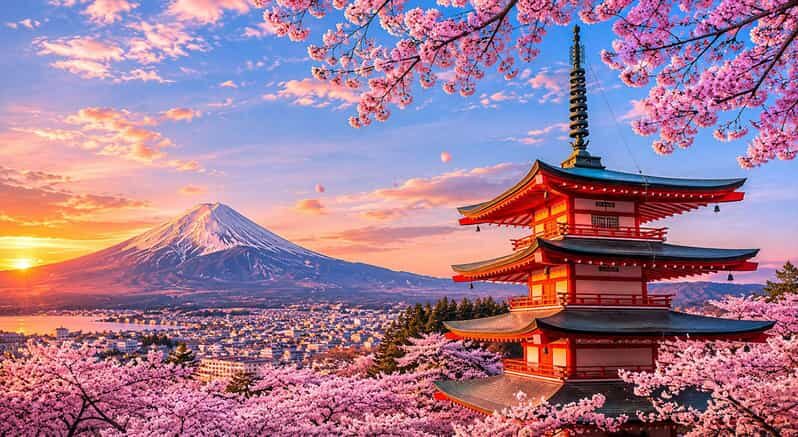
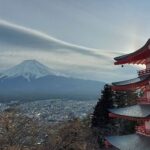
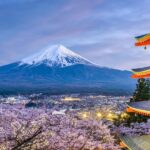
Chureito Pagoda is the classic opening image: a red pagoda, Mount Fuji beyond it, and cherry blossoms or autumn leaves in the right season. It is one of the best-known views in Japan for good reason. You get a strong sense of Fuji’s scale and the way the mountain anchors the surrounding area.
The pagoda is part of the Arakura Fuji Sengen Jinja area. The stop list allows time to visit the shrine and pagoda separately, but the day’s pace depends on your chosen route and conditions. Wear comfortable shoes, as the experience includes walking. If you want this view, ask your guide to make it a priority rather than treating it as one item in an overfull checklist.
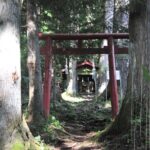
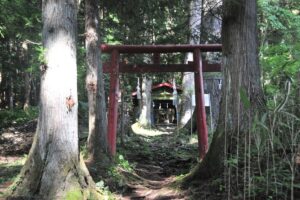
The route may also include Kitaguchi-hongu Fuji Sengen Shrine and Kitaguchi Hongo Fuji Shrine. The supplied plan names both, along with Sengen Shrine. These sacred sites add a different note to the day: Fuji is not only a dramatic peak for photographs, but a mountain with a long place in Japanese worship and pilgrimage. Allow your guide to explain what is included at each stop, since the names and route options can be easy to mix up when planning.
The 5th Station: closer to the mountain
At about 2,300 meters, Mount Fuji’s 5th Station brings you above much of the surrounding terrain. The air is cooler and the views can stretch across the region when visibility cooperates. Small shrines and the sense of being high on the mountain make this stop feel different from the distant lakeside viewpoints.
This is a highlight for anyone who wants to experience the mountain itself, not just photograph its outline. But access and the day’s schedule matter. The tour information lists a separate Mount Fuji entrance charge of ¥2,800, so check whether the 5th Station is part of your selected route and how that charge applies before you book. Bring weather-appropriate clothing, since conditions at elevation can differ from Tokyo.
Do not treat a visit to the 5th Station as a climb to the summit. The described stop is a sightseeing visit, with time to look around and enjoy the high-altitude setting. It is a useful close-up, especially if your trip does not include a longer stay in the Fuji region.
Oshino Hakkai and the lakeside views
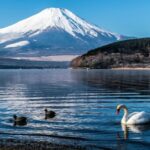
Oshino Hakkai offers a quieter change of pace. Its clear spring ponds are fed by snowmelt from Mount Fuji, and the village setting makes the water’s clarity the main attraction. The planned stop is short, around 30 minutes, with time to walk, look, and browse. If you want a longer pause here, raise that early with your guide.
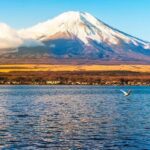
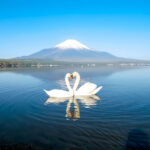
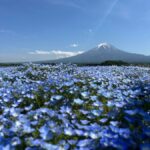
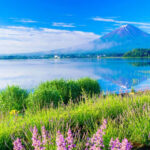
Lake Kawaguchi and Oishi Park provide another kind of Fuji view. At the lake, you get open water in the foreground; at Oishi Park, seasonal flowers frame the mountain when conditions and timing align. The plan allots about an hour at Lake Kawaguchi and 40 minutes at Oishi Park, though the final schedule can change. These stops are especially worthwhile when Fuji is clear, but they still offer a pleasant break from the van if the summit is clouded over.
Lake Yamanaka is another possible viewpoint, with time for a photo stop and a walk. The broader value of the lake stops is variety: Fuji does not look the same from every shore or park. A good guide can help you focus on the clearest view available that day rather than sticking rigidly to a photo stop whose mountain has disappeared.
More Great Tours NearbyHakone, Owakudani, and the ropeway option
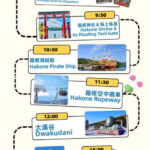
The Hakone route shifts the day from Fuji’s foothills to a volcanic area. Owakudani Valley is known for steaming vents, and the ropeway gives you an elevated view as you pass above the volcanic ground. The tour description also includes Lake Ashi, Hakone Shrine, and its torii gate. On a clear day, Fuji may appear beyond the shrine gate, but it is not something you can count on.
This is a compelling route if you want more than Fuji viewpoints. You get a change of scenery and a glimpse of the region’s volcanic character, along with the lake and shrine. The trade-off is time: Hakone is not a small add-on to a full Fuji circuit. Ask which Fuji stops will be dropped if you choose this route, and confirm that the ropeway and lake visit fit the day’s conditions.
The stop list gives about an hour each for the Hakone Ropeway and Owakudani, plus time at the shrine and torii gate. Those are useful planning estimates, not a guarantee that every named stop can be completed in a single day. A separate itinerary description also mentions a cruise on Lake Ashi, while the detailed stop list does not specify a cruise duration. Confirm the precise plan rather than assuming all Hakone activities are included.
You can also read our reviews of more private tours in Fujiyoshida

Caves, village history, and shopping detours
The itinerary’s less usual choices include Narusawa Ice Cave and Fugaku Wind Cave, each listed for roughly 30 minutes. They offer a break from the standard viewpoints and a chance to see features associated with the area’s volcanic past. The information provided does not spell out the cave conditions or ticket costs, so ask before you decide, particularly if enclosed spaces or uneven walking surfaces are a concern.
Iyashi no Sato Nenba, a restored thatched-roof village, is another possible stop. It gives the day a historic and rural dimension beyond the mountain views. Obuchi Sasaba, with its tea fields and Fuji views, is also described as a special option, though it is not included in the detailed numbered route. If either matters to you, name it when you customize the day.
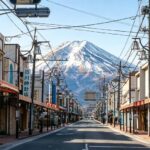
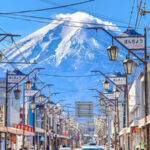
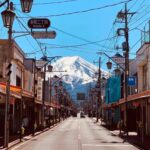
Gotemba Premium Outlets appears as a one-hour shopping stop in the detailed plan. This will suit you if shopping is part of the day’s purpose, but it takes time away from temples, lakes, or mountain viewpoints. The same goes for Honcho Street and the Lawson stop near Kawaguchiko Station: they may be useful or photogenic for some, but they are easy to leave out if your priority is scenery.
What the private format does well
The strongest practical benefit is having one vehicle and a guide who can adapt the day. The van is air-conditioned, and private transport, fuel, highway charges, parking, hotel pickup, and drop-off are included. You avoid coordinating separate train and bus connections between a large number of stops, and you can keep your group together.
The guide makes a difference when timing matters. Several guides, including Afi, Rana, Sam, Baba, and Veer, have been praised for punctuality, safe driving, useful suggestions, and adjusting the route to suit a family or individual interests. Some have helped find photo spots, taken pictures, suggested lunch options, and advised on an early departure. These are good qualities to ask for when arranging the day, but your assigned guide may be someone else.
An early start is worth discussing. Some groups left around 6:00 or 6:30 a.m., while others arranged a pickup time that suited them. Early departures have helped avoid traffic and crowds and, on some days, caught Fuji before cloud cover. That is a sound strategy, not a weather guarantee. The driver’s waiting policy allows up to 60 minutes after the scheduled pickup time, but you should still be ready in the hotel lobby 10 minutes beforehand.
Price, extra costs, and who gets the best value
At $312 per group of up to five, the starting price works out to about $62.40 per person if all five seats are filled. That covers a full day of private transport and the driver-guide, plus fuel, highway costs, parking, and eligible hotel pickup and drop-off. For a family or small group, that can be a practical way to visit several places without arranging each connection yourself.
The price does not include lunch or attraction tickets. The Mount Fuji entrance charge is listed as ¥2,800, and other paid stops may add to the total. Ask which tickets apply to your specific route and whether the vehicle can accommodate your group comfortably. Groups larger than six can be accommodated for an additional cost.
This is less compelling for a solo visitor or a pair who are mainly seeking the cheapest way to see one viewpoint. It makes more sense when you value door-to-door transport, privacy, and the ability to choose where to spend your time. If you fill most of the vehicle, the per-person cost becomes easier to justify.
Practical points before you set off
Pickup is available at accommodations in Tokyo’s 23 wards and the listed surrounding area, including Nakano. Airport and port pickup are not available. Tokyo and Chiba appear as pickup and drop-off options, so confirm the exact address and service area before booking.
Bring comfortable shoes, a camera, cash or a credit card, and clothing suited to the weather. Lunch is not included. The activity is described as wheelchair accessible, but the day involves walking at several stops; contact the provider in advance about mobility needs or other access requirements.
The activity information says the tour is not suitable for pregnant people, people with vertigo, or people with high blood pressure. It also gives overlapping age restrictions, listing people over 70, 80, and 95 among those not suited. Since those thresholds conflict, ask the provider directly if age or health is a concern.
Should you book this Mount Fuji day trip?
Book it if you want a private, flexible day and your group would rather spend its energy looking at Fuji than figuring out regional connections. It is especially useful for families, small groups, and anyone hoping to combine several kinds of stops in one outing. Choose your priorities carefully, and agree on a realistic route before the van leaves Tokyo.
Skip it if you need a guaranteed view of Mount Fuji, want a slow visit to every named attraction, or are uncomfortable with a long day in a vehicle. Clouds can hide the main event, and the many possible stops mean that customization is essential. For a group of up to five, though, the mix of private transport, flexible pacing, and varied viewpoints can make this a sensible use of a day outside Tokyo.
Tokyo: Mount Fuji Private Customized Tour With English Guide
FAQ
How long does the tour take?
The activity lasts about 10 to 12 hours. The day includes travel between Tokyo and the Fuji or Hakone area.
What is the price?
The listed price is $312 per group of up to five people. Groups larger than six can be accommodated for an additional cost.
Is the tour private?
Yes. Only your group participates in the private tour.
What languages are available?
The listed languages are Japanese, English, and Hindi. The tour includes an English-speaking driver.
Where can pickup be arranged?
Pickup is available at eligible accommodations in Tokyo’s 23 wards and the listed surrounding area, including Nakano. Airport and port pickup are not available.
Are lunch and attraction tickets included?
No. Lunch and tickets are not included. A Mount Fuji entrance charge of ¥2,800 is listed.
Can I choose which places to visit?
The tour is described as customizable, with separate Mount Fuji and Mount Fuji plus Hakone route options. Confirm your preferred stops and the final route with the provider.
What should I bring?
Bring comfortable shoes, a camera, a credit card, cash, and weather-appropriate clothing.
Can I cancel for a refund?
You can cancel up to 24 hours in advance for a full refund.
Is the tour suitable for people with mobility or health concerns?
The activity is described as wheelchair accessible, but you should tell the provider about mobility needs in advance. It is listed as unsuitable for pregnant people, people with vertigo, and people with high blood pressure.
You can check availability for your dates here: