Asakusa packs old Tokyo into a compact walk: a huge red lantern, temple incense, a Shinto shrine, snack stalls and casual drinking lanes all sit within a few streets of one another. This two-hour guided tour connects those sights with explanations of local beliefs and daily life, then ends with a view of Tokyo Skytree above the historic district.
I like two things in particular: the guide explains how to approach a temple and shrine, so you can take part with more confidence, and the route leaves the main shopping street for quieter Denboin Street and Hoppy Street. Guides such as Naomi, Yuka, Karin, Momo and Issei are often singled out for clear explanations, useful food tips and a friendly manner.
One consideration: two hours is enough for an introduction, not a leisurely temple visit or a proper shopping session. Food and souvenirs cost extra, so bring cash and plan more time afterward if you want to browse or sit down to eat.
- At a glance: Asakusa in two hours
- Starting at Kaminarimon, Asakusa’s grand entrance
- Nakamise Street: snacks, sweets and souvenir stalls
- Senso-ji: learn the customs behind the visit
- Asakusa Shrine: seeing Buddhism and Shinto side by side
- Denboin Street and Hoppy Street: two local moods
- The Skytree viewpoint: a final change of scale
- What the guide adds to the walk
- Is a good value?
- Who should book this Asakusa walk?
- FAQ
- How long is the Asakusa walking tour?
- How much does the tour cost?
- Where does the tour start?
- What places does the tour visit?
- What languages are offered?
- How large is the group?
- Is the tour wheelchair accessible?
- Should I bring cash?
- Can I cancel for a refund?
- The Best Of Tokyo!
- More Walking Tours in Tokyo
- More Tours in Tokyo
- More Tour Reviews in Tokyo
- Not for you? Here's more nearby things to do in Tokyo we have reviewed
At a glance: Asakusa in two hours
- Start beneath Kaminarimon’s giant lantern: Learn about the gate and the temple legend before heading into the shopping lanes.
- Get practical temple guidance: At Senso-ji, hear about incense, prayers, fortune slips and how to prepare before entering sacred spaces.
- Compare Buddhism and Shinto nearby: Asakusa Shrine offers a clear way to understand how Japan’s two major religions coexist.
- Try the local lanes, not just the main street: Nakamise has snacks and souvenirs; Denboin Street and Hoppy Street show different sides of the neighborhood.
- Finish with Tokyo Skytree in view: The final photo stop brings old Asakusa and modern Tokyo into one frame.
- Keep the group small: With no more than 10 participants, it should be easier to ask questions and follow your guide.
👉 See our pick of the 25 Best Guided Tours In Tokyo
Starting at Kaminarimon, Asakusa’s grand entrance
The meeting point is listed as the Sumitomo Mitsui Banking Corporation Asakusa branch. From there, the tour heads to Kaminarimon, the great gate that marks the approach to Senso-ji. Its giant red lantern and guardian figures make this a natural first photo stop, but the guide gives the scene more meaning than a quick picture can.
You’ll hear the story behind the temple’s founding and why the gate’s figures are there to protect the entrance. This is useful context for the rest of the walk: the lantern, the temple grounds and the everyday rituals all make more sense once you know what you’re looking at.
Kaminarimon is also a busy public landmark. Expect other people taking photos, and be ready to keep moving rather than linger for long. The tour allows about 15 minutes here, which is enough for an introduction and a few pictures, not a quiet pause.
You can also read our reviews of more walking tours in Tokyo


Nakamise Street: snacks, sweets and souvenir stalls
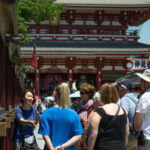
From the gate, the route follows Nakamise Street, one of Japan’s oldest shopping streets. Stalls sell local snacks, sweets and souvenirs, and your guide can point out what to try and which shops have served the area for generations.
This is a good place to ask for specific recommendations. Guides have helped visitors find matcha, ice cream, mochi and other local treats, and one useful food tip from a guide was monjayaki, a Tokyo-style savory dish. That kind of advice is a practical bonus, especially early in a Tokyo stay when you’re still working out what to eat and where to look.
The trade-off is that the tour moves on after roughly 15 minutes. You can sample something if timing allows, but this is not a dedicated food tour, and snacks and drinks are not included. If you spot a shop you want to browse, note its name and return after the walk. Bring cash for purchases.
Senso-ji: learn the customs behind the visit
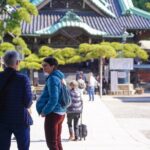
Senso-ji is the oldest and best-known temple in Tokyo, with a history stretching back more than 1,300 years. The tour spends about 25 minutes here, the longest stop on the route. That extra time gives your guide room to explain the temple’s founding legend and the meaning of the buildings and practices around you.
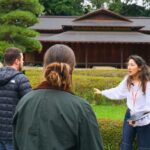
The practical instruction is especially useful. You’ll hear how to purify yourself before entering sacred spaces, how to offer a prayer, and what incense and fortune slips mean. If you’ve ever watched people follow a ritual and wondered what to do, this is the moment to ask. The aim is not to turn you into an expert in one visit, but to make the customs legible and help you take part respectfully.
Senso-ji is an active place of worship as well as a famous sight. It can feel crowded, and the tour’s schedule means you won’t have unlimited time to explore each corner or wait for a quiet photograph. I’d treat the guide’s explanations as the main value here, then plan to return on your own if you want a slower visit.
Asakusa Shrine: seeing Buddhism and Shinto side by side
Asakusa Shrine stands beside Senso-ji, giving the guide an unusually clear setting for explaining the relationship between Buddhism and Shinto. The two traditions have coexisted and blended in Japan for centuries, and the tour introduces key ideas such as kami, rituals and festivals without assuming you already know the vocabulary.
This is one of the most worthwhile parts of the walk for first-time visitors. Rather than treating every sacred building as the same kind of place, you get a simple framework for noticing differences and asking better questions. The guide also connects religious practices to daily life, which helps make the visit feel less like a list of landmarks.
The stop lasts about 15 minutes. It is an introduction rather than a full lesson in Japanese religion, but the setting makes the basic relationship easier to understand than an abstract explanation would.
More Great Tours NearbyDenboin Street and Hoppy Street: two local moods
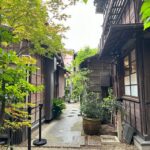
After the temple area, the route shifts into streets with a different pace and feel. Denboin Street is quieter and more refined, with artisan shops, traditional crafts and details tied to old Edo. It offers a break from Nakamise’s steady stream of shoppers, and the guide can point out corners or features you might otherwise walk past.
The listed stop here is about 15 minutes, with time for photos. Shops may catch your eye, but the schedule is not built for extended browsing. If you want to buy a craft or spend time looking around, save the address or make a note to come back.
Hoppy Street provides a sharper contrast. This retro-style lane is known for casual izakayas and local drinking culture, showing Asakusa as a neighborhood where people eat and meet, not only a temple district. The tour visits for about 15 minutes, and even in daytime the street gives a sense of its everyday character.
You won’t have time for a full meal or an evening out during this stop. Think of it as an orientation: you’ll see where the local food and drink scene is, then can decide whether to return later. The walk is particularly useful if you want to move beyond the obvious temple and shopping route.





The Skytree viewpoint: a final change of scale
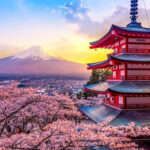
The final stop is a selected viewpoint where Tokyo Skytree rises above the historic cityscape. It’s a fitting end to a walk that has moved from temple grounds and old-style shop streets to the modern city beyond them. You get a chance for photos and a moment to take in how closely these different versions of Tokyo sit together.
The tour describes this as a hidden viewpoint, but the precise location is not specified. Treat it as a photo stop rather than a promise of a particular rooftop, admission ticket or extended view. The point is the contrast: a centuries-old district in the foreground, a modern landmark above it.
What the guide adds to the walk
The route is easy enough to follow on a map. The value lies in having someone explain what you’re seeing and point out places you might not choose on your own. Guides named for this experience include Naomi, Yuka, Karin, Momo, Issei, Jon, Alex and Sophia. Names may vary by departure, but the strongest recurring features are clear explanations, patience with questions and practical suggestions for food and shopping.
That local orientation can be especially helpful if you’ve just arrived in Tokyo. You can ask about temple customs, browse-worthy shops or where to find a particular sweet, then use the rest of your stay to follow up. Families with teenagers have found the walk engaging, and the small group limit of 10 makes it easier to hear the guide and take part in the conversation.
The tour is offered in English and Japanese. The walk is marked wheelchair accessible, and comfortable shoes are still a sensible choice for moving between the stops. Check the departure details when booking, since starting times vary.
Is $22 a good value?
At $22 per person, the price is reasonable for a two-hour guided walk covering Senso-ji, Asakusa Shrine, Nakamise Street, Denboin Street, Hoppy Street and a Skytree viewpoint. Entry to the temple and shrine is included as part of the walk, and there is no separate food or drink allowance, so budget extra if you plan to sample snacks or shop.
I’d judge the value less by how many landmarks you can tick off and more by whether you want context. If you’re comfortable exploring on your own and only want photos, you can walk through much of this area without a guide. But if you want to understand the rituals, distinguish the shrine from the temple and get practical neighborhood tips, the small-group format gives you a useful head start.
Two hours is a brisk introduction. The listed stops add up to nearly the full duration, before allowing for the walks between them, so there is little room for a long snack break or shopping detour. If browsing is part of your plan, leave another hour or more afterward. The tour offers free cancellation up to 24 hours ahead and a reserve-now, pay-later option, which can help if your Tokyo schedule is still changing.
Who should book this Asakusa walk?
Book it if you’re new to Tokyo, curious about how Japanese religious customs work, or keen to see more than the busiest temple approach. It also suits anyone who wants help finding good local food and shops without spending half a day on a food tour.
Consider skipping it if you prefer to set your own pace, spend a long time in shops, or linger at each temple. You can visit the main sights independently, but you’ll need to do your own research to get the cultural explanations and neighborhood recommendations.
For most first-time visitors with two hours to spare, I’d book the walk and keep the rest of the afternoon open. Follow the guide through the temples and side streets, then return to Nakamise or Hoppy Street when you can stop without watching the clock.
Asakusa Walking Tour: Temples, Traditions, and Back Streets
FAQ
How long is the Asakusa walking tour?
The tour lasts two hours. The route includes guided stops at Kaminarimon, Nakamise Street, Senso-ji, Asakusa Shrine, Hoppy Street and Denboin Street, followed by a Tokyo Skytree photo stop.
How much does the tour cost?
The listed price is $22 per person. Food, drinks and souvenirs are not included.
Where does the tour start?
The listed starting location is the Sumitomo Mitsui Banking Corporation Asakusa branch.
What places does the tour visit?
The route includes Kaminarimon, Nakamise Shopping Street, Senso-ji Temple, Asakusa Shrine, Hoppy Street, Denboin Street and a viewpoint for Tokyo Skytree.
What languages are offered?
The live tour is offered in English and Japanese.
How large is the group?
The tour is limited to 10 participants.
Is the tour wheelchair accessible?
Yes. The activity is listed as wheelchair accessible.
Should I bring cash?
Yes. Bring cash for snacks and souvenirs, which are not included in the tour price.
Can I cancel for a refund?
You can cancel up to 24 hours in advance for a full refund. The activity also offers a reserve-now, pay-later option.
You can check availability for your dates here: