
The woman tying my obi pauses mid-wrap, shakes her head, and starts again from the beginning. Apparently I was breathing wrong. I am in a small studio two blocks from Kaminarimon Gate, wearing three layers I did not know existed half an hour ago, and I am about to step out into Asakusa dressed like a woman from a different century. She pulls the cord one more time, nods, and says “okay, now walk small.”
That small-step walk is the trade you make when you rent a kimono in Tokyo. In return you get a city that tilts toward you — shopkeepers bow a little deeper, strangers ask for photos, and the thousand cameras around Sensoji Temple all seem to find you. This guide covers how to actually book the rental, where to go, what everything costs, and which experiences are worth the money.
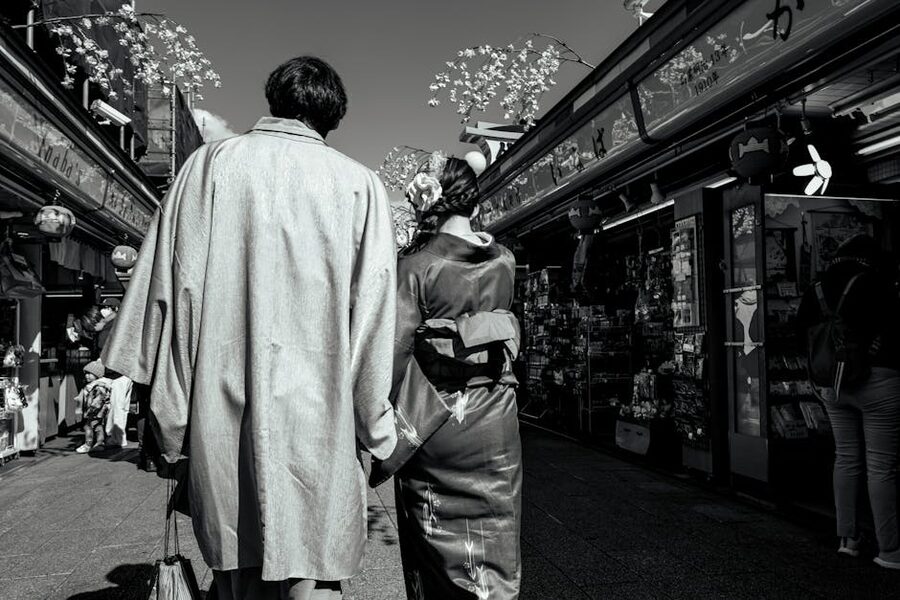
Short on Time? Book These Three
- Asakusa Kimono Dressing + Matcha — $56. The full experience with kimono selection, hair styling, and a proper matcha lesson. Book on GetYourGuide.
- Miu Kimono Rental Asakusa — $30. Best value for a photo-ready kimono day. All-day wear, hair included. Book on GetYourGuide.
- Tea Ceremony + Kimono at Maikoya — $55. The highest-rated Tokyo kimono experience with a real tea ceremony attached. Book on Viator.
- Short on Time? Book These Three
- How Kimono Rental Actually Works in Tokyo
- Price Ranges
- Kimono vs Yukata — It Matters for Your Booking
- Best Neighborhoods for Kimono Rental in Tokyo
- Asakusa — The Obvious Choice
- Harajuku — For the Modern Twist
- Ginza and Nihonbashi — The Grown-Up Choice
- Shibuya and Ikebukuro — For Convenience
- The Three Tokyo Kimono Rentals I Would Book
- 1. Tokyo Asakusa Kimono Dressing and Matcha Experience —
- 2. Tokyo Asakusa Miu Kimono Rental and Optional Photoshoot —
- 3. Tea Ceremony and Kimono Experience Tokyo Maikoya —
- When to Book — And When to Skip
- Seasons — Honest Advice
- Skip Kimono Rental If…
- Practical Details Most Guides Skip
- The Shoes
- The Bag
- The Hair
- The Makeup
- Photoshoots — Worth It or Not?
- Return Rules
- A Short History of Kimono in Tokyo
- Where the Rentals Come From
- Getting There and What to Wear Underneath
- Reaching the Asakusa Shops
- What to Wear to the Shop
- What to Leave at the Hotel
- Combining Kimono Rental With Other Asakusa Plans
- Is It Cheaper in Kyoto?
- The Honest Downsides
- One Last Thing — What Makes Tokyo Different
- Other Tokyo Experiences Worth Stacking
How Kimono Rental Actually Works in Tokyo
Every shop runs roughly the same loop. You arrive, you pick a kimono from a rack of anywhere between fifty and three hundred designs, staff dress you in a back room, a stylist does your hair with a traditional pin, and then you walk out wearing the whole thing for the rest of the day. You return before 5:30 or 6 p.m. depending on the shop.
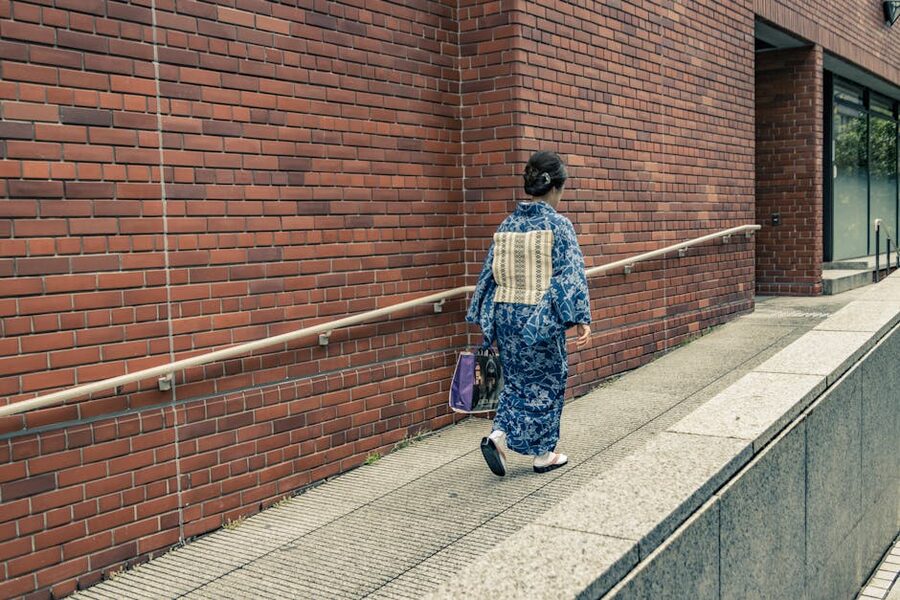
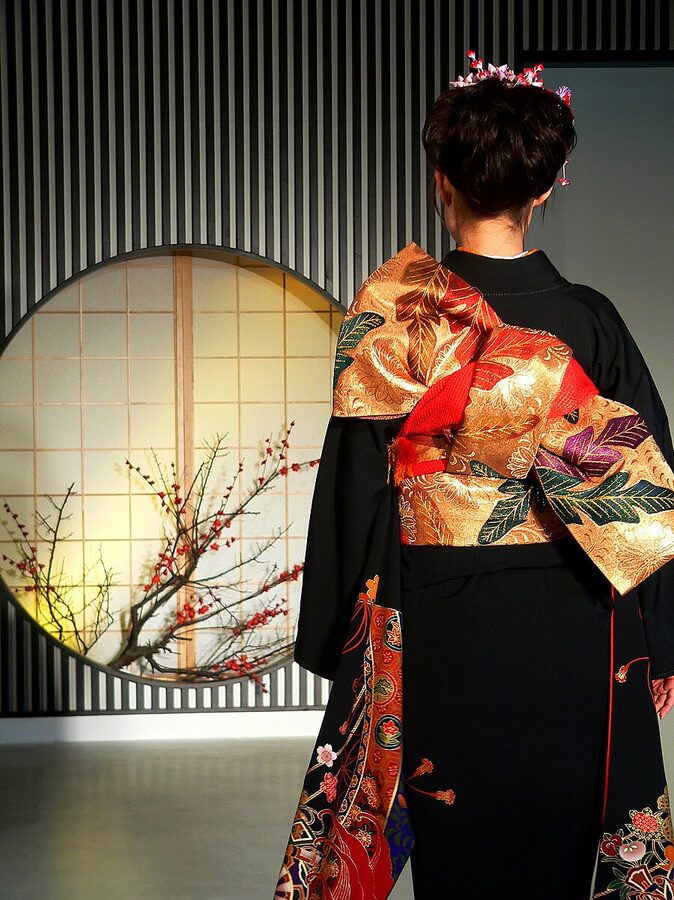
The layers are what most people do not expect. Under the outer kimono you have a juban (an under-robe), then a datejime belt to hold everything smooth, then the obi on top. Getting dressed takes 20 to 45 minutes depending on how fancy your outfit is. I timed mine at 34 minutes with hair, which is about average.
You can eat in a kimono but you cannot slouch in one. Most shops will tell you to sit at the edge of the chair so your obi knot does not press flat against the backrest. Stairs are fine. Trains are fine. Bending down to pet a cat is not fine — you will rip the hem.
Price Ranges
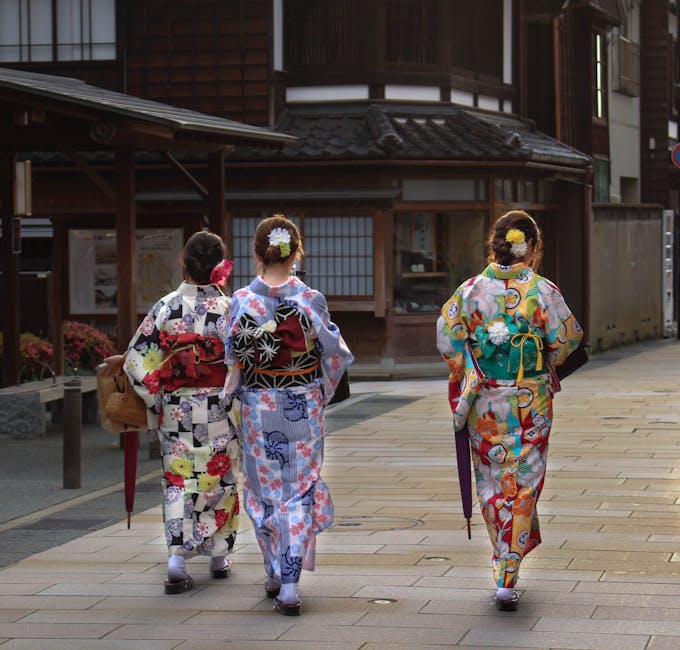
Tokyo kimono rental sits in a wider price band than Kyoto. At the low end, shops in Asakusa will dress you for ¥1,980 to ¥3,000 in a basic package with no hair styling. The sweet spot is ¥4,500 to ¥7,000 — a proper kimono with obi, tabi socks, zori sandals, bag, and a hair set. Above ¥10,000 you are paying for premium silk, furisode (long-sleeved formal), or added services like a photoshoot.
There is also an almost-hidden expense most guides skip: the deposit. Expect to pay ¥3,000 to ¥5,000 on top of your rental, refundable when you return the kimono clean and undamaged. It is cash or card, never added to the original booking fee, and it trips people up.
Kimono vs Yukata — It Matters for Your Booking
If you book a “kimono” experience between June and September, the shop may offer you a yukata instead. They are not the same garment. A yukata is a single-layer cotton robe — lighter, less formal, the thing Japanese people wear to summer fireworks festivals. A kimono is the layered silk-and-synthetic version, heavier, more formal, more expensive.
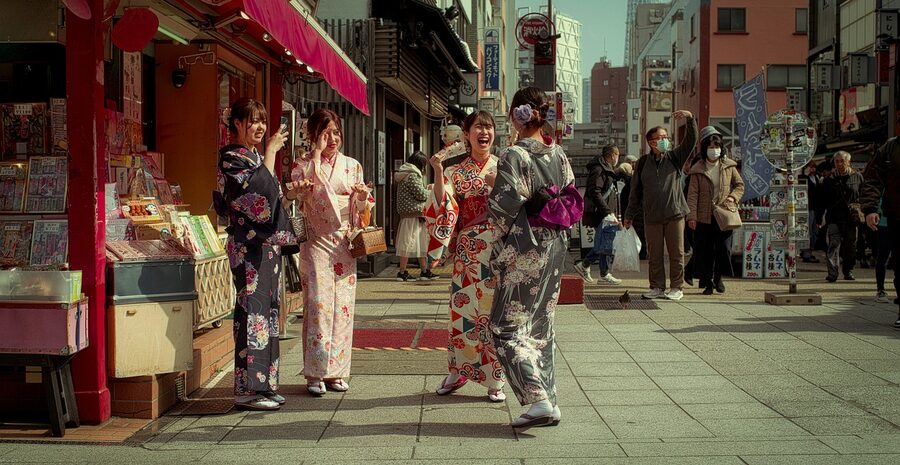
For a wedding photo or a shrine visit in formal clothing, book a kimono. For a summer walk through Asakusa or a fireworks festival in Sumida Park, book a yukata. Ask the shop which they recommend for your date and they will tell you honestly — most of them would rather you be comfortable than impressed.
Best Neighborhoods for Kimono Rental in Tokyo
Where you rent changes the whole day, because you are going to walk from the shop to wherever you want to take photos. Carrying a second bag with a kimono in it is not really an option — you are wearing everything you need.
Asakusa — The Obvious Choice
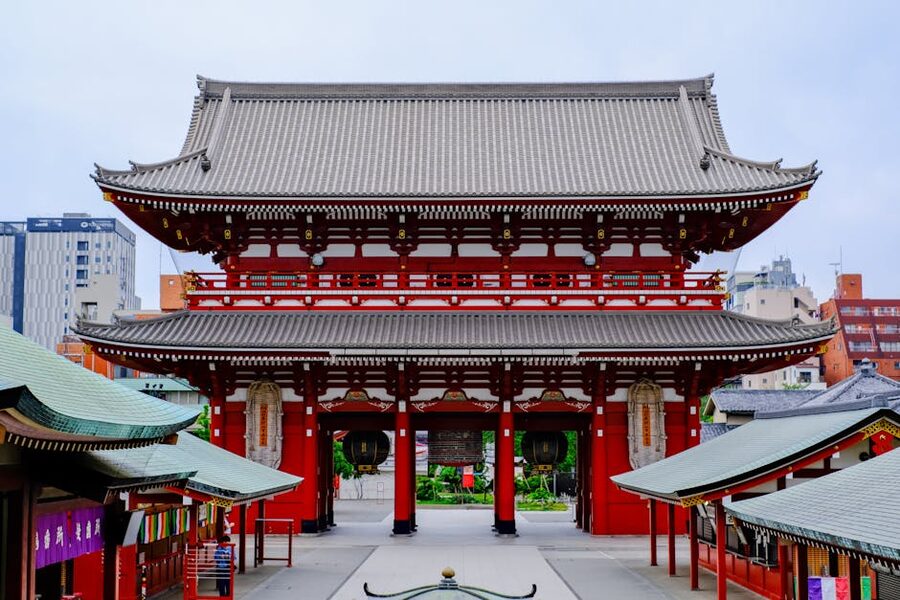
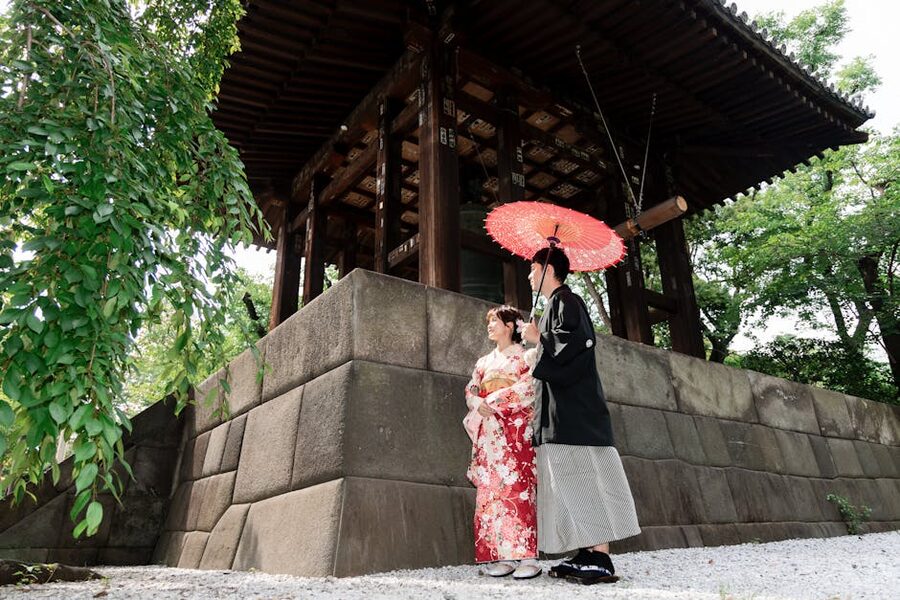
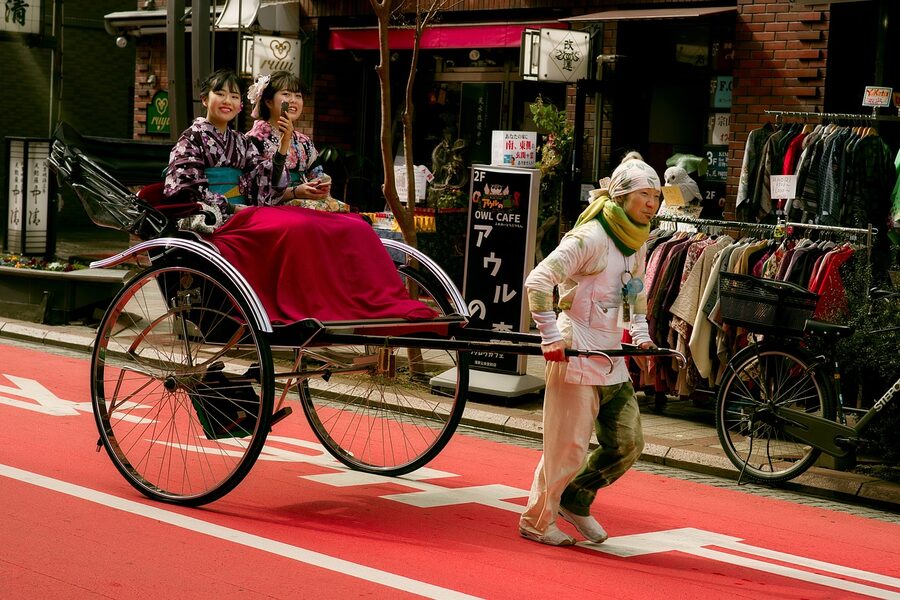
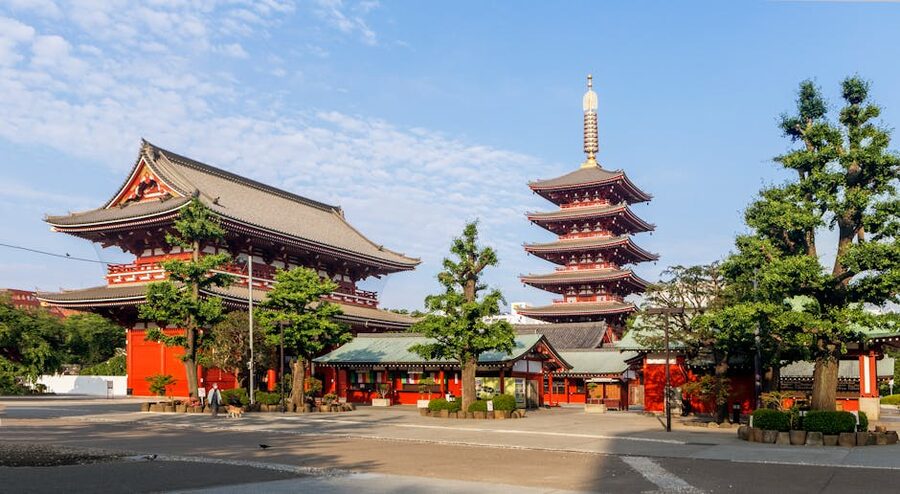
This is where most of the volume is. Asakusa has the highest concentration of kimono shops in the city, the cheapest prices, and the best ready-made backdrops. Within ten minutes of any shop near Kaminarimon you can reach the Senso-ji Temple grounds, the Nakamise-dori shopping street, Sumida Park along the river, and the wooden shopfronts of Dempo-in Dori. If you rent a rickshaw ride to go with your kimono, the Asakusa rickshaw tour pulls you through exactly these streets.
The downside is that Asakusa is busy. By 11 a.m. the Nakamise shopping street is packed three-deep in both directions and getting a clean photo takes patience. Book an early morning slot and be dressed by 10.
Harajuku — For the Modern Twist
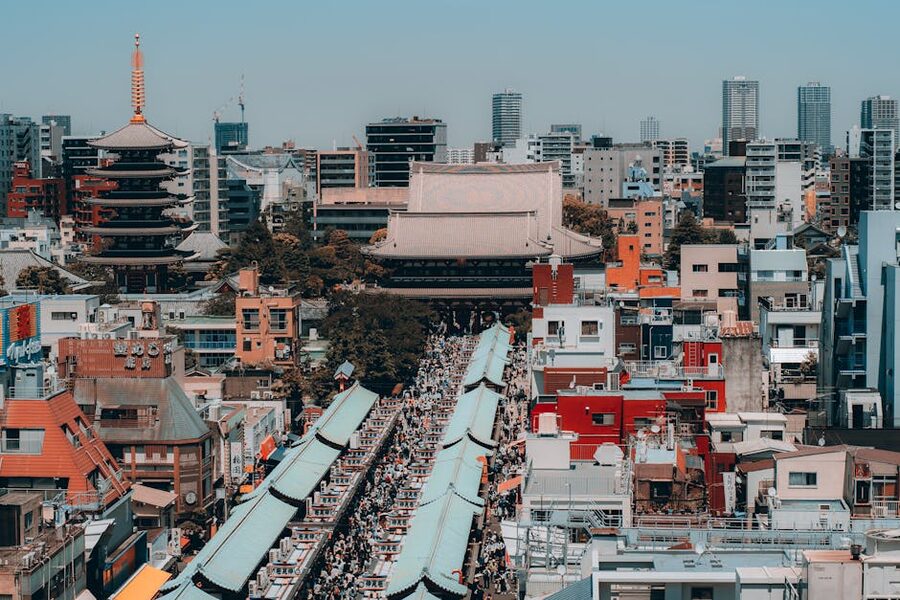
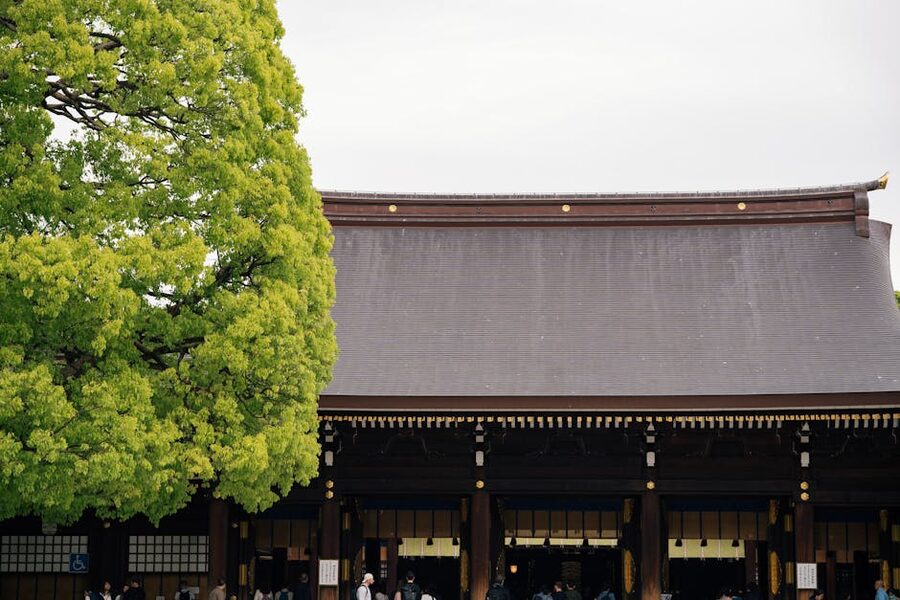
Harajuku shops (like Sakaeya) lean toward vintage and designer kimonos rather than the rental-house polyester you see in Asakusa. You pay more — usually ¥10,000 and up — but the craftsmanship is real and the photos have a different feel. Meiji Shrine is a 10-minute walk, and Omotesando’s tree-lined avenue reads gorgeously on camera.
Ginza and Nihonbashi — The Grown-Up Choice
Ginza has shops like Aki Kimono Rental, and Nihonbashi has Omotenashi Nihonbashi inside Coredo Muromachi. Both lean sophisticated — older fabrics, darker colors, more subdued patterns. This is where older Japanese women go for kimono rental when they need to attend a formal lunch. If you want a refined look rather than a Kyoto-tourist look, this is your district.
Shibuya and Ikebukuro — For Convenience
Not the most scenic rental locations, but useful if you are staying in either area and do not want to lose half a day commuting. The Aki Kimono Rental Shibuya branch is five minutes from the station, and you can walk to Yoyogi Park for photos before heading back. Prices here are middle-of-the-road — around ¥6,600 for a standard kimono package.
The Three Tokyo Kimono Rentals I Would Book
I have pulled the top three kimono experiences from our database — ranked by review count, cross-checked against what actually delivers. All three are in Asakusa, which is no accident. That is where the infrastructure is.
1. Tokyo Asakusa Kimono Dressing and Matcha Experience — $56
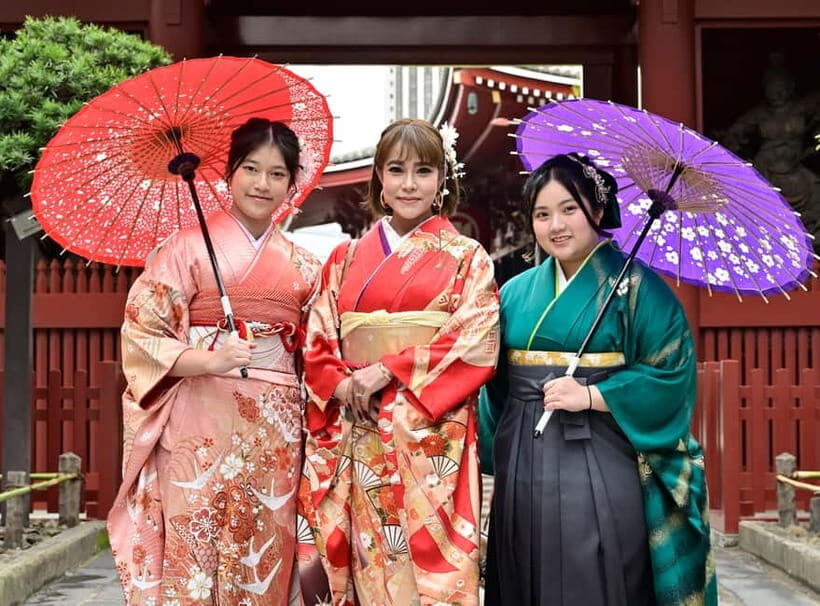
This one sits at the premium end of our recommendations, and I think it earns it. You get kimono rental plus a real matcha lesson — not a quick sip and a photo, but actual whisking and the tea vocabulary that goes with it. Our full review of this experience covers how the dressing time averages 45 to 70 minutes, which is longer than most — but that reflects the care rather than inefficiency. Pick this if you want a proper cultural experience and not just a costume.
2. Tokyo Asakusa Miu Kimono Rental and Optional Photoshoot — $30
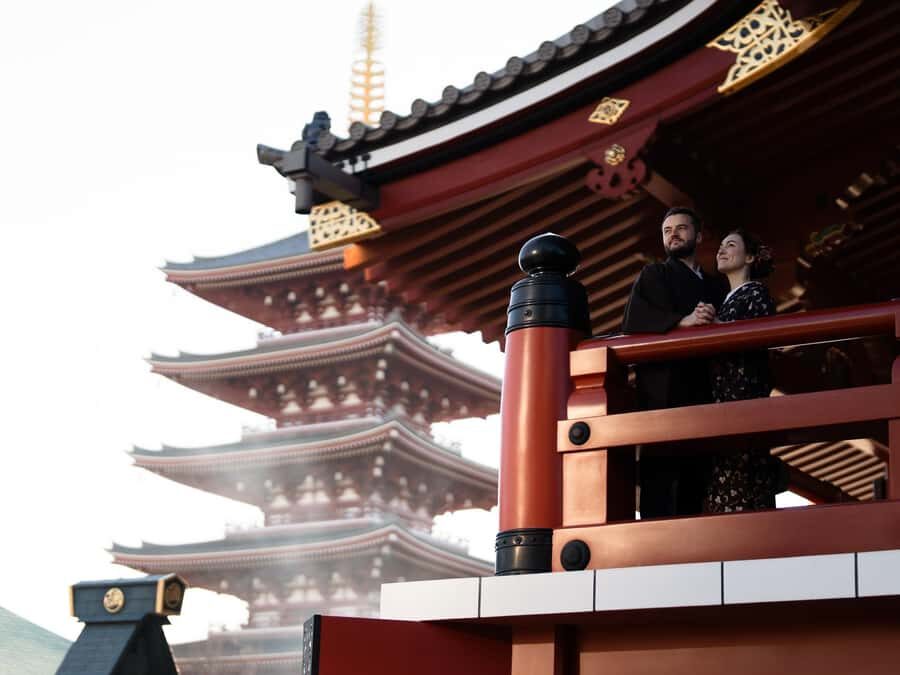
Best value in the city. Thirty dollars gets you the full kit with hair styling, accessories, and all-day wear until 4:50 p.m. The optional photoshoot add-on is worth it if you are going solo — 15 edited images taken around Sensoji for a fraction of what a professional photographer would charge. Our detailed review notes the 20-minute-per-person dressing time and the option to switch from yukata to kimono for an extra ¥2,000, which is genuinely rare.
3. Tea Ceremony and Kimono Experience Tokyo Maikoya — $55
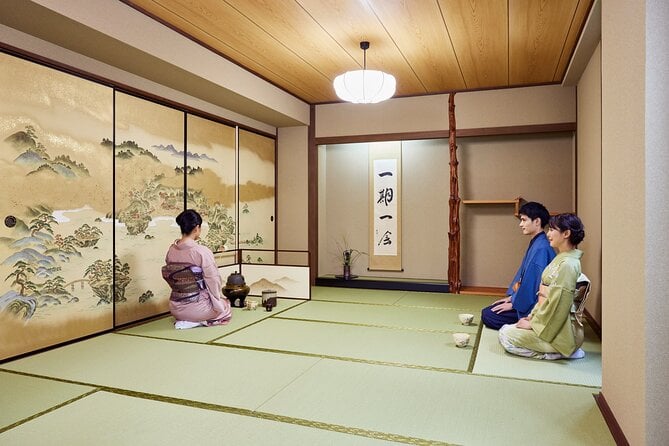
The highest-rated Tokyo kimono experience on the market, and one of the few that runs a full tea ceremony rather than a quick demonstration. Our full review walks through the tea ceremony protocol the instructors teach — the sequence of bows, the three-and-a-half sips, the reason the bowl is turned before drinking. Pick this if you want to understand what you are doing rather than just photograph it.
When to Book — And When to Skip
Kimono rentals fill up. If you are visiting during cherry blossom season (late March to early April) or peak autumn (mid-November), book at least two weeks out. For the rest of the year, a few days is fine. Same-day walk-ins work at most Asakusa shops on weekdays but you will get whatever kimono is left on the rack.
Seasons — Honest Advice
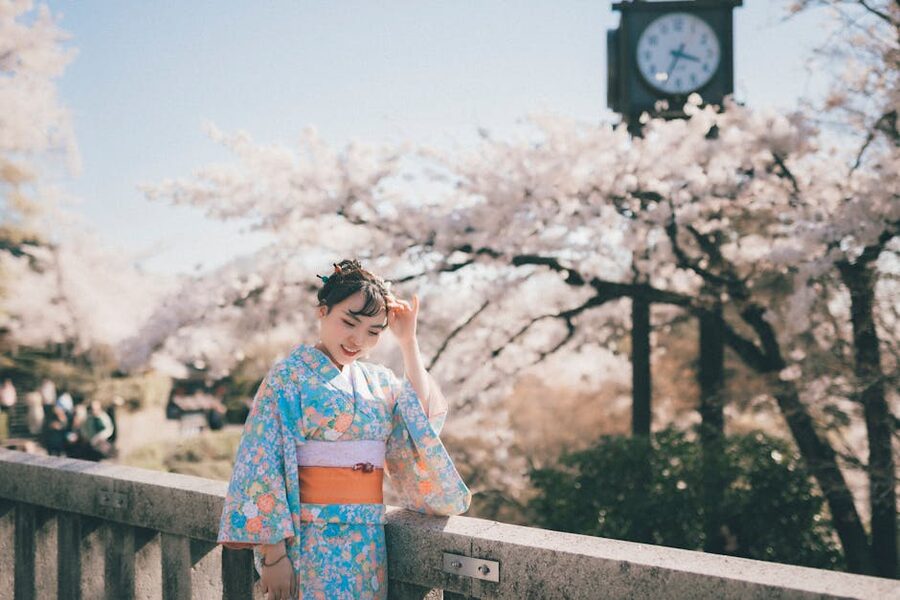
- Spring (late March–April): Peak kimono season. Sakura backgrounds are unbeatable. Shops get busy but weather is ideal — 15 to 20°C, perfect for layered silk.
- Summer (June–September): Too hot for a full kimono. Book a yukata and stick to shaded areas or air-conditioned shrine buildings. Hydrate aggressively.
- Autumn (October–November): The second-best season. Red maples at Meiji Shrine, golden ginkgo on Meiji-dori. Comfortable temperatures.
- Winter (December–February): Cold but clear. Most rental packages include a haori jacket (a lightweight outer layer) on request, for free. Ask for it.
Skip Kimono Rental If…
You have fewer than four hours in Tokyo total. You are doing intensive shopping. You have mobility issues that make small-step walking uncomfortable (the obi is firm enough to restrict your hip rotation). You are going in the height of summer without a yukata alternative. You will not take photos — half of the value is photographic.
Practical Details Most Guides Skip
The Shoes
Zori sandals with tabi split-toe socks are included. They are not meant for long walks. Your feet will hurt after two miles. Bring a small bag with regular sneakers and swap for the commute back from the photo-worthy areas — most shops let you store your bag on-site.
The Bag
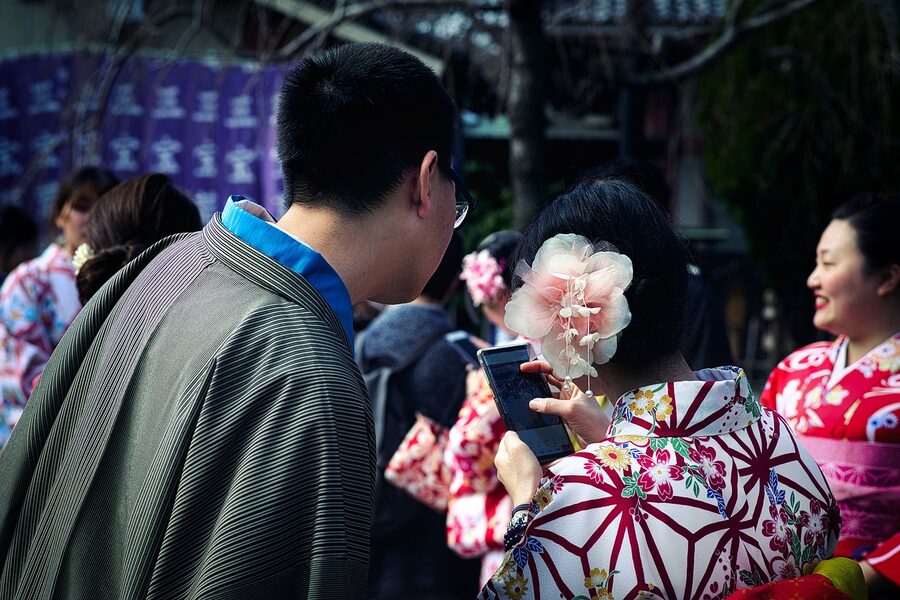
You are handed a small drawstring pouch (a kinchaku) with the rental. It holds a phone, a wallet, and nothing else. Leave anything larger at your hotel or at the rental shop. Rental shops always store bags for free.
The Hair
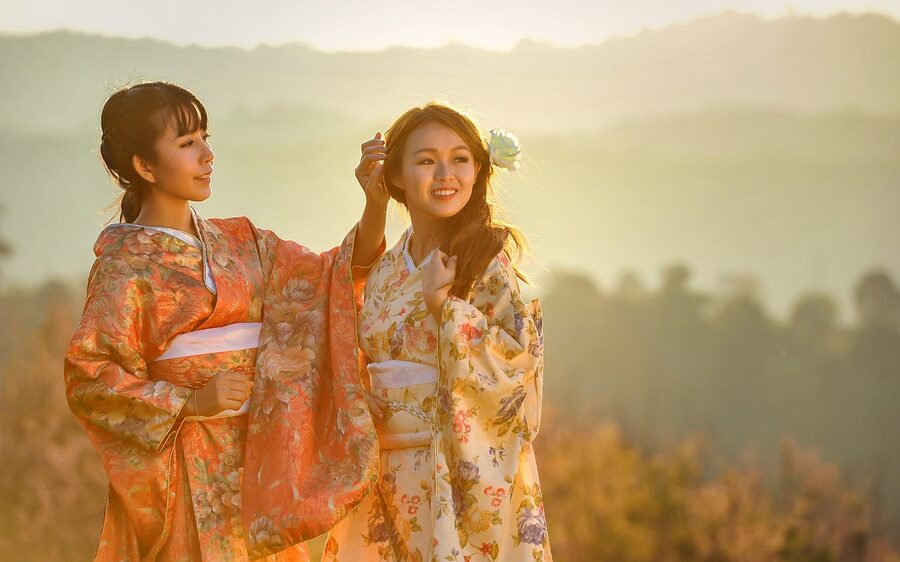
Hair styling is usually included in packages above ¥5,000 and costs ¥2,000 to ¥3,000 extra below that. The style is a half-up traditional arrangement with a flower or hairpin. It takes 10 to 15 minutes. Men usually get a simpler comb-through and a pin.
The Makeup
Not usually included. Bring your own or book a shop that offers it as an add-on (Maikoya does, Yae does, most others do not). If you are doing a photoshoot, arrive with your makeup already done.
Photoshoots — Worth It or Not?
An add-on professional photoshoot costs ¥8,000 to ¥22,000 depending on duration (30 minutes to 3 hours) and number of edited images. For solo travelers I would say yes — you cannot take decent shots of yourself in a kimono without help. For couples or groups, you can get away with a phone on a tripod and save the money. If you want something a step up from selfies, Miu’s photoshoot add-on is the best value in the city.
Return Rules
Return times are fixed and strict. Most shops want the kimono back by 5 or 5:30 p.m., with a handful going to 6 p.m. Overnight rentals cost an extra ¥2,000 to ¥4,000 and let you return by 11 a.m. the next day. Useful if you want dinner photos in kimono, but most people do not — walking around at night in a kimono is cold eight months of the year.
A Short History of Kimono in Tokyo
The kimono you are renting descends from a garment that was everyday Japanese wear as recently as the 1920s. Tokyo (then Edo) was the fashion capital of Japan from the 17th century onwards — Nihonbashi’s textile district rivaled Kyoto’s by the mid-Edo period, and the shops along what is now Chuo-dori set the trends.
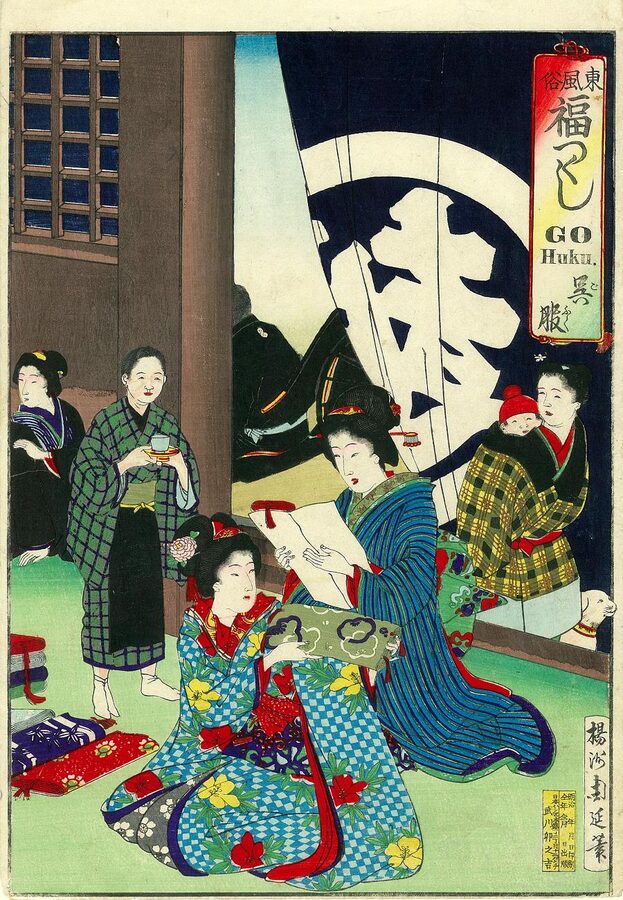
During the Edo period (1603–1868) Tokyo’s townspeople wore kimonos every day — dyed in patterns that signaled your district, your profession, your marital status, your season. Sumptuary laws forbade the merchant class from wearing bright silks, which is why many surviving Edo-period kimonos are deep indigos and browns on the outside, with extravagantly decorated linings that only the wearer knew were there. It was rebellion by stealth.
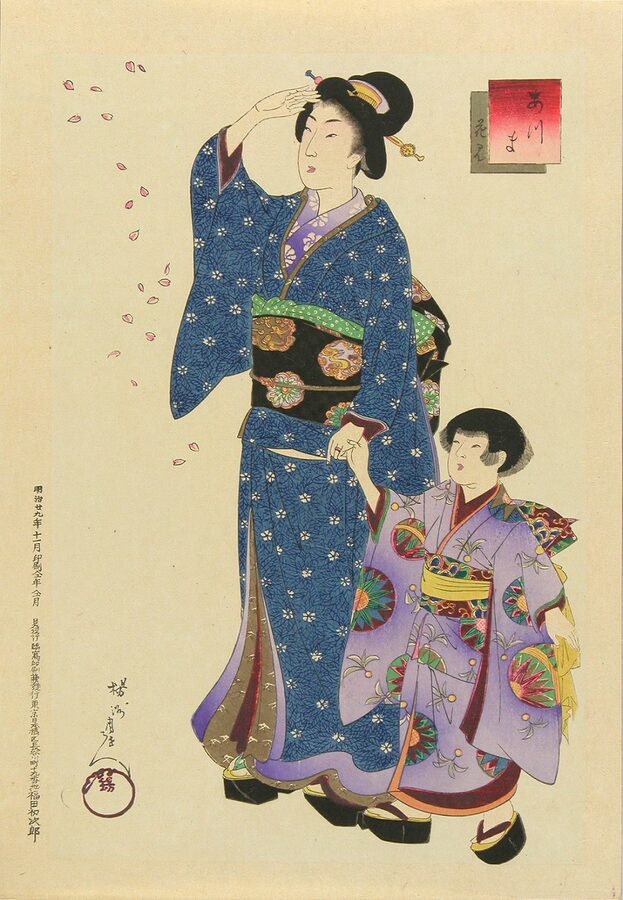
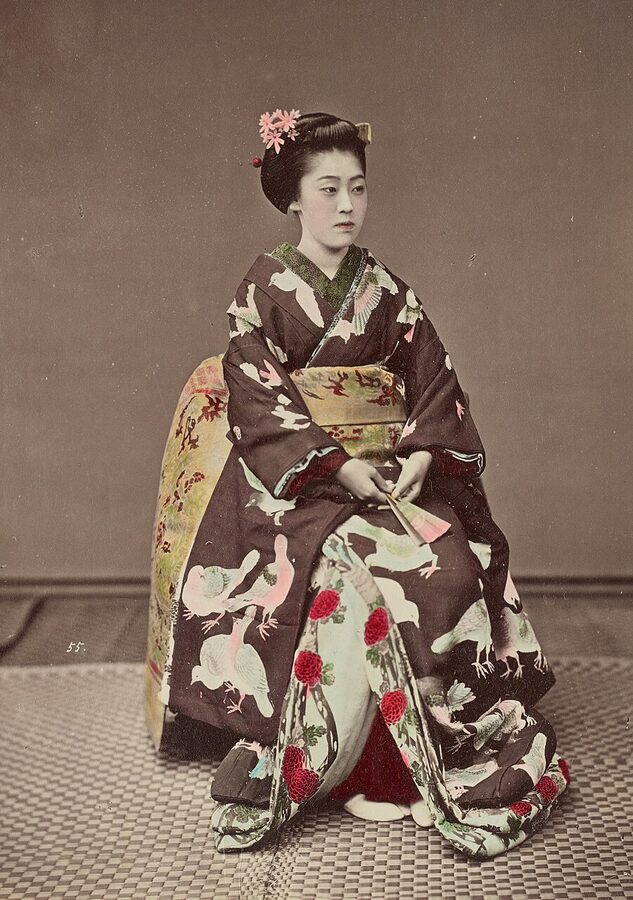
The Meiji Restoration in 1868 brought Western dress to Tokyo’s upper class almost overnight. Photographers like Kusakabe Kimbei sold hand-colored portraits of kimono-clad Japanese women to foreign tourists — tourists who were, in some way, the ancestors of the photo-ready experience you are now booking. The tradition of Westerners paying to wear kimono in front of a camera in Tokyo is older than most people realize.
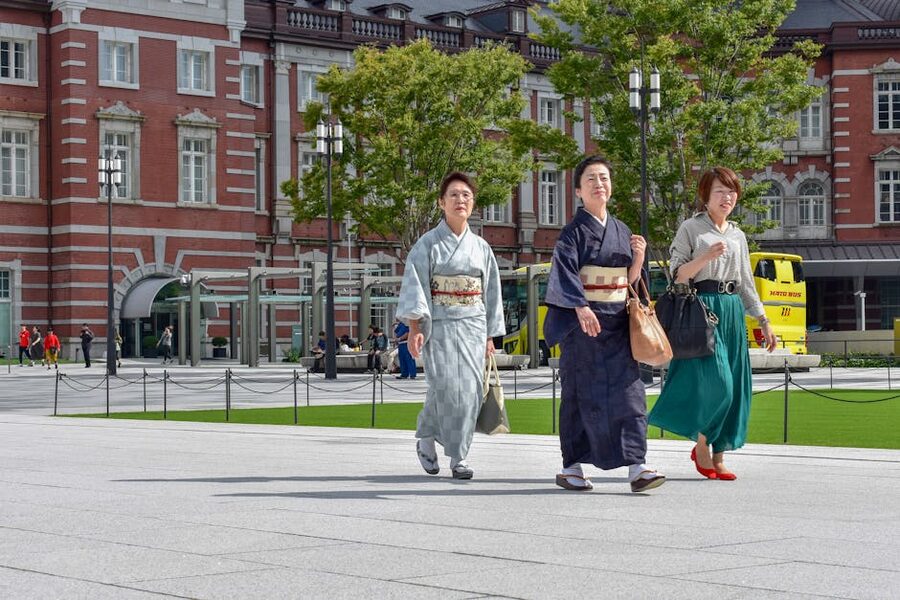
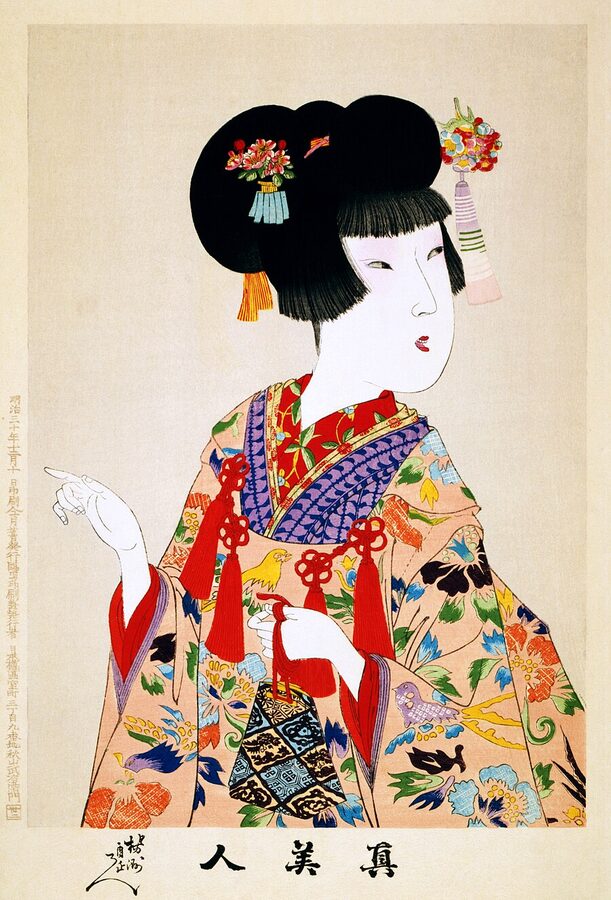
Kimono stopped being daily wear after the 1923 Great Kanto Earthquake and the post-war Westernization push of the 1950s. Today only about 1 percent of Japanese people wear kimono as daily clothing — mostly tea ceremony masters, traditional performers, and a few older women in neighborhoods like Kagurazaka. For most Japanese, wearing kimono is now a formal event thing: weddings, funerals, Coming of Age Day ceremonies, New Year shrine visits.
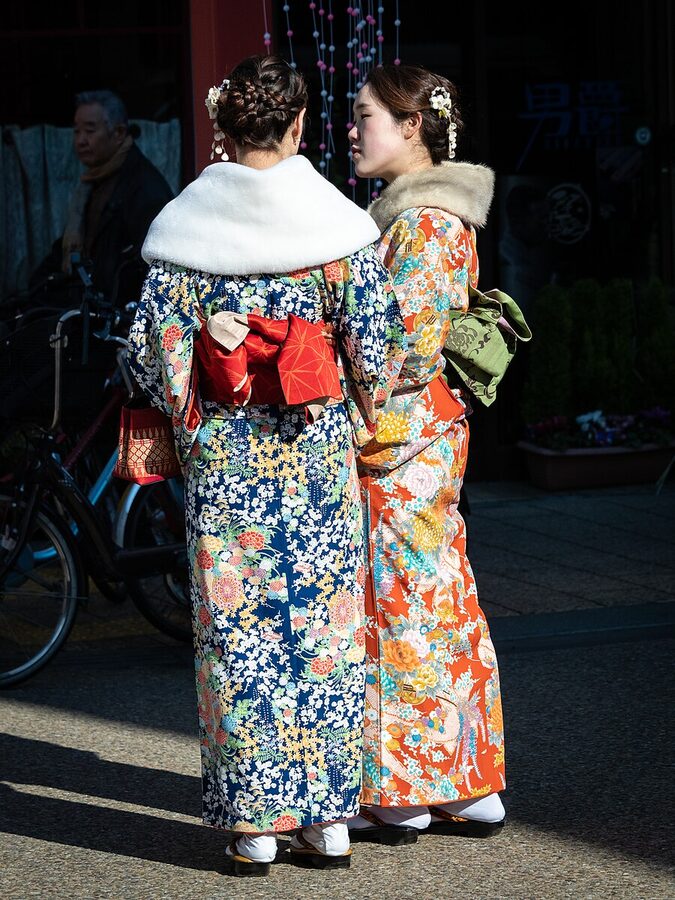
Which is why the rental industry exploded in the 2000s. Foreign tourists wanted the experience Japanese people no longer had in daily life, and young Japanese tourists wanted it back for a day. The shops you see around Asakusa today were almost all founded after 2005, and most after 2012.
Where the Rentals Come From
The kimonos on those Asakusa racks are not all new. Most shops run a mix of secondhand silk (from retired wedding outfits, estate sales, and Kyoto wholesale markets) and newly-made polyester. The silk ones are softer, heavier, and more expensive to rent. The polyester ones are easier to clean, colorfast, and what you will actually be wearing at the budget end of the price list.
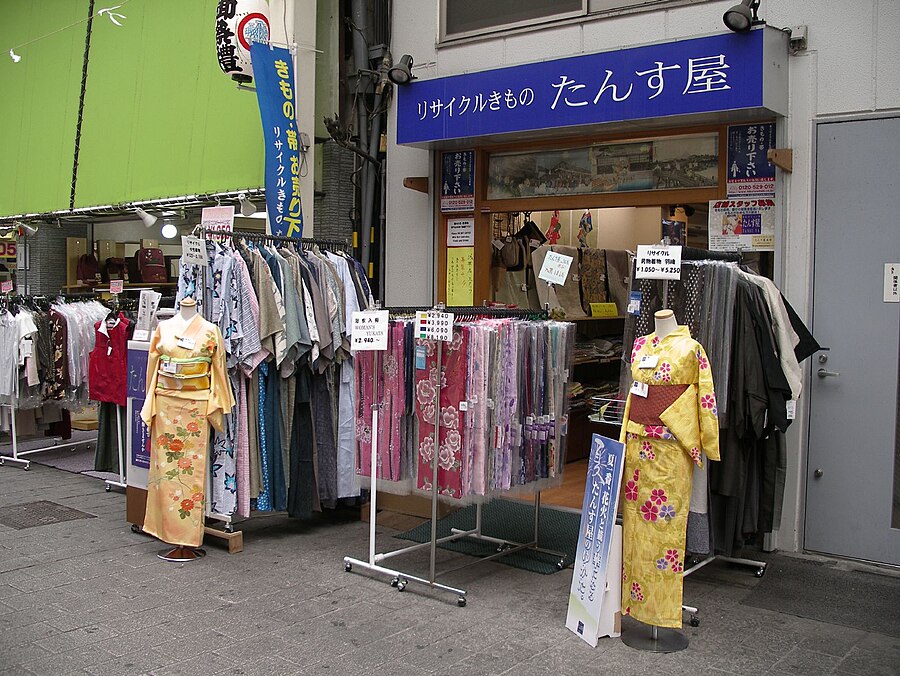
If you fall in love with a particular kimono during your rental — and it happens more than you would expect — ask the shop if they sell. Some of them do, at markup but reasonable. Secondhand kimono shops like Chicago (Harajuku) and several stores in Asakusa sell similar pieces starting around ¥5,000.
Getting There and What to Wear Underneath
Reaching the Asakusa Shops
Asakusa Station is served by the Ginza Line, Toei Asakusa Line, and Tobu Skytree Line. Exit 1 or Exit 4 drops you at Kaminarimon — every major rental shop is within a 5-minute walk from there. Google Maps walking directions work well. If you are coming from Shinjuku, the Marunouchi to Ginza line change takes about 35 minutes total.
What to Wear to the Shop
Come in clothes you can change out of easily. A T-shirt and loose pants are ideal. Skip pull-over tops that will mess your hair. Wear bra and underwear you are comfortable in — the shops provide a juban undergarment but you keep your own underwear on underneath.
Tights or leggings in winter are fine and actually encouraged by most shops — the kimono falls to the ankle and nobody will see, and you will be warmer. Short socks are fine in summer. Long hair should come in untied, so the stylist can work with it.
What to Leave at the Hotel
Big jewelry (catches on the fabric), watches (the obi covers your wrist anyway), backpacks (you will have the kinchaku pouch), heels or boots (zori sandals provided), makeup kit (do it at the hotel first or book a shop that includes it).
Combining Kimono Rental With Other Asakusa Plans
Half the value of a kimono rental is that it turns your whole Asakusa day into the photo opportunity rather than an awkward costume swap. Stack your plans accordingly.
The Sensoji walking tour takes about 90 minutes and gives you the history you will otherwise have missed while taking photos — it is a good morning activity in a kimono, since most of the walking is slow and covered. The Asakusa rickshaw tour pairs especially well with a kimono because the rickshaw puller already knows the best photo angles and will stop for them without being asked.
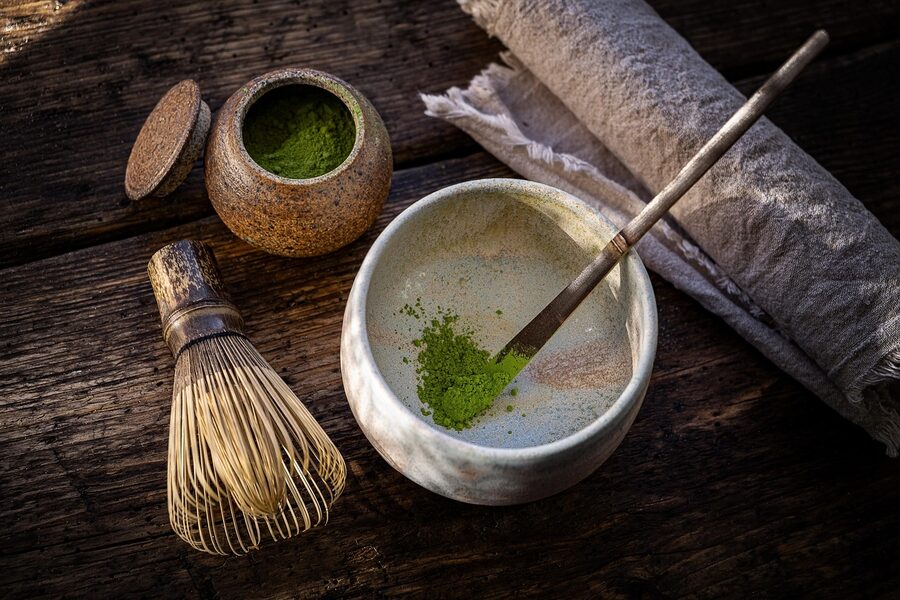
If matcha is part of your plan, pick one of the kimono-plus-matcha combo packages above rather than booking them separately. You save 20 to 30 percent and the shop coordinates the timing so you do not have to rush between appointments in sandals. A dedicated Tokyo matcha class is the better pick if you want a longer tea focus without the kimono logistics.
Is It Cheaper in Kyoto?
Yes, slightly. Kyoto’s kimono rental market is older and more competitive, and the baseline prices are about ¥500 to ¥1,500 lower per rental than Tokyo. If you are splitting time between the cities and want to do kimono once, I would probably choose Kyoto for the setting alone — Gion’s wooden machiya houses and Higashiyama’s stone lanes read more traditionally than Asakusa’s neon-and-temples mix.
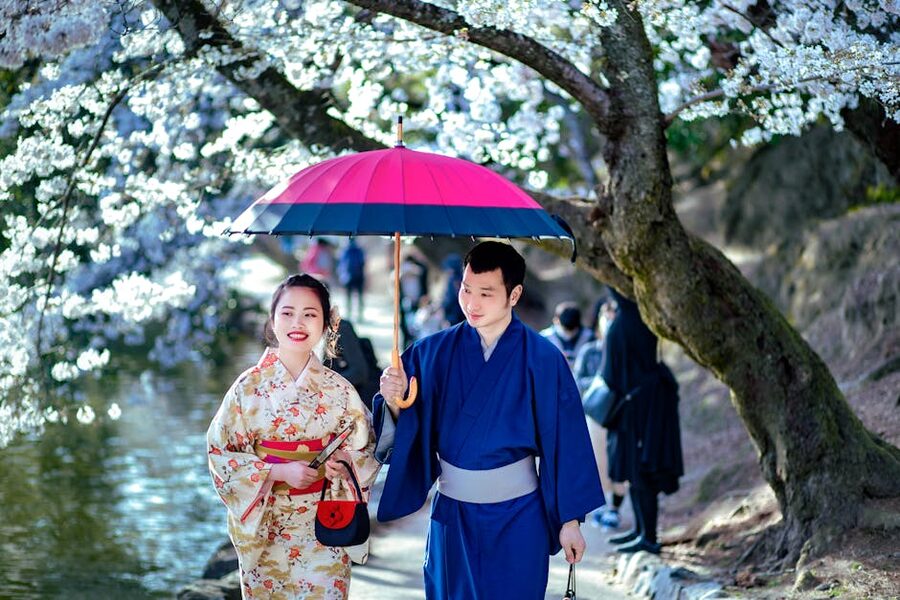
Our Kyoto kimono rental guide covers the full Kyoto market with the same shop-by-shop breakdown. If you are doing both cities and want the fullest experience, book Tokyo for the Asakusa atmosphere and Kyoto for a second day at the shrines and gardens.
The Honest Downsides
Nobody writes about the downsides. Here they are.
You will be photographed by strangers without asking, a lot. Some will smile and bow first, some will not. If you are shy about this, pick a less central neighborhood.
The kimono gets hot. Even in winter, after an hour of walking you are sweating inside three layers of fabric. In summer it is genuinely difficult. Drink more water than you think.
The obi is tight. It compresses your stomach enough that you cannot eat a big meal comfortably. Small snacks, yes. Full ramen bowl, no. Plan dinner for after you return the kimono.
The small-step walk is not optional. If you try to take normal steps the kimono hem will open up and show your leg, which looks wrong and may annoy the shop when you return. Your walking pace will be about 60 percent of normal — factor this into your photo-location planning.
The deposit is almost never refunded immediately if you pay by card. Expect it on your statement two to three business days later. This matters if you are at the end of a trip with tight cash flow.
One Last Thing — What Makes Tokyo Different
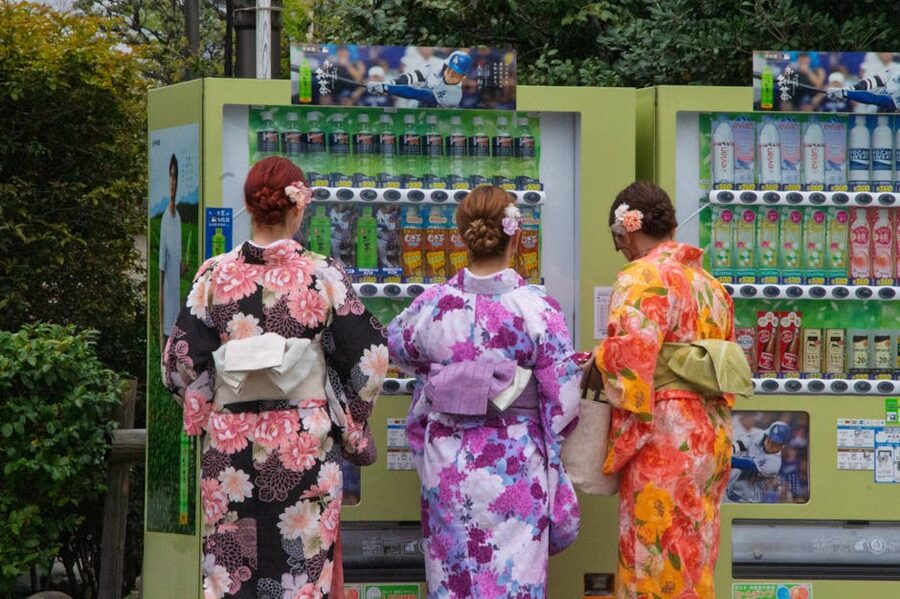
Kyoto is where the tradition is preserved in amber. Tokyo is where it lives as an actual working thing. You will see office workers in jeans walking past you while you wear a 200-year-old style of garment. You will take the same subway home as a salaryman in a business suit. A vending machine will sell you a canned coffee through fabric that was dyed by hand. The contrast is the point.
In Kyoto kimono rental is the day. In Tokyo it is an overlay on a normal day in a city that does not stop for you. Which one sounds more interesting is personal — I lean toward Tokyo because the juxtaposition is more surprising, but I have friends who disagree. Either way, the rental itself is straightforward. Pick a shop, show up, walk out different.
Other Tokyo Experiences Worth Stacking
A kimono day is often the anchor for a longer Tokyo trip, and the shops around Asakusa are within walking distance of several experiences that work well dressed up or not. If you have a second culturally-heavy day, the Samurai Restaurant Show leans into the dressing-up theme and has its own photo opportunities. For something quieter on the other end of the scale, a kintsugi workshop in Tokyo teaches you to repair pottery with gold — a craft that sits in the same century as the kimono you will be wearing. And if you are traveling with a family or want a private guide for the rest of the Asakusa day, the private Tokyo tour covers a full itinerary with pickup from your hotel, kimono or not. If you are adding a Kyoto leg, our sibling guide to Osaka matcha classes pairs well with a Kyoto kimono day as a low-key afternoon. Book the kimono first, then build the rest of the day around where it lives.