
You step out of the rental shop onto the Gion flagstones and the first thing you notice is the weight — two layers of silk, a stiff obi belt cinched just under your ribs, tabi socks gripping inside the zori sandals. The shuffle changes how fast you walk. Incense from a nearby shrine drifts past, someone in a matching kimono laughs three shops down, and for the next six hours you stop being a tourist in photos and start being one in them.
In a Hurry? Top 3 Kyoto Kimono Rentals
- Kimono Rental with Hairstyling and Accessories — $21 — the all-day, all-inclusive pick with the biggest review count. Check availability on GetYourGuide
- Kimono Rental — City Center Whole-Day — $19 — a 160-year-old house near the tea-ceremony district, cheapest of the reputable options. Check availability on GetYourGuide
- Hana Kimono Rental 1-Day — $29 — smaller-group, silk-forward, great for couples and photoshoot plans. Check availability on GetYourGuide
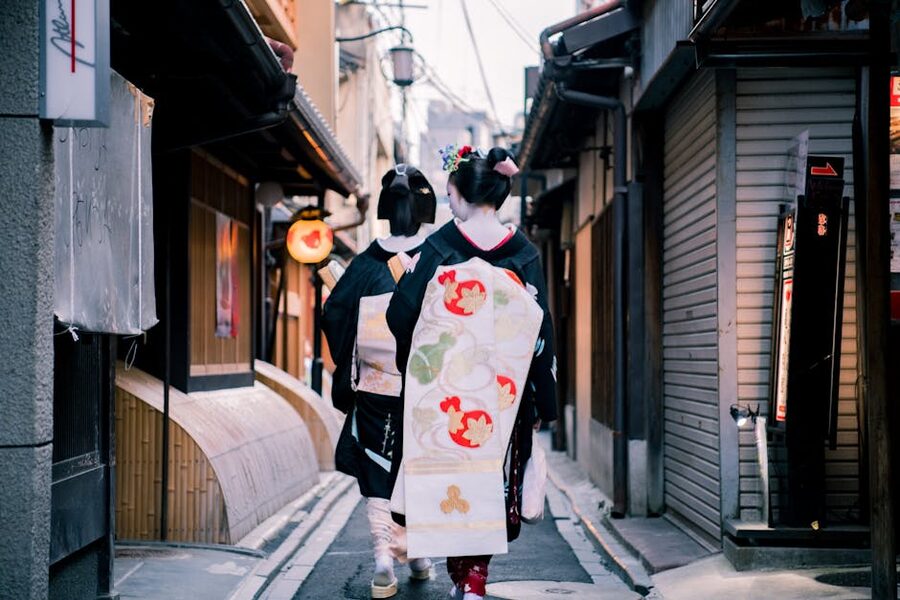
Kyoto is the one city in Japan where a rented kimono doesn’t feel like a costume — it’s what half the people in the tourist districts are wearing, locals included. What actually confuses first-timers isn’t the idea, it’s the booking: prices range from 1,500 yen to 15,000 yen, half the accessories are hidden charges, and the shop you pick decides whether your day runs smooth or turns into a logistical mess at 6pm with a bag of street clothes you can’t figure out how to retrieve.
- In a Hurry? Top 3 Kyoto Kimono Rentals
- How kimono rental actually works in Kyoto
- What it actually costs (and the sneaky bits)
- Where to rent — Gion versus elsewhere
- The 3 Kyoto kimono rentals worth booking
- 1. Kyoto Kimono Rental with Hairstyling and Accessories —
- 2. Kyoto City Centre Whole-Day Kimono Rental —
- 3. Kyoto Hana 1-Day Kimono Rental —
- What to book on top of the rental
- Best time of day and year to rent
- Things to know before you walk out the door
- Kimono versus yukata — which one are you actually renting?
- Before you book
- The rest of a Kyoto day in kimono
How kimono rental actually works in Kyoto
The basic flow is the same at every shop. You arrive, pick a kimono from a rack that has anywhere from 80 to 500 designs, get dressed by a professional (it takes about 30 minutes — kimono have no buttons and seven separate layers of tying), and walk out wearing the thing for the rest of the day. You come back before the shop closes, they unwrap you, and you change back into whatever you showed up in.
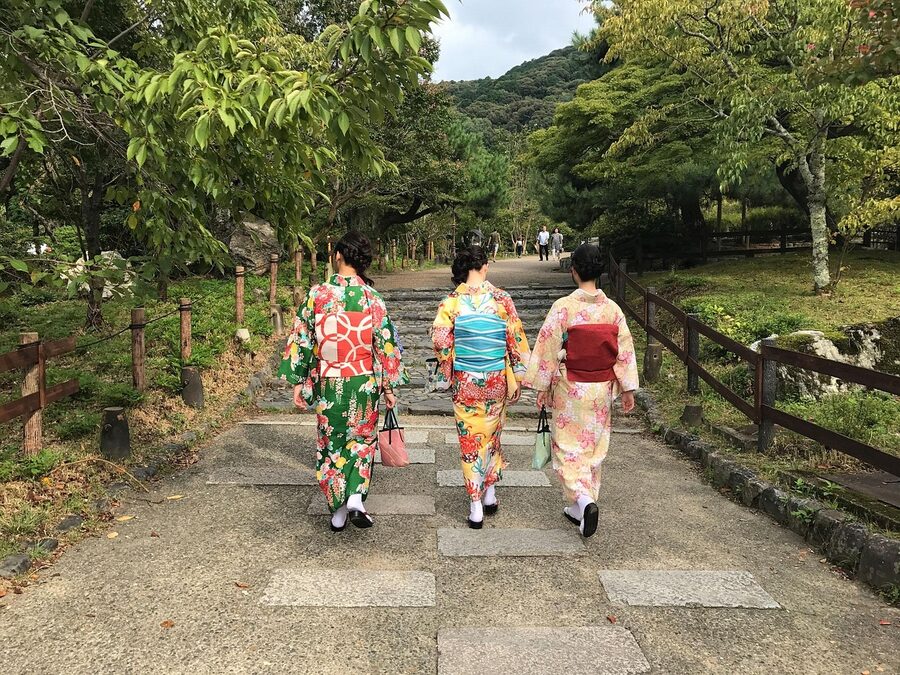
The typical rental window is 9am to around 5:30 or 6pm, depending on the shop. That’s the number I’d plan around. Some places will let you keep the kimono overnight for an extra fee, and a few even deliver it back to your hotel the next morning — nice on paper, less nice if your hotel is a 30-minute train ride from the shop. Most travellers stick with same-day return.
What it actually costs (and the sneaky bits)
The headline number you’ll see most often is 4,000 yen (roughly $27) for a full-day women’s kimono set with basic dressing. That’s the real-world average across the reputable Gion and city-centre shops. Budget chains advertise from 1,500–3,300 yen, but the low end almost always means a stripped-back set: fewer patterns to choose from, no purse, no hairpins, a plain obi, and accessories charged à la carte. A 1,500-yen rental quickly becomes 4,500 once you add the things you’d have assumed were included.
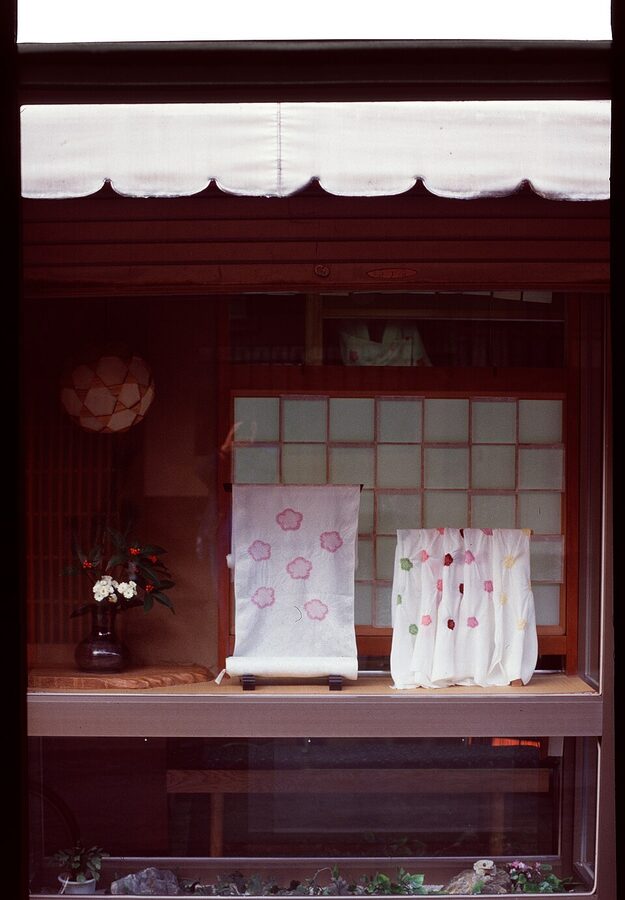
What’s usually included at a mid-tier shop: kimono, nagajuban (the cotton under-layer), obi belt, obi-jime cord, tabi socks, zori sandals, and a small clutch-style bag. What’s usually extra: hairstyling (about 1,500–2,500 yen), hair accessories, professional photoshoot packages (5,000–15,000 yen), premium silk kimonos versus polyester, and the half-price add-on a lot of shops offer for your partner to wear a haori and hakama. A complete couple’s set-up tends to land around 10,000–12,000 yen total.
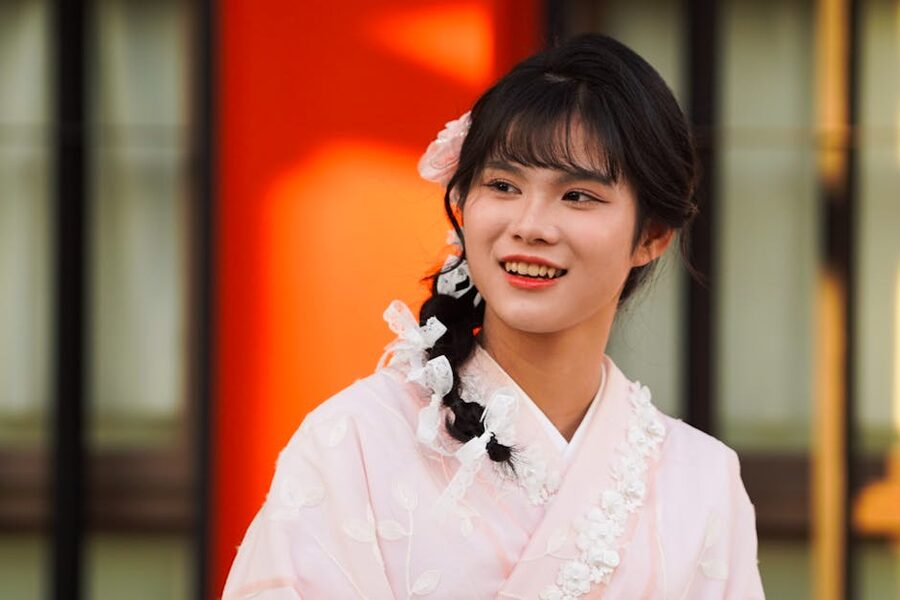
If you’re doing this once, spend the extra. The hairstyling in particular changes the photos completely — loose hair with a rented kimono looks exactly like a tourist with a borrowed costume. A tied updo with a few kanzashi pins is what makes the rented kimono read as an actual outfit.
Where to rent — Gion versus elsewhere
Four neighbourhoods run almost all the rental traffic in Kyoto. Each one points you towards a different kind of day.
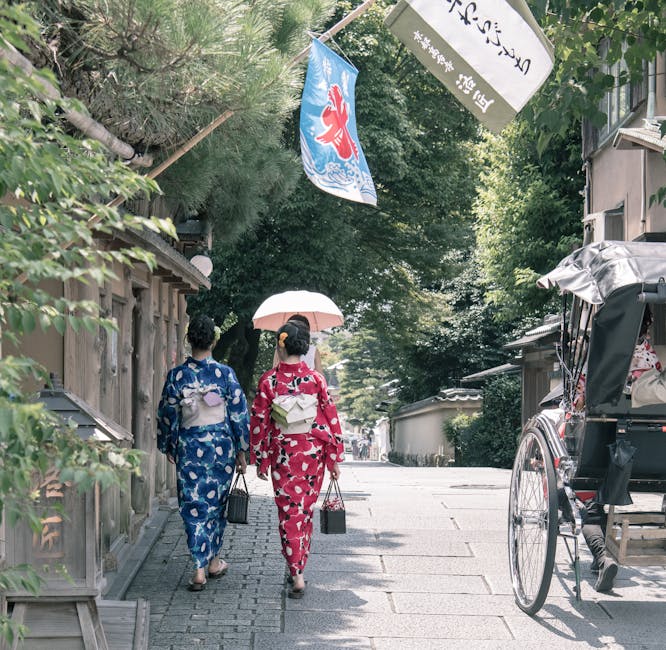
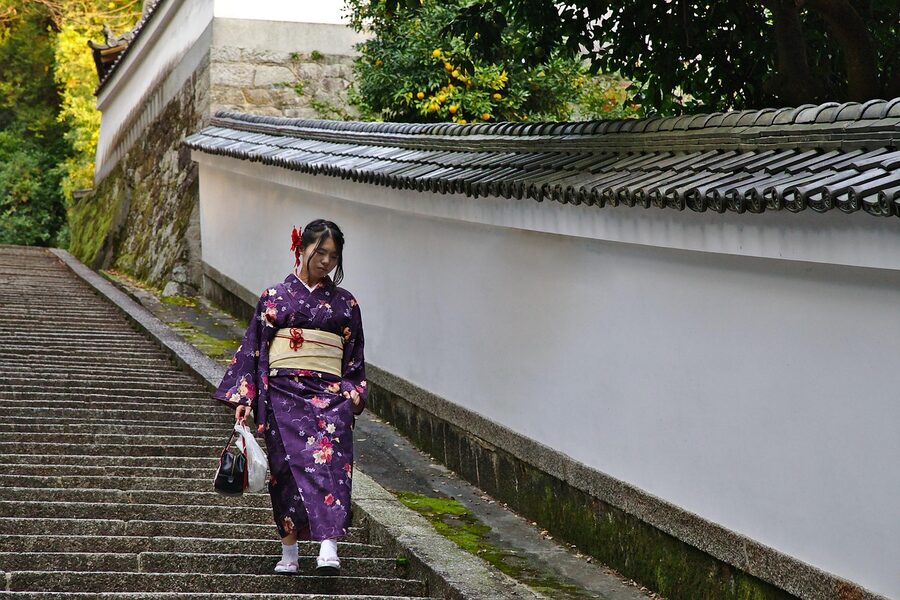
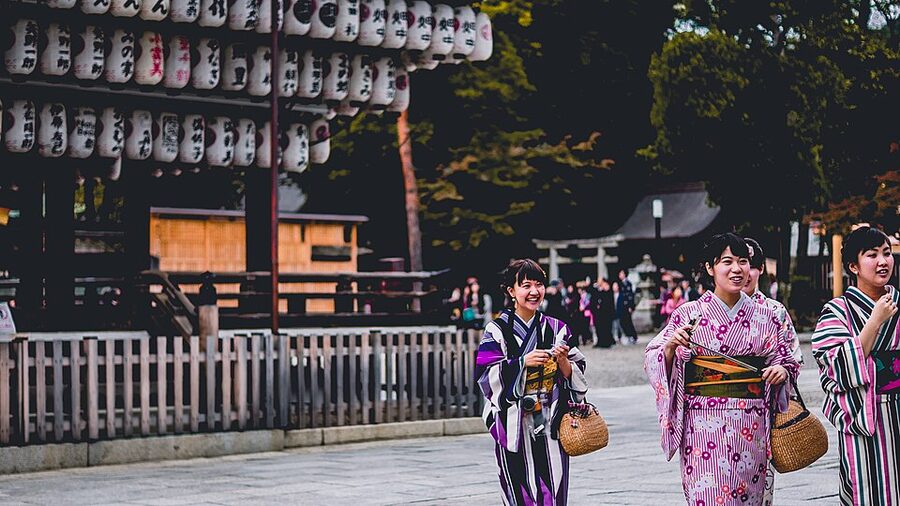
Gion is the obvious one. The machiya-lined streets, the stone-paved Hanamikoji lane, the real maiko spotting around Yasaka Shrine in the early evening — it’s why kimono rental exists in Kyoto as a tourist thing in the first place. Start here and you’re walking straight into the photos you had in your head. Shops cluster near Gion-Shijo station and the lanes north of Shijo-dori.
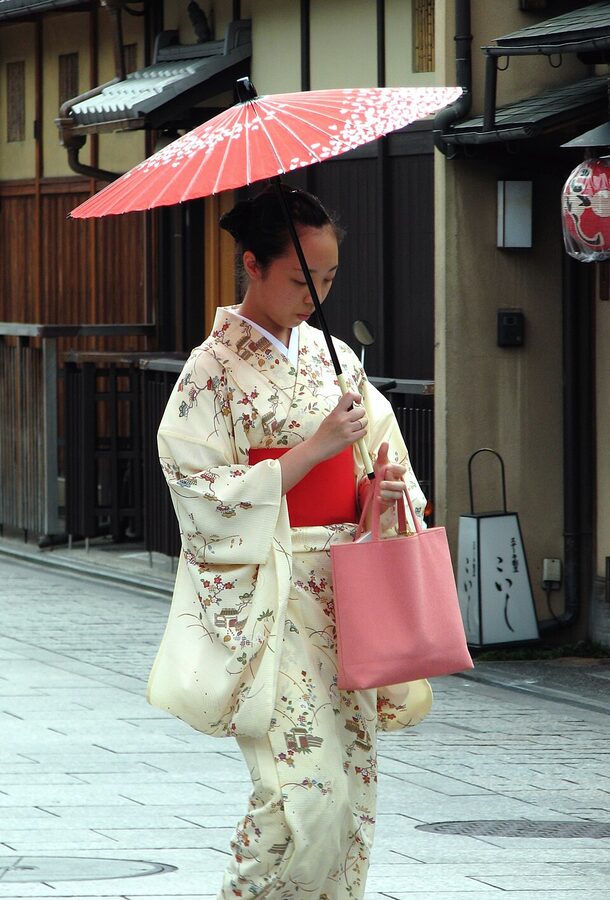
Higashiyama (the Kiyomizu and Yasaka area) has a handful of shops positioned right under Kiyomizu-dera. Renting here saves you a bus ride but puts you in the middle of Kyoto’s most crowded temple district from the first minute. I’d pick Higashiyama if your plan is Sannenzaka steps → Kiyomizu → back to shop, and skip it if you want a mix of Gion and Arashiyama in one day.
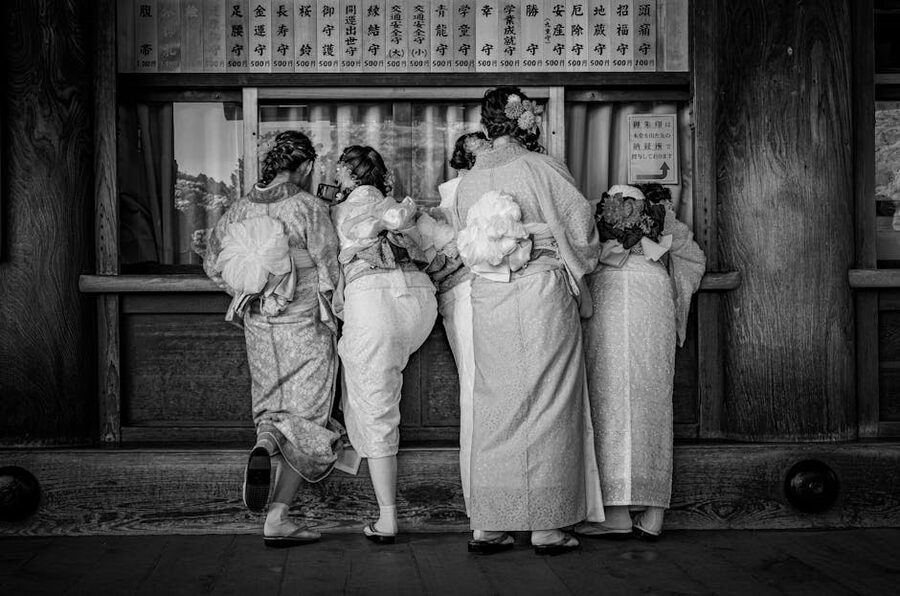
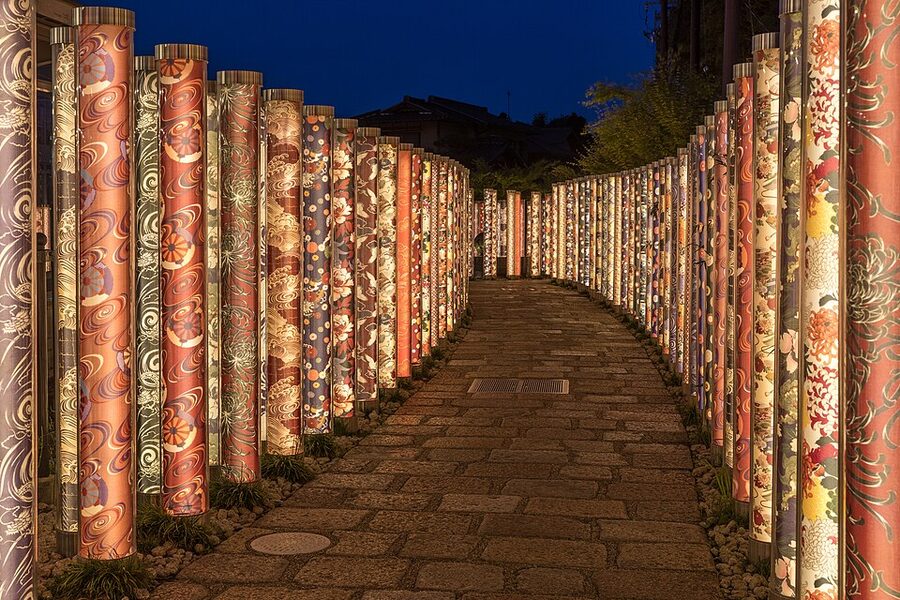
Arashiyama has fewer rental shops but real ones, usually a five-to-ten-minute walk from the bamboo grove. This is the move if your whole day is the west side — Tenryu-ji, the bamboo path, Togetsukyo bridge — and you don’t want to drag a rented kimono across the city on a crowded train.
Kyoto Station / central shops are worth knowing about only if your hotel is near the station or you’re day-tripping from Osaka. Photos there are fine — Kyoto Tower as a backdrop works — but the character drops off quickly once you walk a block in any direction. I’d pick central only if I had luggage to drop and two hours to kill before check-in.
The 3 Kyoto kimono rentals worth booking
I’ve filtered this down to three based on review volume, repeat-customer patterns, and what’s actually included in the base price before the upsells. All three are bookable online, all three have English-speaking dressers, and all three have been running long enough that you’re not the first tourist they’ve handled this week.
1. Kyoto Kimono Rental with Hairstyling and Accessories — $21
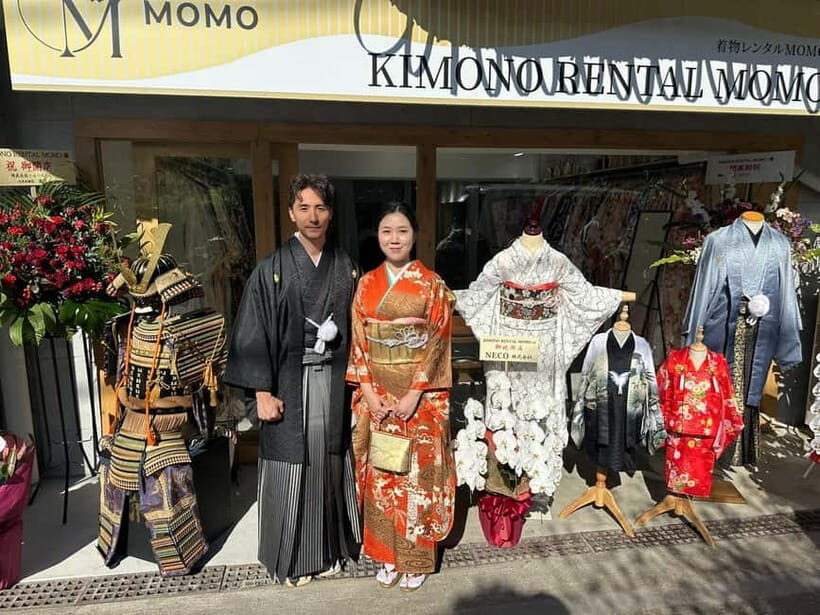
This is the option I’d default to for a first-time renter — the base price includes the kimono, full dressing, and hairstyling, which most competitors strip out of their $15–$20 headline rates. YUUKAGA’s Gion location is on the right side of Shijo-dori for walking to Yasaka Shrine, and the review pattern shows consistent five-stars on the dresser quality rather than just the kimono look. Our full review covers the accessory tiers and the optional photographer add-on, which is the best-value pro-photo option I’ve seen at any Kyoto rental shop.
2. Kyoto City Centre Whole-Day Kimono Rental — $19
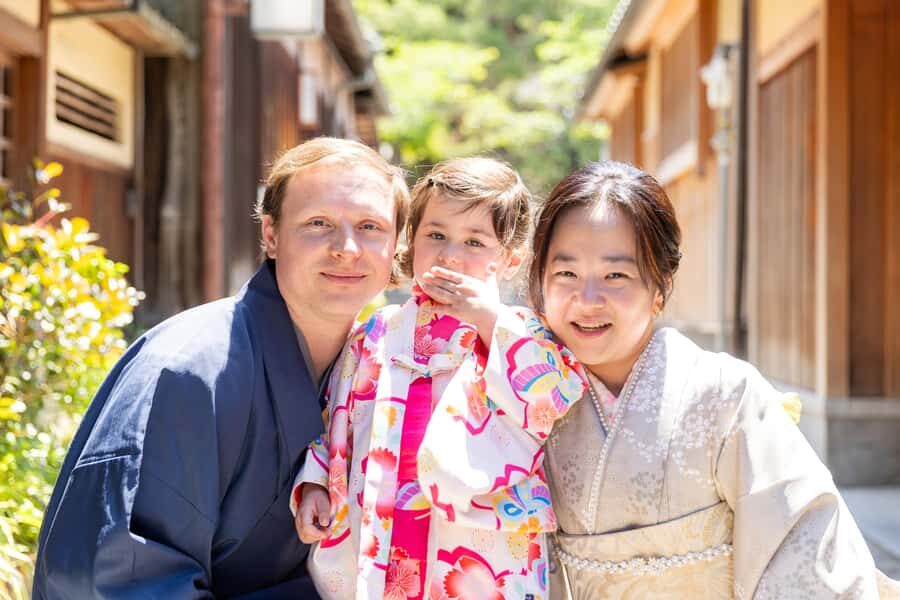
A shop running continuously since the 1860s, which matters less for the kimono itself and more for how fast the dressers work — a full women’s kimono tying that takes a new dresser 45 minutes takes this team about 20. The central location near the tea-ceremony houses pairs cleanly with a same-day tea ceremony booking, and the full review notes the luggage hold is free rather than the 500-yen surcharge the budget chains tack on. If the headline price is your deciding factor, this is the cheapest reputable option.
3. Kyoto Hana 1-Day Kimono Rental — $29
The slight premium over the other two buys you a smaller shop with a higher staff-to-guest ratio — meaning you’re not queued behind a tour group of fifteen, and the dresser has time to adjust the obi a second time if it sits wrong. Our full Hana Kimono review covers the couple’s-set discount, which brings the per-person cost back in line with the cheaper options once two people book together.
What to book on top of the rental
A kimono is an outfit, not an activity — which means your day needs a few things to actually do in it. The combinations that work best all involve slow, on-foot Kyoto: you can’t realistically rush in zori sandals, and most temples forbid running anyway.
The classic pairing is kimono + tea ceremony. Most of the reputable tea houses near Gion and the city centre will do a 60–90 minute ceremony with English explanation, and several have a direct relationship with a rental shop next door. If you want the all-in-one booking, our combined kimono and tea ceremony guide walks through which shops bundle the two cleanly — and which just stick them next to each other on a brochure.
The other pairing that genuinely works is kimono + Gion walking tour. Having someone explain the difference between a geiko and a maiko while you’re standing on Hanamikoji in your own kimono is a different experience than reading it in a guidebook at the hotel. The Gion geisha walking tour guide covers which tours run in the evening, which is when you actually have a chance of spotting maiko walking to work.
Fushimi Inari and Arashiyama both pair well with a kimono day but aren’t the same commitment. Fushimi Inari’s full mountain hike is a bad idea in zori — an hour of the lower torii gates is fine. Arashiyama’s bamboo path is short enough that sandals are comfortable, but you’ll want to skip the Tenryu-ji gardens uphill if the heat is up. The Fushimi Inari hiking tour guide and the Arashiyama bamboo forest walking tour guide both help you scope how far you’re committing before you book.
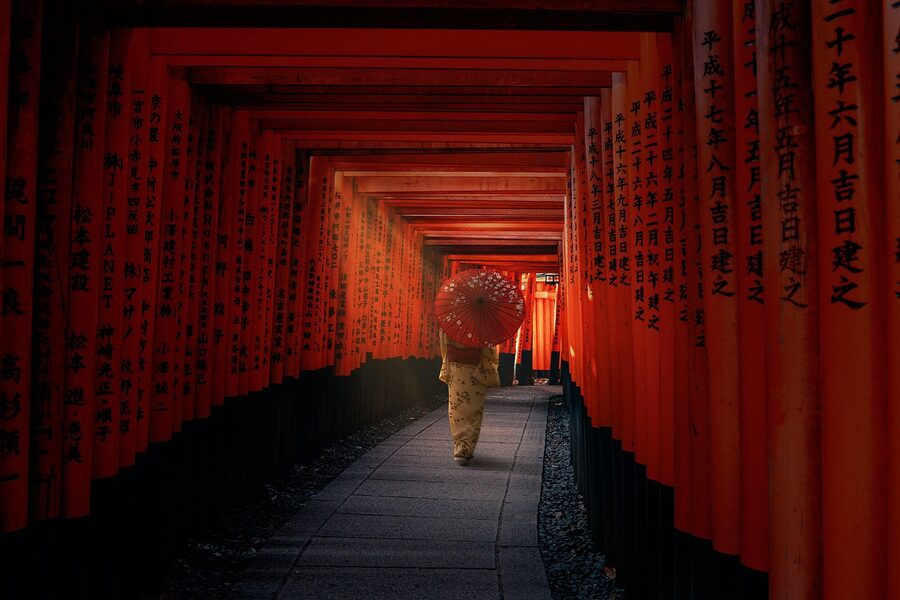
Best time of day and year to rent
Time of day. Book the 9am slot. Yes, it sounds early, but the dressing takes 30–45 minutes, the best kimonos go to the first bookings, and by the time you’re out the door it’s 10am and the streets still have an hour before they fill up. Every rental shop’s own advice is go early, and they’re not just saying it to manage demand — the photos you want are at 10am, not 2pm.
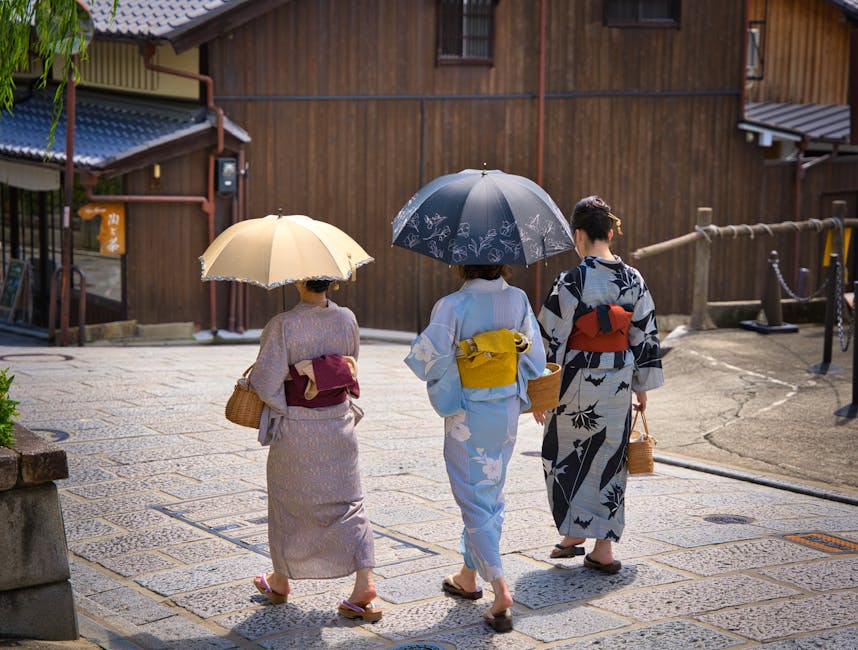
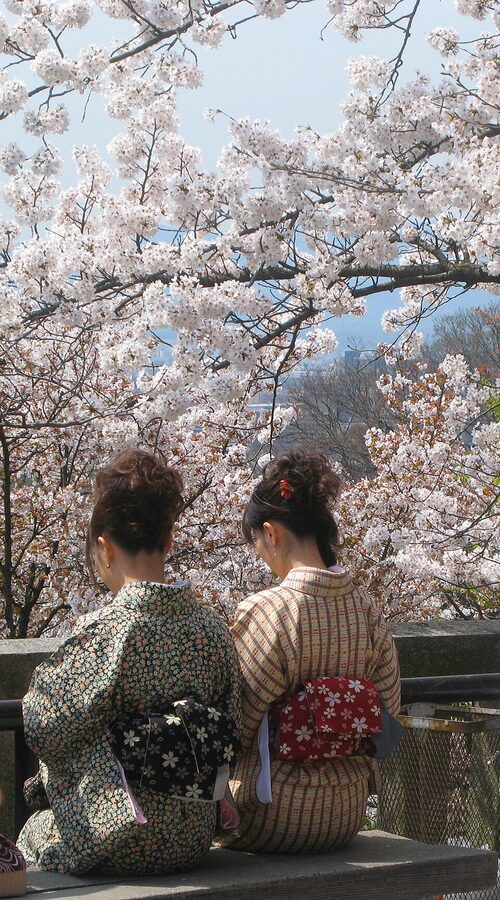
Spring (late March–early April) is the visual peak. Cherry-blossom pinks and pale lilacs dominate the rental racks, and the backdrops — Maruyama Park, the Philosopher’s Path, Gion’s willow-lined Shirakawa — do most of the photo work for you. It’s also the most-booked period. Reserve the shop at least two weeks out, and expect the price to edge up 500–1,000 yen versus the off-season.
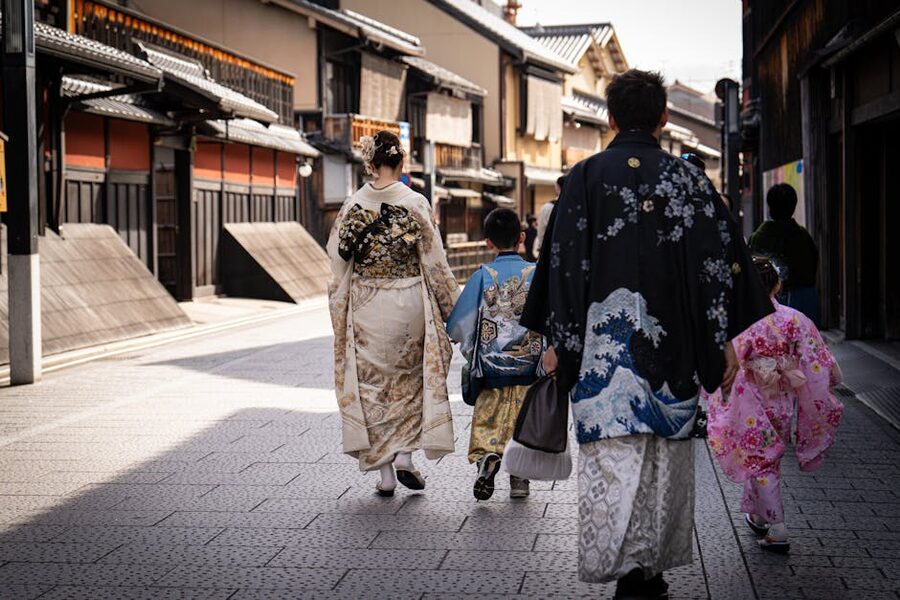
Summer (June–August) is yukata season, not kimono season. Yukata is the lighter cotton version — one layer, no under-robe, no stiff obi — and it’s what locals actually wear to evening festivals. Renting a full winter-weight kimono in July is unpleasant by 11am; you’ll sweat through the undergarment. Switch to a yukata and it drops to bearable. Most shops stock both and won’t charge you extra to swap once you see the rack.
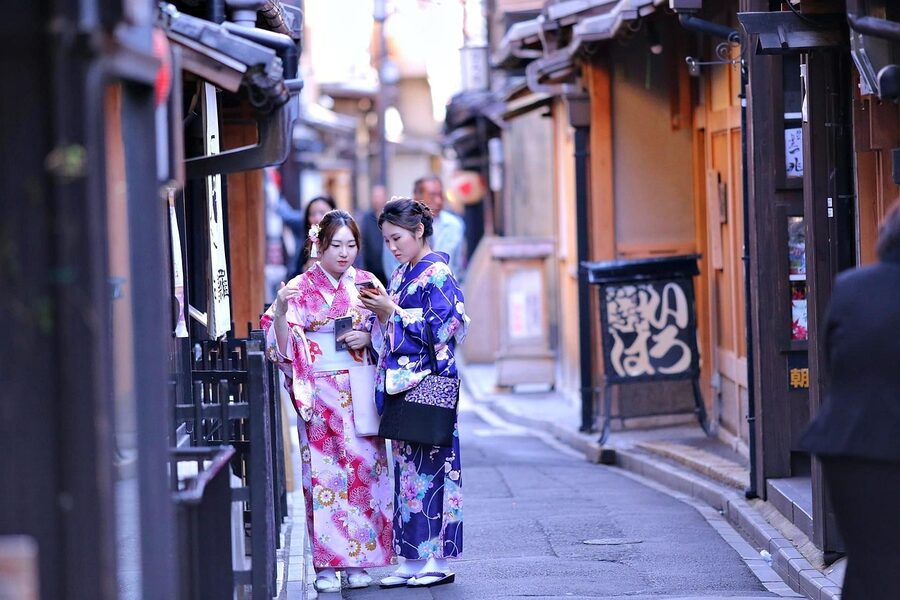
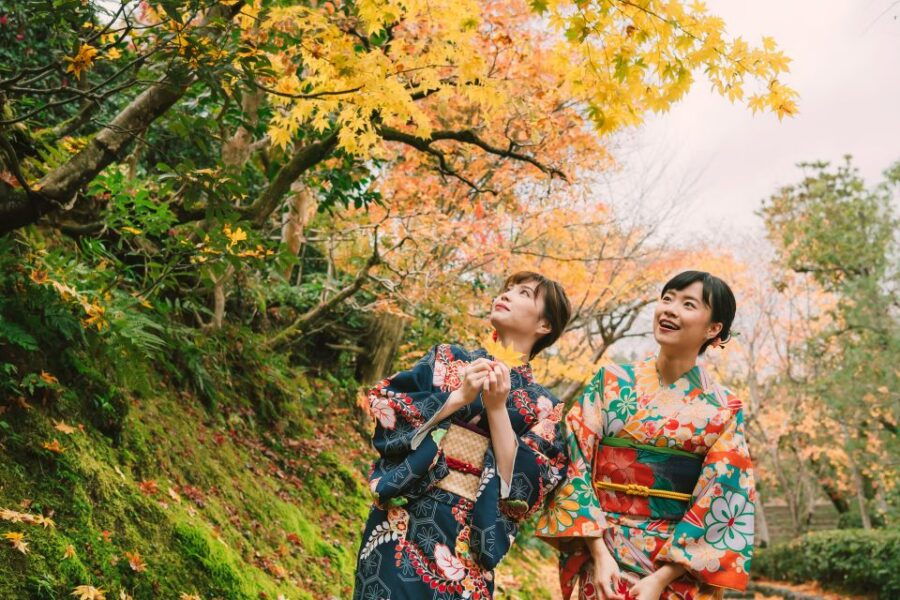
Autumn (mid-October to late November) is the other peak. Deep-red maple leaves against dark kimono patterns is the other signature Kyoto photo combination, and the weather is finally cool enough that a full silk kimono feels right. Bookings tighten from the first weekend of November onwards. If your dates are fixed, reserve the shop two weeks ahead; if you’re flexible, mid-October before the crowds arrive is the quietest week.
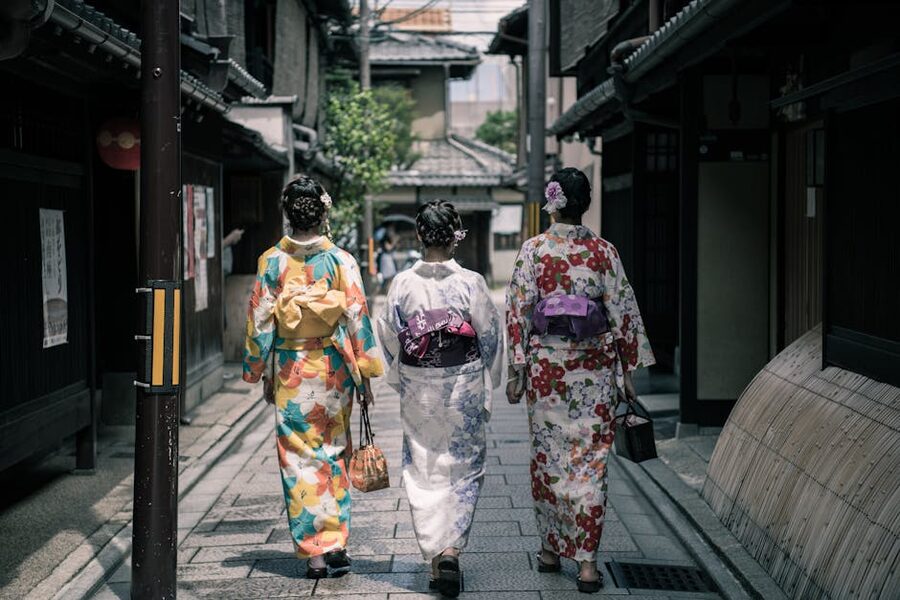
Winter (December–February) is the quiet secret. Empty streets, no booking stress, and shops will often throw in a hanten (a padded overcoat) for free. The flip side is that sub-zero mornings in Kyoto are genuine. Wear thermal leggings under the nagajuban; the dressers won’t mind.
Things to know before you walk out the door
You can’t easily eat. The obi sits tight under your ribs, and the sleeves are wide enough to dip into soy sauce the minute you’re distracted. Street food you can pick up in a tissue is fine — matcha ice cream, taiyaki, dango. Sit-down meals are manageable but awkward; most experienced renters eat a proper meal before the 9am dressing and stick to snacks until they return the kimono.
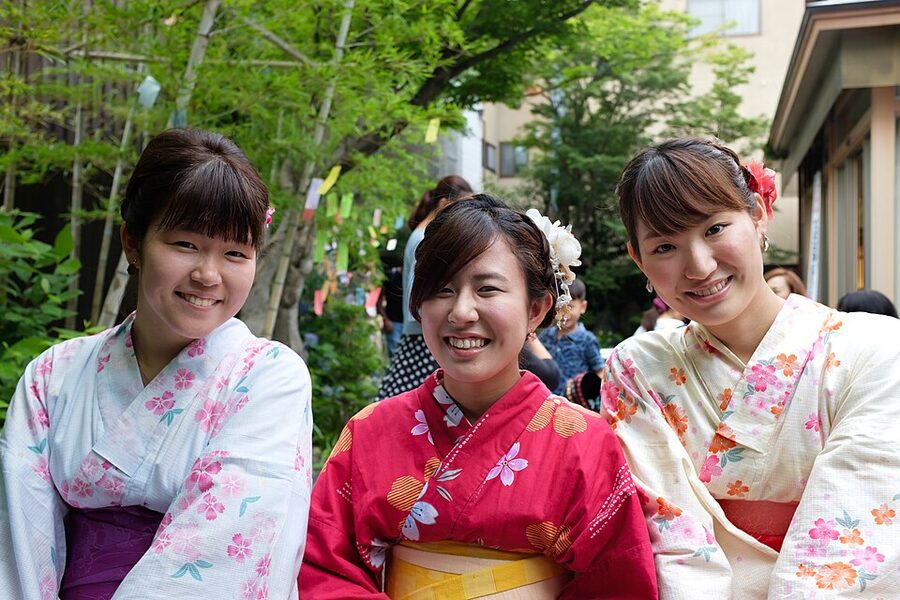
You can’t fit a normal handbag. The shop-provided clutch is roughly the size of a small envelope. Bring a card, a phone, tissues, and lipstick, and leave everything else at the shop’s storage (usually free) or in a station locker. A backpack over a kimono is — and there’s no gentle way to say this — a terrible look.
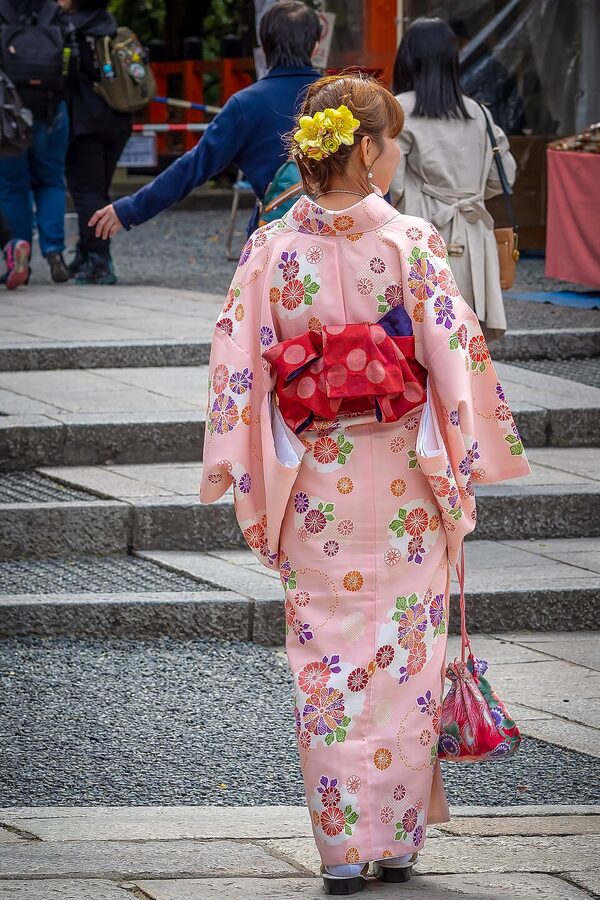
Toilets take practice. There’s a specific technique — lift the outer kimono, then the under-robe, fold them forward together. The dresser usually demonstrates before you leave the shop. Ask even if you think you don’t need to; the first toilet attempt in the wild is where most first-time renters feel least prepared.
Rain is manageable. Every shop lends umbrellas, and zori sandals shrug off light rain fine. Heavy rain is a different story — the cotton under-layer wicks water up into the silk, and the dyes on cheaper kimonos can run. If the forecast is bad, ask the shop about their rain-day policy before you book; most will let you reschedule same-day for no fee if the weather is actually severe.
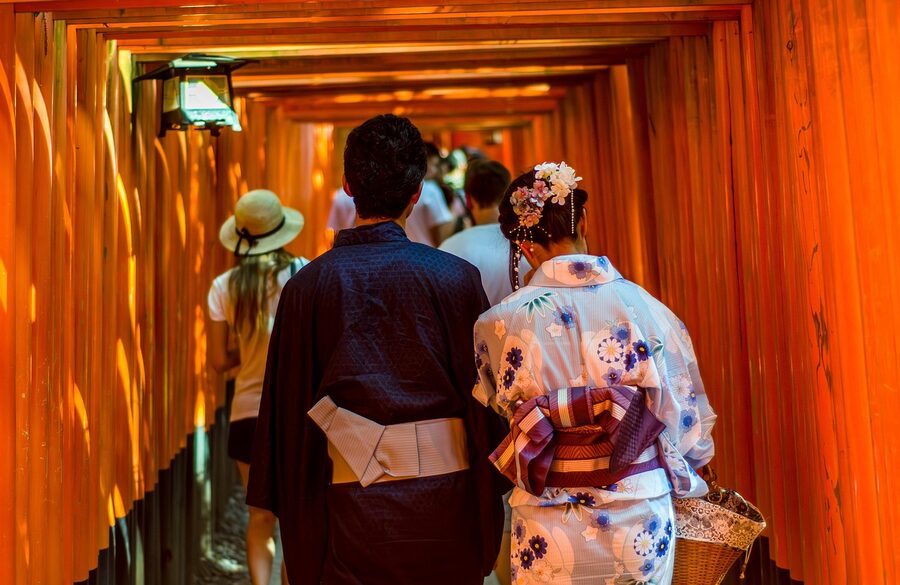
Returns are strict. Most shops close between 5:30 and 6:30pm. Miss the window and you’re paying an overnight fee that can double the rental cost, and you’ll be walking around your hotel in a kimono you can’t remove without help — kimono take two people to untie properly. Set a phone alarm for 4:30pm wherever you are.
Kimono versus yukata — which one are you actually renting?
This trips up almost everyone. A kimono is a multi-layer silk or silk-blend garment with a wide, stiff obi, designed for cool weather and formal occasions. A yukata is a single-layer cotton robe with a softer, simpler belt, designed for summer festivals and hot springs.
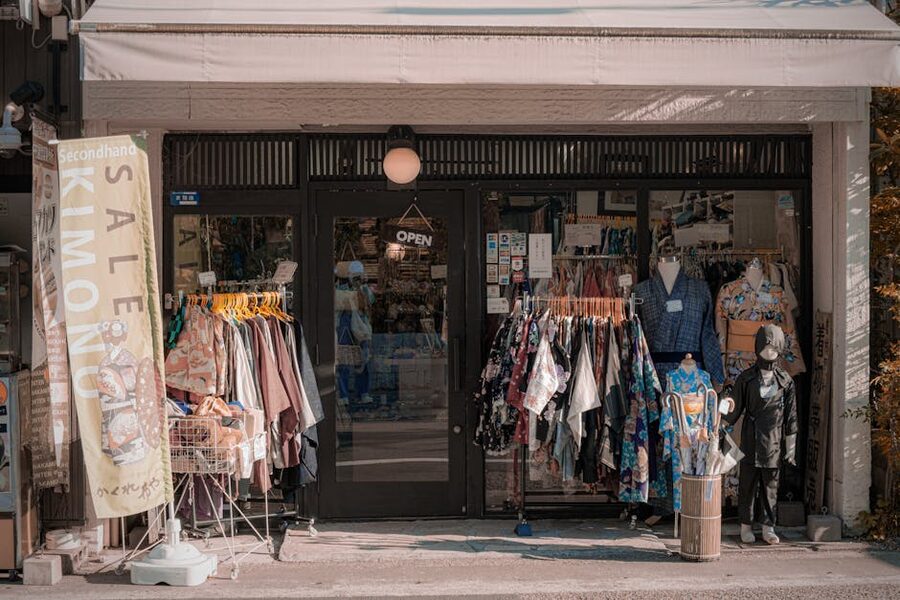
Most rental shops in Kyoto offer both and will default you to whichever suits the season. Turn up in July asking for “the full kimono experience” and a good shop will gently steer you to a yukata — because by 11am the photos of you are going to show a red face and a sweaty collar. Turn up in November wanting a yukata and they’ll do the reverse. Trust the dresser’s read on the weather; they’ve watched several thousand tourists make this exact mistake.
Before you book
The simplest possible checklist: pick your neighbourhood (Gion for first timers, Arashiyama if you’re spending the west-side day there), book the 9am slot at a shop that bundles hair into the base price, budget around 6,000 yen per person including an optional hair upgrade, and set a return alarm. Do that and the rental disappears from the list of things you’re worrying about — which is the whole point, because the day is meant to be about walking through Kyoto, not managing logistics in unfamiliar clothes.
The rest of a Kyoto day in kimono
A kimono rental is rarely the entire day. Most people want a tea ceremony paired alongside it, or a proper guided walk through Gion once they’re already dressed for it — both are covered in their own booking guides, and both run cleanly either side of the rental window. If you’re extending this into a multi-day trip and plan to rent kimono again in a different city, the Tokyo kimono rental guide walks through the Asakusa shops — Tokyo’s kimono scene is smaller but Asakusa’s Senso-ji backdrop is a genuine alternative to Gion for photos. And if the real draw for you is the tea ceremony rather than the kimono itself, the Kyoto tea ceremony guide and the Kyoto matcha experiences guide both cover the standalone versions. For a fuller day-in-Kyoto itinerary that naturally includes a kimono stop, the private Kyoto tour guide shows how a local guide bakes the rental into a half-day rather than leaving you to plan around it. Pair any of those with a Tokyo matcha class or Osaka matcha class if you’re working your way across multiple cities — matcha is the one through-line that makes a Kansai-to-Kanto trip feel like one continuous thing instead of three separate stops.