
How can a museum that opened in 1882 still pull crowds in a city packed with Vermeers, Monets, and the actual Mona Lisa? I asked myself this on the way down Boulevard Montmartre, expecting a tourist trap. Two hours later I had a selfie with Charlie Chaplin, had walked through a 19th-century Hall of Mirrors lit up like a nightclub, and had genuinely jumped at a plague tableau in a fake stone basement. The Musée Grévin is weird in the best way.
This guide covers what’s actually inside, which ticket gives the best value, how the Hall of Mirrors works (it’s the real reason to come), and whether to bother with the Seine cruise combo most people end up buying.
Short on time? Here are my top picks:
Best value combo: Grévin + Seine River Cruise — $47. Museum entry plus a one-hour cruise. Cheaper than buying both separately and the most-booked option by a wide margin.
Just the museum: Grévin Entry + Audio Guide App — $43. Standard ticket with a phone-app guide. Skip if you’ve already paid for an audio museum elsewhere.
Family option: Family Tour of Paris Old Town + Grévin — guided walk through the 2nd arrondissement before going inside. Worth it if your kids are 7-12 and you want context, not just selfies.
- What Grévin actually is
- How tickets actually work
- Ticket discounts and the Paris Pass question
- The three tickets to actually book
- 1. Grévin Wax Museum + Seine River Cruise —
- 2. Grévin Entry Ticket + Audio Guide App —
- 3. Family Tour of Paris Old Town + Grévin — Viator
- The Hall of Mirrors is the real reason to come
- Layout: what you actually walk through
- The history basement is unsettling on purpose
- The art icons room is a Grévin highlight nobody talks about
- Sport, music, fashion: the celebrity loop
- Getting there and timing
- Practical things people get wrong
- Is Grévin actually worth it
- Where it fits in a Paris evening
- Family planning specifics
- Where to eat near Grévin
- Skip-the-line and queue strategy
- Pairing Grévin with the rest of your Paris days
- Booking the Grévin tickets — final word
- If Grévin is on your list, what else should be
What Grévin actually is
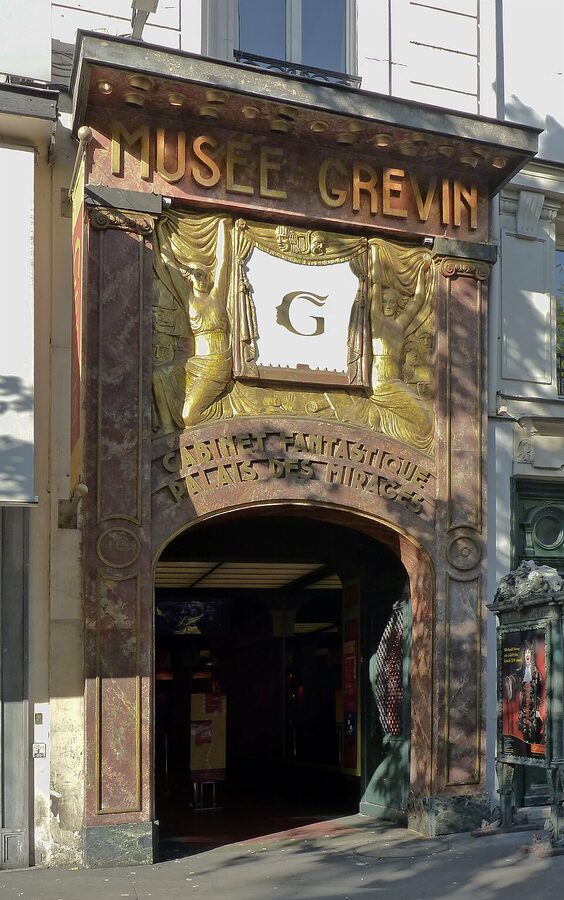
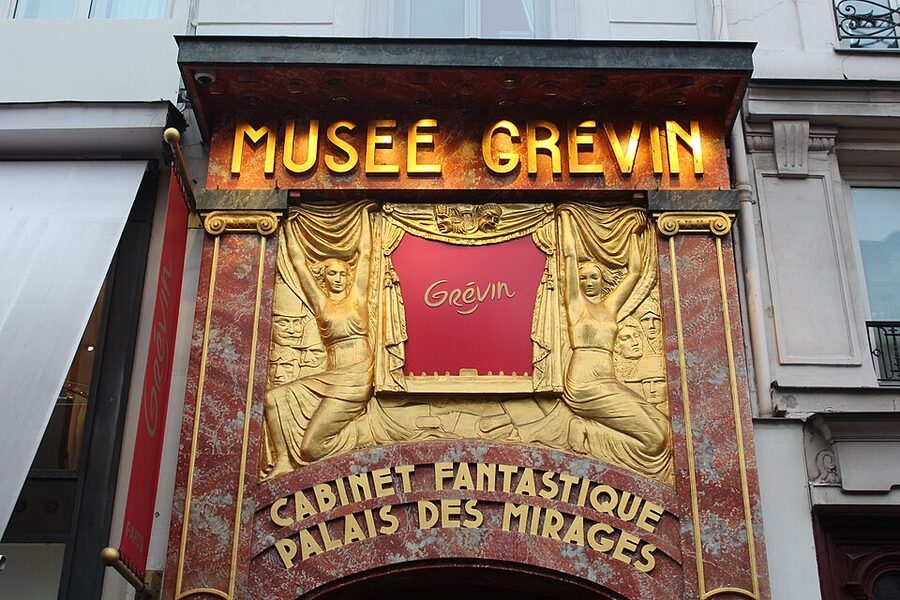
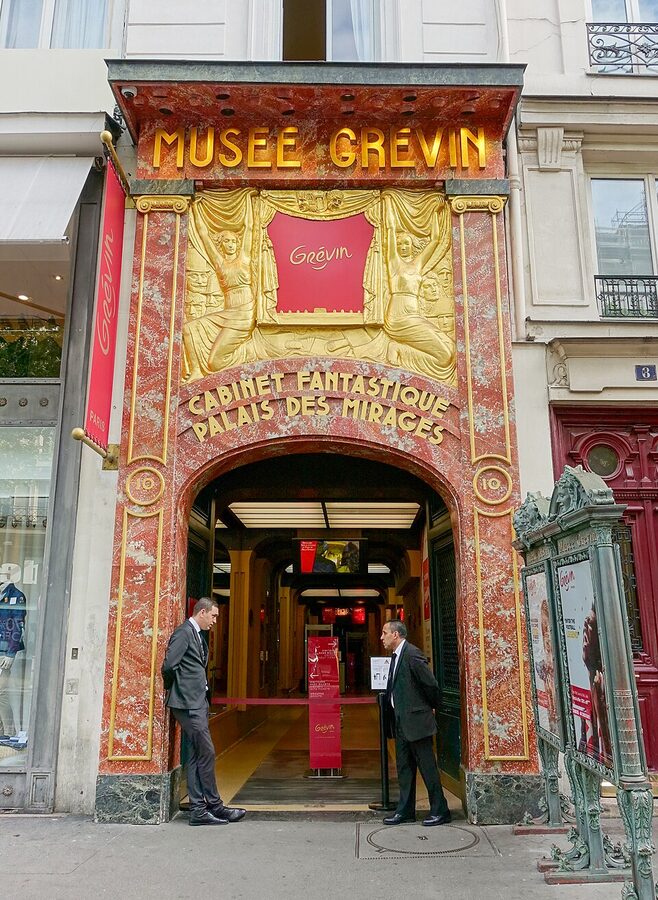
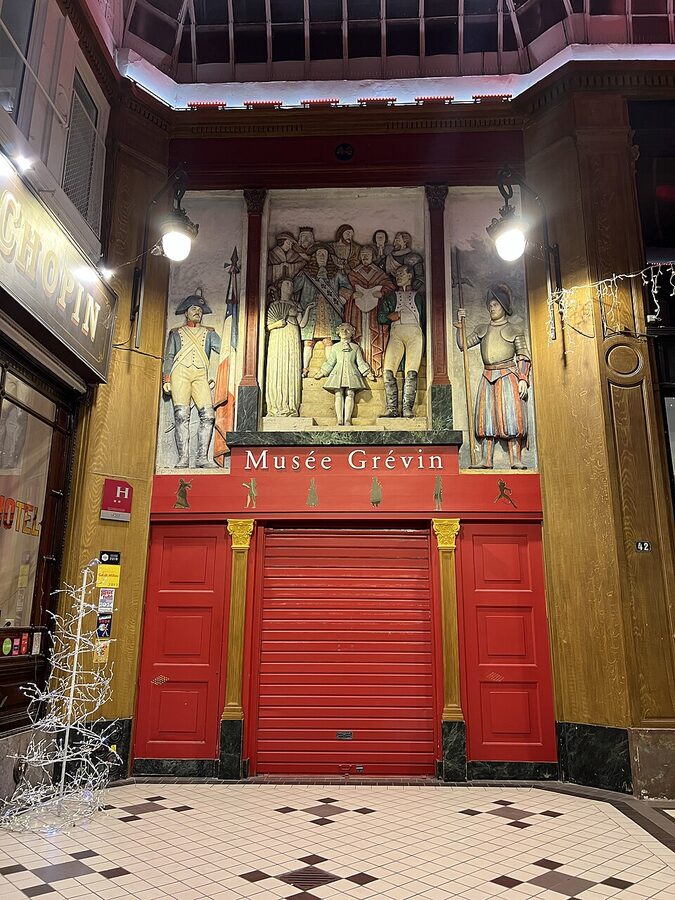
It’s a 19th-century townhouse on Boulevard Montmartre with about 200 wax figures spread across roughly 12 themed rooms. That’s the simple version. The longer version is more interesting — and it’s why I’d push you to book a ticket even if you generally avoid wax museums.
Grévin opened on 5 June 1882, two years before Madame Tussauds expanded internationally. A journalist named Arthur Meyer, who ran the Parisian newspaper Le Gaulois, was frustrated that photographs in print were still rare and grainy. His readers had no idea what most of the people in his stories actually looked like. So he hired a cartoonist and theatre set designer named Alfred Grévin to start sculpting them. The plan was journalism in three dimensions. The plan worked.
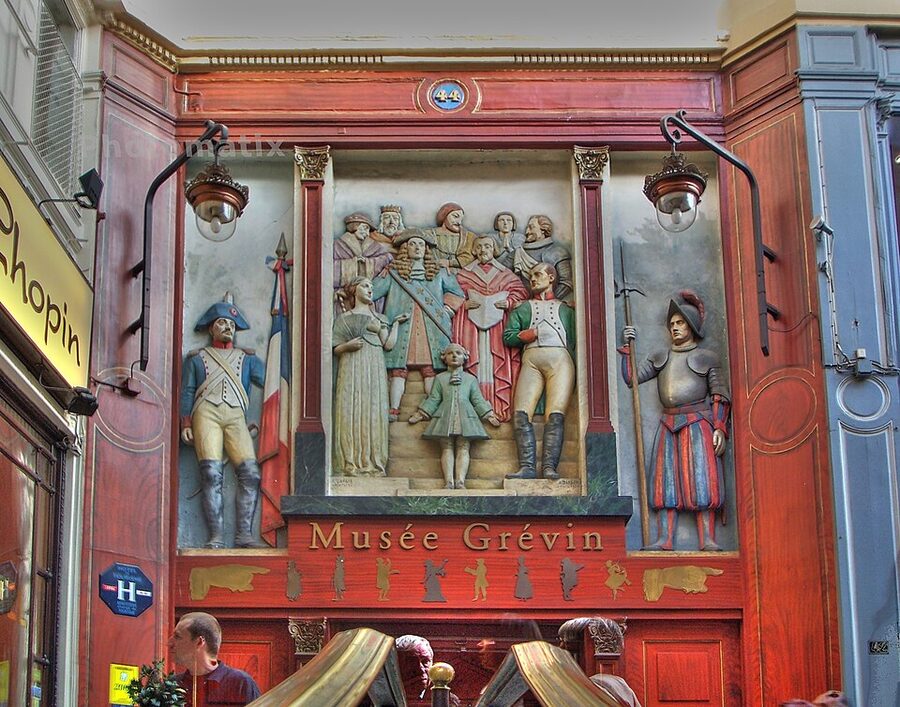
Within two years it was so popular that it pulled in major investors — including Gabriel Thomas, who later helped fund the Eiffel Tower. They built a theatre inside the museum, then expanded again for the 1900 Universal Exhibition with a Hall of Mirrors that used 2,500 light bulbs to look like 70,000. That hall is still there. It’s still using mirrors. The bulbs are now LEDs but the trick is identical, and it’s absolutely the reason to come. More on that further down.
How tickets actually work
There are basically two ticket types and a stack of combos. Get this right before you book and you’ll save €4-8 per person.
The Open ticket (€28 adult, €19.80 ages 5-18) lets you go in any time during opening hours. No timed slot. Just turn up.
The Time ticket (€24 adult, €19 child, free under 5) is cheaper but you have to commit to a 30-minute entry window. Show up late and they may or may not let you in depending on how busy the day is. I’ve seen people argue with the staff about this and lose.
The combo most international visitors actually book — and the one I’d push you toward unless you genuinely don’t care about the river — is the Grévin + Seine River Cruise package at $47. This is by a long way the most-booked option on the market and works out cheaper than buying both tickets separately. If you’re already planning to do a Seine cruise at some point during your trip, this just bundles them.
Wednesdays are half-price. Adults pay €14 instead of €28. Locals know this. Tourists almost never do. If your Paris itinerary is flexible and you’re going to be in town on a Wednesday, do yourself a favour. The catch: the museum is noticeably busier on Wednesdays for exactly this reason. Go right at opening (10:00) or after 15:00.
Children under 5 are free. Under 18s pay child rate up to age 18, not 12 — that’s unusually generous compared to other Paris attractions. If you’re travelling with teenagers, Grévin is one of the few major Paris ticket prices that doesn’t punish you for it.
Ticket discounts and the Paris Pass question
Grévin is included on the Paris Pass. If you’ve already bought one of those for the Louvre, Versailles, the Arc de Triomphe and a couple of cruises, Grévin is essentially “free” — you just walk in. But I’d never buy the Paris Pass for Grévin alone. It only makes sense if you’re hitting four or five major sites.
The single ticket cheapest hack is just booking directly through GetYourGuide rather than at the door. Same price, mobile ticket, skip-the-line. The walk-up queue can run 30-40 minutes on weekends. Pre-booked guests skip it entirely.
The three tickets to actually book
I narrowed this down to three. There are six or seven other options floating around — most of them are the same museum entry repackaged with a slightly different add-on. Stick to one of these three unless you have a specific reason to pick something niche.
1. Grévin Wax Museum + Seine River Cruise — $47

This is the only Grévin ticket I’d buy without thinking twice. The Seine cruise it bundles is a one-hour Bateaux Parisiens loop with audio commentary, exactly the same product you’d otherwise pay around €18 for separately. Our full review covers the cruise pickup point and what’s actually included — important because some people show up at the wrong dock. The combo has a 4.4-star average across hundreds of reviews and it’s the most-booked option for a reason.
2. Grévin Entry Ticket + Audio Guide App — $43
Grévin’s own English signage is patchy. If you’re the kind of visitor who wants to know who Edith Piaf actually was rather than just photographing her, the audio guide is genuinely worth the few extra euros. The app downloads to your phone, works offline once installed, and includes context for about 60 of the 200 figures. Our review walks through what the app actually covers — short version, it’s strongest on French history and weakest on the international celebrity rooms.
3. Family Tour of Paris Old Town + Grévin — Viator
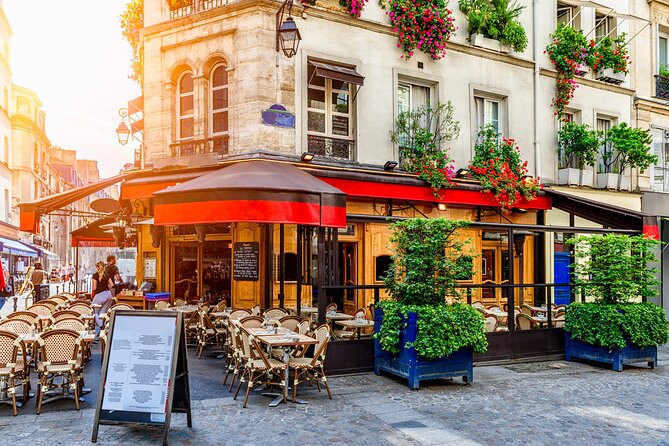
This is the only one of the three with a live guide and it’s the only one I’d recommend specifically for families with younger kids. The walking portion covers Passage des Panoramas, Passage Jouffroy and the Grands Boulevards before going inside Grévin — which gives kids about an hour of stretching before they have to focus indoors. Our review of this Viator option covers what’s included and what to expect from the guide. Pricier than the standalone ticket but worth it for the buffer.
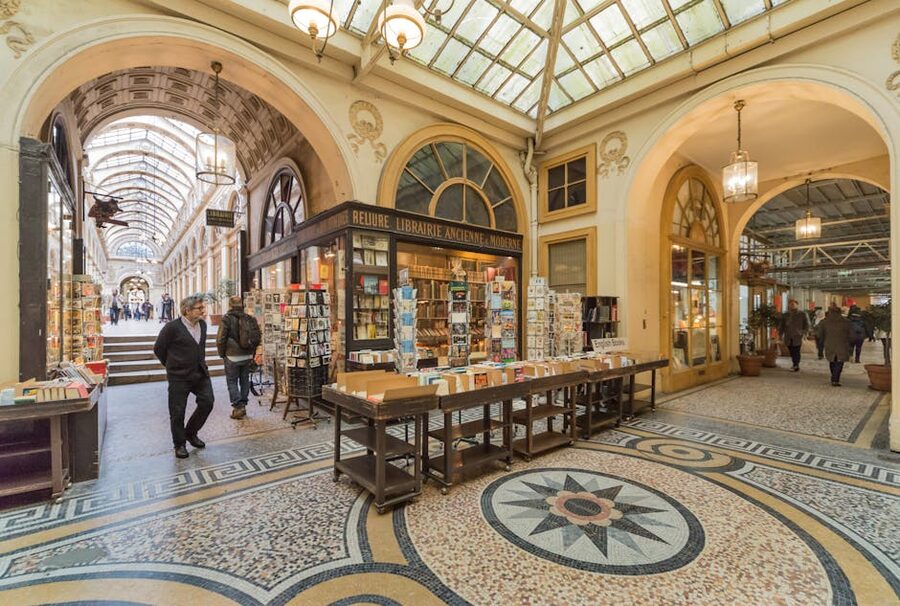
The Hall of Mirrors is the real reason to come
This is what nobody tells you about Grévin. The wax figures are fine. The history rooms are interesting. But the Palais des Mirages — the Hall of Mirrors — is one of the most beautiful interior spaces in Paris and almost no tourist guidebooks even mention it.
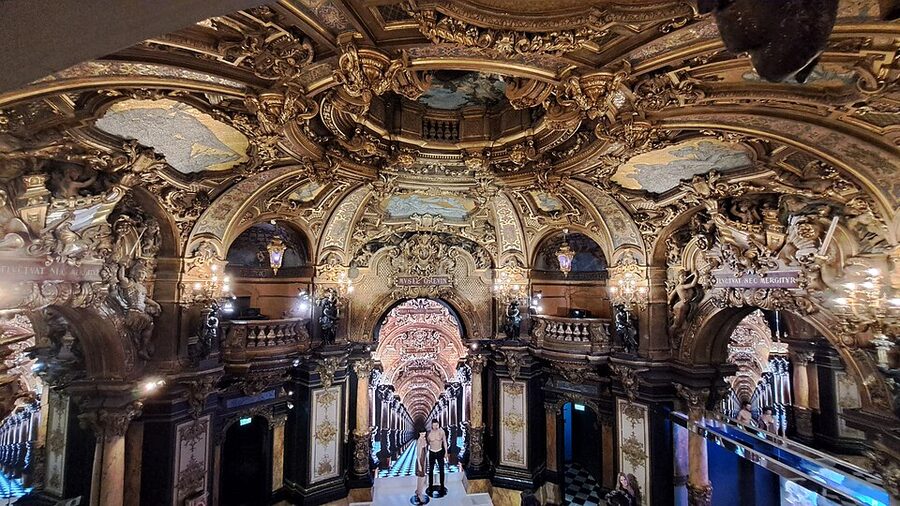
It works like this. You step into a hexagonal room. Six of the walls are painted with elaborate scenes — temples, jungles, palaces. The other six walls are mirrors. They’re angled so that when the lights cycle, the painted walls reflect into infinity in every direction at once.
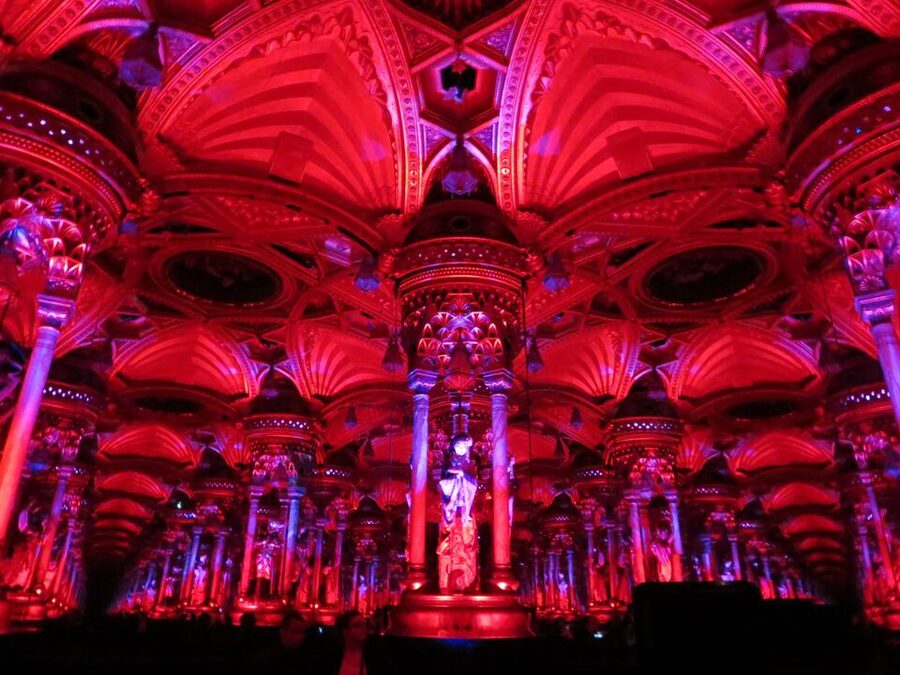
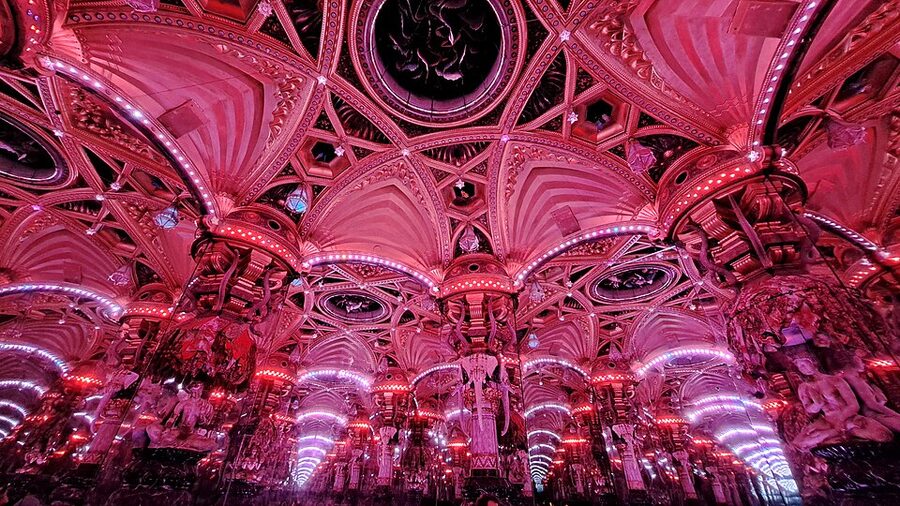
The light show runs about 6 minutes. You sit on a bench in the middle, the room cycles through three scenes — Indian temple, jungle, Alhambra-style palace — with music. It’s hypnotic. Kids love it. Grumpy adults who came in expecting wax-museum kitsch tend to come out of this room genuinely surprised.
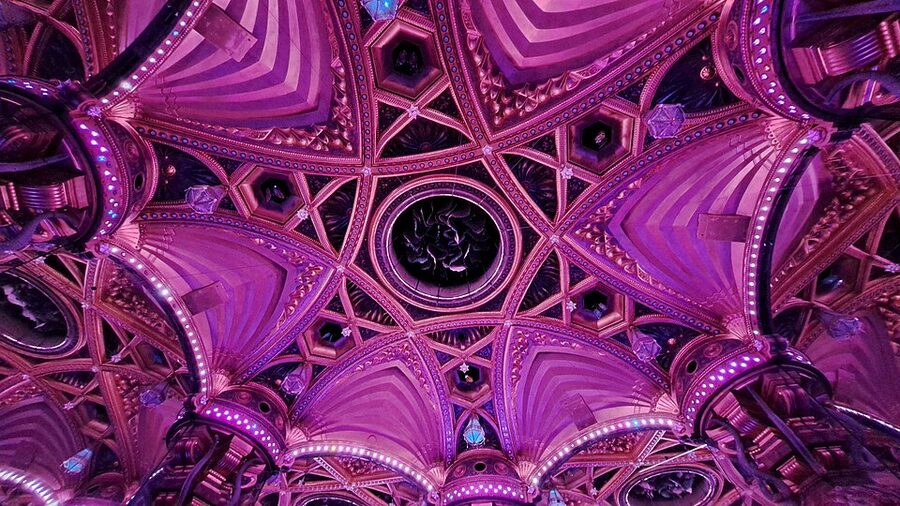
One practical note. Don’t sit in the front row of benches. The mirror angles work better from rows two and three. The staff don’t tell you this. I learned the hard way.
Layout: what you actually walk through
Grévin is not laid out like a normal museum. There’s no central hall. You follow a one-way route through 12 themed rooms in a fixed order, and you cannot skip ahead. Plan on 90 minutes minimum, two hours if you take photos.
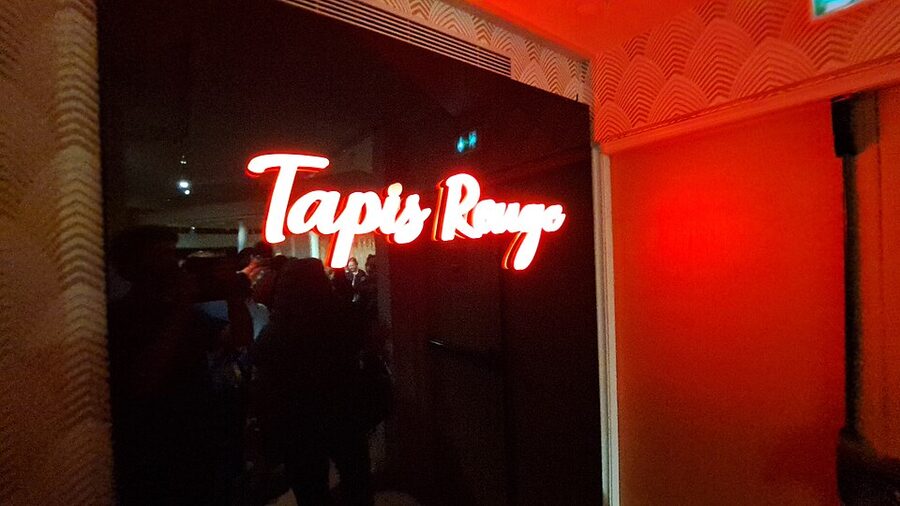
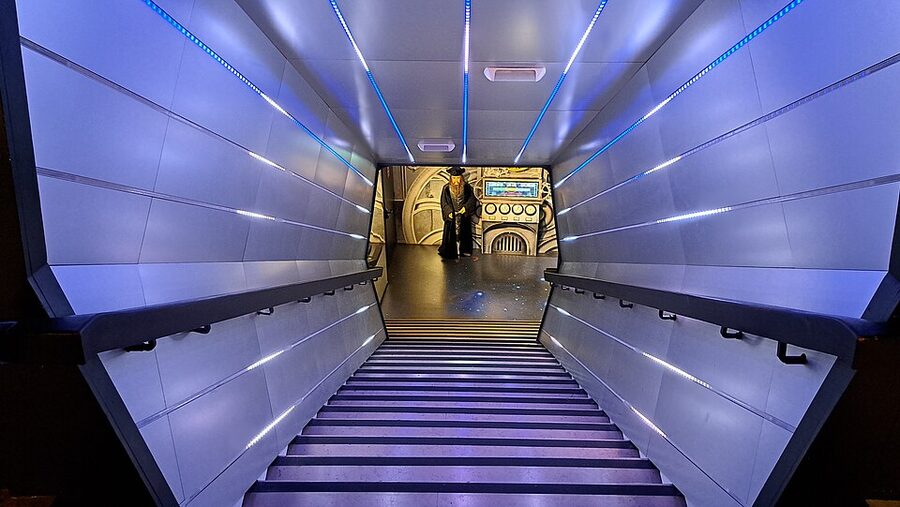
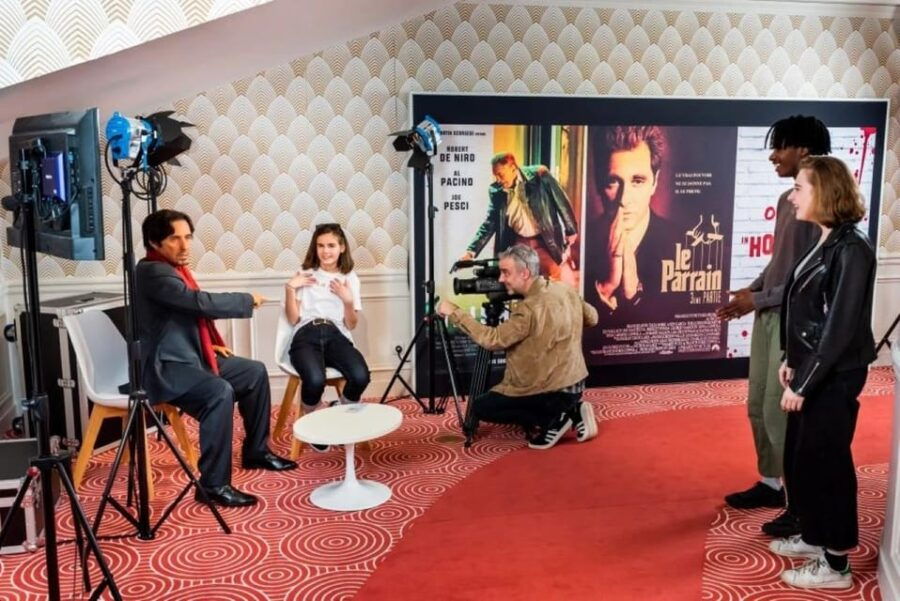
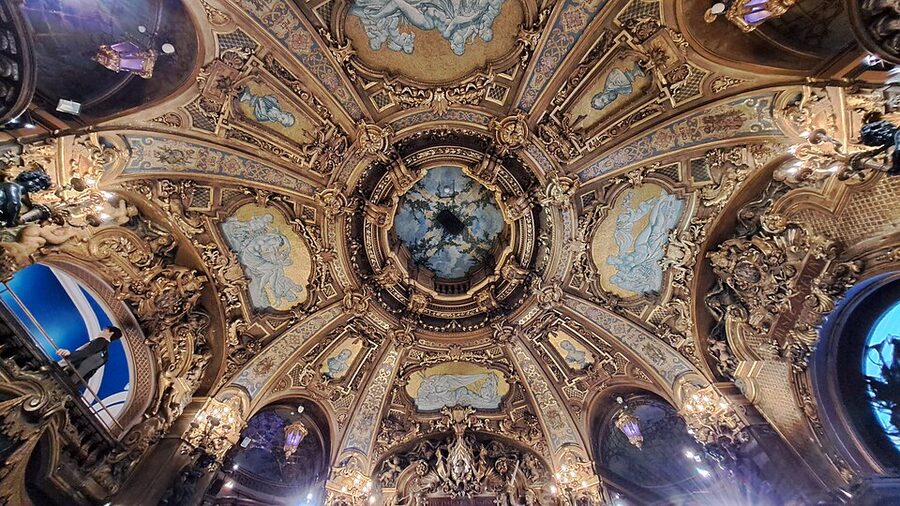
The rough sequence is: red carpet Hollywood greeting, the Théâtre Grévin (a real working theatre with a Beaux-Arts auditorium), the Magic Box with interactive illusion exhibits, the Salle des Colonnes with French literary figures, a literary café where you can sit down across from Gérard Depardieu, the Élysée Palace world leaders room, the French chefs kitchen, then a time-machine staircase down into the basement history rooms, back up through art, imaginary worlds, sport, music, fashion and film, and out via the Palais des Mirages.
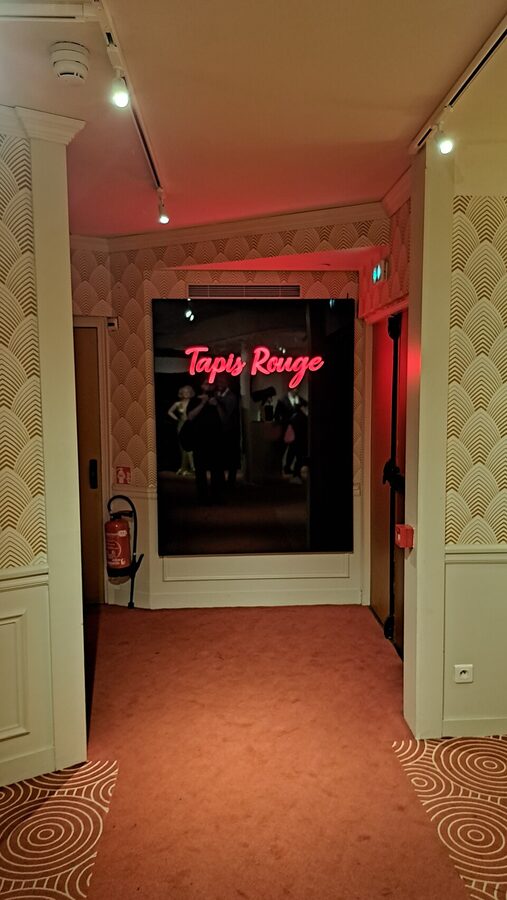
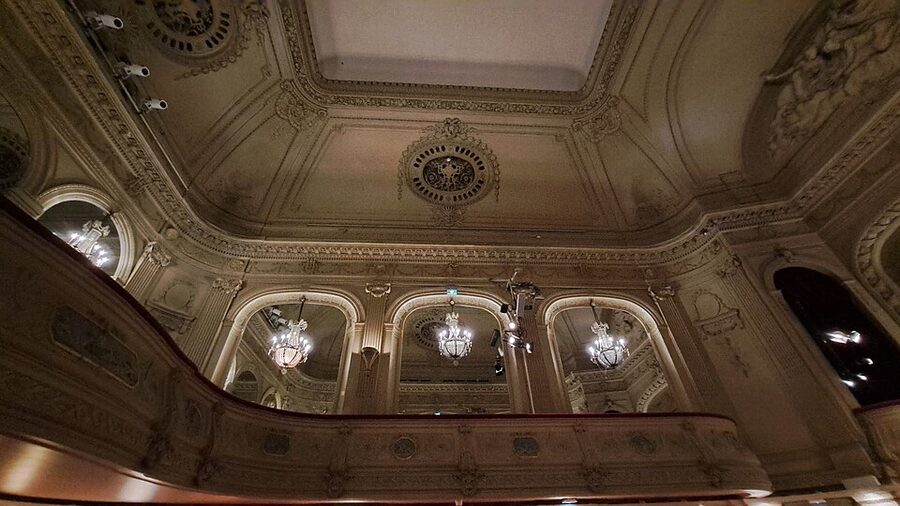
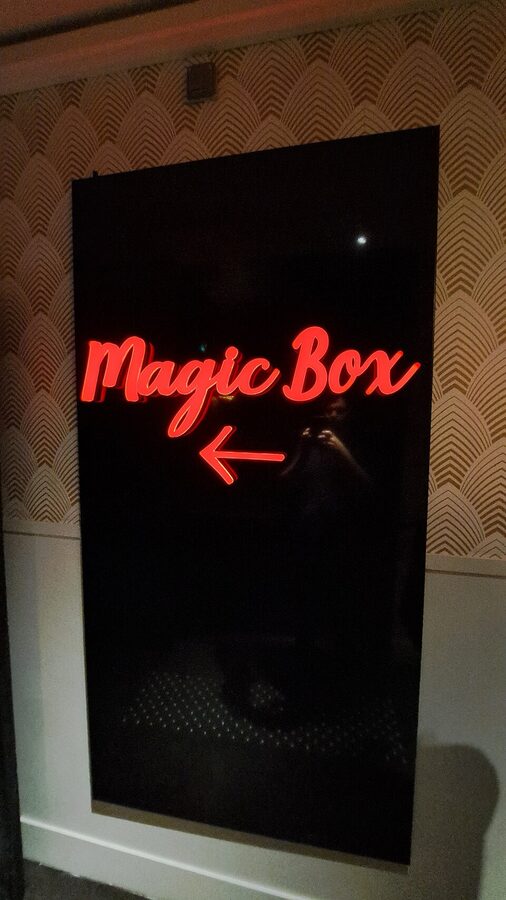
One thing the official map gets wrong: it shows the rooms as a clean loop. They aren’t. There are dead-end side rooms with single tableaux that you’d miss if you walked too fast. The plague scene in the basement is one of these. The wax-head workshop near the exit is another. Slow down for both.
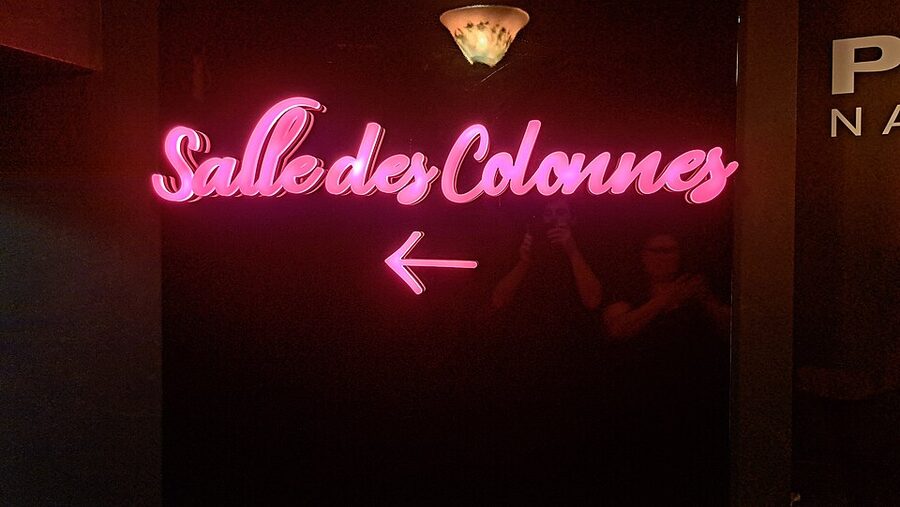
The history basement is unsettling on purpose
You go down a darkened staircase from one of the upper rooms into what they call the basement. The temperature drops. The walls are fake-stone vaults. The audio shifts to medieval bells and distant chanting. And then the figures start.
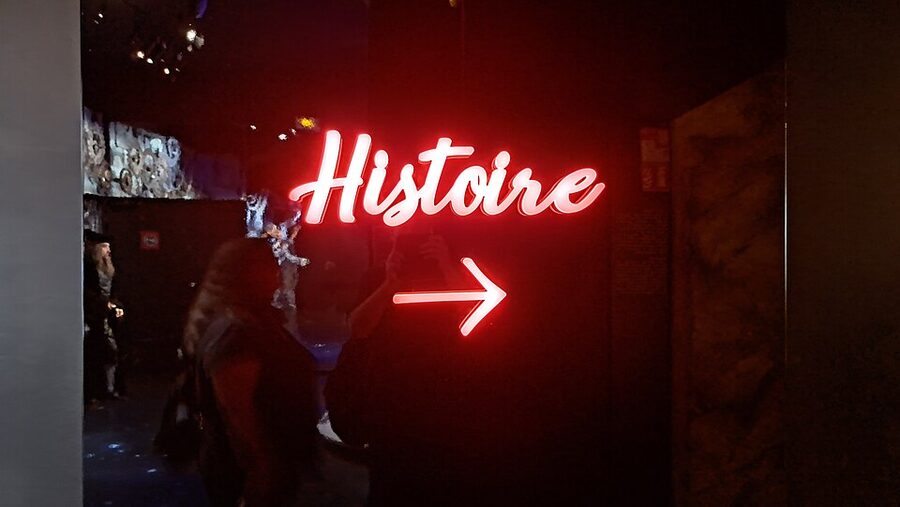
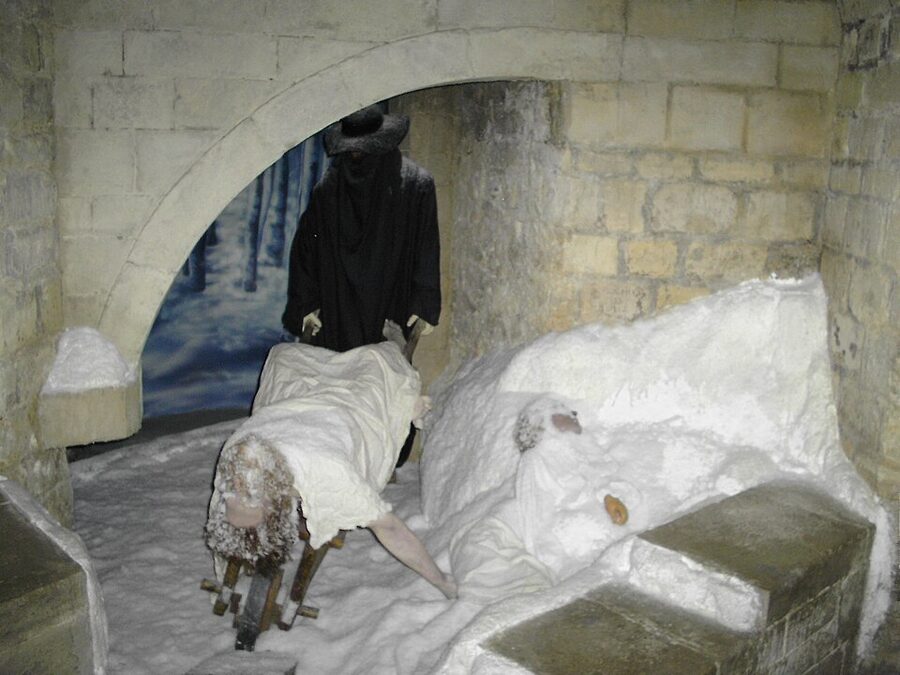
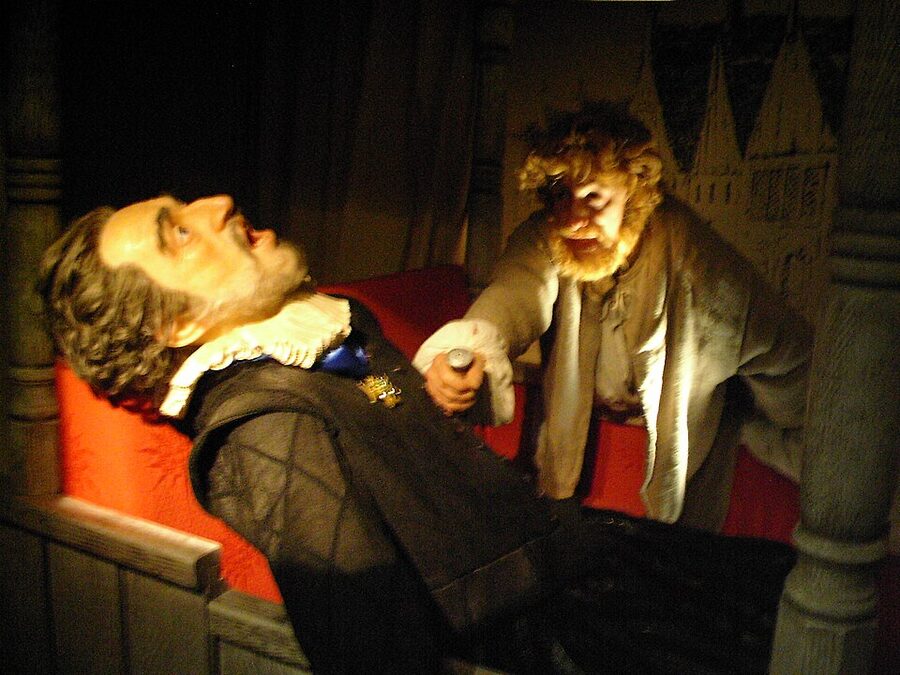
What you walk through, in order: a Stone Age cave with cave bears and early humans, then a medieval church with monks, then a sequence of French history scenes that are blunt about their subject matter. Joan of Arc tied to the stake. Henry IV being assassinated. Marie Antoinette in the Conciergerie awaiting execution. The murder of Marat in his bath.
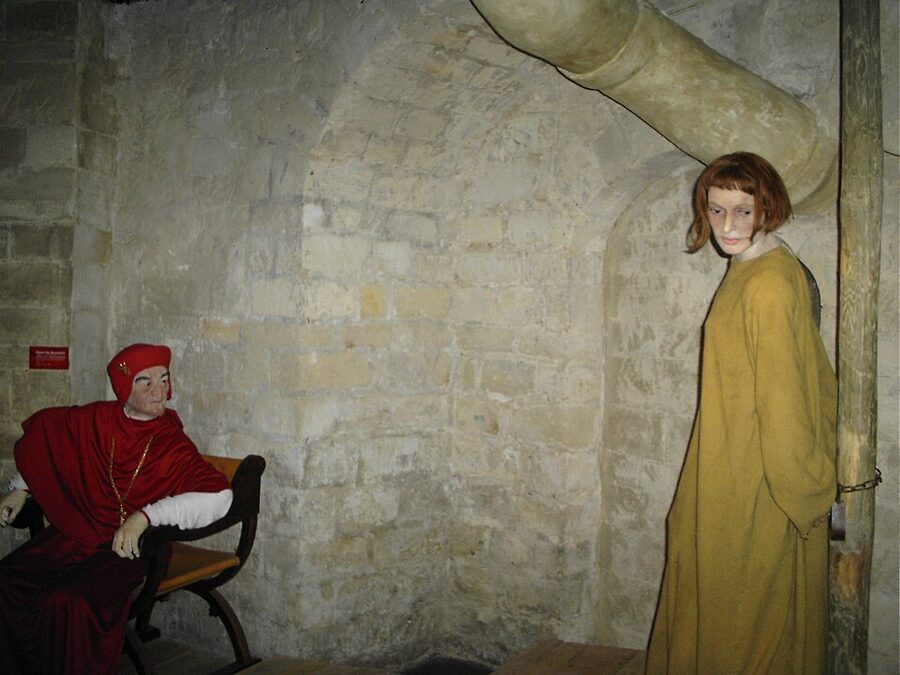
If you’ve already done the Conciergerie earlier in the trip, the Marie Antoinette tableau here adds a dimension you don’t get from the empty stone cells. You see what the actual cell looked like with someone in it. It’s grim. It works.
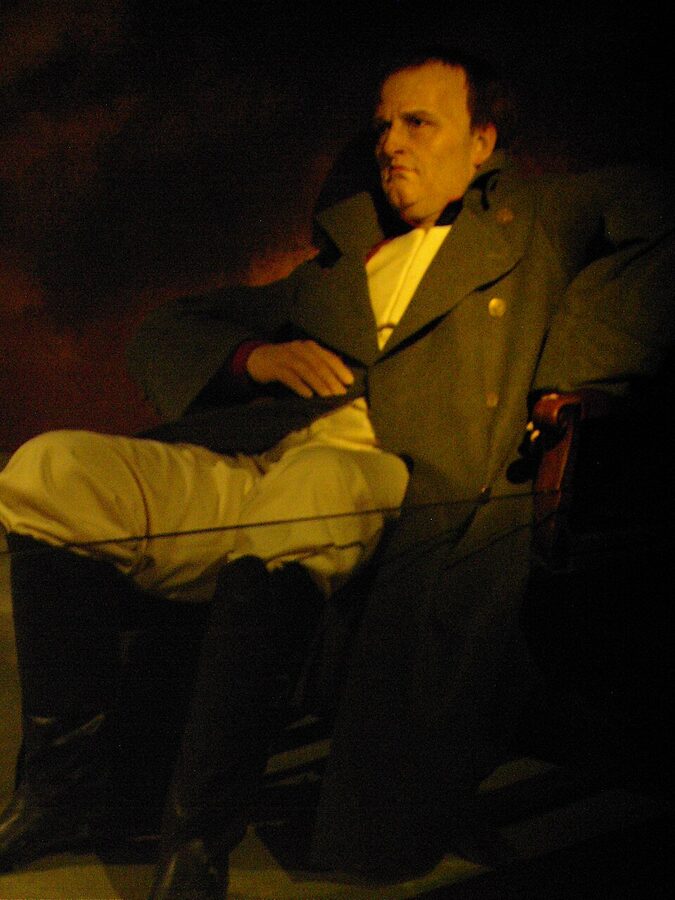
Take note: the basement is genuinely too intense for younger kids. If you have a 4 or 5-year-old, let them wait in the upper corridor with one parent — there’s a side door that lets you skip the basement and rejoin the loop. Staff will direct you.
The art icons room is a Grévin highlight nobody talks about
Coming back up from the basement you hit the art floor — Picasso, Dalí, Van Gogh. This is the room I almost missed because the route is poorly signed at this point. Don’t.
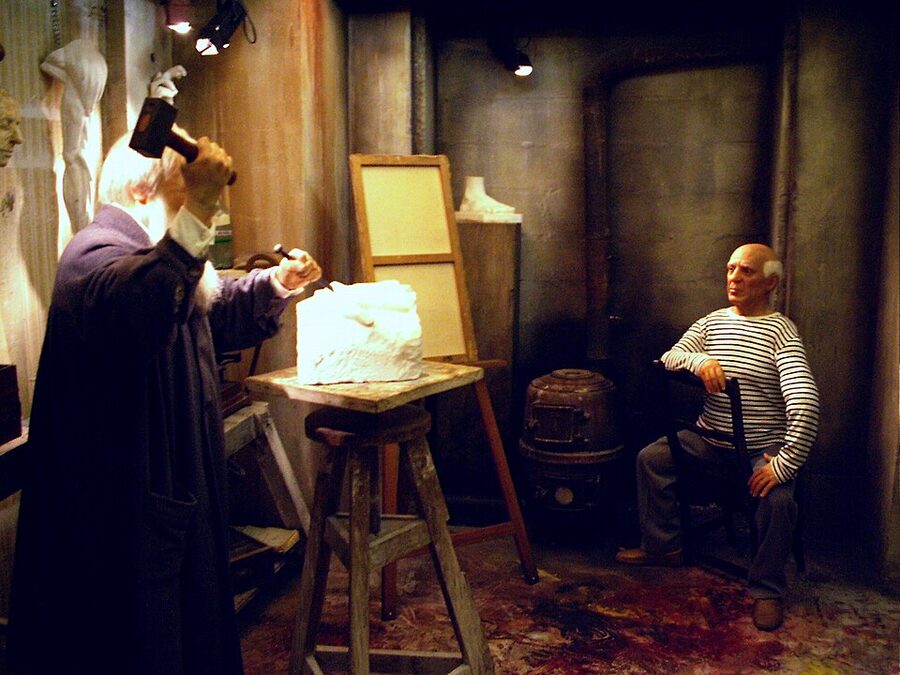
The Picasso scene is the standout. He’s seated, watching a wax sculptor at work in front of him. The two-figure composition is more dynamic than the single-figure poses in most of the rest of the museum. It also nods at the museum’s own craft — the people who make these figures sometimes set up working displays nearby.
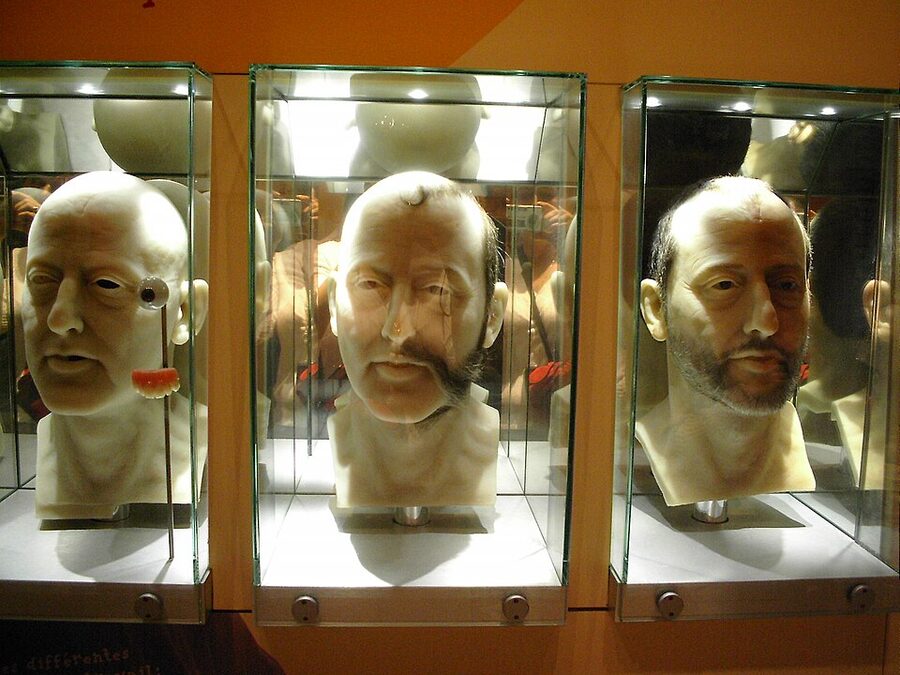
Each Grévin figure takes about six months to make and costs the museum roughly €40,000. They use 15 different specialist trades on a single statue — sculptor, modeller, makeup artist, dental technician (yes, real teeth), wig-maker (real human hair), costumer. You see this pipeline on display in the small “Parcours Découverte” workshop near the exit. It’s quietly the best educational section in the whole museum.
Sport, music, fashion: the celebrity loop
After the art floor you’re back in pure pop-culture territory. Three big rooms in sequence — sport first, music second, fashion and film third.
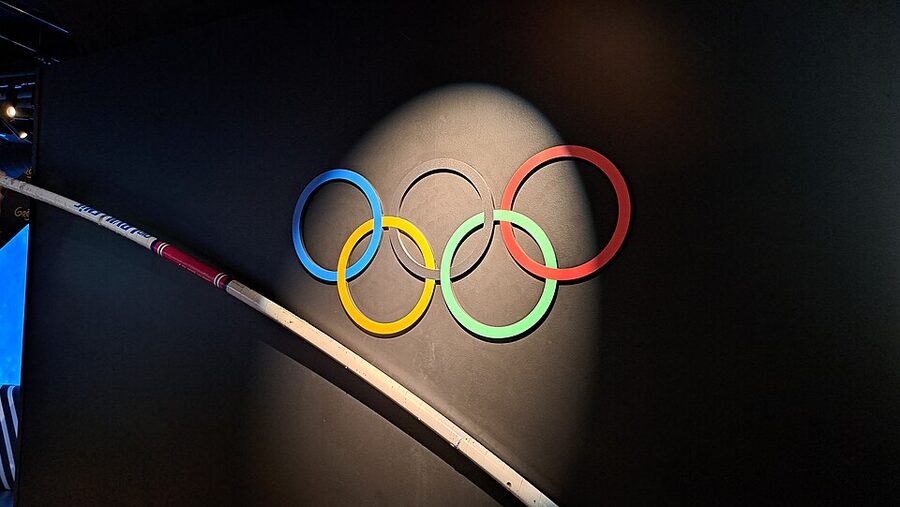

The sport room has Cristiano Ronaldo, Messi, Ibrahimović, Pelé, Tony Parker, Teddy Riner. Pelé in particular is one of the most photographed figures in the whole museum — which makes the queue for the Pelé selfie genuinely long. Get there at 14:00 if you can; the morning crowd has thinned and the late-afternoon school groups haven’t arrived yet.


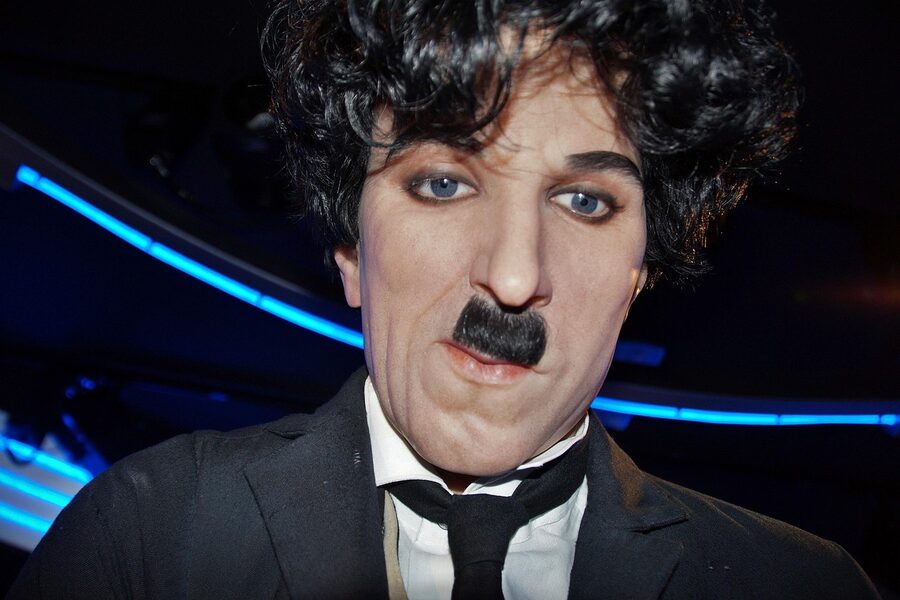
The blunt assessment: the music room is hit-or-miss. The Madonna figure is one of the weaker likenesses in the whole museum. The Michael Jackson “Thriller” figure is excellent. Lady Gaga has improved with each rebuild — the current version is much better than the 2017 one. If you walked past it in 2018 and weren’t impressed, it’s worth coming back.
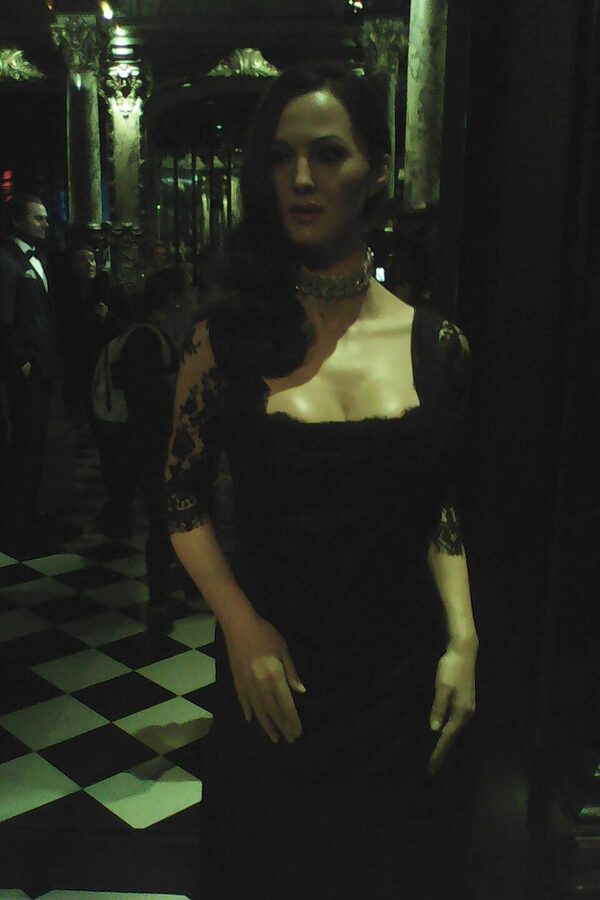
The fashion room is technically the best-lit in the museum. Top-down spots, dark walls, theatrical staging. Christian Dior, Coco Chanel, Cara Delevingne, Naomi Campbell. There’s also techno music piped in, which sets the mood but can be too loud for visitors with sensory sensitivity. If you need to skip a room, this is the one to skip.
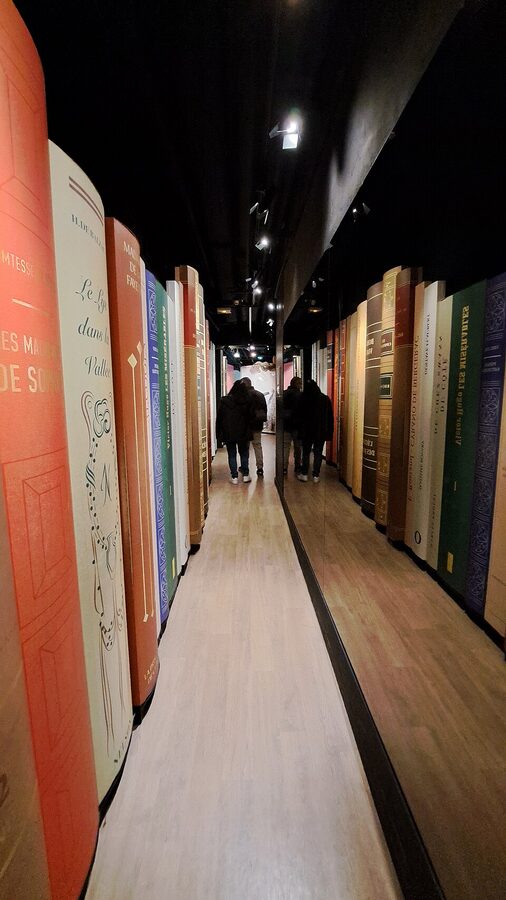
Getting there and timing
Grévin is at 10 Boulevard Montmartre, 75009 Paris. Two metro options:
- Lines 8 and 9 stop at Grands Boulevards. Two-minute walk to the museum entrance. This is the closest stop and the one most international visitors use.
- Line 7 stops at Le Peletier. Five-minute walk. Useful if you’re coming from the south or southwest.
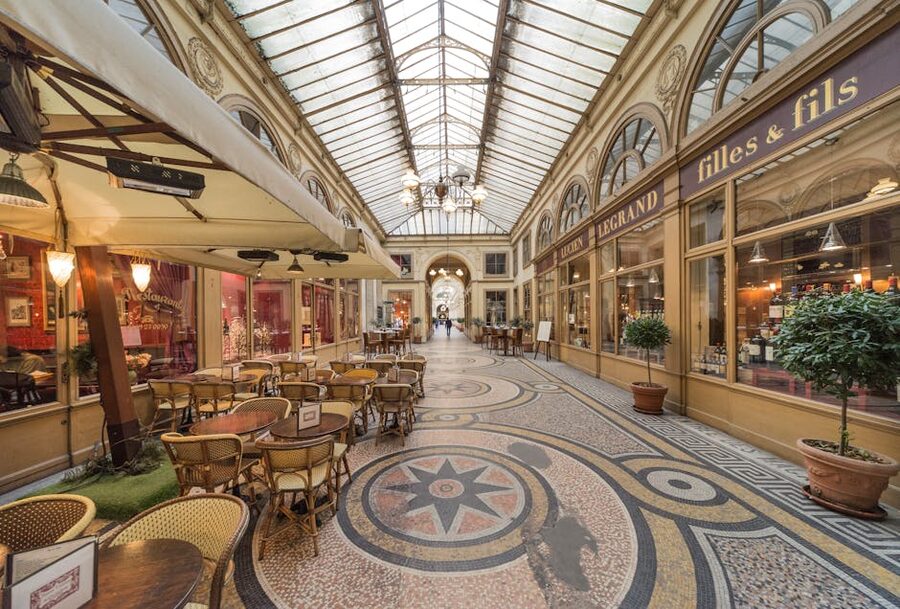
The museum is in the 9th arrondissement, on the boundary with the 2nd, in the Grands Boulevards quarter. This is one of the more pleasant neighbourhoods to walk in Paris — wide tree-lined boulevards, brasseries, and the entrance to Passage Jouffroy directly opposite Grévin’s main door. Walking through the passage takes about three minutes and lands you on Boulevard Haussmann near Galeries Lafayette.
Opening hours change with the season. Standard hours are Monday-Friday 10:00-18:00 and weekends 9:30-19:00. Last admission is one hour before close, but realistically you need 90 minutes inside, so don’t show up much later than 16:30 on a weekday or 17:30 on a weekend. The museum runs extended hours through July and August — typically 9:30-22:00 in the late-July peak — which is genuinely worth the late visit if you want to escape afternoon heat.
Best time to actually go: weekday mornings right at opening, or after 16:00 any day. Saturday afternoon is peak chaos — tour groups, school trips and family combos all arrive in the same window. Avoid 12:00-15:00 on Saturdays unless you enjoy crowds.
Practical things people get wrong
Photography is allowed everywhere except the Palais des Mirages light show. Inside the Hall of Mirrors during the show, flash photography is genuinely banned — the staff will stop you. Stills before or after the show are fine. Same rule in the Théâtre during performances.
The cloakroom is free but small. Drop bags larger than a daypack at the entrance. There’s no way to hold a wheeled suitcase comfortably through the route — it’s narrow, dark, and you’ll bang into figures.
The gift shop is at the end, not the beginning. You exit through it. If you want something for kids, budget the time — there’s a queue at peak hours.
Wheelchair accessibility is partial. The museum is in a 19th-century townhouse with stairs, and several rooms — including the basement — are not step-free. If you or someone in your group uses a wheelchair, contact the museum in advance via their official site to confirm what’s accessible during your visit.
The official Grévin Paris app is in English and free. If you’re skipping the audio-guide ticket, the app works as a basic interactive map. It doesn’t have the full audio commentary the paid version includes, but it does have a decent room-by-room guide and a few interactive games for kids.
Is Grévin actually worth it
For roughly €25-28 you get 90 minutes to two hours of consistent entertainment, one genuinely beautiful 1900-era hall (the Palais des Mirages), and a backdrop for the kind of selfies your kids will actually want to take. It is not the Louvre. It is not the Musée d’Orsay. Don’t go in expecting a fine-art experience.
Where it earns the price is on a rainy day with kids, on a slow Wednesday when the half-price ticket drops it to €14, or as the second museum in a busy Paris itinerary when everyone in your group is sick of looking at oil paintings. It is the cheapest fun you can buy on Boulevard Montmartre, and the Hall of Mirrors alone is something I’d send any Paris first-timer to see.
Where it falls short: skip it if you’re a pure architecture-and-art-history traveller, if you have a strong distaste for kitsch, or if you’ve already done Madame Tussauds in London and are expecting something dramatically different. The figures are roughly the same quality. The setting is what makes Grévin distinct.
The single biggest improvement in 2024-2026 is the lighting. The museum has cycled through three full LED upgrades since 2018 and the current setup, particularly in the Palais des Mirages, is the best it’s ever been. If you haven’t been since pre-pandemic, it’s worth a return visit just for that.
Where it fits in a Paris evening
Grévin closes early enough that you can pair it with a dinner show. If you’re already booked into a Moulin Rouge cabaret evening, you’ve got time for a 14:00-16:00 Grévin slot, dinner near Place Pigalle, then the late show. Pigalle is a 15-minute walk uphill from Grévin, or one metro stop on Line 12 from nearby Saint-Lazare.
Or build the evening around the Opéra Garnier just down the road — Garnier and Grévin are a 12-minute walk apart, both in the same Beaux-Arts era and both built within 15 years of each other. The architectural pairing is genuinely interesting and almost no tourist itineraries put them together.
For a daytime option, a morning at Disneyland Paris followed by an early-evening Grévin is workable if you’re staying central — RER A back to Châtelet, change to Line 8 or 9, you’re at Grands Boulevards by 17:30. Most Disney-day visitors are too tired for it but it’s done.
Family planning specifics
For families: the sweet spot is kids aged 6-12. Younger than that and the basement history rooms will scare them; older than that and the cuteness factor of the Magic Box wears thin. Teenagers tend to enjoy Grévin if they go in with low expectations and treat it as a selfie playground. The Grévin app has a kids-mode that gamifies the visit with a scavenger-hunt style task list — useful for ages 8-11.
If you’ve got a stroller, expect it to be a hassle. The route has stairs, narrow corridors and several blackout transitions. Many parents leave the stroller at the cloakroom and carry younger kids. The museum is not stroller-hostile but it’s not stroller-friendly either.
For the youngest age bracket, the Family-Friendly Seine Cruise pairs better than Grévin does — Grévin really starts working from age 6 upward. If your kids are 3-5, do the cruise instead and save Grévin for when they’re older.
Where to eat near Grévin
You’re in the brasserie heart of Paris. Within five minutes’ walk:
Bouillon Chartier (7 Rue du Faubourg Montmartre) — the famous 1896 worker’s canteen, now feeding tourists at fair prices. Mains around €9-12. Be prepared to queue 20-40 minutes; they don’t take reservations. Worth it once.
Le Grand Café Capucines (4 Boulevard des Capucines) — Belle Époque interior, fish and oysters specialty, mid-range prices. Open 24/7 which is unusual in Paris.
The covered passages themselves — Passage Jouffroy and Passage des Panoramas are full of small bistros that are cheaper than the boulevard equivalents. Caffè Stern in Passage des Panoramas does excellent gelato.
For a faster option, the boulangerie chains right outside the museum on Boulevard Montmartre (Paul, Eric Kayser) do baguette sandwiches for €5-7. Eat in the park beside the Opéra Garnier, ten minutes’ walk south.
Skip-the-line and queue strategy
Lines at Grévin aren’t Louvre-level but they’re not negligible. The pattern:
10:00-11:30 weekdays: usually walk-in. Five minutes maximum.
11:30-14:00 weekdays: 15-25 minute walk-up queue. Pre-booked tickets skip it.
Saturdays and Sundays after 12:00: 30-45 minute walk-up queue. Pre-booked tickets still skip it but the door staff process you slowly because the foyer gets crowded.
School holidays (especially February break and Toussaint): add 50% to the above. Show up at 10:00 sharp or after 16:00.
Wednesdays at half price: chaos all day. The €14 ticket pulls in twice the normal volume. Either commit to going at 10:00 sharp or pick a different day.
For most international visitors, the simple advice is: book the combo ticket online in advance, show up at 10:00 or after 15:00, and ignore the walk-up queue entirely. Twenty seconds at the door, scan the QR code, you’re in.
Pairing Grévin with the rest of your Paris days
I’d put Grévin on a slower-paced afternoon — not a day stacked with major sights. After two hours inside, your legs and your attention are both spent. Build the rest of the day around walking and eating rather than another museum.
A natural half-day combo: morning at the Louvre, lunch in the 1st, walk north along Rue Vivienne and the covered passages, hit Grévin at 14:00. Or reverse it: Grévin at 10:00, walk south to the Orangerie for early afternoon, dinner in Saint-Germain.
For a rainy-day Paris itinerary, Grévin pairs particularly well with the Panthéon — both indoor, neither too long, both showcase a particular slice of French history. The metro link is straightforward via Châtelet.
If you’ve got the kids that day, the Grévin–Disneyland combo on consecutive days is a winning theme — Disney for the rides, Grévin for the cultural backdrop. Both are designed to entertain rather than educate, and there’s something refreshing about that.
Booking the Grévin tickets — final word
If you’re going to book one ticket, make it the Grévin + Seine River Cruise combo. Most-booked option, best value, and you get a Seine experience baked into the package. If you’ve already booked a Seine cruise separately, take the standalone Grévin entry instead and save the €5-8.
For families with primary-school-aged kids, the family tour with the walking guide adds enough structure that the whole experience flows better. The standalone ticket leaves families to figure out the route themselves and the kids tend to flag in the middle.
The audio guide app option is for solo or couple travellers who want context. Don’t buy it for kids — they won’t use it.
If Grévin is on your list, what else should be
Paris is set up so that you can pair almost any major museum with Grévin in a single day, but the pairings that genuinely work are the ones with a thematic link. The Opéra Garnier is the obvious one — same era, twelve minutes’ walk away, similar Beaux-Arts gilded-everything aesthetic. Doing both in one afternoon shows you the high and low ends of 1880s Paris ambition: Garnier was built to impress visiting royalty, Grévin was built to entertain the working middle class who could afford a one-franc ticket.
For a different kind of day, the Moulin Rouge sits about 25 minutes north on foot or one quick metro change away. Both venues opened in the 1880s-1890s, both still trade on their original premise, and both make a lot more sense to visit if you’ve spent the afternoon imagining what Paris looked like when they first opened. The Montmartre walking tour from this same area doubles as the perfect bridge between the two.
Closing thought: don’t let the wax-museum-cliché put you off. Grévin is a 19th-century time capsule that happens to have a gift-shop full of selfies attached. Come for the figures, stay for the Hall of Mirrors, leave understanding why this place has survived 144 years in a city where almost everything else from 1882 is either gone or repurposed. It’s a stayer.