
Most people walking the Île de la Cité queue for Notre-Dame’s exterior, snap a photo, and head off. The mistake is treating the rest of the island like a bridge between metro stops. Sainte-Chapelle and the Conciergerie sit a five-minute walk apart on the same medieval palace footprint, and skipping them is honestly the biggest miss in central Paris.
In a Hurry? Top 3 Picks
- Combined Sainte-Chapelle + Conciergerie ticket — about $27. Best value. One purchase, both monuments, same day. Book the combo on GetYourGuide
- Sainte-Chapelle entry only — about $16. Pick this if you only have an hour and the stained glass is what you came for. Book Sainte-Chapelle solo
- Conciergerie with HistoPad tablet — about $15. The augmented-reality tablet rebuilds the medieval palace and Marie-Antoinette’s cell over your view. Genuinely worth it. Book the Conciergerie
- In a Hurry? Top 3 Picks
- Why These Two Belong Together
- Tickets and What They Actually Cost
- One Catch With Time Slots
- Sainte-Chapelle: What You’re Actually Walking Into
- Reading the Windows
- When the Light Is Best
- The Conciergerie: A Palace, Then a Prison
- The Kitchens
- Marie-Antoinette and the Revolution
- Use the HistoPad
- Best Booking Options
- 1. Sainte-Chapelle and Conciergerie Combined Ticket — about
- 2. Sainte-Chapelle Self-Guided Entry — about
- 3. Sainte-Chapelle and Conciergerie Combined — Variant — about
- Practical Stuff Nobody Tells You
- Getting There
- How Long Do You Need?
- How These Two Fit With the Rest of Paris
- Worth It in Bad Weather?
- Add a Walking Tour Around the Island
- Pair It With a Hop-On Bus
- Other Paris Monuments Worth Booking
Why These Two Belong Together
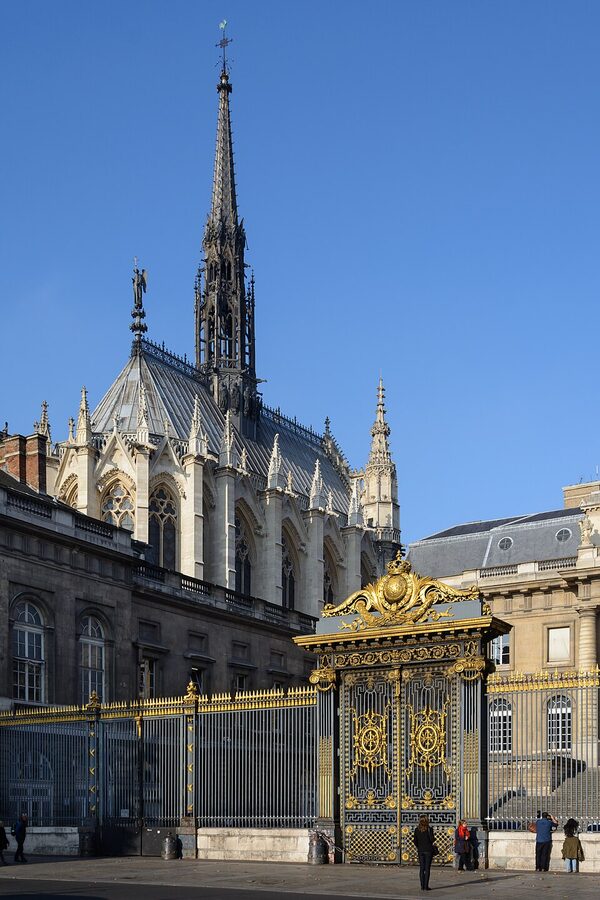
Both buildings were once part of the Palais de la Cité, the residence of French kings from the 10th to the 14th century. When the royal court moved to the Louvre and later Versailles, the complex split into pieces. Sainte-Chapelle stayed as the king’s private chapel. The Conciergerie became a courthouse and, during the Revolution, a prison.
That shared origin is why the combined ticket exists. You’re literally walking through two halves of the same medieval palace. Doing one without the other leaves a hole in the story.
Tickets and What They Actually Cost
Here’s the simple version. Sainte-Chapelle alone is €13. Conciergerie alone is €13. Combined ticket is €20 if you book direct through Centre des Monuments Nationaux. Through GetYourGuide and Viator the combined ticket is around $27 — slightly more, but you get instant mobile delivery and free cancellation up to 24 hours before. For most travellers the resale margin is worth not standing in a second queue.
Under-18s and EU residents under 26 get in free with ID. There’s also a free entry rule worth knowing — first Sunday of the month from November through March, plus European Heritage Days in mid-September. If you’re in Paris in winter, time it for that Sunday.
One Catch With Time Slots
Sainte-Chapelle uses 30-minute entry slots. Whatever time is on your ticket, that’s when you join the queue at the Cour de Mai gate. Show up earlier and you’ll be turned away or held back. Show up 15 minutes late and you’ll usually still get in, but it’s not guaranteed.
The Conciergerie has no time slot — same-day entry, anytime during opening hours. So the practical play is: book Sainte-Chapelle for a fixed time, then walk over to the Conciergerie afterwards whenever you’re ready.
Sainte-Chapelle: What You’re Actually Walking Into
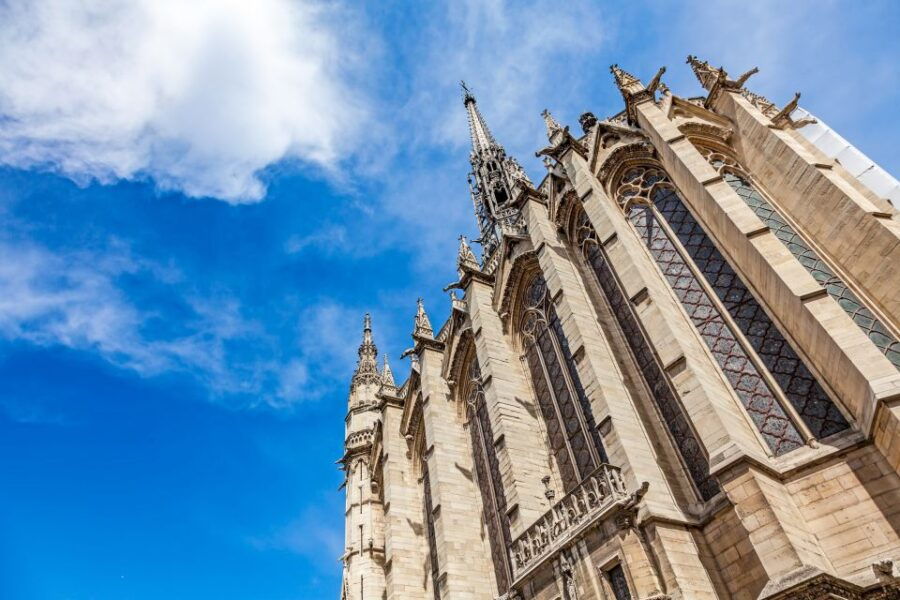
Built by Louis IX (later Saint Louis) starting around 1238, Sainte-Chapelle was designed for one specific reason — to house the Crown of Thorns and a fragment of the True Cross. Louis paid more for the relics themselves than he did for the chapel. That tells you something about why the building exists.
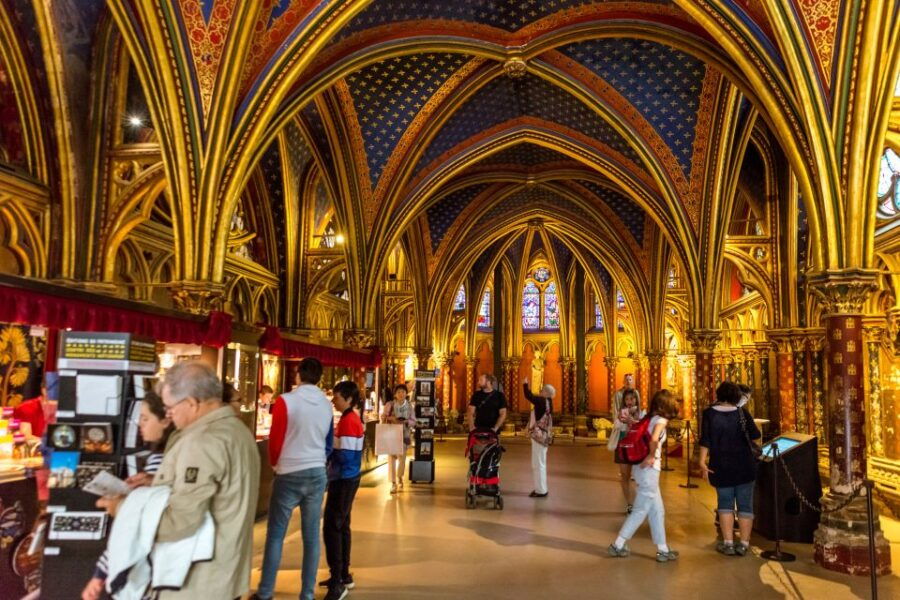
You enter on the ground floor — the lower chapel, which was for palace staff and is darker, lower-ceilinged, and frankly skipped by most visitors. Don’t skip it. The painted vaulting and fleur-de-lys columns set up everything you’re about to see upstairs. Take three minutes here even if you’re rushing.
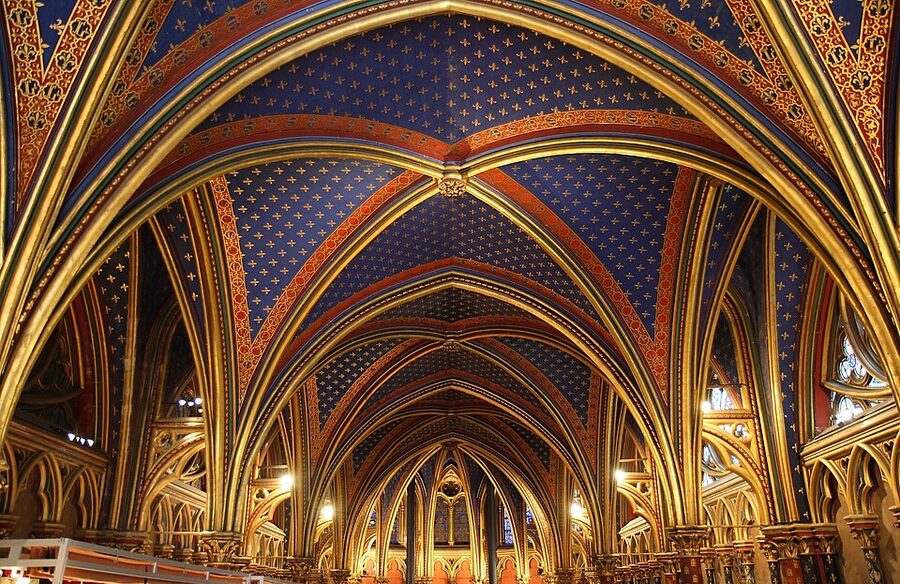
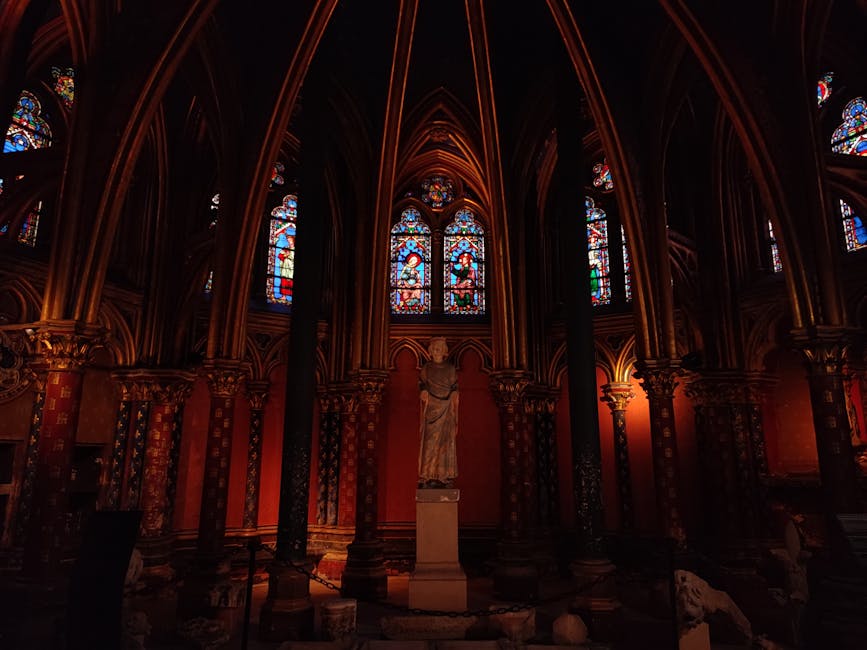
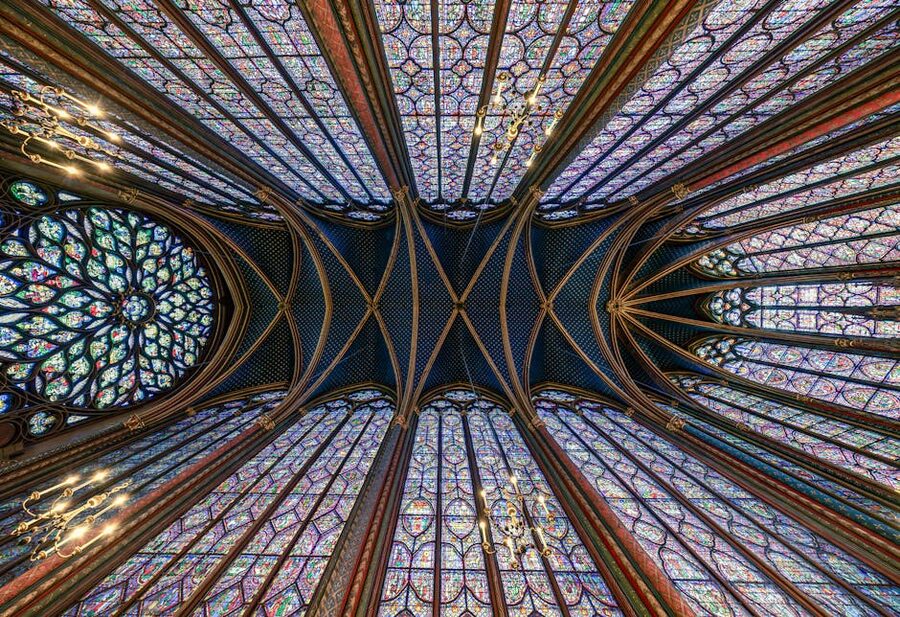
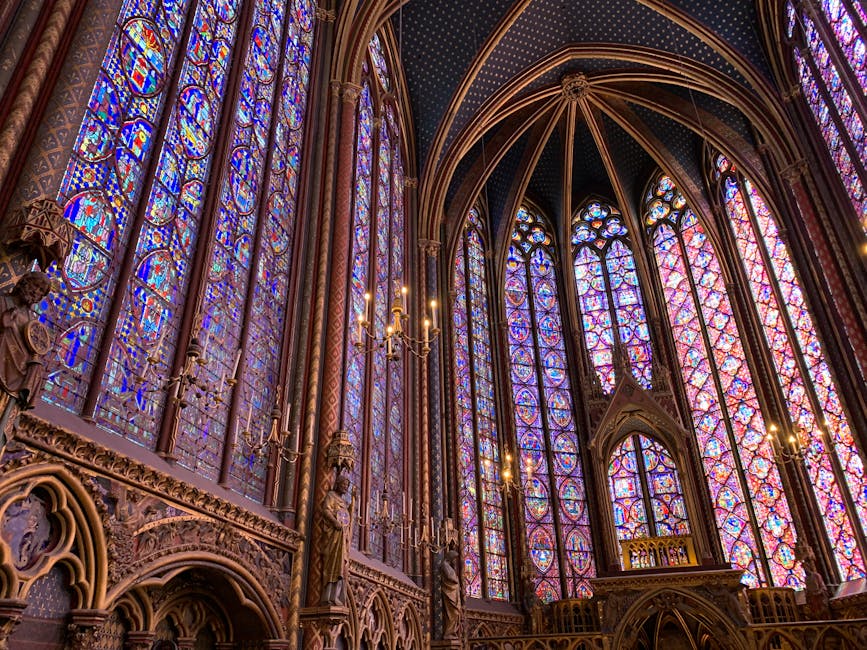
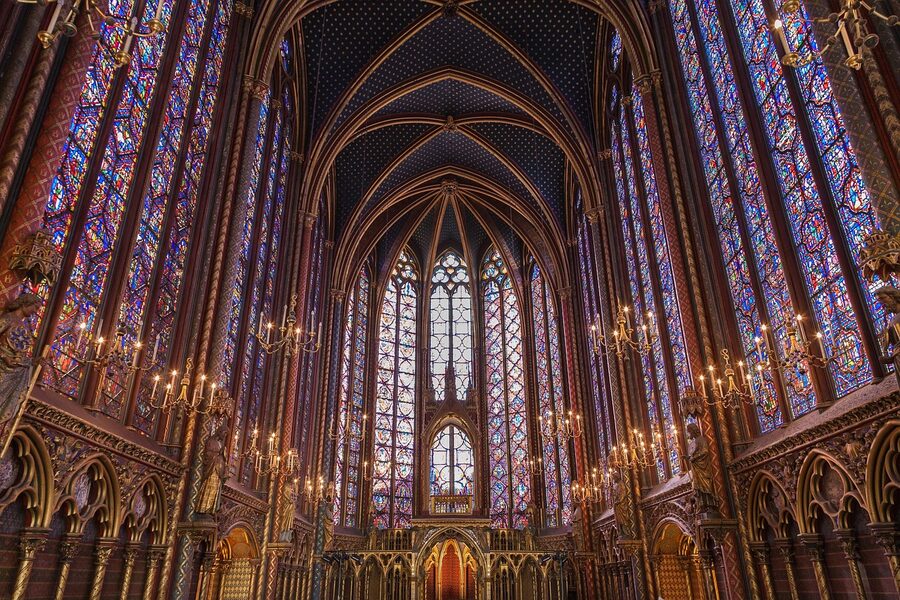
Then the spiral staircase. It’s narrow and a bit awkward in a backpack — there’s an elevator if you need it, but you have to email ahead to arrange the escort. Coming up into the upper chapel is the moment people came for. 15 metres of stained glass on every side, golden vaulting overhead, and on a sunny morning the whole space goes blue and red.
Reading the Windows
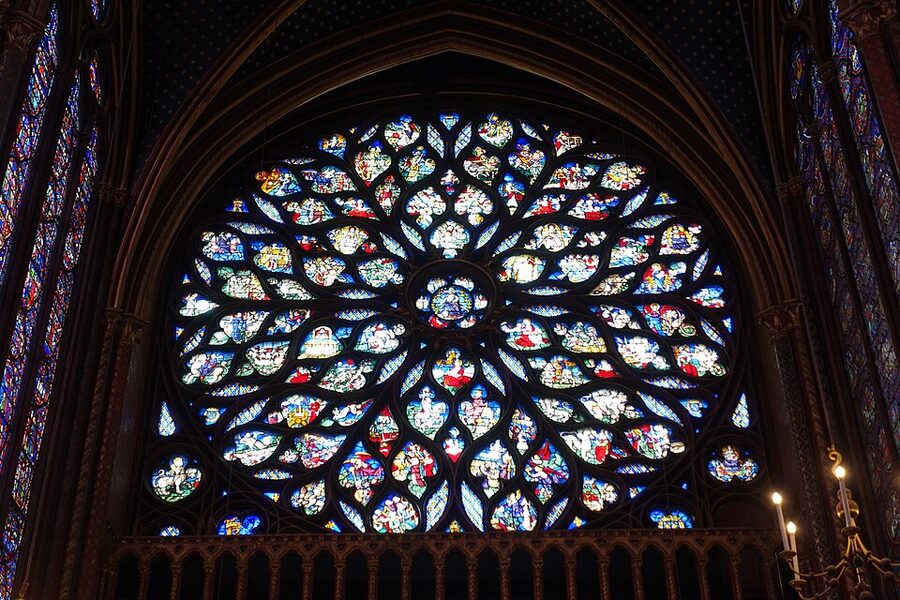
Each of the fifteen tall windows tells a Bible story, starting with Genesis on the left as you face the apse. The west rose window — the one above the entrance, added later by Charles VIII in the 1490s — shows the Apocalypse and is the easiest to spot as a single composition.
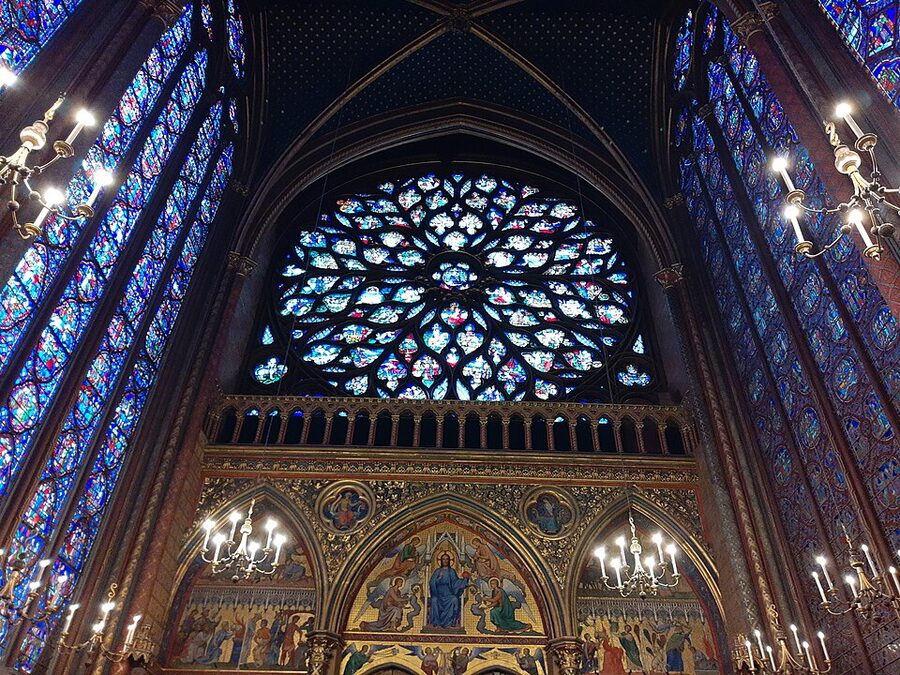
If you only have ten minutes and want to know where to look — sit on a chair near the back, look up, and just let your eye drift. The detail is overwhelming if you try to read every panel.
When the Light Is Best
The chapel faces roughly east-west, and the long sides catch sun through the morning and afternoon. From a few visits, what I’ve found is this: between 10 and 11 am the south side glows, around 3 to 4 pm the north side does, and in midwinter the light is weaker but the chapel is much quieter. Cloudy days are still worth it — the windows are saturated enough that overcast just dims them rather than killing the effect.
Avoid 1 to 2 pm if you can. That’s when the bus tours bottleneck through. The space is small. 200 people inside feels like a tin of sardines.
The Conciergerie: A Palace, Then a Prison
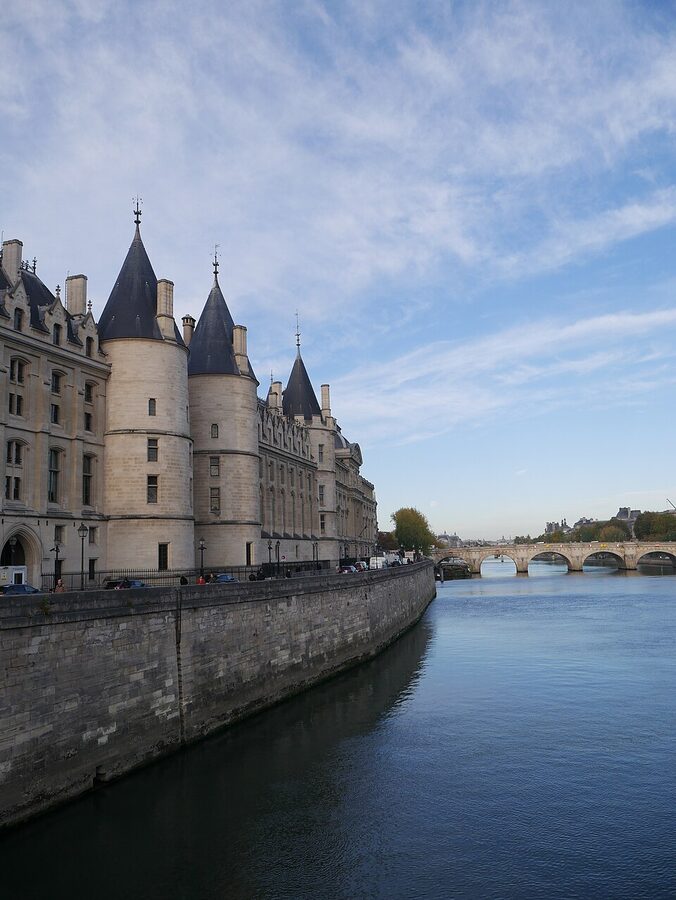
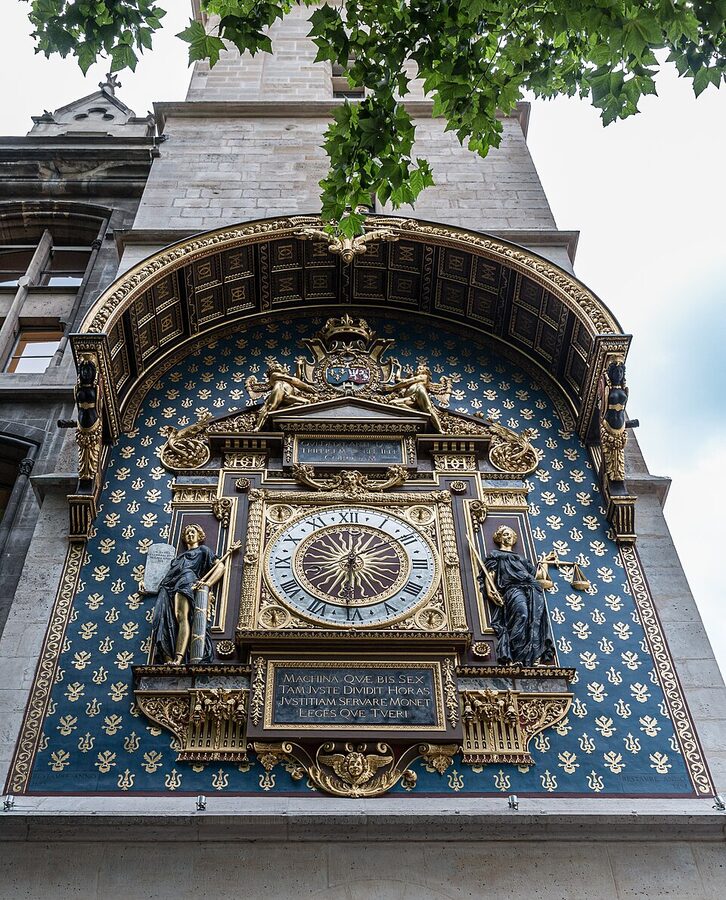
Walk out of Sainte-Chapelle, turn right past the Palais de Justice, and the Conciergerie entrance is on the Quai de l’Horloge side, under the medieval clock tower. Same building complex, completely different mood.
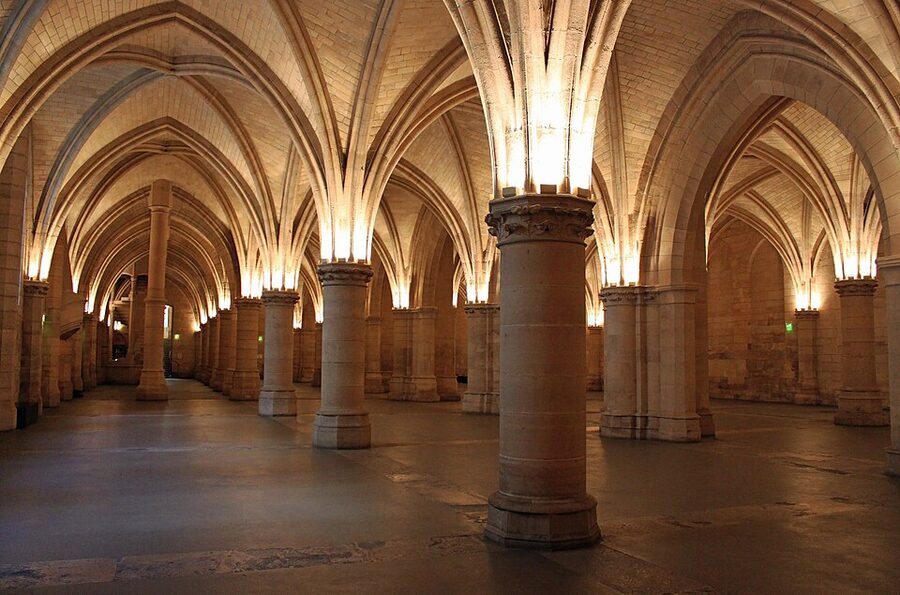
The first room you walk into is the Salle des Gens d’Armes — Hall of the Men-at-Arms. It’s the largest surviving medieval hall in Europe, 64 metres long, 27 wide, with four giant fireplaces. This was the dining hall for the king’s household staff, fed up to 2,000 people at a time. The vaulted ceiling alone is worth the ticket.
The Kitchens
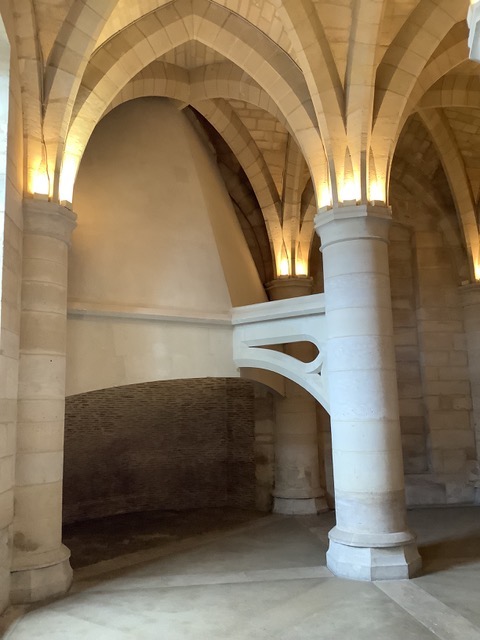
Off the main hall, the medieval kitchen still has its four corner fireplaces — one for each course of a royal banquet. The whole setup feels small because we expect industrial kitchens to be bigger, but this fed thousands. Each fireplace is the size of a small room.
Marie-Antoinette and the Revolution
The upper-floor exhibits cover what most visitors actually come for: the Revolution years. From 1793 to 1795, the Conciergerie became the antechamber to the guillotine. 2,780 prisoners were tried in the building’s revolutionary tribunal. Most went to the Place de la Révolution — now Place de la Concorde — to be executed.
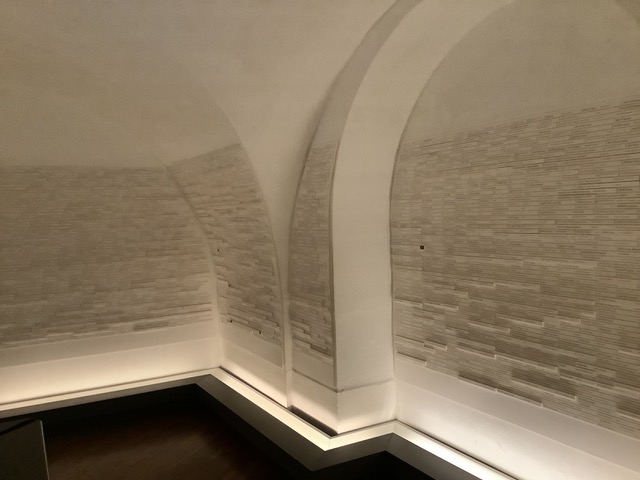
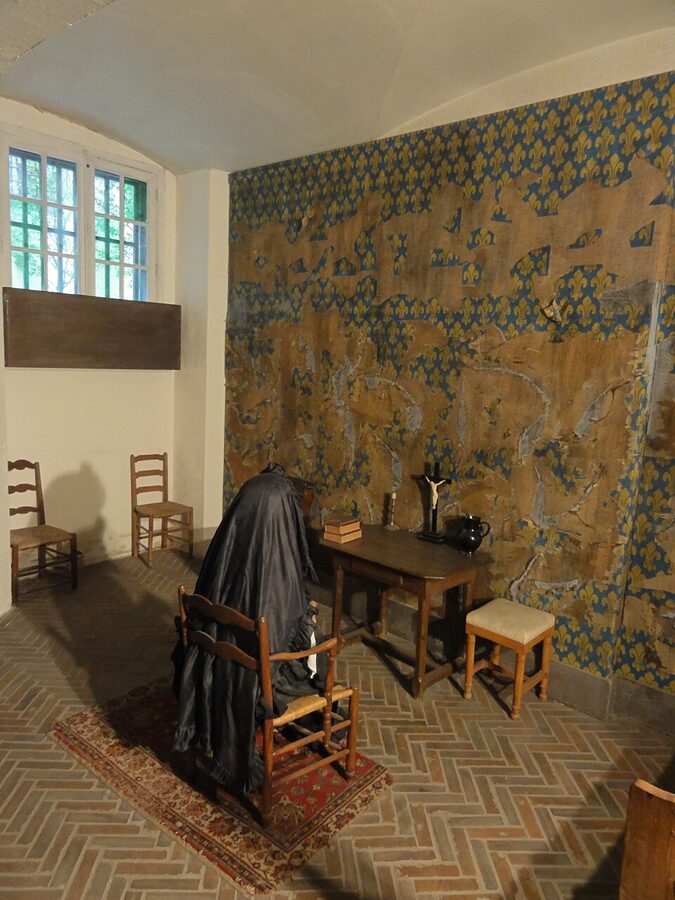
Marie-Antoinette spent her last 76 days here. Her cell has been reconstructed in the location it occupied — a small room she shared with two guards, with a screen for partial privacy. The chapel built on the site of her cell was added later by her daughter, then dismantled and rebuilt in its current form.
Use the HistoPad
Every Conciergerie ticket includes a HistoPad — a tablet with augmented-reality overlays. You hold it up in each room and it rebuilds the medieval palace, the prison cells, the courtyards as they actually looked. It sounds gimmicky. It’s not. The Salle des Gens d’Armes goes from empty stone hall to a packed banqueting room with cooks, soldiers, dogs, the lot. In the prison sections, you see the cells reconstructed at three densities — rich, middling, and poor — because prisoners paid for their conditions.
One drawback: the HistoPad battery dies fast. Plug in at the entry station while you watch the intro video, then start.
Best Booking Options
Three tours worth your money for these monuments. The first is the most popular, and what most readers will want.
1. Sainte-Chapelle and Conciergerie Combined Ticket — about $27
This is what 90% of readers should book. One mobile ticket, both monuments, you choose the Sainte-Chapelle time slot at checkout. Our full review of the combined ticket walks through the booking flow if you want to see exactly what shows up on the email confirmation.
2. Sainte-Chapelle Self-Guided Entry — about $16
Pick this if you’re spending three days in Paris and one of them is mostly the Louvre or Versailles. An hour at Sainte-Chapelle alone is enough — the single-monument ticket uses the same time-slot system as the combo, so booking logic is identical.
3. Sainte-Chapelle and Conciergerie Combined — Variant — about $27
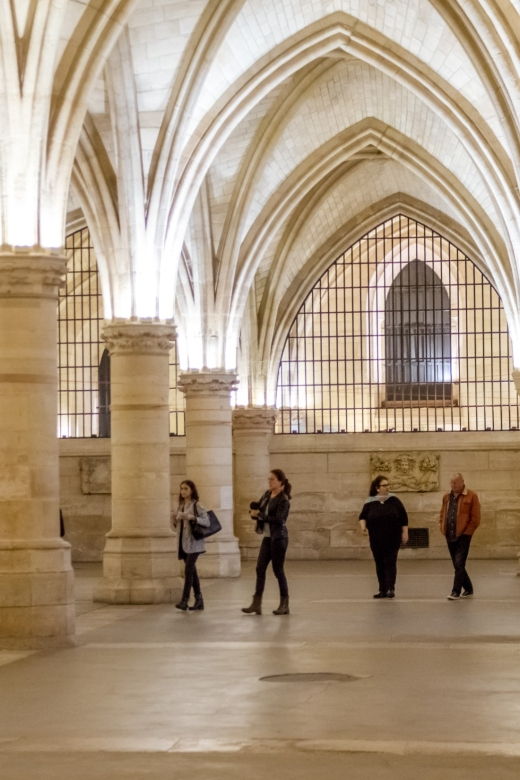
If your first-choice time on the main combo is gone, check this alternate combined-ticket listing. Same product, same provider, but inventory is allocated separately so it sometimes has slots when the headline page is full.
Practical Stuff Nobody Tells You
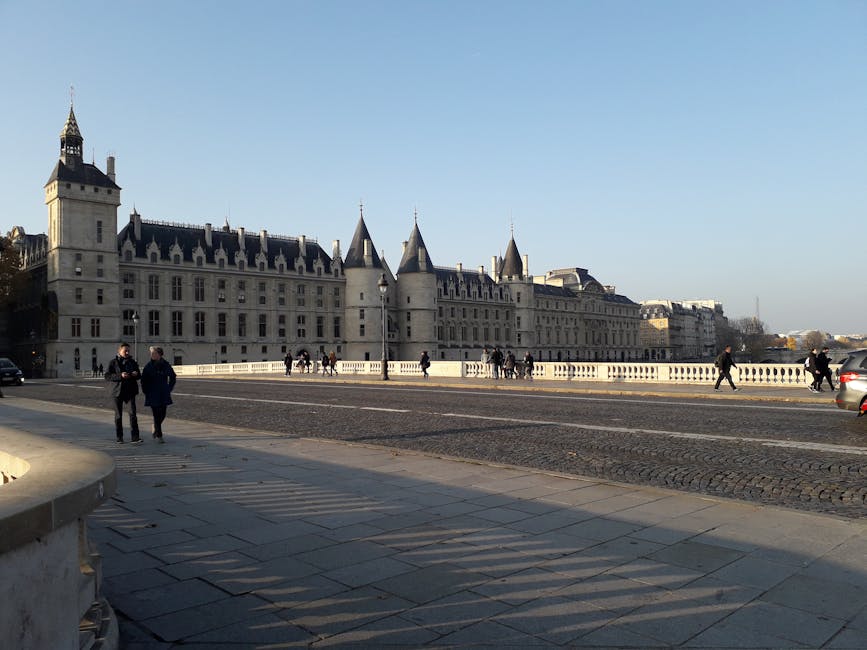
Security is real. Sainte-Chapelle shares an entrance with the working Palais de Justice, which is still an active courthouse. There’s a metal detector and bag scan and the queue can be 20 minutes even with a timed ticket. Lawyers in robes walk past the line, which is briefly funny.
No cloakroom. Whatever you bring, you carry. Big backpacks aren’t always allowed — under 30 litres is the working rule. Strollers must fold to fit through the X-ray.
No public toilets at Sainte-Chapelle. Use the cafés on Boulevard du Palais before you queue. The Conciergerie does have toilets near the gift shop, but they’re tiny and queued.
Photography is fine. No flash, no tripods, no selfie sticks. Phones are perfect for the windows — modern phone cameras handle the dynamic range better than DSLRs in this lighting.
Audio guides at Sainte-Chapelle cost €3 and last 30 minutes. The HistoPad is included with Conciergerie entry. If you’re doing both, the HistoPad is the better experience by a wide margin.
Getting There
Cité metro on Line 4 lands you 100 metres from Sainte-Chapelle. Châtelet (Lines 1, 4, 7, 11, 14 and RER A, B, D) is a five-minute walk across Pont au Change — and that walk gives you the riverside view of the Conciergerie towers, which is a free preview worth taking.
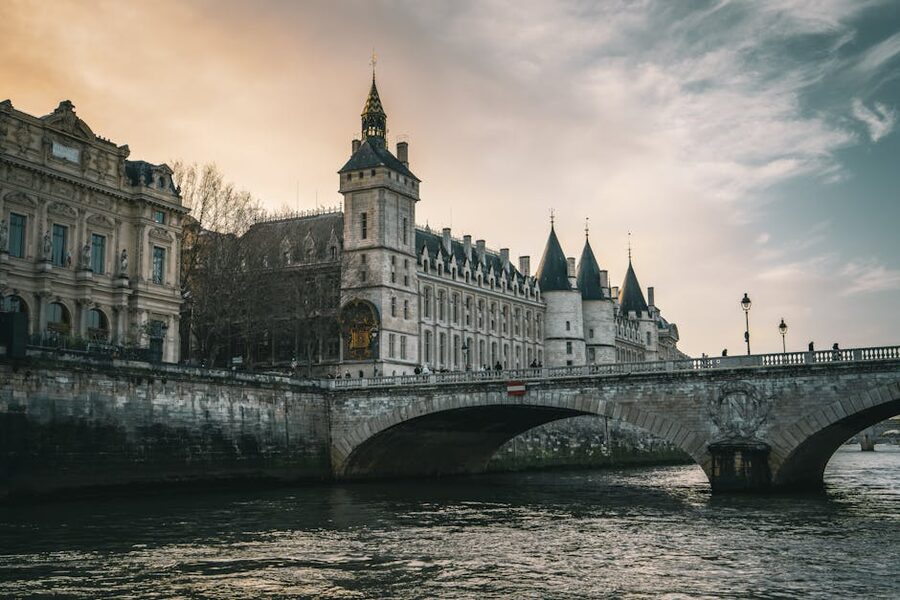
Bus 21, 27, 38, 47, 58, 70, 75, 81, 85, and 96 all stop within a few minutes’ walk. The closest tram is none — Île de la Cité is metro/walk only.
How Long Do You Need?
An honest minimum is 90 minutes for the combo — 30 to 40 in Sainte-Chapelle, 50 to 60 in the Conciergerie if you actually use the HistoPad. That’s tight. If you’ve got two hours, you’re comfortable. Three hours and you’ll have time to sit, photograph properly, and read the panels.
Don’t pair this with the Louvre on the same day unless you have stamina. It’s tempting because they’re both nearby, but you’ll either rush one or be too tired to enjoy the other. Better partner: the Panthéon in the Latin Quarter, which is a different mood and only twenty minutes’ walk south, or stay on the island and do the Notre-Dame outdoor tour with crypt entry for the rest of your morning.
How These Two Fit With the Rest of Paris
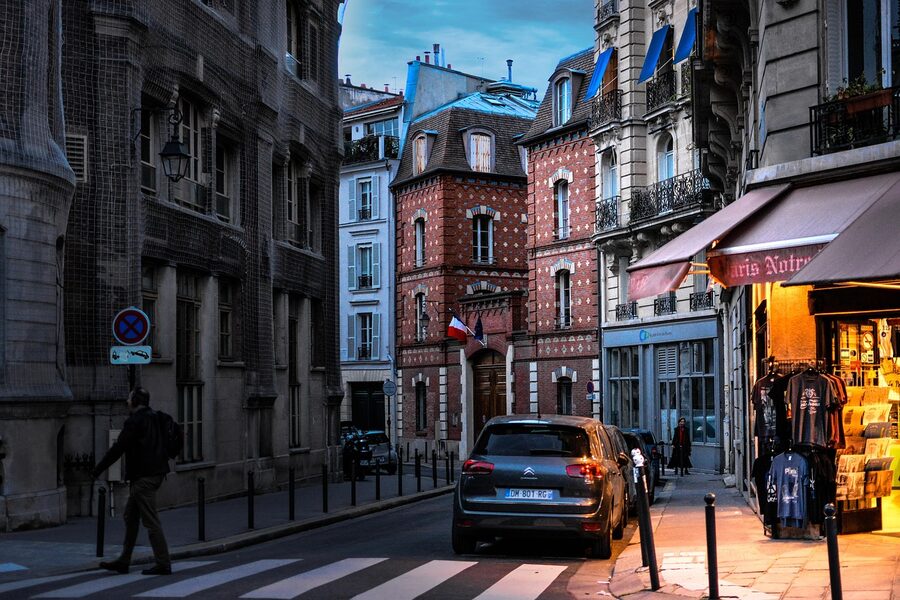
If you’ve got a full Paris itinerary going, here’s how I’d slot these in. Day one: Louvre in the morning, lunch on Rue de Rivoli, then walk down to the Île de la Cité and do Sainte-Chapelle plus the Conciergerie in the afternoon. The light in Sainte-Chapelle is at its strongest between 2 and 4 pm anyway.
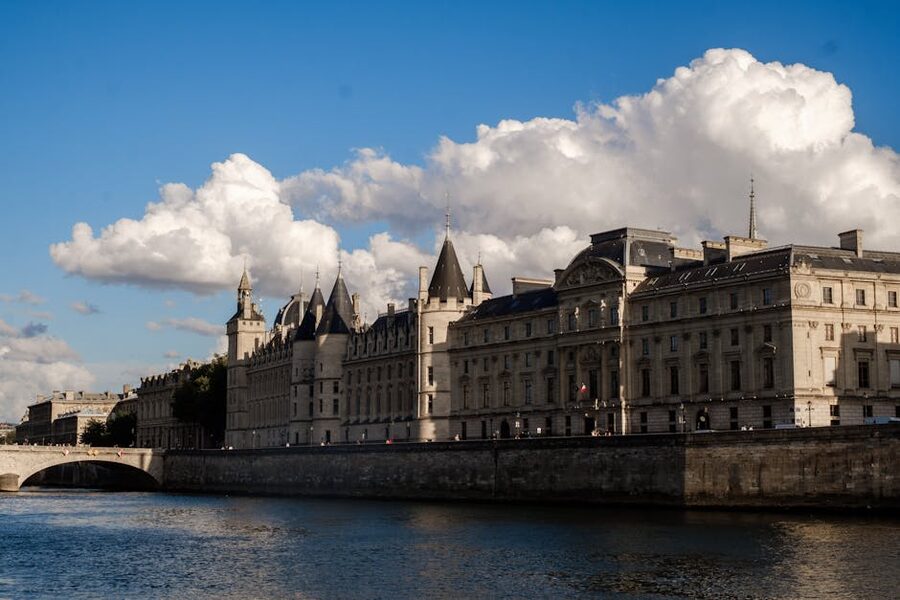
Day two could be the Eiffel Tower in the morning and a Seine cruise at sunset — most cruises pass directly under the Conciergerie towers, so you get a second look from the water. Or splice in an Impressionist morning at the Musée d’Orsay across the river, then Sainte-Chapelle after lunch.
For day trips, Versailles deserves its own full day — don’t try to bolt anything onto it. Same goes for Les Invalides if you want time at Napoleon’s tomb. Both are big enough that pairing them with anything else feels rushed.
Worth It in Bad Weather?
Yes — and arguably better. Both monuments are indoors. Sainte-Chapelle’s stained glass works even on grey days because the windows are saturated enough that overcast just dims them slightly rather than killing the colour. The Conciergerie is entirely indoors with consistent lighting. If you’re in Paris in February and it’s drizzling, this combo is one of the best sheltered half-days in central Paris.
One caveat. Sainte-Chapelle gets cold in winter. There’s no real heating to speak of, and you’re standing on stone floors looking up. Wear a coat you can keep on indoors.
Add a Walking Tour Around the Island
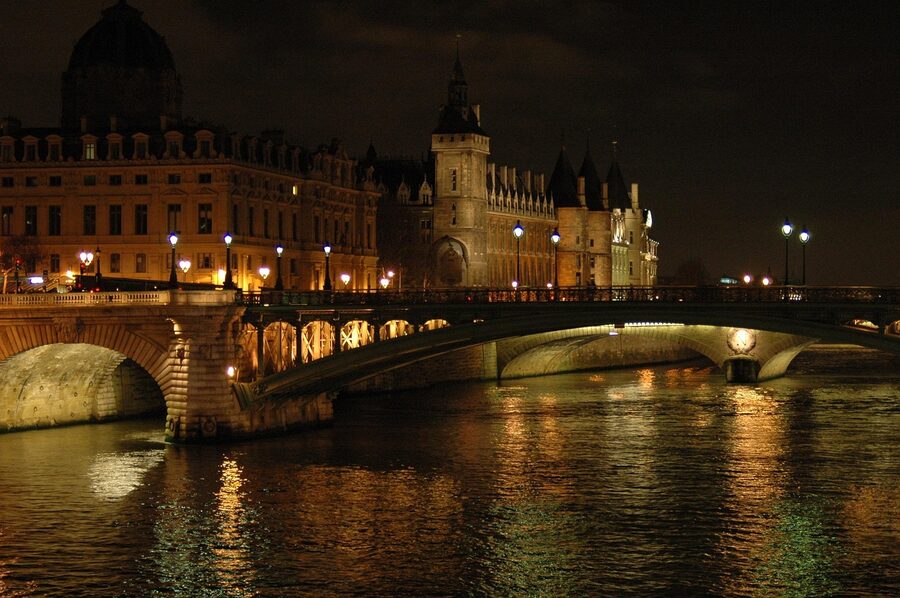
The Île de la Cité is small but it’s dense with history. If you want a guide tying everything together — Notre-Dame’s exterior, the flower market, the Pont Neuf, the Square du Vert-Galant — a couple of options work well. The Notre-Dame outdoor walking tour with crypt entry covers the eastern half of the island, including the archaeological crypt under the parvis. The Notre-Dame exterior tour with entrance is a tighter version focused just on the cathedral. Either pairs well with a morning at Sainte-Chapelle and Conciergerie.
For something different, the Paris-in-a-Day combo bundles Sainte-Chapelle with the Musée d’Orsay and a Seine cruise into a single guided day, which removes the planning entirely if you’ve only got 24 hours in the city.
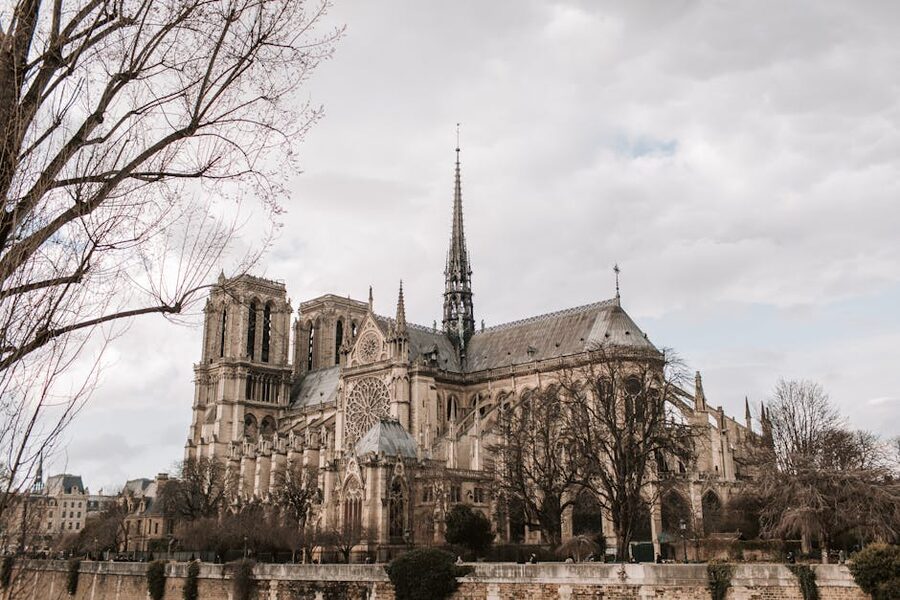
Pair It With a Hop-On Bus
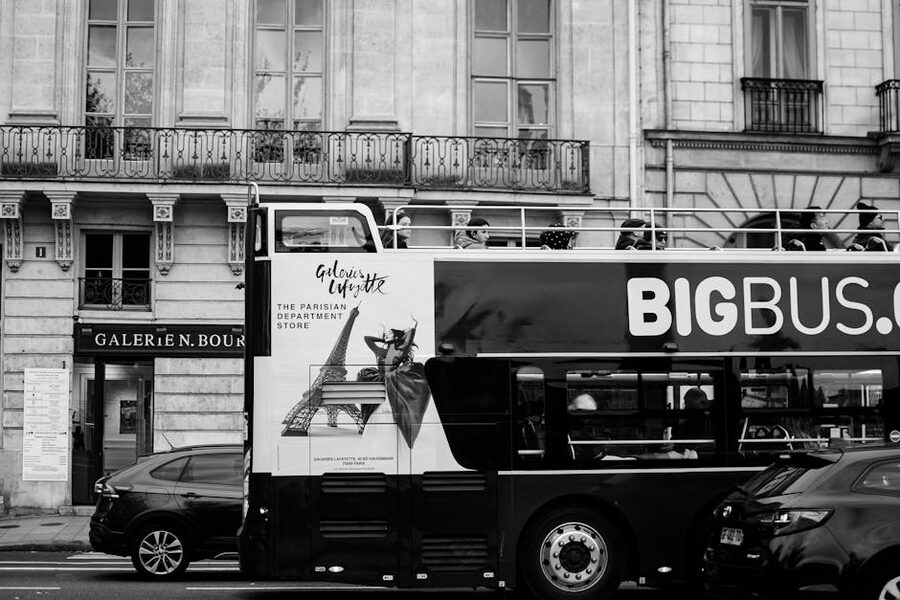
If you’re using a hop-on hop-off bus to cover Paris, the Tootbus and Big Bus both have stops within a 5-minute walk of Sainte-Chapelle. Tootbus stops at Pont Neuf; Big Bus has a Notre-Dame stop on Quai de Montebello. Either gets you on and off the island painlessly.
Other Paris Monuments Worth Booking
If Sainte-Chapelle’s stained glass got you hooked on Gothic Paris, the obvious follow-up is the Arc de Triomphe rooftop for a completely different vantage on the city, and Montparnasse Tower if you want the only Paris skyline view that includes the Eiffel Tower itself. The Panthéon over in the Latin Quarter rounds out the medieval-and-monumental theme — Foucault’s pendulum, the crypt of Voltaire and Rousseau, and far fewer crowds than anywhere else on this list. Whichever direction you go, book the time slot first and plan the day around it. Paris monuments in 2026 are basically all timed-entry now and the days of walking up and queuing are gone.