
The gondola is smaller than I expected. Eight people squeeze into a pod that looks like a piece of ski lift equipment, the operator waves, and you lift off the cafe roof at Imjingak, swing out over the Imjin River, and within two minutes you’re hanging above a stretch of South Korea nobody has been allowed to live in for seventy-odd years. The Civilian Control Zone. Empty fields, abandoned roads, rusting barbed wire, and then the landing station at Camp Greaves — a former US army base that feels oddly serene now that it’s a gallery. This is the Paju Peace Gondola, also sold as the DMZ Gondola, and it’s the only commercial cable car in the world that takes you into a restricted military buffer zone.
Booking the gondola on its own is one of the simplest things you can do near the DMZ. It’s walk-up friendly most days, the ticket windows accept foreign cards, and you don’t need a passport or a tour guide to ride. But most foreign travellers aren’t looking for “just the gondola” — they want a half-day or full-day DMZ experience with Imjingak and the gondola bundled in, because getting to Paju from Seoul independently eats a whole morning. This guide covers both options: the DIY gondola-only visit, and the three DMZ+Gondola tours I’d actually book.
- Short on time? Book one of these
- What the Peace Gondola Actually Is
- What You See From the Cable Car
- Camp Greaves on the Far Side
- Gondola Tickets: What You Actually Pay
- When the Gondola Stops Running
- How to Get to Imjingak From Seoul on Your Own
- My Three Picks for DMZ+Gondola Tours
- 1. Imjingak Park & Observatory With Gondola Ride From Seoul — around
- 2. From Seoul: DMZ Tour With Tickets and Optional Peace Gondola — around
- 3. Seoul: DMZ Guided Tour with Suspension Bridge and Gondola — around
- Imjingak Park Itself Is Worth an Hour
- The National Memorial Hall of the Korean War Abductees
- Is the Gondola Worth It If You’re Doing a Full DMZ Tour?
- Timing Your Visit: Seasons, Weekdays, and the Wind
- Time of Day
- Combining the Gondola With Other Day Trips
- What to Bring and What to Leave
- Kids and Accessibility
- A Short History of Why This Place Exists
- A Few Things First-Timers Miss
- More Seoul Day Trips From the Same Corner of the Map
Short on time? Book one of these
If you just want the booking link and you’ll sort the details later, these are the three I’d point a friend at first.
- Imjingak Park & Observatory With Gondola Ride From Seoul — around $35: The flagship half-day tour. Hotel pickup in Seoul, Imjingak Park, the gondola ride over the Civilian Control Zone, Mount Odu Observatory. No 3rd Tunnel, no shopping stops. Check availability
- From Seoul: DMZ Tour With Tickets and Optional Peace Gondola — around $33: The budget pick. Full DMZ circuit (Dora Observatory, 3rd Tunnel, Imjingak) with the gondola as a paid add-on. Good if you want everything and are comfortable skipping the gondola if the wind is up. Check availability
- Seoul: DMZ Guided Tour with Suspension Bridge and Gondola — around $48: The premium combo. 7 to 9 hours, the Gamaksan red suspension bridge, the full DMZ loop, plus the gondola. My pick if you only have one day outside Seoul and want to fill it. Check availability
What the Peace Gondola Actually Is
The Paju Imjingak Peace Gondola — everyone calls it the DMZ Gondola once you’re there — is an 850-metre cable car line that launches from the rooftop of the Imjingak cafe, crosses the Imjin River, and lands at Camp Greaves on the far bank. The far bank is inside the Civilian Control Zone, which is the buffer strip of South Korean territory that sits between normal Korea and the Demilitarized Zone proper. You are not in the DMZ itself. But you are in a controlled area that no civilian could legally walk into without the gondola, a tour bus, or a special permit.
Two pod types operate on the same cable. A standard enclosed car with solid panels runs most of the day — this is the one you’ll ride if you buy a regular ticket. The crystal car, which has a glass floor, costs a few thousand won extra and runs on a separate rotation. If you want the glass-floor version you need to ask at the window or book it online; it’s not the default. Both cars take about seven minutes to cross one way.
What You See From the Cable Car
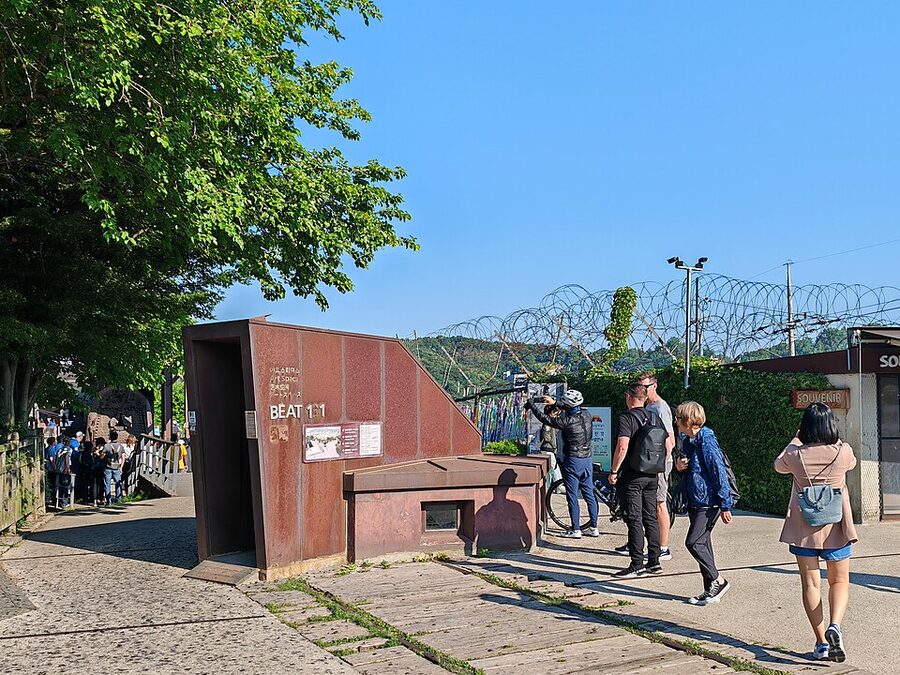
Out the window on the ride over, you look down at reeds, a working stretch of the Imjin River, and a disused rail track that used to run north before the war stopped it. On the far side you can usually spot guard posts, sections of rusting fence, and the top of the old Jangdan Station tower. The view north toward actual North Korea from the cable car itself is limited — you can’t see Kaesong or the Propaganda Village from here. For that you need the Dora Observatory, which is 40 minutes further up the road and only accessible on a guided DMZ tour.
Camp Greaves on the Far Side
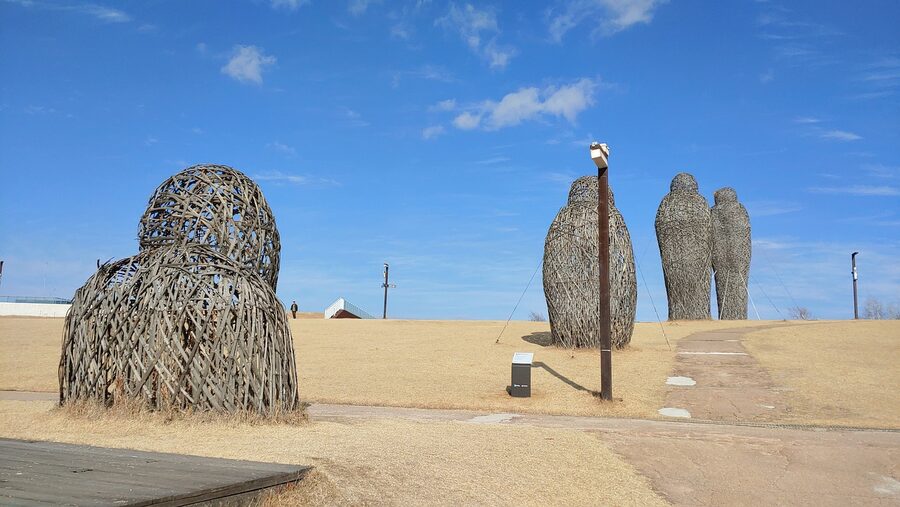
At the Camp Greaves landing station you have about 40 minutes before your return pod leaves, which is enough. Greaves was a US Army base for roughly 50 years after the armistice and the land was returned to South Korea in 2007. The hangars, ammunition bunkers, and mess halls have been converted into a small gallery with Korean War photography, exhibits on soldier life, and some fairly moving art installations made from barbed wire and casings. It’s the most genuinely interesting bit of the whole gondola visit, and most people under-rate it because they’re rushing back to catch the bus.
If you plan the gondola as a standalone trip, budget the full 40 minutes on the far side. If it’s bolted onto a wider DMZ tour, you’ll usually get 20 to 30 minutes — enough for one hall, not the full loop.
Gondola Tickets: What You Actually Pay
A round-trip ticket on the standard pod runs about 11,000 won for adults and 8,000 won for kids, last time I checked the window. The crystal pod with the glass floor is a few thousand won more. Prices shift by a few won year to year and I’ve seen the official site quote anywhere from 11,000 to 14,000 for adults depending on season, so treat these as the order of magnitude, not the exact figure — the ticket booth board will be right.
What the standard ticket includes: round-trip cable car, access to Camp Greaves on the far side, the gallery exhibitions, and the viewing decks at both terminals. What it doesn’t include: parking at Imjingak (around 2,000 won), Dora Observatory entry (that’s a separate site entirely), and any food or drinks at the cafes. The cafe on the Imjingak side serves coffee and basic Korean snacks; the Camp Greaves side has limited food so eat before you ride over.
Tickets are sold on the day at the window. Online pre-booking exists on the official site and on KKday, and if you’re visiting on a Saturday in peak autumn I’d pre-book. Any other time, walk up — the queue is rarely longer than 15 minutes. Foreign credit cards work at the booth; cash is also fine.
When the Gondola Stops Running
This is the single biggest variable and the thing travel blogs don’t flag clearly enough. The cable car shuts down when wind speeds exceed a set threshold, which happens more often in autumn and winter than you’d guess. On a windy Saturday in November I watched a tour group arrive, queue for 20 minutes, and then be turned away — refunds given, no ride. The gondola also closes in heavy rain, for monthly maintenance (usually Mondays), and during Korean national holidays when the DMZ area goes on heightened alert.
If the gondola is a priority of your trip, build in a flex day. If you’re on a bundled DMZ tour, ask the operator what their policy is — the reputable ones refund the gondola portion if it’s closed. The budget tours sometimes don’t, so check the terms.
How to Get to Imjingak From Seoul on Your Own
The gondola itself is easy. Getting to it under your own power is where most foreign visitors quietly decide to book a tour.
The public transport route is a Seoul subway train to Munsan Station on Line 1, then a DMZ Tourist Bus or the local 058 or 059 bus the last 15 minutes to Imjingak. Start to finish it’s about two hours from central Seoul (Hongdae or Gangnam). The catch is that Line 1 from Seoul Station to Munsan takes over an hour, then the Munsan to Imjingak bus runs roughly hourly and the last one back leaves earlier than you think — usually around 5pm. If you miss it, you’re either taking a cab (45,000 won to Seoul, more at night) or hitching a ride with a tour bus.
Driving yourself is easier. A rental car from Seoul, 45 to 55 minutes via the Jayu Motorway depending on traffic, parking at Imjingak for about 2,000 won. This is what I’d do if I had three days or more in Korea and was already planning to drive out of the city. Under three days, the tour bus is just cheaper than the faff.
Taxi direct from Seoul isn’t a sensible option — expect 60,000 to 80,000 won one way. For the same money you can book a half-day tour with a guide and not have to figure out the layout at the other end. If you want private-car flexibility instead of a bus group, our private Seoul tour guide covers how to book one that includes DMZ stops.
My Three Picks for DMZ+Gondola Tours
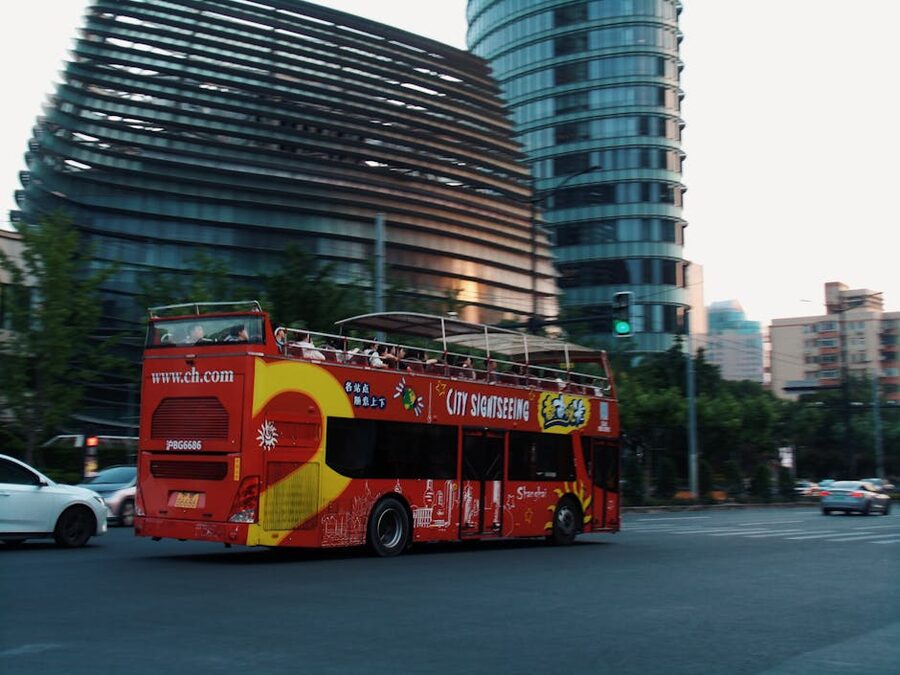
These are the three I’d point someone at, in descending order of “book this first.” All three include the gondola as either a default or an add-on, and all three leave Seoul in the morning. They differ on what else they bundle in and how long the day runs.
1. Imjingak Park & Observatory With Gondola Ride From Seoul — around $35
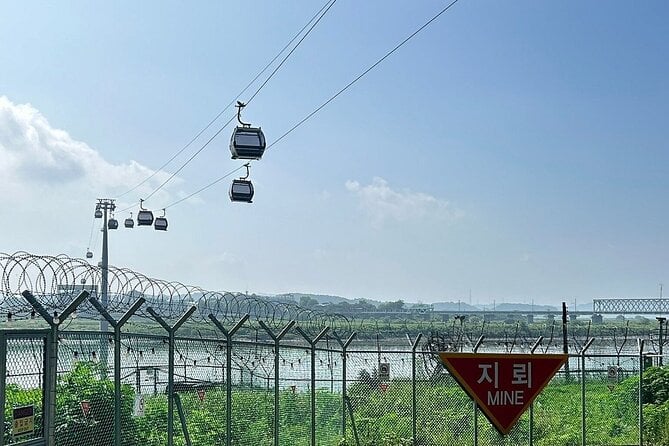
This is the tour I point people at first when they specifically want the gondola. It runs half a day, covers Imjingak Park, the Peace Gondola ride over to Camp Greaves, and finishes at Mount Odu Unification Observatory for a better long-lens view of the North. No 3rd Tunnel, no ginseng or amethyst shopping stops — which for me is the key feature. Our full review digs into the pickup logistics and which hotel areas the shuttle actually serves.
2. From Seoul: DMZ Tour With Tickets and Optional Peace Gondola — around $33
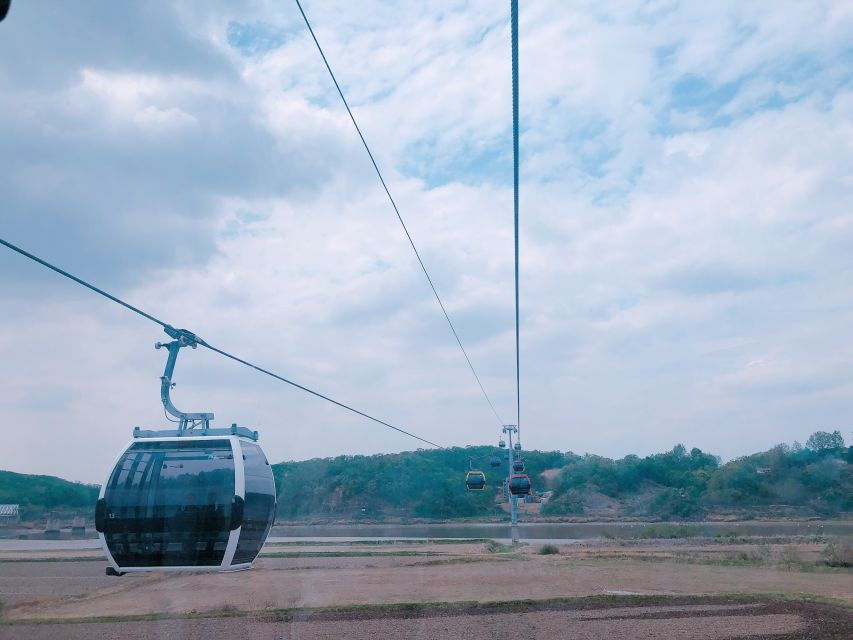
A GetYourGuide classic that covers the Dora Observatory, the 3rd Infiltration Tunnel, Imjingak, and adds the gondola as a paid extra at the window. The cheapest way into the region with a guide. Our review notes one watch-out — if the gondola is closed due to wind, you don’t automatically get the add-on refunded unless you paid the operator directly, so pay at the window not online.
3. Seoul: DMZ Guided Tour with Suspension Bridge and Gondola — around $48
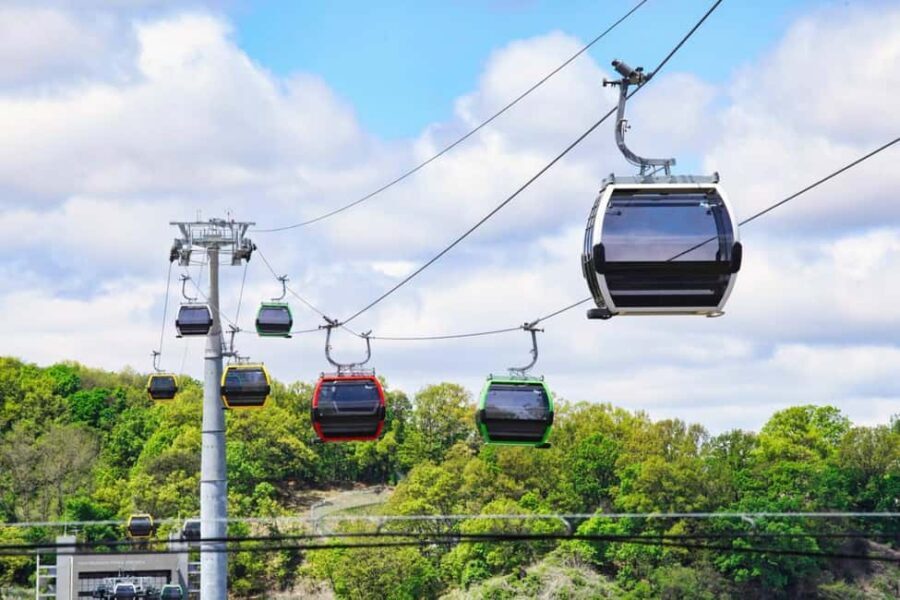
The most content per day. You get the Gamaksan red suspension bridge (155 metres long, 45 metres above the gorge, genuinely fun), the DMZ circuit with the 3rd Tunnel and Dora, Imjingak Park, and the gondola. Skip this if you’re prone to hiking fatigue — the bridge stop adds real walking. Our review flags the one big caveat: if you’re scared of heights, the bridge is not a joke.
Imjingak Park Itself Is Worth an Hour
Most first-timers use Imjingak as a ticket-purchase point and nothing more. I’d push back on that.
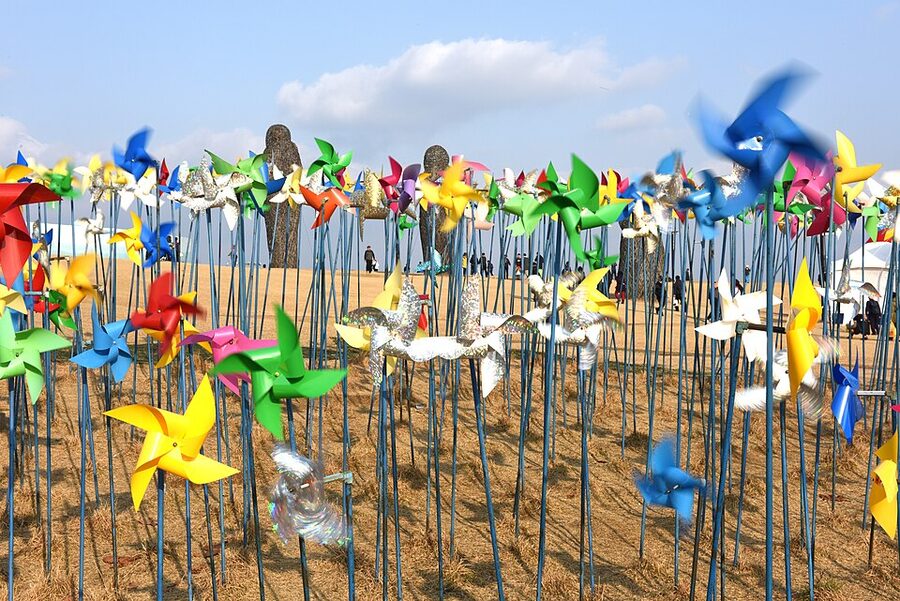
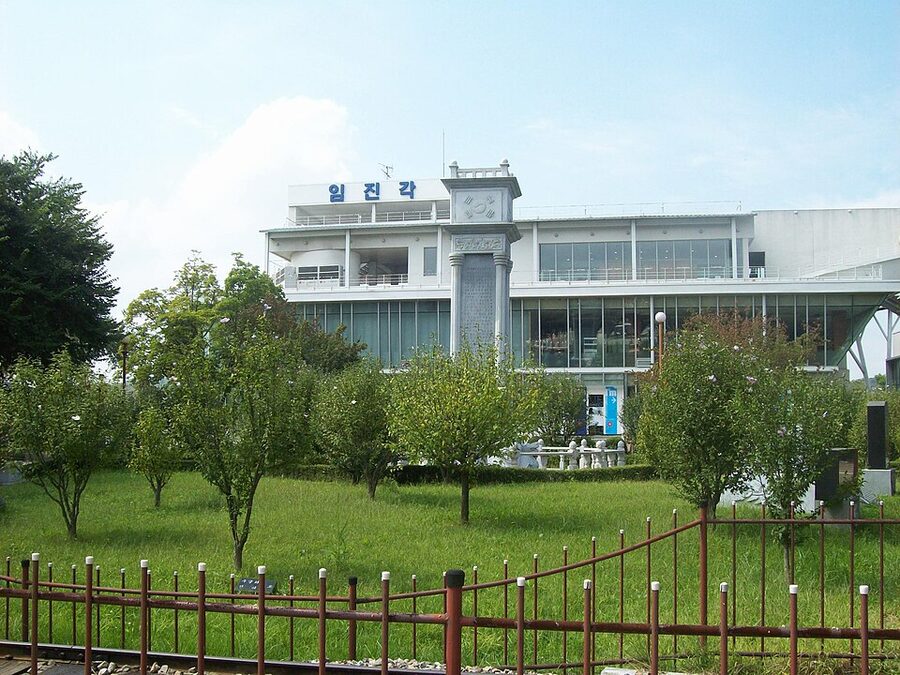
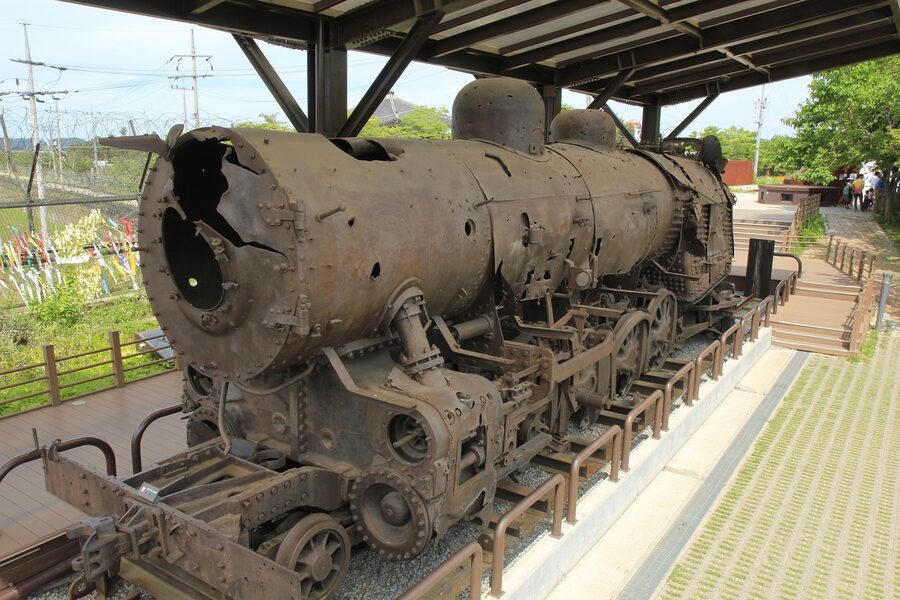
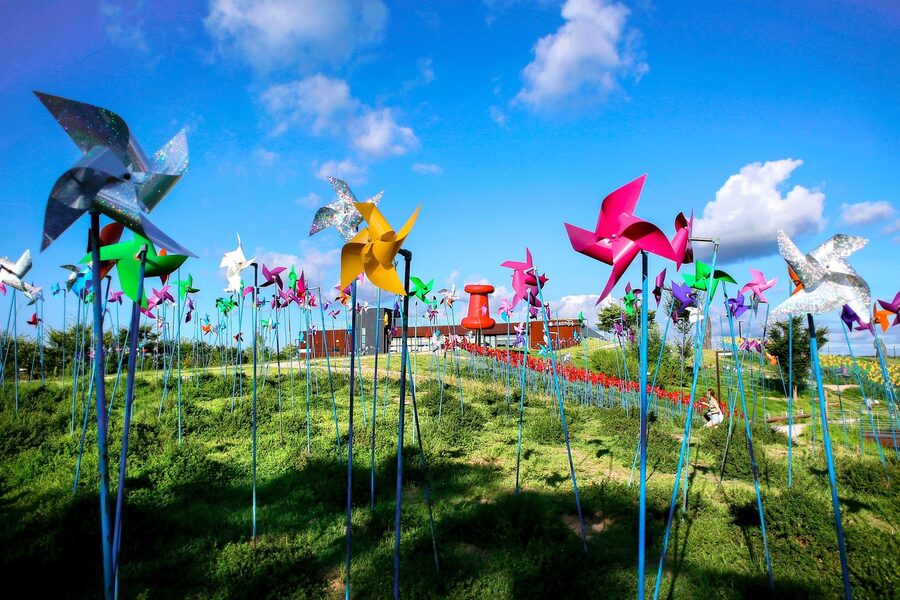
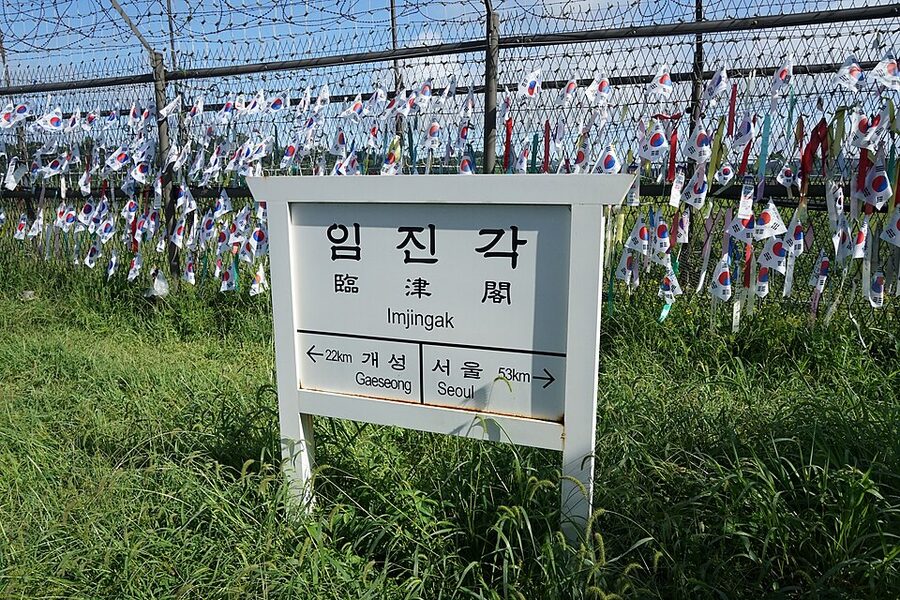
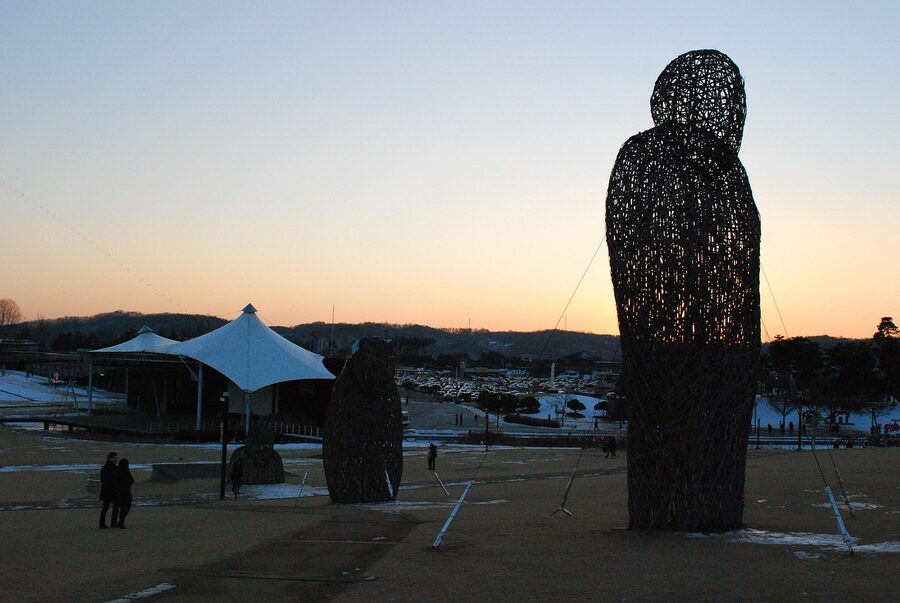
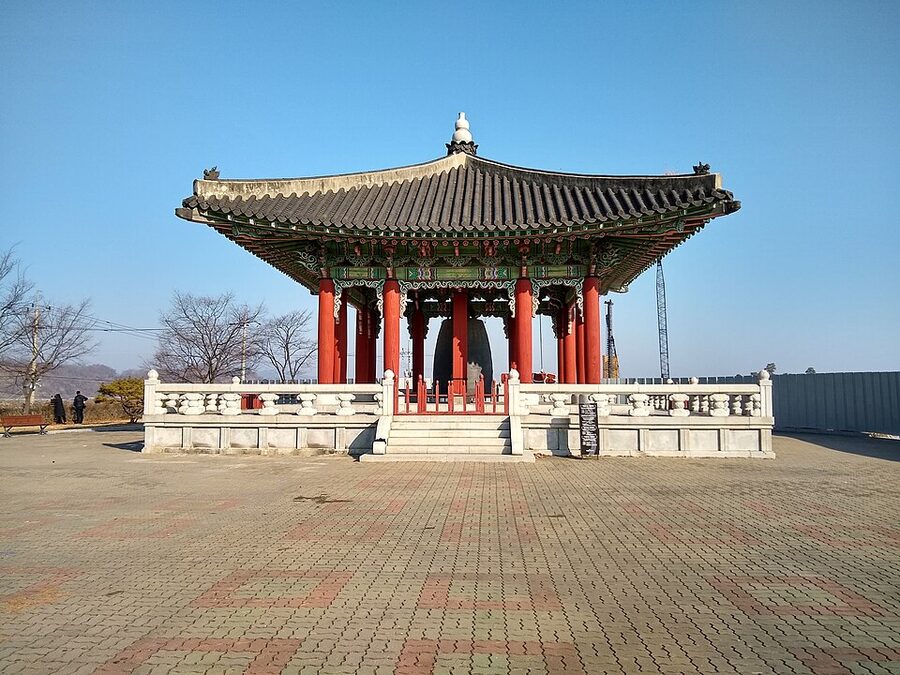
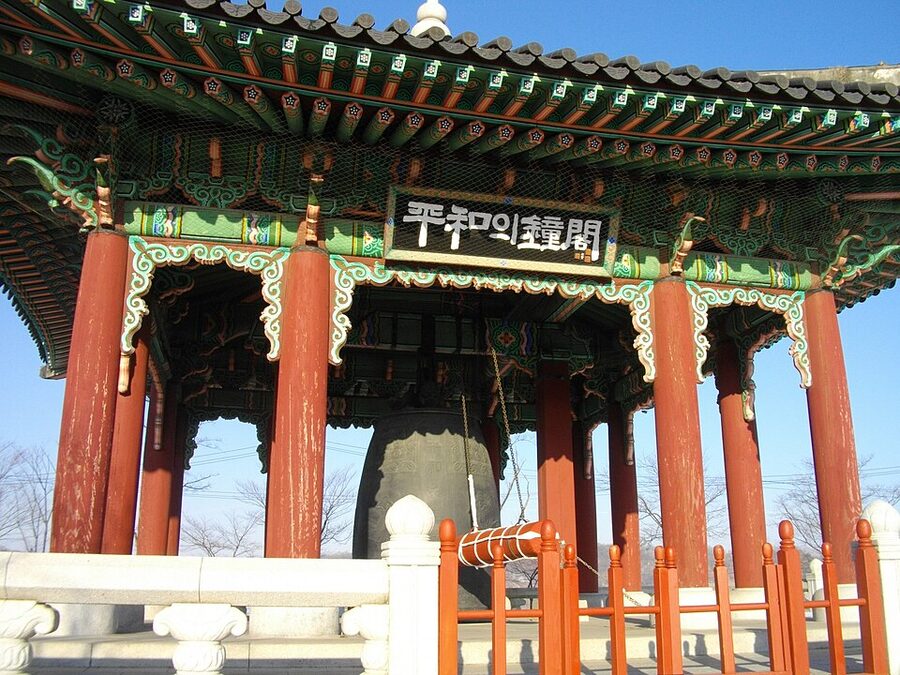
The park itself packs more than the usual tourist-stop mix. You have the Freedom Bridge, built in 1953 for the prisoner exchange that ended active hostilities in the Korean War. You have the Peace Train, the actual locomotive from the last train to cross the border before the war, pulled out of the river where it was bombed and now preserved as a monument. You have the Pyeonghwanuri wind-chime and pinwheel field, which is much bigger than it photographs. And you have the Peace Bell, rung at noon every day for reunification.
The oddest part of Imjingak is the juxtaposition. Next to these sombre war memorials there’s a small amusement park called Pyeonghwa Land with a Viking ship ride and children’s rides. A funfair fifty metres from a bridge used for prisoner exchanges. It’s genuinely disorienting the first time you notice it, and it tells you something about how Koreans have made peace with living next to a line that might still activate at any moment.
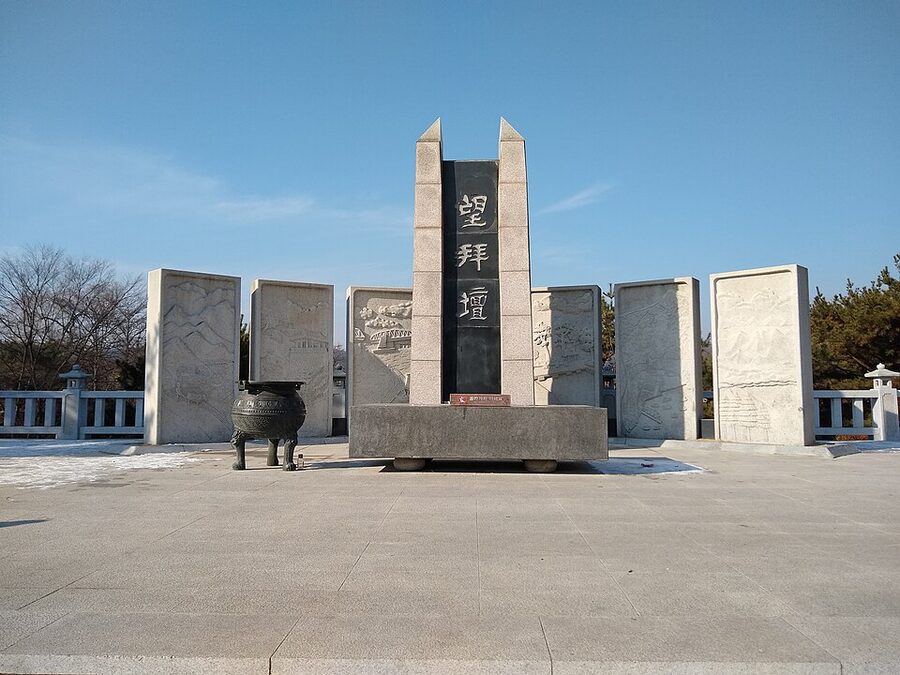
The National Memorial Hall of the Korean War Abductees
Tucked in the corner of the park, this hall tells a specific story — the roughly 100,000 civilians taken north during the war. It’s small, quiet, and rarely busy. Admission is free. If you’re on a bundled DMZ tour the guide won’t route you here; if you’re on your own it takes 20 minutes and it’s the most emotionally heavy part of the whole Imjingak complex.
Is the Gondola Worth It If You’re Doing a Full DMZ Tour?
Honest answer: not really, and this is where I disagree with half the tour operators.
If you’ve done a proper DMZ tour with the 3rd Infiltration Tunnel, the Dora Observatory looking into actual North Korea, and the Dorasan Station ghost-stop, the gondola adds a 14-minute round-trip cable car ride and a small gallery. Interesting, sure. But the tunnel and the observatory are the emotional core of a DMZ visit, and the gondola is more of a scenic bolt-on. If your budget is thin and your priority is the full DMZ experience, skip the gondola.
Where the gondola becomes the right call: (1) if you’re not doing a guided DMZ tour and just want a taste of the Civilian Control Zone without committing to the 3rd Tunnel queue, (2) if you have kids who’d be bored by a tunnel but love a cable car, (3) if Camp Greaves and the gallery actually interest you, or (4) if the weather is stunning and you want the view from mid-air. Otherwise, save the ticket cost and spend longer at Dora Observatory.
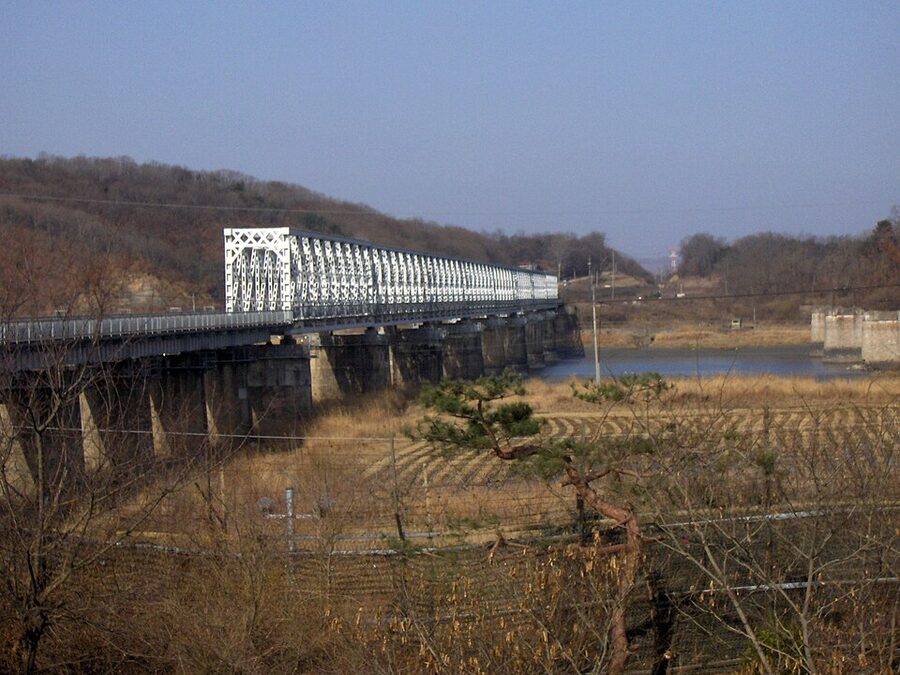
Where the gondola is absolutely worth it: Camp Greaves on a quiet weekday. Half the buses skip it entirely. The gallery, the preserved mess halls, the art installations in the old bunkers — this is where the DMZ story gets told at a human scale. You can linger, nobody’s rushing you, and the walk back to the return cable car is under ten minutes.
Timing Your Visit: Seasons, Weekdays, and the Wind
Autumn is the best season by a clear margin. October and early November give you the clearest air, the lowest haze, and the foliage along the Imjin River peaks. The downside is crowds — Korean domestic tourists flood Paju on autumn weekends, and the gondola queue stretches to 40 minutes.
Spring (April to mid-May) is the second-best window. The cherry blossoms along the Imjingak approach road are genuinely good, and the weather is usually mild. Summer is hot, humid, and prone to afternoon thunderstorms that shut the gondola for safety. Winter is cold, often windy enough to close the cable car, and the views are crisp but the outdoor walking is brutal. December through February I’d frankly do a different part of Korea.
Weekdays beat weekends by a wide margin. Tuesday through Thursday the park is almost empty, the ticket queue is a walk-up, and the gondola pods sometimes go with only three or four people per trip. Mondays are maintenance days — check the official site before you commit to a Monday.
Time of Day
The first gondola runs at 10am. If you can be at the ticket booth for a 10:30 ride you’ll have the park to yourself afterwards, get lunch at the cafe before the tour-bus lunch rush, and be back in Seoul by late afternoon. Alternatively, a 3pm ride gives you the best light over the river, but you’ll be pushing the last public bus back to Munsan. Tour buses all cluster between 11am and 2pm.
Combining the Gondola With Other Day Trips
If you’re in Seoul for four or five days, the DMZ day can be doubled up. A few options.
Nami Island and the Garden of Morning Calm are sometimes combined with an Imjingak stop in full-day tours, though it makes for a long day. The geography doesn’t really work — Nami is east of Seoul and Imjingak is north — so you end up with four hours on a bus. Our Nami Island guide has the solo-booking logistics if you’d rather split them across two days.
If you want to push further north, Mt Seoraksan is too far to combine with Imjingak in one day. They’re almost exact opposites on the Seoul map. Our Seoraksan day trip guide covers that one separately — you want a dedicated day for either.
A better pairing is Imjingak in the morning and central Seoul’s palaces in the afternoon. The gondola-only tours finish by 1pm or so, which leaves you with a full afternoon. Pair it with the Gyeongbokgung palace complex and the Bukchon Hanok Village area — those are a subway ride from most Seoul hotels and work as a second half-day.
What to Bring and What to Leave
The gondola doesn’t have a backpack restriction, but the boarding dock is narrow and you’ll want both hands free for the pod door. Small day pack yes, full travel backpack no — leave anything big in the Imjingak locker bank (1,000 won, cash only).
Don’t bring drones. The Civilian Control Zone has specific rules against unauthorised flight and Camp Greaves is still within a sensitive zone. You’ll be politely told to pack it away, and if you try to fly it you’re in real trouble.
Cameras are fine — no restrictions on photography from either the Imjingak side or Camp Greaves. Inside the Camp Greaves gallery some rooms ban flash, but that’s standard gallery etiquette.
Passport: yes if you’re doing a full DMZ tour that continues to the 3rd Tunnel or Dora Observatory, no if you’re just riding the gondola and leaving. For the gondola only, a photo on your phone is enough for the ticket booth. For the tunnel or observatory, the physical passport is checked at the Civilian Control Zone border post.
Kids and Accessibility
The gondola is kid-friendly — no height restrictions, enclosed cars, and the Camp Greaves side is safe for school-age children. Strollers work on the Imjingak paths but not in Camp Greaves, where the old military roads are patchy. Wheelchair access to the gondola station is good (elevator from the cafe); the far side at Greaves has some stairs in the older bunker exhibits.
A Short History of Why This Place Exists
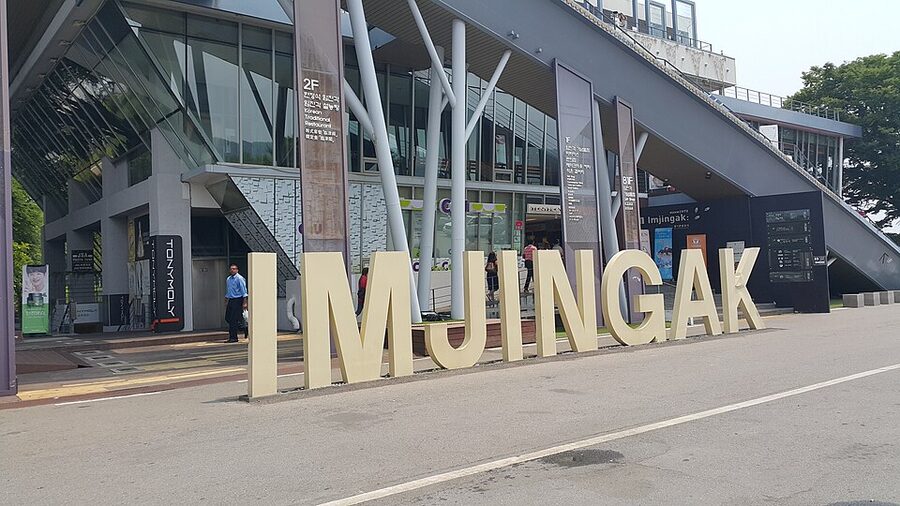
Imjingak was built in 1972 as a memorial and a meeting ground for families separated by the Korean War. The border had been sealed nineteen years earlier by the armistice agreement, and hundreds of thousands of Koreans had no way to see relatives on the other side. Imjingak became one of a handful of places where you could at least stand close to the line, look north, and ring a bell.
The Peace Gondola itself is much newer. It opened in 2020 after a decade of planning, and it exists partly as a tourist draw and partly because Camp Greaves needed vehicle-free access once it was converted from a military base to a gallery. The land on the far bank had been off-limits since the 1950s, and the gondola was the cleanest engineering answer — no new roads through protected land, no bridge reinforcement, just a cable line.
What the site does well is mix history with a kind of working-in-the-present quality. Unlike Dora Observatory or the 3rd Tunnel, Imjingak doesn’t feel like a museum. It feels like a park that happens to sit on a border, with a few monuments, some fairground rides, a few restaurants, and a cable car that just happens to cross into territory you couldn’t otherwise see.
A Few Things First-Timers Miss
A handful of small specifics I wish someone had told me on my first visit.
- The cafe terrace view is free. You don’t need a gondola ticket to go up to the cafe and look out over the park and the river. If the gondola is closed, this is still a good stop — coffee, a wide view, and about 15 minutes of pleasure.
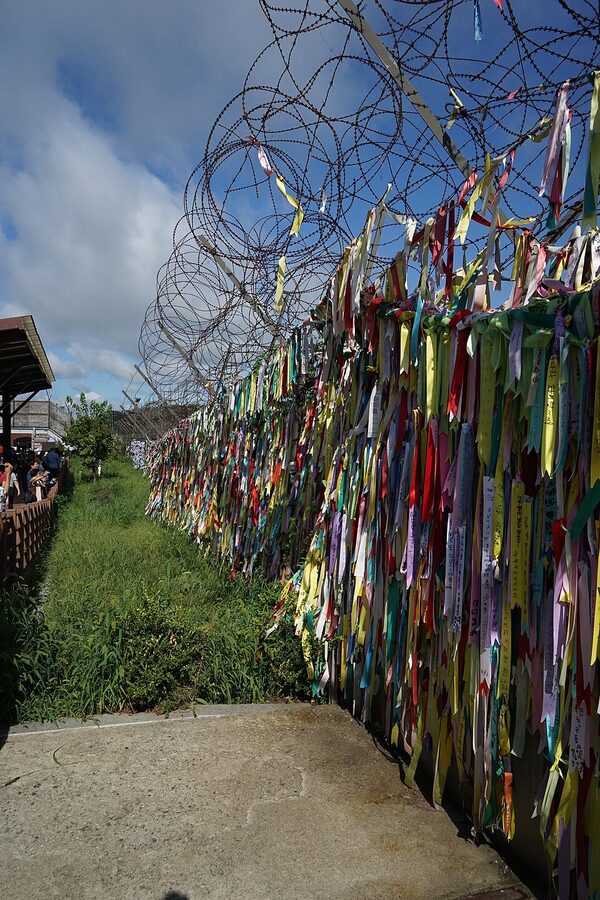
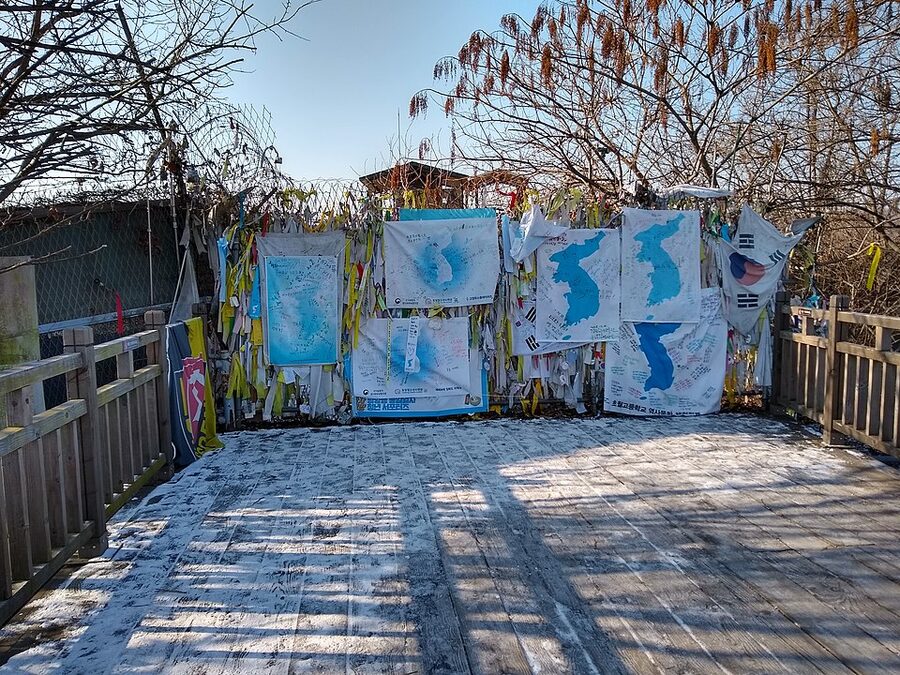
- The ribbon wall is bigger than photos make it look. Visitors tie wishes on ribbons along a long stretch of fence below the observation deck. It takes a minute to notice how old some of them are — twenty years of people’s notes.
- You can pre-book tickets but you can’t pre-book the crystal pod timing. Glass-floor cars run when they run. If you want one, ask at the window, and you might wait one or two rotations.
- Don’t bother with the train museum if you’re short on time. The Jangdan Station locomotive is interesting for five minutes. The indoor train museum at Imjingak station is skippable unless you’re genuinely into rolling stock.
- Bring cash for lockers and snacks. Korean cards work most places, but the lockers and a few small kiosks at Imjingak are cash-only. 10,000 won in small notes is plenty.
More Seoul Day Trips From the Same Corner of the Map
If the gondola is one piece of a bigger Korea trip, there are a few obvious adjacent moves. The full DMZ tour is the natural next step — the 3rd Tunnel and Dora Observatory cover what the gondola can’t, and if you’re in Seoul for more than three days you should do both. On a lighter day, Seoul’s palaces and the Bukchon hanok village give you a contrast to the heaviness of Imjingak — the same country at its ceremonial and its strained borders. For a proper evening after a heavy afternoon, a Seoul pub crawl is the release valve — you spend the day thinking about division and the night drinking with strangers in Itaewon. And if the cultural-performance hit is more your speed, Nanta and the Painters shows run nightly in Myeongdong and are walkable from most tourist hotels.
If you’re still weighing guided versus independent for the DMZ itself, our Seoul night walking tour piece has some thoughts on when a local guide actually adds value versus when a map is enough. The DMZ falls firmly into the “guide adds value” camp for most foreign visitors — the politics, the geography, and the stops are not intuitive from a guidebook.