
Our guide Giacomo stopped halfway down Via Cavour, leaned on a stone bench, and said: “Lorenzo de’ Medici was poisoned in this house, and his last word was the name of his banker.” Then he grinned, told us he was joking about the banker, and walked us straight into the real story. That’s the tone of the Renaissance and Medici Tales storyteller tour, and it’s why this two-hour walk has become Florence’s most-booked introduction to the city.
The tour is a guided walking tour through the heart of Medici Florence. It runs daily, lasts about two hours, and takes you from Piazza San Lorenzo through the cathedral square and into Piazza della Signoria, with the Medici family as the spine of every story.
- In a Hurry? Top Picks
- What “Storyteller” Actually Means Here
- The Route, Stop by Stop
- Piazza San Lorenzo and the Medici Parish
- Palazzo Medici Riccardi
- The Duomo, Baptistery, and Campanile
- Piazza della Signoria and Palazzo Vecchio
- The Loggia dei Lanzi and Ending
- Booking Practicalities
- Languages and Group Size
- Booking Window and Cancellation
- What to Wear and Bring
- The Three Tours Worth Booking
- 1. The Best Tour in Florence: Renaissance & Medici Tales, Guided by a STORYTELLER, from .62
- 2. The Best Tour in Florence: Renaissance and Medici Tales (standard), from .62
- 3. Florence Reserved Entry Ticket to the Medici Chapels, from
- Inside the Medici Chapels (If You Add the Ticket)
- The Medici Family in Two Paragraphs
- Where the Medici Show Up Today
- Best Time of Day and Year
- Avoid the Late Afternoon Tour in Summer
- Combining the Storyteller Tour With a Bigger Day
- How This Tour Compares to Other Florence Walking Options
- What This Tour Is Not Good For
- One Florence Day, Built Around This Tour
- While You’re in Florence
In a Hurry? Top Picks
- The Best Tour in Florence: Renaissance & Medici Tales (Storyteller version), from $3.62. The flagship version, two hours fifteen, the most-booked Florence walking tour on the market. Check availability on Viator.
- The Best Tour in Florence: Renaissance and Medici Tales (standard), from $3.62. The shorter two-hour cousin. Same route, slightly trimmed. Check availability on Viator.
- Medici Chapel reserved entry ticket, from $20. Pair with the walking tour for the only Medici site you actually go inside. Check availability on GetYourGuide.
What “Storyteller” Actually Means Here
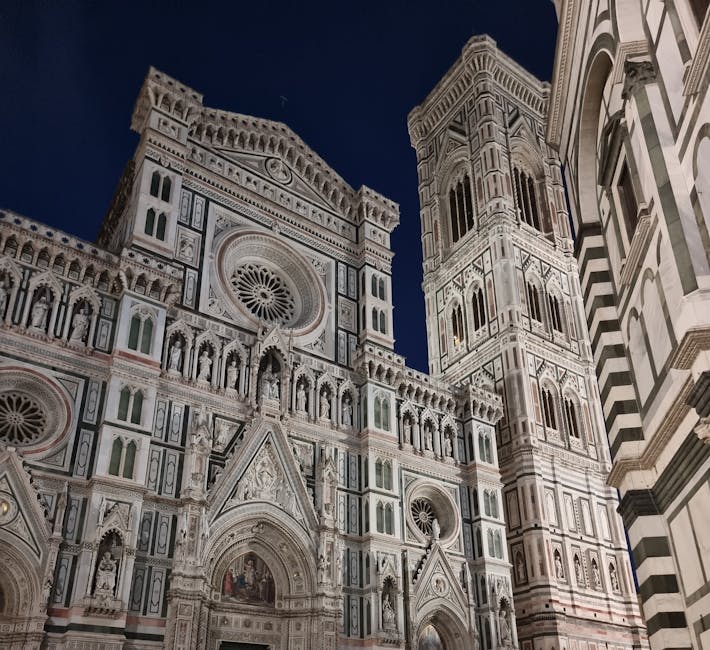
Most Florence walking tours are essentially talking guidebooks. Dates, names, dates, names. The Renaissance and Medici Tales tour is built differently. The guides are licensed Florentine tour guides who treat the city as a stage. Cosimo isn’t “the founder of the Medici dynasty, born 1389”. He’s a paranoid banker who slept in a different bed every night because he was scared of being murdered. Same fact, very different feeling.
You still get the names and dates. But they’re wrapped around small stories: who hated whom, who slept with whom, who got stabbed in the back during Easter Mass. Florence has more of those stories than any other Italian city, and the Medici were at the centre of nearly all of them.
If you want art-history depth, this isn’t that tour. Book a museum tour instead. Our Uffizi guide covers the standard ticket-and-skip-the-line setup, and the David at the Accademia needs its own slot. The storyteller tour is the wrap-around that makes those visits make sense afterwards.
The Route, Stop by Stop
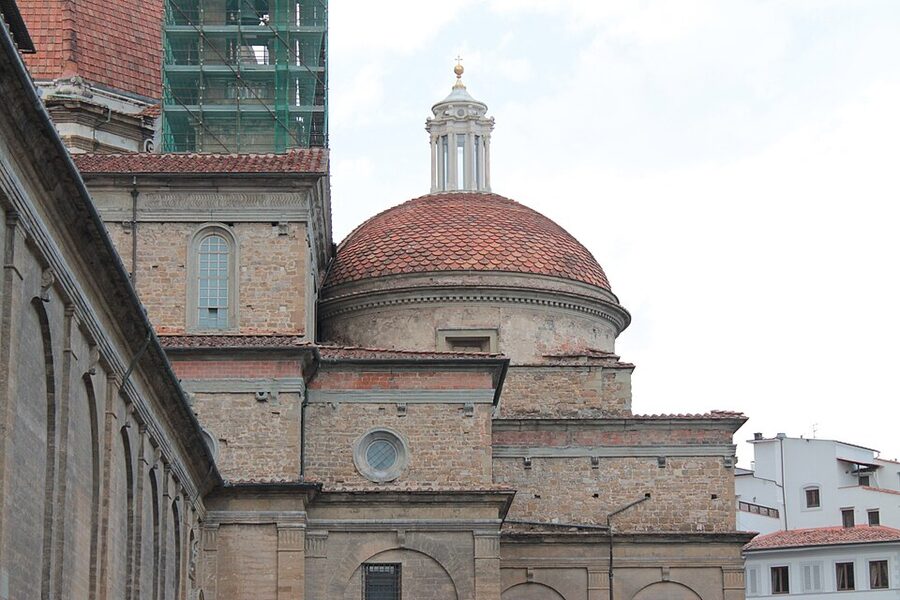
The meeting point is Piazza San Lorenzo 35R, in front of the unfinished facade of San Lorenzo Basilica. The guide carries a small red flag. There’s a market that sets up here most mornings, so look around the stalls if you can’t see the flag right away.
From there the tour covers about twelve stops over two hours. The exact order varies by guide, but the spine is always the same: San Lorenzo to Palazzo Medici Riccardi, up Via Cavour, across to the Duomo and Baptistery, then south to Piazza della Signoria and Palazzo Vecchio. You finish near the Loggia dei Lanzi, a five-minute walk from Ponte Vecchio.
None of the stops are interior visits. Everything is told from the street, or from public squares. That’s the whole logic of the tour: you’re paying for the storytelling, not the entry tickets. If you want to go inside the Medici Chapels or the Palazzo Medici Riccardi, those are separate bookings at the end of this guide.
Piazza San Lorenzo and the Medici Parish
The basilica was the Medici family church. Cosimo the Elder is buried in the crypt, almost directly underneath the high altar. Lorenzo the Magnificent is in the New Sacristy out the back, in a tomb Michelangelo designed but never finished. The unfinished marble facade you see from the square is itself a Medici story. Pope Leo X (a Medici) commissioned Michelangelo to design it. Then the project ran out of money and political will, and the rough brick was left exposed for five hundred years.
Palazzo Medici Riccardi
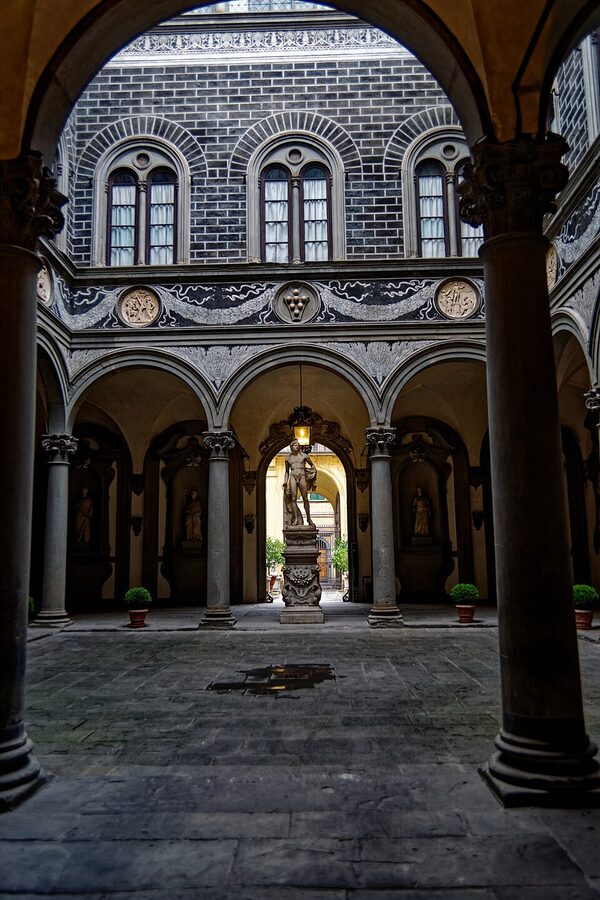
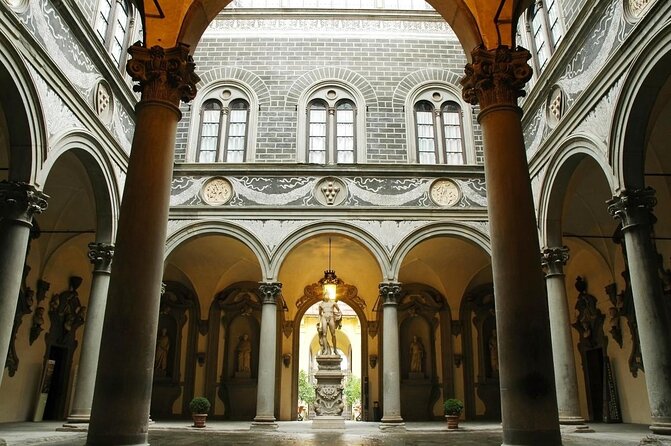
This is the first Medici palace, the one Cosimo the Elder commissioned from Michelozzo in 1444. Cosimo had originally asked Brunelleschi for a design, then rejected it as too showy. He wanted Florence to think of him as just a banker who happened to live well, not a ruler. The rough stone facade was the compromise.
The guides spend a long time here because half of the family’s most-told stories happened inside. Lorenzo the Magnificent was raised in this house. Botticelli, Michelangelo, and the young Leonardo were all in and out as guests. The Magi Chapel inside is one of the great hidden Florence experiences, but it’s not part of the storyteller tour. You’d need a separate palace ticket for the interior.
The Duomo, Baptistery, and Campanile
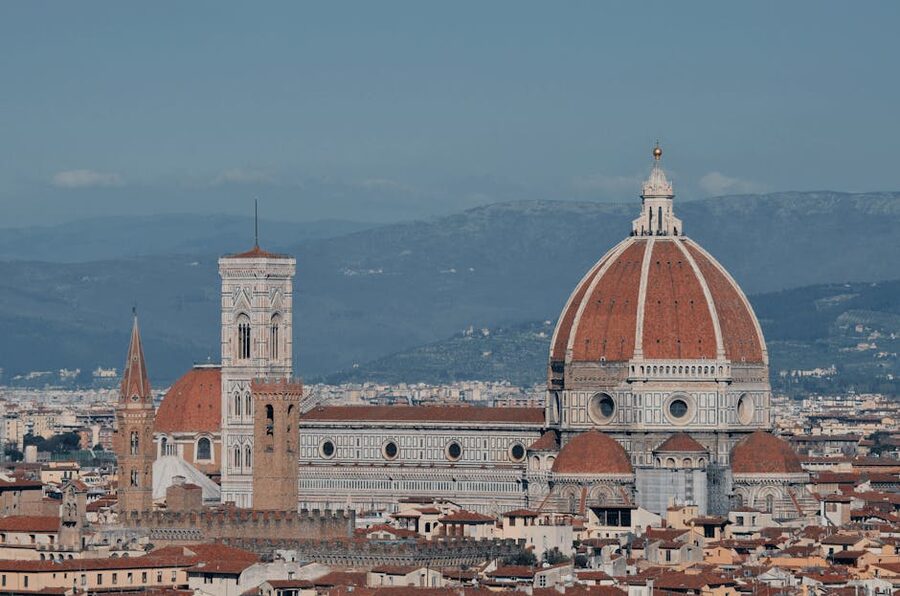
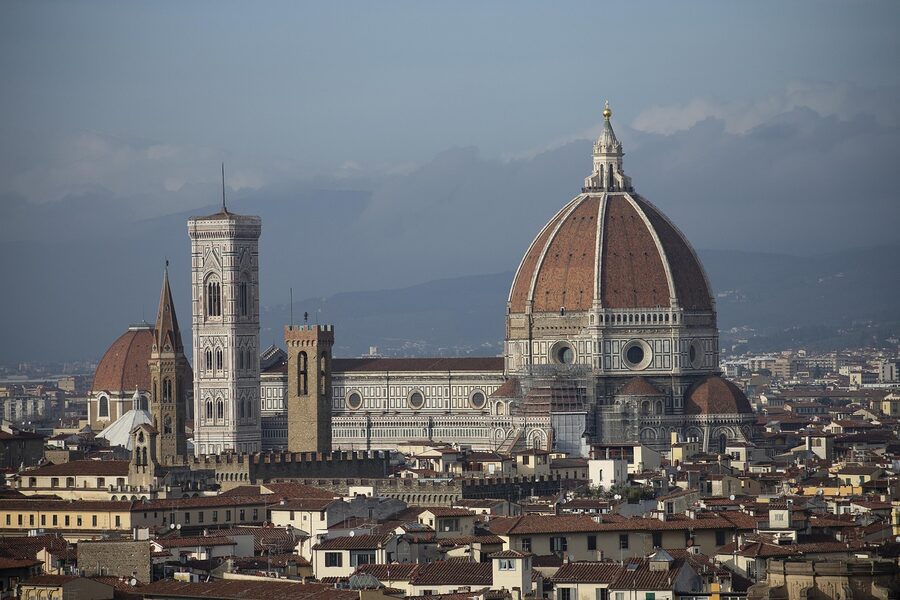
The Duomo square is where the Medici story sharpens. The cathedral was finished by 1436 with Cosimo personally underwriting the dome construction loans. Forty-two years later, in 1478, his great-grandson Lorenzo and brother Giuliano were attacked at high mass during the Pazzi Conspiracy. Giuliano was stabbed nineteen times and died on the cathedral floor. Lorenzo escaped through the sacristy with a wound to the neck. The guide will show you the exact door he used.
The Baptistery sits opposite. Ghiberti’s bronze east doors, the famous Gates of Paradise, were paid for partly through Medici-influenced commissions. The originals are now inside the Museo dell’Opera del Duomo for conservation. The doors on the building today are exact replicas, which surprises people. You can still walk right up to them. The full Duomo complex needs a separate ticket if you want to go inside, and we cover that in our Florence Duomo guide.
Piazza della Signoria and Palazzo Vecchio
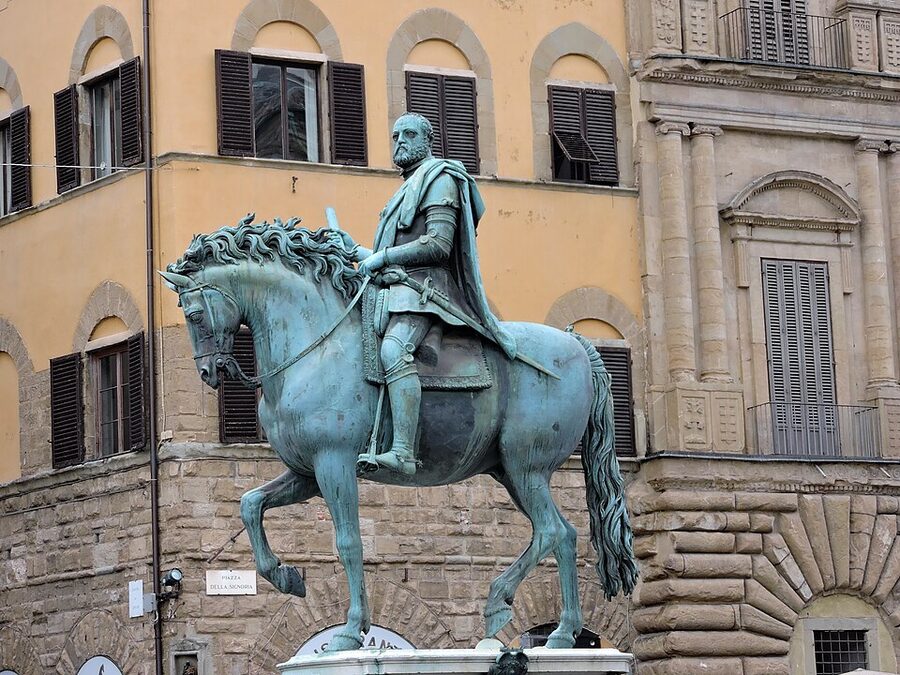
Piazza della Signoria is where the tour usually peaks. This square was Florence’s political heart for three hundred years. The Medici were exiled from here in 1494, came back in 1512, were exiled again in 1527, came back for good in 1530. The Bonfire of the Vanities happened in front of Palazzo Vecchio in 1497. Savonarola, the friar who lit the bonfires, was burned in the same square a year later. Your guide will mark the spot.
The equestrian statue of Cosimo I is the headline. He was the first Grand Duke of Tuscany, the Medici who finally formalised the family’s grip on Florence. The bronze panels on the base show his three big wins: the conquest of Siena, the Pope crowning him, and the Florentine senate confirming his title. Worth a slow look.
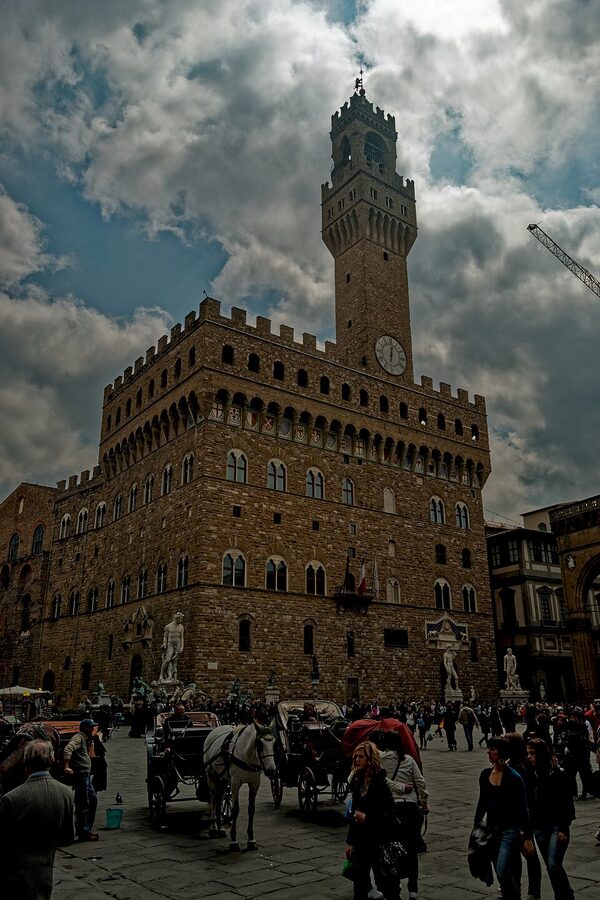
Palazzo Vecchio gets a long stop. It was the seat of government for the Florentine Republic, then the Medici primary residence under Cosimo I, then a museum from the 19th century onward. The ground-floor courtyard is free to enter. Step inside for a minute even if you don’t have a ticket. The frescoes were designed by Vasari to celebrate the Medici-Habsburg wedding of 1565.
The Loggia dei Lanzi and Ending
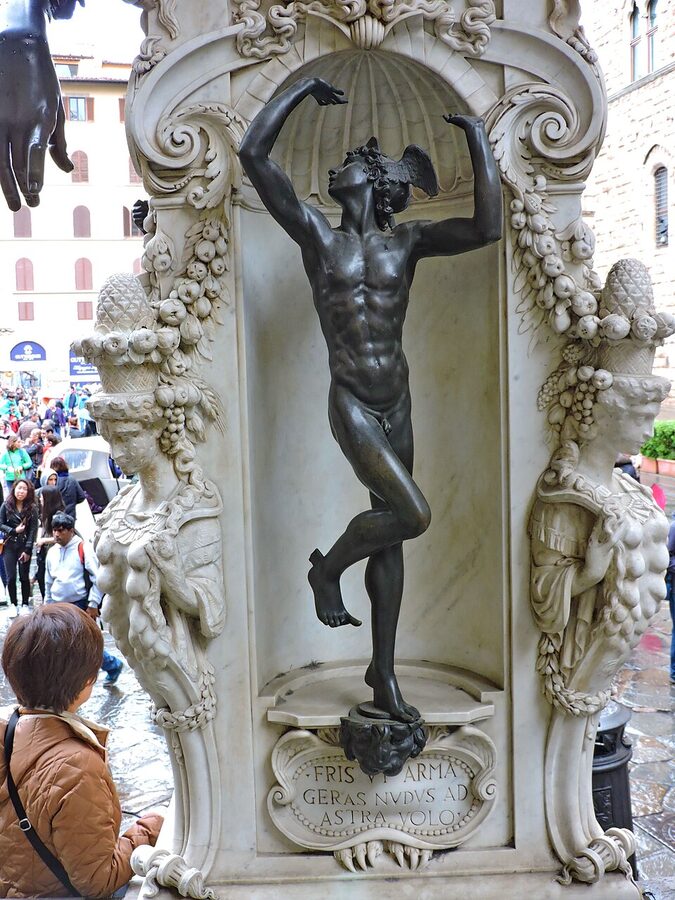
The tour finishes near the Loggia dei Lanzi, the open-air sculpture gallery on the south side of the square. Cellini’s Perseus holding Medusa’s head is right there at no charge. So is Giambologna’s Rape of the Sabine Women. Both were Medici commissions designed as political statements: don’t mess with this family.
The guide will point you toward Ponte Vecchio (about three minutes’ walk south) and finish off with a real tip about lunch. Most guides will name a specific lampredotto stand or cafe within five minutes’ walk. Worth listening to.
Booking Practicalities
The Renaissance and Medici Tales tour runs as both a paid tour (Viator/GetYourGuide) and a tip-based “free” tour (Guruwalk, freetour.com). They’re effectively the same product with different commercial models.
Paid version: Around $3.62 per person on Viator. That’s not the full price; it’s the deposit. You pay the rest in cash to the guide at the start. Total cost typically lands around 25 to 35 euros per person depending on group size and guide.
Free version: No deposit, no booking fee. You tip whatever you think the tour was worth at the end. Guruwalk recommends 15 to 50 euros per person as a rough range. Most people I’ve seen on these tours hand over 20 euros.
I’d book the paid version if you want a guaranteed small group, an English-speaking guide on a specific date, and confirmation by email. I’d take the free version if you’re flexible on timing and happy to share a guide with up to 14 other people. The storytelling quality is about the same. The free tour requires a five-person minimum, so it gets cancelled occasionally in shoulder season.
Languages and Group Size
English, Spanish, and Italian are the three most reliable language slots. French and German tours run in summer but get patchier from November through March. Group size for the paid version is typically capped around 15. The free version can hit 14 in peak summer. I prefer paid when I’m with my parents because the smaller cap means less crowding around the guide.
Booking Window and Cancellation
Book at least a day ahead in summer. Tours fill up fast from May through September, especially the morning slots. In low season (November to March, excluding Christmas week) you can usually book the same morning. Free cancellation up to 24 hours before the start time is standard on both Viator and GetYourGuide. Guruwalk asks you to cancel as a courtesy if you can’t make it, since they require a five-person minimum.
What to Wear and Bring
Two hours on cobblestones in any weather. Flat shoes that grip when wet. A small bottle of water, especially in summer, since the tour doesn’t stop for drinks. A light scarf or cover-up if you plan to step inside any churches afterwards. Most Florence churches enforce shoulder-and-knee coverage strictly.
Bring 30 euros in cash. Even on the paid tour, the balance to the guide is usually cash-only. ATMs near the meeting point exist but the lines can be long in summer. The cleanest one I’ve used is the Intesa Sanpaolo branch on Via Cavour, two minutes from San Lorenzo.
The Three Tours Worth Booking
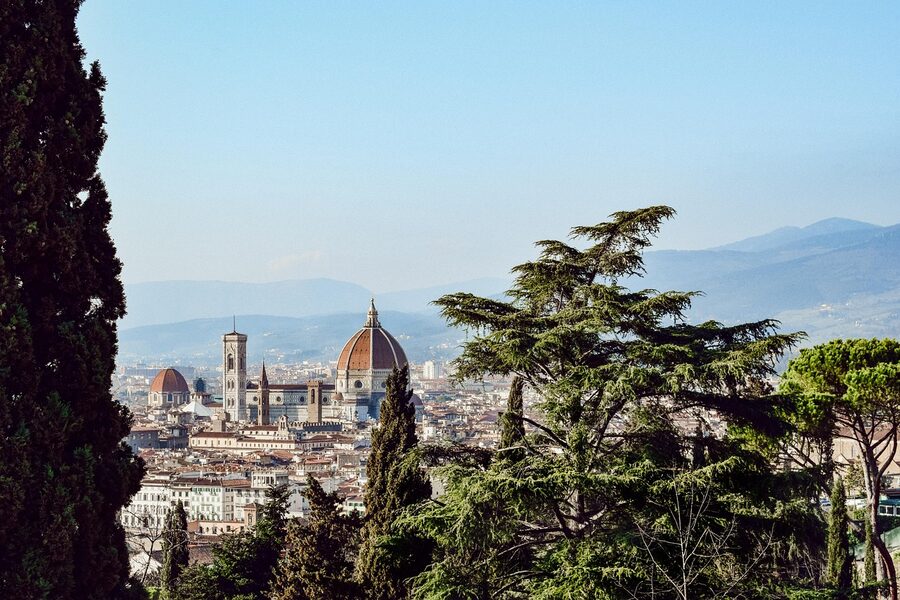
I’ve booked all three of these myself or watched friends do them. Listed in order of which one I’d pick first.
1. The Best Tour in Florence: Renaissance & Medici Tales, Guided by a STORYTELLER, from $3.62
This is the version with the longer route and the proper “storyteller” framing in the title. Our full review has the breakdown of guide quality and what to expect on a slower day. Pick this one if you only do one Florence walking tour.
2. The Best Tour in Florence: Renaissance and Medici Tales (standard), from $3.62

If you’re tight on time and don’t mind missing one or two stops at the end, this trim version covers the core Medici sites in two hours. Our review of the standard tour compares it directly to the storyteller version. The price is identical, so I’d default to the longer one unless your schedule is tight.
3. Florence Reserved Entry Ticket to the Medici Chapels, from $20
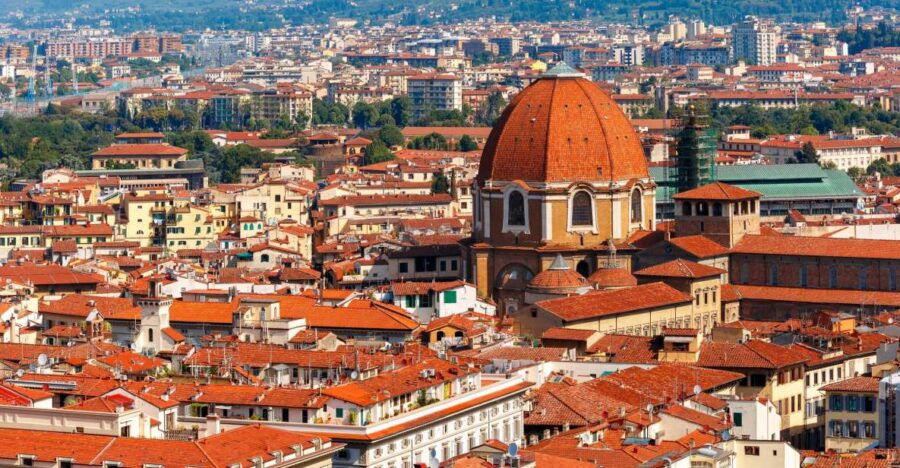
Pair this with the storyteller tour for a full half-day. The ticket gets you into the Medici Chapels, including Michelangelo’s New Sacristy and the grand-ducal Chapel of the Princes. Our Medici Chapel guide covers the audio guide quality and the best time slots. Book the chapel ticket for an hour or two after the walking tour ends.
Inside the Medici Chapels (If You Add the Ticket)
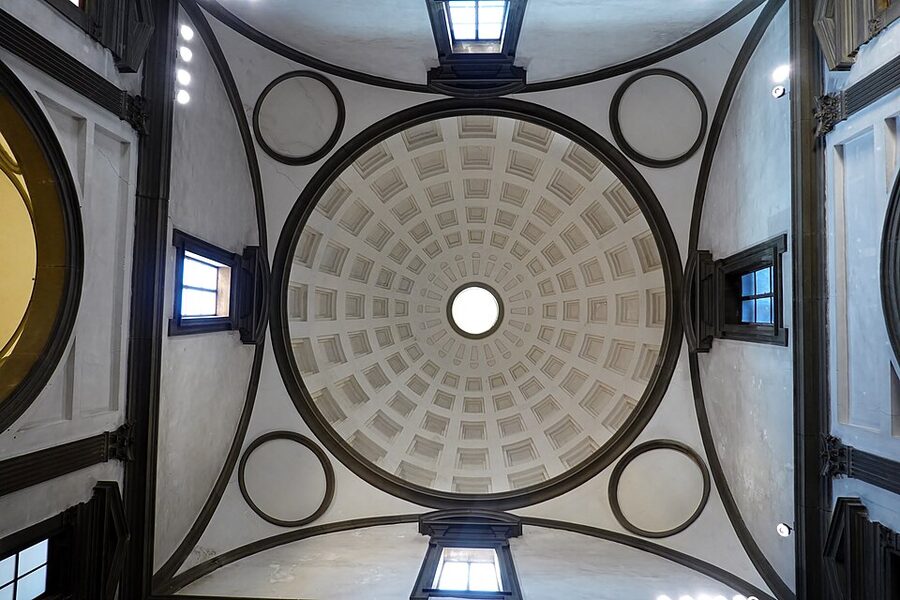
The Medici Chapels are physically attached to San Lorenzo but enter from the back, on Piazza di Madonna degli Aldobrandini. There are two chambers worth your time. The first is the Chapel of the Princes, an enormous octagonal hall in coloured marble inlay. It feels like standing inside a jewellery box. The grand dukes of Tuscany are buried in the floor.
The second is Michelangelo’s New Sacristy, smaller and more austere. Lorenzo the Magnificent’s tomb sits here, topped by his own Madonna and Child sculpture. The figures of Day and Night, Dawn and Dusk on the duke tombs are some of Michelangelo’s most-discussed pieces. Allow 45 minutes to an hour for both chambers.
The Medici Family in Two Paragraphs
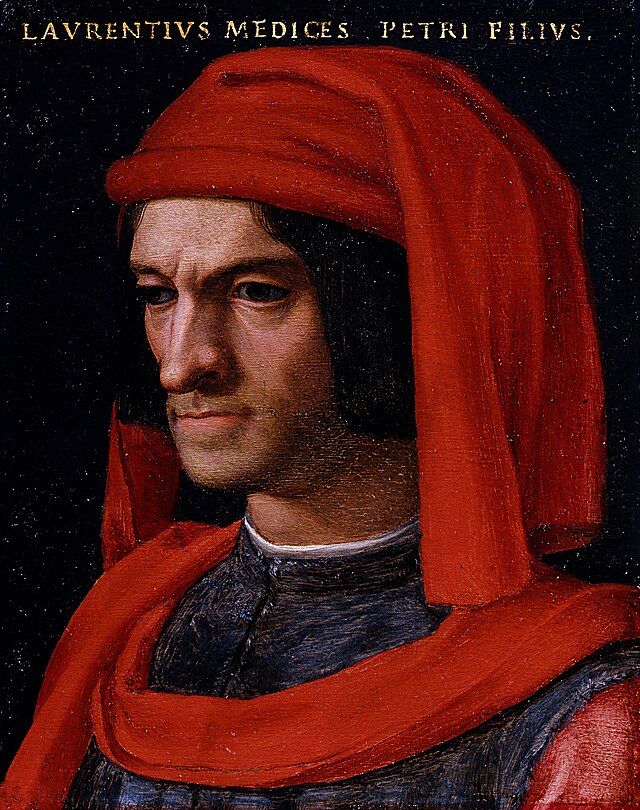
If you want a quick mental scaffolding before the tour, here it is. The family arrived in Florence in the 14th century as small-time merchants. They built a banking empire under Giovanni di Bicci. His son Cosimo the Elder (1389 to 1464) ran Florence as the unofficial first citizen for thirty years without ever holding formal office. His grandson Lorenzo the Magnificent (1449 to 1492) was the patron of Botticelli, the young Michelangelo, and the late Verrocchio. He survived the Pazzi assassination and made Florence the cultural capital of Europe.
After Lorenzo’s death the family was exiled twice, then returned permanently in 1530 under Cosimo I, who became the first Grand Duke of Tuscany in 1569. Four Medici popes (Leo X, Clement VII, Pius IV, Leo XI) used Vatican money to commission the Sistine Chapel ceiling, the Last Judgement, and St Peter’s. The dynasty died out in 1737 when Anna Maria Luisa, the last Medici, willed every Medici art collection to the city of Florence on the condition it never leave. That bequest is why the Uffizi exists. Worth knowing on the storyteller tour.
Where the Medici Show Up Today
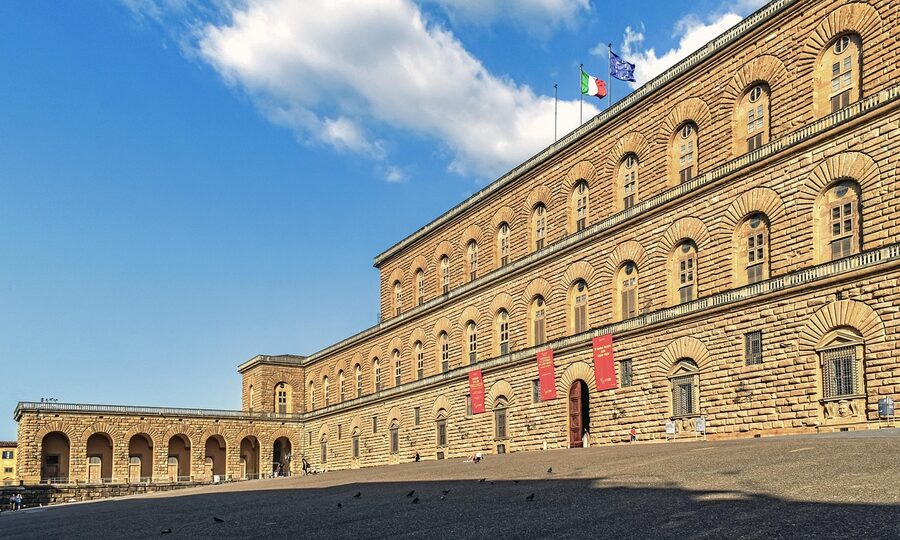
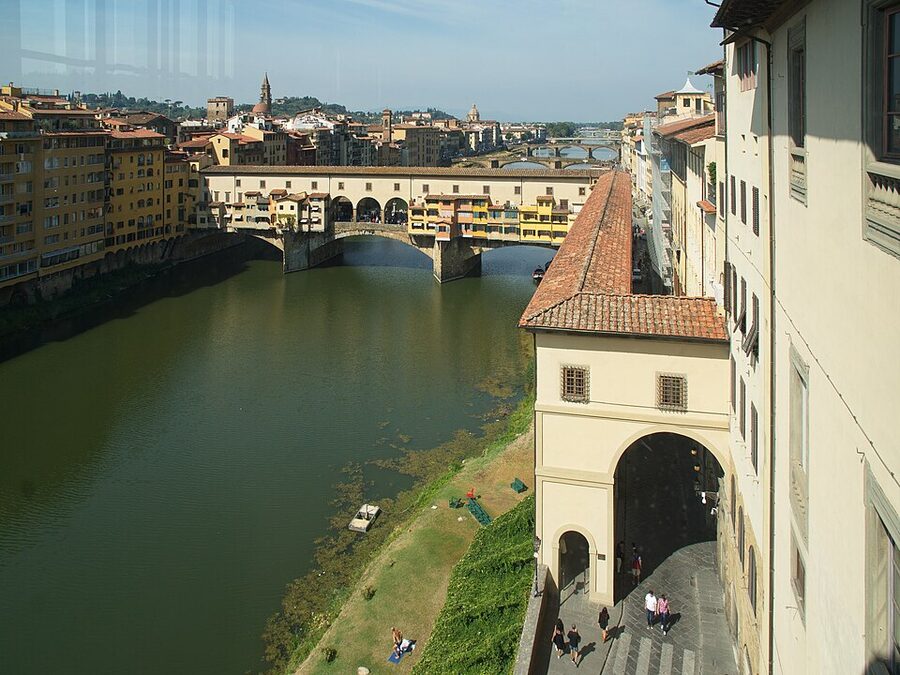
The family’s fingerprints are on almost every major building you’ll walk past. Pitti Palace was Cosimo I’s main residence after 1565, and today’s Pitti tickets get you into the Boboli Gardens and the Palatine Gallery. Palazzo Vecchio’s Medici frescoes are accessible on a civic tour ticket. The Uffizi was originally built by Vasari as offices for Cosimo I’s administration. The Boboli Gardens and the Vasari Corridor are two more Medici creations covered separately on the site.
Best Time of Day and Year
I’d take the 10am or 10:30am slot if I had a choice. The crowds in Piazza della Signoria peak between noon and 4pm. Starting at 10 means you finish before the worst of the lunch surge. The 3pm slot is fine in spring and autumn but brutal in July and August because the walking sections happen in direct afternoon sun.
Best months are April, May, late September, and October. Crisp light, manageable temperatures, the city not yet at full tourist density. June through August are functional but hot and crowded. November to early March is the cheapest time and the easiest to book same-day, but the weather is genuinely cold and grey, and the daylight runs short. I’d rather wait for spring.
Avoid the Late Afternoon Tour in Summer
This is one of those things you only notice on a second visit. The 3pm and 4pm slots in July and August put you in Piazza della Signoria at peak heat. The square is exposed, no shade, hot stone underfoot. Plan for morning instead.
Combining the Storyteller Tour With a Bigger Day
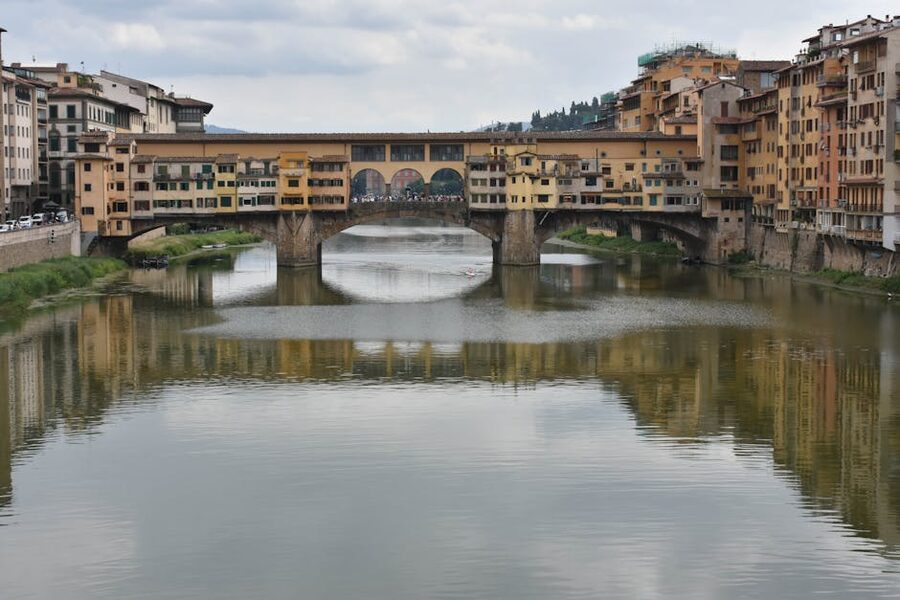
The storyteller tour is two hours. You’re going to have most of a day left. Here’s how I’d build around it.
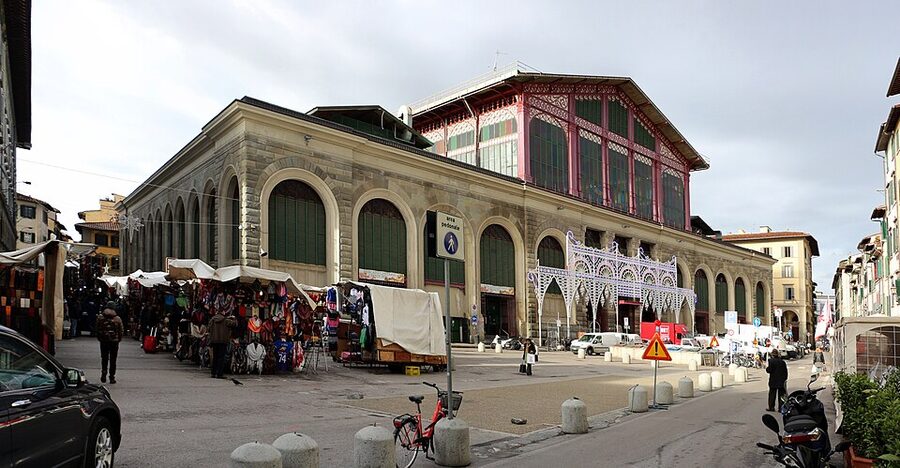
Morning storyteller tour, 10am to 12:15pm. Walk five minutes to a lampredotto stand near the Mercato Centrale for lunch. Lampredotto is the local tripe sandwich. It’s better than it sounds and costs about 5 euros.
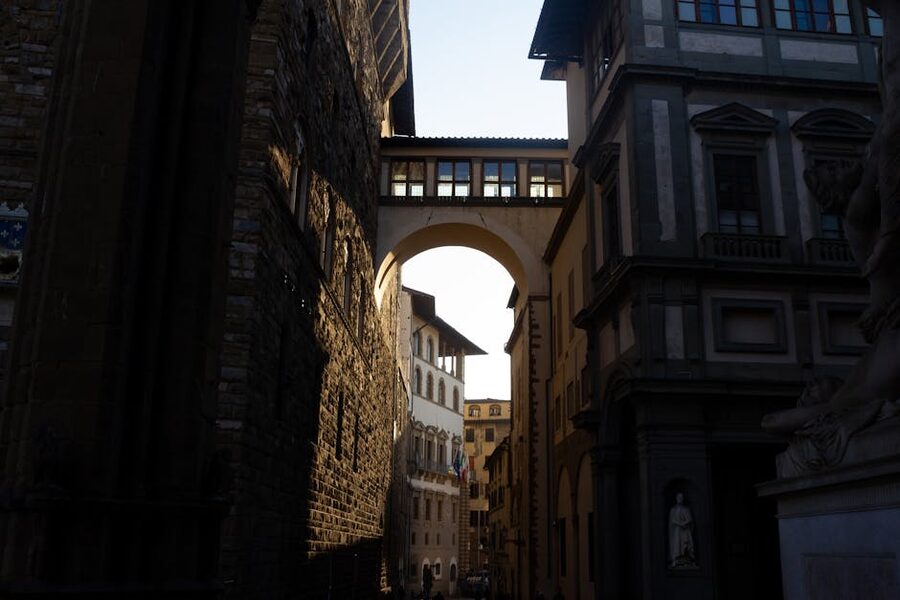
Afternoon Uffizi or Accademia. Either works after the walking tour because the storyteller frame helps the art make sense. The Uffizi is a Medici archive, the Accademia is one room with the David. Pick one, not both. Our Uffizi guide covers the timed-entry slots and how to skip the queue. The David post covers the Accademia.
Sunset at Piazzale Michelangelo. Walk or take the 12 or 13 bus. The view of the city from up there is the postcard everyone takes home. The Boboli Gardens are on the way if you want to wander through them first.
Dinner near Santa Croce. The east side of the centre, away from the worst tourist menus. If you want one more Florence-specific experience after dinner, our Florence sunset walking tour guide covers the best evening tour for the food-and-wine angle. Pair it with this storyteller tour and you’ve got Florence’s history in the morning and Florence’s table in the evening.
How This Tour Compares to Other Florence Walking Options
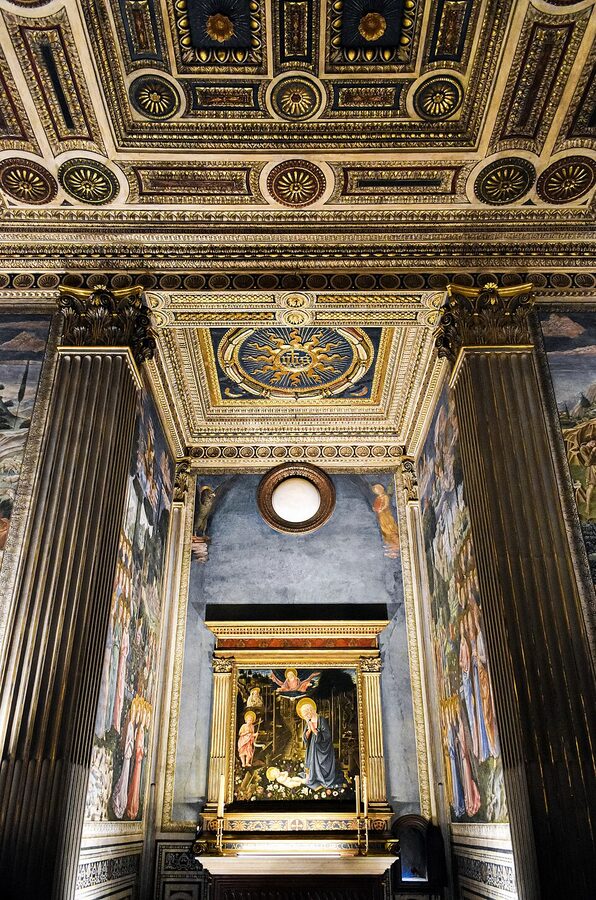
Most Florence walking tours fall into three buckets. Generic city overviews (“Florence in 90 minutes”), themed history tours like this one, and food-focused walks. The storyteller tour competes mainly with the generic overviews. It wins on engagement because the Medici story is genuinely better than a chronological tour of monuments. It loses on breadth because you don’t get the Oltrarno (the south bank), the leather workshops, or the food angle.
If you want a different angle on Florence, consider a Florence pasta-making class for the food side, a Vespa tour out into Tuscany for the day-trip option, or the sunset walking tour I mentioned above. Each tackles a different version of the city. The storyteller tour is the foundation; the others are layers on top.
What This Tour Is Not Good For
It’s not a museum tour. You don’t go inside any buildings except the open courtyard of Palazzo Vecchio. If “Florence storyteller” makes you imagine standing in front of Botticelli’s Birth of Venus while the guide tells you what’s happening in it, that’s an Uffizi guided tour, not this one.
It’s also not a deep-history tour. The guides are professionals, but two hours is not enough time to do scholarly justice to four hundred years of Medici politics. If you’ve already read a book on the family, you’ll find the tour fun but not revelatory. If you’re starting from scratch, it’s perfect.
One Florence Day, Built Around This Tour
If I had a single day in Florence and wanted the most efficient version, I’d line it up like this. Storyteller tour at 10am. Lunch around 12:30 at a lampredotto stand or a small trattoria near San Lorenzo. Skip-the-line Uffizi entry at 2pm with about two hours inside. Coffee on the river at 4:30. Sunset at Piazzale Michelangelo. Dinner in the Oltrarno around 8pm.
That’s a long day, but it’s how you actually use Florence well in 24 hours. The Medici tour at the start gives you the framework. Everything you see for the rest of the day slots into a story you already know. You’ll walk past Brunelleschi’s hospital and remember the guide saying “this was the first Renaissance building in Europe” and it’ll mean something. Without the morning tour, you walk past it and it’s just an old building with arches.
While You’re in Florence
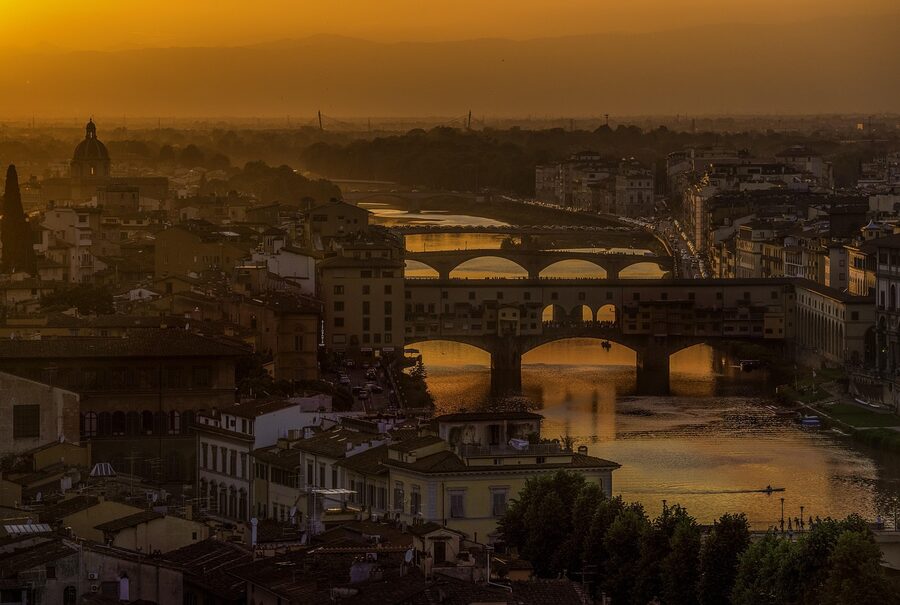
The Medici story stretches well beyond this two-hour walk. If it lights you up, the next stop is Pitti Palace and the Boboli Gardens across the river, which were the family’s home from 1565 onwards. The Duomo complex is where many of the early Medici stories happen, and you can climb the dome for the view Brunelleschi engineered. For something completely different on day two, swap history for craft and book a pasta-making class in the morning, or get out of the city entirely on a Vespa tour through the Tuscan hills. Florence rewards both ends of that spectrum equally.